Reseña de Skedda 2026: Ventajas, Desventajas, Características y Precios


Skedda is a hot desk booking software for teams managing hybrid workplaces where employees share desks, meeting rooms, or other bookable spaces. It's a strong fit if your organization needs self-service space reservations with interactive floor maps and booking rules, but doesn't need the full enterprise overhead of a tool like Robin. Where Robin can feel heavy for mid-sized teams, Skedda keeps setup and day-to-day management lean without sacrificing the customization that workplace coordinators actually need.
Skedda Evaluation Summary
- From $249/month (billed annually)
- 30-day free trial + free demo available
Por qué confiar en nuestras reseñas de software
Nuestro equipo lleva probando y evaluando software desde 2012. Como expertos en RR. HH., sabemos lo difícil —y lo importante— que es elegir el software adecuado.
Para esta guía, evaluamos las herramientas mediante pruebas prácticas e investigación independiente, puntuando las herramientas según nuestros criterios de selección. También nos basamos en la experiencia de líderes de opinión del sector y de profesionales de RR. HH. en activo.
Nuestras reseñas reflejan nuestro criterio editorial humano, no un discurso de ventas.
Revisores expertos:
Skedda Overview
In my experience, Skedda stands out for its clean interface, flexible booking rules, and visual floor plans, which make desk management intuitive. While its pricing feels fair for the automation and integrations offered, some features—like advanced analytics—require a higher tier.
I think Skedda is best for midsize businesses or hybrid offices that need self-service desk booking and simple onboarding. Compared to others, it’s easier to set up and integrates with popular calendar tools, but support response times can be slower. If you value control and ease of use, Skedda deserves strong consideration.
pros
-
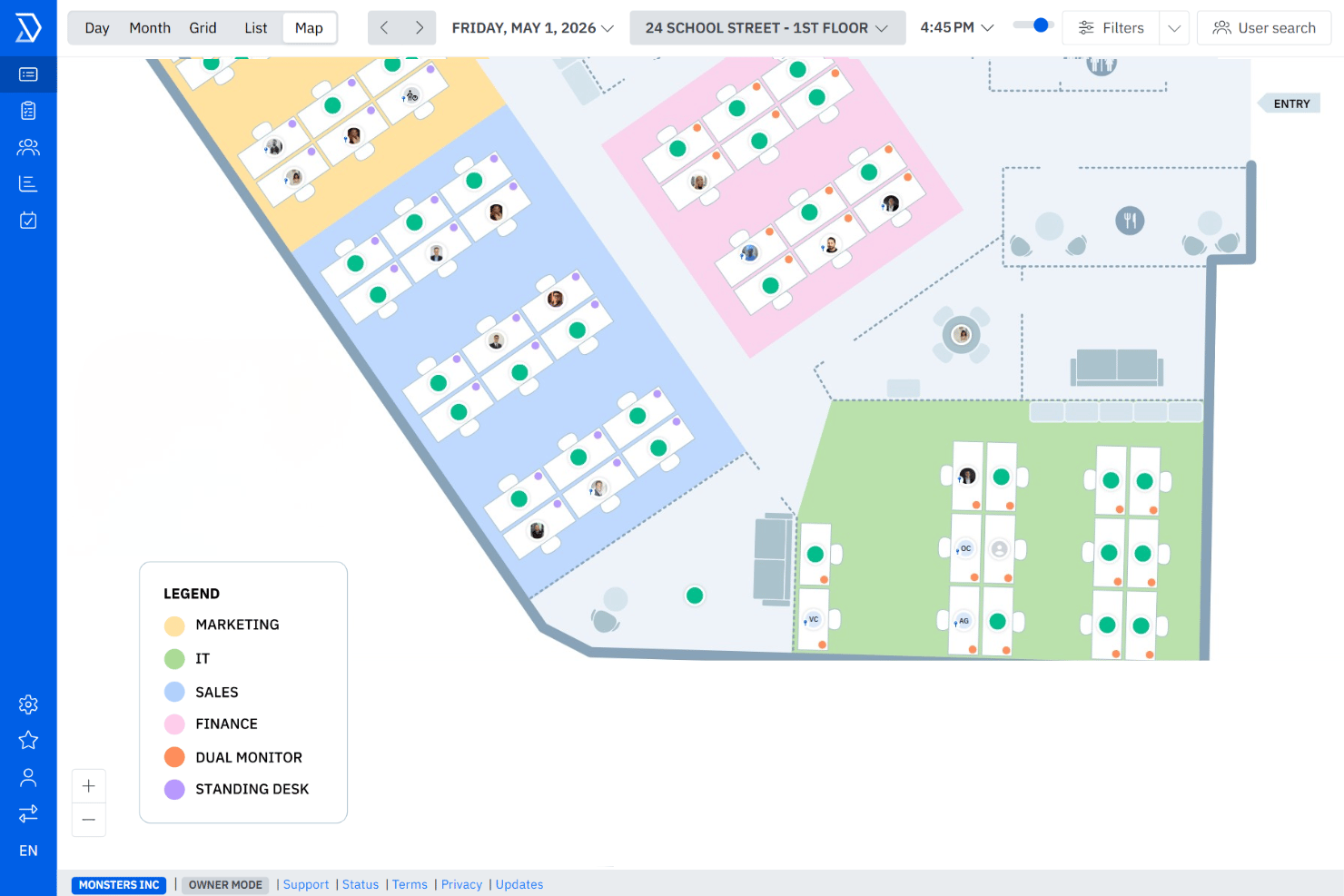
Visual floor plans display real-time desk availability
-
Customizable booking rules support hybrid workplace policies
-
Automated reminders help reduce no-shows and conflicts
cons
-
Reporting features are limited without upgrading tiers
-
No mobile app for on-the-go desk booking
-
Support response times can lag during peak hours
-

Justworks
Visit WebsiteThis rating combines scores from multiple user review sites to reflect overall customer sentiment about the product.4.6 -
Small Improvements
Visit WebsiteThis rating combines scores from multiple user review sites to reflect overall customer sentiment about the product.4.3 -
HiBob
Visit WebsiteThis rating combines scores from multiple user review sites to reflect overall customer sentiment about the product.4.5




Cómo probamos y puntuamos nuestras herramientas
Hemos pasado años construyendo, refinando y mejorando nuestro sistema de pruebas y puntuación de software. La rúbrica está diseñada para capturar los matices de la selección de software y lo que hace que una herramienta sea efectiva, centrándose en los aspectos críticos del proceso de toma de decisiones. A continuación, puedes ver exactamente cómo funcionan nuestras pruebas y puntuaciones a través de siete criterios. Esto nos permite ofrecer una evaluación imparcial del software basada en la funcionalidad principal, características destacadas, facilidad de uso, incorporación, soporte al cliente, integraciones, reseñas de clientes y relación calidad-precio.
Funcionalidad principal (25% de la puntuación final)
El punto de partida de nuestra evaluación siempre es la funcionalidad principal de la herramienta. ¿Tiene las funciones básicas que se espera encontrar? ¿Alguna de esas funciones básicas está restringida a planes de precio superiores? En esencia, esperamos que una herramienta se compare favorablemente con las capacidades básicas de sus competidores.
Características destacadas (25% de la puntuación final)
Luego, evaluamos características poco comunes que van más allá de la funcionalidad principal que normalmente se encuentra en herramientas de su tipo. Una puntuación alta refleja funciones especializadas o únicas que hacen que el producto sea más rápido, eficiente o que ofrezca un valor adicional al usuario. También evaluamos lo fácil que es integrar con otras herramientas comúnmente usadas en el entorno tecnológico para ampliar la funcionalidad y utilidad del software. Las herramientas que ofrecen muchas integraciones nativas, conexiones de terceros y acceso a API para construir integraciones personalizadas obtienen las mejores puntuaciones.
Facilidad de uso (10% de la puntuación final)
Consideramos qué tan rápido y fácil es ejecutar las tareas definidas en la funcionalidad principal utilizando la herramienta. El software que obtiene una puntuación alta está bien diseñado, es intuitivo, ofrece aplicaciones móviles, proporciona plantillas y hace que tareas relativamente complejas parezcan simples.
Incorporación (10% de la puntuación final)
Sabemos lo importante que es la rápida adopción del equipo para una nueva plataforma, por eso evaluamos qué tan fácil es aprender y usar una herramienta con una capacitación mínima. Evaluamos cuán rápido un miembro del equipo puede configurarse y comenzar a usar la herramienta sin experiencia. Las soluciones con mejores puntuaciones requieren poco o ningún soporte.
Soporte al cliente (10% de la puntuación final)
Revisamos cuán rápido y fácil es obtener ayuda mediante teléfono, chat en vivo o base de conocimientos. Las herramientas y empresas que ofrecen soporte en tiempo real obtienen las mejores puntuaciones, mientras que los chatbots obtienen las peores.
Reseñas de clientes (10% de la puntuación final)
Además de nuestras propias pruebas y evaluaciones, consideramos el puntaje neto de promotores de clientes presentes y pasados. Revisamos su probabilidad, dada la opción, de elegir nuevamente la herramienta por su funcionalidad principal. El software con una puntuación alta refleja un alto puntaje neto de promotores por parte de clientes actuales o anteriores.
Relación calidad-precio (10% de la puntuación final)
Por último, considerando todos los demás criterios, revisamos el precio promedio de los planes de entrada frente a las funciones principales y valoramos el resto de los criterios de evaluación. El software que ofrece más por menos tendrá una mejor puntuación.
Core Features
Interactive Floor Plans
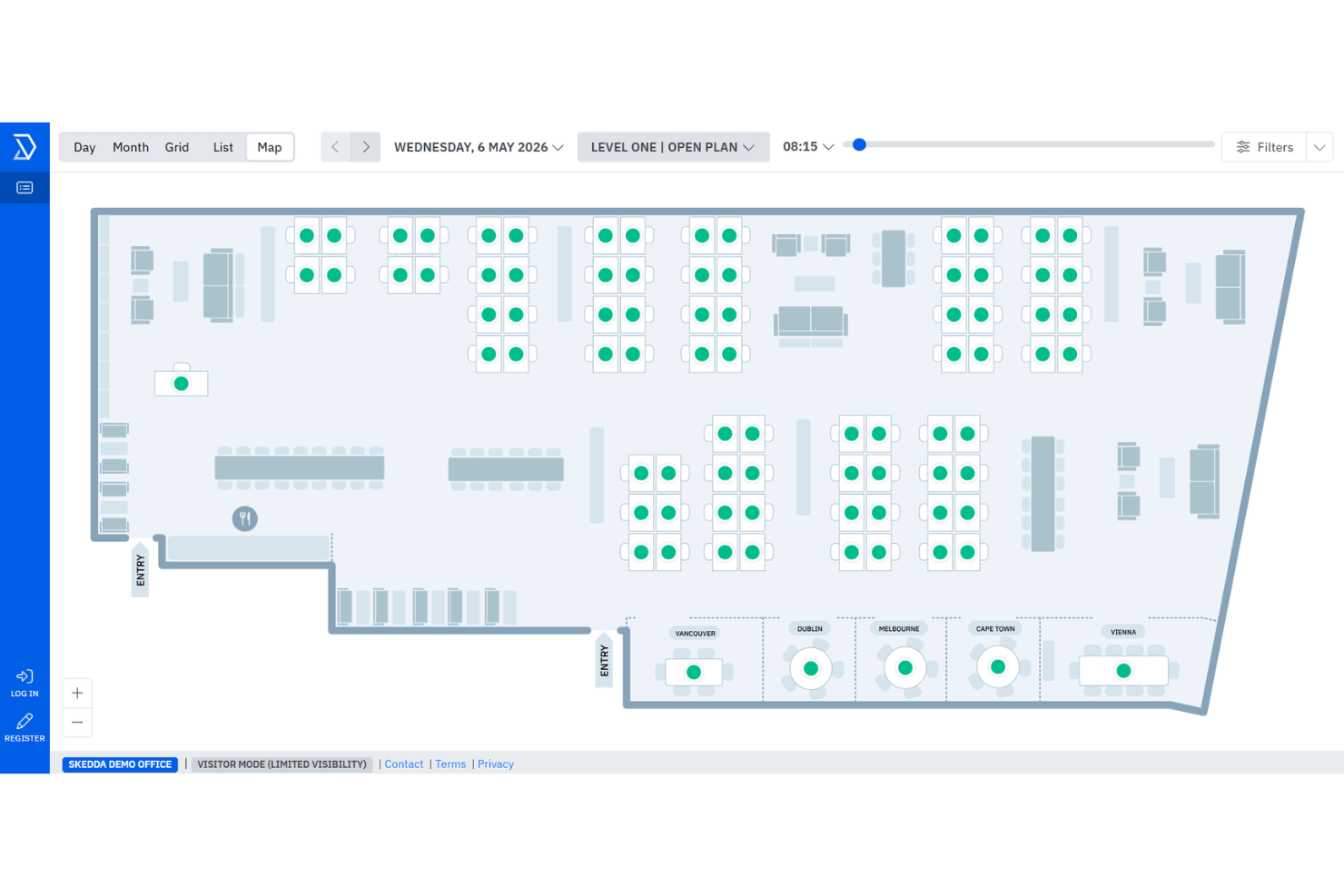
See available desks in real time on a visual office map. Drag-and-drop editing lets you quickly update the layout for reconfigurations.
Smart Booking Rules
Set booking windows, booking buffer times, and access rules for teams or individuals. Automate compliance with hybrid work policies like team-only zones or maximum booking durations.
Automated Notifications
Get email confirmations and reminders for every reservation. These alerts help reduce no-shows and stop double-booking.
Desk Utilization Analytics
Track who is booking which desks, how often, and identify underused spaces. Use these insights to optimize office layouts or adjust hybrid schedules.
User Self-Service Portal
Employees book, modify, or cancel their own desks through a secure, browser-based portal. Admins stay hands-off while teams manage day-to-day reservations.
Check-In and Check-Out Tracking
Prompt users to check in or out of bookings to confirm desk usage. No-shows are automatically freed up for others to reserve, keeping space usage accurate.
Ease of Use
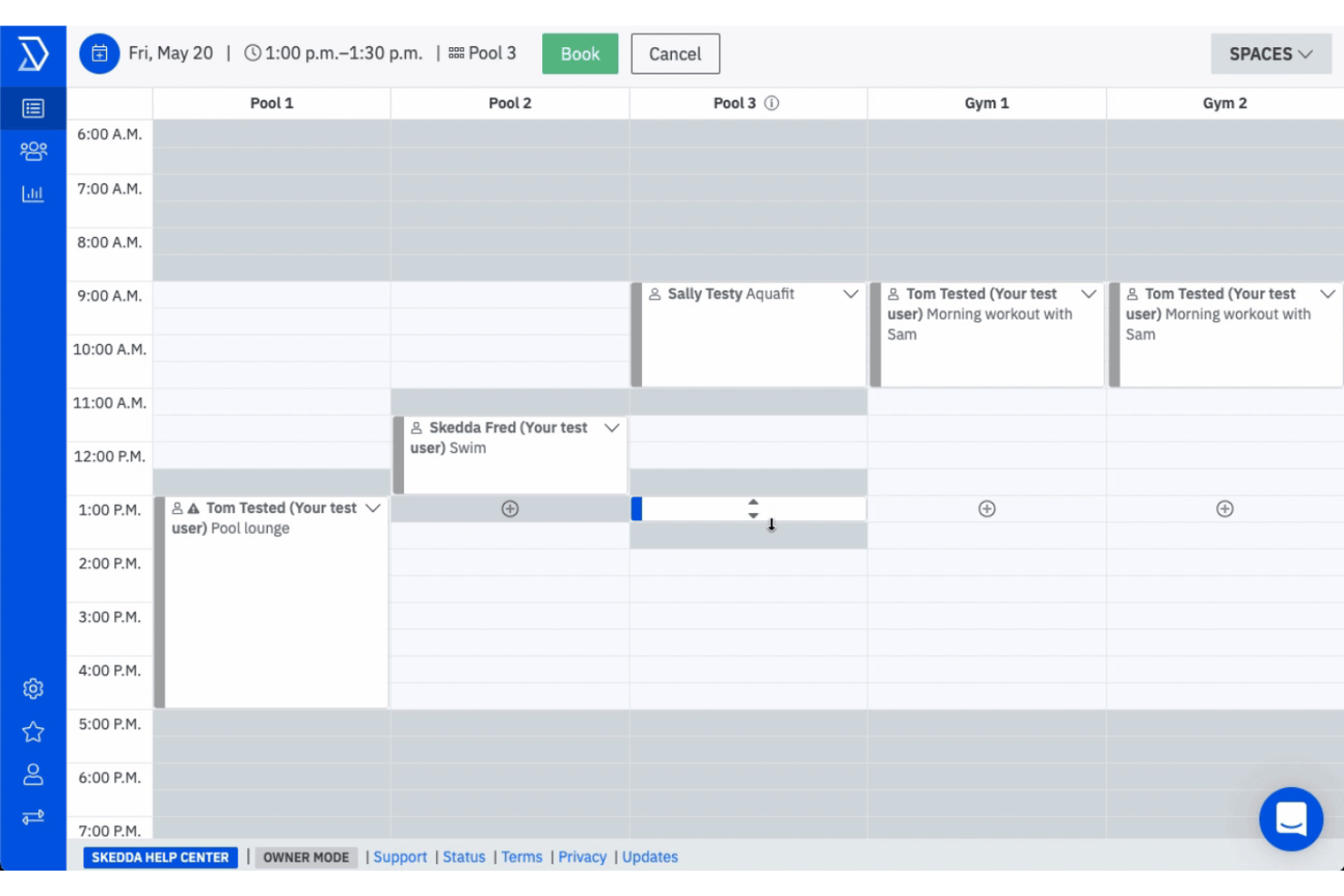
Skedda’s visual floor plans, quick booking interface, and clear navigation make it one of the easiest hot desk platforms to adopt.
I think most users find they can set up and manage desk policies without IT help, and HR teams appreciate how easily staff can reserve, modify, or cancel bookings from any browser.
Integrations
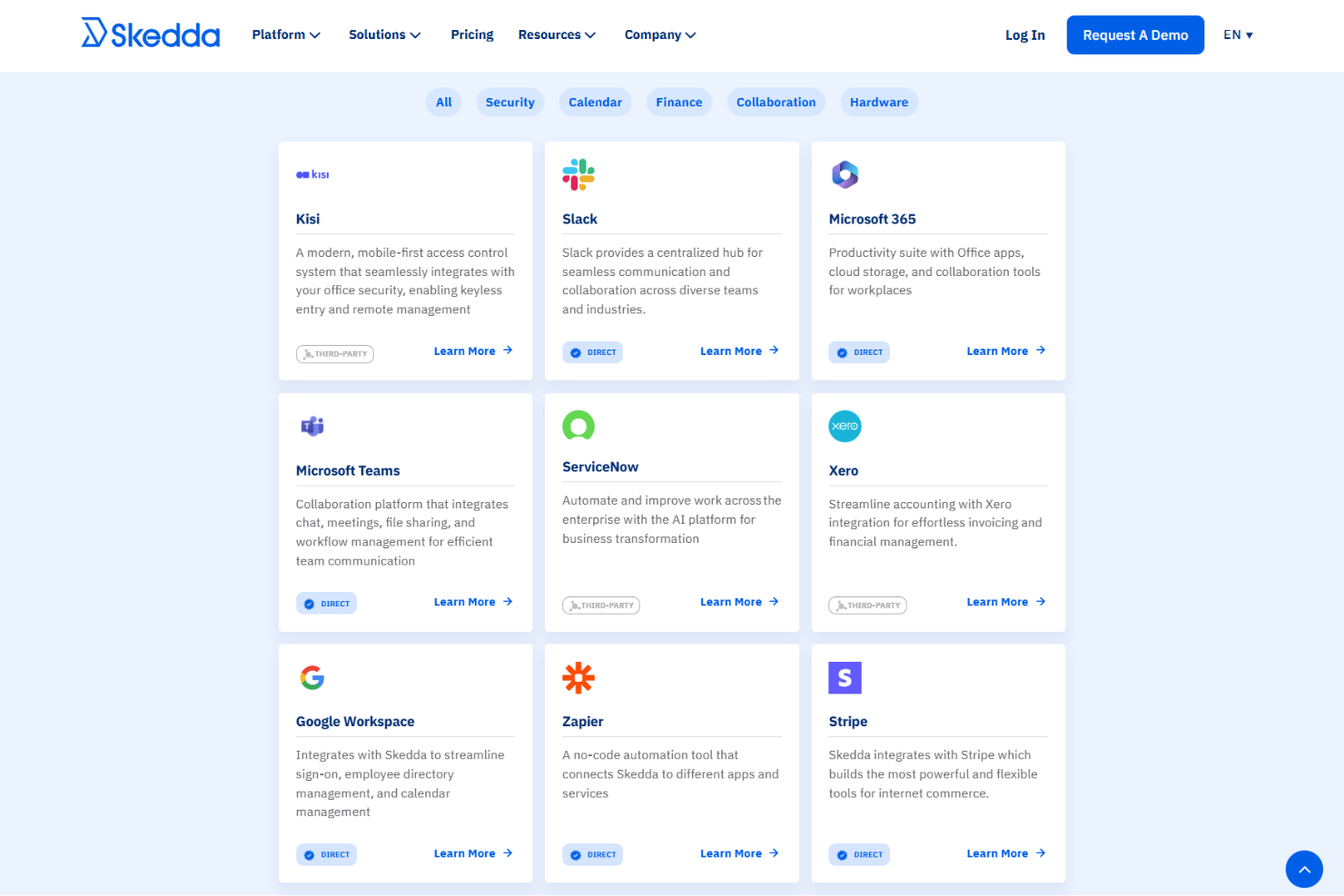
Skedda integrates with Microsoft 365, Google Workspace, Microsoft Teams, Slack, Azure Active Directory, Okta, Zapier, iCal, Apple Calendar, and Outlook Calendar.
Skedda also offers an API and can connect through third-party integration tools like Zapier.
New Product Updates from Skedda

Skedda Expands Visit Exports With Custom Field Data
Skedda adds Summary and Breakdown formats to Visits page exports, with custom field data and support for current filters. The new formats let teams export either visit-level or individual visitor-level information as XLSX or CSV files. Highlights include:
- Summary Export: Provides one row per visit with visit type, host details, visitor count, and invite-time custom fields.
- Breakdown Export: Provides one row per visitor with check-in and check-out times plus invite-time and check-in custom fields.
- Filtered Exports: Applies currently selected Visits page filters to exported data.
- XLSX and CSV Support: Lets users download either export format as XLSX or CSV.
Visit Skedda’s official site for more details.
 for more details.
Skedda Adds Microsoft Sync Approvals
Skedda adds Microsoft two-way sync support to booking approval rules. This update keeps requested bookings tentative in Outlook until they are approved in Skedda. Highlights include:
- Microsoft Sync Approvals: Manage approval requests for spaces connected through Microsoft two-way sync.
- Calendar Status Sync: Keep Outlook bookings tentative until approval and automatically update accepted bookings.
Visit Skedda’s official site for more details.

Skedda Adds Priority Booking Filters
Skedda improves priority booking rules with new day and time-based filters. This update allows admins to customize booking windows by specific schedules and improve space availability. Highlights include:
- Day and Time Filters: Apply priority booking rules to specific weekdays and time ranges.
- Team-Based Priority Access: Set different booking windows for teams based on their assigned schedules.
Visit Skedda’s official site for more details.

Skedda Adds Issue Reporting for Space Management
Skedda has introduced Issue Reporting to make it easier to capture and resolve problems in shared spaces. Users can report issues at the moment they notice them, and admins can ensure the right team is alerted automatically. Highlights include:
- Issue Reporting: Report space problems like broken equipment, IT issues, or maintenance needs directly from booking pages.
- Custom Issue Categories: Create categories to organize and track different types of space issues.
- Email Routing Rules: Send reports to specific people or teams based on category, space tag, or space name.
Visit Skedda’s official site for more details.
Skedda Adds Check-in Insights to Venue Analytics
Skedda adds check-in analytics to the Insights dashboard for venues with check-in rules enabled. The update helps teams monitor space usage and analyze check-in activity more effectively. Highlights include:
- Check-in Rate Summary: Teams can view overall venue check-in rates at a glance.
- Check-in Method Breakdown: Insights now show how users check in through methods like WiFi, QR codes, and email.
- Per-User and Per-Space Insights: Teams can drill down into check-in rates for individual users and spaces.
Visit Skedda’s official site for more details.

Skedda Adds Visit Types for Visitor Booking Management
Skedda adds Visit Types for categorizing visits such as interviews, client meetings, and contractors with custom configurations and fields. The update helps teams standardize visitor management workflows and improve visitor tracking. Highlights include:
- Custom Visit Categories: Admins can create visit types with custom fields and required or optional rules.
- Flexible Data Collection: Visitor information can be collected during invites, check-in, or both.
- Visitor Data Insights: Visit Types now appear in exports for better visitor reporting and analysis.
Visit Skedda’s official site for more details.
Skedda Specs
- Appointment Scheduling
- Budgeting
- Contact Management
- Customer Management
- Dashboard
- Data Export
- Data Import
- Data Visualization
- Email Integration
- External Integrations
- Forecasting
- Google Apps Integration
- Inventory Tracking
- Multi-User
- Notifications
- Order Management
- Project Management
- Scheduling
- Supplier Management
- Task Scheduling/Tracking
- Third-Party Plugins/Add-Ons