AI Recruitment Expert Says AI Removes the Struggles That Create Mastery
Discover how a recruitment founder uses AI to redesign hiring, operations, and leadership while ensuring human judgment, mastery, and team development remain central.

David Stepania
Founder and CEO of ThirstySprout

Leadership: AI requires leaders to focus on human transition rather than just technology or tools.
Recruiting: AI enhances recruiting by refining candidate screening and matching processes, requiring fewer resumes.
Engineering: AI is reshaping the junior engineering roles, potentially causing a senior talent shortage later.
Processes: Effective AI adoption needs redesigned processes, not just the addition of new AI tools.
Mastery: Leaders must ensure employees face productive difficulties to develop deep judgment skills.
David Stepania is a business leader and serial founder. He is currently CEO of ThirstySprout, a marketplace connecting remote AI engineering talent with funded US startups.
We sat down with David to learn how AI is changing leadership and recruiting. Here's what he told us.
AI is rewriting what it means to be a high-performing team

I'm David Stepania, founder and CEO of ThirstySprout, a marketplace connecting remote AI engineering talent — mostly from Latin America, Eastern Europe, and Asia — with funded US tech startups. I've also built ChoppingBlock.ai, an AI salary and jobs intelligence platform, and I host the AI Chopping Block podcast.
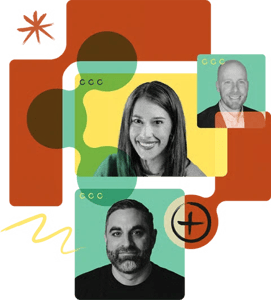
I'm a two-time bootstrapped founder. No VC, no safety net — every company I've built had to be profitable to survive. My last venture landed on the Inc. 5000 at #247 in 2024, and across my career, I've generated north of $100M in revenue.
I run everything fully remote from sunny places around the world, with a distributed team spread across four continents.
My leadership journey has been one long lesson in doing more with less. Bootstrapping forces that on you. You can't hire your way out of every problem, so you get very good at leverage — process, systems, and the right people in the right seats.
I find this AI moment interesting because I see it from two sides at once. Internally, I'm rebuilding my own org around AI as an execution layer. Externally, I get dozens of funded startups telling me exactly what they now want from engineers — and that demand has shifted faster in the last 18 months than it did in the entire decade before. I have a front-row seat to how AI is rewriting what "a high-performing team" even means.
How AI transforms team operations and decision-making
I was reviewing AI-generated candidate rankings when everything changed for me.
Here's what happened: I asked the AI to score a batch of engineers for the role. It returned rankings roughly where I expected — but for one candidate, it flagged something I hadn't asked it to look for: the engineer was a near-perfect technical match but was located in a country not on the client's approved hiring list.
Then, it did something a tool typically doesn't do. It proposed a workaround — the candidate could relocate to a neighboring approved country, or we could help him establish residency in Mexico — something we'd done for other engineers before.
That was the moment. It didn't just execute a task. It reasoned about my business like a sharp operator on my team would. And I realized my company's bottleneck had moved.
Why the human is the intelligence layer, AI is the hands
Everyone wants "AI-native" engineers now, not just people who use Cursor. They mean an engineer who lets AI do the coding while they do the thinking — the problem framing, the architecture, the judgment calls.
My own role has moved the same way. Two years ago, much of my job involved routing work — deciding who does what, then waiting for output. Today, my job is to define problems precisely enough so we can execute solutions, and a growing share of that execution runs through AI rather than through another hire.
I used to assume I'd need a fractional CFO for real clarity on our unit economics. Instead, I did a full CFO-level financial analysis myself with AI and found a cost line's categorization obscured our true unit economics. That's analysis I'd have either paid a specialist for or simply never done.
Same with legal. I rebuilt our entire Master Services Agreement, our contractor agreements, and our partner fee-split contracts. AI drafts, a lawyer reviews. That inverts the cost structure. The expensive human now does the last 10%, not the first 90%.
And I've also reshaped the team itself. We're moving away from teams toward single owners of whole domains, each heavily AI-augmented. One person owns our entire programmatic SEO surface. One person owns our community and data infrastructure. Each unit of the org isn't a team anymore — it's one strong operator plus AI.
Where AI should be used — and where it shouldn't
Culture is where I’m most careful. It is fundamentally human — it’s shaped by how people are treated in hard moments, and you can’t outsource that.

I also use AI in strategy, decision-making, and org design, with different intensity in each.
- Decision-making is the deepest area: I pressure-test pricing, hiring, and negotiation strategy against my AI setup before committing.
- For strategy, I use it heavily for market analysis.
- For org design, when I restructured the company around single-domain owners instead of teams, I worked that redesign through with AI, modeling what each role should own and where the real constraints were.
Culture is where I'm most careful. It is fundamentally human because it's shaped by how people are treated in hard moments, and you can't outsource that. AI helps with preparation. Before a difficult performance conversation, I'll think through how to be direct without being cruel, what the person needs to hear. But the conversation itself must be me.
AI can make me a more prepared leader. It can't make me a present one. I cannot delegate that part.
How screening can be redesigned with AI
Recruiting, traditionally, is a volume game: source a hundred resumes, skim them, forward thirty, and hope a few stick. Recruiters' value was throughput. But we rebuilt the entire screening operation around AI.
First, we created a dedicated Claude project for each client engagement, with custom instructions that encode the real hiring bar — not the job description's stated requirements, but what the hiring manager means after you talk to them.
A JD says "senior React engineer." The real bar, after a call, is "someone who's shipped a RAG pipeline in production and can wire up telephony integrations." This nuance lives in the workspace.
Second, we load the client's interview plan and scorecard as the source of truth. So the AI screens against the exact rubric the client will use, not generic seniority.
Third, every candidate receives a score from one to ten on each must-have dimension, with a written rationale and explicitly flagged gaps. Not "good fit" — "frontend: 9, shipped RAG: 8, telephony: 0, here's why."
Our output flipped as a result. We stopped forwarding thirty resumes and started sending three to five exactly right ones, each with a breakdown the client can act on.
Shortlists became dramatically tighter, candidates moved deeper into interview loops, and conversations shifted from "Here are some people" to "Here's precisely how each one maps to your rubric."
But the deeper change was my team's jobs. AI now handles the grunt work — reading, matching, and first-pass filtering. This means every hour spent by a human on my team goes to the part AI can't do, like reading motivation, judging whether someone will thrive in a chaotic startup, building the relationship, and making the close.
The job didn't shrink. It moved up the value chain. As a leader, my real job became ensuring the team understood that shift and leaned into it, instead of feeling threatened by it.
Why redesigning processes is crucial in AI adoption

The biggest disconnect is that companies treat AI as something to add — licenses, a tool, a top-down mandate to "use AI" — when you actually need to redesign around it. Those are completely different projects.
People miss this mechanism. AI amplifies whatever process you point it at. If the underlying process is good, AI makes it dramatically faster. If the process is mediocre — and most processes inside most companies are mediocre — AI just lets you execute mediocre work faster. You don't get transformation. You get the same confusion, faster.
I see this from both sides of my business. Internally, when I audited our own software stack, I found we ran over fifty tools, with a real chunk of them AI tools we had bought because we believed the purchase itself was the transformation.
That's mistaking tool sprawl for progress. And externally, I watch client after client arm every engineer with AI coding tools, yet they still struggle to ship, while a rare few move genuinely fast. The difference is never the number of tools, it's whether they redesigned the work.
How psychological challenges impact AI adoption
When I introduced AI into a part of the business, people rarely pushed back out loud. Resistance was quieter. Some people underused it and kept doing things the slow way. Some used it constantly but didn't mention it, almost as if they'd be caught cheating. Nobody said "I'm threatened by this," but their behavior did.
I eventually understood that for a lot of people, their job is their identity, and their value is tied to being good at a specific craft. When a tool can suddenly do a big chunk of that craft, you're not just changing someone's workflow, you're poking at how they see themselves. That's not a training problem you can fix it with a tutorial.
I used to think leading through a technology shift meant making good calls about tools and processes. Now I think the real work is helping people renegotiate their own value — out loud, with safety.
Concretely, that meant explicitly and repeatedly making it okay to use AI. Okay to say "AI did most of this draft." Okay to not be the fastest typist or the best researcher on the team anymore, because that's not where your value lives now. We had to remove the shame before adoption could happen.
The part that impacted me most personally was that I had to answer the same question for myself.
For years, I could explain away slow progress with "we don't have the capacity." That excuse is mostly gone. If something isn't moving now, it's usually because I haven't defined it clearly enough for a human or an AI to run with. That's humbling.
When a tool can suddenly do a big chunk of that craft, you’re not just changing someone’s workflow — you’re poking at how they see themselves.
How to do the unglamorous part of adopting AI
Here's how I approach AI adoption.
First, a hard rule: We never automate a process we haven't proven manually. We're running a business development campaign right now, and I explicitly instructed the team to do it manually first.
Send the outreach yourself, have the conversations, and find out what actually works. Only once we prove a process do we automate it, because automation just scales whatever you've already got. Automate a process you don't understand, and you build a very efficient way to fail.
Second, I treat AI adoption as a workflow-and-judgment question, not a procurement question. The win will never be "more tools." It's fewer tools, used deeply by people who've genuinely changed how they work. We cut aggressively.
Third, I've changed what we reward. AI has made raw output cheap and judgment — knowing which problem to solve, spotting when the AI is confidently wrong — the scarce, valuable thing.
An org built for the old world rewards the people who produce the most. An org built for this one must reward people who decide well. That's a real shift in how you run performance conversations.
How to build AI literacy and readiness in teams
Most people think AI readiness means tool fluency — your team knows how to use AI products. But that's the least important part, and it changes every six months anyway.
AI-ready means four things:
- Someone defaults to asking "Should AI do the first pass of this?" before doing it by hand.
- They can write a clear brief because vague input produces vague output, and articulating the problem is the real skill.
- They catch when AI is confidently wrong.
- They're transparent about using it.
Judgment, clear communication, verification, transparency. None of those is a tool.
Here are the steps to building AI literacy:
- Make it explicitly safe and expected. People hide AI use if they think it makes them look replaceable, so leaders need to actively normalize "AI did the first pass of this" until the shame is gone. Literacy can't grow in secret.
- Teach within real work, not in a generic seminar — a recruiter builds literacy through screening, a demand-gen person through prospect research. It sticks because it ties to the job.
- Here's the step most people miss: Lower the skill floor instead of making everyone an expert. We build shared infrastructure — pre-built workspaces with context and instructions already encoded — so a junior person gets expert-level output without being a prompt expert.
Why AI literacy comes with its own problems
The problems are real. The biggest is overtrust.
Once people get comfortable, some start accepting AI output uncritically. A junior person ships something subtly wrong because their domain judgment hasn't caught up to their tool confidence. That's exactly why you must build verification into how you define "ready."
The second problem is harder, and nobody warns you about it: AI doesn't lift everyone equally. Your strongest people compound with it fast while your weakest plateau. The performance gap on your team widens. That's a management problem, and it forces honest conversations you can't avoid.
Why subtracting tools strengthens your software stack
The most important change to my stack this year was subtraction.
Let me start with the spine, then the change.
The spine is Claude. It isn't "a tool" in the stack the way the others are, it's the layer most real work runs through: candidate screening and ranking, financial analysis, contract drafting, content, strategy.
I run it as a set of dedicated workspaces, one per major part of the business, each with custom instructions that encode how that domain works. For the more technical, agentic builds, I use Claude Code.
My assessment: it's the single highest-leverage tool in the company by a wide margin, and it's not close.
Around that, the rest of the stack is deliberately boring. Google Workspace and Slack for communication, operations, and our community infrastructure. Beehiiv for the newsletter, Riverside for the podcast. Deel for contractor agreements and payments. Calendly for scheduling, Fathom for capturing meetings and calls, and BetterProposals for client proposals. That's most of it.
My assessment of that layer is simple: it is stable, unglamorous, and should stay that way. The operations layer of a company is not where you want novelty.
Now, the notable change. Earlier this year, I audited every product subscription. I expected twenty or thirty tools... it was over fifty. The most telling cluster was five different AI subscriptions doing broadly overlapping things. Two separate time trackers. Three different LinkedIn posting tools. Five website platforms.
None of that was strategy. It was the residue of a year of saying yes. Every "let me just try this" that never got canceled. Five tools used at 10% depth lose to one tool used at 90%. So we consolidated hard by collapsing the AI tools down to Claude as the primary and picked one tool per job everywhere else, and cut the rest.
How AI will reshape the engineering talent market
Here's something interesting I'm seeing in the engineering recruitment space. It's worth keeping in mind.
Within five years, the traditional entry-level engineering job will mostly disappear. Not "changed" — gone. AI now performs precisely the well-defined, straightforward coding tasks under supervision that new-grad engineers were historically hired to do, and it does so well and cheaply.
Companies are already slowing junior hiring. In five years, this won't be a slowdown, it will be structural.
You cannot produce a senior engineer without the junior years. Senior judgment — knowing which approach breaks at scale, smelling a bad architecture decision — isn't taught, engineers accumulate it by doing thousands of small things and occasionally getting them wrong.
If you delete the entry-level tier, you delete the training ground. So my real prediction is that in about five years, after the junior role disappears, the industry hits a senior-engineer shortage it manufactured itself. We're optimizing away the bottom of the ladder without realizing the ladder was how people got to the top.
The entry-level engineering job will disappear — and the firms that survive the decade will be the ones that figure out how to manufacture senior talent, not just find it. The whole industry will shift from finding people to building them.
Why honesty is key in navigating AI transformation

Here's my advice to leaders:
- AI looks like a technology problem, so leaders treat it like one — tools, budgets, training. It's a leadership problem. The software was never the hard part. AI forces everyone on your team to renegotiate what makes them valuable and that's frightening. People won't say so out loud. If you manage the rollout but not the fear, the rollout fails. Lead the human transition first.
- AI doesn't fix a broken organization, it exposes one. It makes sloppy processes and unclear thinking move faster and become more visible. Much of the real work isn't adopting AI at all, it's the unglamorous job of getting honest about how your organization operates, and fixing it. AI just removes your ability to hide from it.
- Start now, in your own real work — not a pilot, not something you delegate. Leaders who haven't used these tools deeply on their own hardest problems can't lead anyone else through this.
And one last thing. Nobody has this figured out, myself included. Anyone selling certainty now is selling something. The right posture isn't confidence, it's honesty, a fast learning rate, and the discipline not to outsource leadership's human parts to a machine, however good the machine gets.
The leaders who win this moment won't be those who adopted the most AI. They'll be those who stayed the most honest.
Why leaders must make room for mastery — and struggle
One last thing. At some point, leaders may need to stop thinking about what AI gives us and start thinking about what it quietly takes away.
Every conversation about AI and leadership, including most of this one, focuses on gains. Faster, cheaper, more leverage. That's all real. But there's a cost, and we should honestly name it.
This is the cost I think about most. Mastery — real, deep, senior-level judgment — always builds through struggle. You get stuck, you sit with a hard problem, you try the wrong thing three times, and somewhere in that friction, you learn.
AI removes the friction. It hands you the answer before you struggle toward it. In the short term, that's pure upside because the work gets done. But struggle was never just an inefficiency. It was the mechanism that made people good. When you remove it, you get faster output and, quietly, shallower people. We trade depth for speed and mostly do not notice.
I don't say that to slow down — you can't, and shouldn't. I say it because naming a loss is the first step to managing it. If struggle builds judgment, and AI removes struggle, then a leader now has a new, explicit job: deliberately putting it back.
Give people problems the AI can't shortcut. Protect productive difficulty even when the fast path sits right there. Treat your people's development as something that now requires intention, because the environment will no longer produce it for free.
That's the part I want other leaders to consider. AI's upside takes care of itself — everyone already chases it. The cost is subtle; it shows up years later and lands entirely on your people. Someone in the room must pay attention to it. That someone is you. That's your job now.
AI’s upside takes care of itself — everyone already chases it. The cost is subtle; it shows up years later and lands entirely on your people.
Follow along
You can find more from David Stepania on LinkedIn, X, Instagram, YouTube, and stepania.co. Or check out ThirstySprout and Chopping Block.
More expert interviews to come on People Managing People!