

The ROI of AI: How to Build an AI-Augmented Organization
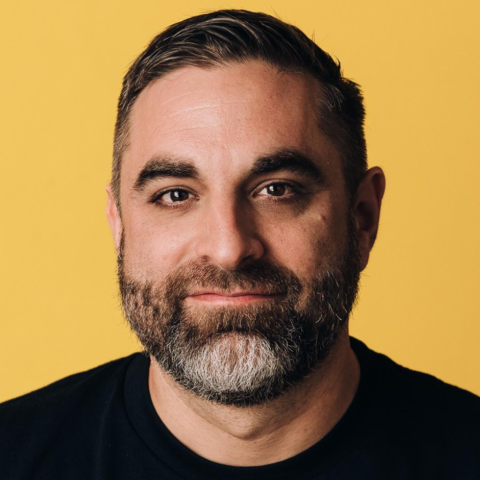

We’re in an era where everyone’s talking about AI, but few are actually getting value from it. In this episode, futurist and author Ravin Jesuthasan joins host David Rice to unpack why the ROI of AI is still so elusive — and why most organizations are looking at it backwards.
Ravin argues that the problem isn’t technological; it’s human. Companies are rushing to deploy tools before they rethink the work itself. He explains how leaders can shift from a tech-first to a work-first mindset, what it really means to be AI fluent, and why the job-based identity that defined the past 150 years of work is quietly crumbling.
If you’re an HR leader, executive, or strategist trying to navigate AI adoption without losing the human center of work, this conversation will help you see what transformation actually looks like — and where to start.

What You’ll Learn
- Why a tech-first mindset is sabotaging AI ROI
- How leading with work — not tools — transforms outcomes
- The difference between digital fluency and AI fluency
- How to help people shift their identity from “what I do” to “what I can become”
- Three metrics every leader should use to measure AI impact
- How to design a 90-day rollout plan for AI adoption that actually works
Key Takeaways
- Start with work, not tools. The companies seeing ROI from AI aren’t deploying tech for its own sake — they’re analyzing the work, redesigning it, and then applying AI to transform it.
- AI is a human challenge. Success depends less on data pipelines and more on change management, leadership modeling, and a willingness to unlearn old habits.
- Leaders must model AI fluency. You can’t lead what you don’t use. The C-suite must experiment with tools firsthand — not delegate curiosity to their assistants.
- Identity is shifting. Work is no longer “what I do,” it’s “what I can become.” Continuous learning — not static mastery — defines future employability.
- Measure differently. Efficiency matters, but agility and workforce productivity are the real indicators of AI maturity.
- Anchor with a North Star. Every AI rollout should begin with a clear vision, early prototypes tied to business problems, and a plan for the structural and cultural shifts that will follow.
Chapters
- [00:00] The ROI of AI: Why most companies aren’t seeing returns
- [02:20] The “tech-first” trap and what to do instead
- [04:30] The identity crisis of work in the age of AI
- [07:30] Why we must move from digital fluency to AI fluency
- [09:40] Beyond efficiency: Measuring agility and productivity
- [11:45] The leadership gap: Why executives must use AI themselves
- [14:40] What AI fluency looks like in practice
- [17:10] Designing a 90-day AI rollout that actually delivers
- [19:44] Closing thoughts and where to connect with Ravin
Meet Our Guest

Ravin Jesuthasan is a Senior Partner at Mercer and the Global Leader of its Transformation Services business, where he helps organizations design new work operating systems and navigate workforce transformation amid accelerating change. He’s a recognized futurist and author of several books—including Work Without Jobs and Reinventing Jobs—and has led major research initiatives on the future of work, AI adoption, and digital economies with institutions like the World Economic Forum. Ravin holds finance degrees from Western Michigan University, is a Chartered Financial Analyst, and is regularly quoted in global media and invited to speak at events like Davos.
Related Links:
- Join the People Managing People Community
- Subscribe to Our AI Signal Newsletter
- Connect with Ravin on LinkedIn
- Check out Mercer and Ravin’s website
Related articles and podcasts:
David Rice: You are really focused on the ROI of AI right now. Can you expand on what you're seeing at the macro level?
Ravin Jesuthasan: Many companies took a tech forwards approach, deploy the technology, train 'em a little, improve the productivity of the workforce. You have gotten a return where we've seen companies really get the return on AI has been where they start with the work and then figure out how different AI tools can actually transform the world.
David Rice: Why do you think that this disconnect exists, and what are the risks of that kind of a leadership gap?
Ravin Jesuthasan: Not a technology challenge, it's a human challenge. We need our leaders to move beyond just digital fluency to real AI fluency.
David Rice: If you could redesign how organizations adopt AI from the ground up, what would the first 90 days look like?
Ravin Jesuthasan: Get really crisp and clear with our North Star. Analyze the work and figure out how to deploy AI to solving these specific problems. Understanding all of those change enablers. It's going to challenge the very structure of work.
David Rice: Welcome to the People Managing People Podcast, the show where we help leaders keep work human in the era of AI. I'm your host, David Rice. And on today's episode, we're joined by Ravin Jesuthasan. He is a futurist, author, and one of the world's leading voices on the transformation of work. Raven is gonna unpack why most companies still aren't seeing a return on their AI investments and why a tech first mindset is holding them back.
He shares what it takes to actually build an AI augmented operating model, why the traditional job based identity is crumbling, and how leaders must move from digital fluency to true AI fluency if they wanna lead by example. If you're in an HR executive strategist, or just someone wondering what it takes to lead in the age of intelligence systems, this episode is for you. Let's get into it.
Ravin, welcome.
Ravin Jesuthasan: Thanks David. Great to be here with you.
David Rice: Absolutely. You're really focused on the ROI of AI right now. That was one thing that we talked about when we spoke before this, and sort of the systemic ripple effects on the global economy. So I wanna start there. Kind of can you expand on what you're seeing at the macro level, especially in relation to workforce consumption and transformation?
Ravin Jesuthasan: Absolutely, David. So for the last number of years, right, almost three years now, we've been kind of transfixed with initially generative AI for a couple of years and what we could. Do with ChatGPT and then more recently, agentic AI. And certainly we're seeing many companies sort of up their market premium, if you will, by talking about how they're deploying AI.
But I think there's a big gap between reality and perception, right? So what we've seen is with the exception of a handful of organizations, many companies have not earned a return on their investments in AI. In large part, this is for a couple of reasons. One is many took a tech forwards approach. Let me deploy the technology, particularly gen AI, which any of us can access through our phones, our laptops, our tablets, et cetera.
So let me deploy it and people will somehow, if I train 'em a little, they'll somehow magically start working and be better at what they do and they'll be more productive. So that kind of traditional spray and pray approach. We've seen with many other similar changes in the past, and again, with the exception of a handful of organizations, few have gotten a return and I think where we've seen companies really get the return on AI has been where they go against that sort of reactive muscle of going tech forwards and actually start work backwards.
So let's start with the work and then figure out how different AI tools can actually transform the work. Where can they substitute? Where can they augment? Where can they actually transform the work? And what that also lets you do, the other benefit of that is beyond the obvious ROI implications is it shines a bright spotlight on the changing skills you need of your workforce.
Where is their work being substituted and thus the skills being rendered ole. Where is their work changing? And so skills need to change to keep up with that. Where is the work being augmented? And so now I need additional skills in additions to the ones I have to work with the technology.
David Rice: One of the big hurdles I think we see people having is sort of like a over attachment to their jobs, right?
And it kind of makes sense. Traditionally, the way people have been able to derive value from the job market is by continuously mastering certain tasks. Working your way toward doing higher value things, right? That lead to more pay or job security. But AI is coming for some of those jobs, right? So ultimately there's a kind of an emotional transformation that's going on.
How can leaders help shift people's identities from what I do to sort of what I can become?
Ravin Jesuthasan: Yeah, David, that's such an important point in all of this because. For 150 years, we've had the job being the singular currency for work. And now as we're seeing as those jobs are getting pulled apart, right?
Because AI is substituting some tasks, augmenting others, transforming yet others, that sense of identity is being challenged. And what we really need for the workforce, and I think you framed it beautifully from what I do because so many of us, what I do is who I am versus what I can become. So how do I shift from, not to sound too grandiose, but Decar obviously came up with the phrase.
I think therefore, I am my good friend Sherry Turkel back in 2019 coined the phrase I share. Therefore, I am, you know, reflecting the age of social media and I really think the new sense of identity needs to become. I learn, therefore I am, and each of us, I think is gonna be asked to continuously and perpetually reinvent ourselves.
As our work changes, and again, the excellent point you made, that sense of identity needs to shift from what I do to, as you say, again, what I can become. What skills can I accumulate, what skills can I add on? How can I stay relevant for a changing world and continuously keep shifting that legacy behind me.
And I think there is a perfect quote that captures this time we're in. The great futurist, Alvin Toler in 1970. In his book, future Shark said The illiterate of the 21st century will not be those who can't read and write. It'll be those who can't learn, unlearn, and relearn.
David Rice: It's interesting 'cause I think we've looked at it historically, very transactionally, like, I'm learning to achieve an end result.
Not I'm learning to learn or I'm learning because this will help kind of shape something. It's always very like cut and dry, like you learned this to get this. Yeah. And I think we've gotta shift that, right? Absolutely. Now, overall, the conversation about identity and transformation is often missing from AI discussions, and I wonder if that's partially down to how we're creating these narratives, like what forms or formats need to evolve so that we're not just talking about tools, but we are staying focused on people and that very specific challenge.
Ravin Jesuthasan: Yeah. You know, it's such an important point, David. I think, you know, we as business leaders, and frankly we as a species, right, we tend to overs segment, so our segment AI as being this one thing, and I miss all the connections as we've just talked about, to these issues of skills, to these issues of identity, et cetera.
And I think that's one of the things that. We need to sort of get beyond, it's beyond, oh my gosh. Look at how cool these tools are. That tech forwards view to what is the work that needs to be done and what is the ecosystem that underpins work. Absolutely. Technology is one of those things, but technology is just a tool.
As my good friend Gary Bowles often talks about as it relates to transformation, it's about mindset, skillset, and tool set. And I think we need to be able to have these cross-cutting conversations about what this actually means for the workforce and how do we bring the workforce along. Because as you and I know, David, this planet spins because we're a consumer based community, you know, a consumer based global community.
The minute that consumption power gets taken away because people are being put out of work, a lot of this starts to collapse. And so I think as it relates to AI, we need to think about what are those cross-cutting consequences? How do we upskill people? How do we re-skill people? How do we ensure that if we're gonna continue a consumer powered economy globally, that people have opportunities to earn income from productive work?
David Rice: I often ask this question because it's unrealistic to think that we are going to sort of just magically pop into a new era where consumption isn't the key driver of human behavior, quite frankly. And I think one of the big issues right now is that folks in the C-suite, you know, there's a tendency to chase efficiency while ignoring a deeper transformation, right?
Everything is about how can we 10 x the productivity of people. I'm curious, what do you think leaders should be measuring or aiming for instead if they wanna create or they want AI to create value beyond cost cutting?
Ravin Jesuthasan: That's such a good point, David. You know that there is this often myopic focus on, the quickest way to meet, for me, to boost my earnings is to reduce cost because I have certainty in that I know I can take off cost versus if I invest today for growth tomorrow, there's an element of risk about it.
In the work I do with our clients, I typically try to get them to focus on three metrics. One is certainly efficiency is important because every organization is going to need to decouple future growth from its traditionally resource intensive model, whether that's people financial capital or physical capital.
But then there's also, how do I improve the productivity of the workforce. You know, we've had these issues of, you know, where we've invested in technology, but the productivity hasn't changed. Yeah, because you can't just stick the technology and pray that people will somehow be more productive. So how do we intentionally redesign work to ensure that productivity is captured in the actual architecture of work?
But the third variable, which I think is really important, David, is agility. How do we, as we invest in these technologies, also look at pivoting our resources from where maybe work is getting substituted to where our growth opportunities are. I think those three metrics are really important as we think about how do we build business models that are built to reinvent, that keep growing.
Yes. With less resource intensity, but also making the most of the talent that we've invested in often for decades.
David Rice: Absolutely. In my own conversation with leaders, this is something I find interesting. The rush to adopt AI in sort of their own work is not as pressing right as trying to get their employees to do use it.
So, you know, seeing AI as a strategic tool, you look at something like what ChatGPT can do with its deep research function, right? You know, like it's growing as a strategic tool. Now it's becoming a little bit of a game changer. So. I'm curious, you know, why do you think that this disconnect exists and what are the risks of that kind of a leadership gap?
Ravin Jesuthasan: That's a great question, and it is a massive risk because AI is not a technology challenge, and many people have said this rightly so. Not a technology challenge, it's a human challenge. It's a change management challenge. It questions everything we have come to believe and come to build with our business models, our people models, our organizational models.
And so this is a fundamental challenge, and I've said for a while now, you know, we need to, our leaders to move beyond just made digital fluency, to real AI fluency. And I think I shared with you, you know, in Davos this year, I had the privilege of moderating a couple of panels. You know, one with a group of CEOs and one with a group of CHROs.
I asked the question of, you know, okay, you are all deploying AI. You've got it in your earnings releases, and you know, you all get the inevitable, you know, a couple of percentage point bumps when you talk about AI, but how many of you actually use these tools? And in both rooms it was no more than 10%. And I asked the question of, you know, how are you trying to get people to use these tools when you want?
And someone sheepishly said, well, we kind of don't use 'em 'cause we've got assistance. We tell 'em what to do and they do it. So, and that I think is a massive disconnect because, you know, I'll go back to what you said about transactional, because if you view AI as a transactional tool, yeah, you're gonna use your assistant.
But if you view AI as a strategic tool, it's gonna transform every aspect of your business. You need to make the investment to change your behavior, to allow it to permeate every facet of the work you do. Whether you're writing a memo, whether you are engaging with your direct reports, starting your strategic planning process by doing a scan of what are your competitors doing?
You know, where have we fallen down relative to our last three strategic plans? You know, what are the big gaps? There is so much that AI can do to augment. A leader. But again, this is a massive change in behavior. And you know, in my third book, David, we, way back in 2018 when machine learning and deep learning was a thing, John Boudreaux and I looked at about 135 organizations, 135 cases in that book.
And the thing that jumped out at us was how legacy of mindset, skillset, tool set was really the biggest impediment to transformation. That legacy for leaders was what was really holding them back, you know, back then with those tools that had nowhere near the power and capability as the tools we have today.
David Rice: I wanna stay with something you said for a second. You mentioned moving towards AI fluency, and when we think about this with leaders, I'm curious from your perspective, what does AI fluency look like for a leader, somebody in the C-Suite? Like what are the things that they're doing with it and the challenges that they're trying to sort of take on?
Ravin Jesuthasan: So what it looks like, David, is the following, right? I'm gonna get free tactical, a leader who is setting aside a percentage of his or her time every day to really understand the tools, understand how they're changing, understand new tools. Giving herself the opportunity to play with these tools, to use them.
And yeah. You know, the lawyers will be like, oh my gosh, we've gotta protect all of our private data. Absolutely. But there's no reason why you can't go play with Chan GPT on your own or play with Claude, you know, or any one of the tools out there that are emerging deep seek for that matter. And you know, when you and I talked last I'm not saying this to kiss up, but my boss actually is truly a role model for this.
Every conversation I have within starts with what he has seen from AI, what data he's mine from our business, internally, what he's seen our competitors do, and he's continuously using AI in every facet of his role. The thing that's been really interesting to observe is because he does it.
Now I do it right. I was doing a little bit of it, but I'm motivated to do even more. And I watched the rest of our leadership team and I can see that cascade effect, and particularly in consulting, which is undergoing a massive transformation where every one of our people needs to be using AI and we have the same points of resistance as everyone else.
So having him behave in this way and becoming really visible to our 3000 odd people has been a huge game changer. Now, yes, we have to back it up with access to the tools, with training, with intentionally redesigning jobs, but that role modeling's such an important part of it, and he truly is the epitome, I think, of an AI fluent executive.
David Rice: It's interesting 'cause we always talk about the data sets and what can happen, the risks and everything. But you know, I always say like, you can get ChatGPT to make a dataset. You know, like if you want to experiment with a tool, tell it what you want it to simulate. It will do it, and then you can do an analysis on it.
I've done this with a few things now, so there's a lot of different ways to play with it. Right. But based on everything that you've seen out in the market. If you could redesign how organizations adopt AI from the ground up. My question is, where would you start? What would the first 90 days look like in your ideal rollout plan?
Ravin Jesuthasan: I think there are three things I would say, David, that every organization needs to do. One is get really crisp and clear. This is not a one and done. This will be something you iterate on. But what is our North Star? What is gonna anchor this journey towards becoming an AI augmented operating model or an AI augmented operating system, as we've been calling it, but what is that North Star?
What are the productivity, efficiency, agility gains that we're gonna get over six months, nine months, one year? What will this look like to in the organization? What will this feel like to our leaders, our managers, our employees? Shareholders, our stakeholders, et cetera, and what are the core building blocks we absolutely need to nail.
You know, we have to get licenses for this particular technology. We have to build up our data sets, et cetera. You know, whatever they might be. Not so North Star first thing. Second thing is how do we prototype and experiment with this? Because doing this well. Means leading with the work, right? As we said at the beginning.
So what are the areas where I can analyze the work and figure out how I'm going to deploy AI to solving these specific problems? And that's where you start to see what work gets substituted, what work gets augmented and what work gets transformed. And you start to create these proof points and these business cases that demonstrate the power of AI.
I've got a number of articles out there on S Salon Management Review and the Harvard Business Review, where we've showcased some of the ROI that companies have gotten. And these numbers are big. We're talking 45% productivity gains in some instances, 30% profitability gains for different ask parts of the business.
So that prototyping is an important, and then the third part is AI's effect is not just limited to capturing the productivity, agility, and efficiency, right? It's gonna transform every aspect of your business model. So understanding all of those change enablers, you know, what does this mean for how we budget?
What does this mean for how we organize work? Because it's going to challenge your very structure, the very structure of work, your organization, your functions. It's gonna challenge your leadership skills as you and I have just talked about. So the third part is about addressing all of those change enablers.
That run alongside AI and, you know, sort of allow you to build not just a good number of experiments, but a truly AI augmented operating model.
David Rice: Well, this has been a good conversation. I appreciate your time. Thank you, Ravin, for coming on the show today.
Ravin Jesuthasan: Yeah, no, my pleasure. Really enjoyed it, David. Thank you.
David Rice: Before we go, did you wanna maybe tell everybody where they can connect with you, find out more about what you're doing and you know, share anything that you wanna share?
Ravin Jesuthasan: Absolutely. Yeah. So please do visit the mercer.com website where we have a lot of our tools and methodologies and assets and research.
Can also visit my webpage, ravinjesuthasan.com. And please do follow me on LinkedIn, on Twitter, on I guess it's X these days, on threads and various social media platforms. I am quite visible and I post regularly with various pieces of research and articles that I write.
David Rice: Excellent. All right. Well, thanks again for joining us. Until next time.
Ravin Jesuthasan: All righty. Thanks David.

