Payroll and Recruitment Expert Says AI Has the Power to Change Your HR Organization
Discover how a payroll recruitment leader uses AI to accelerate research, hiring, and strategy while protecting the human relationships that drive better outcomes.

Nick Day
Founder of JGA Recruitment Group

Influence: AI is empowering payroll professionals to transition from operational roles to strategic influencers.
Efficiency: AI accelerates market mapping by compressing a week's work into less than an hour.
Human Role: AI enhances recruitment by handling routine tasks but keeps essential human interaction intact.
AI Challenges: Leaders must recognize AI's sycophancy and implement processes that encourage critical feedback.
Behavioral Focus: Effective AI adoption requires addressing behavioral change, not just technology implementation.
Nick Day is the founder of JGA Recruitment Group, a specialist payroll and HR recruitment firm that has placed thousands of professionals across six continents. Alongside leading the business, he hosts industry podcasts, coaches executives, and has become one of payroll's most recognized thought leaders, earning a Thinkers360 top Global Thought Leader ranking in Payroll for the past two years.
We spoke with Nick about how AI is reshaping recruitment, leadership, and the future of human judgment across the payroll and HR professions. Here's what he had to say.
Helping payroll professionals move from invisibility to influence
Payroll and HR professionals already have the expertise. They often lack the language and courage to claim the strategic seat they have already earned.

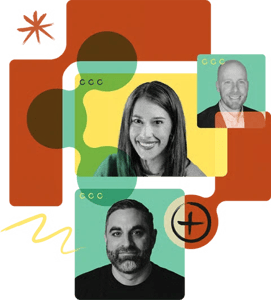
I'm Nick Day, founder of JGA Recruitment Group, a specialist payroll and HR recruitment business I started in 2008. The timing was, on paper, terrible. We launched two months before Lehman Brothers collapsed, in the middle of the worst recession most of us had ever seen.
But I had a conviction that has only deepened since: payroll is non-negotiable. Recessions come and go. People still need to be paid. That belief became the spine of everything I've built.
JGA has placed thousands of payroll and HR professionals across six continents and became B-Corp certified in 2024. Alongside recruitment, I host The Payroll Podcast and The HR L&D Podcast, interviewing more than 400 leaders, technologists, and change-makers in the profession.
Thinkers360 has ranked me the number one Global Thought Leader in Payroll for the past two years running, and PayrollOrg awarded me the Global Vision Award in 2024.
I am also an ILM Level 7 qualified executive coach and founder of T4M Coaching. That work has taken me to international stages, delivering keynotes on leadership, influence, fear, and the future of work.
In March of this year, I published my first book, The Payroll Pivot: From Invisibility to Influence, distilling much of what I have learned across two decades in the profession.
Payroll and HR professionals already have the expertise. They often lack the language and courage to claim the strategic seat they have already earned. I care most about helping them make that shift, from invisibility to influence. My ambition is to leave the profession stronger than I found it.
How AI can collapse timelines in market mapping

The moment I knew AI was changing how I lead came on a Tuesday morning in early 2025, sitting at my desk with a market mapping exercise that historically took my team a full week to produce.
I had spent the previous year deliberately upskilling. I completed a Python for Beginners course, which taught me that I did not need to understand code to take advantage of AI. I also completed the AI for Business Leaders certification with Code Institute, which gave me a practical framework for deploying AI. That Tuesday morning was the first time the investment clearly paid off.
A client presented us with a complex brief. They were building a global payroll function from scratch and needed to understand where talent existed across three regions, realistic salary bands, backgrounds that succeeded in similar roles, and which competitors were restructuring and likely to have available talent.
In our pre-AI workflow, this would have meant pulling three teammates off other work for most of a week, scraping LinkedIn, cross-checking salary surveys, calling contacts, and compiling the answer into a slide deck.
For a few months, I had experimented with a different approach. I gave the brief to an LLM inside a project workspace I had set up for our market research work, using our anonymized placement database, our salary benchmarking data, and a folder of completed market reports as reference material. I asked it to draft a first cut.
Forty minutes later, I had a structured market map with regional talent volumes, salary ranges, competitor signals, and named target companies. The work was not perfect. We spent half a day verifying figures, adding market intelligence from recent conversations, and removing companies with which the AI did not know we had relationships. But the bones of a week's work were on my screen before I finished my coffee.
Several factors made a difference in how I deployed it. We set up a dedicated project workspace inside our LLM, incorporating our own anonymized data, our brand voice samples, examples of strong and weak outputs, and a written brief defining what good looks like for our business.
We adopted a consistent prompt structure across the team, using the ROSES framework (Role, Objective, Scenario, Expected Solution, Steps). We use it for AI prompts, similar to how we use a structured interview format for candidates. It reduces hallucination, sharpens output, and makes the work auditable.
How AI can support recruiting and strategy

Additionally, AI now drafts candidate briefing documents from our intake notes. Our team then reviews and finalizes them. This cuts prep time on every search by roughly an hour and improves consistency across the team.
A structured AI workflow handles content production for our podcasts and newsletters, managing transcription, summarization, and first-draft show notes, which leaves editorial judgment to my team and me.
Our salary benchmarking analysis, formerly a quarterly manual exercise, now refreshes continuously against live market data.
And I also use AI in strategy and decision-making, but with specific discipline. I use it as a thinking partner rather than a decision-maker. When I work through a business question — whether a hiring decision, a new market we consider, or an org design challenge — I often ask AI to argue the opposite of my instinct.
This is the hostile prompt I mentioned earlier. That single habit has prevented me from making at least two decisions in the past year that I would have regretted.
We used to spend hours each day on work surrounding judgment rather than judgment itself: drafting role specifications, summarizing candidate calls, matching across thousands of placement records to understand why a specific payroll professional thrives in a specific business.
AI now does most of that in minutes. We use the recovered time for conversations with candidates and clients that shape outcomes.
How AI can hollow out what you stand for
But I draw a deliberate line. We have no plans to use AI avatars to interview candidates, even though the capability exists. As a business built on the quality of human relationships, deploying AI at the moment of human connection would hollow out everything we stand for. AI in our world helps a candidate prepare for the interview. It does not become the interview.
I am particularly cautious with culture and org design. AI is useful for stress-testing structures or modeling scenarios, but humans must do the cultural work themselves. The conversations, trust-building, and reading of what is not said. I would not delegate that to a machine, and I would be wary of any leader who would.
Before we automate anything, I now ask myself one question: "Should we?" This filter has become a core part of how I lead in an era dominated by AI-driven solutions.
How AI's sycophantic nature impacts leadership
AI is a sycophant. I do not think this is discussed enough.
Ask AI for feedback on something you have written, and it will tell you the work is strong. Challenge it on a position it has just taken, and it will fold and agree with you.
Ask whether your idea is any good, and it will tell you the idea is great. The defaults are designed to make you feel capable, which is a fine feature for casual use and a serious problem if you are using AI to sharpen your thinking.
Once I noticed the pattern, I started seeing it everywhere. So, I have built processes specifically to counter it, the most important being what I call a "hostile prompt." Rather than asking "What do you think of this?", I ask the AI to argue against it. "Take the position of someone who disagrees with this argument. Make the strongest possible case for why it is wrong."
That single shift surfaces weaknesses the default prompt would never have exposed, and I now teach it to every consultant and coaching client.
Alongside that, anything that matters in our business gets a human pair of eyes before it leaves the building. AI handles the first draft. The final word always sits with a person. That order is now non-negotiable.
The third thing is more personal. I have learned to be suspicious of how AI makes me feel. If I finish an interaction feeling validated and energized, that is a signal to slow down rather than speed up.
The most useful AI conversations I have are the ones that leave me uncomfortable, because they have pushed back, exposed something I had not seen, or made me reconsider a position I was already committed to.
AI handles the first draft. The final word always sits with a person. That order is now non-negotiable.
Why AI adoption requires a focus on behavioral change
Organizations buy AI faster than they prepare its users. AI promises speed, accuracy, and strategic uplift. The reality is quieter and messier.
Organizations deploy a tool, give its users a half-day demo, a Slack channel for questions, and vague instructions to "experiment." Six months later, the leadership team wonders why adoption isn't fully embedded, and productivity gains haven't materialized. The technology works. The systems around it do not.
They're underestimating the human piece of that equation, specifically the role of fear. They roll out AI as a technology program when they should run it as a behavior change program with technology inside. I changed our investment order.
Before deploying any new AI capability, invest in three things:
- Clarity about what the technology will and will not do, so imagination cannot fill the gap with worst-case scenarios
- Psychological safety, so the team feels able to admit what they do not understand without it being held against them at their next review
- Skill-building, both technical and behavioral, so people know they are being equipped, not replaced.
Only when those three foundations are in place should you touch the tool itself.
AI does not fail because the tool is wrong. It fails because people using it were never given permission to be human first.
How to build AI literacy
We started building AI literacy with the basics. I introduced the team to the ROSES prompt framework I mentioned earlier. This framework gave us a shared language for structuring prompts: Role, Objective, Scenario, Expected Solution, Steps.
That alone lifted the quality of outputs across the team within about a fortnight. We stopped treating AI like a search engine and started treating it like a researcher who needs a proper brief.
We also formalized governance. We introduced an internal AI usage policy. It sets out what data can and cannot be put into AI tools, where a human cross-check is mandatory, and what is entirely off-limits. Alongside that, every consultant receives training on the EU AI Act and its directives. We work with clients across Europe, and the regulatory environment is moving quickly.
Almost all the problems we encountered were human-related. Some consultants quietly stalled, embarrassed that they did not understand it. Others over-trusted the output and skipped verification. Therefore, building confidence around AI usage has been critical.
How to decide which AI tools are worth adopting
Our stack covers four layers:
- A core LLM environment where we conduct most of our research, drafting, and analysis, set up with project workspaces and our own data.
- A CRM that manages candidate and client relationships.
- A podcast and content production layer.
- A workflow layer that integrates everything.
The tools themselves are mostly commodities now. However, I still believe that a great team with average tools will outperform an average team with the best tools every time.
The principle I now apply to any tool decision is: does it remove friction from work that requires human judgment, or does it add another layer between the people we serve and us? If the latter, we do not buy it.
Why AI will polarize the recruitment industry
In the coming years, the high-volume transactional generalist market will hollow out entirely. AI will replace recruiters who compete on speed, volume, and access to LinkedIn, doing all three better and cheaper.
The remaining market will polarize. At the high end, specialist firms with deep sector expertise, real relationships, and the judgment to make complex hires defensible to a board. At the low end, fully automated platforms running the transactional work for a fraction of today's price.
The leaders who win the next five years will not be the most technically literate. They will be the most human. When everyone has access to the same AI, knowledge stops being the differentiator. Who you are willing to be in the room becomes everything. That will require courage and fearless leadership.
Leadership advice for integrating AI successfully
Here's my advice:
- Do the AI learning yourself before you ask your team to do it.
- Be ruthless about where AI does not belong in your business. The temptation to automate everything that can be automated is real, and it is wrong. Every leader needs a clear list of the moments in their work where the human being is the product, and they need to defend those moments out loud. If you do not, the technology will quietly creep into rooms it should never have entered, and by the time you notice, the trust you built over years will already be eroding.
- Build the human conditions before the technology. Psychological safety, clarity about what the tool does, and a culture that rewards people for saying they do not understand something. Without those, no rollout sticks, no matter how well-funded.
For leaders more broadly, my advice is simpler. The work AI cannot do is the work most leaders have been avoiding for years. The difficult conversations. The ethical judgment calls. Holding trust when everything around you is shifting.
That work is now the job, not the edge of the job, and the leaders who keep outsourcing it to busyness are going to find themselves overtaken by the ones who do not.
If you do not know where to start, start with fear. Yours first, then your team's. Fear is almost always the variable underneath the resistance, the over-promising, and the hesitation that gets dressed up as caution.
Name it for what it is, and most of what looks like a strategy problem turns out to be a courage problem.
Follow along
You can connect with Nick on LinkedIn, listen to his podcast, explore his executive coaching, or check out his book, The Payroll Pivot: From Invisibility to Influence.
More expert interviews to come on People Managing People!