Why Workflow Design Matters More Than Technology in AI Adoption
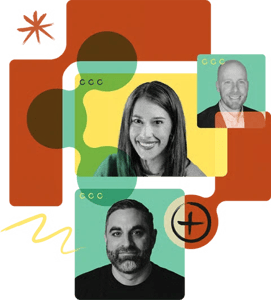
Domenico Gagliardi is the founder of Kortix.ai, a platform that orchestrates AI agents, turning the traditional leadership model on its head.

Domenico Gagliardi
Founder of Kortix AI
AI-first leadership is about designing systems, not making decisions: Domenico Gagliardi argues that modern leaders must shift from decision makers to system designers. Instead of delegating tasks to people, leaders design workflows where AI agents handle ~80% of execution, while humans focus on judgment, creativity, and vision. Guardrails matter more than approvals.
Real AI transformation starts with workflows, not tools: Most organizations fail with AI because they simply bolt it onto outdated processes instead of rethinking how work gets done. Domenico’s framework flips this approach by starting with workflow mapping, clearly identifying where human judgment genuinely adds value, automating everything else, and continuously auditing AI agents to ensure trust and explainability.
Persistent, learning agents create compounding advantage: Agents that learn preferences, context, and outcomes improve with every cycle, eventually outperforming their creators. This shifts AI from productivity gains to compounding intelligence, forcing changes in org design, pricing models, and even job titles.
In our interview, Domenico shared a framework for overhauling any workflow, as well as why AI adoption and literacy are lagging in most organizations.
AI-first leadership
I'm the founder of Kortix.ai. I spent 10+ years scaling engineering teams at Series B+ AI/ML startups and kept seeing the same problem: Companies had the tech but were still using pre-AI leadership models.
I built Kortix to prove a different approach—organizations that orchestrate AI agents instead of just directing people. We run the entire company on our own platform, which means I'm testing AI-first leadership in production every day.

How leaders are moving from decision makers to system designers
As a leader, my role has shifted from decision maker to system designer.
I don't delegate tasks to people anymore. I design workflows where agents handle 80% of execution and humans focus on judgment.
This required me to drop the assumption that more people = more capacity. It doesn't. Not anymore. We operate with 70% fewer people than comparable startups because we build better agent workflows.
It also required me to get comfortable with not being in the loop on everything. Our agents make hundreds of daily decisions without my approval. My job is setting guardrails, not approving actions.
How AI can amplify strategic thinking for modern leaders
AI in the workplace doesn't just automate grunt work, it amplifies strategic thinking.

Before, I'd spend hours gathering data and arrive at decisions mentally exhausted. Now, AI handles the first 90% (research, synthesis, scenario modeling) and delivers me to the decision point feeling fresh, and that's after exploring 10x more scenarios than before.
The mental space AI creates has unlocked creativity I didn't know I had. I used to measure my value by how much I could do. Now, I measure it by how well I think.
In other words, AI has made me more human; it has not made me obsolete.
Why treating AI as a worker instead of a tool changes everything
Right now, there's a big disconnect in how organizations are using AI. They see AI as a tool instead of as a worker.
Because of this, most companies bolt ChatGPT onto existing workflows and call it transformation, but humans still do 90% of the work.
The real promise of AI is autonomy: agents executing end-to-end workflows without human intervention. That's why we use the following framework:
- Map workflows first.
- Ask where human judgment adds unique value.
- Automate everything else.
- Make sure every AI decision is logged and explainable.
- Run weekly agent audits to build trust.
The companies that win in the future won't have the best tools — they'll have the best agents.
How AI agents can overhaul core business workflows
Here are some examples of workflows we've successfully overhauled with AI in business strategy:
- Hiring: Agent screens resumes, scores candidates, drafts emails, schedules interviews.
- Result: 3 hours/role → 15 minutes.
- Strategy: I frame a question. Agent gathers data, generates 3-5 options with pros/cons, models scenarios.
- Result: I make decisions with 10x more context in 1/10th the time.
- Org design: We map workflows first, then design roles around what humans uniquely add.
- Customer outreach: Agent searches LinkedIn daily for target profiles, enriches with company data, scores leads 0-10, drafts personalized messages.
- Result: 2-3 hours/day → 20 minutes. Response rate increased 4x.
- Content: Agent monitors trends, drafts content in my voice, creates platform-specific variations, schedules distribution.
- Result: 2x/week → 5x/week publishing, 3x engagement increase.
Why persistent memory is critical and problematic
I'm particularly excited about building agentic workflows with persistent memory.
The Reddit agent I built, for example, runs every day at 6 AM, it searches 15+ subreddits for keywords (AI agents, automation needs, competitor mentions), scores posts 0-10 on relevance/intent, drafts authentic responses, and sends me a digest. I choose which posts to engage with, and it remembers which ones I choose. It also learns my tone preferences and it tracks which responses got engagement.
The first month, I edited 80% of responses. But now, six months in, I only edit 5%, and mostly for strategic reasons. Coverage went from 20-30 posts/day to 200+. Response engagement increased 3x.
The agent writes better than I do now because it's analyzed thousands of interactions. This isn't automation, it's compounding intelligence. Every task makes it better at the next one. Once you experience AI that learns, you can't go back to AI that forgets.
Despite this particular success, though, persistent memory is a work in progress. Memories and understanding of context are key challenges in AI in learning and development today.
Here’s the biggest mistake leaders are making, when it comes to AI adoption: They’re treating it as a technology problem instead of a leadership problem. AI adoption isn’t about tools. It’s about rethinking how work gets done.

The mistake most leaders are making in AI adoption
Here's the biggest mistake leaders are making, when it comes to AI adoption: They're treating it as a technology problem instead of a leadership problem.
They buy ChatGPT licenses, run training workshops, add AI features, and measure adoption rates — then wonder why nothing changes.
AI adoption isn't about tools. It's about rethinking how work gets done. The real questions are:
- What work should humans do vs. agents?
- How do we redesign workflows from scratch?
- What does our org look like when agents handle 80% of execution?
Start with workflows, not tools. Redesign, don't optimize. And lead by example. AI transformation is a leadership shift, not a tech project.
Start with workflows, not tools. Redesign, don’t optimize. And lead by example. AI transformation is a leadership shift, not a tech project.
How to build real AI literacy: teach orchestration, not tools
We teach employees to orchestrate AI systems, not just use tools.
In week one, everyone maps their work as workflows (inputs, decision points, outputs) and builds their first agent. Then, we do weekly agent audits: What worked, what failed, and how can it be improved?
We train people to identify where human judgment is irreplaceable. Then, everything else gets automated. And teams share their agents across functions.
The three issues holding back AI adoption in most organizations
Even with all this, I'm seeing three common problems in AI adoption:
- Early fear of "AI will replace me." This is solved by showing that the employees who build the best agents get promoted.
- Over-reliance on AI without review. This is solved with mandatory audits.
- Workflow blindness: This is solved by coaching employees on why they must participate at points in the workflow, and how to do that.
AI-ready means thinking in systems, trusting but verifying, and knowing when to step in.
How to shift from buying tools to designing AI-first workflows
Here's our core stack:
- Kortix: Our platform runs every workflow
- Claude/GPT-4: We route based on task complexity
- Linear: Project management, integrated with agents that auto-triage bugs
- Slack: Human-AI collaboration hub
- Cursor: Development — you can tag cursor on Slack and make edits to your repo without touching the keyboard
- GitHub: Standard dev workflow
- Supabase: Backend
- Vercel: Deployment
- Resend: Email
- PostHog: Analytics with agent-surfaced insights
This has been heavily simplified from where we started. We removed Zapier, Make, Hubspot, and Calendly, replacing them with homegrown agents.
It's a philosophy shift: We moved from "buy tools" to "build workflows." If it doesn't integrate with our agent ecosystem, we replace it.
How agentic workflows are forcing strategic pivots
With the rise of agentic workflows, we're shifting from Software-as-a-Service to Agents-as-a-Service. From a practical perspective, that means our business model is moving from per-seat pricing to outcome-based pricing where you pay per task automated, not per user.

Our go-to-market strategy has changed from selling to mid-level managers to selling to CEOs/CFOs. Because we're competing with hiring, not other tools.
Our product strategy has changed too, from building features to building pre-configured agents for common workflows.
And as far as our value prop, it has changed from "save time" to "scale without hiring." We're selling AI-native infrastructure, not AI bolted onto old software.
How AI will change traditional roles by 2030
The traditional founder role will die in the next few years.
By 2030, "orchestrator-founders" will design fleets of AI agents instead of doing everything themselves. A single founder with 100+ agents will reach $100M+ ARR.
We'll stop hiring for execution — job titles will be "Agent Orchestrator" and "Workflow Architect." Agents will essentially be cofounders with specialized expertise that reason, learn, and improve.
Traditional SaaS will collapse. Companies will sell autonomous agents, not tools.
Org charts will show workflow handoffs between agents and humans, not reporting lines.
The economics are inevitable: Hiring an employee costs $100K+/year, deploying an agent costs $1K-$10K/year.
Companies that don't adapt will be Blockbuster in 2010.
What leaders should do now to design AI-first organizations
Here's my advice:
- Stop optimizing old workflows — redesign them from scratch with AI-first thinking.
- Trust the system you designed, not individual AI tasks.
- Hire for judgment and systems thinking, not execution.
- Eat your own dog food before rolling out to teams.
- Measure leverage (output per system), not productivity (output per person).
- Embrace the discomfort of not "doing enough" — your value is in judgment, creativity, and vision now.
- Move fast, but build trust through transparency and iteration.
- Think in decades, act in days.
- And don't wait for permission — start with your own workflows, prove value, then scale.
And I'll say this: AI doesn't replace leadership — it amplifies it.
Follow along
You can follow Domenico Gagliardi on LinkedIn and X as he continues changing the leadership game. And check out Kortix.ai.
More expert interviews to come on People Managing People!
Ready to rethink the AI era?
Join the People Managing People community. Free accounts give you weekly insights, practical frameworks, and peer strategies to help you lead smarter, not harder.