Head of Talent Insights Breaks Down How AI Can Make HR More Strategic and People-focused
Learn how AI helps HR teams become more strategic by automating admin work, integrating talent data, and improving decisions, with real examples from a talent insights leader, Trent Cotton.

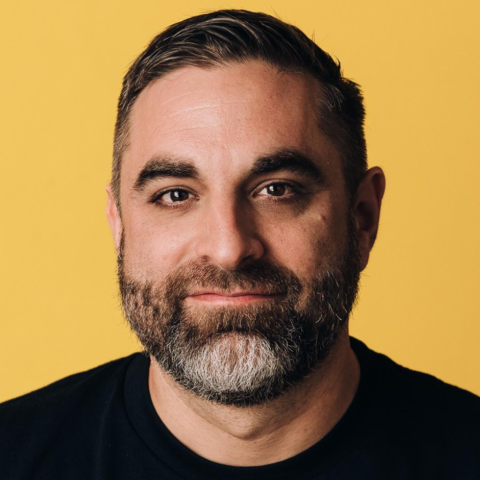
Trent Cotton
Head of Talent Insights at ICIMS

Talent-Insight: Trent Cotton explains how AI transforms HR into a strategic, people-focused function using talent portfolios.
AI-Enhancement: Artificial intelligence allows HR to focus on strategic tasks by automating routine administrative work.
Leadership-Shift: AI tools enable leaders to design dynamic systems that adapt as technology and workflows evolve.
Decision-Advancement: AI enhances decision-making by providing real-time insights and scenario testing for strategic planning.
AI-Integration: Embedding AI into workflows and leadership drives efficient communication and tailored employee development.
Trent Cotton is the Head of Talent Insights at ICIMS, a leading enterprise talent acquisition provider. He helps leaders build high-performance HR teams by turning workforce data and AI into coherent narratives, strategies, and decisions. He is also the creator of Sprint Recruiting and a podcast called The Human Capitalist.
We caught up with him to learn how AI is making HR more strategic and people-focused. Here's what he told us.
The Intersection of Talent, Tech, and Transformation
I’m Trent Cotton, Head of Talent Insights at ICIMS and the creator of Sprint Recruiting and The Human Capitalist podcast. For the past 20+ years, I’ve sat at the intersection of talent, tech, and transformation, rebuilding recruiting models and People functions in organizations that care more about outcomes than optics.
I started in banking, moved into HR and talent acquisition, and realized quickly that traditional HR playbooks weren’t built for the pace of modern business. I adapted agile principles into recruiting, which became Sprint Recruiting and, eventually, a broader philosophy for how People functions can operate like true business units, not internal service desks.
Today, my work focuses on turning workforce data — based on candidate and employer activity from thousands of customers worldwide — and AI into stories, strategies, and decisions leaders can run their business on.
AI helps me go from “here’s a dataset” to “here’s the story, risk, and decision” much faster, without skipping the nuance. I can turn labor market signals into something an executive can act on in five minutes.
How AI will make HR more strategic and people-focused
AI makes HR more strategic and people-focused when it stops being “another tool” and becomes the connective tissue across the entire talent lifecycle.

AI makes HR more strategic and people-focused when it stops being “another tool” and becomes the connective tissue across the entire talent lifecycle. That’s the core argument behind the AI-powered talent portfolio manager that I envision: AI does the stitching and surfacing, so HR can finally do the leading and coaching.
Let's break that down.
From transactions to talent portfolios
Today, HR spends too much time chasing disconnected processes — reqs over here, internal mobility there, learning in another system. AI changes that by:
- Integrating data from recruiting, internal mobility, performance, and learning into a single talent portfolio view for each business unit.
- Making skills, potential, and mobility paths visible in one place instead of buried in separate platforms.
- Continuously surfacing “who, where, and what next?” so leaders can make better calls on build/buy/borrow talent decisions.
Once that happens, HR’s strategic value becomes obvious. You’re not just filling seats, you’re managing a living portfolio of capabilities aligned to strategy.
For many organizations, this may not happen all at once. Most teams start by applying AI to one or two high-friction workflows, then expand as they build confidence and capability.
Freeing capacity for real human work
AI is already taking over chunks of the work that quietly consume HR’s calendar, such as screening, scheduling, document prep, basic policy Q&A, status updates, and workflow routing.
Importantly, this is not about reducing the role of HR. It is about elevating it. The goal is to remove repetitive work so HR teams can spend more time on judgment, coaching, and business impact.
When you intentionally point AI at that layer, you create capacity for HR to:
- Spend more time with hiring managers designing roles, not just posting them.
- Have deeper, data-backed conversations with employees about careers, skills, and mobility — not just annual performance reviews.
- Act as true consultants to the business on workforce strategy instead of ticket processors.
In other words, AI doesn’t make HR “less human”, it removes the administrative drag that’s been keeping HR from showing up as a strategic, people-first function.
In fact, according to our survey of 250 talent acquisition leaders, 84% say improving recruiter efficiency through AI is their top priority.
Elevating HR into a portfolio manager and “agent boss” with AI
The AI-empowered talent portfolio manager is someone who owns the full picture of external and internal talent, and uses AI to orchestrate, not just operate. That role:
- Co-develops workforce strategies with business leaders in every intake or planning conversation, using AI agents to test scenarios in real time.
- Oversees both external pipelines and internal development paths, using AI to highlight risk, potential, and succession options.
- Becomes the central point of contact for talent strategy, workforce planning, and capability building at the business-unit level.
In parallel, you get “agent bosses:” HR and business leaders who don’t just use tools, they manage AI agents that run sourcing, matching, nudging, and monitoring behind the scenes. That shift — from doing the work to directing the system — is where HR becomes truly strategic.
Making conversations better with AI, not just faster
The real unlock is in how AI changes the quality of people's conversations, not just their speed. With integrated, AI-enhanced insights, HR can walk into a meeting and say:
- “Here’s the capability mix in your team today, here’s what your strategy requires, and here are three portfolio moves we can make.”
- “Here are the internal employees who could step into these roles with targeted development, and here’s the risk if we don’t move them.”
- “Here’s how this hiring decision impacts diversity, succession, and bench strength over the next 12–24 months.”
This means strategic workforce design grounded in real people, real potential, and real tradeoffs.
Once AI handles the low-value work, what you do with the freed capacity will determine how strategic and truly people-centric your HR function becomes.
How AI Overhauls Decision-making and Strategy
Personally, I treat AI as a collaborator in thinking, not just a production engine. When teams use it to ask better questions — not just work faster — the quality of strategy, messaging, and experimentation improves.
AI touches almost every part of my work:
- Strategy: I use AI to scenario plan for labor market shifts, AI disruption, and talent risks, then translate that into clear options for leaders. I use it as a sparring partner when I need to communicate a topic or idea.
- Decision-making: AI accelerates the “first draft” of an answer, but I still own the call. Its speed eliminates the blank page and surfaces tradeoffs faster. I think of it as my Jarvis (from Ironman). It's a sidekick who helps me develop angles to ensure more data-inclusive decision making.
- Content and thought leadership: AI-augmented agents power my social presence, helping me stay abreast of current events. Before this tool, I would drown in the news. Now, I can stay ahead and remain a leading and advisory voice in the market.
I think of AI as my Jarvis (from Ironman). It’s a sidekick who helps me develop angles to ensure more data-inclusive decision making.
While my approach is personal, the same principles scale across teams: embedding AI into workflows, decision-making, and communication patterns in ways that are structured, repeatable, and aligned to the business.
How AI Creates More Dynamic Leadership
AI has forced me to think less about static org charts and more about dynamic workflows that can be rewired as the tech and the work evolve. My role has shifted from “leader of a function” to “designer of systems that learn.”
As a result of AI, I’ve had to let go of a few long-held assumptions:
- That span of control equals impact. With AI, leverage matters more than headcount.
- That leaders need to personally “own” every decision. Now, my job is to architect decision flows where humans and machines each do what they’re best at.
- That structure must be fixed. I’m more comfortable piloting temporary “pods” around problems, then dissolving or reshaping them as value moves.
How AI Helps Leaders Communicate
I decided to integrate AI directly into my leadership team coaching, and it changed the way I lead. We had years of assessment data — DISC, StrengthsFinder, and other leadership profiles — but most of it resided in slide decks and binders. I integrated all those results into an AI knowledge base and used it as a live coaching assistant.
In one-on-ones and team sessions, I could instantly surface a leader's communication preferences, what energized them, and where conflict patterns might emerge between styles. Then, I translated that into concrete “here’s how to approach this person” guidance.
It also changed the way I lead conversations. It went from giving me generic advice like — “communicate more” or “collaborate better” — to highly-tailored coaching like, “Because you’re high D and they’re high S, here’s the language and pace that lands with them.”
All of this makes the leadership team better leaders, and me a better coach, by transforming static assessment data into dynamic, in-the-moment insight for immediate action.
Why AI Should Be Used as an Interface
I rely heavily on AI assistants for research synthesis, content drafting, and idea testing. I also use video platforms personally for my channels.
Over the last year, I've moved from “AI as an app” to “AI as an interface”— I’m increasingly working inside environments where AI is embedded into search, writing, analysis, and scheduling, not hopping between single-purpose tools.
To analyze data, I usually use Claude and Gemini. Both help me analyze trends I didn't consider. My favorite question to ask in a prompt is, "Tell me one or two trends you're seeing that I did not ask about."
I use Perplexity Spaces for content and Claude Co-Work for my agents.
Why Leaders Must Understand AI's Value Before Making Big Changes
Most companies redesign org charts before they understand where AI creates value. They slash roles, collapse teams, and declare victory, but they haven’t done the hard work of mapping workflows, decisions, and failure modes in an AI‑powered environment.
Here's how organizations and leaders can change that:
- Treat AI as a hypothesis, not an answer. Run small, instrumented experiments before locking in structural changes.
- Design around value streams — how value moves from problem to customer — not departments.
- Ask a simple question before any AI initiative: “What decision or constraint are we trying to change, and how will we know if it's changed?”

How Leaders Should Approach AI Transformation
Additionally, leaders should treat AI as an organizational design project, not an IT project. If you only chase tools, you’ll get local efficiencies and global confusion.
A few practical principles I share often:
- Start with a map of decisions, not a list of job titles. Where do your most important, expensive, or error-prone decisions live?
- Design “human in the loop” by default, then selectively remove humans where risk is low and feedback loops are strong.
- Give your teams permission to challenge old metrics, processes, and policies when AI makes them obsolete. If you keep measuring yesterday, you’ll keep optimizing the wrong things.
How to Build AI Literacy for an AI-ready Team
AI literacy is less about “can you prompt?” and more about “can you design a use case and judge the output?”
I focus on three capabilities: understanding where AI fits in a workflow, knowing how to interrogate results, and being clear on the risks and ethics around People decisions.
An AI‑ready organization looks like this:
- Teams have explicit guidelines for when AI can assist, when humans must decide, and when certain data is off-limits.
- Experimentation is easy and expected. Small pilots are part of the culture, not special projects.
- Leaders are comfortable saying, “I don’t know, let’s test it,” instead of defaulting to old playbooks or shiny-object deployments.
And remember, even non-technical people can become power users when you frame AI in terms of problems they care about, rather than features.
Some of the best use cases I’ve seen didn’t come from the “AI people”, they came from recruiters, HRBPs, and operators who were given permission to tinker and challenge old rules.
Think of entry-level or early-career roles. AI augmenting these roles compresses the ramp-up time to ROI. I think this will shift the way we work and what we focus on.
How Leadership Will Split with AI-driven Workflows
Over the next five years, thriving leaders will continuously redesign how work gets done, rather than just setting a strategy and cascading it.
Leaders will less often command and control and more often sense, synthesize, and re-architect — especially as agentic systems start handling entire workflows end to end.
A real split will emerge between leaders who treat AI as a cost-cutting lever and those who use it to increase the organization's capacity to learn, echoing perspectives on AI's necessity in redefining HR value.
The latter will attract better talent, move faster with less burnout, and build People functions that are finally aligned with how value moves through the business.
Follow along
Check out Trent Cotton's podcast, The Human Capitalist where he helps leaders build high-performance HR teams. Find the rest of his offerings here or take a look at ICIMS talent insights and research reports. And connect with him on LinkedIn.
More expert interviews to come on People Managing People!