HR Tech Founder And Seasoned CHRO Says HR Leaders Are Navel-gazing Instead Of Seizing New AI Opportunities
Most HR leaders are optimizing the past. Dean Carter explains why AI demands we build for what doesn’t exist yet and how to actually get there.

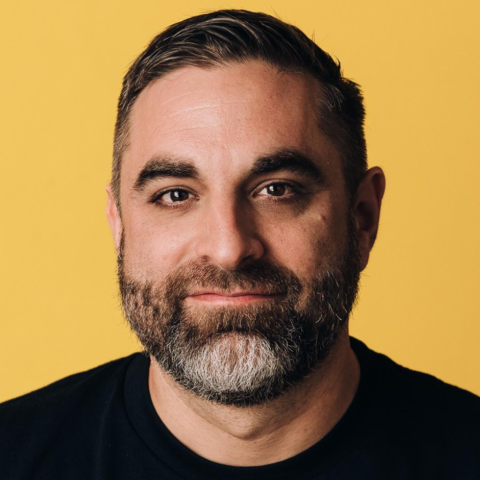
Dean Carter
CEO of Instill

Embracing AI: Define your specific problem before integrating AI, recognizing its limitations alongside its capabilities.
HR Evolution: HR should look beyond existing workflows and leverage AI for innovative opportunities that enhance business value.
Playful Learning: Encourage teams to experiment with AI tools at home to foster understanding and practical application.
Tools Overview: Dean uses various AI tools like Gloat and Rippling to enhance HR processes and performance tracking.
Future Readiness: HR leaders need to stay adaptable and connected, as roles will significantly evolve due to AI advancements.
Dean Carter is the CEO of Instill, an AI company in the HR industry that aligns culture signals in meeting conversations to actions and outcomes.
Previously, he was CHRO at the likes of Fossil and Sears, and held related C-level positions at Patagonia and Guild. And he's also the author of the bestseller, Employee Experience Design: How to Co-create Work Where People and Organizations Thrive.
We caught up with Dean to discuss how he's using AI to transform his work and where HR leaders are getting the wrong end of the stick. Here's what he had to say.
A Seasoned Eexecutive
For almost 25 years, I was CHRO for Fossil, Sears/Kmart, Patagonia, and Guild. My longest tenure was at Patagonia, where I held a Chief Administrator role.
I began my career, after graduating from the University of Texas at Austin with a degree in Organizational Communication, as a sales executive at Procter & Gamble. Prior to my first HR role at Fossil, I held a series of increasingly expansive leadership roles at Pearle Vision and Pier 1 Imports.
Why Embracing Partial Solutions Is Key In AI Adoption
Many people jump into AI without a clear problem to solve. It's important to define your problem first. Then, you have to keep in mind that, while LLMs are amazing, they have serious limitations and challenges because they're built to please and continuously engage.
So, it's a mistake to bring something to AI, thinking it will completely solve a problem for you.
Eighty percent of what AI gives me is great, and that's all I need. I no longer need or want a final solution, image, or answer. I want it to do the knowledge collection and assimilation legwork — the stuff that takes more time than brain power — and then I can use my time and brain to shape the final, challenging, and wonderful twenty percent.
Why HR Must Expand Its Horizons With AI

With that said, I think HR is overly focused on overhauling workflows and org design. That’s a drop in the bucket. It has almost zero return on investment for a business.
We are navel-gazing by applying AI to what already exists. Instead, we should be looking out at the totally new horizon that is being created by AI.
How To Build AI Literacy And Readiness In Teams

At a previous company, we dumped Gemini onto everyone's PC and told them to use it for work, but not to mess things up. That's not how people learn.
People build AI literacy by safely playing with it. Play is the best way to learn and build literacy. The more people play with it, the more they understand its possibilities and limits. This translates to their work. That's why I highly recommend that leaders reimburse ChatGPT, Gemini, and Claude expenses for every employee to play with at home.
When leaders ask their team things like, "Could you break down your work into tasks and skills so we can ensure we get 'value' from AI?" most people take it to mean, "How can I reduce headcount?" Despite what leaders say, people see what they do, and it doesn't feel authentic.
This is easily avoidable. I'm not saying to announce that you laid off a bunch of people because AI could do their tasks and replicate their skills. But be transparent and have a strong reskilling program for those impacted.
How Leaders Can Foster Innovation
Here's something to remember as you and your team adopt AI.
If an external vendor uses AI to solve a problem, and the AI does not touch your systems, it's just another great solution. It shouldn't get stuck in the bureaucracy of newly formed AI governance groups, which, despite good intentions, can become real blockers for progress.
How AI Tools Enhance HR Leadership Effectiveness
Here are the main AI tools I use:
- Gloat: I use Gloat to assess the skills and capabilities needed to get work done.
- Rippling: I use Rippling to automate all of our HR processes and workflows.
- Instill.ai: I'm biased on this one. Instill helps me passively understand the behaviors and experiences that drive company performance and thriving humans.
Of course, I'm still a fan of my pocket smart buddies. I use them daily to accelerate my impact at home and work:
- ChatGPT: I use ChatGPT for general concept conversations.
- Claude: I use Claude for more sophisticated work, like building a financial analyst agent.
- Perplexity: I use Perplexity for data and fact-checking.
Each of these is very different, and I test them to see which one best addresses specific issues. We also build our product on Claude, and I'm using OpenClaw to build assessment and financial modeling tools.
How AI Overhauls HR Workflows And Organizational Design
AI is making new things possible in HR.
Two years ago, while leading HR at Guild, we quickly adopted AI for basics like job descriptions and postings. I encouraged teams to experiment with it, and they began using it to gather information in minutes that previously took hours to research.
As another example, in the past, we relied on surveys and pulses, which we all knew were inadequate. Now, I use an AI-native system that detects and quantifies observable behaviors in virtual meetings, and I then use this data to understand what is shaping the team culture.
Each meeting participant receives curated insights focusing on their effective behaviors and providing recommendations for the next meeting. We roll up meeting data by team and leader all the way to the full organization.
This would have been impossible to do in the past without AI.
Why HR Leaders Must Stay Nimble In The Years To Come
We cannot predict the next five years, so you need to be on your feet, ears to the ground, wildly connected to people innovating on the edge, and curious.
Every role will change dramatically, and people are hallucinating more than ChatGPT if they don't think it will impact their roles!
My hope is that this creates more meaningful work and opportunity. My fear is that this will consolidate opportunity within fewer and fewer people.
How HR Leaders Can Get Ahead With AI

Here's my advice:
- When adopting AI, think evolution — not revolution.
- Remember that play is learning.
- Start with a problem, then seek solutions.
- Be patient with slow adopters, people go through change at different speeds.
- And remember that AI does not replace wisdom or experience. The value is in wisdom and experience, plus AI.
Follow Along
You can follow Dean's work on LinkedIn or check out his company website.
More expert interviews to come on People Managing People!