

10 alternatives à Thinkific pour la formation des employés en 2026

Sélection des meilleures alternatives à Thinkific


Gérer l'apprentissage et le développement de votre équipe peut être un véritable défi. Si vous recherchez des alternatives à Thinkific, c'est probablement parce que vous cherchez une solution mieux adaptée à vos besoins spécifiques. Vous rencontrez peut-être des problèmes d'évolutivité ou vous avez besoin de davantage d'options pour créer ou personnaliser des cours en ligne, comme des modules, la conformité SCORM ou un centre de formation dédié.
D'après mon expérience, trouver le bon système de gestion de l'apprentissage (LMS) peut faire toute la différence, et je suis là pour vous aider à explorer les différentes options. Dans cet article, je vous présenterai mes meilleures alternatives à Thinkific. Vous découvrirez ce que chaque plateforme propose afin de pouvoir faire un choix éclairé qui répond aux exigences propres à votre équipe.
Qu'est-ce que Thinkific ?
Thinkific est un système de gestion de l'apprentissage conçu pour vous aider à créer et à vendre des cours en ligne. Il est couramment utilisé par les formateurs, les entrepreneurs et les entreprises qui souhaitent proposer des formations ou du contenu pédagogique. Des fonctionnalités telles que les outils de création de cours, les certifications, les intégrations marketing et les analyses vous aident à mobiliser les apprenants et à développer votre activité. La plateforme propose un large éventail d'options de paiement, des forfaits de base aux services premium, afin de répondre aux besoins des organisations de toutes tailles. Dans l'ensemble, Thinkific propose une plateforme conviviale qui vous aide à gérer et à diffuser efficacement du contenu pédagogique.
Tableau comparatif des alternatives à Thinkific
Ce tableau comparatif récapitule les détails tarifaires de mes meilleures alternatives à Thinkific.
| Tool | Best For | Trial Info | Price | ||
|---|---|---|---|---|---|
| 1 | Idéal pour le perfectionnement des effectifs piloté par l’IA à grande échelle | Démonstration gratuite disponible | Tarification sur demande | Website | |
| 2 | Idéal pour les systèmes de gestion de l’apprentissage en entreprise | Essai gratuit de 30 jours disponible | À partir de $24/mois (facturé annuellement) | Website | |
| 3 | Idéal pour les entrepreneurs individuels | Essai gratuit de 30 jours disponible | À partir de $33/mois + frais de transaction de 5% (facturés annuellement) | Website | |
| 4 | Idéal pour l’intégration à WordPress | Garantie de remboursement de 30 jours | À partir de $199/an | Website | |
| 5 | Idéal pour créer une communauté | Essai gratuit de 14 jours + démonstration gratuite disponible | À partir de $79/mois (facturé annuellement) | Website | |
| 6 | Idéal pour les outils professionnels tout-en-un | Essai gratuit de 14 jours disponible | À partir de $71/mois (facturé annuellement) | Website | |
| 7 | Idéal pour les fonctionnalités d’application mobile | Essai gratuit disponible | À partir de $29/mois | Website | |
| 8 | Idéal pour les sites d’adhésion WordPress | Démo gratuite disponible | À partir de 199,50 $/an | Website | |
| 9 | Idéal pour les grandes bibliothèques d'apprentissage en ligne prêtes à l'emploi | Essai gratuit de 14 jours + démonstration gratuite disponible | À partir de $30/utilisateur/mois (facturé annuellement) | Website | |
| 10 | Idéal pour personnaliser sa marque | Essai gratuit de 14 jours + forfait gratuit + démonstration gratuite disponible | À partir de $41/mois (facturé annuellement) | Website |
Pourquoi faire confiance à nos avis sur les logiciels
Notre équipe teste et évalue des logiciels depuis 2012. En tant qu’experts RH nous-mêmes, nous savons à quel point il est difficile — et important — de choisir le bon logiciel.
Pour ce guide, nous avons évalué les outils grâce à des tests pratiques et une recherche indépendante, en notant les outils selon nos critères de sélection. Nous nous appuyons également sur les enseignements de leaders d’opinion du secteur et de professionnels des RH en activité.
Nos avis reflètent notre jugement éditorial humain, et non un argumentaire de vente.
Réviseurs experts:
Avis sur les meilleures alternatives à Thinkific
Vous trouverez ci-dessous mes résumés détaillés des meilleures alternatives à Thinkific qui figurent dans ma sélection. Mes avis présentent en détail les principales fonctionnalités, les avantages et les inconvénients, les intégrations ainsi que les cas d’utilisation idéaux de chaque outil, afin de vous aider à trouver celui qui vous convient le mieux.

Absorb
Idéal pour le perfectionnement des effectifs piloté par l’IA à grande échelle

Absorb est un système de gestion de l’apprentissage conçu pour les organisations qui souhaitent moderniser la formation de leurs employés, automatiser leurs besoins en matière de conformité et proposer des options flexibles de perfectionnement à des effectifs diversifiés.
À qui Absorb convient-il le mieux ?
Absorb convient bien aux équipes des ressources humaines et de la formation des moyennes et grandes organisations à la recherche d’une gestion centralisée et pilotée par l’IA de la formation et de la conformité des employés.
Pourquoi Absorb est une bonne solution parmi les meilleures alternatives à Thinkific évaluées
J’ai choisi Absorb parce que ses outils de perfectionnement pilotés par l’IA permettent à mon équipe d’automatiser le suivi de la conformité et de personnaliser les parcours d’apprentissage à grande échelle. Les analyses intelligentes nous montrent clairement les progrès réalisés dans le développement des compétences au sein des équipes internationales, ce qui facilite la progression de chacun à mesure que les exigences évoluent.
Principales fonctionnalités d’Absorb
- Création de cours personnalisés : Concevez vos propres modules de formation interactifs à l’aide d’un outil de création de cours par glisser-déposer.
- Compatibilité SCORM et xAPI : Importez, suivez et gérez des cours conçus selon ces normes majeures de formation en ligne.
- Contrôles d’accès fondés sur les rôles : Attribuez différentes autorisations et différents niveaux de visibilité du contenu à des groupes ou à des personnes en fonction de leurs rôles.
- Portails d’apprentissage à votre image : Personnalisez l’interface de formation avec le logo, les couleurs et les messages de votre organisation.
Intégrations d’Absorb
Absorb propose des intégrations natives avec Salesforce, LinkedIn Learning, Zoom, Microsoft Teams, BambooHR, Workday, Okta et ADP. Une API est disponible pour les intégrations personnalisées.
Pros and Cons
Pros:
- L’IA suggère des parcours de perfectionnement pour chaque apprenant
- Le suivi de la conformité automatise les rappels et les rapports
- Les analyses montrent les progrès en temps réel au sein des équipes
Cons:
- L’application mobile ne propose pas certaines fonctionnalités de la version de bureau
- La création de cours peut sembler moins intuitive
New Product Updates from Absorb
Absorb Expands Instructor-Led Course Session Management
Absorb adds multi-class sessions, recurring classes, conflict indicators, and learner enrollment during setup for instructor-led courses. These updates give admins more control over scheduling and session management. For more information, visit Absorb’s official site.
 .
.
Idéal pour les systèmes de gestion de l’apprentissage en entreprise

LearnWorlds est un LMS conforme à SCORM conçu pour les entreprises afin de les aider à créer, commercialiser et vendre des cours en ligne. Il s’adresse aux entreprises à la recherche d’une plateforme évolutive et personnalisable pour leurs besoins de formation.
Pourquoi LearnWorlds est une bonne alternative à Thinkific : LearnWorlds offre des options de personnalisation avancées qui vous permettent d’adapter la plateforme à votre marque et à vos exigences de formation spécifiques. Ses fonctionnalités vidéo interactives renforcent l’engagement des apprenants, ce qui la rend particulièrement adaptée aux entreprises. La plateforme fournit également des analyses avancées pour suivre la progression des apprenants et l’efficacité des cours. Ces fonctionnalités en font un choix solide pour les organisations qui ont besoin d’une solution de formation complète. Son forfait Learning Center est l’option la plus populaire auprès des entreprises établies.
Fonctionnalités et intégrations remarquables :
Les fonctionnalités incluent des capacités vidéo interactives, des outils avancés de création de cours et des options de personnalisation de la marque. Ces fonctionnalités vous aident à créer des expériences d’apprentissage attrayantes et personnalisées pour votre équipe.
Les intégrations incluent Zoom, Zapier, Mailchimp, Google Analytics, HubSpot, Stripe, PayPal, AWeber, Kit et bien plus encore.
Pros and Cons
Pros:
- Fonctionnalités vidéo interactives
- Analyses approfondies
- Évolutif pour les entreprises
Cons:
- Processus de configuration complexe
- Variété de thèmes limitée

Podia
Idéal pour les entrepreneurs individuels

Podia est une plateforme en ligne qui vous permet de créer, de promouvoir et de vendre des cours en ligne, des abonnements et des téléchargements numériques. Elle est idéale pour les entrepreneurs individuels et les propriétaires de petites entreprises qui souhaitent monétiser leur expertise.
Pourquoi Podia est une bonne alternative à Thinkific : Podia propose une plateforme tout-en-un qui simplifie la création et la vente de contenu. Grâce à des fonctionnalités telles que les campagnes d’e-mails, le marketing sur les réseaux sociaux et le chat en direct, vous pouvez interagir directement avec votre audience. La plateforme fournit également un hébergement illimité, ce qui est avantageux pour développer votre bibliothèque de contenus. Ensemble, ces fonctionnalités en font un excellent choix pour les débutants et les entrepreneurs individuels.
Fonctionnalités et intégrations remarquables :
Les fonctionnalités comprennent le marketing par e-mail intégré, la messagerie instantanée en temps réel pour interagir directement avec les clients et l’hébergement illimité de vos contenus. Ces fonctionnalités peuvent vous aider à gérer votre activité et à développer efficacement votre audience.
Les intégrations comprennent Mailchimp, Kit, ActiveCampaign, Drip, Zapier, Stripe, PayPal, Google Analytics, Facebook et bien plus encore.
Pros and Cons
Pros:
- Plateforme tout-en-un
- Hébergement illimité
- Fonctionnalités de marketing par e-mail intégrées
Cons:
- Fonctionnalités avancées limitées
- Pas d’application mobile

Idéal pour l’intégration à WordPress
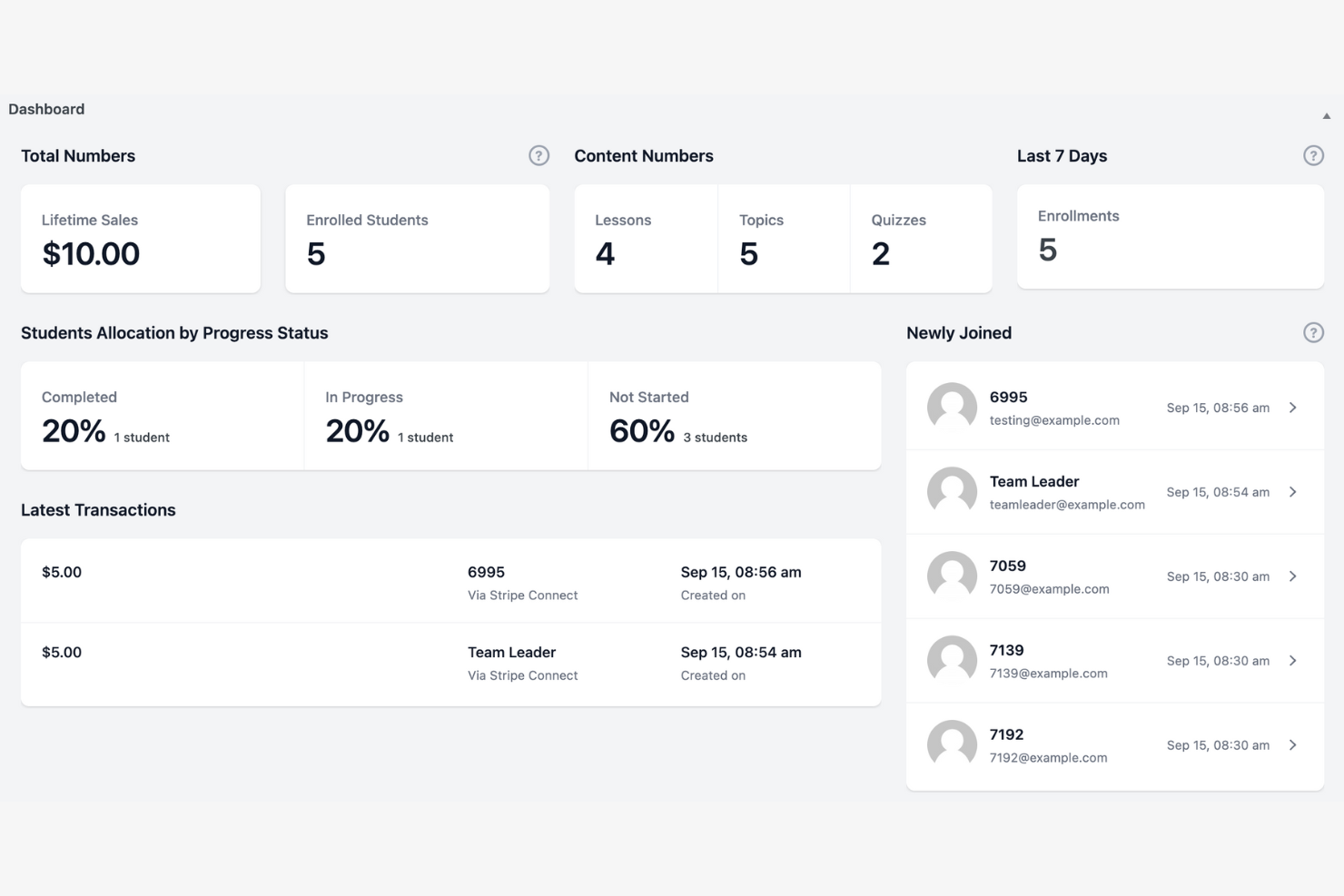
LearnDash est un LMS qui s’intègre à WordPress pour proposer des cours en ligne. Il est populaire auprès des enseignants et des entreprises qui souhaitent tirer parti de WordPress pour créer et diffuser des cours, et propose diverses solutions de référencement naturel pour contribuer à accélérer la croissance.
Pourquoi LearnDash est une bonne alternative à Thinkific : LearnDash offre une intégration étendue avec WordPress, ce qui vous permet d’utiliser les thèmes et extensions WordPress existants pour bénéficier d’une plus grande flexibilité de conception. La plateforme propose des options avancées de création de quiz et du contenu diffusé progressivement, vous donnant le contrôle sur la diffusion des cours. Ces fonctionnalités en font un choix solide pour les personnes qui utilisent déjà WordPress.
Fonctionnalités et intégrations remarquables :
Les fonctionnalités comprennent des options avancées de création de quiz, du contenu diffusé progressivement et des certificats de fin de cours. Ces outils vous aident à mobiliser les apprenants et à valider leurs réussites.
Les intégrations comprennent WooCommerce, BuddyPress, bbPress, Gravity Forms, Stripe, Zapier, Slack et bien plus encore.
Pros and Cons
Pros:
- Intégration approfondie à WordPress
- Options avancées de création de quiz
- Prend en charge le contenu diffusé progressivement
Cons:
- Nécessite des connaissances en WordPress
- Pas d’hébergement vidéo intégré

Idéal pour créer une communauté

Mighty (également connu sous le nom de Mighty Networks) est une plateforme conçue pour permettre aux créateurs et aux entrepreneurs de créer des communautés, de proposer des cours et d'organiser des événements. Elle est idéale pour ceux qui cherchent à favoriser l'engagement et l'interaction avec leur audience.
Pourquoi Mighty est une bonne alternative à Thinkific : Mighty excelle dans la création de communautés dynamiques parallèlement à des contenus éducatifs. Grâce à des fonctionnalités telles que les profils des membres et les fils d'activité, vous pouvez encourager l'interaction et l'engagement. La possibilité d'organiser des événements directement au sein de la plateforme ajoute un niveau supplémentaire de connexion. Ces outils de création de communauté en font un choix solide si vous souhaitez développer les relations.
Fonctionnalités et intégrations remarquables :
Les fonctionnalités comprennent des profils de membres personnalisables, des fils d'activité et des fonctionnalités d'organisation d'événements. Ces fonctionnalités favorisent les interactions au sein de la communauté et maintiennent l'engagement de votre audience.
Les intégrations comprennent Zapier, Stripe, PayPal, Vimeo, Zoom, Mailchimp, Google Analytics, WordPress, Kit, Slack, et bien plus encore.
Pros and Cons
Pros:
- Solides outils de création de communauté
- Fonctionnalités d'organisation d'événements
- Profils de membres personnalisables
Cons:
- Personnalisation limitée des cours
- Nécessite une gestion active de la communauté

Kajabi
Idéal pour les outils professionnels tout-en-un

Kajabi est une plateforme conçue pour les entrepreneurs et les petites entreprises, qui vous permet de créer, commercialiser et vendre des cours en ligne, des abonnements et des programmes de coaching. Elle fournit une gamme d’outils de contenu, de vente, de CRM et de marketing pour vous aider à gérer ces processus au même endroit.
Pourquoi Kajabi est une bonne alternative à Thinkific : Kajabi propose une suite intégrée d’outils pour la création de sites web, l’email marketing et l’automatisation des entonnoirs de vente. Son approche tout-en-un vous permet de gérer plusieurs aspects de votre activité sans avoir besoin d’outils distincts. Grâce à ses thèmes de sites web et à ses pages de destination personnalisables, vous pouvez créer une présence de marque cohérente, tandis que les outils d’analyse et de reporting vous donnent des informations sur le comportement de l’audience et les performances commerciales. Kajabi prend également en charge la configuration de programmes d’affiliation et le marketing d’affiliation, et propose une gamme d’offres payantes, des offres Kickstarter aux offres Pro, pour répondre aux besoins des entreprises en croissance.
Fonctionnalités et intégrations remarquables :
Les fonctionnalités comprennent des outils de podcast, des thèmes de sites web personnalisables, des pages de destination et l’automatisation de l’email marketing. Ces outils vous aident à créer une marque cohérente et à gérer efficacement vos efforts marketing.
Les intégrations comprennent Zapier, Mailchimp, Drip, ActiveCampaign, Kit, Stripe, PayPal, Google Analytics, Segment, Meta Pixel, et bien plus encore.
Pros and Cons
Pros:
- Créateur de sites web personnalisable
- Analyses détaillées
- Outils de vente personnalisés à la marque
Cons:
- Outils de reporting de base
- Configuration complexe de l’automatisation

Idéal pour les fonctionnalités d’application mobile
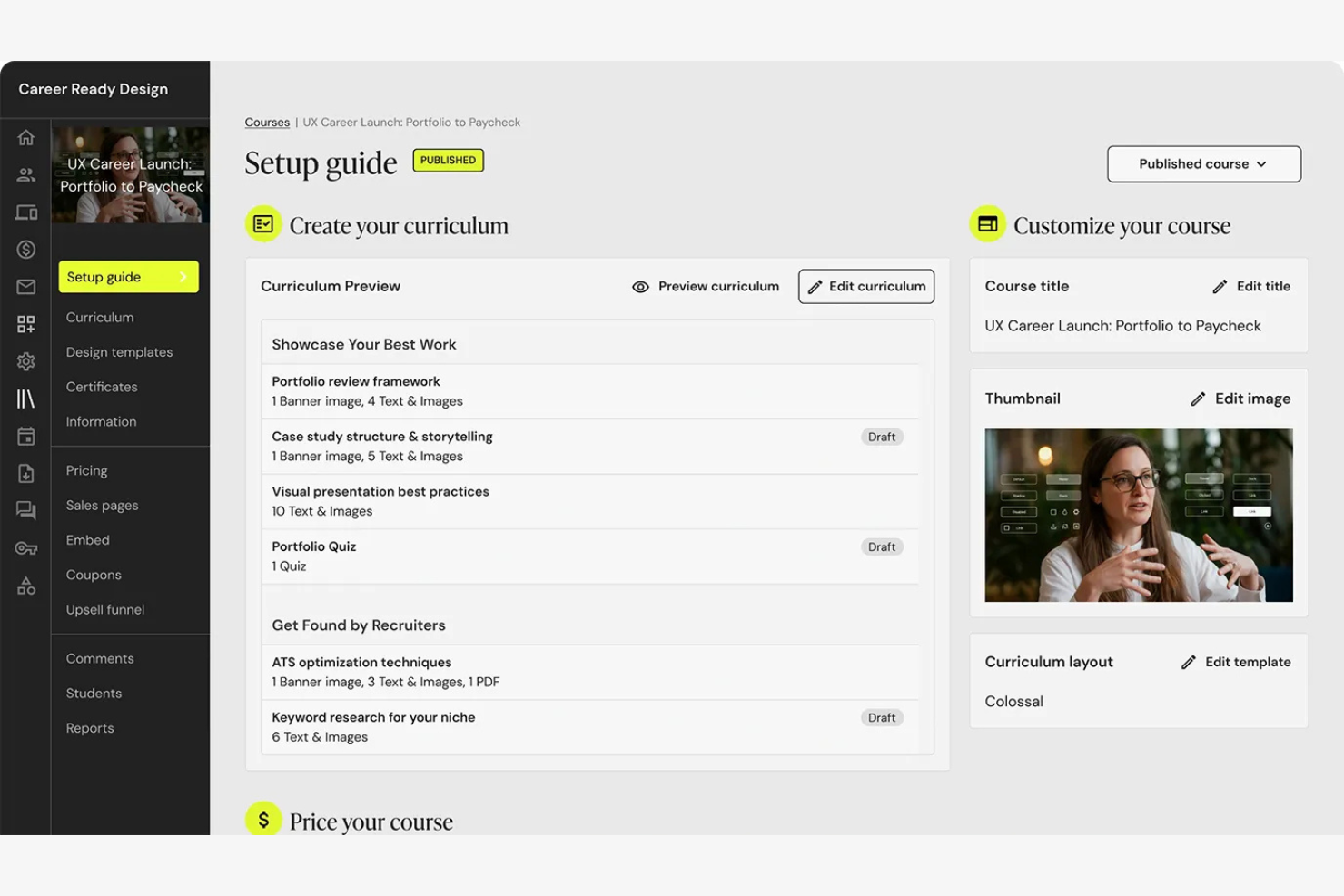
Teachable est une plateforme en ligne destinée à la création et à la vente de cours, de séances de coaching, d’abonnements et de produits numériques à télécharger. Elle s’adresse principalement aux formateurs, aux entrepreneurs et aux entreprises qui souhaitent monétiser leur expertise.
Pourquoi Teachable constitue une bonne alternative à Thinkific : Teachable propose une application mobile qui améliore l’expérience utilisateur, permettant aux apprenants d’accéder aux contenus où qu’ils soient. Son créateur de cours intuitif et ses outils d’IA simplifient le processus de création, tandis que les outils d’analyse vous aident à suivre la progression et l’engagement. La gestion automatisée des taxes pour les transactions aux États-Unis, dans l’UE et au Royaume-Uni constitue une autre fonctionnalité notable.
Fonctionnalités et intégrations remarquables :
Les fonctionnalités comprennent un créateur de cours intuitif, un outil alimenté par l’IA pour créer des quiz, des sous-titres vidéo générés automatiquement dans plus de 70 langues et des options d’intégration pour les contenus vidéo. Ces fonctionnalités prennent en charge diverses méthodes d’enseignement et améliorent l’accessibilité des contenus.
Les intégrations comprennent Stripe, Zapier, Google Analytics, Mailchimp, Google Tag Manager, Zoom, AWeber et bien d’autres.
Pros and Cons
Pros:
- Accès à l’application mobile
- Création de quiz alimentée par l’IA
- Formule de démarrage à faible coût initial
Cons:
- Options de personnalisation limitées
- Des frais de transaction s’appliquent au niveau le plus bas


MemberPress est une extension WordPress conçue pour vous aider à créer des sites d’adhésion, à gérer les abonnements et à contrôler l’accès à votre contenu. Elle est idéale pour les entreprises et les créateurs qui souhaitent générer des revenus grâce aux adhésions.
Pourquoi MemberPress est une bonne alternative à Thinkific : MemberPress offre de vastes fonctionnalités de gestion des adhésions, vous permettant de contrôler facilement qui peut accéder à votre contenu. Grâce à des pages tarifaires personnalisables, vous pouvez configurer différents niveaux d’adhésion adaptés aux besoins de votre audience. Les fonctionnalités de facturation automatisée et de gestion des abonnements de la plateforme facilitent la gestion des paiements récurrents. C’est donc un excellent choix pour ceux qui utilisent déjà WordPress et souhaitent monétiser leur contenu.
Fonctionnalités et intégrations remarquables :
Les fonctionnalités comprennent des pages tarifaires dynamiques, la facturation automatisée et la gestion des abonnements. Ces outils vous aident à gérer les adhésions et à générer efficacement des revenus.
Les intégrations comprennent Stripe, PayPal, Authorize.Net, Mailchimp, ActiveCampaign, AWeber, Kit, GetResponse, BuddyPress et bien plus encore.
Pros and Cons
Pros:
- Gestion étendue des adhésions
- Pages tarifaires personnalisées
- Monétisation facile du contenu
Cons:
- Fonctionnalités limitées en dehors de WordPress
- Pas de création de cours intégrée

Idéal pour les grandes bibliothèques d'apprentissage en ligne prêtes à l'emploi
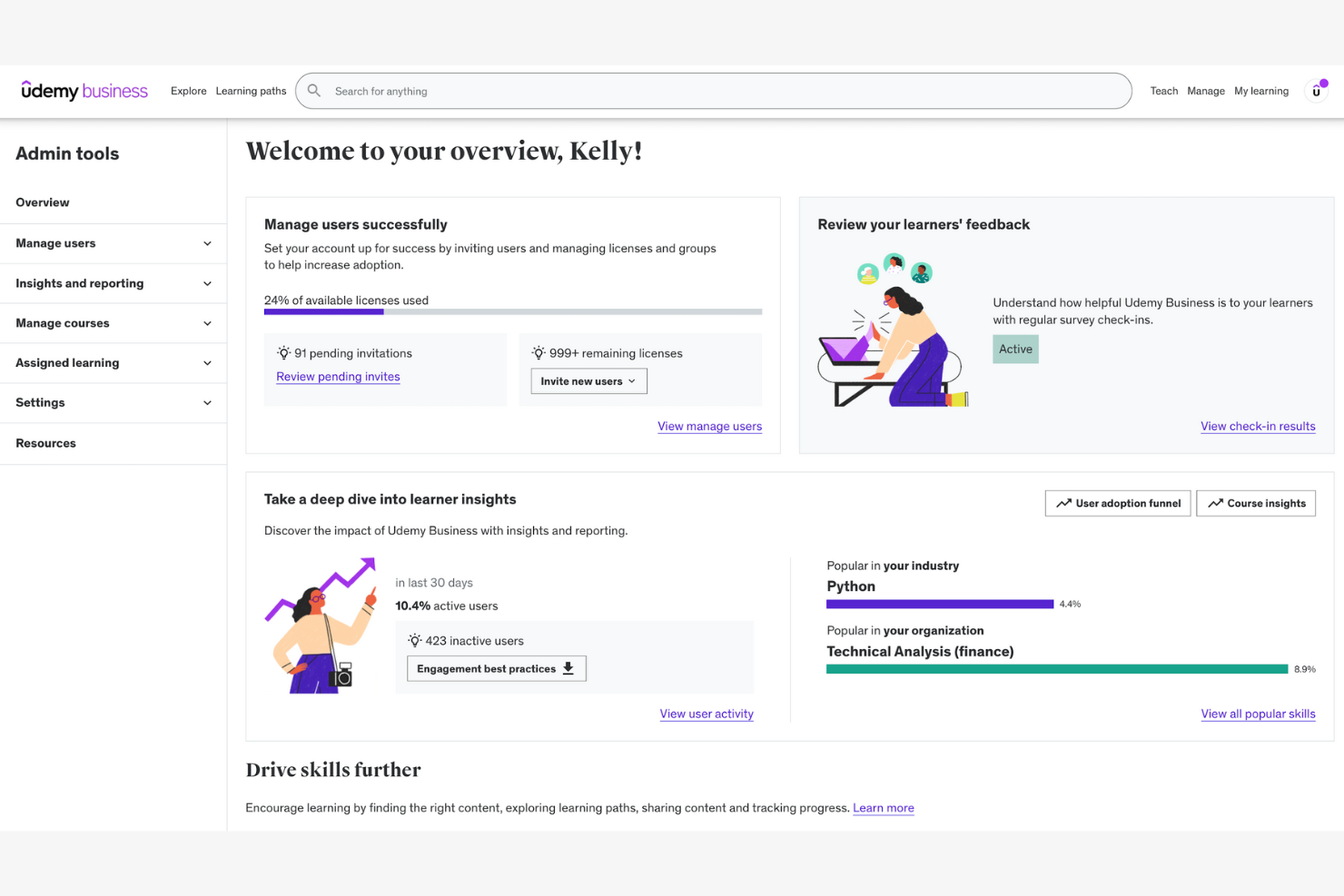
Udemy Business est une plateforme d'apprentissage en ligne qui s'adresse principalement aux entreprises souhaitant développer les compétences et les connaissances de leurs équipes. Elle propose une vaste bibliothèque de cours dans divers domaines, permettant aux entreprises d'offrir des possibilités d'apprentissage variées.
Pourquoi Udemy Business est une bonne alternative à Thinkific : Udemy Business propose un catalogue de cours très complet, offrant davantage de variété qu'une plateforme classique de création de cours. Cela en fait une solution idéale pour les entreprises qui souhaitent proposer un large éventail de sujets de formation. Grâce à des cours dispensés par des experts du secteur, votre équipe peut apprendre auprès de professionnels expérimentés. Les outils d'analyse de la plateforme vous aident à suivre les progrès de votre équipe et l'efficacité des cours.
Fonctionnalités et intégrations remarquables :
Les fonctionnalités comprennent une vaste bibliothèque de cours, des formateurs experts du secteur et des analyses détaillées des cours. Ces outils vous aident à proposer des formations de haute qualité et à suivre les résultats de l'apprentissage.
Les intégrations comprennent Microsoft Teams, Slack, LinkedIn Learning, Cornerstone, Degreed et bien d'autres.
Pros and Cons
Pros:
- Catalogue de cours très complet
- Formateurs experts du secteur
- Variété des sujets de formation
Cons:
- Aucun outil de création de cours
- Qualité des cours irrégulière


FreshLearn est une plateforme en ligne conçue pour permettre aux créateurs et aux formateurs de créer et de vendre des cours, des abonnements et des produits numériques. Elle s’adresse aux particuliers et aux petites entreprises qui recherchent une solution personnalisable et conviviale pour leurs besoins en matière de formation en ligne.
Pourquoi FreshLearn est une bonne alternative à Thinkific : FreshLearn offre de nombreuses options de personnalisation, vous permettant d’adapter vos cours à votre marque. Grâce à des fonctionnalités telles que les domaines personnalisés et la personnalisation de la marque, vous pouvez créer une apparence et une identité cohérentes pour votre contenu. Son créateur de cours est intuitif, ce qui facilite la conception et le lancement rapide de votre premier cours. Ces outils en font un excellent choix si vous accordez de l’importance à la cohérence de votre marque.
Fonctionnalités et intégrations remarquables :
Les fonctionnalités comprennent un créateur de cours par glisser-déposer, des domaines personnalisés et des options de personnalisation de la marque. Elles vous permettent de personnaliser votre contenu et de maintenir une identité de marque cohérente.
Les intégrations comprennent Stripe, PayPal, Zapier, Mailchimp, Google Analytics, Kit, ActiveCampaign, HubSpot, Shopify, Slack, et bien plus encore.
Pros and Cons
Pros:
- Nombreuses options de personnalisation
- Prise en charge des domaines personnalisés
- Lancement rapide des cours
Cons:
- Outils d’analyse de base
- Fonctionnalités communautaires limitées
Autres alternatives à Thinkific
Voici quelques alternatives supplémentaires à Thinkific qui ne figurent pas dans ma sélection, mais qui méritent tout de même votre attention :
- Xperiencify
Ideaal voor nominatieprogramma's
- Uteach
Idéal pour vendre des leçons avec une automatisation intégrée
- Skillshare
Idéal pour les créateurs qui enseignent des cours créatifs courts
- Ruzuku
Idéal pour la diffusion de cours interactifs


Comment j’évalue les alternatives à Thinkific
Je divise mon évaluation en deux niveaux : les fonctionnalités essentielles qu’un outil doit proposer, comme la création de cours et le suivi de la conformité, et les éléments différenciateurs qui distinguent les plateformes pour les équipes RH.
Fonctionnalités essentielles pour cette liste
Lorsque je sélectionne les outils de ma liste, j’évalue chacun d’entre eux sur une échelle de 0 (ne propose pas la fonctionnalité) à 5 (excelle dans ce domaine) pour chaque fonctionnalité essentielle indiquée ci-dessous. Je convertis ensuite le score total de l’outil en pourcentage. Chaque outil doit obtenir un score total minimum de 65 % pour être pris en compte.
- Outils de création de cours : Je vérifie si vous pouvez créer des cours complets — vidéos, questionnaires et évaluations — directement sur la plateforme, sans avoir besoin d’un logiciel de création distinct comme Articulate ou iSpring.
- Parcours d’apprentissage des employés : Chaque plateforme devrait permettre d’organiser les cours en parcours structurés, comme un parcours d’intégration de 90 jours ou un programme de développement du leadership lié à la progression de carrière.
- Suivi de la progression et de la conformité : Je recherche le suivi des formations terminées, la gestion des certifications et les rapports que les équipes RH peuvent extraire pour les audits ou les renouvellements réglementaires.
- Intégrations HRIS et SSO : La connexion à votre HRIS pour synchroniser les employés et l’utilisation du SSO pour la connexion sont importantes — j’évalue les connecteurs natifs vers des plateformes comme BambooHR, Workday et Okta.
- Expérience apprenant personnalisée à la marque : Votre portail de formation doit sembler appartenir à votre entreprise ; je vérifie donc la disponibilité de domaines personnalisés, la personnalisation du logo et des couleurs, ainsi que les contrôles de personnalisation au niveau du portail.
- Gestion des utilisateurs et des groupes : Le provisionnement en masse, les regroupements par service et les autorisations fondées sur les rôles sont les éléments que j’évalue ici, en particulier pour les équipes qui gèrent des milliers d’apprenants répartis sur plusieurs sites.
Une fois que j’ai établi une liste d’outils répondant à ces critères, j’examine ce qui distingue chaque plateforme.
Éléments différenciateurs (ce qui distingue les fournisseurs)
Voici comment je compare les différents fournisseurs :
Fonctionnalités remarquables
La mise en correspondance des compétences et des aptitudes est un élément important : je recherche des plateformes qui permettent de relier les cours à des lacunes précises en matière de compétences et d’intégrer ces données à la planification de la relève. Une application mobile native avec accès hors ligne est également importante, en particulier pour les organisations qui forment des employés de première ligne ou sans poste de travail fixe, qui ne peuvent pas rester devant un ordinateur de bureau. La création de cours optimisée par l’IA mérite également d’être évaluée, car les outils qui génèrent des plans ou des questionnaires à partir de documents importés peuvent faire gagner beaucoup de temps aux équipes L&D dans la création de contenu.
Au-delà des fonctionnalités
J’évalue dans quelle mesure chaque plateforme s’adapte à la taille de votre entreprise — qu’elle soit conçue pour une start-up de 50 personnes ou qu’elle puisse évoluer jusqu’à des dizaines de milliers d’apprenants répartis dans plusieurs régions. L’accès à des bibliothèques de contenu prêtes à l’emploi provenant de fournisseurs comme OpenSesame ou LinkedIn Learning est un autre facteur, car il évite aux équipes RH de créer chaque cours sur la conformité ou les compétences comportementales à partir de zéro. Les certifications de sécurité comme SOC 2 et la conformité au RGPD pèsent également lourd dans la balance, en particulier lorsque vous gérez des données sensibles sur les employés dans plusieurs juridictions.
Pourquoi chercher une alternative à Thinkific ?
Bien que Thinkific soit un bon choix pour un système de gestion de l'apprentissage, plusieurs raisons peuvent pousser certains utilisateurs à rechercher d'autres solutions. Vous pourriez chercher une alternative à Thinkific parce que :
- Vous avez besoin d'options de personnalisation plus avancées
- Votre équipe a besoin d'un accès via une application mobile
- Vous souhaitez disposer de meilleurs outils pour mobiliser votre communauté
- Vous recherchez des niveaux de tarification plus abordables
- Votre entreprise doit s'intégrer à des applications spécifiques
Si l'une de ces raisons vous parle, vous êtes au bon endroit. Ma liste présente plusieurs systèmes de gestion de l'apprentissage mieux adaptés aux équipes confrontées à ces difficultés avec Thinkific.
Principales fonctionnalités de Thinkific
Voici quelques-unes des principales fonctionnalités de Thinkific pour vous aider à le comparer aux autres solutions :
- Créateur de cours : Vous permet de créer des cours multimédias avec des vidéos, des quiz et du texte afin de captiver votre audience.
- Contenu diffusé progressivement : Vous permet de programmer et de diffuser le contenu des cours au fil du temps afin de maintenir l’engagement des apprenants.
- Quiz et enquêtes : Fournissent des outils pour évaluer les progrès des apprenants et recueillir leurs retours.
- Domaines personnalisés : Vous permettent d’utiliser votre propre domaine pour une apparence plus professionnelle et en marque blanche.
- Sites d’adhésion : Prennent en charge la création d’adhésions pour accéder à du contenu exclusif.
- Commerce électronique intégré : Propose un traitement des paiements intégré, utilisant un éventail de passerelles de paiement, afin que vous puissiez vendre des cours directement depuis votre site.
- Création d’une communauté : Facilite les interactions entre les utilisateurs grâce aux forums de discussion et aux espaces communautaires.
- Analyses et rapports : Fournissent des informations sur les progrès des étudiants et les performances des cours.
- Optimisation mobile : Garantit que vos cours sont accessibles sur les appareils mobiles.
- Certificats : Vous permettent de remettre des certificats de fin de formation aux apprenants lorsqu’ils terminent leur cours.