



Absorb is a cloud-based learning management system built for organizations that need to train employees, customers, and partners from a single platform. I'd consider it over something like TalentLMS if your training program has grown beyond basic course delivery and you need stronger reporting, ecommerce capabilities, or support for external learner audiences at scale.
Absorb Evaluation Summary
- Pricing upon request
- Free demo available
Why Trust Our Software Recommendations
Our team has been testing and reviewing software since 2012. As HR experts ourselves, we know how difficult—and important—it is to choose the right software.
For this guide, we evaluated tools using hands-on testing and independent research, scoring tools using our selection criteria. We also draw on insights from industry thought leaders and practicing HR experts.
Our reviews reflect our human editorial judgment, not a sales pitch.
Expert reviewers:
Absorb Overview
Summary:
In my opinion, Absorb is a strong pick if you’re choosing an LMS for multi-audience training at scale. It beats many competitors on admin control, multi-portal branding, and selling courses to customers and partners, though ad hoc reporting and some admin paths can feel click-heavy.
If you run compliance, manager training, or customer education, you’ll likely judge Absorb as worth the price—especially when you need reliable uptime, clean UI, and solid integrations.
If you want highly customized analytics without extra setup, or you’re on a tight SMB budget, you may find better fits.
For most HR and L&D teams, especially in mid-market and enterprise environments, I’d select Absorb when I need dependable delivery, fast learner adoption, and room to grow.
pros
-
You get a clean, intuitive learner UI that boosts completion.
-
You can brand learner dashboards and tailor experiences for each audience.
-
You can automate enrollments and reminders to cut admin time.
cons
-
Admin paths can feel click-heavy and take time to learn.
-
Reporting can lack the depth you need for ad hoc questions.
-
You may hit occasional bugs or mobile hiccups that slow your team.
-

Justworks
Visit WebsiteThis rating combines scores from multiple user review sites to reflect overall customer sentiment about the product.4.6 -
Prevue Assessments
Visit WebsiteThis rating combines scores from multiple user review sites to reflect overall customer sentiment about the product.4.6 -
Small Improvements
Visit WebsiteThis rating combines scores from multiple user review sites to reflect overall customer sentiment about the product.4.3




How We Test & Score Our Tools
We’ve spent years building, refining, and improving our software testing and scoring system. The rubric is designed to capture the nuances of software selection and what makes a tool effective, focusing on critical aspects of the decision-making process.
Below, you can see exactly how our testing and scoring works across seven criteria. It allows us to provide an unbiased evaluation of the software based on core functionality, standout features, ease of use, onboarding, customer support, integrations, customer reviews, and value for money.
Core Functionality (25% of final score)
The starting point of our evaluation is always the core functionality of the tool. Does it have the basic features and functions that a user would expect to see? Are any of those core features locked to higher-tiered pricing plans? At its core, we expect a tool to stand up against the baseline capabilities of its competitors.
Standout Features (25% of final score)
Next, we evaluate uncommon standout features that go above and beyond the core functionality typically found in tools of its kind. A high score reflects specialized or unique features that make the product faster, more efficient, or offer additional value to the user.
We also evaluate how easy it is to integrate with other tools typically found in the tech stack to expand the functionality and utility of the software. Tools offering plentiful native integrations, 3rd party connections, and API access to build custom integrations score best.
Ease of Use (10% of final score)
We consider how quick and easy it is to execute the tasks defined in the core functionality using the tool. High scoring software is well designed, intuitive to use, offers mobile apps, provides templates, and makes relatively complex tasks seem simple.
Onboarding (10% of final score)
We know how important rapid team adoption is for a new platform, so we evaluate how easy it is to learn and use a tool with minimal training. We evaluate how quickly a team member can get set up and start using the tool with no experience. High scoring solutions indicate little or no support is required.
Customer Support (10% of final score)
We review how quick and easy it is to get unstuck and find help by phone, live chat, or knowledge base. Tools and companies that provide real-time support score best, while chatbots score worst.
Customer Reviews (10% of final score)
Beyond our own testing and evaluation, we consider the net promoter score from current and past customers. We review their likelihood, given the option, to choose the tool again for the core functionality. A high scoring software reflects a high net promoter score from current or past customers.
Value for Money (10% of final score)
Lastly, in consideration of all the other criteria, we review the average price of entry level plans against the core features and consider the value of the other evaluation criteria. Software that delivers more, for less, will score higher.
Core Features
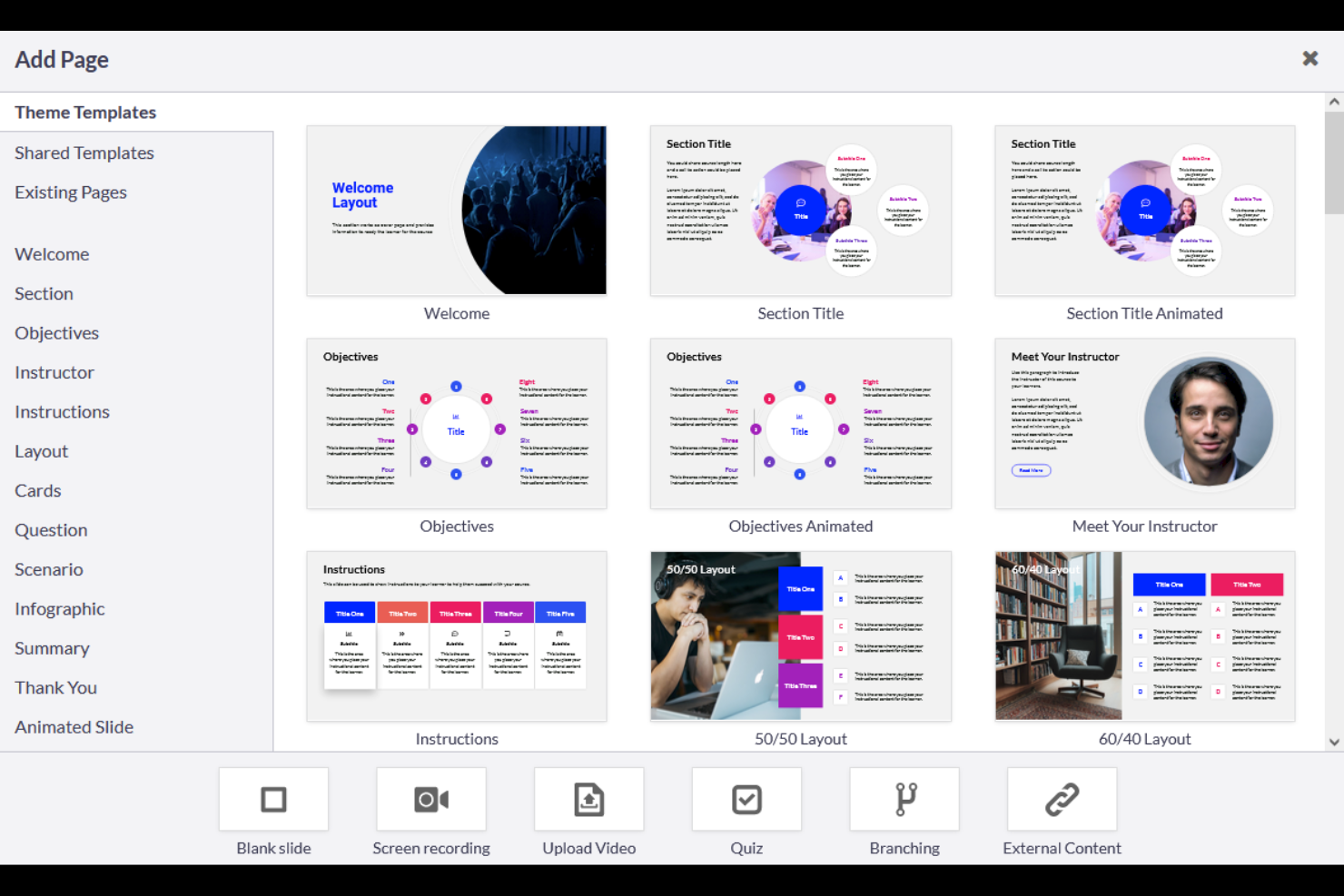
Course Creation: You build courses with simple authoring and templates, then publish to your catalogs fast. You keep versions tidy and push updates without hassle.
Learning Paths: You chain courses into role-based paths with prerequisites and due dates. You guide learners step by step and track progress in one view.
Assessments: You create quizzes and exams, set scoring, and control retakes. You see who passes, where they struggle, and fix gaps in your content.
Certifications: You issue certificates with expirations and auto-renew rules. You keep compliance tight and prove completion during audits.
Reporting and Analytics: You use dashboards and Absorb Analyze to track completions, time spent, and risk areas. You schedule reports to hit inboxes so leaders stay informed.
Automation: You auto-enroll by role or location and send reminders before deadlines. You cut manual work and keep your team on track.
Ease of Use
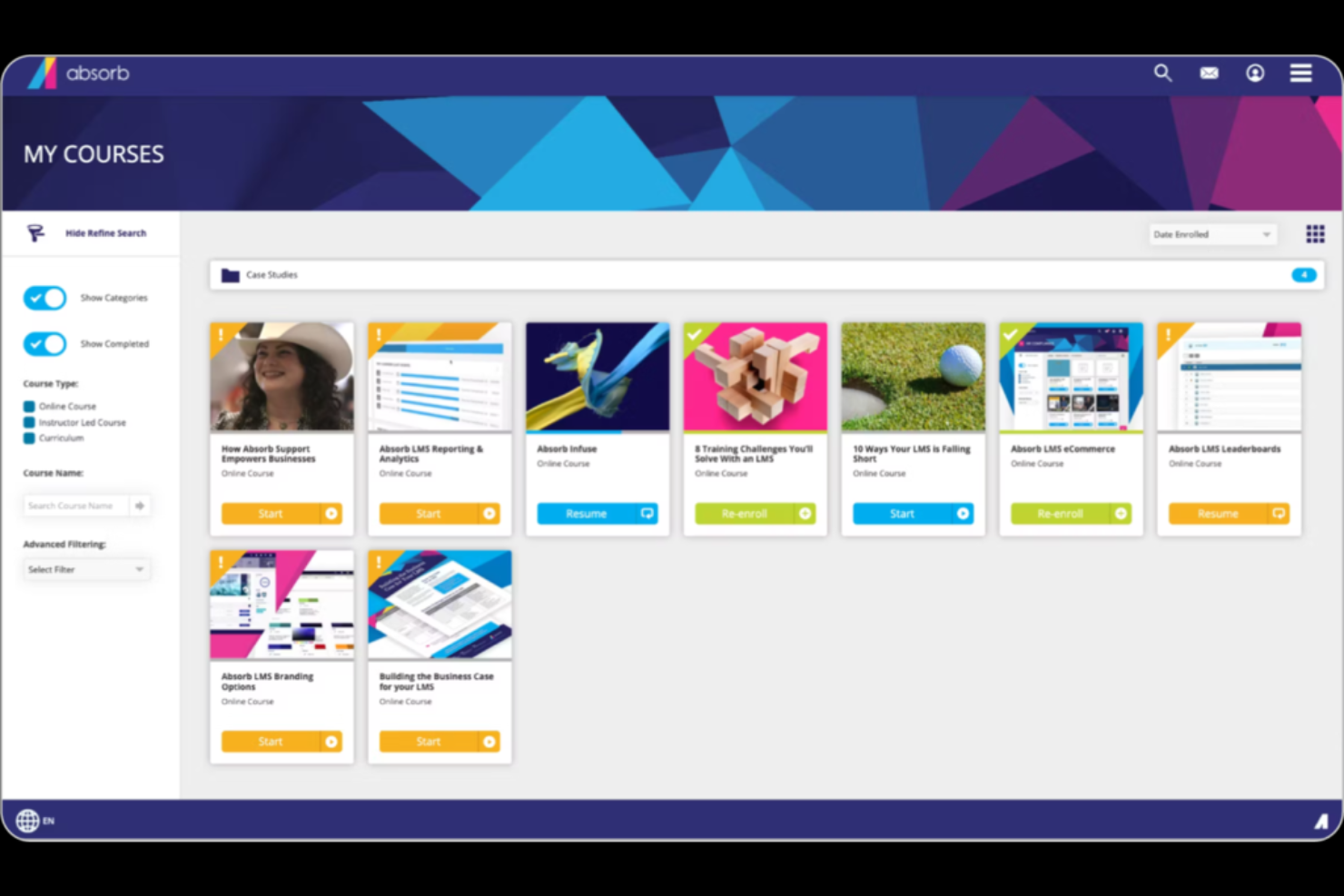
Absorb feels easy for learners: clean UI, clear dashboards, and straightforward course launch boost completion.
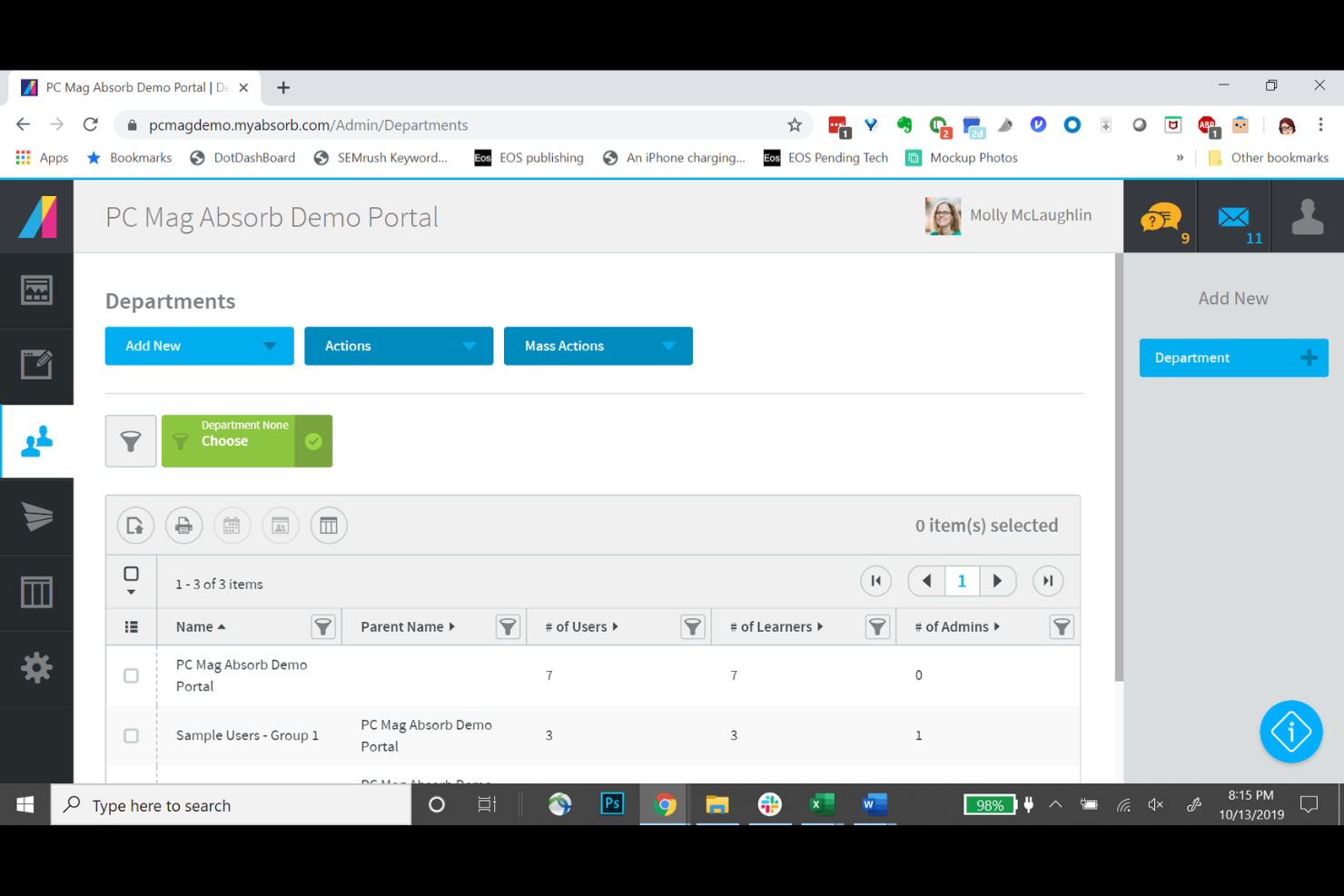
Admins get strong controls without heavy setup, but some workflows—like building reports or bulk edits—take too many clicks.
Once you set rules and automation, daily work stays light and predictable. If you run multi-audience training, the portal model keeps things tidy, though it adds a small learning curve at first.
Integrations
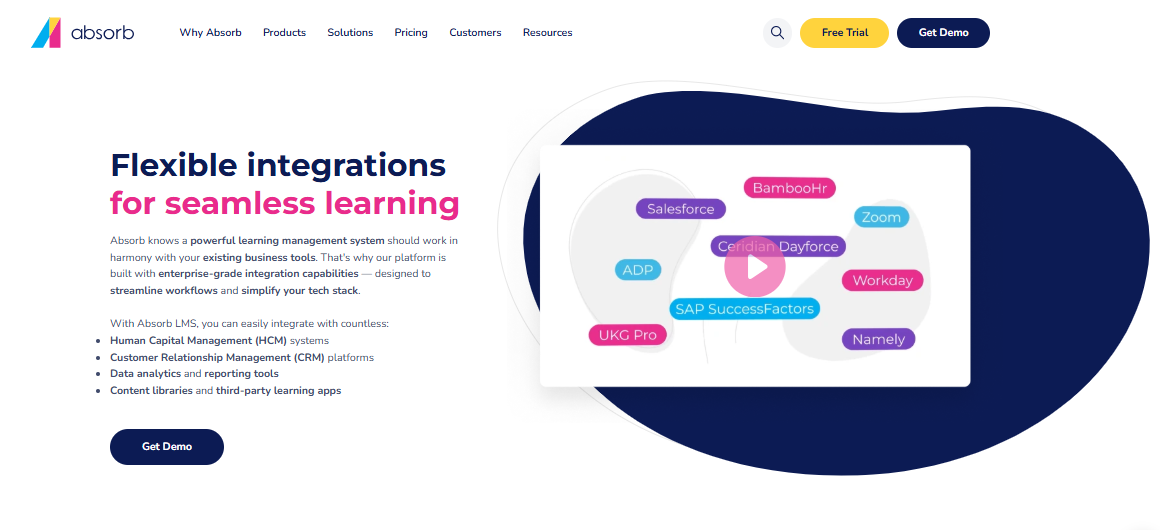
Absorb LMS integrates with Workday, SAP SuccessFactors, ADP, UKG Pro, BambooHR, Salesforce, HubSpot, Zoom, WebEx, and more, covering CRM use cases and supporting ecommerce training scenarios.
Absorb LMS also offers an API and supports connections with third-party integration tools to enhance its functionality.
New Product Updates from Absorb
Absorb Expands Instructor-Led Course Session Management
Absorb redesigns instructor-led course session management so admins can create multiple classes within one session, generate recurring schedules, flag instructor and venue conflicts, and enroll learners during setup. The update also adds class-level notifications and a new instructor merge tag. Highlights include:
- Multi-Class Sessions: Create multiple classes within one session with separate schedules, instructors, venues, and break times.
- Recurring Classes: Generate recurring classes using repeat rules, selected days, and end dates or occurrence limits.
- Conflict Indicators: Flag instructor and venue scheduling conflicts before selection.
- Learner Enrollment: Enroll learners while setting up a session and save selections with the draft.
- Class Instructor Merge Tag: Add class-specific instructor details to supported session notifications.
- Class-Level Notifications: Update calendar attachments and notifications based on individual class changes.
Visit Absorb’s official site for more details.
 for more details.
Absorb Adds Full Learner Experience to Microsoft Teams
Absorb Learn lets learners view their dashboard, browse the course catalog, enroll in and complete courses, resume training, and review transcripts inside Microsoft Teams. Training uses the same enrollment records as the browser-based LMS, so learners can switch between environments without losing progress. Highlights include:
- Absorb Learn Tab: Access the full Absorb learner experience directly inside Microsoft Teams.
- Course Catalog: Browse and search courses, including details such as duration, ratings, and prerequisites.
- Course Access: Enroll in, launch, and complete courses without leaving Teams.
- Progress Sync: Resume in-progress courses using the same enrollment records as the browser LMS.
- Transcripts: Review completed training and certificates from within Teams.
- Cross-Device Support: Use the experience across Teams desktop, web, and supported mobile devices.
Visit Absorb’s official site for more details.

Absorb Adds Aura Rehearse for AI Conversation Practice
Absorb adds Aura Rehearse, which lets learners practice conversations with an AI persona, receive scored feedback, and request manual score reviews. The release also adds Rehearsal reporting and credit tracking while removing credit usage from Course Extraction, Aura Learner chats, and Aura Create chat interactions. Highlights include:
- Aura Rehearse: Practice conversations with an AI persona for scenarios such as customer calls and job interviews.
- Scored Feedback: Evaluate completed attempts against a defined rubric and provide written feedback.
- Manual Reviews: Let learners request one manual score review per attempt.
- Rehearsal Reporting: Track attempts, pass and fail results, average scores, and completion time.
- Credit Tracking: Monitor credit usage for text and voice Rehearsal attempts.
- Aura Credit Changes: Course Extraction, Aura Learner chats, and Aura Create chat interactions no longer consume credits.
Visit Absorb’s official site for more details.
Absorb Aura Adds Claude and ChatGPT Connections
Absorb Aura now integrates with Claude and ChatGPT via MCP, letting learners and admins bring LMS-aware Q&A into the AI tools they already use. This makes it faster to get answers about learning progress and LMS information without switching contexts. Highlights include:
- Claude and ChatGPT Connections: Access Absorb Aura directly from supported AI tools through MCP.
- Content Search: Search courses, resources, and available documents using natural-language questions.
- Learning Context: Find assigned, mandatory, due, or expiring courses without opening the LMS.
- Admin LMS Queries: Let admins ask questions about LMS data and configuration from their AI assistant.
- Permission-Aware Access: Apply each user’s existing Absorb roles and permissions to AI responses.
Visit Absorb’s official site for more details.

Absorb Adds Multiple API Keys and Modern Authentication
Absorb has introduced expanded Integration API management to better support organizations running multiple integrations. With multiple named keys and optional modern authentication, teams can keep concurrent integrations connected more reliably and with clearer administration. Highlights include:
- Multiple API Keys: Create and manage up to 10 named API keys per portal.
- Integration API Page: Manage keys and authentication settings directly in Client Settings.
- Modern Authentication: Use Bearer tokens to keep multiple integrations connected at the same time.
- Independent Credentials: Assign separate labeled keys to different integrations.
- Self-Service Management: Rename or delete keys without contacting Absorb Support.
Visit Absorb’s official site for more details.

Absorb Adds Webhook Delivery Dashboard and Retry Tools
Absorb adds a new Webhooks page with an Events tab for reviewing delivery history, filtering results, inspecting failed payloads and errors, and retrying deliveries. These tools help admins monitor integrations and resolve webhook issues without contacting support. Highlights include:
- Delivery History: Review webhook delivery activity across the portal from one Events tab.
- Filtering Tools: Filter results by date range, event name, delivery status, or response code.
- Failure Details: Inspect error messages, payloads, event types, and response status codes.
- Manual Retry: Retry failed deliveries directly from the dashboard or event details.
- Per-Webhook Views: Open individual webhook pages with configuration details and scoped delivery history.
Visit Absorb’s official site for more details.

Absorb Adds Department-Level Message Branding
Absorb adds Department Message Branding so departments can override portal defaults for message branding, contact details, and sender identity. This helps multi-brand organizations tailor learner communications without changing the parent portal setup. Highlights include:
- Department Branding: Lets departments use custom colors and message header logos.
- Sender Identity: Supports department-specific sender details for learner communications.
- Contact Details: Lets departments manage their own communication information.
- Footer Text: Allows custom footer content with company-name placeholders.
- Admin Permission: Restricts setup to admins with the Manage Message Branding permission.
Visit Absorb’s official site for more details.

Absorb Adds Report Deep Links and Backdated Task Completions
Absorb lets admins share saved report layouts through permission-checked links and assign past completion dates when marking tasks Complete or Failed. These updates improve report access and task record accuracy. Highlights include:
- Report Deep Links: Opens saved report layouts with columns, filters, sorting, and pagination already applied.
- Permission Checks: Revalidates recipient access each time a shared report link is opened.
- Backdated Task Completions: Lets admins set a past completion date when marking tasks Complete or Failed.
Visit Absorb’s official site for more details.

Absorb Aura Adds Department Controls for External Knowledge
Absorb Aura’s External Knowledge setup is now more flexible and easier to maintain. Teams can scope access by department and update connected content without rebuilding connections, helping keep knowledge current while preserving governance. Highlights include:
- Department Selector: Lets admins enable External Knowledge for selected departments and optional sub-departments.
- Edit Connections: Allows files and folders to be added or removed from existing connections.
- Availability Rules: Keeps existing connection settings and access rules when content is updated.
Visit Absorb’s official site for more details.

Absorb Adds Aura Access Controls and Usage Insights
Absorb adds department-based Learner Agent access, role-based permissions for Aura Chats, and new Admin Hub widgets for Aura usage. These updates help admins manage who can use Aura and track how learners engage with it. Highlights include:
- Department Selector: Lets admins enable the Aura Learner Agent for selected departments and optionally include sub-departments.
- Aura Chats Permissions: Allows admins to control Aura Chats report access by role.
- Aura Usage Widgets: Adds Total Chats, Unique Users, Average Chat Turns, and Chat Activity widgets to Admin Hub dashboards.
Visit Absorb’s official site for more details.
Absorb Specs
- API
- Class Management
- Comparative Reporting
- Corporate/Business
- Dashboards
- Data Export
- Data Import
- Data Visualization
- Document Comparison
- Employee Training
- External Integrations
- Feedback Management
- Gamification
- Gradebook
- Mobile App
- Multi-User
- Notifications
- Personal Learning
- Report & Compliance
- Report Cards
- Scheduling
- SCORM
- Student Registration
- Video Courses



Absorb FAQs
How does Absorb meet enterprise data security and compliance requirements?
Will learners be able to take training offline and sync progress later?
How does Absorb support accessibility for learners with disabilities?
What should you expect during implementation and onboarding?
How does Absorb handle GDPR data requests and contractual safeguards?
How does Absorb support training for multiple audiences without mixing content?
What should admins know about reporting and analytics depth?
What safeguards does Absorb use for uptime and disaster recovery?
What’s Next:
If you're in the process of researching employee background check services, connect with a Software Select advisor for free recommendations.
You fill out a form and have a quick chat where they get into the specifics of your needs. Then you'll get a shortlist of software to review. They'll even support you through the entire buying process, including price negotiations.