The Most Important AI Decision HR Will Make Is What Not to Automate

Protect Human Moments: AI in HR should remove administrative burden while preserving genuine recognition, coaching, and relationship-building.
Recognition Design: Instead of writing praise, AI can coach employees toward more specific, personal, meaningful appreciation.
Find Signals: AI helps HR leaders interpret reliable workforce data, identify meaningful patterns, and focus attention where intervention matters.
Manager Judgment: Better employee intelligence should equip frontline managers to respond thoughtfully, not centralize workforce decisions above them.
Own Accountability: AI recommendations require human oversight because efficiency can reproduce bias, weaken trust, and turn judgment into automation.
AI can write the recognition message, summarize the engagement survey, even flag an employee who appears to be drifting away. Increasingly, it can even tell a manager what they should do next.
The question for HR leaders now has nothing to do with whether the technology can participate in employee experience. It’s about how far you want it to go.
That tension ran through our recent Future of AI in HR conversation with Motivosity Chief Product Officer Jesse Dowdle and VP of Engineering Dano Gillette. Their argument was that the most useful role for AI in HR may not be replacing human interaction at all. It may be eliminating everything surrounding it that makes meaningful interaction harder.
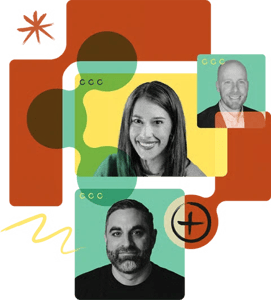
“The people parts of the job are the parts worth protecting,” Dowdle said.
AI, he argued, should instead reduce the time HR spends on the “non-people parts” of the work—the administration, reporting and cognitive load that pull people leaders away from advising, coaching and building relationships.
That sounds like a simple distinction. It is likely to become considerably harder to maintain.

When Efficiency Starts Eating the Experience
Much of the first wave of enterprise AI has been organized around a straightforward question: What can we automate?
That makes sense when the work in question is reconciling spreadsheets or generating analysis and reports. It becomes more complicated when the task is thanking an employee, interpreting signs of disengagement or deciding who deserves a conversation about their future.
Recognition is a useful example.
A generic employee recognition program is relatively easy to scale. Companies have spent decades doing exactly that with service awards, employee-of-the-month programs, plaques and standardized messages. The problem, Dowdle argued, is that scalability has often come at the expense of meaning.
“What AI makes possible is a level of personal recognition at scale that was never possible before,” he said. “The opportunity is to make the kind of individual appreciation people remember something that happens every day in an organization, even a very large distributed one.”
But there is an obvious trap here. If AI can write the appreciation, why not have it do exactly that?
Motivosity tried something close to that during development.
In the beginning, we had thought, hey, let’s just create a button that will thank people for you. People didn’t want to hear from a robot.

Instead, the company built an AI coach that prompts employees to make their own recognition more specific—asking what happened, why it mattered or what impact someone had—without composing the appreciation on their behalf. Gillette said that approach has resulted in appreciations that are about 20% longer inside the platform.
The interesting part isn’t the extra words. It is the product decision behind them.
AI was technically capable of completing the task. Motivosity deliberately stopped it short.

Gillette described the objective as helping someone become “more specific, more caring, more genuine,” while recognizing that genuineness itself isn’t something AI can supply.
“AI can nudge you in the right direction,” he said.
The Better Use of AI May Be Deciding Where to Look
There is another place where AI’s value proposition looks considerably stronger: helping HR make sense of information it already has.
People teams have rarely suffered from a shortage of data. Engagement scores, recognition activity, performance records, learning systems and retention metrics create plenty of it. The challenge is determining what deserves attention.
During the demonstration, Gillette showed AI being used as an interface for recognition and engagement data—letting an HR leader move from a company-wide view into departments, trends and individual employee signals.
But Motivosity made another deliberate distinction here. The AI does not calculate the underlying statistics.
Gillette said the company learned early that asking language models themselves to perform arithmetic could produce unreliable results. Instead, the numbers are generated through conventional systems and can be cross-checked through APIs or exported data. The AI is used to interpret the results.
That separation matters well beyond one platform.
For HR, the promise of generative AI may be less about creating new information than reducing the distance between a leader and the information they already possess.
The system can essentially answer: Where should I look? What changed? What pattern might I have missed?
Gillette described the goal as helping leaders sort through information to determine “where can I make the most meaningful effort?”
That is potentially a much more consequential application of AI than writing another summary.
If an HR leader can identify a department where recognition has collapsed, a manager whose team is disengaging or an employee whose behavior has suddenly changed, AI can turn an ocean of organizational data into a prompt for action.
But then a human still has to act.
Better Intelligence Makes Managers More Important
That may be where the larger shift for HR sits.
As employee intelligence becomes easier to surface, organizations could respond by centralizing more decisions. Give senior leaders a dashboard, identify the statistical outliers and manage the workforce from above.
Dowdle argued for the opposite approach.

He described using recognition and other employee data to create what he called a “three-dimensional picture” of a person. This is not merely whether a salesperson hit quota or an employee completed a certification, but what colleagues value about working with them, where their strengths appear and how they contribute socially to the organization.
His recommendation was to put that intelligence in the hands of frontline managers.
Let the solution work bottom up to develop your people.

That is a considerably different vision of AI-enabled management than an algorithm making increasingly consequential employee decisions.
The technology notices. The manager interprets.The person responds.
And HR remains accountable for designing the system in which all three things happen.
AI Does Not Eliminate Accountability
As HR systems move from simply surfacing information to recommending action, accountability remains an important aspect of how the whole system is designed.
Dowdle expects employee experience platforms to become increasingly proactive. Instead of waiting for someone to open a dashboard, AI may spot a pattern suggesting retention risk and proactively prompt a manager to check in with an employee through Teams, email or another channel.
The objective, he said, is to help managers “be there for the moments that matter” while intervention can still make a difference.
There is enormous potential in that idea. There is also a fairly obvious danger.
The more convincingly a system identifies a problem and recommends a response, the easier it becomes to confuse a recommendation with a decision.
Dowdle pointed to recruiting as an existing warning. Automation can make hiring more efficient, but it can also screen out strong candidates using heuristics that have little relationship to what an organization actually values. Similarly, automated recognition can transform something deeply personal into another corporate form letter.
The solution is preserving accountability.
“Somebody’s ultimately accountable,” Dowdle said. “Even when AI performs the underlying work, a person still has to stand behind the result.”
For HR leaders, he argued, that means retaining responsibility for deciding whether an AI-supported action is appropriate rather than treating the system as the responsible party.
That is becoming one of the defining capabilities of AI-era management: knowing when to accept the machine’s recommendation, when to interrogate it and when to disregard it entirely.
The Goal Isn’t Less Human HR
There is a version of the AI future in which HR becomes dramatically smaller because software handles recruiting, benefits, payroll, employee questions, performance analysis and workforce decisions.
There is another possibility.
AI removes enough administrative work that HR becomes more focused on the part organizations have historically struggled to systematize: understanding people.
Dowdle is decidedly optimistic about that future. He imagines AI taking on much of the compliance-oriented and transactional work surrounding payroll, benefits and people administration, allowing People Ops to concentrate more directly on culture and organizational effectiveness.
Whether that vision materializes will depend less on what AI eventually becomes capable of doing than on what organizations choose to delegate to it.
Because capability is an increasingly poor boundary.
AI can already generate the thank-you. Soon, it may know who needs one, when they need it and what a manager should say.
The real design decision is whether the organization wants AI to replace that moment or make sure a human doesn’t miss it.