
Recensione di Hubstaff: vantaggi, svantaggi, funzionalità e prezzi



Hubstaff is a time tracking software for distributed teams that need visibility into hours worked, activity levels, and project budgets across remote or field-based staff. I'd reach for it when you're managing hourly contractors, agencies billing by the minute, or operations teams that need GPS and geofencing alongside desktop tracking. Compared to Toggl Track, which I find better suited to solo professionals and lightweight team logging, Hubstaff gives you deeper workforce management features like screenshots, payroll automation, and shift scheduling in one place.
Hubstaff Evaluation Summary
- From $10/user/month (billed annually)
- 14-day free trial
Perché fidarsi delle nostre recensioni sui software
Il nostro team testa e recensisce software dal 2012. In quanto esperti HR noi stessi, sappiamo quanto sia difficile — e importante — scegliere il software giusto.
Per questa guida, abbiamo valutato gli strumenti attraverso test pratici e ricerche indipendenti, assegnando un punteggio agli strumenti in base ai nostri criteri di selezione. Ci basiamo inoltre sulle competenze di leader di pensiero del settore e di professionisti HR attivi.
Le nostre recensioni riflettono il nostro giudizio editoriale umano, non un discorso di vendita.
Revisori esperti:
Hubstaff Overview
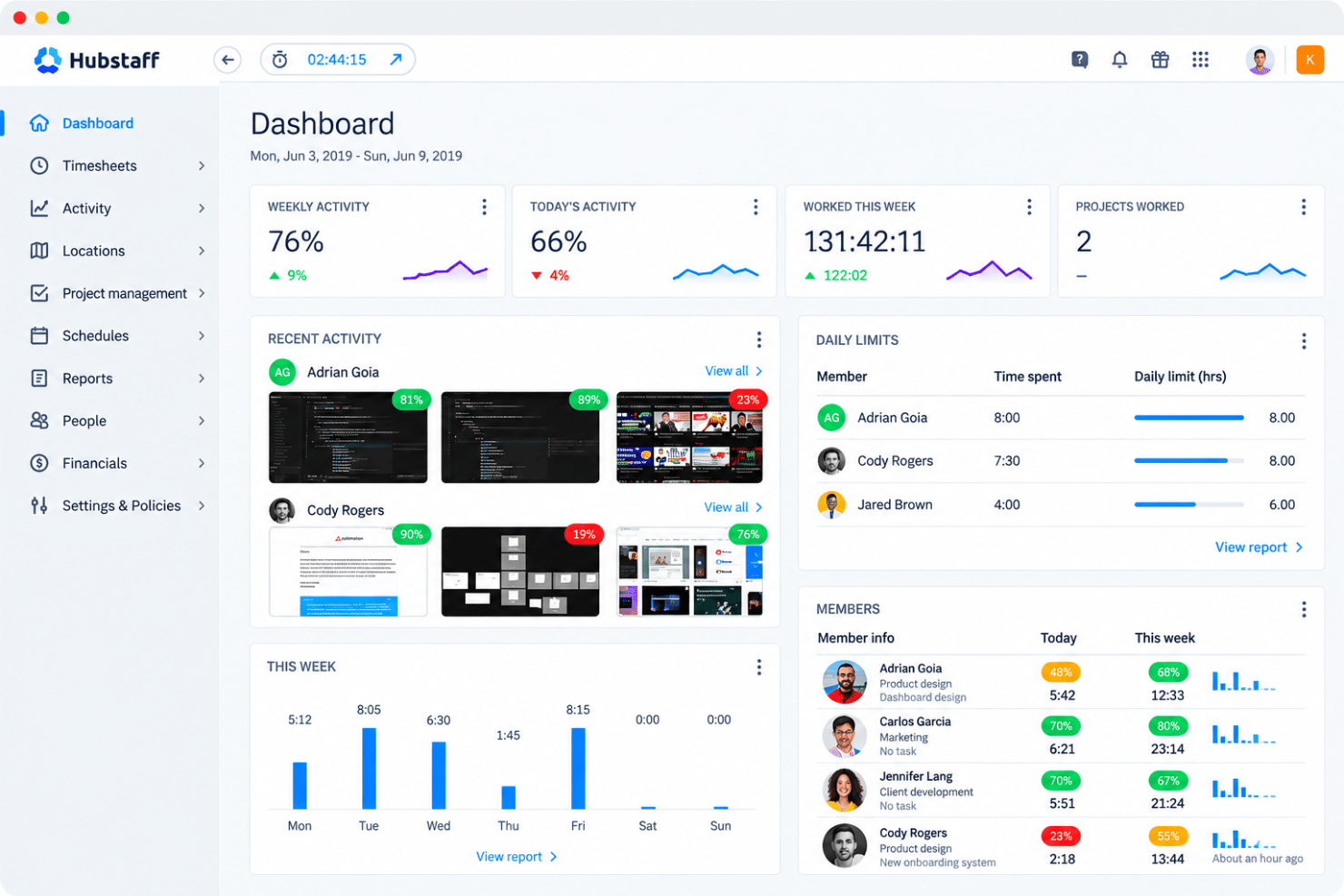
Hubstaff is my pick for distributed teams needing more than basic timesheets. Its desktop, web, and mobile apps combine timers, screenshots, app and URL tracking, GPS, geofencing, scheduling, budgets, approvals, and payroll workflows. It outperforms lighter tools on workforce visibility, field tracking, and integrations, with 35-plus connections and an API. The interface is capable but busy, and monitoring requires careful privacy policies. Pricing starts at $4.99 per seat monthly, with a two-seat minimum. A 14-day trial and guided resources ease onboarding. I’d choose it for agencies, contractors, and field operations, not trust-first teams.
pros
-
GPS tracking and geofencing support field-team timekeeping.
-
Screenshots and app tracking verify billable hours.
-
Project budgets and approvals connect tracked time to costs.
cons
-
Idle detection can misclassify meetings and reading as inactivity.
-
Reports require manual editing and lack timezone controls.
-
Monitoring and screenshots can feel intrusive to employees.
-

Justworks
Visit WebsiteThis rating combines scores from multiple user review sites to reflect overall customer sentiment about the product.4.6 -
Prevue Assessments
Visit WebsiteThis rating combines scores from multiple user review sites to reflect overall customer sentiment about the product.4.6 -
Small Improvements
Visit WebsiteThis rating combines scores from multiple user review sites to reflect overall customer sentiment about the product.4.3




Come Testiamo e Valutiamo i Nostri Strumenti
Abbiamo impiegato anni per costruire, perfezionare e migliorare il nostro sistema di test e valutazione dei software. Il modello è progettato per cogliere le sfumature della scelta del software e per evidenziare cosa rende uno strumento efficace, concentrandosi sugli aspetti più critici del processo decisionale. Di seguito puoi vedere esattamente come funziona la nostra valutazione e attribuzione dei punteggi secondo sette criteri. Questo ci consente di fornire una valutazione imparziale del software basandoci su funzionalità principali, caratteristiche distintive, facilità d’uso, onboarding, assistenza clienti, integrazioni, recensioni dei clienti e rapporto qualità/prezzo.
Funzionalità Principali (25% del punteggio finale)
Il punto di partenza della nostra valutazione sono sempre le funzionalità principali dello strumento. Possiede le funzioni di base che l’utente si aspetta? Alcune di queste funzioni sono disponibili solo in piani a prezzi più alti? In sostanza, ci aspettiamo che uno strumento rispecchi almeno le capacità base dei concorrenti.
Caratteristiche Distintive (25% del punteggio finale)
Successivamente valutiamo le funzionalità particolari che superano le funzionalità di base tipiche degli strumenti della sua categoria. Un punteggio alto riflette caratteristiche specializzate o uniche che rendono il prodotto più veloce, efficiente, o che offrono ulteriore valore all’utente. Valutiamo inoltre quanto sia semplice integrare il software con altri strumenti tradizionalmente presenti nel tech stack per espanderne funzionalità e utilizzo. Gli strumenti che offrono numerose integrazioni native, collegamenti di terze parti e accesso API per creare integrazioni personalizzate ricevono i punteggi migliori.
Facilità d’Uso (10% del punteggio finale)
Consideriamo quanto sia veloce e semplice svolgere i compiti definiti dalle funzionalità principali utilizzando lo strumento. I software con punteggi alti sono ben progettati, intuitivi, dispongono di app mobili, offrono modelli preimpostati e rendono semplici anche i compiti più complessi.
Onboarding (10% del punteggio finale)
Sappiamo quanto sia importante una rapida adozione di una nuova piattaforma all’interno di un team, quindi valutiamo quanto sia facile imparare e utilizzare uno strumento con una formazione minima. Valutiamo quanto rapidamente un membro del team possa iniziare a utilizzare lo strumento senza esperienza. Le soluzioni con punteggio alto richiedono poco o nessun supporto.
Assistenza Clienti (10% del punteggio finale)
Esaminiamo quanto sia facile e veloce ricevere supporto o trovare aiuto tramite telefono, chat dal vivo o knowledge base. Gli strumenti e le aziende che forniscono un’assistenza in tempo reale ottengono i punteggi migliori, mentre i chatbot ottengono i risultati peggiori.
Recensioni dei Clienti (10% del punteggio finale)
Oltre ai nostri test e valutazioni, consideriamo il punteggio net promoter dei clienti attuali e passati. Analizziamo la loro propensione, se potessero scegliere, a selezionare di nuovo lo strumento per le sue funzionalità principali. Un software con un punteggio alto riflette un elevato net promoter score da parte dei clienti attuali o passati.
Rapporto Qualità/Prezzo (10% del punteggio finale)
Infine, considerando tutti gli altri criteri, esaminiamo il prezzo medio dei piani base rispetto alle funzionalità principali e teniamo conto del valore degli altri criteri di valutazione. I software che offrono di più, a meno, ottengono un punteggio più alto.
Core Features
Time Tracking
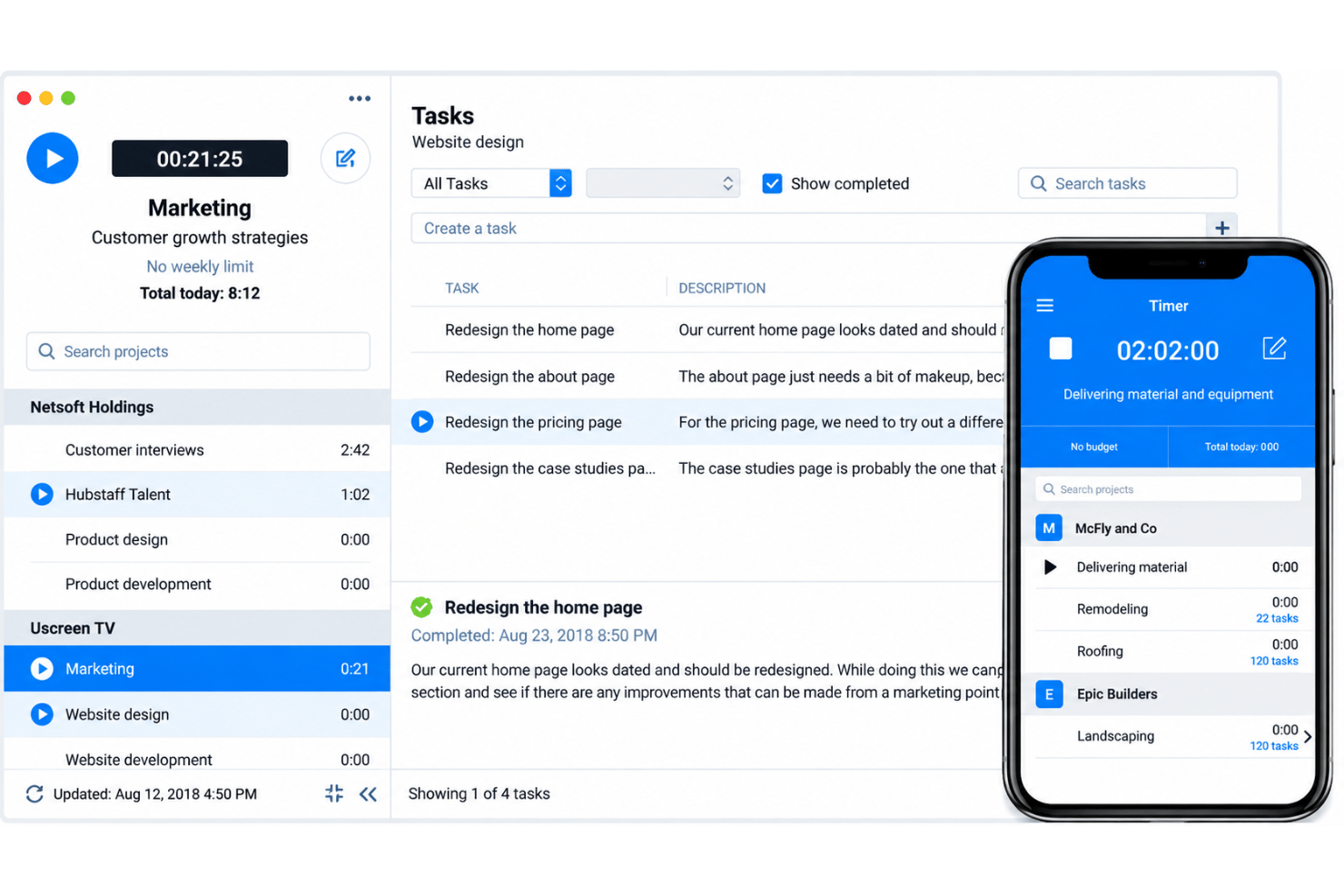
Track hours with timers across Hubstaff’s desktop, web, and mobile apps, then assign entries to projects and tasks. This gives managers a consistent record of billable work across remote, office, and field teams.
Activity Tracking
Hubstaff records activity levels and can track app usage, URLs, and optional screenshots during tracked time. These details help verify contractor hours, though teams should define clear privacy rules before enabling monitoring.
GPS Tracking And Geofencing
Mobile GPS tracking records locations during shifts, while geofencing can start or stop tracking when workers enter or leave approved areas. This suits field teams that need location-based records for service visits or job sites.
Project Budgets And Time Estimates
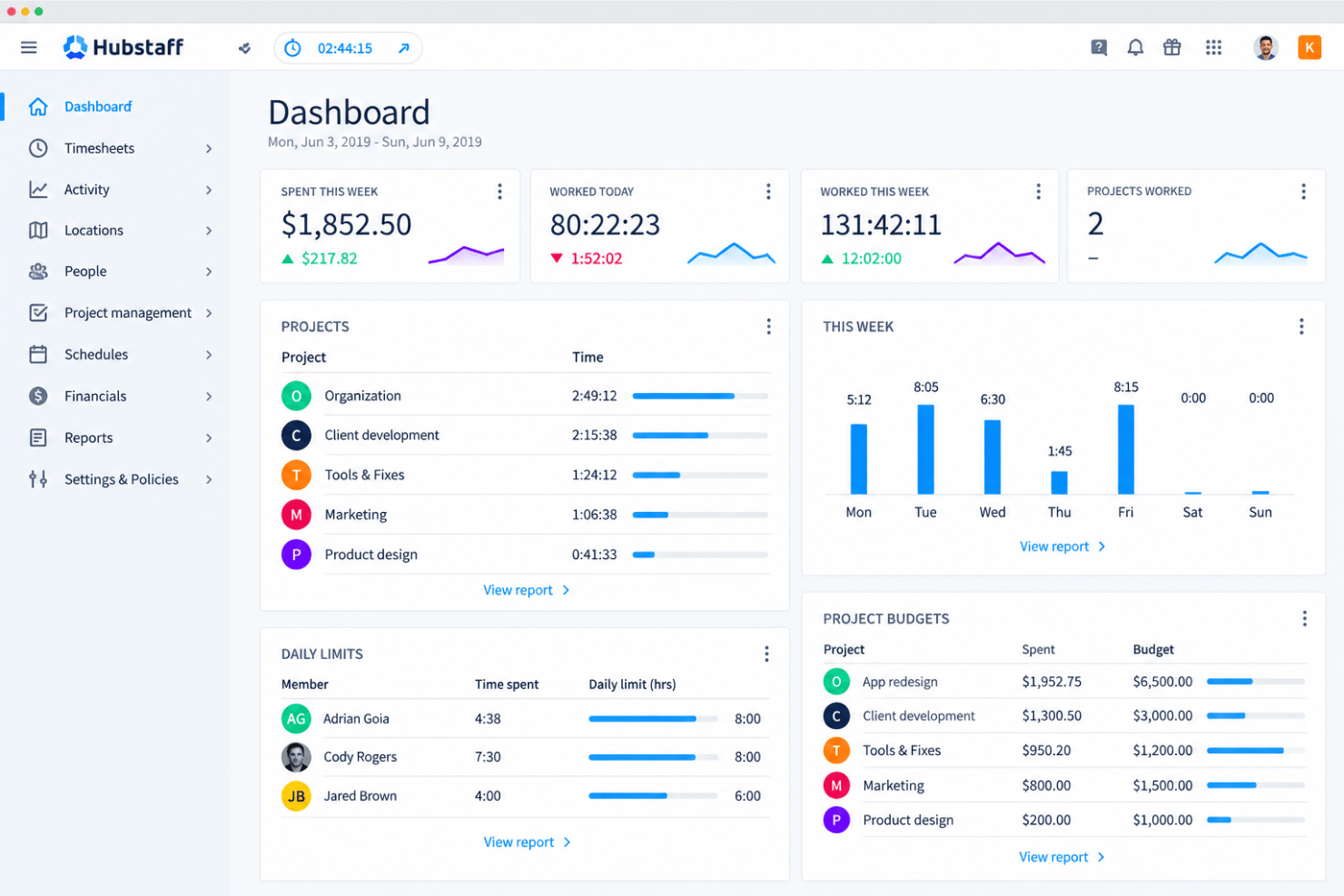
Set project budgets and time limits, then compare tracked hours with planned allocations. Managers can spot projects approaching their limits before additional billable work creates unexpected costs.
Timesheet Approvals
Review tracked time, edit entries, and approve timesheets before billing or payroll processing. Approval workflows give managers a checkpoint for correcting idle time, missed entries, or incorrectly assigned hours.
Scheduling And Shift Planning
Create employee schedules and shifts, then compare planned hours with actual tracked time. This helps operations teams identify missed shifts, late starts, and coverage gaps from one workforce record.
Ease of Use
Hubstaff is fairly easy to start with, thanks to straightforward timers across desktop, web, and mobile apps. However, its broader workforce features make the interface feel busy compared with simpler time tracking software. User sentiment often reflects that trade-off: screenshots, GPS, scheduling, approvals, and budgets offer useful control, while idle detection can misclassify meetings and reading. Reports also require manual edits, and monitoring features may feel intrusive without clear workplace policies.
Integrations
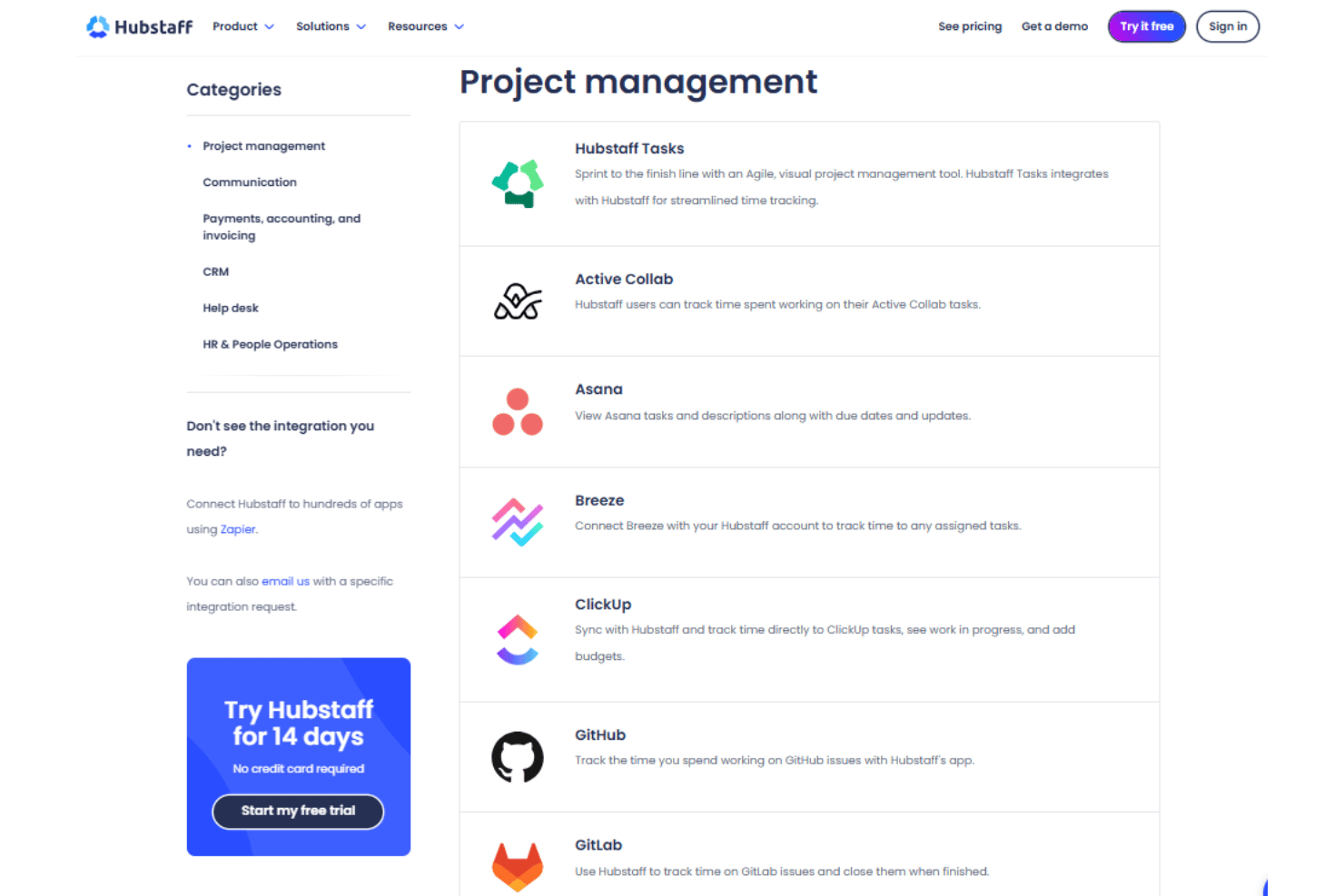
Hubstaff integrates with Hubstaff Tasks, Asana, ClickUp, Bitwage, PayPal, Monday, Slack, Jira, Salesforce, and Trello, among others.
Hubstaff also offers an API, allowing for custom integrations and connects with third-party integration tools, including Zapier.
Hubstaff Specs
- 360 Degree Feedback
- API
- Attendance Tracking
- Batch Permissions & Access
- Budgeting
- Calendar Management
- Dashboard
- Data Export
- Data Import
- Data Visualization
- Employee Database
- Employee Engagement
- Employee Onboarding
- External Integrations
- Feedback Management
- Forecasting
- Multi-User
- Notifications
- Project Management
- Scheduling
- Timesheets
- Travel Management
- Vacation & Absence Calendar