
De 10 beste KI-verktøyene for å beholde ansatte – vurdert i 2026

10 Beste KI-verktøy for å beholde ansatte – kortliste


Det er en utfordring å holde teamet ditt engasjert og fornøyd. KI-verktøy for å beholde ansatte kan hjelpe deg med dette ved å bruke KI til å forstå og imøtekomme teamets behov.
Disse verktøyene tilbyr funksjoner som prediktiv analyse og personlig tilbakemelding, slik at du kan identifisere potensielle problemer før de blir store utfordringer. De kan også gi innsikt i medarbeidertilfredshet og muligheter for karriereutvikling.
Som en person som uavhengig har testet og vurdert programvare, ønsker jeg å gi deg en objektiv oversikt over de beste verktøyene som finnes. I denne artikkelen finner du et utvalg av de beste KI-verktøyene for å beholde ansatte, som kan bidra til å styrke teamets moral og produktivitet.
Hvorfor du kan stole på våre programvareanbefalinger
Teamet vårt har testet og anmeldt programvare siden 2012. Vi er selv HR-eksperter, så vi vet hvor vanskelig og hvor viktig det er å velge riktig programvare.
I denne guiden har vi vurdert verktøyene gjennom praktisk testing og uavhengig research og gitt dem poeng ut fra våre utvelgelseskriterier. Vi bygger også på innsikt fra ledende eksperter i bransjen og erfarne HR-eksperter.
Anmeldelsene våre bygger på vår egen redaksjonelle vurdering. De er ikke et salgsargument.
Ekspertanmeldere:
Sammenligningstabell for KI-verktøy for å beholde ansatte
Denne sammenligningstabellen oppsummerer prisdetaljene for mine beste utvalgte KI-verktøy for å beholde ansatte:
| Tool | Best For | Trial Info | Price | ||
|---|---|---|---|---|---|
| 1 | Best for predicting retention across global teams | Free demo available | From $5/employee/month | Website | |
| 2 | Best for performance reviews | Free demo available | From $8/user/month (billed annually) | Website | |
| 3 | Best for human capital management | 30-day free trial + free demo available | Pricing upon request | Website | |
| 4 | Best for AI-driven HR support | Free demo available | Pricing upon request | Website | |
| 5 | Best for career pathing | Free demo available | Pricing upon request | Website | |
| 6 | Best for workforce planning | Free demo available | Pricing upon request | Website | |
| 7 | Best for communication analytics | Free demo available | From $799/month | Website | |
| 8 | Best for employee feedback | Free demo available | Pricing upon request | Website | |
| 9 | Best for employee recognition | Free demo available | Pricing upon request | Website | |
| 10 | Best for leadership insights | Free demo available | From $2/user/month (billed annually) | Website |

Anmeldelser av de beste KI-verktøyene for å beholde ansatte
Nedenfor finner du mine detaljerte sammendrag av de beste KI-verktøyene for å beholde ansatte som kom med på kortlisten min. Anmeldelsene mine gir en detaljert oversikt over de viktigste funksjonene, fordeler & ulemper, integrasjoner og ideelle bruksområder for hvert verktøy, slik at du kan finne det beste alternativet for deg.
Deel HR
Best for predicting retention across global teams
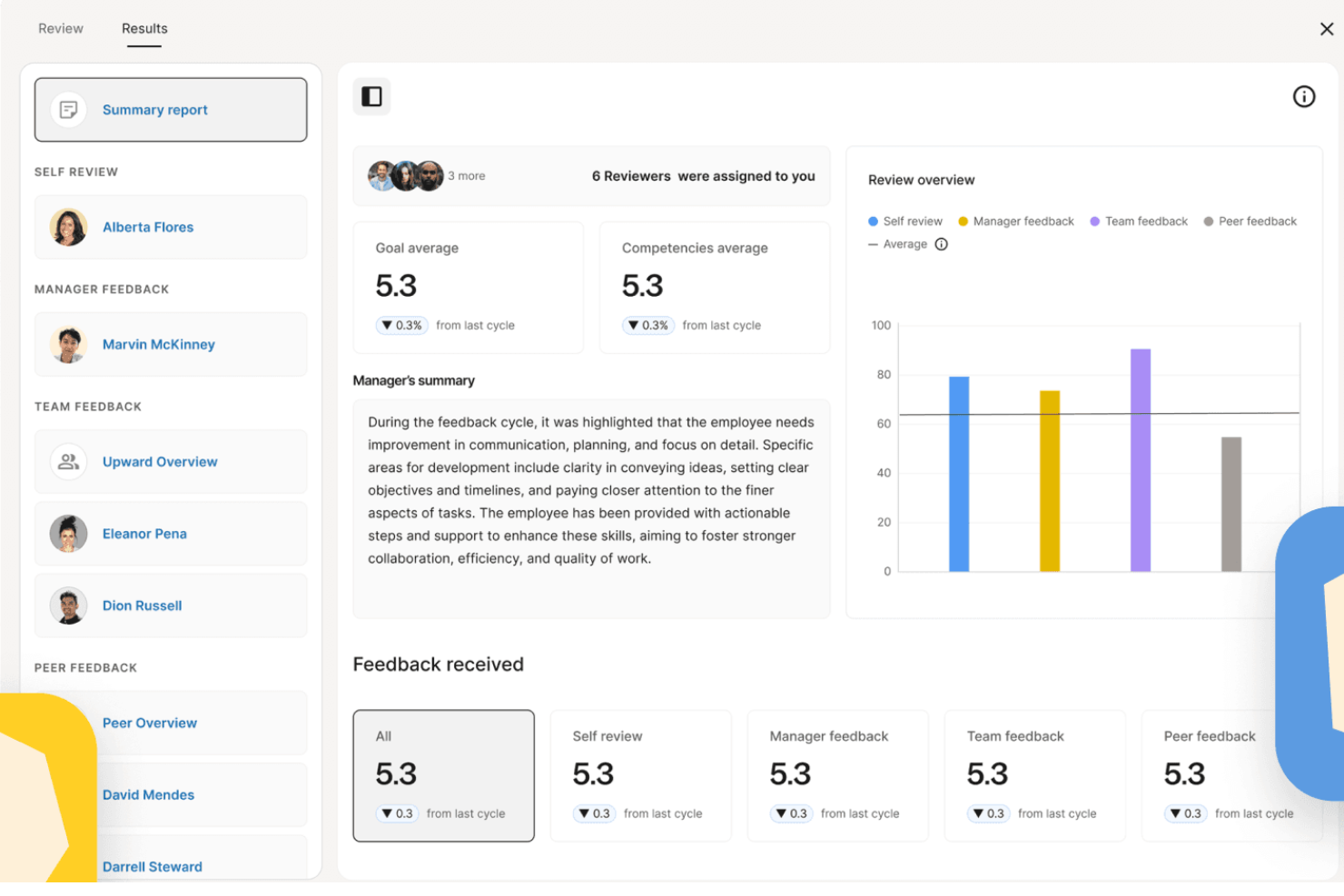
Your efforts to retain great people get a real boost when AI helps you understand what your teams need, where they may be struggling, and how to support their long-term growth. Deel’s AI-powered HR and talent tools give you instant insights into performance, development, compensation, and day-to-day questions that shape the employee experience for your internationally distributed team.
Why I Picked Deel
I picked Deel because it brings AI directly into the core drivers of retention—performance feedback, development, compensation clarity, and everyday support. With tools that draft career paths, training plans, and review cycles for you, your team can focus more on actual coaching rather than administrative work. I also like how the AI surfaces insights from your people data to highlight patterns that influence engagement and satisfaction, especially for global teams. Together, these capabilities help you build a global work environment where employees feel recognized, supported, and fairly compensated.
Deel Key Features
In addition to the retention-focused capabilities I highlighted above, you’ll find these useful when evaluating AI employee retention tools:
- AI-generated career paths and training programs: Quickly produces personalized development materials that help employees see clear opportunities for growth.
- 360° feedback and custom performance cycles: Supports fair, structured reviews that reduce bias and strengthen trust in evaluations.
- Compensation insights tied to performance data: Connects pay decisions with review results to promote transparency and reward top performers.
- Global salary intelligence: Uses data from 150+ countries to help you maintain competitive, equitable pay ranges that support long-term retention.
Deel Integrations
Integrations include Workday, BambooHR, Greenhouse, Lever, Xero, QuickBooks, Slack, Microsoft Teams, Google Workspace, and SAP SuccessFactors.
Pros and Cons
Pros:
- Links compensation and performance to increase pay transparency
- 360° reviews strengthen fairness in performance evaluations
- AI drafts career paths and training plans to support growth
Cons:
- Global insights may feel excessive for single-country teams
- AI cannot replace meaningful manager-employee conversations
New Product Updates from Deel HR

Deel Expands Stablecoin Wallet to 80+ Countries
Deel expands its Stablecoin Wallet to 80+ countries with dollar-backed balances and optional rewards. This gives eligible contractors more ways to hold and manage earnings inside Deel. For more information, visit Deel’s official site.
 .
Lattice
Best for performance reviews

Lattice is a performance management platform tailored for HR teams and managers looking to enhance employee engagement and development. It provides tools for performance reviews, goal setting, and real-time feedback to support employee growth.
Why I picked Lattice: It’s ideal for structured performance reviews and succession planning, offering AI features that make evaluations fairer and more efficient. Lattice also provides actionable insights to support employee development and engagement. For example, there’s Pulse to monitor employee engagement and surveys to gather feedback from them. It also allows you to set cascading and personalized goals for your team and track their real-time progress.
Standout features & integrations:
Features include customizable templates and workflows, as well as AI-powered peer feedback summaries that can make performance reviews easier for both HR and employees. Lattice also offers employee engagement surveys and performance analytics to identify areas for improvement.
Integrations include Slack, Microsoft Teams, Google Workspace, BambooHR, Workday, ADP, Okta, Outlook, Salesforce, and Jira.
Pros and Cons
Pros:
- Detailed performance analytics
- Real-time performance feedback
- Goal setting and tracking
Cons:
- Limited customization options
- Learning curve for new users
New Product Updates from Lattice

Lattice Introduces MCP Connector for AI Chat Tools
Lattice introduced Lattice MCP, a new connector that brings talent data into Claude, ChatGPT, and other LLM tools. The connector helps teams access performance context from reviews, 1:1 notes, feedback, goals, and updates within AI chat workflows. For more information, visit Lattice’s official site.
 .
Workday
Best for human capital management

Workday is a cloud-based human capital management platform designed for enterprises aiming to optimize workforce planning and talent management. It also prioritizes employee experience by focusing on people-first productivity.
Why I picked Workday: The platform is ideal for empowering high-performing teams, providing dedicated AI tools for managing employee data and productivity. Its AI capabilities include predictive analytics that help you forecast workforce trends/opportunities and plan accordingly. Workday also offers talent optimization features that allow your team to identify skill gaps and develop their potential. It also comes with a learning management system so staff members themselves can initiate their career growth.
Standout features & integrations:
Features include workforce planning, talent management, and payroll processing. Bringing these functions together in one AI system helps HR teams work more efficiently. It also ensures employee data stays accurate and easy to access. This integrated approach also creates a smoother, more reliable experience for employees, from payroll to career development. Additionally, effective workforce planning helps ensure your staff maintains a good work-life balance.
Integrations include Salesforce, Slack, Microsoft Teams, ServiceNow, Okta, Adobe Sign, Docusign, SAP, Oracle, and Google Workspace.
Pros and Cons
Pros:
- Offers predictive workforce planning
- Supports talent optimization
- Empowers employees with self‑service and learning paths
Cons:
- Pricing details aren’t transparent
- Significant learning curve and implementation complexity


Leena AI is an AI-powered tool designed for HR teams and managers seeking to automate repetitive tasks and enhance employee engagement. It comes with pre-built agentic AI colleagues that represent different departments, such as HR, IT, Finance, and Procurement.
Why I picked Leena AI: The platform excels in AI-driven HR support. You can take advantage of the AI chatbots to handle employee inquiries efficiently, freeing up your team to focus on more strategic initiatives that enhance the overall employee experience. Leena AI also offers onboarding automation to simplify the process for new hires. Its feedback collection tools provide valuable insights into employee needs and job satisfaction, helping you make informed decisions.
Standout features & integrations:
Features include employee query management, onboarding automation, and feedback collection, which can improve employee engagement. Leena AI also has KnowledgeGPT to keep your knowledge base current, ensuring employees can easily find accurate, up-to-date information when they need it.
Integrations include Slack, Microsoft, Workday, BambooHR, SAP Ariba, HubSpot, ADP, Oracle, Google Workspace, Salesforce, and Outlook.
Pros and Cons
Pros:
- Supports onboarding automation
- Provides efficient query management
- Automates routine HR tasks
Cons:
- Limited out-of-the-box integrations
- Pricing details are not transparent

Gloat is a talent marketplace platform designed for large enterprises looking to enhance employee career development. It matches employees with internal opportunities, helping them grow within the company, improving retention rates.
Why I picked Gloat: The platform excels in career pathing by using AI to align employee skills with company needs. Its AI-driven matching helps you identify opportunities for employees to develop new skills. This feature supports internal mobility, giving your team a clear path for growth. Additionally, Gloat's insights help managers understand skill gaps and plan for future talent needs.
For employees, the platform supports their career development behind the scenes. It provides AI-driven personalized course and training suggestions, which are all based on their current skills, interests, and career goals. This helps them visualize where they want to grow next and how to get there.
Standout features & integrations:
Features include skill matching, personalized career paths, and internal mobility tracking. These tools help you identify the right opportunities for employee growth. Plus, the ability to integrate with your company’s LXP and LMS enables continuous skill development. Lastly, Gloat helps employees identify their skill gaps themselves and easily find and connect with the right mentors to support them.
Integrations include Workday, SAP SuccessFactors, Oracle, Microsoft Teams, Slack, LinkedIn, Cornerstone, and ServiceNow.
Pros and Cons
Pros:
- Skill gap identification
- Real-time workforce analytics
- Internal career mobility
Cons:
- Customization is necessary for smaller teams
- Less suitable for large enterprises


Quinyx is a workforce management platform designed for businesses looking to optimize scheduling, time tracking, and labor cost management. This fully integrated employee retention AI tool helps managers make data-driven decisions regarding staffing.
Why I picked Quinyx: The platform is designed to support workforce planning by using AI to forecast demand. It then translates those forecasts into precise headcount requirements. Its predictive scheduling involves using AI to integrate employee preferences with business requirements and compliance rules.
Standout features & integrations:
Features include shift management, auto-schedule/auto-assign, and employee self-service. These tools simplify scheduling and help control labor costs while supporting a fair, transparent work environment. By reducing scheduling conflicts and overwork, these tools also help prevent employee burnout and promote overall well-being. Quinyx also offers compliance tracking to ensure adherence to labor regulations.
Integrations include ADP, SAP SuccessFactors, Oracle, HR+ by Visma, and Personio.
Pros and Cons
Pros:
- Supports compliance tracking
- Offers labor cost forecasting
- Provides predictive scheduling
Cons:
- Limited integrations compared to competitors
- No free trial available


Cerkl is an employee communication platform aimed at organizations seeking to enhance internal communication and engagement. It uses AI to deliver insights into various content, from onboarding to training or strategic communications, in order to drive results.
Why I picked Cerkl: The platform excels in communication analytics, offering AI-driven insights to optimize internal messaging. AI-driven analytics show which messages connect with your team, allowing you to refine communications. It gives detailed performance metrics like engagement levels and open rates to measure their impact. By improving how employees stay informed and connected, the platform helps strengthen both engagement and retention
Standout features & integrations:
Features include personalized content delivery, audience segmentation, and engagement tracking. These tools help you send the right message to the right employee groups. Plus, Cerkl lets you design the emails directly from the app. It offers an intuitive builder and content library to help you create company-branded communication materials.
Integrations include Microsoft Teams, Slack, SharePoint, Outlook, Google Workspace, Salesforce, HubSpot, Zoom, Mailchimp, and WordPress.
Pros and Cons
Pros:
- Advanced audience segmentation
- Personalized content delivery
- Detailed communication analytics
Cons:
- Pricing can be expensive compared to competitors
- Limited advanced features for small teams
Best for employee feedback

WorkTango is an employee engagement platform designed for HR professionals and managers aiming to collect and analyze employee feedback. It looks into team sentiment and engagement levels to help HR teams implement targeted interventions, rewards, or development opportunities.
Why I picked WorkTango: The platform excels in employee listening. Its AI capabilities include sentiment analysis that can reveal patterns in team dynamics, engagement levels, and workplace culture. WorkTango offers real-time feedback collection and reporting to keep you informed about employee concerns and team morale. These features help you take quick actions to improve workplace satisfaction.
Standout features & integrations:
Features include employee lifecycle surveys, qualitative feedback theme analysis, and an intuitive dashboard. These tools help you continuously monitor employee sentiment and engagement. WorkTango also provides leaders with information on their employees’ achievements and milestones, as well as helps them run team-specific nominations and awards.
Integrations include Slack, Microsoft Teams, Google Workspace, BambooHR, Workday, ADP, Okta, Outlook, and Jira.
Pros and Cons
Pros:
- Engagement scoring
- Customizable pulse surveys
- Real-time feedback insights
Cons:
- Limited advanced analytics features
- Additional setup requirements for larger teams
Best for employee recognition

Achievers is a recognition and rewards platform designed for companies looking to boost employee engagement and morale. It has a global rewards marketplace that personalizes recognition efforts and drives meaningful interactions within teams.
Why I picked Achievers: The user-friendly platform enables leaders and HR teams to provide employee recognition to top performers, whether they work in-office or remotely. With the help of AI, you can also identify key moments that matter to employees and personalize rewards accordingly. Achievers facilitates diverse recognition programs, including both monetary rewards and peer praise. It makes it easier for you to create an engaging work environment.
Standout features & integrations:
Features include customizable rewards, social recognition, and a points-based system. These tools allow top talent to choose rewards that matter to them. Achievers also offers analytics to measure the impact of recognition programs on engagement.
Integrations include Workday, ADP, Microsoft Teams, Slack, SAP SuccessFactors, LinkedIn, and Google Workspace.
Pros and Cons
Pros:
- Engagement tracking analytics
- Social recognition features
- Personalized recognition programs
Cons:
- Limited customization for small businesses
- Learning curve for new users

Peoplebox.ai
Best for leadership insights

Peoplebox.ai is an AI-driven talent management platform designed for HR teams and managers. It automates goal alignment, people management, and talent features to support employee development. This allows leaders to spot high-potential employees and guide their growth, engagement, and career progression.
Why I picked Peoplebox.ai: The platform's focus on leadership insights sets it apart. It offers AI features, including an AI talent partner named Nova, which assists with hiring and development. Predictive analytics provides valuable insights into employee performance and potential. This makes it easier for your team to make informed decisions and align leadership goals.
Standout features & integrations:
Features include AI-driven interview software, resume screening, and predictive analytics. These all help recruiters with better candidate matching, finding people who align with company culture and values. Nova supports ongoing employee development by helping individuals break goals into actionable tasks and get real feedback on ways to improve.
Integrations include Slack, Microsoft Teams, Google Workspace, Jira, Asana, Notion, and BambooHR.
Pros and Cons
Pros:
- Predictive analytics for insights
- Leadership alignment tools like OKR management (starts at $8/month)
- AI-driven talent management
Cons:
- No mobile app
- No free plan
Andre KI-verktøy for å beholde ansatte
Her er noen flere alternativer for KI-verktøy for å beholde ansatte som ikke kom med på kortlisten min, men som likevel er verdt å undersøke:
- 15Five
For continuous feedback and recognition
- Leapsome
For performance and learning cycles
- Culture Amp
For AI leadership coaching and feedback
- HiBob
For HR analytics and insights


How I Evaluate AI Employee Retention Tools
I look for tools where AI goes beyond dashboards—flagging flight risks before a resignation hits your inbox or surfacing the actual drivers behind attrition in a specific team. I split my evaluation into core functionality every tool needs to qualify and the differentiating factors that separate a good fit from a great one.
Core Functionality (Table Stakes For This List)
When I'm selecting tools for my list, I rank each one on a scale from 0 (does not offer the functionality) to 5 (excels in this area) for each core functionality listed below. Then, I calculate the tool's total score into a percentage. Each tool needs to achieve a minimum total score of 65% to be considered for inclusion.
- Attrition Risk Prediction: I check whether the tool uses ML models to generate real risk scores—like flagging a tenured engineer whose collaboration patterns shifted—rather than just reporting past turnover.
- Sentiment & Engagement Analysis: The tool should apply NLP across feedback channels (pulse surveys, open-ended comments, review data) to surface emerging morale issues before they snowball.
- Driver & Root Cause Analytics: I evaluate how well the platform ranks what's actually behind attrition in specific segments, whether that's compensation gaps on one team or manager quality on another.
- AI-Generated Retention Recommendations: Beyond just flagging risk, I look for tools that prescribe tailored actions—like suggesting a career development conversation for a high-performer showing signs of stagnation.
- HRIS & Workforce Data Integration: Strong connectors to platforms like Workday, BambooHR, or SAP SuccessFactors matter because retention models are only as good as the data feeding them.
- Retention Dashboards & Reporting: I evaluate whether HR leaders and managers each get role-appropriate views, with drill-down into team-level trends and the ability to track outcomes over time.
Once I have a list of tools that meet the criteria, I consider what sets each platform apart.
Differentiating Factors (What Sets Vendors Apart)
Here's how I compare and contrast different vendors:
Standout Features
Manager enablement tools are a big differentiator—I look for platforms that push AI-generated talking points or coaching nudges directly to managers ahead of 1:1s with at-risk team members. Passive listening signals also stand out, where a tool analyzes calendar load or collaboration patterns to detect burnout without adding another survey. I also evaluate whether a platform tracks intervention outcomes, connecting specific retention actions back to actual attrition changes over time.
Beyond Features
Ethical AI and bias mitigation matter a lot here because these tools score real people. I check whether a vendor provides model explainability and bias audits across protected classes before HR acts on a risk flag. Data privacy is closely tied—retention platforms ingest sensitive workforce data, so I evaluate certifications like SOC 2 Type II and GDPR compliance alongside role-based access controls. Time-to-value also shapes my assessment. I favor platforms with prebuilt retention models that surface usable insights within weeks rather than requiring months of data science work.
Slik velger du KI-verktøy for å beholde ansatte
Det er lett å gå seg vill i lange funksjonslister og kompliserte prismodeller. For å hjelpe deg med å holde fokus mens du går gjennom den unike prosessen din for valg av programvare, får du her en sjekkliste over faktorer du bør ha i tankene:
| Faktor | Hva du bør vurdere |
|---|---|
| Skalerbarhet | Kan verktøyet vokse med virksomheten din? Vurder om det kan håndtere en økning i antall brukere eller datamengde uten redusert ytelse. Se etter tegn på sømløs skalering, for eksempel ingen nedetid under vekst. |
| Integrasjoner | Fungerer det med de eksisterende systemene dine? Kontroller kompatibiliteten med HR-verktøyene og plattformene du bruker i dag. Manglende integrasjoner kan føre til datasiloer og ineffektivitet. |
| Tilpasningsmuligheter | Kan du tilpasse det til behovene dine? Finn ut om verktøyet lar deg justere innstillinger og arbeidsflyter slik at de passer til de spesifikke prosessene dine. Stive systemer oppfyller kanskje ikke unike forretningskrav. |
| Brukervennlighet | Er det brukervennlig for teamet ditt? Vurder om grensesnittet er intuitivt og enkelt å navigere i. En bratt læringskurve kan forsinke innføringen og redusere effektiviteten. |
| Implementering og innføring | Hvor raskt kan du komme i gang? Vurder hvor mye tid og hvilke ressurser som kreves for implementering og innføring. Se etter verktøy med tydelige veiledninger, kundestøtte og en rask oppsettsprosess. |
| Kostnad | Ligger det innenfor budsjettet ditt? Sammenlign prismodellen med budsjettet ditt. Sørg for at det ikke finnes skjulte gebyrer, og at kostnaden står i forhold til verdien du får. |
| Sikkerhetstiltak | Beskytter det dataene dine? Kontroller verktøyets sikkerhetstiltak, for eksempel kryptering og tilgangskontroller, for å beskytte sensitive medarbeideropplysninger. |
| Tilgjengelig kundestøtte | Kan du få hjelp når du trenger det? Kontroller om leverandøren tilbyr kundestøtte døgnet rundt og flere kanaler for hjelp. Begrensede supportalternativer kan føre til langvarig nedetid eller uløste problemer. |
Hva er KI-verktøy for å beholde ansatte?
AI-verktøy for å beholde ansatte er programvareløsninger som bruker kunstig intelligens til å hjelpe virksomheter med å forstå og forbedre medarbeidertilfredsheten og redusere gjennomtrekk. HR-medarbeidere og ledere bruker vanligvis disse verktøyene til å få innsikt i strategier for å beholde ansatte og vurdere graden av engasjement. Prediktiv analyse, sentimentanalyse og funksjoner for personlig tilpassede tilbakemeldinger bidrar til å identifisere potensiell risiko for gjennomtrekk og styrke medarbeiderengasjementet. Samlet sett gir disse verktøyene verdifull innsikt og strategier for å opprettholde en stabil og motivert arbeidsstyrke.
Funksjoner
Når du velger AI-verktøy for å beholde ansatte, bør du se etter følgende viktige funksjoner:
- Prediktiv analyse: Bruker kunstig intelligens til å forutsi mulig gjennomtrekk blant ansatte, utvikling i prestasjoner og hvor klare ansatte er for forfremmelse.
- Sentimentanalyse: Analyserer tilbakemeldinger fra ansatte for å vurdere moral og tilfredshet, og gir innsikt i teamdynamikk.
- Personlig tilpassede tilbakemeldinger: Tilbyr medarbeiderne skreddersydde, prestasjonsbaserte tilbakemeldinger for å styrke utviklingsplanene deres.
- Analyse av kompetansegap: Identifiserer områder der ansatte kan forbedre seg, og gir retning for opplæring og utvikling.
- Sporing av engasjement: Overvåker engasjementsnivået over tid for å følge opp tiltak for å beholde ansatte.
- Karriereplanlegging: Kartlegger mulige karriereveier for ansatte og motiverer dem med tydelige muligheter for utvikling.
- Automatiserte undersøkelser: Sender ut regelmessige undersøkelser for å samle inn tilbakemeldinger fra ansatte uten manuell inngripen.
- Rapportering av innsikt i sanntid: Gir oppdaterte data om nøkkeltall for å beholde ansatte, engasjementsnivåer og arbeidsstyrkens prestasjoner – slik at beslutninger og justeringer kan gjøres raskt.
- AI-drevne anbefalinger: Foreslår tiltak og strategier basert på dataanalyse for å forbedre det å beholde ansatte og medarbeidertilfredsheten.
Fordeler
Implementering av AI-verktøy for å beholde ansatte gir flere fordeler for teamet og virksomheten din. Her er noen av fordelene du kan se frem til:
- Redusert gjennomtrekk: Prediktiv analyse gjør det mulig å identifisere ansatte som står i fare for å slutte, og iverksette proaktive tiltak for å beholde dem.
- Økt engasjement: Sentimentanalyse gir innsikt i medarbeidernes moral, slik at du kan håndtere bekymringer og øke engasjementet.
- Målrettet kompetanseutvikling: Personlig tilpassede tilbakemeldinger støtter skreddersydde utviklingsplaner som fremmer medarbeidernes utvikling og tilfredshet.
- Effektiv ressursfordeling: Analyse av kompetansegap sikrer at opplæringstiltak rettes mot områdene der behovet er størst, slik at ressursene utnyttes best mulig.
- Strategiske beslutninger: Rapportering i sanntid gir oppdatert informasjon som bidrar til raske og velinformerte beslutninger.
- Motivert arbeidsstyrke: Tydelig karriereplanlegging hjelper ansatte med å se for seg fremtiden sin i virksomheten.
- Tidsbesparelser: Automatiserte undersøkelser og AI-drevne anbefalinger frigjør teamet ditt til strategiske oppgaver.
Kostnader og priser
Valg av AI-verktøy for å beholde ansatte krever en forståelse av de ulike prismodellene og abonnementene som er tilgjengelige. Kostnadene varierer basert på funksjoner, teamstørrelse, tillegg og mer. Tabellen nedenfor oppsummerer vanlige abonnementer, gjennomsnittsprisene deres og typiske funksjoner som er inkludert i løsninger med AI-verktøy for å beholde ansatte:
Sammenligningstabell for AI-verktøy for å beholde ansatte
| Abonnementstype | Gjennomsnittspris | Vanlige funksjoner |
|---|---|---|
| Gratisabonnement | $0 | Tilgang til grunnleggende analyse, et begrenset antall brukerkontoer og grunnleggende rapportering. |
| Personlig abonnement | $5-$25/user/month | Utvidet analyse, funksjoner for personlig tilpassede tilbakemeldinger og analyse av kompetansegap. |
| Bedriftsabonnement | $30-$60/user/month | Avansert analyse, prediktiv innsikt, integrasjon med HR-systemer og automatiserte undersøkelser. |
| Storbedriftsabonnement | $65-$100/user/month | Omfattende rapportering, fullstendige tilpasningsmuligheter, AI-drevne anbefalinger og dedikert brukerstøtte. |
Vanlige spørsmål om KI-verktøy for å beholde ansatte
Her er noen svar på vanlige spørsmål om KI-verktøy for å beholde ansatte:
Hvordan måler jeg avkastningen på KI-verktøy for å beholde ansatte?
For å måle avkastningen sammenligner du kostnadene ved å ta i bruk verktøyet med besparelsene fra redusert utskifting av ansatte og økt produktivitet. Følg med på måltall som utskiftingsgrad og medarbeiderengasjement før og etter at verktøyet tas i bruk. Ta hensyn til faktorer som reduserte rekrutteringskostnader og bedre medarbeiderprestasjoner. Du kan også knytte konkrete forbedringer i teamdynamikk og tilfredshet direkte til innsikten du får fra KI-verktøyet.
Kan KI-verktøy for å beholde ansatte integreres med eksisterende HR-systemer?
Ja, de fleste KI-verktøy for å beholde ansatte kan integreres med vanlige HR-systemer. Sjekk om verktøyet støtter API-er eller har innebygde koblinger til systemer som Workday eller BambooHR. Sørg for at teamet eller IT-avdelingen har den tekniske kompetansen som trengs for å konfigurere og vedlikeholde disse integrasjonene. Vurder å rådføre deg med IT-avdelingen for å sikre en smidig integrasjonsprosess, slik at alle systemene fungerer godt sammen.
Hvordan sikrer jeg personvernet ved bruk av KI-verktøy for å beholde ansatte?
For å sikre personvernet bør du velge verktøy med sterke sikkerhetstiltak, for eksempel kryptering og tilgangskontroller. Kontroller at leverandøren overholder relevante forskrifter som GDPR eller CCPA. Du bør også etablere interne retningslinjer for tilgang til og håndtering av data. Gjennomfør regelmessige revisjoner av verktøyets praksis for datasikkerhet, og oppdater den ved behov. Ta kontakt med leverandøren for å forstå personvernreglene deres og sikre at de samsvarer med organisasjonens standarder.