


Intuit Enterprise Suite mot Microsoft Dynamics 365 Business Central: Sammenligning og anmeldelser for 2026


HR and operations teams often feel the impact when finance, payroll, inventory, reporting, and approvals don’t work well together. As the organization grows, disconnected workflows can make it harder to manage day-to-day admin work, track performance, and keep teams aligned.
Intuit Enterprise Suite and Microsoft Dynamics 365 Business Central are both business management software options for growing organizations. Intuit Enterprise Suite focuses on connected finance, payroll, payments, reporting, and administrative operations through the Intuit ecosystem, while Business Central supports broader business processes across finance, sales, service, projects, inventory, and operations.
In this comparison, I’ll break down their features, pricing, pros and cons, security, ease of use, and ideal use cases to help you decide which platform fits your organization best.
Intuit Enterprise Suite vs. Microsoft Dynamics 365 Business Central: An Overview
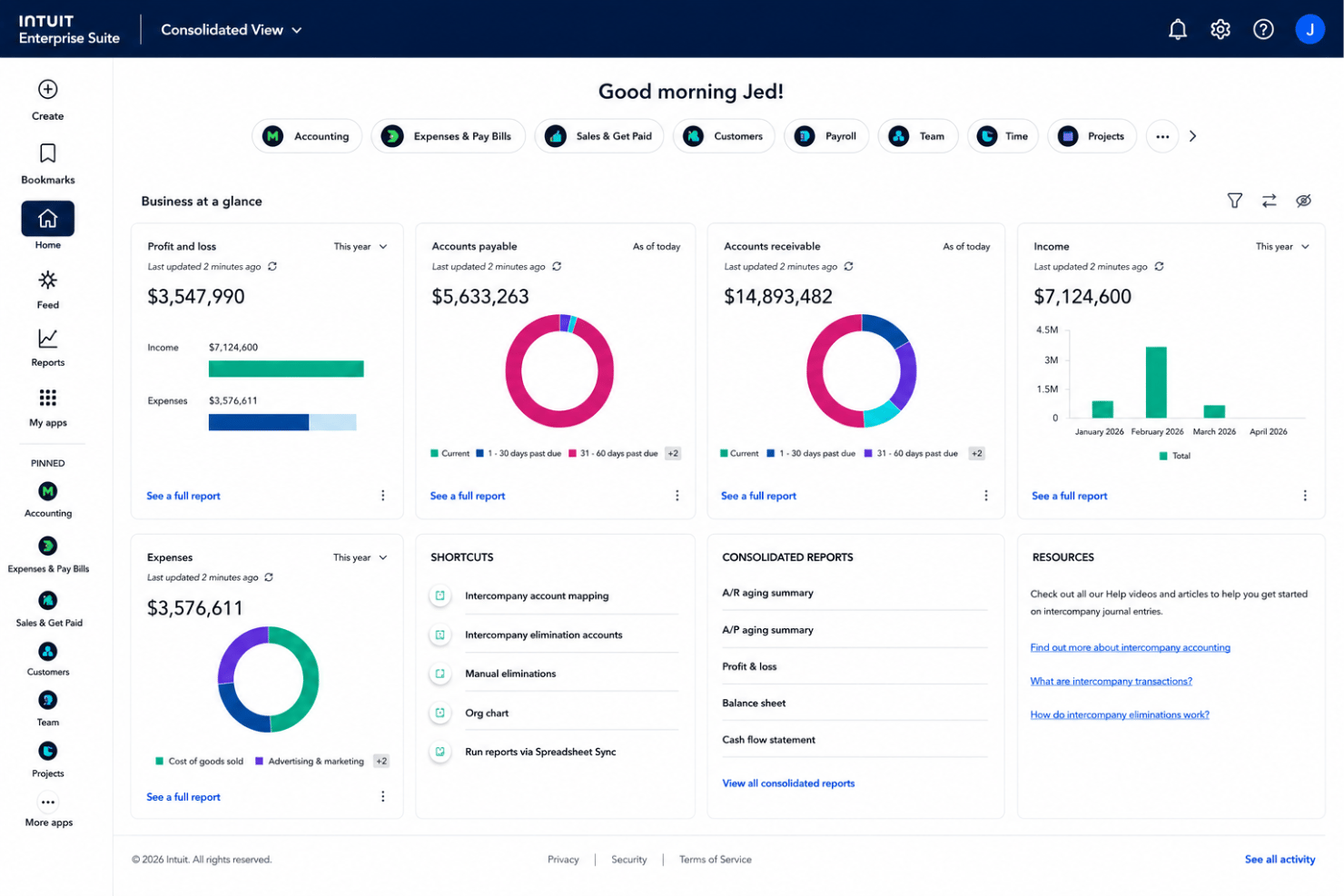
Intuit Enterprise Suite
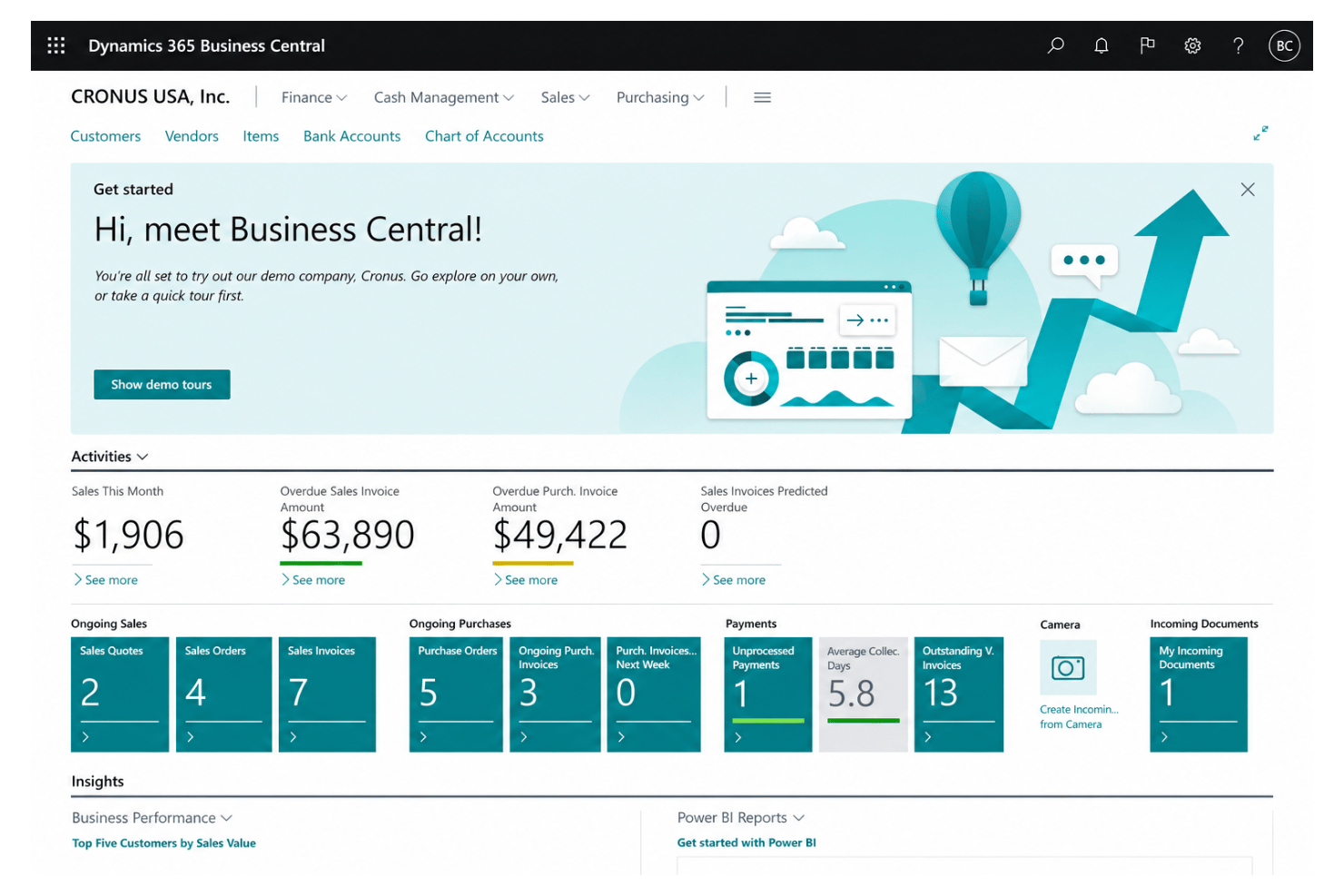
Microsoft Dynamics 365 Business Central

Why Trust Our Software Recommendations
Our team has been testing and reviewing software since 2012. As HR experts ourselves, we know how difficult—and important—it is to choose the right software.
For this guide, we evaluated tools using hands-on testing and independent research, scoring tools using our selection criteria. We also draw on insights from industry thought leaders and practicing HR experts.
Our reviews reflect our human editorial judgment, not a sales pitch.
Expert reviewers:
Intuit Enterprise Suite vs. Microsoft Dynamics 365 Business Central Pricing Comparison
| Intuit Enterprise Suite | Microsoft Dynamics 365 Business Central | |
|---|---|---|
| Free Trial | Free demo available | Free plan available |
| Pricing | Pricing upon request | From $80/user/month (billed annually) |
Intuit Enterprise Suite sammenlignet med Microsoft Dynamics 365 Business Central: priser og skjulte kostnader
Intuit Enterprise Suite bruker tilpasset, tilbudsbasert prising, så kostnadene avhenger av organisasjonens størrelse, valgte funksjoner, antall brukere, enheter, behov for implementering, integrasjoner og supportkrav. Microsoft Dynamics 365 Business Central bruker en mer strukturert abonnementsmodell, med separate planer basert på brukertilgang og hvilket funksjonsnivå som trengs, inkludert mer omfattende funksjoner for virksomhetsstyring og alternativer for brukere med begrenset tilgang.
Når det gjelder skjulte kostnader, kan begge plattformene kreve et ekstra budsjett for implementering, datamigrering, opplæring, tilpassede arbeidsflyter, tredjepartsintegrasjoner, premiumsupport og løpende systemkonfigurasjon. Business Central kan være enklere å anslå på forhånd fordi planstrukturen er offentlig, mens Intuit Enterprise Suite krever et tilpasset tilbud. For å sammenligne begge nøyaktig bør teamene be om en fullstendig kostnadsoversikt som inkluderer oppsett, support, integrasjoner, tillegg og langsiktige behov for administrasjon.
Intuit Enterprise Suite vs. Microsoft Dynamics 365 Business Central Feature Comparison
| Intuit Enterprise Suite | Microsoft Dynamics 365 Business Central | |
|---|---|---|
| API | ||
| Accounts Payable | ||
| Accounts Receivable | ||
| Budgeting | ||
| Calendar Management | ||
| Customer Management | ||
| Dashboard | ||
| Data Export | ||
| Data Import | ||
| Data Visualization | ||
| Expense Tracking | ||
| External Integrations | ||
| Forecasting | ||
| Inventory Tracking | ||
| Multi-User | ||
| Notifications | ||
| Payroll | ||
| Project Management | ||
| Scheduling | ||
| Supplier Management | ||
| Third-Party Plugins/Add-Ons |
Integrasjoner for Intuit Enterprise Suite sammenlignet med Microsoft Dynamics 365 Business Central
| Integrasjon | Intuit Enterprise Suite | Microsoft Dynamics 365 Business Central |
|---|---|---|
| Shopify | ✅ | ✅ |
| BILL/Betaling av regninger | ✅ | ✅* |
| PayPal | ✅ | ✅ |
| Stripe | ✅ | ✅* |
| Salesforce | ✅ | ✅* |
| Square | ✅ | ✅* |
| Amazon Marketplace | ✅ | ✅* |
| HubSpot | ✅ | ✅* |
| Knowify | ✅ | ❌ |
| Wix | ✅ | ✅* |
| API | ✅ | ✅ |
| Zapier | ❌ | ✅ |
*Tilgjengelig via en tredjepartskobling, en Microsoft AppSource-app, en API-/iPaaS-kobling eller Zapier, og ikke gjennom en tydelig innebygd integrasjon utviklet av Microsoft.
Både Intuit Enterprise Suite og Microsoft Dynamics 365 Business Central tilbyr bred støtte for integrasjoner. Intuit Enterprise Suite utnytter Intuit-økosystemet og kobler økonomi, lønn, betalinger og administrative arbeidsflyter til relaterte forretningsverktøy. Business Central tilbyr derimot større utvidelsesmuligheter gjennom Microsoft AppSource, API-er, partnerkoblinger og Microsoft 365-verktøy. Alt i alt passer Intuit Enterprise Suite for team med Intuit-baserte arbeidsflyter, mens Business Central gir Microsoft-baserte team større fleksibilitet til å koble sammen spesialiserte systemer.
Intuit Enterprise Suite vs. Microsoft Dynamics 365 Business Central-sikkerhet, samsvar & pålitelighet
| Faktor | Intuit Enterprise Suite | Microsoft Dynamics 365 Business Central |
|---|---|---|
| Datakryptering | Krypterer data under overføring og i hvile for å beskytte økonomi-, lønns- og driftsdata. | Krypterer kundedata i hvile og under overføring i Microsofts skymiljøer. |
| Regulatorisk samsvar | Støtter SOC-rapporter, ISO 27001-sertifisert praksis, PCI DSS for relevante betalingstjenester og VPAT-dokumentasjon. | Støtter Microsofts samsvarsprogrammer for skytjenester, inkludert ISO 27001, SOC-rapporter og globale personvernstandarder. |
| Tilgangskontroller | Inkluderer rollebaserte tilgangskontroller for sensitive økonomi-, lønns- og administratoropplysninger. | Bruker Microsoft Entra ID, rollebasert tilgang, betinget tilgang og alternativer for MFA. |
| Oppetid & tilgjengelighet | Tilbyr ressurser for virksomhetssikkerhet, men en spesifikk SLA for oppetid for IES er ikke offentlig oppført. | Tilbyr økonomisk støttet oppetid for betalte produksjonsmiljøer, med redundans og høy tilgjengelighet. |
| Revisjon & aktivitetssporing | Støtter revisjonsbehov gjennom tillatelser, økonomiske kontroller og innsyn i transaksjoner. | Tilbyr revisjonslogging, aktivitetssporing og Microsoft-administrert sikkerhetsovervåking. |
Begge plattformene tilbyr sterk sikkerhet for økonomi-, lønns- og driftsdata. Intuit Enterprise Suite dekker sentrale kontroller som kryptering, rollebasert tilgang, SOC-rapporter, ISO 27001-sertifisert praksis og PCI DSS for relevante betalingstjenester. Business Central tilbyr mer detaljert offentlig dokumentasjon om Microsoft Entra ID, MFA, revisjonslogging, redundans og oppetid, noe som gjør løsningen bedre egnet for team som trenger Microsoft-støttet sikkerhet og omfattende samsvar.
Intuit Enterprise Suite vs. Microsoft Dynamics 365 Business Central – brukervennlighet
| Faktor | Intuit Enterprise Suite | Microsoft Dynamics 365 Business Central |
|---|---|---|
| Brukergrensesnitt | Bruker et kjent grensesnitt og arbeidsflyter i Intuit-stil, særlig for team som kommer fra QuickBooks. | Bruker et rollebasert arbeidsområde som kan tilpasses etter bruker, rolle og oppgave. |
| Implementering | Tilbyr veiledet oppsett, migreringsstøtte, en dedikert kundeansvarlig og tilpassede opplæringsplaner. | Tilbyr Microsoft-dokumentasjon, opplæringsløp, assistert oppsett og partnerstyrt implementeringsstøtte. |
| Læringskurve | Enklere å ta i bruk for team som allerede kjenner Intuit-produkter, selv om det fortsatt er nødvendig med opplæring. | Kan kreve mer opplæring fordi løsningen dekker økonomi, salg, service, lager, prosjekter og drift. |
| Støtteressurser | Tilbyr veiledning fra kundeansvarlige, opplæringsplaner, produktstøtte og valgfrie nivåer for premiumstøtte. | Tilbyr ressurser fra Microsoft Learn, dokumentasjon, hjelpesider, tekniske supportkanaler og partnerstøtte. |
| Tilpasning | Støtter konfigurerbare arbeidsflyter, rapporter, integrasjoner, tillatelser og forretningsprosesser. | Tilbyr dypere personalisering gjennom rollesentre, sidelayouts, instrumentbord, rapporter og integrasjoner med Microsoft 365. |
Med tanke på brukervennlighet vil Intuit Enterprise Suite trolig føles mer kjent for team som allerede bruker arbeidsflyter fra Intuit eller QuickBooks, særlig med veiledet implementering og støtte fra kundeansvarlige. Business Central gir på sin side teamene større mulighet til å tilpasse roller, oppsett, rapportering og arbeidsflyter koblet til Microsoft 365, men det kan ta mer tid å sette opp og lære løsningen. Alt i alt er Intuit Enterprise Suite enklere å ta i bruk for team som fokuserer på økonomi, lønn, betalinger og administrativt arbeid, mens Business Central er bedre for team som trenger bredere driftsdekning innen økonomi, salg, service, lager og prosjekter.
Intuit Enterprise Suite vs Microsoft Dynamics 365 Business Central: Pros & Cons
Intuit Enterprise Suite
- Multi-entity management simplifies financial operations across growing organizations.
- AI-powered automation helps reduce manual financial, administrative, and operational tasks.
- Advanced reporting and real-time business insights improve decision-making.
- May offer more functionality than smaller businesses with basic accounting needs.
- Organizations migrating from simpler accounting software may face a learning curve.
- Advanced customization and complex implementations require additional planning and configuration.
Microsoft Dynamics 365 Business Central
- Unified financial, sales, and project data in one dashboard
- Strong workflow automation for repetitive business processes
- Built-in reporting with live data, not static snapshots
- Limited out-of-the-box HR and payroll functionality
- Advanced analytics require costly Power BI licenses
- Customization and setup can be costly for smaller teams
Best Use Cases for Intuit Enterprise Suite and Microsoft Dynamics 365 Business Central
Intuit Enterprise Suite
- Multi-Entity Organizations Manage multiple legal entities, automate intercompany transactions, and consolidate financial reporting from a single system.
- Professional Services Firms Track projects, manage financial performance, and automate accounting workflows while improving visibility across teams.
- Technology & SaaS Companies Support growing operations with AI-powered reporting, forecasting, and financial controls as the business scales.
- Construction & Project-Based Businesses Manage project accounting, budgeting, and financial reporting with workflows designed for project-driven organizations.
- Manufacturing, Wholesale & Distribution Monitor financial performance across products, locations, and business units while improving operational visibility.
- Growing Mid-Market Businesses Organizations expanding across multiple entities or locations can benefit from enterprise-level financial management without the complexity of a traditional ERP.
Microsoft Dynamics 365 Business Central
- Manufacturing Firms It handles production orders, planning, and inventory tracking with native manufacturing features.
- Distributors Robust inventory, order management, and supply chain tools help multi-site distributors control and analyze stock movements in real time.
- Project-Based Teams Built-in project tracking, budgeting, and time entry give project managers a unified dashboard for financial and resource control.
- Finance Departments Detailed financial reporting, audit trails, and automated reconciliation support busy finance teams aiming for speed and accuracy.
- Multi-Entity Companies Centralized dashboards and role-based access make it easy to manage the finances and operations of multiple legal entities in one platform.
- Businesses on Microsoft 365 Native connections with Teams, Excel, and Outlook mean your staff can work in the apps they already know to move data and requests seamlessly.
Hvem bør bruke Intuit Enterprise Suite, og hvem bør bruke Microsoft Dynamics 365 Business Central?
Intuit Enterprise Suite passer godt for virksomheter i vekst som ønsker sammenkoblede arbeidsflyter for økonomi, lønn, betalinger, rapportering og administrasjon innenfor Intuit-økosystemet. Løsningen fungerer spesielt godt for team som allerede kjenner arbeidsflyter i QuickBooks-stil, og som trenger bedre oversikt, automatisering og støtte for flere selskaper uten å ta i bruk et mer omfattende ERP-oppsett.
Microsoft Dynamics 365 Business Central er derimot bedre egnet for mellomstore virksomheter som trenger bredere kontroll over økonomi, salg, lager, prosjekter, innkjøp og drift. Det er et godt alternativ for produsenter, distributører, prosjektbaserte team, økonomiavdelinger, virksomheter med flere selskaper og bedrifter som allerede bruker Microsoft 365 og ønsker mer tilpasning, automatisering og dybde i rapporteringen.
Differences Between Intuit Enterprise Suite and Microsoft Dynamics 365 Business Central
| Intuit Enterprise Suite | Microsoft Dynamics 365 Business Central | |
|---|---|---|
| AI & Automation Focus | Uses Intuit AI Agents for finance, payments, project management, data cleanup, and administrative automation. | Uses Copilot, AI agents, and workflow automation across finance, sales, payables, orders, inventory, and operations. |
| Customization Depth | Offers configurable workflows, reports, permissions, integrations, and business processes. | Offers deeper customization through role centers, apps, extensions, Power Automate, Power BI, and Microsoft Marketplace. |
| Ecosystem Focus | Built around the Intuit ecosystem, including finance, payroll, payments, bill pay, reporting, and administrative workflows. | Built around the Microsoft ecosystem, with strong ties to Microsoft 365, Teams, Excel, Power BI, and Power Automate. |
| Global Readiness | Supports growing and multi-entity businesses, but public global localization details are less extensive. | Supports global operations with multi-currency, multiple languages, consolidations, intercompany transactions, and localization support. |
| Operational Scope | Focuses more on financial management, payroll, payments, reporting, and admin operations for growing businesses. | Covers a broader range of business functions, including finance, sales, service, inventory, supply chain, projects, purchasing, and operations. |
| Visit Intuit Enterprise SuiteOpens new window | Read Microsoft Dynamics 365 Business Central ReviewOpens new window |
Similarities Between Intuit Enterprise Suite and Microsoft Dynamics 365 Business Central
| Audit & Compliance Support | Both support audit and compliance needs through permissions, transaction visibility, and security controls. |
|---|---|
| Cloud Access | Both are cloud-based business management software options that help teams access business data online. |
| Financial Management | Both support core finance work, including accounting, reporting, payables, receivables, and business performance visibility. |
| Reporting & Insights | Both help teams track business performance through dashboards, reports, and data-driven insights. |
| Role-Based Access | Both include roles and permissions to help control access to sensitive financial, administrative, and operational data. |
| Visit Intuit Enterprise SuiteOpens new window Read Microsoft Dynamics 365 Business Central ReviewOpens new window | |