


Intuit Enterprise Suite versus Microsoft Dynamics 365 Business Central: vergelijking en beoordelingen voor 2026


HR and operations teams often feel the impact when finance, payroll, inventory, reporting, and approvals don’t work well together. As the organization grows, disconnected workflows can make it harder to manage day-to-day admin work, track performance, and keep teams aligned.
Intuit Enterprise Suite and Microsoft Dynamics 365 Business Central are both business management software options for growing organizations. Intuit Enterprise Suite focuses on connected finance, payroll, payments, reporting, and administrative operations through the Intuit ecosystem, while Business Central supports broader business processes across finance, sales, service, projects, inventory, and operations.
In this comparison, I’ll break down their features, pricing, pros and cons, security, ease of use, and ideal use cases to help you decide which platform fits your organization best.
Intuit Enterprise Suite vs. Microsoft Dynamics 365 Business Central: An Overview
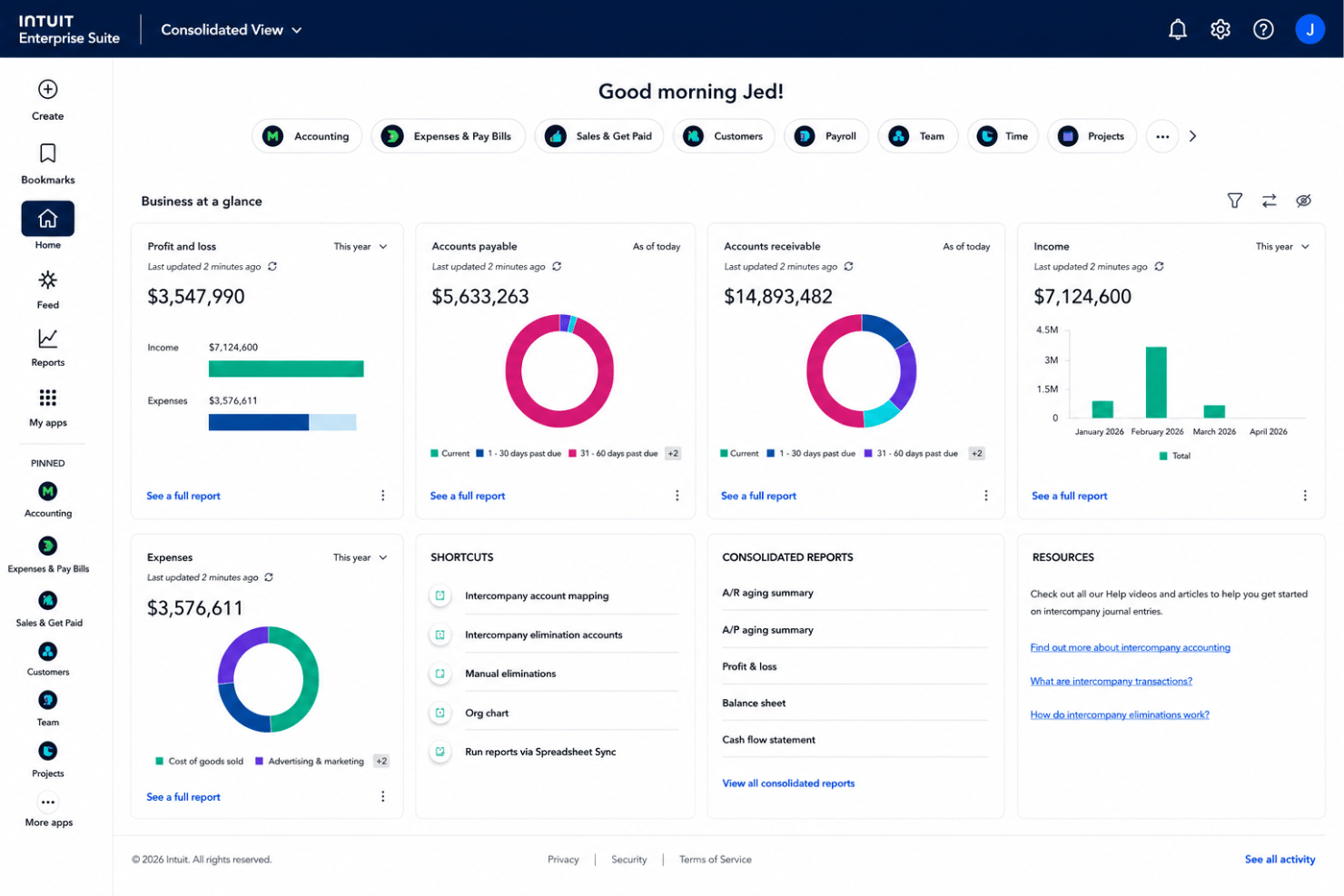
Intuit Enterprise Suite
Microsoft Dynamics 365 Business Central

Waarom u onze softwarebeoordelingen kunt vertrouwen
Ons team test en beoordeelt software sinds 2012. Als HR-experts weten we zelf hoe moeilijk — en belangrijk — het is om de juiste software te kiezen.
Voor deze gids hebben we tools geëvalueerd met behulp van praktijktests en onafhankelijk onderzoek, waarbij we tools beoordeelden aan de hand van onze selectiecriteria. We putten ook uit inzichten van vooraanstaande experts uit de branche en van praktiserende HR-professionals.
Onze reviews weerspiegelen ons menselijke redactionele oordeel, geen verkooppraatje.
Deskundige beoordelaars:
Intuit Enterprise Suite vs. Microsoft Dynamics 365 Business Central Pricing Comparison
| Intuit Enterprise Suite | Microsoft Dynamics 365 Business Central | |
|---|---|---|
| Free Trial | Free demo available | Free plan available |
| Pricing | Pricing upon request | From $80/user/month (billed annually) |
Prijzen en verborgen kosten van Intuit Enterprise Suite versus Microsoft Dynamics 365 Business Central
Intuit Enterprise Suite hanteert aangepaste prijzen op basis van een offerte, dus de kosten zijn afhankelijk van de omvang van de organisatie, de geselecteerde mogelijkheden, het aantal gebruikers, entiteiten, implementatiebehoeften, integraties en ondersteuningsvereisten. Microsoft Dynamics 365 Business Central gebruikt een meer gestructureerd abonnementsmodel, met afzonderlijke abonnementen op basis van gebruikerstoegang en het vereiste functionaliteitsniveau, waaronder bredere functies voor bedrijfsbeheer en opties voor gebruikers met beperkte toegang.
Wat verborgen kosten betreft, kunnen beide platforms een aanvullend budget vereisen voor implementatie, gegevensmigratie, training, aangepaste workflows, integraties met derden, premiumondersteuning en doorlopende systeemconfiguratie. Business Central is mogelijk vooraf eenvoudiger in te schatten omdat de abonnementsstructuur openbaar is, terwijl Intuit Enterprise Suite een offerte op maat vereist. Om beide nauwkeurig te vergelijken, moeten teams vragen om een volledige kostenuitsplitsing met daarin de installatie, ondersteuning, integraties, uitbreidingen en langetermijnbehoeften voor beheer.
Intuit Enterprise Suite vs. Microsoft Dynamics 365 Business Central Feature Comparison
| Intuit Enterprise Suite | Microsoft Dynamics 365 Business Central | |
|---|---|---|
| API | ||
| Accounts Payable | ||
| Accounts Receivable | ||
| Budgeting | ||
| Calendar Management | ||
| Customer Management | ||
| Dashboard | ||
| Data Export | ||
| Data Import | ||
| Data Visualization | ||
| Expense Tracking | ||
| External Integrations | ||
| Forecasting | ||
| Inventory Tracking | ||
| Multi-User | ||
| Notifications | ||
| Payroll | ||
| Project Management | ||
| Scheduling | ||
| Supplier Management | ||
| Third-Party Plugins/Add-Ons |
Intuit Enterprise Suite versus integraties van Microsoft Dynamics 365 Business Central
| Integratie | Intuit Enterprise Suite | Microsoft Dynamics 365 Business Central |
|---|---|---|
| Shopify | ✅ | ✅ |
| BILL/Bill Pay | ✅ | ✅* |
| PayPal | ✅ | ✅ |
| Stripe | ✅ | ✅* |
| Salesforce | ✅ | ✅* |
| Square | ✅ | ✅* |
| Amazon Marketplace | ✅ | ✅* |
| HubSpot | ✅ | ✅* |
| Knowify | ✅ | ❌ |
| Wix | ✅ | ✅* |
| API | ✅ | ✅ |
| Zapier | ❌ | ✅ |
*Beschikbaar via een connector van een derde partij, een Microsoft AppSource-app, een API/iPaaS-connector of Zapier, in plaats van via een duidelijk native integratie die door Microsoft is gebouwd.
Zowel Intuit Enterprise Suite als Microsoft Dynamics 365 Business Central bieden uitgebreide ondersteuning voor integraties. Intuit Enterprise Suite maakt gebruik van het Intuit-ecosysteem en verbindt financiële, salarisadministratie-, betalings- en administratieve workflows met gerelateerde bedrijfstools. Business Central biedt daarentegen bredere uitbreidingsmogelijkheden via Microsoft AppSource, API's, partnerconnectors en Microsoft 365-tools. Over het algemeen past Intuit Enterprise Suite bij teams met door Intuit aangestuurde workflows, terwijl Business Central Microsoft-gebaseerde teams meer flexibiliteit biedt om gespecialiseerde systemen te koppelen.
Intuit Enterprise Suite versus Microsoft Dynamics 365 Business Central: Beveiliging, naleving & betrouwbaarheid
| Factor | Intuit Enterprise Suite | Microsoft Dynamics 365 Business Central |
|---|---|---|
| Gegevensversleuteling | Versleutelt gegevens tijdens overdracht en in rust om financiële, salaris- en operationele gegevens te beschermen. | Versleutelt klantgegevens in rust en tijdens overdracht binnen Microsoft-cloudomgevingen. |
| Naleving van regelgeving | Ondersteunt SOC-rapporten, ISO 27001-gecertificeerde werkwijzen, PCI DSS voor toepasselijke betaaldiensten en VPAT-documentatie. | Ondersteunt nalevingsprogramma's voor de Microsoft-cloud, waaronder ISO 27001, SOC-rapporten en wereldwijde privacynormen. |
| Toegangsbeheer | Omvat op rollen gebaseerd toegangsbeheer voor gevoelige financiële, salaris- en beheergegevens. | Maakt gebruik van Microsoft Entra ID, op rollen gebaseerde toegang, voorwaardelijke toegang en MFA-opties. |
| Beschikbaarheid en beschikbaarheid | Biedt beveiligingsmiddelen voor ondernemingen, hoewel er geen specifieke SLA voor de beschikbaarheid van IES openbaar is vermeld. | Biedt financieel gedekte beschikbaarheid voor betaalde productieomgevingen, met redundantie en hoge beschikbaarheid. |
| Audit- en activiteitenregistratie | Ondersteunt auditbehoeften via machtigingen, financiële controles en inzicht in transacties. | Biedt auditregistratie, activiteitenregistratie en door Microsoft beheerde beveiligingsmonitoring. |
Beide platforms bieden sterke beveiliging voor financiële, salaris- en operationele gegevens. Intuit Enterprise Suite omvat essentiële controles zoals versleuteling, op rollen gebaseerde toegang, SOC-rapporten, ISO 27001-gecertificeerde werkwijzen en PCI DSS voor toepasselijke betaaldiensten. Business Central biedt meer gedetailleerde openbare documentatie over Microsoft Entra ID, MFA, auditregistratie, redundantie en beschikbaarheid, waardoor het beter geschikt is voor teams die beveiliging en naleving met uitgebreide ondersteuning van Microsoft nodig hebben.
Intuit Enterprise Suite versus Microsoft Dynamics 365 Business Central: Gebruiksgemak
| Factor | Intuit Enterprise Suite | Microsoft Dynamics 365 Business Central |
|---|---|---|
| Gebruikersinterface | Maakt gebruik van een vertrouwde interface en werkstromen in Intuit-stijl, vooral voor teams die overstappen vanuit QuickBooks. | Maakt gebruik van een op rollen gebaseerde werkruimte die per gebruiker, rol en taak kan worden gepersonaliseerd. |
| Introductie | Biedt begeleide configuratie, ondersteuning bij migratie, een toegewijde klantensuccesmanager en trainingsplannen op maat. | Biedt Microsoft-documentatie, leertrajecten, begeleide configuratie en implementatieondersteuning door partners. |
| Leercurve | Is gemakkelijker in gebruik te nemen voor teams die al vertrouwd zijn met Intuit-producten, hoewel introductie nog steeds nodig is. | Kan meer training vereisen omdat het financiën, verkoop, service, voorraad, projecten en activiteiten omvat. |
| Ondersteuningsbronnen | Biedt begeleiding door klantensucces, trainingsplannen, productondersteuning en optionele premiumondersteuningsniveaus. | Biedt Microsoft Learn-middelen, documentatie, hulppagina's, technische ondersteuningsmogelijkheden en partnerondersteuning. |
| Aanpassing | Ondersteunt configureerbare werkstromen, rapporten, integraties, machtigingen en bedrijfsprocessen. | Biedt uitgebreidere personalisatie via rolcentra, pagina-indelingen, dashboards, rapporten en Microsoft 365-integraties. |
Wat gebruiksgemak betreft zal Intuit Enterprise Suite waarschijnlijk vertrouwder aanvoelen voor teams die al werken met werkstromen in Intuit- of QuickBooks-stijl, vooral dankzij de begeleide introductie en ondersteuning door klantensucces. Business Central biedt teams daarentegen meer ruimte om rollen, indelingen, rapportage en met Microsoft 365 verbonden werkstromen aan te passen, maar het kan meer tijd kosten om het systeem te configureren en te leren gebruiken. Over het algemeen is Intuit Enterprise Suite gemakkelijker in gebruik te nemen voor teams die zich richten op financiën, salarisadministratie, betalingen en administratief werk, terwijl Business Central beter geschikt is voor teams die bredere operationele ondersteuning nodig hebben voor financiën, verkoop, service, voorraad en projecten.
Intuit Enterprise Suite vs Microsoft Dynamics 365 Business Central: Pros & Cons
Intuit Enterprise Suite
- Multi-entity management simplifies financial operations across growing organizations.
- AI-powered automation helps reduce manual financial, administrative, and operational tasks.
- Advanced reporting and real-time business insights improve decision-making.
- May offer more functionality than smaller businesses with basic accounting needs.
- Organizations migrating from simpler accounting software may face a learning curve.
- Advanced customization and complex implementations require additional planning and configuration.
Microsoft Dynamics 365 Business Central
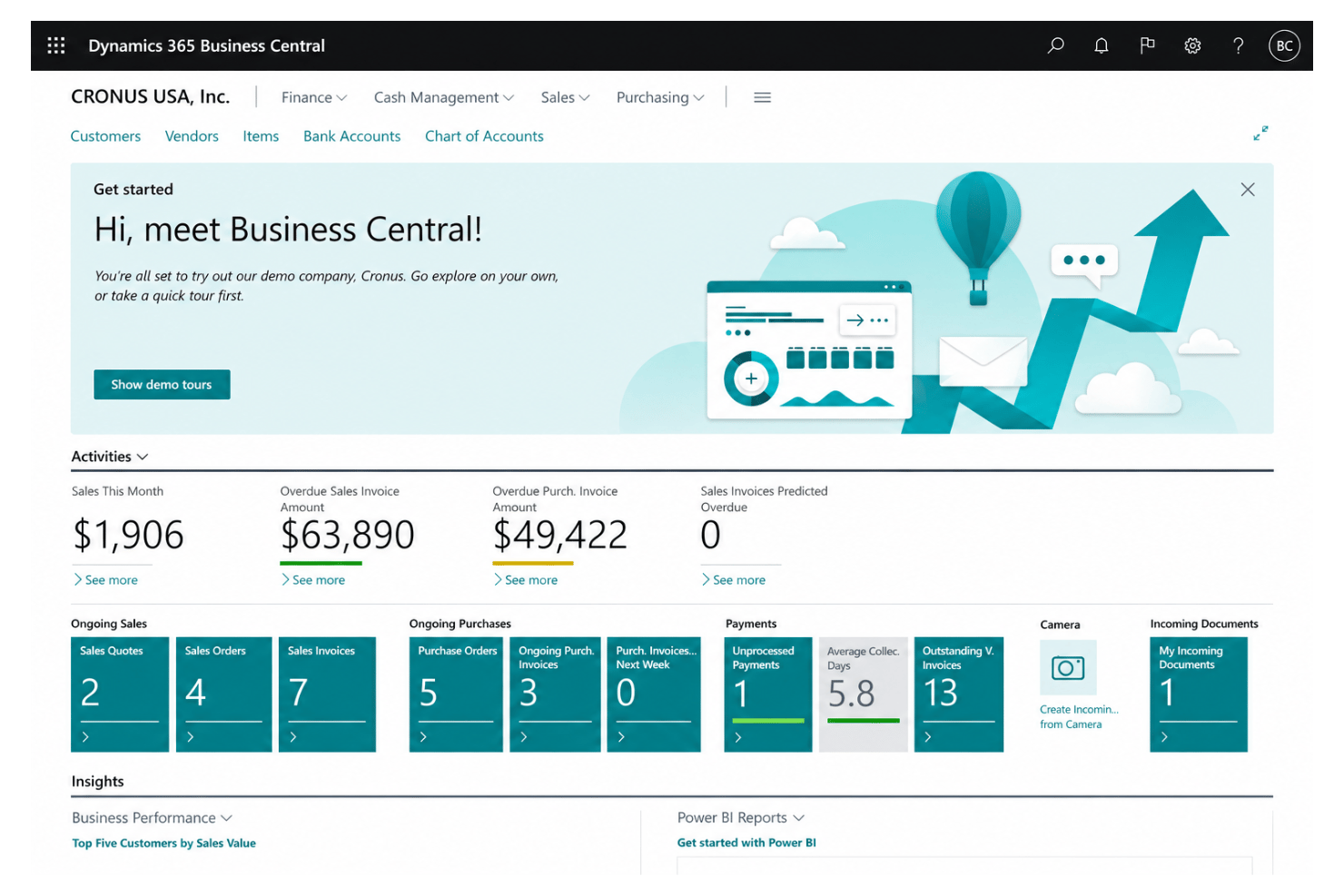
- Unified financial, sales, and project data in one dashboard
- Strong workflow automation for repetitive business processes
- Built-in reporting with live data, not static snapshots
- Limited out-of-the-box HR and payroll functionality
- Advanced analytics require costly Power BI licenses
- Customization and setup can be costly for smaller teams
Best Use Cases for Intuit Enterprise Suite and Microsoft Dynamics 365 Business Central
Intuit Enterprise Suite
- Multi-Entity Organizations Manage multiple legal entities, automate intercompany transactions, and consolidate financial reporting from a single system.
- Professional Services Firms Track projects, manage financial performance, and automate accounting workflows while improving visibility across teams.
- Technology & SaaS Companies Support growing operations with AI-powered reporting, forecasting, and financial controls as the business scales.
- Construction & Project-Based Businesses Manage project accounting, budgeting, and financial reporting with workflows designed for project-driven organizations.
- Manufacturing, Wholesale & Distribution Monitor financial performance across products, locations, and business units while improving operational visibility.
- Growing Mid-Market Businesses Organizations expanding across multiple entities or locations can benefit from enterprise-level financial management without the complexity of a traditional ERP.
Microsoft Dynamics 365 Business Central
- Manufacturing Firms It handles production orders, planning, and inventory tracking with native manufacturing features.
- Distributors Robust inventory, order management, and supply chain tools help multi-site distributors control and analyze stock movements in real time.
- Project-Based Teams Built-in project tracking, budgeting, and time entry give project managers a unified dashboard for financial and resource control.
- Finance Departments Detailed financial reporting, audit trails, and automated reconciliation support busy finance teams aiming for speed and accuracy.
- Multi-Entity Companies Centralized dashboards and role-based access make it easy to manage the finances and operations of multiple legal entities in one platform.
- Businesses on Microsoft 365 Native connections with Teams, Excel, and Outlook mean your staff can work in the apps they already know to move data and requests seamlessly.
Wie moet Intuit Enterprise Suite gebruiken en wie Microsoft Dynamics 365 Business Central?
Intuit Enterprise Suite is zeer geschikt voor groeiende bedrijven die financiële, salaris-, betalings-, rapportage- en administratieve werkstromen binnen het Intuit-ecosysteem willen verbinden. Het werkt vooral goed voor teams die al vertrouwd zijn met werkstromen in QuickBooks-stijl en meer inzicht, automatisering en ondersteuning voor meerdere entiteiten nodig hebben zonder een zwaardere ERP-configuratie te implementeren.
Microsoft Dynamics 365 Business Central is daarentegen beter geschikt voor middelgrote bedrijven die bredere controle nodig hebben over financiën, verkoop, voorraad, projecten, inkoop en activiteiten. Het is een sterke optie voor fabrikanten, distributeurs, projectgerichte teams, financiële afdelingen, bedrijven met meerdere entiteiten en bedrijven die Microsoft 365 al gebruiken en meer aanpassingsmogelijkheden, automatisering en diepgang in rapportage willen.
Differences Between Intuit Enterprise Suite and Microsoft Dynamics 365 Business Central
| Intuit Enterprise Suite | Microsoft Dynamics 365 Business Central | |
|---|---|---|
| AI & Automation Focus | Uses Intuit AI Agents for finance, payments, project management, data cleanup, and administrative automation. | Uses Copilot, AI agents, and workflow automation across finance, sales, payables, orders, inventory, and operations. |
| Customization Depth | Offers configurable workflows, reports, permissions, integrations, and business processes. | Offers deeper customization through role centers, apps, extensions, Power Automate, Power BI, and Microsoft Marketplace. |
| Ecosystem Focus | Built around the Intuit ecosystem, including finance, payroll, payments, bill pay, reporting, and administrative workflows. | Built around the Microsoft ecosystem, with strong ties to Microsoft 365, Teams, Excel, Power BI, and Power Automate. |
| Global Readiness | Supports growing and multi-entity businesses, but public global localization details are less extensive. | Supports global operations with multi-currency, multiple languages, consolidations, intercompany transactions, and localization support. |
| Operational Scope | Focuses more on financial management, payroll, payments, reporting, and admin operations for growing businesses. | Covers a broader range of business functions, including finance, sales, service, inventory, supply chain, projects, purchasing, and operations. |
| Visit Intuit Enterprise SuiteOpens new window | Read Microsoft Dynamics 365 Business Central ReviewOpens new window |
Similarities Between Intuit Enterprise Suite and Microsoft Dynamics 365 Business Central
| Audit & Compliance Support | Both support audit and compliance needs through permissions, transaction visibility, and security controls. |
|---|---|
| Cloud Access | Both are cloud-based business management software options that help teams access business data online. |
| Financial Management | Both support core finance work, including accounting, reporting, payables, receivables, and business performance visibility. |
| Reporting & Insights | Both help teams track business performance through dashboards, reports, and data-driven insights. |
| Role-Based Access | Both include roles and permissions to help control access to sensitive financial, administrative, and operational data. |
| Visit Intuit Enterprise SuiteOpens new window Read Microsoft Dynamics 365 Business Central ReviewOpens new window | |