

Are Leaders Trading Future Capability For Short-Term AI Efficiency?

AI may be changing the work, but the bigger risk is what happens when organizations optimize so aggressively for today’s efficiency that they stop building tomorrow’s capability.
Recorded live at the AI4 conference in Las Vegas, host David Rice sits down with Dr. Jana Brown, Chief Human Resources Officer at eHealth, to unpack the long-term consequences of shrinking entry-level pipelines, why HR needs “transformation fluency” rather than technical expertise alone, and what separates useful AI initiatives from expensive corporate hobbies. They also explore the human and operating systems that have to move together if transformation is going to stick—and why the technology itself is rarely the thing that sinks an AI project. Listeners may hear a little more conference-floor noise than usual, but that’s the price of capturing these conversations where they’re actually happening.

What You’ll Learn
- Why technical fluency alone isn’t enough for HR leaders navigating AI and digital transformation.
- How declining entry-level hiring can quietly undermine an organization’s future leadership pipeline.
- Why workforce planning needs to account for both immediate efficiency and long-term capability.
- How to think about jobs as collections of tasks, separating work that can move to technology from work that still requires human judgment.
- Why AI initiatives need a direct connection to organizational mission and objectives.
- How the “human system” and “operating system” of an organization need to evolve together.
- Why HR’s own history of automation gives the function useful experience for leading AI-driven change across the business.
Key Takeaways
- Transformation fluency matters more than pretending to be a technologist. HR leaders don’t need to become engineers. They need enough technical understanding to ask better questions, identify workforce implications, and combine that knowledge with what HR already knows about change, adoption, and organizational behavior.
- Entry-level cuts create delayed consequences. Removing junior roles can look efficient quarter to quarter. But repeated often enough, an isolated hiring decision becomes a pattern—and eventually an organization discovers it stopped developing the people who were supposed to become its experienced talent and future leaders.
- Workforce planning has to move beyond headcount. Brown frames the question around whether organizations should build, borrow, buy, or automate capabilities. That requires understanding the tasks inside jobs rather than treating every role as an indivisible unit.
- Beware the AI hobby. An initiative that doesn’t solve a problem tied to the mission or organizational objectives is consuming money and capacity for the privilege of eventually being abandoned. “We have an AI initiative” is not, by itself, a strategy.
- Technology is rarely the only constraint. AI projects can survive the technical implementation and still fail because workflows, capabilities, adoption, and organizational structures haven’t changed with them. Installing the tool is the easy bit. Rebuilding the work around it is transformation.
- Keep the human system and operating system in sync. Strategy and business needs may lead, but workforce capabilities need to follow quickly. Brown describes human judgment, leadership, and decision quality as the “spine” connecting those two systems.
- HR has to run the playbook on itself. If HR expects to guide the rest of the organization through automation, it needs firsthand experience redesigning its own work. Brown points to automating sales compensation as an opportunity to move her team away from manual administration and toward higher-value analysis.
- Responsible AI sometimes means “yes, but not yet.” Brown’s benefits chatbot was delayed so cybersecurity and privacy safeguards could be tested first. Moving quickly matters; being able to defend what you put in front of employees matters more.
Chapters
- 00:00 — The Cost of Short-Term Efficiency
- 01:52 — Transformation Fluency
- 06:58 — The Entry-Level Talent Gap
- 09:23 — Who Owns the Talent Pipeline?
- 10:19 — Build, Borrow, Buy—or Bot?
- 12:46 — The Leadership Mandate
- 14:42 — Using People Data Better
- 16:32 — What Should AI Solve?
- 18:25 — Avoiding AI Hobbies
- 21:15 — Why AI Projects Fail
- 23:14 — Human vs. Operating Systems
- 25:47 — What HR Should Automate
- 28:42 — HR’s Transformation Playbook
- 31:02 — When AI Should Wait
- 35:27 — Closing
Meet Our Guest
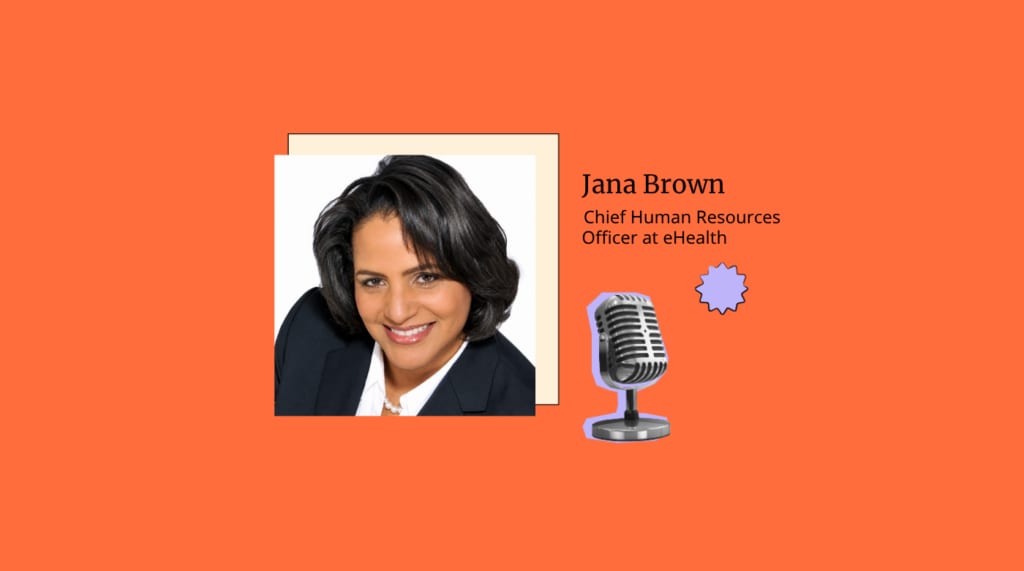
Dr. Jana Brown is the Chief Human Resources Officer at eHealth, where she leads human capital strategy and culture transformation across talent, leadership development, workforce planning, learning, and total rewards. An experienced HR executive, she previously held senior leadership roles at Centurion Health, TIAA, and CareSource. Jana holds a Doctor of Education in Learning and Organizational Change from Baylor University, where her research explored how HR executives can prepare organizations for digital transformation. Her work focuses on leadership, organizational change, workplace culture, and the evolving role of people leaders in the AI era.
Related Links:
- Join the People Managing People Community
- Subscribe to the newsletter to get our latest articles and podcasts
- Connect with Jana on LinkedIn
- Check out eHealth
Related articles and podcasts:
David Rice: Entry-level hiring is down roughly 80% quarter over quarter. Senior employment is holding. The people with experience and judgment are doing fine, but everyone's talking about the bill that's eventually coming due. On today's show, I'm talking with Dr. Jana Brown, Chief Human Resources Officer at eHealth, about what happens when you optimize for proficiency in the moment at the cost of capability for the future.
That bottom rung eroding isn't a hiring decision. Over time, it becomes a pattern, and the pain from that pattern doesn't show up for five, maybe even seven years, well past the tenure of whoever made the call. Brown's framing is sharp. Leadership mandates right now are productivity, efficiency, margin, all financially driven, all short-term, and we're making decisions that future generations of leaders are going to inherit.
Who leads these organizations in tomorrow's world if we stop building the pipeline? The internal accountability question is one that HR hasn't fully answered yet either. If you want credibility in the room when AI decisions are being made, the credibility test is whether you've run that same playbook inside your own function first.
Brown calls AI initiatives without clear mission alignment hobbies, and hobbies cost money. They divert critical capacity, and they get abandoned. So today we're covering why entry-level erosion is a pattern problem, not a hiring decision, the human system and operating system and why they have to stay in sync, what transformation fluency means for HR leaders who want a seat at the table, and why 60% of AI projects fail, and it's almost never about the technology.
I'm David Rice. This is People Managing People, and if your organization is making AI decisions without asking what future leaders will inherit from them, this conversation puts that question front and center. Let's get into it.
Welcome to the People Managing People podcast. We're here at AI4 in Las Vegas, and I'm joined by Jana Brown, the Chief Human Resources Officer at eHealth.
So welcome.
Jana Brown: Thank you. Thank you for having me. So glad to be here.
David Rice: Absolutely. Well, you know, I was looking at the agenda when I was planning to come here, and you are probably the only practicing CHRO on the agenda. Wow. When you're in those rooms where, you know, it's, it's technical fluency is being discussed, right?
What's sort of the threshold that you actually need to be sort of, I guess, taken seriously? And what do you have to kinda go and learn- Yeah. ... to be on these panels?
Jana Brown: Yeah. So great question, and I'm definitely honored to be representing HR here at the conference. For me, technical fluency is not the endgame.
It is transformation fluency.
David Rice: Mm.
Jana Brown: And so how we in HR bring the competency that we have in driving and leading change, plus the technical competencies, how we bring it together. Now I know my chief digital and AI officer feels very safe when I'm in the room- ... related to my technical knowledge, but it is important to me to have a good, strong working knowledge of technology because it allows me to ask better questions- Yeah
about what decisions need to be made, what workforce implications there are, what process implications there are. So I, I have to at least have that working, that working knowledge. But if I could go personal just a little bit. Oh, yeah. Because- Your question resonated so deeply with me, particularly around HR in the room in the world of technology.
And it was during the pandemic when the organization I was with at the time started to accelerate the usage of technology to help to manage through what we were facing. And what we were seeing was that, you know, initiatives were not meeting their objectives. I'm sitting at the table listening to the technologists talk about this.
No one is asking me my thoughts, my opinions, anything, and I did not feel comfortable or confident enough- Yeah ... to lean into it. Do I know enough about technology? Can, can I lend a hand here? And it was just not good enough for me-
David Rice: Yeah ...
Jana Brown: to sit and watch my organization be in a position where they could not meet the objectives that were stated, because that impacts the viability of the company, the viability of our workforce, the viability of the customers we serve.
And I decided to do something about it. And this is an extreme something, if you will. But I decided to go back to school and study the role of HR executives and preparing organizations for digital transformation. And so I'm, I'm sitting here having a doctorate now two years so two years this month, having graduated from it, and it has been such a journey to learn and grow and be in this space that's on the cutting edge of what it means to be viable in this era.
So I'm super excited to bring all of those learnings and continue to grow and learn in this space.
David Rice: Was there sort of a, a moment where you felt like you had the sway in that room, I guess?
Jana Brown: Actually, as I started to research and just get smarter for myself, what I realized was that what we have done as HR over the course of decades has been around change.
We know change. We know what it takes to- Get the receptivity that's required to build a coalition to ensure that there is co-creation. We know what it takes to get there. So in those rooms, I started asking better questions. I started really bringing the research that I was conducting, plus my own experience to bear, and that's how I gained that credibility in the room.
I didn't need credibility as a, as a CHRO, as a leader, but to be able to speak in that technical space. Yeah. So that was, that was pretty exciting.
David Rice: Well, one of the biggest things facing HR right now, you know, the question that comes up all the time on our podcast and and people asking, you know, questions around this when I g- when I go to events and things is we're seeing you know, the entry level hiring picture- Yes
is changing drastically, and it's down roughly, I think it's 80% per quarter or something like that. Right. And you know, senior employment has kept growing though. Yes. Folks who have the experience and the judgment are, are doing fine actually. And I'm curious, you know, are you seeing a change in, in, in your own requisitions, and, and is anyone naming it as a decision, or is it just kinda happening?
Jana Brown: It, it is definitely happening. You know, we had keynote speak s- speakers this morning who actually s- talked about this topic in particular, and the importance of ensuring that we're not just focusing on proficiency in the moment. This is my interpretation of it. Yeah. Proficiency in the moment at the at the risk of capability for the future, and that's what's happening.
And I do see it happening not only in my own organization, but in multiple organizations. If we're not deliberate in identifying the patterns because- In an instance, it's a decision in the moment. Mm. Over the long term, it becomes a pattern where you see that bottom rung eroding, and you ask yourself, you know, who's gonna lead the organization in the future?
Who's going to develop the capabilities that are required? So we have to be just more deliberate in ensuring that, again, we don't risk losing capabilities for proficiency and efficiency.
David Rice: Yeah. Well, you, you mentioned, you called it a pattern there, and I, I think that's, ... If it holds, the question that I sort of have is we stop producing our own senior talent. We stop, we s- our pipelines kind of just fade away. That bill for that doesn't show up for-
Jana Brown: That's right ...
David Rice: quite a few years, right? Yeah. Maybe five, maybe seven years before you really start to feel the pain from it.
Jana Brown: Right.
David Rice: And I'm curious, you know, who's accountable for that? Yeah. 'Cause it's, it's-
Jana Brown: Yeah ...
David Rice: it's gonna show up on somebody's P&L, but whose?
Jana Brown: Right. Right. Well, as you can see, I'm always the one that I'm taking the accountability. I think it's my accountability to bring visibility to the pattern.
David Rice: Yeah.
Jana Brown: Right? So if we see a pattern, that's my accountability, to bring visibility to that. When it comes to the actual work itself and understanding where we need to maintain- That l- that first level role that brings, or entry level role that brings someone into the organization, I need to partner with the business on that because they're making those business decisions.
But it also goes back to a practice that we have in HR and that's our workforce planning.
David Rice: Right.
Jana Brown: And being more deliberate about the workforce planning and the approach to it. So as we think about the decisions for the coming year starting with the strategy, what do we need to achieve? What are the objectives?
What workforce do we need? Do we have that workforce today or not? And then it goes into the, are we gonna build that workforce?
David Rice: Yeah.
Jana Brown: Which gets to that entry level. Are we going to borrow it? Are we gonna partner with others? Are we gonna buy it? Or in today's world, is it a bot, right? Yeah. So is it, is, is there an AI solution for it?
You know, part of the keynote this morning I- there were big learnings for me in there. I just couldn't stop writing. But one of the learnings was around thinking about jobs in a different way, like the elasticity-
David Rice: Mm ...
Jana Brown: of a job. Because no single job is going, I mean, all jobs are made up of specific tasks.
AI will not be able to complete all of those tasks. Right. Well, at least not right now. But it's definitely, and there may be some roles where it's doing that now. Yeah. But over the course of time, we may get there, but there are so many tasks in any given job. But I don't know, and this is, is my takeaway as I go back into my organization, let's take a look at the elasticity within jobs and identify across those tasks what needs to remain as something that's purely human, and what can be advanced into technology so that that human can do the higher, higher level work.
That's going to be extremely important. Now circling back to your question about entry level staff, once we have that insight, we'll be able to make better decisions on where we need to bring entry level staff into the organization to ensure that we're growing a pipeline of leaders, and doing it in a way that's very, very deliberate.
So lot, lots of learning, lots to unpack here.
David Rice: So I, I think part of the challenge with it, right, when we talk about that, like it might be a five-year timeline, is a lot of executives or s- people in the C-suite, they're living quarter to quarter or, you know, year, fiscal year to fiscal year Yeah How do you get them to sort of care about something that's that's that far out?
Jana Brown: That's right. I, I wrote an article about this specifically related to leaders and the mandate. We have to be extremely careful with the leadership mandate What you see now, particularly because of AI, the mandate is productivity-
David Rice: Yeah ...
Jana Brown: efficiency, margin, those things that are much more financially driven.
David Rice: Yeah.
Jana Brown: And we are doing that, right, without thinking about the human side of the equation and what's going to be needed in the future. So what we're focusing on, and a lot of the, the writing that I personally am doing around understanding that leadership mandate and ensuring that the decisions that we make now are ones that future generations of leaders will, will be proud of.
David Rice: Yeah.
Jana Brown: That they can live with. They're going to inherit all of our decisions.
David Rice: Yeah.
Jana Brown: They're going to inherit those, and if we make decisions to erode that le- entry level, to not build the capabilities, so who's going to lead these companies in tomorrow's world? And so again, to me, when I think about where we are now, the decision quality, the judgment, understanding the mandate, it is so critically important, as important as the outcomes we're striving for with AI.
David Rice: Yeah. I wanted to ask 'cause I think people analytics is maybe where HR's sort of technical ambition and then its ethical concerns tend to- Uh-huh ... collide a little bit. What-- I'm curious, can you walk me through a specific instance where you had the data and someone wanted it, but you maybe had to say no?
Because- Right ... HR collects a lot of very sensitive data-
Jana Brown: We do ...
David Rice: a lot of times. So, you know, what was the reasoning, and, and did it hold?
Jana Brown: I guess I'm fortunate because I have not had a leader ask me for something that's untoward.
For me, what I'm trying to do is actually insert more data into the way we make decisions.
Like, when I think about the data used for decision-making, it is largely data that is business-centric, right? So it is of, of looking at the outcomes, looking at the customers, looking at the patterns, all of the things that have happened, just say in a call center. Well, I would like to add data into the mix that focuses on- What are our employees doing?
What... Is there something related to certain supervisors, leaders that show where we have more turnover in a certain area, where we are are seeing areas flourish and thrive? What can we do if we don't fear the data? Certainly, there will be guardrails around it, but we leverage the data to help to make better business decisions
David Rice: Yeah.
We're in this era where all these tools are being built, some- sometimes in-house, sometimes as you buy it, right? But there's like there's varying types of approaches to that, and I'm curious, you know, when you look at vendors, and you're ... Say you're looking at a vendor of ... with ... that has an AI solution, what sort of questions are you asking around things like audit trails you know, training data that it's been built on, all of that?
And sort of, I guess my other question is you know, what happens ... What ... H- how do you assess w- how it behaves when it's wrong or- Yeah ... what you can do when it's wrong? Yeah, yeah. And then what have been some of the lessons over the last two years? 'Cause everything has changed so much-
Jana Brown: It has really changed
David Rice: since it's, you know, just a few years ago.
Jana Brown: It has really changed. And if we have time, let's talk about fraud- Sure ... in recruiting because let me tell you.
David Rice: It's rampant.
Jana Brown: It, it is, it is really rampant. But related to, related to your question and thinking about AI and choices we have a, a pretty large HRIS.
It's from a, a big, standard company. And what we're doing is as they identify areas that they are trying to instill AI in, I wanna always ask the question, "Is this something I would be willing to put in front of my employees, and can I defend it?" Yeah. Can I defend the reason why we're doing it? Because as you know, it is so, easy to build trust.
You know, you gain that- Yeah ... trust over time b- with your credibility, the decisions being consistent, all of that, but it can erode very, very quickly.
David Rice: Yes. Yeah.
Jana Brown: It can erode- One bad decision can do- Ex- exactly right. So as we are thinking about AI, I'm asking what is it solving for us, and why do we need this, and why now?
What will be the implications to HR employees, good or otherwise? What will be the implications to the workforce, to the business? So it is ultimately what are we solving for. The reason that's so important is I go back to the research that, that I, that I have done and continue to do, In AI and all things advanced technology, we're investing over $4 trillion is expected to be invested in 2027 in advanced technology.
Of course, AI included in all of that.
David Rice: Yeah.
Jana Brown: And so many of those decisions are made because nobody wants to say that they're not focusing on an AI initiative. Yeah. Who wants to say that? Everybody wants to say, "Hey, yeah, I have four AI initiatives going on in my organization, and boy, you know, they're gonna be impactful."
But you have to ask yourself, as you think about the mission What does it solve for you as you're trying to deliver that mission? What does it solve for you as you're focusing on your objectives? Is it a hobby that will be aborted in a year, a year and a half because you can't get any traction for it?
Why? Because people are focusing on the mission and ensuring that we have the organizational capacity to deliver that mission.
David Rice: Yeah.
Jana Brown: So for me, that's the first question. How does it solve something that we need to address related to our mission, res- related to our objectives? And then I back into the other questions related to impacts to HR, impacts to to the workforce.
So that's what we're doing, not only in HR for the AI that we are employing, but also for the organization, ensuring that we do not have hobbies. No hobbies.
David Rice: That's the first I've heard it called that.
Jana Brown: Hobbies cost, hobbies cost money.
David Rice: They do.
Jana Brown: And they divert capacity, very critical capacity away from your mission.
David Rice: Well, you mentioned that you know, it'll be abandoned if, if that's how you w- allow it to be, and we've ... the reas- there's a lot of research out there that projects that it like, I think it's 60% of AI projects will be d- abandoned in 2026-
Jana Brown: That's right ...
David Rice: whether it's because of data or ... And I, I think a lot of it we've keep talking about it comes back to people.
And I'm not sure it's, you know, any one thing, but it's a communications issue. You haven't helped people see how it becomes part of the mission as part of it. And then you haven't a- adapted their workflows. If you just put it in place and you say, "Figure it out," which is what happens in a lot of w- a lot of organizations, it- it's hard for people to reimagine the thing that they've been doing for however long, and that's been how they've sort of defined their value to the organization.
It's a very challenging thing to then go, "Well, I don't need to do any of that anymore. I'm gonna start doing this because it's more important, and I'll just be the final pair of eyes on that."
Jana Brown: You know? It's like- That's right. Yeah. It's tough. And quite frankly people do things differently.
David Rice: Yeah.
Jana Brown: Right?
Yeah. Same job. The way I approach it may be different than the way you approach it. Exactly. So 80% of what we do may be the same, but there's that 20% that could be the differentiator, right? Yeah. And it is hard. The, the adoption Adaptability, ensuring that you are able to transform the organization. So say we're one of the 40% of the initiatives that will go through- right? So the abandon rate, to your point, you, things that are aborted, they're aborted for many reasons, including the hobbies that I mentioned. Funding dries out, and all, all of the reasons. But those things that need to move forward There's also a possibility that they don't meet their objectives.
David Rice: Mm.
Jana Brown: Right? And why is that? It is rarely ever about the technology. Technology is rarely ever the constraint. It is about all of those things around it. And I will show you this picture later, but I'm focusing on as part of the transformation work and establishing a different playbook for addressing this, but it's looking at the enterprise as a system, right?
The enterprise system. On one side of that system, you have the human system. On the other side, you have the operating system, and those two systems have to be in sync. The human system should always be a fast follow, if you will, to the operating system because strategy, the mission, those things just need to lead, and then we ensure that we're set up.
Not that we're in the, not in the room, that we're in the conversation, but it is focusing on, what are we trying to do for our customers? What are we trying to do for the organization for it to be viable? And how do we need to – and this is the kind of fast follow – how do we need to ensure that our workforce is set up, prepared with the capabilities, the understanding to be able to do it?
So you have that human architecture. You have the, the operating architecture laddering up to the enterprise system. So what's in the middle is a spine, right? That spine in the middle. That's where the human judgment is. That's where your strategy, all of your decisions, the quality of that, the leadership that's required to get things done.
It is like that, that adaptive stewardship, if you, if you will, to bring the two together, and this has to be something that's extremely deliberate. They will not happen just on their own, and that's the, that's the hard transformation work to bring the two together. Mm.
David Rice: Adaptive stewardship. Write that one down. I like that. That's-- I'm gonna use that term.
Jana Brown: Come on.
David Rice: But so l- I'll give you a hypothetical. So- Yeah ... something in your own function, it's gonna get automated in the next two years, right? Whether that be screening, compensation analysis, whatever it is, right? Which w- I, I guess which one do you see for going first, and sort of what's the plan for people currently doing it?
'Cause HR is changing very fast.
Jana Brown: HR is changing, yes. So here's what my team would say, this is what we need to go first. And it is sales compensation.
David Rice: Mm.
Jana Brown: Sales comp. We have ... We are running sales comp manually now, and our team does a fabulous job of providing transparency. We have just gotten to the point where we're able to give our sales advisors who are doing such phenomenal work for us, giving our advisors more transparency into their compensation.
Mm. That's very, very critical to them as they are trying to manage their lives, or they ... as they're wanting to grow their own careers. But we're running a compensation for sales in a, in a manual way. So we really need to focus on automating that and leveraging AI to help us to do that. And the reason I say my team would say, "Jana, we gotta go first here," is because with so much moving, and moving as rapidly as it is in the business, the business is building new products, new approaches, new
There are new directives from a sales standpoint, and to be able to keep pace with them, we have to advance our tools. We have to advance the technology. My team, if we're able to get that done, or when we get that done for them, I think they'll have pom-poms on, and they will be- ... shouting. They will be shouting for joy because it will then allow them to redirect their work to analysis.
Okay. You know, the questions I was asking earlier with, with regards to data, okay, now we will have the data to say which teams are performing re- really well, which needs some support. Why is that? What is this team doing differently than a- another team?
David Rice: Yeah.
Jana Brown: And I think that just strengthens our ability to support the sales organization in the way that we are not able to now without those types of tools.
David Rice: Well, you know, it's interesting. The reason I ask is, is sort of because HR I think is gonna be asked to sort of run that same playbook for the whole organization- Yeah ... at some point. But I, I think the credibility test is whether or not you've done it internally within the, your own function. Right. And so that's why I, I, you know, I was interested to hear your answer because it's, it's gonna keep playing out.
Jana Brown: Yeah.
David Rice: But as it goes out into the rest of the organization, people are gonna say, "Well, what have you all done?"
Jana Brown: Well, you know, this is where I feel we have a leg up.
David Rice: Yeah.
Jana Brown: If you look at the ongoing evolution of how we manage the human resources function, where we had paper, pens, and pencils- Right? And then it just ultimately moved to a more automated way, an automated way where we moved from HR doing everything to manager self-service to employee self-service.
And that employee self-service is being strengthened with AI resources and tools now. We have had that progression for many years. Yeah. And we've gotten the organization. Managers initially balked at manager self-service. "What do you mean? You want me to do this now? Oh, I might be able to do that on a Saturday morning when, you know, I am in my PJs."
Or, or you shouldn't be. You shouldn't be working on Saturday mornings. Yeah. But I may be able to do it at a time when it's much more convenient than at a time when an HR person is there. And then employee self-service, employees are like, "You mean I'm gonna do this myself? Oh, I can do it at a time when it's convenient for me."
So as long as we ... I mean, we have all of those capabilities. Now it is really time for us to take those capabilities and help the organization transform based on what we have been doing in HR and, quite frankly, what we've already been doing for the organization in many other types of initiatives. It just happens to be focused on technology-
David Rice: Yeah
Jana Brown: at this point.
David Rice: Yeah. So the final question I wanted to ask you- Okay ... was, you know, I- can you think of a time that you took a position on an AI decision and ... You know, I don't wanna use the word lost, but kinda. You know? Uh-huh. It didn't go the way that you wanted it to go. The business went the other way.
And, and w- sort of what was the argument, and why, maybe why did it not carry? Or why did you know- What would you have had to have had in hand to sort of win the day?
Jana Brown: Well, you know, that's a- I, I love that question, and there was one time specific to AI, and then I'll take this a little broader.
Specific to AI, we want to have, and it's, it's going to be instituted this year for open enrollment a chatbot, a chatbot that's AI-driven, where employees are able to ask this chatbot, has a name any question about their benefits.
David Rice: Hmm.
Jana Brown: And the chatbot would come back and give them the answer and point them to resources if they don't have the answer, or escalate it to say, "You need to talk to a benefits specialist about this."
So I wanted to put this in place full bore last year. What I did not win and it is... What I did not win is the ability to get it done immediately. Right. They said, "Yes, but..."
David Rice: Yeah.
Jana Brown: And the "yes, but" was ensuring that- All of the walls around it were appropriately built to ensure that one employee doesn't see what's going on with a different employee, or that the system didn't spill over because this is Total Rewards.
David Rice: Yeah.
Jana Brown: And benefits sits within Total Rewards, that the walls were pretty solid because you have comp data, you have so much data in tho- within those walls. And so it was, yes, but not now. Yes, but let me test this from a cybersecurity, security standpoint to ensure that we are doing the right thing on behalf of our employees.
So the, the, the good news is that the testers who were ensuring that we had the right, right walls, they love it. So we're gonna be implementing it with open enrollment this year- Yeah ... to help employees make better decisions, more informed decisions about their benefits plan and what is going to work best for them and their families.
David Rice: So this was an internal build. You, you all made the solution yourselves?
Jana Brown: We did not build it ourselves. Okay. It was through our broker. Okay. So it's something that our broker, which I think is part of what the concern was.
David Rice: Wow.
Jana Brown: Because it was, it was a buy or a get with everything else, the services that we get from our, our broker.
And so because of that, our tech team wanted to really run it through the traps. 'Cause largely, I mean, we have our own HR technology team. Largely, all our integrations, everything we do is pretty isolated to HR, and whenever there's a need to have an integration beyond HR, that's when our tech team gets involved, and largely, those integrations are within finance and payroll, et cetera.
But not a lot touches the broader organization from the, the backside of the technology for HR. And so this was one of the few times when our tech team needed to really come in, the cybersecurity and all of that, to ensure that we had the the, the proper walls for safety So it was a, it was a great experience for us.
David Rice: I think that's probably all we have time for. But Jana, I wanna thank you for coming on the show and joining me today.
Jana Brown: Thank you. It is absolutely my pleasure.
David Rice: Well, listeners, if you haven't done so already, head on over to peoplemanagingpeople.com/subscribe. Get signed up for the newsletter. You'll get this podcast and everything else that we create straight to your inbox.
And until next time.

