
Gen Z And The Workplace: Myths, Realities, And Unlocking Their Talent
Gen Z is often stereotyped within popular media, but recent research conducted by Udemy reveal a surprising contradiction to the typical narratives.
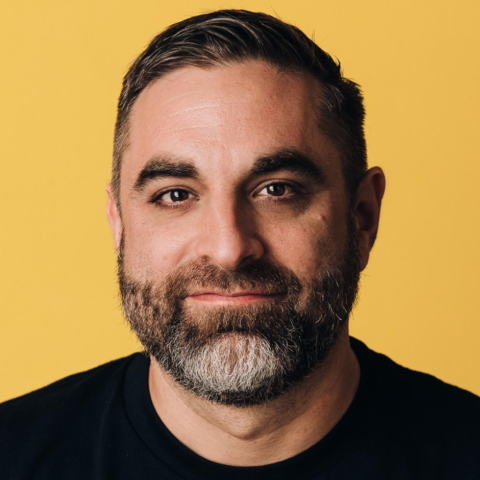
In this episode, host David Rice is joined by Nathan Blain—General Manager at Udemy—to debunk myths surrounding this dynamic generation.
Interview Highlights
- Meet Nathan Blain [01:04]
- Nathan enjoys studies that debunk myths, particularly about Gen Z.
- He reflects on how his career aligns with the editorial focus of Harvard Business Review (HBR).
- Early career focused on strategy consulting, inspired by Michael Porter's and Michael Hammer's work.
- Transitioned 15 years ago to leadership, organizational capability, and cultural transformation topics.
- Currently passionate about building these capabilities at Udemy, finding it an exciting and fulfilling field.
- Insights on Gen Z from Udemy Research [02:21]
- David highlights Gen Z as the most diverse, tech-savvy, globally aware, and socially conscious generation, yet often misunderstood.
- Nathan adds that Gen Z is also labeled as the "laziest" generation, a stereotype they aimed to challenge.
- The study aimed to:
- Provide historical context for understanding Gen Z in the workplace, avoiding clichéd generational comparisons.
- Explore what motivates and influences Gen Z to help organizations better connect with and unlock their potential.
- Gen Z's Influence and Frustrations in the Workplace [03:59]
- Gen Z feels empowered to drive change in their workplaces and society due to their experience with intense social change.
- They are quick to identify organizational shortcomings but face challenges due to their limited influence as new employees.
- Early perspectives are valuable but require strategic prioritization and patience to create effective change.
- Gen Z shares traits with high-potential employees, including curiosity, motivation, feedback-seeking, and strong communication.
- Learning agility, a key driver of performance, is a standout strength of Gen Z, making them a workforce segment with immense potential.
High-potential employees are curious, highly motivated, engaged in learning, seek out feedback, and are strong communicators. These are all characteristics and attributes of Gen Z.
Nathan Blain
- Perception vs. Reality of Gen Z in the Workplace [08:14]
- Many millennials (55%) and Gen X (51%) label Gen Z as lazy, reflecting widespread generational stereotypes.
- The perception of laziness often stems from disengagement rather than actual lack of effort.
- Gen Z shows a strong eagerness to learn, with 94% dedicating at least an hour weekly and 50% investing five or more hours in learning.
- Personal growth and self-improvement drive 65% of Gen Z, making them highly motivated learners.
- Employers should harness this motivation to foster skill development and engagement in the workplace.
- Engaging Gen Z: Flexibility, Balance, and Communication [10:19]
- Gen Z values flexibility, work-life balance, professional development support, and clear job expectations.
- Clear expectations and growth support should be baseline for all organizations to drive performance.
- Work-life balance often causes friction with older employees, despite their shared appreciation for it.
- Post-pandemic, engaging employees requires new methods to build personal connections, beyond traditional in-office interactions.
- Key strategies for engagement include building trust, providing coaching, personalizing experiences, and fostering a sense of belonging.
- Gen Z is highly curious; employers should offer intellectually stimulating and value-aligned work experiences.
- First-time managers must creatively engage Gen Z employees, especially in entry-level roles, by aligning with their values and curiosity.
- Gen Z seeks passion and purpose in their work.
- They aim to engage with something meaningful, beyond just earning a paycheck.
- They are open to finding a purpose larger than themselves.
If you're trying to get Gen Z to spend their discretionary hours at work, you need to create an experience that's compelling, exciting, and engaging for them.
Nathan Blain
- The Role of Leaders and Managers in Gen Z's Growth [14:34]
- Gen Z looks to senior leaders for organizational purpose and inspiration.
- Day-to-day tasks assigned by managers often lack inspiration.
- Managers should align organizational goals with individual work to make it meaningful.
- Effective alignment connects learning opportunities to the company's mission.
- Providing clear development opportunities engages Gen Z’s interest in personal growth.
- Addressing Gen Z's Workforce Preparedness [16:07]
- Gen Z feels moderately or unprepared for the next few years of work.
- Key areas for learning focus: AI and communication.
- AI skills are in high demand, with a surge in enrollments for AI courses.
- Organizations must align learning with technological disruptions like AI to meet Gen Z expectations.
- Gen Z values communication, placing more emphasis on it than previous generations.
- Despite being digital natives, Gen Z values in-person interaction and relationship-building.
- Social learning opportunities and personal connections are crucial for engagement.
Meet Our Guest
Nathan Blain is an experienced General Manager who founded and led five businesses that were sold with a combined exit value of $180M. Built B2B businesses in sales effectiveness, customer service, leadership development, workforce analytics, learning analytics, and supplier management. Generated over $600M in revenue from businesses I founded between 2004 and 2017. Developed strong leaders, three of whom are now in CEO roles and 5 of whom are in head of sales roles. Transformed two businesses from services to SaaS. Developed multi-year consulting relationships with C-Suite executives at more than a dozen Global 1000 companies.

If you don't have a strong, trusting relationship with your employees as a manager, it will be hard to get them engaged in the organization.
Nathan Blain
Related Links:
- Join the People Managing People Community
- Subscribe to the newsletter to get our latest articles and podcasts
- Connect with Nathan on LinkedIn
- Check out Udemy
Related Articles And Podcasts:
Read The Transcript:
We’re trying out transcribing our podcasts using a software program. Please forgive any typos as the bot isn’t correct 100% of the time.
Nathan Blain: You are the least influential when you’re new to an organization. And so when you walk in with a lot of ideas about what needs to change, and you don’t have the tools and the experience and the influence network to make that change happen, it’s really hard. And so I think that’s why people get frustrated.
It’s a generation that is quick to point out deficiencies in the organization around them, quick to point out shortcomings and things that could be done better, but at the same time, like any new employee, your perspective are the freshest when your influence is the weakest.
David Rice: Welcome to the People Managing People podcast. We’re on a mission to build a better world of work and to help you create happy, healthy, and productive workplaces. I’m your host, David Rice. My guest today is Nathan Blain. He’s a general manager at Udemy. We’re going to be talking about some new research that they’ve done on Gen Z that reveals that surprise some of the stereotypes you often hear about Gen Z aren’t exactly as accurate as the media might portray.
Nathan, welcome.
Nathan Blain: Thank you. It’s great to be here, David.
David Rice: First, just tell us a little bit about you, how you got to where you are and what it is that sort of has drawn you to this topic. What’s kept you interested in this? And motivated you all to take this on this study.
Nathan Blain: I love being involved in studies that have the opportunity to bust myths and for sure there are a lot of myths about Gen Z.
And so this is a great opportunity to do that. Let me back up a little bit and give you the story of my career and how I got to this topic and talent in particular. I actually, I spent. A couple hours, about 5 years ago, looking for an old article in Harbor Business Review, it actually dawned on me that my career had mirrored the arc of the editorial agenda at the Harbor Business Review.
I started in business school when they were publishing strategy stories for Michael Porter and Michael Hammer’s stories on re-engineering. And fast forward, and I did a lot of that work, I spent a lot of time as a strategy consultant about 15 years ago, they started publishing stories in HBR about leadership and organization about what it takes to inspire change about how you build organizational capability, shape, culture, those sorts of things.
That’s what I’m doing today and that’s what I’ve been doing at Udemy. I’m really passionate about that. It’s an exciting space for me.
David Rice: So the research that you’ve all done at Udemy, you sort of set the table in the report that I read by noting that they are quote unquote the most generation, whether it’s most racially diverse, most comfortable with technology, globally aware, slash socially conscious.
And, I’ve often felt this is one of the more misunderstood generations, and I’m curious, did you feel it was necessary to sort of spell that out at the start to give the context of where Gen Z is coming from?
Nathan Blain: Yeah, I mean, I think the one you left out was the laziest. That’s the one that, the epithet that sticks to this generation more than any other.
And so we set about to do. Two things. One is we just wanted to create some appreciation for the historical context behind this cohort. So, when you do generational research, it’s really easy for that to turn into a recitation of cliches. About those generations. And some of them are always true.
It’s always true that older employees are thinking about retirement. It’s always true that younger employees are thinking about, the next step in their career. So, we try to understand the context for that particular cohort is very different being a 20 year old in the workplace in the 1940s and the 1960s and today.
And those are very different cohorts of 20 year olds. And then the 2nd thing we wanted to do is to really get under what motivates and influences this particular cohort. Because for our customers, the folks that we’re working with every day, that’s the value of a study like this is how can you use this to connect with these folks?
And to unleash their potential.
David Rice: One of the things that strikes me is that this generation, they’re big believers that they can influence change within their workplaces, right? Whether that’s sort of voting with their feet or through some other method, influencing their experience. And that kind of leads to a lot of preconceived notions or assumptions from other generations.
I’m curious, how much do you think a lot of these popular narratives about Gen Z sort of impact their overall experience and their view of our organizations as a whole?
Nathan Blain: Yeah, there’s no doubt that Gen Z is a generation that feels empowered to make change. They feel like they can make the world that they work in, whether it be within the boundaries of their job or within the boundaries of society, they feel like they can make their world a better place.
And that, I think, is a characteristic of the age cohort, but also of this particular historical cohort, because they’ve been through a period of intense social change, and they’ve been a part of that and experienced that. And so they feel empowered about that. The challenge is, and the one that. Makes it hard for these guys and gets them the reputation that’s been attached to them is that you are the least influential when you’re new to an organization.
And so when you walk in with a lot of ideas about what needs to change and you don’t have the tools and the experience and the influence network to make that change happen, it’s really hard. And so I think that’s why people get frustrated with this generation. It’s a generation that is quick to point out deficiencies in the organization around them, quick to point out shortcomings and things that could be done better.
But at the same time, like any new employee, and this is something whenever I’m asked to give onboarding advice, I say, oh, the tragedy of onboarding is that your perspective or the freshest when your influence is the weakest. And so write this all down in a book, because if you walk around, in your first 3 months saying, oh, there’s so much here that needs to change.
You’re not going to win a lot of friends, but you can’t lose that perspective. The freshness of that perspective only happens in your first three months. And so you have to make sure you keep track of that. And I think that’s the same advice I give to Gen Z is you don’t have to fix everything, right when you join an organization, you find strategies to prioritize what you’re most interested in and figure out how to get that done.
The myth busting that we did in this was really interesting. I mean, this is a generation that companies definitely need to harness. They have tremendous potential. In fact, when we looked at the profile of these folks, to me, it was interesting because I’d done a lot of research back. I don’t know, maybe 10 years ago about the profile of a high potential employee.
And interestingly, high potential employees are curious, they are highly motivated, they’re engaged in learning, they seek out feedback, they’re really good communicators. And that’s what we found in this study. Those are all characteristics and attributes of Gen Z. So this is a population you want to engage.
They are incredibly talented and have a ton of potential. And that learning agility in every study that looks at. Potential and performance learning agility is a key indicator of performance and potential. And so you absolutely. Want to harness a segment of your workforce that demonstrates that in spades and they do and that’s what we found in this study.
David Rice: I like that you said, write that stuff down because two things happen. One is over time as you stay, you become more comfortable. You start to work with it. You have to figure out how to get things done. And then you almost become institutionalized.
Nathan Blain: Oh, yeah, you’re part of the problem now.
David Rice: Yeah, you become part of the problem without meaning to.
And then I think the other thing is it’s always good to look back and reflect two, three years down the line about what you thought when you walked through the door and kind of think about like how your perception has changed or did these things change or did they just evolve and become new problems?
And I think it’s always interesting to look at that if you have aspirations, especially of being a manager someday, that’s a great sort of exercise.
Nathan Blain: Yeah, I agree. And I think there’s a newfound appreciation for journaling. So this is a kind of professional journaling that will help you.
David Rice: Yeah, I love that professional journaling. I’m going to have to start promoting that idea.
The report also reveals something about perception versus reality. Right? There’s a very clearly a perception from other generations that this generation is lazy, like you were mentioning before, but. The report shows a real eagerness to learn, take us through some of the data that lays that bear and how we can take that motivation to learn and mold it into skill development that we need for the coming years.
Because skills is such a big part of our conversations in 2024. For sure.
Nathan Blain: I mean, the data. The intergenerational kind of warfare is alive and well, the 55 percent of millennials called Gen Z lazy and 51 percent of Gen X called them lazy. So it was pretty clear what their perceptions were, but I do think labeling an entire generation of the workforce is lazy probably should be.
Assign that there might be something deeper going on there. And I think given what else we found in this study that this should be a wake up call for employers about what they need to be doing to engage this segment. I think 1 of the ways of looking at this notion of laziness is. That they’re disengaged and for sure, a disengaged employee, in particular, this generation is going to find other ways to spend their time.
And so if they’re not spending their time, if they’re not excited and motivated by what’s going on at work, that is definitely going to be a challenge for them. But these folks have a very high eagerness to learn. Almost all of them, 94 percent of them are dedicating at least an hour a week to learning and half of them, and this is far.
Higher than the other segments of the workforce that we looked at, half of them spent five hours a week or more of learning. And they’re highly motivated by this. So 65 percent of them say that this is one of the things that drives their motivation. Is that personal growth and self improvement, those are exactly the kinds of capabilities that you want to see at an organization.
David Rice: That’s exactly what you’d want to see from somebody at that point in their career, because, as you get older and you take on more senior positions, you don’t always have five plus hours, right, to work on. So this is the time to do it.
The data seems to suggest that the three things that Gen Z sort of values the most are flexibility around work, work life balance, support for professional development, and clear communication and transparency about job expectations.
Now, I suspect some of that is a result of where they are in their careers, and that may change and evolve over time, but what do you think that says about how they perceive the workplace and themselves when they’re coming out of school and they’re coming into these entry level roles?
Nathan Blain: Yeah, I I think that the clear job expectations and for that matter, support for their growth.
That should be baseline expectation. It’s hard to imagine a successful organization that isn’t delivering that as part of the employee experience. Like here’s what we expect from you. And here’s how we are going to support you as you’re growing your career. And that feels like something that every organization should be providing to every employee in order to get that performance that they need from their investments and the talent that they have.
I think the one that is. It’s the work life balance, and we just talked about this, but the work life balance, that’s the one that tends to grate on older employees who, by the way, also really value work life balance. But when they hear it from somebody early in their career, they tend to resent it. I guess that’s the area where I would challenge people to get deeper.
With their employees and understand what really drives engagement with them and what they need to do to get them to perform at higher levels. We did a study on this at Udemy. We did a study 2. 5 years ago now with the University of Michigan and the conference board. Looking at what managers need to do in a post pandemic workforce, what they need to do to engage their teams, and this was harder because in a post pandemic workforce, everybody’s distributed or a lot of employees are distributed.
Not everybody’s coming to the office 5 days a week. So all the tools that you used to use to make this happen aren’t available to you. So. When we asked Michigan to look at that, they came back with three things. The first was you had to build connections to employees. And that I think is what we’re getting at with this question around work life balances.
They want to make sure that they’re working at an organization that understands them and is aligned to them. And if you don’t really have a good personal trusting relationship with your employees as a manager, it’s going to be hard to get them engaged in the organization. And it’s hard to do that. I have a challenge with that because I grew up, I got to where I am by having beer and snacks with my team on Friday or grabbing somebody for lunch or seeing somebody working late and talking to them.
You don’t have those opportunities as much anymore. So you have to find new ways to make those connections. So that was the first thing that the researchers said was important. The second was coaching and this population much more so than their older peers are very open to feedback and engagement.
Yeah. And then the last thing is just personalizing their experiences and making them feel that they belong to this team. And so I think all of these are really important. And I would also add that in addition to those 3 things that we found last year for this segment, you need to harness their curiosity.
This is a very curious. Segment and so if you’re trying to engage them, if you’re trying to get them to spend their discretionary hours. At work, you have to create. An experience that’s compelling to them and exciting about them and engages their mind. Remember, these are people who are in entry level jobs, making entry level pay, and sometimes they’re, they’re working for a first time manager.
And so, those first time managers have to figure out a way, how to engage them, both, I would say, spiritually aligned with their values, know who they are aligned with their values, but also need to engage their minds and need to engage them intellectually because they’re curious.
David Rice: Yeah, I would agree with that. I mean, they’ve got a lot of distractions in their face all the time and it’s got to be a compelling experience or some other distraction that it offers that. We’ll take over.
Nathan Blain: And again, they are open to this. There are a lot of previous generations who are at work and this one is certainly not volunteering for, work they’re there to make money as well, but there are people there because they have, it’s a job.
These folks are looking for a passion and they’re looking to get engaged, and they’re really open to finding something, a purpose that’s bigger than themselves.
David Rice: Essentially, you mentioned the managers when we were just talking, and one of the things I thought was worth noting is who Gen Z sort of feels influences learning in the workplace the most.
It’s predominantly sort of senior leaders and like L&D teams are expecting this to come from. I guess, what would you say some of the best ways for those leaders, not just direct managers, What are some of the best ways for them to engage with Gen Z about their learning journeys, sort of set expectations and communicate what it is that the business needs from them.
Nathan Blain: I would say that the reason they’re probably looking to leaders is because leaders are providing organizational purpose. They’re providing organizational goals, and that’s what’s inspiring them. The day to day work assignments. That the managers delegating to them isn’t inspiring them and so managers need to do a better job of translating those values, the goals, the purpose of the organization.
Down into the work. And that’s actually work that we do day in and day out. It could be our work is taking organizational strategy, turning that into organizational capabilities, turning organizational capabilities into individual learning objectives, and then delivering learning that meets those objectives.
If you can make that alignment really clear, you can make the connection between the development opportunities that you’re giving somebody and the fulfillment of the mission that the company has. That’s a really powerful combination. Going back to their interest in particular, this segment’s interest in making sure that they’ve got great learning experiences, that they’ve got opportunities to develop and opportunities for personal growth.
David Rice: We’ve seen now this is a segment of the workforce that, feels moderately prepared or worse a lot of times for the next three years of work. I mean, that’s what some of the data out there suggests. So what are some of the things ORs can do to start changing those feelings a little bit? This part of the workforce is having in, say, the next 6 to 12 months.
Are there certain areas for learning that need to be prioritized? I don’t know if it’s AI or is it communication? What would you say are the biggest areas for immediate need?
Nathan Blain: Well, those two in particular are ones that popped out in the study. So AI, that’s something at Udemy, obviously, since, what was it, September, October 22, when ChatGPT was released.
That has dramatically transformed the learning activity on our platform. And I think we get something like it’s up to 12, 13 enrollments every minute in the new Gen AI course. There’s a tremendous amount of appetite to make sure that people are understanding how to take advantage of that new technology, what the limits of that new technology are, how do you drive change, or how do you get people to embrace that technology, embrace applications of that technology.
So for sure, aligning to. Big disruptors in the economy is going to be something that organizations need to do to drive that. We also saw the other one you mentioned was communications, and that was one that differentiates this cohort in particular, the Gen Zers. Gen Zers place a higher emphasis on that.
And interestingly, they are big believers. These are the digital natives. So these people. Grew up, I had at every stage of my career, there were new technologies that I had to adapt and learn. And I won’t go back into, how old I am and all of my kind of, when I was a kid, we had to walk both ways up hill and that kind of stuff, but every new wave of technology was a new hurdle for people who had grown up doing things in a different way.
This cohort hasn’t known anything else all of their life has been digital growing up and at the same time they really value in person interaction. So they know how to build relationships online, but they also really value having opportunities to learn in a social setting with other people. They love the opportunity to meet more so than their peers in person.
With other folks, and so communication and making sure that they understand the other people, they feel a connection to the other people in their organization is really important to them.
David Rice: So, before we go, I just want to give you a chance. Always like to have everybody. Tell a little bit more about where the audience can connect with you and find out more about what you have going on, whether it’s the report or any other work that you’re doing.
Nathan Blain: Well, to connect with me, you can certainly connect on LinkedIn and then you can connect with you to me on all of the social platforms, Facebook, X, LinkedIn, Instagram, and Udemy, just because even the people who introduce us during investor calls have trouble with this. Udemy is UDEMY. So Udemy, and so you can follow us.
And any of those platforms in terms of what we’re up to, we’re spending a lot of time actually helping people with this. I mentioned the Michigan study. My part of the of you to me, the part that I work in is focused on leadership development. And we launched some work two years ago, following up on that study that really focused on what you can do to connect with employees in a virtual environment and connect with employees post pandemic who have a different sort of perspective on what works all about.
And that has been by far, it’s now about 60 percent of our business is helping companies to solve that problem because it has been one of the big, big issues that organizations are wrestling with. And then I would say, as I mentioned, the other one that is. We’re spending a lot of time on with customers is AI.
So that’s what we’re working on. But it’s all about helping people and organizations to realize their potential. And that’s really exciting work. And we do that every day.
David Rice: The final thing that we do on each episode is we always like to turn it over to you. And you can ask me any question that you like.
Doesn’t have to be about the topic, but it can be. So ask me anything you want.
Nathan Blain: You’ve had a chance to take a look at the study. And, one of the things that we find. When a study is compelling, there are some counterintuitive things or some myth busting that happens that we deliver as part of that study.
And I’m curious what stereotypes you had about Gen Z that may have changed as a result of the insights that you saw in the study.
David Rice: So I’m going to disappoint you here. I refuse to believe almost anything that comes out in the media about a generation because as a millennial, I heard a lot of garbage.
About my own generation, when we were their age about our avocado toast, and we were living in our parents basements and all these other things, right? We kept hearing about in a lot of ways how awful we were. So as we got older, and now I start seeing it happen with Gen Z, and the sum of it, I think, God, it’s even more extreme now.
So I’m always super skeptical anytime I see these broad generalizations of them as a generation. I always find that If you really look at it, it just all comes down to the individual. There may be some trends that emerge. And I think that what you all have done actually just validates my point of view on this, that yes, trends emerge, but everyone’s unique.
So. What you find is, generally speaking, this group is hardworking, they are curious, they want the things that we all wanted when we were young, and in a lot of ways, they’re facing many of the same challenges a lot of us faced when we were young, so I think for me, it just sort of backed up my sense of Exactly.
Don’t over invest or buy into these narratives that get peddled out there just because it got printed in some paper that gets millions of views or it got spouted out on a news network, because that’s how these things sort of become so commonplace. And I hear people like my dad. Who loves to recycle these and I’m like, dad, they’re just young people,
Nathan Blain: and it’s somehow it always flows that way from older to younger.
I think the critiques it’s only recently that they started to flow up a little bit. It tended to be critiques about the newest entrance to the workforce, so.
David Rice: Yeah, it is. It’s like you said, it’s like generational warfare now. It’s going back and forth. That’s all over the place. So it’s gotten a little chaotic.
I don’t know. Is this necessarily good for us as a people?
Nathan Blain: Yeah, it would be a shame if it actually, if the headlines and the noise prevents organizations from actually harnessing the potential of this generation because it is. There’s so much potential that is left to be tapped, so.
David Rice: Yeah, I think most will work to harness it, but I’m afraid it skews their attitude as they do it or like what they’re expecting sort of.
Nathan Blain: Yeah.
David Rice: Well, Nathan, I want to thank you for coming on today. This is a great conversation.
Nathan Blain: Yeah. Thanks for having me. I really enjoyed it.
David Rice: Absolutely.
Listeners, until next time. Be sure to go over to peoplemanagingpeople.com/subscribe, get signed up for the newsletter if you haven’t already.
And until next time, holidays are coming. What’s on your Christmas list?


