

Is AI Making Your Employees Worse At Thinking?

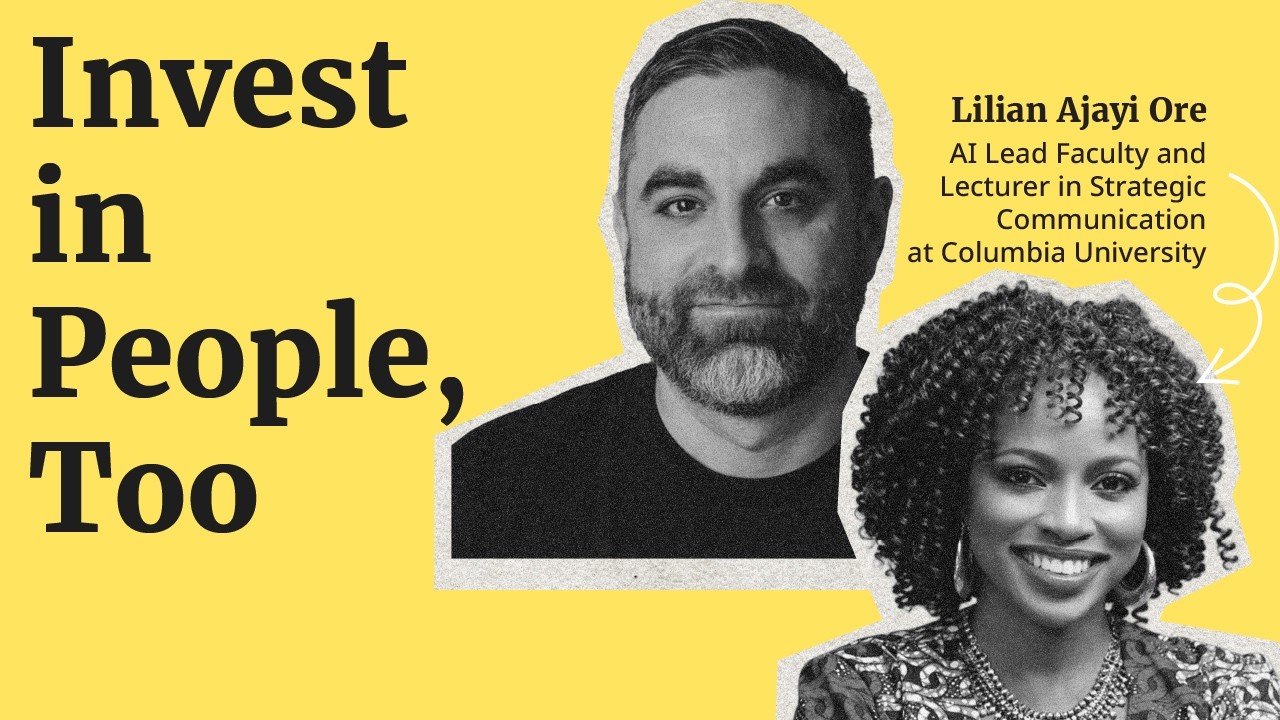
Recorded live at the AI4 conference in Las Vegas, this conversation puts David Rice and Dr. Lilian Ajayi Ore—AI lead faculty and lecturer in strategic communication at Columbia University and co-author of The Power of the Learning Mindset—in the middle of one of the biggest questions surrounding workplace AI: Are companies gaining efficiency while quietly weakening their people’s ability to think? With the energy of a live conference comes some background noise, but the discussion cuts through it.
David and Dr. Ore explore cognitive debt, skill decay, and why the usual AI metrics—seats, logins, prompts, adoption rates—say very little about whether workforce capability is actually improving. They discuss the risks of outsourcing judgment and critical thinking, the loss of institutional knowledge when organizations replace people rather than reskill them, and why AI transformation needs to be treated as a talent priority alongside a technology priority. Because faster work isn’t much of a win if the people doing it are slowly losing the skills that made them valuable in the first place.
What You’ll Learn
- Why AI adoption can create cognitive overload even while promising greater efficiency.
- How outsourcing reasoning and decision-making to AI can contribute to skill decay.
- Why organizations need to treat AI transformation as a talent challenge, not simply a technology rollout.
- How learning prowess differs from chasing mastery based on how everyone else uses AI.
- Why reskilling and upskilling should happen alongside technology deployment rather than after jobs disappear.
- Which workforce measures can give leaders a clearer picture of whether organizational capability is actually rising.
Key Takeaways
- Protect the thinking, not just the output. AI can shorten a process, but that doesn’t mean it should own the reasoning behind it. Dr. Ore’s approach is to keep humans responsible for judgment, strategy, and critical thinking while using AI as a tool—not letting the tool dictate how the mind works.
- Stop confusing adoption with capability. Seats, logins, prompts, velocity, and ROI can tell you whether people are using AI. They can’t tell you whether those people are becoming better at their jobs. Leaders also need to examine cognitive stress, wellbeing, and whether new skills are developing alongside new technology.
- Technology deployment and talent development should move together. Introducing new technology while releasing the people whose roles it affects risks throwing away institutional knowledge along with the job description. Dr. Ore argues organizations have a responsibility to reskill and upskill employees as their technology changes.
- Create a “prowess map.” Instead of copying how colleagues or competitors use the latest shiny tool, employees should identify their own learning gaps, determine where AI genuinely helps, and know when they need peers, training, networks, or other resources to keep developing.
- Keep entry- and mid-level pathways alive. Entry-level employees are potential future leaders and innovators, while mid-level employees already carry valuable organizational knowledge. Eliminating those layers without creating opportunities for development risks weakening the talent pipeline from both directions.
- Triangulate technology against skills. If the dashboard shows how much new technology you’ve introduced, put another measure beside it: how much new capability have you developed? Otherwise, you’re measuring the machinery while assuming the humans will somehow keep up.
Chapters
- 00:00 — The Cognitive Debt Problem
- 02:45 — AI and Cognitive Overload
- 07:09 — Building a Learning Mindset
- 09:31 — The Risk of Skill Decay
- 13:39 — Who Owns Cognitive Debt?
- 17:53 — Protecting the Talent Pipeline
- 19:15 — Human Judgment vs. AI
- 21:35 — Better AI Metrics
- 23:50 — Closing Thoughts
Meet Our Guest
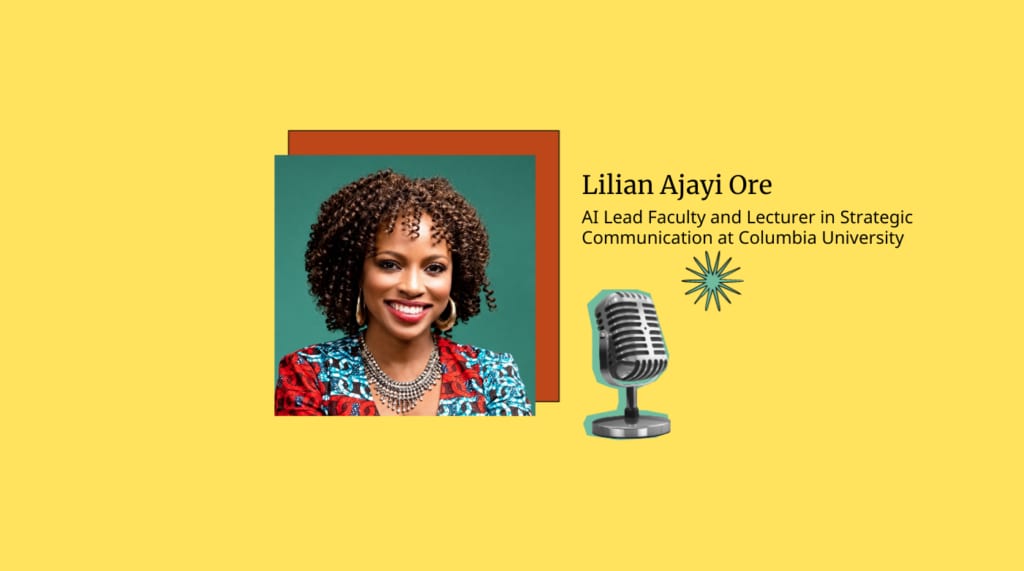
Dr. Lilian Ajayi Ore is AI Lead Faculty and a Lecturer in Strategic Communication at Columbia University, where she teaches at the intersection of artificial intelligence, digital communication, analytics, and strategy. An award-winning executive coach, chief learning officer, marketing executive, research scholar, and data scientist, she brings more than 17 years of experience working with Fortune 100 and Fortune 500 organizations, including IBM, Panasonic, Comcast NBCUniversal, and Citibank. She is also the Founder and CEO of the Global Connections for Women Foundation and co-author, with Marshall Goldsmith, of The Power of the Learning Mindset. Her work focuses on AI, leadership development, digital transformation, and helping organizations and professionals build the skills needed to thrive in a rapidly changing workplace.
Related Links:
- Join the People Managing People Community
- Subscribe to the newsletter to get our latest articles and podcasts
- Connect with Lilian on LinkedIn
- Check out Lilian’s book — The Power of the Learning Mindset: How the Best Leaders Foster Curiosity, Develop Innovative Teams, and Achieve Exponential Growth
Related articles and podcasts:
David Rice: More than 70% of employees report expending less cognitive energy when using generative AI tools, and Dr. Lilian Ajayi Ore thinks companies are structurally undermining the very thing they're paying for. On today's show, I'm talking with Dr. Ore, AI lead faculty and lecturer in strategic communication at Columbia University and co-author of The Learning Mindset, about cognitive debt and why nobody's measuring it.
We track seats, logins, prompts, adoption rates. We don't track whether judgment is rising or falling. We don't track cognitive stress. We don't triangulate the level of new technology introduced against the level of new skills actually developed. Radiologists are having a harder time identifying things after using AI than they did before.
Dr. Ore is seeing the same pattern in her own classroom, students struggling more to explain their thinking than they did before these tools existed. The cognition, the strategy, the reasoning is being outsourced, and organizations are releasing the people who carry that institutional knowledge before asking whether they've built the capability to replace it.
She told me that a CIO whispered to her recently that most likely they'll release those individuals and find new ones. Dr. Ore thinks that's exactly the wrong argument, that this is a talent revolution, and the organizations that get it are the ones that are investing in people alongside the technology, not instead of them.
So today, we're covering what cognitive debt is and why nobody's currently measuring it. Why skill decay is showing up across industries and what to do about it. The metrics CEOs actually need to assess whether capability is rising or falling, and why this era requires a talent priority, not just a technology priority.
I'm David Rice. This is People Managing People, and if your organization is measuring AI success without measuring what it's doing to your people's ability to think, this conversation shows you what's missing from your dashboard. Let's get into it.
Welcome to the People Managing People podcast. As always, I'm your host, David Rice.
Today, I am joined by Dr. Lilian Ajayi Ore. She's an author, educator, and the AI faculty lead at Columbia University. We're gonna be exploring cognitive debts and workforce capability and what meaningful AI upskilling really actually looks like. So I wanted to start with there's been some research, you know, out there that's found that I think it's more than 70% employees report e- expending less cognitive energy- Yeah
When using generative tools in particular. And I ... You're the author of a book called The Learning Mindset, and I think that's the opposite of a learning mindset. So I- I'm curious, are companies that are deploying AI in a way that sort of structurally undermines the thing that they're, they're paying for?
Yeah. Is that what ... kinda what's happening here?
Lilian Ajayi Ore: Yeah. I mean, I think what's happening is there's a lot of metacognition challenges that everybody is confronting and we're not really being open and honest about what we're feeling psychologically and mentally too. And you know, what's happening is because AI's coming into the room and the expectation is set that it's supposed to help you do your work faster, more proficient, more this, more that, people are now trying to accommodate this new technology in how the human function naturally.
Mm. And then there's also the pressure of everybody else around you, your colleagues, your peers, your competitors, your leaders, how they use it and the conversation that they have. And even as simple as, you know, the cooler, you know, the old cooler chat, and even office chat or even desk chat, or even Zoom breakout whatever calls, we're all talking about how we're using it.
And what's, what's happening with us is our mind is collecting how you're using it and how I'm using it, and we're making that meta-analysis, right- Yeah ... in our mind, and it's forcing us to force our mind to behave in a way that we're not accustomed to.
David Rice: Yeah.
Lilian Ajayi Ore: And so when you think about it from a cognitive overload, right, you now are forced to use AI in a way that you've collected the data on how other people use it as opposed to just trying to figure out what do you need AI to do.
David Rice: Yeah.
Lilian Ajayi Ore: And then accommodating that practice and behavior in your current everyday work life. And so what we try to do in our classroom, even though it is somewhat of an argument and attention thing where it's like we're reminding our students that your cognitive decision-making process and your critical thinking skills is what's gonna keep you in the job, not your ability to accelerate your process using AI.
So I think it's ... I think it's what's causing this cognitive shift and digression is the fact that people are collecting and reading how others are using AI and they're forcing their brain to work in a way that it's not accustomed to as opposed to solving the problem on an individualistic background.
So what needs to happen is we need to align ... That's something I mention in the book, is every organization needs a new learning mindset. That it's not no longer about creating a culture so that we can learn how to use these tools. It's more of like self-satisfaction, what I describe in the book as the learning prowess, right?
Prowess and mastery is a very different conversation. Mastery is what we're in that phase right now. In the, in the run of mastery, we're constantly looking at what everybody else is mastering so that we can become the master of what they've mastered, right? And trying to have that superior understanding.
Whereas the learning prowess is about continuous growth for yourself, understanding where the opportunities, the learning gaps are, which I address in the book as well, and then finding ways to use meaningful tools to close the gap or learn what you need to know in order to use tools and all these other things that are available in your workplace.
So I always say that the easiest argument is: Who is to blame for the shifts? It's the culture. It's the technological pressure that we all feel every day. And what we get to do in the classroom is we reframe the mindset to say, "Your mind needs protection." And these tools are no different from all the other tools that we use every day in our lives.
Absolutely. And why are we creating unnecessary efficiency and rush for ourself when our mind needs the nurturing, that we need to take care of it, to understand it, and then address conflict and business scenarios and business challenges, just like we would normally do with the tools, and not let the tools guide the thinking.
And when that happens, there's a lot of pressure. And I think we get the opportunity to work with students, and even students who are in the market for so long and come back to school, to reprogram them. So we give them back the ownership and the authority and say, "Now, go and manage the tool and don't let the tool manage you."
David Rice: You mentioned a lot of things there. I mean, the cognitive overload piece, and we're all collecting data on how other people are using it. And I'm curious just culturally speaking, because we are hardwired to push ourselves and-
Lilian Ajayi Ore: Yes ...
David Rice: do more all the time, and it-
Lilian Ajayi Ore: Mm ...
David Rice: is it almost inevitable in a way- Yeah
that this is kind of where we end up?
Lilian Ajayi Ore: Yeah. It is. And I think for me in the book with Marshall Goldsmith, one of the things, one of the reason why we built the framework in the book, like the, the book is governed around the win mindset. And I think in a stage like this when we're doing this cognitive comparison, whether we're cognizant of it or not, we are doing it.
It's just the way the humans work. It's what drives us sometimes, right? What we try to do is we came up with this framework called the win, and we divided the three parts of the book, which is the W meaning willingness to learn, which is coupled with the learning prowess. The midsection of the book is intentionality, leadership prowess.
And at the end is the end, which is the nurturing, which kind of pulls from the coaching prowess. And what we found with this framework is in order to learn, to let learning begin in a new world where AI and all of these different cognitive activities that we are even learning ourselves as humans in the society, is by creating something called the prowess map In order for prowess to happen, you need some kind of antecedents.
You need something to happen to kind of trigger that. And I think the new technological phase that we're in right now forces us to develop new learning patterns. And if we don't direct it in a way that it's somewhat formal and informal at the same time, formal in the sense that there is a construct to the prowess map, informal in the sense that you self-select what you wanna learn in the process.
And I think if we approach our challenges in the workplace and say, "Listen, I have new tools." Lucky you, because not all organizations can afford these shiny new tools. For those organizations who can afford it, you should be asking yourself, "What is my new prowess map for how I wanna do my job effectively?
When do I need to pivot to go learn some more? And when can I even learn through peers, network, through conferences like the one we're in now? And, you know, what other s- resources are there that I can read and build on my knowledge myself? And when do I also collaborate with others so that I'm not fixing this problem alone?"
Which we, we talk about in the book as well, that the leaders need to create cultures of collaboration and less judgment. So psychological safety's also required in slowing down our brain and the need to expand too much on our cognitive load in comparison in trying to get our work done.
David Rice: Yeah.
Lilian Ajayi Ore: Yeah.
David Rice: Now, I, I think this came up in your talent blueprint session yesterday, if I remember cOrectly.
But we're seeing sort of like this concern about skill decay start to pick up, right? And we've noticed it, and I think there was a study that showed radiologists were having a harder time seeing things after using it than they did before. And I think there's a couple other ones in healthcare in particular.
But, If that's the decay on such like a high-stakes situation, I'm curious what's the curve on judgment inside your average sort of normal enterprise, and are they able to measure it very well in your opinion?
Lilian Ajayi Ore: Yeah. And you know, I want to even give ... I want to add more parody and examples to that analysis that the radiologist did.
Even with me in my classroom, I mean, I've been teaching now for over 10 years, over a decade, and I've taught all levels from pre-college all the way to PhD, you know, doctorate degree students, and executives to, you know, young students as well. And I can tell in terms of the content delivery when my students work on their assignment, the, there is a, a sort of shift.
I feel like students are struggling more now to explain themselves than they did when we had those AI ... like, when we didn't have those AI tools. And so the shift is actually being seen across industry, and I'm glad that somebody's actually fessing up to it. And I'm still watching the data because it's not that now that my students have permission to use this tool, is their writing better?
Is everything getting better? I, I would argue no. Yeah, I would argue that as well. Because I think a lot of the cognition, the strategy, the thinking is being assigned. So some students are intentionally opting out of it so that they can come away with it. So when we think about metrics and how do we assess progress, and I think that's the core question they're asking, and then we talk about skills delay and skills gap- What's happening in the space is we're spending too much time, and I think this is an ongoing argument that we hear from all the speakers so far.
We spend so much time bringing in new products and new services, new tools, that we also omit to upskill. I was talking to one of the CIOs from my second panel today, and I told him, I was like, "Listen what's happening when these, when these jobs are getting taken over by AI because you're trying to manage efficiency, what happens to those individuals in that role?
Do you guys w- reskill them before you bring in the new technology, or do you release them and then bring in the new technology?" And he said, "It depends on the scenario." But then he quietly whispered in my ear, was like, "Most likely we'll release those individuals, and they will just have to find somewhere else to go."
And I feel like that's the wrong argument. Yeah. They ... I mean, I hate to say this out loud, but institutions are the ones responsible for reskilling and upskilling because they are ... To me, I see them as the carrier of your institutional knowledge, and it doesn't matter what levels they are. Every single person existed, and they contributed value at some point, and you have the responsibility to keep growing their skills.
And as you're mapping out the introduction of new technology, you should also in tandem, like a symphony orchestra, you should also be thinking about what skill set do we need to maximize and improve on. Because imagine getting that letter in your organization saying, "I'm sorry, we have some other technology that's gonna replace a human, you know, working."
It, it doesn't make your organization look like you're just as committed to them. So when we talk about young people who are joining the workforce, one of the number one things that they look for is, is this organization invested in me for the long term? Are they just invested in me for the short term?
And a lot of younger w- you know, younger workforce and younger professionals are choosing organizations that's going to invest in them for the long haul, and I think that's the shift that we are seeing. And more organization leaders need to talk, think about how do we procure unskilled staff and skilled staff and bring everybody aboard, and not just abandon others at ship just because we're shifting to a larger ship.
David Rice: Well, I know you hate to say it out loud, but I'll say it out loud. Well, one of the questions I have about that, though is w- when we think about, you know, this idea of cognitive debt- Who does that sort of belong to? Is that a CFO as sort of like a seeing talent as a depreciating asset? Is it the, does it sit with the CHRO as a capability gap, or is it the CIO as a sort of a consequence of deployment?
Who has to kind of own that- Yeah ... this is happening? And I guess if you were to pick one and defend it because it's gotta be assigned to somebody, who would it be?
Lilian Ajayi Ore: I know. A- and, and there lies the question, right? That was a very tough question, even reading it to be like, "Okay, who do I assign the stats with?"
Yeah. And it should be clearer to us.
David Rice: Yeah.
Lilian Ajayi Ore: And naturally, we're gonna assign it to the CHRO because they are responsible for managing human capital, right? They are responsible, and because I understand how leadership and operations work in institutions, I know that it's not just the CSRO's responsibility.
It's a shared responsibility. You know, one of the things I mentioned earlier that I like in my leadership from my school is that we're all kind of invested. This is an us problem We don't do this thing where it's like, "Oh, let's pass it to you. Oh, Dave, you figure it out." No, no, no, no, no. How do we confront this problem as a group?
Because we want to maintain our culture to be one that people are inspired by, motivated by. We create the psychological safety that people need to thrive on the job, and then we also provide them with training so that they know that they can come. Most organizations who are a success would get this, the McKenzies of the world, the Apples of the world.
Everybody's invested in that employee because what we forget is to bring that talent in, it's expensive. Yeah. To retain the talent even after you've offered the talent the job- ... is expensive. Yeah. And then to keep the talent in your organization after maybe 12 to 24 months is also expensive because now the talent has soaked up the knowledge, and they are now more valuable to the marketplace as well.
Yeah. So it, it, you know, unless we decide as a C-suite executive, as heads of organization, that this is gonna be a us problem, we're always gonna have this question, and it's always gonna make both of us feel uncomfortable okay, who should we legitimately add the problem to? It is the CHRO's problem because they set the priority that the leadership of the organization looks at.
And I feel like today's calls for a talent priority, not a technology priority. And I know you guys all, you know, some of you guys feel this way, and we're thinking it, and we haven't quite screamed it out loud. This is a talent revolution that we're in right now, and this talent revolution has been around for years, and we see it in different cycles.
Back in the day, you know, when Ford came up with the power, everyone thought he was crazy for coming up with Formula 1. And then ev- and eventually, we found that it's okay to design and bring it. And I remember when we started the whole assembly line. There's just so many different technological manufacturing ideas have come into the place.
And I feel like as a society, every so often, human cycle will bring in new opportunity, but the talent never shifts. We still need humans to do the work, and we need humans to do the work 90-plus percent of the time because we're talking about judgment. We're talking about productivity. We're talking about strategy I tell my students all the time that, you know, yes, you can use these tools.
They could go away tomorrow Yeah Right? But you need to understand how to develop yourself, how to be present, how to collect data, how to have these conversations, how to be strategically communicating your ideas, your value, how to see the gaps, how to understand the data, how to present the problem in a way that it doesn't scare the room, but it forces everyone to be a part of solving the problem.
And I think once we make this era, this beautiful era that it's embarking on, a talent opportunity, we will always see this slippery slope. And the s- the organizations that get it are invested. University get it, that the talent is what they're looking for, and companies are coming to the schools and saying, "Listen, we wanna recruit directly from your graduating class," which is a good thing.
David Rice: Yeah.
Lilian Ajayi Ore: But we need all organizations to do it. And the only task that I ask, and I feel like me, I speak for all my peers, is please create the space for entry-level positions to be available because these individuals are your future leaders. Yeah. They're your future innovators as well. And if we keep closing mid-tier, we're gonna lose them as well.
Yeah. So it's like you bring them in. We ha- some people look at this podcast saying, "Well, Lily, and I, we have entry level, but what about mid-level? What are you doing with those mid-level staff? Are you letting them go? Are you giving them a second life within your organizations as well?"
David Rice: Well, and are we creating the environment for them to learn the things that are gonna be resilient?
I, I sat in on a panel for that Upwork presented yesterday about, like, how much can an agent actually complete in terms of a, of a job. Can it do the whole job? And what they find is, is, you know, this ranges anywhere from 6% to maybe 60% of a job.
Lilian Ajayi Ore: Yeah.
David Rice: But there's still a vast ... a, a huge portion of any job that you can give it, it just can't do because it can't do a lot of the things that
An agent can't exercise judgment the way a human would, understand context- Right ... historical, you know, reasoning, and a- and a- and honestly bring to life a, a vision. Like you mentioned the future innovators. Yeah. Well, part of what they are are people that bring vision to life.
Lilian Ajayi Ore: Yeah.
David Rice: And so, yeah, I agree.
Lilian Ajayi Ore: I ... You know, it's when I teach, I ... You know, the responsibility of the faculty, and we try to do this in our program, is to give the value of human strength back to the humans in our classroom. And we hope that they take that into society, into their workplaces as well. And one experiment that I did with my students in my digital communication course is we
I had them use an AI tool to come up with marketing caption for a social media campaign. I said, "Create yours, and then run it through the AI system." "And then let AI also recommend you an updated version of that." And so they all got percentage scores. I mean, some of them got 70%, they kept rewriting it.
Some of them got 90%. And then the, the interesting thing is some- the, the tech- the AI, the gen AI platform doesn't quite understand certain cultural elements. Hmm. So, it would write it back in all bold letters. Not knowing that that's screaming at the audience. Yeah. And so my students will ... So through the experiment I told them, I was like, "How many of you guys will still use this tool?
How many of you guys will rely on your own caption?" And I, I'm very big on using these tools to shorten the process, but I wanna make sure that my students own it, and they don't just let the tool design the caption from the onset. That's not what we're saying. And so because the data needs to un- the technology needs to understand how you write, what's your voice, what do you prefer, all of that, it's collecting data on you, just like you're waiting for it to spit out feedback.
And so my students were like, "We will write it because- The, the, the good news for them was the technology rated their own caption much higher than the ones that he did or she or whatever the technology did. And it was quite surprising to them to be like, "Oh my goodness, I can't believe I actually am a better copywriter than the GenAI tool."
And I'm like, "See?" Because it's easy for us to just kind of release the power and let the technology tool do the work thinking they're better than us. And my students were like, you know, even the ones that were struggling, they were like, "I could see why they got a better score on their own caption than us because we didn't spend as much time co-creating ours."
And so these are the things that we, you know, challenge in the classroom to remind our students that the human strength is more palatable than you think.
David Rice: Well, companies measure AI adoptions, you know, as seats, logins, prompts, things like this, right? This is this is how they measure it. But if you were to design a measurement that would actually tell a CEO whether capability was rising or falling, you know, what, what does that look like?
Lilian Ajayi Ore: I know. And that's a very ... It's a tough metric 'cause I'm a data scientist too, and I think what I try to do in my book with Marshall Goldsmith is the coaching prowess, the nurturing part. I think all the data analysis, the reporting that we currently exist right now works in terms of, you know, what's the usability, what's the adoption rate, what's the velocity, what's the return on investment?
But one thing we don't measure, the two things that you and I have kind of alluded to that we don't measure is, you know, what is the empathy that we have as an organization? I think, you know, in adopting new tools, in, in introducing new tool, are we lessening the cognitive stress that your employees
We're not measuring that. We should. What is the cognitive stress level? I did a presentation in Istanbul at the Global Leadership Summit, and one of the things that I said in my presentation is that this expediency environment that we've created, it's now created a new leadership challenge of stress, burnout, and you can name it all.
And so I think we need a measurement on that, and as a CEO of a company, I need to understand the health and the wellbeing of my employee. Wellbeing is a thing that came at post-pandemic, and I think me- wellbeing should be a metric in that report that we're also looking at to measure true ROI. Because, yes, we wanna make, you know, quadruple our, you know, our profit from year over year, but how is
what's the health of your organization? What's the wellbeing of your organization? How much empathy and sympathy are we even doing? And then what about the upskilling and reskilling? That should be a me- measurement as well, that the level of new technology being introduced, and, and let's partner up with, let's kinda triangulate the data and say, "All right.
This is the level of new technology we brought in. What's the level of new skills that we developed, and how many of them are they being reskilled because of these technologies that we introduced?"
David Rice: I couldn't agree more. Well, unfortunately, we are up against time. Yeah. So I can't ask you any more questions.
But I could talk to you all day. But,
Lilian Ajayi Ore: Yeah ...
David Rice: thank you for coming on the show. This has been great. It was a really good conversation.
Lilian Ajayi Ore: Yeah. Thank you for having me, and I hope to see you soon.
David Rice: Well, listeners, if you haven't done so already, head on over to peoplemanagingpeople.com/subscribe. Get signed up for the newsletter. You'll get this podcast and everything else that we create straight to your inbox. And until next time.

