

What Happens When Employees Stop Speaking Up

When people stay quiet at work, organizations lose more than participation. They lose ideas, warnings, customer insight, process improvements, and market intelligence that never make it into the room. Seema Bhansali calls this the silence tax—the hidden cost companies pay when their environments make self-censorship the safer option.
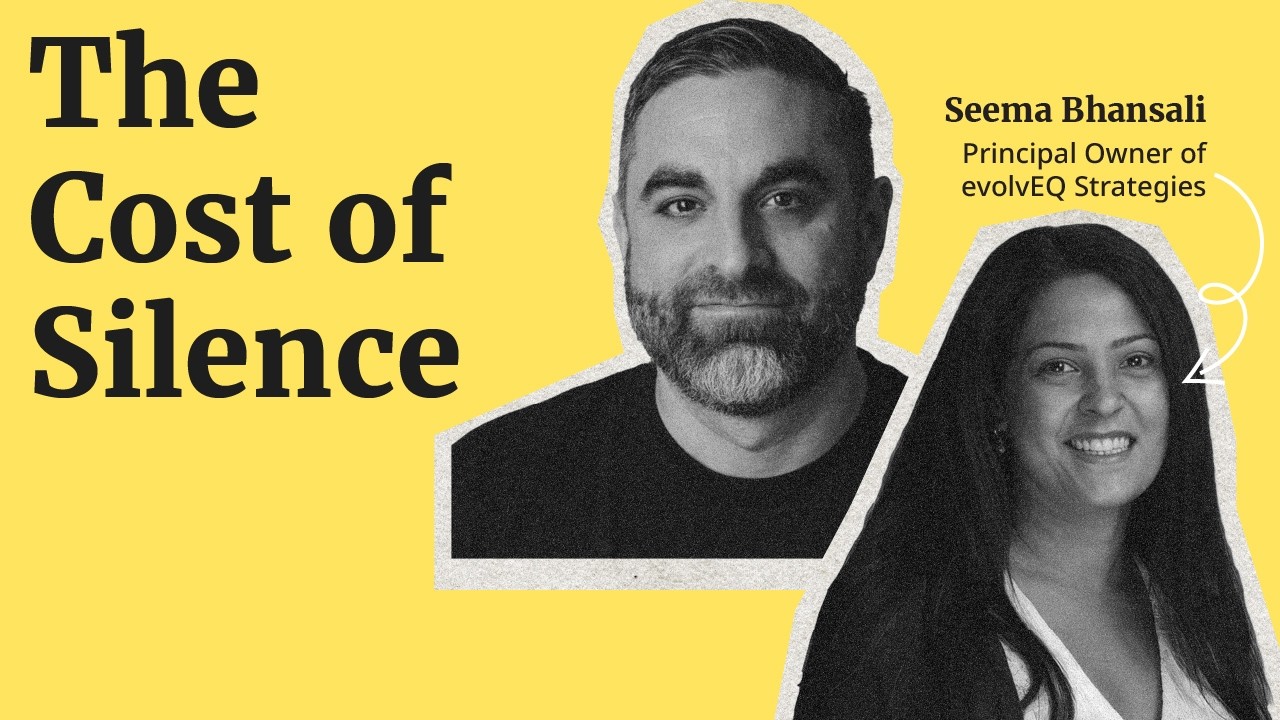
In this episode, Seema joins David Rice to unpack why “speak up” advice misses the real problem. Employee voice isn’t simply a confidence issue; it’s shaped by systems, social risk, management behavior, and the environments leaders create. They also explore why this matters even more as companies adopt AI, and why communication needs to be treated less like a soft skill and more like an operational capability tied to performance.
What You’ll Learn
- Why employee silence is a systemic business problem, not just an individual confidence issue
- How workplace environments teach people when speaking up is—and isn’t—worth the risk
- Why managers have an outsized influence on whether teams develop an open voice culture
- How silence can undermine innovation, customer insight, AI adoption, and change initiatives
- Why information and transparency help people move through uncertainty
- How the CARE framework can help leaders bring employees into AI-driven change
- Why communication should be measured and developed as a core leadership capability
Key Takeaways
- Silence costs the business. When people don’t speak up, organizations miss ideas, customer insight, and useful information.
- Confidence isn’t the real issue. If speaking up feels risky, people will stay quiet. Leaders need to change the environment, not just tell employees to be braver.
- Managers shape who gets heard. Small choices in meetings—who gets interrupted, invited in, or recognized—build the team’s communication culture.
- Different people need different ways to contribute. The quickest or loudest speaker isn’t always the person with the best idea.
- AI makes employee voice even more important. Employees often hold knowledge about processes, customers, and work that isn’t captured in a job description.
- Clear information reduces fear during change. People handle change better when they understand why it’s happening and what it means for them.
- Treat communication like a business capability. If employee voice matters, organizations should build it into leadership expectations, development, and performance.
Chapters
- 00:00 — The Silence Tax
- 01:41 — The Cost of Staying Quiet
- 05:06 — Voice as Value
- 06:44 — Beyond Confidence
- 10:03 — The Risk of Speaking Up
- 12:03 — How Managers Shape Culture
- 14:44 — Creating Space to Speak
- 17:58 — Making Room for Introverts
- 19:41 — AI and Employee Voice
- 24:24 — How Leaders Reinforce Silence
- 29:58 — The CARE Framework
- 33:10 — Reducing Uncertainty
- 36:34 — Developing Better Leaders
- 38:56 — Communication as a Capability
- 40:41 — Closing Thoughts
Meet Our Guest
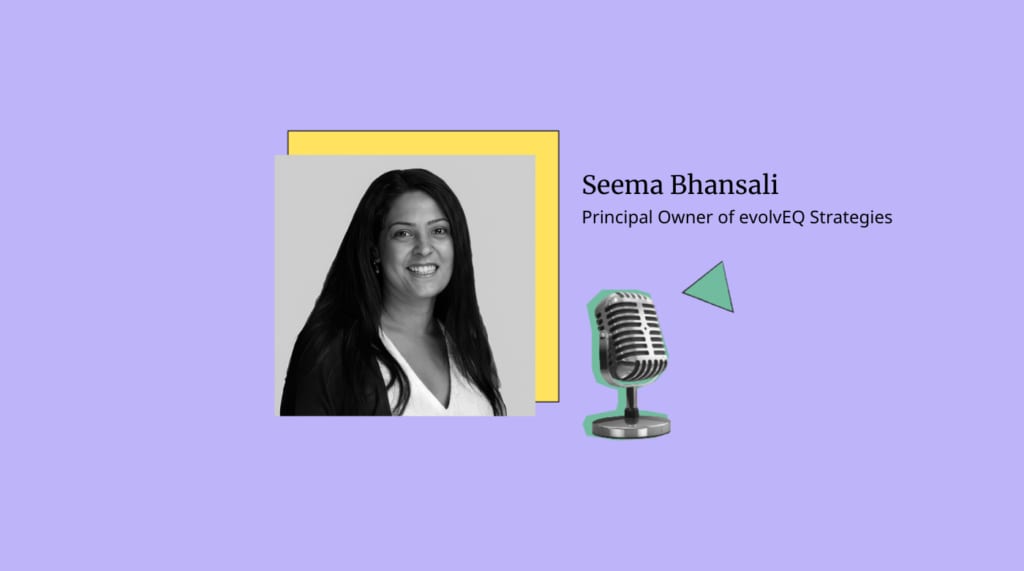
Seema Bhansali, Esq., is the Principal Owner of evolvEQ Strategies, where she advises CEOs, boards, and senior executives on leadership, strategy, culture, and organizational performance. An attorney and SHRM-certified HR leader with more than two decades of experience, she previously served as Vice President of Employee Experience and Corporate Affairs at Henry Schein. Seema combines strategic thinking with a focus on emotional intelligence, helping leaders strengthen teams, navigate change, and build cultures that support both people and business performance.
Related Links:
- Join the People Managing People Community
- Subscribe to the newsletter to get our latest articles and podcasts
- Check out this episode’s sponsor: TeamPulse
- Connect with Seema on LinkedIn
- Check out evolvEQ Strategies
Related articles and podcasts:
David Rice: When people stay quiet in your organization, you're not just losing contributions, you're losing the ideas, the problem-solving, and the market intelligence that never made it into the room. My guest today calls this the silence tax, and most organizations are paying it without knowing. On today's show, I'm talking with Seema Bhansali from evolvEQ Strategies about why silence isn't an individual confidence problem, it's a systemic one.
We've spent years telling people to speak up, lean in, be more confident. What we haven't done is look at the environment that made silence the safer choice in the first place. Seema went from government to the corporate world, and when she did, she went quiet for two weeks as someone who'd been in the room with presidents of the United States.
And eventually she asked herself, "Why did they hire me if not to use my voice?" And that's the question organizations need to ask, too, because voice is part of what you hired. If you're not accessing it, you're not getting what you paid for. The fix isn't telling people to be braver. It's treating communication as an operational capability, putting metrics behind it, tying it to performance, and making it as real for the business as AI adoption or sales numbers.
So today, we're covering what the silence tax actually costs and how to see it, why speak up advice has missed the real problem, how to build an open voice culture rather than just asking for one, and why communication needs to move from soft skill to core leadership capability.
I'm David Rice. This is People Managing People. And if your organization is leaving voices out of the room, this conversation shows you what's walking out the door with them. Let's get into it.
All right, Seema, welcome to the show. It's good to have you.
Seema Bhansali: Thanks, David. Thanks for having me on. I appreciate it.
David Rice: You've coined the phrase "the silence tax," and I think that's a powerful way to frame this conversation, 'cause we usually think about people staying quiet as sort of like an individual confidence issue, and you're arguing that it's actually-- the organizations actually pay a price for that silence.
I'm curious, you know, what are they losing that they often don't realize when people don't feel emboldened to speak up?
Seema Bhansali: I think that the major issue is exactly what you said. People think of it as an individual problem. But when you look at how organizations operate, there's meetings for a reason.
Conversations happen for a reason. When you're leaving voices out of the conversation, you're leaving out ideas, problem-solving, anticipating the needs of your market, right? So you're dropping innovation and market share before you even know it, it's there. And I think that's a huge problem for organizations.
I mean, there's lots of research on this, lots of stories that folks have told. You know, I'll share with you one story, like when I worked at Henry Schein, we had this women's leadership network, and what we did was we actually interviewed some of our customers who were dentists and physicians. And we were talking to them, and one of them said, "You know, the handpieces you guys give us they're really heavy for my hands."
And then the other women in the roundtable, the other female dentists they all were like, "Yes." You know, they were, you know, kind of, "I agree." And nobody had ever flagged that before. Just that voice wasn't in that room, so nobody had ever thought of it. And we were able to then take that back to our product teams and say, "Hey, here's something we need to think about."
And it's small moments like that when you don't have the right voices in the room, when people aren't having the... You know, they're not talking, that you don't get those innovative ideas. You don't understand what's going on in parts of your market. And so organizations, particularly now when competition is so fierce, organizations are really losing out on what could be the next great idea.
David Rice: Yeah, I think as a leader, you can only make a decision with the information that you have at the table, and I think we think of it as a, a lack of contribution when people stay quiet, but I think really the-- how we've got to think about it is it's a lack of in- You're missing out on information.
That's the key thing here. I wonder whether organizations sort of underestimate how expensive self-censorship becomes, especially now at this time when we have these tools and everybody's using them differently. Two people in the same job will use AI completely differently, and if they're not talking to each other and learning from each other, that silence becomes pretty expensive.
We may be able to automate something that would save us a bunch of time and create openings to do new things. And that silence is difficult to sort of measure how much that costs, I think. But there's this sort of idea that you know, it's definitely a shared cost.
Seema Bhansali: Yeah. No, it is. You know, I mean, there's a reason that the numbers on employee engagement are important, and people track them because when employees are engaged, and they're able to communicate with one another, profits go up.
It's pretty clear. I mean, it's not even-- There's no speculation on it. It's a really clear line. And so I think organizations, you know, to your point, you don't know what you don't know, and so then you miss those opportunities to understand what people are doing, and it costs you.
David Rice: There's a bunch of research out there that says, you know, employees whose opinions count at work are significantly more engaged, and then that leads to different cultural issues or, you know, retention issues when it's not happening.
And it makes me just think, you know, like organizations, you have a talent pipeline, but there's also like the idea pipeline that comes about as part of this. And if you stop contributing, it, it just dries up. And I, I've been in rooms where it's like, we're facing this problem. We've got a little task force together, and everybody looks at each other, and nobody feels emboldened to be the first one to go, "Well, you know what I, I think this," we just sort of stare at each other. It's just like-
Seema Bhansali: Yeah, a hundred percent. Yeah. Yeah.
David Rice: This isn't helpful.
Seema Bhansali: See. Yeah, yeah, yeah. You get everybody in the room, and nobody wants to be the first one because the culture doesn't allow it, right? 'Cause the first one out is gonna-- Something's gonna happen. You're not, you know, you're not emboldened to speak.
And I will say, when I, I jumped from government to corporate, I was quiet for the first two weeks that I was there. I mean, I'd been in the room with like presidents of the United States, so it wasn't like I was intimidated by a lot. But something initially about sort of corporate culture itself sort of had me quiet.
And then I had to ask myself, "Why am I here? Why hire me? If I don't use my voice and I'm just a functionary, what's the point of me being here?" And that was the moment where I sort of changed. But it took me time to recognize that my voice is a part of my product, and I don't know that organizations really understand that that's part of what they're hiring when they hire a person.
You wanna make sure that you're using that and accessing that.
David Rice: Yeah. It's interesting you said there you've been in these other rooms, and you didn't feel intimidated. It's like, 'cause for years the advice to women has largely been some version of speak up, lean in, be more confident, right?
And that's all well and good on, you know, in words. But in practice and when you're in the moment and you're around other human beings, it's different. You know, but on that idea of being more confident, you said that that never fully explained what you were seeing, and I'm curious, you know, why do you think we've misunderstood the problem for so long?
Seema Bhansali: When I thought about it, I really had to look at it and think about the individual versus the system. And I think just working in government for so long, systems were something that I was used to looking at. There's this sort of concept in the law called res ipsa loquitur, which basically means simply that but for something going wrong, this thing wouldn't have happened So something went wrong, some negligence, something went wrong in order for this to happen.
And when I look at women and where they are in the workplace, they should be 50% of leadership. They should be speaking up just as much as men, right? If nothing went wrong, if nothing was a problem, you would see-- It couldn't be that all the women were not doing the right things. I just-- It didn't make sense to me.
And then I was at a science fair with my kids, and I don't think I told you this story, but I was at a science fair with my kids, and my daughter was, like, mouthing the words to herself. She knew the answers, but she refused to answer them, and all the girls were doing the same thing. And there was no penalty for getting the answer wrong.
And the boys were, like, slamming down on the buzzer. They were like, you know, answering all these questions. They had reckless abandon. I mean, I'm, I'm telling you, my son answered the question about oceans with the word Jupiter, and I was like, "This is not even in the realm of possibility," but he did it anyway.
And what happens was, because there was no penalty, the boys were just running away with it because they just kept going and going, and the girls were not hitting the buzzer unless they knew a hundred percent that they had the right answer. I saw them. I saw them all saying it to themselves, writing it down.
They had those answers. And so it made me think something is broader than the individual girl, the individual woman. There's something bigger going on here. And so when I look at that from a systems point of view, I thought, "Okay, this is not about individual confidence."
David Rice: Yeah, having worked in some fields that are, you know, kind of lean more heavily towards females being the predominant people around, you know, take, take marketing, for example.
One thing I just noticed in that experience was how much the environment impacts and what it teaches you, right? It's a fundamentally different leadership question when you look at it like that. And there's a lot of research out there. I think I saw one from HBR or something that has shown that confidence and competence are often conflated when it comes to leadership evaluations.
And women frequently receive different feedback than men for similar behaviors. I've, I've seen this in action, right? Things that I was rewarded for, they were not. And so it feels like we've spent sort of years coaching individuals to survive in the environment and the systems that are in place instead of just rethinking the system itself or rethinking the environment, 'cause that's a lot harder.
Seema Bhansali: Yeah, it's a lot harder to rethink and redesign a system. But, you know, that HBR article and what you've seen empirically is really-- it's really true, and they've learned this. So this is the sort of neuroscience part of this, which is the brain's really good at survival. I mean, that's its whole job is to get us to survive.
And so if it knows you're gonna be punished for doing something, like being the first one to speak up in a meeting or, you know, if women are gonna be labeled a certain way, it is going to fight you on doing that thing. It's not about confidence. Your brain has wired in those consequences, and it is not going to allow you to take that risk.
You've gotta actually sort of change it for yourself and change the systems that tell women, "Hey, if you speak up, you're in trouble," or, "If you're the first one to speak up in a room, people are gonna say stuff to you." That's really an important factor in this. So confidence training's not gonna do it because you have to really not just help women, but help the environment change so that women don't get those messages anymore.
Girls aren't mouthing answers to themselves anymore because they don't feel the penalty of having the wrong answer.
David Rice: It's interesting, too, 'cause it's can feel like a little bit of an uphill battle because it's like you're battling against sort of like society. Yeah. It's like this is the world, you know?
But I think that you can create microenvironments where this is possible, and that's really where I think it has the biggest impact is on that team level. You know, because, like, how much stuff that gets said let's just take a town hall, for example. How much stuff that gets said that isn't from the CEO actually gets remembered or is really impactful?
If we're honest, not a lot, right? A lot of these things tend to be kind of, for show almost. But on the team level, that's where that impacts our role. That impacts our ability to make a difference in the workplace. And then if you can create it there, then you can start to see it other places, and it'll sort of perpetuate.
But I feel like that's gotta be the breeding ground for it.
Seema Bhansali: Yeah, I think managers have an enormous amount of influence that I'm not sure... You know, they don't always feel that way because they're, especially in the middle, you're getting leadership telling you what to do. Your team is asking you a bunch of things.
But they have an enormous influence on the culture of an organization. It's built one person at a time. So I think there's this feeling like, "If I do this, it's not gonna make a difference," but it does. And so what I talk to certain managers about is look at the culture of your, your speaking culture.
Just for your team, what does it look like? How have you set up the meetings? Do you have repeat people speaking over and over again, and you're not inculcating new voices? It happens. You know, we index towards people we know that sound like us or look like us. That's just human nature. But you can really design this in a way that allows you to have a much more open voice culture.
And it also, you know, you can look at the algorithm of your speaking culture in your own part of the organization. Whose quotes are you using over and over again? You know, it's such a simple, small thing, and I'll tell you, I'll never forget. I presented to the board diversity and inclusion when that was still a thing back in, I think it was 20- 2019 actually.
I presented to the board of directors, and we had a slideshow and, you know, we did all the research. And I used a quote, and I think the quote was from Aristotle. And one of the board members came up to me afterwards and she was like, "It was a great presentation. I question why you would use Aristotle in a diversity and inclusion presentation.
Had you no other women? No people of color? There was nobody else you could've used?" And so I, you know, it was a good learning lesson for me. I was like, "Oh, my God." I hadn't even thought of it. And so when I started doing, you know, other writing presentations for our CEO or putting up quotes for my own team, I started thinking about what voices did I not put up even in, in those moments?
Who was I using for inspiration that could be different and speak to different parts of our team? Those were things that I hadn't even looked at before. So that was an important moment for me. Embarrassing, but important. I think it's something that team members can, you know, team leaders can do.
David Rice: One of the things that I find fascinating about sort of the approach that you've taken is because through neuroscience rather than personality or anything like that, right?
You are you. That what looks like hesitation is often learned responses To perceived social risk, and that's kinda what we're talking about with the sort of environmental factors. I'm curious, though, how does that understanding, 'cause you mentioned how the power that managers have, how does that understanding change the way managers should respond when they see this?
Seema Bhansali: I think they should think about what's the social risk that they're creating within their part of the organization. And what I mean by that is, how are they responding to people's voices? Do they hear some more than others? Do they cut people off? What's the feedback they're giving? I mean, that's a really good tell.
Are you giving feedback to some people who speak up saying, "Bravo, you did a great job," and others saying, "Hey, you know, you're monopolizing the conversation"? How are you talking about communication? Who are you saying it to? Those are really important ways to track what kind of culture you're creating within your part of the org.
So I think if you assess the risk of speaking up for yourself or speaking up in your team, it will really help you to see what your employees might be taking, what your team might be taking back from the way that you work, and then you can design it deliberately. I think a lot of times it's just not deliberate.
It's not like people are intentionally doing this. I wanna be really clear, I don't think any of this is really intentional. It's just sort of subconscious, "Hey, here's the way it's always been, and we're just gonna go along. There's a million things for me to think about, and I'm not sure I'm tracking on this."
But if you really wanna have that open voice culture, you need to be intentional about creating it, and understanding the culture you have now is one of the things you can do. You can even ask your team, by the way. The other thing I really like is anonymous surveys for the team. Do you feel safe speaking up?
Or, you know, safety is kind of a hard word, so what are the biggest challenges in speaking up? That might be a better way to do it, right? So you can ask your team outright, what are they feeling? What are they sensing? How are they managing it?
David Rice: You care about your team, but caring and actually knowing how they're doing are two different things. Most managers find out someone is burned out or checked out when it's already too late. The conversation that might have changed things never happened. Team Pulse gives leaders a simple weekly check-in that takes less than five minutes and surfaces what your team won't say out loud yet. No guessing, no surprises, just real insight every week. Try it free for 30 days at teampulse.us.
It's natural, right? If you feel like there's gonna be a social consequence, you're just gonna be self-editing. It's like-
Seema Bhansali: You clam up, yeah ...
David Rice: it's survival. You know, there's decades of research on psychological safety that's, you know, shows that people speak up more when they believe mistakes and dissent aren't necessarily gonna be, or they're not gonna be punished.
It has nothing to do with confidence in a lot of ways, and I, I think that's good because, you know, we gotta kind of reframe courage. Like- ... it's courageous to speak up, but I've also been a, you know, amongst people who are never afraid to speak up but also don't say anything, and they sort of-
Seema Bhansali: Oh, that's so good there's a per- Yes.
David Rice: And then there's this perceived value about that person, but I'm like, he doesn't actually offer anything, though, of real value. Why is that considered value? It's all vanity. I don't think courage should be down to something that is essentially a personality trait. It's something you've got to encourage or suppress from everybody, no matter what their personality traits are, and I think the way that they choose to communicate and the way that their traits are will then inherently have value because they'll bring a different perspective and a different way of, of saying it.
Seema Bhansali: I do think courage is a little overrated in this. I mean, a, a part of it is the reason I said 'cause this is neuroscience. There's no courage that o- overcomes neuroscience. That's not a thing. You know, you have to design. But you're right. There are people who speak up. They get rewarded for speaking up, and they really never contribute anything meaningful.
And here I wanna give a little shout-out to the introverts out there because there are plenty of introverts who have a lot to say, who have really important ideas, but you don't hear from them because you've created a culture where the person who speaks up fast and most wins, and that doesn't actually lead you to your best results.
It's an easy default system, but it doesn't lead you to the best results. So that, again, is why I say designing it really matters because you can then access people by saying... You know, I'm an extrovert by nature, and I had introverts on my team, and o- one of them, I was like, "Hey, you know what? Why don't you present on the two o'clock today?"
And I thought I was doing them such a big solid 'cause I was like, "You'll be out there and visible, and I'm gonna give this junior team member visibility." And she was like, "Two o'clock today? It's 11:00. I'm not ready for this. I don't..." You know, she had a whole panic attack, and she said, "This is not how introverts speak up."
And I was like, "Oh, I didn't know that." That was really good learning for me to say I had to design this to... If I truly wanted to give her visibility, I needed to give her more time and put her in a slot where she was ready and prepared and able to answer the questions that were coming her way That was a really important moment for me, where I saw that my instinct and my system design was not really inclusive of everybody.
And I think a lot of us do that. We just don't realize we're doing it.
David Rice: Yeah, no, I absolutely agree. As organizations make bigger investments in AI, we're constantly hearing that things like human judgment and creativity, diverse perspectives, right, all these things become more valuable. If that's true, though, there's bound to be sort of a cost associated with that not happening.
So I'm curious what happens when some of those perspectives never make it into the room in the first place.
Seema Bhansali: Yeah, AI is such an interesting topic when it comes to voice. You know, one of the things I really worry about, I think the World Economic Forum did a study and came out with the stats, like it's gonna be nine point six percent, I think, of women's jobs will be eliminated by AI.
And that's not to scare people, it's just, it's three times more than men was the stat that I was really more concerned with. And I thought- Those women on paper, you look at their roles and you say, "Oh, AI can do this." But you have no idea what's happening behind the scenes. And you alluded to it earlier when we were talking about AI, about people are figuring out ways to do things, and if they're not communicating, we're losing out.
The women whose roles might be getting eliminated, you have no idea what they're doing behind the scenes. Did they tweak a process? Did they talk to a customer in a certain way that ended up with a new event? Because women's voices aren't often heard, when you don't know those things, you might be eliminating far more than the role on paper, and you don't even recognize it.
You don't even know. So that's one piece of the sort of AI conversation. But the other piece is people may really know how to implement AI in a way that works, that will be adopted and that will make sense for the customer, will make sense for the team, and if you're not talking to them, then you are missing out on potentially a wealth of information and knowledge of how to do this in a way that works.
And I'm always concerned that we move so fast on certain things, but we forget to bring the people along with us, and they're what matters in the conversation. So I really think that this is an opportunity. I look at AI as an opportunity to really think about design, to really think about how are you going to work with the team and create a culture that is different.
David Rice: It's interesting 'cause we're in this time where everybody's walked away from DEI and, and there's this perception of it, but I think what this highlights and, and what AI sort of brings to the table because, you know, what is it learning on? It's learning on are the data that we generate, right? And so, it actually kind of underscores the need for it more so, so that we can listen better and find voices of people who quite frankly a- it hasn't yet learned from, so they can get a more complete picture of how to do things or how we work as teams and what...
when we're at our best, right? What's the best judgment?
Seema Bhansali: Yeah. You know, that's something that's really concerning about AI in some ways. You're right. It's learned on the, on voices, and what voices has it taken in? I remember I had a Chat fight. You know, Chat and I were going back and forth on something, and I was like, "Have you considered these sources, Chat?"
And Chat was like, "Well, I'm trained on these, and I, I hadn't, you know... No, it's true that I'm trained on a particular type of voice and not others." And I thought, "Okay." Because the majority of what you're trained on is what's out there, and some of what's out there is not reflective of everybody. So, I mean, I think that that is going to be a big part of the conversation with AI, and this is a moment.
If inclusion is done right, it's all the voices. It's not one voice celebrated over another. It's not lifting up one group and demolishing another. It's all the voices so that you have real clarity about what's happening in your organization, what's happening in the marketplace, and what you need to do with it.
David Rice: Yeah, it's I was saying to somebody they've never really used AI before. It's a member of my family. And I was saying to her "Don't let it live a privileged life. Tell it that it's wrong all the time."
Seema Bhansali: That's-- I love that. I love that.
David Rice: Don't let it live a life of privilege. You can't just take it at its word a-and then praise it or, or think that it's a great thing. You should be kind of combative with it and make its life difficult 'cause that's how it learns.
Seema Bhansali: What's so interesting about that, right, is that you need somebody on the other side to check. It's a check and balance with AI. Just like you would with a person, in some ways, you have that check and balance, and if you are silencing all the people in the room who are gonna be able to do that, what happens?
You're just gonna run on this algorithm that may or may not be accurate. Nobody checked it. People get checked all the time. That's a part of, you know, the human experience. I love that. Don't let, don't let it live a privileged life, yeah.
David Rice: It's tempting to treat a lot of this as something that individual employees have to solve, right?
Like we've been talking about with managers, you know, they have a great deal of influence, probably more than they realize in a lot of cases, about how this plays out. I'm curious, what are leaders unintentionally doing, in your opinion, right now that reinforces silence instead of participation?
Seema Bhansali: Yeah. I think we're doing a few things that reinforces silence.
Obviously, I-I've said it before, I don't think we're really thinking about silence. I think we're thinking about getting the job done. And sometimes, and I saw this particularly during COVID, sometimes when we think about getting the job done, we don't want voices in the room because it's harder. It impedes us when people talk, when people say things.
But you have a much better product at the end of the day. And so organizations that really tapped into a lot of people during COVID, had the tough conversations, I think they ended up doing better than folks who just quieted all the voices and said, "We're going in one direction and that's it. Nobody has to speak."
So I think you have to be thoughtful around that. But I think when they're not, especially around AI, there is a real fear that if employees speak up, it will create more fear in the organization, right? I mean, there's this whole idea that we're just gonna go ahead with it and we can't talk to the team about AI because if we do, they're just gonna be talking about worried about their jobs.
And that's not untrue, but you will get gems out of them, talking to them about it. You will understand exactly how you can implement this change without scaring your team, without silencing the team. And I think when people look back at this time, they're gonna say to themselves, "Did I really implement this change in the best way?
Or did I run, and did I run scared and say, 'I can't hear from the team right now because I'm not sure what they're gonna bring to me?'" I think that's going to be a real mark of who's successful in the AI conversation and who's not successful. You know, if you have those conversations with your team early and often, and you can implement while you're doing it.
I understa-- Look, I worked in the office of the CEO. I understand the pressure of quarterly results. I get it. I know what your board is telling you right now, so I get it. But I also think there's a way to do this where you are having those conversations up front and really talking to the team. And then I have this acronym for...
It's called CARE, right? So the first part of it is conversations with the team. That's the first thing you do when you're trying to get the AI models in. Let's hear from them and understand what are the roles, what are they worried about, what do they think it takes to implement. When you have people's buy-in early on, they're gonna wanna do it 'cause they're part of the contributing force to how you're doing it, so they're gonna wanna do it.
And then I think there's other steps that you can take along the way that will bring your team along.
David Rice: Couldn't agree more. The conversation of you know, what is this technology? What are we using it for? All that. Those are-- They're micro interactions, but they add up to be a lot more than that, right?
Managers shape meeting culture, for example, more than any policy ever will. And we know from the research that's been done out there, managers account for seventy percent of the variance in employee engagement at the team level.
Seema Bhansali: Yeah. Yeah.
David Rice: So while we talk a lot about mission statements when we talk about culture, I think it's built through those micro interactions that you might forget- at the end of the day, but they remember who got interrupted, who, you know, who was invited- Oh, yeah
into the discussion, who gets acknowledged. Those small moments, they compound over time. And just having the conversation around this thing that is so, I mean, it's like, it's so flammable, right?
Seema Bhansali: Yeah. Yeah, yeah, yeah. It is.
David Rice: It helps build your overall cultural and approach, like your, how your culture fuels the approach to AI and the comfort with the technology amongst your employees.
Seema Bhansali: Yeah, you know, I have never found that silencing people led us to the best results in anywhere for anything, right? It just never ended up being the right way to do something because... And I think managers, I- you're right. First, I wanna say leadership has to empower their managers. 'Cause a lot of times leadership doesn't do that, and that's a mistake.
So number one, empower your managers to have the conversations with their team. And then number two, managers should feel like they should and could do this, and it will make a difference. It makes a difference to their team when their leadership engages them in thoughtful conversation around what's happening.
And It's funny, I remember doing roundtables after George Floyd, which again, I understand that the moment is different, but the principles are the same. Which is you have something in the organization, there is some flammability, to use your word, around it, and what do you do? Do you ignore it 'cause it'll go away, or do you actually tap in and say, "Okay, what's happening, and what can we do as an organization to be better?"
And I think it's very clear who wins when they do that, right? Everybody wins when you have that conversation with them, and managers, too. It's time. Have, have the one-on-ones. Do the roundtables. Have the conversation. Find out what's going on. Your team is probably scared and also ready, and it's a strange thing to be, but like they're probably scared for their roles, but they're probably also got a lot of innovation in there that they can offer you on the AI front that you may not be hearing.
David Rice: This is one of the things I like about your work, right? Like you don't stop at identifying the problem, and you mentioned previously the CARE framework as a way to help leaders navigate change, especially around AI you know, in a way that actually brings people into the conversation more. So I, I'm curious if you can walk us through that framework a little bit and why each step matters.
Seema Bhansali: Yeah, for sure. So it starts with conversations, I said that earlier, right? Let's have the conversations with our team. Let's engage them early, and it matters because when you do that, they're invested. First of all, they feel heard. You're creating some level of safety for them, and they feel invested. They are part of the organization.
It's not being handed to them. They're now a part of the conversation. That's a big change. When people feel invested in what's going on, they're more likely to support whatever it is you're rolling out, so that's one. The A is for articulate the strategy, and that's one thing I think companies have been reticent to do, which is what's the strategic imperative behind AI?
Why are we adopting it? Where are we adopting it? What do we plan to do with it? A lot of times it's just coming in, and people are saying, "Hey, we're adopting AI. Here's what we're doing." Why? What do you hope it will achieve in the organization? Because if you tell me that, then I can be on board with that.
I can support that. If I know what you want, want to achieve and want to create, then I can support that, but if I don't know that, then it just feels like it's something being handed to me, and I'm less likely to engage with something that I fear. So first have the conversation, then articulate the strategy, then sort of reveal the consequences, and this is probably the hardest one that is gonna be there.
But be honest with your team. What is this going to mean for them? What is it gonna mean for them? Because when you tell them that, look, people are people, the gossip mill will always be there. I heard from this person that that entire team is getting eliminated. It is far worse what people are talking about than what you're actually gonna say to them.
I promise you, the undercurrents in the organization are far worse. So squelch the noise. Give them the real talk. Let them know exactly what's happening so that they can move forward. Okay, you have to do it in certain ways working with the HR team, I totally get that, but the real talk is going to help the team get calibrated instead of having all the side hustle conversations that are absolutely going on in your organization at this moment.
So that's the R, and that's why it's really important. And then E is really about evolving the team, getting them to the point where they are-- either they're upskilling on AI or they're reskilling because, you know, their role has transitioned, and you want them to do something else. But evolve the team to be the type of team that understands and can keep AI as part of the tools that they use.
Instead of looking at it as an enemy, it is something that is going to enhance their work experience or, you know, help the business, which ultimately is good for them at the end of the day. So I think if you use each step, you're doing the psychological safety bit, you're doing the innovation bit for yourself, and then you're also doing the adoption, the change adoption.
And all of that helps you to move AI to a place where then it's just part of the everyday.
David Rice: Yeah, no, I couldn't agree more. I think the biggest problem we've seen in the last two years is too many orgs have started with implementation. That was their first letter. Yeah. So-
Seema Bhansali: Yeah, yeah.
David Rice: And you announce a change before people have made sense of it, and then they've gotta live through it, right?
And there's, there's all this change management discussion going on, but one of the things I think we can consistently find Employees will adapt to change when they understand the business reason and their personal impact. Those are the two things that they are just naturally interested in, right?
'Cause is this place gonna exist, and what does it mean for me? Those are two, two questions you can't blame anybody for asking, right? And so, I don't think people do resist change because it's new. I think they resist uncertainty because they don't know what it means for them. That's what we've seen time and time again.
Seema Bhansali: Part of what I do is educations, and I do a change management education. And what I talk about there is there is a neuroscience behind change. You know, change destabilizes us a little bit. And the thing, and it sort of puts the-- I don't wanna get too s- nerdy out here. Puts the amygdala online, right?
David Rice: Get nerdy. I love it.
Seema Bhansali: Get the, get nerdy. Okay, I'll do it. The amygdala's online. So it's like survival mechanism, right? We're in fight or flight right now, and the thing that changes that is when you engage people's prefrontal cortex. And the only thing that'll do that is information. When you give them information they can think through, process, understand, have conversations about, they move from fight or flight to thought, and that's where you want people to be.
And so you're totally right because otherwise, what you're doing, if you keep them in that state of fight or flight, you're gonna burn them all out Nobody's gonna adopt the change in the way that you want 'cause they're stressed, they're burnt out. They may not even-- You may say you're gonna be doing less, and I'm still burnt out because I'm sitting here thinking about whether or not I'm surviving.
That's where my brain went. That's exactly where it went. So give me the information to help me not burn out, to help me actually adopt this.
David Rice: And the same goes for you as a leader, right? So if you're not engaged or in thought, and you're in fight or flight mode, because whether it's, you know, you're, you've got pressure from the board, or employees are not reacting well and performance has taken a turn, now you're in fight or flight mode.
You're having the same problem. And then y- you're burnt out. Whereas all of this could've been avoided by simply, let's get together, have conversation, let's think through this together. It would make the whole situation a lot easier even though there's some discomfort that's attached to it.
Seema Bhansali: What-- That's such a great point about how leaders access this information and what they do.
It-- And they do get burnt out. I mean, you know, I can, I can definitely tell you from my role in leadership that there are moments where you, you face that. And I think what we have to do is stop fearing team members. Stop fearing the response of the team and start integrating it. I have never known-- I say this to my kids all the time, and when they hear this podcast they'll be angry that I said it out loud. I say to them all the time, you know, shame lives in shadows so bring it out.
Let's just talk about it openly because once you do that, it makes it much easier to handle. When you leave it to the gossip train and to the shadows and to everything else, everything becomes much, much harder. So even if there's a little discomfort in it, bring it out, have the conversation.
I promise it will be much better for you than if you just sweep it right under the rug and keep going.
David Rice: If you were to fast-forward five years, I'm curious, you know, what's one assumption organizations currently have about leadership or communication that you think we'll look back on and realize that was holding us back all along?
Seema Bhansali: That it is fully about natural instinct. It's a great question. That it is only about natural ability. That we think leadership is about natural ability. We think voices are about natural ability. And it's never really been about that. It is about the environment you create. It is about how you develop your leadership.
You know, one of the reasons I like talking about having an open voice culture is because you will naturally develop your team in that moment. The more people have the opportunity to speak up, the more they hone that craft, the better they are. And I think believing that people come ready-made is a mistake.
It's not just natural ability. It's natural ability meets opportunity, meets preparation. All of those things are things we can develop in people. So I think when people look back and they thought it's just natural ability, they will understand that that's not really the case. I think the L&D leaders who listen to this are going, "Yeah, exactly right."
It's not just about the natural ability, it's about the environments we create for people.
David Rice: A hundred percent. You said there natural ability, and I was thinking about with, with leaders, and I was thinking about how some people think, "Well, you know, he's very charismatic. He just has a charisma about him."
And I'm like, "Okay, yeah." But is that not learned as well? 'Cause he's been allowed in environments to be himself, to come alive in moments and talk freely, and he's, he's learned what worked and what didn't work and all of those things. He's gone through the painful lessons of probably humiliated himself a few times.
You know what I mean? Like-
Seema Bhansali: Yeah.
David Rice: Yeah ... it's any great comedian, right? You've gotta test out what gets laughs and where your timing works and where it doesn't, and you've gotta shop ideas, and then it's this idea that that comes naturally for some people, and I'm like, I don't know that it does, actually.
I think that it comes out of the environment that you put yourself in or that you're exposed to and how that helps you refine your skills and your, your ability to communicate in those moments. I think it's like, can we make communication a little bit less of a soft skill and more of an operational capability for everybody?
Seema Bhansali: Yeah. I mean, first of all, you have to value it. It's not a soft skill. It is clearly tied to profits and end results. I mean, it's definitely not a soft skill. So, by the way, I think soft skills are, are real skills, too, but you know, I do think put some metrics behind it, right? And when you do that, when you put it as a value, when you put it as a goal, if it's part of the, your core leadership capabilities, something that we have in our organization, I was a-- In my old organization, I was a part of developing were core leadership capabilities.
When you put those in there, and you tie them to actual performance, two things happen. One, you're aware that this is something I need to develop, and two, the organization needs to help you develop it because we're saying this is a valuable skill This is something that we want for the folks in our organization.
We think it is going to have an intense ROI, and so we're gonna focus on it. And when you do that, you give people the opportunity to build and develop in a way that they may not have otherwise. And organizations did this with lots of things back in the day, and they do it now with things like wellness, where you put it in the MBO goals of your leaders.
How much wellness do you talk about? Or is your team burnt out? There's lots of things that they do this with. When you give it a hard metric like that, you're going to see people engage in it because you have to treat it like you treat anything else. You know, like you treat sales numbers. This is gonna be important for our organization, then let's put it in there and make it important for the organization.
I'm sure people are doing that with AI right now, right? AI adoption, how's your team utilization, right? They're gonna put it in the MBO goals and make it something that's important. Well, if that's what it takes, that's what it takes for people to feel that way.
David Rice: No, absolutely. Yeah, you've got to make it real for the business in order for it to show up in the business, right? So-
Seema Bhansali: Yeah. Yeah.
David Rice: Seema, thank you for coming on the show today. It's a really good conversation.
Seema Bhansali: I loved it. I loved it. Thanks for having me.
David Rice: Absolutely. Well, listeners, until next time, be sure to head on over to peoplemanagingpeople.com/subscribe. Get signed up for the newsletter. You'll get this podcast and a whole lot more directly in your inbox.
Check out our AI Signal briefings. It's an executive brief every week on the latest things that you need to know regarding AI and what you need to be thinking about.
And until next time, don't be afraid to have the conversations.

