

The Real Work Now Is Managing Energy, Not Productivity

If you’ve noticed that effort stopped being a differentiator, this episode will explain exactly what shifted — and what actually drives value in modern work. Lena Thompson, a leadership consultant with a systems analysis background, argues that the era where hustle and logic alone produced breakthroughs is over. AI can outpace us on sheer processing — but it cannot manage emotional energy, and that’s where the real work of leadership now lives.
We dig into what emotional energy actually is (it’s not soft feel‑good fluff — it literally shapes brain function), why unprocessed emotions create cognitive blockages, how leaders can regulate emotional energy to improve decisions under pressure, and practical tools you can use today. This is an episode about leading from within, not just doing more — because the quality of your energy determines the quality of your impact.

What You’ll Learn
- Why emotional energy — not productivity or logic — is the true source of creative, strategic work.
- How low‑energy emotions (fear, frustration) literally narrow your thinking and undermine innovation.
- The limitations of AI and logic when faced with complexity and uncertainty.
- Practical emotional regulation tools leaders can use in high‑stakes moments.
- How slowing down strategically expands your awareness and decision quality.
Key Takeaways
- Energy shapes outcomes. Your internal state influences focus, creativity, and problem solving more than how many hours you grind.
- Hustle is no longer a differentiator. If effort alone moved the needle, you wouldn’t be exhausted and stuck. The world is more complex; energy management matters.
- AI speeds logic, not wisdom. Use it as a capacity amplifier, but don’t outsource judgment or intuition — that’s where humans uniquely add value.
- Unprocessed emotions clog systems. Suppressed frustration, fear, and overwhelm narrow attention and increase burnout. Acknowledge and reframe emotions instead of numbing them.
- Slowing down is strategic. Purposeful pauses reset your nervous system, expand awareness, and enhance creativity. Stillness isn’t laziness — it’s data your brain can finally process.
- Leadership lives in alignment. Self‑awareness is the foundation for good decisions. When your inner world is disconnected from your outward strategy, you pay the price in stress and short‑sighted choices.
Chapters
- 00:00 – Why hustle stopped working
- 02:30 – What is emotional energy
- 08:15 – Low vs high energy states
- 12:20 – AI, logic, and human value
- 18:00 – Case study: decision clarity
- 22:45 – Alignment over effort
- 27:30 – Disconnected at work
- 32:10 – The power of stillness
- 37:50 – Micro practices for leaders
- 42:20 – Intuition vs bias
- 47:15 – Inner work vs perks
- 52:00 – Emotional regulation tools
- 56:30 – Final thoughts
Meet Our Guest
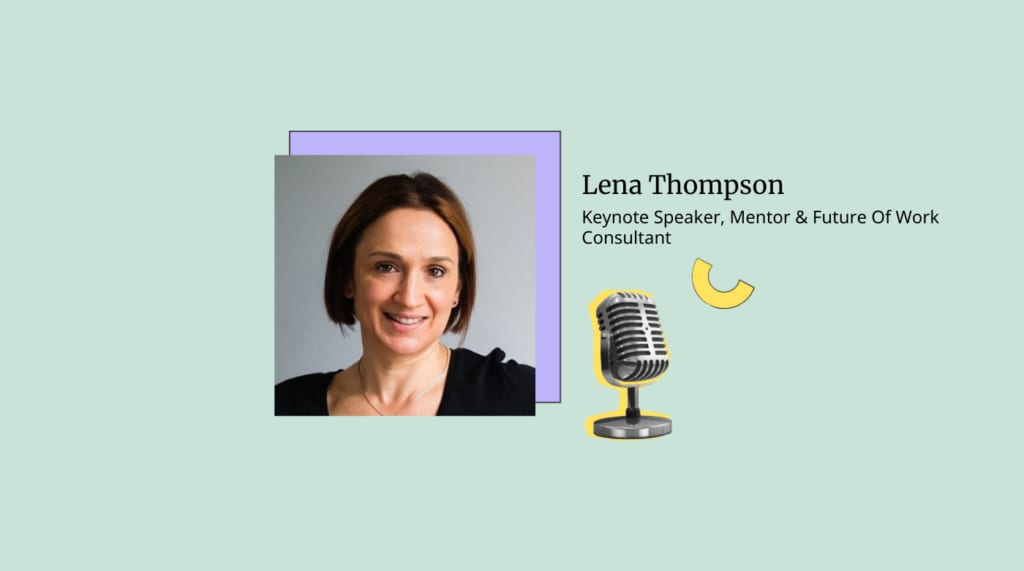
Lena Thompson is an international keynote speaker, mentor, and Future of Work Consultant known for helping leaders and teams build emotional resilience, clarity, and purpose in times of pressure and change. Drawing on over 15 years of corporate experience consulting for global clients—including Microsoft, Morgan Stanley, and Anglo-Irish Bank—she transitioned into speaking and consulting to bridge the gap between corporate strategy, human behaviour, and purposeful work. Lena’s transformative talks blend insights from emotional intelligence, human design, and personal development to inspire sustainable leadership, authentic decision-making, and thriving workplace cultures on stages around the world.
Related Links:
- Join the People Managing People Community
- Subscribe to the newsletter to get our latest articles and podcasts
- Connect with Lena on LinkedIn
Related articles and podcasts:
David Rice: You are working harder than you ever have. Longer hours, more meetings, better tools supposedly, and somehow you're getting worse results. Five years ago, hustle worked. It was a differentiator. Effort equaled value. Now, the more you push, the more exhausted you get and the less it actually moves the needle. That's not burnout. That's a fundamental shift in what creates value at work.
Today's guest is Lena Thompson. She's a former systems analyst turned leadership consultant, and she's gonna tell you something that might make you a little uncomfortable, which is that AI can do logic faster than you ever will. All that problem solving and all that strategic thinking you're grinding through, it's gonna get commoditized. What AI can't do is manage emotional energy, and that's the real work now.
What neuroscience shows us is that when you're operating from frustration, feelings of being overwhelmed or fear, the typical emotions many leaders experience daily, your brain literally shuts down the pathways responsible for creativity, innovation, and long-term thinking. You can still get things done, but you're locked into tunnel vision. You're reactive, not proactive. So today we're gonna cover why emotional energy is the state from which we create, not productivity.
The specific tool that Lena taught cabinet ministers in Zimbabwe, that saves them days, if not weeks, of decision paralysis. How unprocessed emotions create blockages that eventually manifest as breakdowns, and an emotional framing technique for high stakes moments like layoffs and org changes. Because people don't listen to your words, they respond to your energy.
I'm David Rice. This is People Managing People. And if you've noticed that effort stopped being a differentiator, stopped working somewhere along the way, this conversation explains exactly why and what to do instead. So let's get into it.
Welcome, Lena. It's good to have you on the show.
Lena Thompson: Thank you so much, David. Thanks for having me.
David Rice: Absolutely. So, you know, we're talking about emotional energy today at work, and I think when you said the real work, when we were talking before this, you were saying to me, you know, that the real work, the thing that you eat, breathe, and teach is energy. It's not productivity, right?
It's not output. Emotional energy too. And so can you paint me a picture of what you see when you think of that in a work context? Because I think some people get the impression that like emotions at work, you know, they view it negatively.
Lena Thompson: So the first thing to really understand what emotion is, because emotion, you can literally think of it as energy in motion.
And some of our emotions, they carry this high energy like curiosity and joy and gratitude, compassion, empathy. Other emotions, they carry low energy like resentment, anger, frustration, fear, impatience. So when you experiencing those low level emotions, your brain and your body, they respond as though you're under threat.
It triggers your nervous system, which activates your cortisol, the part of your brain that is responsible for creativity, for efficiency, for long-term planning, and that becomes less effective. So, in other words, when you're feeling those typical emotions we feel through the day at work, when we are frustrated, so overwhelmed, our body starts prioritizing safety, security rather than creativity.
So we can still get things done, but it's like we get locked in a tunnel vision and we become more reactive than proactive. Now when we experience those high energy emotions. That actually broadens our attentions. It activates pathways in our brains that are responsible for creativity, for innovation, for problem solving, so curiosity, joy, gratitude, et cetera.
They expand our mindsets to open to possibilities, to opportunities, which we can't see when we stuck in a lower energy emotions. So basically in a work context, the emotional energy that we bring with us literally determines the quality of our thinking, the quality of our interactions with others, conversations we have, and even our physical and mental health.
And people who really understand how to manage, how to regulate, how to work with the emotional energy. They consistently make better decisions. They perform better under pressure. And obviously that also contributes to more healthier working environments.
David Rice: You know, I was working in like a role like mine, you know, as an editor I always think like energy is like the state from which we create.
That's where we're gonna get our end product, right? Productivity is sort of like a downstream effect of it all. The energy is sort of like the, cause, the root of the flow. And if you're in a negative place, like I don't care if you're using AI, I don't care if you're still prompting it, you're still in control.
And if your energy is negative, oftentimes what you're going to get is a sub poor product or a product that you don't actually want to share. I think that leaders have to remember that as well, right? Like you can consult with the technology or even, you know, it could be your assistant, but like both of those things are going to react to whatever you are bringing into it.
Can you gimme an example of a leader whose emotional energy you've seen change the whole dynamic of a situation for their team?
Lena Thompson: Yeah, so I was actually doing a workshop in Zimbabwe, I think it was last year, and it was Zimbabwe National Steel Association. So like cabinet ministers, really high level professionals in there.
And we did the workshop, really how to regulate our emotions and how that leads to better decision making, where I show them that one way of making decisions is through the logic, which leads to rumination, overwhelm, anxiety, especially if it's a really important decision. And another emotion or another decision we can make is through regulation of emotional energy.
So we did a little exercise and I remember one of the participants, he was actually organized of the entire event as soon as my station was finished. He literally, he ran out of there, but like excitedly and he says, I'll speak with you later. And then later on, like, we had this an event after and he came after me and he said, just learning this one little exercise, he said, it saved me days, if not weeks, of getting stuck in my head and looping through different ideas.
So just by pausing, just by using the tool I gave them to shift from the overwhelm which she was experiencing, because he really needed to come up with decision fast and shifting into different emotional stage. It just opened up the clarity. It's like, you know when you sometimes focusing on a problem and you get so frustrated and you just give up and then you go for a walk, maybe have a glass of wine and you are like, that's it.
So you can do that on demand and simply by shifting your emotional energy.
David Rice: I'm glad you mentioned they're the logic piece, right? Because like I know for me personally, I get stuck in logic a lot. It feels like the answer's there. I know it. You know, it's like a math equation I can solve, right?
But things aren't always that simple and it feels to me like a lot of leaders are still trying to build this AI future using sort of the same old rule book, more logic, more hustle, more problem solving. But this isn't really working at this stage. And I'd argue that the direction of travel is more opportunity to balance life and work for humans.
I'm curious, would you agree with that?
Lena Thompson: Yeah. You know, actually I think it was Einstein who said the definition of madness is trying to solve the same problem with the same level of mind that's created it. And that's pretty much what we are doing because life is literally moving so much faster than it's becoming more complex.
We live in a different age, whether we want to admit it or not, but things that used to work even five years ago, they just simply don't work. And I mean, I don't know from your personal experience or maybe people you work with, you might have found that the more effort sometimes you put into something, the less it works.
It's like effort stops working and the more we push and hustle and grind, all we are doing is just getting more exhausted. And five years ago that might have worked. Now it just doesn't. And what actually happening, it's not, you know, it's not a, by like a sort of coincidence. It's literally just life is asking us to step up.
To lead from that self-awareness, from emotional intelligence to create space for us to really reconnect to who we are and also to create the same space for others. And that's not obviously something that AI can do for us. So AI, I mean, I love AI. I've got nothing against it. You know, I use it for my content to write keynotes, et cetera.
And it's great that like data analysis, scheduling, but it doesn't replace our energy, that inner energy, the judgment, the emotional intelligence. And that's why that self knowledge, self leadership is so important. Understanding who you are, why you behave the way you do, why do you make certain choices, why you react to certain people.
And no matter how hard you try, you still can't stop reacting. They're still pushing those buttons, really understanding your core needs, how to met them, all of that. So when you really lead from that place of awareness, AI actually becomes a tool that amplifies your potential rather than substitute for that.
But when you don't have that awareness, then you know, it may seem the AI has all of the answers for us.
David Rice: It's interesting, right? It can do logic so much faster than us. In some ways it's good, right? It could take us outta that logic thinking at times, but it maybe I'm, well, I do worry about us maybe losing that skill a little bit, but I feel like things like logic and hustle, there's sort of like the, there's like a currency that you can use in a time of scarcity, right?
So it makes sense when you need, like that's almost like survival kind of stuff, right? Like when you need that effort equals value and that's okay. I think though in the future, like effort is gotta get more into alignment. Like alignment is the real value. I think that's sort of where AI is sort of pushing us and hustle doesn't really necessarily need to be a part of it, in my view.
Not as much because what's left when you take away some of that logic stuff is the emotional and the intuitive layer, your ability to improvise, your ability to choose and make it work. I think that's gonna be what determines a lot of success moving forward.
Lena Thompson: Yeah, the ability to pivot right, to able to take the calculated risks, the trust chain judgments and AI is obviously itself, saves us so much time and that's amazing.
But without that intuition, that self knowledge. We would just bury that free time and more business. We wouldn't know what to do with it. And we all just go and we were like, oh, I've got too much free time. I've gotta do this and I've gotta do that. And that kind of gets us stuck in the same loop. So it's a combination of that self-awareness that gives you that freedom and AI that gives you capacity.
And together, you know, they really amplify our impacts. But the both need to learn together and obviously there is a place for logic. I'll never say that. Logic has no place. Logic is great from doing certain tasks that you know how to do because logic align. It's. Doesn't care about the present moment.
It's got no clue about the future. No matter how much we want to believe, we can figure it out, we cannot. So all it has is our past experiences. So when you're trying to create something new, when you're trying to move into a place where you haven't been before, your logic is just not able to expand that far.
It's just can. So that's where we need to use that inner guidance. And when we try to logic our way through, you just burn our disconnect and that's when we end up efforting. The effort doesn't come from alignment, it just comes from hustle and it's a very different energy.
David Rice: Yeah, I know. I agree with that.
And yeah, there's so much value to be realized in sort of like exploring, like you said, like just not basing everything on the sort of past what's already happened, what you've already done. And I think that's gonna be sort of how all of our careers develop now. And we were talking before this, you were saying to me that we're giving too much power to AI because we're disconnected from ourselves.
It's a big statement. I think it's true. But what does that disconnection look like in real life, everyday Workplace behavior?
Lena Thompson: Yeah, so I mean, if you think about it, you know, from the young age, we are taught to perform, we are taught to meet other people expectation, to prioritize their needs, their happiness over our own, because.
If you don't make your parents happy and proud, then you're selfish and something is wrong with you. So we learn that everything needs to be earned. We learn to hide our dreams, desires our goals. We settle, we compromise. We don't wanna push the buttons, we don't wanna be too needy to whatever. So what it does, it actually disconnects us from a true nature because that's how society is programming us, and it's that disconnect.
Between who we truly are versus who we are performing on the outside that is creating all of this. Doubt, frustration, burnouts, all of that. And it becomes our default way of operating. So in the workplace, it can actually show up is over reliance maybe, or needing someone's help or over reliance on AI.
Because we don't trust our own inner judgment. And there was actually, I recently came across, there was a research on automation bias that showed that when people feel uncertain about their own judgments, when they don't trust themselves, they over kind of rely on AI even though subconsciously they probably know they could make better decisions.
And also it showed that when you rely on AI for like creative tasks or tasks that require creative thinking, it literally makes you more narrow thinking. It reduces your problem solving and creativity skills. So when we basically disconnect from our values, from our dreams, from our goals, from our passion, when we don't take time to understand ourselves, AI just becomes a crunch instead of a tool, and we start defaulting to what feels safe.
To what feels predictable, what feels known, rather than use our own perspective and judgements. And the work may still get done one way or the other, but we don't grow, we don't evolve as humans, we don't expand in our consciousness. Because growth cannot happen in a known and in a safe environment. It can only happen when we take the risks, when we make mistakes, when we fail, when we take accountability and we learn and then we do it again.
David Rice: I think we're seeing people start to ask AI to decide things that I think we used to probably require a lot of self-inquiry. Outsourcing your intuition because. Sitting with uncertainty and having to make a decision is very uncomfortable. That's just, it's part of leadership, but it's a part of leadership.
Nobody's ever been really happy about what we're comfortable with. I think we talk about AI alignment when, but emotional alignment is just as important. If I'm misaligned internally. I lean too heavily on external tools. I can't even really interpret what it's giving me to the extent that I need to. And I'm curious, do you think this connection is new?
Did AI expose something that was already there?
Lena Thompson: Well, I don't think it's new because before you'd probably be looking for answers still around you. Maybe it's through people. You will follow friends or you know, you'll go to the bar and you have too much beers and you'll share whatever you struggle with someone else.
No, we just don't get out as much. So AI became our best friends. As humans, we are programmed to look for this answers for solutions outside of us, and most of them already. All the answers are in us, and I'm not saying we never need that help. Of course we do. Sometimes we need to talk it out. We've gotta even type it out into your eye just to gain clarity.
But at the end of the day, we are the ones who have those discernments, whether something is or isn't right for us, and that discernment, that's what can't be outsourced to anyone else.
David Rice: You talked to me about the importance of doing nothing on purpose, which is counter to everything we're taught about being effective in the workplace.
Right. Why does that feel so threatening to people in leadership roles in particular? I think, and I'm curious, how can they let their guard down a bit on that?
Lena Thompson: Yeah, so what I always say, when you physically slow down energetically, you speed it up and your energy is your highest currency. Your energy is your key to life because when you have more energy, you've got more clarity, you've got more awareness.
When you don't slow down, you're literally running on. Also, pilots. And you know, life does not respond to our business and does not respond to our efforts. It responds to our energy, to the quality of energy and awareness you bring into any situation. So when we slow down physically, we start generating more of this internal energy and as we generate this internal energy awareness expense.
So when consciousness, energy, it's all interchangeable. And even neuroscience has shown that. Slowing down activates the parts of our brain that are responsible for creativity, innovation, and emotional regulations. And we can think of it really, you know, the analogy I like to use is imagine you are entering a building like a 10 story high building.
So when you're standing on a first floor, the only things you are aware of, maybe playground, rubbish burns, cars, et cetera. You then move to the fifth floor and all of a sudden your horizon expands. You see the river, you see park, maybe you see church, and then as you go up, you see more and more. And that's exactly the same with our awareness.
And we can only expand awareness through that internal energy. So when that expands, we start seeing opportunities, possibilities, those creative ideas that you go, oh wow, I've never thought about that before. That all start coming to us through our intuitive senses. And that's what slowing down does.
Because when we don't do that, when we always busy running around, we literally repeating the same decisions, the same reactions, the same patterns. The same things over and over, and that's what we call unconscious living. Your life is like just being auto repeats of the day. In the past. It's like you are moving, but you're not evolving.
And the reason it feels threatening is not because it's dangerous, but because it's unfamiliar and the brains. Prime function is to keep us safe. It doesn't want us to grow. It doesn't want us to be happy. It wants us to feel comfortable and safe. So anything new that is not familiar with it gonna flag as a danger.
And that's why, you know, it feels very uncomfortable. But then again, it's like training that muscle. We've gotta lean into that discomfort in order to expand our capacity to hold more. To hold more pressure, to hold, more success, to hold, more love, to hold more everything. But we can't expand that capacity without going through discomfort.
David Rice: It's funny 'cause like the idea of doing nothing on purpose, right? It's like cleaning the cachet for your computer system. Like you gotta do it every now and then, just so everything keeps running smoothly. It's tough because as leaders you're often sort of, you get stuck in this like, mentality of stillness equals laziness, right?
I mean, it's just not true. And when you think about it, like a lot of breakthroughs in like art or science came through some sort of like pause or space being given to something and doing nothing is actually doing sometimes the hardest thing. It's really tough to sit still for a lot of us these days 'cause we're trained to be always on and so it's, you gotta reset your nervous system every now and then.
And I'm curious, what's the first sort of micro practice for somebody who panics at the idea of slowing down?
Lena Thompson: Yeah, so I mean, you are initially speaking to a recovering door, like I would pile so much into my day making sure I didn't have any apps. That was literally me like running around. You know, it was like I used to work in a, back in corporate, NIT waking up at six in the morning doing 19 mile run, getting kids ready to school, going to the office, working, coming home, kids back.
It just like, just didn't stop. And the weekends would be more or less of the same. So then when I kind of started reevaluating my whole life, I had to. Physically consciously sit myself down. I'm like, sit on that couch. I spent almost a year on a couch because I didn't have clarity of where I was going, what I really wanted.
And over time those ideas, new information, things started popping into my awareness and I was like, it doesn't make sense. Like, but I was writing them down and then literally I took me in this direction where if somebody told me that five years ago what I'd be doing today, I would think there's absolutely no chance ever.
So it's reprogramming. It's reprogramming your whole nervous system, and you can start with small little micro routines and what it could look like in the morning instead of reaching out for your phone or putting on the news or looking at your emails and thinking, oh my goodness, there's so much I've gotta do, and my boss is this and my colleagues are that, or The world is doing this.
You spend five minutes consciously creating your day because your day is going to unfold regardless. It can unfold on autopilot the way it was yesterday, or you can consciously create it. How would you wanna feel? How would you wanna show up? What would you wanna experience? Because wherever your attention goes, your energy flows and we create everything with our energy.
So that would be my first suggestion. And then in the evening, before going to bed, we normally spend time ruminating on everything that went wrong, the day where we failed, who pissed us off, who cut us off in traffic. All of these people who failed did not meet expectations. Instead of that, we've gotta start training our brain actually to focus on what went right, only forgetting everything else.
Letting go. Tomorrow's a new day, it doesn't really matter. Focus on what went right. Maybe you were less reactive with someone, maybe somebody opened the door for you. So what you're doing then is you're teaching your brain to focus on a solution and opportunity rather than a problem. So all of this, like little exercises, they're gonna start.
Expanding your capacity to start trusting your own inner judgment more.
David Rice: Yeah, that's interesting too. 'cause I think the other thing that we need to do before bed is probably just put the phone down. It's a really bad habit a lot of us have because I think like that's one bad habit I see like a lot of my friends have, and I'm always like, that's gonna impact the way you sleep.
Like you can't go to bed. The last thing that you did was just look at this thing and just take in what is oftentimes a lot of negative information. Business school, I think. I kinda wanna transition. This was business schools trained a lot of leaders to trust data over their gut, right, and control over a feeling.
I'm curious, you kinda sounds like you're saying it's time to tap into something else, right? And I'm curious how do you actually teach somebody to do that then?
Lena Thompson: Yeah, well, I mean, the person first thing needs to be willing to go beyond the logical mind. That is the first step. Because if somebody's so stuck in the logic, and if you think this is it, great, then you know that's not for them.
But if it is, then you can just, you know, there's even evidence in our lives what happens when we get out of logic, when we are more relaxed, when we are washing dishes and we get those epiphanies, those insightful moments. I used to be a computer programmer and I would write the code that will literally get stuck in an infinite loop or a workflow that flies the emails, and I don't know how to stop that.
I couldn't figure it out. And then few hours go by outside walking or drinking wine, and I will get an answer. So you wouldn't get curious. Where does this answer come from? Well, I wasn't, I focused on that, huh? It comes in my mind as relaxed. So actually what if. I could trust and know that whenever I relax my mind, I get actually better solutions because I've seen evidence of that.
And even just that inquiry, you know, it's maybe starts getting curious, so it's actually developing the curiosity. But most importantly, it's literally learning to sit with yourself with intention. It's like training a puppy. Your body wants to get up and move and send an email, react, make a coffee, and you go sit down for 10 minutes.
Even if the monkey mind is gonna go crazy, tell me all of these things that gotta be done right now. I'm not going to move. And it's like mind of a matter. You've gotta, you know, it's like you're training your muscle and it's uncomfortable, you know, like we, I go to the gym a lot and I see those people like doing the biceps.
They can't even lift the weights up. And they're like, in pain. They've gotta break that muscle. And only then the muscle is built. It's exactly the same thing, you know? And the mind is the biggest muscle that we are not training. We're just leaving it up to, I don't know, to what to chance. But this is where most of our focus and attention should go, because when we train this.
When we grow our inner muscles, our capacity here, it impacts everything. Even our physical health. I mean, there's so many studies, you know, related to how we can even physically heal ourselves just through the power of our minds. But for many people, they're just not doing that.
David Rice: It's a tough thing to do. I've recently I've been working on like a, the building of a new product or some product research and I had a younger colleague and she was kind of just struggling to understand like the vision for what we're talking about, and she wants to base it all.
She's like, you know, I need to see some data that sort of suggests this is the way, but the thing is we've never done anything like this, so there's no good data because data tells you what happened, right? Your gut tells you what's possible. And the thing is the way we talk about our gut feeling sounds mystical almost, right?
Like we got a message from the cosmos. The fact is though, like what we actually are referring to is a pattern recognition ability that's like deep within our brains. It's actually quite practical. It's kind of what you already know, but you don't have proof of. Because you can't see air molecules, doesn't mean you don't believe oxygen exists.
And so it's sort of like when leaders, you know, they trust data. You default to the known, like you said before. And I'm curious, like the thing that I'm struggling with this, as we start to like think about what we wanna make, is how do you distinguish between your intuition or distinguish intuition from bias or anxiety?
Because like those two things can drive your thinking in ways that you don't necessarily recognize on your own until somebody calls it out. So I'm curious, how can you make sure that you're making decisions informed by intuition and not one of those two things?
Lena Thompson: Yeah, so sometimes, you know, it can be quite confusing and I mean, I still sometimes also struggle with it no matter how much inner work I do, but firstly, the brain, until you completely shifts out of your logic into more kind of just.
Intuitive way of living. And people, a lot of entrepreneurs are known, like I've been in their masterminds, we're talking 7, 8, 9 figure entrepreneurs. They purely live on that connection to that energy, and that's how they move and they make the decisions and every, almost every decision then it is meant to align for them.
It just works out in their favor. But it took years and years of practice or some of them just maybe more natural than others. But until then, the logical minds will kick in and we do need to give it some proof. So like the colleague of yours, she needs to see data, even though you don't have data, but maybe for her just to see something already in the past or some numbers or something would've been really useful just to calm that chatter down.
Oh, okay. Well, logically it makes sense. And then she could relax more into her feeling because it's the feeling eventually that will lead you to the next destination. And then it's practicing again. It's the same thing. It's just listening. So what I used to do when I was going through this whole kind of transition, I guess, from corporates into, you know, my business and I literally did not know what to do.
I would sit with intention. I would ask for intention to have more clarity, to show me what is my next action, what is my next inspired action is, and the places that led me, it just honestly blew my mind. But it's having that patience, a lot of patience. To be with it because you can only find those answers and stillness, not when you are efforting, you know, from logic.
So I would say it's both. It's giving your mind something tangible, something solid. Yet never taking your attention of what is really true for me, and paying attention to what feels exciting. You know? So let's say if you're doing something you've never done and okay, what is my next step that needs to feel exciting in your body?
You are almost like, no, your body. Like contracts where you go o no. Even people tell you, they say you've gotta write a five business year plan. What are your KPIs for the next year? But you've got this just, it just contracts you. It's not the right step for you, no matter what they tell you, right? We're so good at like listening to other ideas and suggestion, but what worked for them might not work for you.
So what feels expansive for you may be expansive, feels completely different thing. And trusting that. And even if that didn't get you to where you wanted you to go, there was a reason. There was a reason because from there you could meet someone at the doorstep to the hotel where you went to have a dream because you were so tired and frustrated.
And they can open up a whole new conversation. But it's just trusting the guidance. And this is where a lot of people trip up. They may have like this exciting idea and they wanna do it, but they're like, it's not logical. I'm not sure. Like it's raining outside, you know, I'm just gonna set it out. Trusting that is listening, trusting and acting biggest thing.
And you can start with small things, you know, like thinking, oh, what would my family want for dinner? Or something really small and building after that.
David Rice: Organizations invest millions in professional development. But I think almost nothing in personal development for people. Right. And so I guess my next question in all this is, what are we missing when we ignore that inner space?
Lena Thompson: Well, I mean, we are just getting more what we already have, like this burnout and stress and anxiety. We already know that despite our best efforts or organizations and testing so much in the gym parks and mindfulness and healthy eating, it's still increasing. And the reason it's increasing is not because we're physically not maybe doing enough, but because it's a disconnect because it takes so much energy to be who you are not.
We're burning ourselves out, and obviously it's all a very unconscious process. We're trying to perform, we're trying to meet expectations. We're saying yes when it feels like no, we are doing, we are acting misaligned to our core strengths. We're not expressing our needs because we don't wanna be too needy or we don't want others to judge us.
That what causes the burnout, the stress, the overwhelm, and I mean, I speak from experience. I'm like a gym junkie. I love going to the gym. I've got nothing against it. I think it's awesome. I was a professional athlete. I used to represent South African Commonwealth Games. I ran marathons, ultra marathons. I ate so healthy like no carbs.
I burnt out emotionally. I burnt out. I didn't know what it was. I thought I was having a midlife crisis where I quit my six figure career, walked away from that. I quit a lot of things because of that complete, like what am I doing with my life? And then even then, I started building business and I had a massive physical burnout where I couldn't even start on a laptop.
I remember opening my laptop, but I was like, I couldn't find the keyboard. I was completely out of it for like weeks and weeks, all because of that. I was eating healthy, I was exercising, I was meditating, I was doing all the right things, but I burnt out. And that's because it's like what we are doing is we are applying a plaster on a broken leg hoping it's gonna fix it.
But we are just addressing very service level solutions.
David Rice: I couldn't agree more. I actually had a similar experience a few years ago where like I was taking great care of myself and I was doing all these like sort of growth things like personally, but I was so unhappy where I was professionally that it was just like this weight that sort of like limited where all of that could go.
It was tough. I had to like wrestle, you know, I had to create more balance between the two like, 'cause it felt like no matter what I did on the one side, it was only ever gonna go so far. It was like a bird trying to fly with a five pound weight around its feet. Right. I'm curious, you know, because we trained leaders in strategy but not self-awareness and like I think back to that time, and I really wasn't self-aware about how work was affecting me.
And so when we think about self-awareness being a foundation for every strategic decision that you make, right? So where do you see the biggest gap, I guess, between how leaders think they show up and how they actually show up?
Lena Thompson: Yeah, so I mean, the reason why we feel this is not even to do with our workload or anything else is the emotional baggage that we carry on top of that, and that's what creates that massive disconnect because.
We always thought not to express our emotions. You know, like, I mean, I wasn't, I grew up in Soviet Russia and all I needed to do was to make sure everybody else was happy. I couldn't get sad, like drive your tears, not crying. Even if I would be too happy, I would be told and get you happy because you're gonna cry.
But then I wasn't allowed to cry, so what hell are you supposed to do? So then big boys don't cry, you know, you are too much, you are too needy. All of that, it makes us suppress our emotions and then they get so addicted to feeling good. We forget how to feel and when it feels anything but good. We try to numb it.
We try to suppress it. We justify it like, but there's people worse off than me. I shouldn't feel like this. I've got everything I need. And that creates even more overwhelm and stress on a nervous system. So the reason for all that is because we're not feeling, that's it. You know what emotions already spoke about is energy in motion.
So every unprocessed emotion, it doesn't disappear. It gets stored in a nervous system. It creates blockages. Then it comes up, you know, through frustration, anger, sadness. We don't process it. Be like, oh, let me go have a beer or let me go have a glass of wine, or let me go change a job or let me go change the relationship.
Okay. We suppress it for a bit, but then it comes up and the more we suppress it, the more it just volume it builds and eventually just gotta go somewhere. So a breakdown, depression, mental health crisis, all of that all happens because we don't process our emotions.
David Rice: I'm gonna get a little specific here. When a leader's in a high stakes moment in particular, 'cause it feels like there's more of these coming layoffs, major org changes. What's an emotional regulation tool that they should look to use in these like really tense moments?
Lena Thompson: Yeah, so firstly, I mean, breath is always good. I mean breath is always kind of, it resets your nervous system.
So even if they have like a couple of minutes, go to the room and just do like breath on a count of four and then breathe out on a count of six. So immediately that calms down your nervous system. But the tool I always see, and I use also myself, is emotional reframing. So what it looks like is, firstly you name the emotion you're feeling, and that's so important.
Instead of like, I'm so frustrated because that's not naming, that's being eaten alive by the emotion. You say, I feel frustration, or I feel anger. So what you're doing is you are acknowledging, you ta you're feeling that, and that also enables you to take accountability. Because the blame and shame is not on someone else making you feel like that because that's disempowering.
And whenever you putting your blame or whatever, you know, you blaming someone else, you giving more of your energy, that's not what you wanna do. So the first thing is like, leave that person alone. Leave that situation. Doesn't matter. The world's always gonna do something and people are not responsible to make you happy.
You are So, I feel anger. Okay. Well that email from Boss, actually right now, I feel really unseen. I feel almost angry. Great. Let me feel that anger just even for a minute. The next thing is you reframe it because what we don't understand is we don't react to the experience itself. We react to the meaning that we attach to that experience.
The experience itself is neutral, right? And you know how two people can be in the same situation? One, they'll be like sad, one is angry when we see people, another one is like, what are you guys on about? So it's all about the meaning we assign. So once we name the emotion, we created the gap between you and the emotion.
The next thing is to reframe the meaning. So maybe in the past you'll go, well, this boss doesn't respect me, or, I'm not valued, I'm not appreciated. Now you can go they under stress, and actually that's why they're reacting like this. Or you can even do self-inquiry and ask yourself, where am I showing up this way?
Because the world is our mirror. So if you feel disrespected, not valid by someone else. Where you're not respecting and not valuing yourself, or maybe where you disrespecting someone else, even if it's just your home with your partner, your friends. Maybe you're being disrespectful and your boss is just reflecting that to you.
And then most importantly, where am I not giving to myself what I'm looking through my boss, through my colleagues, through my partner? Because when you are truly grounded in who you are and your values and your words, and your purpose, it's not gonna shake you that much, even a job loss, because you know that no matter what happens, you are capable of handling it.
So just learning to reframe the situation, it's extremely powerful.
David Rice: Yeah. And you mentioned at the beginning breath and I can't echo that enough. I've, in the last few years really adopted breath work like into my own practices and oh, what a difference it makes in your ability to sort of regulate in key moments.
One of the things I've noticed is like when the stakes are high and things are tense, people don't really listen to your words. They respond to you and how you feel, and so you can script all the messaging you want, but your body's gotta deliver it. And that emotional regulation, your ability to sort of be in the right place internally is gonna be the difference between coherence and chaos.
Lena Thompson: Yeah. I always say it's not what you say, it's how you say it, right? You can say the same thing, but the energy, the intention is gonna be, you can still deliver quite an abrupt message, but it's either gonna make an impact on them. It's like, whoa, wake up time, or they're gonna think you're a biggest asshole.
You know, it's just how it comes out.
David Rice: Absolutely. Well, I think that's all we've got time for today, but Lena, I want to thank you for coming on. It's a great chat. I love talking about this topic.
Lena Thompson: Thank you so much for having me again, David.
David Rice: Excellent. Well, listeners, as always, if you haven't done so already, be sure to check out all the things we've got going on with People Managing People. Get subscribed to the newsletter, check out our AI transformation Explorer, there's all kinds of things going on. Got some upcoming events. So check that out.
And until next time, make sure you take time to do nothing. Find some time to reset.

