

Why AI Usage Reports Don’t Mean Much

AI transformation doesn’t fail because the technology isn’t good enough. It fails because organizations try to layer it on top of cultures that were already struggling with trust, learning, experimentation, and leadership. In this conversation, David Rice sits down with Meagan Bond, Founder and CEO of The Human Method, to unpack why psychological readiness—not technical readiness—is the real foundation of successful AI adoption.
Together they explore the hidden costs of dysfunctional culture, why managers play an outsized role in determining whether AI succeeds or fuels burnout, and why organizations chasing quick AI wins often undermine their long-term competitive advantage. If culture is treated as an afterthought instead of infrastructure, AI simply accelerates the problems that were already there.
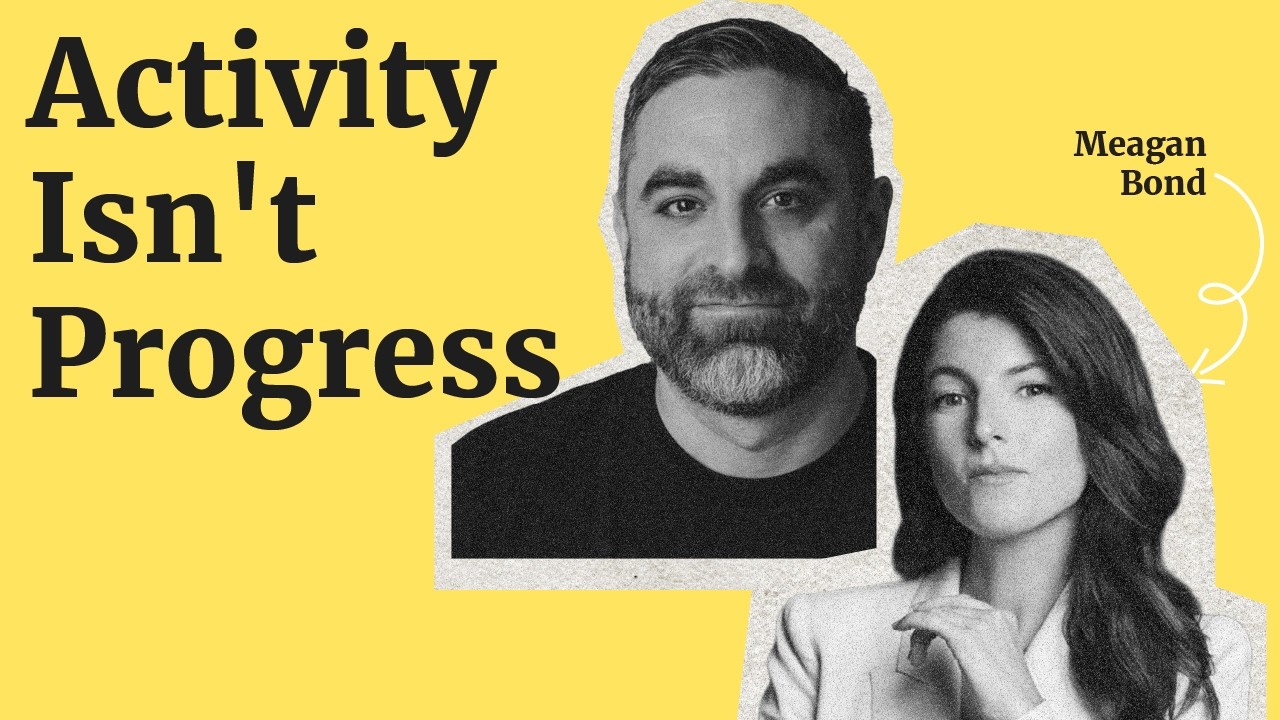
What You’ll Learn
- Why psychological readiness is more important than technical readiness during AI transformation.
- How AI exposes existing cultural weaknesses instead of creating new ones.
- Why managers who adopt AI without developing their teams can increase organizational burnout.
- The difference between automating work to eliminate people versus augmenting people to create more value.
- Why measuring AI usage tells you far less than measuring how work and performance actually improve.
- How culture becomes a long-term competitive advantage that technology alone cannot replicate.
Key Takeaways
- Culture is infrastructure—not decoration. AI adoption rests on whether people feel safe to experiment, fail, ask questions, and learn. Without that foundation, even the best technology struggles to deliver value.
- Managers determine whether AI creates momentum or resistance. High AI adoption paired with poor coaching creates more dysfunction than simple disengagement. Leaders must bring people along, not race ahead alone.
- Don’t mistake activity for transformation. Communication plans, town halls, and usage reports may create the appearance of progress, but real change shows up in behaviors, performance, and learning.
- Upskilling beats layoffs. Organizations create stronger long-term returns by using AI to augment people rather than simply reduce headcount. Investing in capability compounds over time.
- Measure outcomes, not prompts. AI usage is only a starting point. Better indicators include improved performance, expanded responsibilities, stronger decision-making, and new capabilities employees couldn’t demonstrate before.
- Truth builds trust. Leaders earn credibility by honestly acknowledging current realities instead of relying on polished change narratives that employees don’t recognize as true.
- Subcultures are data, not problems. Healthy team cultures can reveal practices worth scaling across the organization, while unhealthy ones highlight where intervention is needed.
- Curiosity is a leadership skill. Organizations improve transformation outcomes when leaders slow down, ask better questions, and understand their current culture before introducing new technology.
Chapters
- 00:00 — AI Exposes Culture
- 01:32 — Psychological Readiness
- 04:08 — Broken Systems
- 06:00 — The Manager Paradox
- 10:18 — Culture Infrastructure
- 12:22 — Change Management
- 17:30 — Measuring Success
- 20:36 — Leadership Identity
- 25:01 — HR’s Role
- 26:33 — Subcultures
- 30:23 — Upskilling People
- 31:35 — Honest Storytelling
- 35:14 — Where to Start
- 39:08 — Culture First
Meet Our Guest

Meagan Bond is the Founder and CEO of The Human Method, a culture transformation consultancy that helps organizations build human-centered workplaces where lasting change can thrive. With more than 20 years of experience leading culture transformation initiatives for Fortune 500 companies, she specializes in leadership, organizational development, and change management, helping businesses strengthen the cultural foundations needed for innovation and AI adoption. A sought-after speaker and executive educator, Meagan is known for her practical, research-driven approach to creating high-performing organizations where people and business outcomes advance together.
Related Links:
- Join the People Managing People Community
- Subscribe to Our AI Signal Newsletter
- Connect with Meagan on LinkedIn
- Visit The Human Method
Related articles and podcasts:
David Rice: A manager with high AI usage who doesn't develop their people increases burnout by twenty-six percent across the entire organization. They're more dysfunctional than a manager who's simply disengaged. Meagan Bond is the founder and CEO of The Human Method, and she works with organizations on AI transformation.
And on today's show, she and I are going to unpack why most rollouts are failing. It's not because of the technology. It's because organizations are layering AI on top of broken systems. We talk a lot about readiness on this show, tools, skills, infrastructure, but Meagan is focused on psychological readiness.
Do people feel safe experimenting, safe failing, safe operating in uncertainty? If that foundation doesn't exist, your transformation will stall. AI just exposes what's been broken all along. Culture isn't wallpaper you add after the rollout. It's infrastructure. And a ten-thousand person organization loses over four hundred and thirty million dollars a year to dysfunctional culture.
Now, add stalled AI adoption on top of that. Not good. So today we're covering why psychological readiness matters more than technical readiness, the manager paradox, high AI usage plus no development equals more dysfunction. Why culture is infrastructure, not an afterthought, and the actual dollar cost of skipping culture work.
I'm David Rice. This is People Managing People, and if you've been treating culture as something to address after your AI rollout, this conversation shows you why that approach is costing you millions. So let's get into it.
All right. So Meagan, welcome to the show. It's good to have you.
Meagan Bond: Thank you, David. It's good to be here.
David Rice: Absolutely. We talked before this a little bit, and I wanted to start our conversation here is, you know, we talk a lot about readiness in terms of tools, skills, things like infrastructure, but you're making a distinction around psychological readiness in particular. And, you know, obviously, I think we're all dealing with a little bit of a psychological challenge when it comes to AI to some extent.
I'm curious, what are organizations missing, in your opinion, when they focus too much on the technical side and not enough on sort of what people are actually dealing with?
Meagan Bond: We look at readiness, not so much-- When we say psychological readiness, we're not talking about like Jungian or Erikson or Freud.
We're not trying to go super technical with the psychology of the human psyche. What we're really looking at is the capacity to adopt and sustain and thrive through any type of change. And so psychological readiness is really asking, do people feel safe? And safe being, do they feel safe about experimenting?
Do they feel safe demonstrating curiosity? Do they feel safe trying something and failing? Because that is absolutely what it's going to take to really tether people to a new tool or to a new system or process. The ability to make mistakes, the ability to experiment, and the ability to operate within uncertainty, knowing that there's kind of a catch-all underneath of that uncertainty.
I look at that as the infrastructure. If that doesn't exist, then your transformation or your rollout or your new tool, whatever it is, it will ultimately fail, and at the very best, maybe give you a sliver of the profits promised.
David Rice: Yeah. It feels like we over-invest on sort of this idea of capability, but we don't ever ask if people are actually ready to try and pursue those capabilities, right?
Just because they can do something doesn't mean that they're ready to embrace it, doesn't mean that they want to do that, and that gap shows up as resistance and looks like incompetence, right? But even though it's not. And yeah, it just has an ongoing effect for These AI transformation efforts that we're just seeing stall out all the time.
Meagan Bond: Yes.
David Rice: You mentioned when we spoke before this that, you know, organizations are layering AI on top of broken systems. I think that's something that we see a lot. There's a lot of stuff that didn't work when there was no AI and we're just trying to make AI fit into that. I'm curious, what are some of the most common cracks that AI starts to expose in your experience?
Meagan Bond: Absolutely. I mean, there are so many. I mean, it's-- the cracks are... Let me rewind for a minute. What I think AI has done is it's pretty much shone a light on what hasn't been working all along. So AI is simply, to me, the next thing. When you have a dysfunctional culture and you bring in something as powerful and as groundbreaking as AI, which is apt to change everything within how an organization interacts and how people work together, when the infrastructure, when that foundation or that culture isn't right, that AI or that tool, that next thing, is going to highlight everything that's been broken.
So I mean, some common things are lack of trust, lack of vulnerability, lack of leadership. So one of the most interesting things that we're seeing as we work with organizations and as we really dig deeply into the data is when you look at a usage report, and you look at the managers that have the highest usage, if they don't also develop their people alongside that usage at the same time, they are actually more dysfunctional in an organization than a manager that is disengaged.
So I'll say it a different way, but a highly AI-interested manager that's only using AI, that's pushing it on their people without developing their people or upskilling them in any way, they are increasing burnout by twenty-six percent within the entire organization, and they are hurting the company more than a manager that is simply disengaged.
So it's things like that are showing up that are so massive and so crucial to this idea that we have to stop and take a break or take a breath and go back to culture first and look at how we can rebuild the pieces that are broken within our culture so that we can bring in new tools.
David Rice: Yeah I think manager preparedness, right?
'Cause you really become not so much of a disruptor in a positive way. You become just like a roadblock. If you're doing all this and you're not bringing your people along with you, you've gotta do it with trust, creating alignment, the right type of communication. These are all key pieces or you're just gonna become, I mean, the layer that gets removed, right which is a big fear for a lot of managers right now.
How do you feel like managers are in terms of preparedness for that challenge?
Meagan Bond: There's a few answers here. I mean, there's myriad of answers. I would say the two that come to me are, number one, I mean, managers aren't super prepared if the conditions aren't right. So one of the things that we found, it doesn't matter if you are naturally a super curious person, a born leader, really great at asking questions, really great at listening and developing people, and also incredible at just AI adoption in general.
You could be all of those things. If you are put into the wrong environment or a dysfunctional environment Those things aren't going to show up in a demonstrative leadership skillset. You are gonna show up as someone who isn't curious, as someone who isn't a strong leader, as someone who isn't bringing people along.
Because it's not how good or how strong someone is as an individual. When you look at the collective whole of how a company is supporting change, how a company is supporting their culture through AI, if the infrastructure—and I know I've used that word a lot, I'm gonna use it a lot more, but that's what I call culture infrastructure.
If the infrastructure isn't set for someone to be curious, to lead effectively, to bring their people along, it's not going to happen, and it doesn't matter how good that one individual is. So that's number one. And number two, and you didn't really ask this, but it's so fascinating to me, I have to use this question to touch on this.
My team and I have recently been doing a lot of studies on using AI to automate jobs. And so I, I think that can be tied to manager and leadership and what that looks like. And the reason we've done this is in our conversations with leaders, one of their big pushes often is, "Well, how many layoffs can we do if we bring in this tool?
What does the automation look like, and how quickly can we get people out and save money?" And it's fascinating to me because you have the option to automate, lay off, and save money, or you have the option to automate, augment, upskill, and transform. And what happens is when you automate and lay off, what people aren't looking at is...
I mean, we'll do the quick math. 10,000-person company. Say it's a 10% reduction in the workforce, and let's say conservatively each of these people are making $80,000 a year in salary. When you factor in severance, loss of work, low morale, the replacement of some of the people that you've laid off, because that inevitably will always happen.
You lay off too many people, you need to bring some people back. Lost knowledge. You may be saving $80 million on a, an annual board report, but you're ultimately losing about 130 to $250 million. So 130 to 250 versus an 80 million savings, I mean, there's a huge deficit there. Versus when we take the time to upskill people and we're really thoughtful about this, you know, in year three of that compounding interest of taking care of people, of upskilling people, of supporting the tool through people, we're looking at almost $100 million in savings.
So it is staggering when you look at the difference between let's use AI to get rid of people versus let's use AI to support the work. So a really long-winded way of coming back to your question, which is, you know, a really strong leader, a strong manager in this environment is going to say, "Okay, where are we reinvesting our time with this tool that we've brought in?
How are we upskilling our people? How are we helping automate more tedious kind of task-driven work so people can be more strategic? And how are we giving them the capabilities to be more strategic?" It all has to speak together, and that's really where you see the biggest ROI.
David Rice: Yeah. That's interesting. I love that you're, like, looking at that from a numbers perspective because, like a lot of us, it's very hard to calculate, right?
You know, sort of the trade-offs. I mean, we know that short-term thinking versus long-term thinking, but actually putting a number to it is often elusive. You mentioned there the infrastructure piece, too, and that's... I encourage you to keep using that word because I talk to a lot of leaders who, you know "We wanna encourage our people to experiment, to try new things, and see what they can do with the technology," and I'm like, "Did you do that before at all?"
Because if you never did, then, A, culturally, that's never gonna work. They're not just gonna suddenly pick it up and feel like they can run with it. And second of all, you don't even have the infrastructure in place of how to support people as they experiment, reward their successful experiments, help them learn from their failures.
You don't have any of that stuff in place, so why would you think that people are going to naturally just gonna start to experiment? They do not operate that way.
Meagan Bond: We train people how to behave through our culture. And so-- And it's the, you know, the dysfunction is, you know, the unspoken norms the things that we pick up along the way, the lack of leadership saying one thing and actually speaking to the things that they're doing.
You know, leadership not demonstrating the behaviors that they're asking to see from their teams or that they're committing to, and it's all of these things that are going on behind the scenes. It's that one person getting the courage to kind of speak up in a meeting and say something interesting and different and getting kinda their hand slapped by their manager or by their leader.
We train people in a lot of our corporate organizations, even though we're saying, "We want you to be creative. We want you to try and fail. We want you to play with technology and enjoy it and learn from it." To your point, we've never created those conditions to support any of those behaviors. So back to this idea of psychological readiness, people absolutely don't feel safe then to just completely change how they've been taught to show up for work.
David Rice: No, absolutely. What you've traditionally rewarded is what they're gonna continue to pursue because it's what they know. I wanted to ask, you know, a lot of leaders feel like they're doing change right. Because they followed a process or communication plans. They've downloaded some frameworks. They've got really tight, beautiful, constructed timelines.
But it often fails to create real alignment. And I'm curious, where do you see a lot of leaders and just leadership teams going wrong with this?
Meagan Bond: This is my favorite topic. Here's the thing that, and this is one of the main reasons I started this company, which we focus solely and largely. I mean, it's a vast, you know, job that we've taken on, but we focus on culture transformation as a whole, where you have a lot of people or a lot of consulting firms that focus on talent acquisition or learning and development or a sliver of something, which is great.
All of these things are needed. But what we really need to do is look at the puzzle of an organization and refit the pieces together to tell the story and to show the full picture. And what happens when we affix ourselves to a process or a change management methodology? We are treating culture as an appetizer when really it's the entire meal.
And we're looking at a piece of something. Okay, we need to roll out this new tool. Let's slap on a change management process so we can get adoption and get people to use the tool and done. The fatal flaw in that is we're not looking at what we talked about earlier, all of the little pieces that have come together to make up that culture, to make up that infrastructure to support that one isolated experience.
So what happens is we enact a change management philosophy as a check the box exercise. You know, we've created our communications, check. Okay, our CFO has talked about this three times at a town hall, which I call town hall theater, 'cause we're not doing anything, so check. We've created a burning platform.
I don't even know what that means. I... And then when it doesn't work, 'cause 70 to 88% of all of these kind of change management supported initiatives will fail and have failed, we blame the tool, or it's a technical problem, or it's a, an individual problem. We're not actually looking at the fact that we haven't addressed these deep-rooted nuances within the culture that certainly just didn't support this change.
So I don't believe you need change management. I don't believe you need a certain process for something to happen. I think that's a way to kind of handcuff people to a very rigid way of maybe seeing very small bitty results that really don't have a meaningful impact over time. I think it's more going back to looking at your company as almost as a house.
Culture is the foundation of that house. So you can bring in fancy consulting firms and pay them a lot of money to help you renovate your kitchen or build a second floor. But if the foundation is broken or isn't strong, those initiatives or renovations are going to fail, and maybe some of them will stick at best But once you have that foundation in place, you can do whatever you want, and you don't really need to spend a lot of money to drive adoption at that point because you have the bones that are apt and ready for change, for new things.
Then it more becomes training and showing people how to do the work rather than getting them on board with the work.
David Rice: Yeah. No, it's all great points. I couldn't agree more about the culture piece. This is where it's all gonna come from. I think another little bit of a common trap that I see is a lot of leaders start to confuse activity with progress.
And so we're doing something. We're putting this change management thing into place, and then those efforts get big and sort of out of control. The more people come in, the more complicated they get. And it's well, we're following these steps, but are you actually shifting anyone's behavior? You know, then you get surprised when nothing really changes.
Well, we undertook this huge change management approach, and it was like, well, yeah, but you still didn't change the underlying issue, which is culturally, this is the way it's always been, so this is what people understand. There's too many times in organizational reality where we get told one thing, but what you see and experience is something entirely different.
And if that's happening and you've got sort of like this big effort that a lot of people don't necessarily understand or feel like it's relevant to them, or it always feels like it's somebody else's job, it's harder to live it. And so, that cultural piece is going to be the big thing because that's what they're living every day, whether you like it or not.
And if that's part of it, then they can actually experience it in a way that they can internalize. But if not, it's gonna sort of feel like this amorphous thing that's around you, but not necessarily your thing. I think that's one of the problems that a lot of people run into.
Meagan Bond: Well, and I think to that point, I mean, it's kind of what we were talking about earlier.
Just the fact that we're looking at a usage report to determine-- I mean, that's our measurement of success with adoption is we are using it, is to me, the word is ridiculous because it's-- there's so many other things that we could be looking at, and we don't because it's not easy or because it's layered.
But I mean, I find data such as performance management really interesting. I love to look at performance management reports that go back five years and kind of look at, okay, mid-performers that have moved to high performers or high performers that have left the company or mid-performers that have dropped to lower performers.
Things like that I think are really interesting 'cause now we're looking at the quality of the people and how they're showing up and how the culture is shaping them over time versus a tool is being used. So I think to your point, we further reinforce this dysfunction, if you will, by measuring the wrong things and looking at things that aren't actually sustainable and don't actually lead to a higher significant ROI.
David Rice: No, I couldn't agree more on usage numbers. It's one of those things like usage can mean anything. I don't actually know what-- Does that actually tell me how, what you're doing? I would look more at something like new ways you challenge yourself. So you did X, Y, and Z, you'd never done those before. How did AI support you?
And then have that as part of your performance management conversation because if the person is using it in their work in an engaged and meaningful and intentional way, what we tend to find is that we all can do things that we didn't really do before, or you're freed up to do things that you were-- didn't do before because it's now doing this.
And so it's break that down for me, show me what you're doing, and we can have a performance management conversation that's a little bit more meaningful and targeted around that. But usage alone, I don't see-- What does that mean?
Meagan Bond: You know what I mean? Usage alone-- And it's also putting people in a box.
It's saying you're not anything beyond your ability to, to use- Prompt ... this tool. Yeah, to prompt. You're nothing beyond a prompt, and this is where we get into the dangerous place of using technology as a master rather than a servant. And we're letting it lead us, and thus we contort our folks or our teams to adapt and fit to the technology rather than leveraging the technology to support good work.
David Rice: No, that's exactly it. We can use this for anything that we want. And I always come back to everything with this technology is a choice. We're all choosing what to do and how to do it. It's not actually dictating anything, but we have to sort of mold what we do to fit such a powerful tool. One thing that we touched on, you know, beforehand is that AI isn't actually-- it isn't just changing tasks.
It's forcing people to rethink who they are professionally, and this kinda gets builds off of what we were just talking about, right? I'm curious, do you think leaders are sorta underestimating the emotional and identity shift that comes with that? And is that because they're not equipped to, or is it just an uncomfortable thing that nobody really wants to talk about?
Meagan Bond: Oh my gosh. I love-- Okay, so many things. I think leaders are aware of this. I mean, if we think of our C-suite executives, and we talk about leaders a lot on, you know, as we do the type of work that you and I do, and we focus on the things we focus on. You know, it's really easy to kind of Over-index on the people and what's going on in the culture and not think about where is the leadership team coming from?
Where is the CEO coming from? And, you know, these people are smart. They know. I think the challenge is there are so many conflicting priorities. I think the challenge is that you have a board or you have somebody above the CEO saying, "We need X amount of new AI initiatives by end of year. We need to see the impact of AI by end of year."
And, you know, we're asking for things that are kind of like we've created conditions within our corporate environments to not support people to be at their best. We're also not supporting our leadership teams to be at their best either. And so while they're aware, I think the challenge for a lot of leaders, and I know this from working with many CEOs and having these really vulnerable conversations, they have also been trained and taught that as they've worked their way up in organization, that they have to behave in a certain way, that they have to respond in a certain way, that they have to some-somewhat kind of fortify themselves and be cold and navigate people in a certain way.
So they know, and I think that many of them do want to do something about it. I think the challenge is how do you kind of cipher out all of these disparate pieces and really kind of focus on what is our priority and how do we really double down on doing something that's not the norm and that hasn't been the norm for a really long time.
And that can be scary. But when we look at organizations that are going to last over time, the data tells us the story already. It's really about building into your culture is building into your future. Building into AI only and building into a usage report is building into the right now. And if you have a CEO who wants to get promoted or go on to a bigger company in the next one to two years, well, this is a great way to act.
But if you have a CEO who's really interested in investing in a long-term company, who's willing to invest, you know, five to ten million in a culture transformation, in upskilling their people, the ROI year over year on that is gonna be exponentially larger than any investment that they're gonna make right now.
But it does take time, and it does take attention. And I think that's the missing piece, is people don't have the time. There's too much pressure on them.
David Rice: Yeah, it's interesting 'cause we-- obviously, we talk about leadership behavior quite a bit. And the thing about it is, you know, historically, I mean, how my whole career, you got to that point, was by knowing things, by creating confidence, right?
By sort of, projecting a sort of persona or aura that would hopefully create confidence around you and also by knowing the answers to difficult questions or at least having really deep insights into how we might tackle a key challenge. And it's gotta be disorienting for a lot of leaders because this period in time is essentially asking you to be willing to not know and be comfortable and share that.
That is, again, just everybody else. You're challenging their identity of what got them there, what their success was, you know, what behaviors they were rewarded for. And so the one thing about it, though, that I always come back to is culture is essentially mirrored and laid down in leadership behavior.
You can put all the things in the handbook and on the walls or whatever you wanna do. It doesn't really matter. They're gonna watch how you behave, and they're gonna take their cues from you. And so If you don't experiment yourself, if you're not figuring out how this can help you and being transparent about that, if you're not openly communicating all the time about what you see that five to 10 year, that multimillion dollar investment panning out to be, it's gonna create problems.
It's just gonna create more confusion. And yeah, there's this sense, there's this growing gulf between leaders and employees, and this is not helping. This is just pushing more stuff into that gulf is how I feel.
Meagan Bond: Well, and it's continuing to highlight what has been broken for so long. And one of the really smart first steps that a CEO could take right now is getting in lockstep with their head of HR.
When we look at companies that are figuring this out and doing it well... And when I say doing it well, I don't mean they have really high AI adoption and they have the coolest new tools. I mean, they have infused their people and their AI tools to work together in a way that they are seeing really incredible results really early on in bringing in a new tool, which is not the norm.
But when a CEO can lock in with their head of HR, who has been trained and who has a whole background and deep skill set in the things that we are talking about That person, their head of HR, can really support and guide them through this process. And when they empower them and give them the agency, invite them into the room before decisions are made, you know, lean on them, leverage them and the HR team to support this work in creative and innovative ways, that's really a great first step.
David Rice: Yeah. You know, in large organizations, you often have subcultures, you know, and need team culture that you've got to account for, not just org culture. You see some leaning in, some are maybe resisting a little bit. Talk to me about that fragmentation and sort of the impact that it has when you're trying to drive transformation and how you can get everybody on the same page, hopefully.
Meagan Bond: Yeah. It's an interesting point because, you know, every organization has subcultures, and we work with a lot of finance firms that are going through mergers, so we see subcultures on an exaggerated level, where we're bringing in maybe 18 companies a year. Every company has their own unique identity within this larger firm that they've merged into.
But here's the thing about subcultures. I think we're really quick to want to get everyone all on board in the same, kind of walking down the same path, and we do want to do that to a degree. We wanna have a general kind of North Star and a place that, that everyone in the company is kind of marching toward together.
We want the CEO and leadership team to be communicating that and leading that charge. We want managers and employees to be headed in that direction as well. And then you have, you know, the culture within certain teams throughout the organization. And I think to a degree we need to protect subcultures because that is your unique identity within, you know, I would use the metaphor of a family unit.
So you have the larger family, and, you know, everyone loves each other and gets together for Thanksgiving or whatever it is, but then you have your smaller family that is more nuanced, and you do more together, and you have more experiences together, and you share the home. And what does that look like?
And I think that it's really important that- We learn the subcultures within our organizations. We have to have awareness to it. We can't kind of overlook it or turn from it. We want to have an understanding of what is going on in our company. We want a healthy current state understanding. But once we understand what's happening, I like to ask, "What can we take from these subcultures that might be able to be infused throughout the company?
What's really working? What's something unique to these subcultures that we need to protect that will only work within these particular family units?" And then, "What are the things that are really toxic?" Often, you'll find that there are groups within every company where there's an us versus them mentality.
So you have the manager of a team basically saying, "Well, you know, my boss told me we have to do this. We have to do this. I really don't want to. It sucks. I'm probably all going to get fired." And you definitely have those people, and you have your internal influencers. So you have to kind of uproot the things that aren't healthy and kind of tackle that.
But I think it's really important to not only allow space for subcultures to thrive in positive ways, but to also understand what's making them thrive and to use that as a data point and a way to learn more about how your company works rather than as a point of friction.
David Rice: Yeah, no, I couldn't agree more.
And I think it's okay. Leaders kind of get a little bit comfortable with the idea that not everybody's going to be aligned at the same time. Change doesn't move evenly. That's kind of normal. If we look at major changes in society, for example, it happens in waves or a little bit here, a little bit there, and then this group sees what happened over there, and then they sort of adapt.
It's the same thing in an organization. You're going to get those pockets of momentum and pockets of resistance, and they'll sort of, over time, as the benefits become clearer to a certain group, they may say, "Okay, maybe, you know, we got to try this," or, "We got to keep up." Totally normal. But it's, it's-- I think it's a hard thing to navigate right now because there's just this narrative of urgency.
You got to go. You're going to be left behind. Everything's changing so fast. And all that's true, but again, this comes down to choices. We are choosing for that to sort of be the environment, and you can slow it down and speed it up as best, you know, fits your business. I think when we talk about responsible AI, I think that's part of what we have to start thinking of as well.
Meagan Bond: I agree completely, and I think to further that point, it goes to upskilling. We want things right now. When we want things right now, that is why 70 to 88% of all transformations and initiatives fail. When we take the time to upskill and bring our teams on board, and to your point, the people that might be lagging a little bit are slow to kind of get on board.
Structured training delivers six times your return on investment, while turnover costs of those people leaving or of you even getting rid of those people is an extra 200% of someone leaving. Bringing in someone new, it's an extra 200% of that first person's salary. So it's so much more lucrative to keep people, to protect them, to upskill them, to help them.
We save $36,000 for every employee that we keep and upskill versus choosing to get rid of our folks. And there's just-- I know I'm citing a lot of numbers, and I'm not actually a numbers person. I have to be, but I don't usually go to the numbers first, but it's just the fact that the numbers are so staggering that, you know, I would be remiss to not share my learnings that support everything that we're talking about.
David Rice: We talked a little bit about narrative reframing as a starting point, and maybe not in the way most people are gonna think, right? I'm curious, where do leaders go wrong when they try to, you know, sorta tell a better story about change?
Meagan Bond: Absolutely. When it's theater and not genuine. I think that, again, we understand these basic concepts.
I think that most leaders that have made it to the C-suite have the understanding that we need to tell a story. We need to bring people along. We need to communicate. We need to train people. We need to upskill people. Where it breaks down, from what I've seen, is when, kind of going back to our earlier chat about process, we get so fixated on hitting certain bullet points, covering certain themes, making sure that our agenda is known throughout the story, and it's "Okay, we've told the story.
We're done. It's been delivered in a town hall. We've sent a mass communication email through our comms person. We're good. Why aren't people getting on board? Oh, it's our employees. They're just not good." And I think that we know that's not true either. I think the leaders know that, I think, but it's easier to label and kind of blow things off- than to actually sit with what's the reality of what's happening.
So I think that the way to tell a story, yes, we do need to tell a story, but we first need to understand what our current state is. That takes time. Not the current state that we like to believe we're sitting in, but what is actually happening in our culture. What is the real culture in my organization?
We also need to align leadership. You know, oftentimes you have really smart, really diverse people sitting on an executive committee team, and they are not getting along. I've never walked into an organization where every member of the EC is just perfectly getting along and supporting each other and collaborating beautifully.
And if there is someone out there listening that says, "That's my company," please find me 'cause I wanna take all of your tricks and share them with the world 'cause it's amazing. But what you often see are executive teams are not aligned. They are in conflict. They have conflicting priorities. So when you have that much tension in the room with the, you know, six to 10 to 12 people leading the company, that is going to cause then layered friction and tension throughout the organization.
And so I think we need to be really thoughtful about these pieces And kind of figure out how to iron out these pieces before we can even begin to tell the story. Because if not, the story becomes dishonest.
David Rice: I love that you started with truth because storytelling without truth, it doesn't really resonate, right?
So when you're doing a retro and you kinda sugarcoat the reason a decision was made or what the results were, everybody in the room knows it. Everybody in the room can feel it, and then they immediately start to kinda like either tune out or just You know, if they can't recognize their reality in the r- in the narrative, they don't buy it.
And so, yeah, you have to start with what's actually happening and, you know, what you really want the future of it to look like, not what you wish was happening, not how, what ideal states or anything like that. It's gotta be just a candid assessment of what has happened, what we think will happen. That's gonna be a more effective story in this context.
Yeah, I couldn't agree more. But I was really glad that you started with that. If an organization realizes that they're not ready, whether it's psychologically or culturally, for what AI requires, where do they begin sorta slowing everything down to meet the moment?
Meagan Bond: Great question, and that will be a lot of organizations.
I think that the first step has gotta be a pulse check on... I mean, kinda to my earlier answer, it's gotta be a pulse check on what is actually happening. And from there you can measure, okay, there are certain things that are broken, but I think that, you know, potentially we could kind of mend these pieces while concurrently bringing in a new tool, and maybe we can make it all work together and use the tool as leverage to bring people together.
And then in other instances it's "No, halt. You have a lot of culture work to do. There is a lot of dysfunction here before we can even begin to bring in an AI tool." And so I think that it's gotta start with that current state assessment. You have to know where you're at to know how you need to respond.
So conducting that first, and you can do that through listening tours, through talking to people. I encourage, you know, leaders to get really curious The power is in the nature of the questions you're asking, not even the decisions you're making. So if you can learn to ask really good questions, oftentimes you save yourself a lot of money making bad decisions or decisions that didn't actually have the ROI you expected because you didn't take the time to ask the big question.
So getting really good at being curious and showing interest and asking questions and slowing down, I mean, that's where you start. It's these basic human skills that we just fast-forward through to get something done. And look, I know the pressure people are under. I understand that right now we are celebrating companies for having, you know, the most advanced AI systems or AI tools that kind of have worked together in ways that other companies haven't even come close to figuring out yet.
And they are doing more, and they are seeing an ROI, and they are... You know, you can look at the market, like their results are skyrocketing. And so of course we're gonna look at that and reward that and support that and boards are gonna push CEOs to produce more of that. Wear the sexy, cool, shiny AI tools and, by the way, figure out the people in the background.
But here's the truth of all of this. Culture isn't wallpaper. It's not something that you do after the fact or you fix after you've done the cool sexy thing. You know? It's not like you build the house... Back to my house metaphor. You don't build the house and then put in the wallpaper and say, "Oh, this is fun."
"Oh, I like this color Culture is the infrastructure, and so we're getting really confused about culture's role in all of this. And so it's just inevitable. Whether we like it or not, we have to fix the culture before we do these things if we want these things to work. If we don't want them to work and we want it to look really good for a year, then absolutely, let's keep doing what we're doing.
But if we wanna have sustainability, you've got-- we have to stop and take a pause.
David Rice: Yeah, I can't agree more. I think where there's this tension is that in the eyes of a lot of folks, leaders, boards, thinking about the culture feels like you have to go backwards to fix something, right? But then there's this time tension where it's like we don't have time to go backwards.
And the truth is that skipping the steps will just slow everything down anyways. So you're gonna go forward, but just really slowly. Whereas if you went back, fix this foundational element, you can move forward much quicker. And so you can get up to speed and then maintain a speed that is on par with any of your competitors.
But you've got to address this first, otherwise it's not gonna happen. And so then it's-- we're back to that idea of short-term speed versus long-term success, and too much of what we're seeing out there is just short-termism.
Meagan Bond: Absolutely. And do you know that even just fixing culture, even if you weren't rolling out...
Say you had a CEO that said, "I'm gonna keep my company exactly the way it is for the next two years, and we're not changing anything. We're not bringing in any new tools. We're just keeping ourselves status quo." Fixing that culture, coming in and doing a culture transformation, will increase productivity by thirty to fifty percent.
So culture transformation alone is a fantastic idea. It's the quickest direct impact to your bottom line. Then layering the technology and the tools and upskill your people to support the technology and the tools. And what happens is when I talk to, you know, a CFO about my company going in, and, you know, if it's a ten thousand person organization we're supporting, you know Okay, $5 to $10 million, one and done, we fix your culture.
Or you can continue to lose, and this is a very conservative estimate 'cause when we get into companies, my senior analyst always shows them that it's actually significantly more than this, but on average, you can continue to lose over $430 million year over year to a dysfunctional culture. And then let's throw in stalled adoption technology, paying for new technology that's actually not working, that's not giving you the ROI that you expect it, then we're actually going into the high millions, and sometimes the billions that you are losing every year to culture dysfunction.
You know, a 50,000-person company or bigger is losing at least $2 billion a year in dysfunctional culture. So it's, there is no longer a conversation of, "Oh, it feels good. It's happy. We just, we're HR, and we love people, and it's nice to like our jobs." That is nothing to do with it. I mean, it is nice, but it is all a numbers game, and right now, the companies and the leaders that are going to sustain through this period of time are the ones that are going to focus on culture because what will happen is their competitors will burn through talent over the next five years, and our competitive advantage is going to be culture.
It's not going to be technology 'cause that we can replicate. Any company can do what you're doing within the next one to two years. But to have that culture, to take the time to invest in your culture, to have people that are staying with you, that aren't attriting, that are, you know, continuing to work harder, that are continuing to adopt, that are continuing to embrace new technologies, that's a game changer right now.
David Rice: Absolutely. Well, Meagan, thank you for coming on the show today. I really appreciate you giving me so many time, and this was a great conversation.
Meagan Bond: Thank you. It was great to talk to you, David.
David Rice: Absolutely. Listeners, until next time, I want you to, if you haven't done so already, head on over to peoplemanagingpeople.com/subscribe. Get signed up for the newsletter. You'll get all the latest articles, podcasts, you name it, that we generate or create straight to your inbox.
And yeah, until next time, the only culture war you should be concerned with is the one inside the walls of your organization.

