

Os serviços de empregador de registo na Bulgária permitem que a sua empresa contrate localmente através de um prestador que emprega trabalhadores em seu nome e gere a administração laboral. A opção certa depende de saber se precisa de uma entidade local, de uma cobertura mais ampla da UE ou de uma forma de testar o mercado com uma contratação. Este guia compara vários prestadores para que possa avaliar os seus modelos de contratação, a coordenação salarial, a integração e o apoio contínuo de recursos humanos.
Why Trust Our Software Recommendations
6,700+
Reviews
20
Industry experts
16+
Evaluation factors
14
Years
Our team has been testing and reviewing software since 2012. As HR experts ourselves, we know how difficult—and important—it is to choose the right software.
For this guide, we evaluated tools using hands-on testing and independent research, scoring tools using our selection criteria. We also draw on insights from industry thought leaders and practicing HR experts.
Our reviews reflect our human editorial judgment, not a sales pitch.
Expert reviewers:
- Phil GrayCOO
 Kim BehnkeHR Tech Editor & Analyst
 Josh BarkerPeople Ops Manager

Tabela comparativa: serviços de empregador de registo na Bulgária
Compare lado a lado os preços e as especificações dos serviços de empregador de registo na Bulgária que entraram na minha lista restrita.
| Tool | Best For | Trial Info | Price | ||
|---|---|---|---|---|---|
| 1 | Best for linking recruiting with EOR hiring | Free demo available | From $599/user/month | Website | |
| 2 | Best for founders hiring through local EORs | Not available | From $19/contractor/month | Website | |
| 3 | Best for Bulgarian hiring via partner network | Free plan + free demo available | From $199/user/month | Website | |
| 4 | Best for hiring in Bulgaria via a direct local entity | Free demo available | Pricing upon request | Website | |
| 5 | Best for EU-entity-backed hiring in Bulgaria | Free demo available | Pricing upon request | Website | |
| 6 | Best for multi-country EU payroll compliance teams | Free demo available | From $499/employee/month | Website | |
| 7 | Best for hiring in Bulgaria via owned local entity | Free demo available | From $599/user/month | Website | |
| 8 | Best for no-lock-in Bulgarian market entry | Not available | Typically from ~$500/employee/month (custom) | Website | |
| 9 | Best for hiring in Bulgaria via own local entity | Free demo available | From $699/employee/month | Website | |
| 10 | Best for market-testing Bulgaria with one hire | Free demo available | From $499/employee/month | Website |


Serviços de empregador de registo na Bulgária: avaliações
Apresento abaixo os meus resumos dos melhores serviços de empregador de registo na Bulgária que entraram na minha lista restrita. As minhas avaliações abrangem os modelos de contratação de cada prestador, o apoio à gestão salarial e os serviços de conformidade, para ajudar a encontrar a opção certa.
 Best for linking recruiting with EOR hiring
- Free demo available
- From $599/user/month
Visit WebsiteCustomer Rating:4.9/5
Deel Hire lets users add new hires individually or in bulk from the directory. Deel Hire is a global hiring platform that connects recruiting, EOR employment, contractor management, and US PEO into a single workflow, covering hiring, contracts, payroll, and compliance across 150+ countries.
Who Is Deel Hire Best For?
Deel Hire suits early-stage startups and founders who want to test the Bulgarian market quickly without committing to a local entity or long-term contract.
Why I Picked Deel Hire
I've included Deel Hire in my top picks because it's one of the few platforms that connects recruiting directly with EOR employment in a single workflow. Where most tools treat sourcing and hiring as separate steps, Deel Hire moves a candidate from offer to onboarded Bulgarian employee without manual handoffs between systems. I also like that its built-in ATS can post roles, screen candidates with AI, and then trigger an EOR contract for Bulgaria, covering local payroll, social insurance, and workplace accident coverage, all without you needing a local entity.
Deel Hire Key Features
- Localized benefits administration: Deel enrolls Bulgarian employees in statutory Social Security and Workplace Accident Insurance and offers optional private healthcare through Unisure or Allianz.
- Employee self-service payslips: Employees can download itemized payslips showing gross salary, tax withholdings, net pay, and a monthly-updated leave balance.
- Month-to-month EOR pricing: Deel charges no long-term commitment, letting you add or exit Bulgarian headcount without a fixed contract term.
- 250+ in-house compliance experts: Deel's internal team handles Bulgarian tax, payroll, and local labor law on your behalf, without relying on third-party advisers.
Deel Hire Integrations
Deel Hire offers native integrations with Google Workspace and Microsoft Teams for interview scheduling. It also supports REST APIs, webhooks, MCP, and CLI access for custom integrations.
Pros and Cons
Pros:
- Users praise cross-border payout convenience
- Month-to-month terms suit market testing
- Recruiting flows into Bulgaria EOR onboarding
Cons:
- BGN payroll handling remains unclear
- Bulgarian termination guidance remains outdated
Learn more about Deel Hire: Best for founders hiring through local EORs
- Not available
- From $19/contractor/month
Visit WebsiteCustomer Rating:4.5/5
HireGlobal's dashboard tracks worker onboarding and payment schedules. HireGlobal is a global employer of record service, backed by Toptal, that lets you hire international employees without setting up a local entity—covering contracts, payroll, taxes, benefits, and employment lifecycle management across 180+ countries through a network of local EOR providers.
Who Is HireGlobal Best For?
HireGlobal suits startup founders and early-stage teams who want to hire internationally without the overhead of setting up local entities.
Why I Picked HireGlobal
HireGlobal earns its spot on my shortlist because of how it approaches international hiring through a network of vetted local EOR providers, which matters when you're expanding into a market like Bulgaria without a legal entity on the ground. I like that it handles the full employment lifecycle, from locally compliant contracts and payroll to termination notices and severance, through whichever local partner covers that market. That multi-provider model means you're not locked into a single arrangement if coverage or policies shift.
HireGlobal Key Features
- HRIS platform: Manage hiring, payroll, benefits, and compliance for your global workforce in one centralized platform.
- Multi-currency payroll processing: Run payroll across 180+ countries with support for 50+ currencies through a consolidated invoicing system.
- Compliance documentation support: HireGlobal provides supporting documentation if a government authority inquires about a worker's compliance status.
- SOC 2-certified data security: The platform holds SOC 2 Type 1 and Type 2 certifications and uses AES-256 encryption to protect workforce data.
HireGlobal Integrations
HireGlobal has one documented native integration with TopTracker for time tracking, invoice approval, and worker payments.
Pros and Cons
Pros:
- Multiple local EOR partners widen market coverage
- Reviewers describe international payments as smooth
- Reviewers praise responsive cross-border hiring support
Cons:
- No named Bulgarian employer or local partner
- Bulgarian labor-law processes aren’t documented
Learn more about HireGlobal: Best for Bulgarian hiring via partner network
- Free plan + free demo available
- From $199/user/month
Visit WebsiteCustomer Rating:4.5/5
RemoFirst lets users review and approve pending employee payroll in one place. RemoFirst is an employer of record platform that hires and pays Bulgarian employees on your behalf—without requiring a local entity—and manages payroll, statutory contributions, employment contracts, and termination through an in-country partner network.
Who Is RemoFirst Best For?
RemoFirst suits startups and early-stage companies that want to hire in Bulgaria quickly, without committing to annual contracts or minimum headcounts.
Why I Picked RemoFirst
I've included RemoFirst in my top picks because its partner network model lets you hire in Bulgaria without setting up a local entity, which is genuinely useful when you're testing the market or making your first hire there. RemoFirst handles locally compliant employment contracts, payroll calculations including overtime and bonuses, and statutory contributions like pension and health insurance on your behalf. I also like that there's no minimum headcount or annual contract, so you can bring on a single Bulgarian employee without a long-term commitment.
RemoFirst Key Features
- Visa and work permit support: RemoFirst coordinates documentation and applications for work authorization in 85+ countries, including Bulgaria's EU Blue Card route for non-EU hires.
- Global payroll aggregation: Clients can consolidate international payroll into a single payment, with invoicing available in multiple currencies including USD, EUR, and GBP.
- Dedicated account manager: Each client gets an assigned account manager alongside 24/7 support and an embedded platform chat for HR queries.
- HR integrations: RemoFirst connects natively with Workday, BambooHR, and ADP Workforce Now to sync workforce data across your existing HR stack.
RemoFirst Integrations
RemoFirst offers native integrations with Workday, BambooHR, ADP Workforce Now, and GoCardless for HR data synchronization and payroll funding. API availability isn’t publicly documented.
Pros and Cons
Pros:
- Reviewers praise responsive account support
- No headcount minimum suits first hires
- Hire Bulgarian staff without a local entity
Cons:
- Reviewers report disputed termination settlements
- Bulgaria payroll currency guidance conflicts
 Best for hiring in Bulgaria via a direct local entity
- Free demo available
- Pricing upon request
Visit WebsiteCustomer Rating:4.8/5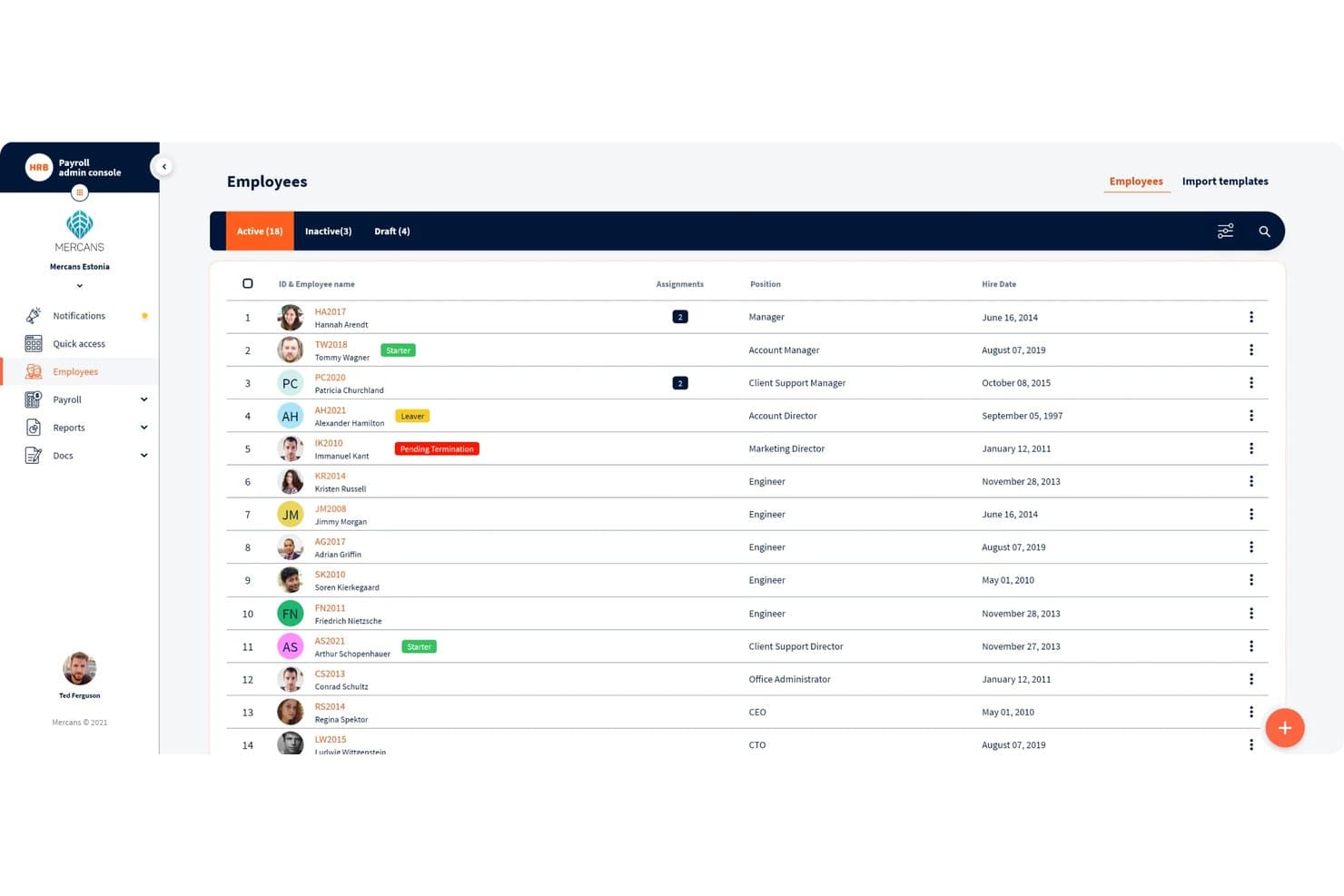
Mercans lets users manage and track all active employees in one place. Mercans is an employer of record platform with its own legal entity in Bulgaria that covers employment contracts, payroll, statutory benefits administration, tax and social security remittance, contractor management, and visa sponsorship for non-EU hires.
Who Is Mercans Best For?
Mercans is a strong fit for compliance-focused HR and payroll teams that need direct, entity-backed employment in Bulgaria without subcontracting to local partners.
Why I Picked Mercans
Mercans earns its spot on my shortlist because it runs its own legal entity out of Plovdiv, meaning your Bulgarian hires are employed directly by Mercans, with no subcontracted local partners in the middle. I particularly like that it covers the full compliance picture, including Labour Code contract requirements, severance calculations, and Labour Inspectorate approvals for protected-category dismissals. It also handles visa sponsorship, including the Single Permit and EU Blue Card, which matters if you're placing non-EU talent into Bulgarian roles.
Mercans Key Features
- HR Blizz self-service portal: Employees can access payslips and personal details, while managers handle leave approvals, time and attendance, and expense submissions through the same platform.
- Statutory benefits administration: Mercans manages social security (NSSI) and health insurance (NHIF) contributions, along with leave entitlements and the length-of-service bonus.
- Workday and SAP SuccessFactors integration: HR data syncs bidirectionally between HR Blizz and your existing HCM via REST APIs, with Mercans managing the connection.
- GDPR-aligned data security: Mercans holds SOC 1 and 2, ISO 27001, and ISO 27701 certifications, with EEA-approved Binding Corporate Rules covering cross-border data transfers.
Mercans Integrations
Mercans documents two integrations: Workday via a two-way REST API connection and SAP SuccessFactors. Its Workday connector is listed in Workday Marketplace, while the API-first G2N payroll engine supports custom connectivity.
Pros and Cons
Pros:
- HR Blizz supports payslips and leave requests
- Reviewers praise local labor-law knowledge
- Direct Bulgarian entity avoids local subcontractors
Cons:
- Some reviewers report slow support responses
- Payroll currency references conflict across Bulgaria pages
Learn more about Mercans: Best for EU-entity-backed hiring in Bulgaria
- Free demo available
- Pricing upon request
Visit WebsiteCustomer Rating:4.3/5
Safeguard Global tracks contractor spend and expenses across categories. Safeguard Global is a full-service employer of record platform that covers Bulgarian employment contracts, locally compliant payroll in EUR, statutory benefits administration, and tax and social security remittance—without requiring you to set up a local entity.
Who Is Safeguard Global Best For?
Safeguard Global is a strong fit for HR and compliance teams at mid-sized companies that need to hire in Bulgaria as part of a broader EU expansion, backed by owned local entities across the region.
Why I Picked Safeguard Global
I've included Safeguard Global in my top picks because it operates its own Bulgarian entity, Global PEO Services (Bulgaria) EOOD, which means your workers are employed directly rather than through a third-party partner. I find that especially valuable when hiring across the EU, since Safeguard holds owned entities in roughly 20 European countries. Its Bulgaria coverage includes statutory benefits administration, compliant termination support under the Labour Code, and monthly payroll in EUR.
Safeguard Global Key Features
- Worker classification quiz: An interactive tool that evaluates whether your Bulgarian worker should be classified as an employee or contractor before you hire.
- ChatSG AI assistant: An AI-powered Q&A tool that answers country-specific HR and employment law questions, including Bulgarian Labour Code rules.
- Supplemental benefits administration: Optional benefits beyond statutory requirements—such as private medical cover, life insurance, and supplementary pension—sourced and administered through the EOR.
- Spend analytics and payroll reporting: Dashboards that break down labor costs, payroll taxes, and headcount by country, currency, and contract type across your global workforce.
Safeguard Global Integrations
Safeguard Global lists marketplace integrations with Workday and Paycor. Workday’s profile includes PECI, Workday Pay Slips, and Workday Accounting.
Pros and Cons
Pros:
- Listed local entity supports direct employment
- Reviewers praise knowledgeable, responsive support
- Detailed local labor-law guidance
Cons:
- Conflicting contribution rates complicate cost estimates
- Reviewers report inconsistent support response times
Learn more about Safeguard Global: Best for multi-country EU payroll compliance teams
- Free demo available
- From $499/employee/month
Visit WebsiteCustomer Rating:4.4/5
Papaya Global centralizes employer cost analytics across countries and teams. Papaya Global is a global employer of record platform that covers employment contracts, payroll processing, statutory benefits, tax remittance, and compliance management across 180+ countries, including Bulgaria.
Who Is Papaya Global Best For?
Papaya Global is a strong fit for mid-size to enterprise HR and payroll compliance teams managing employees across multiple EU countries from a single platform.
Why I Picked Papaya Global
I've included Papaya Global in my top picks because it's built for HR and payroll compliance teams running multi-country operations across the EU from one platform. I particularly like its named compliance leads, who flag regulatory changes in Bulgaria and other markets before they take effect, plus its AI-powered compliance engine that tracks employment law across 95+ jurisdictions. Its documented coverage of Bulgarian statutory contributions, leave entitlements, and termination reporting rules gives compliance-focused teams a clear, structured foundation to work from.
Papaya Global Key Features
- Statutory contributions tracking: Papaya documents employer and employee social security, health insurance, and income tax rates for Bulgaria with specific contribution percentages.
- AI-powered contract generation: Papaya One auto-generates country-specific employment contracts, with every output reviewed by a compliance specialist before delivery.
- Multi-currency payroll funding: Fund payroll in 15+ currencies and pay out in 130+ currencies, with an FX Match Guarantee through OnePay.
- Workforce analytics dashboard: Workforce OS delivers gross-to-net reporting, journal entry automation, and BI analytics across all active employee countries in one view.
Papaya Global Integrations
Papaya Global offers integrations with NetSuite and Expensify, plus OneData for importing pre-payroll data from HCM, HRIS, ERP, and Excel sources. It also provides API access for custom integrations.
Pros and Cons
Pros:
- Reviewers value consolidated multi-country payroll
- Named compliance leads flag regulatory changes
- Detailed Bulgarian statutory benefits documentation
Cons:
- Bulgarian entity ownership remains unclear
- Bulgaria isn’t named in termination guarantee
Learn more about Papaya Global: Best for hiring in Bulgaria via owned local entity
- Free demo available
- From $599/user/month
Visit WebsiteCustomer Rating:2.9/5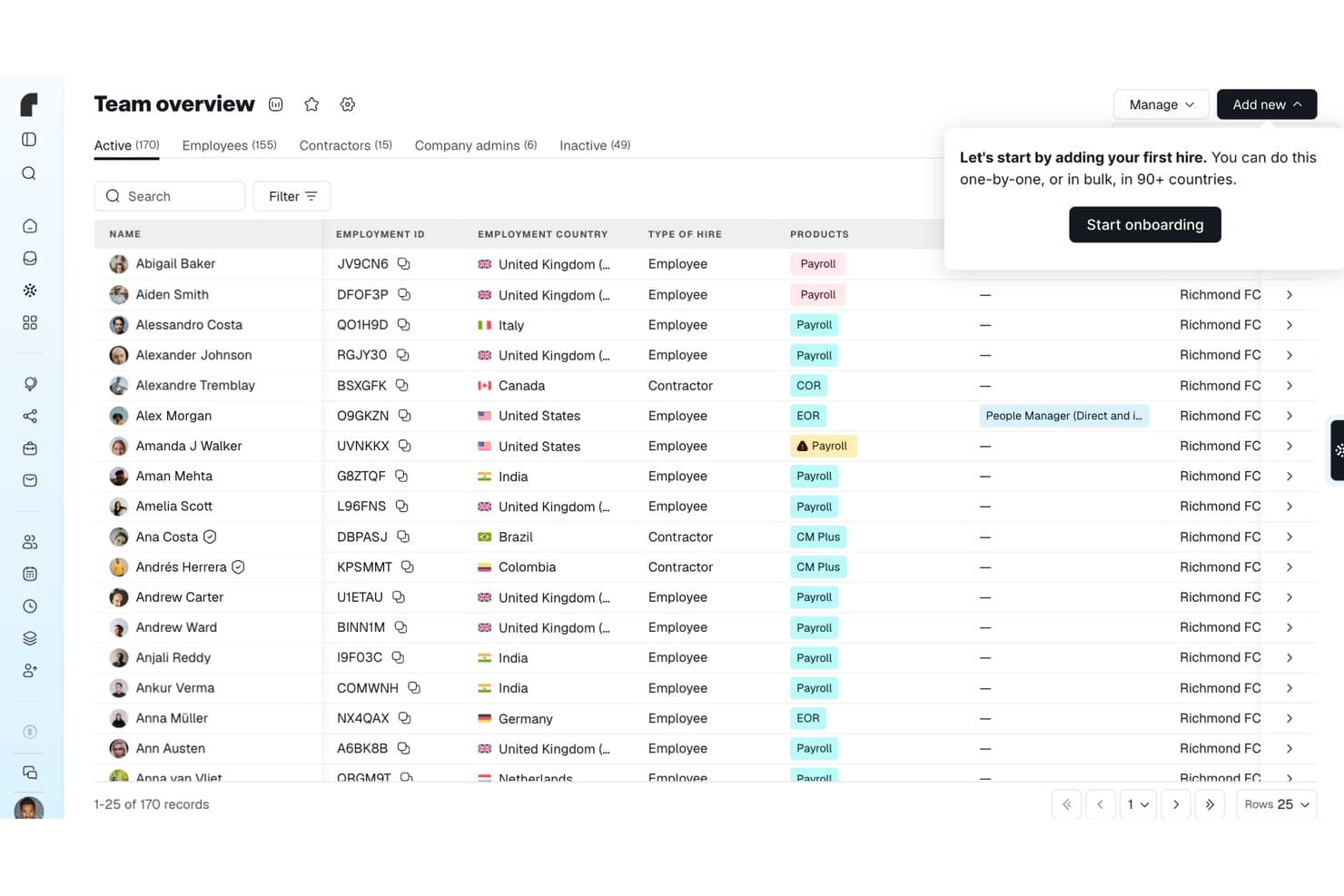
Remote team overview displays employee records across 90+ countries. Remote is an employer of record and contractor management provider that lets you hire, onboard, and pay employees in Bulgaria through its own locally owned entity, without setting up a legal presence in the country.
Who Is Remote Best For?
Remote is a strong fit for startups and small teams that want to hire in Bulgaria quickly, without committing to a local entity or long-term contract.
Why I Picked Remote
Remote earns its spot on my shortlist because it owns its Bulgarian entity outright, meaning there's no third-party partner handling your employees behind the scenes. I find that especially valuable when hiring in Bulgaria, since you get direct accountability on contracts, payroll, and compliance from day one. Remote's Compliance Watchtower monitors legal changes across 90+ countries and flags updates automatically, and its IP Guard handles IP transfers during onboarding.
Remote Key Features
- Compliance Watchtower: Monitors legal and regulatory changes across 90+ countries and sends automatic alerts when updates affect your Bulgarian employees.
- Optional benefits administration: Offers supplemental health, life, and mental health coverage in tiered plans you can layer on top of statutory Bulgarian benefits.
- Contractor management: Lets you hire and pay contractors in Bulgaria, with built-in misclassification protection included.
- GDPR-aligned data protection: Hosts employee data in Ireland, with a dedicated DPO, a DPA, and SOC 2 and ISO 27001 certifications.
Remote Integrations
Remote lists 20 integrations, including Workday, BambooHR, HiBob, Personio, Greenhouse, QuickBooks, Xero, NetSuite, Okta, and Slack. Zapier is also listed for additional connectivity.
Pros and Cons
Pros:
- Localized contracts cover Bulgarian employment requirements
- Reviewers praise smooth onboarding and responsive support
- Own Bulgarian entity avoids third-party employers
Cons:
- Some users find initial setup unclear
- Escalated payroll questions can receive slow responses
 Best for no-lock-in Bulgarian market entry
- Not available
- Typically from ~$500/employee/month (custom)
Visit WebsiteCustomer Rating:5/5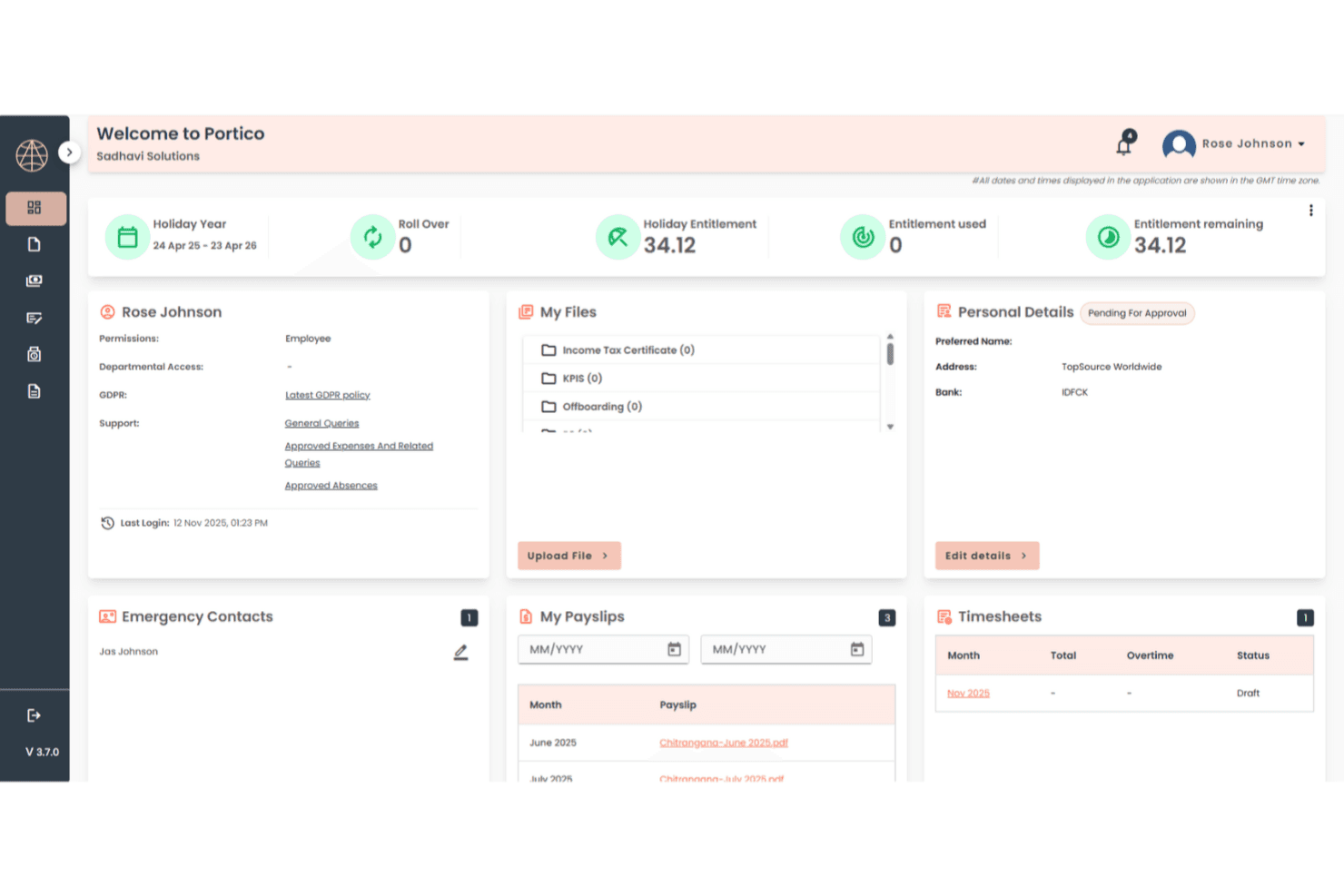
TopSource's Portico gives employees a self-service HR dashboard. TopSource is a global employer of record service that handles employment contracts, payroll, tax filings, statutory benefits, and HR administration for companies hiring in Bulgaria without registering a local entity.
Who Is TopSource Best For?
TopSource is a strong fit for companies testing the Bulgarian market before committing to a local entity, thanks to its no exit fee, no lock-in model and flat monthly per-employee pricing.
Why I Picked TopSource
I've included TopSource in my top picks because its no exit fee, no lock-in model makes it a genuinely low-risk way to place your first hire in Bulgaria without committing to a local entity. If you're testing the market, you can later transfer employees to your own Bulgarian entity with no penalty. I also like that TopSource handles NRA contract registration within three days and files Declarations 1 and 6 by the 25th of each month, with client approval required before anything is paid or filed.
TopSource Key Features
- Named account manager: Every EOR client gets a dedicated account manager plus 24/5 phone access to in-country experts in English and Bulgarian.
- Pre-approval payroll reporting: TopSource provides a monthly gross-to-net report with itemized employer contributions and threshold flags before anything is paid or filed.
- Portico employee self-service: Employees access payslips, submit leave requests, log expenses, and track attendance via desktop or mobile through the Portico platform.
- HRIS and finance API: Portico connects to systems like Workday, BambooHR, and SAP SuccessFactors to sync workforce and payroll data across your tech stack.
TopSource Integrations
TopSource offers integrations with Workday, SAP SuccessFactors, UKG, BambooHR, HiBob, Personio, Greenhouse, Lever, SmartRecruiters, and Ashby. Its API supports custom HRIS and finance connections.
Pros and Cons
Pros:
- NRA declarations have documented monthly deadlines
- Client approval precedes Bulgarian payroll filing
- Reviewers praise responsive onboarding and employment support
Cons:
- Bulgaria onboarding has no firm timeline
- Conflicting sick-leave guidance complicates benefit administration
Learn more about TopSource: Best for hiring in Bulgaria via own local entity
- Free demo available
- From $699/employee/month
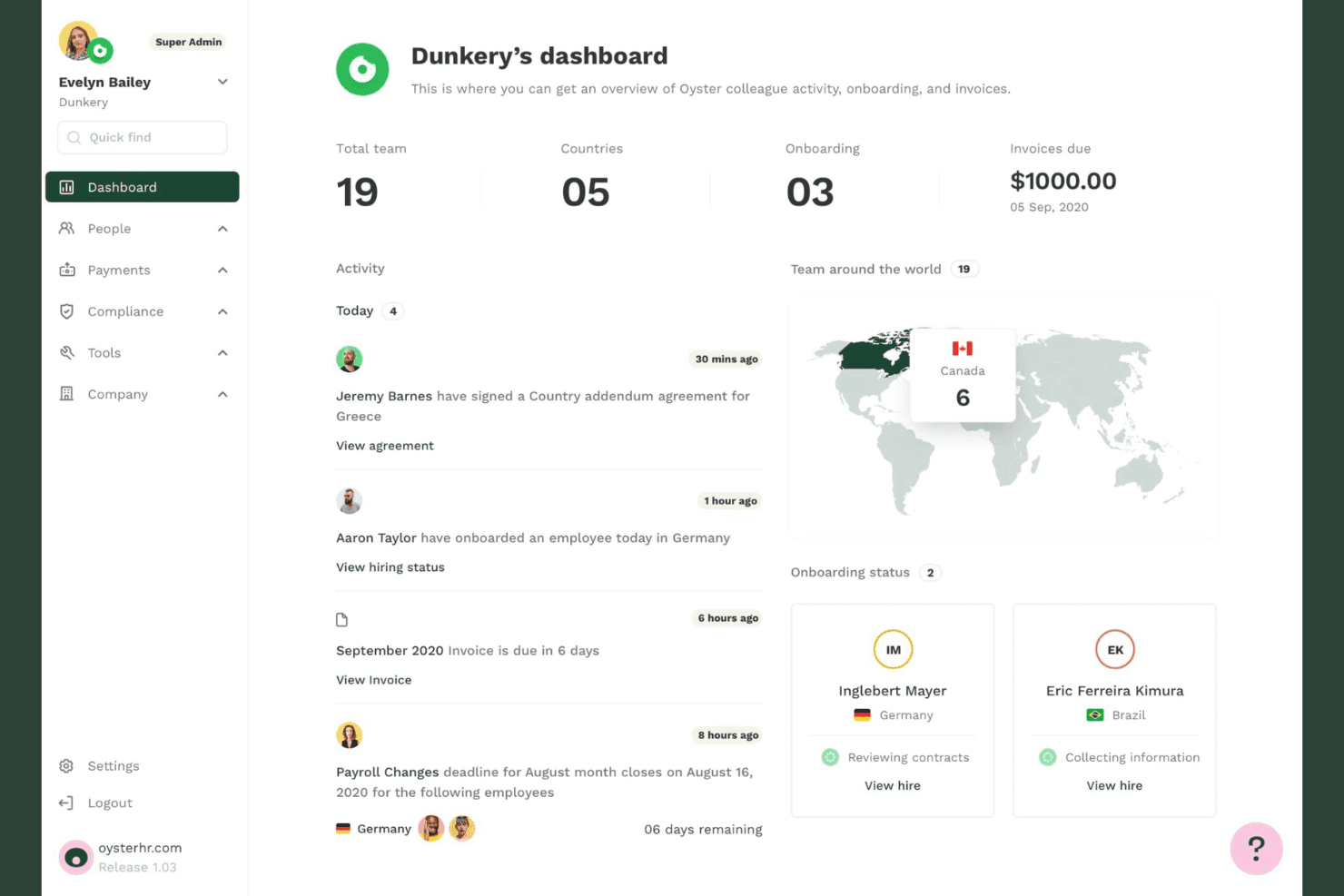
Oyster centralizes team activity, onboarding status, and invoice tracking. Oyster is an employer of record platform with its own legal entity in Bulgaria that handles local employment contracts, payroll, statutory benefits, tax and social security remittance, and offboarding.
Who Is Oyster Best For?
Oyster is a strong fit for companies hiring their first Bulgarian employee without a local entity, especially if compliance accuracy and fast onboarding are the priority.
Why I Picked Oyster
I've included Oyster in my top picks because it holds its own legal entity in Bulgaria, meaning there's no sub-vendor in the chain handling your employment contracts. In practice, that means I can get a Bulgarian employee onboarded in as little as 48 hours after signing, with a contract written in Bulgarian that already includes mandatory clauses like length-of-service pay. Oyster also assigns a named contact for compliance and termination questions, which matters when you're navigating Bulgaria's specific notice period rules or offboarding an employee.
Oyster Key Features
- Contract quality score: Oyster compares each offer against Bulgarian statutory requirements and flags gaps before you finalize the contract.
- Automated payroll reporting: Download detailed payroll reports and let Oyster handle tax filings and social security remittance directly with Bulgarian authorities.
- In-app leave and timesheet tracking: Employees submit leave requests and log overtime through the Oyster app, with balances adjusted for Bulgarian public holidays.
- Named compliance contact: Oyster assigns you a dedicated contact for compliance and termination questions rather than routing everything through a support ticket queue.
Oyster Integrations
Oyster documents 17 integrations, including BambooHR, HiBob, Personio, Greenhouse, Workable, Xero, QuickBooks, ADP Workforce Now, SAP Concur, and Zapier. An API supports custom integrations, while Slack supports approval workflows.
Pros and Cons
Pros:
- Contracts include Bulgarian statutory pay clauses
- Onboarding can take 48 hours
- Own Bulgarian entity avoids subcontractors
Cons:
- Payroll currency details appear outdated
- Support quality varies across user reviews
Learn more about Oyster: Best for market-testing Bulgaria with one hire
- Free demo available
- From $499/employee/month
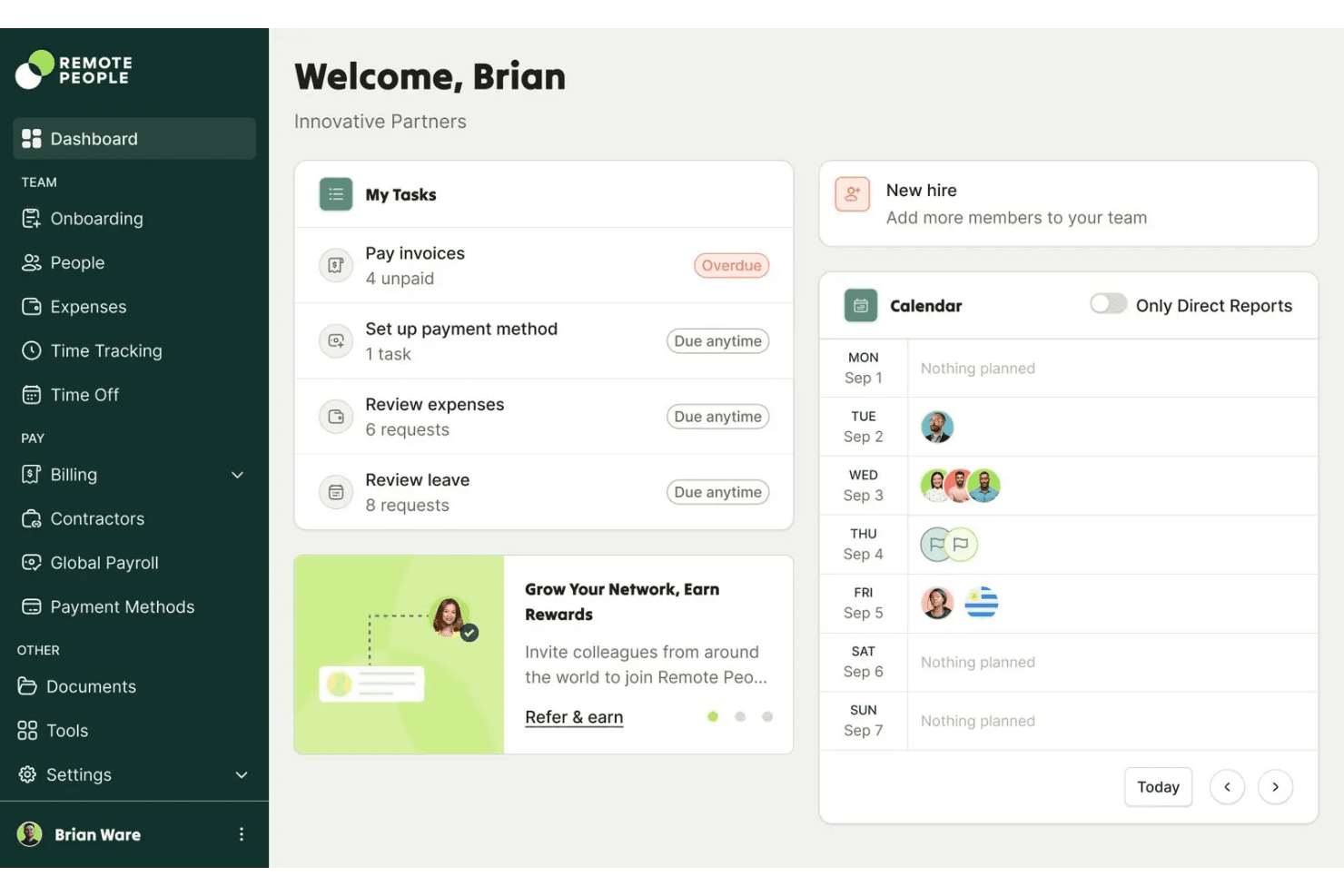
Remote People centralizes task management and team scheduling in one dashboard. RemotePeople is an employer of record service that hires Bulgarian employees on your behalf, handling employment contracts, payroll, tax withholding, social insurance registrations, and statutory benefits administration without requiring you to set up a local entity.
Who Is RemotePeople Best For?
RemotePeople is a strong fit for startups and small teams that want to place one to fifteen employees in Bulgaria without committing to local entity setup.
Why I Picked RemotePeople
I picked RemotePeople as one of the best because it's specifically built for the "one hire, no entity" scenario that defines early-stage Bulgaria market testing. When a startup wants to place a single developer or operations hire in Sofia to validate demand, RemotePeople registers the employment contract with Bulgaria's National Revenue Agency, enrolls the employee with the NSSI and NHIF, and runs the first payroll, all without the client incorporating locally. I also like that a named account manager is available 24/5 and backed by HR and legal specialists who know Bulgarian Labour Code requirements.
RemotePeople Key Features
- Bilingual employment contracts: RemotePeople drafts Bulgarian-language and bilingual English–Bulgarian contracts that meet Labour Code Article 66 requirements and are registered with the NRA before work begins.
- Statutory contribution administration: The service calculates and remits employer social-security contributions—covering pension, health, unemployment, and work-accident funds—to the NRA each month.
- Employee self-service portal: Employees access payslips, employment documents, and time-off requests through a dedicated online portal.
- EU Blue Card and Single Permit sponsorship: RemotePeople manages end-to-end work-permit applications for non-EU nationals hired through its Bulgaria EOR.
RemotePeople Integrations
RemotePeople lists 70+ integrations, including Workday, SAP SuccessFactors, Oracle HCM, BambooHR, HiBob HR, Personio, and ADP Workforce Now. An API is available for custom integrations, although connection types aren't specified for most listed platforms.
Pros and Cons
Pros:
- Named account managers have HR and legal support
- Reviewers value accessible payslips and employment documents
- Bulgaria onboarding covers contract and statutory registrations
Cons:
- Contract corrections can require repeated back-and-forth
- Some reviewers report slow support follow-ups
Learn more about Remote People:
Outros serviços de empregador de registo na Bulgária
Eis algumas opções adicionais que não entraram na minha lista restrita, mas que vale a pena consultar:
- 11TeamedBest for hiring in Bulgaria via an owned local entity
- 12RemotePassBest for testing the Bulgarian market without an entity
- 13Acumen InternationalBest for hiring in Bulgaria without a local entity
- 14WorkMotionBest for EU-wide hiring with a Bulgarian entity
- 15CXC GlobalBest for EU-wide compliance with Bulgarian labor law
- 16RivermateBest for hands-on Bulgarian HR and payroll support
- 17Atlas HXMBest for EU mobility alongside Bulgarian hiring
- 18G-PBest for multi-country hiring led by analyst-ranked EOR
- 19MultiplierBest for startups onboarding one hire in Bulgaria
- 20Native TeamsBest for low-commitment Bulgarian workforce testing
How I Evaluate Employer of Record Services in Bulgaria
I split my evaluation into three parts. First, and most heavily weighted, is core functionality: the ability to employ workers in Bulgaria without a client entity and manage Bulgarian labor law compliance. Second, I look for standout features like in-country legal entity ownership. Third, I consider local HR advisory support and pricing transparency.
Core Functionality (Table Stakes for This List)
When I'm selecting tools for my list, I score each one on a scale from 0 (does not offer the functionality) to 5 (excels in this area) for each core functionality listed below. I then convert the total into a percentage to help assess each tool's overall fit, with extra weight on any functionalities I've deemed essential.
- Entity-Free Employment (Essential): I check whether the provider can legally employ workers in Bulgaria on your behalf without you registering a local entity.
- Labor Law Compliance (Essential): Each provider's handling of Bulgarian contract terms, probation periods, notice rules, and termination procedures gets close attention.
- Local Payroll Processing: I look for accurate, on-time salary disbursement in Bulgarian lev (BGN), including proper tax withholdings and social contribution calculations.
- Statutory Benefits Administration: Providers should manage mandatory social insurance, health insurance, and paid leave entitlements without requiring heavy involvement from your team.
- Tax and Social Security Remittance: I evaluate whether the provider calculates, withholds, and files all employer and employee contributions directly with Bulgarian authorities on schedule.
- Contract Localization: Employment agreements need to meet Bulgarian legal standards, so I look for role-appropriate contracts with required statutory clauses and bilingual support.
Once I have a list of tools that meet the criteria, I consider what sets each platform apart.
Differentiating Factors (What Sets Vendors Apart)
Here's how I compare and contrast different vendors:
Standout Features
I check whether a provider runs its own registered Bulgarian entity or subcontracts to a local partner, since that directly affects how much control they have over compliance and payroll timing. EU cross-border mobility support also matters—if you're hiring across multiple member states, providers like Remote and WorkMotion let you add Bulgarian employees alongside other EU hires without separate onboarding workflows. I also look at onboarding speed guarantees, because a provider that activates new hires in days rather than weeks can make or break a time-sensitive market entry.
Beyond Features
I look at total cost transparency first—flat-fee versus percentage-of-payroll pricing, plus any hidden charges for contract amendments or termination handling, since these directly affect budget predictability. GDPR-compliant data handling also matters; I check where employee payroll and tax data is stored and whether the provider has clear breach-notification protocols. For teams testing Bulgaria before committing, I evaluate contract flexibility and exit terms so you're not locked in if plans change.
Como escolher serviços de empregador de registo na Bulgária
Escolha um prestador verificando quem emprega legalmente os seus trabalhadores na Bulgária, como documenta as obrigações locais e quais as tarefas que a sua equipa terá de assegurar. Utilize estas prioridades para orientar a sua lista restrita:
| Se a sua prioridade for… | Procure… |
|---|---|
| Se a sua prioridade for…Contratar sem uma entidade búlgara | Procure…Uma descrição clara do empregador legal e de qualquer parceiro local |
| Se a sua prioridade for…Conformidade contratual | Procure…Contratos de trabalho búlgaros com termos aplicáveis localmente |
| Se a sua prioridade for…Administração salarial previsível | Procure…Um exemplo de cálculo salarial em BGN com os impostos e as contribuições sociais discriminados |
| Se a sua prioridade for…Entrada flexível no mercado | Procure…Condições de saída por escrito, períodos de aviso prévio e quaisquer encargos de cessação |
Como avaliar a sua lista restrita
- Analise o contrato de trabalho: Peça um modelo de contrato búlgaro e verifique as cláusulas relativas ao período experimental, ao aviso prévio e à cessação com um advogado local antes de assinar.
- Teste um cálculo salarial: Peça uma discriminação por escrito para um salário de exemplo em BGN, indicando as contribuições do trabalhador e do empregador, as retenções e as responsabilidades pelo pagamento.
- Identifique a entidade empregadora: Peça o nome e os dados de registo da entidade legal e, em seguida, solicite ao prestador que identifique por escrito qualquer parceiro local subcontratado.
- Defina as responsabilidades de integração: Peça uma lista de verificação de integração, com datas, para uma contratação na Bulgária, indicando os documentos necessários, as responsabilidades de cada parte e a data prevista de início.
- Escolha o compromisso relativo à entidade: Compare uma entidade local própria com um acordo com um parceiro e decida se o controlo direto ou o modelo de prestação local de um prestador se adequa melhor à sua tolerância ao risco; confirme no contrato quem é responsável pelas obrigações laborais.
O que são os serviços de empregador de registo na Bulgária?
Os serviços de empregador registado na Bulgária permitem que um prestador empregue legalmente trabalhadores em seu nome, enquanto a sua empresa dirige o trabalho diário destes. O prestador gere normalmente os contratos de trabalho locais, o processamento salarial, a retenção de impostos e as contribuições obrigatórias. Este acordo pode ajudá-lo a contratar na Bulgária sem estabelecer uma entidade local, mas confirme quem emprega o trabalhador e quem trata de cada obrigação legal antes de assinar.
Funcionalidades
Eis as principais funcionalidades que procuro nos serviços de empregador registado na Bulgária:
- Contratação sem entidade própria: O prestador contrata os seus trabalhadores búlgaros através da sua própria entidade local ou de um parceiro identificado, permitindo-lhe empregar pessoas sem constituir uma empresa búlgara. Confirme qual é a entidade legal que assina o contrato de trabalho.
- Contratos de trabalho localizados: O prestador prepara contratos que refletem os requisitos laborais búlgaros, incluindo as condições aplicáveis ao período experimental, ao tempo de trabalho, ao aviso prévio e à cessação. Isto proporciona à sua equipa uma base localmente adequada para cada contratação.
- Processamento salarial búlgaro: O prestador calcula os salários e as deduções salariais e paga aos trabalhadores na moeda acordada, normalmente o lev búlgaro (BGN). Peça um exemplo de recibo de vencimento e um calendário salarial para perceber como são tratados os cálculos e as datas de pagamento.
- Gestão de impostos e contribuições sociais: O prestador calcula, retém e entrega os impostos aplicáveis dos trabalhadores e dos empregadores, bem como as contribuições sociais, às autoridades búlgaras competentes. Uma confirmação escrita das responsabilidades de declaração e pagamento ajuda a esclarecer o que a sua equipa ainda precisa de fazer.
- Gestão de benefícios obrigatórios e licenças: O prestador acompanha as contribuições obrigatórias para a segurança social e o seguro de saúde, os direitos a férias remuneradas e outros benefícios laborais aplicáveis. Isto ajuda as equipas de recursos humanos a gerir os registos dos trabalhadores e as alterações salariais quando as licenças ou a elegibilidade afetam a remuneração.
- Coordenação da integração dos trabalhadores: O prestador partilha as listas de documentos necessários, recolhe as informações dos trabalhadores e coordena a conclusão dos contratos e a configuração salarial. Uma lista de verificação datada facilita a atribuição de tarefas e a confirmação de que a data de início prevista é realista.
- Apoio contínuo em recursos humanos e conformidade: O prestador responde a questões relacionadas com a gestão laboral e ajuda a gerir alterações como atualizações salariais, licenças ou alterações contratuais. Confirme quais os pedidos incluídos e quando é que o prestador encaminha as questões para consultores jurídicos locais.
- Gestão da cessação: O prestador coordena os avisos obrigatórios, os cálculos dos pagamentos finais e a documentação laboral quando um trabalhador sai. Pergunte como trata os períodos de aviso prévio, as férias não gozadas e quaisquer encargos adicionais de cessação antes de assinar.
Benefícios
Eis alguns benefícios práticos que pode esperar ao utilizar um empregador registado na Bulgária:
- Contratar sem uma entidade local: Um EOR emprega trabalhadores através da sua própria entidade búlgara ou de um parceiro local, pelo que a sua empresa não precisa de constituir uma.
- Aplicar condições de trabalho locais: Os contratos localizados e o apoio em matéria de conformidade ajudam a cumprir os requisitos búlgaros relativos ao período experimental, ao tempo de trabalho, ao aviso prévio e à cessação.
- Coordenar o processamento salarial e as entregas: Os serviços de processamento salarial calculam os salários e as deduções aplicáveis e tratam depois dos pagamentos de impostos e contribuições sociais às autoridades competentes.
- Gerir benefícios obrigatórios e licenças: O prestador pode acompanhar as contribuições para a segurança social e o seguro de saúde, as férias remuneradas e as alterações salariais relacionadas.
- Coordenar a integração dos trabalhadores: A recolha de documentos, a conclusão dos contratos e a configuração salarial podem seguir uma lista de verificação partilhada, com responsabilidades claras.
- Gerir alterações e saídas: O apoio contínuo em recursos humanos pode ajudar com atualizações salariais, alterações contratuais, avisos, pagamentos finais e documentos de saída.
Custos e preços
Os custos variam consoante o prestador, o número de trabalhadores e o âmbito dos serviços. As taxas de EOR na Bulgária situam-se normalmente entre cerca de $200 e $700 por trabalhador por mês, sendo que algumas propostas empresariais podem atingir valores superiores.
Estas são faixas de preços indicativas, não nomes de planos padrão. As taxas abrangem geralmente o serviço de EOR e excluem os salários dos trabalhadores e as contribuições do empregador.
Tabela de comparação de planos para serviços de empregador registado na Bulgária
| Tipo de plano | Preço médio | Funcionalidades comuns |
|---|---|---|
| Tipo de planoPlano gratuito | Preço médio$0 para serviços de EOR | Funcionalidades comunsPedido de informações sobre preços, consulta introdutória e ausência de administração do emprego ou da folha salarial. |
| Tipo de planoPlano pessoal | Preço médio$200–$399 por empregado/mês | Funcionalidades comunsContrato de trabalho local, processamento salarial e administração das contribuições legais. |
| Tipo de planoPlano empresarial | Preço médio$400–$699 por empregado/mês | Funcionalidades comunsContrato de trabalho local, administração da folha salarial e dos impostos, apoio relativo a benefícios legais e coordenação da integração. |
| Tipo de planoPlano empresarial de grande dimensão | Preço médio$700–$940 por empregado/mês | Funcionalidades comunsAdministração do emprego e da folha salarial, apoio em recursos humanos e conformidade, coordenação da cessação e âmbito de serviço personalizado. |
Perguntas frequentes
Eis as respostas a perguntas frequentes sobre os serviços de empregador de registo na Bulgária:
Quem é responsável se o EOR cometer um erro salarial ou de conformidade?
O empregador legal búlgaro designado continua responsável pelas suas obrigações legais enquanto empregador; o acordo de prestação de serviços define as tarefas operacionais e as soluções entre as partes. A sua empresa continua a dirigir o trabalho quotidiano e deve seguir os procedimentos acordados para alterações salariais, licenças e questões de desempenho. Se houver um erro na folha salarial, notifique prontamente o prestador e mantenha registos escritos das correções, declarações e comunicações com os trabalhadores. Antes de assinar, verifique quem corrige pagamentos inferiores ao devido, paga as coimas, quando aplicável, e trata das reclamações dos trabalhadores. Um contrato não pode eliminar obrigações impostas pela lei.
Um EOR pode empregar cidadãos de países não pertencentes à UE na Bulgária?
Sim, um EOR pode empregar um cidadão de um país não pertencente à UE na Bulgária, mas o acordo com o EOR não confere, por si só, autorização de trabalho ou de residência. A elegibilidade depende do estatuto da pessoa e das regras búlgaras aplicáveis em matéria de imigração e emprego. Peça ao prestador que confirme por escrito se apoia o processo necessário de obtenção da autorização, quem apresenta cada pedido e se o trabalhador pode começar antes da aprovação. Confirme o caso com um advogado especializado em imigração na Bulgária ou junto das autoridades competentes. Não defina uma data de início apenas com base na estimativa do prestador.
O que acontece se eu mudar de prestador de EOR na Bulgária?
Não parta do princípio de que o emprego de um trabalhador é transferido automaticamente quando muda de EOR. O processo adequado depende dos empregadores legais atual e novo, dos termos do contrato, do consentimento do trabalhador e das regras búlgaras aplicáveis. Peça a ambos os prestadores um plano de transição por escrito que abranja o aviso, o processamento salarial final, as licenças acumuladas, os registos de benefícios, as declarações fiscais e a nova data de início. Peça a um advogado local que analise se a mudança afeta a continuidade do serviço ou os direitos do trabalhador. Coordene as comunicações com o trabalhador antes de se comprometer com uma data de transferência.