

I 10 migliori datori di lavoro ufficiali in Sri Lanka nel 2026

Elenco dei migliori datori di lavoro ufficiali in Sri Lanka


Un datore di lavoro ufficiale (EOR) in Sri Lanka è un fornitore terzo che assume legalmente i lavoratori in Sri Lanka per conto della tua azienda e gestisce le buste paga locali e l'amministrazione del rapporto di lavoro. Il miglior EOR in Sri Lanka per il tuo team dovrebbe inoltre offrire indicazioni chiare sulla conformità, un inserimento orientato ai dipendenti e un supporto compatibile con i tuoi sistemi HR e i tuoi piani di assunzione. Questa guida confronta i servizi locali dei fornitori, il supporto per le cessazioni e i visti e l'assistenza per il cliente, così puoi scegliere la soluzione più adatta.
Perché fidarsi delle nostre recensioni sui software
Il nostro team testa e recensisce software dal 2012. In quanto esperti HR noi stessi, sappiamo quanto sia difficile — e importante — scegliere il software giusto.
Per questa guida, abbiamo valutato gli strumenti attraverso test pratici e ricerche indipendenti, assegnando un punteggio agli strumenti in base ai nostri criteri di selezione. Ci basiamo inoltre sulle competenze di leader di pensiero del settore e di professionisti HR attivi.
Le nostre recensioni riflettono il nostro giudizio editoriale umano, non un discorso di vendita.
Revisori esperti:
Tabella comparativa: datori di lavoro ufficiali in Sri Lanka
Confronta prezzi e specifiche fianco a fianco dei datori di lavoro ufficiali in Sri Lanka inclusi nel mio elenco ristretto.
| Tool | Best For | Trial Info | Price | ||
|---|---|---|---|---|---|
| 1 | Best for dedicated account support in Sri Lanka hiring | Free demo available | From $319/user/month | Website | |
| 2 | Best for Sri Lanka onboarding with self-service access | Free demo available | From $199/user/month | Website | |
| 3 | Best for AI-driven Sri Lanka payroll compliance | Free demo available | From $299/user/month | Website | |
| 4 | Best for Sri Lanka payroll with visa support | Not available | Pricing upon request | Website | |
| 5 | Best for account-managed Sri Lanka HR compliance | Not available | Pricing upon request | Website | |
| 6 | Best for TEWA-compliant Sri Lanka termination support | Free demo available | From $399/user/month | Website | |
| 7 | Best for one-platform Sri Lanka hiring at scale | Free demo available | From $599/employee/month | Website | |
| 8 | Best for owned-entity Sri Lanka hiring at flat rates | Free demo available | From $699/user/month | Website | |
| 9 | Best for onboarding Sri Lanka hires via one dashboard | Free demo available | From $459/user/month | Website | |
| 10 | Best for HRIS-integrated Sri Lanka hiring at scale | Free demo available | From $499/user/month | Website |

Recensioni dei datori di lavoro ufficiali in Sri Lanka
Di seguito trovi i miei riepiloghi dettagliati dei migliori fornitori di servizi di datore di lavoro ufficiale in Sri Lanka inclusi nel mio elenco ristretto. Le mie recensioni riguardano il supporto per la conformità locale, l’inserimento e i servizi per il cliente, per aiutarti a trovare il servizio EOR più adatto al tuo team.

Best for dedicated account support in Sri Lanka hiring
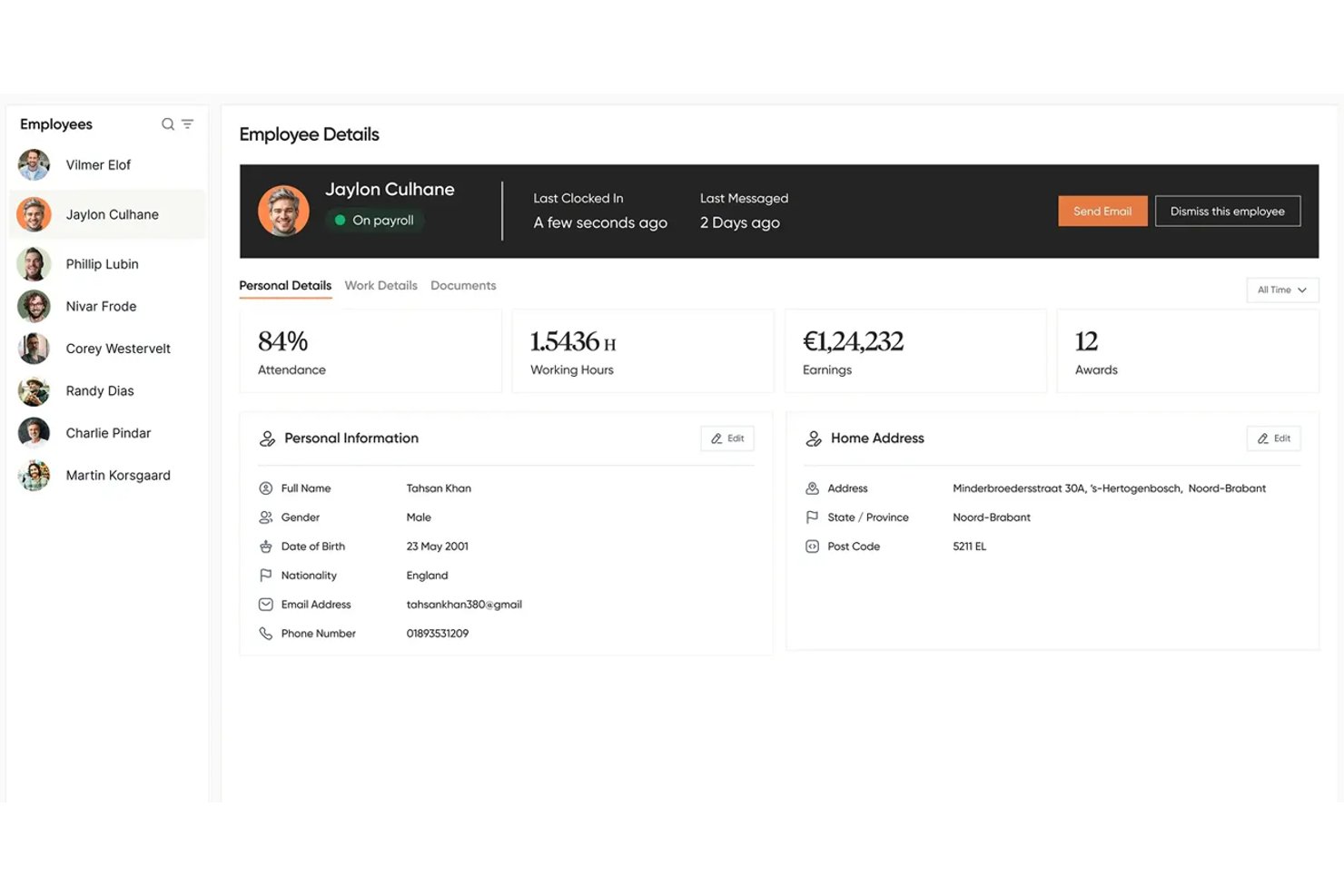
Rivermate is a global employer of record platform that handles employment contracts, payroll processing, statutory contributions, benefits administration, and termination management for companies hiring in Sri Lanka and 180+ other countries.
Who Is Rivermate Best For?
Rivermate works well for startups and small teams hiring in Sri Lanka that want dedicated account management and support with local employment requirements.
Why I Picked Rivermate
I've included Rivermate in my top picks because it assigns a dedicated account manager to each client and supports Sri Lanka hiring through local employment guidance. I particularly like that its services cover employment contracts under Sri Lankan labor requirements, EPF and ETF contributions, payroll processing, and termination procedures. Rivermate also handles employee onboarding, contract signing, and payroll administration through its platform.
Rivermate Key Features
- Multi-currency payroll processing: Rivermate processes payroll in 120+ currencies and issues invoices in USD, GBP, or EUR for international payroll administration.
- Employee self-service portal: Employees can view payslips, request time off, submit expenses, and track benefits directly inside the platform.
- Statutory contribution management: Rivermate calculates and remits EPF, ETF, and income tax deductions each payroll cycle, applying current Sri Lankan rates automatically.
- Contractor-to-employee conversion: You can convert existing Sri Lanka contractor relationships to compliant employment arrangements without switching platforms.
Rivermate Integrations
Rivermate lists HRIS, payroll, and applicant tracking system (ATS) integrations but does not publicly identify specific integration partners.
Pros and Cons
Pros:
- Sri Lanka EPF and ETF payroll administration
- Contractor-to-employee conversion services
- Multi-currency payroll across 120+ currencies
Cons:
- Limited dashboard customization options
- Advanced payroll reporting requires manual filtering

Gloroots
Best for Sri Lanka onboarding with self-service access
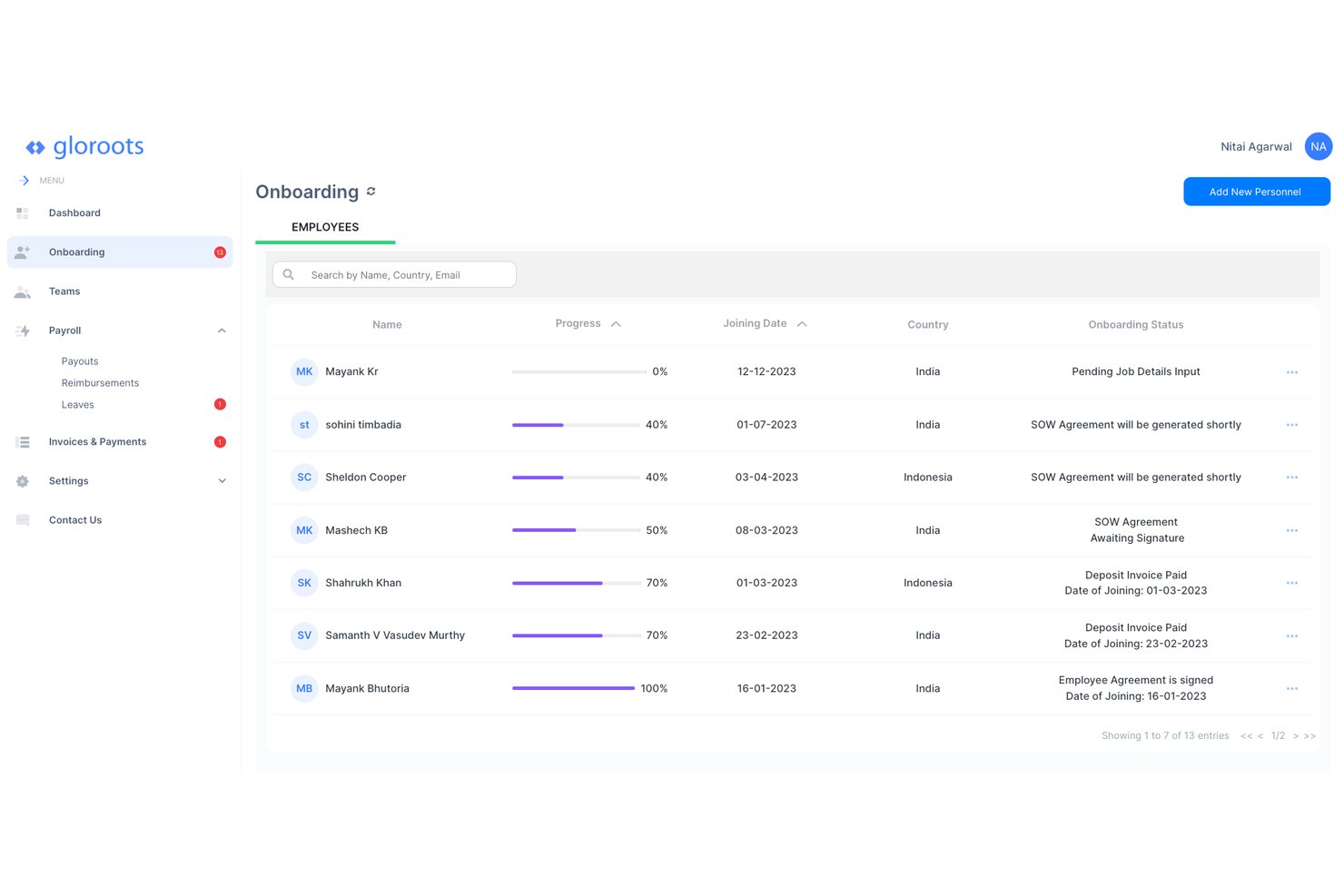
Gloroots is a global employer of record platform that handles Sri Lanka employment contracts, payroll, statutory contributions (EPF, ETF, PAYE), benefits administration, and offboarding compliance without requiring you to set up a local entity.
Who Is Gloroots Best For?
Gloroots works well for startups and small teams hiring their first Sri Lankan employees who want a self-service onboarding experience without setting up a local entity.
Why I Picked Gloroots
I picked Gloroots as one of the best because its self-service onboarding portal lets employees complete their own Sri Lanka setup, including statutory registrations and document submission. I also like that the platform handles EPF, ETF, and PAYE contributions directly, with leave dashboards that both managers and employees can access in real time.
Gloroots Key Features
- Multi-currency payroll: Run payroll in LKR with currency conversion for international payments.
- Termination and offboarding management: Gloroots handles TEWA notice periods, severance calculations, final pay, gratuity, and statutory filings through a structured offboarding process.
- Visa and work permit support: Get assistance with Sri Lankan employment and residence visas, renewals, and transfers for foreign national hires.
- Free employer cost calculators: Use built-in tools including an LKR-compatible employer cost calculator and a misclassification risk checker before committing to a hire.
Gloroots Integrations
Native integrations are not clearly documented; Gloroots lists Workday, SAP SuccessFactors, Oracle, and BambooHR as integrations. An enterprise API supports custom integrations, with SSO, SCIM provisioning, and role-based access.
Pros and Cons
Pros:
- Self-service onboarding includes employee document submission
- Sri Lanka guidance covers EPF, ETF, and TEWA
- 24/7 human support globally
Cons:
- Limited regional customization
- Initial onboarding may require extra coordination
Mercans
Best for AI-driven Sri Lanka payroll compliance
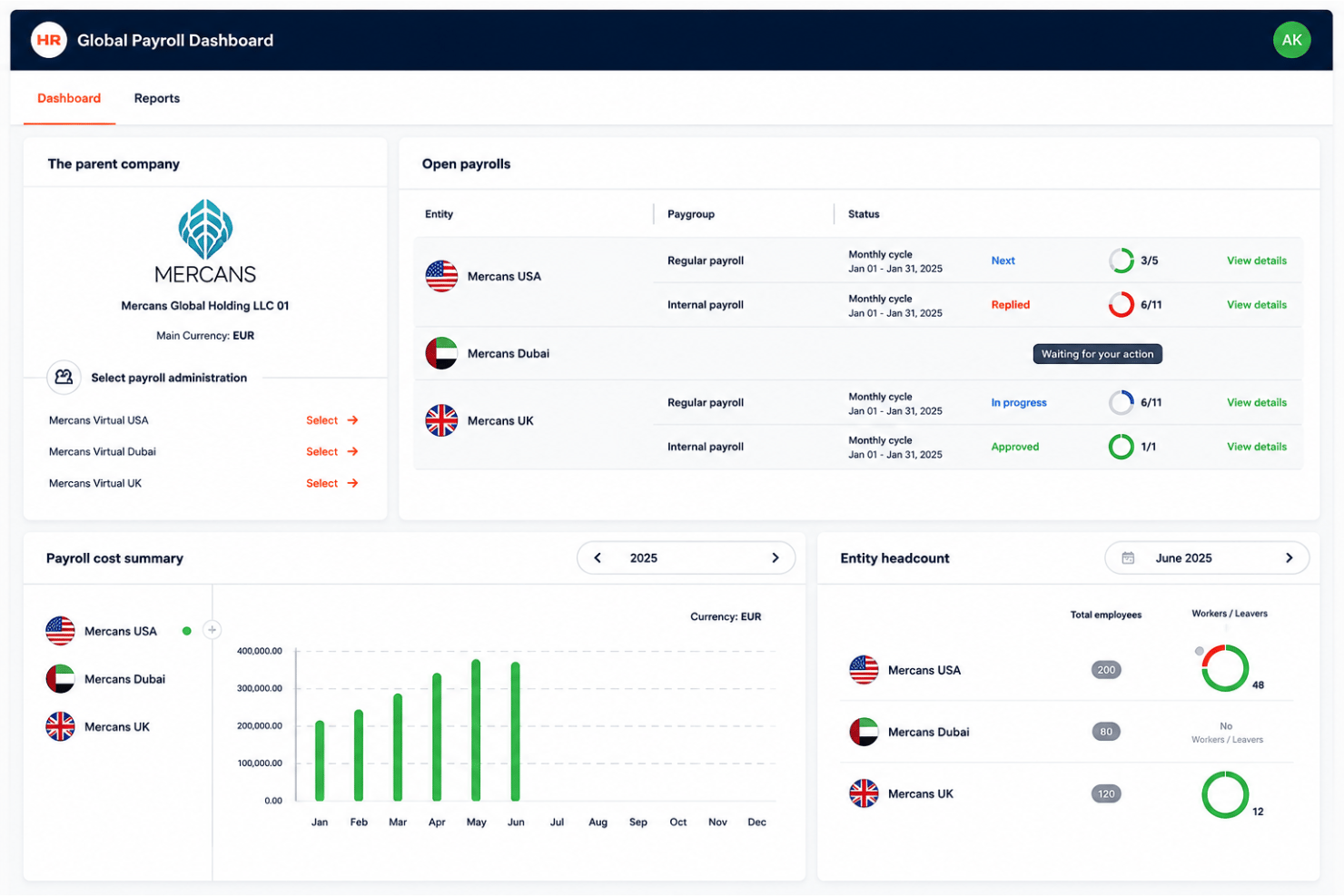
Mercans is a global employer of record platform that supports hiring in Sri Lanka without establishing a local entity. Its services cover employment contracts, payroll processing, statutory contributions, benefits administration, and local employment compliance.
Who Is Mercans Best For?
Mercans is best for payroll administrators and HR teams managing Sri Lankan employees who need global payroll processing, statutory compliance support, and automated payroll validation.
Why I Picked Mercans
I picked Mercans as one of the best because its G2N Nova payroll engine supports automated gross-to-net calculations, payroll validation, and variance reporting. I also like that Mercans incorporates statutory compliance updates into its payroll technology, helping HR teams manage payroll requirements across multiple countries. Its API-driven architecture also connects payroll data with existing HR and finance systems.
Mercans Key Features
- EPF/ETF statutory contribution processing: Mercans supports automated payroll calculations for Sri Lanka's employer 12% EPF, 3% ETF, and employee 8% EPF contributions.
- HR Blizz employee self-service portal: Employees access payslips, update personal details, manage leave requests, and submit expense claims through a mobile-accessible self-service portal.
- Multi-currency payroll disbursement: Payroll is paid out in 103 currencies, with clients retaining funds until two days before the payroll date.
- Dedicated account manager: Mercans assigns a dedicated point of contact for client queries, employment administration, and compliance support.
Mercans Integrations
Mercans has documented integrations with HiBob, Workday, SAP SuccessFactors, and Oracle HCM. Its HiBob integration supports bidirectional data synchronization, while HR Blizz uses an API-first architecture for connections with HR, finance, and ERP systems.
Pros and Cons
Pros:
- Real-time statutory compliance monitoring
- Automated payroll calculations and validation
- Strong knowledge of local labor laws
Cons:
- Certain integration setups may incur additional fees
- HR Blizz customization options may be limited

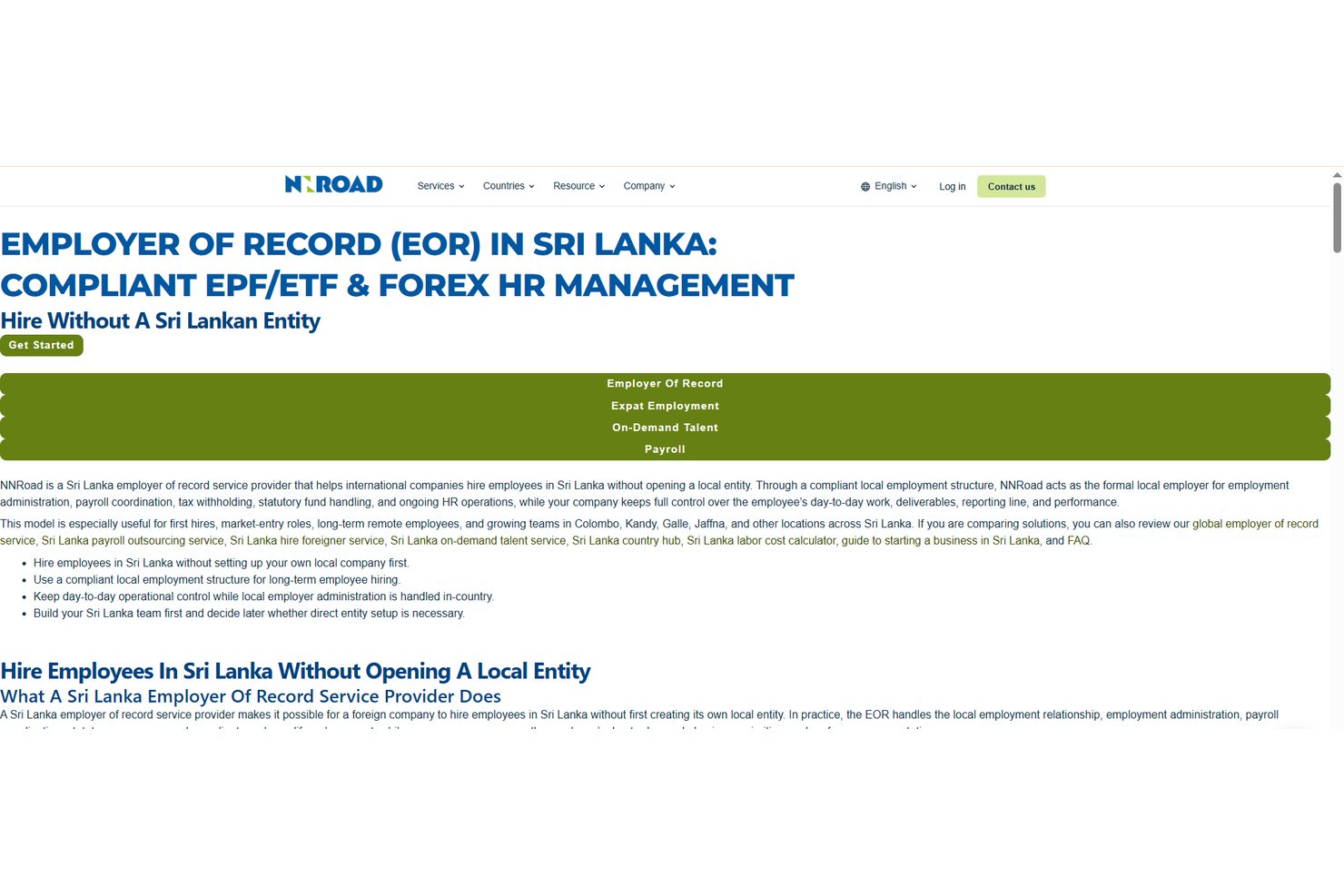
NNRoad is a Sri Lanka employer of record service that handles local employment contracts, payroll processing, EPF and ETF contributions, APIT withholding, and statutory benefits administration. It also has a separate Expat Employment service for foreign hires requiring visa support.
Who Is NNRoad Best For?
NNRoad works well for startups and small teams hiring their first Sri Lanka-based employees, particularly those needing local payroll compliance and separate visa support for foreign hires.
Why I Picked NNRoad
I picked NNRoad as one of the best because it handles Sri Lanka payroll compliance alongside immigration support through its separate Expat Employment service. I particularly like that its payroll services cover EPF contributions (8% employee and 12% employer), ETF contributions (3% employer), and APIT withholding, along with statutory remittance support and T10 certificate data preparation. NNRoad also assists with Employment Category Residence Visas, including BOI and Colombo Port City employment routes.
NNRoad Key Features
- Labor cost calculator: A free Sri Lanka-specific tool estimates gross-to-net pay and total employer cost in USD or LKR.
- Multi-currency payroll: Employees receive salaries in Sri Lankan rupees (LKR), with multi-currency payroll disbursement available for international workforces.
- Month-to-month contracts: Flexible agreements have no minimum headcount and generally require around 30 days' notice to terminate.
- Statutory benefits administration: Covers mandatory employee benefits, statutory contributions, and leave administration under Sri Lankan employment requirements.
NNRoad Integrations
NNRoad uses internally developed platforms for workflow and data management but does not publicly specify third-party HR or payroll integrations or API availability for its Sri Lanka EOR service.
Pros and Cons
Pros:
- Flexible month-to-month terms suit small teams
- Visa support covers BOI and Port City
- Publishes EPF, ETF, and APIT payroll deadlines
Cons:
- Onboarding typically takes two to four weeks
- Requires third-party oversight

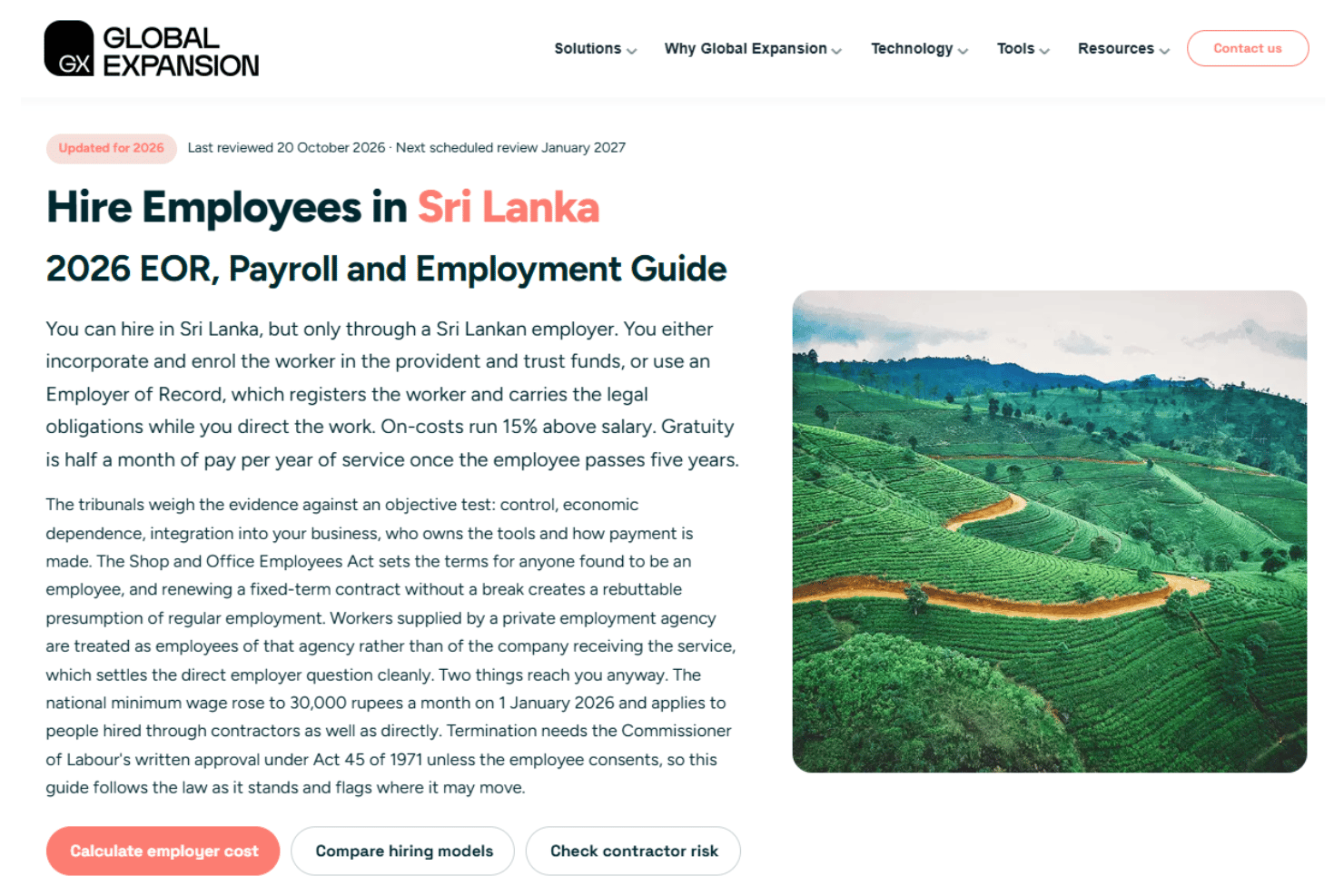
Global Expansion is an employer of record service operating across 200+ countries and territories. It handles employment contracts, payroll processing, statutory contributions, benefits administration, and immigration support for companies hiring in Sri Lanka without establishing a local entity.
Who Is Global Expansion Best For?
Global Expansion works well for companies hiring employees in Sri Lanka that want a named account manager and guidance on local employment, payroll, and tax requirements.
Why I Picked Global Expansion
I've included Global Expansion in my top picks because its advisory EOR model pairs named account managers with international payroll, employment compliance, and immigration services. I particularly like that its Client Services team coordinates onboarding and offboarding, including employment contracts, final payments, and statutory obligations. Global Expansion also supports contractor-to-employee conversions and provides access to GX One for managing employee records, expenses, and time off.
Global Expansion Key Features
- Named account manager: Clients have a named account manager for employment-related questions and coordination with Global Expansion's HR teams.
- Multi-currency payroll processing: Process employee payroll in local currencies, with foreign exchange charges applied where applicable.
- GX One platform: A device-agnostic platform covering time tracking, leave management, expense management, contract lifecycle management, and in-app messaging.
- Contractor-to-employee conversion: Transition existing contractors to local employment contracts to address potential worker misclassification risks.
Global Expansion Integrations
Global Expansion integrates with ADP Workforce Now for account linking, user assignment, and single sign-on (SSO). Its GX1 platform also supports integrations with selected HRIS/HCM, payroll, and email systems.
Pros and Cons
Pros:
- Sri Lanka guide details EPF, ETF, and income tax
- Local experts advise on regulatory changes
- Transitions contractors to employees
Cons:
- Upfront employee deposit required
- Country-specific EOR pricing requires a quote

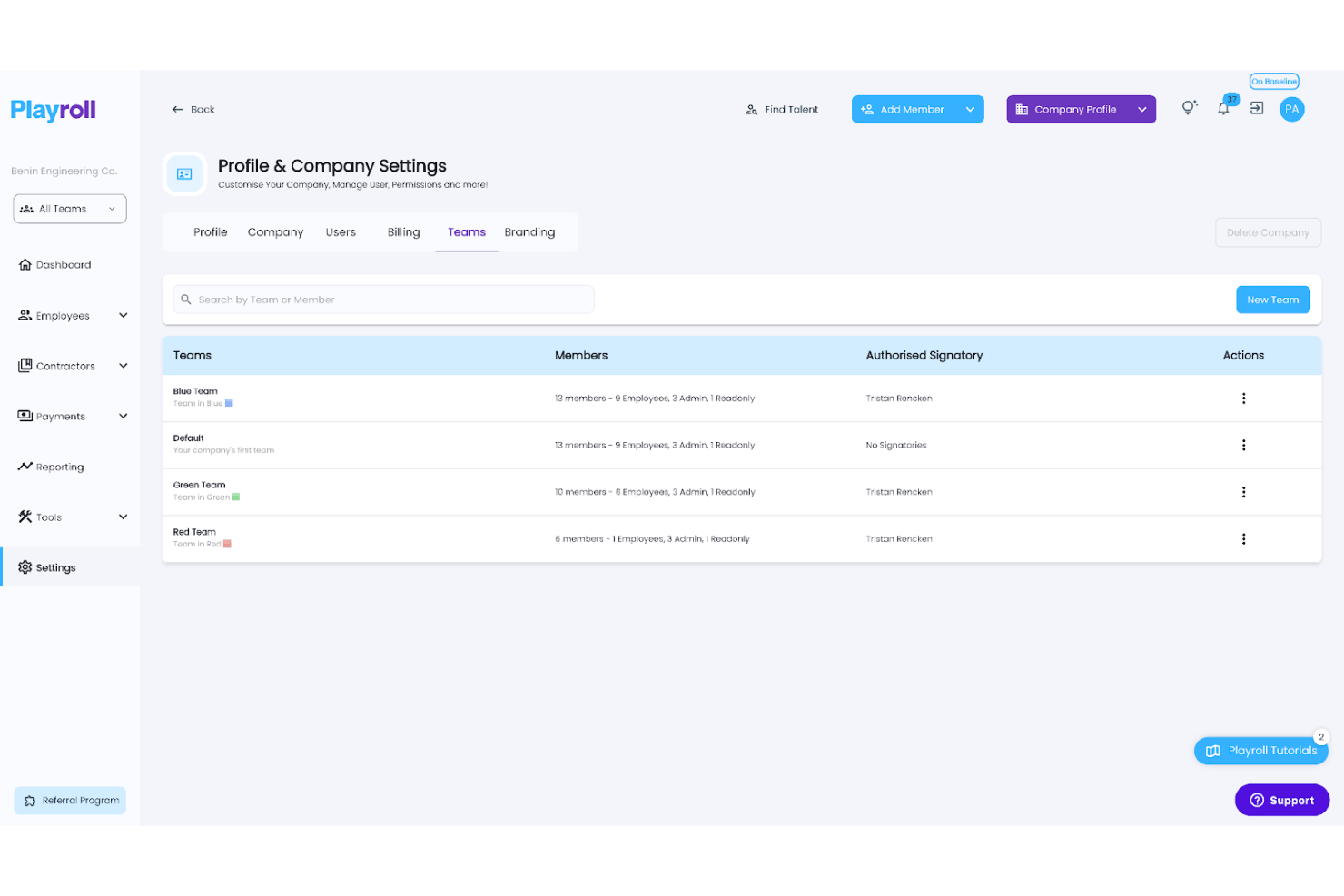
Playroll is a global employer of record platform that handles compliant employment contracts, LKR payroll processing, EPF/ETF/PAYE filings, benefits administration, and TEWA-compliant termination management for Sri Lanka hires.
Who Is Playroll Best For?
Playroll is a strong fit for startups and small businesses hiring their first Sri Lankan employee, particularly when TEWA-compliant termination management and transparent flat-rate pricing matter most.
Why I Picked Playroll
I picked Playroll because of its Sri Lanka-specific termination support, covering gratuity calculations, notice periods, and Labour Tribunal proceedings. Playroll also helps coordinate employee consent and Commissioner of Labour approvals when required under TEWA. Another reason I selected it is its monitoring of Wages Board updates, with contract and payroll adjustments to reflect applicable regulatory changes.
Playroll Key Features
- LKR payroll processing: Runs monthly payroll in Sri Lankan rupees with a 25th-of-the-month cut-off, covering EPF, ETF, and PAYE remittance and filings.
- Wages Board monitoring: Tracks Wages Board minimum wage updates and automatically revises employment contracts and payroll to reflect any changes.
- Employee self-service portal: Employees onboard themselves, request time off, submit expenses, upload documents, and view payslips through a dedicated portal.
- Global Entity Setup: Supports a transition from EOR to your own Sri Lankan private limited company without changing providers.
Playroll Integrations
Playroll offers two documented native integrations with HiBob and BambooHR, plus an Expensify partnership. It also provides an open API for custom integrations.
Pros and Cons
Pros:
- Responsive employee support
- Tracks Wages Board changes in contracts
- Detailed TEWA termination and tribunal support
Cons:
- Visa support listed as an additional service
- Limits custom benefit packages

Best for one-platform Sri Lanka hiring at scale
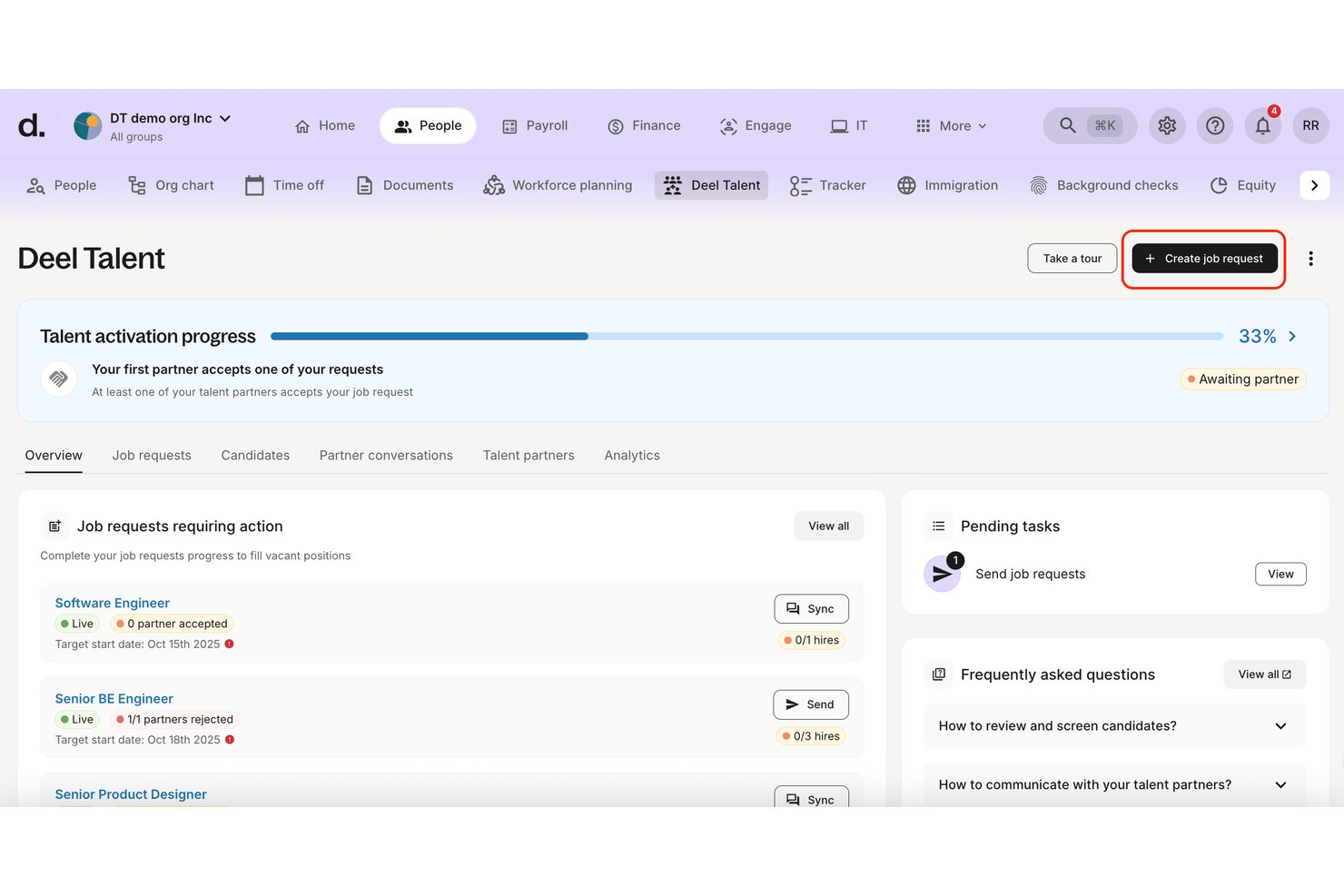
Deel is a global employer of record platform that handles Sri Lanka employment contracts, payroll, EPF/ETF contributions, and benefits administration without requiring you to set up a local entity.
Who Is Deel Hire Best For?
Deel Hire works well for scaling companies that need to hire multiple employees across Sri Lanka and other countries without managing separate tools or legal entities.
Why I Picked Deel Hire
I picked Deel Hire as one of the best because it supports Sri Lanka hiring alongside global workforce management through its employer of record platform. I particularly like that Deel handles employer EPF contributions of 12%, ETF contributions of 3%, monthly LKR payroll, and local tax administration. Deel also states that onboarding in Sri Lanka can take as little as three business days, depending on document completion. Localized benefits include statutory contributions and optional private healthcare through Unisure.
Deel Hire Key Features
- Earned wage access: EOR employees can withdraw a portion of their earned salary before the regular payday directly through the Deel platform.
- Multi-system integrations: Deel connects with HRIS tools such as BambooHR and HiBob, accounting platforms such as QuickBooks and Xero, and ATS tools such as Greenhouse and Ashby.
- Legal review on every termination: Deel's legal team reviews each termination request before proceeding, covering exits with cause, without cause, resignation, and mutual termination.
- SOC 1, SOC 2, and ISO 27001 compliance: Deel's platform meets major security certifications and uses AES-256 encryption with AWS-hosted infrastructure.
Deel Hire Integrations
Deel offers integrations with QuickBooks, Xero, NetSuite, Sage Intacct, BambooHR, HiBob, Personio, Greenhouse, Ashby, and Slack. API connectivity is also available for custom integrations.
Pros and Cons
Pros:
- Localized healthcare and statutory benefits available
- Legal review covers each termination request
- Payslip access gives employees payroll visibility
Cons:
- Statutory employer costs are separate from EOR fees
- Private healthcare requires an optional benefits plan

Remote
Best for owned-entity Sri Lanka hiring at flat rates
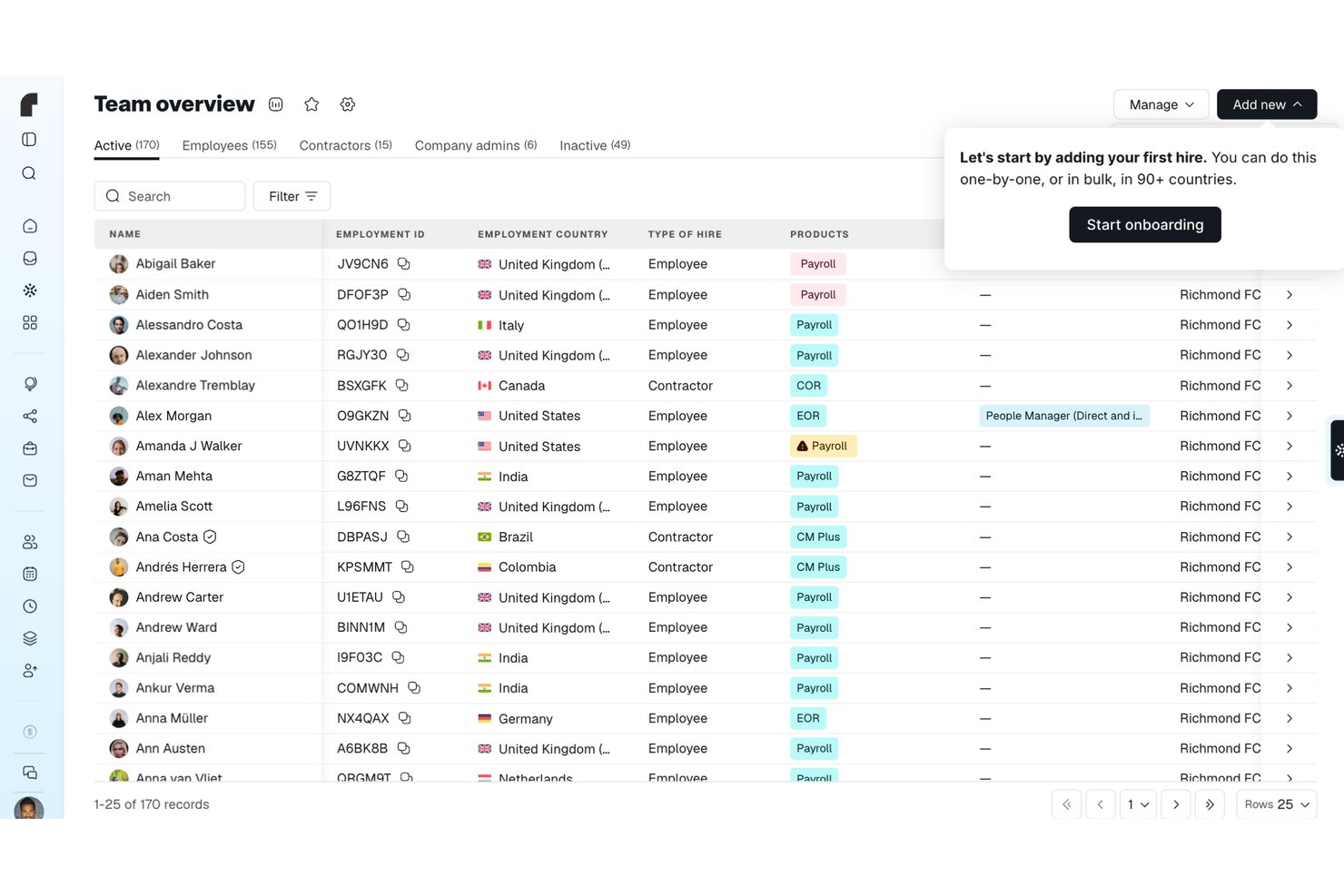
Remote is a payroll and employment provider that handles Sri Lanka EOR hiring through its own locally owned entity, covering compliant contracts, monthly LKR payroll, statutory benefits, and termination management.
Who Is Remote Best For?
Remote is a good fit for companies that want to hire in Sri Lanka without establishing a local entity, especially those that prioritize published EOR pricing and employment through a locally owned legal entity.
Why I Picked Remote
I picked Remote because it operates through its own legal entity in Sri Lanka rather than relying on a third-party employment partner. I also like its Compliance Watchtower feature, which monitors employment law changes and helps employers stay informed about regulatory updates. Remote IP Guard adds another layer of protection through intellectual property assignment clauses in employment agreements, making it relevant for companies hiring technical and product teams in Sri Lanka.
Remote Key Features
- Tiered supplementary benefits: Choose from four health insurance tiers, plus life insurance, mental health, and business travel plans for Sri Lanka employees.
- Multi-currency billing: Invoices are issued in 12 currencies, with a line-by-line breakdown of local LKR payroll and currency conversion.
- In-platform contract amendments: Generate employment letters, process contract changes, and manage resignations directly inside the Remote dashboard.
- HR system integrations: Connect Remote to Workday, BambooHR, HiBob, Personio, QuickBooks, Xero, and others via flexible field mapping.
Remote Integrations
Remote lists integrations with Workday, BambooHR, HiBob, Personio, QuickBooks, Xero, NetSuite, Okta, Greenhouse, and Slack, with flexible field mapping for HR integrations. It also supports Zapier.
Pros and Cons
Pros:
- Built-in tools track law changes and protect IP
- Dedicated specialists assist with employee onboarding
- Owns its Sri Lanka employing entity
Cons:
- Currency conversion rates may fluctuate
- Additional country-specific taxes may apply

Best for onboarding Sri Lanka hires via one dashboard
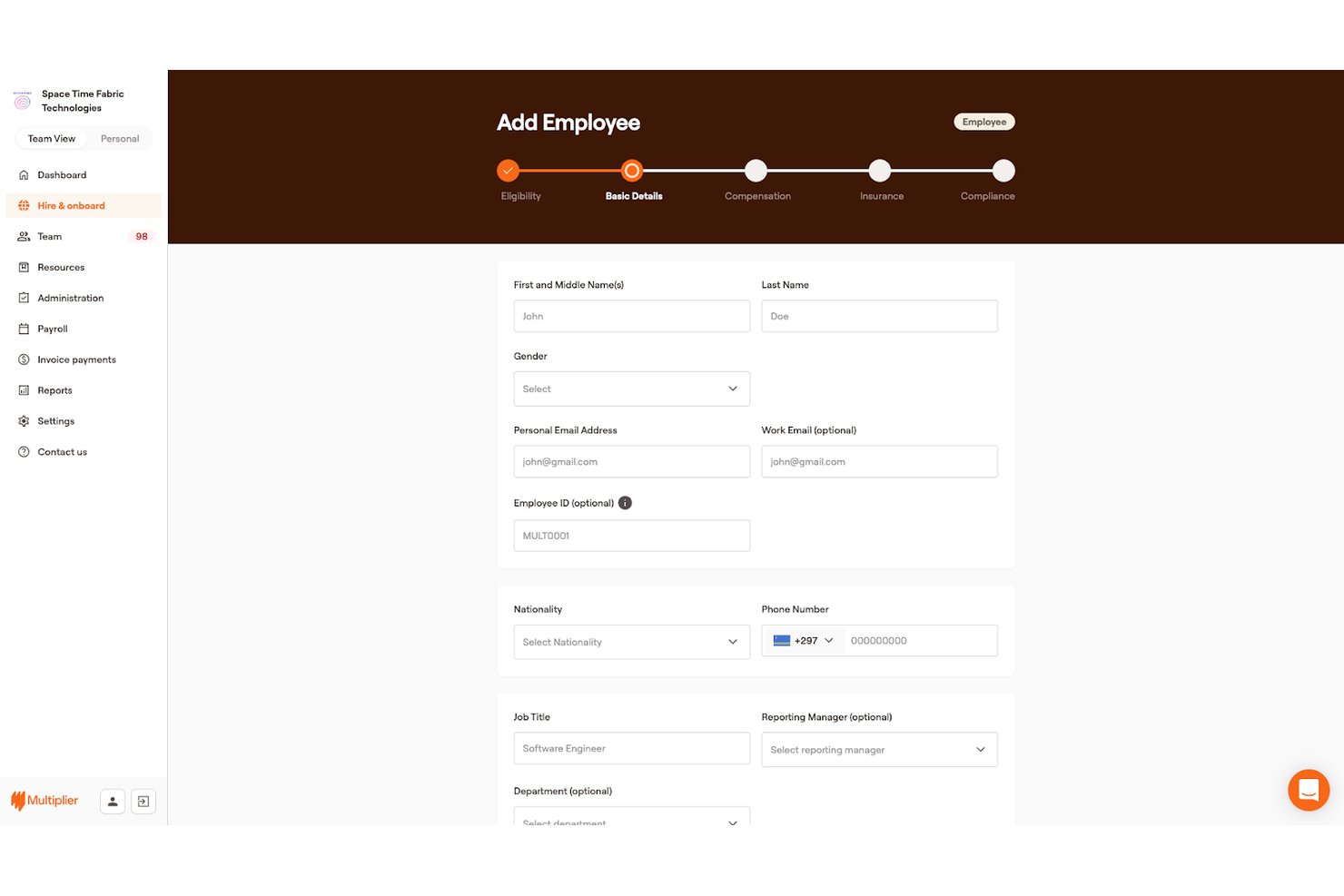
Multiplier is an employer of record platform that handles Sri Lankan employment contracts, EPF and ETF contributions, APIT withholding, benefits administration, and multi-currency payroll.
Who Is Multiplier Best For?
Multiplier suits startups and small businesses hiring in Sri Lanka for the first time, particularly those seeking published EOR pricing and statutory payroll administration without setting up a local entity.
Why I Picked Multiplier
I've included Multiplier in my top picks because it manages Sri Lankan payroll, employment contracts, and benefits through its EOR platform. I particularly like that it handles EPF and ETF contributions alongside APIT withholding and publishes worked examples of employer costs. Multiplier also supports generating employment contracts that account for Sri Lankan labor requirements, including statutory leave and termination provisions.
Multiplier Key Features
- Multi-currency payroll: Pay Sri Lanka employees in local currency while managing contracts and invoices across 120+ currencies from one dashboard.
- EOR contract generation: Create and send locally compliant employment contracts in under five minutes, with customizable compensation, benefits, leave, probation, and notice periods.
- Optional health and life insurance: Add health coverage for employees and their families from day one, with life insurance of up to $400K per person.
- Role-based access and audit logs: Control who sees what across your team with SSO, role-based permissions, and full audit trail logging.
Multiplier Integrations
Multiplier integrates with Workday, BambooHR, Personio, and HiBob for employee data synchronization and HR management. It also supports connections with existing business systems.
Pros and Cons
Pros:
- Generates localized employment agreements
- Timely payslip delivery
- Support for local employment compliance
Cons:
- HiBob integration supports one-way synchronization
- Contract modifications may incur additional fees
Best for HRIS-integrated Sri Lanka hiring at scale
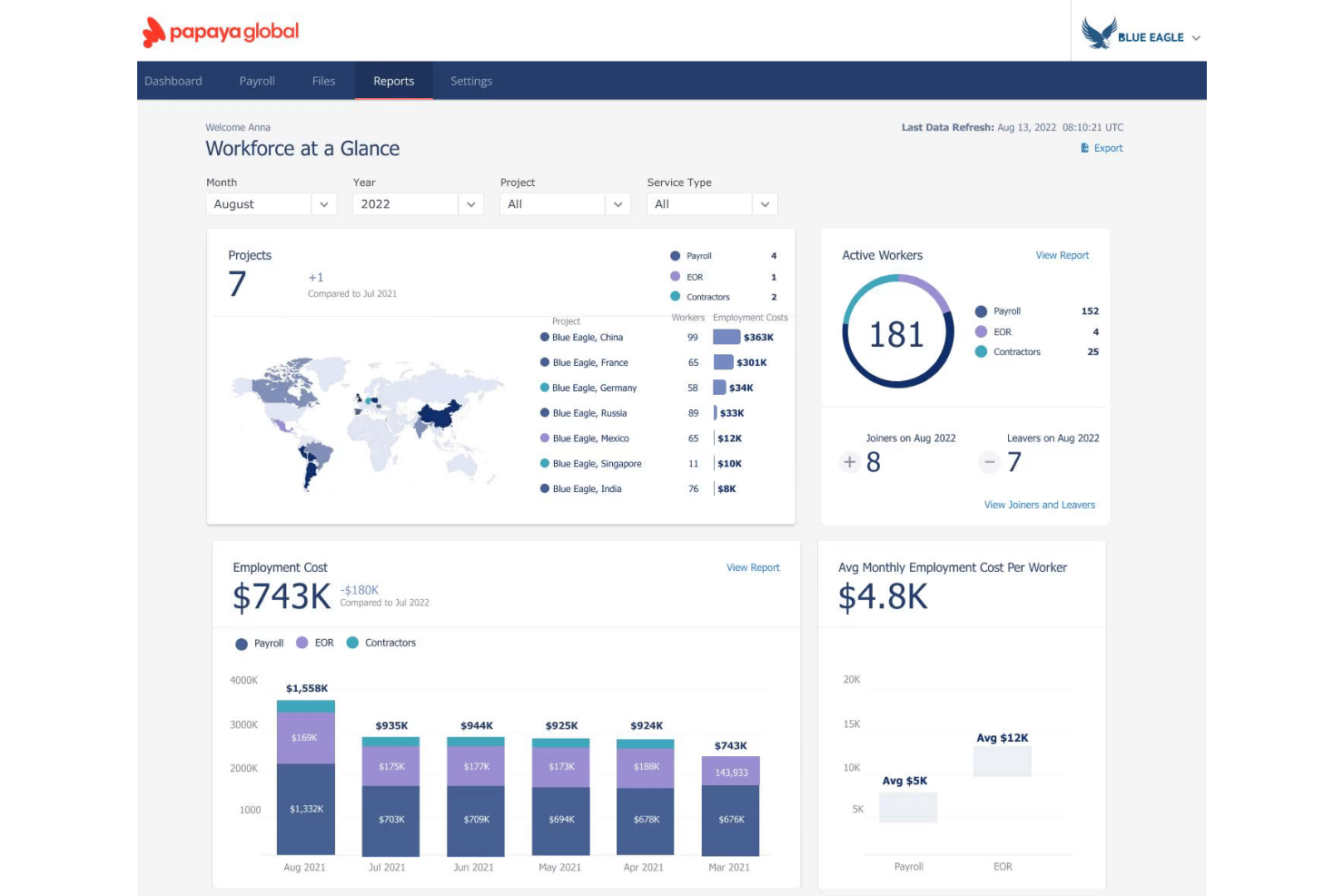
Papaya Global is a global employer of record platform that handles Sri Lanka payroll, statutory contributions, auto-generated employment contracts, benefits administration, immigration support, and termination management across a single system.
Who Is Papaya Global Best For?
Papaya Global is a strong fit for mid-size and enterprise HR teams that need to manage Sri Lanka hiring within a broader multi-country payroll and HRIS ecosystem.
Why I Picked Papaya Global
I picked Papaya Global because of its country-specific employment contracts, which undergo review by local legal experts, and its integrations with global payroll and HR systems. I also like its employment compliance and termination management services, particularly its approach to handling local labor requirements in Sri Lanka.
Papaya Global Key Features
- Multi-currency payroll payments: Papaya's OnePay product supports payroll funding in 15+ currencies across 160+ countries, with an FX Match Guarantee.
- HRIS and ERP integrations: Pre-built connectors link Papaya with Workday, SAP SuccessFactors, BambooHR, HiBob, Oracle HCM, and NetSuite, plus API access.
- Employee self-service app: Workers can access payslips, view employment documents, and report working hours through Papaya's mobile app.
- AI payroll validation: Papaya runs automated gross-to-net (G2N) checks and real-time payroll validation before each pay run to flag errors before they're processed.
Papaya Global Integrations
Papaya Global offers native, pre-built integrations with BambooHR and connectors for Expensify, along with its OneData integration technology. It also supports API access for custom connections and connectors across HRIS, ERP, finance, expenses, PTO, and vendor management systems.
Pros and Cons
Pros:
- Multi-country payroll suits expanding HR teams
- Employment contracts account for Sri Lankan labor requirements
- Delivers automated payroll validation
Cons:
- Less direct control over employment contracts and policies
- EOR services require a refundable deposit
Altri datori di lavoro ufficiali in Sri Lanka
Ecco alcune opzioni aggiuntive che non sono entrate nel mio elenco ristretto, ma che vale comunque la pena valutare:
- Payoneer Workforce Management
For employee self-service Sri Lanka hiring
- TopSource
For HRIS-connected Sri Lanka hiring
- G-P
For large-scale global hiring teams
- Safeguard Global
For consultative global hiring at scale
- Native Teams
For budget-conscious startup Sri Lanka hiring
- Asanify
For startups hiring in Sri Lanka via flat fees
- Remote People
For switching to a new Sri Lanka EOR provider
- GoGlobal
For EPF/ETF-compliant Sri Lanka payroll
- Teamed
For transparent flat-rate Sri Lanka hiring
- Tarmack
For startups hiring in Sri Lanka on a flat fee


How I Evaluate Sri Lanka Employer of Record
I split my evaluation into three parts. First, core functionality—can the provider legally employ workers in Sri Lanka and run compliant payroll with EPF/ETF deductions? This carries the most weight. Second, I look for standout features like employee self-service portals. Third, I consider support quality and pricing transparency.
Core Functionality (Table Stakes for This List)
When I'm selecting tools for my list, I score each one on a scale from 0 (does not offer the functionality) to 5 (excels in this area) for each core functionality listed below. I then convert the total into a percentage to help assess each tool's overall fit, with extra weight on any functionalities I've deemed essential.
- Local Legal Employment (Essential): I check whether the provider operates its own entity in Sri Lanka or relies on a third-party partner, and how transparent that arrangement is.
- Compliant Payroll Processing (Essential): I evaluate how each platform handles EPF/ETF deductions, income tax calculations, and statutory filings for Sri Lankan employees.
- Statutory Benefits Administration: Providers like Remote and Papaya Global differ in how they track gratuity, leave, and provident fund obligations, so I look at accuracy and employee visibility.
- Contract Localization: I look for contracts drafted to meet Sri Lankan labor law requirements, including role-specific terms and clauses that reflect the latest regulatory updates.
- Termination and Offboarding Support: Sri Lanka's Termination of Employment of Workmen Act adds complexity to offboarding, so I evaluate how each provider handles notice periods and severance.
- Multi-Currency Payment Disbursement: I check whether the platform pays in LKR with transparent exchange rates and predictable timelines, since delays can erode employee trust quickly.
Once I have a list of tools that meet the criteria, I consider what sets each platform apart.
Differentiating Factors (What Sets Vendors Apart)
Here's how I compare and contrast different vendors:
Standout Features
I look for rapid onboarding timelines, since some providers like Gloroots and Multiplier can activate Sri Lanka hires in days rather than weeks. That speed matters when you're competing for talent. I also evaluate employee self-service portals—can employees view payslips, track leave, and access tax documents on their own? This reduces back-and-forth for HR teams managing workers across time zones. Finally, I check whether a provider offers local HR expert support, because Sri Lanka's labor regulations require someone who understands in-country norms firsthand.
Beyond Features
I check whether providers publish flat per-employee fees or use percentage-of-salary models, since hidden setup charges and FX markups can quietly inflate costs across a growing Sri Lanka team. HRIS integration depth also matters—providers like Papaya Global and Multiplier offer API connections to tools like BambooHR or Workday, which cuts down on duplicate data entry when you're managing hires across multiple countries. I also evaluate support responsiveness during Sri Lankan business hours, because a payroll error that sits in a shared queue overnight can become a compliance issue by morning.
Come scegliere un datore di lavoro ufficiale in Sri Lanka
Scegli un EOR in Sri Lanka verificando se la sua configurazione del rapporto di lavoro, i calcoli delle buste paga e la procedura di cessazione sono adatti ai ruoli che intendi ricoprire.
| Se la tua priorità è... | Cerca... |
|---|---|
| Buste paga accurate | Un esempio dettagliato che mostri i contributi EPF/ETF, l'imposta sul reddito, la retribuzione netta e le responsabilità relative alle dichiarazioni |
| Responsabilità legale chiara | L'indicazione scritta dell'entità che assume il lavoratore e dell'eventuale utilizzo di un partner locale |
| Una procedura di cessazione prevedibile | Una procedura per valutare il preavviso, le approvazioni e l'eventuale applicabilità dei requisiti TEWA |
| Registri HR coerenti | Un approccio documentato ai registri dei dipendenti, alle buste paga e allo scambio di dati con l'HRIS |
Come valutare il tuo elenco ristretto
- Verifica un calcolo della busta paga: Richiedi un esempio per uno stipendio mensile ipotetico di 500.000 LKR, che mostri ogni detrazione, il contributo del datore di lavoro, la responsabilità relativa alla dichiarazione e l'importo del pagamento.
- Conferma la configurazione del rapporto di lavoro: Richiedi un esempio di contratto di lavoro conforme alla normativa dello Sri Lanka e una conferma scritta dell'entità legale che assume il lavoratore prima di firmare.
- Verifica uno scenario di cessazione: Invia un esempio scritto relativo a una cessazione proposta e richiedi una risposta che identifichi le approvazioni pertinenti, gli obblighi di preavviso e il modo in cui viene valutata l'applicabilità del TEWA.
- Confronta i modelli operativi: Scegli un'entità di proprietà diretta se la responsabilità locale diretta è la tua priorità; valuta un modello con partner dichiarato se la sua organizzazione del servizio soddisfa meglio le tue esigenze e indica nel contratto la parte che assume il lavoratore.
Cos'è un datore di lavoro ufficiale in Sri Lanka?
Un datore di lavoro registrato (EOR) in Sri Lanka è un'organizzazione terza che assume legalmente i lavoratori in Sri Lanka per conto della tua azienda. In genere gestisce le buste paga locali, i contributi obbligatori, i contratti di lavoro e altri aspetti amministrativi del rapporto di lavoro. La tua azienda dirige il lavoro quotidiano del dipendente, mentre l'EOR gestisce le responsabilità formali del datore di lavoro ai sensi della legge dello Sri Lanka.
Caratteristiche
Queste sono le principali caratteristiche che cerco in un datore di lavoro registrato in Sri Lanka:
- Assunzione locale: Il fornitore assume i lavoratori tramite la propria entità in Sri Lanka o un partner locale dichiarato. Verifica quale entità legale compare nel contratto di lavoro.
- Elaborazione delle buste paga: Il fornitore calcola la retribuzione lorda, le detrazioni e la retribuzione netta, quindi paga i dipendenti secondo il calendario previsto. Per lo Sri Lanka, chiedi come gestisce i contributi EPF ed ETF, l'imposta sul reddito e gli adempimenti obbligatori.
- Contratti localizzati: Il fornitore prepara contratti di lavoro che riflettono i requisiti del lavoro in Sri Lanka e le condizioni di ciascun ruolo. Verifica chi aggiorna i contratti quando cambiano le normative pertinenti.
- Gestione delle prestazioni obbligatorie: Il fornitore monitora i contributi obbligatori, i congedi e gli altri diritti applicabili derivanti dal rapporto di lavoro. Registri chiari aiutano sia i dipendenti sia le risorse umane a verificare saldi e obblighi.
- Gestione dell'inserimento: Il fornitore raccoglie i dati dei dipendenti, prepara i documenti e coordina la firma del contratto e la configurazione delle buste paga. Un processo definito aiuta i nuovi assunti a sapere cosa completare e quando.
- Supporto alla cessazione del rapporto: Il fornitore spiega i requisiti relativi al preavviso, le approvazioni e se la legge sulla cessazione del rapporto di lavoro dei lavoratori si applica a una cessazione proposta. Chiedi di ricevere per iscritto il processo e le responsabilità.
- Registri dei dipendenti e accesso autonomo: Un portale o un sistema condiviso può consentire ai dipendenti di accedere ai cedolini e ai documenti pertinenti delle risorse umane. Verifica quali registri possono consultare i dipendenti e come il tuo team può recuperarli.
- Supporto locale: Il fornitore offre assistenza HR per domande relative alle buste paga, alle condizioni di lavoro e alle procedure locali. Verifica gli orari di supporto, i canali di risposta e chi gestisce i casi specifici dello Sri Lanka.
- Erogazione degli stipendi: Il fornitore trasferisce gli stipendi ai dipendenti nella valuta concordata e spiega le tempistiche di pagamento e gli eventuali costi di cambio. Verifica come comunica i tassi di cambio e come risolve i pagamenti non riusciti.
Vantaggi
In base alla mia esperienza, i servizi EOR in Sri Lanka possono offrire diversi vantaggi pratici, tra cui:
- Assunzione locale: Un EOR assume i lavoratori tramite la propria entità in Sri Lanka o un partner locale, offrendo al tuo team un datore di lavoro locale definito per le responsabilità formali del rapporto di lavoro.
- Gestione delle buste paga: I servizi di gestione delle buste paga possono calcolare la retribuzione, i contributi EPF ed ETF, l'imposta sul reddito e gli adempimenti obbligatori per i dipendenti in Sri Lanka.
- Supporto localizzato al rapporto di lavoro: Contratti redatti localmente e indicazioni sui requisiti relativi al preavviso e sull'applicabilità della TEWA aiutano il tuo team a gestire le condizioni di lavoro e la cessazione del rapporto.
- Inserimento coordinato: La raccolta dei documenti, la firma del contratto e la configurazione delle buste paga seguono un processo definito per i nuovi assunti.
- Registri chiari dei dipendenti: Cedolini e documenti HR disponibili in un portale per i dipendenti o in un sistema condiviso offrono ai lavoratori accesso alle informazioni pertinenti sul rapporto di lavoro.
- Erogazione degli stipendi: I servizi di pagamento EOR possono inviare gli stipendi nella valuta concordata e chiarire le tempistiche di pagamento e i costi di cambio.
Costi e prezzi
I servizi EOR in Sri Lanka generalmente costano circa $300–$600 per dipendente al mese, a seconda del fornitore e dell'ambito dei servizi. Queste denominazioni dei piani non sono standard tra i fornitori EOR, e i costi obbligatori a carico del datore di lavoro e gli stipendi dei dipendenti sono generalmente aggiuntivi.
Tabella di confronto dei piani per un datore di lavoro registrato in Sri Lanka
| Tipo di piano | Prezzo medio | Caratteristiche comuni |
|---|---|---|
| Piano gratuito | Generalmente non disponibile | In genere non include l'assunzione tramite EOR, la gestione delle buste paga o gli adempimenti obbligatori. |
| Piano personale | $300–$500 per dipendente al mese | In genere include l'assunzione locale, l'elaborazione delle buste paga, la gestione dei contratti e la gestione di EPF/ETF. |
| Piano aziendale | $400–$600 per dipendente al mese | In genere include l'assunzione locale, l'elaborazione delle buste paga, la gestione delle prestazioni e il supporto all'inserimento. |
| Piano per aziende | Prezzi personalizzati | Può includere l'assunzione in più Paesi, il supporto dedicato alla gestione del profilo, reportistica personalizzata e un supporto HR ampliato. |
Domande frequenti
Ecco le risposte alle domande comuni sul datore di lavoro di riferimento in Sri Lanka:
Un EOR può assumere dipendenti in Sri Lanka senza che la mia azienda costituisca un'entità locale?
Sì. Un EOR può assumere un lavoratore in Sri Lanka tramite la propria entità o un partner locale dichiarato. In genere, la tua azienda non dovrà costituire un’entità locale per procedere all’assunzione. L’EOR figura come datore di lavoro legale, mentre il tuo team dirige il lavoro quotidiano del dipendente in base al contratto di servizio. Prima di firmare, conferma quale entità sottoscrive il contratto di lavoro e gestisce gli adempimenti relativi alle buste paga. Chiedi dettagli scritti sull’organizzazione locale del fornitore e sulle responsabilità di ciascuna parte.
Chi gestisce i contributi EPF ed ETF quando assumo tramite un EOR?
L’EOR dovrebbe calcolare e amministrare i contributi EPF ed ETF, ma il contratto dovrebbe specificare chiaramente le responsabilità di ciascuna parte. In pratica, l’entità datrice di lavoro gestisce gli obblighi contributivi e fiscali previsti dalla legge. In genere, la tua azienda finanzia lo stipendio e i costi a carico del datore di lavoro concordati tramite l’EOR. Richiedi un esempio di calcolo della busta paga che mostri le detrazioni a carico del dipendente, i contributi del datore di lavoro, l’imposta sul reddito, le date dei versamenti e il soggetto responsabile degli adempimenti. Chiedi inoltre come il fornitore conferma l’avvenuto pagamento e corregge eventuali errori. Quando prevedi la spesa complessiva per il personale, separa le detrazioni a carico dei dipendenti dai costi a carico del datore di lavoro.
Posso licenziare un dipendente dello Sri Lanka tramite un EOR?
Sì, ma coinvolgi l’EOR prima di comunicare una decisione definitiva o di porre fine al rapporto di lavoro. La legge sulla cessazione del rapporto di lavoro dei lavoratori, o TEWA, può richiedere un’approvazione preventiva per le cessazioni soggette alla normativa. La sua applicabilità dipende dal datore di lavoro, dal dipendente e dalle circostanze, quindi non dare per scontato che sia sufficiente il solo preavviso. Fornisci all’EOR i fatti per iscritto, inclusi il motivo, l’anzianità di servizio, il numero di dipendenti e la data finale proposta. Chiedigli di individuare le approvazioni applicabili, il preavviso, i calcoli relativi alle ferie o all’indennità di fine rapporto e la documentazione necessaria prima di agire.
Posso assumere qualcuno come collaboratore invece di utilizzare un EOR?
Un accordo con un EOR è concepito per i dipendenti; l’ingaggio di un collaboratore è un servizio e un accordo giuridico differenti. Non scegliere lo status di collaboratore esclusivamente per evitare i costi dell’EOR o la gestione locale delle buste paga. La corretta classificazione dipende dall’effettivo rapporto di lavoro e dalle norme applicabili in Sri Lanka, non solo dal titolo dell’accordo. Prima di ingaggiare qualcuno come collaboratore, esamina i fatti con un consulente legale locale o un professionista qualificato. Condividi l’organizzazione prevista con il tuo EOR e richiedi indicazioni scritte per sapere se rientra nell’ambito dei suoi servizi.