
10 beste alternativer til Factorial for HR-team i 2026

Kortliste over de beste Factorial-alternativene


Hvis du bruker Factorial, men støter på begrensninger – som tungvinte arbeidsflyter, begrensede tilpasningsmuligheter eller funksjoner som ikke skalerer med teamet ditt – er du ikke alene. Mange HR-medarbeidere kommer til et punkt der den nåværende programvaren deres ikke lenger holder tritt.
HR-plattformer bør gjøre arbeidshverdagen enklere ved å automatisere oppgaver som onboarding, registrering av fravær, medarbeidersamtaler og etterlevelse av regelverk. Hvis Factorial ikke gjør dette for deg, er det på tide å utforske bedre alternativer.
Som ekspert på HR-programvare, med erfaring fra vurdering av en rekke verktøy, har jeg undersøkt dusinvis av plattformer for å finne de beste alternativene. I denne artikkelen deler jeg mine beste anbefalinger som skiller seg ut sammenlignet med Factorial, slik at du kan finne en løsning som virkelig passer behovene dine.
Hva er Factorial?
Factorial er en programvare for virksomhetsstyring som er utviklet for å forenkle personaladministrasjonen. Den brukes ofte av HR-medarbeidere og eiere av små og mellomstore virksomheter som trenger effektive verktøy for håndtering av medarbeiderdata og HR-prosesser.
Funksjoner som onboarding og offboarding, tidsregistrering av medarbeidere, lønnshåndtering og støtte for medarbeidersamtaler hjelper med teamets HR-oppgaver og gjør dem enklere å håndtere. Plattformen inkluderer også en økonomimodul med verktøy for prosjektstyring og utgiftssporing, samt funksjoner for elektronisk signering som øker den administrative effektiviteten.
Alt i alt tilbyr Factorial en brukervennlig plattform som hjelper team med å håndtere HR-behovene sine på en effektiv måte.
Sammenligningstabell for Factorial-alternativer
Denne sammenligningstabellen oppsummerer priser, prøveperioder og demodetaljer for mine beste utvalgte Factorial-alternativer:
| Tool | Best For | Trial Info | Price | ||
|---|---|---|---|---|---|
| 1 | Best for benefits administration | Not available | From $599/employee/month | Website | |
| 2 | Best for improving employee engagement and company culture | Free demo available | Pricing upon request | Website | |
| 3 | Best for performance management insights | 14-day free trial | Pricing upon request | Website | |
| 4 | Best for customer service | Free demo available | From $5/employee/month | Website | |
| 5 | Best for global enterprise-level HR | Free demo available | Pricing upon request | Website | |
| 6 | Best for learning and employee development | Free trial + free demo available | From $5/user/month | Website | |
| 7 | Best for integrated talent management | Free demo available | Pricing upon request | Website | |
| 8 | Best for customizable enterprise HR | Free demo available | Pricing upon request | Website | |
| 9 | Best for combined HR and IT functions | Free demo available | Pricing upon request | Website | |
| 10 | Best for small business payroll for US companies | Free demo available | From $49/month + $6/user/month | Website |

Why Trust Our Software Recommendations
Our team has been testing and reviewing software since 2012. As HR experts ourselves, we know how difficult—and important—it is to choose the right software.
For this guide, we evaluated tools using hands-on testing and independent research, scoring tools using our selection criteria. We also draw on insights from industry thought leaders and practicing HR experts.
Our reviews reflect our human editorial judgment, not a sales pitch.
Expert reviewers:
Anmeldelser av de beste Factorial-alternativene
Nedenfor finner du mine detaljerte sammendrag av de beste Factorial-alternativene som kom med på kortlisten. Anmeldelsene mine gir en grundig gjennomgang av de viktigste funksjonene, fordelene & ulempene, integrasjonene og ideelle bruksområdene for hvert verktøy, slik at du kan finne det som passer best for deg.
Best for benefits administration
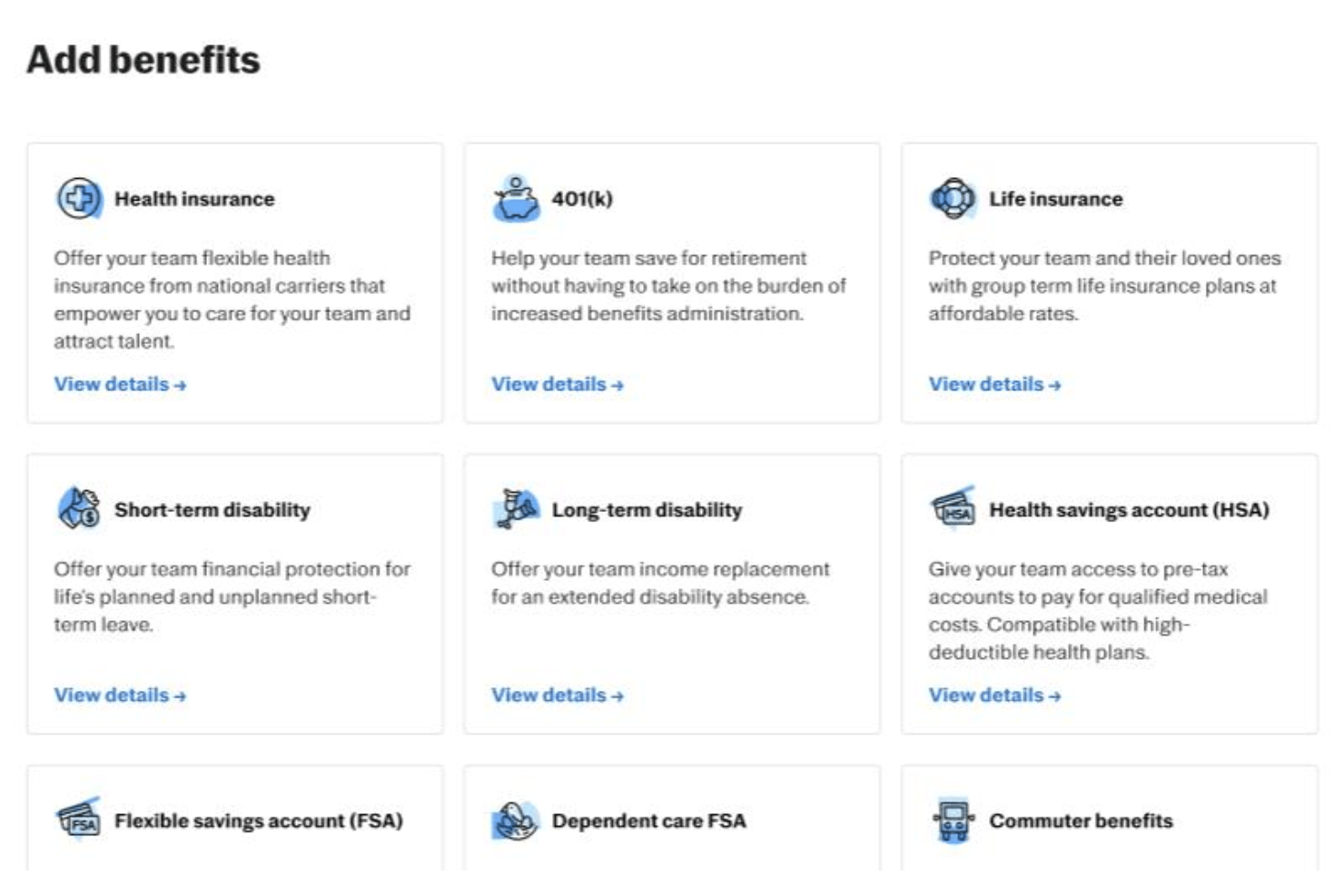
Justworks gives growing companies and people operations teams a centralized HR platform where they can manage payroll, benefits, onboarding, and compliance, removing the need for multiple vendors or complex admin tools.
Who Is Justworks Best For?
Small and midsize US-based businesses that want a unified HR platform with bundled payroll, benefits, and compliance support.
Why Justworks Is a Good Best Factorial Alternatives
I picked Justworks as one of the best because it lets my team manage payroll, compliance, and benefits administration together. I appreciate having medical, dental, vision, 401(k), and FSA all brokered directly through one HR platform.
Justworks Key Features
- Automated onboarding workflows: Set up new hires with document collection, e-signatures, and required forms in one place.
- Employee document management: Upload, organize, and securely store essential HR and compliance documents for easy access.
- Custom PTO policies: Create and apply your own paid time off accrual rules by team or location.
- Native payroll processing: Run payroll, manage direct deposit, and handle tax filings from the same dashboard.
Justworks Integrations
Justworks offers 20+ integrations, including QuickBooks, Xero, NetSuite, Sage Intacct, Greenhouse, JazzHR, Lever, 15Five, Leapsome, Carta, Brex, and Vanta.
Pros and Cons
Pros:
- Built-in compliance resources for US businesses
- Automated payroll with tax filing support
- Group health benefits available for small teams
Cons:
- Limited support for international workforces
- No built-in performance management tools
HiBob
Best for improving employee engagement and company culture

HiBob is a modern HR platform that helps midsize companies manage employee data, performance, and culture. It offers tools that cater to HR professionals looking to improve employee engagement and streamline HR processes.
Why HiBob is a good Factorial alternative: HiBob provides customizable workflows that allow your team to tailor HR processes to fit your company's culture and needs. You can also deepen your company culture through employee connection features, including customizable org charts, shoutouts, and clubs to support social bonding.
HiBob's flexibility in customizing employee engagement features makes it an appealing choice for those seeking an alternative to Factorial.
Standout features & integrations:
Features include onboarding workflows that ensure new hires are welcomed warmly and integrated smoothly into your team, and pulse survey tools so you can check in with your staff and monitor employee engagement regularly.
Other features include time-off management, which simplifies tracking and approving leave requests, and performance management tools that help you set goals and conduct reviews efficiently.
Lastly, their analytics and reporting tools provides insights into workforce metrics, aiding in strategic planning.
Integrations include Slack, Microsoft Teams, Google Workspace, Zoom, LinkedIn, Workday, Xero, QuickBooks, Greenhouse, and DocuSign.
Pros and Cons
Pros:
- Smooth onboarding process
- Strong employee engagement tools
- Effective performance management
Cons:
- Basic time-off tracking features
- Limited advanced customization

Sloneek
Best for performance management insights

Sloneek is an HR management system designed to enhance employee management and engagement throughout the entire employee lifecycle. It offers a wide range of features that cover everything from recruitment and onboarding to performance management and offboarding.
Why Sloneek is a good factorial alternative: I picked Sloneek as a great factorial alternative because of its robust performance management tools. With features like 360-degree feedback and KPI tracking, you can keep a close eye on your team's development and ensure everyone is aligned with your organizational goals. These tools provide meaningful insights into employee performance, making it easier for you to make informed decisions.
Another reason I chose Sloneek is its comprehensive time management capabilities. Time tracking, absence management, and attendance systems are all included, allowing you to effectively manage your team's work hours and absences. This ensures that you have a clear overview of your team's availability, which is crucial for planning and productivity.
Standout features & integrations:
Features include AI-driven surveys that enhance employee engagement by collecting valuable feedback. The system also offers a whistleblowing mechanism, which provides a secure way for employees to report concerns. Additionally, Sloneek supports remote work, helping your team stay connected and productive no matter where they are.
Integrations include Google Calendar, Jira, Google Workspace, and MS Active Directory.
Pros and Cons
Pros:
- Fast and responsive customer support
- Strong time tracking tools
- Advanced feature set
Cons:
- Initial setup can be complex
- Limited integration options

GoCo
Best for customer service

GoCo is an all-in-one HR platform designed for small and mid-sized businesses. It helps teams manage core HR tasks like onboarding, benefits administration, payroll, and compliance in one place.
Why GoCo is a good Factorial alternative: GoCo is a good choice for small businesses because they offer dedicated Customer Success Managers for every customer, meaning you’ll have solid support in place to set their system up according to your needs.
I also appreciate how CoGo offers modular pricing, meaning you can save money by only paying for the modules you actually need.
Standout features & integrations:
Features include modules for recruiting (including an applicant tracking system and digital offer letters), onboarding, and time and attendance.
There's also a talent management module, including a performance review tool, to help track goals and feedback throughout the year.
In addition, the system offers digital document management tools that lets you send, sign, and store HR paperwork online. Plus, you can build custom workflows to match how your team actually works, without needing to code.
Integrations include QuickBooks, ADP, Gusto, Slack, Google Workspace, Microsoft 365, Zoom, Paychex, and Zapier.
Pros and Cons
Pros:
- Efficient time-off tracking
- Secure document storage
- Customizable workflows
Cons:
- Limited mobile app features
- Limited advanced reporting
Workday
Best for global enterprise-level HR

Workday is a cloud-based human capital management (HCM) software solution designed for medium to large enterprises. It offers tools for managing HR, payroll, and talent management needs within a single platform.
Why Workday is a good Factorial alternative: Workday provides AI integration that enhances decision-making and automates routine HR tasks. Its predictive analytics offer insights into workforce trends, helping you make informed decisions.
With built-in dashboards, you can visualize key workforce metrics without manual reporting. The platform also includes sentiment analysis, allowing you to measure employee well-being and engagement over time.
Standout features & integrations:
Features include workforce planning tools that help you anticipate and prepare for future staffing needs, including talent shortages. It also includes AI-powered analytics that help detect workforce gaps before they become an issue.
The compensation management feature, which incorporates global benchmarking data, helps you manage employee pay and benefits efficiently, across all your operations.
Lastly, their integrated learning management system supports employee development and links training initiatives to skill development.
Integrations include Salesforce, Microsoft Azure, Google Cloud, ServiceNow, Slack, Okta, Box, Adobe, IBM, and SAP.
Pros and Cons
Pros:
- Scalable for large enterprises
- Advanced compensation management
- Comprehensive talent management
Cons:
- Steeper learning curve
- Complex initial setup

Workleap
Best for learning and employee development

Workleap is an HR software platform designed to help HR teams focus on enhancing employee engagement and productivity. It offers tools to streamline HR functions, making it suitable for organizations adapting to hybrid and remote work environments.
Why Workleap is a good Factorial alternative: Workleap's focus on employee engagement and learning and development sets it apart from Factorial. Specifically, Workleap offers an integrated learning management system (LMS), which supports employee training and development, enhancing skills and career growth.
You can also easily build custom courses using AI-backed course generator tools, or rely on existing e-learning content which is already pre-loaded into the system.
Standout features & integrations:
Features include employee engagement surveys that help your team gather feedback and improve workplace culture, and interactive org charts that provide a clear view of team structures and roles.
The platform's automated onboarding helps new hires integrate smoothly, while skills development tracking supports continuous employee growth.
Lastly, Workleap’s performance management tools help teams track and improve employee performance, and include customizable workflows.
Integrations include Slack, Microsoft Teams, Google Workspace, Zoom, LinkedIn, Workday, BambooHR, QuickBooks, Salesforce, and ADP.
Pros and Cons
Pros:
- Skills development tracking
- Automated onboarding processes
- Effective performance management
Cons:
- Limited mobile app features
- Basic analytics features
UKG Pro
Best for integrated talent management

UKG Pro is a comprehensive HR and payroll solution designed to help large enterprises manage their workforce effectively. It provides tools for payroll, talent management, and employee experience enhancement.
Why UKG Pro is a good Factorial alternative: UKG Pro offers integrated talent management, combining recruiting, onboarding, and performance management into one platform.
It also offers succession planning tools that help your team identify and nurture talent within the organization, making it a valuable tool for talent-driven companies.
Overall, UKG Pro's focus on providing an all-encompassing talent management experience makes it an appealing choice over Factorial.
Standout features & integrations:
Features include payroll management, recruiting and onboarding, and performance management tools that support continuous employee growth and development.
Their employee engagement tools help you measure and improve workplace satisfaction, and their workforce analytics feature provides insights into HR metrics, aiding in strategic decision-making.
Integrations include Salesforce, Microsoft Azure, Google Workspace, SAP, Oracle, Workday, ADP, QuickBooks, Slack, and LinkedIn.
Pros and Cons
Pros:
- Scalable for large enterprises
- Detailed workforce analytics
- Integrated talent management
Cons:
- Limited customization options
- Complex initial setup
Dayforce
Best for customizable enterprise HR

Dayforce is a comprehensive human capital management platform designed to help large enterprises to manage their workforce. It provides payroll, workforce management, and talent management solutions all in one place.
Why Dayforce is a good Factorial alternative: Dayforce offers a continuous payroll feature that ensures accurate processing and compliance, while workforce management allows you to optimize scheduling and labor costs.
Dayforce also offers advanced workforce analytics, providing HR teams with insights into workforce trends such as absenteeism and performance. Plus, their compliance management tool ensures adherence to labor laws and regulations, reducing risk for your team.
Its workforce management features, in particular, makes it a strong alternative to Factorial.
Standout features & integrations:
Features include a benefits administration module that helps you manage and deliver employee benefits effectively, with deductions carried over to payroll to reduce administrative work.
Dayforce also offers talent management tools that support recruitment, learning, and employee development.
Integrations include Salesforce, SAP, Oracle, Microsoft Dynamics, ADP, Kronos, QuickBooks, Workday, BambooHR, and LinkedIn.
Pros and Cons
Pros:
- Scalable for large enterprises
- Effective compliance management
- Advanced analytics capabilities
Cons:
- Steeper learning curve
- Complex initial setup

Rippling is a unified HR and IT management platform designed for small to medium-sized businesses. It allows teams to manage payroll, benefits, and employee devices from a single interface.
Why Rippling is a good Factorial alternative: Compared to Factorial, Rippling stands out because they built app and device management (basic IT) into their HR platform.
You can remotely manage and protect employees’ devices (laptops, smartphones, tablets) as well as easily manage workforce apps like Google Workspace, Slack, and Office 365.
Rippling's integration of HR and IT functions into one system provides a streamlined experience compared to Factorial.
Standout features & integrations:
Features include onboarding workflows that automate the setup process for new employees, ensuring a smooth transition, and time and attendance tracking, which helps you monitor employee hours and manage schedules.
Its payroll feature ensures accurate and timely payments, including across borders if needed, while the benefits administration allows you to manage employee benefits easily.
Lastly, their reporting and analytics feature provides insights into HR and IT metrics, aiding in strategic planning.
Integrations include QuickBooks, Slack, Microsoft Office, Google Workspace, Salesforce, Dropbox, Zoom, Asana, GitHub, and Okta.
Pros and Cons
Pros:
- Insightful reporting and analytics
- Efficient device management
- Unified HR and IT management
Cons:
- Initial setup complexity
- Steeper learning curve

Gusto is a cloud-based HR management tool tailored for small to medium-sized businesses. It's used by HR teams to manage payroll, benefits, and employee onboarding efficiently.
Why Gusto is a good Factorial alternative: Gusto focuses on making payroll easy for small U.S. companies. You can run payroll automatically, handle tax filings, and pay employees by direct deposit.
It also helps you manage health benefits and workers’ comp in one place. In addition, you can sync your current 401(k) plan details directly to Gusto, and even integrate your broker into their HR solution so they can manage your benefit plans on your behalf.
If you're mainly looking for a tool to manage US-based payroll and benefits, Gusto keeps things simple and focused.
Standout features & integrations:
Features include hiring and onboarding tools that let you send offer letters and collect e-signatures. You can track time and set paid time off policies that sync with payroll. There’s also an employee self-service portal so your team can update their own info and view pay stubs.
Integrations include QuickBooks, Xero, FreshBooks, Clover, TSheets, Deputy, When I Work, Boomr, and Expensify.
Pros and Cons
Pros:
- User-friendly onboarding
- Efficient benefits management
- Customizable payroll workflows
Cons:
- No mobile app
- Basic reporting capabilities
Andre Factorial-alternativer
Her er noen flere Factorial-alternativer som ikke kom med på kortlisten min, men som likevel er verdt å sjekke ut:
- Deel HR
For global HR
- BambooHR®
For ease of use
- Keka HR
For employee-centric payroll and attendance
- Paycor
For mid-sized frontline workforces
- Employment Hero
For Canadian HR and payroll
- Paycom
For employee self-service
- Breathe HR
For detailed leave management
- ADP Workforce Now
For payroll compliance
- Greenhouse
For talent acquisition
- Lattice
For collecting employee feedback


How I Evaluate Factorial Alternatives
I break my evaluation into two layers: the baseline HR capabilities a tool must cover—like absence tracking and employee records—and the differentiators that make one platform a better fit than another.
Core Functionality (Table Stakes For This List)
When I'm selecting tools for my list, I rank each one on a scale from 0 (does not offer the functionality) to 5 (excels in this area) for each core functionality listed below. Then, I calculate the tool's total score into a percentage. Each tool needs to achieve a minimum total score of 75% to be considered for inclusion.
- Core HR Management: I look for a centralized employee database where you can store contracts, compensation details, and org charts—not just a basic contact directory.
- Time & Attendance Tracking: Whether it's shift-based teams clocking in via mobile or salaried staff logging project hours, I check for flexible time capture and approval workflows.
- Leave & Absence Management: I evaluate how each tool handles PTO requests, custom leave policies, and team absence calendars that managers can actually use for planning.
- Payroll Processing or Integration: Some platforms like Gusto run payroll natively while others like BambooHR connect to external providers—either way, I look for reliable pay data syncing.
- Onboarding & Offboarding Workflows: A good alternative should let you build task sequences for new hires—document collection, e-signatures, welcome emails—without manual follow-up.
- Performance Management Tools: I evaluate whether the platform supports structured review cycles, goal tracking, and continuous feedback beyond a simple notes field.
Once I have a list of tools that meet this criteria, I consider what sets each platform apart.
Differentiating Factors (What Sets Vendors Apart)
Here's how I compare and contrast different vendors:
Standout Features
Employee self-service is a big differentiator—I check whether staff can update their own details, download payslips, and submit requests without pinging HR. Reporting and analytics matter too, especially when you need to pull turnover or headcount data for leadership reviews. A native mobile app rounds things out, giving managers the ability to approve leave or review timesheets from anywhere.
Beyond Features
Pricing transparency is something I always evaluate—some platforms bundle everything into one plan while others charge per module, so I look at whether you can clearly predict costs as your headcount grows. Integration depth matters just as much, especially connecting to tools like QuickBooks or Xero for payroll reconciliation. I also consider how well a platform fits specific team sizes, since a tool built for 50-person companies may feel clunky at 300 or bare-bones at 15.
Hvorfor se etter et Factorial-alternativ?
Selv om Factorial er et godt valg av HR-system, finnes det flere grunner til at noen brukere ser etter alternative løsninger. Det kan hende du ser etter et Factorial-alternativ fordi …
- Du trenger mer avanserte rapporteringsfunksjoner
- Teamet ditt trenger bedre tilpasningsmuligheter
- Du utvider virksomheten utover Factorials geografiske dekning
- Du ønsker flere integrasjoner med eksisterende verktøy
- Teamet ditt trenger en mer skalerbar løsning
- Du ønsker bedre sikkerhet og etterlevelse av regelverk
Hvis noe av dette høres kjent ut, har du kommet til rett sted! Listen min inneholder flere HR-systemer som passer bedre for team som møter disse utfordringene med Factorial og er på utkikk etter en bedre løsning.
Viktige funksjoner i Factorial
Her er noen av de viktigste funksjonene i Factorial, slik at du kan sammenligne hva alternative løsninger tilbyr:
- Tidsstyring: Verktøy for håndtering av ansattes forespørsler om fri, registrering av arbeidstid og planlegging av skift.
- Talentstyring: Funksjoner for oppfølging av ansattes prestasjoner, talentanskaffelse, introduksjon av nyansatte, opplæringsadministrasjon og måloppfølging.
- Lønn: Sentralisert lønnsforberedelse, elektroniske signaturer for dokumenter og integrasjon med lønnstjenesteleverandører.
- Økonomi: Håndtering av ansattes og selskapets utgifter, i tillegg til funksjoner for prosjektstyring.
- Dokumenthåndtering: Sikker lagring og håndtering av dokumenter, inkludert digitale signaturer og tilgangskontroll.
- Medarbeiderportal: En plattform der ansatte kan administrere arbeidstiden sin, få tilgang til personlige dokumenter og holde seg oppdatert om selskapets arrangementer.
- Rapporter og analyser: Tilpassbare rapporteringsverktøy for å analysere ansattes prestasjoner og produktivitet.
- Mobilapp: Gjør det mulig for brukere å håndtere HR-oppgaver på farten, inkludert inn- og utstempling og innsending av forespørsler om fri.
- Organisasjonskart: Automatisk oppdaterte kart som visualiserer teamstruktur og roller.