

10 beste registrerte arbeidsgivere i Nigeria i 2026

Beste registrerte arbeidsgivere i Nigeria – kortliste


En registrert arbeidsgiver (EOR) i Nigeria ansetter teamet ditt juridisk, håndterer lokal ansettelsesadministrasjon og lar deg ansette uten å opprette en nigeriansk juridisk enhet.
Den beste registrerte arbeidsgiveren i Nigeria for organisasjonen din bør støtte ansettelse i samsvar med regelverket, pålitelig lønnsutbetaling og en positiv medarbeideropplevelse. Sammenlign disse leverandørene basert på gebyrer, utbetalingsalternativer, HR-støtte, integrasjoner og hvor godt de passer for teamets størrelse og arbeidsordninger.
Why Trust Our Software Recommendations
Our team has been testing and reviewing software since 2012. As HR experts ourselves, we know how difficult—and important—it is to choose the right software.
For this guide, we evaluated tools using hands-on testing and independent research, scoring tools using our selection criteria. We also draw on insights from industry thought leaders and practicing HR experts.
Our reviews reflect our human editorial judgment, not a sales pitch.
Expert reviewers:
Sammenligningstabell: Registrerte arbeidsgivere i Nigeria
Sammenlign priser og spesifikasjoner side om side for de registrerte arbeidsgiverne i Nigeria som kom med på kortlisten min.
| Tool | Best For | Trial Info | Price | ||
|---|---|---|---|---|---|
| 1 | Best for hiring in Nigeria via AI-assisted HR | Free demo available | From $499/employee/month | Website | |
| 2 | Best for crypto-funded Nigerian payroll | Free demo available | From $199/employee/month | Website | |
| 3 | Best for analyst-ranked flat-fee Nigeria hiring | Free demo available | From $599/employee/month | Website | |
| 4 | Best for transparent pricing on Nigerian hires | Free demo available | From $599/employee/month | Website | |
| 5 | Best for dedicated HR and employee support in Nigeria | Free demo available | From $399/employee/month | Website | |
| 6 | Best for Nigerian payroll with project-site cover | Not available | From $199/employee/month | Website | |
| 7 | Best for all-in-one HR and payroll in Nigeria | Free demo available | Upon request | Website | |
| 8 | Best for hiring in Nigeria with USD payout option | Free demo available | From $599/employee/month (billed annually) | Website | |
| 9 | Best for multi-currency Nigerian worker payouts | Free demo available | From $459/employee/month (billed annually) | Website | |
| 10 | Best for Nigerian compliance with HRIS sync | Free demo available | From $549/employee/month | Website |


Anmeldelser av registrerte arbeidsgivere i Nigeria
Nedenfor finner du mine sammendrag av de beste registrerte arbeidsgiverne i Nigeria som kom med på kortlisten min. Anmeldelsene mine undersøker hver tjenestes støtte til etterlevelse, lønn og HR-funksjoner for å hjelpe deg med å finne det som passer best.

Horizons
Best for hiring in Nigeria via AI-assisted HR
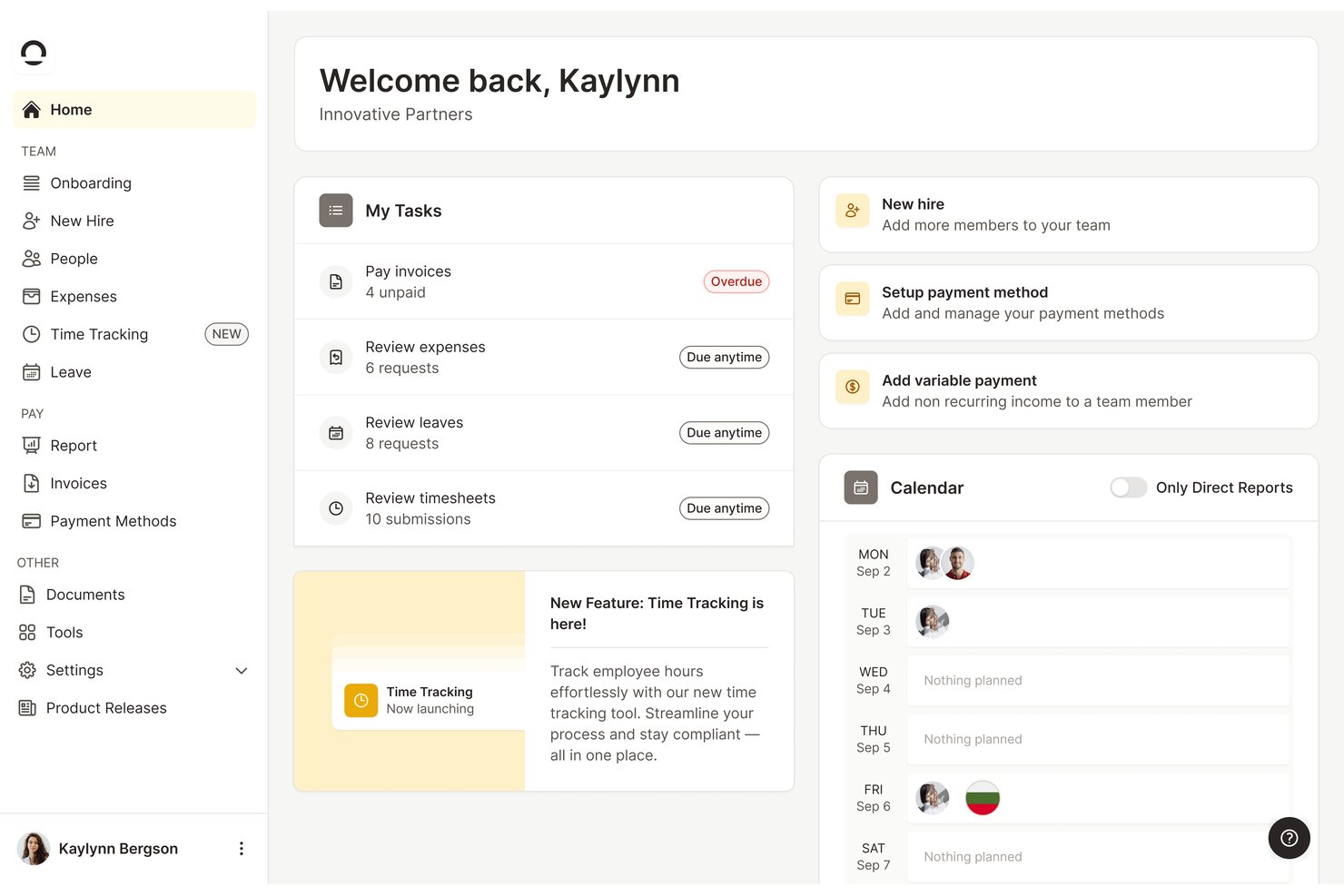
Remote People (formerly Horizons) is an employer of record platform that lets you hire full-time employees in Nigeria without a local entity, handling payroll in NGN, statutory contributions, locally compliant contracts, and termination support through an AI-assisted HR interface.
Who Is Remote People Best For?
Remote People works well for startups and SMBs hiring their first Nigerian employees without a local entity, especially teams that want a single platform to handle payroll, compliance, and onboarding.
Why I Picked Remote People
Remote People earns its spot on my shortlist because its AI Command Center lets you initiate onboarding, employee changes, and offboarding in plain English, with a human expert reviewing sensitive actions before they are processed. I particularly like how its Nigeria guidance covers statutory contributions, including PenCom pension, NHIA, NSITF, and ITF, alongside applicable deadlines. The recruitment service is also worth noting: in-country recruiters can help source vetted Nigerian candidates alongside the EOR setup, with hiring timelines and replacement terms agreed in advance.
Remote People Key Features
- Visa and work permit support: Remote People sponsors work permits and CERPAC applications for foreign hires in Nigeria, covering routes like STR, TWP, and investor visas.
- Recruitment bundle: In-house recruiters provide vetted candidate shortlists, typically within five days, with a six-month replacement guarantee subject to the agreed recruitment terms.
- Multi-country consolidated billing: Manage international employees and contractors through one platform with consolidated invoicing and local-currency payroll.
- Equipment and expense management: Employees can submit expenses through the self-service portal, while IT equipment provisioning is available as an additional service.
Remote People Integrations
Remote People does not publicly specify Nigeria-specific native HRIS integrations. QuickBooks and Xero are listed for its US payroll service, so buyers should confirm compatibility with their existing systems during onboarding.
Pros and Cons
Pros:
- Reviewers praise quick payroll and document answers
- AI-assisted HR actions receive expert review
- Nigeria guidance details statutory remittance deadlines
Cons:
- Reviewers report slower post-sale support responses
- Nigerian employing entity ownership remains undisclosed

Gloroots
Best for crypto-funded Nigerian payroll
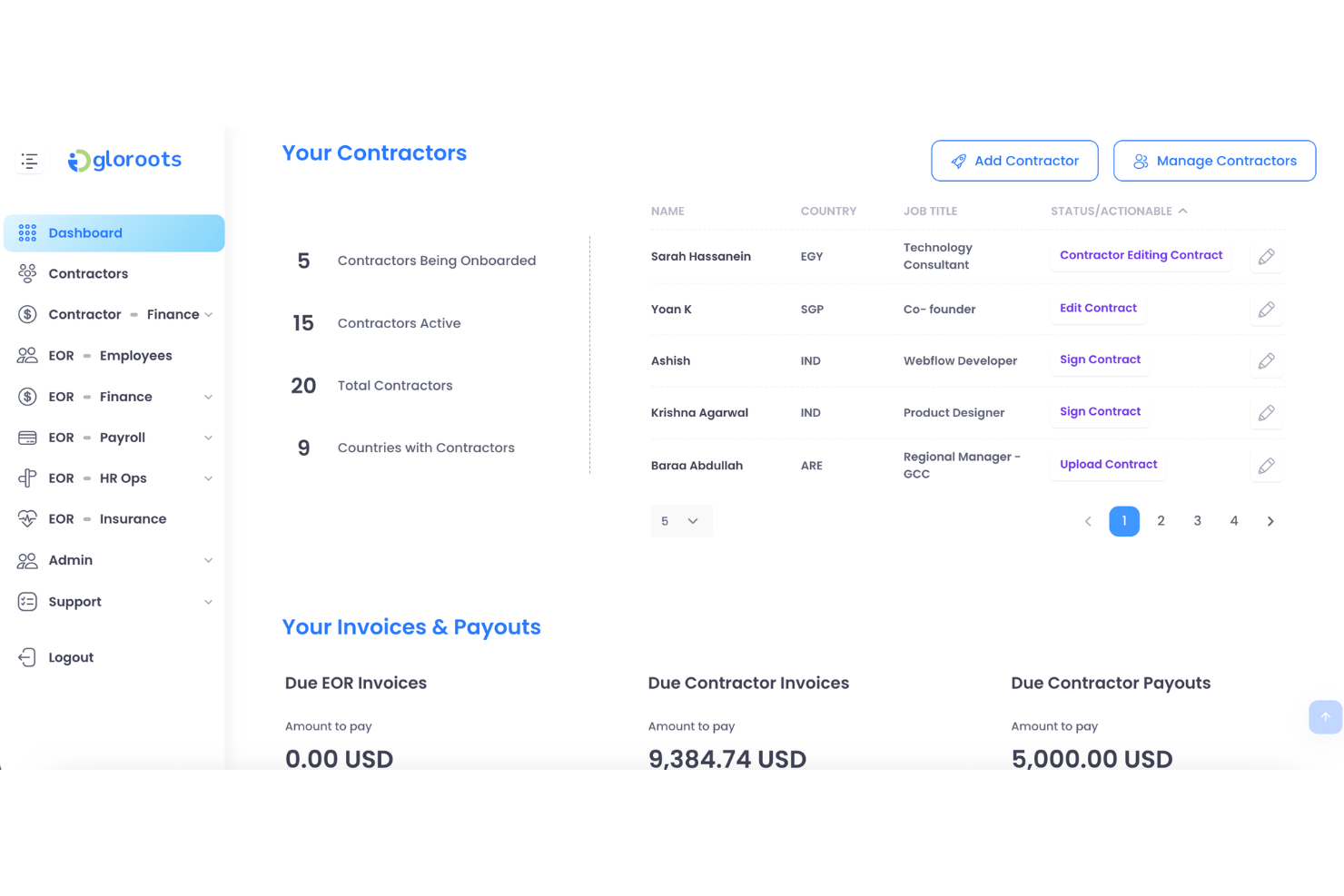
Gloroots is a global employer of record platform that handles Nigerian payroll, statutory compliance, contract generation, and benefits administration across 150+ countries without requiring you to set up a local entity.
Who Is Gloroots Best For?
Gloroots is a strong fit for startups and lean global teams that want to hire in Nigeria quickly, without entity setup, at a predictable monthly cost.
Why I Picked Gloroots
I've included Gloroots in my top picks because it supports crypto pay-ins for its EOR service, which can be useful for startups managing payroll from digital-asset treasuries. Gloroots also offers Naira payroll, currency conversion, and statutory compliance support for Nigerian employment. I also like that it covers visa and work permit support, including STR visas and CERPAC permits, which is genuinely useful when relocating foreign talent into Nigeria.
Gloroots Key Features
- Employee self-service portal: Employees can manage employment documentation through Gloroots, while payroll records and payslips are accessible through its centralized platform.
- Multi-country coverage: Gloroots supports hiring across 150+ countries from a single platform, so you're not locked into a Nigeria-only tool as your team grows.
- Statutory registration management: Before the first payroll run, Gloroots registers new hires for PAYE, a licensed pension fund administrator, NSITF, and NHIA.
- Free employer cost calculator: A built-in calculator estimates your total employer cost in Nigeria, including statutory contributions like pension, NSITF, and ITF, before you commit to hiring.
Gloroots Integrations
Gloroots lists connections to Workday, SAP SuccessFactors, Oracle, and BambooHR, though native status isn’t clearly documented. Enterprise plans include an API, SSO, and SCIM provisioning for custom connectivity.
Pros and Cons
Pros:
- Crypto pay-ins supported for EOR
- Nigeria-specific statutory filing coverage
- Responsive human support
Cons:
- Few Nigeria-specific independent reviews
- Conflicting statutory compliance thresholds

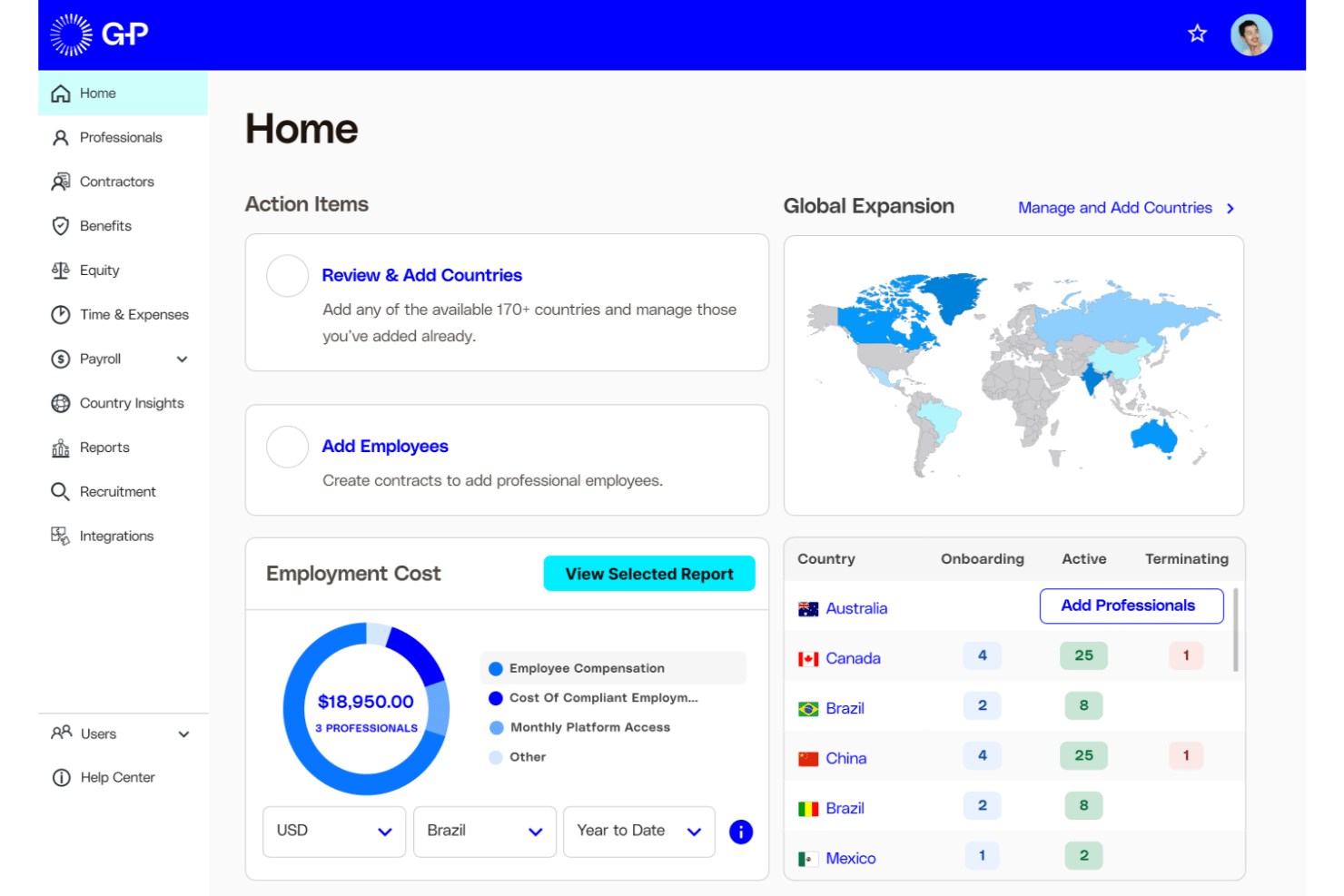
G-P is a global employer of record platform that lets you hire workers in Nigeria without setting up a local entity, handling local payroll, statutory contributions, employment contracts, and benefits administration.
Who Is G-P Best For?
G-P is a strong fit for global expansion teams and startup founders who need a recognized, analyst-ranked EOR to hire in Nigeria at a predictable flat monthly fee.
Why I Picked G-P
I picked G-P as one of the best because it's consistently ranked by NelsonHall and Everest Group as an EOR leader, which matters when you need a defensible, credentialed partner for Nigeria hiring. Its Global Compliance Engine generates locally compliant Nigerian contracts automatically, covering statutory requirements like Naira-denominated pay and fixed-term versus indefinite structures. G-P also handles PAYE, pension contributions, NHF, and NSITF directly, so your team isn't tracking those obligations manually.
G-P Key Features
- AI-guided onboarding: G-P walks new Nigerian hires through the onboarding process automatically, including right-to-work checks and contract delivery.
- HCM integrations: Connect G-P directly to platforms like BambooHR, Workday, SAP SuccessFactors, and HiBob to sync employee data across your HR stack.
- Statutory benefits administration: G-P manages mandatory Nigerian benefits including pension contributions, NHF, NSITF, and legally required leave entitlements.
- Role-based access control: Set permissions by user role across your account, so the right people access payroll, contracts, and employee records.
G-P Integrations
G-P offers integrations with BambooHR, HiBob, Personio, SAP SuccessFactors, UKG Pro, UKG Ready, and Workday, plus Google Workspace, Microsoft Entra ID, and Okta. A developer API supports custom integrations.
Pros and Cons
Pros:
- Recognized by NelsonHall and Everest Group
- Reviewers often praise responsive customer support
- Manages Nigerian PAYE, pension, NHF, and NSITF
Cons:
- No Nigerian visa or work-permit support
- Nigeria guidance cites outdated minimum-wage information
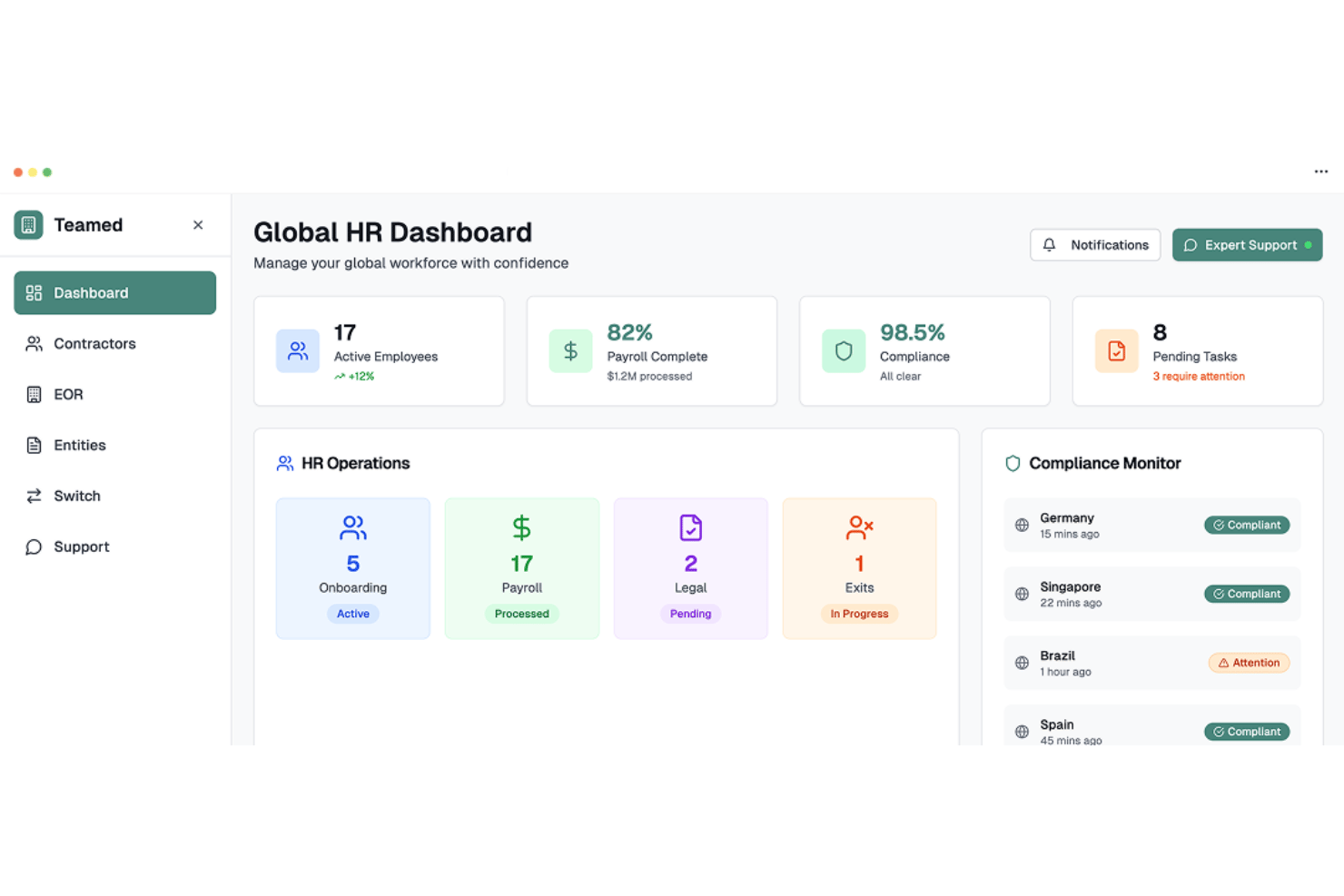
Teamed is an employer of record platform that handles legal employment, payroll, tax compliance, and contract generation across 187+ countries, with dedicated country specialists and locally drafted employment contracts for each market.
Who Is Teamed Best For?
Teamed is a good fit for mid-market companies hiring in Nigeria that want flat, predictable pricing with no FX markup and a named local specialist on every account.
Why I Picked Teamed
I picked Teamed as one of the best because its pricing is published, flat, and free of FX markup, which matters when you're paying salaries in naira. You'll see exactly what you're paying: a fixed fee per employee, employer pension contributions at 10% of monthly pay, and statutory deductions passed through at cost. I also like that every account gets a named Nigerian HR and legal specialist, not a ticket queue, so PAYE filings and Labour Act terminations get handled by someone who actually knows Nigerian employment law.
Teamed Key Features
- Lawyer-drafted employment contracts: Local legal specialists prepare contracts aligned with Nigerian employment requirements, with onboarding possible within 24 hours once terms are confirmed.
- Named country specialist: Every account gets access to dedicated HR and legal expertise for Nigerian employment questions, rather than relying solely on automated support.
- Gross-to-net payroll automation: Teamed manages Nigerian payroll calculations, PAYE withholding, pension contributions, and other applicable statutory obligations, with itemized payroll records.
- Contractor-to-EOR-to-entity pathway: Move workers from contractor arrangements to EOR employment and eventually to your own Nigerian entity, with transition support and cost modelling to identify when setting up an entity makes financial sense.
Teamed Integrations
Teamed lists 19 integrations, including Personio, BambooHR, HiBob, Workday, QuickBooks, Xero, Sage, Greenhouse, Okta, and Zapier; only Personio has published sync documentation. There’s no self-serve public API, so confirm availability for your HR or payroll stack during onboarding.
Pros and Cons
Pros:
- G2 reviewers praise responsive human support
- NGN payroll without FX markup
- Named Nigerian HR and legal specialist
Cons:
- Requires a refundable deposit equal to one month's gross salary, plus upfront funding of the first month's employment costs
- G2 reviewers report delayed onboarding contracts

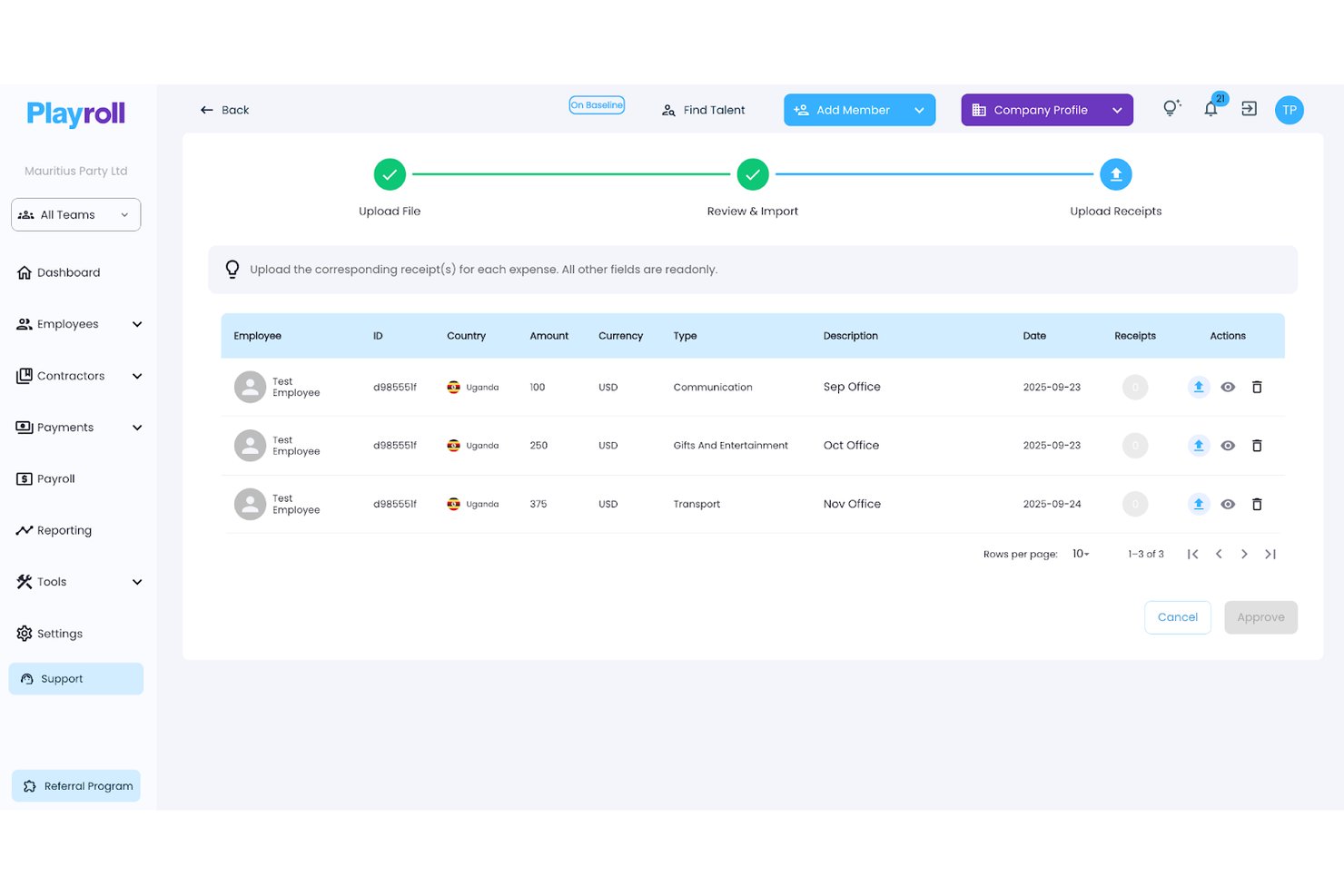
Playroll is an employer of record platform covering Nigeria and 180+ countries, handling local employment contracts, PAYE and statutory filings, Naira payroll, and compliance management for pension, NSITF, NHF, and ITF obligations.
Who Is Playroll Best For?
Playroll is a strong fit for HR teams and startup founders hiring their first Nigerian employees who want dedicated, named support contacts alongside compliance handling.
Why I Picked Playroll
I picked Playroll as one of the best because it assigns both a dedicated Customer Success Manager and a dedicated Employee Success Manager to every account, which means your Nigerian hires get a named human contact for HR queries, not a support queue. I love that this dual-support model extends to employees directly, covering payslips, leave requests, and onboarding questions without routing everything through your internal team. Playroll also handles applicable PAYE, pension, NSITF, NHF, and ITF obligations in Nigeria, coordinating filings and remittances according to local requirements.
Playroll Key Features
- Labour Act–aligned contract generation: Playroll drafts employment contracts in English that include required clauses on pay, hours, leave, notice periods, and termination grounds.
- Multi-statutory filing management: Playroll manages applicable PAYE, pension, NSITF, NHF, and ITF registrations, filings, and remittances according to Nigerian requirements.
- Employee self-service portal: Your Nigerian hires can access payslips, documents, time-off requests, and expense submissions directly through the platform.
- Entity setup pathway: Playroll offers a route to transition from EOR to establishing your own in-country legal entity as your Nigeria headcount grows.
Playroll Integrations
Playroll documents integrations with BambooHR, HiBob, Expensify, and Mesh. It also offers an API for custom integrations.
Pros and Cons
Pros:
- Lagos presence supports African expansion
- Nigeria-specific PAYE, pension, and NSITF filings
- Named CSM and ESM support employees directly
Cons:
- Nigeria-specific supplemental benefits remain unclear
- Conflicting Nigerian tax, wage, and onboarding guidance
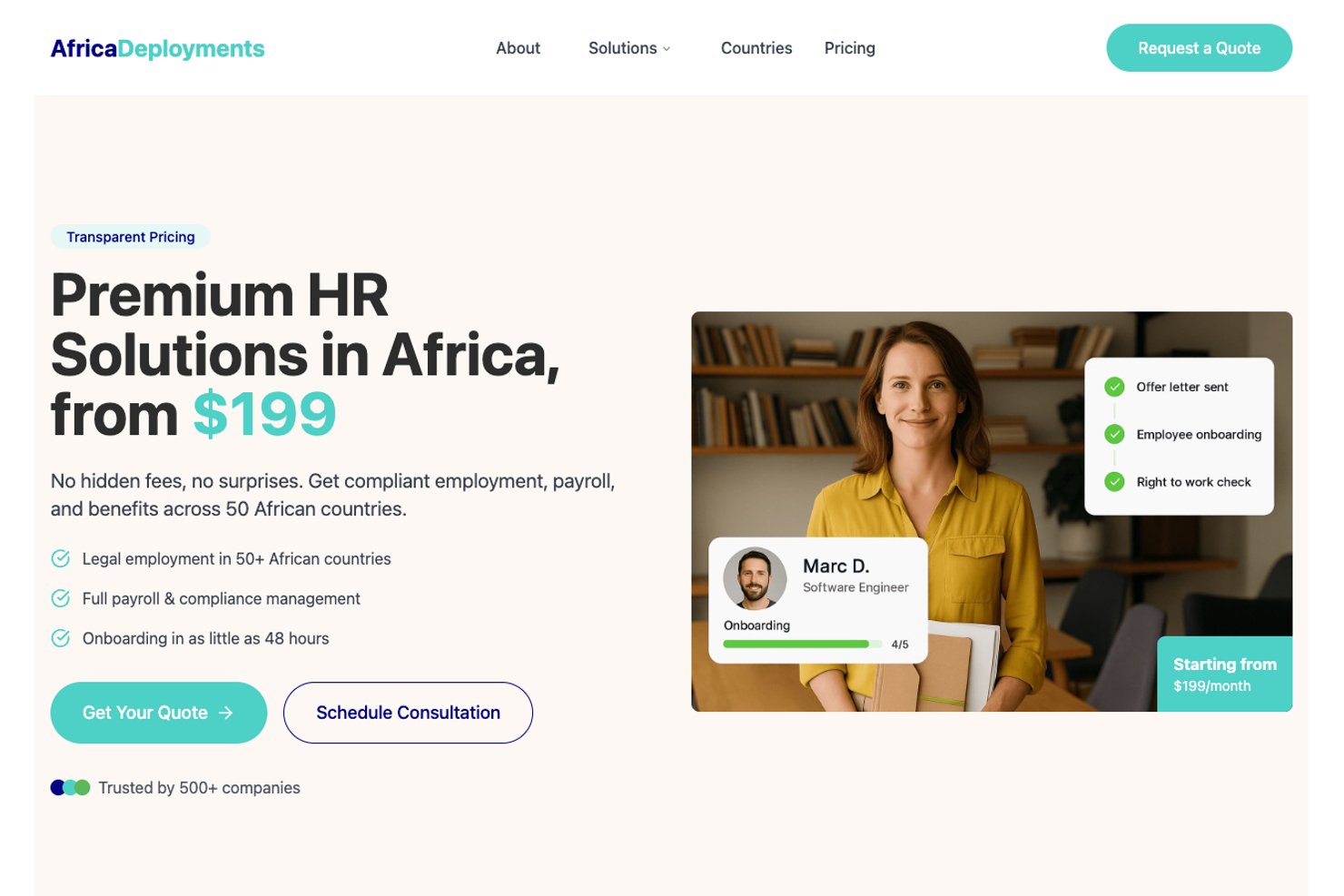
Africa Deployments is an Africa-focused employer of record service covering 50+ countries, with Nigeria-specific payroll processing, statutory compliance, employment contracts, benefits administration, and termination support.
Who Is Africa Deployments Best For?
Africa Deployments is a good fit for HR teams and global companies hiring in Nigeria that want local payroll, statutory compliance, and employment support from a provider specializing in African markets.
Why I Picked Africa Deployments
I included Africa Deployments because it combines Nigerian employment administration, payroll, statutory compliance, and immigration assistance with broader workforce support across Africa. Its Nigeria EOR service covers employment contracts, benefits, tax withholding, and offboarding, while its additional cross-border payment and invoice settlement services can help companies manage international financial operations.
Africa Deployments Key Features
- Nigerian payroll and tax administration: Processes local payroll, PAYE withholding, pension and NHF contributions, and payslip generation for employees hired through its Nigerian EOR service.
- Payroll compliance support: Coordinates Nigerian tax deductions, statutory remittances, and payroll documentation to help employers meet local reporting obligations.
- Work permit and visa processing: Manages work permit applications, cross-border relocation, and visa documentation for international employees hired in Nigeria.
- Multi-currency invoice settlement: Offers a separate invoice settlement service supporting conversions from African currencies into USD, EUR, GBP, and AUD for international payments.
Africa Deployments Integrations
Africa Deployments does not publicly list named native integrations or a customer-facing API marketplace. Its payroll guidance discusses HRIS connectivity, bank connectors, and APIs, but buyers should confirm the available integration options for their Nigerian EOR arrangement.
Pros and Cons
Pros:
- Expat permit support for field operations
- Cross-border payments and invoice settlement available
- Nigerian payroll includes statutory deduction checks
Cons:
- Few independent reviews verify service quality
- Nigerian entity ownership remains unclear

Rippling
Best for all-in-one HR and payroll in Nigeria
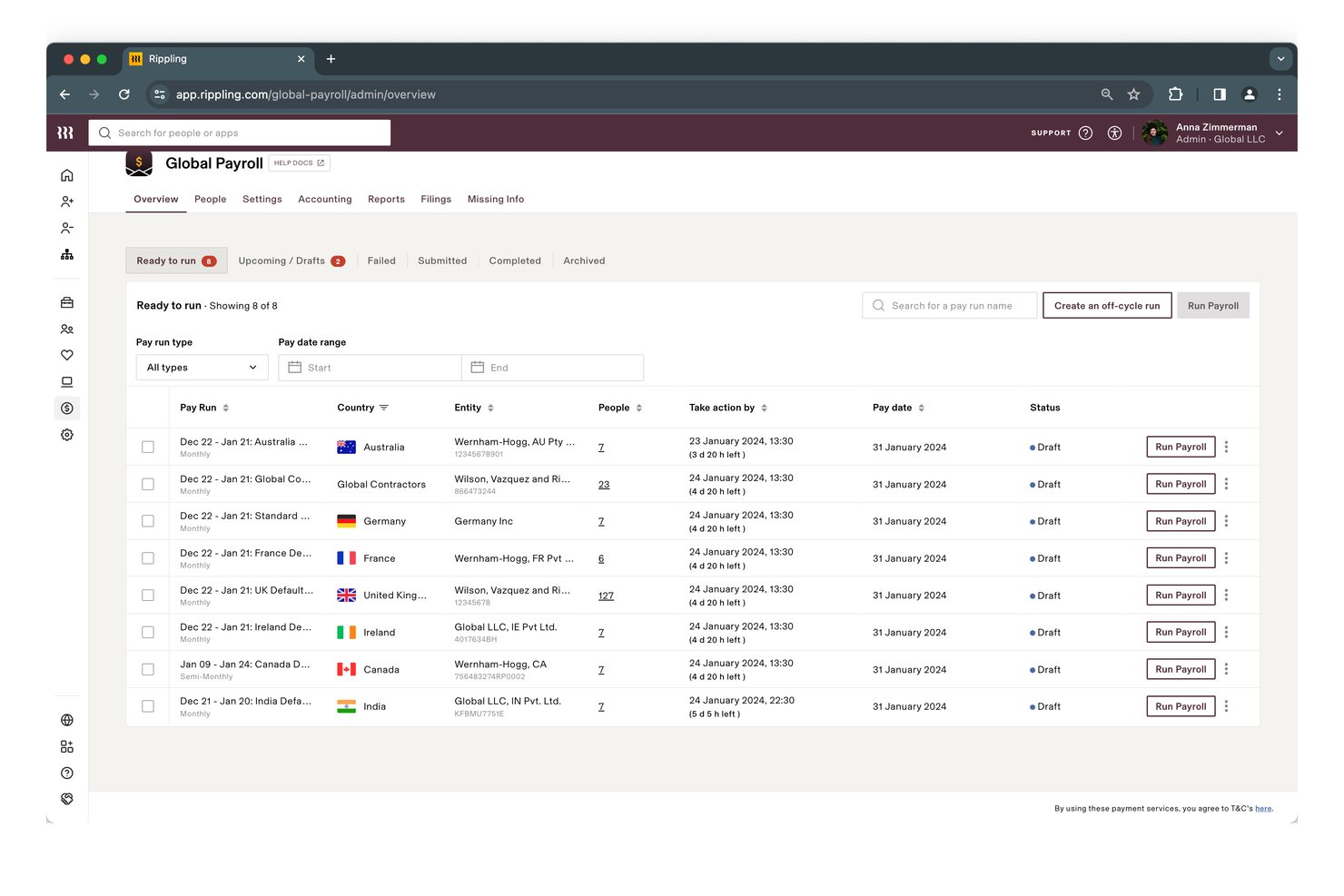
Rippling is an all-in-one HR and EOR platform that combines local employment, payroll processing, contract generation, benefits administration, and IT management across 80+ countries, including Nigeria.
Who Is Rippling Best For?
Rippling is a strong fit for global expansion teams that already use—or want—a single platform to manage HR, IT, and payroll across multiple countries.
Why I Picked Rippling
I've included Rippling in my top picks because it's the only platform where HR, payroll, and IT management sit in one place, which matters when you're scaling across multiple countries at once. For Nigeria specifically, Rippling's EOR service manages local payroll and compliance obligations, including PAYE, pension contributions, and NSITF, through its centralized platform. It also generates localized employment agreements during onboarding.
Rippling Key Features
- Global EOR payroll: Manage employee payroll across multiple countries through Rippling's centralized platform, with local payroll processing and tax compliance support for Nigerian EOR employees.
- IT and device management: Provision and deprovision app access and wipe devices as part of employee onboarding and offboarding workflows.
- Workflow automation: Automate HR tasks like benefits enrollment and access permissions using built-in triggers tied to employment events.
- Employee self-service portal: Employees access pay stubs, documents, time off balances, and HR policies through a mobile app and web dashboard.
Rippling Integrations
Native integrations with specific third-party vendors aren’t clearly documented for Rippling’s Nigeria EOR. The service operates within Rippling’s unified HR, payroll, benefits, time tracking, expenses, performance, IT, and spend platform.
Pros and Cons
Pros:
- Reviewers praise onboarding and offboarding automation
- Fast payroll cycles with local-currency payouts
- Unified HR, payroll, and IT management
Cons:
- IT and device management require separately priced products.
- Nigeria hiring guide still displays outdated PAYE tax bands.
New Product Updates from Rippling

Rippling Expands Automated Compliance With AI Workflows
Rippling expands Automated Compliance with multi-framework support, AI workflows, an audit portal, and trust centers. These updates help GRC teams manage compliance work and audits. For more information, visit Rippling’s official site.

Remote
Best for hiring in Nigeria with USD payout option
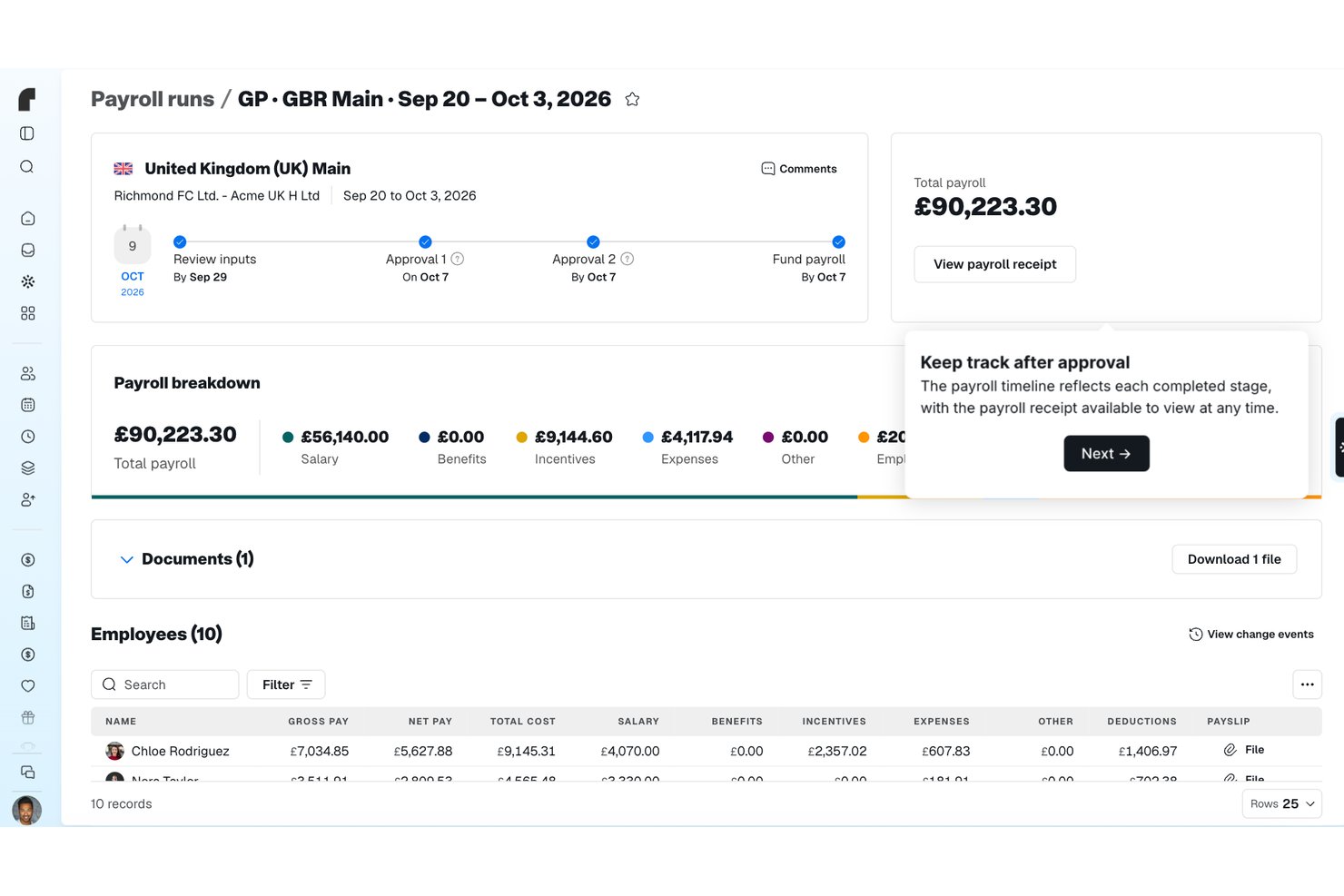
Remote is an employer of record and payroll provider with a wholly-owned Nigerian entity, covering local employment, monthly Naira payroll, contract generation, benefits administration, and optional USD salary payouts.
Who Is Remote Best For?
Remote is a strong fit for startups and global expansion teams hiring in Nigeria who want a fully owned local entity and the option to pay employees in USD.
Why I Picked Remote
I've included Remote in my top picks because it owns its Nigerian legal entity outright, meaning there's no third-party EOR partner handling your hires behind the scenes. What I find especially useful is the option to pay Nigerian employees in USD for an added $50 per employee per month, which matters when Naira volatility is a real concern for your team. Remote also runs a structured, specialist-reviewed termination process with built-in compliance checks against Nigerian labor law.
Remote Key Features
- Compliance Watchtower: Tracks legal changes across 90+ countries and converts them into actionable compliance updates for your team.
- Multi-currency billing: Clients can be invoiced in 12 currencies, including USD, EUR, GBP, and CAD, with FX rates itemized on each invoice.
- Structured termination workflow: Remote reviews each termination request against local labor law, assigns a lifecycle specialist, and handles final pay and offboarding documentation.
- Employee self-service portal: Employees can access payslips, submit expense receipts, and manage leave requests directly within the platform.
Remote Integrations
Remote lists 20 integrations, including Workday, BambooHR, HiBob, Personio, QuickBooks, NetSuite, Xero, Greenhouse, Okta, Slack, and Zapier. It also supports flexible field mapping for HRIS integrations.
Pros and Cons
Pros:
- Reviewers praise onboarding and responsive support
- USD salary payouts address Naira volatility
- Owns its Nigerian employing entity
Cons:
- Reviewers report slow support and payment issues
- USD salary payouts cost an additional $50 per employee/month
Best for multi-currency Nigerian worker payouts
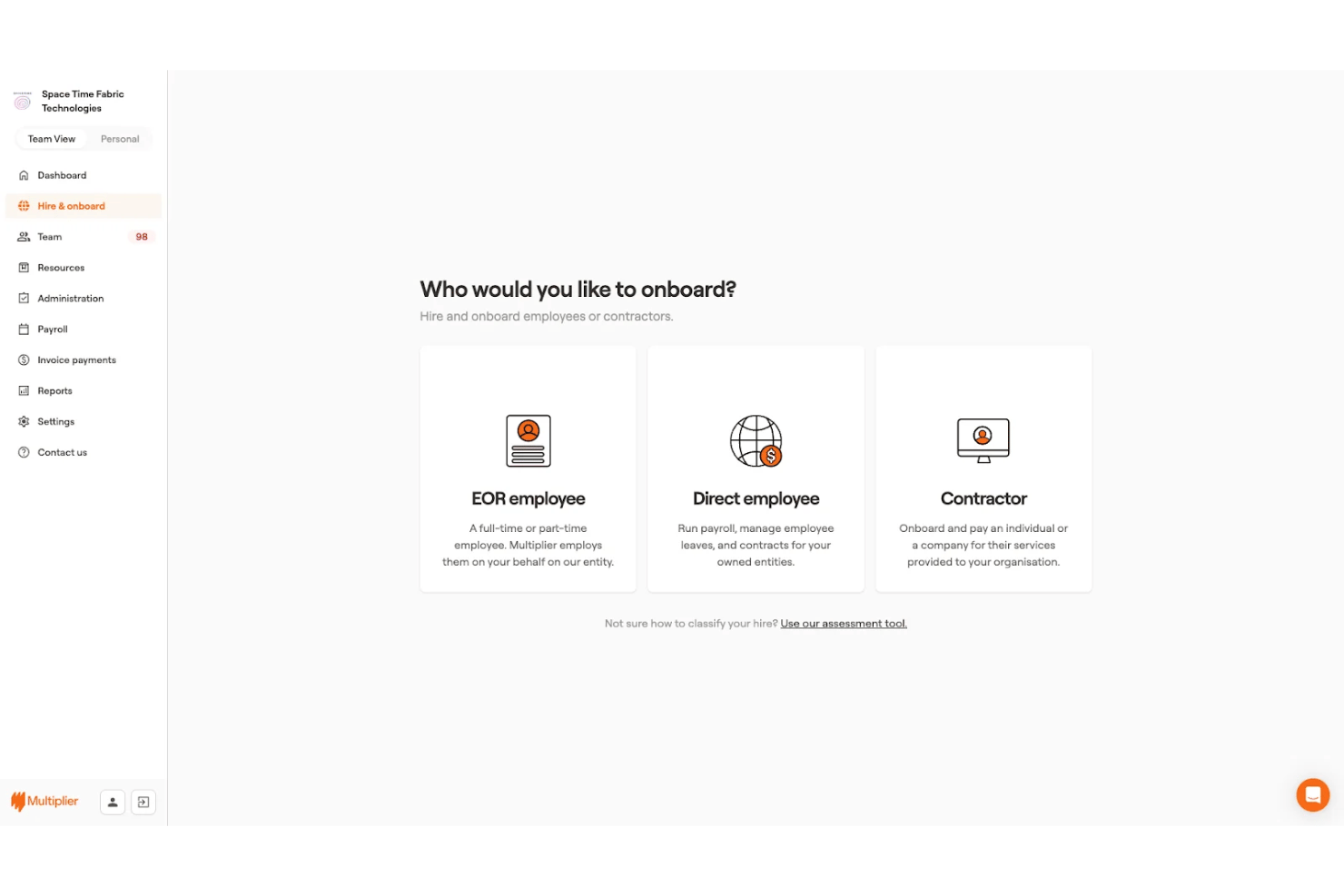
Multiplier is an employer of record platform that handles Nigerian employment contracts, payroll in Naira and multiple currencies, statutory compliance filings, and benefits administration without requiring you to set up a local entity.
Who Is Multiplier Best For?
Multiplier works well for global expansion teams and startup founders who need to pay Nigerian workers in multiple currencies without opening a local entity.
Why I Picked Multiplier
I picked Multiplier as one of the best because it supports Nigerian payroll payments in NGN, USD, and EUR, giving global teams flexibility when managing different currency requirements. The platform automates monthly Naira payroll alongside multi-currency disbursements, and handles statutory contributions like PAYE, PenCom, NHIA, NSITF, and NHF without requiring you to manage those filings manually. Visa and work permit support across 140+ countries rounds out the picture for teams hiring across multiple African markets simultaneously.
Multiplier Key Features
- Employee self-service portal: Employees can access payslips, submit leave requests, log expenses, and update personal records directly within the platform.
- Visa and work permit support: Multiplier manages immigration filings and work permits across 140+ countries, useful when hiring across multiple African markets alongside Nigeria.
- Termination and offboarding management: The platform handles notice periods, severance calculations, legal settlements, and final pay under Nigerian labour law.
- BambooHR integration: Sync EOR employee records to BambooHR and configure payslip and time-off data syncing. HRIS integrations are available on the Growth plan.
Multiplier Integrations
Multiplier integrates with HR platforms including BambooHR, Workday, and HiBob to help synchronize employee and payroll information. HRIS integrations and API access are available on the Growth plan, while custom integrations are offered on Enterprise plans.
Pros and Cons
Pros:
- Handles Nigerian contracts, benefits, and terminations
- Reviewers praise responsive support and onboarding
- NGN, USD, and EUR salary options
Cons:
- PAYE guidance may not reflect 2026 rules
- HRIS integrations require the Growth plan or higher.

WorkMotion
Best for Nigerian compliance with HRIS sync
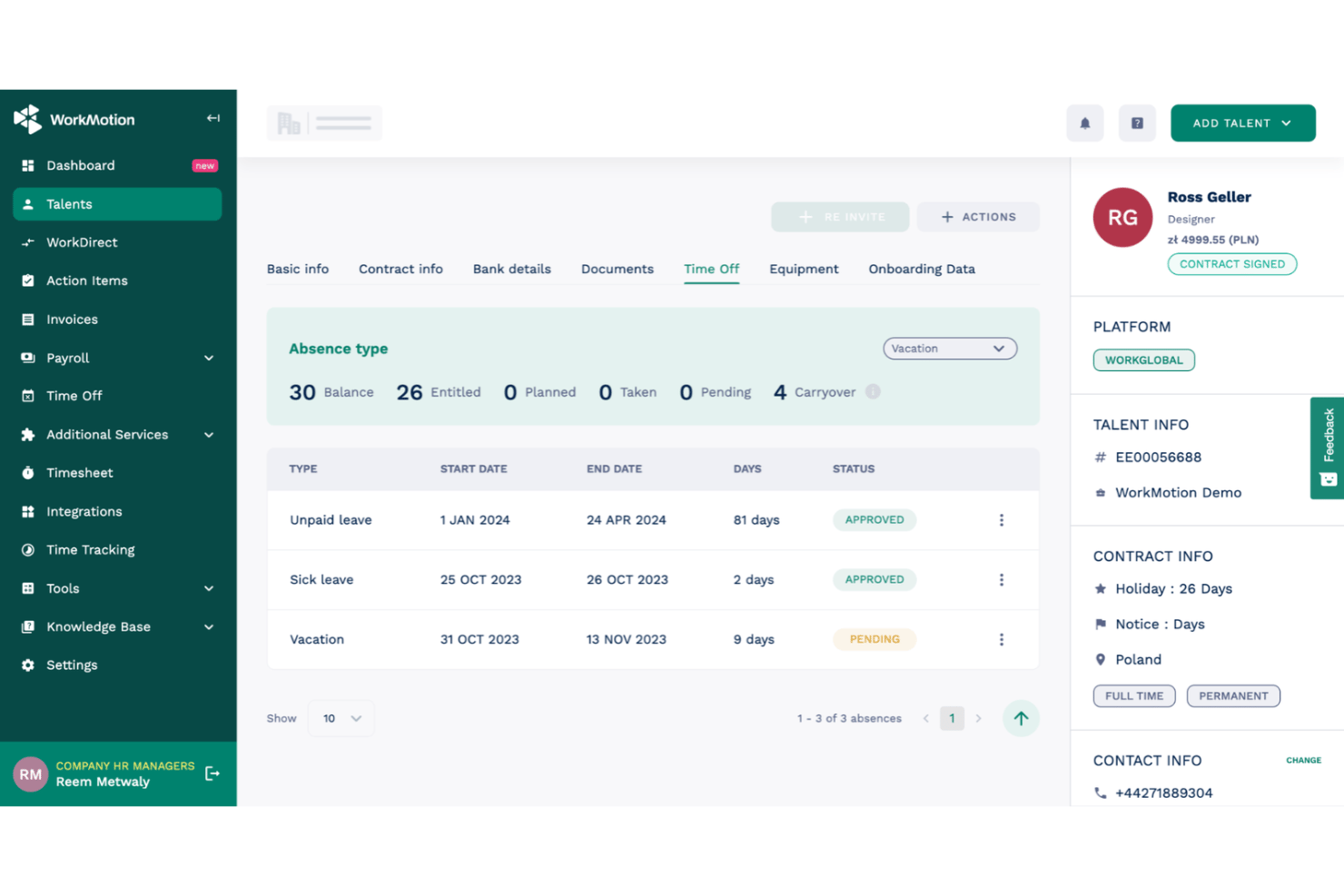
WorkMotion is a global employer of record platform that handles legal employment, payroll, tax compliance, and contract generation across 160+ countries, including Nigeria, through a partner network model.
Who Is WorkMotion Best For?
WorkMotion is a strong fit for HR teams and expansion leads who need detailed Nigerian compliance coverage and want payroll managed alongside an existing HRIS.
Why I Picked WorkMotion
I've included WorkMotion in my top picks because its Nigeria country page goes deeper on statutory compliance than most EOR platforms I've reviewed, covering PAYE, pension contributions, NSITF, ITF, and NHIA with specific rates and remittance deadlines. It also reflects the Nigeria Tax Act 2025 updates (new PAYE bands, abolished CRA) that took effect in January 2026, which matters when contracts and payroll calculations need to stay current. WorkMotion's HRIS sync with platforms like Workday, HiBob, and Personio means your existing people data doesn't live in a silo while Nigerian employment runs through the platform.
WorkMotion Key Features
- Nigerian Labour Act contract templates: Contracts are generated from Nigeria-specific templates that distinguish between worker and employee classifications, covering salary, allowances, leave, notice, and termination terms.
- Multi-frequency NGN payroll: Payroll runs in naira on monthly, biweekly, or weekly schedules, with deductions, employer contributions, payslips, and audit trails included.
- Offboarding cost calculator: A built-in calculator lets you estimate the full cost of ending employment in Nigeria before you initiate the process.
- Employee self-service portal: Employees can access payslips, manage PTO, submit expenses, track time, and raise support tickets directly through the platform.
WorkMotion Integrations
WorkMotion documents integrations with BambooHR, HiBob, Personio, Workday, ADP Workforce Now, UKG Pro, Sage HR, Factorial, Gusto, and Google Workspace. These connections support HRIS data alongside Nigerian payroll and employment administration.
Pros and Cons
Pros:
- Reviewers praise responsive customer support
- Labour Act contracts and offboarding calculator
- Detailed Nigerian statutory contribution guidance
Cons:
- Nigerian EOR salaries are paid in NGN, limiting foreign-currency payout flexibility
- Nigerian employment relies on unnamed partners
Andre registrerte arbeidsgivere i Nigeria
Her er noen flere alternativer som ikke kom med på kortlisten min, men som likevel er verdt å undersøke:
- Pebl
For Baker McKenzie-backed Nigerian compliance
- Papaya Global
For banking-grade Naira payroll at scale
- Atlas HXM
For direct-entity EOR across Africa
- RemoFirst
For startups hiring in Nigeria on a budget
- Safeguard Global
For multi-country African workforce expansion
- Payoneer Workforce Management
For SMB hiring in Nigeria via Payoneer
- Native Teams
For low-cost Nigeria hiring without lock-in
- Oyster
For startup teams hiring Nigerian talent fast
- Express Global Employment
For expat hiring and work permits in Nigeria
- Africa HR Solutions
For Africa-focused NGO and multinational hiring


How I Evaluate Employers of Record in Nigeria
I split my evaluation into three parts. First, core functionality—specifically whether a provider can legally employ workers in Nigeria and manage statutory compliance like PAYE, pension, and NSITF contributions; this carries the most weight. Second, I look for standout features like multi-currency payout options. Third, I consider pricing transparency and support responsiveness.
Core Functionality (Table Stakes For This List)
When I'm selecting tools for my list, I score each one on a scale from 0 (does not offer the functionality) to 5 (excels in this area) for each core functionality listed below. I then convert the total into a percentage to help assess each tool's overall fit, with extra weight on any functionalities I've deemed essential.
- Local Legal Employment (Essential): I check whether the provider employs workers through its own Nigerian entity or a disclosed local partner, since this affects accountability and employee security.
- Nigerian Compliance Management (Essential): I evaluate how well each provider handles PAYE, pension (PenCom), NHF, and NSITF contributions and whether it monitors regulatory changes proactively.
- Payroll Processing: Accurate, timely payroll in Naira matters, so I look at each provider's payroll automation, tax deduction handling, and multi-currency payout options.
- Contract Generation: I look for localized, editable employment contracts that reflect Nigerian labor terms rather than generic global templates requiring heavy manual adjustments.
- Benefits Administration: Providers should administer both statutory and supplemental benefits in Nigeria, so I evaluate enrollment workflows and how much is automated vs. manual.
- Termination and Offboarding: I consider whether a provider guides compliant terminations, calculates severance correctly, and helps manage the legal risk involved in ending employment.
Once I have a list of tools that meet the criteria, I consider what sets each platform apart.
Differentiating Factors (What Sets Vendors Apart)
Here's how I compare and contrast different vendors:
Standout Features
Multi-currency payout options matter a lot in Nigeria, where Naira volatility can erode take-home pay. I check whether a provider lets workers receive salary in USD or other currencies alongside Naira. Rapid onboarding timelines are equally important—providers like Multiplier and Remote can get hires employed within days, which beats the weeks you'd spend registering your own entity. I also evaluate whether each provider offers an employee self-service portal with localized payslips, tax documents, and leave requests, since that directly reduces HR admin load across time zones.
Beyond Features
I check whether a provider owns its Nigerian entity or relies on a third-party partner, since owned subsidiaries give you more direct accountability if a compliance issue arises. Pricing structure matters just as much—some providers bundle statutory contributions and FX conversion into one fee, while others charge separately, so I look for clear breakdowns before headcount grows. I also evaluate support responsiveness, because a payroll error in Lagos can't wait for a team in a distant time zone to start their day.
Slik velger du en registrert arbeidsgiver i Nigeria
Velg en EOR ved å tilpasse den nigerianske ansettelsesordningen til din regulatoriske risiko, dine lønnskrav og medarbeidernes ansettelsesvilkår. Bekreft de underliggende dokumentene og ansvarsområdene før du vurderer tilbudet.
| Hvis prioriteten din er … | Se etter … |
|---|---|
| Lokalt ansvar | En navngitt nigeriansk arbeidsgiverenhet og en tydelig forklaring av dens rolle |
| Lovpålagte trekk | Skriftlig ansvarsfordeling for PAYE-, pensjons-, NHF- og NSITF-bidrag |
| Forutsigbar nettolønn | Skriftlig informasjon om utbetalingsvaluta, grunnlaget for valutakursen og overføringsgebyrer |
| Tydelige ansettelsesvilkår | En lokalisert kontrakt og en oversikt over ytelser som dekker lovpålagte og supplerende ytelser |
Slik vurderer du kortlisten din
- Bekreft arbeidsgiveren: Be om den juridiske betegnelsen og registreringsopplysningene til den nigerianske enheten, og sammenlign dem deretter med avtaleparten i avtaleutkastet.
- Kartlegg lovpålagte plikter: Be om en ansvarsfordelingsmatrise og et eksempel på en lønnsslipp som viser ansattes trekk, arbeidsgiverbidrag og betalingsdatoer.
- Test et spørsmål om etterlevelse: Opprett en supportsak om hvordan leverandøren håndterer et spesifikt nigeriansk lønnsscenario, og be om et skriftlig svar innen fem arbeidsdager.
- Gå gjennom ansettelsesvilkårene: Be om et utkast til arbeidsavtale og en klausul om avslutning av arbeidsforholdet. Kontroller oppsigelsestid, permisjon, beregninger ved oppsigelse og hvem som har ansvar for påkrevde sluttbetalinger.
- Velg avveiningen: Foretrekk en egen nigeriansk juridisk enhet når direkte lokalt ansvar er viktigst. Vurder en avtale med en oppgitt partner når partnerens ansvar og eskaleringsvei er akseptable for teamet ditt.
Hva er arbeidsgivere på vegne av andre i Nigeria?
En arbeidsgiver på vegne av andre i Nigeria er en tredjepartsorganisasjon som ansetter arbeidstakere juridisk på dine vegne og håndterer lokal administrasjon av arbeidsforholdet. Den kan håndtere lønn, skattetrekk, lovpålagte bidrag og ansettelsesdokumenter, mens teamet ditt styrer arbeidstakernes daglige arbeid. Denne ordningen lar deg ansette i Nigeria uten å etablere en lokal juridisk enhet, men du bør skriftlig bekrefte leverandørens juridiske rolle og ansvar.
Funksjoner
Her er de viktigste funksjonene jeg ser etter hos en arbeidsgiver på vegne av andre i Nigeria:
- Lokal juridisk ansettelse: Leverandøren ansetter teamet ditt gjennom sin egen nigerianske juridiske enhet eller en oppgitt lokal partner. Be om enhetens juridiske navn og bekreft dens ansvar i avtalen.
- Nigeriansk lønn og lovpålagte trekk: Leverandøren beregner lønn i naira og håndterer gjeldende PAYE-, pensjons-, NHF- og NSITF-forpliktelser. Be om et eksempel på en lønnsslipp og en oversikt over betalings- og innbetalingsdatoer.
- Lokalt tilpassede arbeidsavtaler: Avtalene bør gjenspeile nigerianske ansettelsesvilkår, inkludert lønn, permisjon, oppsigelsestid og andre gjeldende betingelser. Gå gjennom et utkast før ansettelse for å kontrollere at det samsvarer med rollen og vilkårene dere har avtalt.
- Administrasjon av ytelser: Leverandøren administrerer påkrevde ytelser og eventuelle tilleggsgoder som inngår i tilbudet ditt. Tydelige registreringstrinn og en skriftlig oversikt over ytelser hjelper deg og de ansatte med å forstå dekning og ansvar.
- Støtte ved oppstart: Tjenesten koordinerer ansettelsesdokumenter, nødvendige opplysninger om ansatte og lønnsoppsett før startdatoen. Definerte trinn og tidsfrister hjelper HR-teamet ditt med å planlegge hver ansettelse.
- Selvbetjening for ansatte: En portal kan gi ansatte tilgang til lønnsslipper, skattedokumenter og permisjonssøknader. Kontroller hvilke opplysninger de ansatte kan se og oppdatere, og om portalen støtter teamets behov.
- Oppsigelse og avslutning av arbeidsforhold: Leverandøren bør forklare krav til oppsigelsestid, beregning av sluttoppgjør og prosessen for å avslutte arbeidsforholdet. Skriftlig veiledning hjelper teamet ditt med å håndtere fratredelser på en ensartet måte og identifisere forhold som krever lokal rådgivning.
- Oppdateringer om etterlevelse og støtte: Leverandøren bør forklare hvordan den følger med på endringer i nigerianske krav til ansettelse og lønn, og hvem som håndterer spørsmål. Bekreft hvordan du melder inn et problem, og når du kan forvente et skriftlig svar.
Fordeler
Her er noen vanlige fordeler ved å bruke en arbeidsgiver på vegne av andre i Nigeria:
- Ansettelse uten egen juridisk enhet: En EOR kan ansette arbeidstakere gjennom sin nigerianske juridiske enhet eller en oppgitt lokal partner, slik at virksomheten din kan ansette uten å etablere sin egen lokale juridiske enhet.
- Lokal støtte for etterlevelse: Tjenester som håndterer PAYE-, pensjons-, NHF- og NSITF-forpliktelser, kan hjelpe teamet ditt med å håndtere nigerianske lønnskrav.
- Administrert lønn: Lønnsbehandling i naira, lovpålagte trekk og dokumenterte utbetalingsplaner gir teamet ditt en tydeligere prosess for å betale ansatte.
- Lokalt tilpassede ansettelsesvilkår: Nigerianske arbeidsavtaler og støtte ved oppstart bidrar til å dokumentere avtalt lønn, permisjon og andre vilkår fra begynnelsen.
- Administrasjon av ytelser: En leverandør kan koordinere lovpålagte ytelser og tilleggsgoder, med en skriftlig oversikt som tydeliggjør hva de ansatte mottar.
- Ansattes tilgang til dokumenter: En selvbetjeningsportal kan gi ansatte tilgang til lønnsslipper, skattedokumenter og permisjonssøknader.
- Veiledet avslutning av arbeidsforhold: Skriftlig veiledning om oppsigelsesfrister, sluttoppgjør og trinnene ved avslutning av arbeidsforhold hjelper teamet med å håndtere ansattes fratredelser på en konsekvent måte.
Kostnader og priser
Nigeria EOR-priser varierer etter leverandør, antall ansatte, landet det ansettes i og inkluderte tjenester. Blant leverandørene som ble vurdert, varierer offentliggjorte startpriser fra $199 til $599 per ansatt per måned, mens noen krever et tilpasset pristilbud.
Dette er avgifter for EOR-tjenester, ikke de totale ansettelseskostnadene. Ansattes lønn, lovpålagte arbeidsgiverbidrag, ytelser og valgfrie tjenester kan belastes separat.
Sammenligningstabell for registrert arbeidsgiver i Nigeria
De fleste EOR-leverandører krever en løpende avgift per ansatt i stedet for å tilby personlige programvareabonnementer eller bedriftsabonnementer. Gratis demoer eller konsultasjoner kan være tilgjengelige, men de inkluderer ikke ansettelsestjenester. Slik sammenlignes de viktigste prismodellene.
| Tjenestetype | Vanlig pris | Vanlige funksjoner |
|---|---|---|
| Gratis demo eller konsultasjon | Gratis | Gjennomgang av plattformen, konsultasjon om ansettelse i Nigeria og et personlig pristilbud. Ingen EOR-ansettelsestjenester inkludert. |
| Standard EOR-tjeneste | Offentliggjorte startpriser på $199–$599/ansatt/måned blant de vurderte leverandørene | Lokale arbeidsavtaler, lønnskjøring, overholdelse av lovpålagte krav, administrasjon av ytelser og støtte til ansatte. |
| EOR for flere land eller virksomheter | Tilpasset pristilbud, vanligvis priset per ansatt/måned | Lønnsadministrasjon i flere land, sentralisert rapportering, støtte til overholdelse av regelverk og potensielt avanserte integrasjoner. |
| Valgfrie tjenester og tilleggstjenester | Prises separat | Immigrasjonstjenester, rekruttering, levering av utstyr, supplerende ytelser og annen spesialisert støtte. |
Vanlige spørsmål
Her er svar på vanlige spørsmål om registrerte arbeidsgivere i Nigeria:
Er det lovlig å bruke en registrert arbeidsgiver i Nigeria?
Ja, selskaper kan bruke en ordning med en registrert arbeidsgiver i Nigeria, men det er viktig hvilken rolle leverandøren faktisk har. Bekreft hvilken nigeriansk enhet som ansetter arbeidstakeren, og hvilket ansvar den registrerte arbeidsgiveren påtar seg. Gå gjennom arbeidsavtalen og tjenesteavtalen samlet, særlig vilkårene for lønn, lovpålagte innbetalinger, oppfølging og oppsigelse. Ikke stol på et generelt løfte om lokal etterlevelse. Hvis ordningen din omfatter uvanlig arbeid, regulerte aktiviteter eller oppdrag på tvers av landegrenser, bør du be en nigeriansk arbeidsrettsrådgiver om å gjennomgå den.
Hvor lang tid tar det å ta en arbeidstaker inn i virksomheten gjennom en nigeriansk registrert arbeidsgiver?
Det finnes ingen fast tidsplan for innlemming; det avhenger av leverandøren og arbeidstakerens situasjon. Gjennomgang av avtalen, identitets- og lønnsopplysninger, valg av ytelser og eventuell nødvendig arbeidstillatelse kan påvirke startdatoen. Be den registrerte arbeidsgiveren om en skriftlig oversikt over trinnene, navngitte ansvarlige og måldatoer før du bekrefter en startdato. Sjekk også hva som skjer hvis dokumentene kommer for sent, og når den første lønnen blir utbetalt. Det hjelper deg med å avklare forventningene med den nyansatte.
Kan en nigeriansk registrert arbeidsgiver også ansette oppdragstakere?
En ordning med en registrert arbeidsgiver er vanligvis utformet for arbeidstakere, mens oppdragstakerforhold bygger på et annet forhold og annen dokumentasjon. Ikke anta at en leverandørs tjeneste for oppdragstakere gjør at en rolle er riktig klassifisert. Spør hvordan leverandøren vurderer arbeidsforholdet, hvem som utarbeider avtalen, og hvem som håndterer skatte- eller rapporteringsforpliktelser. Beskriv personens faktiske arbeidsoppgaver, arbeidstid og graden av styring når du ber om veiledning. Hvis rollen ligner på et ansettelsesforhold, bør du innhente lokal rådgivning før du behandler personen som oppdragstaker.