In today's rapidly evolving workplace, the integration of advanced health technologies is transforming how we approach mental wellness and productivity. One such innovation, vocal biomarker technology, is at the forefront of this transformation.
In this episode, host David Rice is joined by David Liu—CEO at Sonde Health—to delve into how our voices, shaped by over a hundred physiological elements, can provide insights into our mental health.
Interview Highlights
- Meet David Liu [00:50]
- Started as an industrial engineer focused on solving problems in larger systems.
- Worked in the automotive industry, improving design, manufacturing, and quality.
- Helped bring AOL into the internet age, focusing on content and early social media.
- For the past 12+ years, focused on applying big data and machine learning to industries like education and healthcare.
- Passionate about improving industries to benefit humanity in a meaningful way.
- Understanding Sonde Health's Technology [03:02]
- Sonde Health analyzes voice data to assess health.
- Chronic diseases affect voice, often before symptoms are noticeable.
- Voice production involves over 100 body parts, including the brain and vocal cords.
- Sonde Health uses advanced audio signal processing developed over 9 years.
- Machine learning models predict health risks based on voice features.
- Clinical research supports that voice analysis provides insights into mental health, depression, anxiety, and cognitive health.
- Clinical Research and Validation [05:45]
- Sonde Health focuses on clinical research and validation of its technology.
- They collaborate with global health organizations like Mass General, Montessori Health, and Albert Einstein in New York.
- Invests in creating a biobank of voice samples labeled by clinicians.
- The biobank includes samples from individuals diagnosed with conditions like depression, asthma, COPD, and cognitive impairments.
- Compares voice samples from diagnosed individuals with healthy controls for model development.
- Conducts long-term studies to validate technology against traditional health assessments.
- Published peer-reviewed studies to ensure the technology's effectiveness and reliability.
- Addressing Privacy and Ethical Concerns [08:22]
- Early reactions to voice analysis technology were skeptical, with concerns about privacy.
- Sonde Health does not analyze what people say, only vocal features like tone and pitch.
- Health tracking, like wearables, has made people more open to engaging with their health data.
- Liu believes people need more access to their health data and should actively engage with it.
- Apple is leading in health data engagement through its Health app and Apple Watch.
- Health data tracking has led to behavior changes, such as focusing on steps, sleep, and heart rate.
- Liu advocates for radical change in how people approach health to prevent relying on the healthcare system.
- The goal is to modify behavior and lifestyles to avoid future health problems, similar to improving car maintenance to prevent breakdowns.
We need to employ all available techniques, technologies, and experiences to make it easy and realistic for people to modify their behavior and change their lifestyles in ways that benefit their health, ultimately helping us avoid placing them into the healthcare system.
David Liu
- Real-World Applications and Use Cases [13:14]
- Employers are already incentivized to improve employee health due to healthcare costs.
- Health programs, including wearables, are being used to promote healthier behavior in employees.
- Transparency is key for leaders to communicate health tools effectively without causing concern.
- The goal is to present health tools as ways to support employees' well-being, not just productivity.
- Employers should treat employees as whole people, not just workers, to foster loyalty and productivity.
- It's important for employers to work with third-party health vendors to ensure privacy and transparency.
- Employers can access population-level data, but individual health data is protected by HIPAA.
That’s what will lead to loyal employees—when they know their employer cares about their career, family, and well-being, and provides tools to help them take advantage of opportunities. This will lead to success.
David Liu
- Challenges and Opportunities in the Workplace [17:49]
- Sonde Health focused on workplace performance and keeping people at peak productivity, rather than clinical use, due to practical challenges in the clinical setting.
- The company aimed to reach a larger population by addressing health earlier, before clinical issues arise.
- The goal is to support people while they are still healthy and productive, detecting early signals of decline.
- By focusing on prevention and early intervention, the company aims to maintain productivity and effectiveness across all professions.
- The strategy involves starting with large organizations that value health tracking to prevent problems down the line.
- The Role of AI and Voice Technology [20:27]
- AI and voice technology, like ChatGPT, are increasingly being used in therapy, but some clinicians caution against relying on them for mental health care.
- Voice-based AI provides an opportunity to capture and analyze voice as a biomarker, similar to how wearables track physical health data.
- Mental health and cognitive health tracking through voice analysis is a unique area that Sonde Health focuses on, as current wearables don't address this.
- Sonde Health’s voice analysis can track mental effort, providing insights into cognitive load and helping users understand if they are overexerting their brain.
- Tracking cognitive effort may raise awareness about potential mental health issues and encourage proactive action.
- Burnout is affecting all sectors, not just high-stress jobs like military, police, and healthcare.
- Employers need to focus on long-term productivity and employee well-being, ensuring happiness and productivity over time.
- High employee turnover is costly, with some organizations losing millions due to it.
- Sonde Health is working with a large international energy company to address burnout and turnover in high-demand industries.
- The energy sector, where every minute counts, provides a clear use case for Sonde Health's technology to improve employee well-being and reduce burnout.
Meet Our Guest
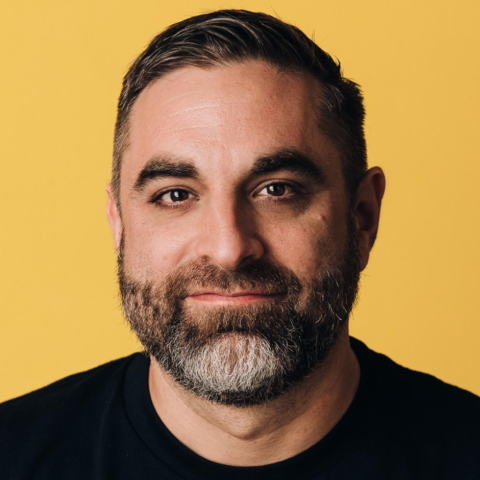
David Liu is the chief executive officer of Sonde Health. He is a business leader who has successfully launched, led and scaled companies and products in the consumer internet, education and healthcare technology industries.
David most recently served as president and chief operating officer at Quartet, helping to scale it into a leading healthcare technology company that connects primary care physicians with mental health providers to improve overall health outcomes for patients. Before Quartet, David was president and chief operating officer at Knewton, where - from an early stage - he helped to build a leading global education technology company that uses machine learning to create personalized digital textbooks that improve student learning outcomes. David began his technology career with a decade at AOL Inc., where he was senior vice president and general manager leading multiple product areas, including instant messaging, and launched the original AOL.com portal as an internal start-up. David began his career as an automotive engineer for General Motors.

If you treat all your employees like Olympic athletes, you'll find ways to keep them performing at their best.
David Liu
Related Links:
- Join the People Managing People Community
- Subscribe to the newsletter to get our latest articles and podcasts
- Connect with David on LinkedIn
- Check out Sonde Health
Related Articles And Podcasts:
- About the People Managing People podcast
- How To Identify, Pre-empt, And Deal With Workplace Burnout
- Unlocking HR Resilience: Overcoming Burnout With Consistency
- How To Transform Your Team From Burnout To Engagement
- 7 Impactful Workplace Wellness Challenges
- Top Talent Challenges & How To Overcome Them
- Upskilling And Reskilling to Tackle Tomorrow’s Challenges Today
- AI is Part of Your Teams, Not Just for Your Teams
- How AI Is Transforming Employee Performance Reviews
- How To Use AI To Empower Your Employees & Transform Your Org
- People Fatigue: A Crisis of Burnout Looms for HR
Read The Transcript:
We’re trying out transcribing our podcasts using a software program. Please forgive any typos as the bot isn’t correct 100% of the time.
David Liu: We’re able to, through our voice analysis, give you an understanding of how hard your brain is working and at any given moment. You want to be able to track that because if it’s running high all the time, it doesn’t mean that you have mild cognitive impairment, but it means that you may be working harder than you need to for the majority of the day.
David Rice: Welcome to the People Managing People podcast. We’re on a mission to build a better world of work and to help you create happy, healthy, and productive workplaces. I’m your host, David Rice.
My guest today is David Liu. He’s the CEO of Sonde Health. We’re going to be chatting about vocal biomarker technology and its ability to assess mental fitness in the workplace, what is this new technology teaching us and how can we use it in responsible ways.
David, welcome!
David Liu: Thank you, David. It’s great to be here.
David Rice: First, tell us a little bit about you, how you got to where you are and what it is that attracted you to doing what you’re doing today.
David Liu: It’s been a long circuitous route, I think, in my career to get to where I am today.
So that’s a probably a question that if I fully answered, we’d run out of time just kind of focusing on this. So I’ll sum it up in this way, industrial engineer by trade and in university and I’ve always just been interested in solving problems within bigger systems, bigger looking at an industry at a program at a project level, whatever it is, and understanding, trying to understand, well, what could be better? What could be completely revolutionized so that the output, the benefit of what that system is producing can be more efficient, more productive and benefit mankind, in a much bigger way.
And so whether that was in the automotive industry, where I started, designing cars for not only manufacturing and assembly, but also for higher quality. Could we improve dramatically that process from design all the way through production? Fast forward all the way into on the technology side at AOL when I worked to help bring AOL into the web and internet age, it was initially just an ISP.
And so how do we engage people? How do we produce not only content, but what we call early forms of community, which was social media back then, to engage people to have more meaningful experiences online? But how do we do that and not just provide the connection? And then again, fast forwarding now to the last 12 plus years, I’ve been dedicating my career to figuring out how we can deploy and implement big data, machine learning, all of the things that we’ve been able to do on the consumer internet side of things and in technologies and apply to the biggest industries on the planet.
Whether that be education or healthcare passionate about radically improving those industries so that we as human beings can benefit and benefit in our lifetimes.
David Rice: That’s a perfect segue right into what we’re going to talk about. So I want to start by setting the table around what Sonde Health does and how this technology works. Because somebody like me, right, this sounds like something out of the movies, at least on the surface. So as you were describing it to me when we talked before, it also kind of makes sense.
The idea that it’s not just what you say, but how you say it. There’s a lot of cues we all pick up on naturally from a social perspective to understand how someone is, what their sort of state is, right, and now the tech is out there. We see the ability to have machines picking up on this kind of thing too. Take us through some of the science of how this technology is analyzing voice data.
David Liu: Before I get into that science, I’ll just briefly state that there is physiology behind what allows us to do this, which is to analyze voice, and one might be wondering, what does voice have to do with health? That might be an initial question, right? But one of the things that is well-known is that when chronic disease and whatever that condition can be, pick any one of the big ones, cardiovascular, diabetes, it could be mental health, depression, anxiety, or even obviously more, more obvious, I guess, respiratory, upper respiratory conditions like COPD or asthma.
When these conditions begin to take effect on the body, systems of the body begin to become impacted. One of those systems that is impacted early and a lot of times not even detectable by the human ear is the voice. And voice is a combination of over 100 different body parts, including the brain, the tongue, the throat, vocal cords, you name it all the way down into your chest that allow us to produce speech.
And so, when these diseases begin to impede on this system, the ability to speak and produce voice, we’ve designed the system and a solution now using audio, advanced audio signal processing techniques that we’ve developed close to over 9 years pioneered, I would say, to be able to extract those vocal features and signals that are embedded in each of our voices to be able to then throw those into machine learning models that we’ve built to be much more predictive about what’s actually happening in your voice.
And we know through our clinical research and third party research, many of these local features, many of these insights that we’re pulling from the sound of your voice and this is about 30 seconds of passive or active voice that we can analyze, give us insight on your relative risk of having these conditions and we focus currently on mental health.
Those disorders of depression and anxiety and certainly cognitive health.
David Rice: You all have taken you mentioned there, like, that clinical approach to analyzing and labeling and understanding this data. Take me through that journey a little bit and how you continue to test that.
David Liu: Yeah, it’s a big, it’s a great question.
It’s a big part of what we do, a big part of our identity, a big part of our how we spend our time and money as a company. Even though we are not a digital device, if you will, that is regulated by the FDA, we’re not trying to become a medical assessment, if you will assess a digital diagnostic tool. That does not lower our own expectation and our own investment in clinical research and clinical validation of our technology.
And so, we, I would say, have been quite prolific in our investing in research with clinical organizations all around the world, like Mass General in Boston, Montessori health in New York, Albert Einstein in New York. Many health systems around the world we work with to set up long term clinical research and studies, so that we are very sound in a couple of things. Number 1, creating a database, a, we call it a biobank of voice samples that we own along with our clinical partners that we know our health labeled accurately. So, when we take a 30 second voice sample from our clinical research, we know it is from somebody who has clinically been diagnosed with depression.
It doesn’t mean that we will use our technology to diagnose people with depression. But it means that the building blocks of our models and, and how we analyze voice data is all set up on the strong foundation of knowing that this voice sample was somebody who was diagnosed by a clinician with having mild cognitive impairment or asthma or COPD or anxiety disorder or depression.
And then we compare it with obviously a healthy control. We do this at all of our studies are all long term longitudinal. And we’ve now created one of the largest biobanks of clinically labeled voice samples on the planet for health. We then go about building models and training those models and deploying them in these research validation studies to make sure that in a clinical setting that these align with traditional assessments of these diseases and health disorders.
And so that gives us the confidence, that gives our customers the confidence that we know that the technology works as expected and we’ve proven it. We’ve peer reviewed it and published these studies as well.
David Rice: I’m curious, just because I’m thinking about, like HR folks and I think about, like, how technology is received, right?
So I’m curious what’s the sort of reaction that you get from people when you show this technology off a little bit. I’d imagine it might be a little bit of a mixed response or some people hesitant to accept the idea that you’re listening to how they speak and flagging things to assess their mental or their health state?
David Liu: Well, I think we’ve advanced time is a funny thing. When we first started this journey, I think people had a hard time believing that it was technically possible to do this without parsing through what you say. And so we’re not like Siri. We’re not like Alexa. We don’t dissect what you say.
There are all sorts of problems with that as we’re finding out on the consumer service and commerce side of things. Everyone is trying to parse out exactly what you say, Facebook, Google, everybody is, and all of a sudden you get some coincidentally accurate ads about maybe something that you mentioned just a few hours ago.
So, we don’t do that. We don’t analyze what you say. So, we’ve moved beyond people believing that this is possible because I think really with the advent of health tracking through different biomarkers, like the biomarkers coming from your skin through wearables. Now we’re moving into this next phase, and I think that’s exactly what we do answer a lot of these days is, well, what’s the right use case so that people can use this in a way that they feel that it’s safe and secure, it really benefits them, gives them the benefit that they’re looking for? And I would say we’re giddy about having that. Now, let me just make sure that you understand this.
I actually believe that we have to radically change how people view health data and how much access they have and their ability to engage with their own health data. We have to radically change this. Today, we typically might look, maybe we don’t even look at the doctor’s report of our visit.
We just trust that our provider will be providing us a summary of it verbally. We don’t even read it. And if you think about it, this is kind of nuts, but we only get some of that information when we go into the hospital or to see a doctor. And so there are untold number of companies now trying to collect all this information, put it in one place so they’re trying to solve the, my health records are in multiple places. Let’s put it in one place. It’s really not solving the problem. The problem is nobody engages with this information. Who cares if it’s all in one place? And I’ll tell you the one company that I think is really doing it, besides what we’re doing, is Apple.
Apple is putting, by default, all of your health information through the Apple Watch, and in some cases through the phone, in one place. They sell, gosh, over 50 million of these things a year, they’ve got probably hundreds of millions of people doing, they, it puts them, at least in the United States, they’re a top three player when it comes to health data.
They’re up there with United Healthcare because they have all of this health data from the watch and from your biomarkers, from these wearables. That really is going to be where we go in the future. You have to be able to engage with this data because, why? It’s not because you’re trying to figure out, like our health plans trying to figure out how do you maybe reduce these claims?
How do you reduce the number of trips? Or right now with a lack of engagement, you really don’t know what you can do to change the outcome of your own health. But with the advent of wearables and Apple Health, I don’t want to give them too much credit, but there it is, they are able to put this in front of you.
And what we’ve seen over the past 10 to 15 years is that people are starting to pay attention to these things that we’re tracking. 10 to 15 years ago, I’m not sure we would be talking about steps the way we do, or sleep cycles the way we do, or resting heart rate the way we do, or even now blood oxygen.
Blood oxygen level is definitely something that you talk to your doctor about, right? And so now it’s in front of us. And what does that lead to? It leads to little micro changes in our behavior. Oh, I got to get those steps in. How many times have you heard that? That’s behavior change. And that, my friend, is what I believe to be the radical change that needs to happen.
We need to employ all techniques and all technologies and experiences to make it easy and really realistic for people to modify behavior and change their lifestyles in ways that benefit their health, so that we can avoid putting people into the healthcare system. This is the radical change that needs to happen.
Otherwise, we will forever be putting money into fixing people. It’s just like, let’s build cars so they break down and then let’s put all the money into the repair shops. Got to build a better car, you got to make sure that they’re cared for so that they don’t end up in the shop.
David Rice: What I’m finding is fascinating because like we, I’ve just done a panel recently about benefits and how it’s become such a challenge.
And so much of what’s happening around cost is, tied to pharmaceuticals and all these different things and how can we lower costs? And how can we provide different sort of benefits to people? And, I’m looking at something like this and I’m like, well, this is a really interesting way to provide a benefit that does get you in touch with your health in a different way.
And if I’m a people leader and I’m thinking about the performance impact of this and the health of the people that are I’m working with, I’m putting this in place. You’re talking about, we need to have this sort of revolution and how we think about this data. How can, I guess, leaders educate and communicate a little bit around a tool like what you’re creating?
Like you said, some people’s, I guess, anytime you’re analyzing something people say or behavior, they show, collecting data about them. I think their first instinct is to become a little sensitive about it.
David Liu: It’s already happening, David. I mean, whether it be transplants out there or employee sponsored health programs, right? We hear a lot about those. Or through these insurance plans and employers who sponsor those plans.
They’re already sending out wearables. They’re wanting people to, like, get ahead of this, live healthier, change behavior so that, employers are one of the largest funders of healthcare. They are paying for a big chunk of healthcare in this country anyway, and in many other countries as well, and so they have every incentive to make sure that happens.
So that’s on the employer. So that’s on the enterprise side. They have a lot of positive incentive to have people be very healthy and productive. On the employee side, and you ask a very good question, how do managers, how do HR, execs or the leadership teams really of these companies make it more palatable, and well, you make it transparent. One of the reasons why we’re working with the air force now and large companies that have an organizations that need not only people to be healthy, right, and well, I would raise it even a level.
They need people to be operating and working at the top of their profession at any given moment. Think about the military, right? Think about even our public servants, who are in the police force, or even people who work in manufacturing and production and logistics, they have to be working at the top of their profession.
That’d be on their A game, so to speak, right all the time. I think when you think about employers, while we would want all of our employees to be bringing their 100% self to their job and to their family every day, it’s a balance and it has to be there all the time so that we can get the most out of these folks.
They can get the most out of their career and their time spent at the job. And so presenting this in that way that we care about you as people, not as cogs in our machine, not as another worker that is doing one unit of work that adds up to, with all the other people, we have to start talking about people in different ways.
And I think if we start treating people differently, and really caring about the complete right person, not just about, well, are they productive from this hour to this hour during the day when they are hours, working for us. We just have to completely change that mindset. And I do believe that some employers are doing so.
At our company, we care about the whole person. And ultimately, that is what is going to lead to loyal employees when they know that the employer isn’t looking out for me and my career, my family and my well-being, and they’re going to put tools out there for me to be able to do this and take advantage of this, then I think it’s going to be a successful.
The other thing is, we have to work with employee sponsored health services. Okay, these are companies, third parties, vendors that employers work with to deliver these health services. And make it very transparent that the information that’s being collected by these wearables and these other platforms to give you advanced understanding of your health are only going to be known by these third party vendors, not by your manager.
And so the employer will have population level data for sure, so that they can make changes on the population level. But of course with HIPAA laws and you just have to be very careful and very transparent about how you’re using this information and really it should be to the benefit of the employee.
David Rice: One of the things I kind of wanted to ask you about was some of the more interesting use cases for this technology that you’ve seen so far. I find it interesting because it seems intuitively a lot of folks would lean more into like a clinical use for this, but you’re really focused on the workplace and performance and keeping people at that peak performance.
And I’m curious also, like, what was it that led you all at Sonde Health to take that direction with it?
David Liu: It was out of necessity. I think it was just very difficult for us to have discussions to bring this type of innovation, this type of technology into clinical settings and workflows, because, by design, they have to be quite conservative.
And I think they’re right, they need things that need to be regulated by the government and by the FDA, and I have no issues with that. But I think it’s the recognition also that I asked myself in our company, a fundamental question, how can we impact positively the largest amount of people, biggest part of the population as quickly as it’s humanly possible? And it wasn’t going to be doing it hospital system at a time.
I think even if the clinical path was afforded to us early, I’m not sure we would have taken it because what we needed to prove, and we are now, is that it can benefit people upstream. And when you get into the clinical settings that you’re talking about, people have already raised their hand. They’ve said, I’m hurting.
I’m going to go into the doctor now, or the hospital. And a set of things now need to happen to remediate, to get that person back on track. And that process is well traveled. And there are a lot of tools and assessments and tests and diagnostics that are out there. For us to have a much bigger impact on society and on the world, we knew, and we now know, because we’re proving it, that we have to go way upstream.
Why not find people, when they’re healthy, begin to look at signals that they may be declining, but still, overall, healthy and productive. And then support them at that right time much earlier on. Because there’s much more value, I believe long term, in keeping these people productive and working at the top of their profession.
And that profession might be a stay at home dad or mom. We believe that this is really for everybody one day. We have to start as a smaller organization. But now growing, we have to start with these large organizations that valued having an early warning system, having this health tracking capability so that they can keep people really productive, not just productive, but incredibly effective and solves a lot of problems downstream.
David Rice: Voice technology, we’re seeing more of it, was whether it’s Alexa or whatever, right? It’s obviously growing. It’s changing how people are searching the Internet now, how they interact with their devices and all of that creates data. Right? And right now, where there’s data, AI is playing a role in whatever we’re doing with that data.
How are some of the big AI players getting involved here, I’m curious? And how do you see that changing the game for what this technology can do?
David Liu: What I’m hearing and the latest thing that I’ve heard is certainly whether it be ChatGPT or some of these other large LLM models that are out there. I’ve read certain articles recently about how some people are using them as therapists.
And did you hear a lot of clinicians out there saying they would not recommend using one of these big Gen AI models as a therapist, but I definitely have heard that because now they’re all going into voice. We love the fact that the LLMs are all going down the voice path, because what it means is, we all know that speaking is much easier than typing and so it is just going to be I think a groundswell of usage of these incredibly highly used products, but leveraging voice.
Which gives us more of an opportunity to capture voice and analyze voice as a biomarker. So just as I think the most successful wearables have, I think, been successful because they’re just strapped onto your wrist, right, or on your finger, you don’t need to think about it. It’s just capturing data all the time. The more that people can be speaking, the more that we’re able to capture high quality voice in the background through a device like your smartphone, or even a wearable, the better. Because then we’ll be able to provide the user, provide our customers with a more complete picture.
Again, for us, it’s mental health and cognitive health, this is a big missing piece when you look at all the wearables that are out there. I didn’t mention that, David, earlier. Why are we in the areas that we’re in? We could have gone into cardiovascular health tracking. There are quite a bit of devices that do that already and do it quite well through the skin.
But when we talk about your complete 360 picture of your health through biomarkers and through health tracking, there really isn’t much out there when you talk about mental health tracking, mental fitness tracking. And when you talk about cognitive fitness, or what we like to say, cognitive effort or mental effort tracking. We’re able to, through our voice analysis, give you an understanding of how hard your brain is working at any given moment, that’s going to be like your heart rate is going to go up and down, depending on the activity that you’re engaged in.
But you want to be able to track that, because if it’s running high all the time, that’s an interesting insight. Doesn’t mean that you have mild cognitive impairment, but it means that you may be working harder than you need to for the majority of the day, and that can raise awareness and action.
David Rice: Yeah, and I think, like, when we think about the problems that we have with burnout right now and like, the levels of disengagement, this could be, obviously,
David Liu: those two terms, David, are squarely what we’re working to help solve.
Burnout is not just reserved for these high stress jobs that we all associate with burnout, military included, police force health care providers. Burnout is happening in every sector of every employment vertical you can think of, and whether it’s quietly happening or not, it’s happening. And so we have to think about longevity, we have to think about productivity, not just this quarter or this year.
We have to think about people and as resources and critical resources. They are the heart and soul of the company. How do we ensure that they can be as happy on year five, day one, year five as they were when they first started and as productive or even more productive? Turnover is massive issue untold tens of millions of dollars per organization, depending on the size of the organization. And we’re now working with a very large international energy company that has over 200,000 people out in the field, whether it be extracting oil, refining it, or even distributing it and the logistics side of it. You think to yourself that there would be inherently high turnover and burnout.
And there is. It’s no surprise. So we’re proving ourselves, I think, in the most, at the tip of the spear, so to speak, at the most sensitive industry is where every minute counts. And people just need to be at their best because they don’t know when they’re going to be called upon or when they are called upon, there just isn’t any other option. I do believe that we will be working with employers who have office employees or people who are more on that white collar side of things later. But right now, the use case is really clear. The ROI, the return on your investment in these industries is incredibly high because there isn’t any time for anyone to be, to get sick.
David Rice: We could talk about this all day. This is very fascinating stuff, but unfortunately we are coming up to our time. I don’t have to bring the show to a close, but before we go, of course, there’s a couple of things we always like to do on the show. And the first thing I want to do is give you a chance to tell people where they can find out more about Sonde Health, connect with you, find out what you have going on.
David Liu: Yeah, absolutely. Check out our website. You can always find and connect with the company at SondeHealth.com. You can connect with our company through LinkedIn, obviously, and find me on LinkedIn. But we are increasingly, we hope that we can provide people with a very clear use cases so that they understand how to use this technology.
And one of the beautiful things about what we do is we don’t require people to buy a new wearable by hardware. We don’t require you to download our app. We’re working with the largest organizations on the planet to integrate our technology SDK and APIs into their software apps or hardware devices through the chip set.
And so these are devices and apps that people are already using. So we’re not asking people to do anything different. I didn’t think that’s also, one of the challenges in health care, other than what we’ve talked about, which is being more reactive. I think the other challenge in health care is the fact that most people do not necessarily engage, and it’s just very difficult for them to engage how many HR departments have deployed apps that no one ever uses. Or how many of these third party apps that employers have contracted with to help with health data and maybe preventive health tracking to just get very little usage.
How many mental health digital app platforms are being deployed and paid for by employers so that employees can get great help and support when it comes to mental health. What is the usage of these apps and platforms? Probably still around 5%. It’s incredibly low. People don’t engage until they have to.
And so how do we get into the stream, the flow of what they’re doing every day so it’s really completely effortless and they can get ahead of it. You don’t want your employees to be seeking out help. Of course, you want to be able to support them when they need it, but in my mind, that’s too late.
David Rice: And the last thing that we always like to do here on the podcast, we have a little tradition where you get to ask me a question, so I’ll turn it over to you. Ask anything you want. It could be about the topic. It could be about anything.
David Liu: I guess you got, you see a lot of employers and a lot of interesting use cases. What do you think is the biggest challenge right now for large and small employers when it comes to management and of this workforce? What do you think are some of the biggest challenges right now that companies are struggling with?
David Rice: I think the 2 biggest things I hear about all the time are there is this burnout piece, this mental health piece, right? We’ve been in a place over the last couple of years where there’s been a lot of layoffs. People are challenging folks to do more with less or take on different roles and you’re having to transition people through different things or challenge them to take on new skills and it’s identifying those skills and helping them figure out how they’re going to do that.
And the other piece is, it’s just felt like high stress times for a long time now, right? We had a pandemic and then there’s, it’s been if it’s not the political turmoil or climate crises or whatever it is, it just seems to constantly be a garage of different things where it feels like people are in this reactive mode all the time, and that leads to a lot of burnout, like we’ve discussed.
And I think that’s, one of the things that drew me to having you on the show was what are we going to do to kind of help people flag this, but also, like, understand from a cultural perspective, what they can do about it and like, build this into how our organizations work and approach people.
David Liu: I identify with this, having definitely suffered from that in the past myself, personally. But also just, we see it all the time with our customers. I would say that one of the big things that we address or we try to address with these types of situations with uncertainty, bad management, or management that doesn’t really have the tools to be able to do what they need to do.
One of the things that I think is delightful that we’ve heard this from our customers is that you can look into a population and you can ahead of time, right, identify through your employee sponsored healthcare provider, the folks that are doing just fine. And they appear the same. They appear to be looking and working and interacting the same as everybody else in that group, but provide them with maybe the knowledge that there is support. Provide them with tools or even change schedules, maybe change projects and rotate different projects, rotate people on different things.
Because you, as through your health care provider can begin to do certain things or on a population level, you’re seeing that certain groups within the company, not individuals are struggling. You can certainly change programs and the way you’re delivering these programs and the way people work.
You can change those things as an organization, not necessarily pinpointing people, but groups of people. And that really doesn’t happen until it’s too late. How many times have you heard when you finally have waves of people resigning or disconnecting with, what’s happening at work? And then we surge into action and we try to, have town halls and we try to figure out what’s going, it really can be done ahead of time.
I think that kind of not looking at as preventive health, but I would say it’s being proactive for productivity, proactive for happiness, wellness, and proactive. And if you treat all of your employees, like Olympic athletes, you’re going to find ways to keep people performing at their best.
David Rice: Well said. Well, on that note, David, I want to thank you for joining us today. It’s been an excellent having you on.
David Liu: Thanks for having me, David.
David Rice: Listeners, if you haven’t already done so, go on over to peoplemanagingpeople.com/subscribe, sign up for the newsletter.
And until next time, we’re in the homestretch for Q4. It’s time to take a look back at 2024. What did you learn this year? I look forward to hearing from you.