

How Nextdoor’s Head of People is Protecting Workplace Mental Health While Adopting AI
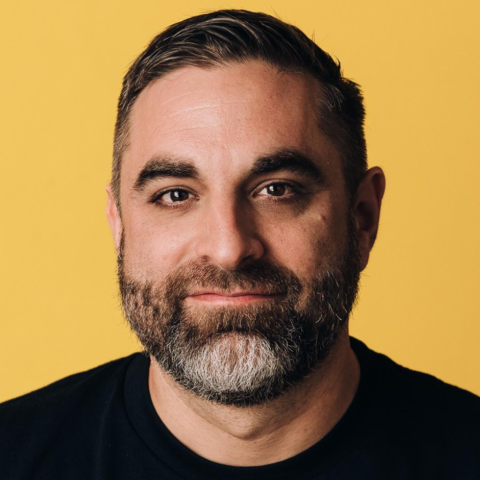

We’ve spent the last few years talking about mental health at work like it’s always a crisis—trauma, burnout, damage done. Bryan Power, Head of People at Nextdoor, thinks that framing actually makes the conversation harder. Instead, what if we positioned mental health as something everyone can access, not just people in distress? In this episode, we cut through the jargon and look at resilience, performance, and the everyday practices that actually help people do their best work.
Bryan and I also dig into the cultural pendulum swing from “bring your whole self to work” to “respect my boundaries,” the generational divides shaping expectations around connection, and how AI is reshaping not just jobs, but how leaders set boundaries, communicate, and build culture. Spoiler: the hot takes on AI are everywhere, but the real opportunity isn’t doing more with less—it’s doing more with the same.

What You’ll Learn
- Why framing mental health only around trauma can backfire—and how to make it universally accessible
- How workplace culture shifted from oversharing to boundary-setting, and why both extremes miss the point
- What generational divides really mean for connection, mentorship, and remote work
- Why intentionality matters more than ever when bringing people together in person
- How managers can protect what really matters to employees without overstepping
- The messy reality of AI adoption and what leaders should (and shouldn’t) do about it
Key Takeaways
- Reframe mental health: Stop talking about it as damage control. Position it as “priming” for performance and resilience—something everyone benefits from.
- Boundaries beat oversharing: Authenticity matters, but so does professionalism. Healthy workplace culture balances both.
- Connection isn’t one-size-fits-all: Early career employees often crave apprenticeship and social learning. Parents and older workers may value time at home. Flexibility needs to reflect these differences.
- In-person time must be intentional: Offsites, recognition moments, and trust-building land better face-to-face—but simply herding people into an office won’t recreate old norms.
- Protect the “one thing”: Ask employees what single non-work commitment they’d resent losing. Safeguarding it builds trust and reciprocity.
- AI isn’t about cutting jobs: The smart play isn’t fewer people doing the same—it’s the same people doing more creative, high-value work.
Chapters
- [00:00] Trauma vs resilience: reframing mental health
- [04:16] From “whole self” to boundaries
- [07:16] Generational differences and workplace connection
- [10:02] Leadership presence in a digital-first world
- [11:44] Teaching professionalism without osmosis
- [14:04] The intentionality of in-person moments
- [15:06] Protecting what matters most to employees
- [17:25] AI, fear, and cultural transformation
- [20:18] Where to connect with Bryan
- [20:57] Bryan’s question for David: what he’s learning now
Meet Our Guest

Bryan Power is the Head of People (Chief Human Resources Officer) at Nextdoor, where he brings over 20 years of expertise in HR, talent strategy, and employee development. In his current role, Bryan steers global people operations, shaping culture and scaling employee experience across diverse regions. His prior leadership roles include Chief Human Resources Officer at Yahoo—overseeing HR for more than 10,000 employees across 30 offices—and senior HR executive at Square, where he helped grow the company from 350 to 1,600 employees ahead of its IPO. Bryan also spent eight years leading global recruiting efforts at Google. Beyond his corporate roles, he is a board member of Avenica, serves as an advisor to emerging tech firms, and is a certified executive coach.
Related Links:
- Join the People Managing People Community
- Subscribe to the newsletter to get our latest articles and podcasts
- Connect with Bryan on LinkedIn
- Check out Nextdoor
Related Articles and Podcasts:
- About the People Managing People podcast
- 4 Powerful Principles To Help Drive Better Mental Health In The Workplace
- What Is ‘A Wellness Action Plan’ And How Can It Benefit Employee Mental Health?
- Your Team Has an AI Paralysis Problem—and It’s Stalling Innovation
- 7 Company Culture Examples From Successful Companies
- How to Improve Company Culture: A Step-by-Step Guide
- AI at Work: Why Businesses Need a New Playbook
Read The Transcript:
We're trying out transcribing our podcasts using a software program. Please forgive any typos as the bot isn't correct 100% of the time.
Bryan Power: [00:00:00] A lot of the conversation gets framed around this idea of damage that's been done or trauma or the cost of work. I just believe this topic is really important for everyone, and so I think you can frame it a little differently so that everyone can access it.
That's one of the problems with a lot of the forced back to office is it's about the comfort level of someone with 20 or 30 or 40 years of experience just really knows how to work together in person. And you've got to learn new ways of communicating.
AI is wild. Right now is when everything's a mess, it is hot takes city on what AI is gonna mean for everybody. The counter hot takes that it's like a nothing burger or starting to happen. You can get whatever opinion you want.
David Rice: Welcome to the People Managing People Podcast, the show where we help leaders keep work human in the age of AI. I'm your host David Rice. [00:01:00] And on today's episode, I'm happy to be joined by Bryan Power. He is the Head of People at Nextdoor. In this conversation, Bryan and I are gonna be talking about the landscape of mental health at work, why framing it around trauma may be doing more harm than good, and how we can shift the narrative towards resilience, performance, and access for all.
We also talk about the rise and fall of bring your whole self to work, the growing preference for boundary setting, and how generational differences are shaping expectations around workplace connection. And of course we get into AI, what it means for jobs, those previously mentioned boundaries, creativity, and how Bryan is leading cultural transformation at Nextdoor in the face of this disruptive moment.
So without any further delay, let's get right into it.
Bryan, welcome!
Bryan Power: Thanks for having me, David. Appreciate it.
David Rice: We had a good conversation before this. I'm gonna start it here. Mental health at work became this big conversation during COVID, right. But it's come a long way from that. And as we were chatting before this, [00:02:00] you were pointing out to me that it's still often framed around trauma or crisis.
And I'm curious what's the risk of framing it that way and what should we be doing instead?
Bryan Power: Yeah. So I think it's useful to take some history into account here. 'cause I've really long been a mental health advocate. What I found prior to COVID was that it was more of a niche topic and it was really kind of stigmatized.
People often associated the terms mental health with mental illness, and it was a topic that just wasn't that commonplace in the modern workforce. And you know, in my career, particularly in in human resources, I felt like knowledge work in particular, a lot of the strain that employers put on their employee population, it's their brain.
And so it creates a a lot of challenges like stress, which can lead to anxiety or depression. One of the upsides of the COVID Pandemic was that everyone kind of experienced this spike in mental adversity. I'm just trying to navigate this global phenomenon and what that meant was that [00:03:00] the employers needed to center on mental health 'cause everyone had this crisis they were dealing with.
I think that was positive 'cause it, it really brought forward this theme. I just believe is part of every employer employee relationship. Now you could kind of talk more, more openly about it. I think, you know, more recently, kind of 20 25, 1 of the things that I've noticed is a lot of the conversation gets framed around this idea of damage that's been done or trauma or the cost of work and what it does to you.
And so it kind of sets up this one point can be confrontational always with the what the workforce is doing to its employees. Or it kind of leads you to the severe, like people who you really need to take serious or dramatic action to deal with whatever's going on. I just believe this topic is really important for everyone and so I, I think you can frame it a little differently so that everyone can access it.
I have found myself more often instead of evangelizing that we need to talk about it, [00:04:00] framing it to like, I think, you know, priming your mental health is something everyone can do to do the best work of their lives or the job they're working for. And, and I think that's a better way to open the conversation with your employee population 'cause it's something everyone that can relate to.
David Rice: Yeah, absolutely. I, I agree. Like when we focus in on just the negative or, or just the trauma aspect of it, we sort of create like a space where it becomes even more difficult to talk about in some ways. You know what I mean? Yeah. Like, rather than if it's just like, look, we all sort of experience these things.
It's a natural part of like going out into the world, right? Like things are gonna happen to you, things are gonna be hard at times and how you deal with it and sort of the mental resilience you build for yourself is gonna be key to not only how you succeed at work, but how you just function in society.
But um, thinking back around to COVID, you know, we were having a lot of conversations around this idea of bringing your whole self to work and I always kind of thought that sounded weird. [00:05:00] I didn't want people, like, for me personally, I was like, I don't want everybody at work to know everything about me.
Right. But it was something that leaders were talking about publicly and now there's been a shift from this idea of bringing your whole self to work to sort of respect my boundaries at work. What do you think triggered that change and do you think that's a good thing?
Bryan Power: Again, I think historically in my experience, that phrase bring your whole self to work was grounded in people wanting to be authentic mm-hmm in the workplace versus you have like your professional identity and, and no one knows anything about you. Or even worse, you have to kind of respond to someone else's personality or likes and dislikes without really able to share whether you agree or disagree. You see this a lot with power dynamics with the boss and the team, and you better like what the boss likes and if he doesn't like what you like, don't bring it up.
And so this kind of authenticity was about, hey, everyone should really learn more about each other and people are different, so it's gonna be different things. That's certainly how I experienced it. And it's good you learn about people from different walks of [00:06:00] life. You know, you come to appreciate and differences from how you think or what you believe, but somewhere, I mean, when I talk to peers about this somewhere, that invitation expanded to the point where I think employees start to wonder like, well, what's my what am I accountable here for what I'm supposed to accommodate when someone wants to share something?
And so I think people, when you create a space and you invite them in like, Hey, who are you? What's going on? Without kind of setting the boundary, some people will kind of take advantage and share more than people want to hear. This gets into like, yeah, TMI, you know, like, it kind of doesn't matter. And so I think a current trend is people are trying to kind of walk back as probably too strong of a word.
But reestablish, like, Hey, we're here to work on something together professionally. Like that's our shared interest is this company and our collective professional success. And we don't have to include everything else. You can leave stuff out that you want to do outside of work. Like, you know, I don't need to know everything.
And I think this voice that maybe was silent [00:07:00] when people who are super extroverted and wanna share everything and expect everyone's gonna share everything. The louder voice for me right now is people are like, Hey, I'm, I'm good. It's not that I wanna get to know you we're coworkers. That authenticity and collegial nature is important, but I like having other parts of my life that is not part of work.
David Rice: I agree. Now there's some data out there that suggests, you know, younger employees, they're craving workplace connection, right? Older employees. I'm starting to put myself into that bracket now. But, uh, maybe not so much wanting all that connection. You know, we're really comfortable in like the remote environment.
Now without adding to the generational divide. I'm curious though, how can companies balance these sort of competing needs?
Bryan Power: I don't think it falls exclusively on age differences, but there's certainly different needs depending on where you are in your career. I think early career people, for obvious reasons are, are really interested in learning and apprenticeship and mentorship.
My personal bias, I think that's easier to do when you're [00:08:00] together in person. On the flip side, a lot of older employees are parents. And so what they're leaving behind at home to come into work is a really different thing. You know, if you're, if you literally put it to a parent of a 5-year-old, I have a 5-year-old, hey, we'd rather you just kind of be around the 22 year olds versus with your 5-year-old.
It's a really stark choice that again, the norms around working from home, which really changed in COVID. I really shifted like people before COVID, maybe they didn't totally internalize the sacrifice they were making, leaving their kids at home. Once they were home with their kids full time. They now know very differently.
You always kind of know you're missing your kids, but you have the experience of being there all the time. And so I think a lot of the older thing is really about parents who are like losing time with their children that they kind of are really valuing really, really differently. The flip side of that though is the digital versus in person is I think a lot of younger.
The early career workforce is just really comfortable online, like authentically online, where older [00:09:00] people like me are kind of still, it's still thought of as like a second thing. You know, like I'm, I'm used to working in person and working, increasing online, but for a lot of younger people, their life is online, and particularly because of the COVID area.
If you've only got, you know, five years of experience, the first two of those was fully remote. And so you don't have this concept of before COVID or like back to the office. 'cause you never really had that experience and so you actually don't have a reference point. And the more time that goes by, the bigger population of people that don't understand what you mean about pre COVID, that's really like 27, 28 year olds now that don't understand what you mean.
And so that's someone with four or five years of work experience. There's a, there's a lot of people in that bucket.
David Rice: Yeah. 10 years from now, that bucket will be big. It's, uh, you mentioned there them being more authentic online than in person. I'm curious how you think that changes, sort of the way that we think about leadership presence and culture building, like you're a leader.
How has your sort of online presence evolved, I [00:10:00] guess, would you say, you know, over that time?
Bryan Power: I've really had to work on it. I, I think it's really essential that leaders embrace this. I think that's one of the problems with a lot of the forced back to office is it's about the comfort level of someone with 20 or 30 or 40 years of experience just really knows how to work together in person.
And you've got to learn new ways of communicating. You've gotta get comfortable communicating through video, sharing video. I mean, I look at people on my team here at Nextdoor who, you know, have huge online audiences on their Instagram or on LinkedIn and like that's gonna be norm more normal than not now.
And so that, that people are now the true kind of digital natives, the people who are always the youngest ones, they're so comfortable through mediums like TikTok and Instagram and creating video for older people, I think it still feels weird to like record yourself on video by yourself and share it.
It's not something you've done for your whole career. That's just like one example, but just understanding how to really manage virtually is something you need to continue to develop. [00:11:00]
David Rice: Yeah, I think it's something like, uh, a lot of people haven't quite figured out, like not, I mean managers even in, you know, just folks that are a few years younger than me and a lot of them have been on social media.
They are kinda like used to that, but it is just, uh, an environment where you have to be so much more intentional and how you approach people. Definitely. So there's a, there's kind of another shift here that's gone on. You know, you mentioned there there's no pre COVID reference points for a lot of people and folks are working in remote environments, and so maybe they aren't quite getting that sort of exposure that was learned through osmosis in the office.
I'm curious, like, in your opinion, how do you feel. We should be teaching these young professionals sort of like what it means to be professional.
Bryan Power: So, you know, everyone declared they knew where the world was going in 2020, 2021. You know, everyone was just kind of figured it out. I think the only thing I was really confident in in 2021 was like, I don't know, this is all gonna change.
The pattern will come more clear as [00:12:00] as we move through this. And I think the osmosis thing is one of the key assumptions that has really been flipped where people really believe, so some people are like, Hey, back to the old way, if we're all together, good things are gonna happen. But the loudest voice is like, that's not true.
If I come to an office, I'm on video all day, I'm not working with anybody who I'm sitting around like the osmosis doesn't happen as much as you think. For leaders, it does. Leaders, you walk around, you see everybody, you get information. You can check in on a million people. It's much harder to do online.
That's the smaller subset of the employee base. I think what's really is clear is when you're really intentional, when you're in person, when you want to shake someone's hand and look them in the eye and build commitment, you're gonna do something together that is more meaningful in person than like a slack emoji.
I believe, again, I'm, I'm biased on how I do it. When you wanna really recognize someone, say thank you, cheer for them, like the, the volume of an of an out loud applause. When the whole team's together versus just like the balloons going up on the video, you feel [00:13:00] it more viscerally. And so people understand when you get together to do those types of things, it's better.
But just aggregating people in person doesn't create that, particularly when they're being asked to do all these other things when they're sitting in an office. And that's been the most clear thing, is the intentionality of being in person. And I think what people do crave is those benefits when you, whatever, however often you come together. Weekly, monthly, quarterly, annually.
They want that when they get together. And I think it's hard to disagree with that. One thing I've noticed is as we've seen that shift, when we do bring people together and, and everyone really makes the commitment, invariably, like some person's like, oh, I couldn't come 'cause of something. And the group is almost like, I mean, if it's, you know, something serious, it's understood, but sometimes it's like come on, we're all getting together.
We don't do this very often. You could have overcome this and it, it's more about the group is sad that the intentionality portion now is gonna be missing someone and we're not gonna do it again for a while. That's very different from the top down person saying like, Hey everybody, you need to get in here.[00:14:00]
When the group itself is like, we want to be together and, and this is now a loss that we couldn't all do it.
David Rice: Yeah, no, I agree. I think we're hearing it more like, uh, I've, I've done some discussions with people who organize offsites, for example, and it's talked about how, like, about 30% of the time Yeah. Is like a really ideal, sort of like close to ideal amount if you can get people together that much.
'cause it gives them what they're looking for, like you mentioned there, but also that like flexibility and freedom still there most of the time. So like one of the things I I, it's interesting to me is sort of like what are we wanting flexibility for? It's really to like protect certain things that matter to us that are outside of work.
And I think to do that well, you know, we've gotta get managers to like understand their people. It doesn't have to, if you don't have to be up in everybody's business, but you gotta understand the people and what matters to them and help build that into the sort of way that they work. Right? You gotta operationalize it.
So I'm curious, what advice do you have for doing that without [00:15:00] maybe getting too personal, you know, like how do you help people protect their time and make the most of it?
Bryan Power: Yeah, so I learned this from, uh, Marissa Mayer, who was my boss. She was the CEO of Yahoo and early employee at Google. And I just love this tactic because I think it's the right balance of authenticity and showing you care about someone who works for you without being too invasive.
I think you ask someone who works for you, like what's one thing that is really important to you, that you're gonna resent the company? You know, you're gonna send me your boss if I interfere with this. What's one specific thing? And that, that's like such an easy invitation and you can say, Hey, I really like to be home for dinner with my kids.
I'm happy to get online after if you need me, but like when I miss dinner. I can't work well the next day 'cause I miss that thing. Or I have this one spin class or yoga class that's like at 8:00 AM and I just, I love the teacher and if I can go to that, like as a manager, you're nuts to not protect this one thing or to bother them in that.
And when you actually [00:16:00] help protect it, they feel like you're now balancing, okay, I know you're my boss and you gotta get me to do all this stuff, but you're also using your energy to kind of help me get what I need outside of work. And I don't have to tell you my whole life story, it's just like this one, one thing.
So the employee can be very comfortable with how much they share and why, but it does get through the, it gets past a little bit of like the, the shell of like, we're just doing work together.
David Rice: Yeah, I agree. I, I like from a personal story sort of perspective, I, I had a manager who like understood how into like Liverpool FC I am.
There was like games that would be on work days and they'd be like right around three o'clock. And I used to go in at like 7:00 AM and he'd kinda look at me if I was still there at three. Like, what are you still doing here? It's like, go on, get outta here. Like, you know, and he knew like I was getting my work done, but like, this one thing really meant a lot to me and I wanted to go be with my friends, or you know, at least be in a space where I could watch it.
I'll tell you, it meant a lot to me. Like at the time I still think he's one of the best managers I've ever had, so.
Bryan Power: Those simple things 'cause it, it generates [00:17:00] reciprocity. You're, you're willing to kind of meet the call if, if your manager is showing their desire to kind of let you do what you wanna do outside of work?
David Rice: Absolutely. Absolutely. I feel like I can't have any conversation without talking about AI at some point. Right. I did wanna ask you, 'cause you're be, you're leading next door is sort of cultural transformation around AI adoption. I'm curious, how does AI intersect with mental health and sort of boundary setting in your view?
Bryan Power: AI is wild. Like I, I've been in tech now for almost 30 years, and I've seen lots of waves of disruption, and this is, without question a big one, it's the biggest one ever. Like, I, I don't know. But it's, it's really changing the way work gets done. And right now is when everything's a mess. It is hot takes city on what AI is gonna mean for everybody.
The counter hot takes that it's like a nothing burger ever starting to happen. You can get whatever opinion you want. It actually reminds me of the early days of the work from home disruption because again, you get work from home's gonna end in two years. We're never going back to the [00:18:00] office. Like that's the range of what, what AI is, is really gonna do.
I think on the, on the one hand, and I'm, you know, I'm still kind of finding our way as we talk about this at Nextdoor is, there's a, a huge fear factor from a lot of people that maybe we all do lose our jobs, or maybe all the junior people or mid-level people lose their jobs. I think it's wrong for companies to be really dismissive of that fear when, when you talk about people's career and their livelihoods to earn money, that's very stressful. Particularly when a lot of the headlines are like, oh yeah, we're just gonna get rid of these jobs so the smaller company can make more money.
That's not a good lane for society at large if you kind of play it out that way. There's other lanes where it's like, hey, you get to like not do the work you hate anymore and it's give you time to do the stuff you really like. Like that starts to marry everybody's desires, again, while it's all really unclear. I think you have to be really as open as you can about what you're learning and how people can participate in the learning of what we're gonna, what you're gonna take [00:19:00] advantage of.
I just personally think, like what I try to do at Nextdoor is like, the goal is not to get rid of people. You know, it's really not. So we're about 500 employees right now. I would rather operate like a 2000 person company with only 500 people than stay, oh, we're gonna operate like a 500 person company, but we just don't need as many people.
So how could you get more out of everybody by doing the more creative, impactful work is I think, how people can kind of get people included in what you're trying to figure out. Because all the, all the things that are being figured out are happening by people on the front lines. You know, that's really what you need to activate the the innovation that's gonna happen.
David Rice: Yeah, I agree. I think people are missing the big opportunity, which is to do more, not to do as much with less. Right. It's interesting you mentioned the range there of opinions 'cause I was saying to somebody recently, I'd the only technology I've ever seen where the range of possibility goes from could solve all of our problems.
Gonna die in humanity. Like [00:20:00] I've never imagined that there would be anything in my lifetime that would create that range of emotion. But here we are. That's right. Alright, well this has been really good. I've enjoyed talking to you. So before we go, there's always a couple things I like to do with every guest.
The first thing is I want to give you a chance to tell people more about where they can connect with you and find out more about what you have going on.
Bryan Power: I appreciate it. Not a big content creator, so I love people like you fill in the space. I'm really happy. One, I think that's happened in the last couple years, is the people community in general has become much more about sharing and collaboration and talking with one another.
So I really appreciate what you're doing. I think the best one would be to follow me on LinkedIn. My name is Bryan Power. I'm old enough that a lot of the original tech properties I have my actual name, so. That's where you can find me, share ideas here and there, and find out where I'm speaking, stuff like that.
David Rice: Excellent. All right. And the second thing is we have a little tradition here on the podcast where you get to ask me a question, can be related to the topic or not. Anything you want. I'm gonna turn it over to you. Ask me anything.
Bryan Power: Yeah, so I think you're in a great vantage point. You talked to so many [00:21:00] interesting people.
You've great conversations. What's one thing you're really learning right now, like you're in the mix of going deeper on to try to try to understand better?
David Rice: I'll tell you, it's, it's this vibe coding thing. Like, uh, it, it allows me to like, do stuff. I mean, I would never even come close. I would even know who to pay in a lot of cases to, to try and build this, you know what I mean?
Like, I've been working on, uh, I, well first it was a, um. It was like a quiz that if you took it would recommend personality assessments based on the role and the skills that you wanna hire for. Which I thought was like, you know, uh, 'cause a lot of people complain about personality assessments and my question was, well maybe you're just using the wrong one 'cause there's like 500 of them.
You know, like, so, but then like that was able, I was able to like create that with it and then. Doing a layoff impact analyzer and it was able to visualize things, I couldn't even, I wouldn't even know where to begin otherwise. [00:22:00] And I'm just thinking now of like all these potential tools or like rethinking, what does the performance management setup look like?
Or even like, uh, how can you possibly map skills to future roles that we think are gonna become a thing or as they develop, how can you kind of map the skills that people have? Because I, one of the things I think, it drives me a little crazy, and I think it drives a lot of people crazy about the AI conversation is people always say, well, it's somebody using AI that's gonna take your job.
And we kind of see that maybe that's not totally true. But then it's like you got people like the World Economic Forum saying it's gonna create 11 million jobs, but replace 9 million jobs. Okay, well, what do these new jobs look like? Well, nobody knows. There's no specifics.
Bryan Power: I think that's awesome that you're doing that.
And I, as an optimist, a future where people could just make their own apps and tools and technology without needing their own engineering team is a massive unlock for creativity around the world. So I think that's awesome. The second [00:23:00] thing is, I forget where I saw this, but excel was a massive unlock for financial productivity.
It didn't kill all the finance jobs like at all. So AI is probably better than Excel, but like it actually doesn't mean that now everybody that does it go away. It just means you spend your time doing new things, ideally.
David Rice: It unlocks your creativity of, how am I gonna use this? The same way that your creativity was, how am I gonna use a pencil or a guitar?
And I understand people's reservations about it, and I have 'em too. But it's here and it's not really going anywhere, so we have to sort of figure out how we're gonna live in it.
Bryan Power: Yeah. I hope my urgency for our employees and everybody is just apply it, try it, learn like an instrument's a great example.
You can't play an instrument if you don't practice and, and make mistakes. And I think that this is something everybody could find value in.
David Rice: Yeah. Learning how to prompt it and get what you want out of it is interesting. I mean, it's a journey I've been on for a couple years now and I'm like, it's, it's amazing to see how [00:24:00] it's advanced, but it's also interesting to see how I've advanced in some ways and how I understand how to talk to it.
So I think that we need to like not lean into catastrophizing so much. Well, Bryan, I really appreciate this conversation and, uh, you giving me some of your time today.
Bryan Power: Thanks for having me, David.
David Rice: Absolutely.
Listeners, if you haven't done so already, head on over to peoplemanagingpeople.com/subscribe, get subscribed for the newsletter. You'll get all our latest content. We've got a lot of cool events coming up this year, so be sure to check that out.
And until next time, stop catastrophizing.

