The workplace is undergoing a significant transformation, particularly in the wake of the COVID-19 pandemic, which has forever altered our perception of office spaces.
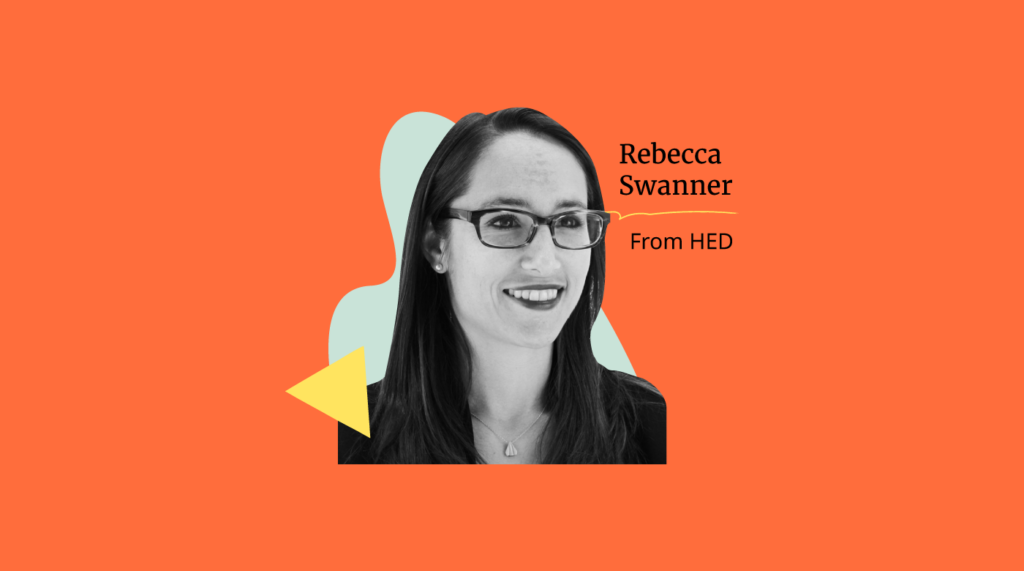
In this episode, host David Rice is joined by Rebecca Swanner—Workplace Design Leader at HED—to talk about how to create dynamic office spaces that cater to diverse work styles.
Interview Highlights
- The Problem with One-Size-Fits-All Office Policies [01:05]
- Companies often adopt a one-size-fits-all approach to return-to-office policies.
- Rebecca emphasizes the need for personalized policies tailored to different offices and departments.
- The focus should shift from judging presence to measuring productivity and mental health.
- Quantifying results and focusing on well-being should be prioritized over physical presence.
At the end of the day, employers shouldn't be concerned about how many minutes someone spends sitting in their chair. What truly matters is the bottom line and the employees' ability to effectively perform their work while maintaining good mental health, which in turn enables them to do their best work.
Rebecca Swanner
- The Importance of Flexibility and Individual Consideration [02:59]
- Rebecca cites research suggesting the average worker should be in the office about 60% of the time, but it varies by industry and individual needs.
- She emphasizes the importance of understanding the specific workforce and tailoring policies accordingly.
- Rebecca highlights the significance of considering human factors, such as work-life balance and commuting challenges.
- She advocates for personalized approaches over one-size-fits-all mandates, recognizing variations in employee needs and circumstances.
- The Role of Office Design in Employee Satisfaction [05:45]
- Rebecca highlights the benefits of activity-based design, emphasizing choice and freedom for employees.
- She suggests designing office spaces with diverse work areas to accommodate different tasks.
- Examples include living room-style settings for team collaboration and phone booths for private calls.
- Rebecca stresses the importance of intuitive design, likening it to the cues in a Starbucks that guide how people use the space.
- She discusses the role of HR teams in preparing and equipping employees for these new types of workspaces.
The great thing about activity-based design is it's all about choice and freedom. And there's a lot of power when you give someone the option to decide how they can do their best work.
Rebecca Swanner
- The Shift in Office Space Trends [08:15]
- Rebecca emphasizes the importance of having diverse types of spaces in the workplace, ranging from private to more exposed areas.
- She notes a trend where amenities requiring significant real estate, like game rooms or gyms, are now provided by landlords or developers rather than tenants.
- This shift allows tenants to access a variety of spaces without the burden of building and maintaining them, promoting flexibility in workspace design.
- Rebecca stresses the need for realistic expectations about space design, highlighting that spaces need to be tailored to specific tasks and cannot be infinitely flexible like fictional depictions.
- The Psychological Impact of Office Design [10:27]
- Rebecca notes a shift from casual, gamified spaces to ones inspired by hospitality, aiming to meet employees' needs and make them feel embraced.
- She highlights emerging amenities like concierge services to help orient employees and create a welcoming atmosphere.
- Rebecca emphasizes the role of leadership in setting examples of using different spaces effectively.
- She discusses how activity-based design encourages changes in posture and movement, promoting better health.
- Collaboration, meetings, and creativity are tasks better suited to the office environment, while individual, heads-down work can be done elsewhere.
- Rebecca predicts that remote collaboration may improve with advancing technology despite current limitations.
- The Role of HR in Office Space Utilization [15:03]
- Rebecca emphasizes the importance of employee buy-in and involvement in the process to generate excitement and commitment.
- Workplace surveys are essential for understanding employee needs and preferences, but leaders must be prepared to accept the outcomes, even if they don't align with their expectations.
- Rebecca underscores that prioritizing employee well-being and work-life balance ultimately benefits the bottom line by fostering loyalty, productivity, and appreciation.
Meet Our Guest
Rebecca Landau Swanner brings a blend of interior & architectural design experience and team/project leadership. Rebecca graduated Magna Cum Laude from Virginia Tech College of Architecture and Urban Studies with a Bachelor of Architecture degree. She is a licensed architect & AIA, IIDA, & CREW member. Her passion is interior design, with a focus on workplace projects. Over the past 15 years she has worked on a variety of successful corporate, creative, tech, life-science, entertainment, & studio projects.
When employees feel supported, valued, heard, and have a healthy work-life balance, they are more likely to be loyal and perform at their best, ultimately positively impacting the bottom line.
Rebecca Swanner
Related Links:
- Join the People Managing People Community
- Subscribe to the newsletter to get our latest articles and podcasts
- Connect with Rebecca on LinkedIn
- Check out HED
Related articles and podcasts:
Read The Transcript:
We’re trying out transcribing our podcasts using a software program. Please forgive any typos as the bot isn’t correct 100% of the time.
David Rice: Companies all across the world are grappling with the question of whether to bring employees back into the office or not. Many have decided in favor of at least a part time return to offices, but to little fanfare from employees. Many of whom didn’t miss commuting and did embrace the autonomy and flexibility of working from home. So how can companies reinvigorate their office spaces in an effort to tempt employees back? How can they design for the activities many leaders feel are missing in post pandemic remote workplaces?
Welcome to the People Managing People Podcast. We’re on a mission to build a better world of work and to help you create happy, healthy, and productive workplaces. I’m your host, David Rice.
My guest today is Rebecca Swanner. She’s a Workplace Design Leader at HED. We’ll be talking about how to design office spaces for a post pandemic workforce and improve the experience of being in the office again.
So Rebecca, welcome!
Rebecca Swanner: Thank you for having me, excited to be here.
David Rice: So the first thing I want to ask you is around the idea of returned office mandates, right? Because this is something that we’ve been looking at a lot over the last year. So we’ve seen some crazy trends happen as employers try to do this.
So I think it’s central to how we think about designing office spaces, right? So like knowledge economy workers, they’ve realized in the last few years, they don’t really need to be tethered to a desk. They now expect flexibility, but it’s worth noting that office spaces still have their use and can be places people want to go.
So what do you think a lot of companies are getting wrong about their policies here? Where does the mindset need to change?
Rebecca Swanner: So, I think the number one thing people are getting wrong is a one-size-fits-all mindset. Personally, I’m part of a large national organization and our return to work policies are different for different offices.
And I think this one-size-fits-all these mandates, they don’t really work. They’re not flexible. Something that, that we learned coming out of the pandemic is we need to focus on putting the human sort of back into workplace. And that means really treating individual cases differently and really looking at what types of work even different departments do in the office.
And that might inform what makes sense for their specific return to office policy. I think the biggest mistake a company can make is judging an individual employee on their presence in the office rather than their production. I mean, at the end of the day, as employers, you shouldn’t really care how many minutes someone’s sitting in their chair.
What you care about is your bottom line and their ability to properly do their work and have good mental health, which enables them to do their best work. That really needs to be the focus. So I think that’s the major mind shift is shifting how we quantify these things and what we focus on as far as measuring, you know, measure results.
David Rice: So I guess I’m curious, because a lot of employees have pushed back or, tried to move on to other companies where their flexibility was maybe a little bit more respected. When you and I were talking before you said inspire, not require, people to come back in and are there certain employees that you think should maybe be required to some extent to be in the office?
Like, for example, I was talking to one expert and he was saying, maybe younger employees, they need more coaching and hands on management, or maybe it’s new hires during a probationary period. Are there people in our organizations where maybe should be required to be in the office to a certain extent?
Rebecca Swanner: Yeah, so the recent research shows that this is a generalization to be most productive in general, the average worker should be in their office about 60% of the time. That’s the magic number that we’re seeing, but that doesn’t apply to every industry. That’s a generalization. So as far as, are there different populations that should be in the office?
Again, I think it’s about understanding your specific workforce and what makes sense to them. Because it doesn’t make sense to compel someone to the office, 40 hours a week to sit in a chair and do data entry. And they’re talking to no one and they’re interacting with, like, that doesn’t make any sense.
Whereas there might be someone, maybe they’re only coming in two days a week, but those two days a week in the office, they’re having really rich experiences. They’re collaborating with their teammates, they’re being mentored or they’re providing mentorship. So I think, approaching it again from a human level.
And if an employee understands in a really clear way and a human way from their employer, I want to give you the flexibility you need. I want you to have a healthy work life balance. I’m focused on your overall wellbeing, but we’re in this together. We’re a team. And the research shows that we do need face time to be successful.
So what’s the right balance here? And then working through that with your HR team. And again, it might be different based on different, if you have different offices, different regions. One of the big rubs with people coming to the office is commute. So if your office location is located in a downtown urban metropolis where people have to sit in traffic for an hour and a half because they can’t afford to live near the office and they have to pay $25 for parking and there’s all these things, that are preventing them.
Okay, so maybe they only come in two days a week. Whereas other offices in more suburban areas where people can afford a four bedroom house down the street from the office, it takes them 15 minutes to get into the office. Maybe they’re happy to come in four days a week. So again, I think the most critical mind shift is that we can’t have these one-size-fits-all mandates. I think that’s the biggest thing.
David Rice: You mentioned the collaboration piece there. And I know that’s something that a lot of employers are looking for as they do this. We’ve talked a little bit about in the past, like activity based design when we spoke before this. What are some of your favorite examples of activity based design and how can more organizations apply design thinking to physical spaces?
Rebecca Swanner: Yeah, so I think the great thing about activity based design is it’s all about choice and freedom. And giving people freedom, whether it’s freedom what days you come in or how much you come in or what spaces in the office you use when you are in, it’s really a free benefit that you can give people that people really value.
And there’s a lot of power when you give someone the option or you give them the power to decide how they can do their best work. So activity based design, and if someone wants to implement some of these strategies in their own workplace, it’s really making sure that your space is not designed with just one type of work area.
So rather than having a bunch of workstations and no matter the task for the day, the employees expected to go to their workstation or go to their private office and do a variety of tasks. In that specifically designed single space, they can choose where in the office they want to work. So if they’re coming in and, they have a problem on one of their projects and they want to work through it with the team, maybe there’s a living room type setting and they go there and they can hash it out and there’s a coffee table and there’s some whiteboards around.
Or if they have a client calls on their phone, they can pop into a phone booth. And it’s totally acoustically isolated, great sound quality, and they can even take a Zoom call from there. And there’s just all these different types of spaces. And I know when we talked earlier, you said about for HR teams, how can they prepare people and equip people for these new types of workspaces?
And I think part of it is the HR team and part of it is the spaces need to be designed in a way that’s didactic, in a way that people, it’s intuitive for people to know how to use them. So think about when you walk into a Starbucks, what about a Starbucks automatically makes you know how to use that space?
You know, you smell the coffee. You hear the music, there are a lot of people working with headphones on, like there’s a lot of cues. So you know, okay, this is the type of space where it’s not like open mic night, I’m not going to talk to other people, I’m going to do my own quiet work, but I can be tapping away at my keyboard, I can be chatting on the phone and it creates like a background noise vibe.
So what are the cues we can embed in the architecture so that people know how to use different spaces and what are quiet spaces and what are loud spaces and how can we lay out the space so that the quiet and the loud are not next to each other?
David Rice: It’s interesting because like you mentioned, like the sort of living room set up there and I think you go back maybe five, six years and we had a lot of companies, just beanbag chairs and there was ping pong tables and all kinds of sort of like almost like gamifying the space a little bit.
Are you seeing trends shift away from that sort of thing, or what is it, I guess, employees in 20, going into 2024 are really valuing about certain space, like the workspace?
Rebecca Swanner: Yeah. So again, I think it’s just about having a lot of different types of space. And types of space like the whole gamut from very private spaces, to spaces where you’re more exposed, town hall spaces, and even like acoustic privacy, like, there just has to be a large variety. I would say from an amenity perspective, one trend I’m seeing is a lot of these either amenities that are a little bit more out there or that require a bigger real estate footprint.
So like a really big game room or a gym or a really large conferencing center. A lot of these I’m seeing are being built out less by the tenant. And there’s a shift that now the responsibility is on the landlord or the developer to provide those spaces within the building or within their portfolio. So it doesn’t even need to be in that particular building.
So that if a tenant wants to be able to embrace, let’s say, activity based design and build out a variety of different spaces, but one of those spaces is a really large training room, but they know it’s only going to be used, once a month, they can’t afford that real estate. So they’re looking to the landlord to say, Hey, do you have a training facility in this building or in this campus that we can utilize?
So again, having even more options of space without having to foot the bill of building out every single type of space. Because again, we’re saying that flex, that spaces can’t be infinitely flexible, right? There are specific ways to design specific spaces for specific tasks for them to really work well.
It’s not, space is not like inspector gadget, you know, you push a button and it’s like, and all the, shutters go down and a lamp turns on and now there’s a giant fish tank and we’re all wearing bathing suits. Like that doesn’t happen, it’s not real. So it’s being realistic about space I think is important as well.
David Rice: Is there like a psychological element to creating a space people want to be in? What sort of things in a workplace sort of design really make people not only want to use that space, but feel like comfortable or using it for different purposes? What is it that I guess from a psychological perspective you want to achieve?
Rebecca Swanner: Yeah, and you mentioned it’s interesting you mentioned that that gaming thing because there was this trend where it got really casual, and I would say really youthful, and now we’re seeing more nods towards hospitality. So this idea that you walk into a space, all of your needs are met, the brand cares about you, you know, you’re embraced.
And it’s funny because office space that we’re taking cues from hospitality to the trend we’re seeing now is that there’s a lot more of the hospitality aspect coming into office space. And it’s interesting, too, because if you go to a hotel nowadays, you’ll see there’s a lot of different touches they do to make you feel at home and make you feel like they know you.
And so it’s the same thing in the office to make it a blend of a homey feeling and a hospitality feeling. Also one of the amenities, I would say one of the emerging amenities that we’re seeing in office spaces, in individual tenant spaces, but also in buildings. So from a landlord and developer perspective is this idea of the concierge.
So when you enter a space, especially if it’s a space that you’re not spending 40, 50 hours a weekend, there’s a place you can go to be oriented if there’s something you forgot. So you forgot your toothbrush, maybe you come to the office, you forgot your mouse because you’re only coming in three days a week.
There’s someone there with a smile, who says, Oh, let me help you with that. No problem. They’re like the ambassador for the space, which I think is also important because if we’re using spaces in new ways, we have to help people understand how to use them. So I talked about the cues that can be within the architecture.
It’s also not a bad idea to have a person who is the ambassador, who welcomes people and orients them into the space and helps them understand the tools available to them and empowers them. It can be this concierge. I would also say that I don’t think all of the responsibility should be on the HR team or the facilities team.
I think really the responsibility is on the leadership and the best way is to lead by example. So, let’s say you have a work cafe in your space and you want employees to feel like they can go into this space and work on their laptop for a couple hours. And just because they’re not in their department sitting in a workstation doesn’t mean they’re not being productive.
And so the leadership needs to do that too. Come out of the office, go to the work cafe, take some calls from there and set the example so that people understand just because I’m not seen in my seat, no one’s judging me. I’m still productive. It’s just important to change your posture.
Yeah. So people, you know, there’s sit, stand desks. And so when those came out, a lot of people just stood all day, which was actually really bad because the whole point is you sit and then you stance and then they came out with these apps that will ding every 20 minutes. Okay, time to sit, time to stand. So, one of the great things about activity based design is it leads to changes in posture and movement throughout the building, this idea that the elevator is going to kill us all because we’re never taking the stairs.
So just having to move from one space to another when you change tasks is great. It’s really good for you.
David Rice: You just mentioned changing tasks and that was my next question. Are there certain tasks in your opinion that are better suited to the office? Because I think a lot of people, there’s certain things they like about working at home and they think, well, I like if I need to focus or if I need to do this, that’s better at home.
Where versus, meetings were better in the office or something like that. What are some of the tasks you think are better suited to that environment?
Rebecca Swanner: So I agree a hundred percent. There are tasks that are better suited to the office and those would be collaboration. I mean, collaboration and meetings and being creative and innovative together as a group is obviously way better in the office.
If someone’s coming in just to do heads down work by themselves, that doesn’t really make sense. And I’m going to say except because we talked about there’s no one-size-fits-all, that junior intern that has a micro apartment with 17 cats, two dogs, and three roommates, you better believe it’s more effective for them to do heads down work in the office.
So there are these outliers, but in general, we found that collaboration in person is superior. And I will say that personally, I don’t believe that will always be the case because I believe the reason why collaborating remotely is difficult is because technology isn’t where we need it to be for it to be seamless, but it will catch up because there’s a demand for it.
David Rice: From a change management perspective, obviously, there’s a lot on HR’s plate. I know you said it shouldn’t be all on the HR team, but it does fall to HR sometimes in terms of how do they motivate employees to take advantage of office spaces. What advice do you have for HR or, people operations professionals tasked with bringing people back in?
How can they make that experience a little bit better, a little bit smoother?
Rebecca Swanner: So I think employee buy in is really, really important. And sometimes just giving people a seat at the table and letting them voice their concerns, it goes a really long way because if they are involved, then they get committed to the process and they become the Pied Pipers.
They tell all their teams about how great this is, how exciting this is. So you have to get buy in at an individual level. It doesn’t have to be everyone. It just has to be enough of the organization that those people start spreading the motivation and the excitement about the changes that are coming.
And our company, we do a lot of workplace strategy, and we do a lot of surveying with organizations before we design anything. And, I would say the biggest thing is when you do the surveys, if you ask the questions, you have to be okay with what the answers are. Because we don’t know what the answers are going to be until we ask the questions.
So I think that’s the big thing is we know what the questions are to ask, we don’t know what the answers will be, and we all have to be ready to radically accept those answers. Even if it doesn’t fulfill our own agendas, because at the end of the day, it’s not about what are your expectations about people coming in.
It’s about what’s best for the bottom line sounds not very human, but actually it is. Because when people feel like the company supports them, when people are loyal and they feel appreciated and they feel heard and they feel like they have an appropriate work life balance, they do their best work, which in turn affects the bottom line.
So it all works, as this nice ecosystem, it all moves the needle in the right direction.
David Rice: All right, so before we go, a couple of things I wanted to first give you a chance to tell people more about where they can connect with you and find more about what you’re doing.
Rebecca Swanner: Yeah, so I lead workplace design here in Los Angeles for HED.
We’re a national design interiors architecture engineering firm. Our website is hed.design and I’m always happy to chat with anyone. You can drop me a line on LinkedIn Rebecca Swanner. Swanner like the bird.
David Rice: All right, and the second thing, we’ve started a little tradition here on the podcast where you get to ask me a question, so I’ll turn it over to you and ask me anything you want.
Rebecca Swanner: Okay, I love this question, because I think about it a lot. If you had one superpower, what would it be, and why?
David Rice: It’s funny, this is not one that I think about very often, but probably the ability to see the future, just so I can make better plans.
Rebecca Swanner: No, I want to go back in time and relive moments, or say things, or unsay things. That’s interesting. We’re yin and yang on that one.
David Rice: Yeah, I worry about the ability to go back in time, because I feel like I’d just stop appreciating things as much as I could in the moment, knowing that I could go back and do it again anyways. It’s kind of like, I stopped appreciating live TV because you can just T-vote, well not T-vote, but YouTube TV.
So, you know, it was just fast forward to the commercials later.
Rebecca Swanner: Yeah.
David Rice: All right. Well, thank you for joining us today. I really appreciate it, Rebecca. Thanks for giving us some of your time.
Rebecca Swanner: Yeah. It’s great to be here.
David Rice: And listeners, if you want to keep up with all things on coming back into the office, workplace design, HR, people operations, head on over to peoplemanagingpeople.com/subscribe and sign up for our newsletter.
And until next time, if you’re in the North, build a snowman, enjoy some cold weather, drink some hot cocoa. Have a good one!