

10 Best AI Employee Feedback Software Reviewed in 2026

10 Best AI Employee Feedback Software Shortlist


Navigating the world of HR can be challenging when it comes to gathering valuable feedback from your team. You want to understand your employees' needs and improve their experience, but traditional methods can be time-consuming and inefficient.
That's where AI employee feedback software comes in. These tools utilize advanced AI capabilities to analyze responses, identify trends, and provide actionable insights, making it easier for you to address your team's concerns.
In this article, I'll share my top picks for AI employee feedback software, highlighting their unique features and benefits. As an independent reviewer with experience in HR management software, I’ll help you find the best solution for your team.
Why Trust Our Software Reviews
Our team has been testing and reviewing software since 2012. As HR experts ourselves, we know how difficult—and important—it is to choose the right software.
For this guide, we evaluated tools using hands-on testing and independent research, scoring tools using our selection criteria. We also draw on insights from industry thought leaders and practicing HR experts.
Our reviews reflect our human editorial judgment, not a sales pitch.
Expert reviewers:
AI Employee Feedback Software Comparison Table
This comparison table summarizes pricing details for my top AI employee feedback software selections:
| Tool | Best For | Trial Info | Price | ||
|---|---|---|---|---|---|
| 1 | Best for linking recognition to feedback loops | Free demo available | Pricing upon request | Website | |
| 2 | Best for AI-driven sentiment insights | 14-day free trial + free demo available | From $2/user/month | Website | |
| 3 | Best for AI-guided results discussions | 21-day free trial available | From $6/user/month (billed annually) | Website | |
| 4 | Best for peer recognition | Free demo available | Pricing upon request | Website | |
| 5 | Best for performance reviews | Free demo available | From $4/user/month (billed annually) | Website | |
| 6 | Best for social recognition | Free demo available | Pricing upon request | Website | |
| 7 | Best for text analysis | Free demo available | From $25,000/year (billed annually) | Website | |
| 8 | Best for pulse surveys | Free demo available | Pricing upon request | Website | |
| 9 | Best for customizable surveys | Free demo available | From $4,999/year | Website | |
| 10 | Best for custom insights | Free demo available | Pricing upon request | Website |

Best AI Employee Feedback Software Reviews
Below are my detailed summaries of the best AI employee feedback software on my shortlist. My reviews offer a thorough look at the key features, pros & cons, integrations, and ideal use cases of each tool.

Nectar
Best for linking recognition to feedback loops
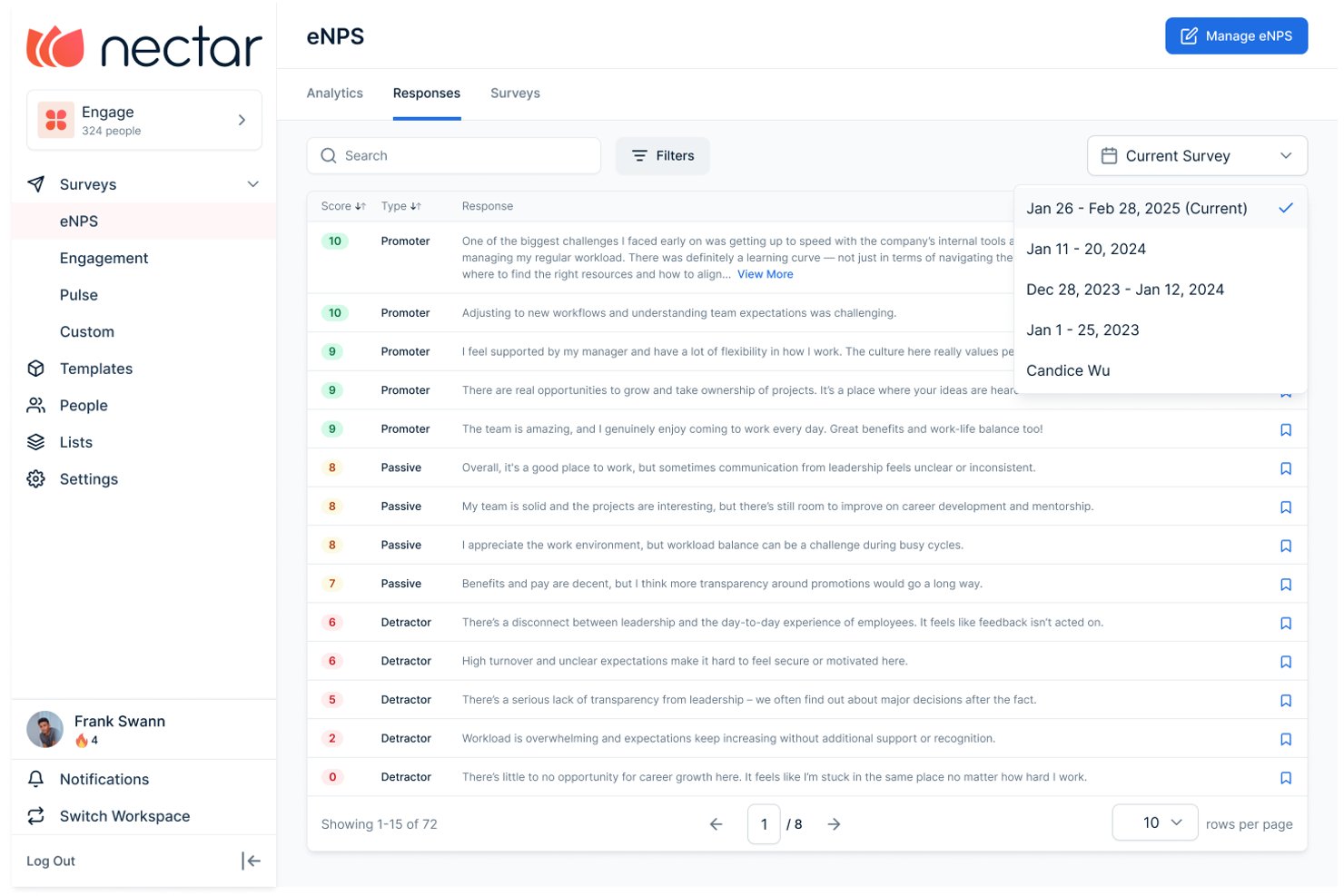
Nectar is an employee experience platform that combines pulse surveys, eNPS, AI sentiment analysis, engagement health scoring, and anonymous feedback tools with built-in recognition and internal communications.
Who Is Nectar Best For?
Nectar is a strong fit for employee experience managers and people ops teams who want survey feedback and peer recognition to live on the same platform.
Why I Picked Nectar
I picked Nectar as one of the best because it's the only tool I've seen that genuinely closes the loop between survey feedback and recognition on a single platform. When Signals flags a team member whose engagement score is dropping, managers get an automatic nudge to send a shoutout or schedule a check-in, right inside the same tool collecting the feedback. SafeTalk adds a layer I find especially useful: HR can reply to anonymous open-text survey comments in a two-way chat without breaking anonymity.
Nectar Key Features
- Engagement health scoring: Signals assigns each employee a 0–100 health score based on their recognition activity, survey responses, and communications engagement, with trend views for managers and executives.
- Multi-channel survey delivery: surveys reach employees via email, SMS, Slack, Microsoft Teams, and mobile, so frontline and deskless workers can respond without a work email.
- Lifecycle-triggered survey flows: Flows uses a no-code visual builder to automatically send surveys based on HRIS events like hire dates, anniversaries, or role changes.
- Point-based survey incentives: employees earn Nectar reward points for completing surveys, including anonymous ones, which helps drive higher participation rates.
Nectar Integrations
Nectar offers native integrations with Workday, BambooHR, UKG, ADP, Slack, Microsoft Teams, HubSpot, Salesforce, and Google Sheets. It also provides a public API and supports Zapier.
Pros and Cons
Pros:
- Survey incentives can improve response rates
- Recognition connects feedback with manager action
- SafeTalk enables anonymous two-way follow-up
Cons:
- AI recommendations remain largely unreleased
- Signals flags risk, not attrition
New Product Updates from Nectar

Nectar Enhances Clara AI With Live Platform Data
Nectar introduces live platform data access and expanded knowledge coverage for Clara AI. The updates improve response accuracy and speed while enabling Clara AI to answer questions across more recognition and rewards features. For more information, visit Nectar's official site.
 .
.
Best for AI-driven sentiment insights
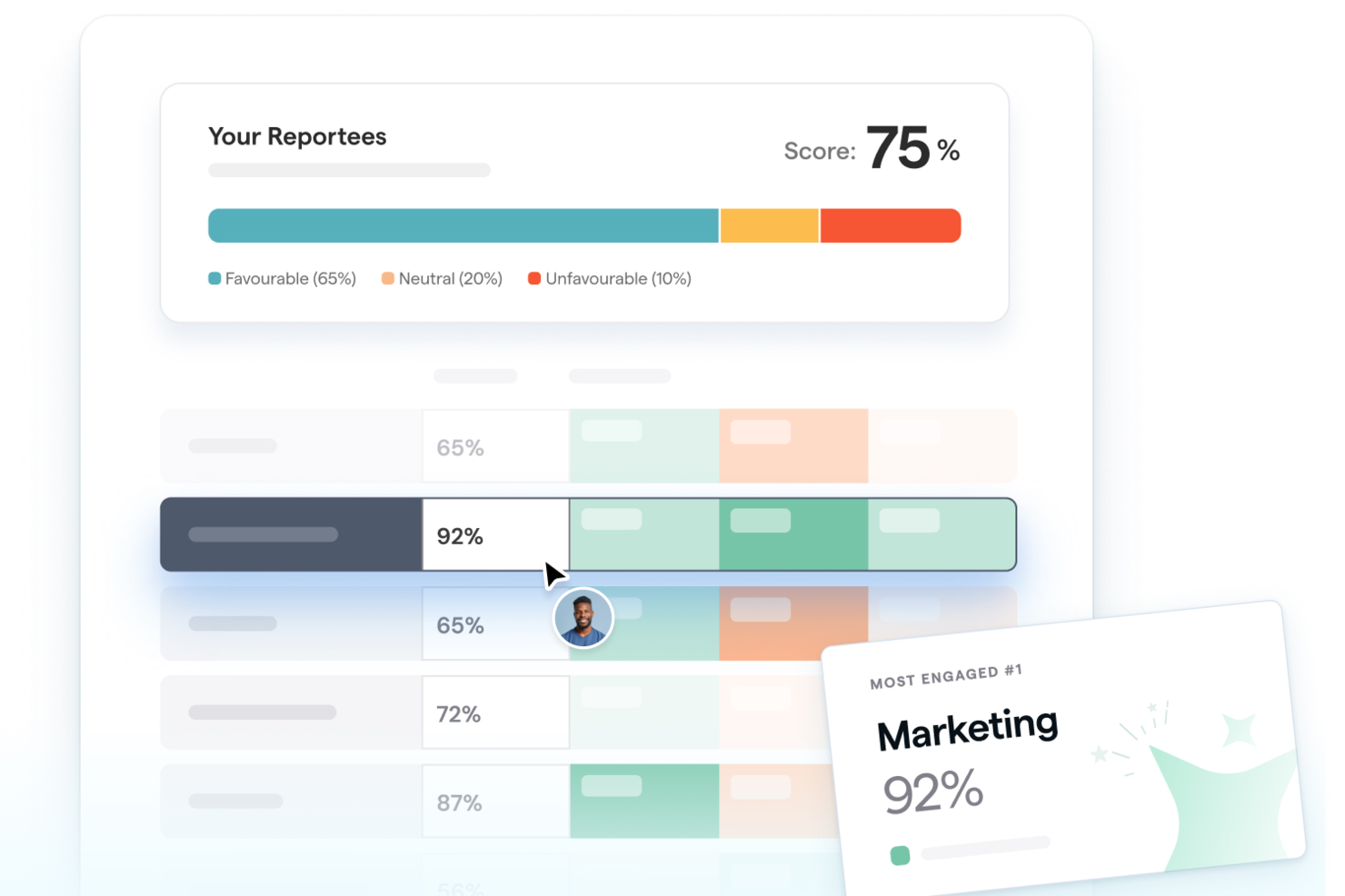
For organizations striving to enhance employee engagement and performance, ThriveSparrow offers a compelling solution. Tailored for businesses seeking to foster a high-performance culture, this AI-driven platform delivers tools that address the challenges of aligning team goals, providing meaningful feedback, and recognizing achievements. ThriveSparrow's features are designed to transform the employee experience, making it an ideal choice for HR professionals and managers who aim to boost morale and productivity.
Why I Picked ThriveSparrow
I picked ThriveSparrow because of its unique approach to AI-driven insights that genuinely enhance employee feedback processes. The platform's standout feature is its AI sentiment analysis, which helps you understand employee emotions and trends, ensuring that feedback is not only collected but also actionable. Additionally, the automated recognition system, with a global reach of over 800 gift cards, ensures that your team feels valued and appreciated. These features directly address the need for timely and meaningful feedback, making ThriveSparrow a smart choice for any organization looking to improve employee engagement.
ThriveSparrow Key Features
In addition to its AI-driven insights and recognition capabilities, I also want to mention other valuable features that ThriveSparrow offers:
- 360° Performance Reviews: This feature provides a comprehensive view of employee performance by gathering feedback from multiple sources within the organization.
- Goal Tracking (OKRs): Your team can align their objectives with organizational goals, ensuring everyone is working towards the same targets.
- Multilingual Surveys: Engage your global workforce by conducting surveys in over 100 languages with instant translation capabilities.
- QR Code Sharing: Easily distribute surveys to deskless employees, making it simple to gather feedback from all team members.
ThriveSparrow Integrations
Integrations include BambooHR, ADP, and Slack, ensuring seamless connectivity with your existing systems. Native integrations are designed to enhance your workflow and employee feedback processes.
Pros and Cons
Pros:
- Recognition tools reinforce employee appreciation
- Multilingual surveys support global teams
- AI sentiment analysis reveals trends
Cons:
- Reporting customization options remain basic
- Limited native integrations available

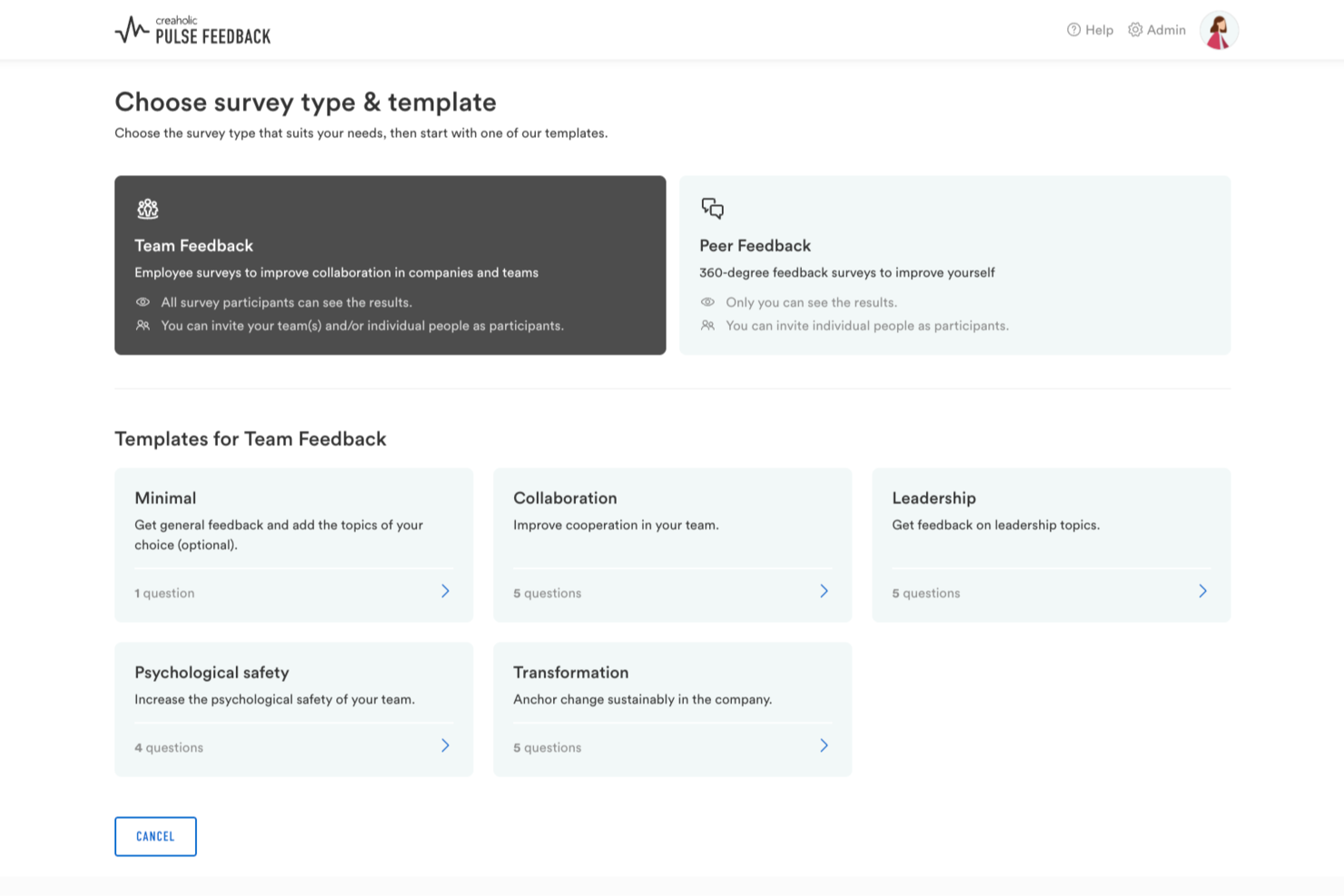
Pulse Feedback is an AI employee feedback platform that combines pulse surveys, 360-degree feedback, and open-text theme analysis with an AI-guided discussion moderator for structured team results sessions.
Who Is Pulse Feedback Best For?
Pulse Feedback is a strong fit for HR teams in mid-sized organizations that want to move beyond collecting feedback and actually facilitate structured, action-oriented conversations with their teams.
Why I Picked Pulse Feedback
I picked Pulse Feedback because its AI-guided Discussion Moderator is something I rarely see in this category: it analyzes your team's results, identifies the most pressing topics, and generates tailored discussion prompts so your team can move from raw feedback to a concrete action plan, even without a skilled facilitator in the room. Paired with AI Chat, you can ask plain-language questions about your results and get specific, contextual answers instead of digging through dashboards.
Pulse Feedback Key Features
- Bottom-up surveys: Any team or individual can initiate a survey at any time, outside of formal HR-led cycles.
- Constructive feedback prompts: "I like" and "I wish" prompts guide respondents toward specific, actionable input rather than open-ended venting.
- Benchmark comparison: Teams can compare their results against internal benchmarks or external norms to contextualize engagement scores.
- Action tracking: Built-in tools let teams log, assign, and monitor progress on improvement measures agreed upon after a survey closes.
Pulse Feedback Integrations
Pulse Feedback offers native SSO integrations with Microsoft 365, Azure Active Directory, Google Workspace, Okta, OneLogin, and Microsoft Entra ID.
Pros and Cons
Pros:
- Constructive feedback prompts improve response quality
- Real-time survey results accessible to all
- AI-guided team results discussions built-in
Cons:
- Limited external platform integration options
- No predictive analytics or attrition modeling
Kudos
Best for peer recognition
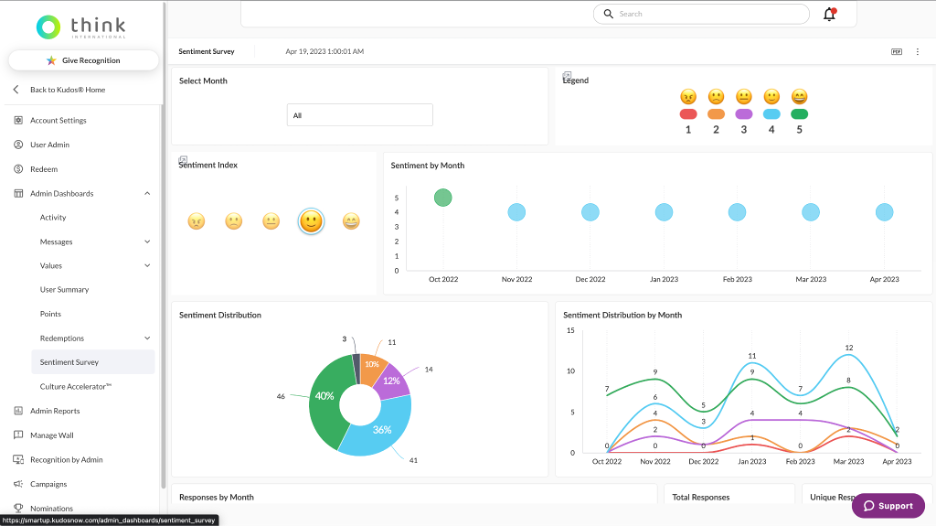
Kudos is an employee engagement platform that focuses on enhancing workplace culture through peer recognition and communication. It is designed for HR teams and managers who want to foster a positive work environment by utilizing AI-driven insights to promote recognition and engagement.
Why I picked Kudos: It helps organizations build a culture of appreciation through an easy-to-use recognition system. Kudos blends recognition, rewards, and analytics to help leaders understand where morale is strong and where additional support might be needed. It is excellent for companies that want to encourage frequent peer-to-peer recognition and reinforce shared values without relying on heavy HR processes.
Standout features & integrations:
Features include customizable recognition programs to align with your company's values, a communication hub to enhance team interaction, and analytics to track engagement and recognition trends. These features help your team create a supportive and appreciative environment.
Integrations include Microsoft Teams, Slack, Workday, ADP, BambooHR, UKG, Azure AD, Okta, Google Workspace, OneLogin, and SAML SSO connections.
Pros and Cons
Pros:
- Offers analytics for tracking engagement trends
- Enhances team interaction with communication tools
- Supports customizable recognition programs
Cons:
- Features might be overkill for smaller teams
- May not integrate well with other HR software tools
15Five
Best for performance reviews
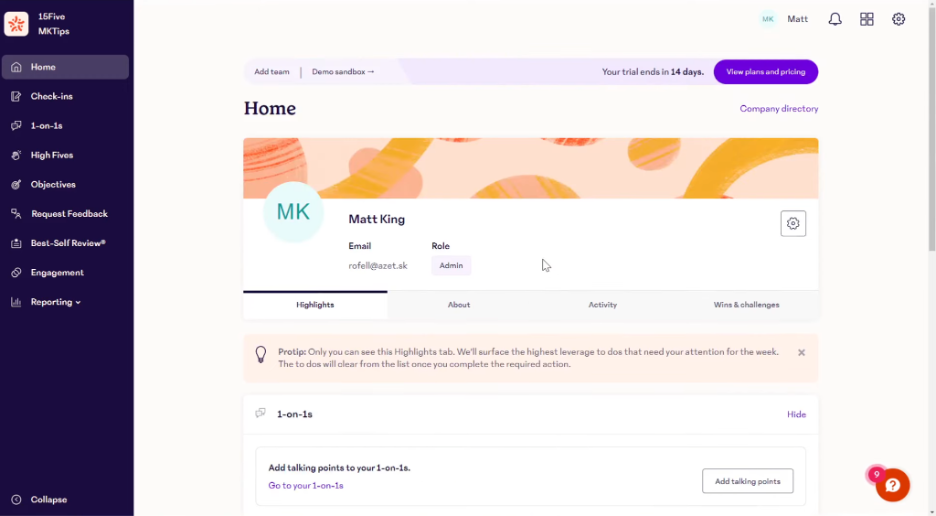
15Five is a performance management platform for enhancing employee engagement and development. It allows HR teams and managers to conduct performance reviews, set goals, and provide continuous feedback using AI-driven insights.
Why I picked 15Five: It gives teams a single platform to deliver continuous feedback, performance reviews, and employee check-ins. Its AI-powered insights help managers spot trends in check-in responses and recognition data, so you can address issues before they become turnover risks.
Standout features & integrations:
Features include goal setting and tracking to keep your team focused, weekly check-ins for continuous feedback, and engagement surveys to measure team satisfaction. These features help you maintain a productive and motivated workforce.
Integrations include Slack, Microsoft Teams, G Suite, BambooHR, Namely, ADP, Workday, Rippling, and Zenefits.
Pros and Cons
Pros:
- Offers AI-driven performance insights
- Includes OKR tracking for goal alignment
- Supports continuous feedback with check-ins
Cons:
- Few options for tailored workflows
- May require time to adapt to features

Haiilo
Best for social recognition
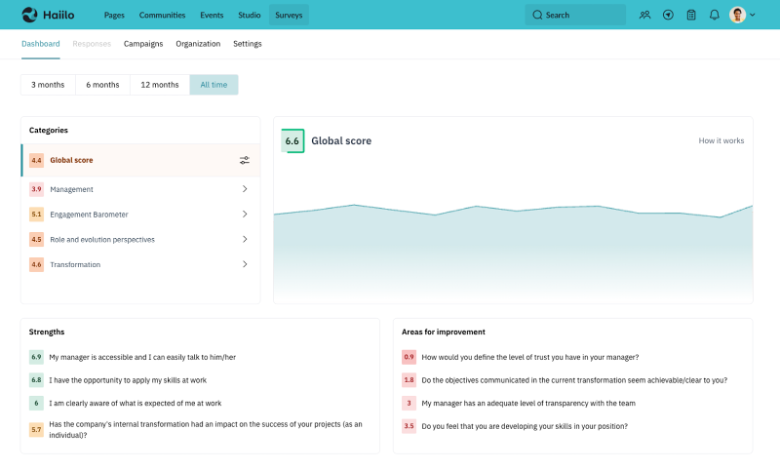
Haiilo is an employee engagement platform designed to enhance workplace communication and recognition. It is aimed at HR teams and managers looking to foster a positive work environment through social recognition and communication tools powered by AI.
Why I picked Haiilo: The platform brings together communication, engagement, and feedback in an all-in-one package that strengthens company culture from the inside out. Organizations often struggle to connect dispersed teams and keep employees aligned with updates, goals, and values. Haiilo supports this by providing analytics, targeted communication, and tools for real-time employee sentiment collection.
Standout features & integrations:
Features include customizable recognition programs tailored to your organization's culture, communication tools to enhance team collaboration, and analytics to measure the impact of engagement. These features help your team build a connected and motivated workforce.
Integrations include Microsoft Teams, Slack, SharePoint, Workday, BambooHR, Personio, SAP SuccessFactors, Azure AD, Google Workspace, Okta, OneLogin, Jira, Confluence and REST API support.
Pros and Cons
Pros:
- Enhances team collaboration with communication tools
- Offers analytics for engagement measurement
- Supports personalized recognition programs
Cons:
- May require initial setup time
- Message targeting rules can feel rigid
Thematic
Best for text analysis
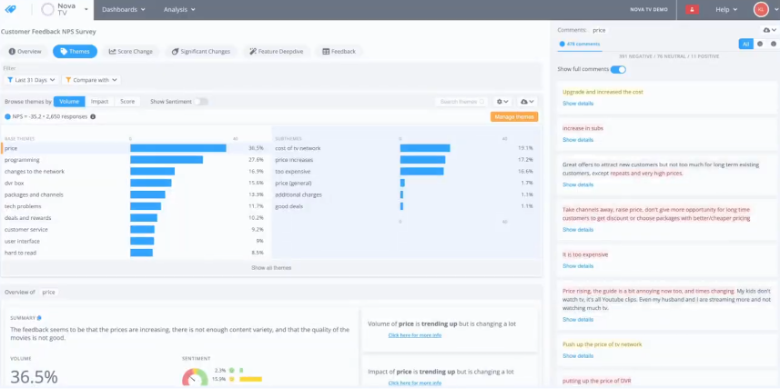
Thematic is a feedback analysis platform that leverages AI to interpret and categorize large volumes of text feedback. It is designed for businesses that need to understand customer and employee sentiment by extracting themes and insights from open-ended comments.
Why I picked Thematic: It turns large volumes of open-ended employee feedback into clear, actionable insights using AI-powered theme and sentiment analysis. For organizations that collect thousands of comments across surveys, chat logs, or call-out boxes, Thematic identifies root causes and emerging trends rather than leaving responses unread. Its integration with survey and analytics tools makes it ideal for teams focused on meaning-making.
Standout features & integrations:
Features include customizable dashboards for visualizing insights, real-time processing of feedback for analysis, and sentiment analysis to understand emotional tone. These features help your team identify areas for improvement and act on feedback.
Integrations include Typeform, AskNicely, Delighted, Microsoft Teams, Slack, Tableau, Looker, and REST API connections for survey and analytics tools.
Pros and Cons
Pros:
- Supports customizable visualization dashboards
- Offers real-time feedback processing
- Provides in-depth text analysis
Cons:
- May require initial setup time
- Theme detection accuracy varies

Best for pulse surveys
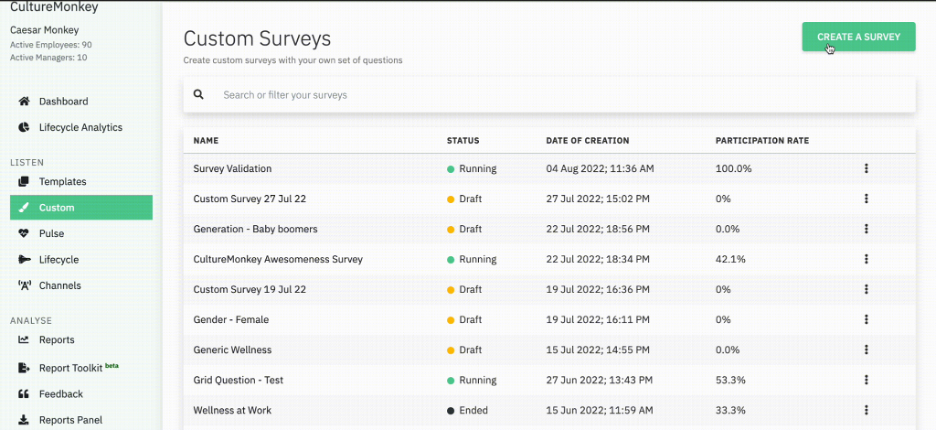
CultureMonkey is an employee engagement platform that focuses on gathering frequent, targeted feedback through pulse surveys. It caters to HR teams and managers looking to enhance workplace culture by providing actionable insights derived from AI analysis.
Why I picked CultureMonkey: It gives HR teams a simple way to understand employee sentiment and track engagement across the organization. Its focus on pulse surveys helps leaders identify issues early and respond with action plans. CultureMonkey is excellent for growing companies that want structured listening practices without committing to a heavy enterprise platform.
Standout features & integrations:
Features include customizable survey templates to fit your organization's needs, real-time analytics for immediate insights, and sentiment tracking to gauge employee morale. These features help your team stay informed and responsive.
Integrations include Slack, Microsoft Teams, Google Workspace, Outlook, Okta, BambooHR, SAP SuccessFactors, Workday, Oracle HCM, Zoho People, Freshteam, and Darwinbox.
Pros and Cons
Pros:
- Supports frequent feedback collection
- Offers real-time analytics and insights
- Provides detailed sentiment tracking
Cons:
- May require time to customize surveys
- Survey logic offers few variations

Workleap
Best for customizable surveys
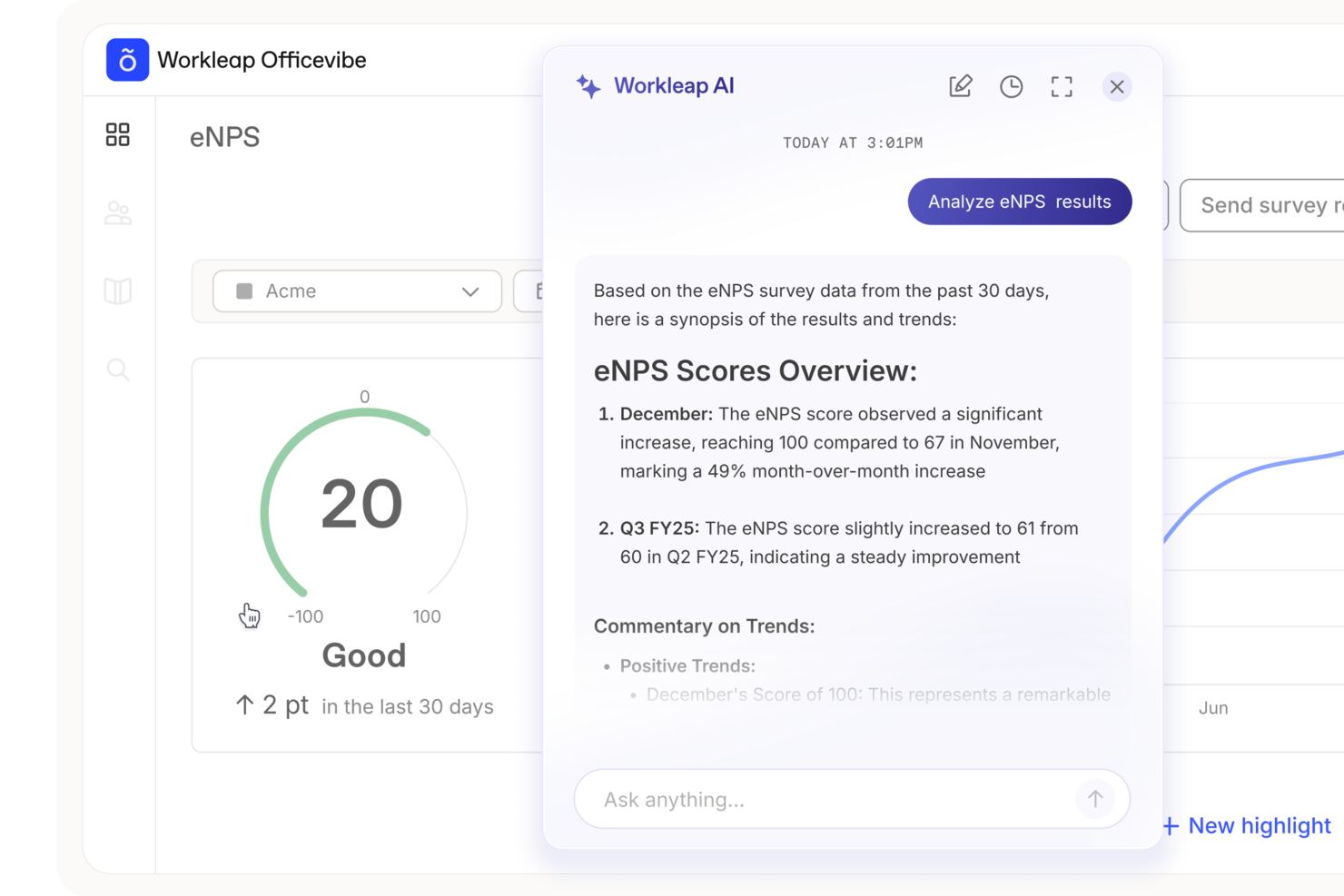
Workleap is an AI-driven employee feedback platform built to improve engagement through custom surveys, anonymous feedback, and peer recognition. It’s designed for leaders and HR teams across industries such as financial services, technology, and professional services. The platform integrates with existing HR tools and turns feedback data into clear insights that support better people management and stronger employee trust. Workleap helps organizations spot issues early and make informed decisions that support engagement and performance.
Why I Picked Workleap
I chose Workleap because its AI-powered insights help managers interpret employee feedback and identify follow-up actions. The platform identifies themes from open-ended responses and generates action plans tied to engagement trends, while customizable surveys help teams gather ongoing employee sentiment data. Its integrations with tools like Slack and Microsoft Teams also support adoption within existing workflows.
Workleap Key Features
In addition to the features mentioned, I also found the following features useful:
- Pulse Surveys: These quick surveys help you regularly gauge employee sentiment and identify trends over time.
- Recognition Tools: Features like Good Vibes cards allow team members to recognize each other’s achievements, fostering a positive work environment.
- AI-Generated Insights: The platform provides actionable insights based on survey data, helping you make informed decisions about employee engagement strategies.
- 1:1 Meeting Agendas: Create structured agendas for recurring manager check-ins using engagement and feedback trends.
Workleap Integrations
Integrations include Slack, Microsoft Teams, BambooHR, Google Workspace, ADP, and Outlook.
Pros and Cons
Pros:
- Native Slack and Teams integration available
- Customizable and anonymous pulse surveys for employees
- AI powered insights identify trends
Cons:
- Limited customization options for specific team needs
- Reporting depth limited for analytics
Perceptyx
Best for custom insights
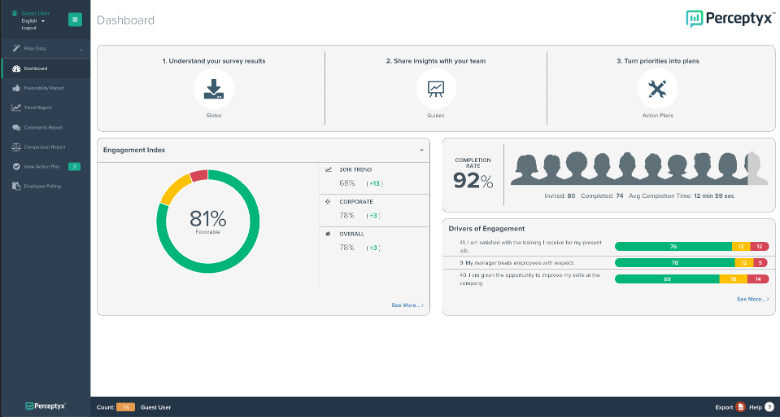
Perceptyx is an employee feedback platform that specializes in delivering custom insights through its AI-driven analytics. It targets HR professionals and business leaders aiming to improve organizational performance by understanding employee sentiment and engagement.
Why I picked Perceptyx: It transforms feedback into strategic impact across large, complex organizations. Its AI and analytics turn employee-experience data into actionable insights and nudges, helping HR teams not just collect input but drive behavior change. When you need a feedback platform that scales globally, integrates with HR systems, and supports continuous listening, Perceptyx is a solid choice.
Standout features & integrations:
Features include tailored survey designs to meet your organization's needs, interactive dashboards for visual data exploration, and advanced text analytics to interpret open-ended responses. These features help your team gain a deeper understanding of employee feedback.
Integrations include Workday, SAP SuccessFactors, Oracle HCM Cloud, Microsoft Teams, Azure AD/Entra ID, and REST API connections for HRIS systems.
Pros and Cons
Pros:
- Supports advanced text analytics
- Offers interactive dashboards for data visualization
- Provides tailored insights with AI analytics
Cons:
- May require initial setup time
- Analytics dashboards load slowly sometimes
Other AI Employee Feedback Software
Here are some additional AI employee feedback software options that didn’t make it onto my shortlist, but are still worth checking out:
- CultureAmp
For employee engagement
- Easy-Peasy.AI
For eNPS analytics
- Vondy
For small businesses
- Explorance
For comment analysis
- Officevibe
For team surveys
- Huckleberry
For voice-based feedback
- WorkTango
For continuous feedback
- Engagedly
For goal alignment
- Leapsome
For personalized learning modules
- Lattice
For goal setting
- PerformYard
For performance tracking
- Motivosity
For employee recognition
- Neobrain
For talent insights


How I Evaluate AI Employee Feedback Software
I evaluate whether the AI delivers value you'd never get manually—like detecting attrition signals in verbatims or turning raw feedback into manager coaching. I split my evaluation into two layers: the core functionality needed to make the list and the differentiators that separate one vendor from another.
Core Functionality (Table Stakes For This List)
When I'm selecting tools for my list, I rank each one on a scale from 0 (does not offer the functionality) to 5 (excels in this area) for each core functionality listed below. Then, I calculate the tool's total score into a percentage. Each tool needs to achieve a minimum total score of 65% to be considered for inclusion.
- AI-Powered Sentiment Analysis: I look for NLP that reads emotion and tone in open-ended responses, not just positive/negative keyword matching on structured answers.
- Automated Pulse Surveys: The tool should deploy recurring check-ins and eNPS at configurable cadences, ideally with AI-optimized question selection by audience segment.
- Theme & Topic Detection: Manually tagging thousands of verbatims is a dealbreaker. I evaluate how well the AI clusters and summarizes qualitative feedback into actionable themes.
- Predictive People Analytics: Strong tools surface attrition risk and engagement drivers from feedback patterns, giving HR a forward-looking view rather than a rear-view mirror.
- AI Action Recommendations: I check whether the platform generates specific, role-aware next steps for managers based on their team's results rather than generic advice.
- Anonymity & Confidentiality Controls: Respondent trust depends on this. I look for configurable thresholds, AI-driven PII redaction, and safeguards that prevent re-identification in small teams.
Once I have a list of tools that meet this criteria, I consider what sets each platform apart.
Differentiating Factors (What Sets Vendors Apart)
Here's how I compare and contrast different vendors:
Standout Features
Generative AI reporting stands out. The best tools turn weeks of analysis into one-click executive summaries HR leaders can share with the C-suite right after a survey closes. I also evaluate whether a platform includes a manager coaching copilot that drafts 1:1 talking points from team results, helping managers act on feedback rather than ignore it. For global organizations, multilingual NLP matters. I check whether sentiment and theme detection work natively across languages instead of relying on translation layers that strip cultural nuance.
Beyond Features
Data privacy and AI governance top my list. Employee feedback is sensitive, so I check for SOC 2 Type II compliance, regional data residency options, and transparent AI bias auditing. HRIS integration depth matters too—tools that sync with Workday or BambooHR can auto-trigger surveys at key lifecycle moments without manual setup. I also evaluate benchmarking access, since cross-industry engagement benchmarks help HR leaders contextualize their scores and build a stronger case for action with leadership.
How to Choose AI Employee Feedback Software
It’s easy to get bogged down in long feature lists and complex pricing structures. To help you stay focused as you work through your unique software selection process, here’s a checklist of factors to keep in mind:
| Factor | What to Consider |
| Scalability | Can the software grow with your team? Look for options that accommodate growing user numbers without significant cost increases. Consider future growth and expansion needs. |
| Integrations | Does it work with your current systems? Ensure it integrates with existing HR tools, such as payroll or performance management systems, to avoid data silos. |
| Customizability | Can you tailor it to fit your processes? Check if you can modify templates, reports, and workflows to match your organization's specific needs. |
| Ease of use | Is it user-friendly for everyone? Consider the learning curve and whether your team can adopt and navigate the software without extensive training. |
| Implementation and onboarding | How quickly can you start? Evaluate the time and resources required to get up and running, including training support and migration assistance. |
| Cost | Is it within your budget? Analyze the total cost, including hidden fees, to ensure it aligns with your financial constraints. Compare against feature offerings. |
| Security safeguards | Does it protect your data? Check for encryption, data backup, and compliance with industry standards to safeguard sensitive employee information. |
| Support availability | Will you get help when needed? Ensure the vendor provides reliable customer support across multiple channels to address any issues or questions. |
What Is AI Employee Feedback Software?
AI employee feedback software is a tool that leverages artificial intelligence to gather, analyze, and interpret employee feedback. HR professionals and team leaders use these tools to enhance engagement and improve workplace culture. Sentiment analysis, predictive insights, and real-time data processing help understand employee sentiment and make informed decisions. Overall, these tools provide value by offering actionable insights to foster a more positive work environment.
Features
When selecting AI employee feedback software, keep an eye out for the following key features:
- Sentiment analysis: Analyzes text feedback to determine emotional tone, helping you understand employee feelings and concerns.
- Predictive insights: Uses AI to forecast trends and potential issues, allowing proactive management of employee engagement.
- Real-time data processing: Provides immediate analysis of feedback, enabling swift action on employee sentiments and suggestions.
- Customizable dashboards: Offers tailored views of data, letting you focus on specific metrics and insights relevant to your organization.
- Natural language processing: Interprets and categorizes feedback from open-ended responses, making it easier to identify key themes.
- Integration capabilities: Connects with existing HR systems to simplify data flow and provide a holistic view of employee feedback.
- Interactive reports: Generates visual representations of data, aiding in the clear communication of insights to stakeholders.
- Continuous feedback loops: Facilitates ongoing dialogue between employees and management, promoting a culture of openness and improvement.
- Multilingual support: Analyzes feedback in multiple languages, ensuring inclusivity in diverse workplaces.
- Automated alerts: Notifies you of significant changes in feedback trends, helping prioritize urgent issues.
Benefits
Implementing AI employee feedback software provides several benefits for your team and your business. Here are a few you can look forward to:
- Improved decision-making: AI-driven insights help you make informed decisions by analyzing trends and predicting potential issues.
- Enhanced engagement: Continuous feedback loops foster communication and trust, leading to a more engaged workforce.
- Faster responses: Real-time data processing allows you to address employee concerns and suggestions.
- Greater inclusivity: Multilingual support ensures feedback from diverse teams is understood and acted upon.
- Targeted improvements: Sentiment analysis identifies specific areas for improvement, enabling focused initiatives.
- Better resource allocation: Predictive insights guide you in prioritizing resources where they’re most needed.
- Increased transparency: Interactive reports and dashboards provide clear visibility into feedback trends and outcomes.
Costs & Pricing
Selecting AI employee feedback software requires understanding the available pricing models and plans. Costs vary based on features, team size, add-ons, and more. The table below summarizes standard plans, their average prices, and typical features included in AI employee feedback software solutions:
Plan Comparison Table for AI Employee Feedback Software
| Plan Type | Average Price | Common Features |
| Free Plan | $0 | Basic feedback collection, limited reports, and basic analytics. |
| Personal Plan | $2-$10/month | Customizable surveys, sentiment analysis, and basic integrations. |
| Business Plan | $10-$30/month | Advanced analytics, real-time feedback processing, and multilingual support. |
| Enterprise Plan | Custom pricing | Predictive insights, full integration capabilities, and dedicated customer support. |
AI Employee Feedback Software FAQs
Here are some answers to common questions about AI employee feedback software:
How do I ensure data security with AI feedback tools?
Look for AI feedback tools that support encryption, regular data backups, and compliance with data-protection regulations like GDPR. Since these platforms often store sensitive information tied to employee development and learning experiences, strong safeguards are essential. Ask vendors whether they offer breach-notification processes and how they secure machine learning models that analyze employee responses. Enable two-factor authentication, restrict access to authorized HR team members, and keep the software up to date to prevent vulnerabilities.
Can AI tools integrate with existing HR systems?
Yes, many AI feedback tools integrate with HR platforms such as Workday, BambooHR, and SAP SuccessFactors. This allows feedback data to sit alongside development plans, learning paths, or employee training records in your HR ecosystem. Ask vendors for examples of successful integrations and whether the connection requires technical setup. A demo can help you understand how feedback insights inform broader data-driven decisions across your HR workflows.
What kind of support can I expect from vendors?
Support varies by provider, but most offer email and phone assistance, with some providing live chat or dedicated account managers. Check whether they offer onboarding help, beneficial when setting up LMS integrations, configuring feedback cycles, or connecting the tool to training systems. Look into their knowledge base, support hours, and customer reviews to gauge reliability.
How does AI employee feedback software improve the quality of feedback?
AI feedback tools use machine learning to analyze employee responses in real time, identifying patterns, sentiment, and emerging issues. This leads to more accurate, actionable insights and helps you detect skill gaps or upskilling opportunities. Many platforms also streamline survey creation, increasing participation and improving the quality of your learning experiences and internal communication.
Can I trust AI tools to keep employee feedback anonymous?
Yes, most AI employee feedback tools are designed to protect anonymity by separating identities from response data. They often group feedback into trends or categories, helpful for leaders tracking progress across employee training or team development, without exposing individual responses. Reviewing the vendor’s privacy documentation can give you added confidence.