

10 Wettbewerber von Workday Adaptive Planning für FP&A im Jahr 2026

Die besten Konkurrenten von Workday Adaptive Planning – Auswahl


Wenn Ihr aktuelles Tool für das Enterprise-Performance-Management überwältigend wirkt, sind Sie nicht allein. Tools wie Workday Adaptive Planning entsprechen möglicherweise nicht Ihren spezifischen Anforderungen, sodass Ihr Team mit Ineffizienzen zu kämpfen hat. Vielleicht suchen Sie nach einer Lösung, die klare KPIs bietet, Verbindungen zu ERP-, CRM- und HR-Systemen herstellt, Szenarioplanung, Budgetierung und Prognosen unterstützt oder Funktionen für Ihre Branche umfasst.
Meiner Erfahrung nach kann die Wahl des richtigen Tools den Arbeitsablauf Ihres Teams grundlegend verändern. Deshalb habe ich mehrere Konkurrenten von Workday Adaptive Planning unabhängig getestet und bewertet, um die besten Alternativen für unterschiedliche geschäftliche Anforderungen zu ermitteln.
In diesem Artikel führe ich Sie durch die wichtigsten Konkurrenten von Workday Adaptive Planning und erläutere ihre Stärken in Bereichen wie Finanzplanung und -analyse, Benutzerfreundlichkeit und Planungsflexibilität. Finden wir die richtige Lösung, um Ihre geschäftlichen Herausforderungen zu bewältigen und die Leistung Ihres Teams zu steigern.
Was ist Workday Adaptive Planning?
Workday Adaptive Planning ist ein SaaS-basiertes Tool für das Enterprise-Performance-Management, das Unternehmen bei Budgetierung, Prognosen und Berichterstattung unterstützt. Es wird häufig von Finanzfachleuten, Personalverantwortlichen und Business-Analysten verwendet, die genaue und zeitnahe Finanzinformationen benötigen. Die von diesen Produkten bereitgestellten Daten können Ihnen und Ihrem Team dabei helfen, Ergebnisse mithilfe von Was-wäre-wenn- und Szenariomodellen effektiv zu bewerten.
Echtzeit-Zusammenarbeit, flexible Modellierung und intuitive Dashboards tragen dazu bei, Prozesse zu vereinfachen und die finanzielle Transparenz zu verbessern. Mithilfe von APIs und Konnektoren können Unternehmen Planungsdaten in andere Systeme integrieren und so die Konsistenz bei der Berichterstattung und beim Finanzabschluss unterstützen. Insgesamt stellt Workday Adaptive Planning Ihnen die Tools zur Verfügung, mit denen Sie eine bessere Unternehmensleistung erzielen und Ihr Team auf Ihre strategischen Ziele ausrichten können.
Zusammenfassung der besten Konkurrenten von Workday Adaptive Planning
Diese Vergleichstabelle fasst die Preisinformationen zu meinen wichtigsten Konkurrenten von Workday Adaptive Planning zusammen und hilft Ihnen dabei, die beste Lösung für Ihr Budget und Ihre geschäftlichen Anforderungen zu finden.
| Tool | Best For | Trial Info | Price | ||
|---|---|---|---|---|---|
| 1 | Am besten für KI-gestützte Szenarioplanung geeignet | Kostenlose Demo verfügbar | Preise auf Anfrage | Website | |
| 2 | Am besten für automatisierte FP&A-Arbeitsabläufe | Kostenlose Demo verfügbar | Preise auf Anfrage | Website | |
| 3 | Am besten für unternehmensweite Zusammenarbeit geeignet | Kostenlose Demo verfügbar | Preise auf Anfrage | Website | |
| 4 | Am besten für anpassbare, KI-gestützte Analysen geeignet | Kostenlose Demo verfügbar | Preise auf Anfrage | Website | |
| 5 | Am besten für KI-gestützte Finanzeinblicke geeignet | Kostenlose Demo verfügbar | Preise auf Anfrage | Website | |
| 6 | Am besten für Liquiditäts- und Finanzmittelmanagement geeignet | Kostenlose Demo verfügbar | Preis auf Anfrage | Website | |
| 7 | Am besten für Finanzplanung ohne Programmierung geeignet | Kostenlose Demo verfügbar | Preise auf Anfrage | Website | |
| 8 | Am besten geeignet, um die Abhängigkeit von Tabellenkalkulationen zu beseitigen | Kostenlose Testversion + kostenlose Demo verfügbar | Preise auf Anfrage | Website | |
| 9 | Am besten für Großhändler und Hersteller geeignet | Kostenlose Demo verfügbar | Preisinformationen nicht verfügbar | Website | |
| 10 | Am besten für integrierte KI-Planung geeignet | Kostenlose Demo verfügbar | Preise auf Anfrage | Website |
Warum Sie unseren Software-Bewertungen vertrauen können
Unser Team testet und bewertet Software seit 2012. Als HR-Experten wissen wir selbst, wie schwierig – und wichtig – es ist, die richtige Software auszuwählen.
Für diesen Leitfaden haben wir Tools mithilfe von praktischen Tests und unabhängiger Recherche bewertet und dabei unsere Bewertungskriterien angewendet. Zudem greifen wir auf Erkenntnisse von Branchenvordenkern und praktizierenden HR-Experten zurück.
Unsere Bewertungen spiegeln unser menschliches redaktionelles Urteilsvermögen wider, keine Verkaufsstrategie.
Expertenprüfer:
Bewertungen der besten Konkurrenten von Workday Adaptive Planning
Im Folgenden finden Sie meine ausführlichen Zusammenfassungen der besten Konkurrenten von Workday Adaptive Planning, die es in meine Auswahl geschafft haben. Meine Bewertungen bieten einen detaillierten Überblick über die wichtigsten Funktionen, Vor- und Nachteile, Integrationen und idealen Einsatzbereiche jedes Tools, damit Sie die Lösung finden, die am besten zu Ihnen und Ihrem Team passt.

Anaplan
Am besten für KI-gestützte Szenarioplanung geeignet
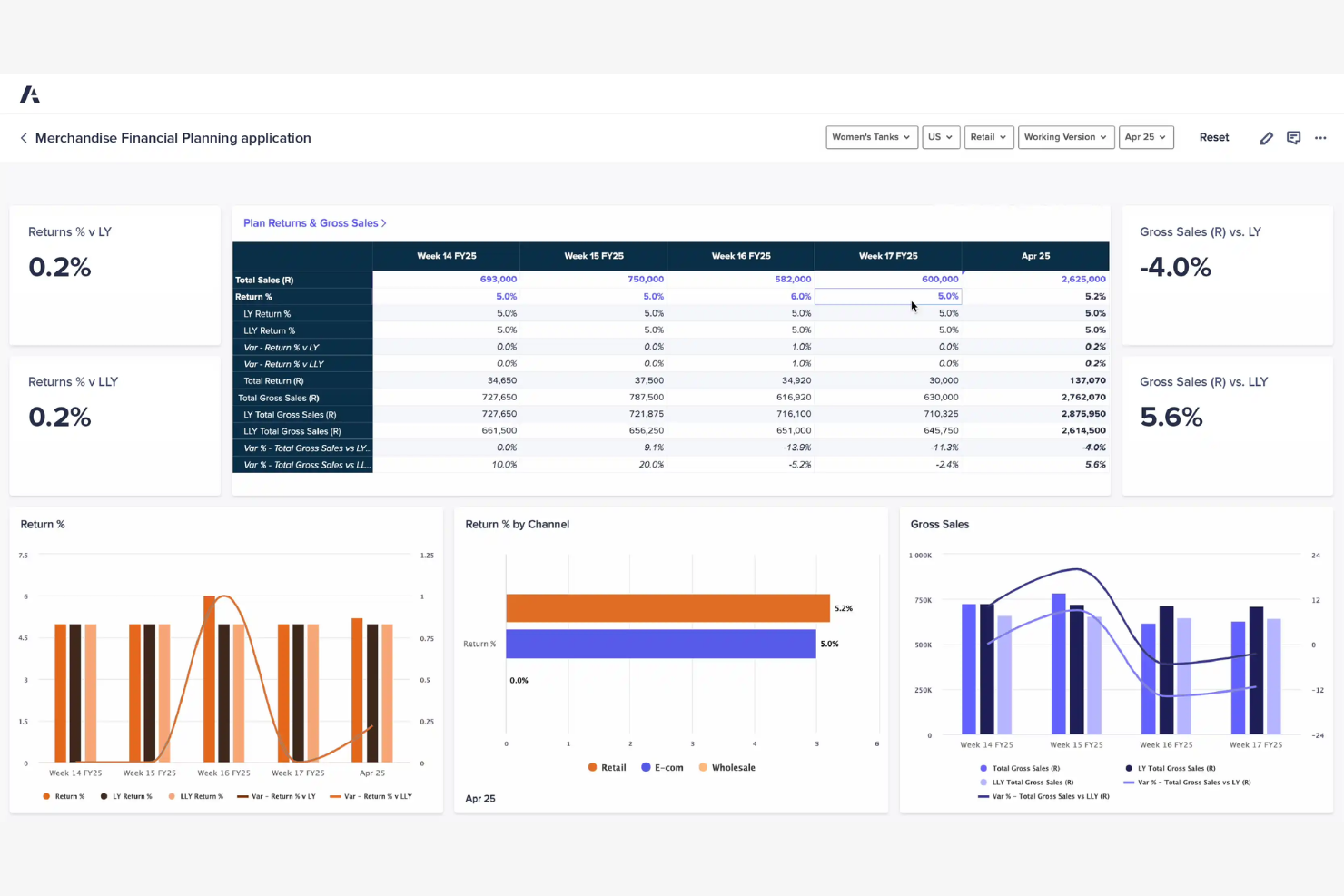
Anaplan ist ein cloudbasiertes Tool für das Unternehmensleistungsmanagement, das sich an Finanz- und Betriebsteams richtet. Es konzentriert sich auf Planung, Budgetierung und Prognosen, um strategische Geschäftsentscheidungen zu verbessern.
Warum es ein guter Konkurrent für Workday Adaptive Planning ist: Anaplan bietet KI-gestützte Szenarioplanung, mit der Sie verschiedene Geschäftsergebnisse simulieren können, um Ihren Entscheidungsprozess zu unterstützen. Die prädiktiven Analysen und fortschrittlichen Modellierungsfunktionen liefern Erkenntnisse, die Workday Adaptive Planning möglicherweise nicht abdeckt. Darüber hinaus kann Anaplan komplexe Datensätze verarbeiten und zeitnahe analytische Erkenntnisse liefern. Diese Funktionen machen Anaplan zu einer überzeugenden Wahl für Unternehmen, die fortschrittliche Planungslösungen benötigen.
Herausragende Funktionen und Integrationen:
Zu den Funktionen gehören kollaborative Planung, prädiktive Analysen und fortschrittliche Modellierung. Sie können mehrere Beteiligte in den Planungsprozess einbinden und so sicherstellen, dass alle am Projekt Beteiligten aufeinander abgestimmt sind. Die Plattform von Anaplan ermöglicht Datenaktualisierungen in Echtzeit, sodass Sie stets über die neuesten Informationen verfügen.
Zu den Integrationen gehören Salesforce, Workday, Microsoft Excel, Google Sheets, Oracle, Slack, Adobe und weitere.
Pros and Cons
Pros:
- Verarbeitet komplexe Datensätze
- Planung durch mehrere Benutzer mit rollenbasiertem Zugriff
- Sofortige Übertragung von Planungsänderungen über Modelle hinweg
Cons:
- Hohe Anforderungen an die Modellierung für fortgeschrittene Anpassungen
- Komplexe Benutzeroberfläche

Am besten für automatisierte FP&A-Arbeitsabläufe
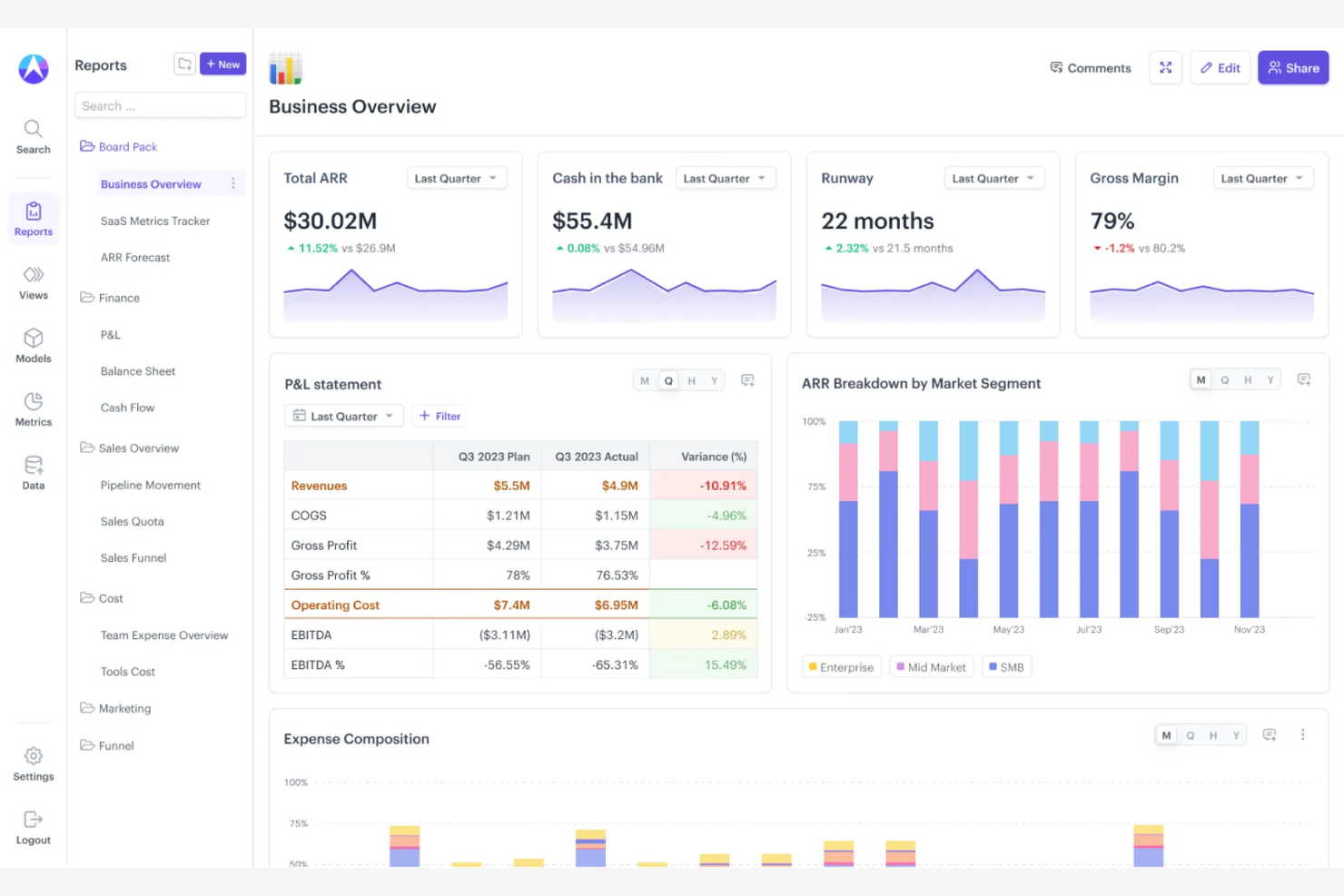
Drivetrain ist eine Plattform für Finanzplanung und -analyse, die für Finanzteams entwickelt wurde, um ihre Planungsprozesse zu automatisieren und zu optimieren. Der Schwerpunkt liegt auf Budgetierung, Prognosen und Finanzanalysen in Echtzeit.
Warum Drivetrain ein guter Wettbewerber von Workday Adaptive Planning ist: Drivetrain bietet eine autonome FP&A-Integration, die viele manuelle Aufgaben in der Finanzplanung automatisiert. Die Echtzeitanalyse- und Prognosefunktionen stellen sicher, dass Ihr Team schnell fundierte Entscheidungen treffen kann. Durch die Möglichkeit der Plattform, Daten aus verschiedenen Quellen zu verbinden, behalten Sie einen detaillierten Überblick über Ihre finanzielle Situation. Die benutzerfreundliche Oberfläche von Drivetrain erleichtert es Ihrem Team, sich an die Plattform zu gewöhnen und von ihren Funktionen zu profitieren.
Herausragende Funktionen und Integrationen:
Zu den Funktionen gehören automatisierte Prognosen, Echtzeitanalysen und Datenkonsolidierung. Sie können wiederkehrende Finanzaufgaben automatisieren, Zeit sparen und Fehler reduzieren. Die Echtzeitanalysen von Drivetrain helfen Ihnen, Finanztrends im Blick zu behalten und proaktive Entscheidungen zu treffen.
Zu den Integrationen gehören Salesforce, QuickBooks, Xero, Sage Intacct, Oracle, SAP, Workday, Google Sheets und weitere.
Pros and Cons
Pros:
- Automatisiert Aufgaben der Finanzplanung
- Live-Überblick über ARR, Cashflow und Prognoseänderungen
- Einfache Datenkonsolidierung
Cons:
- Für die vollständige Nutzung ist eine Schulung erforderlich
- Im Vergleich zu etablierten FP&A-Tools für Großunternehmen noch in der Weiterentwicklung

Board
Am besten für unternehmensweite Zusammenarbeit geeignet
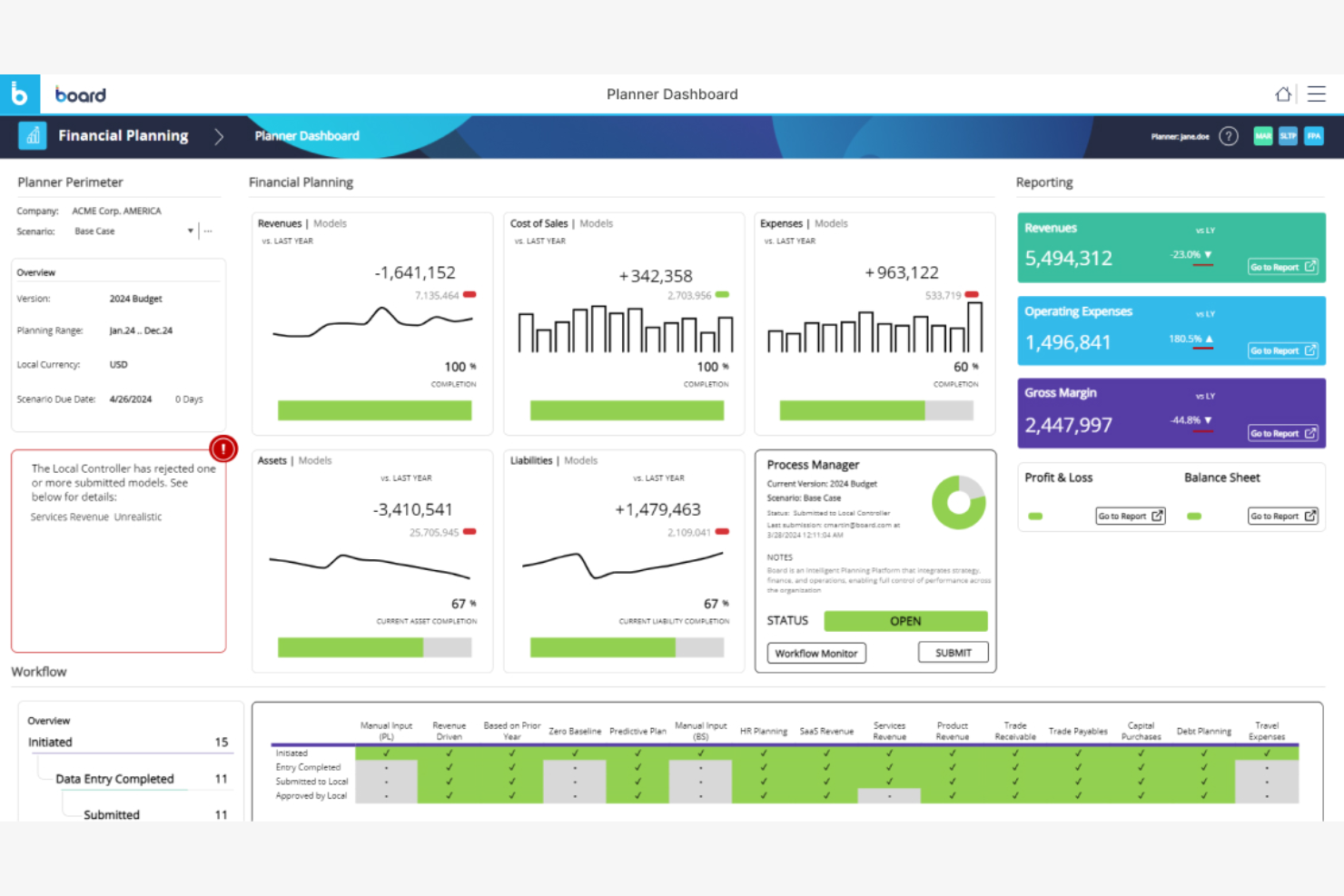
Board ist eine All-in-One-Plattform zur Entscheidungsfindung, die Finanz- und Betriebsteams unterstützt. Sie vereint integrierte Geschäftsplanung, Leistungsmanagement und prädiktive Analysen.
Warum es ein guter Wettbewerber für Workday Adaptive Planning ist: Board zeichnet sich durch unternehmensweite Zusammenarbeit aus und ermöglicht es mehreren Abteilungen, auf einer gemeinsamen Plattform zusammenzuarbeiten. Die intuitive Benutzeroberfläche und die Funktion zum Ziehen und Ablegen erleichtern die Erstellung und gemeinsame Nutzung von Berichten in verschiedenen Teams. Leistungsstarke Datenvisualisierungstools liefern schnelle Einblicke für fundierte Entscheidungen, während flexible Datenverbindungen einen umfassenderen Überblick über Ihr Unternehmen ermöglichen.
Herausragende Funktionen und Integrationen:
Zu den Funktionen gehören interaktive Dashboards, die Erstellung von Berichten per Ziehen und Ablegen sowie prädiktive Analysen, die Ihnen helfen können, Trends vorherzusehen und proaktive Entscheidungen zu treffen. Die anpassbaren Dashboards dieses Tools machen das Produkt für eine Vielzahl von Teams geeignet.
Zu den Integrationen gehören Microsoft Office, SAP, Google Analytics, Tableau, Power BI und weitere.
Pros and Cons
Pros:
- Anpassbare Dashboards und eine einfache Benutzeroberfläche mit Ziehen-und-Ablegen-Funktion
- Unterstützt unternehmensweite Zusammenarbeit
- Leistungsstarke Datenvisualisierungstools
Cons:
- Für die Integration ist möglicherweise Unterstützung durch die IT-Abteilung erforderlich
- Schulung erforderlich, um die Modellierungsfunktionen vollständig zu nutzen

Jedox
Am besten für anpassbare, KI-gestützte Analysen geeignet
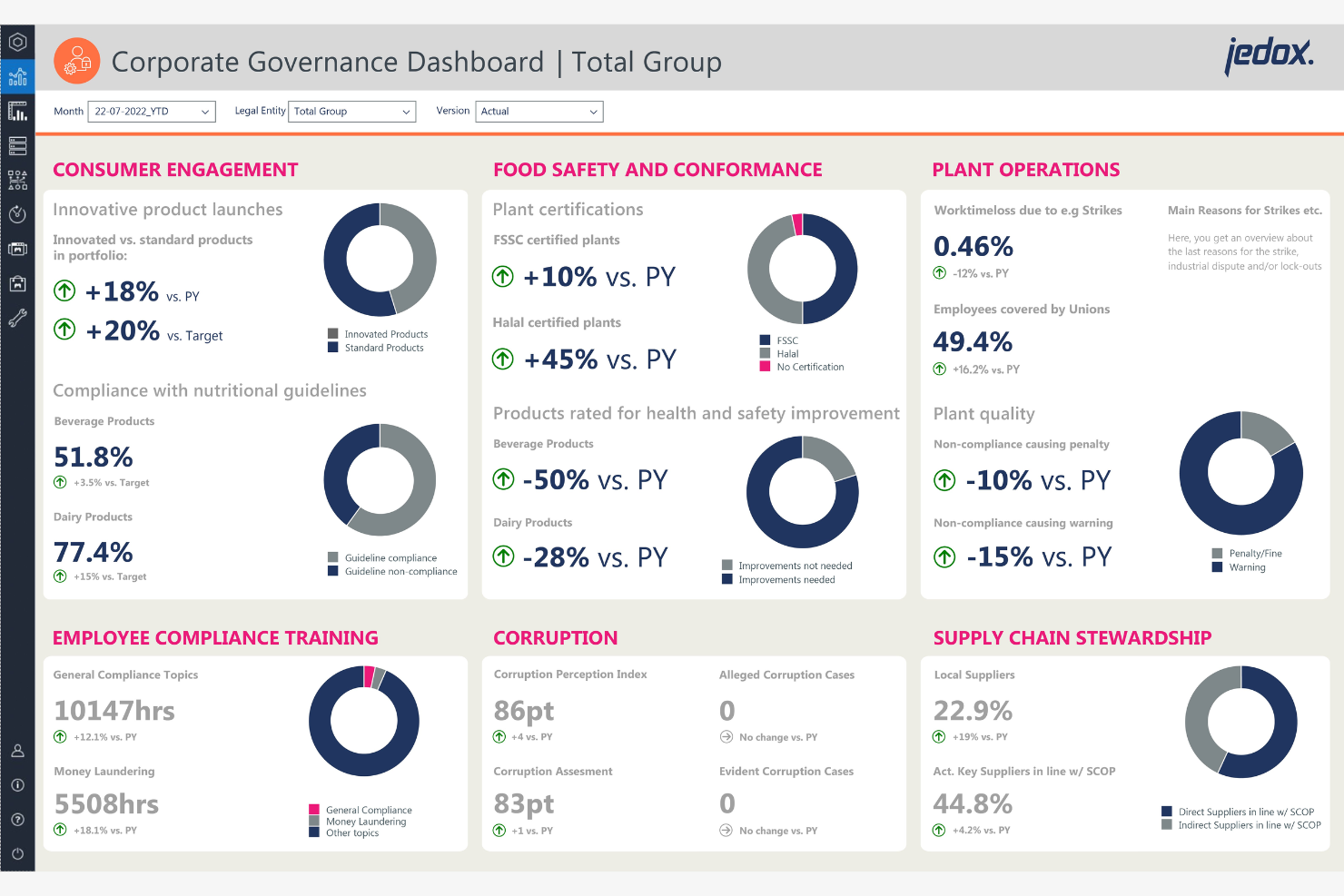
Jedox ist eine Performance-Management-Plattform für Finanzfachleute mit Schwerpunkt auf Budgetierung, Planung und Prognosen. Sie bietet Tools zur Konsolidierung von Finanzprozessen und zur Verbesserung der Entscheidungsfindung.
Warum es ein guter Konkurrent von Workday Adaptive Planning ist: Jedox bietet anpassbare, KI-gestützte Analysen und eignet sich daher für Unternehmen, die nach fortschrittlichen Dateneinblicken suchen. Die Funktion für prädiktive Prognosen nutzt KI, damit Ihr Team Trends vorhersehen und seine Strategien entsprechend anpassen kann. Dank der Flexibilität der Plattform können Sie Lösungen an Ihre geschäftlichen Anforderungen anpassen. Jedox kombiniert eine benutzerfreundliche Oberfläche mit anpassbaren Dashboards, um Teams einen klaren Überblick über Finanzdaten und eine reibungslosere Benutzererfahrung zu bieten.
Hervorstechende Funktionen und Integrationen:
Zu den Funktionen gehören anpassbare Dashboards, automatisierte Workflows und fortschrittliche Berichterstattung. Sie können automatisierte Workflows einrichten, um manuelle Arbeit zu reduzieren und die Effizienz zu steigern. Die fortschrittlichen Berichtstools von Jedox können die Datenanalyse Ihres Teams verbessern.
Zu den Integrationen gehören Microsoft Excel, SAP, Salesforce, Tableau, Power BI, Google Analytics, Oracle und weitere.
Pros and Cons
Pros:
- Anpassbare, KI-gestützte Analysen
- Bietet prädiktive Prognosen
- Flexible Modellierungs- und Prognose-Workflows
Cons:
- Für neue Benutzer etwas anspruchsvoll
- Grundlegende Visualisierungsoptionen

Planful
Am besten für KI-gestützte Finanzeinblicke geeignet
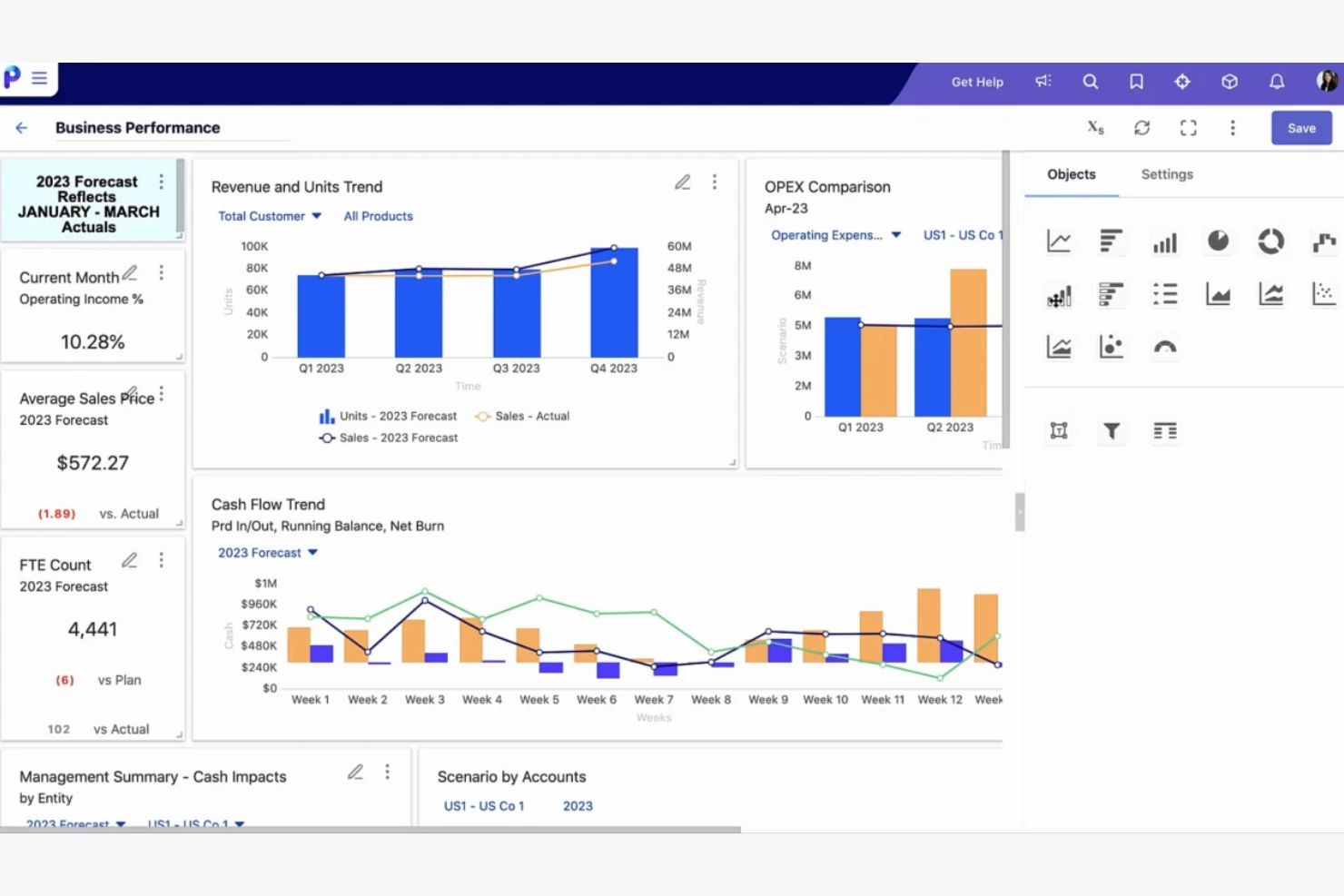
Planful ist eine Plattform für Finanzplanung und -analyse, die sich an Finanzteams richtet. Die Funktionen für Budgetierung, Prognosen und Berichterstattung unterstützen datengestützte Entscheidungen.
Warum es ein guter Konkurrent von Workday Adaptive Planning ist: Planful bietet KI-gestützte Finanzeinblicke, mit denen Ihr Team datengestützte Analysen für eine bessere Planung nutzen kann. Die intuitive Benutzeroberfläche vereinfacht den Budgetierungsprozess und hilft Ihnen, präzisere Prognosen zu erstellen. Die Berichtstools der Plattform liefern wertvolle Erkenntnisse, die Ihre Strategie unterstützen. Der Fokus von Planful auf Automatisierung reduziert manuelle Aufgaben, sodass sich Ihr Team auf Aktivitäten mit großer Wirkung konzentrieren kann.
Hervorzuhebende Funktionen und Integrationen:
Zu den Funktionen gehören automatisierte Berichte, anpassbare Dashboards und prädiktive Analysen. Sie können wiederkehrende Aufgaben automatisieren und dadurch Zeit für die strategische Planung gewinnen. Die prädiktiven Analysen von Planful liefern Erkenntnisse, die Ihnen helfen, Trends vorherzusehen und proaktive Entscheidungen zu treffen.
Zu den Integrationen gehören NetSuite, Salesforce, Microsoft Dynamics 365, SAP, Oracle, QuickBooks, Xero, Workday, Google Sheets, Slack und weitere.
Pros and Cons
Pros:
- Automatisierte Abweichungsanalyse
- Vereinfachte Budgetierungstools
- Konfigurierbare Prognosemodelle
Cons:
- Der Konfigurationsaufwand steigt mit der Komplexität der Planung
- Besser für mittlere bis große Finanzteams geeignet

Kyriba
Am besten für Liquiditäts- und Finanzmittelmanagement geeignet
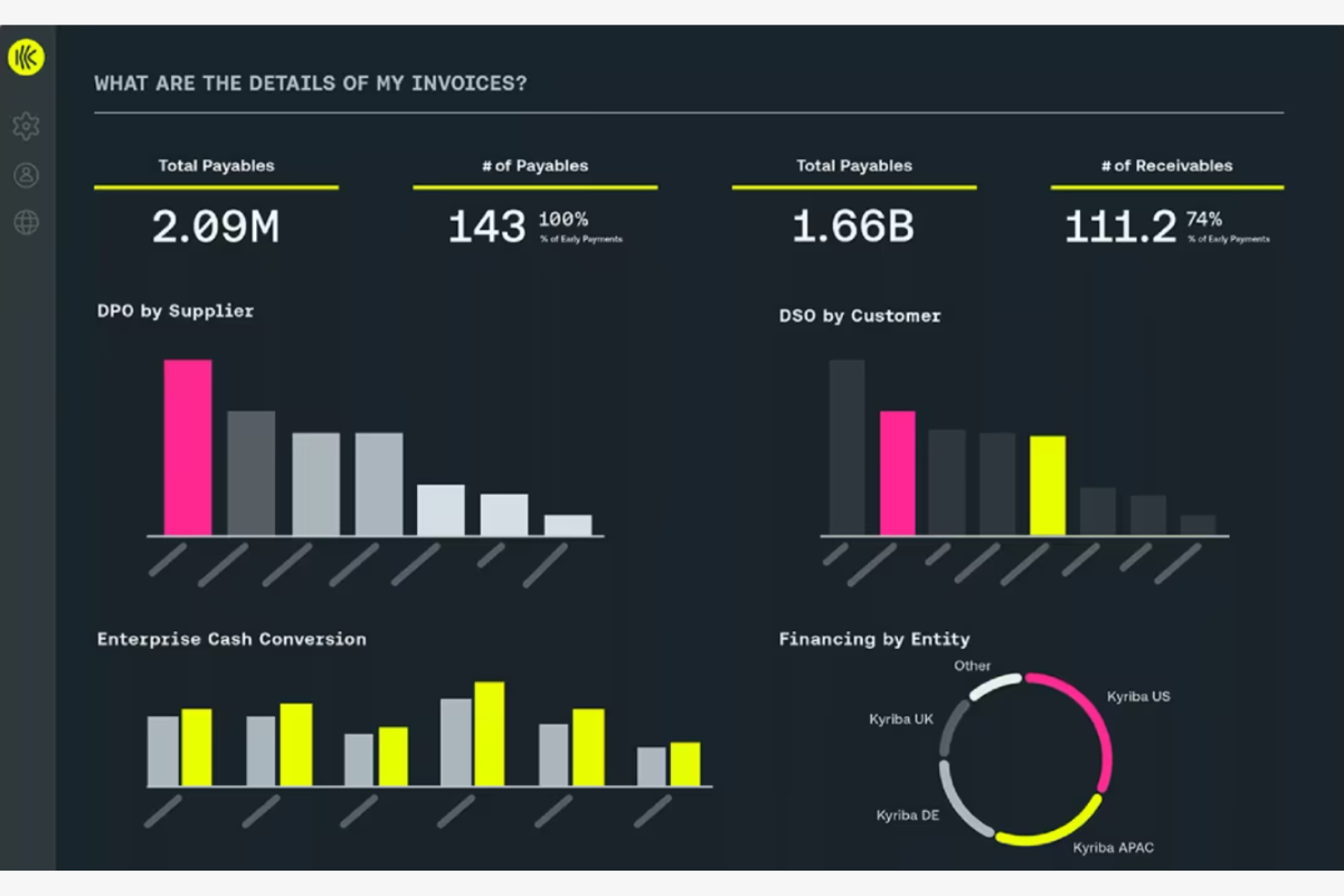
Kyriba ist eine cloudbasierte Plattform für Liquiditäts- und Finanzmanagement für Finanzteams. Sie konzentriert sich auf Liquiditätsmanagement, Risikomanagement und Zahlungslösungen, um finanzielle Abläufe zu unterstützen.
Warum es eine gute Alternative zu Workday Adaptive Planning ist: Kyriba zeichnet sich durch Liquiditäts- und Finanzmittelmanagement aus und bietet Tools, die die Transparenz über liquide Mittel und die Prognosegenauigkeit verbessern. Die Echtzeitfunktionen für das Liquiditätsmanagement helfen Ihrem Team, schnell fundierte Entscheidungen zu treffen. Die Risikomanagementfunktionen von Kyriba schützen Ihr Unternehmen vor finanziellen Bedrohungen und gewährleisten die Einhaltung gesetzlicher Vorschriften. Die Zahlungslösungen der Plattform bieten intuitive Prozesse und effektive Sicherheitsfunktionen und machen sie zu einer guten Wahl für Organisationen mit komplexen finanziellen Anforderungen.
Herausragende Funktionen und Integrationen:
Zu den Funktionen gehören Zahlungsstromprognosen, Risikomanagement und Zahlungsautomatisierung. Die klare Transparenz über liquide Mittel macht dieses Tool besonders geeignet, um Ihr Team bei finanziellen Entscheidungen zu unterstützen. Die Zahlungsautomatisierung von Kyriba reduziert manuelle Fehler und steigert die Effizienz bei Finanzprozessen.
Zu den Integrationen gehören Microsoft Dynamics 365, NetSuite, QuickBooks, Salesforce, Sage Intacct, Google Workspace und weitere.
Pros and Cons
Pros:
- Leistungsstarke Tools für das Liquiditätsmanagement
- Echtzeit-Liquiditätsmanagement
- Umfangreiche Risikomanagementfunktionen
Cons:
- Preis und Einrichtung könnten die Anforderungen kleiner Teams übersteigen
- Für die Anpassung ist möglicherweise Unterstützung durch die IT erforderlich

Cube
Am besten für Finanzplanung ohne Programmierung geeignet

Cube ist eine Plattform für Finanzplanung und -analyse, die für Finanzteams entwickelt wurde. Sie unterstützt bei Budgetierung, Prognosen und Berichterstattung, ohne dass umfangreiche Programmierkenntnisse erforderlich sind.
Warum es ein guter Wettbewerber für Workday Adaptive Planning ist: Cube bietet eine Finanzplanungslösung ohne Programmierung, die komplexe Finanzaufgaben vereinfacht. Die benutzerfreundliche Oberfläche ermöglicht es Ihrem Team, Modelle und Berichte ohne technische Fachkenntnisse zu erstellen. Echtzeitdatenaktualisierungen stellen sicher, dass Sie stets über die neuesten Finanzerkenntnisse verfügen. Die Anpassungsfähigkeit von Cube macht die Lösung für die Anforderungen verschiedenster Unternehmen geeignet und zu einer hervorragenden Wahl für alle, die ihre Finanzprozesse effizienter verwalten möchten.
Herausragende Funktionen und Integrationen:
Zu den Funktionen gehören automatisierte Berichterstattung, anpassbare Dashboards und Echtzeitdatenaktualisierungen. Cube kann sich wiederholende Aufgaben automatisieren und Ihnen dadurch mehr Zeit für die strategische Planung verschaffen. Mit den anpassbaren Dashboards dieses Tools können Sie die Plattform auf Ihre spezifischen Anforderungen zuschneiden.
Zu den Integrationen gehören QuickBooks, Xero, Sage Intacct, Microsoft Dynamics 365, Salesforce, Google Sheets und weitere.
Pros and Cons
Pros:
- Keine Programmierung erforderlich
- Kontinuierliche Datensynchronisierung über verbundene Tools hinweg
- Ersetzt Planungsabläufe über mehrere Tabellenblätter hinweg
Cons:
- Eingeschränkte erweiterte Analysen
- Nicht für sehr große Unternehmen geeignet

Am besten geeignet, um die Abhängigkeit von Tabellenkalkulationen zu beseitigen
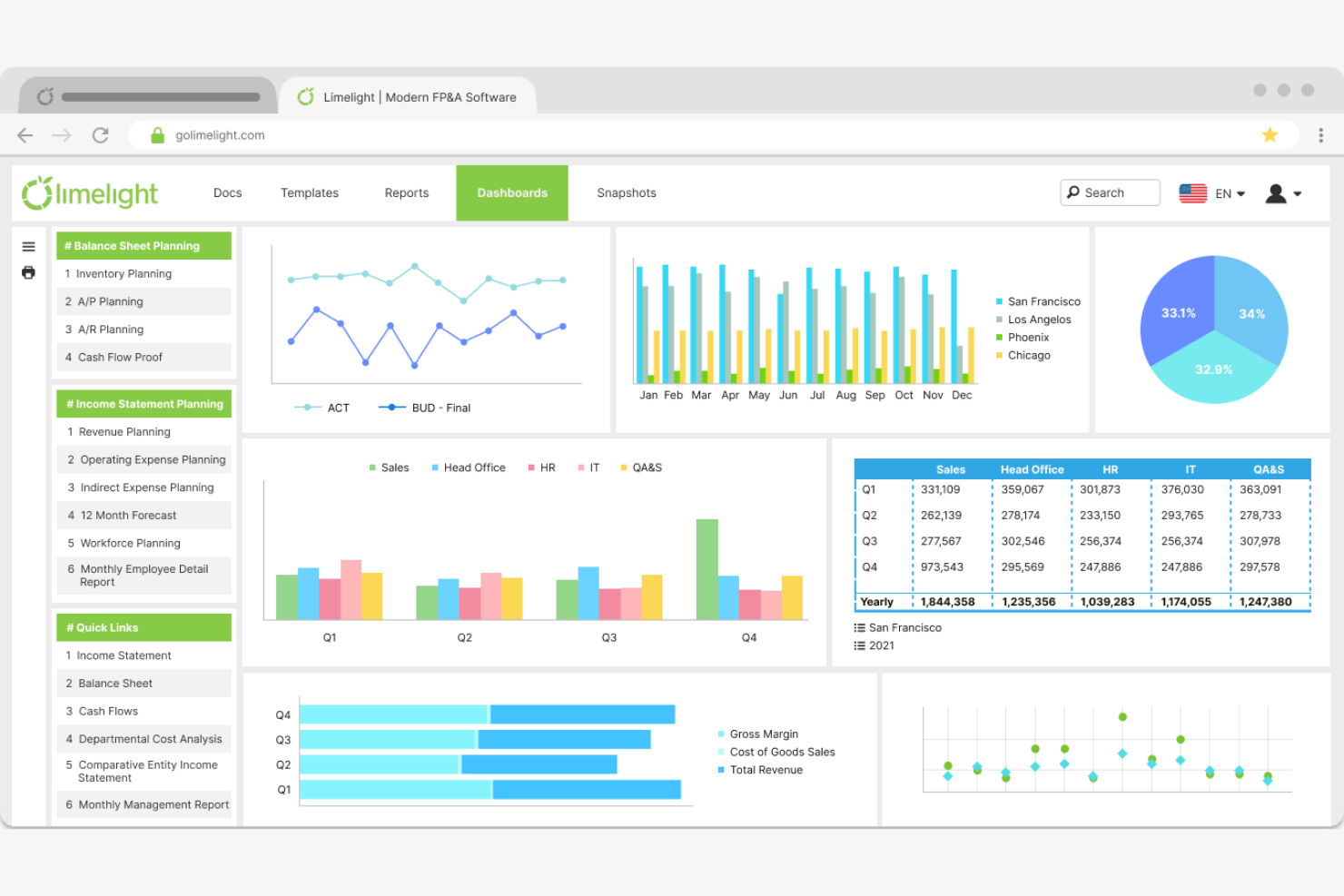
Limelight ist eine Plattform für Finanzplanung und -analyse, die für Finanzteams entwickelt wurde. Sie hilft dabei, Budgetierung, Prognosen und Berichterstattung zu automatisieren und reduziert dadurch den Bedarf an Tabellenkalkulationen.
Warum es eine gute Alternative zu Workday Adaptive Planning ist: Limelight macht Tabellenkalkulationen überflüssig, indem es automatisierte Finanzprozesse anbietet. Durch die Echtzeit-Aktualisierung der Daten kann Ihr Team fundierte Entscheidungen treffen, ohne Tabellenkalkulationen manuell aktualisieren zu müssen. Die benutzerfreundliche Oberfläche der Plattform ermöglicht eine einfache Zusammenarbeit zwischen Abteilungen und stellt sicher, dass alle auf demselben Stand sind. Der Fokus von Limelight auf Automatisierung trägt dazu bei, Ihre Finanzabläufe zu vereinfachen.
Hervorstechende Funktionen und Integrationen:
Zu den Funktionen gehören Workflow-Automatisierung und Echtzeit-Datenaktualisierungen. Dieses Produkt bietet Optionen zur Automatisierung wiederkehrender Aufgaben, wodurch Sie Zeit sparen und Fehler reduzieren können. Darüber hinaus liefert die dynamische Berichterstattung von Limelight Erkenntnisse, die Ihnen helfen, fundierte Entscheidungen zu treffen.
Zu den Integrationen gehören NetSuite, QuickBooks, Xero, Microsoft Dynamics, SAP, Oracle, Salesforce, Google Sheets, Workday, Sage Intacct und weitere.
Pros and Cons
Pros:
- Beseitigt die Abhängigkeit von Tabellenkalkulationen
- Automatische Modellaktualisierung aus Quellsystemen
- Unterstützt die abteilungsübergreifende Zusammenarbeit
Cons:
- Die Ersteinrichtung kann langwierig sein
- Leichte Lernkurve für Nutzer ohne Finanzkenntnisse


Phocas ist eine Plattform für Geschäftsanalysen und Datenanalyse, die auf Großhändler und Hersteller ausgerichtet ist. Sie unterstützt diese Unternehmen dabei, Verkaufs-, Bestands- und Finanzdaten zu analysieren, um die Entscheidungsfindung zu verbessern.
Warum es ein guter Konkurrent für Workday Adaptive Planning ist: Phocas ist auf den Großhandels- und Fertigungssektor zugeschnitten und bietet spezifische Einblicke in das Verkaufs- und Bestandsmanagement. Die benutzerfreundlichen Dashboards ermöglichen es Ihrem Team, Daten zu visualisieren und Trends zu erkennen. Mit den Berichtstools der Plattform können Sie Ihre Daten gründlich untersuchen und eine umfassende Analyse durchführen. Die Fähigkeit von Phocas, große Datenmengen zu verarbeiten, macht die Plattform zu einer ausgezeichneten Wahl für Unternehmen mit komplexen Datenanforderungen.
Besondere Funktionen und Integrationen:
Zu den Funktionen gehören anpassbare Dashboards, detaillierte Berichte und Datenvisualisierung. Sie können Dashboards erstellen, die den spezifischen Anforderungen Ihres Teams entsprechen. Mit den detaillierten Berichtstools von Phocas können Sie Daten gründlich analysieren, während Sie Ihre Geschäftsstrategie entwickeln.
Zu den Integrationen gehören SAP, Microsoft Dynamics, NetSuite, mehrere Sage-ERP-Systeme, Infor, Epicor, MYOB, Pronto ERP, SYSPRO ERP, QuickBooks und weitere.
Pros and Cons
Pros:
- Auf bestimmte Branchen zugeschnitten
- Verarbeitet große Datenmengen
- Detaillierte Berichtstools
Cons:
- Für erweiterte Berichtsfunktionen ist eine Einführung erforderlich
- Erfordert laufende Benutzerschulungen


Pigment ist eine Plattform für Geschäftsplanung und Prognosen, die auf die Bedürfnisse von Finanz- und Betriebsteams zugeschnitten ist. Sie bietet Tools für Budgetierung, Szenarioanalysen und Datenvisualisierung, um die strategische Entscheidungsfindung zu unterstützen.
Warum es ein guter Wettbewerber für Workday Adaptive Planning ist: Pigment bietet integrierte KI-Planung, mit der Ihr Team fortschrittliche Analysen für bessere Entscheidungen nutzen kann. Mit den Szenarioanalysetools können Sie verschiedene Geschäftsentwicklungen untersuchen und Strategien entsprechend anpassen. Die intuitive Benutzeroberfläche von Pigment vereinfacht Planungsprozesse und bietet Möglichkeiten zur Zusammenarbeit. Der Fokus der Planungsplattform auf Datenvisualisierung erleichtert die Nutzung und stellt Erkenntnisse übersichtlich dar.
Hervorstechende Funktionen und Integrationen:
Zu den Funktionen gehören Szenariomodellierung, Zusammenarbeit in Echtzeit und interaktive Dashboards. Sie können Ihr Team in die gemeinsame Planung einbinden und schnell auf Veränderungen reagieren. Die interaktiven Dashboards von Pigment erleichtern die Visualisierung von Daten und das Teilen von Erkenntnissen.
Zu den Integrationen gehören Salesforce, NetSuite, Google Sheets, Microsoft Excel, QuickBooks, Xero, Workday, Oracle, SAP, Slack und weitere.
Pros and Cons
Pros:
- Integrierte KI-Planung
- Unterstützt Szenarioanalysen
- Leistungsstarke Tools zur Datenvisualisierung
Cons:
- Lernkurve bei komplexen Modellen
- Weniger Erweiterungen von Drittanbietern als bei älteren Plattformen
Weitere Konkurrenten von Workday Adaptive Planning
Hier sind einige weitere Konkurrenten von Workday Adaptive Planning, die es nicht in meine Auswahl geschafft haben, aber dennoch einen Blick wert sind:
- Prophix One
Ideal für KI-gestützte Finanzprozesse
- IBM Planning Analytics
Am besten für KI-gestützte Planung
- Microsoft Power BI
Am besten für Datenvisualisierung in Verbindung mit Planungstools


Wie ich Workday Adaptive Planning Konkurrenten bewerte
Ich bewerte diese Tools in zwei Ebenen – die Kernfunktionen, die ein Tool haben muss, wie Headcount-Modellierung und Vergütungsbudgetierung, sowie die Differenzierungsmerkmale, die eine Plattform von anderen abheben.
Kernfunktionen (Mindestanforderungen für diese Liste)
Wenn ich Tools für meine Liste auswähle, bewerte ich jedes auf einer Skala von 0 (bietet die Funktionalität nicht) bis 5 (überzeugt in diesem Bereich) für jede der unten genannten Kernfunktionen. Anschließend rechne ich die Gesamtpunktzahl in einen Prozentsatz um. Jedes Tool muss mindestens eine Gesamtpunktzahl von 65% erreichen, um in die Liste aufgenommen zu werden.
- Workforce Planning: Ich achte auf prognostizierte Einstellungen auf Stellenebene mit Unterstützung für Szenarien über mehrere Abteilungen hinweg, zum Beispiel die Personalaufstockung eines neuen Produktteams über vier Quartale zu modellieren.
- Finanzmodellierung: Jedes Tool sollte treiberbasierte, multiszenarielle Modellierungen bieten, die Personalplanung mit GuV und Cashflow-Rechnungen verbinden und über statische Vorlagen hinausgehen.
- Vergütungs- & Belohnungsplanung: Ich bewerte, wie granular jede Plattform Gehalt, Bonus- und Leistungsplanung auf Mitarbeiterebene behandelt – nicht nur auf Kostenstellenniveau.
- HRIS & Payroll-Integrationen: Vorgefertigte Konnektoren zu Systemen wie BambooHR, ADP, SAP SuccessFactors und UKG sind hier entscheidend, ebenso wie die Synchronisation mit ERP und Hauptbuch.
- Budgetierung & Forecasting: Rollierende Forecasts mit Abweichungsanalysen und kollaborativen Workflows haben Vorrang vor Tools, die lediglich eine jährliche Budgetrunde unterstützen.
- Reporting & Dashboards: Ich prüfe auf konfigurierbare, Echtzeit-Dashboards mit Drill-Down in Personalkosten und Personal-KPIs statt nur vorgefertigte, statische Berichts-Exports.
Nachdem ich eine Liste mit Tools habe, die diese Kriterien erfüllen, werte ich die Differenzierungsmerkmale aus.
Differenzierungsmerkmale (Was Anbieter unterscheidet)
So vergleiche und kontrastiere ich verschiedene Anbieter:
Hervorstechende Funktionen
KI-gestützte Prognosen sind ein wesentliches Unterscheidungsmerkmal – Tools, die historische Fluktuations- und Einstelldaten nutzen, um künftige Mitarbeiterabwanderungen zu prognostizieren, ersparen HR-Teams wochenlange manuelle Auswertungen. Ich achte auch auf eine spezielle Szenarioplanungs-Sandbox, in der Sie eine Umstrukturierung oder einen Stellenabbau testen können, ohne Live-Daten zu beeinträchtigen. Eingebettete Benchmarking-Daten sind ebenfalls wichtig, da eingebaute Benchmarks für Gehalt und Headcount-Verhältnisse weniger Tabellenexporte aus Drittumfragen bedeuten.
Über Funktionen hinaus
Die Einführungszeiten variieren in diesem Bereich erheblich, daher prüfe ich, ob ein Anbieter vorgefertigte HR-Planungsvorlagen für einen schnellen Go-Live bereitstellt oder ob monatelange individuelle Modellierung nötig ist. Auch die Gesamtkosten im Lebenszyklus stehen im Fokus – manche Plattformen wirken zunächst günstig, erfordern aber für jede Modelländerung externe Berater. Sicherheit ist entscheidend, wenn sensible Vergütungsdaten verarbeitet werden, daher bewerte ich SOC 2 Typ II-Zertifizierung und rollenbasierte Zugriffskontrollen, die Gehaltseinsicht je nach Rolle beschränken.
Warum nach Konkurrenten von Workday Adaptive Planning suchen?
Obwohl Workday Adaptive Planning eine gute Wahl für das Enterprise-Performance-Management ist, gibt es mehrere Gründe, warum manche Nutzer für ihre Unternehmen nach anderen Planungsplattformen suchen. Vielleicht suchen Sie nach einer Alternative, weil …
- Sie benötigen mehr Anpassungsmöglichkeiten.
- Ihr Team benötigt einfachere Benutzeroberflächen.
- Sie suchen nach besseren Integrationsmöglichkeiten.
- Sie benötigen erschwinglichere Preispläne.
- Ihr Unternehmen benötigt mehr Skalierbarkeit.
- Sie benötigen leistungsfähigere Datenvisualisierungswerkzeuge.
Wenn Sie sich in einem dieser Punkte wiedererkennen, sind Sie hier genau richtig. Meine Liste enthält mehrere Optionen für das Enterprise-Performance-Management, die besser für Teams geeignet sind, die aufgrund dieser Herausforderungen nach einem neuen Produkt für das Performance-Management suchen.
Die wichtigsten Funktionen von Workday Adaptive Planning
Hier finden Sie einige der wichtigsten Funktionen von Workday Adaptive Planning, damit Sie die Angebote alternativer Lösungen vergleichen können:
- Finanzplanung: Verbessert das Finanzmanagement und die Berichterstattung und hilft Ihrem Team, Budgets effektiv zu verwalten.
- Personalplanung: Unterstützt das Personalmanagement und die Ressourcenzuweisung, um die Effizienz zu steigern.
- Operative Planung: Unterstützt die betriebliche Effizienz und die strategische Planung und hilft Ihnen, die Abläufe an den Zielen auszurichten.
- Szenarioplanung: Ermöglicht es Ihnen, verschiedene Geschäftsergebnisse zu untersuchen, und unterstützt so die strategische Entscheidungsfindung.
- Abschluss und Konsolidierung: Erleichtert Finanzabschlussprozesse und die Datenkonsolidierung.
- KI-gestützte Erkenntnisse: Liefert Echtzeitdatenanalysen zur Unterstützung des Entscheidungsprozesses Ihres Teams.
Wie geht es weiter?
Wenn Sie gerade Enterprise-Performance-Management-Lösungen recherchieren, wenden Sie sich an einen SoftwareSelect-Berater, um kostenlose Empfehlungen zu erhalten.
Sie füllen ein Formular aus und führen ein kurzes Gespräch, in dem die spezifischen Anforderungen Ihres Unternehmens besprochen werden. Anschließend erhalten Sie eine Auswahlliste von Softwarelösungen zur Prüfung. Die Berater unterstützen Sie sogar während des gesamten Kaufprozesses, einschließlich der Preisverhandlungen.