

Las 10 mejores herramientas de IA para la retención de empleados analizadas en 2026

10 Selección de las mejores herramientas de IA para la retención de empleados


Mantener a tu equipo comprometido y satisfecho es todo un reto. Las herramientas de IA para la retención de empleados pueden ayudarte a afrontarlo mediante el uso de la IA para comprender y atender las necesidades de tu equipo.
Estas herramientas ofrecen funciones como análisis predictivo y comentarios personalizados, lo que te ayuda a identificar posibles problemas antes de que se conviertan en dificultades importantes. También pueden proporcionar información sobre la satisfacción de los empleados y las oportunidades de crecimiento profesional.
Como persona que ha probado y analizado software de forma independiente, mi objetivo es ofrecerte una visión imparcial de las mejores herramientas disponibles. En este artículo encontrarás una selección de las mejores herramientas de IA para la retención de empleados, que pueden ayudar a mejorar la moral y la productividad de tu equipo.
Por qué confiar en nuestras reseñas de software
Nuestro equipo lleva probando y evaluando software desde 2012. Como expertos en RR. HH., sabemos lo difícil —y lo importante— que es elegir el software adecuado.
Para esta guía, evaluamos las herramientas mediante pruebas prácticas e investigación independiente, puntuando las herramientas según nuestros criterios de selección. También nos basamos en la experiencia de líderes de opinión del sector y de profesionales de RR. HH. en activo.
Nuestras reseñas reflejan nuestro criterio editorial humano, no un discurso de ventas.
Revisores expertos:
Tabla comparativa de herramientas de IA para la retención de empleados
Esta tabla comparativa resume los detalles de precios de mi selección de las mejores herramientas de IA para la retención de empleados:
| Tool | Best For | Trial Info | Price | ||
|---|---|---|---|---|---|
| 1 | Ideal para predecir la retención en equipos globales | Disponible demostración gratuita | Desde $5/empleado/mes | Website | |
| 2 | Ideal para evaluaciones del desempeño | Demostración gratuita disponible | Desde $4/usuario/mes (facturado anualmente) | Website | |
| 3 | Ideal para la gestión de capital humano | Demo gratuita disponible | Precio disponible bajo solicitud | Website | |
| 4 | Ideal para soporte de RR. HH. impulsado por IA | Demostración gratuita disponible | Precio disponible bajo solicitud | Website | |
| 5 | Mejor para diseño de trayectorias profesionales | Demo gratuita disponible | Precio a consultar | Website | |
| 6 | Ideal para la planificación de personal | Demostración gratuita disponible | Precio bajo solicitud | Website | |
| 7 | Ideal para análisis de comunicación | Demostración gratuita disponible | Desde $799/mes | Website | |
| 8 | Mejor para la retroalimentación de empleados | Demo gratuita disponible | Precios bajo solicitud | Website | |
| 9 | Ideal para el reconocimiento de empleados | Demo gratuita disponible | Precio bajo solicitud | Website | |
| 10 | Mejor para conocimientos de liderazgo | Demo gratuita disponible | Desde $2/empleado/mes (facturado anualmente) | Website |

Análisis de las mejores herramientas de IA para la retención de empleados
A continuación encontrarás mis resúmenes detallados de las mejores herramientas de IA para la retención de empleados que han entrado en mi selección. Mis análisis ofrecen una visión detallada de las funciones principales, las ventajas & desventajas, las integraciones y los casos de uso ideales de cada herramienta para ayudarte a encontrar la más adecuada para ti.
Deel HR
Ideal para predecir la retención en equipos globales

Tus esfuerzos para retener a las mejores personas obtienen un verdadero impulso cuando la inteligencia artificial te ayuda a comprender qué necesitan tus equipos, dónde pueden estar teniendo dificultades y cómo apoyar su crecimiento a largo plazo. Las herramientas de RRHH y talento impulsadas por IA de Deel te ofrecen información inmediata sobre el desempeño, el desarrollo, la compensación y las preguntas del día a día que dan forma a la experiencia del empleado para tu equipo distribuido internacionalmente.
Por qué elegí Deel
Elegí Deel porque lleva la IA directamente al núcleo de los impulsores de la retención: retroalimentación sobre el desempeño, desarrollo, claridad en la compensación y soporte cotidiano. Con herramientas que redactan trayectorias profesionales, planes de formación y ciclos de revisiones por ti, tu equipo puede enfocarse más en el coaching real que en el trabajo administrativo. También me gusta cómo la IA extrae información de tus datos de personas para destacar patrones que influyen en la participación y la satisfacción, especialmente en equipos globales. Juntas, estas capacidades te ayudan a construir un entorno laboral global donde los empleados se sienten reconocidos, apoyados y justamente compensados.
Características clave de Deel
Además de las capacidades orientadas a la retención que destaqué arriba, encontrarás útil lo siguiente al evaluar herramientas de retención de empleados con IA:
- Trayectorias profesionales y programas de formación generados por IA: Produce rápidamente materiales de desarrollo personalizados que permiten a los empleados ver oportunidades claras de crecimiento.
- Retroalimentación 360° y ciclos de desempeño personalizados: Facilita evaluaciones estructuradas y justas que reducen sesgos y refuerzan la confianza en las evaluaciones.
- Información sobre compensación vinculada a datos de desempeño: Conecta decisiones salariales con resultados de revisión para promover la transparencia y recompensar a los mejores empleados.
- Inteligencia salarial global: Utiliza datos de más de 150 países para ayudarte a mantener rangos salariales competitivos y equitativos que favorecen la retención a largo plazo.
Integraciones de Deel
Las integraciones incluyen Workday, BambooHR, Greenhouse, Lever, Xero, QuickBooks, Slack, Microsoft Teams, Google Workspace y SAP SuccessFactors.
Pros and Cons
Pros:
- La IA redacta trayectorias profesionales y planes de formación para impulsar el crecimiento
- Las revisiones 360° refuerzan la equidad en las evaluaciones de desempeño
- Vincula compensación y desempeño para aumentar la transparencia salarial
Cons:
- La IA no puede reemplazar conversaciones significativas entre gerente y empleado
- La información global puede resultar excesiva para equipos de un solo país
New Product Updates from Deel HR

Deel Expands Stablecoin Wallet to 80+ Countries
Deel expands its Stablecoin Wallet to 80+ countries with dollar-backed balances and optional rewards. This gives eligible contractors more ways to hold and manage earnings inside Deel. For more information, visit Deel’s official site.
 .
.
Lattice
Ideal para evaluaciones del desempeño

Lattice es una plataforma de gestión del rendimiento diseñada para equipos de RR. HH. y gerentes que desean mejorar el compromiso y el desarrollo de los empleados. Ofrece herramientas para evaluaciones del desempeño, establecimiento de objetivos y retroalimentación en tiempo real para apoyar el crecimiento de los empleados.
Por qué elegí Lattice: Es ideal para evaluaciones del desempeño estructuradas y planificación de sucesión, y proporciona funciones de IA que hacen que las evaluaciones sean más justas y eficientes. Lattice también brinda información accionable para impulsar el desarrollo y el compromiso del personal. Por ejemplo, cuenta con Pulse para monitorear el compromiso de los empleados y encuestas para recoger su retroalimentación. Además, permite establecer objetivos en cascada y personalizados para tu equipo y seguir su progreso en tiempo real.
Características e integraciones destacadas:
Características incluyen plantillas y flujos de trabajo personalizables, además de resúmenes de retroalimentación entre compañeros impulsados por IA que pueden facilitar las evaluaciones tanto para RR. HH. como para los empleados. Lattice también ofrece encuestas de compromiso y análisis de desempeño para identificar áreas de mejora.
Integraciones incluyen Slack, Microsoft Teams, Google Workspace, BambooHR, Workday, ADP, Okta, Outlook, Salesforce y Jira.
Pros and Cons
Pros:
- Establecimiento y seguimiento de objetivos
- Retroalimentación en tiempo real
- Análisis detallados del desempeño
Cons:
- Curva de aprendizaje para nuevos usuarios
- Opciones de personalización limitadas
New Product Updates from Lattice

Lattice Introduces MCP Connector for AI Chat Tools
Lattice introduced Lattice MCP, a new connector that brings talent data into Claude, ChatGPT, and other LLM tools. The connector helps teams access performance context from reviews, 1:1 notes, feedback, goals, and updates within AI chat workflows. For more information, visit Lattice’s official site.
 .
.
Workday
Ideal para la gestión de capital humano

Workday es una plataforma de gestión de capital humano basada en la nube, diseñada para empresas que buscan optimizar la planificación de su fuerza laboral y la gestión del talento. También prioriza la experiencia del empleado al enfocarse en una productividad centrada en las personas.
Por qué elegí Workday: La plataforma es ideal para potenciar equipos de alto rendimiento, proporcionando herramientas de IA dedicadas para gestionar datos de empleados y productividad. Sus capacidades de IA incluyen análisis predictivos que te ayudan a prever tendencias y oportunidades en la fuerza laboral y planificar en consecuencia. Workday también ofrece funciones de optimización del talento que permiten a tu equipo identificar brechas de habilidades y desarrollar su potencial. Además, cuenta con un sistema de gestión de aprendizaje para que los propios empleados puedan iniciar su desarrollo profesional.
Características destacadas e integraciones:
Características incluyen planificación de la fuerza laboral, gestión del talento y procesamiento de nómina. Reunir estas funciones en un solo sistema de IA ayuda a los equipos de RRHH a trabajar de manera más eficiente. También garantiza que los datos de los empleados se mantengan precisos y sean fáciles de acceder. Este enfoque integrado también crea una experiencia más fluida y confiable para los empleados, desde la nómina hasta el desarrollo profesional. Además, una planificación eficaz de la fuerza laboral ayuda a asegurar que el personal mantenga un buen equilibrio entre la vida laboral y personal.
Integraciones incluye Salesforce, Slack, Microsoft Teams, ServiceNow, Okta, Adobe Sign, Docusign, SAP, Oracle y Google Workspace.
Pros and Cons
Pros:
- Empodera a los empleados con autoservicio y rutas de aprendizaje
- Soporta la optimización del talento
- Ofrece planificación predictiva de la fuerza laboral
Cons:
- Curva de aprendizaje significativa y complejidad en la implementación
- Los detalles sobre los precios no son transparentes


Leena AI es una herramienta potenciada por inteligencia artificial diseñada para equipos de RR. HH. y gerentes que buscan automatizar tareas repetitivas y mejorar el compromiso de los empleados. Viene con agentes de IA preconfigurados que representan diferentes departamentos, como RR. HH., TI, Finanzas y Compras.
Por qué elegí Leena AI: La plataforma destaca en el soporte a RR. HH. impulsado por IA. Puedes aprovechar los chatbots de IA para gestionar de manera eficiente las consultas de los empleados, liberando a tu equipo para que se enfoque en iniciativas más estratégicas que mejoran la experiencia general del empleado. Leena AI también ofrece automatización del proceso de incorporación para simplificar la bienvenida de nuevos empleados. Sus herramientas de recogida de opiniones brindan valiosos conocimientos sobre las necesidades y la satisfacción laboral de los empleados, ayudándote a tomar decisiones informadas.
Características destacadas e integraciones:
Características incluyen gestión de consultas de empleados, automatización del onboarding y recopilación de feedback, lo que puede mejorar el compromiso de los empleados. Leena AI también cuenta con KnowledgeGPT para mantener actualizada la base de conocimientos, asegurando que los empleados encuentren fácilmente información precisa y actualizada cuando la necesiten.
Integraciones incluyen Slack, Microsoft, Workday, BambooHR, SAP Ariba, HubSpot, ADP, Oracle, Google Workspace, Salesforce y Outlook.
Pros and Cons
Pros:
- Automatiza tareas rutinarias de RR. HH.
- Ofrece una gestión eficiente de consultas
- Admite automatización del onboarding
Cons:
- Los detalles de precios no son transparentes
- Integraciones limitadas de serie
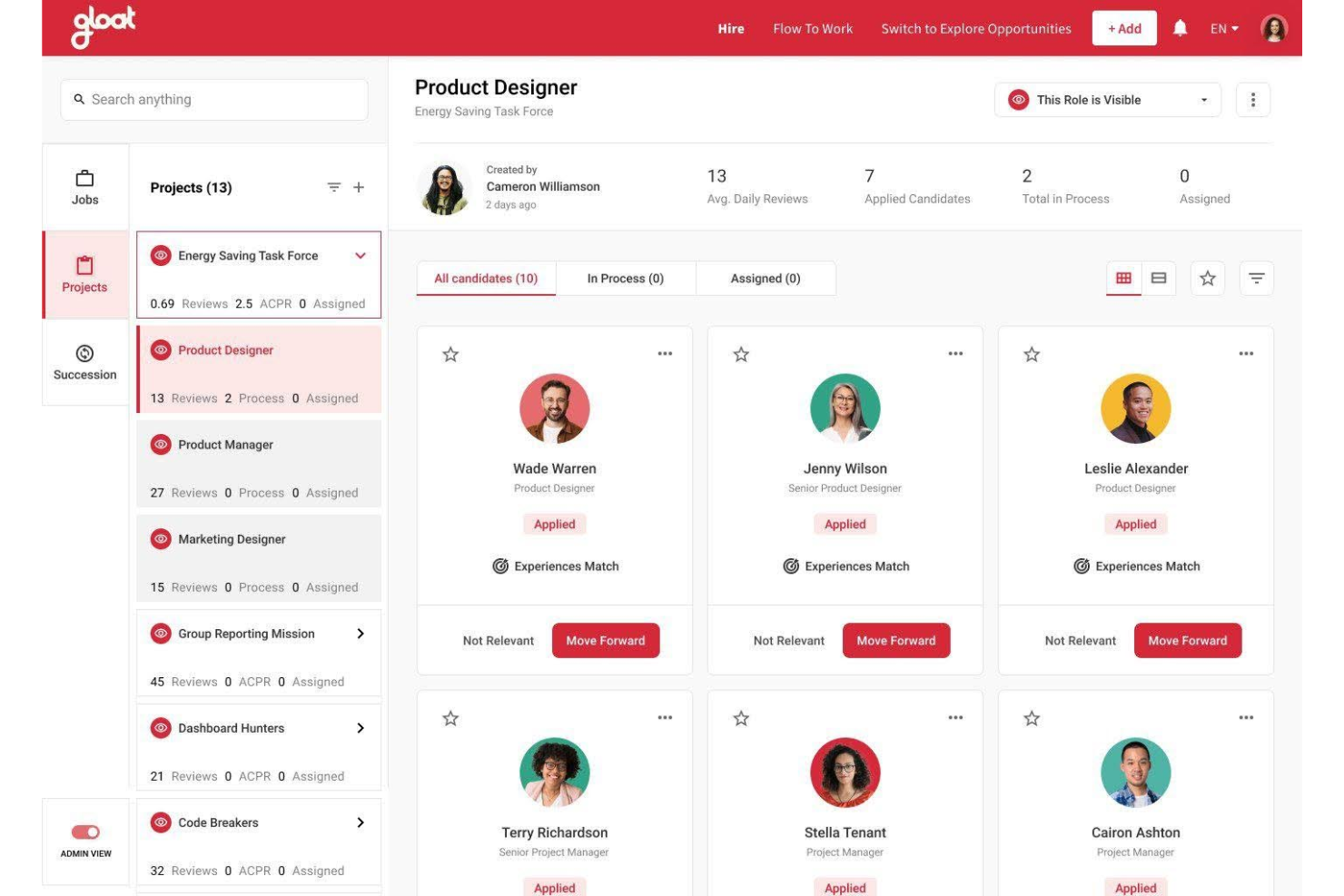
Gloat es una plataforma de mercado de talento diseñada para grandes empresas que buscan potenciar el desarrollo profesional de sus empleados. Hace coincidir a los empleados con oportunidades internas, ayudándolos a crecer dentro de la compañía y mejorando las tasas de retención.
Por qué elegí Gloat: La plataforma destaca en trayectorias profesionales utilizando IA para alinear las habilidades de los empleados con las necesidades de la empresa. Su emparejamiento impulsado por IA te ayuda a identificar oportunidades para que los empleados desarrollen nuevas habilidades. Esta función respalda la movilidad interna, brindando a tu equipo un camino claro para crecer. Además, las perspectivas de Gloat ayudan a los gerentes a entender las brechas de habilidades y planificar las necesidades futuras de talento.
Para los empleados, la plataforma apoya el desarrollo de su carrera de manera discreta. Proporciona sugerencias personalizadas de cursos y capacitaciones impulsadas por IA, todas basadas en sus habilidades actuales, intereses y metas profesionales. Esto les ayuda a visualizar hacia dónde quieren crecer y cómo pueden lograrlo.
Características y conectores sobresalientes:
Características incluyen emparejamiento de habilidades, trayectorias profesionales personalizadas y seguimiento de la movilidad interna. Estas herramientas te ayudan a identificar las oportunidades adecuadas para el crecimiento de los empleados. Además, la capacidad de integrarse con el LXP y LMS de tu empresa permite el desarrollo continuo de habilidades. Por último, Gloat ayuda a los empleados a identificar sus propias brechas de habilidades y encontrar y conectarse fácilmente con los mentores adecuados para apoyarlos.
Conectores incluyen Workday, SAP SuccessFactors, Oracle, Microsoft Teams, Slack, LinkedIn, Cornerstone y ServiceNow.
Pros and Cons
Pros:
- Movilidad profesional interna
- Analítica de fuerza laboral en tiempo real
- Identificación de brechas de habilidades
Cons:
- Menos adecuado para pequeñas empresas
- Es necesaria la personalización para equipos pequeños


Quinyx es una plataforma de gestión de personal diseñada para empresas que buscan optimizar la programación, el seguimiento del tiempo y la gestión de costos laborales. Esta herramienta de retención de empleados con IA totalmente integrada ayuda a los gerentes a tomar decisiones basadas en datos sobre la dotación de personal.
Por qué elegí Quinyx: La plataforma está diseñada para apoyar la planificación de la fuerza laboral usando IA para predecir la demanda. Luego, traduce esas previsiones en requisitos precisos de personal. Su programación predictiva utiliza IA para integrar las preferencias de los empleados con los requisitos empresariales y las normas de cumplimiento.
Características y
integraciones destacadas:
Características incluyen gestión de turnos, programación/asignación automática y autoservicio para empleados. Estas herramientas simplifican la organización de turnos y ayudan a controlar los costos laborales, al tiempo que respaldan un entorno de trabajo justo y transparente. Al reducir conflictos de horarios y el exceso de trabajo, estas herramientas también ayudan a prevenir el agotamiento del personal y promueven el bienestar general. Quinyx también ofrece seguimiento de cumplimiento para garantizar la adhesión a las regulaciones laborales.
Integraciones incluyen ADP, SAP SuccessFactors, Oracle, HR+ by Visma y Personio.
Pros and Cons
Pros:
- Proporciona programación predictiva
- Ofrece previsión de costos laborales
- Permite hacer seguimiento de cumplimiento
Cons:
- No hay prueba gratuita disponible
- Integraciones limitadas en comparación con la competencia

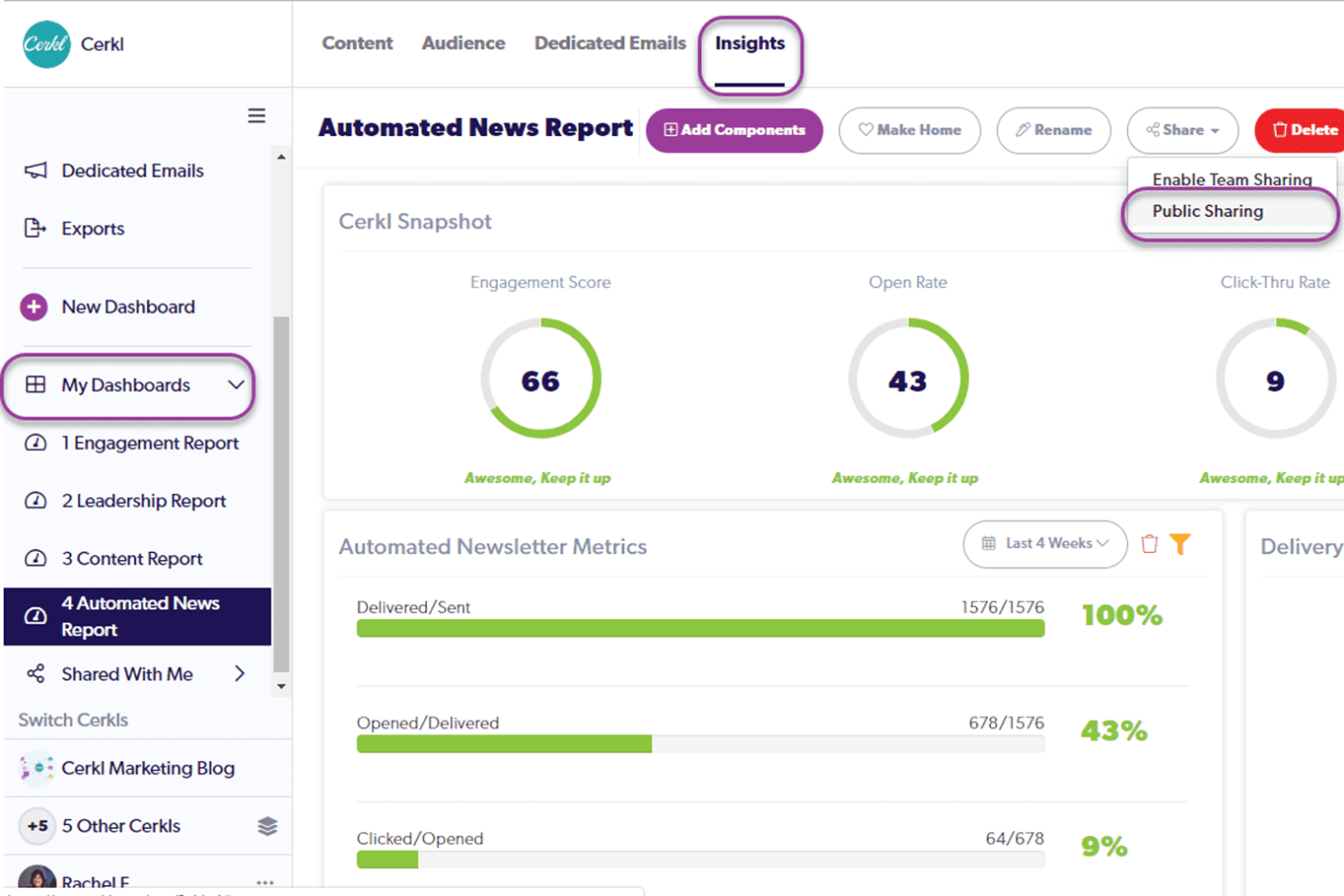
Cerkl es una plataforma de comunicación interna dirigida a organizaciones que buscan mejorar la comunicación interna y el compromiso de los empleados. Utiliza inteligencia artificial para ofrecer información valiosa sobre todo tipo de contenidos, desde la incorporación de personal hasta la formación o las comunicaciones estratégicas, con el objetivo de impulsar los resultados.
Por qué elegí Cerkl: La plataforma destaca en análisis de comunicaciones, ofreciendo perspectivas basadas en IA para optimizar los mensajes internos. Los análisis impulsados por IA muestran qué mensajes conectan con tu equipo, permitiéndote perfeccionar las comunicaciones. Proporciona métricas detalladas sobre el desempeño, como niveles de participación y tasas de apertura, para medir su impacto. Al mejorar la forma en que los empleados se mantienen informados y conectados, la plataforma ayuda a fortalecer tanto el compromiso como la retención.
Características y conexiones destacadas:
Características incluyen entrega de contenido personalizado, segmentación de audiencia y seguimiento de la participación. Estas herramientas te ayudan a enviar el mensaje adecuado a los grupos correctos de empleados. Además, Cerkl te permite diseñar los correos electrónicos directamente desde la aplicación. Ofrece un constructor intuitivo y una biblioteca de contenidos para ayudarte a crear materiales de comunicación con la imagen de tu empresa.
Integraciones incluyen Microsoft Teams, Slack, SharePoint, Outlook, Google Workspace, Salesforce, HubSpot, Zoom, Mailchimp y WordPress.
Pros and Cons
Pros:
- Análisis detallado de comunicaciones
- Entrega personalizada de contenido
- Segmentación avanzada de audiencia
Cons:
- Funciones avanzadas limitadas para equipos pequeños
- El precio puede ser elevado en comparación con la competencia
Mejor para la retroalimentación de empleados

WorkTango es una plataforma de compromiso de empleados diseñada para profesionales de RR. HH. y gerentes que buscan recopilar y analizar la retroalimentación de los empleados. Examina el sentimiento y los niveles de compromiso del equipo para ayudar a los equipos de RR. HH. a implementar intervenciones específicas, recompensas u oportunidades de desarrollo.
Por qué elegí WorkTango: La plataforma destaca en la escucha activa de los empleados. Sus capacidades de IA incluyen análisis de sentimiento que puede revelar patrones en la dinámica del equipo, niveles de compromiso y cultura laboral. WorkTango ofrece recopilación y generación de informes en tiempo real para mantenerte informado sobre las preocupaciones de los empleados y la moral del equipo. Estas funciones te ayudan a tomar acciones rápidas para mejorar la satisfacción en el lugar de trabajo.
Características destacadas e integraciones:
Características incluyen encuestas de ciclo de vida del empleado, análisis temático del feedback cualitativo y un panel intuitivo. Estas herramientas te ayudan a monitorear continuamente el sentimiento y el compromiso de los empleados. WorkTango también proporciona a los líderes información sobre los logros y hitos de sus empleados, además de ayudarles a llevar a cabo nominaciones y premios específicos de equipos.
Integraciones incluyen Slack, Microsoft Teams, Google Workspace, BambooHR, Workday, ADP, Okta, Outlook y Jira.
Pros and Cons
Pros:
- Información de retroalimentación en tiempo real
- Encuestas de pulso personalizables
- Puntuación de compromiso
Cons:
- Requisitos de configuración adicionales para equipos grandes
- Funciones de análisis avanzadas limitadas
Ideal para el reconocimiento de empleados
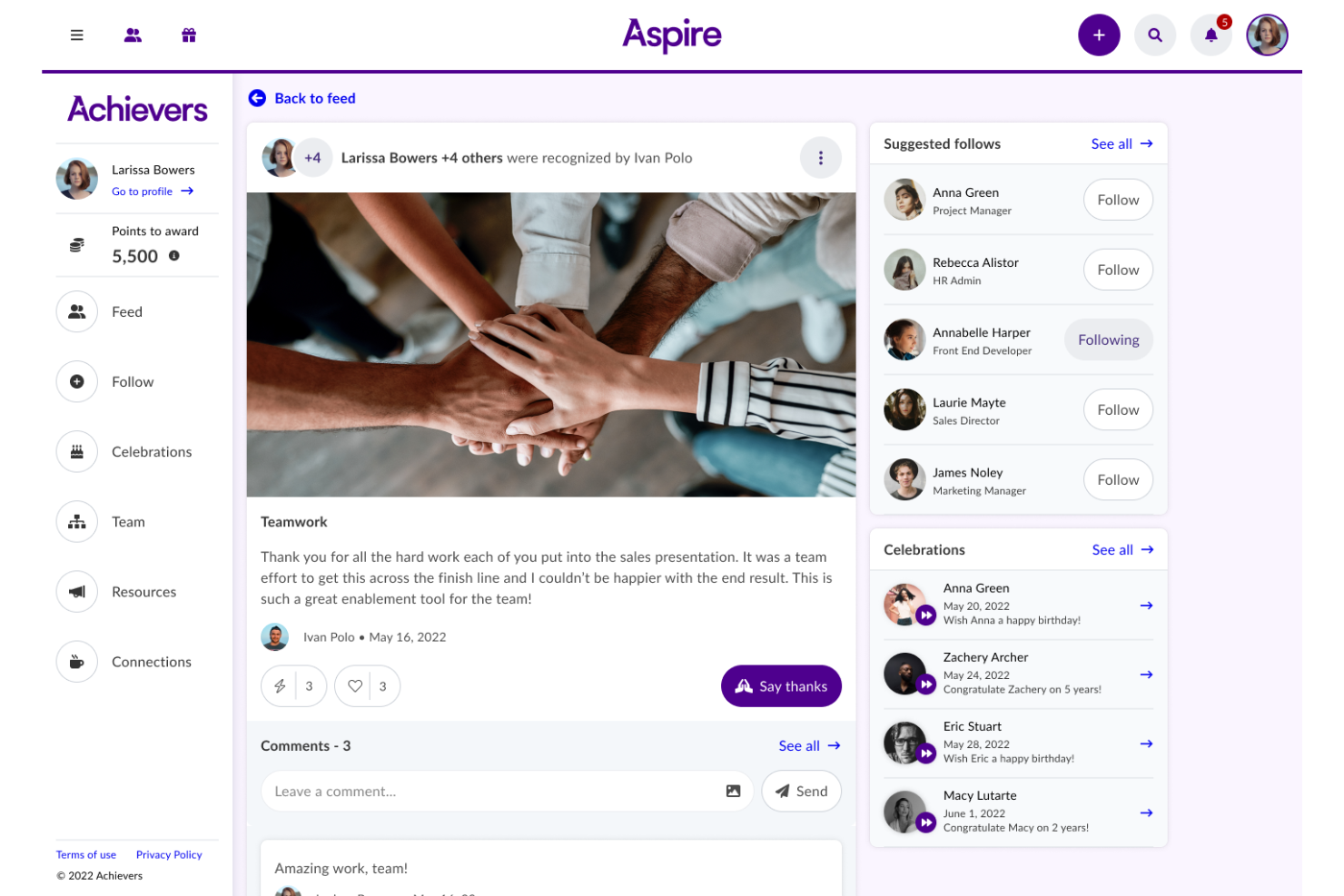
Achievers es una plataforma de reconocimiento y recompensas diseñada para empresas que buscan aumentar el compromiso y la moral de los empleados. Cuenta con un mercado global de recompensas que personaliza los esfuerzos de reconocimiento y fomenta interacciones significativas dentro de los equipos.
Por qué elegí Achievers: La plataforma, fácil de usar, permite a líderes y equipos de recursos humanos brindar reconocimiento a los empleados que más destacan, tanto si trabajan en la oficina como de manera remota. Con la ayuda de la IA, también se pueden identificar los momentos clave que importan a los empleados y personalizar las recompensas en consecuencia. Achievers facilita la creación de programas de reconocimiento diversos, incluyendo recompensas monetarias y elogios de compañeros. Te ayuda a crear un entorno laboral motivador y participativo.
Características destacadas e integraciones:
Características incluyen recompensas personalizables, reconocimiento social y un sistema basado en puntos. Estas herramientas permiten que los mejores talentos elijan las recompensas que más les importan. Achievers también ofrece analíticas para medir el impacto de los programas de reconocimiento en el compromiso.
Integraciones incluyen Workday, ADP, Microsoft Teams, Slack, SAP SuccessFactors, LinkedIn y Google Workspace.
Pros and Cons
Pros:
- Programas de reconocimiento personalizados
- Funciones de reconocimiento social
- Analíticas de seguimiento del compromiso
Cons:
- Curva de aprendizaje para nuevos usuarios
- Personalización limitada para pequeñas empresas

Peoplebox.ai
Mejor para conocimientos de liderazgo

Peoplebox.ai es una plataforma de gestión del talento impulsada por IA, diseñada para equipos de RRHH y gerentes. Automatiza la alineación de objetivos, la gestión de personas y las funciones de talento para apoyar el desarrollo de los empleados. Esto permite a los líderes identificar a empleados de alto potencial y guiar su crecimiento, compromiso y progresión profesional.
Por qué elegí Peoplebox.ai: El enfoque de la plataforma en la obtención de conocimientos para liderazgo la diferencia de otras. Ofrece funciones de IA, incluyendo una socia de talento AI llamada Nova, que ayuda en la contratación y el desarrollo. El análisis predictivo proporciona valiosa información sobre el desempeño y el potencial de los empleados. Esto facilita a tu equipo tomar decisiones informadas y alinear los objetivos de liderazgo.
Características destacadas e integraciones:
Características incluyen un software de entrevistas impulsado por IA, selección de currículums y análisis predictivo. Todo esto ayuda a los reclutadores a encontrar mejores coincidencias, identificando personas que se alinean con la cultura y los valores de la empresa. Nova apoya el desarrollo continuo de los empleados ayudando a las personas a dividir sus metas en tareas accionables y recibir retroalimentación real sobre cómo mejorar.
Integraciones incluyen Slack, Microsoft Teams, Google Workspace, Jira, Asana, Notion y BambooHR.
Pros and Cons
Pros:
- Gestión del talento impulsada por IA
- Herramientas de alineación de liderazgo como la gestión de OKR (desde $8/mes)
- Análisis predictivo para obtener información
Cons:
- Sin plan gratuito
- Sin aplicación móvil
Otras herramientas de IA para la retención de empleados
Estas son algunas opciones adicionales de herramientas de IA para la retención de empleados que no han entrado en mi selección, pero que aún merece la pena consultar:
- 15Five
Mejor para retroalimentación y reconocimiento continuos
- Leapsome
Mejor opción para rendimiento y ciclos de aprendizaje
- Culture Amp
El mejor para coaching de liderazgo con IA y retroalimentación


Wie ich KI-Tools zur Mitarbeiterbindung bewerte
Ich suche nach Tools, bei denen KI über Dashboards hinausgeht – etwa Fluktuationsrisiken erkennt, bevor die Kündigung im Posteingang landet, oder die eigentlichen Treiber der Fluktuation in einem bestimmten Team aufdeckt. Meine Bewertung teile ich in grundlegende Funktionen, die jedes Tool erfüllen muss, und in differenzierende Faktoren, die eine gute von einer sehr guten Lösung unterscheiden.
Grundlegende Funktionen (Mindestanforderungen für diese Liste)
Bei der Auswahl bewerte ich jedes Tool auf einer Skala von 0 (Funktionalität fehlt) bis 5 (hervorragend in diesem Bereich) hinsichtlich jeder unten aufgeführten Kernfunktion. Anschließend berechne ich die Gesamtpunktzahl des Tools als Prozentsatz. Um in die Auswahl zu kommen, muss jedes Tool eine Mindestgesamtpunktzahl von 65% erreichen.
- Prognose von Fluktuationsrisiken: Ich prüfe, ob das Tool ML-Modelle einsetzt, um echte Risikoscores zu berechnen – etwa einen langjährigen Ingenieur, dessen Kollaborationsmuster sich verändert haben, zu kennzeichnen – und nicht nur vergangene Abgänge zu berichten.
- Stimmungs- & Engagement-Analyse: Das Tool sollte NLP über Feedbackkanäle (Pulsbefragungen, offene Kommentare, Bewertungsdaten) hinweg einsetzen, um aufkommende Moralprobleme frühzeitig sichtbar zu machen.
- Analyse von Treibern & Ursachen: Ich bewerte, wie gut die Plattform tatsächlich herausarbeitet, was in bestimmten Segmenten hinter der Fluktuation steckt – sei es Gehaltslücken in einem Team oder die Qualität der Führungskraft in einem anderen.
- KI-generierte Bindungsempfehlungen: Über bloße Risikokenntnis hinaus erwarte ich, dass Tools maßgeschneiderte Maßnahmen vorschlagen – etwa ein Entwicklungsgespräch für eine stagnierende Top-Leistungskraft.
- Integration mit HRIS & Personaldaten: Gute Anbindungen an Systeme wie Workday, BambooHR oder SAP SuccessFactors sind wichtig, da Bindungsmodelle nur so gut sind wie die Daten, die eingeführt werden.
- Bindungs-Dashboards & Berichte: Ich prüfe, ob HR-Entscheider und Führungskräfte rollengerechte Ansichten und Detailanalysen zu Teamentwicklungen erhalten und Ergebnisse im Zeitverlauf verfolgen können.
Wenn ich genügend Tools finde, die diese Kriterien erfüllen, schaue ich mir an, was jede Plattform besonders macht.
Differenzierende Faktoren (Was Anbieter unterscheidet)
So vergleiche und bewerte ich die verschiedenen Anbieter:
Herausragende Funktionen
Tools zur Unterstützung der Führungskräfte sind ein großer Unterschied: Ich achte darauf, ob die Plattform KI-generierte Argumentationshilfen oder Coaching-Impulse direkt an Führungskräfte vor wichtigen Gesprächen mit gefährdeten Mitarbeitern liefert. Auch passive Signalsammlung fällt auf, etwa wenn der Kalender oder Kollaborationsmuster analysiert werden, um Burnout zu erkennen – ohne zusätzliche Umfragen. Außerdem schaue ich, ob eine Plattform die Ergebnisse von Maßnahmen nachhält und so konkrete Eingriffe mit Fluktuationsveränderungen verknüpft.
Über die Funktionen hinaus
Ethik und Bias-Kontrolle sind besonders wichtig, weil reale Menschen bewertet werden. Ich prüfe, ob der Anbieter Modell-Erklärbarkeit sowie Bias-Prüfungen über geschützte Gruppen hinweg bietet, bevor HR auf einen Risikohinweis reagiert. Datenschutz ist ebenso entscheidend: Da sensible Personaldaten verarbeitet werden, bewerte ich Zertifizierungen wie SOC 2 Typ II und DSGVO-Konformität sowie rollenspezifische Zugangskontrollen. Auch die Zeit bis zum Mehrwert fließt in meine Einschätzung ein: Ich bevorzuge Plattformen mit vorgefertigten Bindungsmodellen, die in wenigen Wochen nutzbare Erkenntnisse liefern – nicht erst nach monatelanger Data-Science-Arbeit.
Cómo elegir herramientas de IA para la retención de empleados
Es fácil perderse entre largas listas de funciones y complejas estructuras de precios. Para ayudarte a mantener la concentración mientras avanzas en tu proceso particular de selección de software, aquí tienes una lista de factores que debes tener en cuenta:
| Factor | Qué debes tener en cuenta |
|---|---|
| Escalabilidad | ¿Puede la herramienta crecer junto con tu empresa? Considera si puede gestionar un aumento de usuarios o datos sin perder rendimiento. Busca indicios de una ampliación fluida, como la ausencia de interrupciones durante el crecimiento. |
| Integraciones | ¿Funciona con tus sistemas actuales? Comprueba la compatibilidad con tus herramientas y plataformas de RR. HH. actuales. La falta de integraciones puede provocar datos aislados e ineficiencias. |
| Personalización | ¿Puedes adaptarla a tus necesidades? Determina si la herramienta te permite ajustar la configuración y los flujos de trabajo para adaptarlos a tus procesos específicos. Es posible que los sistemas rígidos no satisfagan los requisitos particulares de tu empresa. |
| Facilidad de uso | ¿Es fácil de usar para tu equipo? Evalúa si la interfaz es intuitiva y fácil de navegar. Una curva de aprendizaje pronunciada puede ralentizar la adopción y reducir la eficacia. |
| Implementación e incorporación | ¿Con qué rapidez puedes empezar? Evalúa el tiempo y los recursos necesarios para implementar la herramienta e incorporar a los usuarios. Busca herramientas con guías claras, asistencia y un proceso de configuración rápido. |
| Coste | ¿Se ajusta a tu presupuesto? Compara la estructura de precios con tu presupuesto. Asegúrate de que no haya cargos ocultos y de que el coste sea acorde con el valor ofrecido. |
| Medidas de seguridad | ¿Protege tus datos? Verifica las medidas de seguridad de la herramienta, como el cifrado y los controles de acceso, para proteger la información confidencial de los empleados. |
| Disponibilidad de asistencia | ¿Puedes obtener ayuda cuando la necesitas? Comprueba si el proveedor ofrece asistencia las 24 horas, los 7 días de la semana, y varios canales de ayuda. Las opciones de asistencia limitadas pueden provocar interrupciones prolongadas o problemas sin resolver. |
¿Qué son las herramientas de IA para la retención de empleados?
Las herramientas de IA para la retención de empleados son soluciones de software que utilizan inteligencia artificial para ayudar a las empresas a comprender y mejorar la satisfacción de los empleados y reducir la rotación. Los profesionales de RR. HH. y los gerentes suelen utilizar estas herramientas para obtener información sobre las estrategias de retención de empleados y evaluar el nivel de compromiso. Las capacidades de análisis predictivo, análisis de sentimientos y comentarios personalizados ayudan a identificar posibles riesgos de rotación y a mejorar el compromiso de los empleados. En general, estas herramientas proporcionan información y estrategias valiosas para mantener una plantilla estable y motivada.
Características
Al seleccionar herramientas de IA para la retención de empleados, presta atención a las siguientes características clave:
- Análisis predictivo: Utiliza la IA para prever la posible rotación de empleados, las tendencias de rendimiento y la preparación para ascensos.
- Análisis de sentimientos: Analiza los comentarios de los empleados para evaluar la moral y la satisfacción, proporcionando información sobre la dinámica del equipo.
- Comentarios personalizados: Ofrece a los empleados comentarios adaptados basados en el rendimiento para mejorar sus planes de desarrollo.
- Análisis de brechas de habilidades: Identifica las áreas en las que los empleados podrían mejorar, orientando las iniciativas de formación y desarrollo.
- Seguimiento del compromiso: Supervisa los niveles de compromiso a lo largo del tiempo para realizar un seguimiento de las iniciativas de retención.
- Planificación de la trayectoria profesional: Traza posibles trayectorias profesionales para los empleados, motivándolos con oportunidades claras de crecimiento.
- Encuestas automatizadas: Envía encuestas periódicas para recopilar comentarios de los empleados sin intervención manual.
- Informes de información en tiempo real: Proporciona datos actualizados al minuto sobre las métricas de retención, los niveles de compromiso y el rendimiento de la plantilla, lo que permite tomar decisiones y realizar ajustes con rapidez.
- Recomendaciones basadas en IA: Sugiere acciones y estrategias basadas en el análisis de datos para mejorar la retención y la satisfacción de los empleados.
Beneficios
La implementación de herramientas de IA para la retención de empleados proporciona varios beneficios para tu equipo y tu empresa. Estos son algunos de los que puedes esperar:
- Menor rotación: El análisis predictivo permite identificar a los empleados en riesgo e implementar estrategias proactivas para retenerlos.
- Mayor compromiso: El análisis de sentimientos ofrece información sobre la moral de los empleados, para que puedas abordar sus preocupaciones y aumentar el compromiso.
- Desarrollo específico de habilidades: Los comentarios personalizados respaldan planes de crecimiento adaptados para fomentar el desarrollo y la satisfacción de los empleados.
- Asignación eficiente de recursos: El análisis de brechas de habilidades garantiza que las iniciativas de formación se dirijan a donde más se necesitan para maximizar el uso de los recursos.
- Toma de decisiones estratégica: Los informes en tiempo real proporcionan información actualizada, lo que ayuda a tomar decisiones rápidas y fundamentadas.
- Plantilla motivada: Una trayectoria profesional clara ayuda a los empleados a imaginar su futuro en la empresa.
- Ahorro de tiempo: Las encuestas automatizadas y las recomendaciones basadas en IA liberan a tu equipo para que se ocupe de tareas estratégicas.
Costes y precios
La selección de herramientas de IA para la retención de empleados requiere comprender los diversos modelos de precios y planes disponibles. Los costes varían en función de las características, el tamaño del equipo, los complementos y otros factores. La tabla siguiente resume los planes habituales, sus precios medios y las características típicas incluidas en las soluciones de herramientas de IA para la retención de empleados:
Tabla comparativa de planes de herramientas de IA para la retención de empleados
| Tipo de plan | Precio medio | Características habituales |
|---|---|---|
| Plan gratuito | $0 | Acceso a análisis básicos, cuentas de usuario limitadas e informes básicos. |
| Plan personal | $5-$25/usuario/mes | Análisis mejorados, funciones de comentarios personalizados y análisis de brechas de habilidades. |
| Plan empresarial | $30-$60/usuario/mes | Análisis avanzados, información predictiva, integración con sistemas de RR. HH. y encuestas automatizadas. |
| Plan para empresas | $65-$100/usuario/mes | Informes exhaustivos, opciones completas de personalización, recomendaciones basadas en IA y asistencia especializada. |
Preguntas frecuentes sobre las herramientas de IA para la retención de empleados
Estas son algunas respuestas a preguntas frecuentes sobre las herramientas de IA para la retención de empleados:
¿Cómo mido el ROI de las herramientas de IA para la retención de empleados?
Para medir el ROI, compara los costes de implementación de la herramienta con los ahorros derivados de la reducción de la rotación y el aumento de la productividad. Haz un seguimiento de métricas como la tasa de rotación y el compromiso de los empleados antes y después de utilizar la herramienta. Ten en cuenta factores como la reducción de los costes de contratación y la mejora del rendimiento de los empleados. También puedes relacionar directamente las mejoras específicas en la dinámica y la satisfacción del equipo con los conocimientos obtenidos mediante la herramienta de IA.
¿Pueden las herramientas de IA para la retención de empleados integrarse con los sistemas de RR. HH. existentes?
Sí, la mayoría de las herramientas de IA para la retención de empleados ofrecen capacidades de integración con sistemas de RR. HH. habituales. Comprueba si la herramienta admite API o dispone de conectores integrados para sistemas como Workday o BambooHR. Asegúrate de que tu equipo o departamento de TI tenga la capacidad técnica necesaria para configurar y mantener estas integraciones. Considera la posibilidad de consultar con tu departamento de TI para garantizar un proceso de integración fluido y que todos los sistemas funcionen de forma armoniosa.
¿Cómo garantizo la privacidad de los datos con las herramientas de IA para la retención de empleados?
Para garantizar la privacidad de los datos, elige herramientas con medidas de seguridad sólidas, como el cifrado y los controles de acceso. Verifica que el proveedor cumpla las normativas pertinentes, como el GDPR o la CCPA. También debes establecer políticas internas para el acceso y el tratamiento de los datos. Audita periódicamente las prácticas de seguridad de los datos de la herramienta y actualízalas cuando sea necesario. Comunícate con el proveedor para comprender sus políticas de privacidad y asegurarte de que se ajustan a los estándares de tu organización.