

Los 20 mejores programas de gestión integrada de riesgos de 2026

10 Lista de selección del mejor software de gestión integrada de riesgos (IRM)


Hay muchos programas de gestión integrada de riesgos diferentes, por lo que elaborar una lista de los mejores puede ser complicado. Quieres ofrecer una visión completa de las posibles amenazas derivadas de los riesgos financieros, operativos y de ciberseguridad, y ahora necesitas la herramienta adecuada para tu empresa y tu equipo. En esta publicación, comparto mis conocimientos sobre distintas plataformas de IRM y recomiendo mis opciones del mejor software de gestión integrada de riesgos en general, basándome en mi experiencia como especialista en RR. HH.
Por qué confiar en nuestras reseñas de software
Nuestro equipo lleva probando y evaluando software desde 2012. Como expertos en RR. HH., sabemos lo difícil —y lo importante— que es elegir el software adecuado.
Para esta guía, evaluamos las herramientas mediante pruebas prácticas e investigación independiente, puntuando las herramientas según nuestros criterios de selección. También nos basamos en la experiencia de líderes de opinión del sector y de profesionales de RR. HH. en activo.
Nuestras reseñas reflejan nuestro criterio editorial humano, no un discurso de ventas.
Revisores expertos:
Tabla comparativa de software de gestión integrada de riesgos
La tabla siguiente compara los detalles de precios de mis principales selecciones de software de gestión integrada de riesgos.
| Tool | Best For | Trial Info | Price | ||
|---|---|---|---|---|---|
| 1 | Ideal para proporcionar evaluaciones de riesgos en tiempo real y mitigación | Demo gratuita disponible | Precios a consultar | Website | |
| 2 | Mejor software integrado de gestión de riesgos para empresas | Demostración gratuita disponible | Precio a consultar | Website | |
| 3 | La mejor opción para la gestión integral de registros | Prueba gratuita de 30 días + demostración gratuita | Precio bajo solicitud | Website | |
| 4 | Ideal para ver el perfil de riesgo de su organización | Demostración gratuita disponible | Precio bajo consulta | Website | |
| 5 | La mejor opción para la gestión de cumplimiento, riesgos, proveedores y auditorías en un solo lugar | Demostración gratuita disponible | Precio bajo consulta | Website | |
| 6 | El mejor software de seguridad y gestión de riesgos informáticos para detectar filtraciones de datos | Prueba gratuita de 20 días | Precios bajo solicitud | Website | |
| 7 | Ideal para vincular los riesgos con incidentes específicos | Demo gratuita disponible | Precios bajo solicitud | Website | |
| 8 | El mejor software IRM con monitoreo situacional e informes de análisis de riesgos | Demostración gratuita disponible | Precios bajo solicitud | Website | |
| 9 | Mejor para identificar problemas de manera inteligente | Demostración gratuita disponible | Precios a consultar | Website | |
| 10 | Mejor para la gestión de eventos de pérdida | Demostración gratuita disponible. | Precio a consultar | Website |
Análisis del mejor software de gestión integrada de riesgos
A continuación encontrarás mis resúmenes detallados del mejor software de gestión integrada de riesgos que llegó a mi lista de selección. Mis análisis ofrecen una visión detallada de las funciones clave, ventajas y desventajas, integraciones y casos de uso ideales de cada herramienta para ayudarte a encontrar la mejor opción para ti.
Ideal para proporcionar evaluaciones de riesgos en tiempo real y mitigación
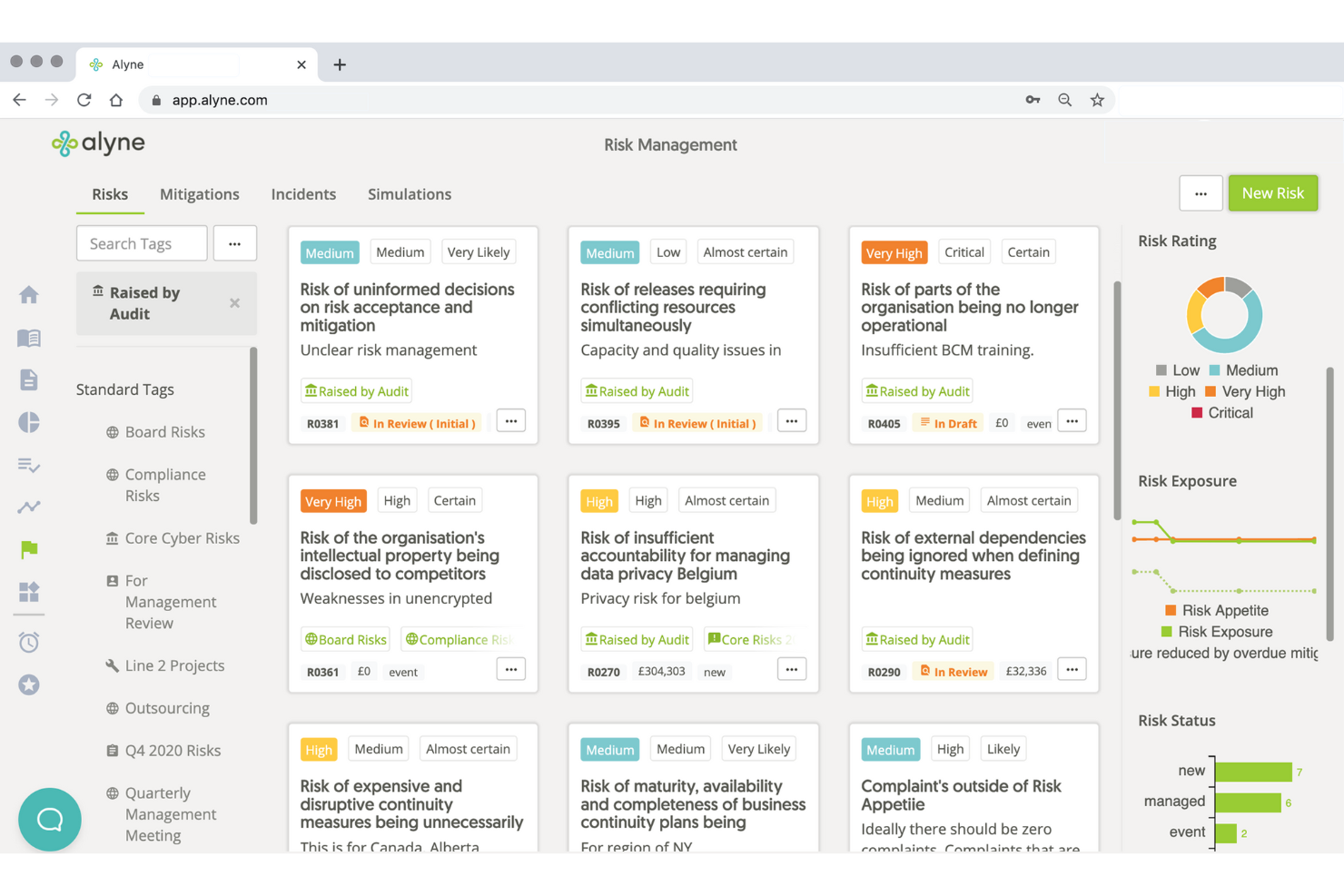
Alyne es una plataforma GRC integral para la gestión de gobierno, riesgo, cumplimiento y ESG diseñada para ofrecer conocimientos basados en datos, impulsada por tecnología de IA, a las organizaciones.
Alyne ayuda a los equipos a comprender las leyes e identificar intuitivamente los riesgos en tiempo real, aumentar la transparencia y la eficiencia del cumplimiento, y colaborar de manera más efectiva en toda la empresa y con terceros. La herramienta te permite gestionar el riesgo y reducir la exposición al riesgo. También te ayuda a entender y cumplir con los requisitos de cumplimiento con confianza, evaluar el riesgo de manera exhaustiva, obtener análisis y reportes detallados de riesgos, y tomar decisiones informadas sobre riesgos para tu organización.
Además, puedes aprovechar controles y plantillas de evaluación listas para usar, identificación y calificación automática de riesgos, y métodos significativos de cuantificación de riesgos para ahorrar costos y aumentar el tiempo de generación de valor.
Es adecuada para la gestión ambiental, social y de gobierno (ESG), la gestión de riesgos empresariales y los controles internos y cumplimiento.
Las integraciones de Alyne incluyen plataformas empresariales clave como SAP, Salesforce y Oracle, garantizando que los flujos de datos sean coherentes e ininterrumpidos.

Mejor software integrado de gestión de riesgos para empresas
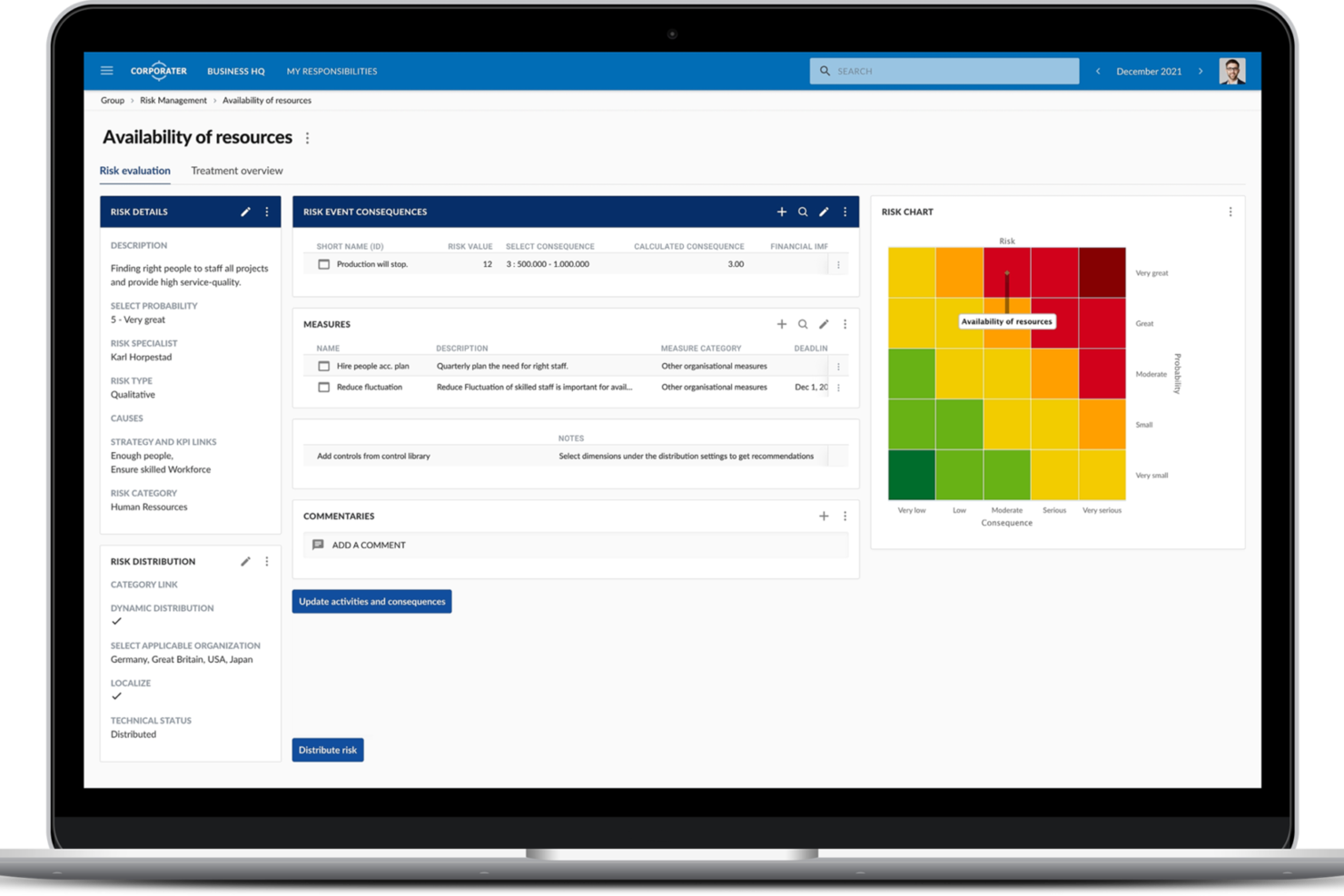
Corporater es un software a escala empresarial que puede respaldar las operaciones de gobernanza, desempeño, riesgo y cumplimiento (GPRC) de su organización. Sus capacidades de gestión de riesgos son amplias e incluyen la gestión de riesgos de TI y web, gestión de riesgos de terceros, gestión de riesgos de proyectos y portafolios, gestión de riesgos operacionales y más. Es adecuado para su uso en toda la organización para detectar, gestionar y mitigar riesgos en todos los departamentos y equipos.
El software puede utilizarse para digitalizar la gestión de riesgos en su organización y automatizar sus diversos procesos de gestión de riesgos. Puede establecer flujos de trabajo de mitigación de riesgos en la plataforma para crear procedimientos consistentes y estandarizados sobre cómo abordar diferentes tipos de riesgos. Se pueden realizar evaluaciones de riesgos cualitativas y cuantitativas, ayudando a los equipos a tomar decisiones informadas sobre cómo avanzar cuando se detectan riesgos.
También es posible generar informes con el software, y los usuarios pueden crear tableros visuales para comprender los riesgos detectados, gestionados y abordados en su organización.
La mejor opción para la gestión integral de registros

ManageEngine EventLog Analyzer es una herramienta integral de gestión de registros y cumplimiento de TI diseñada para monitorear, recopilar y analizar datos de registros de diversas fuentes. Al ofrecer una gestión centralizada de registros, ayuda a las organizaciones a mantener la seguridad de la red y cumplir con los requisitos de cumplimiento.
Como software integrado de gestión de riesgos, ManageEngine EventLog Analyzer destaca en la correlación de eventos en tiempo real y en la detección de incidentes de seguridad. Al monitorear continuamente los registros de servidores, aplicaciones y dispositivos de red, identifica de manera oportuna posibles amenazas y violaciones de políticas. Este enfoque proactivo de la seguridad ayuda a las organizaciones a abordar los riesgos antes de que se agraven.
Las avanzadas capacidades de inteligencia de amenazas y correlación del software también proporcionan una comprensión más profunda de los eventos de seguridad, lo que permite respuestas a incidentes y estrategias de mitigación de riesgos más eficaces. Además, las capacidades automatizadas de gestión de incidentes y generación de informes detallados de EventLog Analyzer son cruciales para mantener el cumplimiento y realizar análisis forenses. El software genera informes personalizables que cumplen con varios requisitos regulatorios, como HIPAA, GDPR, PCI-DSS y SOX.
El precio está disponible bajo solicitud.
Ideal para ver el perfil de riesgo de su organización
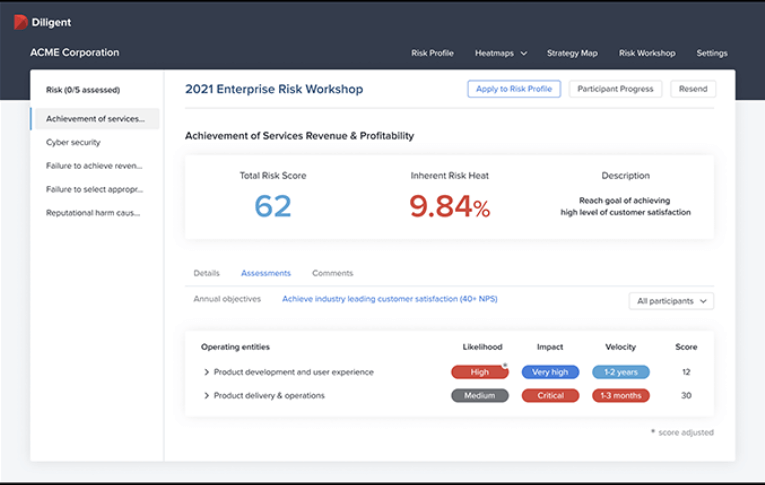
El conjunto de herramientas de gestión integrada de riesgos de Diligent ayuda a las organizaciones a identificar, evaluar y gestionar riesgos utilizando una metodología unificada. Esto puede ayudar a su empresa a tomar mejores decisiones relacionadas con el riesgo.
La herramienta cuenta con integraciones que le permiten analizar múltiples fuentes, incluidas herramientas internas y externas. Obtendrá una visión completa de cómo el entorno actual de riesgos afecta a su empresa.
Mientras tanto, el panel y las funciones de informes de la herramienta garantizan que pueda ver esta información de manera comprensible. Muestra el perfil de riesgo actual de su organización, incluyendo una puntuación general de riesgo y cómo diversos factores de riesgo contribuyen a ese riesgo.
Es fácil exportar estos informes para proporcionar a las partes interesadas los datos que necesitan y que puedan tomar decisiones informadas para garantizar la continuidad del negocio.

La mejor opción para la gestión de cumplimiento, riesgos, proveedores y auditorías en un solo lugar
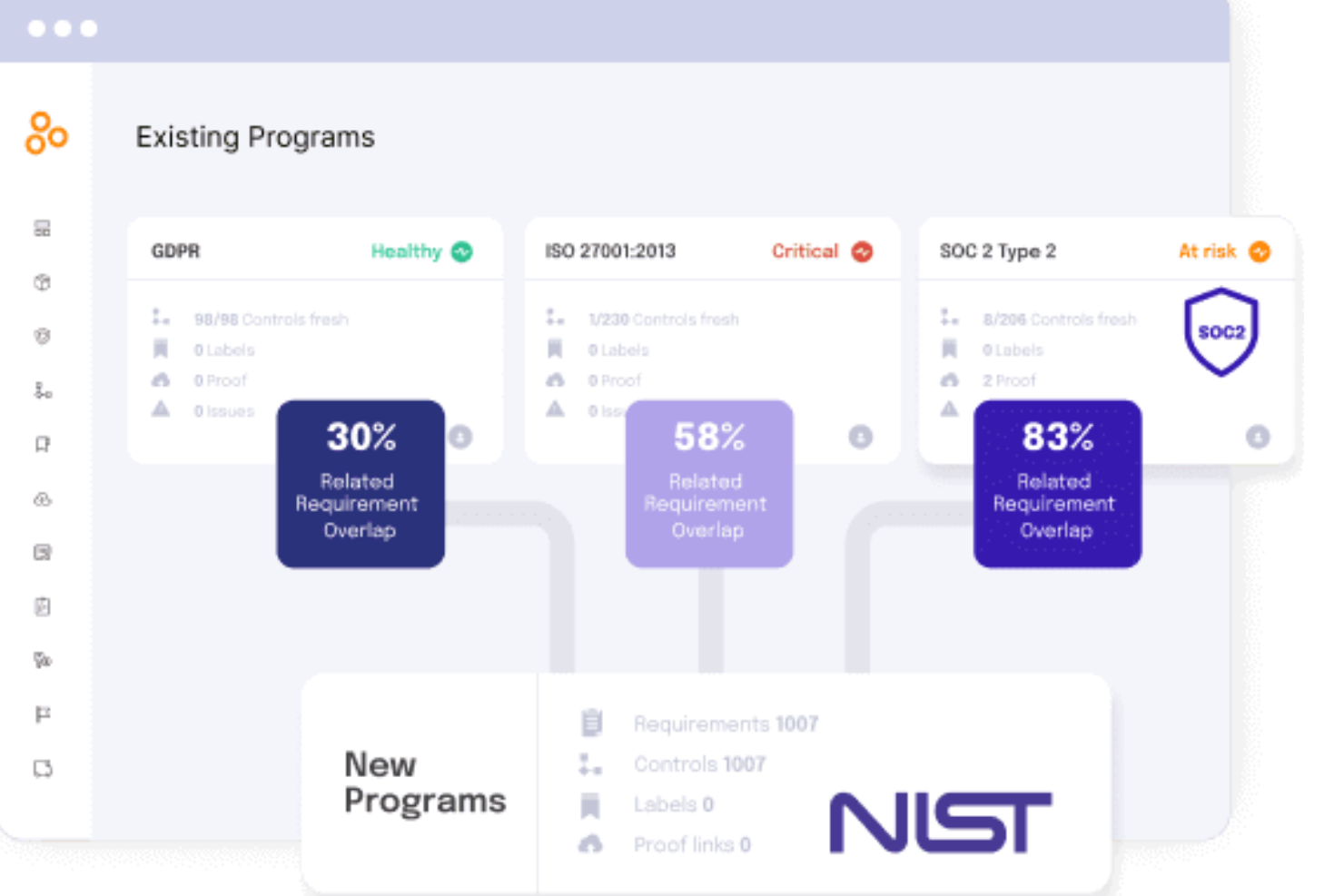
Hyperproof es una plataforma integral de operaciones de cumplimiento diseñada para gestionar los procesos de cumplimiento, riesgo, proveedores y auditoría en un solo sistema. Está dirigida a organizaciones de todos los tamaños que necesitan navegar en entornos regulatorios complejos.
Elegí Hyperproof por su enfoque todo en uno para la gestión de cumplimiento, riesgos, proveedores y auditorías. Su capacidad para automatizar la recopilación de evidencias, la gestión de tareas y la visibilidad en tiempo real del cumplimiento garantiza que las organizaciones puedan manejar múltiples requisitos regulatorios sin problemas. Los datos y flujos de trabajo centralizados de la plataforma también reducen la complejidad de la gestión de diversos marcos de cumplimiento.
Hyperproof ofrece informes detallados de cumplimiento y auditoría, lo que facilita a las organizaciones prepararse para auditorías y mantener estándares regulatorios. Además, el sistema centralizado de seguimiento de riesgos de la plataforma identifica, evalúa y mitiga los riesgos de forma proactiva, asegurando un entorno operativo seguro y conforme.
Las integraciones incluyen Jira, Slack, Google Drive, AWS, Azure, GitHub, GitLab, Microsoft Teams, Okta, OneDrive, Confluence, ServiceNow, Microsoft 365, Zoom, Box, Dropbox, Asana, Trello, Salesforce y Smartsheet.
Pros and Cons
Pros:
- Diseño intuitivo para facilitar el uso
- Marcos preconfigurados para la gestión del cumplimiento
- La herramienta automatiza la recopilación de evidencias
Cons:
- Límites en las personalizaciones dentro de la plataforma
- El módulo de gestión de proveedores podría ser más completo

El mejor software de seguridad y gestión de riesgos informáticos para detectar filtraciones de datos
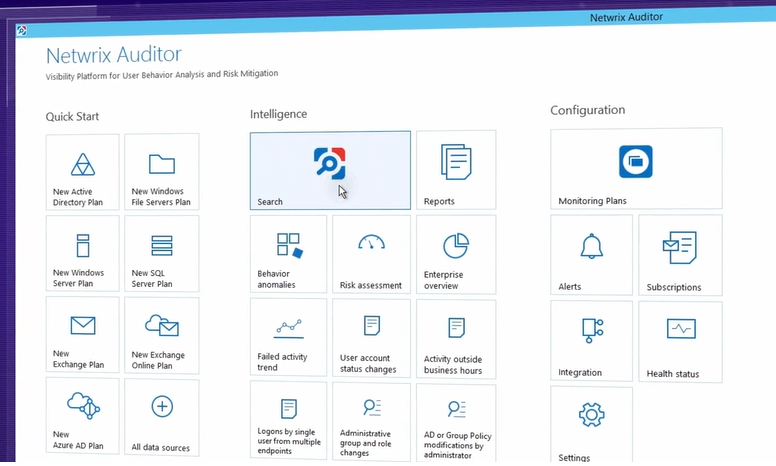
El software avanzado de seguridad informática de Netwrix Auditor ayuda a las organizaciones a detectar amenazas de seguridad de manera rápida y eficiente. Su software puede analizar los permisos de los usuarios para los datos de la empresa, incluidos archivos y carpetas digitales, a escala, con la capacidad de analizar archivos en lotes por tipo de archivo, nombre de usuario o fecha de acceso. También puede configurar alertas automáticas para que su equipo de TI sea notificado inmediatamente de cualquier actividad sospechosa.
Netwrix Auditor incluye informes avanzados de gestión de auditorías que mejorarán la seguridad de su organización al señalar los puntos débiles en su infraestructura de TI que necesitan optimización. Han ayudado a más de 7.000 organizaciones a proteger sus datos sensibles y superar con éxito las auditorías de cumplimiento.
Están disponibles integraciones con Active Directory, Microsoft 365, SharePoint, Oracle Database, Windows File Servers, NetApp y numerosos otros sistemas de TI.

Resolver
Ideal para vincular los riesgos con incidentes específicos

Resolver es una herramienta de gestión de riesgos fácil de usar que es utilizada por más de 1000 empresas, incluidas Starbucks y Nestlé. Ofrece soluciones para equipos de seguridad corporativa, cumplimiento y seguridad de la información.
Esta solución de gestión de riesgos cuenta con todo lo que los equipos necesitan para identificar, evaluar y minimizar riesgos. El punto destacado del software son las funciones de evaluación de riesgos que vinculan los problemas con incidentes y acciones específicas, asegurando que estén relacionados con eventos reales del negocio. Al resaltar estos indicadores de riesgo, puedes identificar brechas en tu estrategia de gestión de riesgos y mostrar el impacto de tus estrategias.
Resolver tiene muchas otras funciones valiosas. Por ejemplo, el constructor de procesos con función de arrastrar y soltar facilita la creación de procedimientos adaptados a tu empresa. La herramienta no requiere conocimientos de programación, lo que permite que cualquier persona en tu organización pueda crear y personalizar flujos de trabajo.

El mejor software IRM con monitoreo situacional e informes de análisis de riesgos
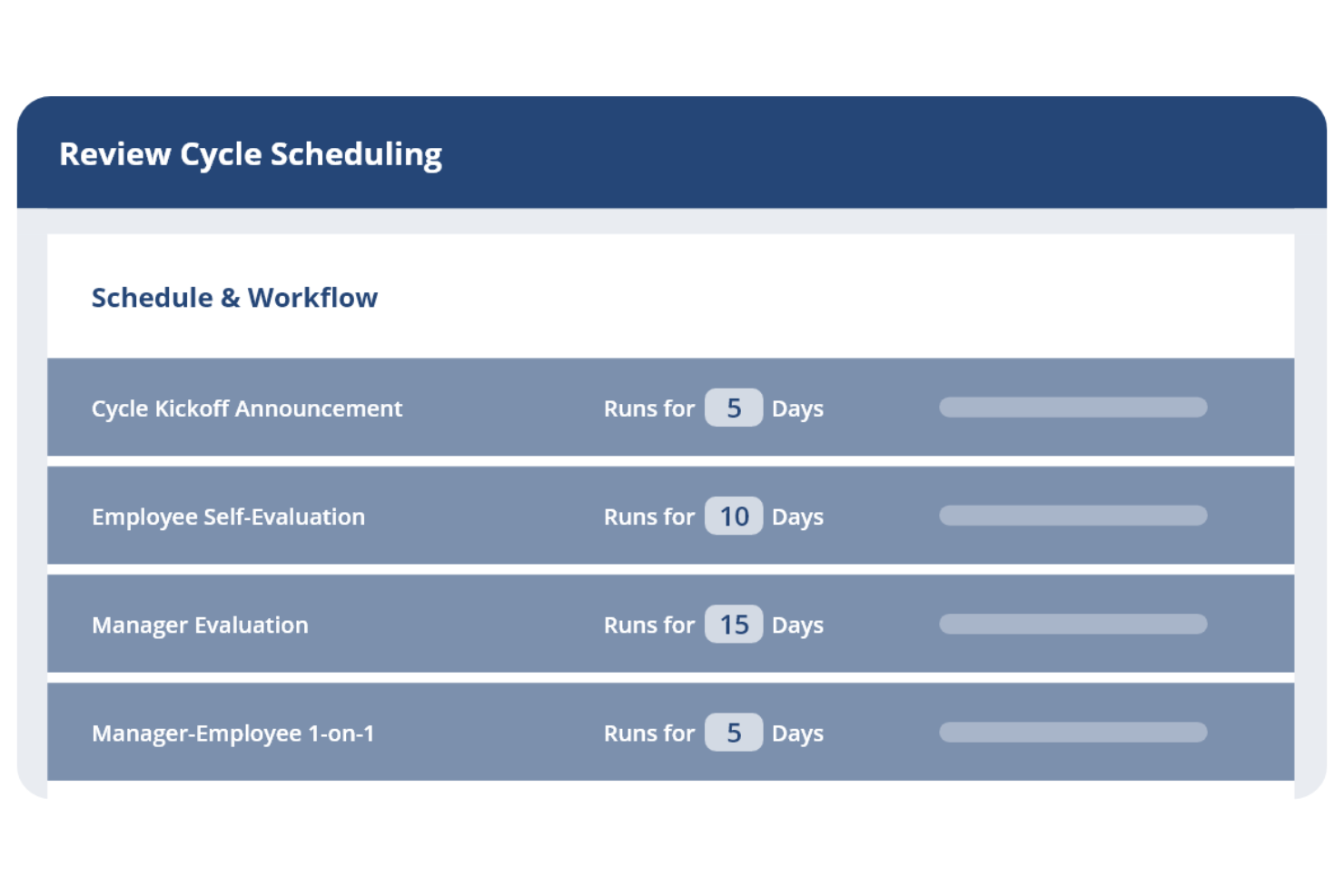
Fusion Framework System es una solución de gestión de riesgos y continuidad desarrollada para empresas que buscan no solo minimizar el riesgo, sino también simplificar procesos y operaciones complejas mediante una mayor visibilidad. La solución proporciona información sobre las operaciones de las empresas y organizaciones.
La plataforma de riesgo y resiliencia basada en la nube ayuda a los usuarios a comprender cómo funciona su negocio, proporciona información sobre dónde está expuesto al riesgo y luego ayuda a entender cómo reconstruirlo. El software de gestión de riesgos integrado permite a los líderes empresariales y otras partes interesadas visualizar toda su operación, sus productos y/o servicios desde la perspectiva del cliente.
La solución ofrece dos características clave a través de su software de gestión de riesgos integrado: una es la gestión de riesgos operativos y la otra es la gestión de riesgos empresariales. La primera ayuda a impulsar la coherencia al permitir enfoques estándar de riesgos en toda la cadena operativa de la empresa. La segunda, la gestión de riesgos empresariales, permite a los usuarios aprovechar datos dinámicos para identificar y monitorear posibles riesgos.
Los usuarios pueden alinear fácilmente sus objetivos estratégicos clave con su enfoque de gestión de riesgos para establecer una base verdaderamente integrada de información relevante que se extiende a toda la empresa.
Mejor para identificar problemas de manera inteligente
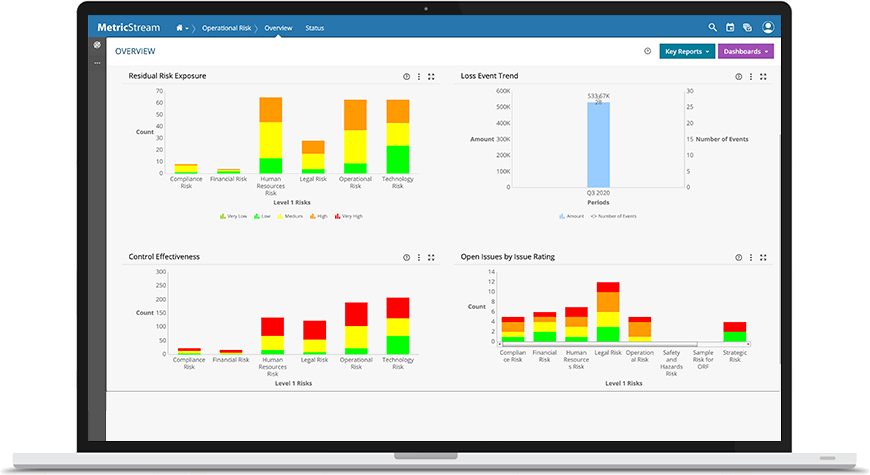
MetricStream es un software de Gestión de Riesgos Empresariales (ERM) con módulos que te ayudan a comprender y reaccionar ante los riesgos en toda tu organización.
La herramienta cuenta con funciones para identificar y definir riesgos. Úsalas para documentar todos los riesgos a los que se enfrenta tu empresa. Una vez configurado, puedes ver los asuntos clave en el panel de control.
El producto destaca porque te permite evaluar riesgos utilizando auditorías internas que consideran cómo se relacionan con tu organización, objetivos, productos y procesos. La idea es que esto mejore la eficiencia de las auditorías, ayudando a que las completes más rápido.
La función inteligente de gestión de problemas y remediación de MetricStream también es útil. Utiliza IA y aprendizaje automático para identificar problemas y hacer recomendaciones. Luego puedes revisar cada problema, crear un plan y asignarlo a un miembro del equipo para minimizar el riesgo.
Archer
Mejor para la gestión de eventos de pérdida
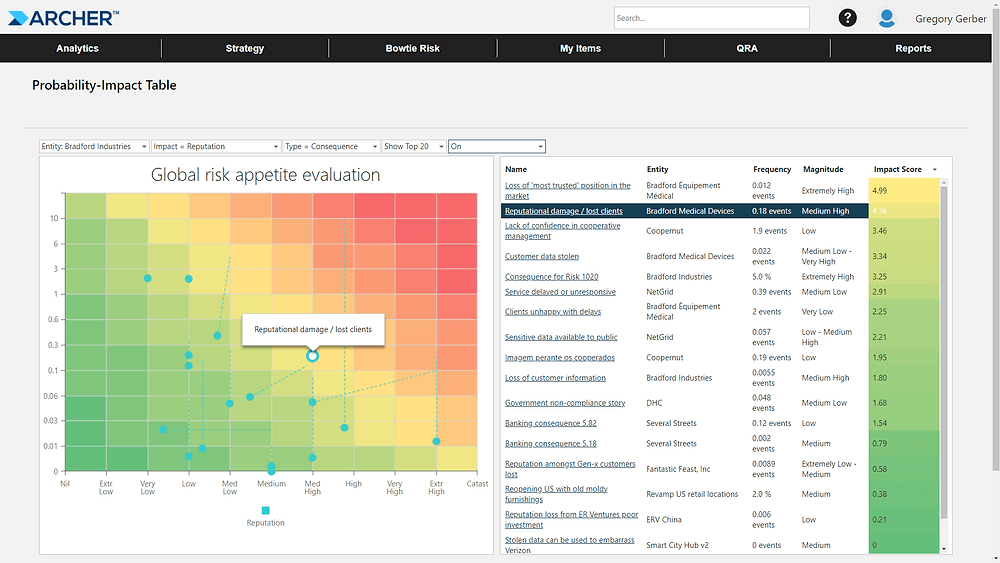
Archer es una plataforma líder de gestión integrada de riesgos. Ayuda a las organizaciones a estandarizar los procesos de gestión de riesgos, lo que, según afirma, puede permitir una toma de decisiones más informada.
El catálogo de riesgos es fundamental para la herramienta. Permite a las organizaciones registrar los factores de riesgo de forma coherente y reunir todos estos datos en un lugar centralizado. Ser consistente con las evaluaciones de riesgos proporciona una visión más precisa de cómo cada problema se relaciona con los demás.
Otra función útil es la gestión de eventos de pérdida. Este catálogo incluye tanto las pérdidas como los incidentes evitados y ayuda a evaluar estos eventos para establecer cómo ocurrieron y dónde recae la responsabilidad. Crea un flujo de trabajo automatizado para estos eventos y garantiza que los gestiones de manera coherente cada vez.
Otros programas de gestión integrada de riesgos
Estas son algunas opciones adicionales de software de gestión integrada de riesgos que no llegaron a mi lista de selección, pero que aun así merece la pena consultar:
- Ventiv IRM
Mejor para gestionar el riesgo de activos
- IBM Financial Crimes Insight
El mejor software de gestión de riesgos para instituciones financieras
- AuditBoard
Ideal para crear flujos de trabajo de mitigación de riesgos
- VelocityEHS Risk Management
La mejor plataforma para rastrear y reducir los riesgos relacionados con el medio ambiente, la salud y la seguridad
- TradeTapp
Mejor plataforma en la nube para perfilar subcontratistas
- Onspring
Mejor para ver el valor monetario del riesgo
- LogicManager
Mejor soporte al cliente
- SoftComply Risk Manager Plus
Ideal para la gestión de riesgos personalizable en Jira
- RAIDLOG.com
Ideal para gestionar riesgos dentro de los proyectos
- A1 Tracker
La mejor plataforma de gestión de riesgos para integraciones de datos


Cómo evalúo el software de gestión integral de riesgos
Cuando los equipos de RR. HH. asignan la legislación laboral a controles internos o evalúan el riesgo de proveedores de nómina, busco dos cosas: el estándar mínimo que la herramienta debe cumplir y los diferenciadores que separan las mejores opciones.
Funcionalidades esenciales (requisitos fundamentales para esta lista)
Al seleccionar herramientas para mi lista, clasifico cada una en una escala de 0 (no ofrece la funcionalidad) a 5 (destaca en esta área) para cada funcionalidad esencial que se indica a continuación. Luego, calculo la puntuación total de la herramienta como porcentaje. Cada herramienta debe alcanzar una puntuación total mínima del 65% para ser considerada en la selección.
- Evaluación de riesgos y registro: Busco un registro centralizado donde los equipos de RR. HH. puedan registrar riesgos como rotación elevada en departamentos clave, asignarles una puntuación por probabilidad e impacto, y hacer seguimiento de la titularidad.
- Gestión del cumplimiento normativo: Cada herramienta debe relacionar los controles internos con la normativa laboral y de empleo aplicable, y mantener su biblioteca normativa actualizada a medida que cambian las reglas.
- Gestión de políticas y controles: Evalúo cómo la plataforma gestiona todo el ciclo de vida de las políticas, desde la redacción de reglas de seguridad laboral hasta su distribución y la recogida de confirmaciones de los empleados.
- Gestión de incidentes y casos: Aquí son importantes los formularios de entrada estructurados, flujos de trabajo de investigación y el seguimiento de casos, especialmente para la gestión de denuncias de acoso o de incidentes de seguridad laboral.
- Riesgo de terceros/proveedores: Verifico si la herramienta permite evaluar y monitorizar el riesgo derivado de proveedores de RR. HH. como procesadores de nómina, agencias de personal y administradores de beneficios.
- Informes y analítica de riesgos: Los paneles deben ofrecer vistas según el rol; así, una CHRO ve resúmenes listos para el consejo directivo, mientras que un responsable de cumplimiento de RR. HH. puede profundizar en el detalle de los controles e historiales de auditoría.
Una vez que dispongo de una lista de herramientas que cumplen estos criterios, considero qué distingue a cada plataforma.
Factores diferenciadores (qué distingue a los proveedores)
Así comparo y contrasto a los distintos proveedores:
Características destacadas
Busco inteligencia de riesgo impulsada por IA que pueda señalar riesgos emergentes en la plantilla, como picos anormales de rotación en un departamento, antes de que se conviertan en problemas mayores. También importan las integraciones nativas con sistemas de información de RR. HH. (HRIS). Una plataforma que sincroniza bidireccionalmente con herramientas como Workday o BambooHR mantiene el flujo de datos de empleados dentro de los flujos de trabajo de riesgo sin necesidad de importaciones manuales. Los canales de reporte anónimos integrados son otro diferenciador, ya que una línea de denuncias interna elimina fricciones cuando los empleados necesitan informar irregularidades directamente en el sistema de gestión de casos.
Más allá de las funcionalidades
El cumplimiento y la postura de seguridad son prioritarios en mi análisis. Las plataformas que gestionan datos sensibles de empleados deben contar con certificaciones SOC 2 Tipo II o ISO 27001 y ofrecer opciones de residencia de datos para equipos en múltiples jurisdicciones. También evalúo la adecuación al sector, ya que un equipo de RR. HH. en salud enfrenta presiones regulatorias muy distintas a uno en tecnología. La agilidad de implementación también es importante. Verifico si el proveedor ofrece plantillas de riesgo específicas para RR. HH. y aceleradores de incorporación, de modo que tu equipo no tenga que crear marcos desde cero durante una implantación que dure meses.
Cómo elegir un software de gestión integrada de riesgos
Es fácil perderse entre largas listas de funciones y estructuras de precios complejas. Para ayudarte a mantener la atención mientras avanzas en tu proceso único de selección de software, aquí tienes una lista de factores que debes tener en cuenta:
| Factor | Qué tener en cuenta |
|---|---|
| Escalabilidad | ¿Puede el software crecer con tu organización? Comprueba si gestiona un mayor volumen de datos y número de usuarios sin problemas de rendimiento. |
| Integraciones | ¿Se conecta con tus sistemas actuales? Comprueba la compatibilidad con tu CRM, ERP u otras herramientas esenciales para evitar silos de datos. |
| Personalización | ¿Puedes adaptar el software a tus flujos de trabajo? Busca opciones para ajustar los paneles, informes y permisos de usuario para adaptarlos a tus procesos. |
| Facilidad de uso | ¿La interfaz es intuitiva para tu equipo? Asegúrate de que requiere un tiempo de formación mínimo y evita las herramientas que exigen periodos de aprendizaje prolongados. |
| Implementación e incorporación | ¿Qué asistencia ofrece el proveedor durante la configuración? Considera la disponibilidad de recursos de formación, sesiones de incorporación y si necesitarás asistencia externa de TI. |
| Coste | ¿Cómo se ajustan los precios a tu presupuesto? Compara los modelos de suscripción, los costes ocultos y los descuentos por contratos a largo plazo para asegurarte de obtener una buena relación calidad-precio. |
| Medidas de seguridad | ¿Existen medidas de protección de datos? Comprueba el cifrado, el cumplimiento de la normativa sobre datos y las actualizaciones de seguridad periódicas para proteger la información confidencial. |
| Requisitos de cumplimiento | ¿Cumple las normas del sector? Asegúrate de que la herramienta admite los marcos de cumplimiento y las necesidades de elaboración de informes necesarios específicos de tu sector. |
¿Qué es el software de gestión integrada de riesgos?
El software de gestión integrada de riesgos es una herramienta que ayuda a las organizaciones a gestionar los riesgos mediante una plataforma centralizada para la evaluación, el seguimiento y el cumplimiento normativo. Estas herramientas suelen ser utilizadas por responsables de riesgos, responsables de cumplimiento y profesionales de TI para mejorar la toma de decisiones y garantizar el cumplimiento de la normativa. Funciones como la evaluación de riesgos, la gestión del cumplimiento y el seguimiento de incidentes permiten supervisar los riesgos de forma eficiente y cumplir la normativa. En general, estas herramientas ayudan a las organizaciones a gestionar los riesgos de forma proactiva y a mantener el cumplimiento en un entorno en constante cambio.
Características
Al seleccionar un software de gestión integrada de riesgos, presta atención a las siguientes características clave:
- Evaluación de riesgos: Proporciona herramientas para identificar y evaluar posibles riesgos, ayudando a las organizaciones a prepararse y mitigarlos de forma eficaz.
- Gestión del cumplimiento: Garantiza el cumplimiento de las normativas y los estándares, reduciendo el riesgo de sanciones por incumplimiento.
- Seguimiento de incidentes: Registra y supervisa los incidentes para analizar tendencias y prevenir que vuelvan a ocurrir.
- Gestión de políticas: Centraliza la creación y actualización de políticas, garantizando que todos los miembros del equipo sigan las directrices vigentes.
- Gestión de auditorías: Facilita las auditorías internas y externas mediante la organización y el seguimiento de las actividades de auditoría.
- Paneles personalizables: Permite a los usuarios adaptar su vista para mostrar los datos más relevantes para su función.
- Informes automatizados: Genera informes automáticamente para ahorrar tiempo y mejorar la precisión en la presentación de datos.
- Integración de datos: Se conecta con los sistemas existentes para proporcionar una visión integral del riesgo en toda la organización.
- Supervisión en tiempo real: Realiza un seguimiento de las actividades en curso y alerta a los usuarios sobre cualquier problema o riesgo inmediato.
- Formación y asistencia: Ofrece recursos y ayuda para garantizar que los usuarios puedan utilizar eficazmente el software y aprovechar al máximo sus ventajas.
Ventajas
La implementación de un software de gestión integrada de riesgos ofrece varias ventajas para tu equipo y tu empresa. Estas son algunas de las que puedes esperar:
- Mejora de la toma de decisiones: El acceso a datos y análisis en tiempo real ayuda a tu equipo a tomar decisiones fundamentadas rápidamente.
- Mejora del cumplimiento: El seguimiento automatizado del cumplimiento garantiza que tu organización cumpla los requisitos normativos, reduciendo el riesgo de multas.
- Respuesta eficiente ante incidentes: Las herramientas de seguimiento y gestión de incidentes permiten a tu equipo reaccionar rápidamente ante los problemas, minimizando su impacto.
- Acceso centralizado a los datos: Los sistemas integrados proporcionan una única fuente fiable de información relacionada con los riesgos, mejorando la colaboración.
- Ahorro de tiempo: Los informes y la supervisión automatizados reducen las tareas manuales, permitiendo que tu equipo se centre en actividades estratégicas.
- Visibilidad de los riesgos: Los paneles personalizables ofrecen información clara sobre los posibles riesgos, permitiendo una gestión proactiva de los riesgos.
- Optimización de recursos: Los procesos optimizados y la integración de datos ayudan a asignar los recursos de forma eficaz, maximizando la productividad.
Costes y precios
Para seleccionar un software de gestión integrada de riesgos es necesario comprender los distintos modelos de precios y planes disponibles. Los costes varían en función de las características, el tamaño del equipo, los complementos y otros factores. La siguiente tabla resume los planes habituales, sus precios medios y las características típicas incluidas en las soluciones de software de gestión integrada de riesgos:
Tabla comparativa de planes de software de gestión integrada de riesgos
| Tipo de plan | Precio medio | Características habituales |
|---|---|---|
| Plan gratuito | $0 | Evaluación de riesgos básica, gestión del cumplimiento limitada e informes básicos. |
| Plan personal | $10-$30/usuario/mes | Evaluación de riesgos, seguimiento del cumplimiento, gestión de incidentes y paneles personalizables. |
| Plan empresarial | $50-$100/usuario/mes | Gestión avanzada del cumplimiento, informes automatizados, integración de datos y gestión de auditorías. |
| Plan para empresas | $150-$300/usuario/mes | Gestión completa del cumplimiento, supervisión en tiempo real, gestión de políticas y análisis avanzados. |
Preguntas frecuentes sobre el software de gestión integrada de riesgos
Estas son algunas respuestas a preguntas habituales sobre el software de gestión integrada de riesgos:
¿Cómo gestiona la seguridad de los datos el software de gestión integrada de riesgos?
El software de gestión integrada de riesgos suele incluir cifrado de datos, controles de acceso y actualizaciones de seguridad periódicas. Estas medidas ayudan a proteger la información confidencial frente al acceso no autorizado. Al evaluar las opciones, asegúrese de que el software cumple las normas de protección de datos de su sector y pregunte a los proveedores por sus protocolos de seguridad.
¿Hay asistencia técnica disponible para el software de gestión integrada de riesgos?
Sí, la mayoría de los proveedores ofrecen asistencia técnica para ayudar con los problemas del software. Las opciones de asistencia suelen incluir disponibilidad las 24 horas, los 7 días de la semana, chat en directo, asistencia por correo electrónico y por teléfono. Algunos proveedores también ofrecen gestores de cuentas dedicados para ayudar con las necesidades continuas. Compruebe las opciones de asistencia de cada proveedor para asegurarse de que cumplen los requisitos de su equipo.
¿Cómo evalúo los módulos de riesgo de proveedores del software de gestión integrada de riesgos?
Al revisar la capacidad de gestión del riesgo de proveedores de una herramienta de gestión integrada de riesgos, debe examinar hasta qué punto su equipo puede incorporar, evaluar y supervisar a proveedores y socios externos. Asegúrese de que el sistema admite la automatización de cuestionarios, vincula los riesgos de los proveedores con su cartera de riesgos empresarial y proporciona un seguimiento en tiempo real de los problemas de los proveedores y de las medidas correctivas. Compruebe también con qué facilidad su equipo puede extraer informes que muestren la exposición al riesgo de los proveedores en relación con las operaciones empresariales.
¿Cómo me aseguro de que el software se ajusta a mi marco y apetito de riesgo organizativos?
Asegúrese de que el software le permite configurar taxonomías de riesgos, modelos de puntuación de riesgos y paneles de informes de acuerdo con su apetito de riesgo y sus objetivos empresariales. Debe poder asignar sus registros de riesgos existentes, establecer umbrales, vincular métricas (p. ej., KRIs) y reflejar cómo su consejo de administración o equipo directivo define el riesgo. Si la herramienta le obliga a utilizar modelos predefinidos que no puede modificar, su equipo podría acabar teniendo que buscar soluciones alternativas.