Reseña de Tanda: ventajas, desventajas, características y precios explicados



Tanda is a workforce management software built for businesses managing shift-based teams who need scheduling, time tracking, and labor cost oversight in one place. It's a strong fit for retail, hospitality, and healthcare operations with hourly workforces spread across multiple locations. I'd consider Tanda over Deputy if real-time wage tracking and labor cost visibility are your priorities. Tanda goes deeper on the cost side while keeping the scheduling experience just as accessible.
Tanda Evaluation Summary
- Pricing upon request
- Free demo available
Por qué confiar en nuestras reseñas de software
Nuestro equipo lleva probando y evaluando software desde 2012. Como expertos en RR. HH., sabemos lo difícil —y lo importante— que es elegir el software adecuado.
Para esta guía, evaluamos las herramientas mediante pruebas prácticas e investigación independiente, puntuando las herramientas según nuestros criterios de selección. También nos basamos en la experiencia de líderes de opinión del sector y de profesionales de RR. HH. en activo.
Nuestras reseñas reflejan nuestro criterio editorial humano, no un discurso de ventas.
Revisores expertos:
Tanda Overview
In my opinion, Tanda is strongest when employee retention is closely tied to financial wellness and benefits. Its matched savings, personalized benefits, engagement tools, and retention insights give employers a focused way to address financial stress and improve engagement, though its narrower scope means it won’t replace broader payroll, scheduling, or workforce management tools. I think it’s a good fit for employers with hourly or essential-worker populations that want more targeted retention support without adding a full HR platform.
pros
-
Personalized benefits and matched savings directly support employee financial wellness
-
Retention insights help employers identify engagement and turnover risks
-
Focused feature set is well suited to hourly and essential-worker retention programs
cons
-
No native payroll, scheduling, or time and attendance tools
-
Limited public information about integrations and technical security controls
-
Narrower functionality than full workforce management or HR platforms
-

Justworks
Visit WebsiteThis rating combines scores from multiple user review sites to reflect overall customer sentiment about the product.4.6 -
Prevue Assessments
Visit WebsiteThis rating combines scores from multiple user review sites to reflect overall customer sentiment about the product.4.6 -
Small Improvements
Visit WebsiteThis rating combines scores from multiple user review sites to reflect overall customer sentiment about the product.4.3





Cómo probamos y puntuamos nuestras herramientas
Hemos pasado años construyendo, refinando y mejorando nuestro sistema de pruebas y puntuación de software. La rúbrica está diseñada para capturar los matices de la selección de software y lo que hace que una herramienta sea efectiva, centrándose en los aspectos críticos del proceso de toma de decisiones. A continuación, puedes ver exactamente cómo funcionan nuestras pruebas y puntuaciones a través de siete criterios. Esto nos permite ofrecer una evaluación imparcial del software basada en la funcionalidad principal, características destacadas, facilidad de uso, incorporación, soporte al cliente, integraciones, reseñas de clientes y relación calidad-precio.
Funcionalidad principal (25% de la puntuación final)
El punto de partida de nuestra evaluación siempre es la funcionalidad principal de la herramienta. ¿Tiene las funciones básicas que se espera encontrar? ¿Alguna de esas funciones básicas está restringida a planes de precio superiores? En esencia, esperamos que una herramienta se compare favorablemente con las capacidades básicas de sus competidores.
Características destacadas (25% de la puntuación final)
Luego, evaluamos características poco comunes que van más allá de la funcionalidad principal que normalmente se encuentra en herramientas de su tipo. Una puntuación alta refleja funciones especializadas o únicas que hacen que el producto sea más rápido, eficiente o que ofrezca un valor adicional al usuario. También evaluamos lo fácil que es integrar con otras herramientas comúnmente usadas en el entorno tecnológico para ampliar la funcionalidad y utilidad del software. Las herramientas que ofrecen muchas integraciones nativas, conexiones de terceros y acceso a API para construir integraciones personalizadas obtienen las mejores puntuaciones.
Facilidad de uso (10% de la puntuación final)
Consideramos qué tan rápido y fácil es ejecutar las tareas definidas en la funcionalidad principal utilizando la herramienta. El software que obtiene una puntuación alta está bien diseñado, es intuitivo, ofrece aplicaciones móviles, proporciona plantillas y hace que tareas relativamente complejas parezcan simples.
Incorporación (10% de la puntuación final)
Sabemos lo importante que es la rápida adopción del equipo para una nueva plataforma, por eso evaluamos qué tan fácil es aprender y usar una herramienta con una capacitación mínima. Evaluamos cuán rápido un miembro del equipo puede configurarse y comenzar a usar la herramienta sin experiencia. Las soluciones con mejores puntuaciones requieren poco o ningún soporte.
Soporte al cliente (10% de la puntuación final)
Revisamos cuán rápido y fácil es obtener ayuda mediante teléfono, chat en vivo o base de conocimientos. Las herramientas y empresas que ofrecen soporte en tiempo real obtienen las mejores puntuaciones, mientras que los chatbots obtienen las peores.
Reseñas de clientes (10% de la puntuación final)
Además de nuestras propias pruebas y evaluaciones, consideramos el puntaje neto de promotores de clientes presentes y pasados. Revisamos su probabilidad, dada la opción, de elegir nuevamente la herramienta por su funcionalidad principal. El software con una puntuación alta refleja un alto puntaje neto de promotores por parte de clientes actuales o anteriores.
Relación calidad-precio (10% de la puntuación final)
Por último, considerando todos los demás criterios, revisamos el precio promedio de los planes de entrada frente a las funciones principales y valoramos el resto de los criterios de evaluación. El software que ofrece más por menos tendrá una mejor puntuación.
Core Features
Matched Savings Goals
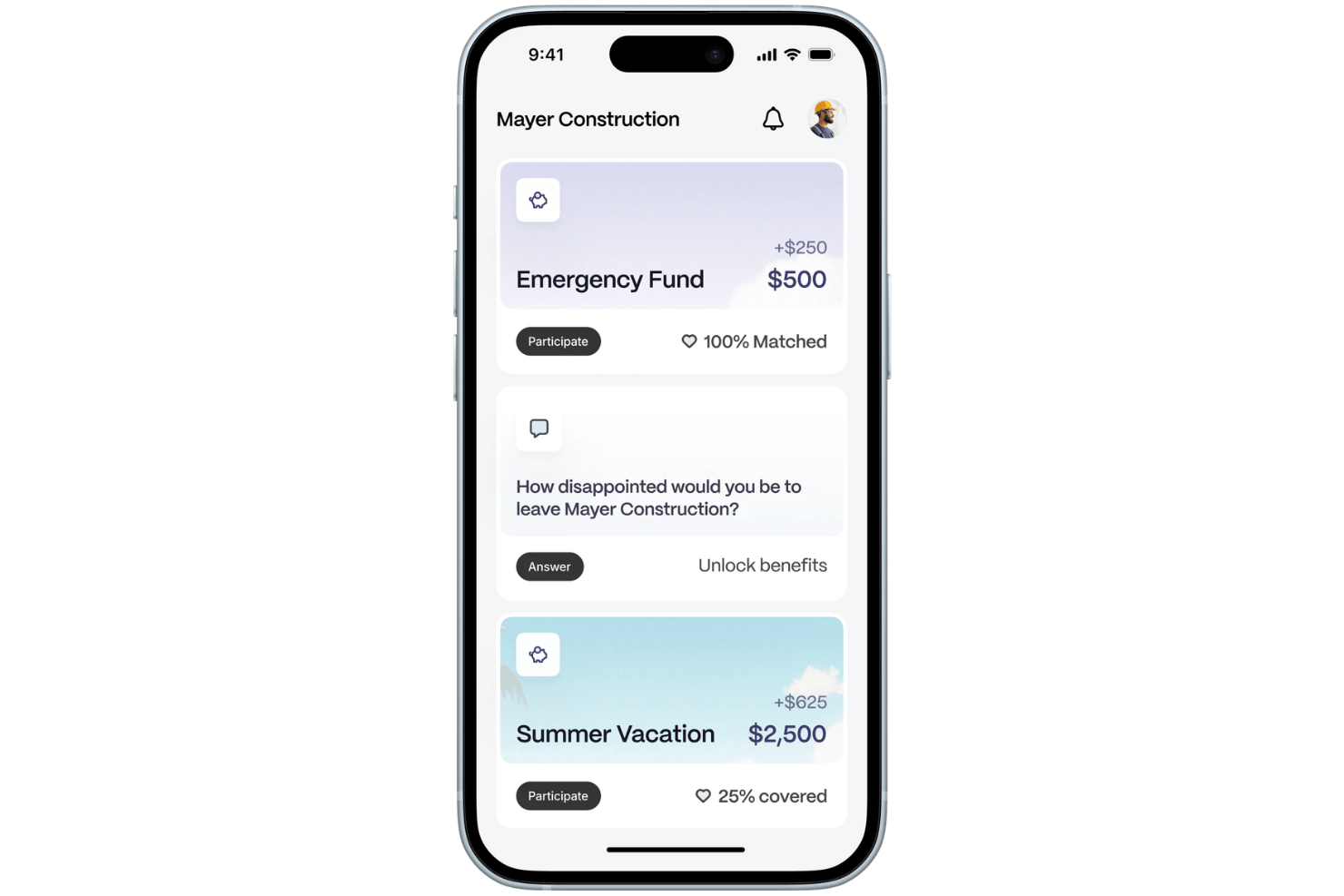
Employees can set savings goals for expenses such as emergency funds, certifications, or major purchases, while employers contribute matching funds. This gives employers a more targeted way to support financial wellness and encourage retention.
Personalized Benefits
Tanda helps employers tailor financial wellness benefits around employee needs instead of relying only on standard one-size-fits-all programs. The goal is to make benefits more relevant and improve engagement and retention.
Retention Tracking and Forecasting
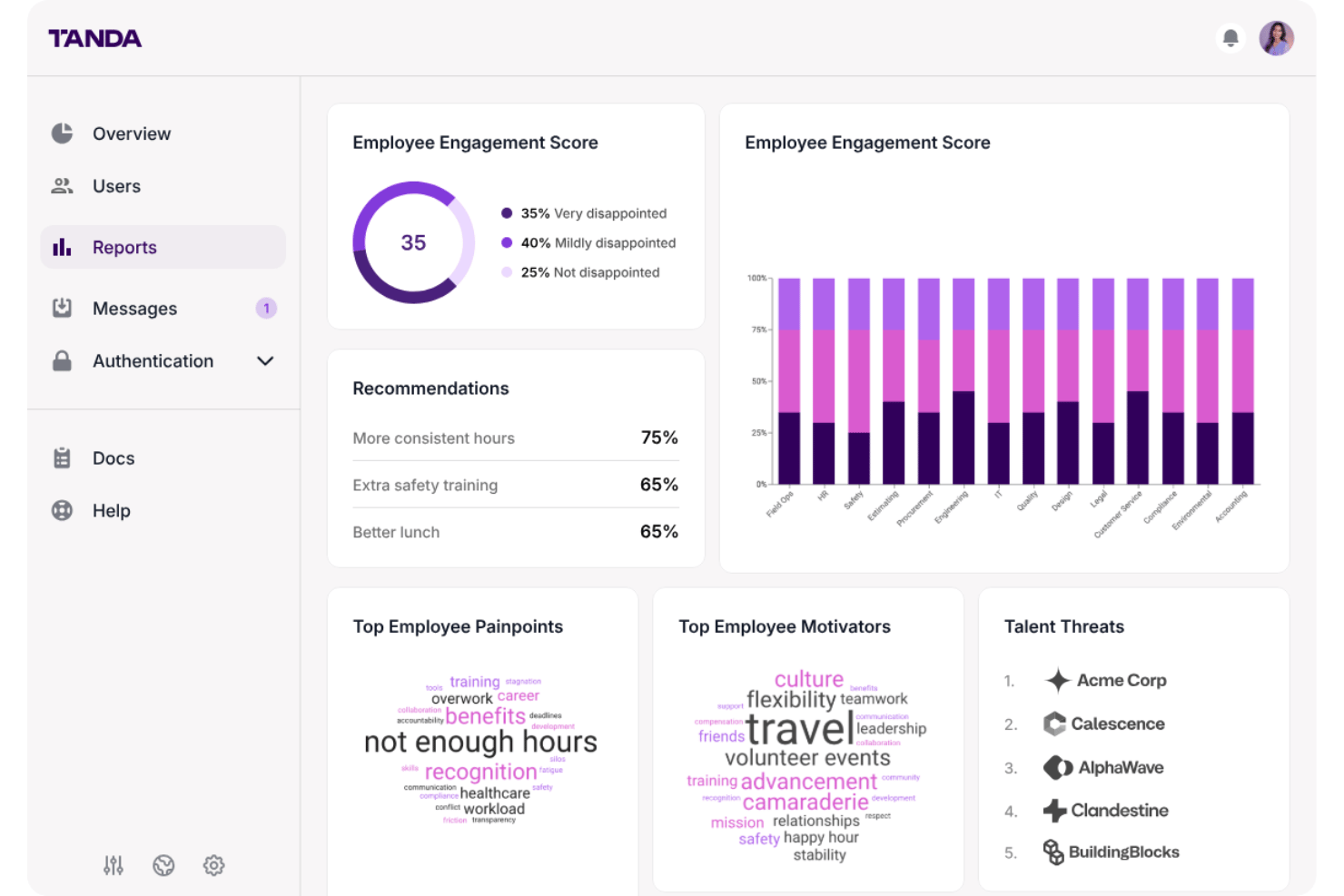
Tanda provides retention insights and forecasting tools to help employers understand workforce trends and identify where turnover risk may be increasing. Enterprise features also include custom ROI and impact reporting.
Employee Engagement Tools
Tanda supports engagement through features such as surveys, peer recognition, and incentives designed to keep employees more connected to their teams and employers.
Compensation Insights
Employers can use Tanda’s data and analytics to assess how compensation and benefits are being deployed and where adjustments may have a greater impact on retention and satisfaction.
Financial Wellness Tools
Tanda gives employees tools to work toward financial goals while helping employers address financial stress, which the company positions as a major contributor to employee turnover.
Ease of Use
Tanda’s ease of use comes from its focused employee experience rather than a broad set of workforce administration tools. Employees can access savings goals, matched benefits, financial wellness features, and engagement tools through a relatively narrow product experience. I think that focused scope should make Tanda easier to approach than a full workforce management suite, although organizations that need payroll, scheduling, time tracking, or compliance tools will still need separate systems.
Integrations
Tanda’s publicly documented integrations are focused on the financial services that support its employee savings and financial wellness features, including Plaid and Dwolla. The company does not publicly document a broader payroll, accounting, or automation integration ecosystem on its current website.
Tanda Specs
- 2-Factor Authentication
- 360 Degree Feedback
- API
- Application Tracking
- Attendance Tracking
- Batch Permissions & Access
- Budgeting
- Calendar Management
- Dashboard
- Data Export
- Data Import
- Data Visualization
- Employee Database
- Employee Engagement
- Employee Incentive Management
- Employee Onboarding
- Expense Tracking
- External Integrations
- Feedback Management
- Forecasting
- Multi-User
- Notifications
- Onboarding
- Payroll
- Project Management
- Scheduling
- Time Management
- Timesheets
- Travel Management
- Vacation & Absence Calendar