

I 10 migliori software per la gestione della forza lavoro nel settore alberghiero nel 2026

Il miglior software per la gestione della forza lavoro nel settore dell'ospitalità: selezione


Il software per la gestione della forza lavoro nel settore dell'ospitalità ti aiuta a gestire la pianificazione dei turni, le presenze, le buste paga e la comunicazione nelle intense attività di hotel, ristoranti ed eventi. Se stai cercando strumenti in grado di stare al passo con i turni, le esigenze e i requisiti di conformità in continua evoluzione del tuo team, sei nel posto giusto.
Scegliere il sistema giusto per la gestione della forza lavoro può significare meno difficoltà nella pianificazione dei turni, team più soddisfatti e più tempo da dedicare all'esperienza degli ospiti. In questa guida troverai consigli mirati, così potrai scegliere una soluzione per la gestione della forza lavoro che risponda davvero alle esigenze dei team del settore dell'ospitalità nel 2026.
Perché fidarsi delle nostre recensioni sui software
Il nostro team testa e recensisce software dal 2012. In quanto esperti HR noi stessi, sappiamo quanto sia difficile — e importante — scegliere il software giusto.
Per questa guida, abbiamo valutato gli strumenti attraverso test pratici e ricerche indipendenti, assegnando un punteggio agli strumenti in base ai nostri criteri di selezione. Ci basiamo inoltre sulle competenze di leader di pensiero del settore e di professionisti HR attivi.
Le nostre recensioni riflettono il nostro giudizio editoriale umano, non un discorso di vendita.
Revisori esperti:
Tabella di confronto: software per la gestione della forza lavoro nel settore dell'ospitalità
Questa tabella di confronto riassume i dettagli sui prezzi dei migliori software per la gestione della forza lavoro nel settore dell’ospitalità che ho selezionato:
| Tool | Best For | Trial Info | Price | ||
|---|---|---|---|---|---|
| 1 | Ideale come soluzione di IA per le aziende | Prova gratuita di 14 giorni | A partire da $8/utente/mese | Website | |
| 2 | Ideale per il controllo dei costi della forza lavoro open source | Prova gratuita di 30 giorni | A partire da $50/mese | Website | |
| 3 | Ideale per sostituzioni flessibili dei turni | Prova gratuita di 14 giorni | A partire da $5/utente/mese | Website | |
| 4 | Ideale per gli strumenti di comunicazione per il personale retribuito a ore | Prova gratuita di 30 giorni | Da $2.99 per utente al mese | Website | |
| 5 | Ideale per l'analisi della forza lavoro aziendale | Demo gratuita disponibile | Prezzi su richiesta | Website | |
| 6 | Ideale per l'automazione della pianificazione basata sull'IA | Demo gratuita disponibile | Prezzi su richiesta | Website | |
| 7 | Ideale per il coordinamento tra più sedi | Versione di prova gratuita + piano gratuito disponibili | A partire da $1.70/utente/mese (con fatturazione annuale) | Website | |
| 8 | Ideale per ottimizzare i costi del personale | Demo gratuita disponibile | Prezzi su richiesta | Website | |
| 9 | Ideale per le previsioni in tempo reale del fabbisogno di personale | Demo gratuita disponibile | Prezzi su richiesta | Website | |
| 10 | Ideale per ottenere informazioni utili dai dati operativi | Dimostrazione gratuita disponibile | Prezzi su richiesta | Website |
Recensioni dei migliori software per la gestione della forza lavoro nel settore dell'ospitalità
Di seguito trovi i miei riepiloghi dettagliati dei migliori software per la gestione della forza lavoro nel settore dell’ospitalità presenti nella mia selezione. Le mie recensioni offrono una panoramica dettagliata delle funzionalità, dei casi d’uso più adatti e delle integrazioni di ciascuna piattaforma, per aiutarti a trovare quella migliore per te.

Ideale come soluzione di IA per le aziende
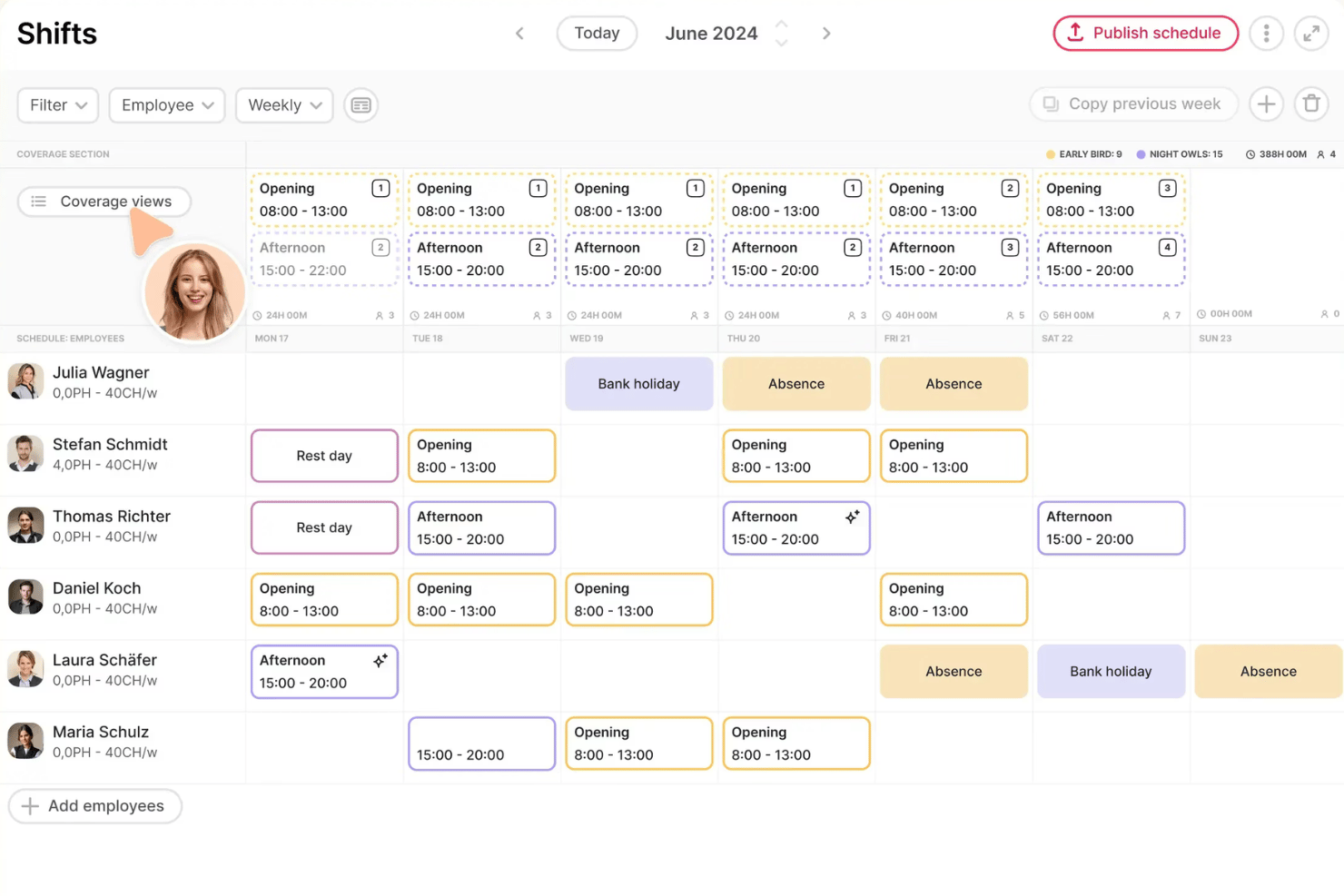
Factorial è una piattaforma di gestione delle risorse umane e della forza lavoro basata sull'IA, che include la pianificazione dei turni, il monitoraggio delle ore, la gestione delle presenze e i servizi autonomi per i dipendenti, pensati per i team del settore alberghiero e della ristorazione che gestiscono personale operativo in più sedi.
Per chi è più indicato Factorial?
Factorial è particolarmente adatto alle PMI europee del settore alberghiero e della ristorazione che desiderano strumenti HR basati sull'IA — per la pianificazione, la reportistica e il supporto sulle politiche aziendali — in un'unica piattaforma.
Perché ho scelto Factorial
Ho incluso Factorial tra le mie migliori scelte perché il suo posizionamento nell'ambito dell'IA per le aziende è davvero rilevante per i team del settore alberghiero e della ristorazione che gestiscono una forza lavoro complessa e soggetta a un elevato ricambio del personale. Apprezzo in particolare il modo in cui la sua IA gestisce la complessità della pianificazione: i responsabili possono duplicare e rigenerare in pochi minuti interi programmi dei turni a partire dalle settimane precedenti, una funzione importante quando si organizzano turni a rotazione in più sedi. L'IA di Factorial risponde inoltre direttamente alle domande dei dipendenti sulle politiche aziendali, riducendo gli scambi avanti e indietro che rallentano le attività HR negli hotel o nei ristoranti molto operativi.
Funzionalità principali di Factorial
- Rilevamento dei conflitti nei turni tra più sedi: Factorial segnala automaticamente i conflitti di pianificazione tra reparti e sedi prima della pubblicazione dei turni.
- Rilevazione delle presenze tramite geolocalizzazione e codice QR: Il personale operativo può registrare l'ingresso utilizzando una posizione verificata tramite GPS o un codice QR scansionabile dal proprio dispositivo mobile.
- Sistema ATS integrato con analisi dei CV tramite IA: Il modulo di reclutamento di Factorial pubblica gli annunci su più portali di lavoro e utilizza l'IA per esaminare e analizzare le candidature ricevute.
- Spazio di lavoro finanziario per il monitoraggio dei costi della forza lavoro: I responsabili possono visualizzare in che modo assunzioni, promozioni e uscite incidono nel tempo sui budget del personale, utilizzando un cruscotto dei costi basato su una sequenza temporale.
Integrazioni di Factorial
Factorial elenca 32 integrazioni con piattaforme per le buste paga, tra cui Sage, DATEV, Silae, a3innuva Nómina, PayCaptain e Zucchetti, oltre a collegamenti con LinkedIn, Slack, Microsoft Power BI, Okta e ZKTeco. Offre un'API aperta e Zapier, ma non sono documentate integrazioni native con sistemi POS o PMS.
Pros and Cons
Pros:
- La pianificazione degli orari assistita dall'IA fa risparmiare tempo ai responsabili
- Risponde direttamente alle domande dei dipendenti sulle politiche aziendali
- Supporta la pianificazione dei turni del personale operativo in più sedi
Cons:
- Nessuna previsione del fabbisogno di personale basata sull'occupazione
- Nessuna gestione integrata delle mance

TimeTrex
Ideale per il controllo dei costi della forza lavoro open source
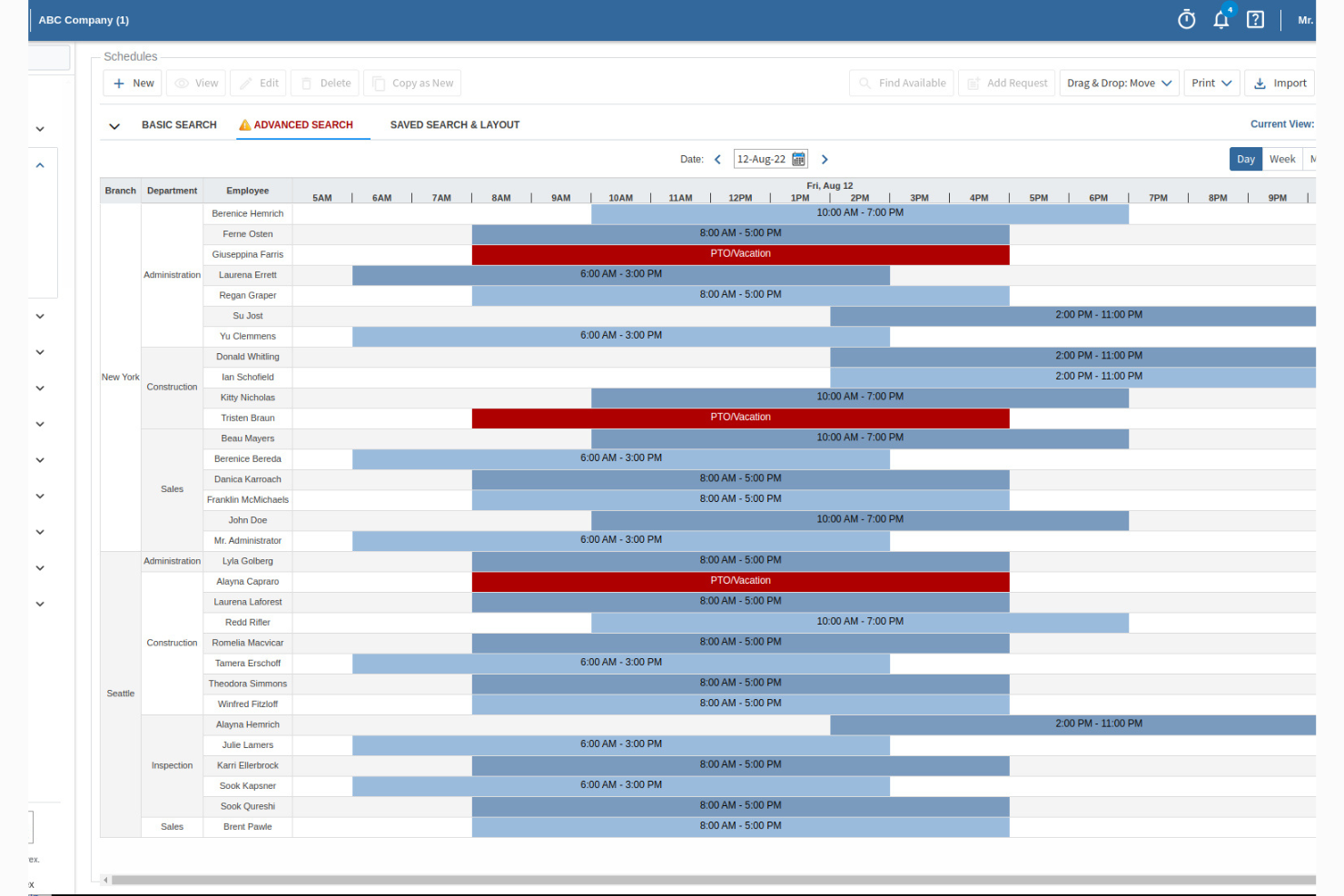
TimeTrex è una piattaforma open source per la gestione della forza lavoro che comprende la pianificazione dei turni, il monitoraggio biometrico e tramite GPS delle ore lavorate, l'elaborazione delle buste paga e la conformità multi-giurisdizionale nei reparti e nelle sedi del settore alberghiero.
Per chi è più adatto TimeTrex?
TimeTrex è una soluzione ideale per gli operatori del settore alberghiero attenti ai costi che desiderano un'opzione open source o autogestita per la gestione della forza lavoro, con elaborazione delle buste paga e monitoraggio biometrico delle ore integrati.
Perché ho scelto TimeTrex
Ho incluso TimeTrex tra le mie scelte principali perché è l'unica opzione open source di questo elenco che offre agli operatori del settore alberghiero il pieno controllo sui costi del personale senza vincolarli a un modello SaaS chiuso e poco trasparente. Apprezzo in particolare i suoi orologi per la rilevazione biometrica delle presenze tramite riconoscimento facciale e il geofencing GPS, che riducono il furto di tempo nelle strutture con più sedi. La timbratura mobile offline è un elemento davvero distintivo per il personale di servizio e di cucina che lavora in ambienti con connettività limitata.
Funzionalità principali di TimeTrex
- Portale self-service per i dipendenti multilingue: I dipendenti possono visualizzare i turni, richiedere permessi e scambiarsi i turni tramite un portale disponibile in spagnolo, francese, tedesco e diverse altre lingue.
- ATS e onboarding digitale: l'Enterprise Edition include un sistema di tracciamento dei candidati con ricerca nei curriculum e pianificazione automatizzata dei colloqui, progettato per i cicli di assunzione ad alto turnover del settore alberghiero.
- Attribuzione dei costi del lavoro per reparto: I responsabili possono assegnare i costi del lavoro a reparti o centri di costo specifici, ottenendo visibilità sulla spesa per reparto nelle attività alberghiere o F&B.
- Applicazione automatizzata delle regole sugli straordinari e sulle pause: La piattaforma applica automaticamente soglie configurabili per gli straordinari e regole sulle pause, mantenendo la copertura dei turni orari in linea con i requisiti della legislazione locale sul lavoro.
Integrazioni di TimeTrex
TimeTrex offre integrazioni native incentrate sui fornitori di servizi paghe e fiscali, tra cui ADP, Intuit QuickBooks, Paychex, Ceridian, Sage e altri. È disponibile un'API RESTful per le integrazioni personalizzate e l'edizione open source on-premise offre accesso completo al codice sorgente per attività di connettività più avanzate.
Pros and Cons
Pros:
- Timbratura mobile offline per sedi con connettività limitata
- Il monitoraggio biometrico delle ore lavorate aiuta a prevenire le timbrature per conto di altri dipendenti
- Supporto multilingue per team del settore alberghiero diversificati
Cons:
- Nessuno strumento nativo per la gestione o la distribuzione delle mance
- App mobile e interfaccia utente datate
New Product Updates from TimeTrex
TimeTrex Adds Quick Punch App With Offline and QR Support
TimeTrex adds a new Quick Punch app, offline punching, QR code scanning, punch images, configurable messages, and punch warnings or lockouts to improve employee clock-ins across browsers and local computers. For more information, visit TimeTrex’s official site.
 .
.
Deputy
Ideale per sostituzioni flessibili dei turni

Deputy è una piattaforma di gestione della forza lavoro per i team del settore alberghiero e della ristorazione che aiuta a gestire la pianificazione dei turni dei dipendenti, le presenze, il monitoraggio delle ore lavorate, la gestione delle pause e la conformità alle normative sul lavoro.
Per chi è più adatto Deputy?
Attività del settore alberghiero e della ristorazione con personale retribuito su base oraria che necessitano di una gestione mobile dei turni e delle presenze in più sedi o reparti.
Perché ho scelto Deputy
Ho scelto Deputy come una delle migliori soluzioni perché mi affido al suo marketplace dei turni disponibili per effettuare sostituzioni immediate, agli avvisi integrati sui conflitti di programmazione e al self-service da dispositivi mobili, che consente al personale di gestire la propria disponibilità senza l'intervento dei responsabili.
Funzionalità principali di Deputy
- Rilevamento delle ore e delle presenze: Raccogli i dati di entrata e uscita tramite geolocalizzazione o riconoscimento facciale.
- Pianificazione delle pause: Programma e registra le pause dei dipendenti per favorire la conformità alle normative.
- Esportazione dei dati per le buste paga: Esporta i dati dei fogli presenze direttamente dal software di pianificazione nei principali sistemi per le buste paga.
- Assegnazione automatica delle attività: Abbina automaticamente il personale ai turni disponibili in base a disponibilità, qualifiche e regole sulla fatica.
Integrazioni di Deputy
Deputy offre integrazioni native con ADP, Gusto, QuickBooks Online, Xero, Square, BambooHR, Paychex, Netsuite, CloudPayroll, MYOB e Zapier. È disponibile un'API per integrazioni personalizzate.
Pros and Cons
Pros:
- L'app mobile consente sostituzioni immediate dei turni
- Gli strumenti di conformità segnalano gli straordinari e le pause
- Pianificazione automatizzata basata sulla domanda prevista
Cons:
- La reportistica avanzata richiede piani di livello superiore
- Occasionali ritardi nella sincronizzazione con le esportazioni per le buste paga

Planday
Ideale per gli strumenti di comunicazione per il personale retribuito a ore
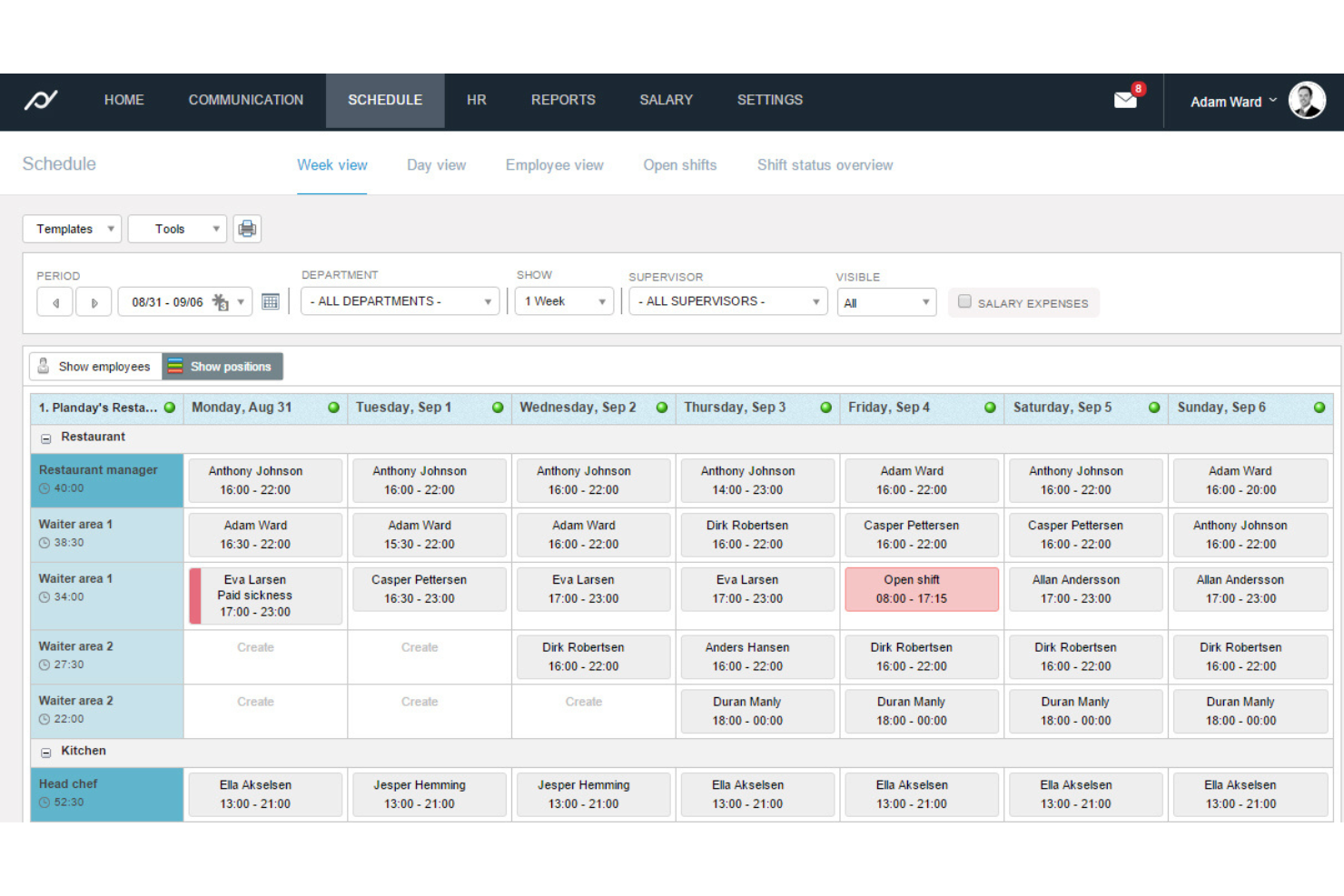
Planday è una piattaforma per la gestione della forza lavoro nel settore dell’ospitalità, con pianificazione dei dipendenti, messaggistica istantanea, scambio dei turni, monitoraggio delle ore e gestione in tempo reale della disponibilità del personale.
Per chi è più adatto Planday?
Team del settore dell’ospitalità organizzati su turni che fanno affidamento su comunicazioni rapide con il personale e su una pianificazione flessibile in hotel, bar o ristoranti.
Perché ho scelto Planday
Ho scelto Planday come una delle soluzioni migliori perché mi affido alla messaggistica e alle notifiche integrate nell’app per comunicare rapidamente aggiornamenti sui turni e annunci al personale del settore dell’ospitalità retribuito a ore. Utilizzo quotidianamente le funzioni di chat di gruppo e messaggistica diretta per mantenere tutti aggiornati.
Funzionalità principali di Planday
- Pianificazione dei dipendenti: Crea, pubblica e gestisci i turni tramite un’interfaccia con funzionalità di trascinamento.
- Rilevazione delle presenze: Il personale può registrare entrata e uscita tramite l’app mobile.
- Gestione delle assenze: Monitora le richieste di permesso e le approvazioni delle ferie per tutte le sedi.
- Comunicazione del team: Invia messaggi diretti o di gruppo nell’app, annuncia gli aggiornamenti dei turni e consenti al personale di richiedere scambi di turno.
Integrazioni di Planday
Planday offre integrazioni native con strumenti per le paghe e le risorse umane come Xero, QuickBooks Payroll, Lightspeed, Tenzo, Flow e Sage, oltre a fornire un’API per integrazioni personalizzate.
Pros and Cons
Pros:
- Scambio e acquisizione dei turni da parte dei dipendenti
- Aggiornamenti in tempo reale per il personale nelle diverse sedi
- Conformità automatizzata alle regole sulle pause e sul lavoro
Cons:
- La personalizzazione dei report è limitata per i team numerosi
- La configurazione dell’integrazione con le paghe è complessa

UKG Pro
Ideale per l'analisi della forza lavoro aziendale

UKG Pro è una piattaforma aziendale per la gestione della forza lavoro nel settore dell'ospitalità che centralizza pianificazione, presenze, buste paga, risorse umane, rilevamento delle ore e analisi in un unico sistema.
Per chi è più adatto UKG Pro?
Grandi aziende del settore dell'ospitalità con strutture del lavoro complesse e la necessità di analisi avanzate della forza lavoro in più sedi.
Perché ho scelto UKG Pro
Ho scelto UKG Pro come una delle migliori soluzioni perché posso approfondire le analisi dettagliate del lavoro e visualizzare i KPI della forza lavoro in tempo reale per le mie strutture ricettive. Mi affido alle sue previsioni, ai cruscotti di conformità e alle informazioni accessibili da dispositivi mobili per prendere decisioni operative a livello aziendale.
Funzionalità principali di UKG Pro
- Pianificazione automatizzata: Crea e modifica i turni utilizzando modelli personalizzati per il settore dell'ospitalità.
- Soluzioni per il rilevamento delle ore: Acquisisci le timbrature dei dipendenti tramite dispositivi biometrici e mobili.
- Supporto per più sedi: Gestisci il lavoro, la conformità e i dati in numerose strutture del settore dell'ospitalità.
- Analisi avanzate della forza lavoro: Monitora i KPI in tempo reale, controlla i costi del lavoro e genera report sulla conformità in tutte le operazioni aziendali.
Integrazioni di UKG Pro
UKG Pro offre oltre 80 integrazioni native, tra cui l'ecosistema Microsoft, 15Five, Decusoft, Intuit Turbo Tax, Workstream, Accurate Background e altro. È disponibile un'API per integrazioni personalizzate.
Pros and Cons
Pros:
- Le previsioni del fabbisogno di personale si adattano ai periodi di alta stagione dell'ospitalità
- Monitoraggio avanzato della conformità alle normative su salari e orario di lavoro
- Supporta la gestione dei contratti sindacali e della pianificazione
Cons:
- La creazione di report personalizzati presenta una curva di apprendimento ripida
- Occasionali ritardi nelle risposte del servizio clienti

Legion
Ideale per l'automazione della pianificazione basata sull'IA
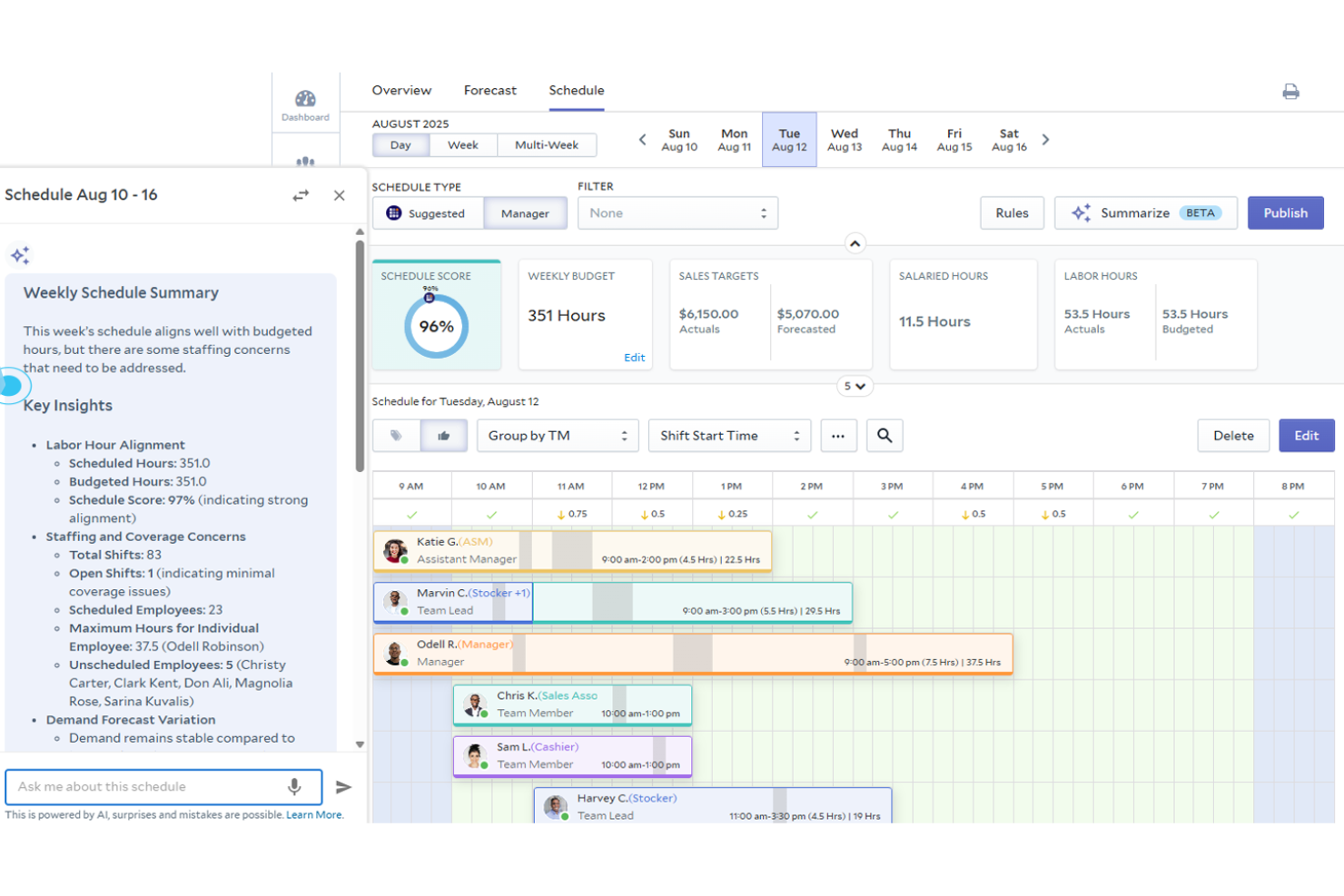
Legion è una piattaforma per la gestione della forza lavoro per le aziende del settore dell'ospitalità, che offre l'automazione della pianificazione basata sull'IA, l'ottimizzazione del lavoro, strumenti self-service per i dipendenti, la previsione della domanda e il monitoraggio delle ore.
Per chi è più indicato Legion?
Operatori del settore dell'ospitalità e responsabili della forza lavoro presso ristoranti o hotel con più sedi che desiderano automatizzare la pianificazione dei turni e ottimizzare i costi del lavoro.
Perché ho scelto Legion
Ho scelto Legion perché mi affido alla sua automazione della pianificazione basata sull'IA per creare turni ottimizzati in termini di lavoro, che si adattano alla domanda in tempo reale. Utilizzo la sua previsione della domanda per allineare il personale al flusso previsto di ospiti e l'app self-service per i dipendenti per gestire gli scambi di turno.
Funzionalità principali di Legion
- Monitoraggio automatizzato della conformità: Monitora automaticamente la conformità alle leggi sul lavoro e alle pause per ogni turno.
- Timbratura mobile: Consente ai dipendenti di timbrare entrata e uscita utilizzando dispositivi mobili, riducendo la necessità di hardware fisico.
- Assegnazione dei turni tramite candidatura: Permette al personale di manifestare il proprio interesse per i turni disponibili direttamente nell'app.
- Previsione della domanda: Utilizza l'apprendimento automatico per prevedere il fabbisogno di personale sulla base dei dati storici sulle vendite, del flusso di ospiti e delle condizioni meteorologiche.
Integrazioni di Legion
Legion offre integrazioni native con ADP, SAP SuccessFactors e Workday, oltre a un'API per integrazioni personalizzate.
Pros and Cons
Pros:
- La pianificazione automatica basata sull'IA riduce il lavoro manuale
- Avvisi di conformità in tempo reale per le leggi sul lavoro nel settore dell'ospitalità
- App mobile per i dipendenti per la gestione dei turni
Cons:
- La fase di implementazione è alquanto disorganizzata
- Le funzionalità di reportistica potrebbero essere più efficienti

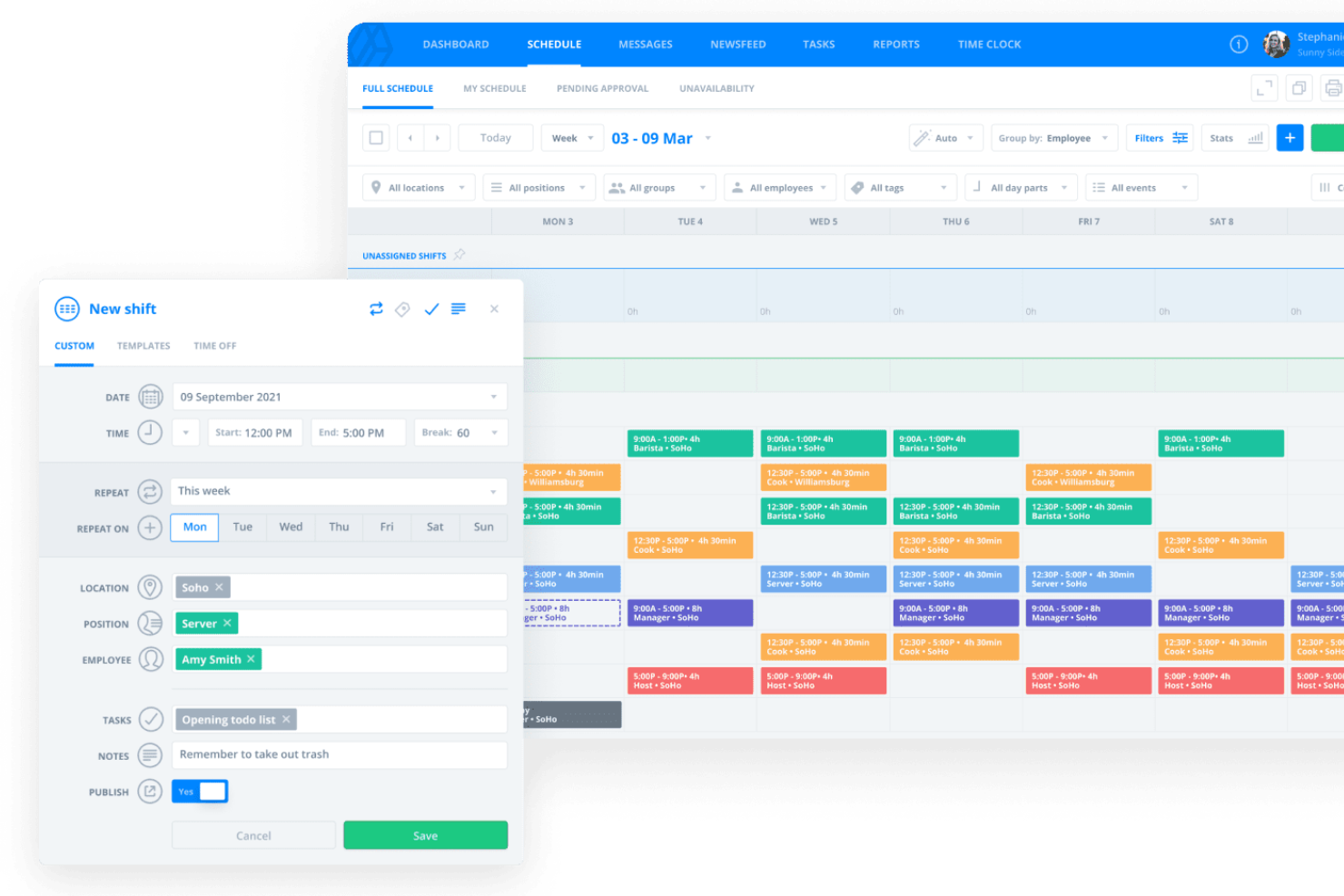
Sling è una piattaforma di gestione della forza lavoro per i team del settore dell'ospitalità che combina la pianificazione dei turni, la messaggistica del team, il rilevatore delle presenze, l'assegnazione delle attività e il controllo dei costi del lavoro in un unico sistema integrato.
Per chi è più adatto Sling?
Manager del settore dell'ospitalità che devono coordinare il personale e la pianificazione dei turni in più locali o sedi di ristorazione.
Perché ho scelto Sling
Ho scelto Sling come una delle soluzioni migliori perché mi affido al suo pannello di controllo multi-sede per pianificare, comunicare e gestire il personale in tutte le mie sedi del settore dell'ospitalità contemporaneamente. Utilizzo i suoi filtri per sede e l'assegnazione massiva dei turni per distribuire rapidamente i team dove sono più necessari.
Funzionalità principali di Sling
- Rilevatore delle presenze: Registra le ore lavorate dai dipendenti tramite accessi da dispositivi mobili o chioschi.
- Stima dei costi del lavoro: Monitora i costi del lavoro stimati direttamente insieme alla pianificazione.
- Scambio dei turni: Consente ai dipendenti di scambiarsi i turni approvati all'interno dell'app.
- Gestione delle attività: Assegna mansioni specifiche ai dipendenti o ai turni e monitora lo stato di completamento in tempo reale.
Integrazioni di Sling
Sling offre integrazioni native con Gusto, Square, Harbortouch, Toast e POSitouch e mette a disposizione un'API per le integrazioni personalizzate.
Pros and Cons
Pros:
- Diffonde gli annunci a tutte le sedi del settore dell'ospitalità
- Consente al personale di scambiarsi i turni e candidarsi ai turni disponibili
- Gestisce la conformità alle norme statali sulle pause
Cons:
- L'app mobile presenta ritardi nella sincronizzazione
- Personalizzazione limitata dei report per le attività più grandi

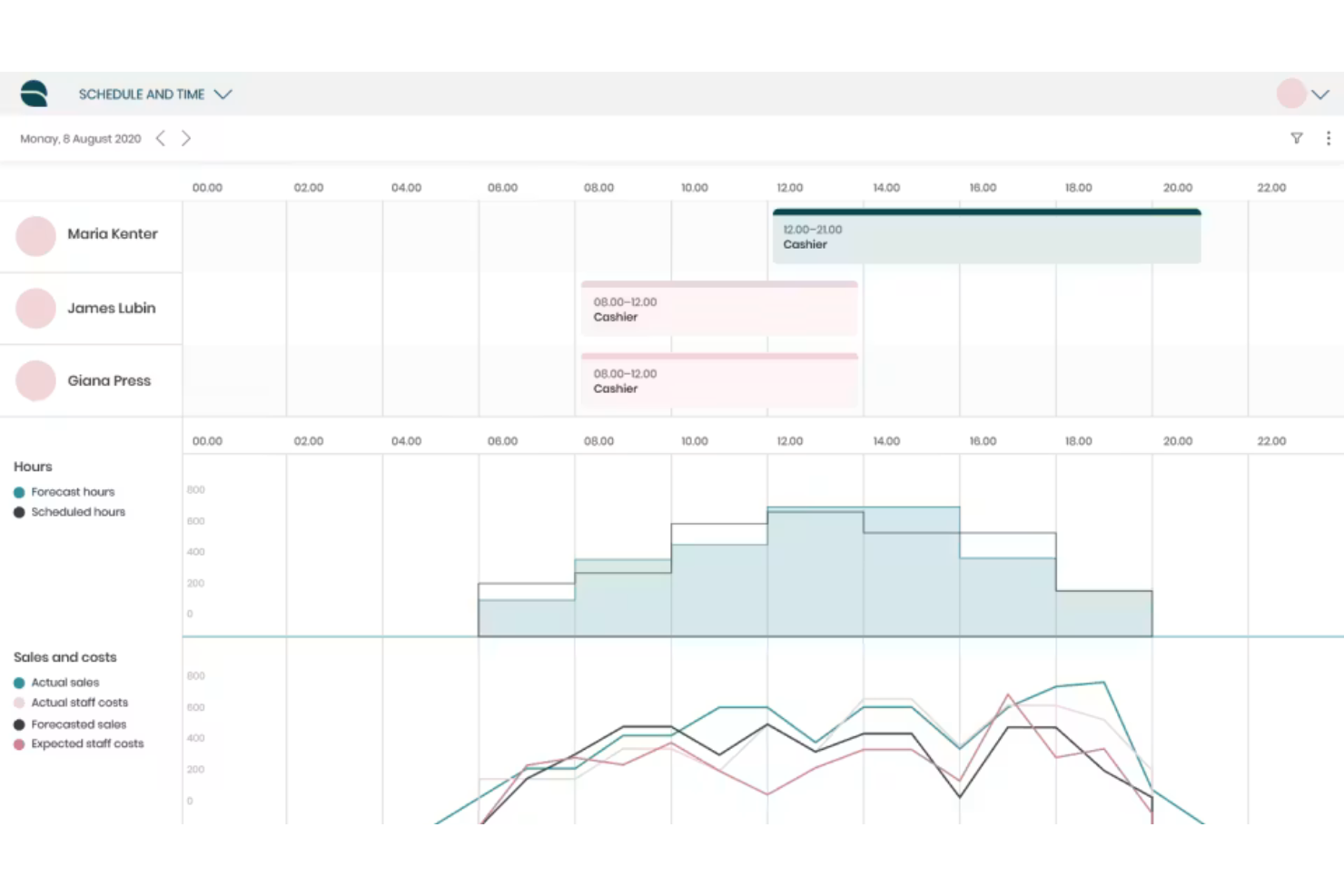
Quinyx è una piattaforma per la gestione della forza lavoro destinata alle aziende del settore alberghiero e della ristorazione, che offre pianificazione dei turni, registrazione delle ore, previsione della domanda, gestione mobile dei turni e controllo dei costi del personale.
Per chi è più adatto Quinyx?
Quinyx è particolarmente adatto alle aziende del settore alberghiero e della ristorazione che gestiscono team numerosi e distribuiti e hanno bisogno di controllare i costi del personale e ottimizzare la pianificazione della forza lavoro.
Perché ho scelto Quinyx
Ho scelto Quinyx perché utilizzo il suo motore di previsione della domanda e le funzionalità di ottimizzazione del personale per gestire le variazioni nel numero di ospiti. I suoi controlli di budget e il monitoraggio dei costi in tempo reale mi aiutano a mantenere il livello di personale in linea con i nostri obiettivi finanziari.
Funzionalità principali di Quinyx
- App mobile per i dipendenti: Consente al personale del settore alberghiero e della ristorazione di visualizzare i turni, scambiarli e richiedere permessi utilizzando il proprio smartphone.
- Regole di pianificazione automatizzate: Applica le normative sul lavoro specifiche dell'azienda o della regione all'assegnazione dei turni.
- Monitoraggio delle presenze in tempo reale: Tiene traccia in tempo reale degli ingressi e delle assenze dei dipendenti per i responsabili.
- Previsione della domanda: Utilizza l'intelligenza artificiale per prevedere il fabbisogno di personale sulla base delle vendite storiche, delle previsioni di vendita e delle variabili esterne.
Integrazioni di Quinyx
Quinyx offre integrazioni native con SAP SuccessFactors, Deloitte, ADP, Sage, EY, Paylocity e Paychex, oltre a fornire un'API per integrazioni personalizzate.
Pros and Cons
Pros:
- Le previsioni basate sull'intelligenza artificiale si adattano immediatamente alle variazioni della domanda
- Avvisi di conformità in tempo reale sulle leggi sul lavoro nel settore alberghiero e della ristorazione
- L'app mobile consente di modificare i turni ovunque ci si trovi
Cons:
- Il sistema di gestione delle ferie funziona in modo incoerente
- Le opzioni di reportistica offrono una flessibilità di personalizzazione limitata

Unifocus
Ideale per le previsioni in tempo reale del fabbisogno di personale
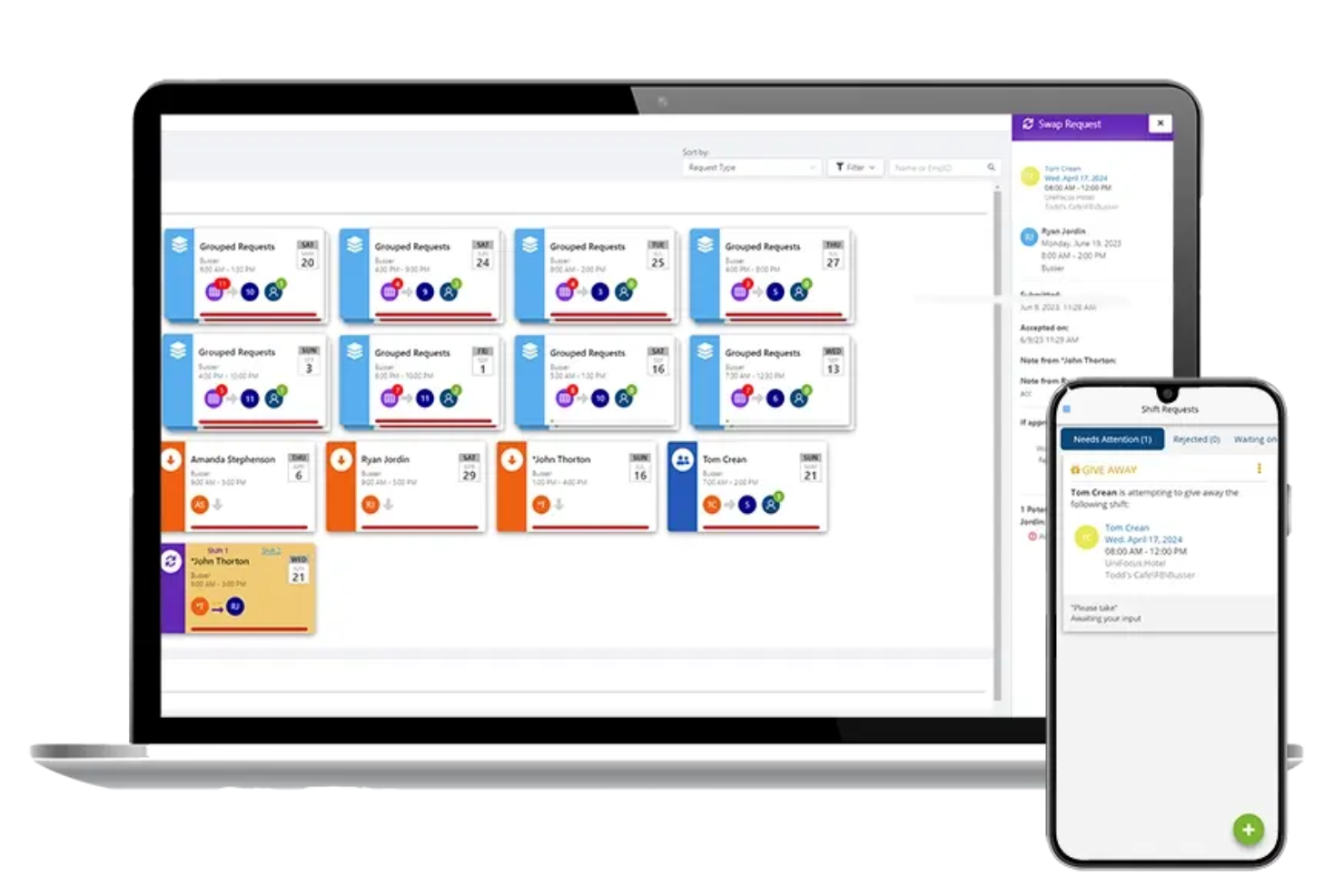
Unifocus è una soluzione per la gestione della forza lavoro nel settore alberghiero che riunisce pianificazione dei turni, gestione del personale, monitoraggio delle presenze, definizione del budget e analisi in una piattaforma centralizzata.
Per chi è più adatto Unifocus?
Operatori alberghieri e responsabili del settore dell'ospitalità che necessitano di una gestione dinamica del personale e della pianificazione dei turni in più sedi o strutture.
Perché ho scelto Unifocus
Ho scelto Unifocus perché posso modificare rapidamente i turni e visualizzare le previsioni aggiornate del fabbisogno di personale mentre il numero degli ospiti cambia in tempo reale. Mi affido alla sua pianificazione automatizzata basata sulla domanda e all'app mobile per responsabili quando devo organizzare il personale per eventi o in caso di variazioni dell'occupazione.
Caratteristiche principali di Unifocus
- Generatore di standard del lavoro basato sull'IA: Crea automaticamente parametri di riferimento per il personale in base al tipo di struttura alberghiera e alle regole aziendali.
- Portale mobile self-service per i dipendenti: Consente al personale a contatto con i clienti di visualizzare i turni, scambiarsi i turni e richiedere permessi.
- Rilevatore delle presenze con geolocalizzazione: Garantisce che i dipendenti possano timbrare l'entrata e l'uscita solo dalle sedi di lavoro designate.
- Gestione e previsione del fabbisogno di personale in tempo reale: Modifica dinamicamente le previsioni dei turni in base ai dati aggiornati sull'occupazione dell'hotel e alle variazioni del numero di ospiti.
Integrazioni di Unifocus
Unifocus offre integrazioni native con ADP, Workday, Paylocity, HotelKey, Infor, Oracle, Ceridian, Iris, Houdini e altri, oltre a fornire un'API per integrazioni personalizzate.
Pros and Cons
Pros:
- Le previsioni del fabbisogno di personale si adattano ai picchi della domanda nel settore dell'ospitalità
- Conformità automatizzata alle normative su salari e orari di lavoro
- Gestisce i contratti collettivi e le regole della contrattazione collettiva
Cons:
- Occasionalmente si verificano ritardi nelle risposte del servizio clienti
- L'interfaccia utente sembra piuttosto datata


Actabl è un software per la gestione della forza lavoro nel settore dell'ospitalità che combina la pianificazione del lavoro, la gestione delle presenze, l'elaborazione dei dati sulle buste paga e la reportistica operativa con analisi aziendali approfondite.
Per chi è più adatto Actabl?
Actabl è una scelta eccellente per gli operatori del settore dell'ospitalità che desiderano analizzare in profondità le tendenze della forza lavoro e ottimizzare il personale in più sedi di hotel o resort.
Perché ho scelto Actabl
Ho scelto Actabl perché utilizzo i suoi cruscotti sul lavoro e la reportistica KPI personalizzata per trasformare i dati sul personale e sulle prestazioni a livello di struttura in piani d'azione concreti. Le sue metriche in tempo reale e i suoi strumenti analitici avanzati lo rendono la mia soluzione di riferimento per ottenere informazioni utili dai dati operativi.
Funzionalità principali di Actabl
- Modulo di gestione delle attività: Assegna le responsabilità quotidiane al personale tramite liste di controllo monitorabili.
- Motore di pianificazione automatizzata: Crea i turni utilizzando gli standard di lavoro e i dati reali sull'occupazione.
- Cruscotto mobile per i responsabili: Approva le richieste di ferie, visualizza le presenze e comunica da qualsiasi luogo.
- Analisi dei costi del lavoro: Monitora la spesa per il lavoro in tempo reale rispetto alle metriche delle prestazioni dell'hotel e ai budget delle strutture.
Integrazioni di Actabl
Actabl offre integrazioni native con ADP, Oracle, Ceridian, HotelKey, Infor, UKG, Paychex, Salesforce, SAP, Sage e altri. Actabl fornisce inoltre un'API per integrazioni personalizzate.
Pros and Cons
Pros:
- Le previsioni sul lavoro si adattano ai modelli degli eventi speciali
- Cruscotti KPI personalizzati progettati per il settore dell'ospitalità
- Pianificazione mobile e approvazioni per i responsabili
Cons:
- L'interfaccia dell'app mobile non è abbastanza veloce
- Il processo di inserimento può essere lungo
Altri software per la gestione della forza lavoro nel settore dell'ospitalità
Ecco alcune opzioni aggiuntive di software per la gestione della forza lavoro nel settore dell’ospitalità che non sono entrate nella mia selezione, ma che vale comunque la pena esaminare:
- Fourth (HotSchedules)
Ideale per una rapida pianificazione del personale di ristorazione
- Harri
Ideale per la gestione del ciclo di vita dei talenti
- When I Work
Ideale per la pianificazione dei turni su dispositivi mobili
- Connecteam
Ideale per la gestione delle attività senza scrivania
- M3
Ideale per la rendicontazione finanziaria alberghiera


Come Valuto i Software di Workforce Management per l’Ospitalità
Scompongo la mia valutazione in requisiti fondamentali per l’ospitalità—come la previsione del fabbisogno di personale basata sull’occupazione e il tracciamento delle mance—e fattori che differenziano i migliori concorrenti dagli altri.
Funzionalità di Base (Requisiti Minimi per Questa Lista)
Quando seleziono gli strumenti da includere nella mia lista, li valuto su una scala da 0 (non offre la funzionalità) a 5 (eccelle in quest’area) per ciascuna delle funzionalità di base elencate sotto. Poi calcolo il punteggio totale dello strumento come percentuale. Ogni strumento deve raggiungere un punteggio totale minimo del 65% per essere considerato per l’inclusione.
- Pianificazione dei Turni: Cerco la pianificazione basata su ruolo e reparto che consideri le specificità dell’ospitalità come i turni spezzati, le postazioni rotanti e la formazione incrociata tra reception e F&B.
- Rilevazione Presenze e Orari: Ogni strumento dovrebbe gestire la timbratura ingresso/uscita dei lavoratori orari con supporto per mance, calcolo degli straordinari e opzioni geolocalizzate o biometriche.
- Previsione del Fabbisogno di Personale: Valuto se la piattaforma può legare le previsioni delle presenze a tassi di occupazione, volumi di prenotazione o coperti, invece di affidarsi a budget statici per la forza lavoro.
- Strumenti per la Conformità del Lavoro: Lo strumento deve applicare le regole sui riposi, soglie per gli straordinari e regolamenti su turni e orari, così che i manager di locali affollati non debbano controllare manualmente i periodi di pausa.
- App Self-Service per i Dipendenti: Verifico la presenza di un’app mobile in cui il personale possa visualizzare i turni, scambiarsi i turni, indicare disponibilità e richiedere ferie senza dover chiamare il responsabile durante il servizio.
- Integrazione con Payroll e POS: I migliori strumenti si collegano a piattaforme POS per l’ospitalità come Toast o Micros e ai principali provider di gestione paghe, così i dati del personale fluiscono senza bisogno di reinserimenti manuali.
Una volta identificati gli strumenti che soddisfano questi criteri, considero cosa distingue ciascuna piattaforma.
Fattori Differenzianti (Cosa Distingue i Fornitori)
Ecco come confronto e metto a confronto i diversi fornitori:
Funzionalità Distintive
La gestione delle mance è una grande discriminante—cerco strumenti che automatizzano la raccolta e la distribuzione delle mance, così i manager F&B non devono più riconciliare fogli di calcolo dopo ogni turno. La gestione multi-proprietà è importante per gruppi alberghieri o catene di ristoranti che hanno bisogno di spostare personale tra sedi diverse. Valuto inoltre le analisi sui costi del lavoro, in particolare se una piattaforma può confrontare la spesa per il personale con le vendite per ora lavorata o con il RevPAR in tempo reale. In contesti ad alto turnover, il tracciamento candidati e l’onboarding integrati possono far risparmiare molte ore ai team HR durante i picchi di assunzioni stagionali.
Oltre le Funzionalità
Le integrazioni specifiche per l’ospitalità sono tra le prime cose che verifico—uno strumento che si collega nativamente a piattaforme PMS e POS evita ai responsabili di dover importare i dati del personale dopo ogni turno. Valuto anche l’esperienza mobile, dato che camerieri e addetti alle camere difficilmente lavorano da una scrivania. La funzionalità offline e il supporto multilingue sono fondamentali con una forza lavoro eterogenea e diffusa in aree a connettività limitata come cucine o seminterrati. La scalabilità è un altro fattore chiave, specie se la piattaforma gestisce aumenti stagionali di personale senza costringere ad aggiornamenti o perdite di performance nei periodi di punta delle prenotazioni.
Come scegliere un software per la gestione della forza lavoro nel settore dell'ospitalità
È facile perdersi in lunghi elenchi di funzionalità e strutture tariffarie complesse. Per aiutarti a rimanere concentrato mentre affronti il tuo esclusivo processo di selezione del software, ecco un elenco dei fattori da tenere a mente:
| Fattore | Cosa considerare |
|---|---|
| Scalabilità | Il software sarà in grado di supportare la tua crescita se aggiungi altre strutture o membri del team? Informati sui limiti degli utenti e sul supporto per più strutture. |
| Integrazioni | Lo strumento si collega al tuo sistema paghe, al sistema informativo delle risorse umane e al sistema di gestione della struttura? Verifica la fluidità dello scambio di dati con i sistemi esistenti più importanti. |
| Possibilità di personalizzazione | Le regole di pianificazione dei turni, i ruoli e i flussi di lavoro possono adattarsi agli standard specifici del tuo marchio o ai tipi di struttura? Evita strumenti rigidi e uguali per tutti. |
| Facilità d'uso | L'interfaccia è intuitiva per i responsabili e per il personale retribuito su base oraria? Sperimentala con un gruppo eterogeneo per individuare ostacoli nascosti nei flussi di lavoro o possibili confusioni. |
| Implementazione e inserimento | Quanto tempo occorrerà per essere operativi? Informati sui servizi di configurazione, sulla migrazione dei dati e sulle risorse formative offerte nelle prime fasi. |
| Costo | Qual è il costo totale, incluse le licenze utente, l'assistenza e i moduli aggiuntivi? Richiedi un preventivo completo e calcola il canone mensile previsto. |
| Misure di sicurezza | Il sistema soddisfa i requisiti della tua azienda in materia di privacy dei dati e controllo degli accessi? Informati sugli standard SOC2, GDPR o specifici del settore. |
| Disponibilità dell'assistenza | L'assistenza in tempo reale è disponibile di notte e nei fine settimana, quando il personale del settore dell'ospitalità lavora maggiormente? Assicurati di poter ricevere aiuto quando è più probabile che ne avrai bisogno. |
Che cos'è un software per la gestione della forza lavoro nel settore dell'ospitalità?
Il software per la gestione della forza lavoro nel settore dell'ospitalità comprende strumenti digitali che aiutano hotel, ristoranti e aziende simili a pianificare i turni del personale, monitorare le ore lavorate e le presenze e gestire le attività lavorative quotidiane.
Queste piattaforme sono progettate per gestire i modelli di turnazione unici, le esigenze di conformità e le richieste stagionali presenti nel settore dell'ospitalità.
Funzionalità
Ecco le funzionalità principali che qualsiasi ottimo software di gestione della forza lavoro per il settore dell'ospitalità dovrebbe offrire:
- Pianificazione dei turni: Crea, assegna e modifica i turni di lavoro dei dipendenti in base alle esigenze della struttura, alla domanda stagionale o ai cambiamenti dell'ultimo minuto, per garantire una copertura ottimale.
- Monitoraggio delle ore e delle presenze: Monitora in tempo reale entrate, uscite, straordinari, pause e assenze per mantenere registri accurati e garantire la conformità delle paghe.
- Accesso da dispositivi mobili: Consenti a responsabili e dipendenti di visualizzare gli orari, scambiarsi i turni o richiedere permessi direttamente dai loro smartphone, supportando una forza lavoro dinamica e sempre in movimento.
- Budget del personale: Imposta, monitora e ricevi avvisi sugli obiettivi relativi ai costi del personale per reparto, sede o giorno, così da gestire le spese in linea con il tasso di occupazione o i ricavi previsti.
- Gestione della conformità: Automatizza i periodi di riposo obbligatori, le regole sugli straordinari e i requisiti delle normative locali sul lavoro per ridurre il rischio di violazioni e semplificare gli audit.
- Self-service per i dipendenti: Permetti al personale di aggiornare la propria disponibilità, richiedere permessi e visualizzare i turni imminenti, migliorando il coinvolgimento e riducendo il carico amministrativo.
- Reportistica in tempo reale: Accedi a dashboard e report esportabili con metriche sui costi del personale, sull'efficienza del personale e sul rispetto degli orari per ottenere informazioni e prendere decisioni in tempo reale.
- Autorizzazioni basate sui ruoli: Assegna diversi livelli di accesso a responsabili, supervisori e dipendenti, assicurandoti che le informazioni sensibili siano disponibili solo agli utenti autorizzati.
- Notifiche e avvisi: Configura messaggi automatici per i nuovi orari, i turni imminenti, gli avvisi sugli straordinari o le modifiche ai turni, così da mantenere tutti informati.
- Supporto per più sedi: Gestisci orari, presenze e policy in diverse strutture o reparti da un unico sistema centralizzato.
Vantaggi
L'implementazione di un software di gestione della forza lavoro per il settore dell'ospitalità offre diversi vantaggi al tuo team e alla tua azienda. Ecco alcuni dei benefici che puoi aspettarti:
- Maggiore accuratezza nella gestione del personale: Gli strumenti intelligenti di pianificazione e previsione aiutano ad adeguare il livello del personale alla domanda degli ospiti, riducendo sia la carenza sia l'eccesso di personale.
- Controllo dei costi del personale: Il budgeting e la reportistica in tempo reale supportano il monitoraggio proattivo degli straordinari e delle spese per il personale rispetto al budget.
- Conformità semplificata: Il monitoraggio automatizzato delle normative sul lavoro, degli straordinari e dei requisiti di riposo riduce il rischio di violazioni durante gli audit.
- Maggiore soddisfazione dei dipendenti: Le funzionalità self-service per lo scambio dei turni, le richieste di permesso e l'accesso agli orari offrono al personale maggiore controllo e flessibilità nella vita lavorativa.
- Gestione più rapida degli orari: I responsabili possono creare, condividere e modificare rapidamente gli orari utilizzando strumenti di trascinamento e rilascio e avvisi istantanei, anche in più sedi.
- Visione centralizzata della forza lavoro: Dashboard e analisi raccolgono tutti i dati sul personale e sul lavoro in un unico luogo, facilitando l'individuazione delle tendenze e la pianificazione.
- Comunicazione migliorata: Le notifiche automatiche e l'accesso tramite app mobile mantengono responsabili e membri del team aggiornati sulle modifiche agli orari o sugli aggiornamenti importanti.
Costi e prezzi
La scelta di un software di gestione della forza lavoro per il settore dell'ospitalità richiede la comprensione dei diversi modelli e piani tariffari disponibili. I costi variano in base alle funzionalità, alle dimensioni del team, ai componenti aggiuntivi e ad altri fattori. La tabella seguente riassume i piani più comuni, i relativi prezzi medi e le funzionalità tipicamente incluse nelle soluzioni software di gestione della forza lavoro per il settore dell'ospitalità:
Tabella comparativa dei piani per il software di gestione della forza lavoro nel settore dell'ospitalità
| Tipo di piano | Prezzo medio | Funzionalità comuni |
|---|---|---|
| Piano gratuito | $0 | Pianificazione di base dei turni, monitoraggio limitato delle ore, semplici strumenti self-service per i dipendenti e assistenza via e-mail. |
| Piano personale | $5-$10/utente/mese | Pianificazione avanzata, accesso all'app mobile, gestione della disponibilità del personale, reportistica di base e assistenza tramite chat o ticket. |
| Piano aziendale | $10-$25/utente/mese | Gestione di più sedi, budgeting del personale, reportistica in tempo reale, strumenti di conformità, integrazioni con i sistemi paghe e avvisi personalizzabili. |
| Piano aziendale avanzato | $25-$50/utente/mese | Flussi di lavoro personalizzati, gestione dedicata dell'account, controlli di sicurezza avanzati, accesso API, onboarding su misura e assistenza prioritaria. |
Domande frequenti
Ecco alcune risposte alle domande comuni sul software di gestione della forza lavoro per il settore dell’ospitalità:
In che modo il software di gestione della forza lavoro aiuta a gestire i cambiamenti stagionali del personale?
Il software di gestione della forza lavoro consente di creare turni flessibili e di adeguare rapidamente il personale in base alla domanda stagionale. Questo aiuta a gestire i periodi di maggiore affluenza, a tenere sotto controllo i costi e a garantire la disponibilità di personale sufficiente quando il flusso degli ospiti aumenta o diminuisce.
Il software di gestione della forza lavoro per il settore dell'ospitalità può monitorare la conformità dei dipendenti alle leggi sul lavoro?
Sì, la maggior parte delle piattaforme può monitorare automaticamente gli straordinari, i periodi di riposo e i requisiti relativi all’età. Questo è importante nel settore dell’ospitalità a causa della varietà dei modelli di turnazione e delle rigide normative salariali, e rende molto più semplice il monitoraggio della conformità per i team delle risorse umane e delle attività operative.
Il software di gestione della forza lavoro è adatto agli hotel con più sedi?
Sì, questi strumenti spesso includono il supporto per più sedi. È possibile gestire turni, presenze ed esigenze di personale in diverse strutture da un’unica dashboard, semplificando la gestione per i gruppi alberghieri e i franchising.
Quali tipi di integrazioni dovrei cercare in un software di gestione della forza lavoro per il settore dell'ospitalità?
Cerca integrazioni con sistemi paghe, sistemi informativi per le risorse umane (HRIS), sistemi di gestione delle strutture ricettive (PMS), orologi marcatempo e strumenti di comunicazione. Le integrazioni fluide riducono l’inserimento manuale dei dati e migliorano l’efficienza complessiva.
In che modo il personale accede solitamente ai propri turni su queste piattaforme?
La maggior parte delle soluzioni offre app per dispositivi mobili per i dipendenti o portali web. Il personale può visualizzare i turni, richiedere permessi e scambiare i turni dai propri dispositivi, riducendo il lavoro amministrativo e migliorando la comunicazione.