

I 10 migliori software di gestione dei talenti con IA valutati nel 2026


Il software di gestione dei talenti basato sull'IA aiuta le organizzazioni a identificare, sviluppare e fidelizzare i migliori talenti automatizzando processi come il recruiting, il monitoraggio delle prestazioni e lo sviluppo professionale. Senza di esso, i team delle risorse umane fanno fatica ad allineare la crescita dei dipendenti agli obiettivi aziendali, con conseguenti inefficienze e un maggiore ricambio del personale.
Ho testato diverse piattaforme di gestione dei talenti basate sull'IA per vedere come gestiscono l'analisi predittiva, la mappatura delle competenze e la pianificazione della successione. Gli strumenti migliori vanno oltre la semplice raccolta dei dati e offrono informazioni utili che migliorano la pianificazione della forza lavoro e il coinvolgimento dei dipendenti.
Ecco le mie scelte migliori tra i software di gestione dei talenti basati sull'IA. Ciascuno è stato esaminato e testato attentamente in termini di usabilità, capacità di integrazione e grado di efficacia nel supportare le decisioni strategiche delle risorse umane attraverso l'automazione e l'intelligenza basata sui dati.
Perché fidarsi delle nostre recensioni sui software
Il nostro team testa e recensisce software dal 2012. In quanto esperti HR noi stessi, sappiamo quanto sia difficile — e importante — scegliere il software giusto.
Per questa guida, abbiamo valutato gli strumenti attraverso test pratici e ricerche indipendenti, assegnando un punteggio agli strumenti in base ai nostri criteri di selezione. Ci basiamo inoltre sulle competenze di leader di pensiero del settore e di professionisti HR attivi.
Le nostre recensioni riflettono il nostro giudizio editoriale umano, non un discorso di vendita.
Revisori esperti:
Tabella comparativa dei software di gestione dei talenti basati sull'IA
Questa tabella comparativa riassume i dettagli dei prezzi dei miei migliori software di gestione dei talenti basati sull’IA:
| Tool | Best For | Trial Info | Price | ||
|---|---|---|---|---|---|
| 1 | Ideale per approfondimenti contestuali sui talenti | Demo gratuita disponibile | Da $599/dipendente EOR/mese | Website | |
| 2 | Ideale per la gamification automatizzata finalizzata alla crescita | Demo gratuita disponibile | A partire da $2/utente/mese (fatturazione annuale) | Website | |
| 3 | Ideale per la mappatura predittiva del potenziale di leadership | Demo gratuita disponibile | Prezzo su richiesta | Website | |
| 4 | Ideale per il recruitment marketing | Demo gratuita disponibile | Prezzo su richiesta | Website | |
| 5 | Ideale per l'abbinamento dei talenti guidato dall'IA | Demo gratuita disponibile | Prezzo su richiesta | Website | |
| 6 | Ideale per la gestione globale della forza lavoro | Versione di prova gratuita di 30 giorni disponibile | Prezzo su richiesta | Website | |
| 7 | Ideale per una suite HR completa | Demo gratuita disponibile | Prezzo su richiesta | Website | |
| 8 | Ideale per lo sviluppo della leadership | Consulenza gratuita disponibile | Prezzi su richiesta | Website | |
| 9 | Ideale per medie e grandi imprese | Prova gratuita di 30 giorni | Prezzo su richiesta | Website | |
| 10 | Ideale per le valutazioni delle prestazioni | Demo gratuita disponibile | A partire da $4/dipendente/mese | Website |
Recensioni dei migliori software di gestione dei talenti basati sull'IA
Di seguito sono riportati i miei riepiloghi dettagliati dei migliori software di gestione dei talenti basati sull’IA inclusi nella mia selezione. Le mie recensioni offrono un’analisi approfondita delle caratteristiche principali, dei pro e dei contro, delle integrazioni e dei casi d’uso ideali di ogni strumento, per aiutarti a trovare quello più adatto a te.
Ideale per approfondimenti contestuali sui talenti

Deel è una soluzione dinamica per le aziende che desiderano sfruttare l'IA nella gestione dei talenti. È pensata per le società con team globali, offrendo strumenti essenziali per la conformità, il payroll e lo sviluppo delle risorse. Grazie all'integrazione dell'IA, Deel semplifica la gestione di una forza lavoro diversificata, garantendo la conformità e migliorando le funzioni HR.
Perché ho scelto Deel
Ho scelto Deel perché il suo assistente IA si comporta come un consulente dei talenti integrato che analizza i dati della forza lavoro e le normative sull'occupazione a livello globale per guidare le tue decisioni. Ottieni funzionalità come approfondimenti contestuali che riassumono ciò che vedi sullo schermo, evidenziano le informazioni chiave sul personale e presentano considerazioni sulla conformità in tempo reale. Apprezzo anche che Deel AI possa rispondere a domande dettagliate su ruoli, politiche o compensi, attingendo a dati creati da esperti in oltre 150 paesi.
Funzionalità principali di Deel
Oltre alle sue caratteristiche basate sull'IA, Deel offre:
- Gestione globale delle retribuzioni: La piattaforma supporta l'elaborazione degli stipendi in oltre 150 valute, garantendo pagamenti puntuali e accurati ai team internazionali.
- Onboarding dei collaboratori: Deel mette a disposizione flussi di onboarding personalizzabili, semplificando il processo di assunzione e assicurando la conformità alle normative locali.
- Strumenti di engagement dei talenti: La piattaforma include strumenti per il coinvolgimento dei dipendenti, come sondaggi di feedback e valutazioni delle performance, migliorando la cultura aziendale.
- Servizi Employer of Record (EOR): Deel consente alle aziende di assumere dipendenti in paesi in cui non hanno una propria entità locale, semplificando l'espansione internazionale.
Integrazioni di Deel
Le integrazioni includono QuickBooks, Xero, BambooHR, Greenhouse, Workday, Namely, Gusto, Slack, Rippling e Lever.
Pros and Cons
Pros:
- L'IA risponde a domande su talenti e forza lavoro utilizzando dati forniti da esperti
- Porta alla luce insight e riepiloghi organizzativi direttamente dai dati del tuo team
- Fornisce orientamenti su oltre 150 contesti occupazionali nazionali
Cons:
- Elevata dipendenza dal Knowledge Hub proprietario per l'accuratezza
- Le indicazioni IA potrebbero necessitare una revisione umana per scenari legali complessi
Ideale per la gamification automatizzata finalizzata alla crescita
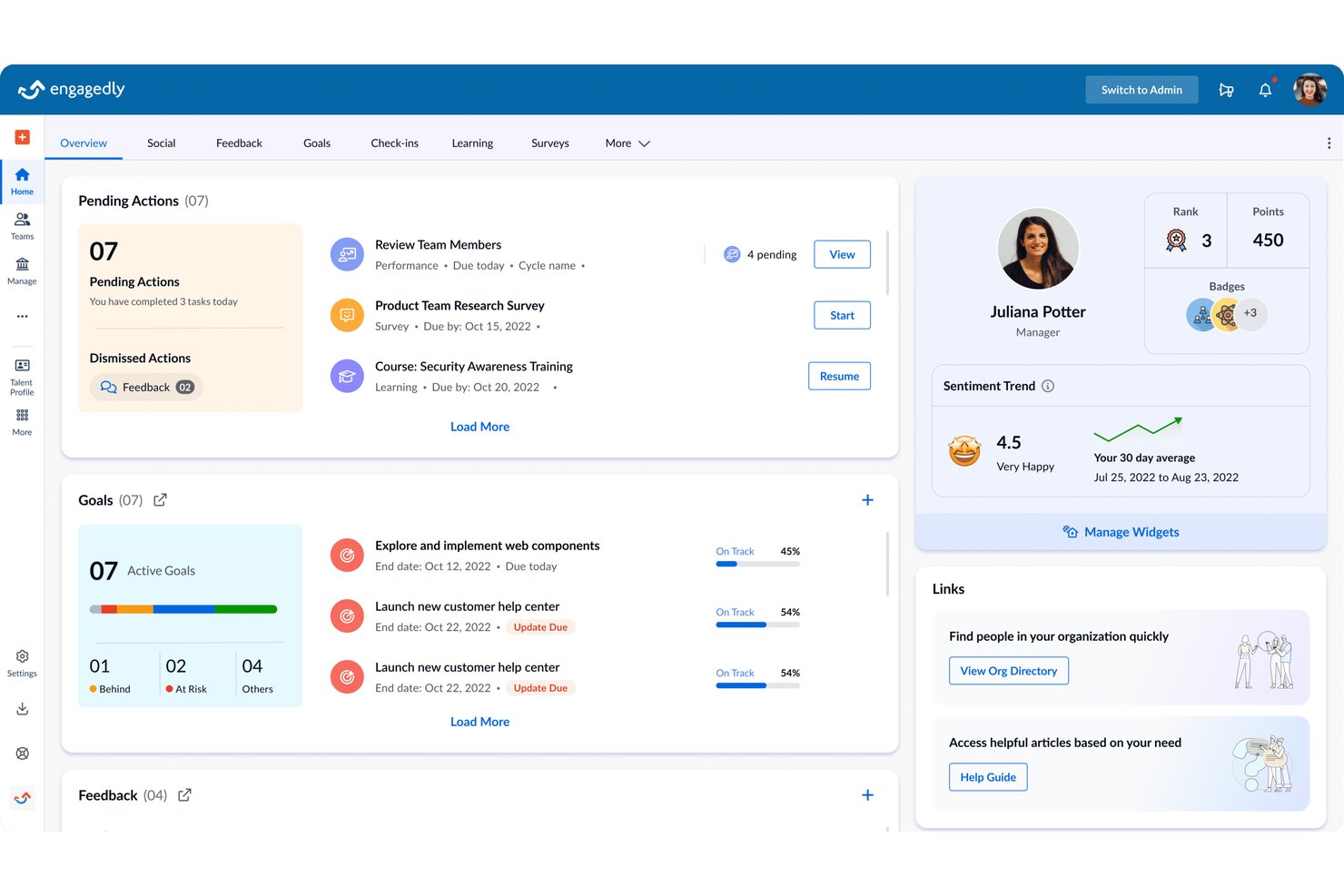
Engagedly è una piattaforma di gestione dei talenti basata sull'IA che unifica la gestione delle performance, l'apprendimento, il coinvolgimento dei dipendenti, il riconoscimento e la mobilità di carriera in un'unica suite, alimentata dal suo strato agentico Marissa™ AI.
Per chi è ideale Engagedly?
Engagedly è particolarmente adatto alle organizzazioni di medie dimensioni che desiderano una piattaforma unica per gestire performance, apprendimento e coinvolgimento senza dover integrare più strumenti separati.
Perché ho scelto Engagedly
Engagedly si guadagna un posto nella mia lista perché il suo strato di gamification si estende su riconoscimento, apprendimento e onboarding, e non solo su una singola funzionalità della piattaforma. Apprezzo in particolare il sistema di punti e classifiche nella suite Riconoscere & Premiare, dove i dipendenti riscattano punti legati a comportamenti che hanno un vero impatto sul business. I percorsi di apprendimento gamificati, uniti alle raccomandazioni personalizzate sui corsi fornite da Marissa AI, rendono la formazione delle competenze meno onerosa e molto più motivante.
Funzionalità principali di Engagedly
- Agente Marissa AI: Marissa AI fornisce analisi e raccomandazioni automatiche sui talenti basate su dati dei dipendenti in tempo reale.
- Feedback a 360 gradi: Raccogli feedback anonimi da colleghi, manager e riporti diretti attraverso un sistema personalizzabile e multivalutatore.
- Cicli di valutazione delle performance: Configura modelli ricorrenti e ad hoc di valutazione delle performance adattati a ogni dipartimento o ruolo.
- Strumenti di analisi dei gap di competenze: Mappa i livelli di competenza dei dipendenti e identifica le lacune nei team per promuovere una formazione mirata e la pianificazione della successione.
Integrazioni di Engagedly
Engagedly offre oltre 30 integrazioni native, tra cui BambooHR, Gusto, Namely, Okta, Microsoft Teams, Microsoft Outlook, Gmail, Google Sheets, Jira e LinkedIn Learning. È disponibile anche un'API per integrazioni personalizzate.
Pros and Cons
Pros:
- IA integrata per insight continui sui talenti
- Interfaccia disponibile in 17 lingue
- Cicli di valutazione personalizzabili per più dipartimenti
Cons:
- Le opzioni di reportistica possono risultare limitanti
- Le analisi delle performance richiedono una configurazione aggiuntiva

Ideale per la mappatura predittiva del potenziale di leadership
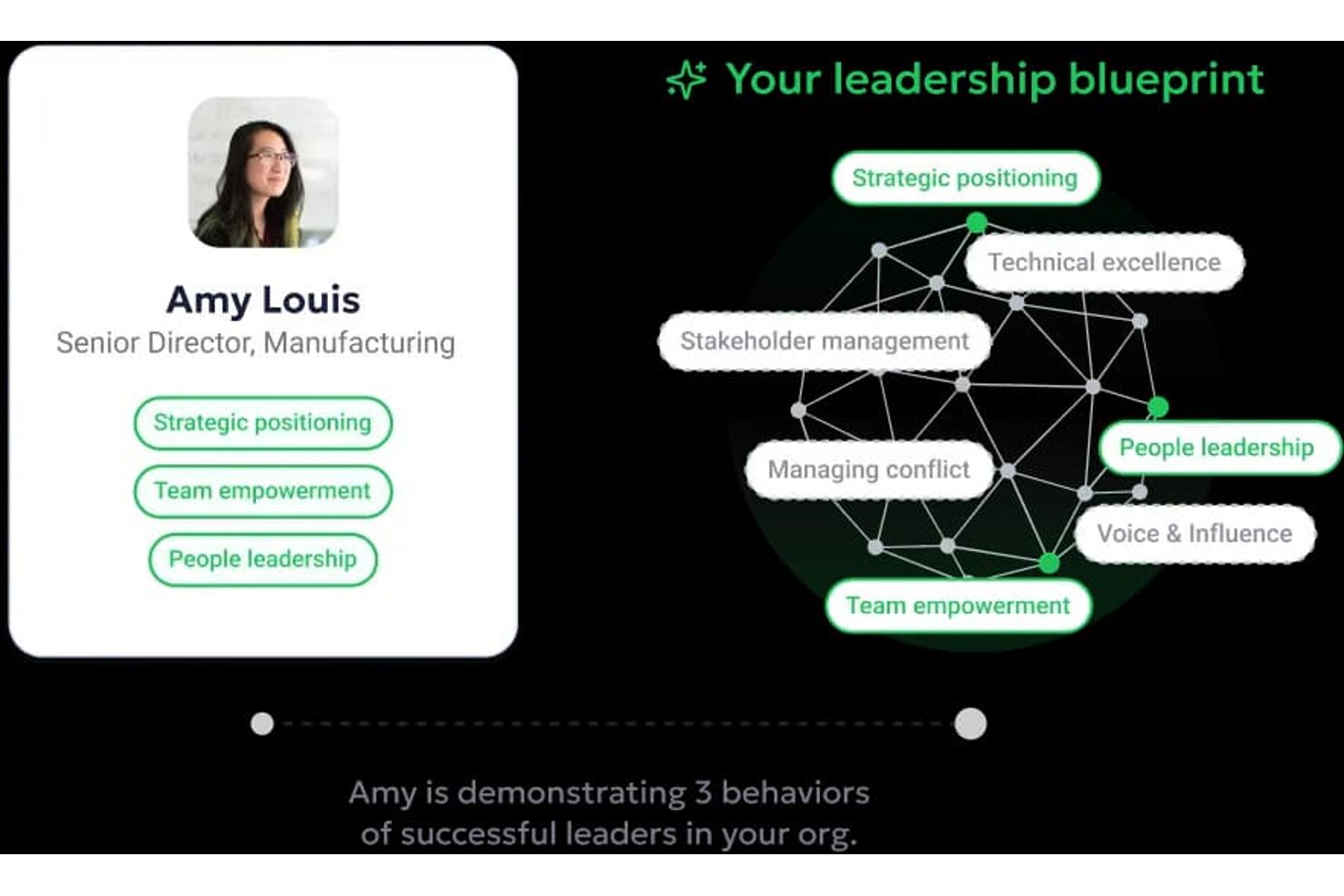
Workhuman Future Leaders è un modulo di intelligenza per la leadership basato sull'IA che analizza i dati di riconoscimento tra pari per identificare i talenti emergenti, mappare il potenziale di leadership e supportare le decisioni di successione e promozione.
Per chi è ideale Workhuman Future Leaders?
È particolarmente adatto per i team HR e talenti di grandi aziende che già gestiscono un programma strutturato di riconoscimento dei dipendenti e desiderano formalizzare la pianificazione della successione.
Perché ho scelto Workhuman Future Leaders
Workhuman Future Leaders merita un posto nella mia shortlist per il suo approccio unico alla previsione delle doti di leadership. Ascend AI costruisce un modello personalizzato di leadership a partire dai dati di riconoscimento della propria organizzazione, anziché affidarsi a modelli di competenze generici. Mi piace che possa individuare leader di livello VP fino a quattro anni prima che ottengano la posizione, garantendo così un reale anticipo nella pianificazione della successione. L'IA fornisce inoltre prove a sostegno di ogni raccomandazione, così non si tratta solo di fidarsi 'alla cieca' di un algoritmo.
Funzionalità principali di Workhuman Future Leaders
- Modello linguistico Human Intelligence™: Analizza i dati di riconoscimento sociale per offrire approfondimenti concreti su talento e cultura aziendale.
- Raccomandazioni AI consapevoli dei bias: Fornisce suggerimenti trasparenti e basati sui dati per le decisioni relative ai talenti, affrontando la DEI tramite il suo modulo di NLP dedicato.
- Integrazione con Workday e Microsoft Teams: Sincronizza dati e attività tra le piattaforme HCM e collaborative più diffuse per ampliare la visibilità sui talenti.
- API aperta per workflow personalizzati: Consente alle organizzazioni di collegare Workhuman Future Leaders ai sistemi interni e personalizzare gli scambi di dati.
Integrazioni di Workhuman Future Leaders
Workhuman Future Leaders offre integrazioni native con Workday, Microsoft Teams, Outlook, Slack, Yammer e altri ancora. È disponibile un'API aperta per integrazioni personalizzate.
Pros and Cons
Pros:
- Predice leader ad alto potenziale usando segnali di riconoscimento
- Le raccomandazioni di leadership basate su evidenze sono trasparenti
- Monitora la successione di leadership in tempo reale
Cons:
- Non adatto a organizzazioni prive di dati di riconoscimento
- Richiede il coinvolgimento dei manager per generare approfondimenti
iCIMS
Ideale per il recruitment marketing
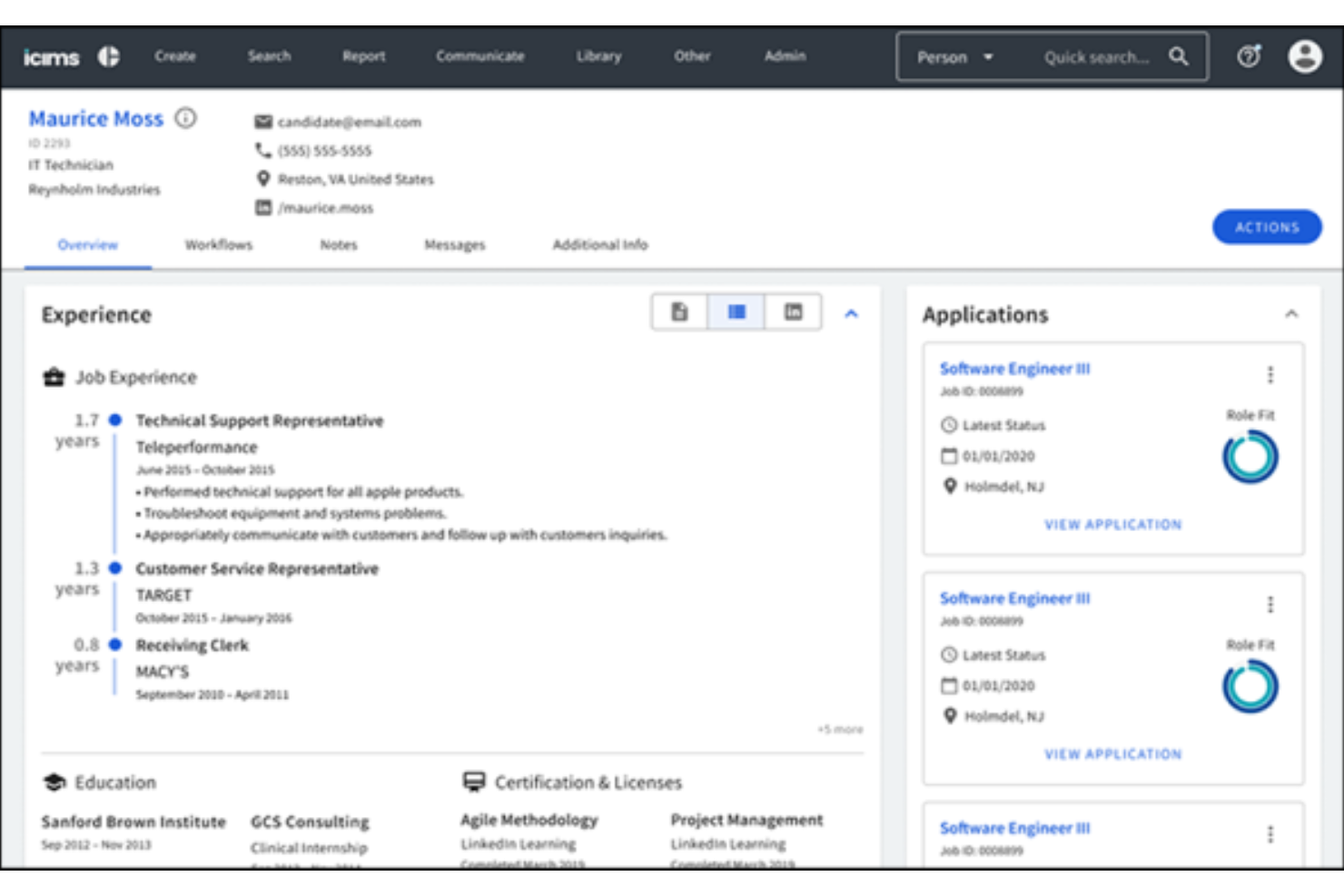
iCIMS Talent Cloud è una piattaforma di reclutamento progettata per le aziende che desiderano migliorare le proprie strategie di acquisizione dei talenti. Offre strumenti per il recruitment marketing, il tracciamento dei candidati e l'onboarding, sfruttando l'IA per ottimizzare i processi di assunzione e il coinvolgimento dei candidati.
Perché ho scelto iCIMS Talent Cloud: La sua forza nel recruitment marketing lo distingue per le organizzazioni che vogliono potenziare le proprie attività di attrazione dei talenti. Gli strumenti di coinvolgimento dei candidati basati sull'IA ti aiutano a connetterti efficacemente con i potenziali assunti. Le analisi della piattaforma offrono informazioni sulle campagne di reclutamento, consentendo al tuo team di perfezionare le strategie. Il solido sistema di tracciamento dei candidati di iCIMS supporta flussi di lavoro di assunzione efficienti.
Caratteristiche principali e integrazioni
Le funzioni includono siti di carriera personalizzati, pubblicazione automatica degli annunci di lavoro e gestione delle relazioni con i candidati. Queste funzionalità aiutano il tuo team ad attrarre e coinvolgere i migliori talenti, rafforzando le tue attività di recruitment marketing.
Le integrazioni includono LinkedIn, Indeed, Glassdoor, SAP SuccessFactors, Workday, ADP, Microsoft Office 365, Slack, Google Workspace e Salesforce.
Pros and Cons
Pros:
- Forti capacità di recruitment marketing
- Strumenti di coinvolgimento dei candidati basati sull'IA
- Sistema di tracciamento dei candidati completo
Cons:
- Potrebbe richiedere una formazione approfondita
- Personalizzazione limitata per le piccole imprese
Ideale per l'abbinamento dei talenti guidato dall'IA
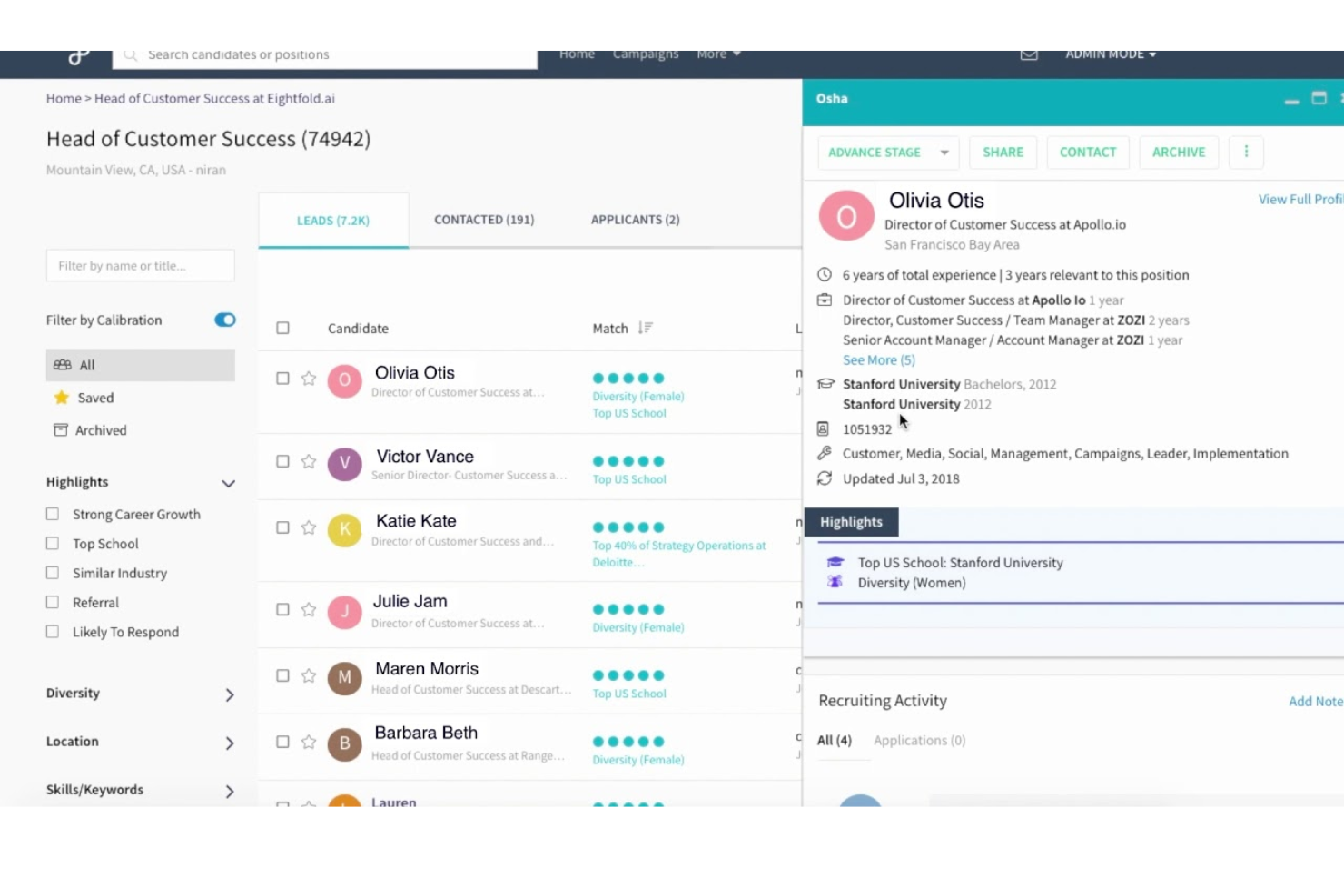
Eightfold AI è una piattaforma di talent intelligence guidata dall'intelligenza artificiale, progettata per le aziende che desiderano migliorare la gestione della forza lavoro. Aiuta nell'acquisizione dei talenti, nella gestione e nell'allocazione delle risorse, offrendo insight potenziati dall'IA per decisioni migliori.
Perché ho scelto Eightfold AI: La piattaforma si distingue per le sue capacità di abbinamento dei talenti basate sull'IA. Utilizza un vasto database globale di dati sui talenti per offrire soluzioni di acquisizione dei talenti precise. Le funzionalità di Eightfold AI includono un Intervistatore IA che seleziona i candidati, permettendo al tuo team di concentrarsi sulle decisioni finali di assunzione. Questo la rende ideale per le organizzazioni che cercano di ottimizzare i loro processi di assunzione con tecnologie IA avanzate.
Funzionalità e integrazioni principali
Le funzionalità includono acquisizione dei talenti guidata dall'IA, percorsi di crescita professionale personalizzati e gestione delle risorse per l'assegnazione ai progetti. Queste funzionalità aiutano il tuo team a prendere decisioni informate sfruttando insight basati sui dati.
Le integrazioni includono SAP SuccessFactors, Workday, Oracle, LinkedIn, Indeed, Glassdoor, Monster, Greenhouse, Lever e iCIMS.
Pros and Cons
Pros:
- Abbinamento dei talenti guidato dall'IA per assunzioni precise
- Percorsi di sviluppo professionale personalizzati
- Supporta vari settori, inclusi l'impresa e il pubblico
Cons:
- La complessità può richiedere una curva di apprendimento significativa
- Trasparenza limitata sui prezzi
Ideale per la gestione globale della forza lavoro
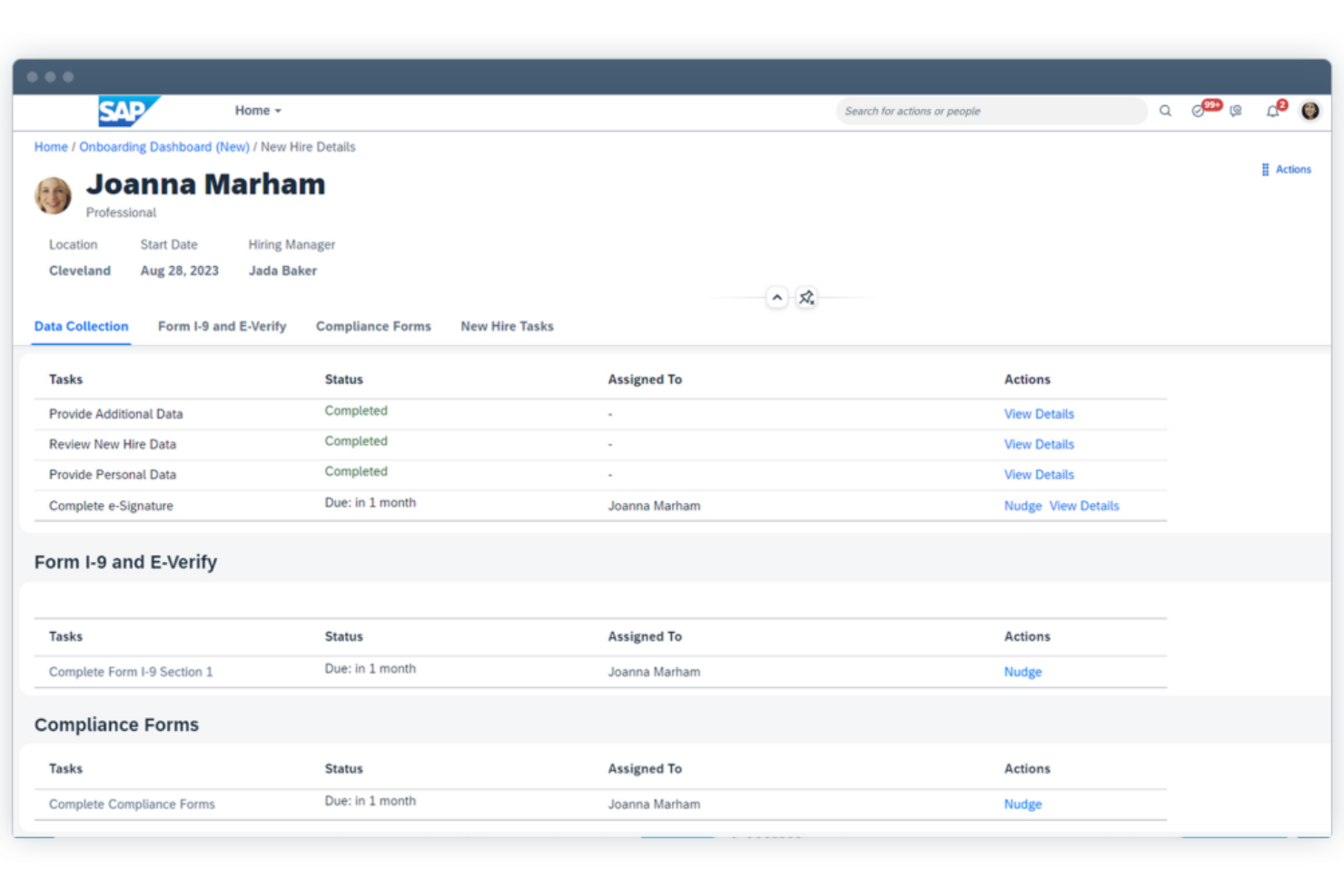
SAP SuccessFactors Talent Management è una soluzione versatile pensata per le aziende globali che desiderano ottimizzare la gestione della forza lavoro. Fornisce strumenti per la selezione, l’onboarding e la gestione delle performance, arricchiti da funzionalità di intelligenza artificiale che offrono insight concreti e migliorano le strategie di gestione dei talenti.
Perché ho scelto SAP SuccessFactors Talent Management: È progettato per la gestione della forza lavoro a livello globale, rendendolo ideale per aziende multinazionali. Le analisi basate sull’IA ti aiutano a valutare e prevedere le esigenze della forza lavoro, garantendo l’allineamento con gli obiettivi aziendali. Le sue funzionalità di pianificazione della successione supportano il tuo team nell’identificazione dei leader del futuro. La scalabilità della piattaforma si adatta a organizzazioni di varie dimensioni e complessità.
Funzionalità e integrazioni principali
Le funzionalità includono gestione degli obiettivi, feedback continuo sulle prestazioni e gestione della formazione. Queste funzionalità aiutano il tuo team a sviluppare e trattenere i talenti, allineando gli obiettivi dei dipendenti a quelli dell’azienda.
Le integrazioni comprendono Microsoft Office 365, LinkedIn, Slack, DocuSign, ADP, Kronos, ServiceNow, SuccessFactors Employee Central, Google Workspace e Salesforce.
Pros and Cons
Pros:
- Analisi della forza lavoro basate sull’IA
- Strumenti efficaci per la pianificazione della successione
- Scalabile per aziende globali
Cons:
- Configurazione di sistema complessa
- Può richiedere una formazione approfondita per l’implementazione
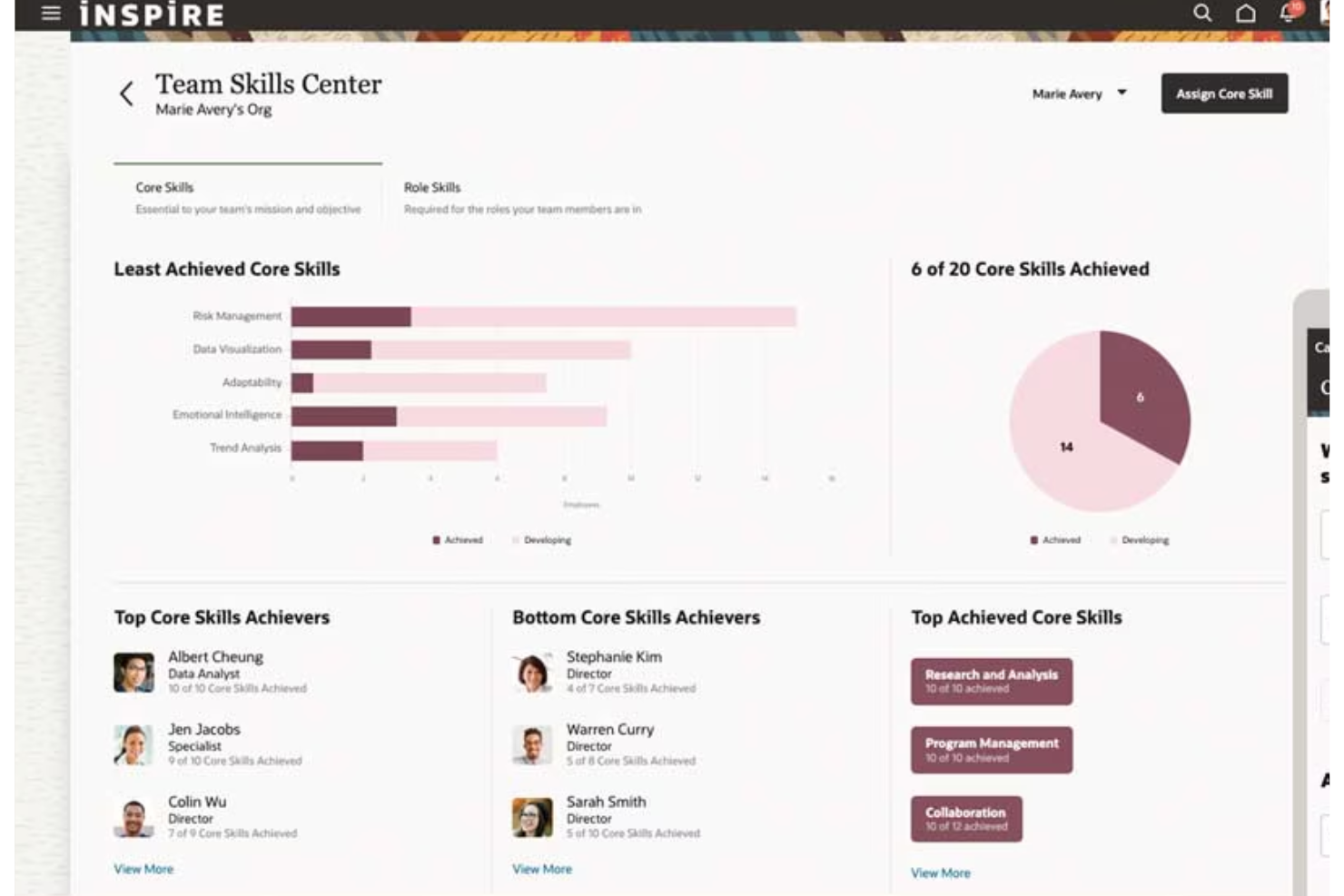
I moduli di Gestione dei Talenti di Oracle Cloud HCM sono progettati per grandi imprese che cercano una soluzione HR completa. Offrono strumenti per il recruiting, la gestione delle prestazioni e la pianificazione della successione, con funzionalità di intelligenza artificiale per migliorare il processo decisionale e fornire approfondimenti sulla forza lavoro.
Perché ho scelto Oracle Cloud HCM: Fornisce una suite HR completa rivolta alle grandi aziende. Le analisi basate sull'IA aiutano il tuo team a prendere decisioni informate sulla gestione dei talenti. I moduli offrono approfondimenti predittivi per identificare e sviluppare dipendenti ad alto potenziale. L'attenzione di Oracle all'integrazione tra le funzioni HR garantisce al tuo team la possibilità di gestire in modo efficiente l'intero ciclo di vita dei dipendenti.
Funzionalità e integrazioni distintive
Le funzionalità includono percorsi di apprendimento personalizzati, dashboard di valutazione dei talenti e strumenti per la pianificazione della successione. Queste funzioni aiutano il tuo team a sviluppare e trattenere i migliori talenti, allineandosi agli obiettivi aziendali.
Le integrazioni includono Microsoft Office 365, LinkedIn, SAP, Workday, ADP, Kronos, Slack, DocuSign, Salesforce e Google Workspace.
Pros and Cons
Pros:
- Suite HR completa per grandi aziende
- Analisi dei talenti basata su IA
- Approfondimenti predittivi per la gestione dei talenti
Cons:
- Impostazione e configurazione complesse
- Può richiedere risorse di formazione significative
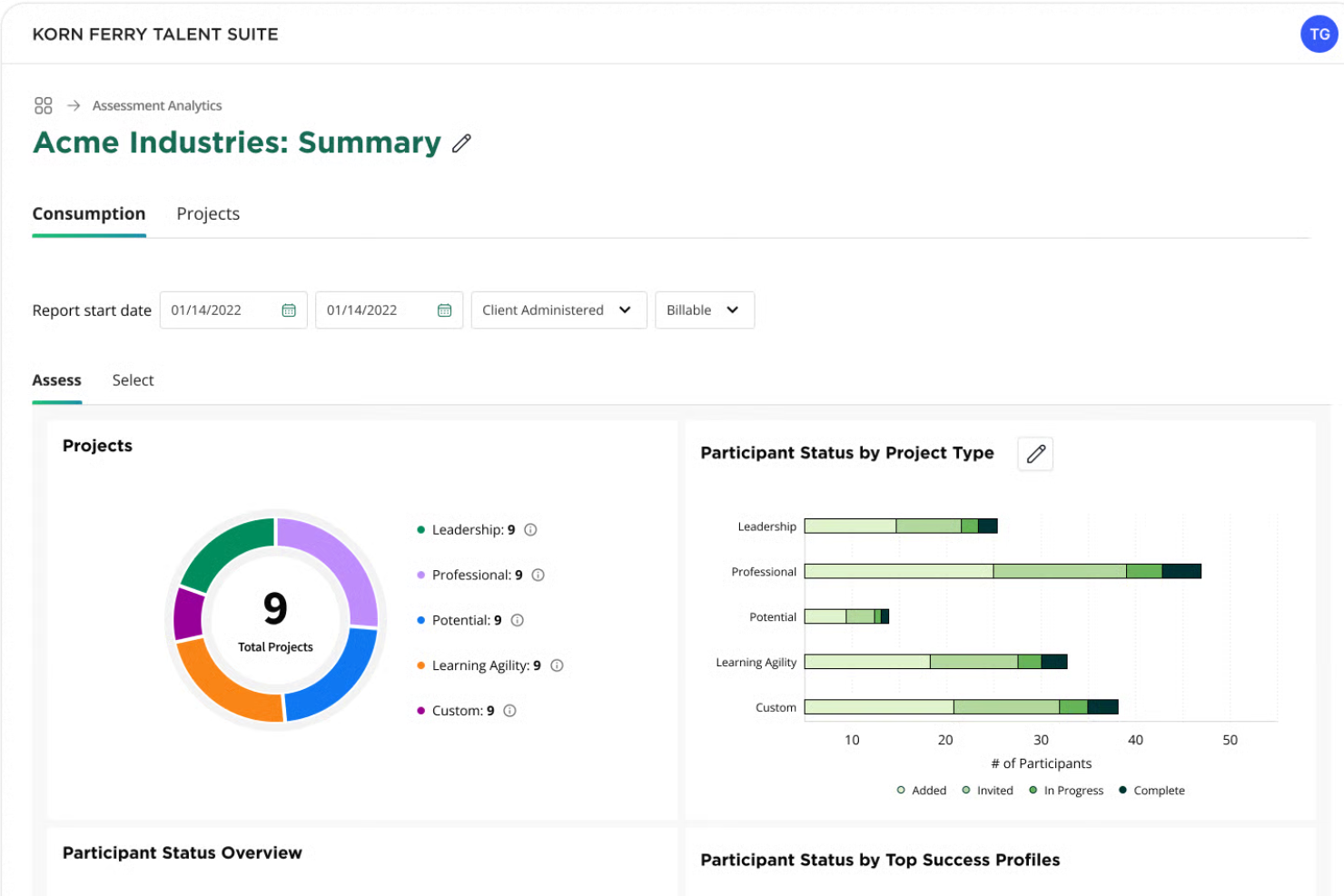
Korn Ferry Talent Suite è una piattaforma basata sull'intelligenza artificiale progettata per le organizzazioni che vogliono migliorare la gestione dei talenti e lo sviluppo della leadership. Offre soluzioni per l'acquisizione dei talenti, la pianificazione della successione e la strategia organizzativa, utilizzando l'IA per fornire informazioni utili e azionabili.
Perché ho scelto Korn Ferry Talent Suite: Eccelle nello sviluppo della leadership, rendendola una scelta privilegiata per le organizzazioni focalizzate sulla crescita dei futuri leader. Le valutazioni guidate dall’IA aiutano a identificare e coltivare il potenziale di leadership all’interno del tuo team. Gli strumenti della piattaforma, come Architect e Assess, supportano la pianificazione strategica dei talenti. Il suo focus sulla definizione dei profili di successo garantisce l'allineamento con gli obiettivi organizzativi.
Funzionalità principali e integrazioni
Le funzionalità includono valutazioni dei talenti basate sui dati, strumenti di progettazione organizzativa e risorse per lo sviluppo della leadership. Queste caratteristiche consentono al tuo team di prendere decisioni informate e favorire la creazione di una solida pipeline di leadership.
Le integrazioni includono Salesforce, Microsoft, Workday, SAP, Oracle, ADP, LinkedIn, Google Workspace, Slack e ServiceNow.
Pros and Cons
Pros:
- Forte orientamento allo sviluppo della leadership
- Valutazioni guidate dall’IA per la valutazione dei talenti
- Strumenti completi per la strategia organizzativa
Cons:
- Navigazione della piattaforma complessa
- Potrebbe richiedere una significativa personalizzazione

Workday Talent Management è una soluzione completa progettata per medie e grandi imprese che desiderano gestire efficacemente la propria forza lavoro. Supporta l'acquisizione dei talenti, la gestione delle prestazioni e la pianificazione della successione, sfruttando l'intelligenza artificiale per fornire approfondimenti e migliorare il processo decisionale.
Perché ho scelto Workday Talent Management: È pensato specificamente per medie e grandi imprese grazie alle sue funzionalità estese. Le analisi predittive aiutano a individuare i dipendenti ad alto potenziale e a ridurre il turnover. Gli strumenti di sviluppo professionale guidati dall'IA consentono percorsi di crescita personalizzati per il tuo team. L'attenzione di Workday alla scalabilità garantisce che possa crescere insieme alla tua organizzazione.
Funzionalità straordinarie & Integrazioni
Le funzionalità includono la gestione continua delle prestazioni, la definizione degli obiettivi e strumenti di feedback. Queste funzionalità aiutano il tuo team a rimanere allineato agli obiettivi organizzativi e a promuovere una cultura della crescita.
Le integrazioni includono Salesforce, Microsoft Office 365, Slack, LinkedIn, ADP, Kronos, ServiceNow, DocuSign, Okta e Google Workspace.
Pros and Cons
Pros:
- Analisi predittiva per la pianificazione della forza lavoro
- Scalabilità per aziende in crescita
- Strumenti di sviluppo professionale basati sull'intelligenza artificiale
Cons:
- Processo di implementazione complesso
- Potrebbe richiedere una formazione approfondita per gli utenti
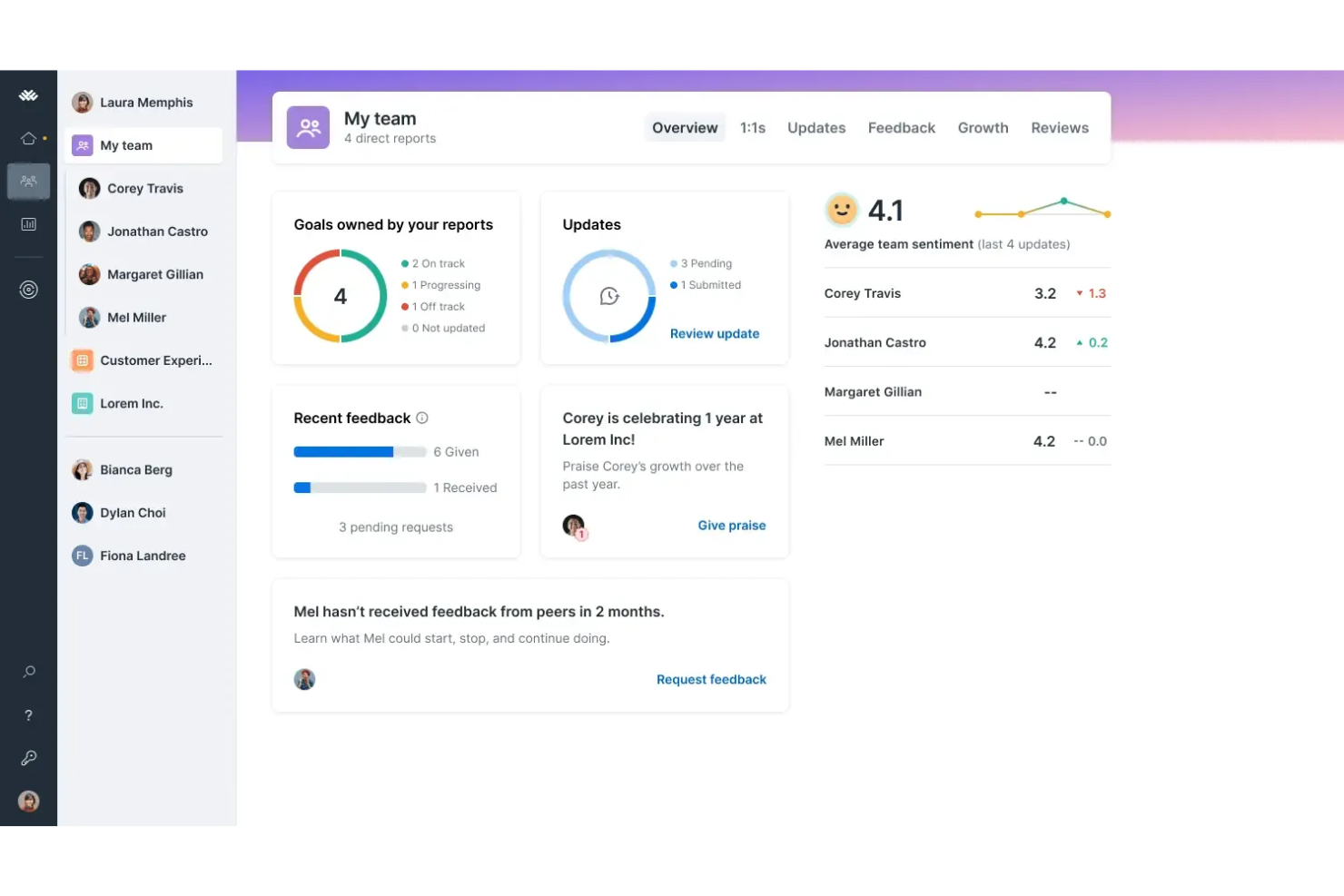
Lattice è una piattaforma di gestione delle prestazioni progettata per le aziende che desiderano migliorare lo sviluppo e il coinvolgimento dei dipendenti. Offre strumenti per valutazioni delle prestazioni, definizione degli obiettivi e feedback continui, sfruttando l'IA per fornire approfondimenti sulle prestazioni dei dipendenti.
Perché ho scelto Lattice: La sua attenzione alle valutazioni delle prestazioni la rende ideale per le organizzazioni che vogliono migliorare i processi di feedback ai dipendenti. Le analisi basate sull'IA aiutano a identificare le tendenze e le aree di miglioramento delle prestazioni. Le funzionalità personalizzabili di definizione degli obiettivi permettono al team di allineare gli obiettivi individuali a quelli aziendali. L'interfaccia intuitiva di Lattice garantisce che il team possa utilizzare facilmente la piattaforma.
Funzionalità principali e integrazioni
Le funzionalità includono feedback personalizzato, sondaggi sul coinvolgimento dei dipendenti e gestione dei meeting individuali. Queste caratteristiche aiutano il team a creare una cultura di miglioramento continuo e comunicazione aperta.
Le integrazioni includono Slack, Microsoft Teams, Google Workspace, Okta, BambooHR, Namely, Rippling, Workday, ADP e Gusto.
Pros and Cons
Pros:
- Processi efficaci di valutazione delle prestazioni
- Funzionalità personalizzabili di definizione degli obiettivi
- Interfaccia intuitiva
Cons:
- Capacità di reportistica avanzata limitata
- Potrebbe richiedere tempo di adattamento per alcuni utenti
Altri software di gestione dei talenti basati sull'IA
Ecco alcune opzioni aggiuntive di software di gestione dei talenti basati sull’IA che non sono state incluse nella mia selezione, ma che vale comunque la pena prendere in considerazione:
- Alex
Ideale per screening dei CV con IA
- PerformYard
Ideale per il monitoraggio delle prestazioni
- ClearCo
Ideale per assunzioni e onboarding
- TalentGuard
Ideale per la pianificazione del percorso professionale


Come Valuto i Software di Gestione del Talento con AI
Includo solo strumenti in cui l’AI genera risultati reali e misurabili—come scoprire candidati interni nascosti o segnalare i rischi di abbandono prima che arrivi una lettera di dimissioni—escludendo tutte le piattaforme che si limitano ad applicare un’etichetta AI su semplici automazioni di base. Suddivido la mia valutazione in due livelli: la funzionalità di base che uno strumento deve possedere per entrare in questa lista e i fattori di differenziazione che separano le buone soluzioni da quelle eccellenti.
Funzionalità di Base (Requisiti Minimi per Questa Lista)
Quando seleziono gli strumenti per la mia lista, li valuto ciascuno su una scala da 0 (non offre la funzionalità) a 5 (eccelle in quest’area) per ogni funzionalità di base elencata di seguito. Poi, calcolo il punteggio totale in percentuale. Ogni strumento deve raggiungere un punteggio minimo totale del 75% per essere considerato per l’inclusione.
- Acquisizione di Talenti Guidata dall’AI: Valuto quanto efficacemente la piattaforma utilizza l’AI per attrarre, analizzare, selezionare e abbinare candidati—ad esempio, classificando automaticamente i candidati in base alla compatibilità prevista col ruolo.
- Motore di Analisi delle Competenze: Lo strumento deve mappare e dedurre le competenze dei dipendenti tramite AI, e non limitarsi a conservare etichette statiche. Cerco tassonomie dinamiche che evolvono con la tua forza lavoro.
- Analisi Predittive su Performance e Retention: Verifico che la piattaforma generi previsioni utili e concrete—come l’individuazione di team con aumentato rischio di abbandono—invece di semplici dashboard.
- Formazione e Sviluppo Personalizzati: I migliori strumenti collegano automaticamente i gap di competenze a percorsi di apprendimento su misura. Cerco AI che adatti le raccomandazioni man mano che i dipendenti crescono.
- Pianificazione della Successione e della Forza Lavoro: Valuto se l’AI identifica talenti ad alto potenziale e mappa i successori, ad esempio proponendo candidati già pronti per filiere di leadership.
- Gestione Integrata del Ciclo di Vita del Talento: La piattaforma dovrebbe connettere selezione, performance, formazione e successione in un unico modello dati condiviso, invece di moduli separati.
Una volta ottenuto l’elenco degli strumenti che rispondono ai criteri, considero cosa distingue ciascuna piattaforma dalle altre.
Fattori di Differenziazione (Cosa Distingue i Fornitori)
Ecco come confronto e metto a confronto i diversi fornitori:
Funzionalità Straordinarie
Gli strumenti di rilevamento dei bias sono per me fondamentali—cerco piattaforme che verifichino le decisioni di assunzione e promozione per individuare pregiudizi demografici, offrendo ai team HR punteggi di equità spiegabili e su cui poter agire. Un marketplace interno dei talenti è un altro elemento di differenziazione, soprattutto quando l’AI abbina i dipendenti a incarichi, progetti o ruoli aperti in base alle competenze dedotte, e non solo alla storia lavorativa. Considero anche se la piattaforma include un assistente AI generativo capace di preparare bozze di valutazioni delle prestazioni o piani di sviluppo, risparmiando ore di scrittura manuale.
Oltre le Funzionalità
L’aderenza a principi etici nell’AI è fondamentale—controllo se i fornitori offrono documentazione di audit sui bias e se sono allineati alle normative emergenti sulle assunzioni con AI, dato che i team HR affrontano reali rischi legali in questo ambito. Anche la profondità di integrazione con l’HRIS è importante. Una piattaforma che si sincronizza in modo bidirezionale con il tuo sistema Workday o ADP esistente consente di risparmiare mesi di lavoro manuale di pulizia dei dati. Valuto anche i tempi di implementazione, premiando i fornitori che offrono librerie di competenze predefinite e framework di ruoli già pronti, così il tuo team non parte da zero durante il rollout.
Come scegliere un software di gestione dei talenti basato sull'IA
È facile perdersi in lunghi elenchi di funzionalità e strutture di prezzo complesse. Per aiutarti a rimanere concentrato mentre affronti il tuo specifico processo di selezione del software, ecco un elenco di fattori da tenere a mente:
| Fattore | Cosa considerare |
|---|---|
| Scalabilità | Il software crescerà insieme al tuo team? Assicurati che possa gestire un numero maggiore di utenti e dati man mano che la tua azienda si espande. Cerca soluzioni con un'infrastruttura scalabile che non rallenti quando aggiungi altri dipendenti. |
| Integrazioni | Funziona con gli strumenti che già utilizzi? Verifica la compatibilità con i tuoi sistemi attuali per le risorse umane, le paghe e la comunicazione. Le integrazioni fluide possono far risparmiare tempo e ridurre gli errori durante il trasferimento dei dati. |
| Personalizzazione | Puoi adattarlo ai tuoi processi? Cerca soluzioni flessibili che ti permettano di modificare flussi di lavoro, report e cruscotti in base alle tue esigenze specifiche. Evita i sistemi rigidi che ti costringono a cambiare i tuoi processi. |
| Facilità d'uso | È intuitivo per il tuo team? Considera la curva di apprendimento e quanto sia intuitiva l'interfaccia. Scegli un software che riduca al minimo il tempo di formazione e massimizzi la produttività. |
| Implementazione e avviamento | Quanto velocemente puoi iniziare? Valuta il tempo e le risorse necessari per configurare il software e formare il tuo team. Cerca fornitori che offrano un solido supporto e risorse per l'avviamento. |
| Costo | Rientra nel tuo budget? Confronta i modelli di prezzo, considerando sia i costi iniziali sia le tariffe ricorrenti. Fai attenzione ai costi nascosti, come le licenze aggiuntive per gli utenti o le funzionalità avanzate, che possono aumentare rapidamente la spesa. |
| Misure di sicurezza | I tuoi dati sono protetti? Assicurati che il software rispetti gli standard del settore per la protezione e la privacy dei dati. Cerca funzionalità come la crittografia, gli aggiornamenti regolari della sicurezza e la conformità a normative come il GDPR o il CCPA. |
| Disponibilità dell'assistenza | Quanto è facile ricevere aiuto quando serve? Verifica i canali di assistenza disponibili e i tempi di risposta. Cerca fornitori che offrano assistenza 24/7 o account manager dedicati per aiutarti con eventuali problemi o domande. |
Che cos'è il software di gestione dei talenti basato sull'AI?
Il software di gestione dei talenti basato sull'AI è uno strumento che sfrutta l'intelligenza artificiale per migliorare diverse funzioni delle risorse umane, come il reclutamento, la valutazione delle prestazioni e lo sviluppo dei dipendenti. I professionisti delle risorse umane, i responsabili della selezione e i responsabili di team utilizzano generalmente questi strumenti per migliorare l'efficienza e il processo decisionale. Funzionalità come l'abbinamento dei candidati basato sull'AI, l'analisi predittiva e i percorsi di carriera personalizzati aiutano a individuare i migliori talenti, ridurre il ricambio del personale e allineare gli obiettivi dei dipendenti con quelli aziendali. Nel complesso, questi strumenti forniscono alle organizzazioni informazioni basate sui dati per ottimizzare le proprie strategie di gestione dei talenti.
Funzionalità del software di gestione dei talenti basato sull'AI
Quando scegli un software di gestione dei talenti basato sull'AI, presta attenzione alle seguenti funzionalità principali:
- Abbinamento dei candidati basato sull'AI: abbina i candidati alle posizioni in base all'analisi dei dati, migliorando l'efficienza del reclutamento.
- Analisi predittiva: offre informazioni sulle tendenze future della forza lavoro, aiutando nella pianificazione e nella riduzione del ricambio del personale.
- Percorsi di carriera personalizzati: fornisce piani di sviluppo su misura per i dipendenti, favorendone la crescita e il coinvolgimento.
- Strumenti per i riscontri in tempo reale: consentono una valutazione continua delle prestazioni, promuovendo una comunicazione aperta e il miglioramento.
- Cruscotti per la valutazione dei talenti: visualizzano i dati sulle prestazioni dei dipendenti per supportare decisioni informate.
- Pubblicazione automatizzata delle offerte di lavoro: semplifica il processo di reclutamento distribuendo gli annunci di lavoro su più piattaforme.
- Gestione delle relazioni con i candidati: aiuta a mantenere il coinvolgimento dei potenziali assunti attraverso comunicazioni personalizzate.
- Strumenti per la pianificazione della successione: individuano e preparano i futuri dirigenti, garantendo la continuità aziendale.
- Sistemi di gestione dell'apprendimento: facilitano la formazione e lo sviluppo dei dipendenti, sostenendo il miglioramento delle competenze.
- Crittografia e sicurezza dei dati: proteggono le informazioni sensibili dei dipendenti, garantendo la conformità alle normative sulla privacy dei dati.
Vantaggi del software di gestione dei talenti basato sull'AI
Implementare un software di gestione dei talenti basato sull'AI offre diversi vantaggi al tuo team e alla tua azienda. Eccone alcuni:
- Maggiore efficienza nel reclutamento: il matching dei candidati basato sull'IA accelera il processo di assunzione identificando rapidamente i candidati migliori.
- Maggiore fidelizzazione dei dipendenti: l'analisi predittiva aiuta ad anticipare i rischi di turnover, consentendo di adottare misure proattive per trattenere i talenti.
- Sviluppo personalizzato: percorsi di carriera su misura favoriscono la crescita e la soddisfazione dei dipendenti, aumentando il coinvolgimento.
- Processo decisionale consapevole: il feedback in tempo reale e i pannelli di controllo per la valutazione dei talenti forniscono dati utili per prendere decisioni gestionali migliori.
- Inserimento efficiente: la pubblicazione automatizzata delle offerte di lavoro e la gestione delle relazioni con i candidati semplificano l'esperienza di inserimento.
- Continuità della leadership: gli strumenti di pianificazione della successione garantiscono la preparazione di futuri leader, mantenendo la stabilità aziendale.
- Sicurezza dei dati: la crittografia avanzata protegge le informazioni sensibili, garantendo la conformità alle normative sulla privacy e rafforzando la fiducia.
Costi e prezzi del software di gestione dei talenti basato sull'IA
La scelta di un software di gestione dei talenti basato sull'IA richiede la conoscenza dei vari modelli e piani tariffari disponibili. I costi variano in base alle funzionalità, alle dimensioni del team, ai componenti aggiuntivi e ad altri fattori. La tabella seguente riassume i piani più comuni, i relativi prezzi medi e le funzionalità tipicamente incluse nelle soluzioni software di gestione dei talenti basate sull'IA:
Tabella di confronto dei piani per il software di gestione dei talenti basato sull'IA
| Tipo di piano | Prezzo medio | Funzionalità comuni |
|---|---|---|
| Piano gratuito | $0 | Monitoraggio di base dei candidati, analisi limitate e reportistica di base. |
| Piano personale | $5-$25/utente/mese | Matching dei candidati basato sull'IA, pannelli di controllo personalizzati e integrazioni essenziali. |
| Piano aziendale | $30-$75/user/month | Analisi avanzate, strumenti di gestione delle prestazioni e percorsi di carriera personalizzabili. |
| Piano per grandi aziende | $80-$150/user/month | Suite HR completa, analisi predittiva e gestione completa della conformità. |
Domande frequenti sul software di gestione dei talenti basato sull'IA
Ecco alcune risposte alle domande comuni sul software di gestione dei talenti basato sull’IA:
In che modo l'IA migliora i processi di reclutamento?
L’IA migliora il reclutamento automatizzando attività ripetitive, come lo screening dei curriculum e il matching dei candidati. Analizza grandi quantità di dati per identificare i candidati migliori in base alle competenze e all’esperienza, facendoti risparmiare tempo e riducendo i pregiudizi. Ad esempio, uno strumento di IA può esaminare migliaia di curriculum in pochi minuti, mettendo in evidenza le corrispondenze migliori affinché il tuo team le esamini. Questa efficienza ti consente di concentrarti sul coinvolgimento dei candidati invece di perderti nella gestione delle pratiche burocratiche.
Il software di gestione dei talenti basato sull'IA può integrarsi con i nostri sistemi HR esistenti?
Sì, la maggior parte dei software di gestione dei talenti basati sull’IA può integrarsi con i sistemi HR esistenti. Cerca soluzioni che offrano API e integrazioni preconfigurate con piattaforme diffuse come Workday, SAP e ADP. Queste integrazioni garantiscono un flusso regolare di dati tra i sistemi, riducendo al minimo l’inserimento manuale dei dati e gli errori. Prima dell’acquisto, verifica che il software supporti le integrazioni specifiche di cui hai bisogno per mantenere operazioni fluide.
L'uso dell'IA nella gestione dei talenti comporta problemi di privacy?
Sì, esistono problemi di privacy, ma possono essere gestiti adottando le giuste precauzioni. Assicurati che il software sia conforme alle normative sulla protezione dei dati come il GDPR o il CCPA. Scegli fornitori che diano priorità alla crittografia dei dati e offrano trasparenza sul loro utilizzo. Esamina regolarmente le politiche sulla privacy dei dati e forma il tuo team sulle migliori pratiche per mantenere la conformità e proteggere le informazioni dei dipendenti.
Che tipo di formazione è necessaria per consentire ai membri del team di utilizzare il software di gestione dei talenti basato sull'IA?
La formazione varia, ma molti fornitori offrono risorse come webinar, tutorial e guide. Inizia con una demo o una versione di prova per familiarizzare il team con l’interfaccia. Concentrati sulle funzionalità principali, come il matching dei candidati e l’analisi. Assegna a un membro del personale il compito di supervisionare l’implementazione e aiutare gli altri quando necessario. L’apprendimento continuo è fondamentale, quindi incoraggia il team a sfruttare le opportunità di formazione continua offerte dal fornitore.