
Det skiftende språket om ferdigheter: Hvorfor det betyr noe, og hvordan du kan tilpasse deg
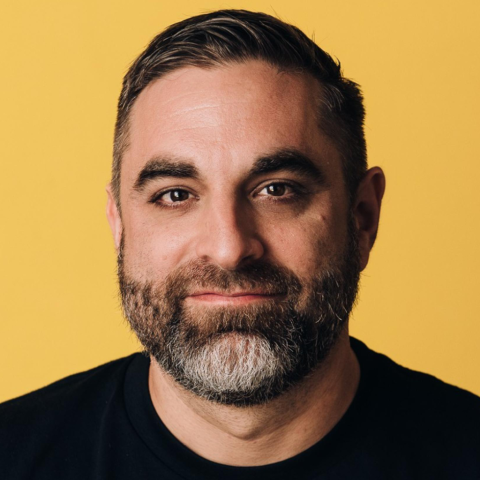

Arbeidsplassen utvikler seg raskt, og en tredjedel av ferdighetene som kreves i jobber, endres hvert tredje år. I denne episoden snakker programleder David Rice med Cole Napper, visepresident for forskning i Lightcast, om hvordan kunstig intelligens, automatisering og demografiske endringer omformer arbeidsmarkedet. Mens blåkrageyrker møter mangel på arbeidskraft, gjennomgår kunnskapsjobber store omveltninger, og organisasjoner må tenke nytt om kompetanseutvikling og arbeidsstyrkestrategier.
Cole deler innsikt i arbeidslivets fremtid, fra skiftende karriereveier til den økende betydningen av kritisk tenkning. Når tilpasningsevne blir viktigere enn ekspertise, hvordan kan arbeidstakere og virksomheter ligge i forkant? Bli med på en grundig gjennomgang av den skiftende verdenen for ferdigheter og sysselsetting.
Høydepunkter fra intervjuet
- Definering av talentinnsikt [01:09]
- Mange hevder at de driver med talentinnsikt, men det er ikke alle som faktisk gjør det.
- Ekte talentinnsikt innebærer å utnytte innsikt i arbeidsmarkedet og interne arbeidsstyrkedata.
- Målet er å generere reell innsikt som driver organisatorisk endring og verdiskaping.
- Hvis disse elementene mangler, er det ikke ekte talentinnsikt.
- Hvor raskt ferdigheter endrer seg [02:16]
- Folk oppnår sjelden full mestring av ferdigheter; de når et punkt der det er «godt nok».
- Forskning viser at en tredjedel av ferdighetene ble forstyrret mellom 2019-2022.
- Fra 2022-2025 akselererer endringene i ferdigheter enda raskere.
- KI påvirker denne trenden, men den raske endringen begynte før KI.
- Det viktigste spørsmålet er hvordan man skal reagere på denne pågående omveltningen.
- Betydningen av et felles ferdighetsspråk [03:49]
- Ferdighetstaksonomier klassifiserer og organiserer ferdigheter på samme måte som biologiske klassifikasjoner.
- Ferdigheter samles i kompetanser, funksjoner og bransjer i organisasjoner.
- Lightcasts åpne ferdighetsbibliotek er gratis og fungerer som en universell oversetter for ferdigheter i arbeidslivet.
- Det standardiserer stillingsspesifikk terminologi på tvers av ulike HR-systemer som Workday og UKG.
- Selv konkurrenter bruker Lightcasts åpen kildekode-baserte taksonomi på grunn av den brede utbredelsen.
- Det neste steget er ferdighetsontologier, som følger fremvoksende, utviklende og avtakende ferdigheter.
- Lightcast leder overgangen fra taksonomier til ontologier innen ferdighetsstyring.
- KIs innvirkning på kontorjobber [07:25]
- Arbeidsmarkedet er delt mellom kunnskapsarbeidere og fysiske arbeidsoppgaver.
- Automatisering påvirker begge deler, men investeringene fokuserer i større grad på å automatisere kunnskapsarbeid.
- KI endrer raskt kreative og tekniske fagområder som programmering og videoproduksjon.
- Organisasjoner er avhengige av automatisering for å holde tritt med endringer i ferdigheter, men dette er usikkert.
- Arbeidsstyrken går inn i ukjent terreng uten en tydelig strategi for tilpasning.
- Demografiske endringer og endringer i arbeidsstyrken [10:46]
- Rapporten Den stigende stormen fremhever hvordan demografi former trendene i arbeidsmarkedet.
- Karriereveiene forblir stort sett stabile, noe som betyr at sammensetningen av arbeidsstyrken endres når generasjonene skifter.
- Millenniumsgenerasjonen har langt høyere utdanning enn babyboomerne, noe som snur tidligere trender i arbeidsstyrken.
- Denne endringen skaper et overskudd av høyskole- og universitetsutdannede og et underskudd på arbeidstakere i roller som ikke krever grad.
- Troen på at en universitetsgrad garanterer økonomisk suksess, blir stadig mer utdatert.
- En ny rapport om utsiktene for risiko i arbeidsstyrken rangerer detaljhandel, helsetjenester, bygg og anlegg samt produksjon som bransjene med høyest risiko.
- Disse arbeiderklassedominerte bransjene står overfor mangel på arbeidskraft, noe som trolig vil drive opp lønningene og trekke til seg høyt utdannede arbeidstakere.
- Det forventes alvorlig mangel på arbeidskraft med mindre automatiseringen gjennomgår betydelige fremskritt.
- Hurtigmatkjeder kan begynne å tilby kontrakter og store signeringsbonuser for å sikre seg arbeidstakere.
- Selskaper som er proaktive og kreative i rekrutteringen, vil ha et konkurransefortrinn.
- Lokale arbeidsmarkeder fungerer som nullsumspill – hvis ett selskap sikrer seg talentene, går andre glipp av dem.
- «Kampen om talentene» flyttes fra kunnskapsarbeidere til detaljhandel, produksjon og bygg og anlegg.
- KI og automatisering av arbeidsstyrken [17:03]
- KI erstatter ennå ikke hele yrkesroller, men erstatter spesifikke ferdigheter innenfor jobber.
- KIs innvirkning på jobber befinner seg fortsatt i en forsterkningsfase, snarere enn full automatisering.
- Studier viser at selv de mest berørte jobbene i dag bare får erstattet rundt 20 % av ferdighetene sine av KI.
- Selskaper som hevder at de erstatter arbeidstakere med KI, overdriver ofte for å få medieoppmerksomhet.
- KI-hypen har nådd toppen, men en fremtidig fase med mer omfattende omveltninger er på vei.
- KI kan være en positiv kraft ved å tilby løsninger på mangelen på arbeidskraft som skyldes demografiske endringer.
- Organisasjoner bør ta i bruk KI proaktivt for å redusere risiko og øke fleksibiliteten i arbeidsstyrken.
KI erstatter ikke roller, men den erstatter ferdigheter. Det avgjørende spørsmålet er derfor: Hvor mye av en bestemt ferdighet krever en rolle? Og når summeres antallet ferdigheter som erstattes, til at en rolle blir erstattet?
Cole Napper
- Fremtidens HR og ferdighetsbasert arbeid [20:59]
- Bedrifter sliter med å implementere fullt ut ferdighetsbasert arbeid fordi folk søker stabilitet.
- Det er lite sannsynlig at arbeid blir fullstendig dekonstruert til ferdighetsbaserte jobber av frilanskarakter.
- Noen ferdigheter er på retur på grunn av automatisering (f.eks. Microsoft Word og Excel).
- Kritisk tenkning er den mest verdifulle ferdigheten som er på fremmarsj, og den er avgjørende for fremtidens endringsskapere.
- Organisasjoner må følge med på ferdigheter som er i vekst og på retur, for å holde seg konkurransedyktige.
Et av funnene i rapporten vår om risiko i arbeidsstyrken er at vi så på forstyrrelser forårsaket av KI som noe positivt, ikke negativt. Hvis du erkjenner at det kommer til å bli mangel på menneskelig arbeidskraft i de kommende årene, kan du se på KI som noe som gir flere muligheter.
Cole Napper
Møt gjesten vår
Cole Napper er visepresident for forskning, innovasjon og talentinnsikt i Lightcast, der han leder initiativer innen personalanalyse og arbeidsstyrkeplanlegging. Med over 12 års erfaring med å bygge HR-sentre for fremragende praksis har han arbeidet med selskaper som Texas Instruments, Toyota og PepsiCo. Cole er medvert for podkasten “Directionally Correct”, som fokuserer på personalanalyse, og har en doktorgrad innen et relevant fagområde. Han er anerkjent som en ledende stemme innen talentinnsikt og arbeidsstyrkeplanlegging.

Alle organisasjoner bør ha fokus på å beholde talenter akkurat nå, og på å utvikle og fremme kritisk tenkning internt. De som utvikler sterke ferdigheter innen kritisk tenkning, vil bli fremtidens endringsskapere.
Cole Napper
Relaterte lenker:
- Bli med i People Managing People-fellesskapet
- Abonner på nyhetsbrevet for å få våre nyeste artikler og podkaster
- Ta kontakt med Cole på LinkedIn og Substack
- Se nærmere på Lightcast
- Coles podkast – Directionally Correct
Relaterte artikler og podkaster:
- Om podkasten People Managing People
- KIs rolle innen talent, tillit og fremtidens medarbeideropplevelse
- Slik bruker du KI til å styrke medarbeiderne dine og transformere organisasjonen din
- Kompetanseheving og omskolering for å møte morgendagens utfordringer i dag
- Håndtering av utfordringene i talentmarkedet og overgangen til ferdighetsbaserte organisasjoner
- Arbeidets tilstand i 2025: KI + menneskelig intelligens og trendene
- Bekvemmelighetens kognitive kostnad: KI vil påvirke hjernen vår
- Slik vil generasjon Z trekke selskaper inn i KI-alderen
- Slik forandrer KI medarbeidernes prestasjonsvurderinger
- Løser KI HR-utfordringer eller sløser det bort tiden?
- Slik utvikler du en etisk tilnærming til KI for hele organisasjonen
Read The Transcript:
We're trying out transcribing our podcasts using a software program. Please forgive any typos as the bot isn't correct 100% of the time.
Cole Napper: Everyone who's building things with AI and automation, for the most part, is spending their time on how do you automate coding? How do you automate all the different creative tasks that have primarily been done by knowledge workers? And so those skill sets are being pushed to change very rapidly. And the reality is, I think organizations are working on a hope and a prayer that automation will just fix things quicker than the need for skills to change will be able to catch up.
David Rice: Welcome to the People Managing People podcast. We're on a mission to build a better world of work and to help you create happy, healthy, and productive workplaces. I'm your host, David Rice.
My guest today is Cole Napper. He's the Vice President of Research, Innovation, and Talent Insights at Lightcast. He's also the host or co-host of the "Directionally Correct" podcast. We're going to be talking about skills, how they're shifting, and how we understand them, and what it all means for the workplace.
So Cole, welcome.
Cole Napper: Yeah. Thanks for having me, David.
David Rice: No problem. So we are talking about skills and people analytics today. I want to start by asking you a sort of, it's a little bit of a ridiculous question.
I guess I want to ask, how do you define the way things are changing around skills and how we view them from an analytics perspective? So if you had to give this period in labor market intelligence a nickname, what would it be?
Cole Napper: I was thinking about this earlier. This is probably not the perfect answer to the question, but I thought it was clever. Is with the real talent intelligence, please stand up because I feel like everybody is saying they do talent intelligence nowadays and from an analytics perspective, that can be frustrating. Because in my mind, talent intelligence actually means something and a lot of people who say they're doing it aren't doing the thing that I mean.
And so when I look at it, I look at is like, how can you use labor market information, labor market insights internally on your skills and the makeup and the composition of your workforce to create real insights to drive change and value for organizations. That's as simple of an explanation as I can give and If you're doing those things, you're doing it right. If you're not doing those things, I don't know what you're doing, but it's not talent intelligence.
David Rice: That's a good answer. I like that one.
So with your work with Lightcast, you've all released a report recently. It's called the Speed of Skill Change. And I'm curious because in that report, I looked it over and it's noted that the average job has seen one third of its skills change in the last three years.
And that speed appears to be getting more intense, more fast. So bit of an existential question here, if this keeps up, in your opinion, are we, do we get to a place where mastery of a skill is like never quite achieved or even possible? Like most skills due to the pace of change, do they exist long enough to master?
Cole Napper: I would even flip the question of do we even master skills that we have today or have we mastered them in recent years? And I would argue that the answer is largely, we get to a point of diminishing returns where it's good enough, but we never really get to mastery anymore on most things. And so to reference that report, so Lightcast had done some research between 2019 and 2022 that had shown, roughly a third of the skills that were going to get disrupted over that period of time.
And then we did some research from 2022 through 2025 and found that not only was it getting disrupted, they were getting disrupted faster than before, which means that the pace of change is accelerating. And I'm sure we're going to talk about AI at some point today, but that plays a role, but honestly, these changes predated AI.
So we're already on this treadmill right now. And the question is, what do we do about it?
David Rice: Yeah, that's a great question.
One that everybody's thinking about, obviously. I don't care what field you're in. You all also developed like a skills library. It's got more than I think, 32,000 skills in it. And I find this interesting because the positioning behind it that I see on like the website, and I leave, I even looked at the API that you all have created, which is a really interesting tool.
But it's that we all need a common language to speak in order to understand skills and hiring needs. Take me through the refinement and the development of that common language at a high level where your internal skills language makes sense against what's in the labor market.
Cole Napper: It's an interesting concept. So people throw around terms, and I'll be honest, a lot of times I didn't even know what they meant when they were throwing it around, like skills taxonomies. I was like, what does that even mean? And the reality is, how do you group things together? Think about the tree of life from like, how all the different animals are related.
That's just a fancy way of saying a taxonomy. The same thing exists in organizations with skills. So you have a particular skill, and then you roll it up a level, and maybe you call that a competency. And then you roll it up another level, and you call that a function like finance, right? And you roll it up another level, and you've got an industry.
And so just a skill is just the fundamental unit of different ways of rolling up information about your organization and the talent place where they're in your organization. When I think about that open skills library, what that's meant to do is to position Lightcast because it's open source, it's free.
Anybody can go take it. You mentioned the API calls. Anybody can call that API and put it into your own organization. What it's meant to do is to be the universal translator. What does that mean? So let's say you've got a particular job title or job posting at your organization, which has a collection of skills in it.
But those, the terminology is distinct to your organization. So what do we do? We take that terminology that's distinct to your organization. We transfer it into our universal language, right? But guess what? That's not good enough because chances are you use Workday or UKG. They have their own language. So you want your job title to work with Workday.
If you put it through our universal translator, we already work with all of those vendors to translate into their language. And so fundamentally, our open skills philosophy is embedded into basically almost all of the HR technology market. A lot of our, let's call them frenemies, our competitors, they even use our open skills taxonomy because it is so open source.
And so I would say we are the universal skills language that's out there. And that really positions us to move from what people call skills taxonomies to skill ontologies. So a skill ontology is the next level is to say, what are the emerging skills? How are skills transforming? What skills are diminishing?
How do those relate to the whole body of work? And I'm not going to get overly technical today, but that is the next foray that we are getting into. We're leading the pack in that space.
David Rice: That's interesting you said that about the people talk about skills taxonomy. If you don't have a background in information architecture at all, taxonomy is one of those words that I'm I think people confuse it for a list, essentially.
Cole Napper: But it's not what it is, but that is a common confusion, yeah.
David Rice: Yeah, because it's one of those phrases people do like to use, but I'm not exactly sure they know what it means.
Cole Napper: Yeah, my grocery taxonomy, not my grocery list,
David Rice: One of the things the report highlights, and I think this is something that folks are starting to realize more and more, is that A lot of the change that's coming in the skills market, it's not going to impact blue collar jobs a great deal, but it is going to really impact like white collar jobs and STEM fields.
Those are going to be changing the most over the next year or two, and that's going to create a lot of disruption. We've been talking about upskilling and reskilling since before the pandemic. As long as I've been covering HR, we've been talking about this, right? But it seems like a lot of orgs haven't quite gotten it right or never really invested in it sufficiently.
How prepared do you feel the white collar workforce is to shift with the changes that are coming in the skills market in the next year or two?
Cole Napper: I'll even go upstream of that a little bit because you talked about the speed of skill change report. We talk about a tale of two labor markets in that report, and you talked about a little bit.
The two labor markets is essentially knowledge workers versus people who do things in the physical world or what people used to call blue collar versus white collar jobs. It's not a perfect designation, but let's say that for the sake of argument. There's a reason why it's not to say that the blue collar jobs can't change.
They do see disruption. Automation plays a role in blue collar jobs all the time. It's just as a society, we just haven't chosen to spend our investments there. Right now, everyone who's building things with AI and automation for the most part, is spending their time on how do you automate coding? How do you automate programming?
How do you automate video creation? How do you automate all the different creative tasks that have primarily been done by knowledge workers? And so those skill sets are being pushed to change very rapidly. And the reality is, I think organizations are working on a hope and a prayer that automation will just fix things quicker than the need for skills to change will be able to catch up, right?
That's just a interesting position that we're in as a society right now, and I know we're going to talk more about some of the demographic shifts that are coming as a part of this conversation, but really, it's going to be a forcing function where we're going to be coming into new territory that we've never been before, and we don't have a playbook for navigating, and so I don't think organizations have a playbook for navigating the skills changes that are going on right now, and I think they're just working on hopes and prayers.
David Rice: Yeah. It's interesting, like really around AI in particular, we always talk about even on this podcast, we've had guests on and we talk about putting in guardrails and, trying to develop like a training around AI, but like this thing's changing fast all the time. It gets better with every iteration or it gets differently, at least.
Can do something new is it, there really is no playbook that anybody has any experience developing around this. This isn't like a social media.
Cole Napper: It's an interesting point you made earlier about, are we ever going to see mastery of skills again? And then what were the trends that were going on in L&D over the last years?
It's all about like micro learning and giving people learning. Do you really think you're going to get to the point of mastery through watching a few videos?
David Rice: No, that's exactly it.
Cole Napper: And so it's here's how to get to good enough at a particular skill to be serviceable. And now, I think the goal is, or the hope is that if you can do it, if automation can play a role, maybe it will help you get to that point of being good enough faster.
David Rice: You mentioned there, when we were just talking about the demographic shifts, I read another report that Lightcast did, and listeners, they've got some good reports, you should check these out. I found it interesting to see the data behind it and the impact boomers leaving the workforce is going to have.
And there's a lot of themes that we're familiar with at play here, right? Like for all the concern about automation, this kind of suggests that it's going to be a while before a real ability to replace people is in place, right? And I think the data shows the value of a college education may be fading and impact of immigration policy is massive.
So we're seeing all these changes, record levels of prime age men not participating in the workforce, right? There's a lot going on here and I'm curious, so forgive this two part question, but What were some of the big sort of takeaways from that report for you, and particularly in terms of how demographics and skills intersect, but also did any of it surprise you?
Cole Napper: Yeah, well, there's so much surprising information in that report. It's called The Rising Storm, and I don't want to take credit for it because that great research was done before I joined Lightcast by some of my colleagues like Ron Hedrick, who's just amazing. The thing that stands out the most to me is a saying that's known in demography, which is demographics is destiny.
And supply and demand do weird things in the labor market. And let's go in the way back machine, because a lot of that report is talking about the different generations and when they entered the workforce. So you've got the baby boomers, you've got Gen X, you've got millennials, and then now Gen Z entering the workforce.
And one of the things that you find is, we've been talking a lot about skills. Skills, People do have the ability to change, but it's not very often you see a rocket scientist who becomes a doctor, who becomes an airline pilot, who moves from a completely different discipline to another. You could say that most people's disciplines are relatively stable throughout their career.
And if you look at that means that disciplines are destiny. If demographics are destiny. And so just take each generation and say, okay, what percentage of the baby boomer generation was college educated versus had blue collar jobs? It was a much lower percentage than the millennial generation.
And you could almost say that those demographics inverted where millennials had a much higher degree of college education than the baby boomers before them. So what does that mean? That means is as the baby boomers exit the workforce a little by little every day and every year, their makeup and their composition of college educated versus non college educated gets replaced by a completely different makeup of individuals.
And what that does is now you're getting to a point where you have an oversupply of people with college educations and an under demand for those type of roles because of the tale of the two labor markets that we mentioned earlier. And When I was growing up, I'm sure the same thing happened for you.
You were told like getting a college education was like your ticket to the middle class, your ticket to the American dream, yada, yada, yada. That was in a time where a college degree was a minority thing to be occurring and having a non college degree, that was the majority population. That's actually inverting right now.
What you might find is over the next few years. And we just released a report yesterday called the workforce risk outlook. So it is the next instantiation of the rising storm. And what we did is we classified all the fortune 1000 companies by their risk profile of their industry, by the occupations that they had, by the, they have the markets in which they operate.
And the AI disruption that could be occurring to that particular organization, and we scored all of them on a risk index. What did we find? The top five industries that are the most at risk are retail, health care, construction and manufacturing, right? So you've got the top five. Guess what are all of those industries are? They're blue collar industries.
Which means that if you look at the supply and demand pressures going forward, you could see the possibility. I think we've already started to see this in the last few years, that you're going to see wages rise in those professions and potentially people with college degrees moving into those professions because there's a high demand and a low supply.
David Rice: I wonder if this will mean the end of tipping. No, I'm just kidding.
Cole Napper: I'll tell you something truly wild about the workforce risk report that came out. Is if you truly see the level of shortages that we are projecting, which I think you will see unless You just see some miraculous gains in automation and things like fast food.
I could see an instance in the next few years where fast food organizations start putting workers under contract and giving them signing bonuses, right? Where they say, wow, you come here, sign a three year contract and we'll give you a 30,000 signing bonus today. And what that will do is that will lock them in because the one prescription that we found, which came from the rising storm, but we have just continued it with the workforce risk is the organizations who are creative and proactive will be the winners because there are truly some zero sum dynamics.
In a local market, if you have an Amazon distribution center and a McDonald's fast food chain, they're sourcing for the same talent, there's no more talent to be had in that particular market. So if McDonald's wins, Amazon loses and vice versa, whoever strikes first and is most proactive will be the winners in these talent.
Talent war, we always talked about the war for talent that always applied to the knowledge workers. Now the war for talent is going to be inverting for more of the retail, the manufacturing, the construction industries and the like.
David Rice: It's funny, it's what just came into my mind just now is that old saying plumbers rule the world. It's just wait, they might.
Cole Napper: Oh man. I've been saying that since all the AI started, stuff started coming out, it's like The last profession to be automated is going to be plumbing. It really is.
David Rice: Guaranteed.
One of the, with automation staying on long that vein is one of the things I took from the report was, it highlighted some key points around how far automation is from being able to close the gaps in terms of workforce shortage that's coming.
There's a quote in there from some researchers at Goldman Sachs and MIT, and they were saying, there's nothing humans do as a meaningful occupation that generative AI can now do. And I think about, customer facing roles, there's this sort of like disconnect between management's perception of what AI can do and what customers probably wanted to do.
So I'm curious from your perspective, when we look at AI and how it's being integrated into people's work, how far it off it is in terms of replacing people in a thoroughly satisfactory way, we'll say, do you think we've reached the point where the hype is going to start to fade that old hype cycle graph?
Are we past the peak of inflated expectation, no?
Cole Napper: We're not in the trough of disillusionment yet, but we have definitely, I think reached peak hype. One of the things that I want to reframe and I think. Anthropic actually earlier this week released a report about the impact of AI on different skills.
We're actually talking about partnering with them on some research because they use some of our data through Onet. So Lightcast supplies all the data to Onet and they use Onet data to do the classification. So I was like, basically they're using Lightcast data, which I thought was cool. But one of the things that you find is AI doesn't replace roles, but it does replace skills.
And so then if you realize it's like how much of a particular skill does a role complete? And the question we have to ask ourselves is, at what point do the number of skills add up to a role being replaced? Because as far as I can tell, other than the companies that are trying to get, do publicity stunts like Klarna and Salesforce and Workday even to an extent are saying, we're laying off people and replacing them with AI, which, if you read the fine print or if you do any level of digging, you find out that's not actually true.
And I think from that Anthropic research, I think the role that they found that had the most skills that were being replaced right now, it was only like 20%. And I think it was a computer scientist, and most of them were hanging around 6%, 5%. And so the whole conversation has been replacement or augmentation.
Right now we're in the augmentation phase. Now that said, once we get through the trough of disillusionment to the slope of enlightenment, which is what is coming in the next few years, you're going to see a lot more skills being replaced by AI, which means as a percentage, more and more roles will be at risk.
And so it's our job as, forward thinking professionals to say, what are the implications of that? How can we be proactive? How can we use this as an opportunity? One of the things that we actually found in our workforce risk report that I just mentioned earlier, is we actually, we thought about AI disruption as a positive, not a negative.
Because if you realize that you have a human being shortage, which is what is coming in the next few years, you actually see AI is giving you optionality. Because you may be losing human beings through immigration policy. You may be losing human beings through not as many people being born. You may be losing human beings through the number of retirements that are happening.
And all of those are decreasing your optionality. So AI actually gives you another tool in your tool chest to try to increase your optionality and decrease your risk as a consequence.
David Rice: When you start doing the math, I was like, actually, this might balance out in some ways.
Cole Napper: In some ways, yeah.
David Rice: I listen to your podcast. It's really good. And I highly recommend it to all our listeners out there. You should check it out.
Cole Napper: It's a lot more funny than this conversation, I promise.
David Rice: Yeah. You guys do a lot more joking than I do. Yeah.
I enjoyed the recent episode with Mark Efron. In it you ask him a question and I want to ask you that question.
There's a lot of hype around ideas of skills based work and deconstructing work where we strip away roles and we all allocate our skills to different projects and jobs and people apply a skill in this role and a skill in that role. But Mark points out in the episode, right? People don't want that.
They want stability. In a lot of ways, HR folks have been cooking this sauce for a long time, right? He brought up competency models and what's the sort of right level of granularity here. I'm curious, in your opinion, is the juice worth the squeeze on skills based work? And if so, how's my LinkedIn going to capture all of that in a way that makes sense to anybody looking at it?
Cole Napper: The answer is your LinkedIn isn't going to capture all of that. And that's the reason why you've seen a lot of company have fits and starts when they try to become skills based organizations, right? That's the reality. Now, I don't personally subscribe to this notion that all work is going to get deconstructed and all we are as human beings are collections of skills and that's all we'll ever be.
That's not my modus operandi and we'll all be 1099 independent contractors who kind of act like Uber drivers except where we work, it'll just be like Uber. I don't think that's the future of work, because people have needs, and we do have needs for continuity. That said, even in a world of disruption, there are skills that are on the downswing because they're rife to be automated, but there are skills that are very much on the upswing.
The number one skill, okay we've done some research internally, we call it our disruptive skills matrix. You know what the number one skill on the upswing is? Critical thinking, every organization should be trying to talent hoard right now and build and create modes around is developing critical thinking in house because the people who attain that level of skill in critical thinking are going to be the disruptors of the future.
And so I always look at it through, there's really three lenses. There's core skills. There's skills that are expanding and there's skills that are diminishing, right? If you're a skill based organization, a lot of the core skills Are really unsatisfying. And what I mean by that is let's say you're in marketing.
You know what a core skill to marketing is? Marketing. Right? No one thinks of a huge skills transformation or teaching marketing as a skill to marketing people. All right. So really what, or all the fun happens at the tails. It happens at what's diminishing and what's expanding. What's expanding right now is critical thinking.
What's diminishing is things like Microsoft Word and Microsoft Excel and all the things that used to be a core skill, but now can be highly automated through AI. And so that's what organizations, why I think it does become somewhat existential to be a skills based organization, because you have to know What are the skills that are growing and what are the skills that are going away and making the adjustments accordingly?
David Rice: Awesome. Before we go, there's two things that I always like to do as we wrap up these shows. First is, I want to give you a chance to tell people about where they can connect with you and find out more about what you got going on.
Cole Napper: Yeah man, I got so much stuff going on. You can listen to my podcast, Directionally Correct, and we have a newsletter on Substack under the same name.
You can find me on LinkedIn. I'm also writing a book right now on the usage of people analytics, workforce planning, and talent intelligence with AI. So that's very top of mind. It'll be coming out later this year. And I'll be referencing a lot of the research that we talked about today in that book. You can check us out at Lightcast with our research reports on the speed of skill change, the rising storm, the workforce risk.
And yeah, just find me wherever.
David Rice: The last thing, we have a tradition here on the podcast. You get to ask me a question. So turn it over to you, ask me anything.
Cole Napper: I was like, David, isn't going to take it easy on me today and ask me some of the hard questions. So I'm going to ask him the hard question.
And so it's a two parter. What makes HR relevant in five years and knowing what you know now, what would make HR more relevant in the C-suite today?
David Rice: Oh, wow. You weren't kidding. Okay.
Cole Napper: I know. You made me explain what a taxonomy was, so.
David Rice: Fair enough. That's fair. I think right now we're still in that phase of like HR finding its business footing all the time and like being comfortable being in the room when the big, the C-suite table essentially.
Cause I think for a long time, HR was passed over or it had this little chip on its shoulder. And a lot of folks are moving into a space where that's not the case anymore, but it's still getting comfortable with your position. I talked to a lot of leaders who have had imposter syndrome pretty hard.
They've learned a lot of lessons the hard way. So I think we're still in like this maturing phase of HR is like a clear business function and not being like mushy about it. In five years, I think, the thing is I think that this transition with the technology falls squarely into the HR court more than any other C-suite position, right?
It's essentially HR's job to navigate how people are gonna be working in five, ten years and what Like, what is our purpose? Cause we will get to a place where I'm sure one day, I'm hoping that I'm retired by then, but one day it's going to be smarter than us. It's gonna be able to do most anything better than us.
And what is our purpose? I think like navigating that and all the other external factors that are changing the way business gets done, the way work gets done, HR sitting. Basically in the quarterback spot.
Cole Napper: Yeah. So then the question I have is, are we ready to be the quarterback? Because some of the people that are the quarterbacks right now, they're going to retire in the next five years.
Do we have the bench that's ready to be the quarterback as well?
David Rice: Yeah. I'm actually a little encouraged in that area. I think there's a lot of forward thinking people right now working in the HR space. A lot of people who have, they haven't come from the world where it was necessarily like a compliance function.
You know what I mean? Because you talked to a lot of older HR folks are like the job before 2015 was like a completely different job. And now. If you've gotten into it and you've become like a director level or above in the last couple of years, that's a completely different function than what somebody did.
And it's required you to be more forward thinking and more data centric and thinking about like people as a whole human being, not just the eight hours that they're there. So I think that the, all of that is going to serve them well as they try to navigate this transition.
Cole Napper: I've been talking about this for years because I have a background in analytics, so I've been an internal analytics practitioner most of my career in HR, and people always talk about, how do you build the capability in people to be digitally native and to use data on the job? And I say, it's a generational problem. The people who never had to use it, they're going to age out eventually.
The people who've used it their whole career, they're moving more and more into leadership every year. And so actually I see exactly what you see there, which is you're going to have people start to age in to being digitally native at the leadership ranks.
David Rice: Yeah, exactly. I'm not too worried about it as a function.
Cole, thanks for coming on today. I really appreciate it. This was a great chat. I really enjoyed this.
Cole Napper: Fantastic, man. Thanks for having me.
David Rice: All right listeners, until next time, be sure to subscribe to the People Managing People newsletter if you haven't already. You'll get all the latest insights and podcast interviews, articles we're writing, everything straight to your inbox. It's a good newsletter.
Until next time. Enjoy a sports game. Just relax.
Cole Napper: Yeah. Take it easy.
David Rice: Have a decaf.

