

10 Best Employers of Record in Saudi Arabia In 2026

10 Best Employers of Record in Saudi Arabia Shortlist


An employer of record in Saudi Arabia legally employs workers on your behalf, handling local contracts, payroll, and employment administration while your team manages day-to-day work. The right provider can help you navigate Saudi labor requirements, GOSI, and Nitaqat, but the level of guidance and local support varies.
This list compares EOR services by Saudi expertise, pricing, onboarding, termination support, and contractor-conversion options so you can choose a fit for your hiring plans.
Why Trust Our Software Recommendations
Our team has been testing and reviewing software since 2012. As HR experts ourselves, we know how difficult—and important—it is to choose the right software.
For this guide, we evaluated tools using hands-on testing and independent research, scoring tools using our selection criteria. We also draw on insights from industry thought leaders and practicing HR experts.
Our reviews reflect our human editorial judgment, not a sales pitch.
Expert reviewers:
Comparison Table: Employers of Record in Saudi Arabia
Compare pricing and specs side by side for the employers of record in Saudi Arabia that made it onto my shortlist.
| Tool | Best For | Trial Info | Price | ||
|---|---|---|---|---|---|
| 1 | Best for contractor-to-EOR conversion in KSA | Free demo available | From $599/user/month | Website | |
| 2 | Best for payroll-first EOR with owned entity | Free demo available | Pricing upon request | Website | |
| 3 | Best for converting contractors to EOR | Not available | From $599/user/month | Website | |
| 4 | Best for Middle East-rooted KSA hiring | Free demo available | From: $349/employee/month | Website | |
| 5 | Best for Nitaqat-guided hiring strategy | Not available | Pricing upon request | Website | |
| 6 | Best for GCC-native workforce deployment | Not available | Pricing upon request | Website | |
| 7 | Best for labor law compliance from day one | Not available | Pricing upon request | Website | |
| 8 | Best for multi-country EOR with built-in GOSI detail | Free demo available | From $599/employee/month | Website | |
| 9 | Best for low-cost EOR with clear pricing | Free demo available | From $199/user/month | Website | |
| 10 | Best for flat-fee KSA hiring via owned Kafeel entity | Free demo available | From $459/user/month | Website |

Employers of Record in Saudi Arabia Reviews
Below are my detailed summaries of the best employers of record in Saudi Arabia that made it onto my shortlist. My reviews cover each EOR service’s compliance support, pricing, and onboarding to help you find the right fit.

Best for contractor-to-EOR conversion in KSA
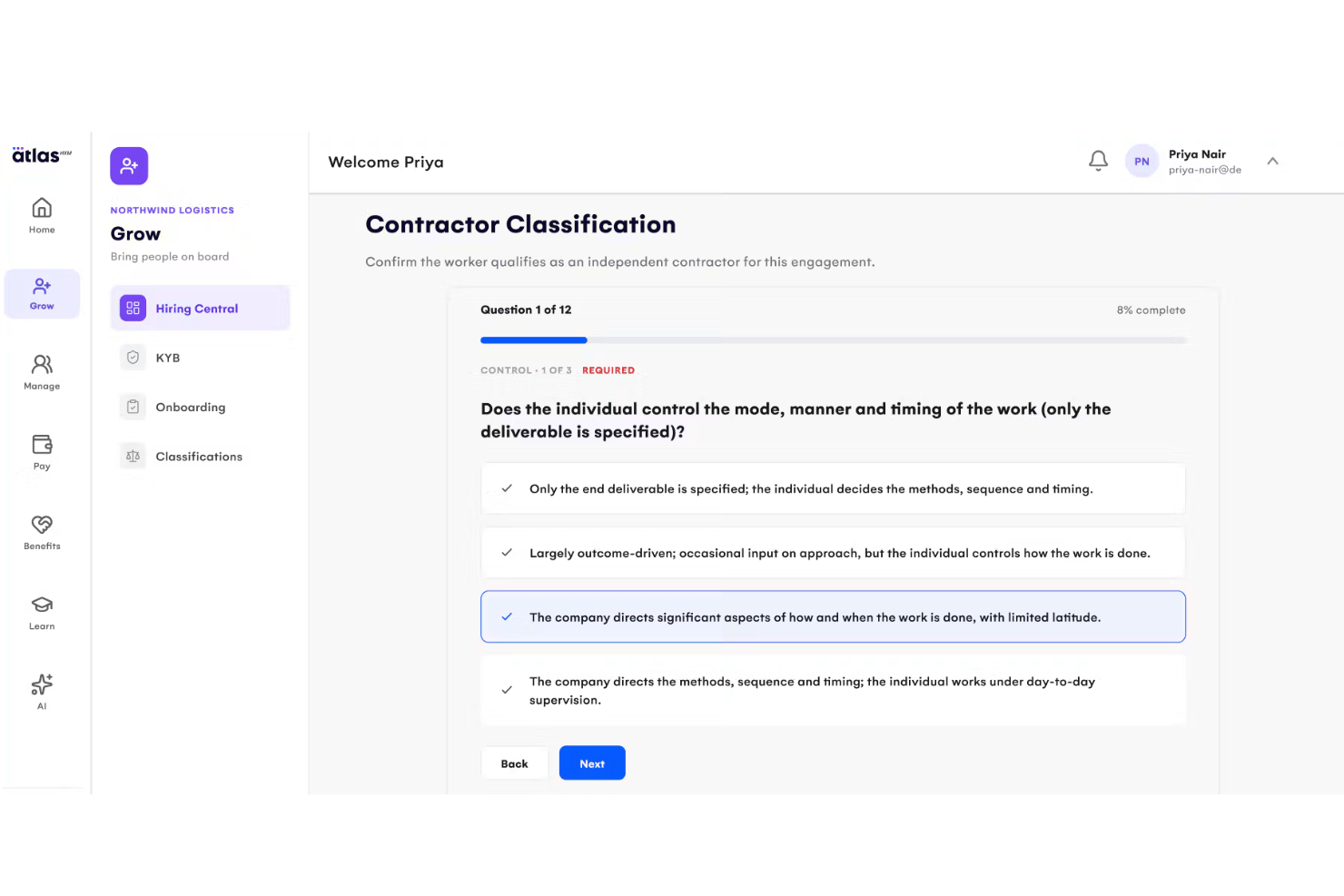
Atlas HXM is a direct-entity employer of record platform that handles Saudi payroll in SAR, GOSI contributions, end-of-service benefit calculations, bilingual employment contracts, and visa and Iqama sponsorship across 160+ countries.
Who Is Atlas HXM Best For?
Atlas HXM is a strong fit for global mobility managers and HR directors who need to convert existing contractors into fully employed Saudi workers without setting up a local entity.
Why I Picked Atlas HXM
I've included Atlas HXM in my top picks because its Agent of Record (AOR) product makes contractor-to-EOR conversion genuinely practical in Saudi Arabia. If you're already working with contractors in KSA and need to bring them onto a compliant payroll, Atlas lets you do that on the same platform without starting from scratch. I also like that it backs contractor classification with up to $100,000 per worker in protection coverage, which removes real legal exposure during the conversion process.
Atlas HXM Key Features
- Bilingual employment contracts: Atlas drafts Arabic or bilingual Saudi employment contracts that comply with Saudi Labor Law, covering permanent, fixed-term, and temporary arrangements.
- End-of-service benefit (EOSB) calculation: Atlas calculates and administers EOSB payments using the statutory formula—15 days' wages per year for the first five years, then one month per year thereafter.
- GOSI contributions management: Atlas handles General Organization for Social Insurance (GOSI) registration and statutory filings, with employer contribution rates applied by nationality.
- Employee self-service app: iOS and Android apps give Saudi-based employees access to payslips, leave requests, expense submissions with AI receipt scanning, and benefits details.
Atlas HXM Integrations
Atlas HXM documents integrations with Workday, BambooHR, Sage, Ashby, Paycor, UKG, and Dayforce, plus SSO through Okta, Microsoft, and Google Workspace.
Pros and Cons
Pros:
- Reviewers praise responsive account managers
- AOR supports contractor-to-employee conversion
- Direct Saudi entity avoids partner handoffs
Cons:
- Saudi labor-law details conflict across pages
- Limited published guidance on Nitaqat

Mercans
Best for payroll-first EOR with owned entity
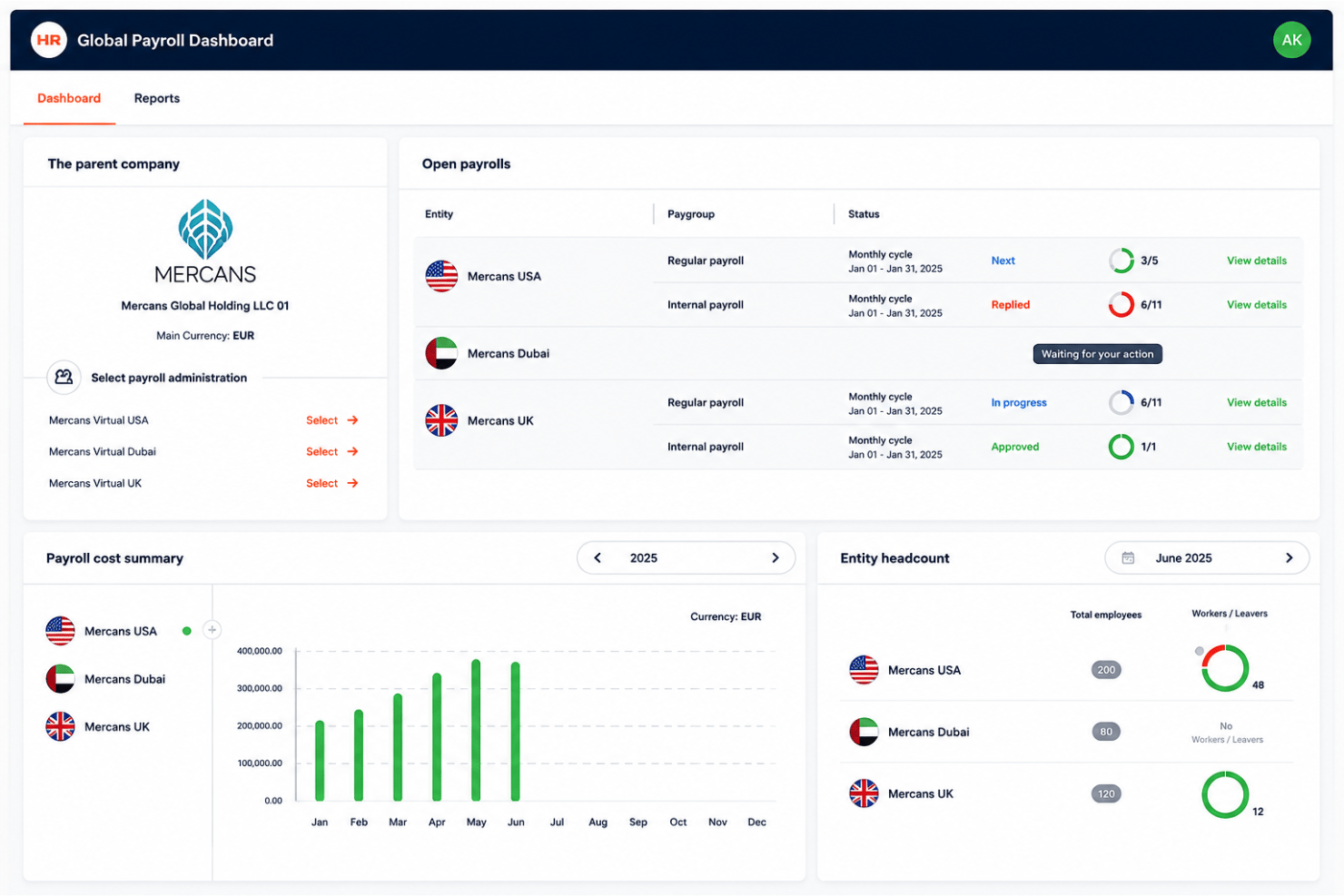
Mercans is a global payroll and employer of record platform with a wholly-owned Saudi entity that covers WPS-compliant payroll, GOSI contributions, EOSB calculations, visa and Iqama sponsorship, and contractor management.
Who Is Mercans Best For?
Mercans suits global payroll teams and HR directors who need a Saudi Arabia EOR backed by a wholly-owned Riyadh entity and WPS-compliant payroll processing.
Why I Picked Mercans
I picked Mercans as one of the best because it owns its Saudi entity outright, with a registered Riyadh office and full-time in-country staff rather than a partner network. That distinction matters most on payroll: Mercans runs WPS-compliant payroll from its own entity, handles GOSI contributions across Saudi nationals, GCC nationals, and non-GCC expatriates with published contribution tables, and calculates EOSB at the correct tiered rates whether the employee resigns or is terminated.
Mercans Key Features
- Visa and Iqama sponsorship management: Mercans handles the full work permit and residency permit process, including application, documentation, and renewal coordination.
- Multi-currency payroll payments: Payroll can be disbursed in 103 currencies, which suits teams managing expatriate compensation across multiple countries.
- Employee self-service portal: HR Blizz gives employees and managers access to leave management, time and attendance, expense submissions, and payslip viewing via a mobile-native interface.
- Contractor and AOR services: Alongside EOR employment, Mercans supports contractor payments through Agent of Record services and handles contractor-to-employee conversions.
Mercans Integrations
Mercans documents integrations with Workday, HiBob, Darwinbox, SAP SuccessFactors, Rydoo, SAP ERP, and GOSI. Its API-first G2N payroll stack and data exchange module support custom connectivity.
Pros and Cons
Pros:
- Detailed GOSI and EOSB guidance
- WPS payroll backed by positive payroll reviews
- Owns Riyadh entity, avoiding partner chains
Cons:
- Mixed support reviews and undisclosed visa timelines
- Nitaqat support lacks quota analysis

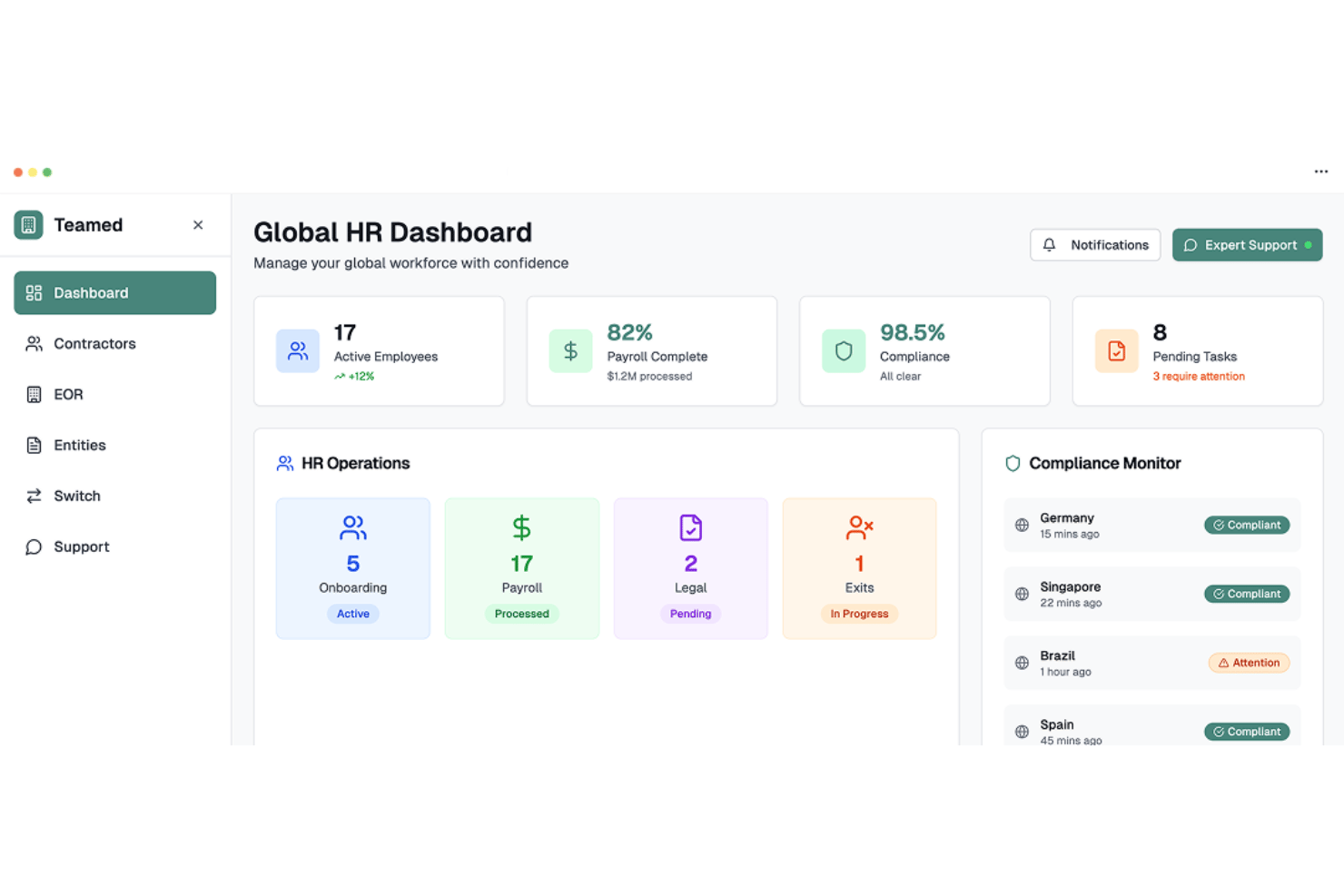
Teamed is an employer of record platform that covers Saudi labor law compliance, WPS payroll processing, GOSI contributions, Iqama sponsorship, and contractor-to-EOR conversion across 187+ countries.
Who Is Teamed Best For?
Teamed works well for startups and scale-ups that are already working with contractors in Saudi Arabia and want a clear path to converting them to fully employed EOR workers.
Why I Picked Teamed
I've included Teamed in my top picks because it's the only platform I've found that handles the full contractor-to-EOR conversion in Saudi Arabia without requiring re-onboarding, which matters when you're working with foreign nationals who legally can't operate as independent contractors there. Its Saudi-specific contractor classification tool flags misclassification risk early, and the conversion path moves workers directly onto WPS payroll with Iqama sponsorship handled by Teamed's own entity.
Teamed Key Features
- WPS payroll enrollment: Teamed enrolls employees in the Wage Protection System and collects IBANs within the first week of onboarding.
- Bilingual contract drafting: Contracts are prepared in Arabic and English by local lawyers and registered on Qiwa on or before the employee's first day.
- EOSG calculation and reserve: Teamed calculates and reserves end-of-service gratuity automatically, covering the tiered rate structure under Saudi labor law.
- Month-to-month terms with no setup fees: Plans run on a rolling monthly basis with no setup or exit costs and a 90-day satisfaction guarantee.
Teamed Integrations
Teamed integrates with Personio, BambooHR, HiBob, Workday, Gusto, and Zapier.
Pros and Cons
Pros:
- Reviewers praise responsive, named country specialists
- Saudi contracts cover Arabic and English
- Contractor-to-EOR conversion avoids re-onboarding
Cons:
- Iqama and Saudization claims remain inconsistent
- G2 reviewers report onboarding delays

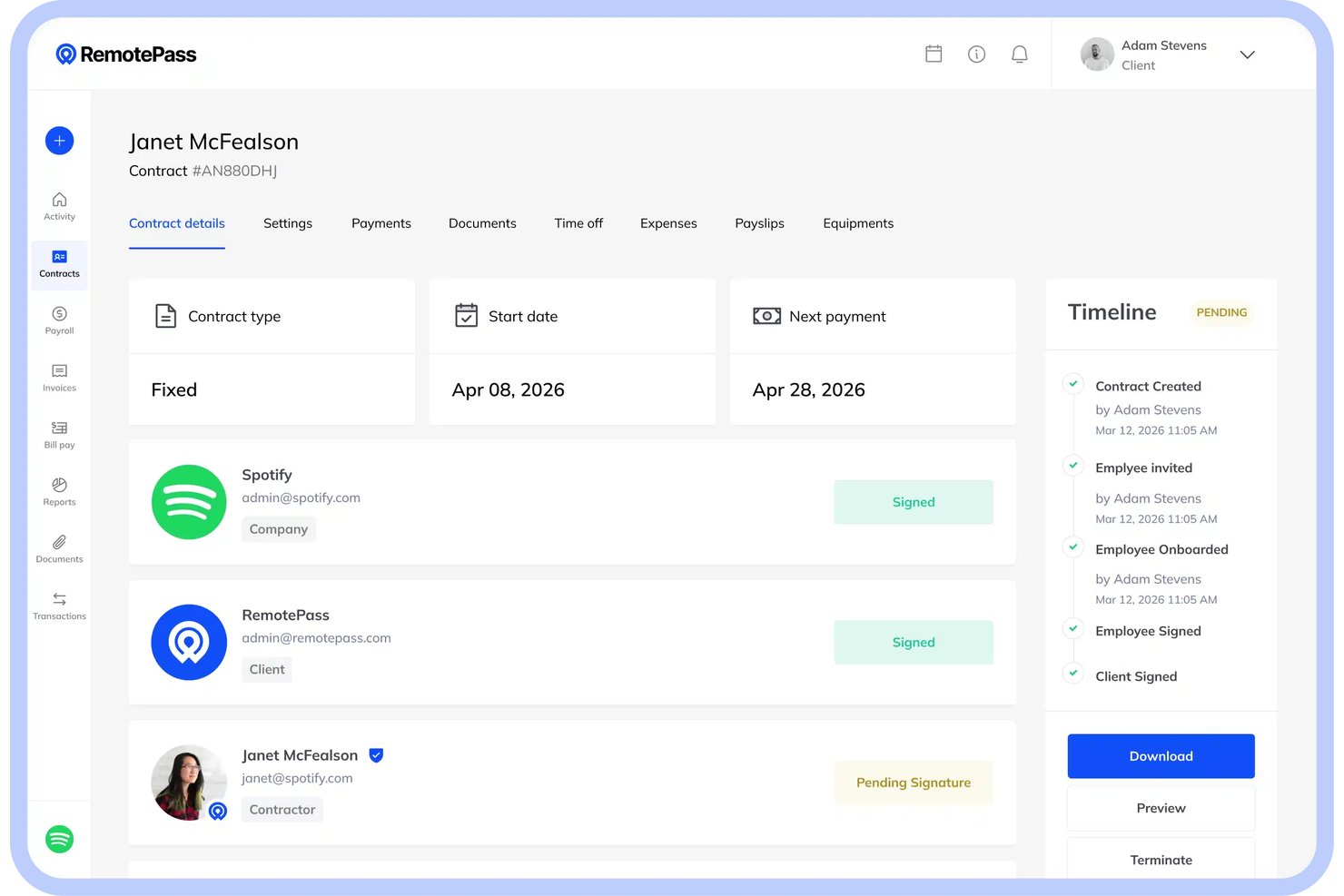
RemotePass is a Middle East-founded employer of record platform that covers Saudi Arabia hiring, including Iqama sponsorship, WPS-compliant SAR payroll, GOSI contributions, EOSB automation, and bilingual Qiwa-registered employment contracts.
Who Is RemotePass Best For?
RemotePass is a strong fit for companies hiring in Saudi Arabia that want a Middle East-native EOR with deep familiarity with Qiwa, WPS, and GOSI.
Why I Picked RemotePass
RemotePass earns its spot on my shortlist because it's the only Middle East-founded EOR on this list, and that origin shows up in the product itself. I've found its Qiwa contract registration and WPS-compliant SAR payroll via Mudad to be genuinely localized, not bolted on. GOSI contributions for both Saudi and non-Saudi staff are handled automatically, with rate changes like the 2024 updates already built in.
RemotePass Key Features
- EOSB automation: Calculates and processes end-of-service benefit payouts using the Saudi Labor Law formula, without manual input from your team.
- Bilingual employment contracts: Drafts Arabic and English contracts and registers them directly on the Qiwa platform.
- Multi-currency payroll funding: Supports one-click payroll funding in SAR and other currencies, with automated payslips and invoicing.
- Contractor-to-EOR conversion: Lets you reclassify contractors as employees and move them onto the EOR arrangement within the same platform.
RemotePass Integrations
RemotePass documents integrations with HiBob, BambooHR, Sapling, NetSuite, Xero, QuickBooks, Slack, and Google Workspace. It also supports SAP, Workday, and an API for custom integrations.
Pros and Cons
Pros:
- Reviewers praise responsive support and fast payments
- Registers bilingual employment contracts on Qiwa
- Automates Saudi GOSI and EOSB administration
Cons:
- Nitaqat guidance lacks client-specific quota planning
- Expat Iqama sponsorship can take 4–10 weeks

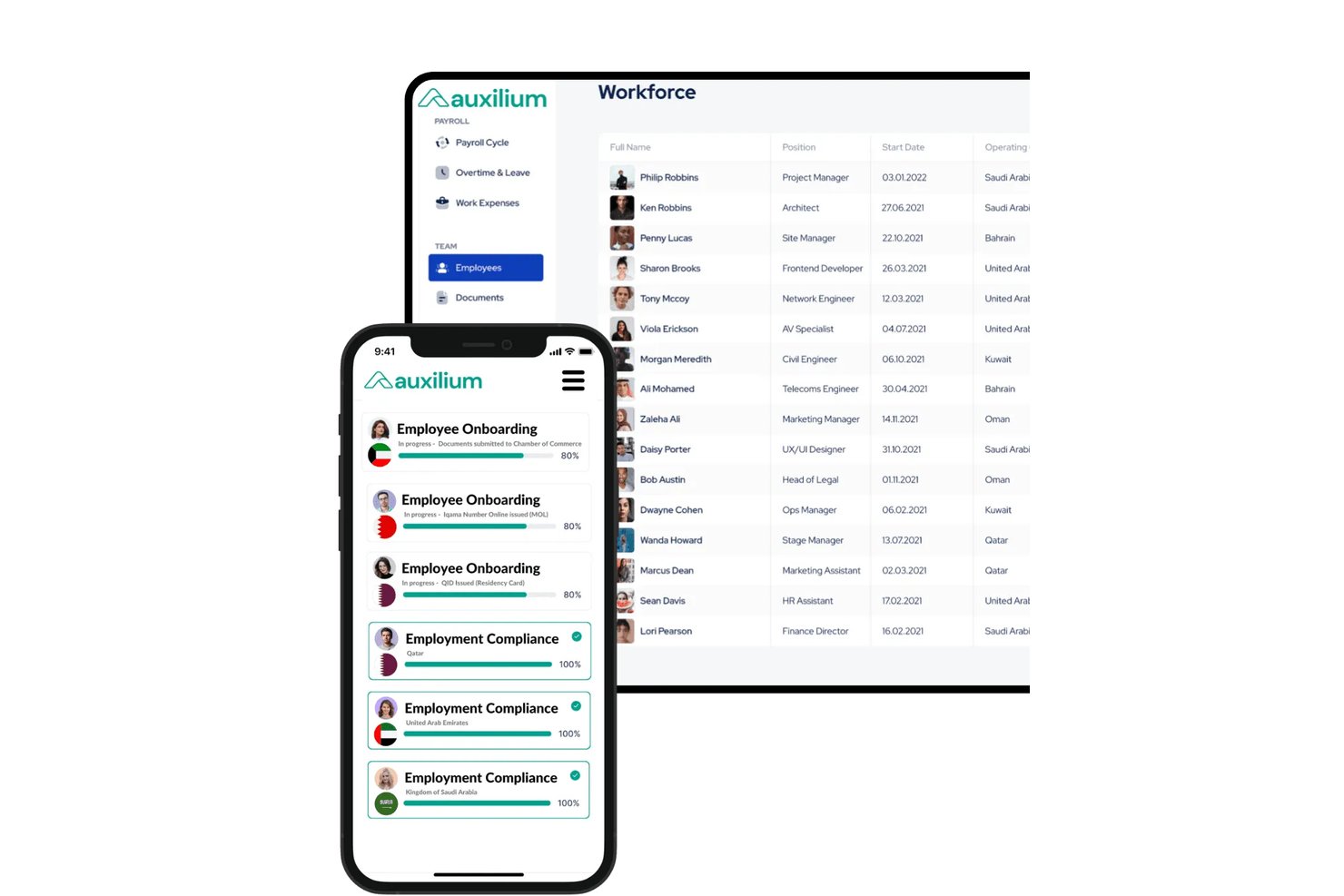
Auxilium is a GCC-focused employer of record service that covers Saudi Arabia employment, payroll processing via WPS/Mudad, GOSI registration, Iqama and visa sponsorship, and Nitaqat/Saudization compliance guidance.
Who Is Auxilium Best For?
Auxilium is a strong fit for talent acquisition leaders and global mobility managers navigating Saudi Arabia's Nitaqat quota system for the first time.
Why I Picked Auxilium
I picked Auxilium as one of the best because its Nitaqat guidance goes well beyond general advice. It actively classifies your roles by skill tier, flags which positions fall under the 69 Saudi-national-reserved administrative categories, and checks its own Saudi-national ratio before confirming any new hire's start date. That level of Saudization structuring is genuinely rare among GCC-focused providers. I also find the WorkforcePRO platform useful for tracking Iqama and visa application stages in real time, which matters when Saudi timelines run longer than other markets.
Auxilium Key Features
- WPS/Mudad payroll processing: Auxilium runs payroll in compliance with Saudi Arabia's Wage Protection System through the Mudad platform, with multi-currency payment support.
- Iqama and visa sponsorship management: Auxilium handles the full Employment Visa and Iqama process, including document attestation, renewals, cancellations, and dependent visas.
- GOSI registration and monthly filings: Auxilium registers employees with GOSI and manages monthly social insurance contribution filings on your behalf.
- WorkforcePRO visa and onboarding tracking: The platform provides real-time status updates on visa applications and onboarding stages, with customizable automated alerts for key milestones like approvals and expiry dates.
Auxilium Integrations
Auxilium doesn’t have any native integrations clearly documented.
Pros and Cons
Pros:
- Real-time visa and onboarding tracking
- WPS/Mudad payroll and GOSI filings
- Detailed Nitaqat guidance for hiring plans
Cons:
- Visa capacity depends on Nitaqat headroom
- Saudi entity structure remains unclear
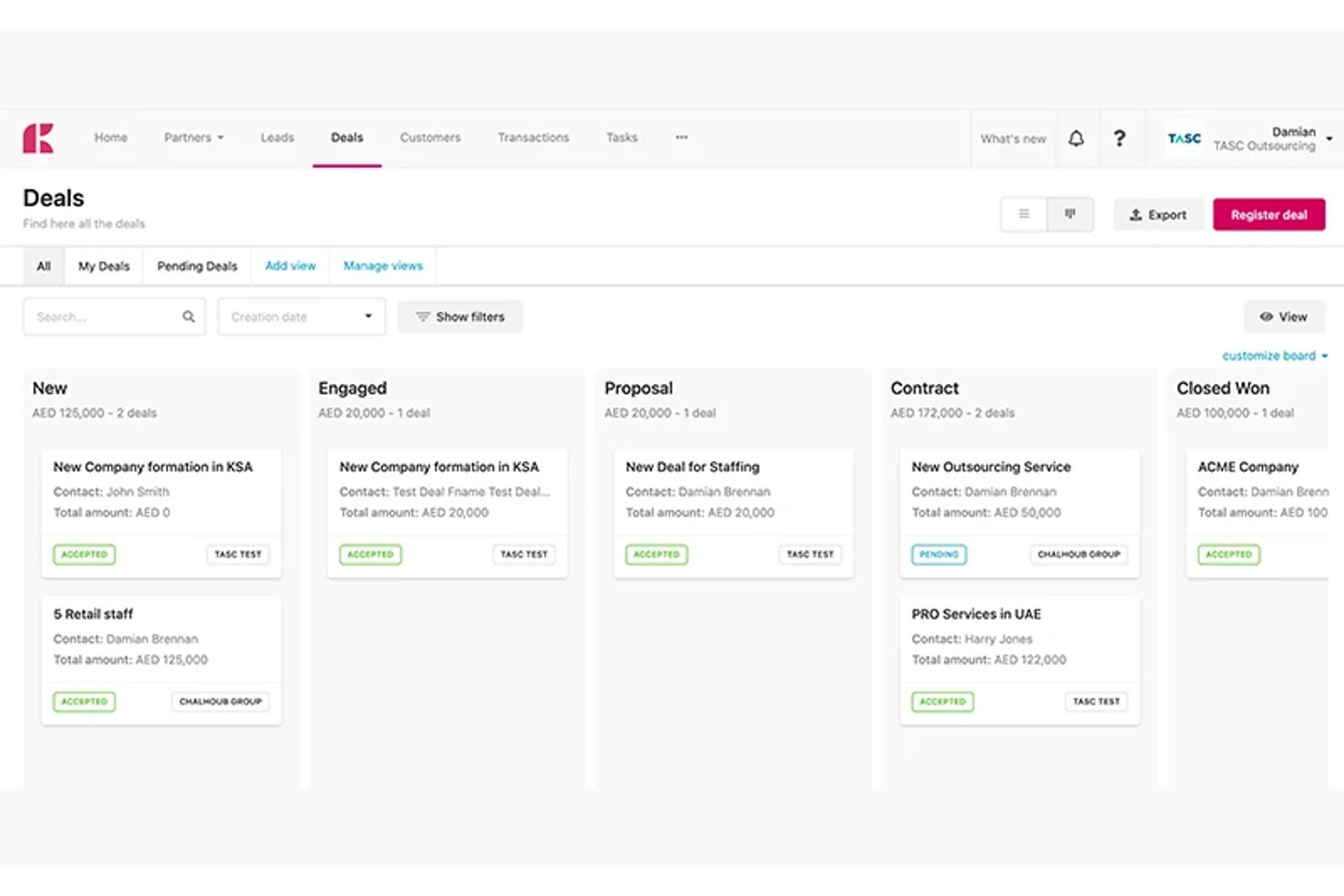
TASC Outsourcing is a GCC-based employer of record and PEO service that handles Saudi legal employment, WPS-compliant payroll, GOSI registration, Iqama and visa sponsorship, and Saudization compliance.
Who Is TASC Outsourcing Best For?
TASC Outsourcing is a strong fit for companies expanding into Saudi Arabia and the wider GCC that need a locally rooted partner to handle Iqama sponsorship, WPS payroll, GOSI, and Saudization compliance under one roof.
Why I Picked TASC Outsourcing
I've included TASC Outsourcing in my top picks because it's one of the few EOR providers with a registered Saudi entity, physical offices in Riyadh, Al Khobar, and Jeddah, and in-house government relations officers handling Iqama sponsorship, Qiwa contract management, and block visa applications directly. Its Governify module tracks active visas and compliance tasks across 15 government portals, which I find genuinely useful when managing a high-volume GCC workforce. The built-in Nitaqat headcount structuring and RPO service for sourcing Saudi nationals make it a practical fit for companies that need to hit Saudization ratios while still filling roles with expat hires.
TASC Outsourcing Key Features
- WPS-compliant payroll processing: TASC runs Saudi payroll through the Mudad portal, generating bilingual payslips and calculating EOSB, overtime, and final settlements in line with Wage Protection System requirements.
- TASC360 Onboardify module: Digital onboarding tool that manages employment documents and tracks worker setup across Qiwa, Muqeem, and Ajeer government portals from a single dashboard.
- RPO with AI CV screening: TASC's recruitment process outsourcing service uses hyrra.ai and a database of 1M+ candidates to source and screen Saudi nationals for Nitaqat-targeted roles.
- Expat cost calculator: A staffing cost estimator on the Saudi site breaks down projected employee costs by visa type, covering new visas and Iqama transfers.
TASC Outsourcing Integrations
TASC Outsourcing centralizes HR, government relations, and company incorporation workflows through TASC360.
Pros and Cons
Pros:
- Reviewers praise individual staff support
- Nitaqat planning pairs hiring with compliance
- Saudi-based GROs manage visa sponsorship
Cons:
- MHRSD EOR licensing isn’t publicly confirmed
- Some client reviews report inconsistent communication

Masdar EOR is a Saudi Arabia-focused employer of record service that employs your chosen candidates through its own licensed Saudi entity, managing payroll in SAR via WPS, GOSI registration, Iqama sponsorship, Nitaqat compliance, and end-of-service gratuity.
Who Is Masdar EOR Best For?
Masdar EOR is a strong fit for startups and small teams entering the Saudi market who need a specialist to handle Qiwa contracts, WPS payroll, GOSI registration, and Nitaqat compliance from the first hire.
Why I Picked Masdar EOR
I picked Masdar EOR as one of the best because it operates through its own licensed Saudi entity, which means your workers are employed under a structure that's already Qiwa-registered, WPS-compliant, and sitting at Green Nitaqat status before your first hire. I especially like that it handles GOSI registration, monthly contribution remittance, and end-of-service gratuity accrual as built-in parts of the service, so Saudi labor law obligations are covered from day one rather than patched in later.
Masdar EOR Key Features
- Bilingual employment contracts: Masdar drafts Arabic and English contracts registered on Qiwa, with the Arabic version serving as the legally binding document.
- Employee self-service portal: Employees on Professional and Enterprise plans can view payslips, submit leave requests, and download employment letters through a dedicated portal.
- Consolidated monthly invoicing: Masdar issues one invoice covering the service fee, gross salary, employer GOSI contributions, health insurance, and applicable country levies.
- Offboarding and final settlement administration: Masdar manages notice periods, leave encashment, gratuity calculations, visa cancellation, and government notifications, with final settlement paid within 14 days of the last working day.
Masdar EOR Integrations
Native integrations aren’t listed.
Pros and Cons
Pros:
- Handles Iqama sponsorship and Nitaqat administration
- Reviewers praise responsive regional support
- Saudi labor compliance across Qiwa, WPS, GOSI
Cons:
- Onboarding estimates vary across vendor pages
- Conflicting GOSI rate disclosures

Best for multi-country EOR with built-in GOSI detail
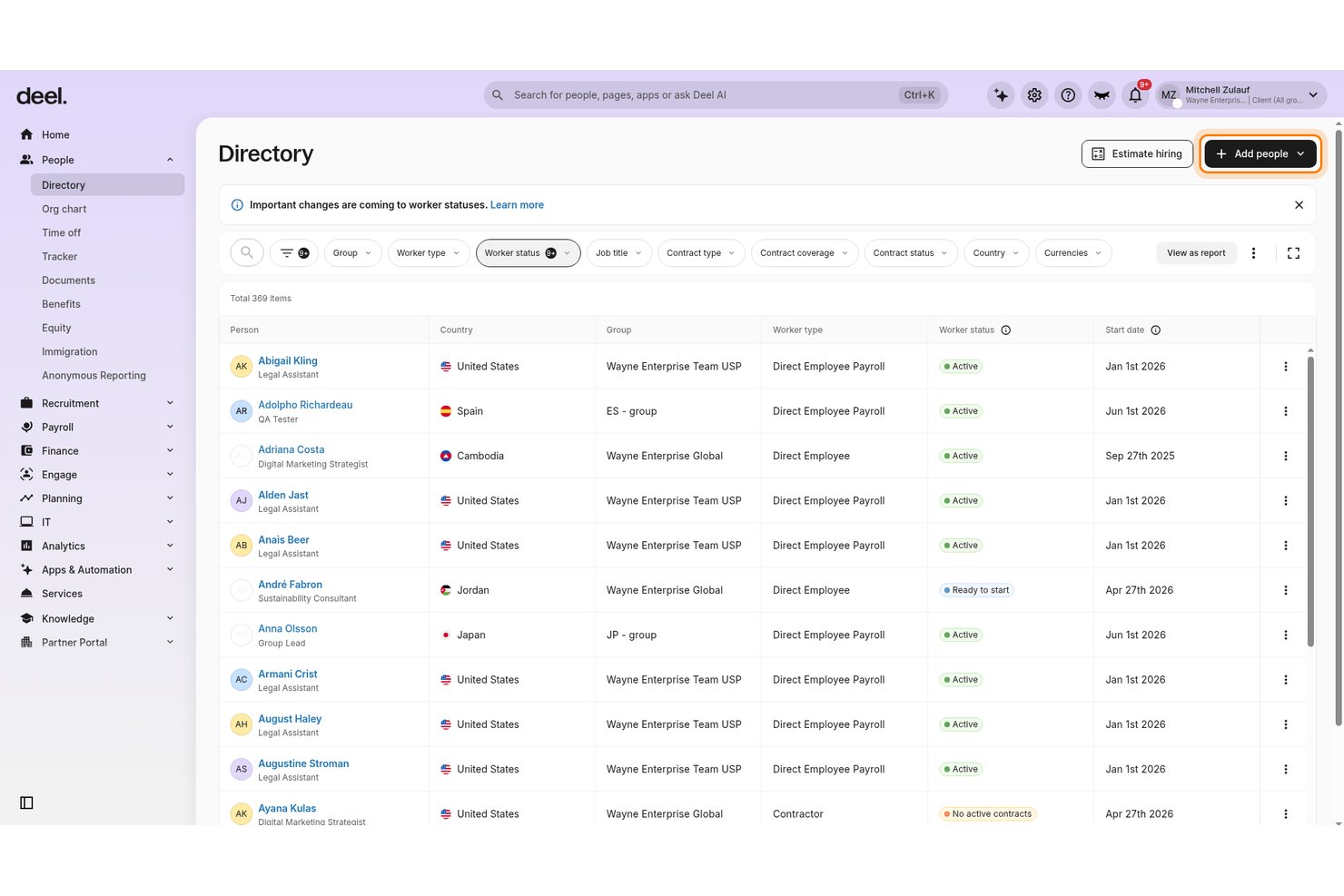
Deel is a global employer of record platform that lets you hire in Saudi Arabia without a local entity, covering payroll in SAR, GOSI contributions by nationality, visa and work permit sponsorship, benefits administration, and contractor-to-employee conversion.
Who Is Deel Hire Best For?
Deel Hire suits startup founders and COOs testing Saudi market entry who need a single platform for multi-country EOR, contractor management, and immigration without committing to a local entity.
Why I Picked Deel Hire
I've included Deel Hire in my top picks because it handles multi-country EOR from a single platform while publishing more Saudi-specific GOSI detail than most competitors. I particularly like that it breaks down contribution rates by nationality, covering expats, Saudi nationals who joined before or after July 2024, and GCC nationals, so your cost modeling starts accurate. It also offers work permit sponsorship with in-house immigration lawyers and real-time case tracking, which matters when you're managing iqama timelines alongside hires in multiple countries.
Deel Hire Key Features
- Contractor-to-EOR conversion: Convert existing contractors to EOR employees through a structured in-platform process that handles classification compliance.
- Anytime Pay: Let EOR employees draw a portion of their earned salary before the scheduled payday directly through the Deel platform.
- ATS integrations: Connect with Greenhouse, Ashby, and other recruiting tools so a completed hire automatically triggers onboarding in Deel.
- Real-time immigration case tracking: Monitor work permit and visa applications with renewal alerts and 24-hour case manager response times.
Deel Hire Integrations
Deel Hire offers documented integrations with Greenhouse, Ashby, BambooHR, HiBob, Personio, QuickBooks, Xero, and NetSuite for recruiting, HR, and accounting workflows.
Pros and Cons
Pros:
- Users praise on-time payments
- Immigration case tracking includes renewal alerts
- Saudi GOSI rates vary by nationality
Cons:
- WPS and end-of-service details are undocumented
- Saudi employing entity ownership remains unclear

Best for low-cost EOR with clear pricing
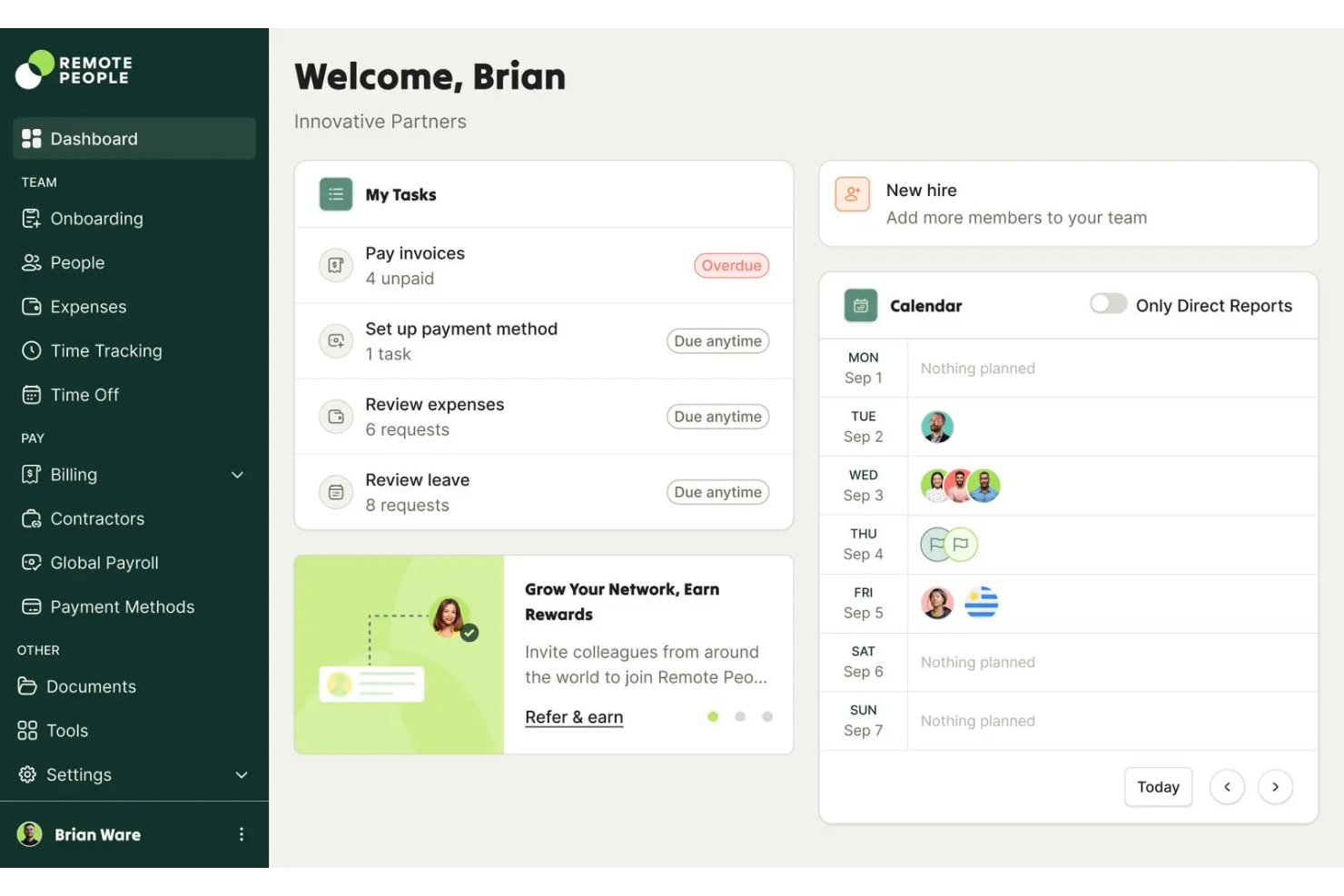
RemotePeople is an employer of record platform that handles Saudi labor law contracts on Qiwa, SAR payroll through Mudad, GOSI contributions, and visa and Iqama sponsorship for hiring in Saudi Arabia without a local entity.
Who Is RemotePeople Best For?
RemotePeople is a strong fit for startups and lean teams entering Saudi Arabia on a budget, especially where transparent, low-cost pricing and bundled payroll and visa sponsorship matter most.
Why I Picked RemotePeople
I picked RemotePeople as one of the best because its $199/month published pricing is a genuine rarity in the Saudi EOR space, where most competitors quote on request. I also like that the Saudi-specific cost breakdowns are unusually detailed: the platform handles Mudad-based SAR payroll, monthly end-of-service benefit (EOSB) accrual, and GOSI contributions under the updated 2026 scheme rates, all reflected transparently in a per-employee cost report.
RemotePeople Key Features
- Qiwa contract authentication: Arabic–English employment contracts are drafted under Saudi Labor Law and authenticated directly on the Qiwa platform, including the February 2025 amendments.
- AI Command Center: a plain-language interface where you submit payroll, leave, expense, and termination requests, with human expert review before execution.
- EOR Switch migration: moves employees from another EOR to RemotePeople in about two weeks, with up to 12 months of your previous provider's exit fees reimbursed.
- Visa and Iqama sponsorship: RemotePeople handles work visa applications, HRSD work permits, Enjaz requests, and Iqama issuance, with government fees passed through at cost.
RemotePeople Integrations
RemotePeople integrates with BambooHR, HiBob, Personio, Dayforce, and Workday to sync employee data and support onboarding.
Pros and Cons
Pros:
- Published visa timelines and fee pass-through
- Reliable payroll with GOSI administration
- Responsive support and smooth onboarding
Cons:
- Saudi legal-entity ownership remains unclear
- Post-sale delivery can be slow

Multiplier
Best for flat-fee KSA hiring via owned Kafeel entity
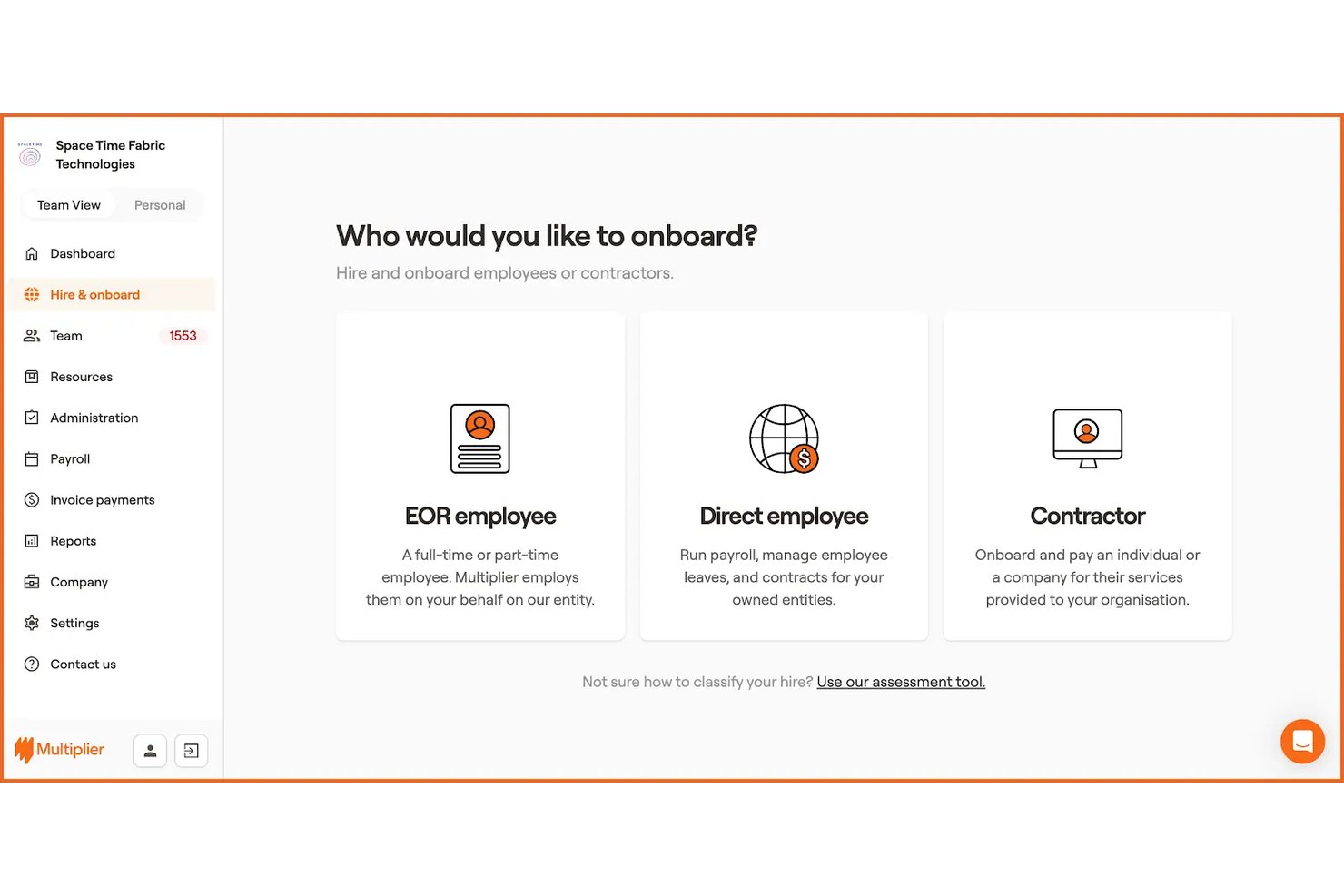
Multiplier is a global employer of record platform that handles Saudi employment contracts, GOSI contributions, WPS-compliant payroll, Nitaqat monitoring, and Kafeel visa sponsorship through its own in-country legal entity.
Who Is Multiplier Best For?
Multiplier is a strong fit for companies entering the Saudi market without a local entity, particularly lean teams that need direct Kafeel sponsorship and predictable flat-fee pricing from day one.
Why I Picked Multiplier
I picked Multiplier as one of the best because it owns its Saudi legal entity outright and holds Kafeel status directly, meaning your employees' Iqamas are sponsored by Multiplier itself rather than a subcontracted third party. That single-entity model also covers continuous Qiwa/Nitaqat monitoring and a tiered EOSB calculation engine that adjusts accruals based on whether someone resigns or is terminated. The flat monthly fee makes budgeting predictable from your first Saudi hire onward.
Multiplier Key Features
- Tiered EOSB calculation engine: Automatically adjusts end-of-service benefit accruals based on termination type, whether resignation or dismissal, in line with Saudi labor law.
- WPS/Mudad payroll processing: Handles monthly payroll file uploads through the Wage Protection System, with SAR salary disbursements into Saudi bank accounts.
- GOSI contribution management: Registers employees and processes monthly contributions for both Saudi nationals and expatriates at the correct statutory rates.
- Contractor-to-employee conversion: Converts existing contractor relationships into fully compliant EOR employment arrangements without requiring a new hiring process.
Multiplier Integrations
Multiplier integrates with BambooHR, Workday, HiBob, and Personio. HRIS integrations and API access are available on the Growth plan.
Pros and Cons
Pros:
- Reviewers praise responsive support and a clear dashboard
- WPS, GOSI, and tiered EOSB administration
- Direct Kafeel sponsorship through an owned entity
Cons:
- Payroll corrections can wait until the next cycle
- Published probation and maternity rules conflict
Other Employers of Record in Saudi Arabia
Here are a few additional options that didn’t make my shortlist but are still worth checking out:
- G-P
For AI-guided onboarding
- Papaya Global
For contractual termination liability cover
- Oyster HR
For ATS-connected hiring without a local entity
- Payoneer Workforce Management
For market-entry hiring via Payoneer's network
- Asanify
For HRMS-bundled entry
- WorkMotion
For HRIS-integrated hiring
- GoGlobal
For market-entry hiring and entity transition
- NNRoad
For market-entry hiring with entity handover
- Tarmack
For regulatory content-led EOR
- Playroll
For HRIS-connected KSA hiring without an entity


How to Choose an Employer of Record in Saudi Arabia
How I Evaluate Employer of Record in Saudi Arabia
I split my evaluation into three parts. First, core functionality—can the provider legally employ workers in Saudi Arabia and ensure compliant contracts, notice periods, and end-of-service gratuity? This carries the most weight. Then I look for standout features like bilingual contract generation or contractor-to-EOR conversion. Finally, I consider pricing transparency and local legal depth.
Core Functionality (Table Stakes for This List)
When I'm selecting tools for my list, I score each one on a scale from 0 (does not offer the functionality) to 5 (excels in this area) for each core functionality listed below. I then convert the total into a percentage to help assess each tool's overall fit, with extra weight on any functionalities I've deemed essential.
- Local Legal Employment (Essential): I check whether the provider owns or controls a licensed entity in Saudi Arabia rather than relying on opaque third-party arrangements.
- Saudi Labor Law Compliance (Essential): I evaluate how each provider handles localized contracts, notice periods, and end-of-service gratuity calculations under Saudi labor law.
- Compliant Payroll Processing: Accurate, on-time payroll in Saudi Riyals matters, so I look for alignment with the Wage Protection System and clear pay-slip reporting.
- GOSI Contributions Management: I check whether the provider handles General Organization for Social Insurance registration and ongoing monthly contributions on your behalf.
- Saudization and Nitaqat Support: Providers like Auxilium and Multiplier reference Nitaqat guidance, so I evaluate whether each service offers actionable quota advice tied to your hiring mix.
- Visa and Work Permit Sponsorship: I look at whether the provider can sponsor Iqama residency permits and work visas for foreign hires, including renewal tracking.
Once I have a list of tools that meet the criteria, I consider what sets each platform apart.
Differentiating Factors (What Sets Vendors Apart)
Here's how I compare and contrast different vendors:
Standout Features
I look for contractor-to-EOR conversion because many companies already have workers in Saudi Arabia on informal arrangements. A provider like Multiplier or Atlas HXM that can move those contractors onto compliant employment contracts reduces misclassification risk without disrupting ongoing work. Bilingual contract generation in Arabic and English is another factor I evaluate, since Saudi labor courts expect Arabic-language agreements and dual-language drafts speed up onboarding while cutting legal ambiguity. I also check whether the platform offers an employee self-service portal where hires can track Iqama status, download payslips, and submit leave requests on their own.
Beyond Features
I check how fast a provider can move from signed agreement to a hire's first working day, since visa and Iqama processing timelines vary widely. Providers like Multiplier and RemotePass with owned in-country entities tend to onboard faster than those routing through third parties. Cost transparency matters just as much—I compare flat per-employee fees against percentage-based models and look for hidden charges around GOSI, visa sponsorship, or end-of-service gratuity funding that inflate total cost. I also evaluate whether each platform can sync with your existing HRIS or ATS through pre-built connectors or an open API, because duplicate data entry across global HR systems adds real administrative drag.
Choose an EOR by testing who employs your workers in Saudi Arabia, how it handles local obligations, and what costs or responsibilities stay with your business.
| If your priority is… | Look for… |
|---|---|
| Clear legal accountability | Written confirmation of the Saudi employing entity and its role |
| Predictable payroll administration | A sample SAR payslip showing WPS processing and GOSI deductions or contributions |
| Fewer compliance surprises | A written explanation of labor-law contract terms, notice periods, and end-of-service calculations |
| Hiring plans tied to workforce mix | Specific guidance on Nitaqat implications and visa or Iqama sponsorship eligibility |
How to Vet Your Shortlist
- Verify the employing arrangement: Request the Saudi entity’s legal name and a document showing how it will employ your worker before signing.
- Review contract terms: Ask for a sample employment contract and written examples of notice and end-of-service calculations for two termination scenarios.
- Trace a payroll cycle: Request a sample payslip and a written breakdown of WPS handling, GOSI amounts, payment timing, and any separate charges.
- Test hiring eligibility: Send the role, nationality, and proposed start date; request written confirmation of sponsorship requirements and any Nitaqat considerations.
- Choose your tradeoff: Decide whether you value a clearly documented local employment arrangement over broader country coverage, and require the provider to state its responsibilities in the service agreement.
What Are Employers of Record in Saudi Arabia?
An employer of record in Saudi Arabia is a local employing entity that hires workers on your behalf and manages employment administration. It typically handles local contracts, payroll, and required employment processes, while your team directs the employee’s day-to-day work. The arrangement can help you hire in the country without establishing your own local entity. Before choosing one, confirm who employs the worker and which legal and payroll responsibilities the provider assumes.
Features
Here are the main features I look for in an employer of record in Saudi Arabia:
- Local employment entity: The provider employs your worker through a Saudi legal entity and identifies that entity in your agreement. Confirming who holds the employment relationship clarifies accountability for local obligations.
- Saudi labor law compliance: The service prepares locally compliant employment contracts and supports required terms, notice periods, and employment records. Ask how it handles contract changes and termination procedures.
- Payroll processing: The provider calculates salary, deductions, and other pay items in Saudi Riyals, then shares payslips and payroll records. A clear payroll calendar helps your team verify amounts and payment dates.
- WPS administration: The provider processes salary payments through the Wage Protection System and keeps the required payment records. Ask for a sample payroll report to see how payment status and exceptions are documented.
- GOSI administration: The service manages eligible employee registrations and ongoing contributions to the General Organization for Social Insurance. Request a breakdown of contribution amounts and how they appear in payroll records.
- Visa and Iqama support: For eligible foreign hires, the provider explains sponsorship requirements and coordinates work authorization and residency permit processes. Confirm which steps it handles, expected timelines, and renewal responsibilities.
- Nitaqat guidance: The provider explains how a proposed role and workforce mix may affect Saudization requirements and hiring eligibility. Ask for advice specific to your hiring plan rather than a general overview.
- End-of-service calculations: The service calculates end-of-service benefits using applicable employment terms and Saudi requirements. Request written examples for different termination scenarios so you can understand potential liabilities.
- Employee self-service: A portal lets employees access payslips, submit leave requests, or review relevant employment information. Check which records and services employees can use directly.
Benefits
Using an employer of record in Saudi Arabia can offer several practical benefits:
- Local hiring access: A Saudi employing entity can let you hire locally without establishing your own entity, subject to the provider’s employment arrangement.
- Localized employment support: Locally prepared contracts and guidance on notice periods and end-of-service calculations help your team manage key Saudi labor requirements.
- Managed payroll obligations: Payroll processing in Saudi Riyals, WPS administration, and GOSI support can make pay records and contribution handling easier to track.
- Visa and Iqama coordination: For eligible foreign hires, sponsorship and renewal support can help your team understand work authorization steps and timelines.
- Workforce planning guidance: Nitaqat advice tied to your hiring mix can help you assess how roles and worker eligibility affect hiring plans.
- Clearer employee access: A self-service portal, when offered, can let employees view payslips, request leave, and check relevant employment information.
Costs and Pricing
Costs depend on headcount, sponsorship needs, and included services. Saudi Arabia EOR fees commonly range from $500 to $800 per employee monthly, though provider quotes and add-ons can change the total.
Plan Comparison Table for Employer of Record in Saudi Arabia
EOR providers don’t typically offer these exact plan tiers. The labels below are approximate pricing bands, not standardized packages; confirm the fee and included services with each provider.
| Plan Type | Average Price | Common Features |
|---|---|---|
| Free Plan | $0 | No EOR employment, no payroll administration and no visa sponsorship. |
| Personal Plan | $400-$800 per employee/month | Local employment contract, payroll administration, WPS processing and GOSI support. |
| Business Plan | $500-$800 per employee/month | Local employment, payroll and WPS administration, GOSI handling and visa or Iqama coordination. |
| Enterprise Plan | $600-$1,000 per employee/month | Multi-employee pricing, tailored compliance support, payroll reporting and account management. |
These estimates generally cover the EOR service fee, not salary, statutory contributions, insurance, visa charges, or other add-ons.
FAQs
Here are quick answers to common questions about employers of record in Saudi Arabia.
Can an EOR hire Saudi nationals and foreign workers?
Yes, an EOR can hire Saudi nationals and eligible foreign workers. The available route depends on its local employment setup and the role. For foreign hires, confirm who sponsors the work visa and Iqama, and which documents you must supply. Ask whether the role meets current eligibility rules. Have the provider assess your planned nationality, job title, and start date in writing. Don’t assume a general country-coverage claim confirms sponsorship for every candidate.
Who is legally responsible for an employee hired through an EOR?
The EOR is generally the contractual employer and handles agreed employment administration, while your organization directs the employee’s daily work. The service agreement, local law, and your management practices still shape your responsibilities. Before signing, map who approves pay changes, leave, discipline, termination, and workplace policies. Make sure the provider’s contract and your internal process name an owner for each decision, especially when a performance issue needs quick action.
Can we move an employee from an EOR to our own Saudi entity?
Yes, but moving a worker from an EOR to your Saudi entity requires more than changing payroll providers. Agree on timing and process with the employee and EOR. Confirm the contract end date, accrued entitlements, and final pay. Also check whether work authorization steps are needed. Ask how continuity of service and end-of-service benefits will be treated, and document the arrangement before the transfer. Don’t promise uninterrupted employment until the parties confirm the legal and administrative steps.