

10 Best Employer of Record in Germany: Reviewed in 2026

Best German Employer of Record Service Shortlist


The best Employer of Record (EOR) services in Germany help you hire top local talent quickly and compliantly—without the hassle of establishing a legal entity.
Expanding into Germany comes with complex employment laws, strict social security obligations, and detailed compliance requirements. The right EOR partner simplifies this process by acting as your legal employer, managing everything from contracts and payroll to taxes and reporting under the Federal Ministry of Labour and Social Affairs (BMAS).
Drawing on my experience researching and writing about global HR and compliance solutions, I’ve curated a list of the best EOR services for hiring in Germany. In this guide, you’ll find trusted providers that make it easy to onboard employees, stay compliant, and focus on growing your business internationally.
Why Trust Our Software Reviews
Our team has been testing and reviewing software since 2012. As HR experts ourselves, we know how difficult—and important—it is to choose the right software.
For this guide, we evaluated tools using hands-on testing and independent research, scoring tools using our selection criteria. We also draw on insights from industry thought leaders and practicing HR experts.
Our reviews reflect our human editorial judgment, not a sales pitch.
Expert reviewers:
Employer of Record in Germany Comparison Table
This comparison table summarizes pricing details for my top employer of record in Germany selections:
| Tool | Best For | Trial Info | Price | ||
|---|---|---|---|---|---|
| 1 | Fast onboarding and local compliance expertise | Free demo available | From $599/employee/month | Website | |
| 2 | Best for end-to-end employee management | Free demo available | From $599/employee/month | Website | |
| 3 | Fast onboarding, affordable EOR for SMBs | Free plan available | From $199/user/month | Website | |
| 4 | Best for dedicated client support | Free demo available | From $199/employee/month | Website | |
| 5 | Best for quick employee onboarding | Free demo available | From $459/user/month (billed annually) | Website | |
| 6 | Best for direct hiring in Germany | Free demo available | From $99/employee/month | Website | |
| 7 | Best for hands-on support in Germany | Not available | Pricing upon request | Website | |
| 8 | Best for onboarding and paying German talent | Free demo available | From $199/user/month | Website | |
| 9 | Best for managing social security contributions | Free demo available | From $549/employee/month | Website | |
| 10 | Best for 24/5 dedicated support | Free demo available | Pricing upon request | Website |

Reviews of the Best EOR Services in Germany
To make your search easier, I’ve reviewed my top 10 EOR picks for hiring in Germany, highlighting what each one offers and how they support HR teams. You’ll also find 10 more providers listed below for even more options to explore.
Fast onboarding and local compliance expertise
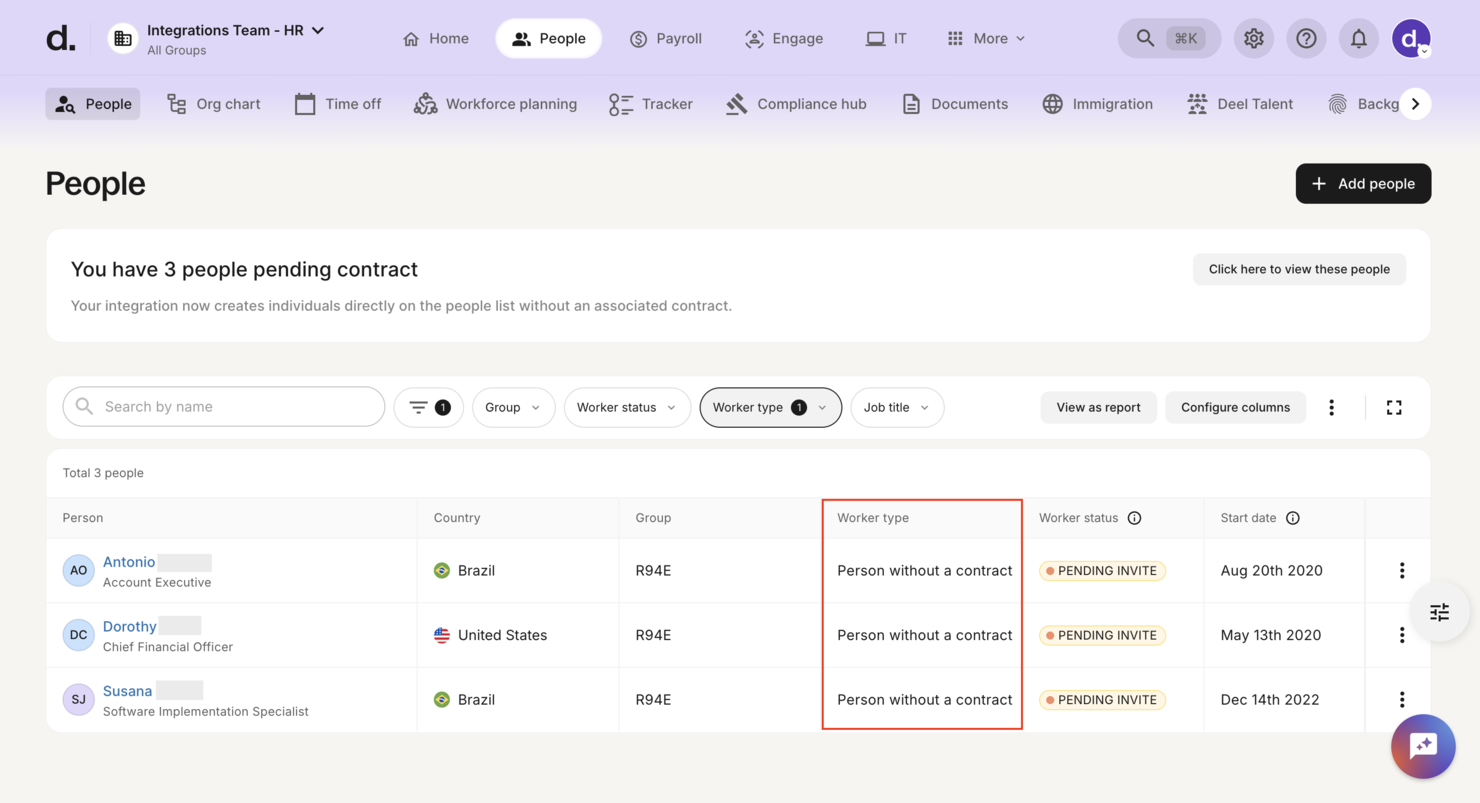
Deel Hire is a global employer of record platform that manages employment contracts, payroll, onboarding, compliance, and benefits across 150+ countries without requiring you to set up a local legal entity.
Who Is Deel Hire Best For?
Deel Hire is a strong fit for fast-growing companies that need to hire international talent quickly without the overhead of entity setup.
Why I Picked Deel Hire
Deel Hire earns its spot on my shortlist because of how quickly it gets new hires up and running in Germany. I love that Deel owns its own entities and payroll infrastructure in 130+ countries, which means onboarding isn't dependent on third-party handoffs. When local German labor rules get complex, I can tap into a network of 200+ in-house legal experts without leaving the platform. The built-in compliance monitoring also flags upcoming regulatory changes automatically, which keeps my team ahead of issues before they become real problems.
Deel Hire Key Features
- Global benefits administration: Deliver country-specific statutory benefits, plus optional perks, to German employees from day one.
- Termination and severance management: Deel handles the full offboarding process in line with local German labor law, including notice periods and severance payouts.
- Equity support: Grant stock options to international employees, with guidance on what's legally viable by country.
- Talent sourcing: Submit a job request and receive agency-sourced candidates, then onboard directly through the EOR without extra handoffs.
Deel Hire Integrations
Deel offers integrations through its App Store across HR, accounting, and recruiting categories, including Workday, UKG Ready, Greenhouse, Lever, Workable, Ashby, Hibob, Jibble, Hubstaff, and Carta. An API is also available for custom integrations with HRIS, finance, and ERP systems.
Pros and Cons
Pros:
- Comprehensive employee benefits
- Local compliance expertise
- Fast onboarding process
Cons:
- Potential complexity for first-time users
- Limited customization options
G-P
Best for end-to-end employee management
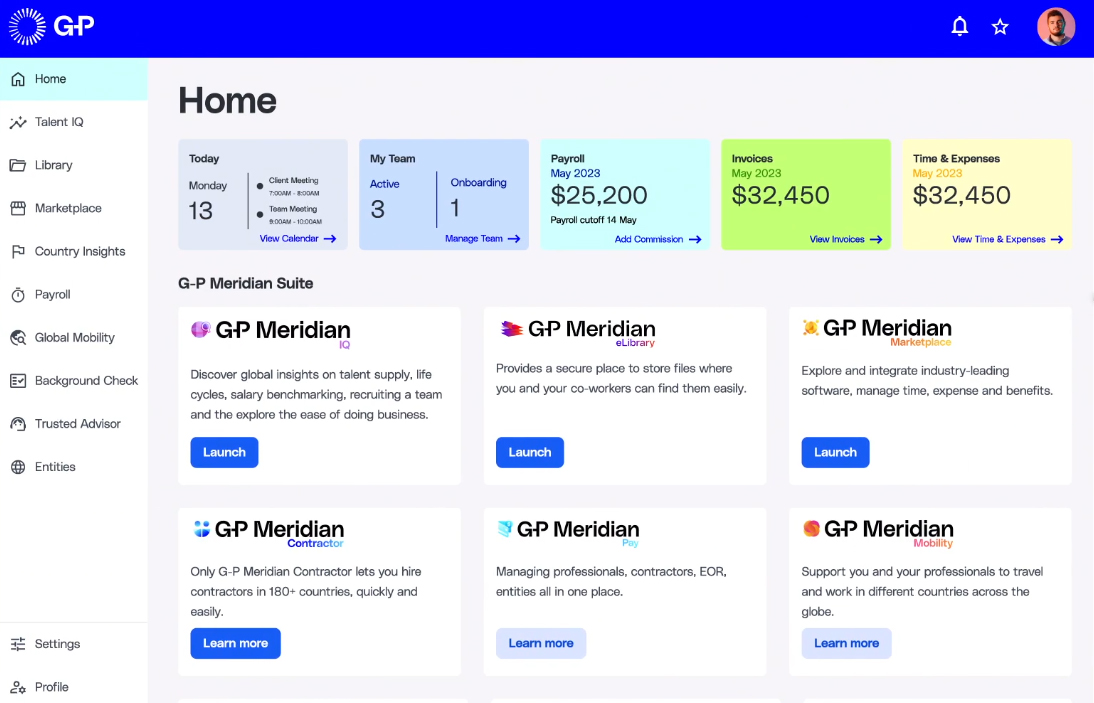
G-P is an AI-powered EOR platform that manages the full employee lifecycle across 180+ countries, covering employment contracts, payroll, benefits, and compliant offboarding without requiring a local entity.
Who Is G-P Best For?
G-P is a strong fit for mid-to-large enterprises that need deep legal and compliance backing when hiring in Germany and other complex markets.
Why I Picked G-P
I've included G-P in my top picks because its in-house team of 350+ legal, HR, and tax experts is one of the most compelling reasons to trust it for German hiring. Germany's AÜG licensing requirements alone can trip up global teams, and G-P holds that license directly. I also like G-P Gia, its AI-powered HR agent, which guides you through termination notice periods and severance norms specific to German labor law.
G-P Key Features
- German payroll tax management: G-P handles all mandatory social security contributions across Germany's five pillars, including pension, health, unemployment, long-term care, and accident insurance.
- Leave compliance tracking: The platform manages Germany's statutory leave entitlements, from the six-week sick pay obligation to maternity leave under Mutterschutz, including documentation requirements.
- Localized employment contracts: G-P drafts written employment agreements that meet Germany's Nachweisgesetz requirements, covering salary in EUR, working hours, and notice periods.
- Expense management: Track and process employee expenses for your German team directly within the platform, alongside payroll.
G-P Integrations
G-P offers native integrations with ADP TotalSource, ADP Workforce Now, Paylocity, BambooHR, Personio, TriNet, UKG Pro, UKG Ready, Workday, SAP SuccessFactors, HiBob, Microsoft Entra ID, Google Workspace, and Okta/Auth0. A bidirectional API is also available for custom integrations.
Pros and Cons
Pros:
- Extensive global coverage in over 180 countries
- In-country experts provide guidance on local employment laws and practices
- Combines payroll, benefits, and compliance management in one platform
Cons:
- Lacks advanced HR functionalities like performance management
- Global mobility services are paid add-ons

Fast onboarding, affordable EOR for SMBs
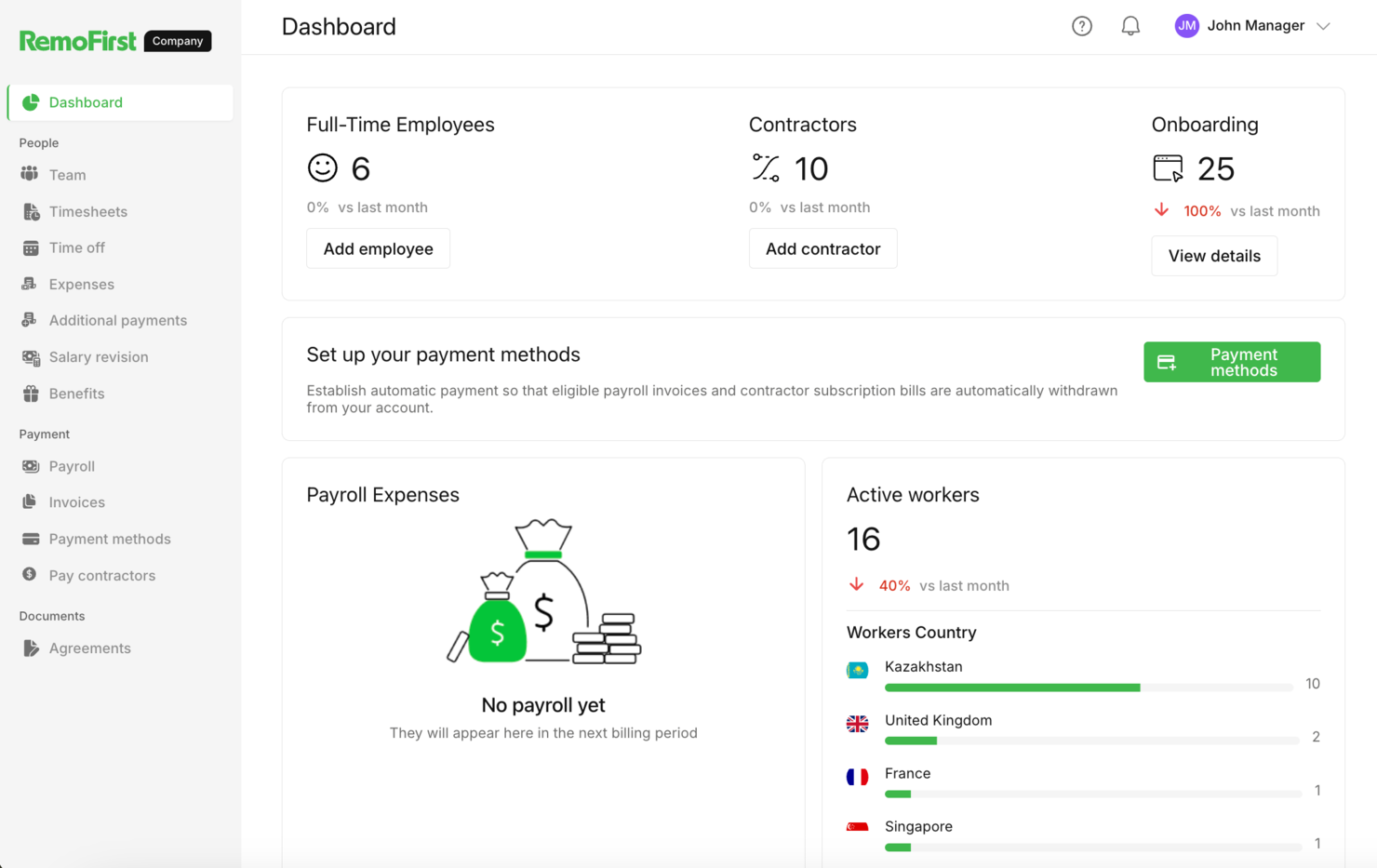
RemoFirst is an EOR platform that handles employment contracts, payroll, compliance, and benefits for international hires across 180+ countries, with a Germany-specific setup covering local labor law, social contributions, and termination rules.
Who Is RemoFirst Best For?
RemoFirst is a strong match for small and mid-sized businesses hiring their first German employee without a local entity.
Why I Picked RemoFirst
I've included RemoFirst in my top picks because its $199/employee/month flat rate makes it one of the most affordable EOR options for SMBs that need to hire in Germany fast. I like that payroll across multiple countries gets aggregated into a single monthly invoice, which keeps finance teams from managing a mess of separate payments. RemoFirst also handles the AUG labor leasing license compliance automatically, which is a specific German requirement that trips up a lot of first-time international hirers.
RemoFirst Key Features
- Background checks: Run employment background checks on German candidates directly within the platform before finalizing a hire.
- Visa and work permit support: RemoFirst manages visa and work permit applications for German hires needing work authorization across 110+ countries.
- Contractor-to-EOR management: Onboard and pay both contractors and full-time employees in Germany from a single platform, with built-in misclassification guidance.
- Multi-currency invoicing: Get invoiced in USD, EUR, GBP, CAD, AUD, or SGD, so your finance team pays in the currency that works for your business.
RemoFirst Integrations
RemoFirst offers a small set of native integrations, including BambooHR, ADP Workforce Now, and GoCardless for payroll funding. An API is available for custom integrations, though Zapier support is not clearly documented.
Pros and Cons
Pros:
- Supports equipment provisioning and immigration paperwork
- Affordable EOR option for small or growing teams
- Comprehensive compliance management
Cons:
- Dependence on third-party providers for some services
- Service availability may vary by region

Best for dedicated client support
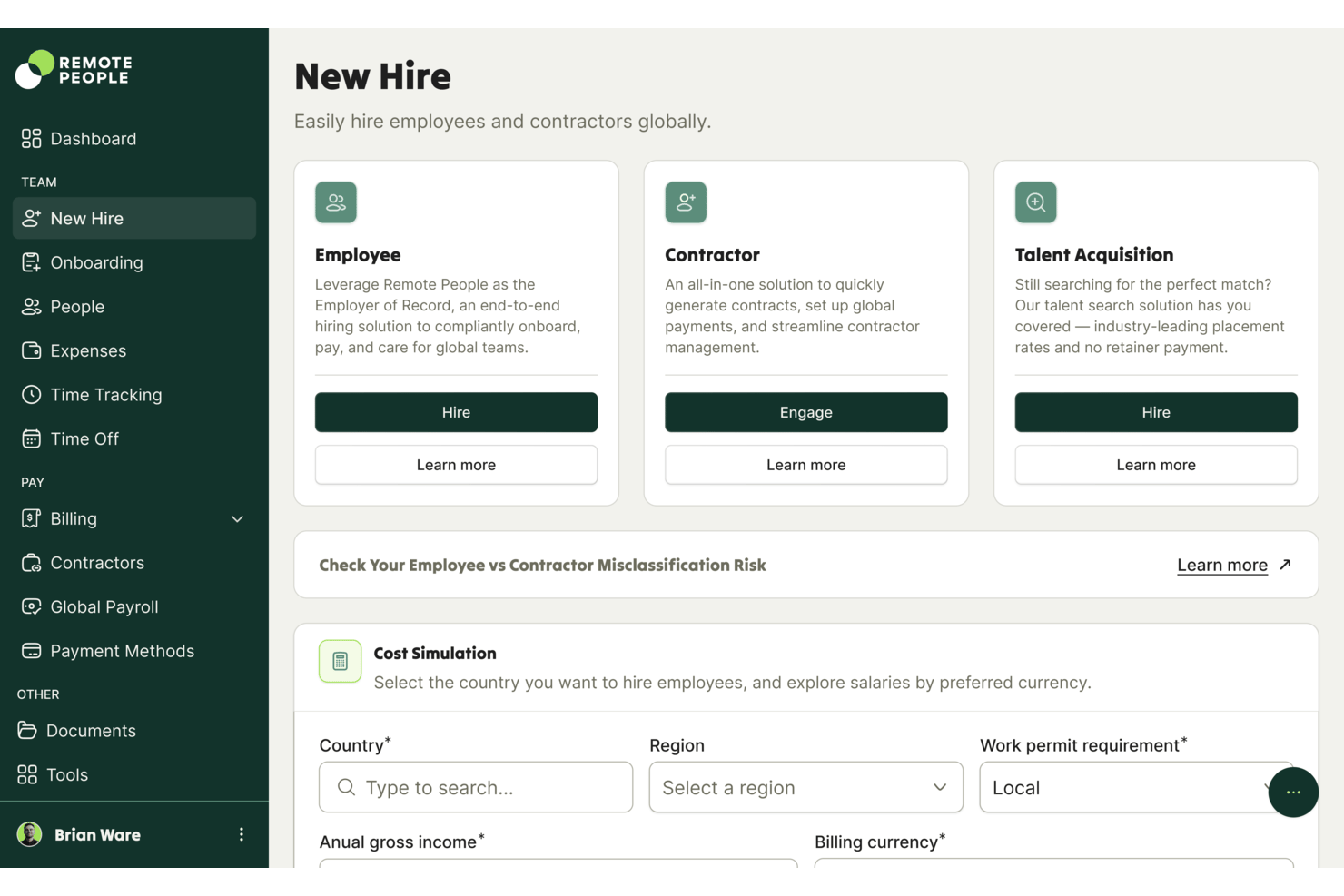
RemotePeople is an employer of record (EOR) built specifically for Germany, managing employment contracts, payroll, social insurance contributions, and immigration support for companies hiring German-based employees without a local entity.
Who Is RemotePeople Best For?
RemotePeople is a natural fit for companies that need to hire in Germany without establishing a local entity, particularly those whose German headcount falls between one and fifteen employees.
Why I Picked RemotePeople
RemotePeople earns its spot on my shortlist because it operates its own German legal entity and holds an AÜG license, meaning there's no third-party partner sitting between your hire and full compliance. I like that it handles the complete Sozialversicherung registration stack, including health insurance, pension, unemployment, nursing care, and accident insurance, all under one roof. For teams hiring non-EU talent, the built-in visa sponsorship support for EU Blue Cards and skilled worker visas is genuinely useful and cuts down the coordination work on your end.
RemotePeople Key Features
- Nachweisgesetz-compliant contract drafting: RemotePeople prepares employment contracts that meet all mandatory disclosure requirements under the Evidence Act, covering job description, compensation, working hours, and notice periods.
- Monthly payroll processing and Lohnsteuer withholding: The platform runs payroll monthly, calculates gross-to-net pay using the correct Steuerklasse, and remits wage tax to the Finanzamt by the statutory deadline.
- Termination compliance management: RemotePeople handles dismissals in line with the Kündigungsschutzgesetz, including works council consultation requirements, notice period calculations, and severance guidance.
- Contractor management: Alongside full-time EOR employment, RemotePeople offers contractor management for genuine short-term or project-based engagements in Germany.
RemotePeople Integrations
RemotePeople offers 100+ integrations, including Workday, SAP SuccessFactors, BambooHR, HiBob, NetSuite, and QuickBooks. An API is also available for custom integrations with your existing tech stack.
Pros and Cons
Pros:
- Wide recruitment network
- Dedicated client support contact
- Candidate placement guarantee
Cons:
- Some services available only in certain regions
- No publicly listed integrations
Best for quick employee onboarding
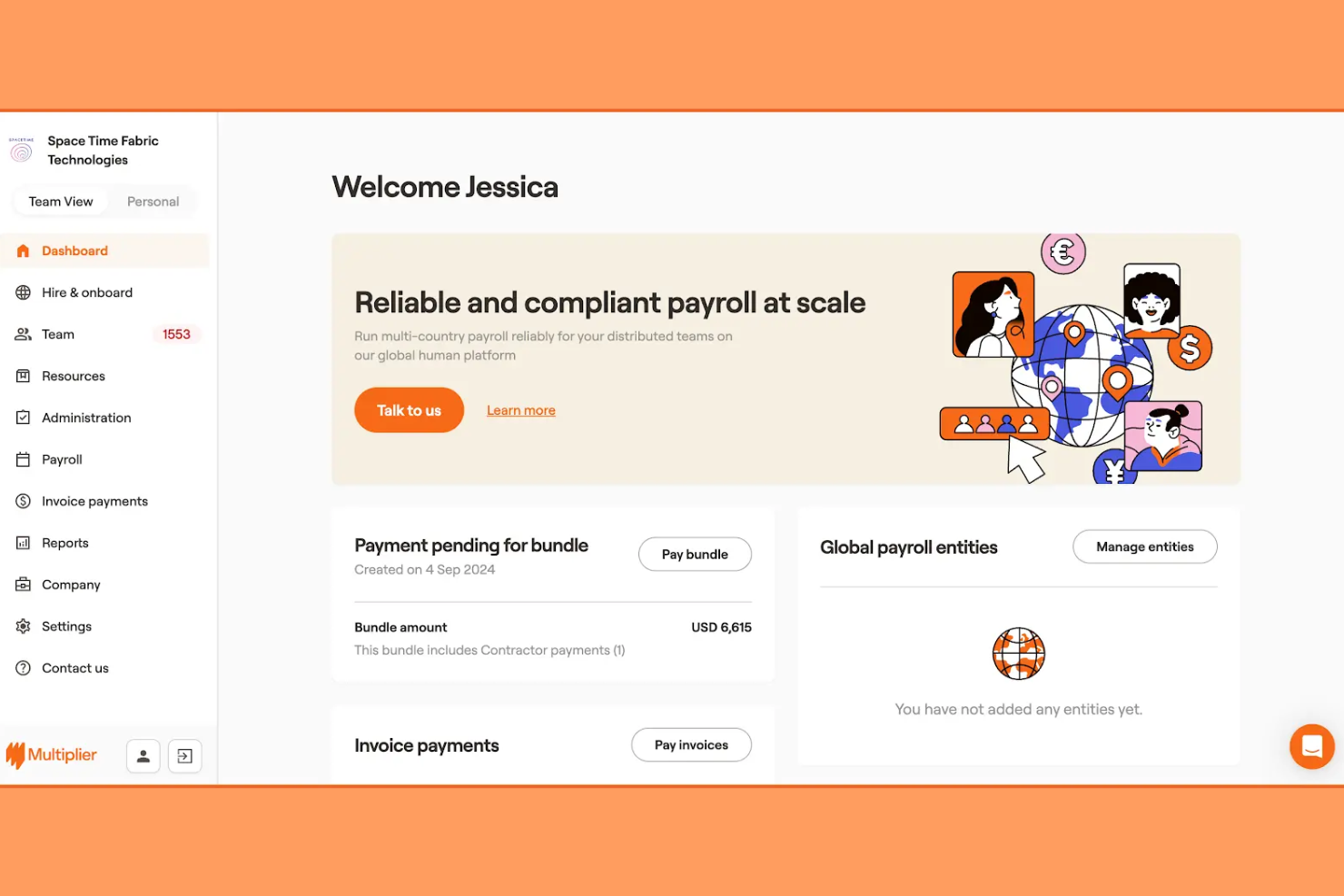
Multiplier is an EOR platform that covers onboarding, payroll, benefits, contracts, and compliance for hiring employees in Germany and 150+ other countries without setting up a local entity.
Who Is Multiplier Best For?
Multiplier is a natural fit for startups and scaling companies that need to hire their first German employee quickly without the overhead of a local entity.
Why I Picked Multiplier
I've included Multiplier in my top picks because its contract generation tool is genuinely fast—you can draft a locally compliant German employment contract in about five minutes directly in the platform. I like that it covers the full employment lifecycle from day one: onboarding milestone tracking, payroll in EUR, statutory benefits like Sozialversicherung contributions, and offboarding with proper severance handling. The employee cost calculator is also a practical feature I return to often when scoping German hires, letting me model total employer costs before making a hiring decision.
Multiplier Key Features
- Timesheet and expense management: Log, review, and approve employee timesheets and expense claims for your German team directly within the platform.
- Multi-currency payroll processing: Run payroll in EUR or 100+ other currencies, with bank transfer options and full statutory deduction compliance.
- Localized benefits administration: Access Germany-specific health, dental, and pension benefits through Multiplier's local provider network.
- Headcount and cost center reporting: Pull data-driven reports, including gross-to-net breakdowns and headcount summaries, to support workforce planning.
Multiplier Integrations
Multiplier integrates with QuickBooks, Xero, BambooHR, HiBob, Workday, SAP SuccessFactors, Oracle, Google Workspace, Slack, and Okta. For systems without native connectors, you can use Multiplier's API to build custom integrations. Compared to some larger EOR competitors, Multiplier offers a smaller set of native integrations, which is worth considering if your HR and finance tech stack requires broad out-of-the-box connectivity.
Pros and Cons
Pros:
- Excellent customer service
- User-friendly platform
- Comprehensive compliance support
Cons:
- Dependence on third-party benefits providers
- Limited customization options

Best for direct hiring in Germany
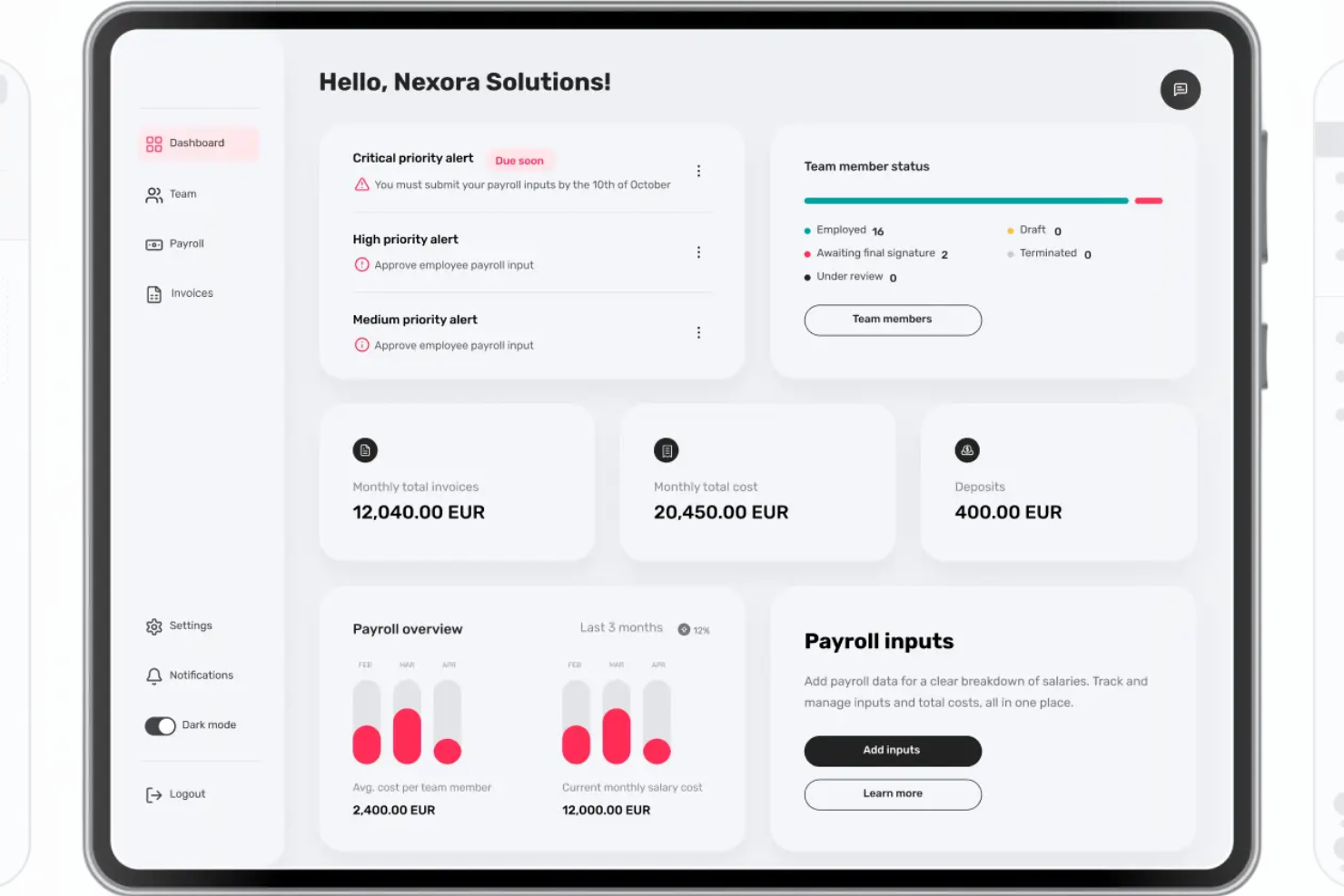
Native Teams is an EOR and work payments platform that combines Germany-specific employment compliance, global payroll processing, and a built-in multi-currency wallet with physical and virtual card support.
Who Is Native Teams Best For?
Native Teams is a strong fit for startups and scale-ups hiring remote contractors or full-time employees in Germany who also need to manage cross-border payments from a single platform.
Why I Picked Native Teams
I've included Native Teams in my top picks because its built-in multi-currency wallet and physical and virtual card support set it apart from EOR-only vendors. When you onboard a German employee, they get access to a dedicated Euro IBAN alongside their employment contract, which keeps payroll and spending in one place. I also like that Native Teams handles global mobility and visa support directly, so relocating a non-EU hire into Germany doesn't require a separate vendor.
Native Teams Key Features
- Employment status provisioning: Native Teams registers your German hire under its local entity, covering social security contributions and taxes on their behalf.
- HR administration dashboard: Access employment contracts, payroll records, and compliance documentation from a single dashboard with one click.
- Absence management: Track, approve, and manage employee time off for your Germany-based hires directly within the platform.
- Global employee benefits: Offer healthcare, lifestyle perks, and other benefits packages to German employees through the platform.
Native Teams Integrations
Native Teams has no public API and limited third-party integrations. Native integrations are not clearly documented, and Zapier support is not available. The platform operates as a self-contained system for EOR, payroll, and payments, so if you need to connect it to tools like BambooHR, Greenhouse, or Xero, you'll want to confirm available options directly with their sales team.
Pros and Cons
Pros:
- Smooth onboarding and dedicated support
- Offers localised payroll calculators for accurate salary and tax computations
- Specialises in German labour-law compliance and documentation
Cons:
- Covers fewer countries than some competitors
- May not offer advanced HR tools beyond essential employment features
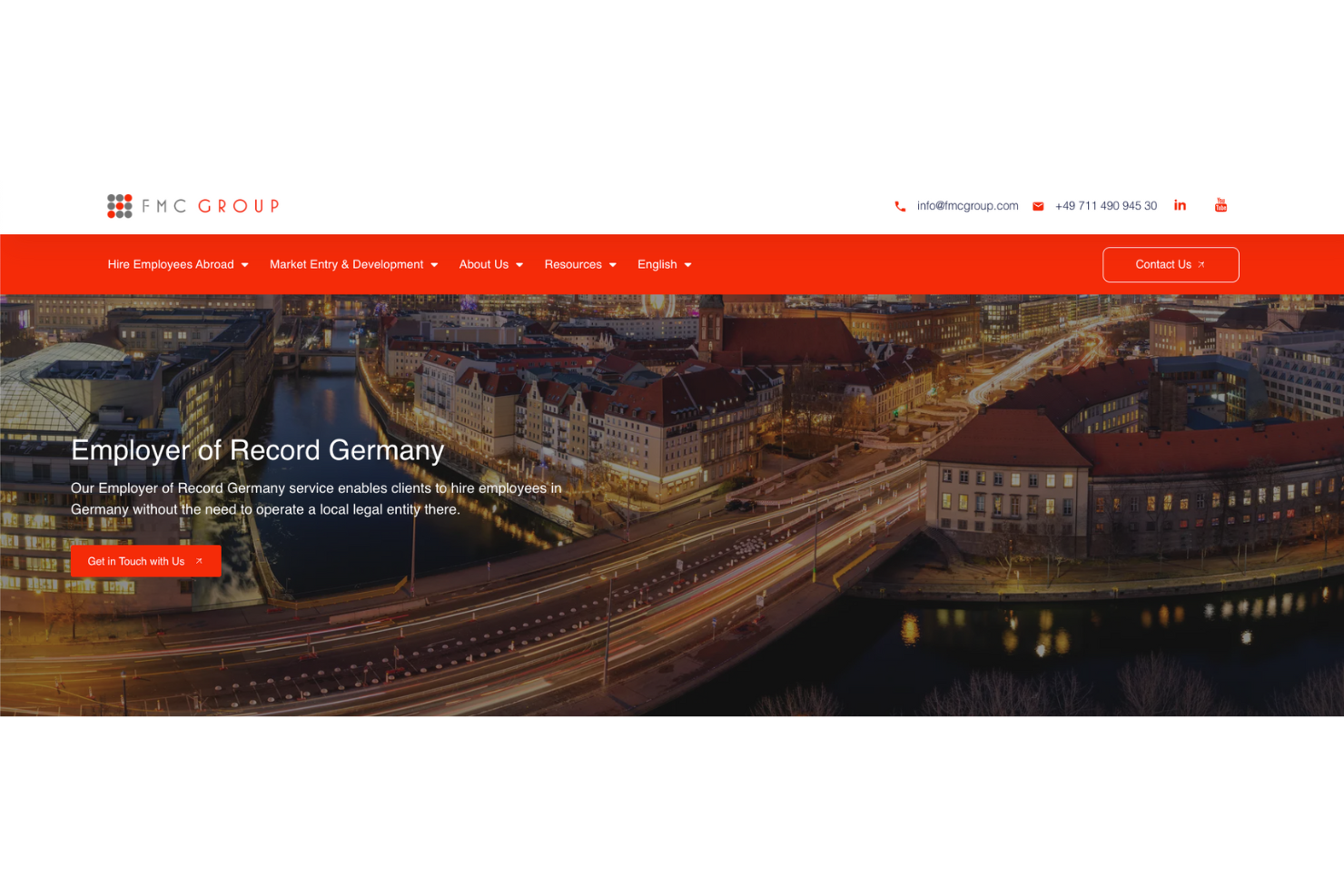
FMC Group is a Stuttgart-based employer of record that hires employees in Germany on your behalf, handling payroll, contracts, statutory benefits, and compliance under German labor law without requiring you to set up a local entity.
Who Is FMC Group Best For?
FMC Group is a strong fit for startup founders and HR managers who need to hire in Germany quickly and want a dedicated point of contact rather than a support queue.
Why I Picked FMC Group
FMC Group earns its spot on my shortlist because the hands-on support it offers is genuinely built into how the service works, not just a marketing claim. Every client and employee gets a named contact, which matters when you're navigating something like a works council consultation or an AÜG 18-month assignment limit in real time. I also like that FMC publishes its AÜG licence number and spells out the compliance consequences of getting it wrong, including fines up to €500,000 and contracts becoming void.
FMC Group Key Features
- AÜG-licensed German entity: FMC Group GmbH holds a published AÜG licence (number 60101/010923/11901), giving you a verified legal basis for hiring in Germany.
- Gross-to-net payroll processing: FMC handles income-tax withholding, social-security contributions, payslips, and filings linked directly to Germany's ELStAM tax system.
- Wellhub access for employees: Every employee hired through FMC gets complimentary access to the Wellhub wellness platform, covering 5,000+ fitness and wellbeing partners.
- Visa and work-permit support: FMC manages the immigration paperwork for international hires, including right-to-work checks and work-permit applications under German law.
FMC Group Integrations
FMC Group doesn't have any native integrations. Its website doesn't document an API, HRIS, ATS, accounting connector, or marketplace integration.
Pros and Cons
Pros:
- Hiring can take one to two days
- Named contacts provide hands-on local support
- Published AÜG licensing supports German compliance
Cons:
- Software support remains largely manual
- German assignments face an 18-month limit
Best for onboarding and paying German talent
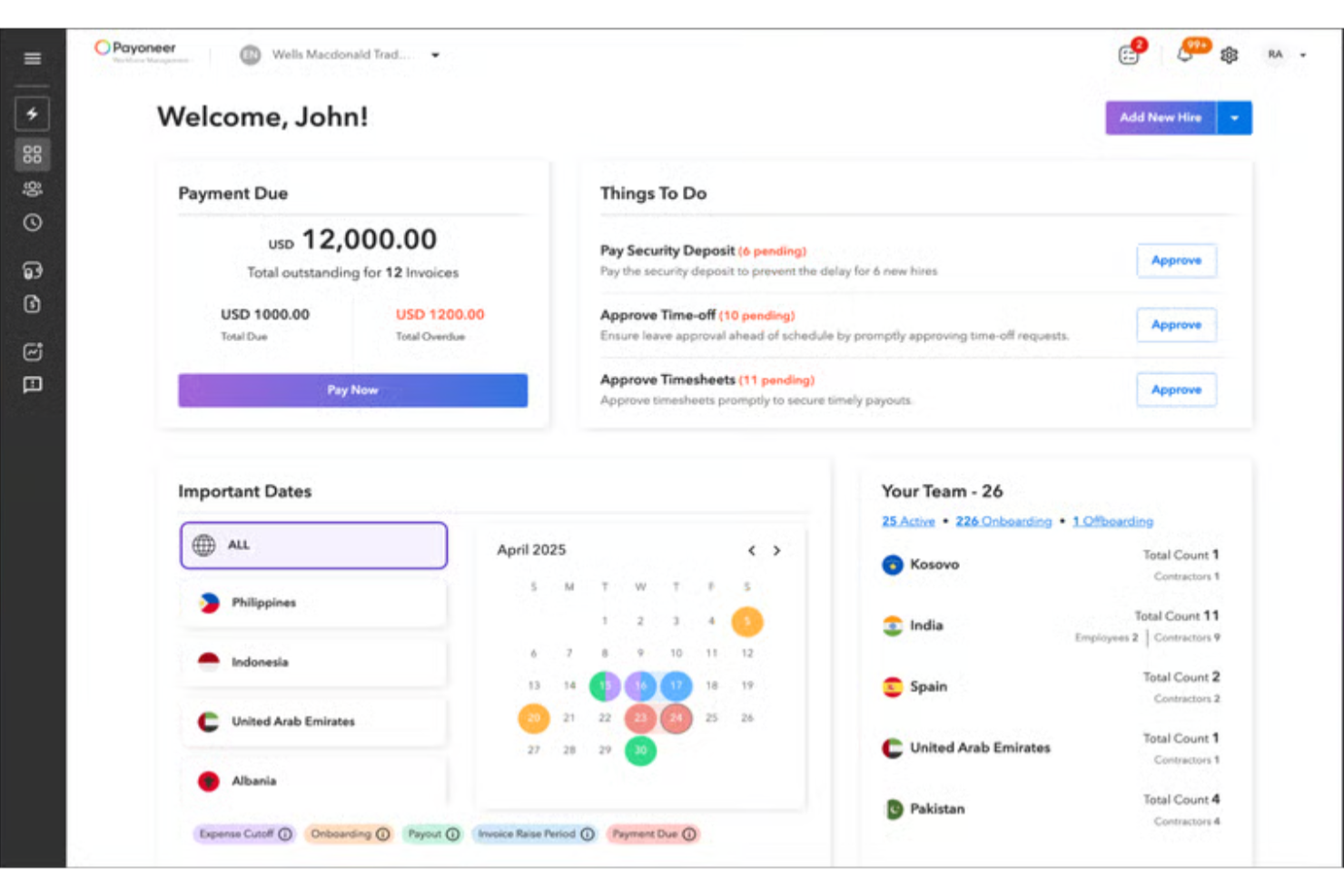
Payoneer Workforce Management is an EOR platform built on Payoneer's global payments infrastructure, covering employee onboarding, payroll in 70+ currencies, benefits administration, compliance support, and contractor management across 160+ countries.
Who Is Payoneer Workforce Management Best For?
Companies in SaaS, logistics, or e-commerce that need to manage a mix of full-time employees and contractors in Germany will get the most out of Payoneer Workforce Management's combined EOR and AOR setup.
Why I Picked Payoneer Workforce Management
Payoneer Workforce Management earns its spot on my shortlist because it's the only EOR I've come across that pairs global employment infrastructure with Payoneer's existing cross-border payments network. What I find genuinely useful for German hires is the contractor-to-FTE conversion support: if your German contractor engagement grows into a full-time role, you can convert them compliantly within the same platform. The unified dashboard also lets me handle onboarding, payroll, time-off requests, and expense tracking without switching tools.
Payoneer Workforce Management Key Features
- Background screening support: Run global background checks on German hires as part of the EOR onboarding process, without sourcing a separate vendor.
- Visa and work permit assistance: Get support processing work permits and renewals for employees relocating to or within Germany.
- Compliant offboarding support: Handle final pay processing, benefits settlement, device returns, and required paperwork for German employee exits.
- Equipment and device provisioning: Facilitate the procurement and delivery of laptops and peripherals to your German team through Payoneer Workforce Management's device support service.
Payoneer Workforce Management Integrations
Payoneer Workforce Management offers 70+ integrations across HR, accounting, and time tracking categories, including BambooHR, ADP Run, ADP Workforce Now, HiBob, Gusto, Ceridian Dayforce, FreshBooks, Expensify, Harvest, and Hubstaff. Custom or API-based integrations are available by contacting the Payoneer Workforce Management team.
Pros and Cons
Pros:
- User-friendly platform
- Extensive HR support
- Comprehensive compliance management
Cons:
- Limited customization options
- Tax deductions limited to Enterprise plan

Best for managing social security contributions
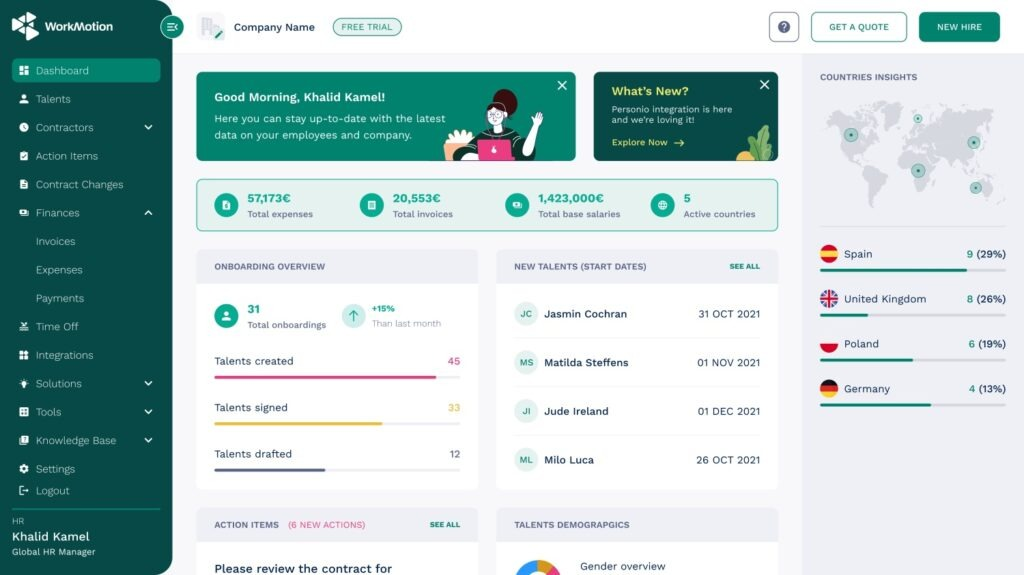
WorkMotion is a global EOR platform covering employee onboarding, compliant contract generation, payroll management, expense handling, and employee lifecycle management across 160+ countries.
Who Is WorkMotion Best For?
European-headquartered companies hiring remote workers across multiple countries will get the most out of WorkMotion's broad country coverage and compliance-first approach.
Why I Picked WorkMotion
WorkMotion earns its spot on my shortlist because of how fast it moves on onboarding. I like that its country-specific contract templates are pre-reviewed for legal compliance, so I can generate a Germany-ready employment contract and get it signed in under 10 minutes. WorkMotion also has a built-in Wanda AI feature that delivers country-level compliance guidance directly in the platform, which I find genuinely useful when navigating Germany's specific labor regulations.
WorkMotion Key Features
- Global payroll management: Run payroll across multiple countries from one platform, with automatic handling of local taxes and social contributions.
- Expense and allowance processing: Submit and approve employee expenses and one-off payments compliantly through the platform.
- Employment cost calculator: Estimate the total cost of hiring in Germany before making an offer, including taxes and employer contributions.
- Talent lifecycle management: Handle PTO tracking, contractual changes, and offboarding directly within the platform.
WorkMotion Integrations
WorkMotion offers 25+ integrations focused on HRIS and HCM platforms, including BambooHR, Personio, HiBob, Workday, ADP Workforce Now, UKG Pro, Gusto, Google Workspace, Factorial, and Justworks. An API is available for custom integrations, but Zapier support is not clearly documented.
Pros and Cons
Pros:
- Strong compliance automation tools
- Multi-country payroll processing
- Easy global onboarding and setup
Cons:
- There may be onboarding complexity in new markets
- Pricing may be steep for smaller businesses

TopSource
Best for 24/5 dedicated support
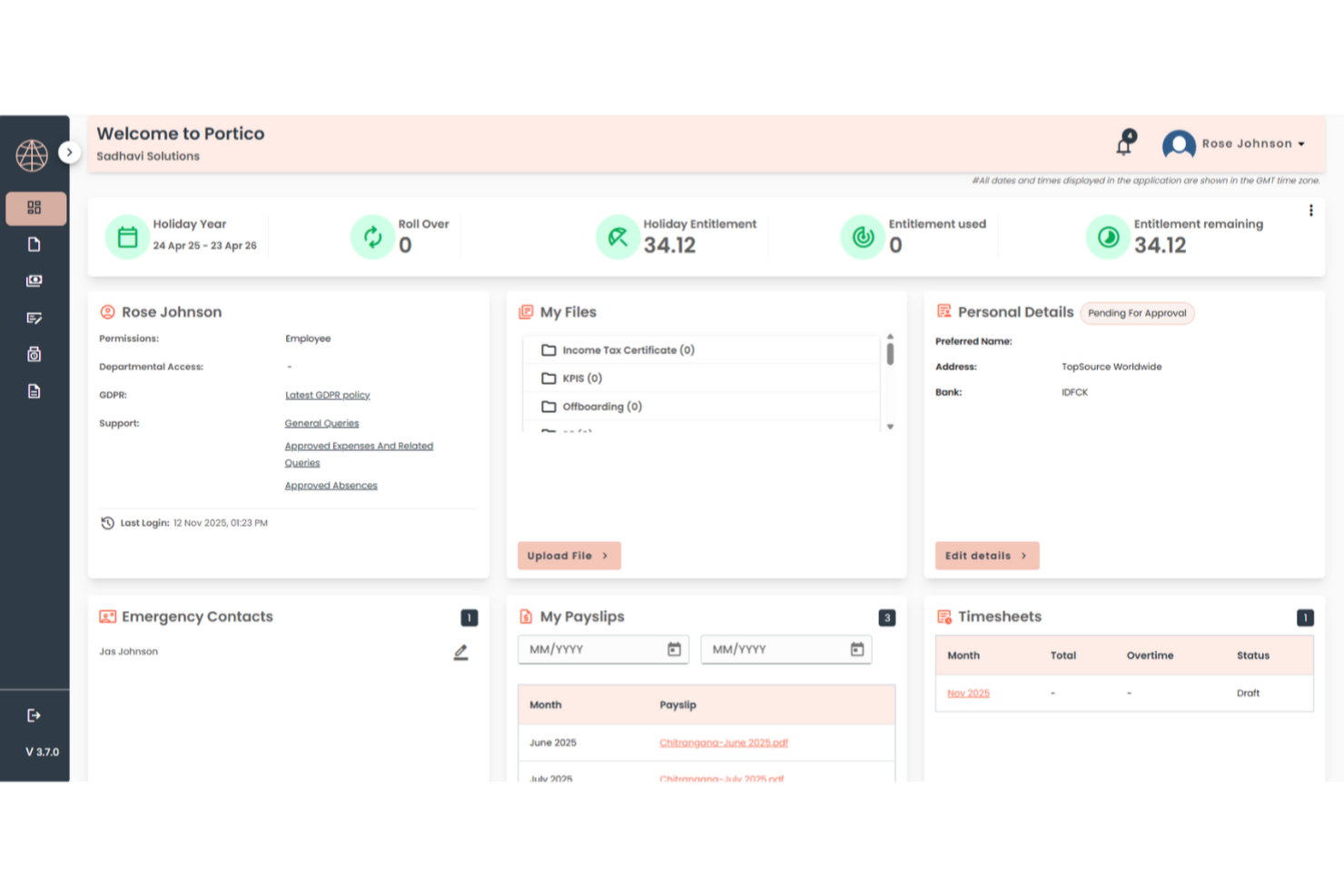
TopSource Worldwide is an employer of record service that handles German employment contracts, payroll, social insurance contributions, compliance management, and employee onboarding without requiring you to set up a local GmbH.
Who Is TopSource Best For?
TopSource is a strong fit for HR directors and startup founders who want a people-first EOR experience, with a named account manager and round-the-clock support rather than a self-service portal.
Why I Picked TopSource
I've included TopSource in my top picks because its 24/5 named account manager model genuinely sets it apart from the self-service platforms that dominate this space. When a dismissal needs works council consultation or a payroll discrepancy surfaces mid-month, you get a direct line to someone who knows your account, not a ticket queue. I also like that TopSource publishes granular 2026 contribution ceilings and handles per-fund health surcharges (Krankenkasse Zusatzbeitrag) automatically, which removes a detail most teams get wrong.
TopSource Key Features
- Portico workforce dashboard: A real-time platform that displays your global workforce across all countries in a single view, with one consolidated invoice.
- Employee self-service app: A mobile and desktop app (iOS and Android) where employees can access payslips, request leave, log expenses, and track attendance.
- German employment cost calculator: A free online tool that models the total employer cost of hiring in Germany, including social insurance contributions above and below contribution ceilings.
- Works council consultation support: Account managers guide you through the co-determination and consultation process required before any employee dismissal in Germany.
TopSource Integrations
Native integrations are not clearly documented. TopSource supports custom API integrations with ATS, HRIS, accounting, finance, and reporting tools.
Pros and Cons
Pros:
- Detailed payroll handles ELStAM and eAU
- German dismissal guidance includes works councils
- Named account managers provide 24/5 support
Cons:
- AÜG licence status remains publicly unconfirmed
- German entity ownership remains unconfirmed publicly
Other German Employer of Record Services
Here are some other EOR service providers in Germany that didn’t make it into my top 10 shortlist, but are still worth considering:
- Justworks
For local payroll management
- CXC Global
For integrating technology with expertise
- Papaya Global
For AI-driven payroll validation
- Remote
For competitive benefits packages
- Mercans
EOR for paying workers in cryptocurrency
- Oyster HR
For EOR-related educational resources for clients
- Borderless AI
For AI-generated German employment contracts
- Rippling
For unified global HR and German payroll
- Boundless
For AÜG-licensed hiring in Germany
- Agility EOR
For managing the full employment lifecycle


When to Use an Employer of Record in Germany
An employer of record (EOR) in Germany handles the legal side of employment on your behalf, so you can hire German talent without setting up a local GmbH. It's a practical shortcut for companies that need boots on the ground in Germany without the overhead of full entity setup. If any of the scenarios below sound familiar, an EOR is likely worth it:
- You're hiring in Germany but have no local entity: Setting up a GmbH takes 3–6 months and comes with ongoing compliance overhead. An EOR lets you onboard German employees in days, so you don't lose candidates while paperwork catches up.
- Your team is juggling German labor law without a local expert: Germany's works council rules, termination protections, and mandatory benefits are notoriously complex. An EOR service keeps you compliant from day one, reducing your exposure to costly legal missteps.
- You're testing the German market before committing: Hiring one or two people to validate demand doesn't justify entity setup costs. An EOR gives you a legal, low-risk way to run that pilot without a long-term structural commitment.
- Managing contractors in Germany is starting to feel risky: Misclassification under German law can trigger back taxes, penalties, and mandatory benefits owed. An EOR converts those hires to compliant employees quickly, removing that liability from your books.
- It's taking too long to onboard global hires across multiple countries: If Germany is just one stop on a broader expansion, juggling multiple local vendors could slow everything down. A single EOR with German coverage keeps your hiring process consistent and faster across markets.
Selection Criteria for Employer of Record Germany
Uncovering the best EOR services for this list required a deep understanding of how these services can alleviate common challenges, such as legally hiring employees abroad, managing international payments, ensuring compliance with local labor laws, providing competitive benefits, and facilitating smooth onboarding.
Here are the specific criteria I used to carefully compare the service offerings for each provider in this list:
Core Employer of Record Services (25% of total score): To be considered for inclusion in this list, each EOR provider had to offer the following basic services first:
- The corporate structure to legally and compliantly hire employees in multiple countries without a local entity
- The ability to manage worldwide payroll and taxes in compliance with local regulations
- Assistance with offering competitive and locally compliant benefits packages
- Assistance with navigating visa and work permit processes for expatriate employees
- Robust procedures to ensure data privacy and security that comply with international standards, including GDPR and other requirements
Additional Standout Services (25% of total score): To help me narrow in on the best EOR services out of the numerous options available, I also took note of any unique or less common services, including:
- Advanced technology platforms that streamlined payroll and HR processes while still offering ease of use
- Specialized experience in hiring employees within specific new countries or key industries
- Services that enhance remote work compliance and global mobility needs
- Specialized customer support for complex immigration cases
- Assistance with international IT requirements, including managing computer equipment, software licenses, and other asset-tracking requirements
- A focus on eco-friendly and sustainable employment practices
Industry Experience (10% of total score): To evaluate the industry experience of each EOR service provider, I considered the following:
- How many years their business has operated in the EOR space
- Any industry recognitions or certifications the provider may hold in international HR and payroll
- Their depth of knowledge in local labor laws across multiple jurisdictions
- Their expertise in new markets, including how many different countries they offer local expertise in
- Evidence of a strong track record managing global expansion processes
- The combined experience and credentials of their team members, if available
Customer Onboarding (10% of total score): To get a sense of each provider's customer onboarding process, I considered the following factors:
- The availability of comprehensive onboarding materials, such as fact sheets, guides, FAQ repositories, or other training resources
- Support for integrating the EOR provider's software with existing HR systems
- Direct access to onboarding specialists, customer support, or a dedicated account manager during the setup phase
Customer Support (10% of total score): Since the EOR provider will act as your remote workers' legal employer, it's important to ensure you'll receive timely communications and top-level support. To evaluate the level of customer support each company offered, I considered the following:
- The availability of a multilingual support team that covers different time zones
- Multiple support channels, including phone, email, and live chat
- Evidence of responsiveness and effectiveness in resolving issues, as inferred from customer reviews
- The existence of dedicated account managers to provide assistance as needed
Value for Price (10% of total score): To gauge the overall value of each service, I considered the following factors:
- Transparent pricing models without hidden fees
- Comparative analysis of service offerings versus cost
- Flexibility in service packages to suit different business sizes and needs
Keep in mind that EOR services are complicated, and because of that the price tag can sometimes be high. However, the prices for their services still offer a good ROI considering the complexity of the premium-grade services you're gaining.
Customer Reviews (10% of total score): Evaluating customer reviews is the final element of my selection process, which helps me understand how happy real users are with a service. To determine this, I considered the following factors:
- Consistently high ratings across various consumer review platforms
- Specific feedback on the ease of use of the EOR services
- Testimonials highlighting exceptional customer support and problem resolution
Using this assessment framework helped me identify the employer of record services that go beyond basic requirements to offer additional value through unique services, deep industry experience, smooth onboarding, effective support, and overall value for price.
Market Details for Hiring in Germany
- Capital City: Berlin
- Currency: Euro (€, EUR)
- Payroll Frequency: Monthly
- Official Language: German
- Approx. Population: 83 Million
- Public Holidays: 9 (plus regional variations)
Why Hire Employees in Germany?
Germany’s strong educational system ensures a steady stream of highly qualified graduates, especially in STEM fields. Germany's talent marketplace is well-known for its engineering and technological expertise, particularly in the automotive and manufacturing sectors. Plus, its IT sector is thriving, with a significant talent pool in software development, cybersecurity, and data analytics.
Germany’s innovative ecosystem, driven by a vibrant start-up culture in cities like Berlin and Munich, attracts skilled professionals in tech, finance, and creative industries. Furthermore, Germany’s leadership in renewable energy attracts experts in sustainable energy solutions and green technology.
In addition to the technical depth of Germany’s workforce, its strategic location in Europe also makes it an attractive location to hire new talent since it lends easy access to other major European markets.
How to Choose an Employer of Record in Germany
A great EOR service can streamline hiring, reduce compliance risk, and make managing German employees far less complicated—but only if it aligns with your unique needs. To find the right fit, start by clarifying the specific challenges you're trying to solve.
As you evaluate your options, consider these key questions:
- What problem are you solve? Are you trying to hire in certain regions, simplify compliance, manage Euro-based payroll, or offer local benefits? Be specific about what you need help with, so you can find a provider who excels in that area.
- Who will benefit from the EOR service? Think about who will manage the EOR relationship internally. How will it improve their workload, processes, or confidence in global hiring?
- What's your budget? Estimate how many employees you plan to hire in Germany. Since EOR fees are typically charged per employee per month, this helps forecast your total costs.
- What outcomes matter most? Are you aiming for faster hiring, easier compliance, or better collaboration in a specific location? Define your success metrics up front and let your ultimate goals guide your decision.
- How will it fit with your HR systems? Consider how the EOR’s tech integrates with your current HR tools to avoid data silos or workflow disruption.
Remember every business is different — don’t assume that a German employer of record service will work for your organization just because it's popular. Instead, your ideal EOR should solve your pain points and grow with your team.

What is an Employer of Record in Germany?
An Employer of Record (EOR) in Germany is a third-party partner that legally employs your German-based hires on your behalf, while you stay in charge of their day-to-day work. The EOR handles payroll, taxes, benefits, and compliance with German labor laws, so you don’t have to become a legal expert to hire locally.
Using a German EOR lets you bypass the complexity of setting up a local entity, giving you a faster, safer way to grow your team in Germany—without the compliance risk.
Instead of asking your HR professionals to become experts in German labor laws and regulations, you can outsource these requirements to an EOR in Germany and gain peace of mind that your future operations will be compliant.
Why Use an EOR Service in Germany?
Germany is a fantastic hiring market, but it is not exactly a “just send the offer letter and hope for the best” kind of place. You get access to one of Europe’s strongest talent pools, especially across engineering, manufacturing, software, finance, and operations, without immediately committing to local entity setup.
From a hiring perspective, Germany is great when you need experienced, process-driven talent. The workforce is highly skilled, the business environment is mature, and it is a strong base for companies expanding across Europe.
The challenge is compliance. Germany has detailed employment rules, mandatory social security contributions, strict documentation requirements, and formal termination processes. An employer of record handles contracts, payroll, benefits, and local compliance so you can hire in Germany without spending months setting up a GmbH first.
EOR vs Legal Entity
If you’re planning to hire employees in Germany, you'll need to decide whether to use an EOR or set up your own local legal entity. Both approaches can get the job done, but they come with very different timelines, costs, and responsibilities.
Here’s a quick comparison to help you weigh the pros and cons:
| Requirement | EOR in Germany | Legal Entity in Germany |
|---|---|---|
| Setup Time | A few days to a week | Several weeks to months |
| Legal Registration | Not required | Required with Handelsregister, Finanzamt, etc. |
| Compliance Responsibility | Managed by the EOR | Fully managed by your internal team |
| Payroll & Taxes | Handled by the EOR | Must be managed in-house or via local provider |
| HR Admin & Benefits | Included in EOR service | Must be set up and managed internally |
| Cost | Monthly per-employee fee | Higher upfront setup + ongoing admin and legal costs |
| Level of Control | Moderate | Full control over operations and processes |
| Scalability | Ideal for fast, flexible expansion | Better suited for long-term, large-scale operations |
Using an EOR is the fastest and simplest way to start hiring in Germany, especially if you're testing the market or expanding quickly. Setting up a legal entity may offer more control,
EOR vs Permanent Establishment in Germany
Permanent establishment risk is one of the big things to watch when hiring in Germany. It means German authorities could view your company as having a taxable presence in the country, even if you have not formally opened a local entity.
This often depends on what employees are doing locally. If someone is negotiating contracts, closing deals, managing local clients, or directly generating revenue in Germany, it can start to look like the company is operating there. That can trigger corporate tax obligations, registration requirements, and additional reporting. Germany is not the market where “we’ll clean this up later” is a comforting strategy.
Using an employer of record does not remove permanent establishment risk entirely, but it helps reduce exposure. By employing workers through a local legal employer, companies can hire in Germany without creating a direct business presence through their workforce.
How EORs Protect From Permanent Establishment Risk
- Legal employer structure: The EOR employs workers on paper, helping avoid a direct business presence in Germany.
- Reduced tax exposure: Since payroll, contracts, and employment are managed locally, the risk of being classified as having a permanent establishment is lower.
- Compliance coverage: German labor laws, tax filings, and statutory obligations are handled through the EOR, reducing compliance gaps.
- Role scope control: Helps structure roles so employees are not directly signing contracts or generating revenue locally.
- Flexible market entry: Makes it easier to hire and test the German market without creating a taxable presence too early.
Hiring in Germany: Important Details
Here are some key details to note if this is your first time hiring staff located in Germany. Your EOR provider will manage these compliance details on your behalf. However, proactively informing yourself of these details is always recommended before you invest your resources into sourcing staff based in Germany.
In Germany:
- Employment laws are determined by the Federal Ministry of Labour and Social Affairs (BMAS). They are responsible for setting and managing regulations for labor conditions, health and safety at work, and social security.
- You can hire employees or contractors. Within the employee category, you can hire full-time or part-time employees, as well as temporary, seasonal, or interns. Each category has its own set of labor laws in Germany. Your German EOR provider can help you determine the correct classification to avoid employee misclassification issues.
- Germany has both mandatory payroll deductions and social security contributions that must be collected.
- Mandatory payroll deductions include income tax (Lohnsteuer), Solidarity surcharge (Solidaritätszuschlag), and the Church tax (Kirchensteuer, if applicable).
- Social security contributions include Health Insurance (Krankenversicherung), Pension Insurance (Rentenversicherung), Unemployment Insurance (Arbeitslosenversicherung), and Long-term Care Insurance (Pflegeversicherung).
- German is the official language, though English and French are used frequently too.
- The standard working week in Germany is 48 hours, with 10 hours per day maximum. Employees also must not work for more than six continuous hours without a break, or for more than six days consecutively without one day off.
- Paid vacation in Germany starts at a minimum of 24 working days per year. This is mandated by the Minimum Vacation Act for Employees.
- There are nine public holidays in Germany that are recognized nationally, plus others that vary by region or state. Paid public holidays include:
- New Year's Day (Neujahrstag)
- Good Friday (Karfreitag)
- Easter Monday (Ostermontag)
- Labour Day (Tag der Arbeit)
- Ascension Day (Christi Himmelfahrt)
- Whit Monday (Pfingstmontag)
- German Unity Day (Tag der Deutschen Einheit)
- Christmas Day (Erster Weihnachtstag)
- Boxing Day (Zweiter Weihnachtstag)
Understanding and complying with employment norms and legal requirements surrounding German public holidays is one area where your EOR service will shine, managing these occurrences hassle-free on your behalf.
- Germany offers maternity leave and paternity leave.
- Maternity leave begins 6 weeks before birth and ends 8 weeks after (14 weeks total).
- Paternity leave can last up to 3 years and can be shared by both parents.
- Paid sick leave is 6 weeks in Germany. If an employee is still sick after 6 weeks, health insurance will typically kick in to provide financial support to the employee.
- The probationary period in Germany is 6 months. During this period, the notice period for termination is usually two weeks.
- Termination of employment in Germany requires adherence to specific legal regulations, including notice periods and valid reasons for termination. Notice periods vary based on the duration of employment and can range from 2 weeks to 7 months. Termination protection laws safeguard employees against unfair dismissal, particularly in companies with more than 10 employees.
Tax Overview for Employers in Germany
Germany’s payroll system is contribution-heavy, so salary is only part of the cost. Employers need to budget for social security contributions, payroll filings, and employee deductions from the start.
Here’s a quick view of what employers pay vs what gets deducted from employees:
| Category | Tax Type | Rate |
|---|---|---|
| Employer costs | Pension Insurance | 9.3% |
| Employer costs | Unemployment Insurance | 1.3% |
| Employer costs | Health Insurance | 7.3% + ~1.45% (shared additional) |
| Employer costs | Long-term Care Insurance | 1.8% |
| Employee deductions | Social Security (Shared) | ~20.5%-22% |
| Employee taxes | Income tax | 14%-45% (progressive) |
Some key payroll and compliance facts for 2026:
- Long-term Care (Nursing) Surcharges: The employer's share is fixed at 1.8% (except in Saxony). However, the employee's share varies based on how many children they have. Childless employees over age 23 pay a 0.6% surcharge entirely out of their own pocket.
- Solidarity Surcharge (Soli): Only the top 10% of earners still pay this 5.5% surcharge on their income tax. Most employees on a standard EOR contract will be exempt.
- Employer-Only Levies (U1, U2, U3): These are small but mandatory for the employer:
- U1 (Sick Pay): ~0.8% to 3.0% (reimburses you for sick pay).
- U2 (Maternity): ~0.22% to 0.4%.
- U3 (Insolvency): 0.15%.
Trends in Employer of Record Services
With global hiring on the rise, companies need fast, compliant, and scalable ways to manage international teams. In response, EOR services are evolving, offering smarter tech, flexible features, and all-in-one platforms to simplify hiring, payroll, and compliance across borders.
Here are the latest trends shaping EOR services and the HR software behind them:
- Immigration Support: There is a growing demand for assistance with immigration services like visa and work permit sponsorships, simplifying global talent acquisition processes for client companies immensely.
- Specialized Services for Diverse Needs: Several EOR providers have begun to offer IP and invention rights protection and equity incentive planning services to cater to the specific needs of their client companies.
- Enhanced Employee Benefits Packages: There's a growing trend in EOR providers going beyond standard healthcare coverage to offer a full spread of enterprise-level medical and health benefits, stock options, and even one-time benefits like moving bonuses. This trend demonstrates an understanding of the importance of using benefits to attract and retain German top talent.
- AI-Backed Knowledge Bases: Some EOR providers (including Deel) are beginning to offer legally vetted knowledge bases or information wikis that use artificial intelligence to surface answers to common questions quickly. This helps customers source details on hiring within a specific country fast, without relying on human-run support systems.
As the market continues to evolve, these trends are likely to shape the future of international employment, making it easier for businesses to navigate the challenges of global expansion. For a closer look at specific EOR providers that are capitalizing on these trends, I recommend reading our in-depth reviews of Atlas HXM, Omnipresent, Deel, and Remofirst.
Key Services of Employer Of Record Germany
When selecting an employer of record in Germany, keep an eye out for the following key features:
- Global payroll management: Take the headache out of international payroll. Your EOR partner handles all salary payments, tax withholdings, and compliance with German payroll regulations—including income tax, solidarity surcharge, and social security—making sure your people get paid accurately and on time.
- Compliant hiring and onboarding: Onboard new team members in Germany quickly and efficiently. The EOR ensures that every employment contract, required document, and process meets German labor laws so you never have to worry about accidental violations.
- Employment law compliance: Navigating German labor regulations can be complex. EORs keep you compliant by managing mandatory registrations, contract standards, working time requirements, leave entitlements, and regulatory updates, so you’re always covered.
- Benefits administration: Attract top talent with competitive, compliant benefits. Your EOR manages statutory health insurance, pension contributions, unemployment insurance, and paid leave—plus any supplemental perks—so employees get what they expect without adding administrative hassle.
- Tax filing and reporting: Don’t get tripped up by the Finanzamt. The EOR prepares, files, and manages all your employment-related tax documentation in Germany, helping you avoid penalties and freeing you to focus on your core business.
- Risk mitigation: Reduce liability. The EOR assumes responsibility for employment risks—including wrongful dismissal claims, contract disputes, and compliance errors—so you don’t face costly surprises.
- Termination support: If things don’t work out, your EOR will guide you through Germany’s structured termination process, ensuring notice periods, documentation, and any severance obligations are handled correctly and legally.
- Local expertise: With deep, on-the-ground knowledge of German work permits and visas, business culture, labor expectations, and hiring trends, an EOR provides tailored guidance to help you launch, grow, and adapt with confidence.
Common Employer Of Record Germany AI Features
Many of these solutions are incorporating AI features to improve the customer experience, for example:
- Chatbot-driven employee support: With AI-powered chatbots, your team in Germany gets instant answers to HR questions 24/7—no more waiting days for help with payroll, benefits, or leave.
- Automated payroll issue detection: AI scans your payroll data for anomalies or errors before they become problems, catching things like incorrect tax rates, duplicate payments, or contribution calculation mistakes instantly.
- Automated document verification: AI quickly checks and authenticates German-specific employee documents—such as IDs, residency permits, and tax forms—saving you hours on manual reviews and minimizing errors or fraud risks.
- Smart compliance monitoring: AI algorithms track ever-changing German labor laws and notify you of updates, helping you stay compliant and react quickly to new requirements.
- Predictive analytics for workforce planning: Use AI to forecast hiring needs, German salary benchmarks, and turnover trends so you can make smart staffing decisions ahead of time.
Benefits of an Employer of Record Service
If you're expanding globally, an EOR can take the legal and logistical weight off your shoulders, helping you hire across borders without setting up a local entity. Partnering with an EOR gives you the confidence to grow faster while staying fully compliant with foreign labor laws.
Here are some key benefits you can expect:
- Quick Market Entry: For organizations aiming to test new markets or hire talent in new countries where they have no legal presence, an EOR offers a swift and efficient solution to initiate operations, saving time and resources.
- Simplified Global Payroll: Using an EOR service simplifies the complex process of managing international payroll, including tax deductions, withholdings, and currency conversions for your employees worldwide.
- Global Compliance & Risk Mitigation: By managing compliance, an EOR service provides expertise in navigating the intricacies of employment laws, tax regulations, and insurance requirements in multiple jurisdictions, helping businesses safeguard their operations against compliance-related risks.
- Enhanced Benefits Negotiation: By leveraging their extensive networks and purchasing power, EORs can negotiate better international insurance rates and secure competitive benefit packages on your behalf, enhancing your ability to attract and retain top talent worldwide.
- Improved Cost Effectiveness: Using an EOR service is a cost-effective way for businesses to enter new markets, compared to the significant costs of establishing a new foreign entity. The latter option involves significant upfront legal fees, plus other costs related to office infrastructure, staffing, and local benefits and insurance coverage.
Understanding the benefits of an EOR service is crucial for strategic planning and operational efficiency. As businesses look towards international markets for growth opportunities, partnering with an EOR provider offers a streamlined, cost-effective, and compliant pathway to global expansion.
Costs & Pricing for Employer of Record Services
Typically, the cost of an EOR service follows a fee per-employee, per-month pricing model, which can vary widely depending on a range of factors. This model allows for scalability and predictability in budgeting for international expansion efforts.
In general, EOR services in Germany cost between $400 to $2,000 per employee, per month.
Key factors that can influence the pricing of an employer of record service include:
- Geographic Location: Costs can vary significantly based on the country or countries you're hiring in. This is due to local economic conditions, labor laws, and the complexity of compliance requirements.
- Employee Seniority and Role Complexity: The level and nature of the roles being filled can also impact the monthly cost. Senior positions or roles requiring special qualifications may increase the price due to higher benefits and compensation management costs.
- Custom Requirements: Any specific needs beyond the standard service offering may also contribute to the monthly cost. This may include customized solutions for recruitment, specialized employee onboarding, or unique compliance requirements, all of which can affect pricing.
- Number of Employees: The total number of employees being managed can also impact the cost. In some cases, higher volumes may lead to volume discounts, making per-employee costs more economical.

Some EORs also operate under different pricing models, including a percentage of employee salary model, a fixed pricing model, and custom pricing models.
When considering an EOR service, it is crucial to understand how these factors impact the overall cost to ensure that the service aligns with your business's needs and budget constraints. Anticipating the specific requirements of your international expansion strategy will help you choose the most cost-effective and efficient EOR solution for your needs.
FAQs about EOR Services in Germany
If you’ve got specific questions about the requirements to hire German employees or how EOR services work, these answers to frequently asked questions are a good place to start:
What does an Employer of Record in Germany do?
An EOR in Germany legally employs your team members on your behalf, so you don’t need to set up a German entity. The EOR handles local employment contracts, payroll in euros, tax deductions, social security contributions, and compliance with German labor laws—making it easier to hire and manage talent in Germany without the legal risk.
EOR services are ideal for companies expanding internationally without setting up local offices. They let you hire global talent while minimizing legal risk, since the EOR assumes full responsibility for compliance and employment on your behalf.
What are the minimum wage requirements in Germany?
The minimum wage in Germany is €12.41 per hour as of January 1, 2024. This rate is determined by the German Minimum Wage Act (Mindestlohngesetz) and is subject to periodic review and adjustments by the Minimum Wage Commission.
For more details, consult a German EOR partner, or visit the Mindestlohn Kommission website.
Do EOR providers offer other types of global HR services?
Yes, most of the time they do. Many service providers in this space also offer professional employer organization services (also known as PEO services), as well as international payroll services.
PEO services are a way to outsource your HR responsibilities to support your international teams. PEO companies can help you with international compliance issues, benefits administration, workers’ compensation, and other HR administrative tasks.
What are some of the consequences of non-compliance?
As an organization, you never want to be deemed as non-compliant in the eyes of any government body. The exact rules and regulations will vary according to the jurisdiction you’re operating in, which is one of the main benefits of using an EOR service provider.
If you don’t use an EOR and you do hire international workers, you may quickly find yourself in non-compliance. The consequences of doing so will depend on the severity of the violation, but they could include all of the following:
- Fines and penalties
- Legal actions such as lawsuits or other litigation proceedings
- Corrective measures and compliance orders
- Revocation of business licenses or operating permits
- Reputational damage if the news becomes public (loss of public trust and loss of internal employee respect)
- Increased monitoring and additional government scrutiny
Companies who fail to follow international labor laws cannot simply say they were unaware of the legalities, and hence, didn’t follow them. That’s where an EOR service can really remove a lot of potential risk and liability from the international hiring process.
Are there any risks to using an Employer of Record service?
While EORs offer major benefits, they aren’t risk-free. Here are a few considerations to keep in mind when choosing a provider:
-
Financial risks: Watch for hidden fees (like onboarding or advisory services), required benefit costs, and currency exchange fluctuations that can affect payroll expenses.
-
Operational risks: You’re sharing sensitive employee data, so strong data protection practices (like ISO 27001 certification) are a must.
-
Strategic risks: You may give up some control over employee management, and any missteps by the EOR could affect your employer brand.
How does an EOR handle IP transfer upon termination?
Employer of record providers include IP assignment clauses in employment contracts to ensure all work created by the employee belongs to your company. Upon termination, they help ensure any code, documents, or assets are properly transferred in line with German law.
This content is provided for general informational purposes only and does not constitute legal, tax, or other professional advice. It may not be complete, accurate, or current, and laws and practices may change without notice and vary by jurisdiction. You should not act on this information without obtaining advice from qualified legal or tax counsel in the relevant jurisdiction regarding your specific circumstances.