

10 best employer of record in ukraine in 2026

Best Employers of Record in Ukraine Shortlist


An employer of record in Ukraine is a third-party provider that legally employs workers on your behalf and handles local employment administration, payroll, and compliance. To choose the right fit, compare provider costs, employment arrangements, intellectual property terms, wartime support, and compatibility with your HR systems.
This shortlist highlights options for different hiring needs, including Ukrainian tech recruitment and multi-country employment.
Why Trust Our Software Recommendations
Our team has been testing and reviewing software since 2012. As HR experts ourselves, we know how difficult—and important—it is to choose the right software.
For this guide, we evaluated tools using hands-on testing and independent research, scoring tools using our selection criteria. We also draw on insights from industry thought leaders and practicing HR experts.
Our reviews reflect our human editorial judgment, not a sales pitch.
Expert reviewers:
Comparison Table: Employers of Record in Ukraine
Compare pricing and specs side by side for the employers of record in Ukraine that made it onto my shortlist.
| Tool | Best For | Trial Info | Price | ||
|---|---|---|---|---|---|
| 1 | Best for direct-entity hiring in wartime Ukraine | Free demo available | From $599/employee/month | Website | |
| 2 | Best for in-country payroll and EU-hub backup | Free demo available | From $499/employee/month | Website | |
| 3 | Best for enterprise HR tech stack integration | Free demo available | From $599/employee/month | Website | |
| 4 | Best for hiring Ukraine's IT talent compliantly | Free demo available | From $699/employee/month | Website | |
| 5 | Best for IT hiring with wartime contract clauses | Free demo available | From $499/employee/month | Website | |
| 6 | Best for wartime-era Ukraine hiring compliance | Free demo available | From $599/employee/month | Website | |
| 7 | Best for flat-rate hiring of Ukrainian IT talent | Free demo available | From $399/employee/month | Website | |
| 8 | Best for tech hiring with mobilization guidance | Not available | Pricing upon request | Website | |
| 9 | Best for tech hiring with IP transfer built in | Free demo available | From $599/employee/month | Website | |
| 10 | Best for IP-protected tech hiring via owned entity | Free demo available | From $599/user/month (billed annually) | Website |

Employers of Record in Ukraine Reviews
Below are my detailed summaries of the best employers of record in Ukraine that made it onto my shortlist. My reviews cover each service’s features, pricing, and employment support to help you find the right fit.

Best for direct-entity hiring in wartime Ukraine
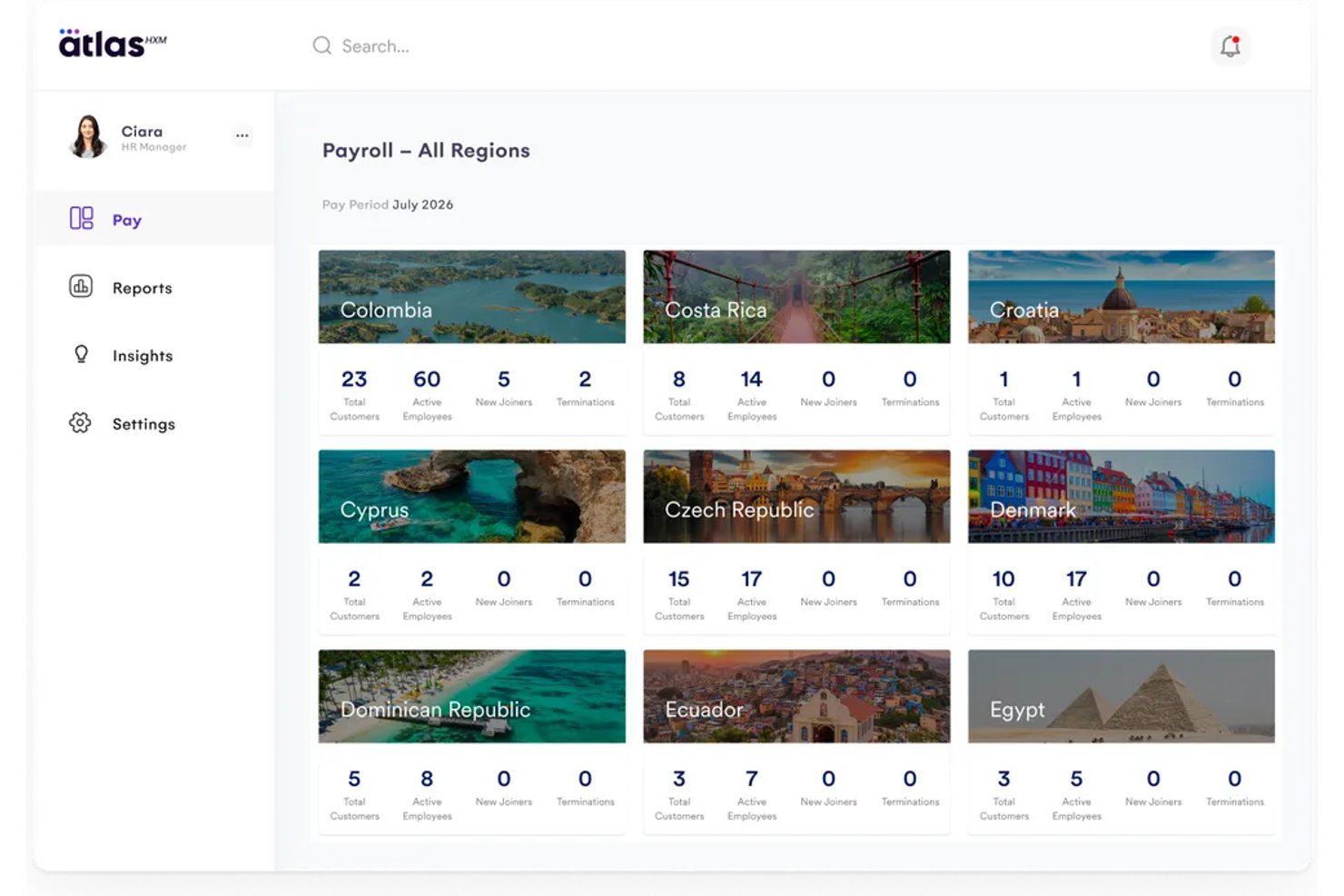
Atlas HXM is a direct-entity employer of record platform that handles employment contracts, payroll in local currency, tax and statutory compliance, benefits administration, and employee self-service across 160+ countries, including Ukraine under active martial law provisions.
Who Is Atlas HXM Best For?
Atlas HXM is a strong fit for global expansion teams and finance controllers who need a direct-entity EOR with transparent flat pricing and detailed wartime labor law compliance for Ukrainian hires.
Why I Picked Atlas HXM
Atlas HXM earns its spot on my shortlist because it operates a direct-entity EOR model with no third-party partners across 160+ countries, which matters a lot when you're hiring in a conflict zone where compliance gaps carry real legal risk. I particularly like its Ukraine country guide, which documents martial law provisions in detail: suspended overtime limits, modified dismissal rules during hostilities, and severance protections tied to active conflict timelines. Its automated compliance alerts also flag regulatory changes as they happen, so your payroll and contracts stay current without you manually tracking Ukrainian labor law updates.
Atlas HXM Key Features
- Employee self-service portal and app: Employees can view payslips, request leave, submit timesheets, enroll in benefits, and file expenses directly from a web portal or iOS and Android app.
- Consolidated monthly invoicing with FX transparency: Atlas bills in your currency using the OANDA spot rate plus a disclosed markup, with all statutory charges itemized on a single monthly invoice.
- Multilingual HR consultant support: Dedicated local HR relationship consultants work across 15+ languages and are available with same-day response, typically under one hour.
- HRIS integrations: Native connections to Workday, BambooHR, SAP SuccessFactors, Paycor, UKG, and Ceridian Dayforce let you sync employee data across your existing HR tech stack.
Atlas HXM Integrations
Atlas HXM lists integrations with Workday, BambooHR, Sage, Ashby, Paycor, UKG, Ceridian Dayforce, and iCIMS. It also supports single sign-on through Okta, Microsoft, and Google Workspace.
Pros and Cons
Pros:
- Direct-entity model limits partner handoffs
- Detailed martial-law employment guidance
- Responsive named account managers
Cons:
- Mobile app instability complicates employee access
- Regional handoffs can disrupt payroll accuracy

Acvian
Best for in-country payroll and EU-hub backup
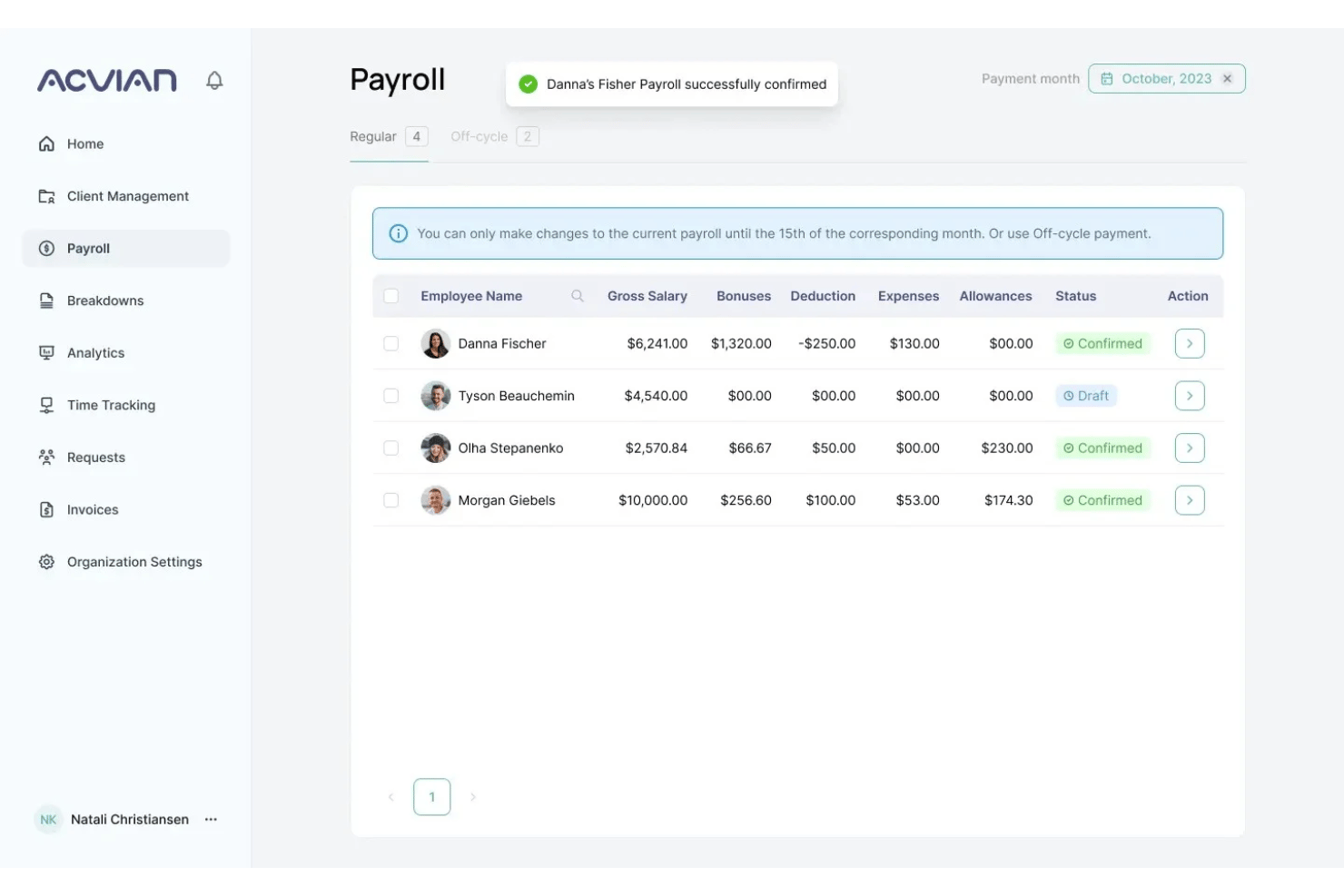
Acvian is an employer of record service with in-country Ukraine operations that handles local employment contracts, payroll and tax filings, benefits administration, and immigration support.
Who Is Acvian Best For?
Acvian is a good fit for companies hiring in Ukraine that want in-country payroll handled by a team with a local office and nearby EU backup across Poland, Slovakia, and Romania.
Why I Picked Acvian
Acvian earns its spot on my shortlist because it has a physical office in Ukraine and handles payroll, tax filings, and social contributions entirely in-country, including the 22% employer social contribution and the 5% military tax withheld under martial law. I also like that it backs this up with nearby offices in Poland, Slovakia, and Romania, so if your team needs to relocate, Acvian's in-house immigration support covers work permits and long-stay visas without routing you to a third party. That combination of local payroll execution and EU-adjacent redundancy is what makes it a practical pick for Ukraine specifically.
Acvian Key Features
- Optional benefits packages: Add supplemental benefits to employee contracts, including private health insurance, gym allowances, car leasing, and custom per diem arrangements.
- In-house immigration support: Acvian handles work permit applications and type D long-stay visas directly, without routing you to a third-party provider.
- Acvian Platform employee portal: Employees access payslips, contracts, and employment documents through a centralized web portal at webapp.acvian.io.
- Payroll cost estimator: A free tool covering 180+ countries lets you calculate employer costs before committing to a hire.
Acvian Integrations
Acvian doesn't have any native integrations documented. Its website also doesn't publish an API or named connections to HRIS, accounting, or applicant tracking tools.
Pros and Cons
Pros:
- In-house immigration support covers EU relocation
- Local office supports in-country payroll and filings
- Reviewers praise Ukraine labor-law and tax knowledge
Cons:
- No published guidance on mobilization or deferment
- Ukrainian employing entity remains unclear

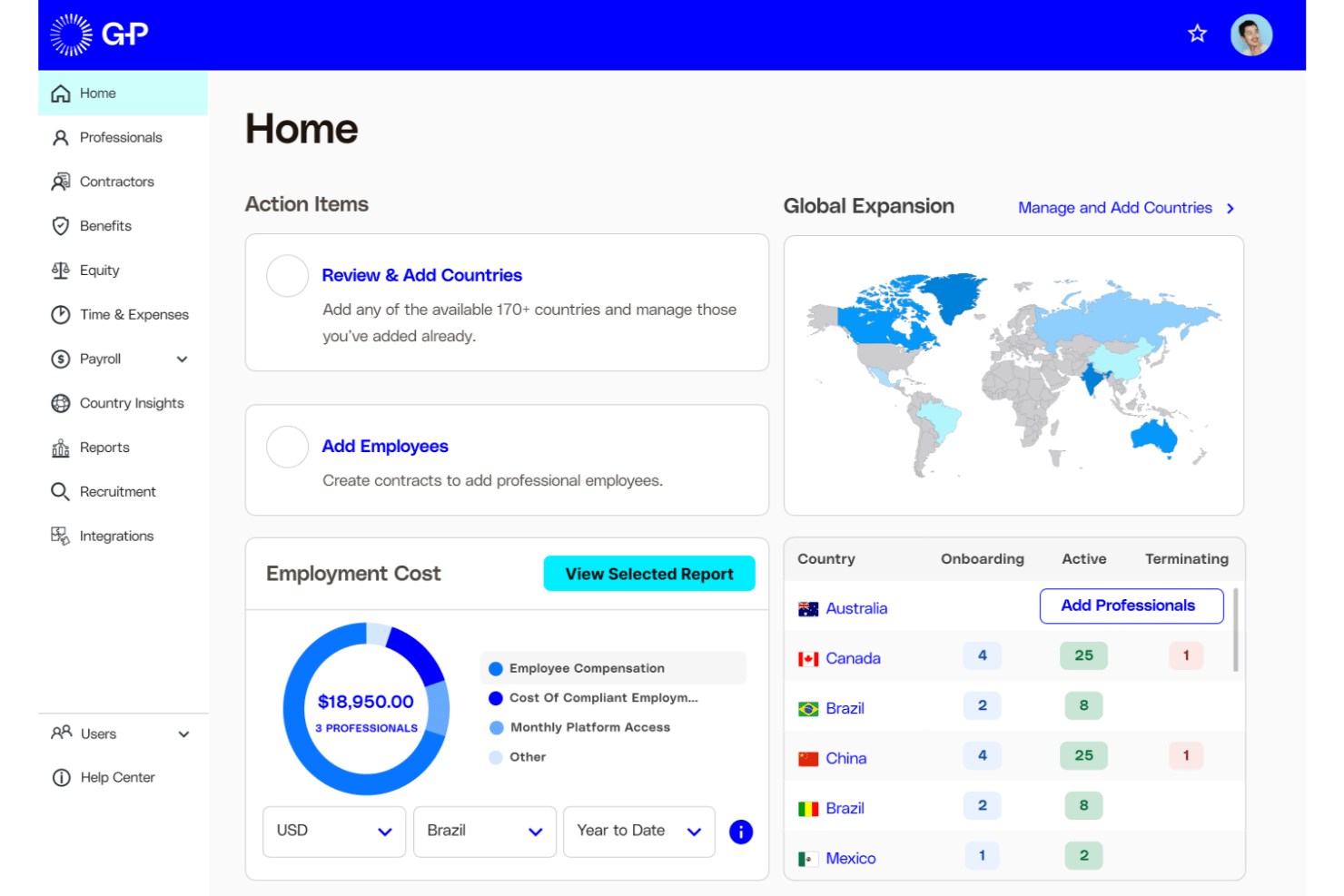
G-P is a global employer of record platform that lets you hire, onboard, and pay employees in Ukraine through its own local legal entity, handling payroll processing, tax filings, contract generation, and benefits administration.
Who Is G-P Best For?
G-P is a strong fit for enterprise teams that need to plug a Ukraine EOR into an existing HR tech stack, particularly those already running BambooHR, Workday, SAP SuccessFactors, or UKG.
Why I Picked G-P
G-P earns its spot on my shortlist because of how cleanly it plugs into enterprise HR tech stacks already running Workday, SAP SuccessFactors, BambooHR, or UKG. If your organization runs payroll through ADP Workforce Now or Paylocity, G-P connects directly, so Ukrainian employee data flows into your existing systems without manual exports. Its Global Compliance Engine generates Ukraine-specific employment contracts automatically, and its owned Ukrainian entity means there's no third-party intermediary handling your hires locally.
G-P Key Features
- Global Compliance Engine: Automatically generates Ukraine-specific employment contracts that reflect local labor code requirements.
- G-P Gia: An AI compliance agent that monitors regulatory changes across 50+ countries and sends alerts when updates occur.
- Multi-currency payroll processing: Runs payroll in 150+ currencies, handling Ukrainian tax withholding and statutory contributions automatically.
- Employee self-service portal: Lets Ukrainian employees view payslips, check time-off balances, and submit expense claims directly through the platform.
G-P Integrations
G-P documents integrations with ADP Workforce Now, Paylocity, BambooHR, SAP SuccessFactors, UKG Pro, Workday, HiBob, Personio, Google Workspace, and Microsoft Entra ID. It also provides an API for custom integrations, plus SSO and MFA connectivity.
Pros and Cons
Pros:
- Owned Ukrainian entity handles local employment
- Broad country coverage supports multi-country payroll
- Reviewers praise responsive customer success teams
Cons:
- Some reviewers report slow support responses
- Ukraine guidance omits wartime labor rules

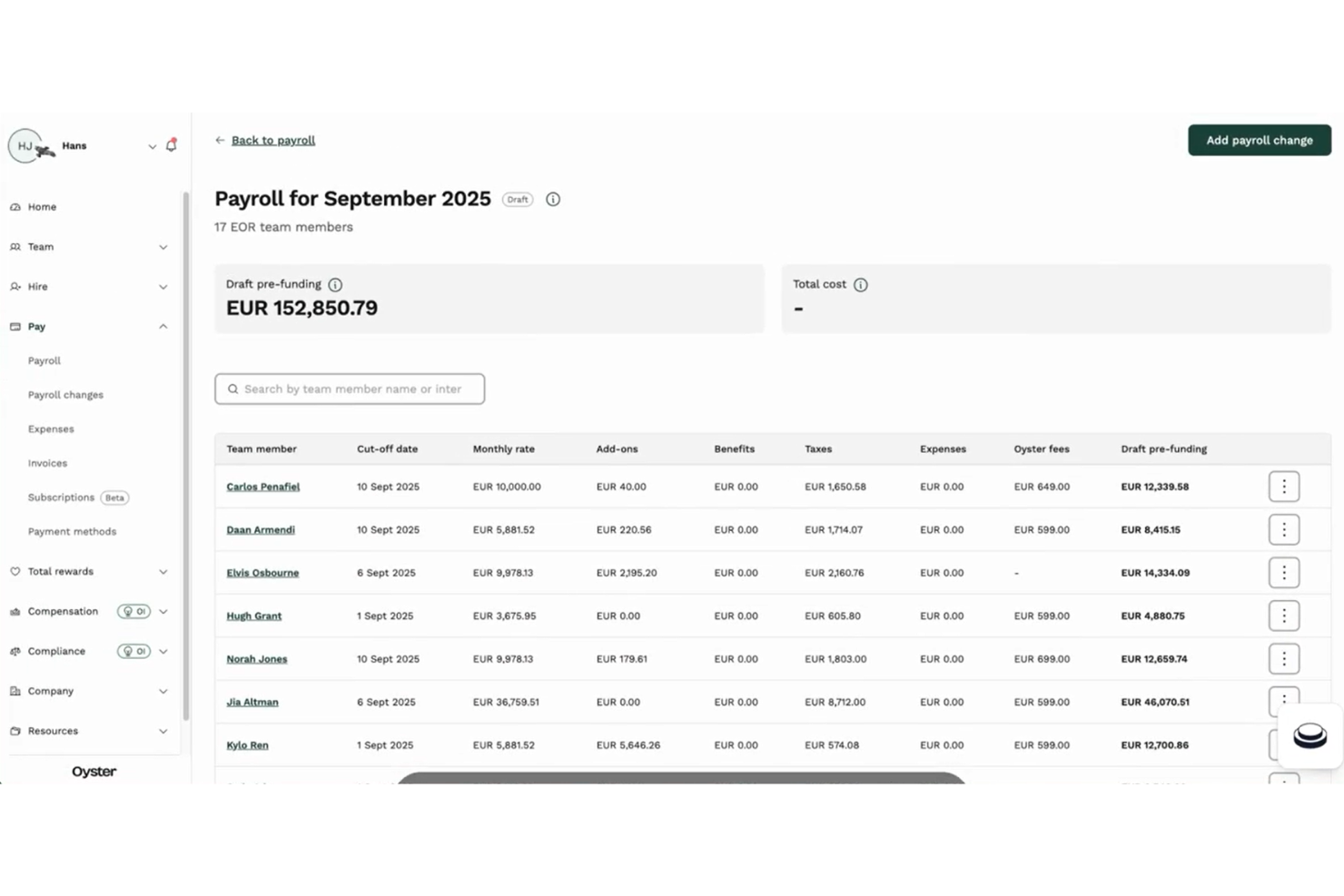
Oyster is a global employer of record platform that handles Ukrainian employment contracts, payroll in UAH, statutory benefits administration, and local tax remittance for companies hiring without a legal entity in Ukraine.
Who Is Oyster Best For?
Oyster is a strong fit for tech companies that want to hire Ukrainian developers, QA engineers, or product managers without setting up a local legal entity.
Why I Picked Oyster
I picked Oyster as one of the best because it's built specifically around Ukraine's IT talent market, with contract templates that address FOP (sole-proprietor contractor) misclassification risk and mandatory IP assignment clauses. I also like that its legal team handles Ukrainian-language contracts in-house, covering martial law amendments like mobilization leave and the 2024 military tax increase from 1.5% to 5%.
Oyster Key Features
- Automated payroll in UAH: Oyster calculates salaries, social contributions (USC), taxes, and deductions in Ukrainian hryvnia, generating payslips and downloadable payroll reports each pay cycle.
- Employee self-service portal: Employees access payslips, HR documents, time-off requests, and timesheets through a dedicated portal with iOS and Android apps.
- Multi-currency client billing: Oyster lets you pay invoices in USD, EUR, GBP, or CAD while remitting employee pay in local currency.
- Integrations with HR and payroll tools: Oyster connects to BambooHR, Greenhouse, HiBob, Personio, ADP Workforce Now, QuickBooks, and others, with a developer API for custom workflows.
Oyster Integrations
Oyster documents integrations with BambooHR, Greenhouse, HiBob, Personio, ADP Workforce Now, Workable, Teamtailor, QuickBooks, Xero, and Slack. It also offers a developer API and Zapier.
Pros and Cons
Pros:
- Reviewers praise onboarding and administration
- UAH payroll includes statutory contributions
- Contracts address Ukrainian martial-law amendments
Cons:
- Complex cases can face support delays
- Ukrainian employing entity remains undisclosed

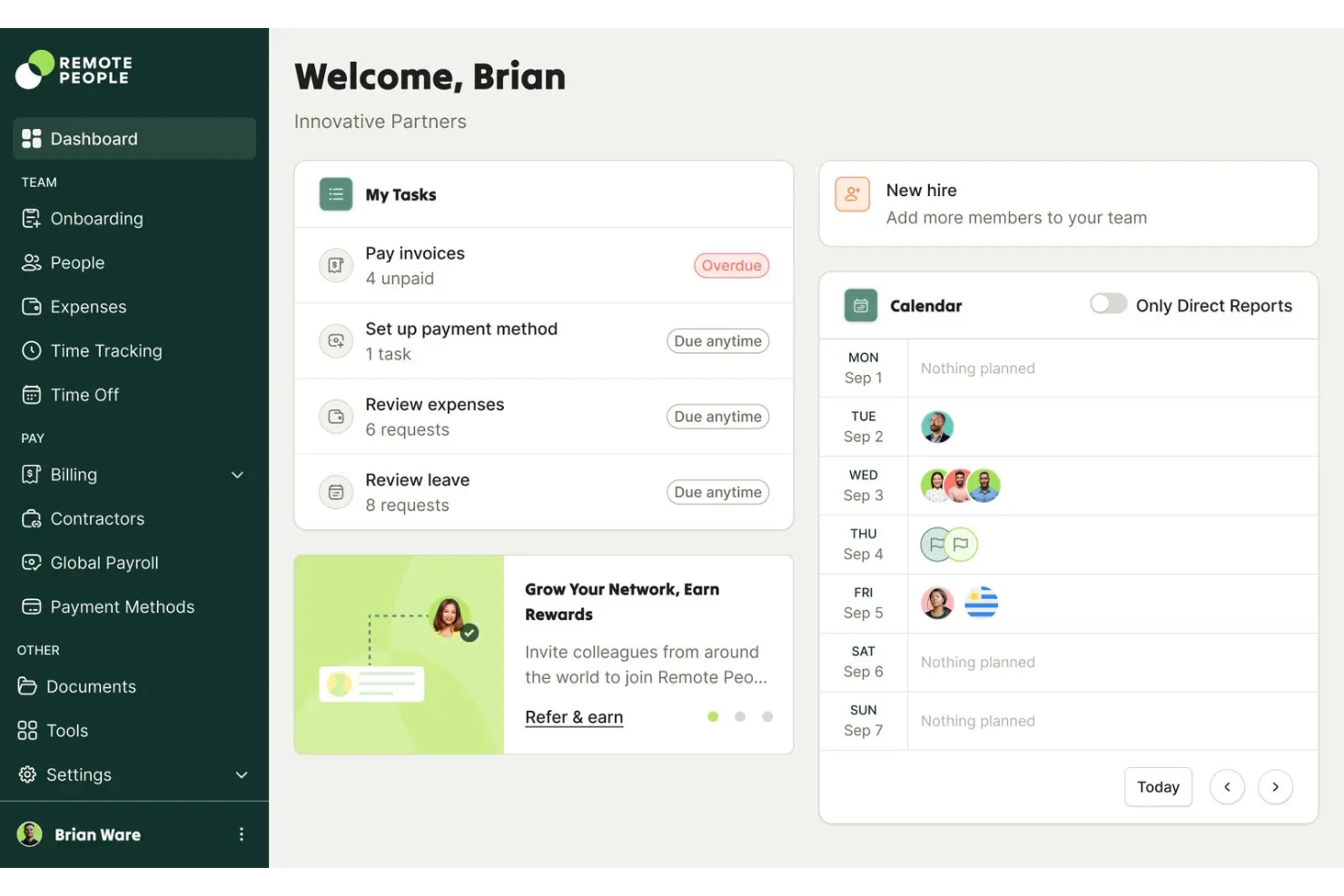
Remote People is an employer of record platform that lets you hire and pay workers in Ukraine without a local entity, covering employment contracts, payroll, tax remittance, and wartime-specific labor law compliance.
Who Is Remote People Best For?
Remote People is a good fit for global expansion teams hiring Ukrainian IT professionals who need wartime-compliant employment contracts and Diia City gig contract support.
Why I Picked Remote People
Remote People earns its spot on my shortlist because of how thoroughly it handles wartime-specific employment in Ukraine. I particularly like that its contracts support open-ended, fixed-term, and Diia City gig formats, each with IP-assignment clauses built in by default. The Ukraine coverage also includes martial law provisions like mobilisation protections and the updated military levy, so your contracts stay legally grounded even as wartime labor rules shift.
Remote People Key Features
- Payroll processing: Runs twice-monthly pay cycles with automatic withholding of PDFO, military levy, and ESV, then files a single monthly statutory report covering all three.
- Work permit sponsorship: Handles Ukrainian work permit applications for foreign nationals, including state fee payments of approximately UAH 12,000 per year.
- Employee self-service portal: Gives employees access to payslips, leave requests, expense submissions, and onboarding documents in one place.
- BambooHR, Workday, and SAP SuccessFactors integrations: Connects to 70+ HR and payroll platforms via native integrations and an open API.
Remote People Integrations
Remote People supports 70+ integrations, including BambooHR, Workday, SAP SuccessFactors, Personio, Okta, and Microsoft Entra ID. It also provides an open API for custom integrations.
Pros and Cons
Pros:
- Reviewers praise smooth onboarding and responsive support
- Contracts support Diia City and client IP assignment
- Wartime clauses cover mobilization protections
Cons:
- Reviews report slow operational follow-through
- Ukrainian entity ownership remains undisclosed

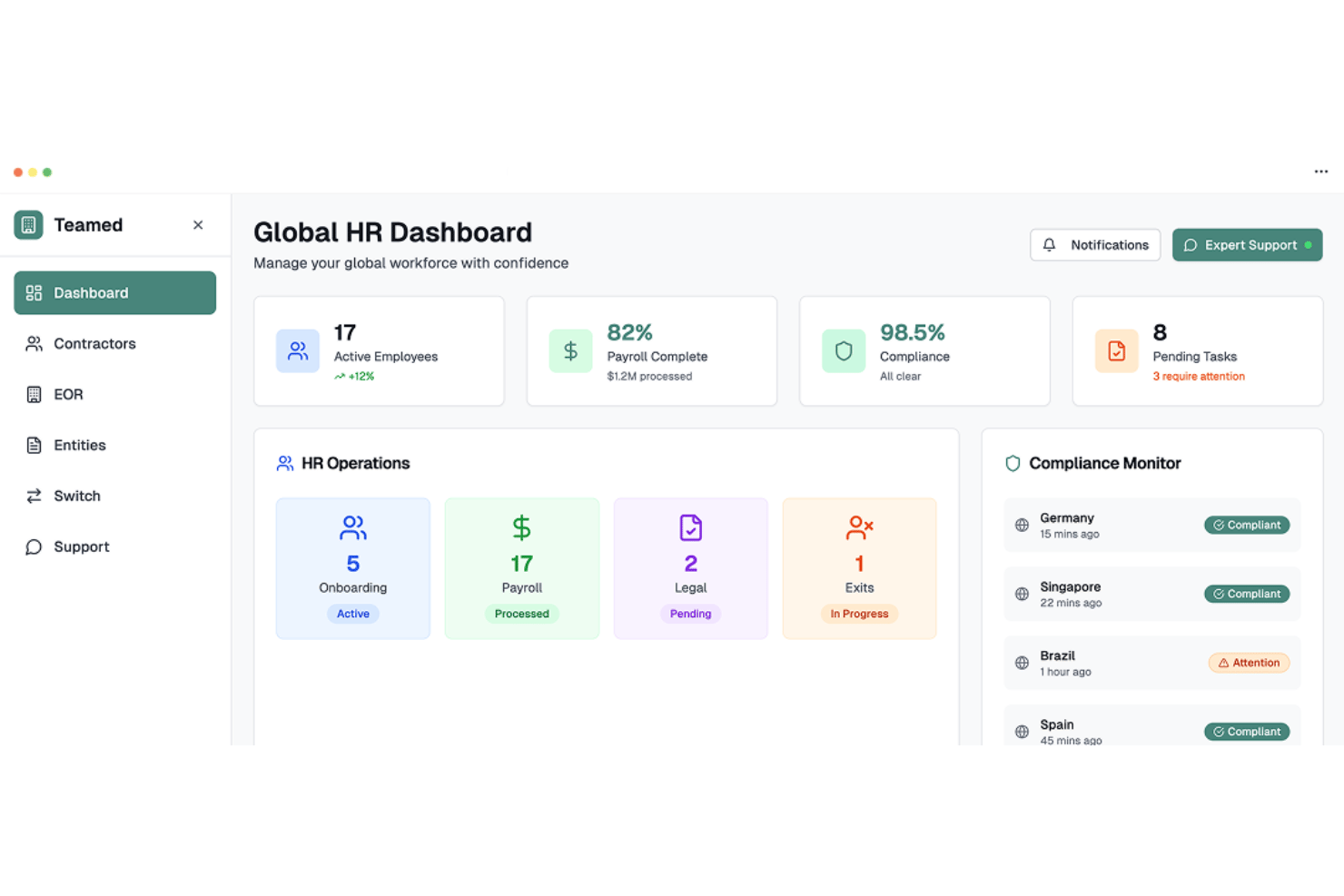
Teamed is an employer of record platform that employs Ukrainian workers through its own registered local entity, handling payroll, tax remittance, labour law compliance, and contract generation across 187+ countries.
Who Is Teamed Best For?
Teamed is a strong fit for companies with Ukrainian employees who need a dedicated partner that has actively navigated wartime compliance, martial law provisions, and military conscription requirements.
Why I Picked Teamed
I've included Teamed in my top picks because no other provider on this list has documented its wartime compliance operations in Ukraine with the same level of operational detail. Teamed actively tracks male employees' military exemption documents and notifies territorial authorities before they expire, which is a real and immediate concern under martial law. It also runs a mid-month advance plus a month-end payroll cycle to keep employees paid through banking disruptions.
Teamed Key Features
- Twice-monthly UAH payroll: Teamed runs payroll on the 15th and last working day of each month, paying Ukrainian employees in local currency with automatic tax withholding.
- Lawyer-drafted employment contracts: Local legal counsel writes each Ukrainian employment contract, covering probation, IP assignment, confidentiality, and statutory leave entitlements.
- TOV entity graduation pathway: Employees can transition from EOR to your own Ukrainian legal entity (TOV) without being re-onboarded, preserving tenure and employment records.
- Named country specialist support: Each account is assigned a dedicated Ukraine specialist, with HR and legal experts available 24/5 and a claimed 15-minute first response time.
Teamed Integrations
Teamed has one fully documented native integration with Personio and lists 18 additional integrations, including BambooHR, HiBob, Workday, Xero, QuickBooks, Greenhouse, and Okta, with Zapier listed last. It has no public self-serve API; its team builds custom connections during onboarding.
Pros and Cons
Pros:
- Reviewers praise responsive, personal support
- Twice-monthly payroll supports continuity
- Documented military exemption tracking
Cons:
- Employee self-service remains poorly documented
- Reviewers report delayed onboarding and contracts

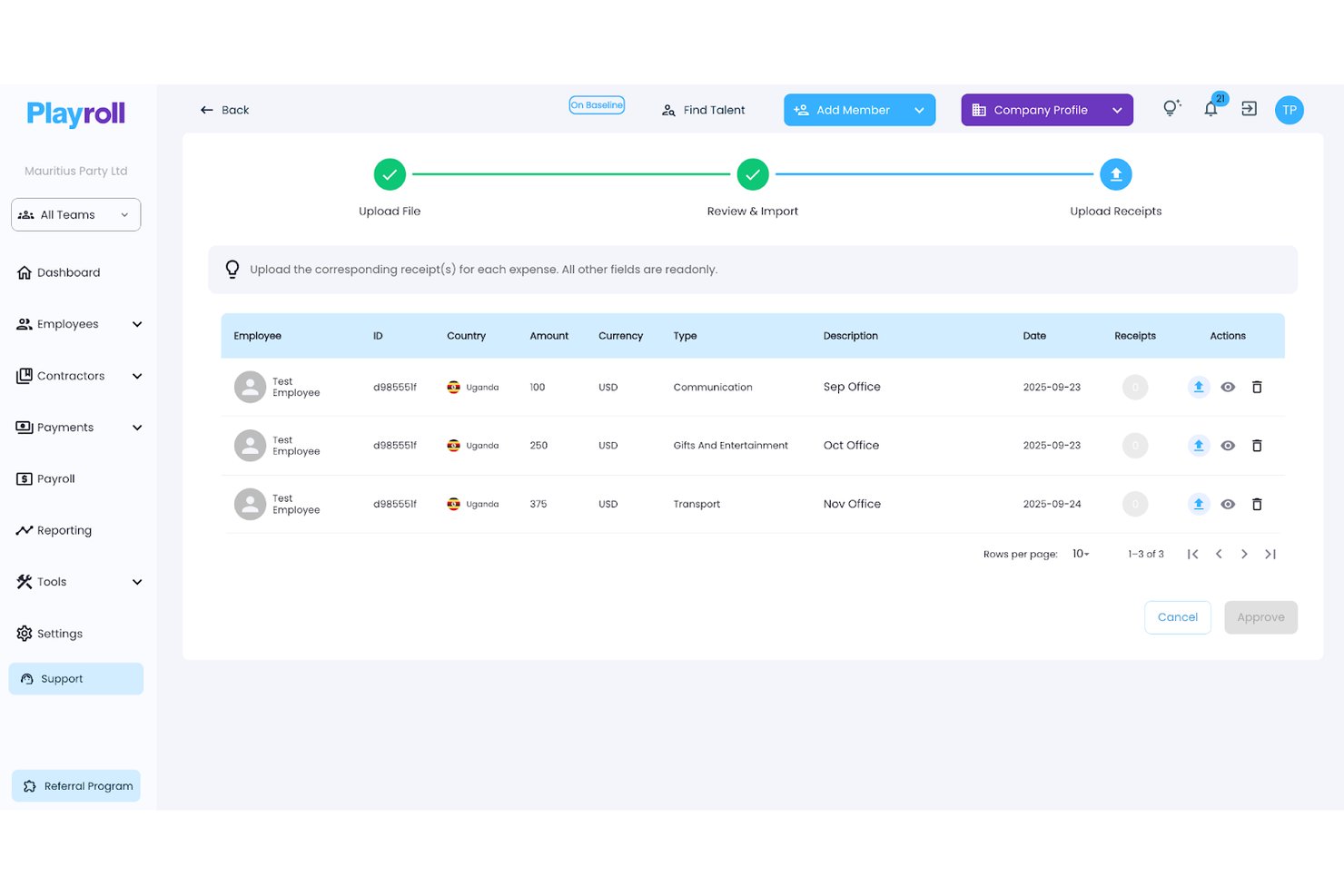
Playroll is an employer of record platform covering 180+ countries that handles compliant employment contracts, payroll processing, tax remittance, and statutory benefits administration—with a dedicated Ukraine hiring guide that covers wartime labor law, Diia City, and IT contractor misclassification.
Who Is Playroll Best For?
Playroll is a strong fit for tech-focused companies hiring Ukrainian IT talent who want flat-rate pricing and fast contract generation without building a local entity.
Why I Picked Playroll
I picked Playroll as one of the best because its flat $399/month rate is genuinely well-suited to hiring Ukrainian IT talent, where variable percentage-of-salary fees from other EOR providers add up fast against competitive developer salaries. Playroll's Ukraine hiring guide covers the 22% Unified Social Contribution, Diia City's tech-specific employment regime, and contractor misclassification risks for FOP workers—the exact compliance layer that trips up most companies hiring Ukrainian developers. I also like that IP protection is built into every contract, which matters when you're bringing on software engineers whose output is your product.
Playroll Key Features
- Orbit AI compliance agent: Monitors 100+ labor law changes per month and flags updates relevant to your Ukrainian hires, routing complex questions to in-house legal specialists.
- Multi-currency payroll processing: Disburses employee pay in UAH while letting you receive invoices split by employee, territory, or team in 60+ currencies.
- Employee and customer success managers: Every account includes a dedicated Customer Success Manager and Employee Success Manager available via email, WhatsApp, phone, and Slack.
- Contractor misclassification checks: Evaluates whether your Ukrainian FOP (private entrepreneur) contractors are at risk of being reclassified as employees under Ukrainian labor law.
Playroll Integrations
Playroll offers native integrations with BambooHR and HiBob, plus partner integrations with Expensify, Lattice, Carta, Veremark, and Jobbatical. Its open API supports custom integrations.
Pros and Cons
Pros:
- IP protection suits Ukrainian software hires
- Users praise responsive support during setup
- Ukraine guide covers wartime law and Diia City
Cons:
- Reviews cite onboarding delays and document checks
- Ukrainian employing entity remains undisclosed


Alcor is a Ukraine-focused employer of record built for tech companies, offering legal employment, payroll and tax processing, contract management, and statutory benefits administration under both the standard labor code and the Diia.City regime.
Who Is Alcor Best For?
Alcor is a strong fit for tech companies hiring engineering and AI/ML talent in Ukraine without setting up a local entity.
Why I Picked Alcor
Alcor earns its spot on my shortlist because it's the only Ukraine-focused EOR I've found that directly addresses mobilization risk as part of its service. It covers wartime-specific labor law, including updated IT deferment rules, military leave pay, and how employment contract type affects an employee's deferment eligibility. I also like that Alcor writes and manages IP assignment agreements from day one, which matters when you're hiring engineers and protecting what they build.
Alcor Key Features
- Diia.City payroll processing: Alcor calculates and remits payroll under both the standard labor code and the Diia.City regime, applying the correct income tax rates for each.
- IP assignment agreement drafting: Alcor writes NDA and IP assignment agreements tailored to engineering roles, with client ownership established from day one.
- AlcorOS team management platform: AlcorOS gives you visibility into team planning, salary data, time off, assets, and documents across your Ukrainian headcount.
- B2B and employment contract management: Alcor covers both standard employment contracts and FOP sole-proprietor contractor arrangements, including termination settlements.
Alcor Integrations
Alcor doesn't have any native integrations documented, and its website doesn't list API, HRIS, ATS, accounting, or Zapier connectivity.
Pros and Cons
Pros:
- Reviews praise responsive, hands-on account support
- Detailed mobilization guidance for wartime hiring
- Own Ukrainian entity avoids partner handoffs
Cons:
- Tech-only scope excludes broader workforce hiring
- No confirmed employee self-service for payslips

Best for tech hiring with IP transfer built in
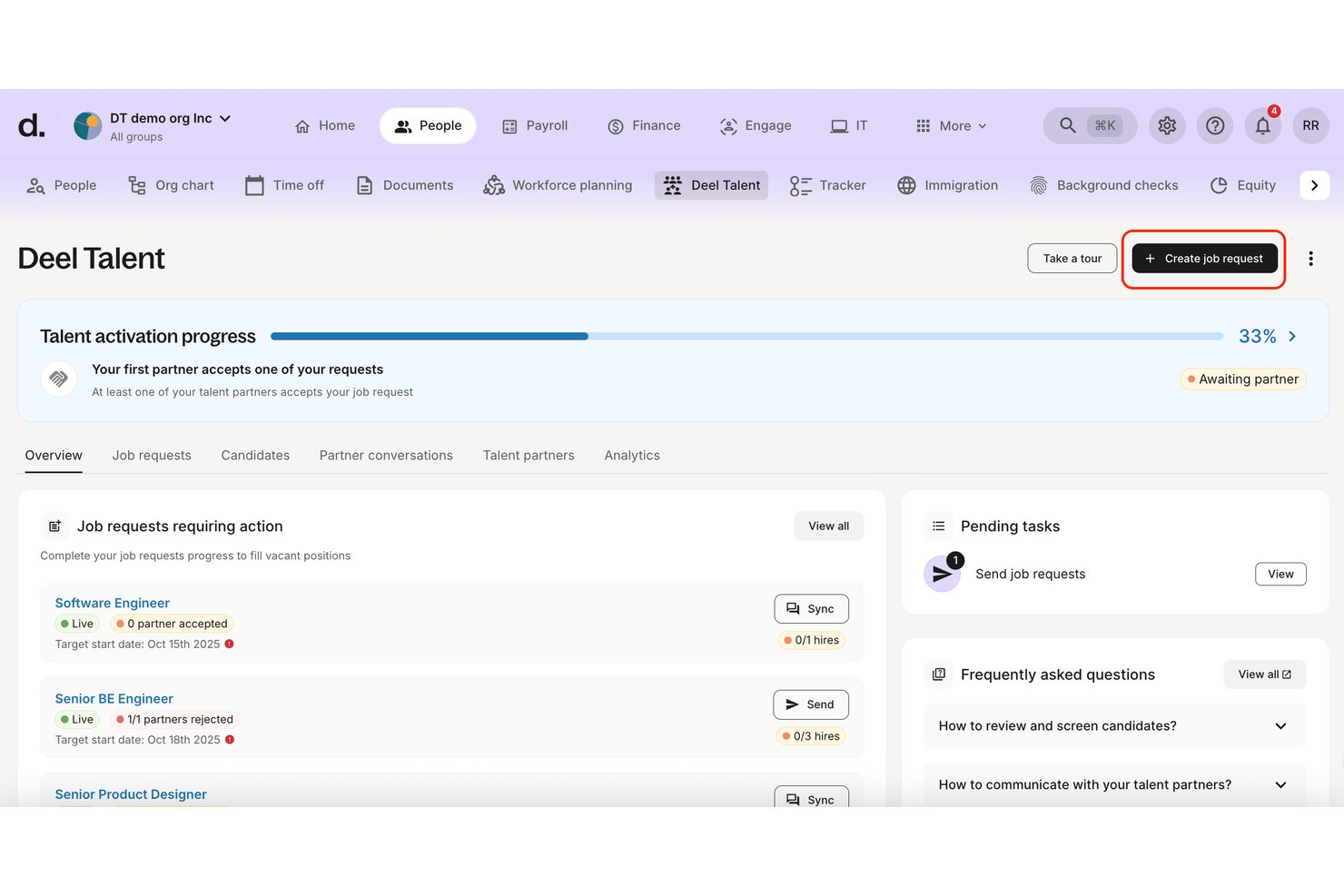
Deel is a global employer of record platform that lets you hire, pay, and manage employees in Ukraine without opening a local entity, handling payroll in UAH, tax remittance, contract generation with IP transfer clauses, and employee self-service through a unified HR dashboard.
Who Is Deel Hire Best For?
Deel Hire is a strong fit for tech companies hiring Ukrainian developers or engineers who need IP transfer clauses built into employment contracts from day one.
Why I Picked Deel Hire
I've included Deel Hire in my top picks because it builds IP transfer clauses directly into Ukrainian employment contracts, which matters enormously when you're hiring developers or engineers whose output needs to legally belong to your company from day one. Deel owns a registered Ukrainian entity (DEEL UKRAINE LLC, registered since 2021), so workers are employed through a local legal structure, not a third-party partner. The onboarding flow handles mandatory wet-ink contract signing in-house, keeping that compliance step inside one platform.
Deel Hire Key Features
- Employee self-service portal: Ukrainian employees can access payslips, time off requests, expense submissions, and contract documents from day one through Deel HR.
- Twice-monthly UAH payroll: Deel runs payroll in Ukrainian hryvnia on a twice-monthly cycle, with automated tax filing and social insurance remittance handled in-house.
- HRIS and ATS integrations: Deel connects with tools like BambooHR, HiBob, Greenhouse, QuickBooks, and Xero, keeping your Ukrainian headcount visible alongside your broader workforce data.
- Five-day onboarding timeline: Deel targets a five-day onboarding window for new Ukrainian hires, covering contract delivery, document collection, and account setup.
Deel Hire Integrations
Deel offers 68+ documented integrations, including QuickBooks, Xero, NetSuite, BambooHR, HiBob, Greenhouse, Slack, Google Workspace, Microsoft, and JumpCloud. These connect payroll, HRIS, ATS, accounting, collaboration, and identity workflows for Ukrainian employees.
Pros and Cons
Pros:
- Reviews praise payroll and payment convenience
- Five-day onboarding supports fast market entry
- IP clauses suit Ukrainian tech hires
Cons:
- Reviewers report payment delays and support issues
- Wartime labor guidance remains undocumented

Remote
Best for IP-protected tech hiring via owned entity
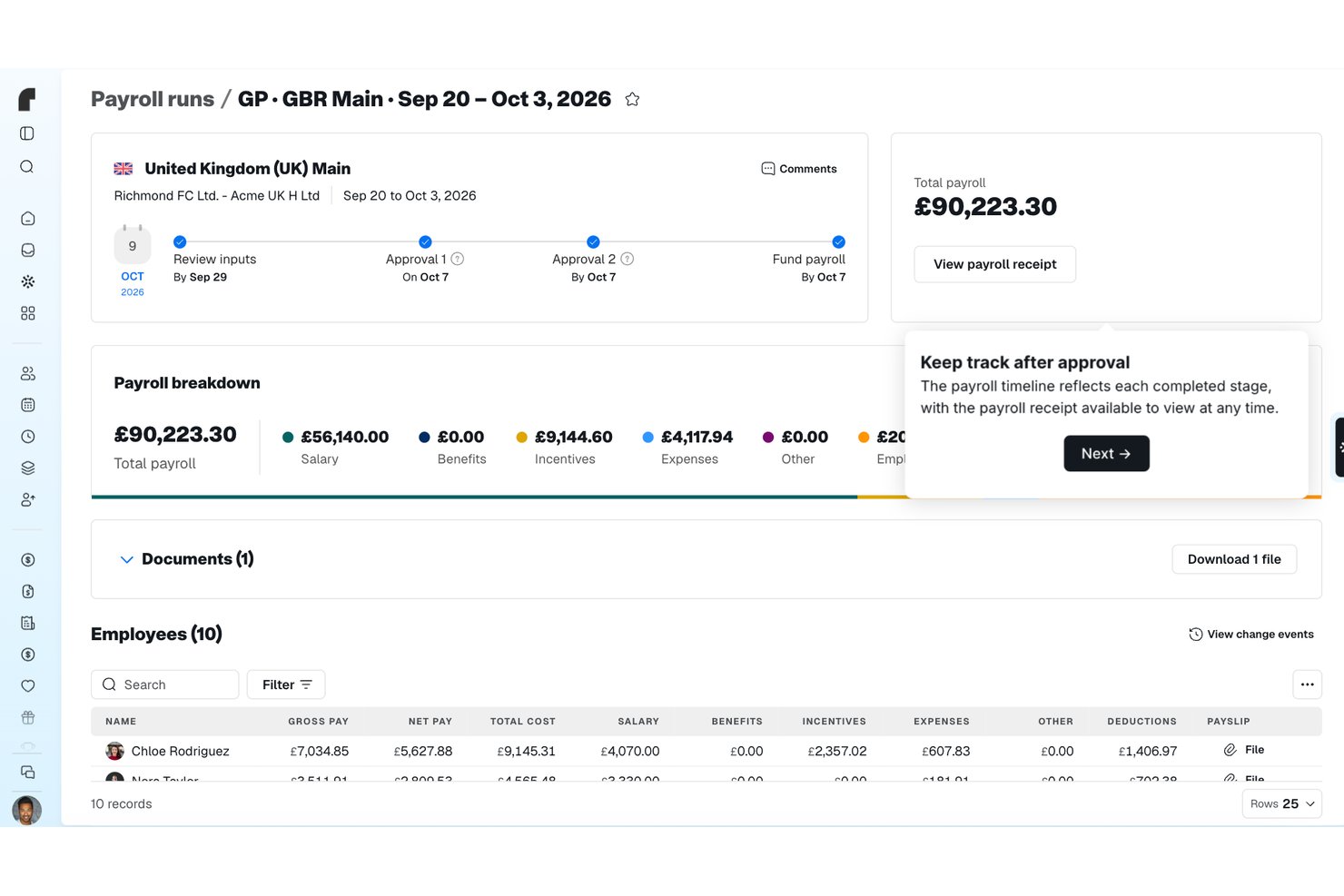
Remote is an employer of record and payroll provider that lets you hire full-time employees in Ukraine through its own legal entity, handling local contracts, semi-monthly payroll, tax remittance, and benefits administration.
Who Is Remote Best For?
Remote is a strong fit for tech-focused companies that want to hire Ukrainian developers without setting up a local entity and need IP protection built into the employment contract.
Why I Picked Remote
Remote earns its spot on my shortlist because it owns its Ukrainian legal entity outright, meaning there's no third-party handoff between you and your hired developer. I particularly like IP Guard, which handles IP transfer and moral-rights waivers directly in the employment contract, a critical detail when you're hiring Ukrainian tech talent to build proprietary software. The automated contract generation covers these protections from day one, without your legal team having to draft anything from scratch.
Remote Key Features
- Semi-monthly payroll processing: Remote runs Ukraine payroll twice a month, on the 15th and the last working day, with a cut-off on the 10th.
- Tiered supplemental benefits catalog: Choose from four health insurance tiers, five mental health support tiers, and business travel cover for Ukrainian employees.
- Compliance Watchtower: Remote's compliance tracking tool monitors legal changes across 90+ countries and flags updates that affect your Ukrainian hires.
- Employee self-service portal and mobile app: Ukrainian employees can view payslips, request time off, enroll in benefits, and submit expenses via web or the iOS and Android apps.
Remote Integrations
Remote lists 20 integrations, including Workday, BambooHR, HiBob, Personio, Greenhouse, QuickBooks, Xero, NetSuite, and Slack. It also offers an API for custom integrations and Zapier.
Pros and Cons
Pros:
- Users report timely payslips and smooth onboarding
- IP Guard covers transfers and moral-rights waivers
- Owned Ukrainian entity avoids partner handoffs
Cons:
- Complex country-specific support can be slow
- No published martial-law or conscription guidance
Other Employers of Record in Ukraine
Here are a few additional options that didn’t make my shortlist but are still worth checking out:
- Multiplier
For quick contract setup in Ukraine
- Pebl
For multi-country payroll with Ukraine coverage
- Papaya Global
For multi-currency payroll of Ukraine tech hires
- Rivermate
For finance teams wanting transparent EOR pricing
- RemoFirst
For low-cost Ukraine hiring at flat rates
- Safeguard Global
For entity-to-EOR conversion in Ukraine
- Borderless AI
For AI-generated Ukrainian labour contracts
- Native Teams
For multi-currency pay across 95+ countries
- WorkMotion
For EU-based payroll across 160+ countries
- Lano
For EU-based hiring with HR self-service tools


How I Evaluate Employer of Record in Ukraine
I split my evaluation into three parts: core functionality (carries the most weight), where I look for providers that can legally employ workers in Ukraine and maintain compliant contracts and payroll; standout features like war-risk contingency planning; and beyond features, where I consider pricing transparency and support quality.
Core Functionality (Table Stakes For This List)
When I'm selecting tools for my list, I score each one on a scale from 0 (does not offer the functionality) to 5 (excels in this area) for each core functionality listed below. I then convert the total into a percentage to help assess each tool's overall fit, with extra weight on any functionalities I've deemed essential.
- Legal Employment Entity (Essential): I check whether a provider owns its Ukrainian entity or works through a local partner, and how transparent the arrangement is.
- Labor Law Compliance (Essential): I evaluate how each provider tracks Ukrainian labor code updates, including wartime provisions around mobilization and termination.
- Payroll and Tax Remittance: Accurate, on-time salary disbursement and tax filing in local currency matters here, so I look at automation and error-handling.
- Benefits Administration: I look for full coverage of statutory leave, social insurance, and any supplemental health options the provider offers Ukrainian employees.
- Contract Generation and Management: Providers should produce employment agreements that reflect Ukrainian-specific terms like probation periods and notice requirements.
- Employee Self-Service Access: A portal where employees can view payslips, request leave, and download documents reduces back-and-forth for your HR team.
Once I have a list of tools that meet the criteria, I consider what sets each platform apart.
Differentiating Factors (What Sets Vendors Apart)
Here's how I compare and contrast different vendors:
Standout Features
War-risk contingency planning is the first thing I look for. Providers like Atlas HXM and Teamed that offer relocation support, payroll continuity during outages, and martial law guidance give HR teams real options when conditions shift. I also evaluate military conscription guidance, since a provider that helps you navigate travel restrictions and documentation for male employees shows deep local expertise. Beyond that, IP protection clauses matter when you're hiring developers—Remote and Deel Hire, for example, both build IP transfer terms into their contracts.
Beyond Features
I check whether providers store payroll data on redundant servers outside Ukraine, since wartime infrastructure disruptions can knock out local systems. Cost transparency matters just as much—I look for clear breakdowns of per-employee fees and currency conversion markups, because hidden pass-throughs can quietly inflate your total spend. I also evaluate how responsive each provider's in-country legal contacts are during terminations, given Ukraine's strict labor code procedures around severance and notice periods.
How to Choose an Employer of Record in Ukraine
Choose an employer of record in Ukraine by matching its legal and payroll arrangements to your hiring risks, then verify the details in writing.
| If your priority is… | Look for… |
|---|---|
| Clear responsibility for local employment | Written disclosure of whether the provider employs staff through its own Ukrainian entity or a local partner |
| Accurate payroll and tax handling | A sample payroll breakdown showing salary, deductions, employer costs, and remittance responsibilities |
| Continuity during wartime disruption | Written procedures for payroll interruptions, relocation, and changes to work arrangements |
| Protecting work created by employees | An employment agreement that clearly assigns intellectual property rights |
How to Vet Your Shortlist
- Confirm the employment structure: Request a written explanation naming the legal employer and describing any local partner’s role before signing.
- Test a payroll example: Ask the provider to prepare a sample payslip and employer-cost breakdown for one proposed salary, with each deduction and remittance labeled.
- Review wartime procedures: Request the current written contingency plan and ask how it addresses payroll continuity, relocation, and employee documentation.
- Check contract language: Ask for a sample Ukrainian employment agreement and identify the clauses covering intellectual property, leave, notice, and termination.
- Choose your tradeoff: Decide whether direct employment through the provider’s own entity or a partner-based arrangement better fits your need for transparency and local flexibility; require the chosen structure in the contract.
What Are Employers of Record in Ukraine?
An employer of record in Ukraine is a third-party organization that legally employs workers on your behalf and manages local payroll, employment contracts, and compliance. This arrangement lets your organization hire in Ukraine without establishing its own local entity. Before choosing a provider, confirm who the legal employer is and how it handles Ukrainian labor requirements, tax remittances, and employment administration.
Features
Here are the core features to look for in an employer of record in Ukraine:
- Legal employment entity: The provider or its local partner becomes the employee’s legal employer in Ukraine. Ask who signs the contract and handles employer obligations so responsibilities are clear.
- Labor law compliance: The provider prepares employment practices around Ukrainian labor requirements, including applicable wartime rules. This helps your team manage changes to leave, working arrangements, or termination procedures.
- Payroll and tax administration: The provider calculates salary, deductions, and employer contributions, then manages required tax remittances. Request a sample breakdown to see which amounts your business and employee pay.
- Employment contracts: The provider prepares and maintains agreements with terms suited to Ukrainian employment, such as probation, leave, notice, and termination provisions. Clear contract language helps both parties understand their obligations.
- Benefits and leave administration: The provider tracks statutory leave and applicable social insurance contributions, and may administer additional benefits. Confirm what’s included and how employees request or record leave.
- Onboarding and document management: The provider collects employment information, prepares required documents, and maintains employee records. A defined process helps your team track outstanding paperwork and employment changes.
- Employee self-service: An employee portal can give workers access to payslips, employment documents, and leave requests. This gives employees a direct way to find routine information and submit requests.
- Wartime continuity planning: The provider should explain how it handles payroll interruptions, relocation requests, and changes to work arrangements during disruptions. Ask for written procedures so your team knows whom to contact and what steps to follow.
Benefits
In my experience, using an employer of record in Ukraine can offer several practical benefits, including:
- Hiring without a local entity: An EOR employs workers on your behalf, so your organization can hire in Ukraine without establishing its own entity.
- Local employment compliance: Ukrainian employment contracts and labor-law administration help your team address local requirements, including applicable wartime provisions.
- Managed payroll and taxes: Payroll services calculate salary, deductions, and employer contributions, then handle required tax remittances.
- Benefits and leave administration: EOR services can track statutory leave and social insurance contributions, and may administer supplemental benefits.
- Simpler employee administration: Onboarding, document management, and self-service access give employees a way to find payslips, manage leave requests, and access employment documents.
- Support during disruptions: Providers with written continuity plans can guide payroll interruptions, relocation requests, and changes to work arrangements during wartime disruptions.
Costs and Pricing
Employer of record fees in Ukraine typically range from a few hundred dollars to more than $900 per employee monthly, depending on the provider and service level. These tiers are illustrative, since providers don’t use standardized plan names, and fees usually exclude salary, taxes, and employer contributions.
Plan Comparison Table for Employers of Record in Ukraine
| Plan Type | Typical Price (USD) | Common Features |
|---|---|---|
| Free Demo / Consultation | Free | Platform demonstrations, hiring assessments, pricing quotes, and service consultations. No free EOR employment service. |
| Standard EOR Service | $399–$699/employee/month* | Local employment contracts, payroll processing, tax remittance, statutory benefits, employee onboarding, and HR support. |
| Multi-Country / Enterprise EOR | Custom pricing | Multi-country workforce management, consolidated payroll reporting, advanced integrations, tailored compliance support, and dedicated account management. |
| Optional Add-Ons | Quoted separately | Supplemental insurance, immigration assistance, background checks, relocation support, and other country-specific services. |
FAQs
Some answers to common questions about employers of record in Ukraine:
Can an EOR hire Ukrainian employees who work remotely?
Yes, an EOR can employ people who work remotely from Ukraine. Ask how the employment agreement documents the remote arrangement, including the employee’s work location and any required equipment or records. Confirm how the provider handles changes to the arrangement, such as a move to another location or an extended interruption to work. If your employee will work outside Ukraine, check which country’s employment rules may apply before choosing the provider.
What happens if an employee is mobilized for military service?
The EOR should explain how it handles a mobilization notice and related employment records. The steps and employment obligations depend on the employee’s circumstances and the rules in force at the time. Ask for the provider’s current written process, including who reviews documents, who communicates with the employee, and how payroll or employment status may change. Don’t rely on a general assurance; have the provider confirm the applicable steps for your employee’s situation.
Can I use an EOR for independent contractors in Ukraine?
An EOR arrangement is for employment; it doesn’t automatically make a contractor an employee or settle worker-classification questions. Some providers offer contractor management as a separate service, so confirm what they’ll handle and under which agreement. Review the actual working relationship, including control over work and the nature of the services, before deciding how to engage someone. Ask a qualified local adviser to assess classification risks when the arrangement is unclear.