

Güney Kore'de bir Kayıtlı İşveren, yerel ekibinizi yasal olarak istihdam eder ve bordroyu, istihdam yönetimini ve yasal yükümlülükleri sizin adınıza yürütür.
Yerel istihdam altyapısını kendiniz yönetmeden Kore'de işe alım yapmanız gerekiyorsa sağlayıcıları uyumluluk desteği, istihdam modeli ve diğer pazarlarınızdaki kapsamları açısından karşılaştırın. Bu kılavuz, yerel iş hukuku desteği, işe alım süreci ve İK sistemlerinize bağlantılar için seçenekleri inceler.
Why Trust Our Software Recommendations
6,700+
Reviews
20
Industry experts
16+
Evaluation factors
14
Years
Our team has been testing and reviewing software since 2012. As HR experts ourselves, we know how difficult—and important—it is to choose the right software.
For this guide, we evaluated tools using hands-on testing and independent research, scoring tools using our selection criteria. We also draw on insights from industry thought leaders and practicing HR experts.
Our reviews reflect our human editorial judgment, not a sales pitch.
Expert reviewers:
- Phil GrayCOO
 Kim BehnkeHR Tech Editor & Analyst
 Josh BarkerPeople Ops Manager

Karşılaştırma Tablosu: Güney Kore'deki Kayıtlı İşverenler
Kısa listeme giren Güney Kore’deki kayıtlı işverenlerin fiyatlarını ve özelliklerini yan yana karşılaştırın.
Score legend (out of 5)
- Excellent4.5–5
- Good4–4.4
- Average3–3.9
- Below average2–2.9
- Poor1–1.9
Sorted by: Default
| Tool | Starting Price | Website | |||||||
|---|---|---|---|---|---|---|---|---|---|
Best for Korea-compliant global workforce consolidation | 3.5 out of 5 | 2 | 4 | 3 | 4 | 4 | 4 | $125/per employee/month Free demo available | Website |
Best for mixed employee and contractor teams | 1.8 out of 5 | 2 | 2 | 1 | 2 | 2 | 2 | $19/contractor/month Not available | Book Demo |
Best for Korea hiring with backup partners | 2.5 out of 5 | 2 | 3 | 2 | 3 | 2 | 3 | $199/user/month Free plan + free demo available | Website |
Best for direct-entity hiring in South Korea | 3.3 out of 5 | 2 | 4 | 4 | 3 | 4 | 3 | $599/per employee/month Free demo available | Website |
Best for Korean labor law compliance depth | 3.3 out of 5 | 4 | 4 | 2 | 4 | 2 | 4 | $699/user/month Free demo available | Website |
Best for finance-led global hiring including Korea | 2.8 out of 5 | 2 | 3 | 3 | 3 | 2 | 4 | $499/per employee/month Free demo available | Website |
Best for testing South Korean market entry fast | 3.7 out of 5 | 4 | 4 | 3 | 4 | 3 | 4 | $499/employee/month Free demo available | Website |
Best for APAC-wide hiring with a Seoul base | 3.3 out of 5 | 2 | 3 | 3 | 4 | 4 | 4 | Pricing upon request Not available | Website |
Best for Korea severance and pension compliance | 3.8 out of 5 | 4 | 4 | 3 | 4 | 4 | 4 | $599/per employee/month Free demo available | Website |
Best for unified HR and IT hiring in Korea | 3.2 out of 5 | 3 | 3 | 3 | 4 | 2 | 4 | $8/user/month Free trial + free demo available | Book Demo |


Güney Kore'deki Kayıtlı İşverenlerin İncelemeleri
Aşağıda, kısa listeme giren Güney Kore’deki en iyi Kayıtlı İşverenlere ilişkin ayrıntılı özetlerimi bulabilirsiniz. İncelemelerim, size en uygun seçeneği bulmanıza yardımcı olmak için her bir EOR hizmetinin Kore’ye özgü uyumluluk desteğini, istihdam modelini ve bölgesel kapsamını ele alır.
 Best for Korea-compliant global workforce consolidation
- Free demo available
- From $125/per employee/month
Visit WebsiteCustomer Rating:4.9/5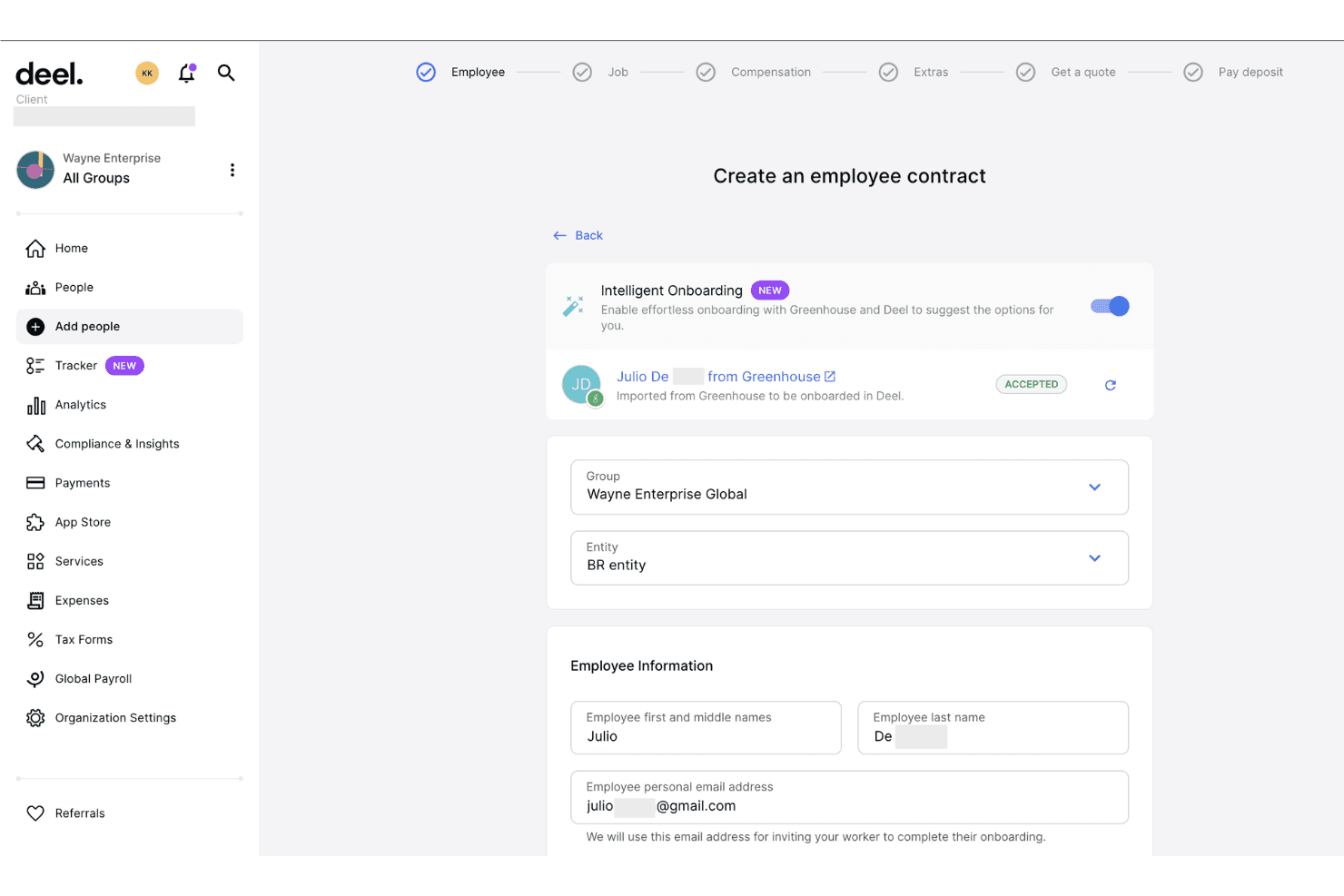
Deel Hire imports candidates from Greenhouse to create employee contracts. Deel is a global Employer of Record platform that lets you hire employees in South Korea—and 130+ other countries—without a local entity, covering KRW payroll, the four statutory insurances, severance accrual, and labor law compliance from a single dashboard.
Who Is Deel Hire Best For?
Deel Hire is a strong fit for companies already hiring across multiple countries that need to add South Korea to an existing global workforce without juggling separate vendors.
Why I Picked Deel Hire
I've included Deel Hire in my top picks because it's one of the few tools here that lets you fold South Korea into an existing multi-country workforce without switching platforms or vendors. I particularly like how Deel tracks Korean-specific regulatory shifts, like the Yellow Envelope Act (the Trade Union and Labor Relations Adjustment Act amendment), and flags how client involvement in daily work could affect employer status. Its monthly severance accrual spreads Korea's statutory lump-sum obligation across invoices, which removes the cash-flow shock most teams don't anticipate until their first offboarding.
Deel Hire Key Features
- Statutory insurance administration: Deel registers and manages contributions for all four mandatory Korean insurances—National Pension, National Health Insurance, Employment Insurance, and Industrial Accident Insurance.
- Multi-country unified dashboard: Manage EOR, contractors, global payroll, HR, and immigration for 130+ countries from a single platform.
- Native time tracking: Employees can clock in and out via web or mobile, with integrations for Hubstaff and Time Doctor to log hours against Korea's working-time rules.
- HRIS and accounting integrations: Deel connects with Workday, BambooHR, NetSuite, QuickBooks, and Xero to sync employee, payroll, and compensation data.
Deel Hire Integrations
Deel Hire integrates with Workday, BambooHR, NetSuite, QuickBooks, Xero, Hubstaff, and Time Doctor. It also supports custom connections through its API and is available on Zapier.
Pros and Cons
Pros:
- Monthly severance accrual spreads final liability
- Administers all four statutory Korean insurances
- Own Korean entity signs employment contracts
Cons:
- Korean contract language remains unconfirmed
- Employer contributions add approximately 12% to salary costs
Learn more about Deel Hire: Best for mixed employee and contractor teams
- Not available
- From $19/contractor/month
Visit WebsiteCustomer Rating:4.5/5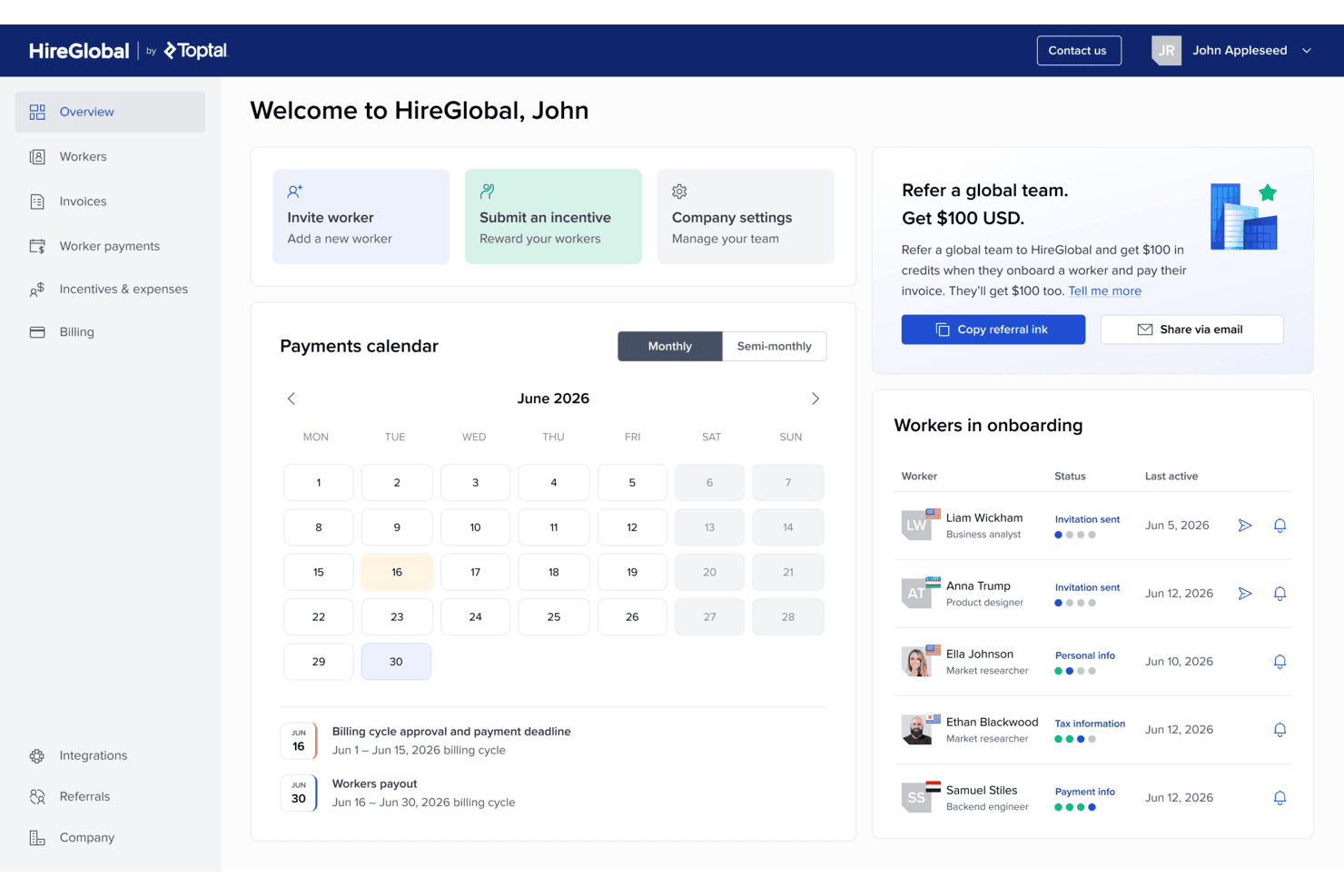
HireGlobal tracks worker onboarding status and payment schedules in one dashboard. HireGlobal is an employer of record service from Toptal that handles global employment contracts, payroll, benefits administration, and compliance across 180+ countries through a network of local provider partners.
Who Is HireGlobal Best For?
HireGlobal works well for teams that need to manage both full-time employees and independent contractors across multiple countries from a single platform.
Why I Picked HireGlobal
I've included HireGlobal in my top picks because it's one of the few EOR platforms that lets you manage both full-time employees and independent contractors across 180+ countries from a single HRIS. If your South Korea expansion involves a mix of hired staff and project-based contractors, you won't need separate tools or vendors to handle each worker type. HireGlobal's consolidated invoicing and unified workforce visibility mean both employment models sit in one place, keeping payroll and compliance workflows connected.
HireGlobal Key Features
- Locally compliant employment contracts: HireGlobal generates employment contracts that meet local legal requirements in each country where workers are hired.
- Mandatory benefits facilitation: The platform administers statutory local benefits and any additional benefits you choose to offer through its partner network.
- Locally compliant termination handling: HireGlobal manages the end-to-end termination process, including notice periods, severance payouts, and accrued benefits.
- Dedicated client expert access: Each client gets a dedicated expert through the platform to support compliance queries and workforce decisions.
HireGlobal Integrations
HireGlobal has one documented native integration with TopTracker for time tracking, invoice approval, and worker payments.
Pros and Cons
Pros:
- Consolidated invoicing supports global oversight
- Reviewers praise responsive support
- Manage employees and contractors together
Cons:
- Korean payroll and statutory benefits lack detail
- South Korean employing entity remains unconfirmed
Learn more about HireGlobal: Best for Korea hiring with backup partners
- Free plan + free demo available
- From $199/user/month
Visit WebsiteCustomer Rating:4.5/5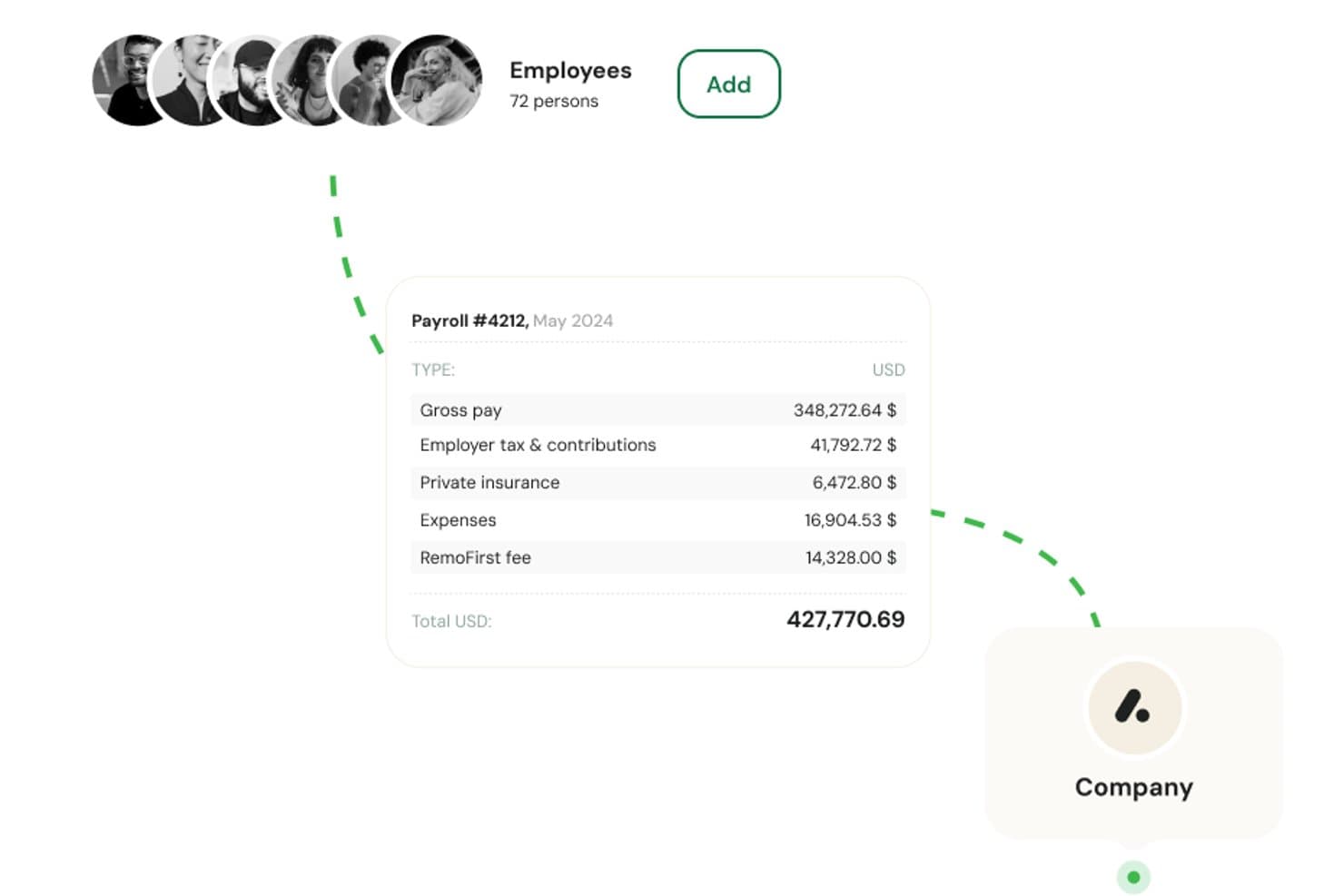
RemoFirst consolidates payroll costs and fees into one clear monthly summary. RemoFirst is an employer of record platform that handles South Korean employment contracts, KRW payroll, statutory benefits administration, and local compliance through a partner-based model across 185+ countries.
Who Is RemoFirst Best For?
RemoFirst suits companies that want to hire in South Korea quickly without entity setup and need a backup partner network to cover gaps in local coverage.
Why I Picked RemoFirst
I've included RemoFirst in my top picks because its partner network model means you're not locked out of South Korea if primary coverage runs thin. RemoFirst maintains preferred and contingency partners in each country, so Korean hiring stays active even when one partner faces capacity limits. I also like that its RemoAI Payroll Agent reconciles KRW payroll across partners in near real time, flagging discrepancies before they become compliance issues.
RemoFirst Key Features
- Localized employment contracts: RemoFirst generates employment contracts aligned with South Korean labor law, covering wages, working hours, holidays, and annual leave terms.
- Statutory benefits enrollment: The platform enrolls employees in South Korea's four social insurance pillars—National Pension, National Health Insurance, Employment Insurance, and Industrial Accident Compensation Insurance.
- Global workforce dashboard: A single dashboard displays all employees and contractors across countries, with worker counts by country and classification in one view.
- RemoVisa immigration support: RemoFirst's RemoVisa service coordinates South Korean work permit applications, including E-7 and E-9 routes, handling documentation and application monitoring.
RemoFirst Integrations
RemoFirst offers four documented native integrations: Workday, BambooHR, ADP Workforce Now, and GoCardless.
Pros and Cons
Pros:
- Backup partners support Korean hiring continuity
- KRW payroll includes leave and bonuses
- Guided onboarding earns positive user feedback
Cons:
- Reviewers report termination costs disclosed late
- South Korean employing entity remains undisclosed
 Best for direct-entity hiring in South Korea
- Free demo available
- From $599/per employee/month
Visit WebsiteCustomer Rating:4.6/5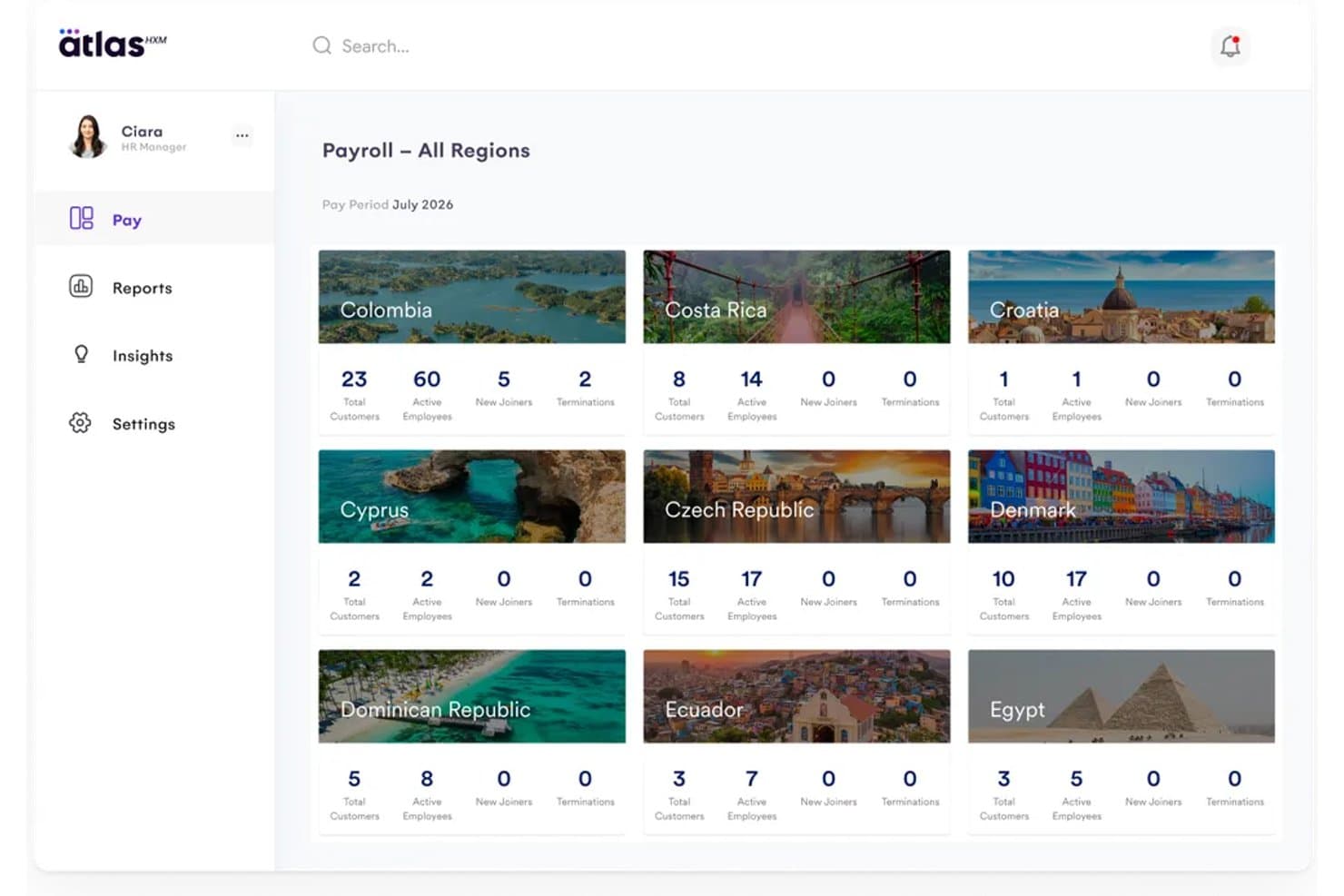
Atlas HXM lets users monitor payroll across all regions in one view. Atlas HXM is a direct-entity Employer of Record that lets you hire employees in South Korea—and 160+ other countries—without setting up a local entity, covering KRW payroll, tax withholding, statutory benefits, and labor law compliance.
Who Is Atlas HXM Best For?
Atlas HXM is a strong fit for global expansion teams that need a direct-entity EOR in South Korea without the overhead of local incorporation.
Why I Picked Atlas HXM
Atlas HXM earns its spot on my shortlist because it operates through a wholly-owned legal entity in South Korea, meaning your Korean hires are employed directly by Atlas rather than through a third-party intermediary. I like that Atlas handles KRW payroll, income tax withholding, and all four mandatory social insurance contributions (National Pension, health, employment, and industrial accident insurance) under one platform. Onboarding in as few as two weeks also makes it a practical choice when you need to get someone hired in Korea quickly.
Atlas HXM Key Features
- Compliance alerts: Atlas sends automated notifications when Korean labor regulations change, so your contracts and processes stay current without manual monitoring.
- Employee self-service portal: Employees access payslips, tax documents, and employment records directly through the Atlas platform.
- Multi-country consolidated invoicing: Atlas rolls up all active employee costs across countries into a single monthly invoice for easier finance reconciliation.
- HR advisory consultants: Dedicated HR Employee Relationship Consultants provide in-region support for leave management and employee relations in Korea.
Atlas HXM Integrations
Documented integrations include Workday, BambooHR, Sage, Ashby, Paycor, UKG, and Dayforce. These connect HRIS, ATS, and SSO workflows for multi-country employment administration.
Pros and Cons
Pros:
- KRW payroll includes all four social contributions
- Responsive named account support
- Direct Korean entity avoids intermediary risk
Cons:
- No documented pension-plan or 52-hour alerts
- Korea visa sponsorship claims conflict
Learn more about Atlas HXM: Best for Korean labor law compliance depth
- Free demo available
- From $699/user/month
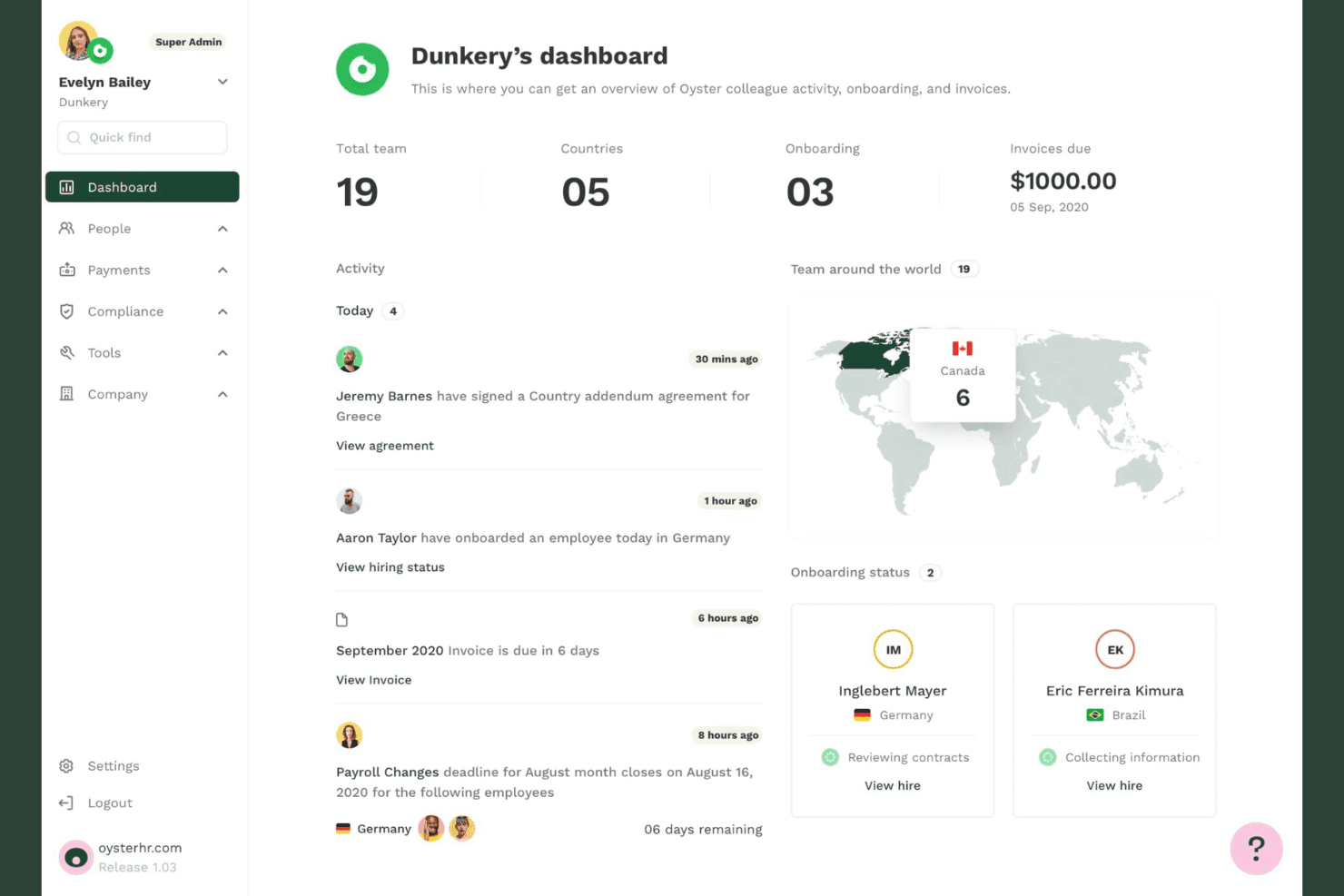
Oyster centralizes team activity, onboarding, and invoice tracking in one dashboard. Oyster is a global Employer of Record platform that handles Korean employment contracts, KRW payroll, statutory benefits enrollment, and labor law compliance across 120+ countries from a single dashboard.
Who Is Oyster Best For?
Oyster is a strong fit for global expansion teams that need detailed Korean labor law coverage, including severance, the 52-hour workweek, and proactive tracking of 2026 regulatory changes.
Why I Picked Oyster
I've included Oyster in my top picks because its Korean labor law coverage goes deeper than most EOR platforms I've seen. It actively tracks regulatory changes, including the 2026 Yellow Envelope Law, and it's one of the few platforms I know of that flags the criminal liability exposure tied to overtime and severance violations. Bilingual Korean/English contracts with a built-in contract quality score let you benchmark offers against local norms before anyone signs.
Oyster Key Features
- KRW payroll processing: Oyster runs monthly payroll in Korean won, automatically calculating salaries, taxes, bonuses, allowances, and deductions with downloadable payroll reports.
- 52-hour workweek monitoring: The platform tracks work hours against Korea's legal cap and flags compliance risks before violations occur, with overtime and holiday pay calculated at statutory rates.
- Bilingual contract generation: Oyster produces Korean/English employment contracts in one click, with the Korean version governing in any dispute and electronic signing built into the app.
- Multi-country dashboard: Manage Korean EOR employees alongside contractors and staff across 120+ countries from a single platform, with integrations to HR tools like Workday, BambooHR, and HiBob.
Oyster Integrations
Oyster offers integrations with HiBob, BambooHR, Workday, Greenhouse, Xero, QuickBooks, Concur Expense, Expensify, and Carta, plus a developer API for custom workflows. It also supports Zapier.
Pros and Cons
Pros:
- Korean employee onboarding in approximately 48 hours
- Bilingual contracts include local legal review
- Detailed Korean compliance tracks changing labor rules
Cons:
- Currency conversion fees apply to certain payments
- Refundable deposit required for EOR employees
Learn more about Oyster: Best for finance-led global hiring including Korea
- Free demo available
- From $499/per employee/month
Visit WebsiteCustomer Rating:4.4/5
Papaya Global tracks employer costs by country, cost center, and time. Papaya Global is a multi-country EOR platform that handles payroll processing, statutory benefits administration, tax withholding, contract localization, and immigration support across 180+ countries, including South Korea.
Who Is Papaya Global Best For?
Papaya Global is a strong fit for finance and payroll teams managing multi-country headcount who need consolidated reporting, flat-fee pricing, and audit-ready payroll data across regions including South Korea.
Why I Picked Papaya Global
I've included Papaya Global in my top picks because it's built around the needs of finance and payroll teams managing headcount across multiple countries, Korea included. I especially like its gross-to-net reporting, journal-entry automation, and audit-ready payroll data, which give finance leads the visibility they need when running payroll in KRW across a multi-country portfolio. Its flat-fee pricing per employee (rather than a percentage of salary) also makes cost forecasting straightforward when you're adding Korean hires at senior compensation levels.
Papaya Global Key Features
- Statutory contributions management: Papaya calculates and administers all four major Korean statutory contributions—National Pension, Health Insurance, Employment Insurance, and Industrial Accident Insurance—with current employer rates applied each pay cycle.
- Termination liability guarantee: Papaya's legal team leads the termination process and caps legal defense costs and exposure beyond statutory obligations in a written contractual guarantee.
- Visa and immigration support: The platform assists with Korean work visa categories, including E-series and D-5 visas, before an employee's start date.
- Time and attendance tracking: Workforce OS includes integrated time and attendance tools that import timesheet data via CSV or XLSX and validate hours against Korean legal limits.
Papaya Global Integrations
Papaya Global cites 150+ HRIS and finance integrations, including Workday HCM, HiBob, BambooHR, Oracle HCM, NetSuite, and Expensify. Its API and Integration Center support custom data flows.
Pros and Cons
Pros:
- Local compliance experts and 24/7 support
- Korean statutory contributions are itemized
- Audit-ready payroll data supports Korean reporting
Cons:
- Conflicting Korean guidance weakens compliance confidence
- Unnamed Korean partner remains the legal employer
Learn more about Papaya Global: Best for testing South Korean market entry fast
- Free demo available
- From $499/employee/month
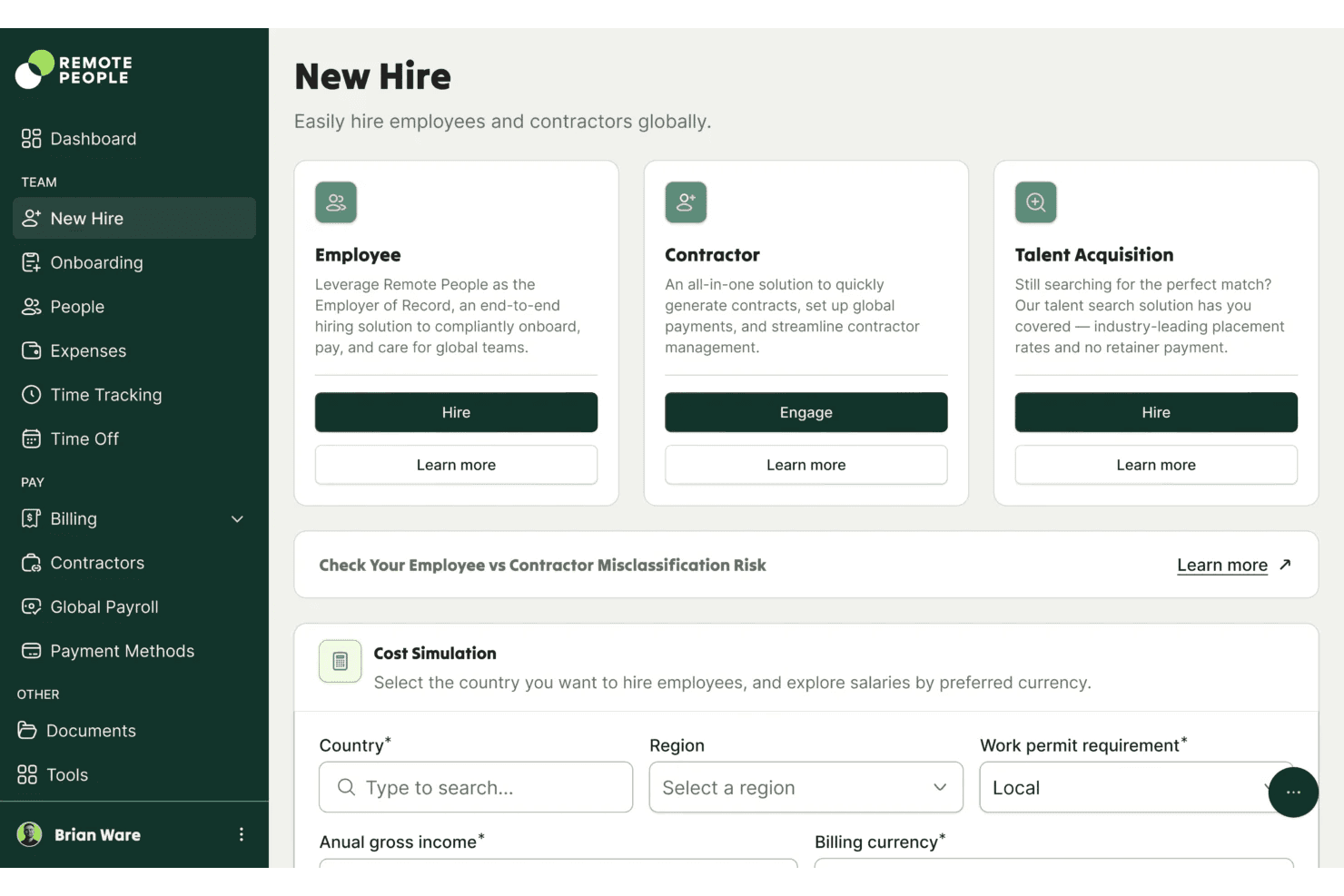
Remote People lets users hire employees or contractors globally. Remote People is an Employer of Record platform that lets you hire full-time employees in South Korea—and 150+ other countries—handling local payroll in Korean won, statutory benefits registration, tax withholding, bilingual employment contracts, and visa sponsorship.
Who Is Remote People Best For?
Remote People works well for companies exploring South Korea for the first time and wanting to hire quickly without committing to a local entity.
Why I Picked Remote People
I've included Remote People in my top picks because it's built for companies that want to test South Korea without the 2–3 month timeline and 25K–50K cost of setting up a local entity. You can have a bilingual Korean/English employment contract ready within within 2–3 business days, which is genuinely fast for a market this compliance-heavy. Remote People also handles E-7-1 and D-7 intra-company transfer visa sponsorship directly, so if your first Korean hire needs a work visa, you're not coordinating with a separate immigration firm.
Remote People Key Features
- Statutory benefits registration: Remote People enrolls employees in all four Korean statutory programs—National Pension, National Health Insurance, Employment Insurance, and Industrial Accident Insurance—using {{year}} contribution rates.
- Year-end tax settlement: Remote People manages the February annual tax reconciliation required under Korean tax law, including progressive income tax filing and the 10% local surtax.
- Severance reserve accrual: Remote People calculates and accrues the Korean statutory severance reserve at approximately 8.33% of monthly wages, ensuring the 14-day post-separation payment deadline is met.
- Multi-country consolidated billing: A single invoice and dashboard cover all EOR employees across countries, letting finance teams track cost per employee per country each month.
Remote People Integrations
Remote People lists integrations with Deel Payroll and Gusto for payroll exports, but native integrations and a public API aren’t clearly documented.
Pros and Cons
Pros:
- Consolidated multi-country payroll dashboard
- Recent Korea-specific labor law guidance
- E-7-1 and D-7 visa sponsorship
Cons:
- Visa and immigration services priced separately
- Salaries and statutory contributions billed separately
Learn more about Remote People: Best for APAC-wide hiring with a Seoul base
- Not available
- Pricing upon request
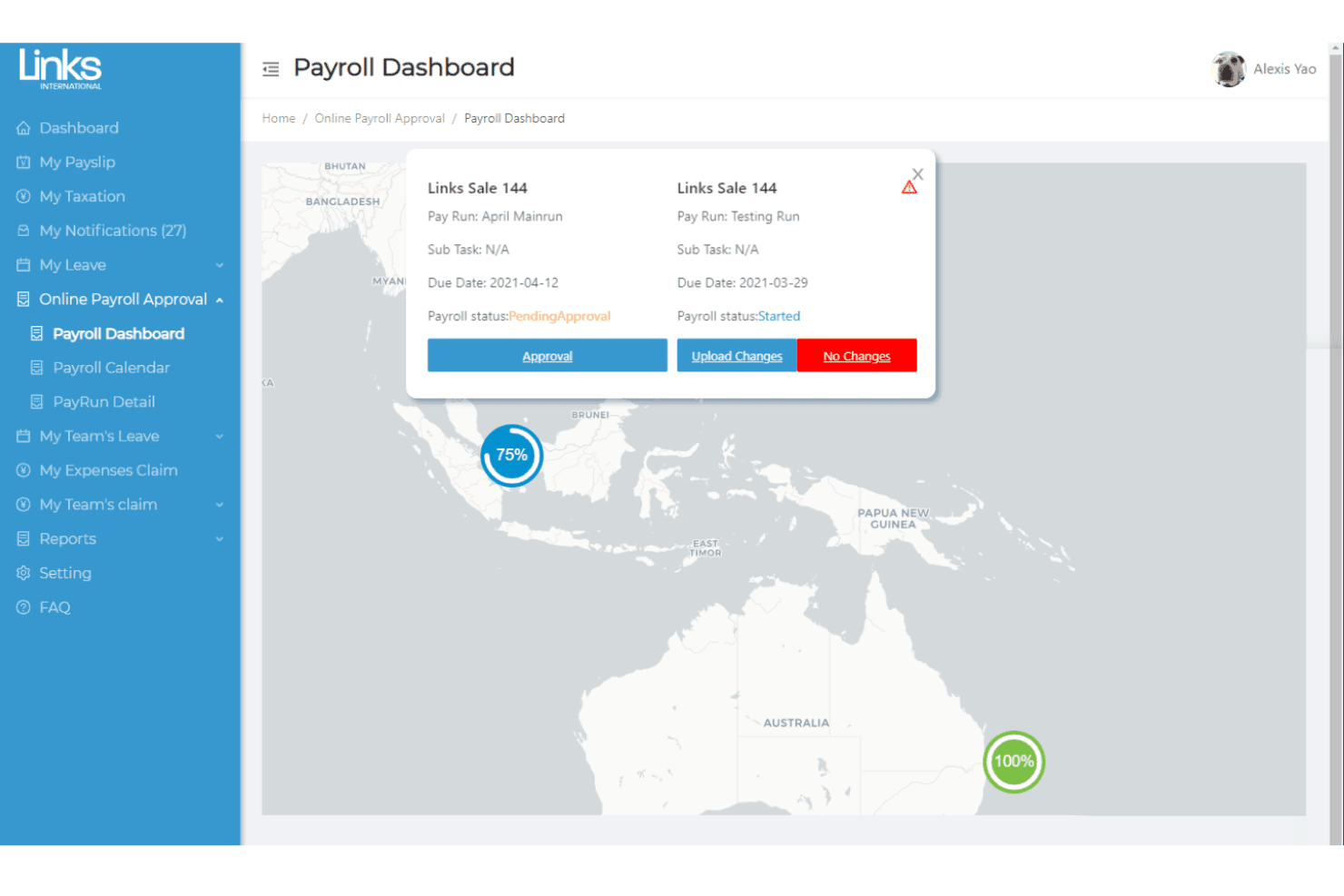
Links International's payroll dashboard tracks pay run statuses across regions. Links International is an APAC-focused Employer of Record and payroll outsourcing provider with its own legal entities across 30+ locations, covering Korean employment contracts, statutory benefits administration, and multi-country payroll consolidation.
Who Is Links International Best For?
Links International is a strong fit for companies already hiring or expanding across multiple APAC markets that want to anchor their South Korea operations with a single regional provider.
Why I Picked Links International
I've included Links International in my top picks because it's the only APAC-regional EOR on this list with its own legal entity and a staffed Seoul office, which matters when Korean labor law questions need answers from someone who actually knows the market. I particularly like that it runs quarterly labor law updates and hosted a live 2026 South Korea compliance webinar covering the minimum wage increase to KRW 10,320/hour and the "Yellow Envelope" law. If your hiring roadmap extends beyond Korea into other Asian markets, Links One consolidates payroll across 30+ APAC locations in a single dashboard.
Links International Key Features
- Statutory insurance administration: Links manages enrollment and contributions across all four mandatory Korean schemes—National Pension, National Health Insurance, Employment Insurance, and Workers' Compensation.
- EOR-to-payroll transition path: Once you establish your own Korean entity, you can switch from EOR to outsourced payroll without changing vendors.
- Links One multi-country dashboard: Consolidates payroll approvals, reports, and data across 30+ APAC and Middle East locations in a single platform.
- SAP, Workday, and Oracle integrations: Links One connects directly to major HR and ERP systems, syncing payroll and time-attendance data across your existing tech stack.
Links International Integrations
Links International documents integrations with SAP SuccessFactors, Workday, Oracle HCM, and time-attendance tools. Links Integration Hub connects payroll, HR, ERP, and time systems across 30+ APAC and Middle East locations.
Pros and Cons
Pros:
- Regional payroll consolidation spans 30+ markets
- All four statutory insurance schemes are covered
- Seoul-based team tracks Korean labor changes
Cons:
- Bilingual contract templates aren't documented
- No public self-service EOR registration
Learn more about Links International: Best for Korea severance and pension compliance
- Free demo available
- From $599/per employee/month
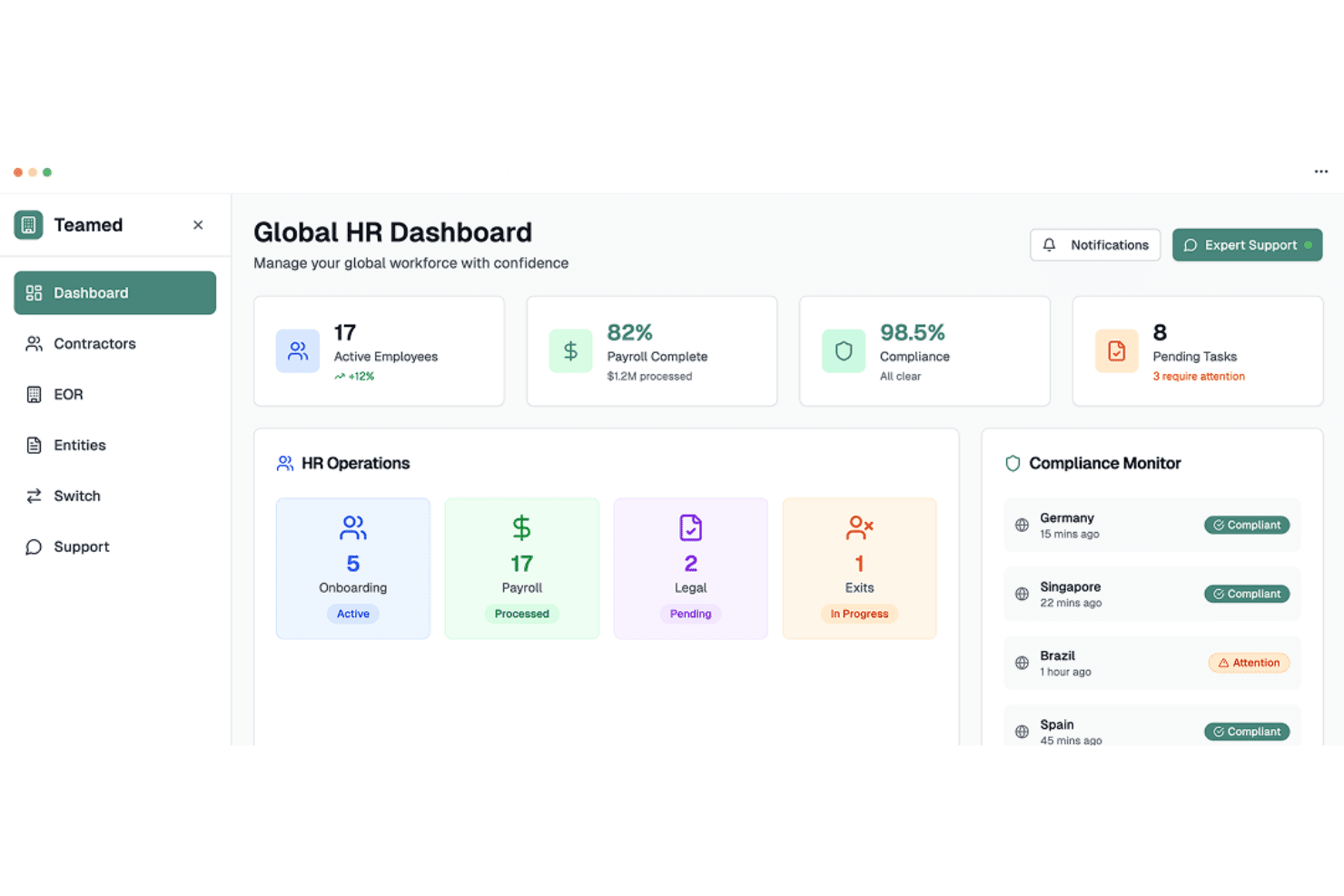
Teamed centralizes global workforce HR ops and compliance in one dashboard. Teamed is an Employer of Record platform with a wholly-owned South Korean entity that handles local payroll, four mandatory insurance enrollments, severance accrual through a DB-IRP fund, bilingual contract generation, and tax filings with the National Tax Service.
Who Is Teamed Best For?
Teamed is a strong fit for finance and HR teams that need transparent, itemized cost management alongside full Korean statutory compliance.
Why I Picked Teamed
Teamed earns its spot on my shortlist because of how thoroughly it handles Korea's complex employment compliance requirements, particularly statutory severance and mandatory social insurance. Its local HR and legal experts help manage severance obligations and disputes while supporting compliance with the country's four major insurance programs: national pension, health, employment, and industrial accident insurance. Teamed also provides itemized invoices showing statutory benefits and employer social contributions, with government-mandated charges passed through at cost.
Teamed Key Features
- Bilingual contract generation: Teamed drafts Korean/English employment contracts on the same day, with statutory clauses written by local lawyers rather than generic templates.
- Entity graduation support: A crossover calculator and a 4–6 week graduation process let you move from EOR to your own Korean entity without re-onboarding employees or breaking severance accrual.
- Named country specialist: Every account gets a dedicated Korea people ops specialist with 24/5 support and a stated 15-minute first response time.
- Multi-model payroll: Teamed supports payroll on its own EOR, on your existing Korean entity, or as a standalone payroll-only service.
Teamed Integrations
Teamed has one fully documented native integration, Personio. It also lists BambooHR, HiBob, Workday, Xero, QuickBooks, and Zapier as integrations confirmed during setup; no public self-serve API is available.
Pros and Cons
Pros:
- Dedicated HR and legal specialists for employment compliance
- All four Korean insurances are administered
- Zero FX markup on the fee.
Cons:
- Visa sponsorship is decided case by case
- $599 monthly EOR fee excludes salaries and statutory contributions
Learn more about Teamed: 10Best for unified HR and IT hiring in Korea
Rippling
- Free trial + free demo available
- From $8/user/month
Visit WebsiteCustomer Rating:4.9/5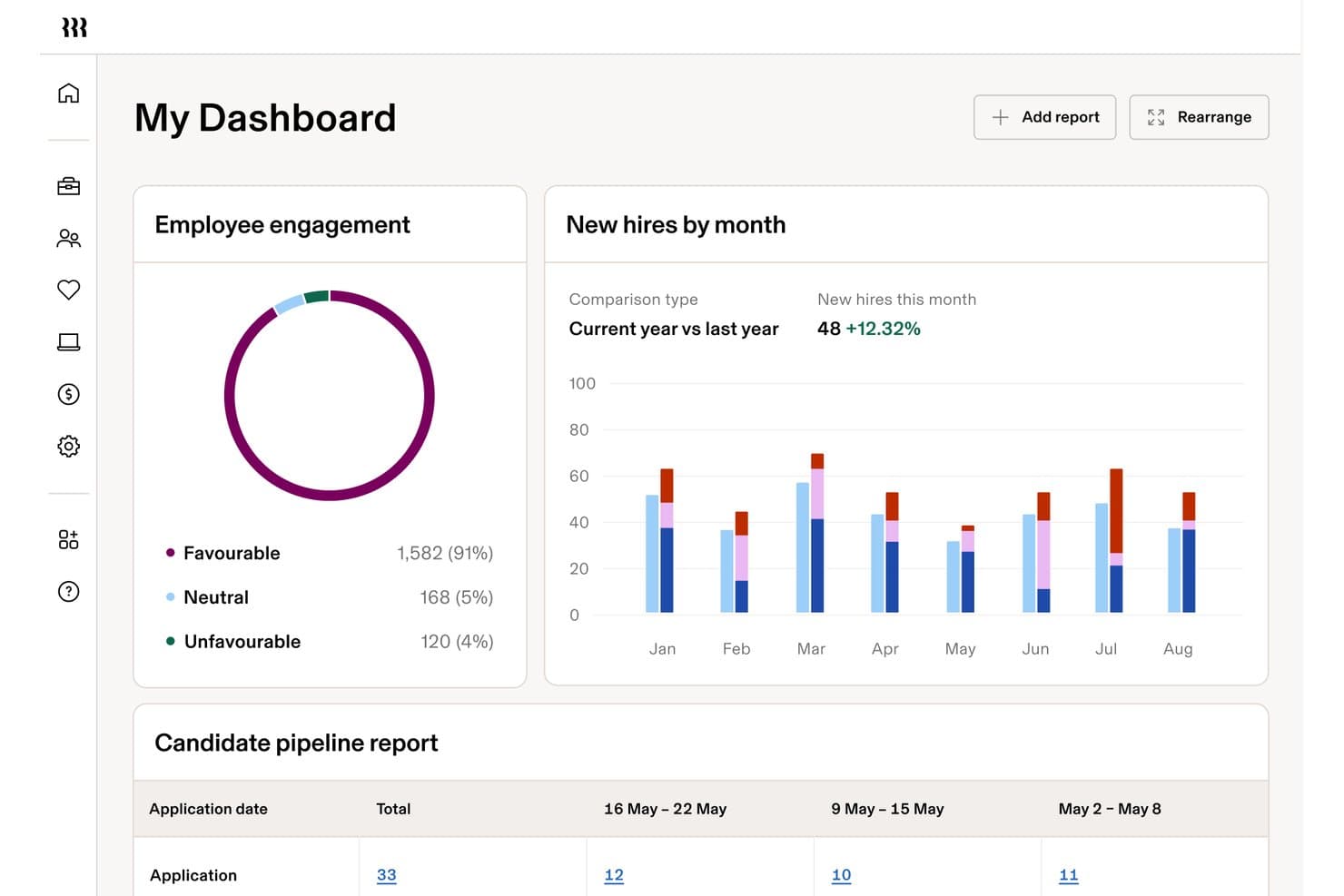
Rippling's HR dashboard tracks engagement, new hires, and pipeline data. Rippling is a global EOR platform that lets you hire employees in South Korea without a local entity, handling employment contracts, payroll, statutory benefits, tax withholding, and HR and IT management from a single system.
Who Is Rippling Best For?
Rippling is a strong fit for global HR teams that already manage employees across multiple countries and want to add South Korea to an existing unified platform rather than bolt on a separate tool.
Why I Picked Rippling
Rippling earns its spot on my shortlist because it's the only Korea EOR option I've found that manages employment contracts, payroll, and IT provisioning from a single employee record. When you're hiring across multiple countries and adding South Korea to the mix, that matters: one platform handles mandatory insurance deductions (National Pension, Health, Employment, and Industrial Accident Compensation) and syncs them directly with payroll, so nothing falls through the cracks between systems.
Rippling Key Features
- Contract localization: Rippling auto-generates employment agreements that include the statutory elements required under Korean labor law, such as contract type, working hours, salary, and termination terms.
- Contractor-to-EOR conversion: Workers can move from contractor status to EOR employment and then to your own local entity without going through a full re-onboarding process.
- 600+ app integrations: Rippling connects with over 600 third-party tools, with options to automate user provisioning, SSO, and profile syncing across your tech stack.
- Entity-vs-EOR cost calculator: Rippling includes a built-in calculator that estimates the cost of setting up a local entity in South Korea versus hiring through EOR.
Rippling Integrations
Rippling offers 600+ ready-made integrations, including NetSuite, HubSpot, Ashby, Greenhouse, Notion, and Quickbooks Online. It also supports custom integrations through APIs and connectors.
Pros and Cons
Pros:
- Automated payroll and statutory tax calculations
- Detailed Korean contract and termination guidance
- Unified HR, payroll, and IT records
Cons:
- EOR services may use local employment partners
- Core Rippling platform required for additional modules
Güney Kore'deki Diğer Kayıtlı İşverenler
Kısa listeme girmeyen ancak yine de incelemeye değer birkaç ek seçenek şunlardır:
- 11MultiplierBest for HRIS-connected Korean hiring at scale
- 12G-PBest for AI-guided Korean hiring compliance
- 13Payoneer Workforce ManagementBest for multi-country payroll including Korea
- 14RemoteBest for hiring in Korea via an owned local entity
- 15MercansBest for flat-fee global payroll across many markets
- 16Safeguard GlobalBest for quick Korean market entry via owned entities
- 17AsanifyBest for visa-backed Korean workforce hiring
- 18GoGlobalBest for APAC-led Korean market entry
- 19PlayrollBest for Korea compliance with multi-country oversight
- 20Pearson & Partners KoreaBest for Korea entry via bundled EOR and recruitment
How I Evaluate Employer of Record in South Korea
I split my evaluation into three parts. First, core functionality—specifically, whether a provider can legally employ workers through its own Korean entity and maintain labor law compliance for contracts, terminations, and statutory obligations; this carries the most weight. Second, I look for standout features like severance and retirement pension management. Third, I consider pricing transparency and speed to hire.
Core Functionality (Table Stakes For This List)
When I'm selecting tools for my list, I score each one on a scale from 0 (does not offer the functionality) to 5 (excels in this area) for each core functionality listed below. I then convert the total into a percentage to help assess each tool's overall fit, with extra weight on any functionalities I've deemed essential.
- Local Entity Employment (Essential): I check whether a provider employs workers through its own registered entity in South Korea or relies on a third-party partner with limited oversight.
- Korean Labor Law Compliance (Essential): I evaluate how each provider handles contracts, terminations, notice periods, and working-hour rules under Korean labor regulations.
- Local Payroll Processing: Accurate, on-time salary disbursement in Korean won matters, so I look for automated payroll with clear payslips and reporting.
- Statutory Benefits Administration: South Korea requires national pension, health insurance, employment insurance, and workers' compensation—I confirm each provider covers all four.
- Tax Withholding and Filing: I look for automated calculation and remittance of income tax and social insurance contributions to Korean authorities on the correct schedule.
- Contract Localization: Compliant bilingual contracts are standard in South Korea, so I check whether templates meet statutory clauses and can be customized by role.
Once I have a list of tools that meet the criteria, I consider what sets each platform apart.
Differentiating Factors (What Sets Vendors Apart)
Here's how I compare and contrast different vendors:
Standout Features
Korea's 52-hour workweek cap carries real penalties, so I look for real-time hour tracking that flags overtime before a breach occurs. Severance and retirement pension management matters just as much—providers like Deel and Teamed handle the calculation differently, and I evaluate whether each platform keeps pace as Korea shifts from lump-sum severance to mandatory pension contributions. I also check for visa sponsorship coordination, since hiring foreign talent on E-7 or D-8 visas requires tight handoffs between immigration and employment onboarding.
Beyond Features
I check whether a provider owns its Korean entity or subcontracts to a local partner, since partner-dependent models can create gaps in compliance accountability. Speed to hire matters too—some providers onboard in days while others take weeks, which makes a real difference when you're testing the Korean market with a small initial team. I also evaluate how each platform connects to existing HRIS tools like Workday or BambooHR, because managing Korea payroll data in a separate silo adds unnecessary reconciliation work for your finance and HR teams.
Güney Kore'de Kayıtlı İşveren Nasıl Seçilir?
Bir EOR seçerken çalışanınızı kimin yasal olarak istihdam ettiğini, Kore'deki yasal yükümlülüklerin nasıl paylaştırıldığını ve bu taahhütleri destekleyen yazılı kanıtların neler olduğunu doğrulayın.
| Önceliğiniz… | Şunları arayın… |
|---|---|
| Önceliğiniz…Açık istihdam sorumluluğu | Şunları arayın…Sözleşmede işveren olarak belirtilen Kore tüzel kişisi |
| Önceliğiniz…Doğru yasal kesintiler | Şunları arayın…Zorunlu dört sosyal sigorta programının ve ödeme sorumluluklarının ayrıntılı dökümü |
| Önceliğiniz…Çalışma saatlerinin yönetimi | Şunları arayın…Saatlerin kaydedilmesine ve geçerli yasal sınırlara uyulmasına ilişkin yazılı prosedürler |
| Önceliğiniz…Öngörülebilir işten ayrılma yükümlülükleri | Şunları arayın…Kıdem tazminatı, emeklilik maaşı ve işten ayrılma ödemeleri için belgelenmiş bir süreç |
Kısa Listeniz Nasıl Değerlendirilir?
- İstihdam eden tüzel kişiyi doğrulayın: Kore ticaret sicil belgesini talep edin ve belgede yer alan tüzel kişi adını taslak sözleşmede belirtilen işverenle karşılaştırın.
- Yasal katkıların izini sürün: Ulusal emeklilik sigortası, sağlık sigortası, istihdam sigortası ve işçi tazminatı kapsamındaki kalemleri içeren örnek bir bordro dökümünün yanı sıra ödeme sorumluluğunu kimin üstlendiğini belirleyen sözleşme maddesini isteyin.
- Çalışma saatlerine ilişkin yönlendirmeyi test edin: Geçerli çalışma saati sınırlarına yaklaşan bir pozisyon için yazılı bir senaryo gönderin ve yanıtı bir destek talebi veya politika belgesi olarak isteyin.
- İşten ayrılma hesaplamalarını inceleyin: Örnek bir kıdem tazminatı ve emeklilik maaşı hesaplamasının yanı sıra işten ayrılma ödemeleri ve gerekli bildirimlere ilişkin yazılı süreci talep edin.
- Sorumluluk dengesi tercihinizi yapın: Önceliğiniz doğrudan sorumluluksa sağlayıcının kendi Kore tüzel kişisini tercih edin; bölgesel kapsam daha önemliyse iş ortağı temelli bir modeli değerlendirin, ancak sorumlu tarafın sözleşmede belirtilmesini şart koşun.
Güney Kore'de Kayıtlı İşverenler Nedir?
Güney Kore'de kayıtlı işveren, başka bir şirket adına çalışanları işe alan yerel bir tüzel işverendir. Genellikle iş sözleşmelerini, bordroyu ve yasal yükümlülükleri yönetirken, şirketiniz çalışanın günlük işlerini yönlendirir.
Özellikler
Güney Kore'de bir Kayıtlı İşverende aradığım başlıca özellikler şunlardır:
- Yerel istihdam tüzel kişiliği: Sağlayıcının Kore'deki tüzel kişiliği, iş sözleşmesinde yasal işveren olarak belirtilir. Bu, istihdam yönetiminden ve yerel yükümlülüklerden kimin sorumlu olduğunu netleştirir.
- Kore iş hukuku uyumluluğu: Sağlayıcı, mevzuata uygun sözleşmeleri, çalışma süresi kurallarını, gerekli bildirimleri ve işten çıkarma prosedürlerini destekler. Yasalardaki değişiklikleri nasıl ele aldığını ve yönlendirmelerini nasıl belgelendirdiğini sorun.
- Yerelleştirilmiş iş sözleşmeleri: Sözleşmeler, Kore'deki istihdam gerekliliklerini ve çalışanın rolünü, ücretini ve koşullarını yansıtır. İki dilli sürümler, hem ekibinizin hem de çalışanın sözleşmeyi incelemesine yardımcı olabilir.
- Yerel bordro işlemleri: Sağlayıcı maaşı Güney Kore wonu cinsinden hesaplar, maaş bordrolarını düzenler ve ödemeleri planlar. Bordro kayıtları, brüt ücretin net ücrete nasıl dönüştüğünü göstermelidir.
- Yasal yan hakların yönetimi: Sağlayıcı; ulusal emeklilik, sağlık sigortası, istihdam sigortası ve çalışan tazminatı için kayıt ve katkı paylarını yönetir. Her bir katkı payını hangi tarafın bildirdiğini ve ödediğini teyit edin.
- Vergi kesintileri ve bildirimleri: Sağlayıcı, geçerli gelir vergisini ve sosyal sigorta kesintilerini hesaplar, ardından gerekli ödemeleri ve bildirimleri gerçekleştirir. Açık bordro kayıtları, ekibinizin maliyetleri mutabakatlandırmasına yardımcı olur.
- Çalışma süresi takibi: Zaman kayıtları, çalışma programlarının izlenmesine ve geçerli çalışma süresi sınırlarıyla ilgili olası sorunların belirlenmesine yardımcı olur. Sağlayıcının takip araçları sunup sunmadığını veya mevcut sürecinize güvenip güvenmediğini sorun.
- Kıdem tazminatı ve emeklilik aylığı yönetimi: Sağlayıcı, işten ayrılış ödemelerinin ve emeklilik aylığı yükümlülüklerinin nasıl hesaplandığını ve yönetildiğini açıklar. Hem devam eden fonlamaya hem de çalışanın işten ayrılmasına ilişkin yazılı prosedürler talep edin.
Avantajlar
Güney Kore'de bir Kayıtlı İşverenin sunabileceği çeşitli avantajlar şunlardır:
- Yerel istihdama erişim: Sağlayıcının Kore'deki tüzel kişiliği veya açıklanmış yerel ortağı, şirketinizin kendi tüzel kişiliğini kurmasını gerektirmeden ekibinizi istihdam edebilir.
- Kore iş hukuku uyumluluğu desteği: Sözleşmeler, çalışma süreleri, gerekli bildirimler ve işten çıkarma prosedürleri hakkında yönlendirme, yerel istihdam gerekliliklerini karşılamanıza yardımcı olur.
- Bordro ve yasal işlemler: Yerel bordro, vergi kesintileri ve zorunlu sosyal sigorta katkı paylarının yönetimi, düzenli istihdam yükümlülüklerini tek bir hizmette bir araya getirir.
- Yerelleştirilmiş iş sözleşmeleri: Kore'deki gerekliliklere ve çalışanın rolüne göre hazırlanan sözleşmeler, istihdam koşullarını ekibiniz ve yeni çalışanınız için daha anlaşılır hâle getirir.
- İşten ayrılma planlaması: Kıdem tazminatı, emeklilik aylığı ve işten ayrılma ödemesi süreçlerini belgeleyen sağlayıcılar, istihdam sona erdiğinde doğacak yükümlülükleri öngörmenize yardımcı olur.
- Daha hızlı pazara giriş: Mevcut bir Kore istihdam düzenlemesi üzerinden işe alım yapmak, kendi yerel tüzel kişiliğinizi kurmanın neden olacağı gecikmeyi önleyebilir; ancak işe alım süreçlerinin tamamlanma süreleri değişiklik gösterir.
- Çalışma süresi görünürlüğü: Bir sağlayıcı zaman takibi sunduğunda, ekibinizin çalışma programlarının geçerli sınırlara yaklaşmasını fark etmesine ve daha erken müdahale etmesine yardımcı olabilir.
Maliyetler ve Fiyatlandırma
Güney Kore'de EOR ücretleri genellikle çalışan başına aylık $300 ile $700 arasında değişir. Sağlayıcılar genellikle sabit bireysel, işletme veya kurumsal planlar sunmak yerine çalışan başına ücret alır ve daha büyük ekipler özel fiyat teklifleri alabilir. Çalışan maaşı, yasal katkı payları ve isteğe bağlı hizmetler toplam maliyeti artırabilir.
Güney Kore'de Kayıtlı İşveren İçin Plan Karşılaştırma Tablosu
Bu etiketler standart EOR plan adları değil, bütçelendirme kategorileridir. Aşağıdaki aralıklar, garanti edilmiş fiyat teklifleri değil, gösterge niteliğinde hizmet ücreti tahminleridir.
| Plan Türü | Ortalama Fiyat | Yaygın Özellikler |
|---|---|---|
| Plan TürüÜcretsiz Plan | Ortalama FiyatEOR hizmeti için 0 ABD doları; genellikle sunulmaz | Yaygın ÖzelliklerÇalışan istihdamı, yerel bordro ve yasal yan hakların yönetimi bulunmaz. |
| Plan TürüKişisel Plan | Ortalama FiyatÇalışan başına/aylık 300–600 ABD doları | Yaygın ÖzelliklerYerel istihdam, bordro işlemleri ve yasal katkıların yönetimi. |
| Plan Türüİşletme Planı | Ortalama FiyatÇalışan başına/aylık 400–700 ABD doları | Yaygın ÖzelliklerYerel istihdam, bordro işlemleri, yasal katkıların yönetimi ve yerelleştirilmiş sözleşmeler. |
| Plan TürüKurumsal Plan | Ortalama FiyatÇalışan başına/aylık 600–1.000+ ABD doları; özel fiyat teklifleri yaygındır | Yaygın ÖzelliklerYerel istihdam, bordro işlemleri, yasal katkıların yönetimi, yerelleştirilmiş sözleşmeler ve özel destek. |
Sık Sorulan Sorular
Güney Kore’deki Employer of Record hizmetleri hakkında sık sorulan soruların yanıtlarını burada bulabilirsiniz:
Güney Kore'deki bir EOR çalışma vizelerini destekleyebilir mi?
Bazen; ancak bir EOR düzenlemesi otomatik olarak çalışma izni sağlamaz. Hizmet sağlayıcı, çalışanın vize kategorisini destekleyebileceğini ve geçerli sponsor gerekliliklerini karşılayabileceğini doğrulamalıdır. Destekleyici belgeleri kimin hazırladığını, başvuruda hangi kuruluşun yer aldığını ve hizmet sağlayıcının yenilemeleri yapıp yapmadığını sorun. Başlangıç tarihini belirlemeden önce çalışanın uygunluğunu doğrulayın; göçmenlik onayı ve işlem süreleri, olağan bordro işe alım sürecinin dışındadır. Vize koordinasyonu bir hizmettir, onay garantisi değildir. Söz konusu işe alım için sorumlulukların ve beklenen adımların yazılı bir özetini talep edin.
Bağımsız yüklenicilerle çalışmak için Güney Kore'deki bir EOR'yi kullanabilir miyim?
EOR genellikle çalışanları istihdam etmek için tasarlanmıştır; yüklenici düzenlemesini yalnızca etiketini değiştirerek mevzuata uygun hâle getirmek için kullanılmaz. Sınıflandırma, yalnızca sözleşmenin başlığına değil, fiilî çalışma ilişkisine ve geçerli Kore kurallarına bağlıdır. Bir kişiyi yüklenici olarak çalıştırmadan önce çalışma saatlerini ve yöntemlerini kimin kontrol ettiğini, bağımsız çalışıp çalışmadığını ve ödemenin nasıl yapılandırıldığını değerlendirin. Rol istihdama benziyorsa işe alım öncesinde Kore’ye özgü hukuki danışmanlık alın. Rol veya kontrol düzeyi değişirse düzenlemeyi yeniden değerlendirin.
Güney Kore'deki bir EOR aracılığıyla işe almak şirketimin hukuki riskini ortadan kaldırır mı?
Hayır. EOR, kendisine atanan istihdam yönetimi görevlerini ve yükümlülüklerini üstlenebilir; ancak bu düzenleme şirketiniz açısından tüm riskleri ortadan kaldırmaz. İşletmeniz günlük çalışmayı yönlendirmeye devam eder ve sözleşme şartları, çalışan sınıflandırması ile fiilî uygulamaların tümü önem taşır. Hizmet sağlayıcıdan bordro bildirimleri, yasal katkılar, iş yeri sorunları ve taleplerle ilgili sorumlulukları yazılı olarak belirtmesini isteyin. Özellikle disiplin veya işten çıkarma kararları vermeden önce sözleşmeyi ve işleyiş modelini yerel bir hukuk danışmanına inceletin.