

10 parasta kirjanpito-ohjelmistoa palkanlaskentaominaisuuksilla vuonna 2026

Parhaiden palkanmaksuominaisuuksilla varustettujen kirjanpito-ohjelmistojen esivalintalista


Palkanmaksuominaisuuksilla varustettu kirjanpito-ohjelmisto yhdistää taloushallinnon keskeiset työkalut integroituun työntekijöiden palkanmaksuun. Näin voit hallita kirjanpitoa, hoitaa palkanmaksun sekä kirjata palkkakulut ja -velat yhdessä järjestelmässä. Jos etsit tapoja pitää luvut tarkkoina, säästää aikaa ja pysyä vaatimusten mukaisena, oikean ratkaisun löytäminen on olennaista. Tässä oppaassa vertailen palkanmaksuominaisuuksilla varustettuja kirjanpito-ohjelmistoja pienistä tiimeistä monimutkaisiin suuryrityksiin ulottuville yrityksille. Näet, mitkä vaihtoehdot sopivat parhaiten integroituun palkanmaksuun ja kirjanpitoon, palkanmaksun ja pääkirjanpidon automaatioon, verotukeen sekä erikokoisille yrityksille.
Why Trust Our Software Reviews
Our team has been testing and reviewing software since 2012. As HR experts ourselves, we know how difficult—and important—it is to choose the right software.
For this guide, we evaluated tools using hands-on testing and independent research, scoring tools using our selection criteria. We also draw on insights from industry thought leaders and practicing HR experts.
Our reviews reflect our human editorial judgment, not a sales pitch.
Expert reviewers:
| Tool | Best For | Trial Info | Price | ||
|---|---|---|---|---|---|
| 1 | Best for project-based payroll cost tracking | Free demo available | Pricing upon request | Website | |
| 2 | Best for enterprise finance and global payroll | Free demo available | Pricing upon request | Website | |
| 3 | Best for open-source accounting and payroll | 14-day free trial | From $5/month | Website | |
| 4 | Best for modular accounting and payroll apps | Free plan available | From $8.95/user/month (billed annually) | Website | |
| 5 | Best for payroll postings to enterprise ledgers | Free demo available | Pricing upon request | Website | |
| 6 | Best for payroll data in real-time financials | Free demo available | Pricing upon request | Website | |
| 7 | Best for automatic payroll journal entries | 30-day free trial | From $40/month | Website | |
| 8 | Best for accounting and payroll under one login | 30-day free trial | From $17/month | Website | |
| 9 | Best for desktop accounting with payroll | 30-day free trial | From $124.42/month | Website | |
| 10 | Best for desktop payroll with tax tables | 30-day free trial | From $40/month with payroll | Website |
Palkanmaksuominaisuuksilla varustettujen kirjanpito-ohjelmistojen arvostelut
Alla ovat yksityiskohtaiset yhteenvedot parhaista palkanmaksuominaisuuksilla varustetuista kirjanpito-ohjelmistoista, jotka pääsivät esivalintalistalleni. Arvosteluissani tarkastelen yksityiskohtaisesti kunkin ohjelmiston ominaisuuksia, hinnoittelua ja parhaita käyttötapauksia, jotta löydät itsellesi parhaan vaihtoehdon.
Best for project-based payroll cost tracking
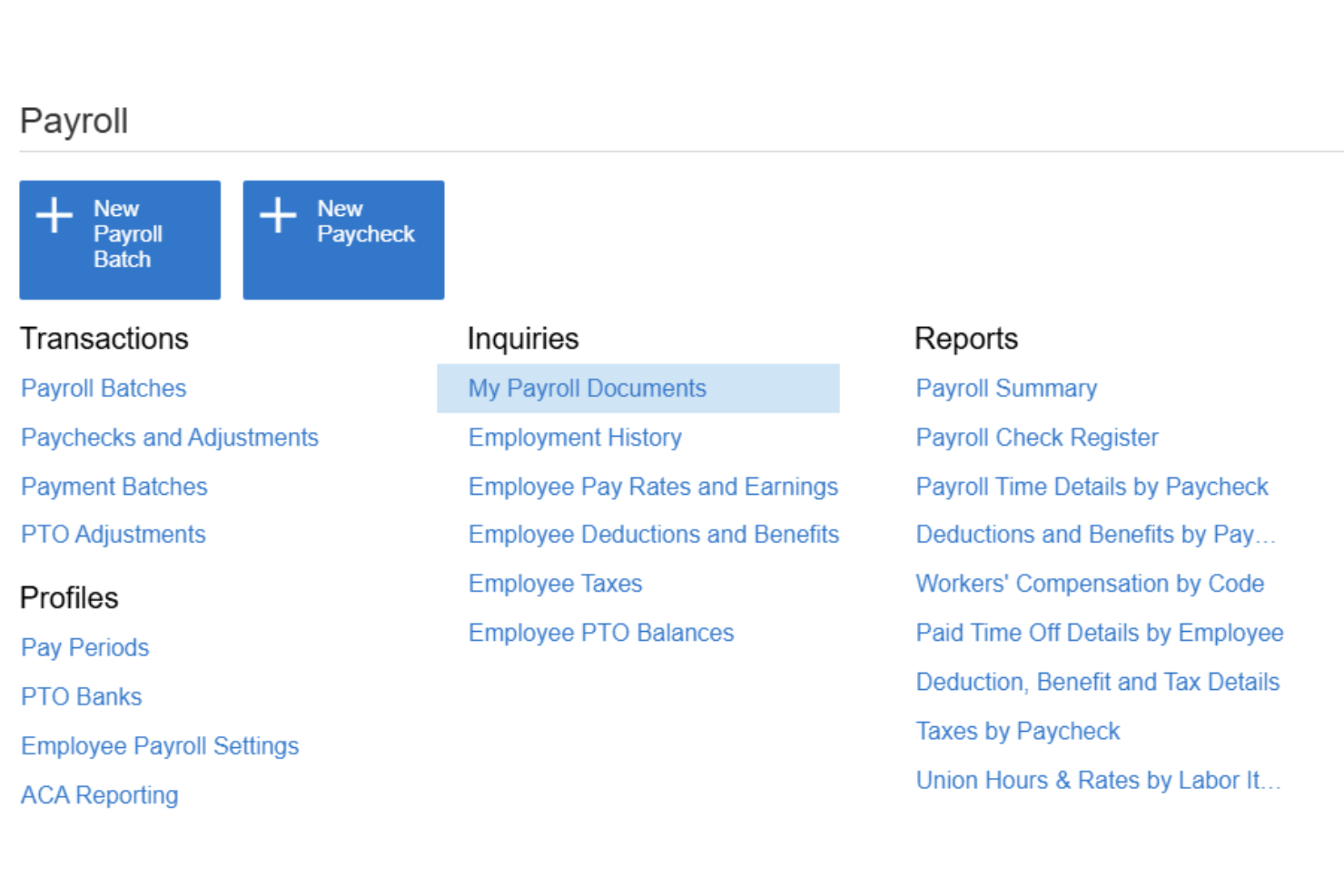
Acumatica is a cloud ERP platform for mid-market businesses that integrates full-cycle payroll processing, general ledger accounting, project cost tracking, and time management in a single system.
Who Is Acumatica Best For?
Acumatica is a strong fit for mid-market construction, manufacturing, and professional services companies that need payroll costs tied directly to projects and job codes.
Why I Picked Acumatica
I picked Acumatica as one of the best because no other accounting platform I've used lets you slice payroll costs by project, task, cost code, union, and shift simultaneously. When my team runs payroll, those costs post automatically to the GL with mapping that mirrors how the project is structured, not just a generic wage account. I also rely on the certified payroll reporting, which is a must-have for construction jobs with prevailing wage requirements.
Acumatica Key Features
- Employee self-service portal: Employees can access pay stubs, tax forms, direct deposit details, and PTO requests online or from a mobile device.
- Payroll tax and compliance: Supports current federal, FICA, state, and local tax information, electronic payroll filings, compliance dashboards, and payroll audit trails.
- Multi-entity accounting: Manage payroll and accounting across multiple companies or locations from one central platform.
- Native time entry integration: Time data imports directly into payroll runs with approval workflows and missing-time reminders.
Acumatica Integrations
Acumatica offers native integrations with Microsoft 365, DocuSign, Avalara, ADP, and Tableau. An API is available for custom integrations.
Pros and Cons
Pros:
- Certified payroll reporting for prevailing wage jobs
- Supports payroll across multiple entities simultaneously
- Project-level payroll cost allocation built in
Cons:
- No self-serve implementation without a partner
- Complex configuration for smaller payroll teams
Workday
Best for enterprise finance and global payroll
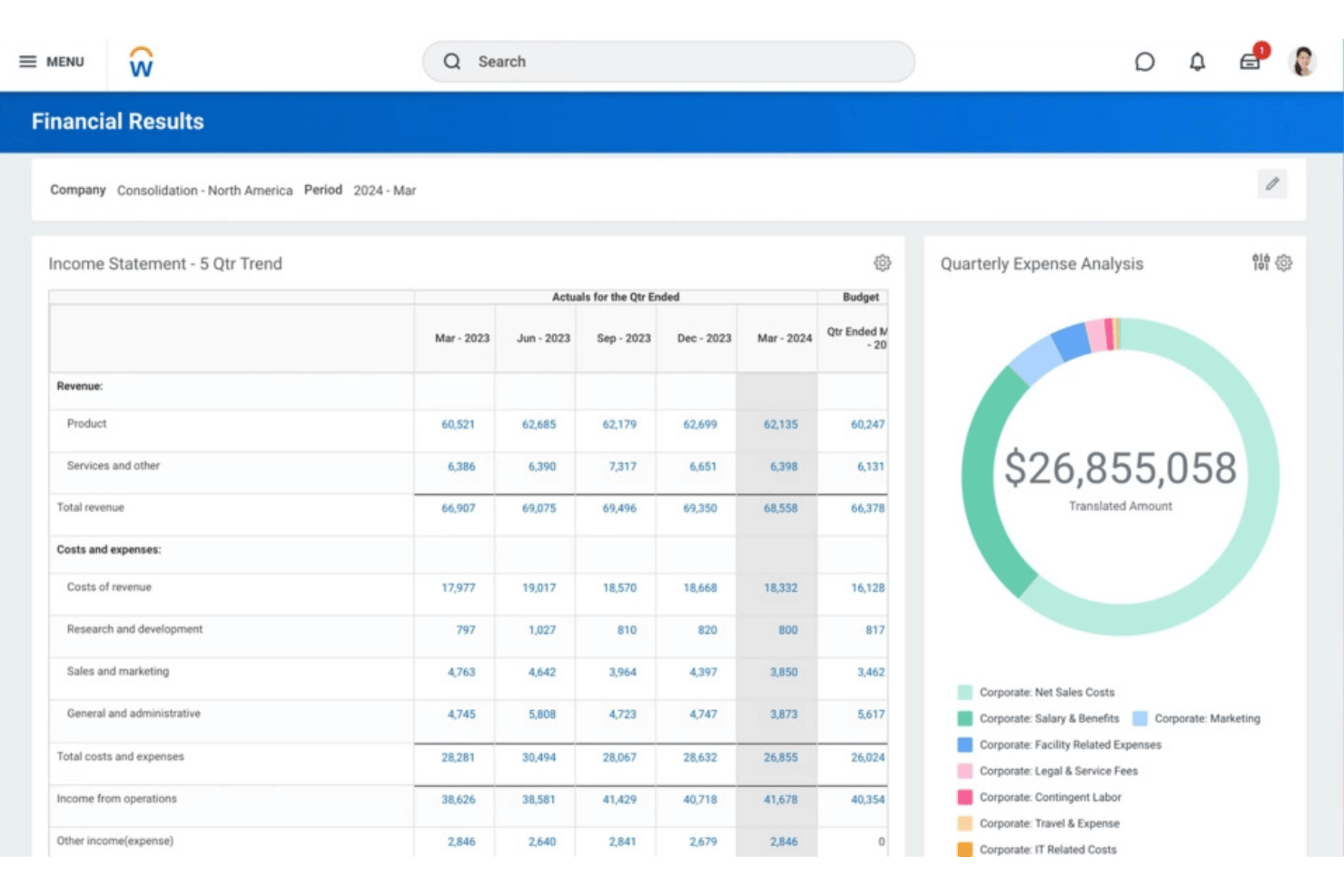
Workday is an enterprise-grade platform that unifies payroll processing, financial management, and HCM in a single system, with a native general ledger, continuous payroll calculation, and global payroll capabilities supported by Workday and its partner ecosystem.
Who Is Workday Best For?
Workday is built for large and enterprise organizations that need to manage complex, multi-entity finance and payroll operations across multiple countries from one platform.
Why I Picked Workday
I picked Workday because it connects enterprise payroll directly with financial management. Payroll results can generate accounting entries and feed labor costs into the general ledger, while Workday Financial Management handles core accounting functions such as the general ledger, accounts payable and receivable, fixed assets, and consolidation.
Workday Key Features
- Payroll accounting: Workday automatically generates accounting entries based on payroll results and supports labor-cost allocation.
- General ledger integration: Payroll results can flow into Workday Financial Management using account posting rules, fiscal schedules, ledger types, and other accounting configurations.
- Continuous payroll: Workday supports continuous payroll processing rather than treating payroll solely as a discrete end-of-period process.
- Global payroll: Native/direct payroll coverage is supplemented by Workday's global partner ecosystem and bidirectional integrations.
- Employee self-service: Employees can access payroll information through Workday's mobile-first experience; Workday documentation specifically supports employee access to payslips on mobile.
- Time-to-payroll: Approved time can feed payroll calculations by associating time calculation tags with earnings or deductions.
Workday Integrations
Workday offers native integrations with ADP, Kronos, Salesforce, Microsoft 365, SAP, ServiceNow, and Oracle, and provides an API for custom integrations.
Pros and Cons
Pros:
- Employee self-service reduces HR admin workload
- Native payroll coverage across 180+ countries
- Payroll and finance live in one system
Cons:
- Requires significant IT involvement during setup
- Overkill for businesses under 500 employees

ERPNext
Best for open-source accounting and payroll
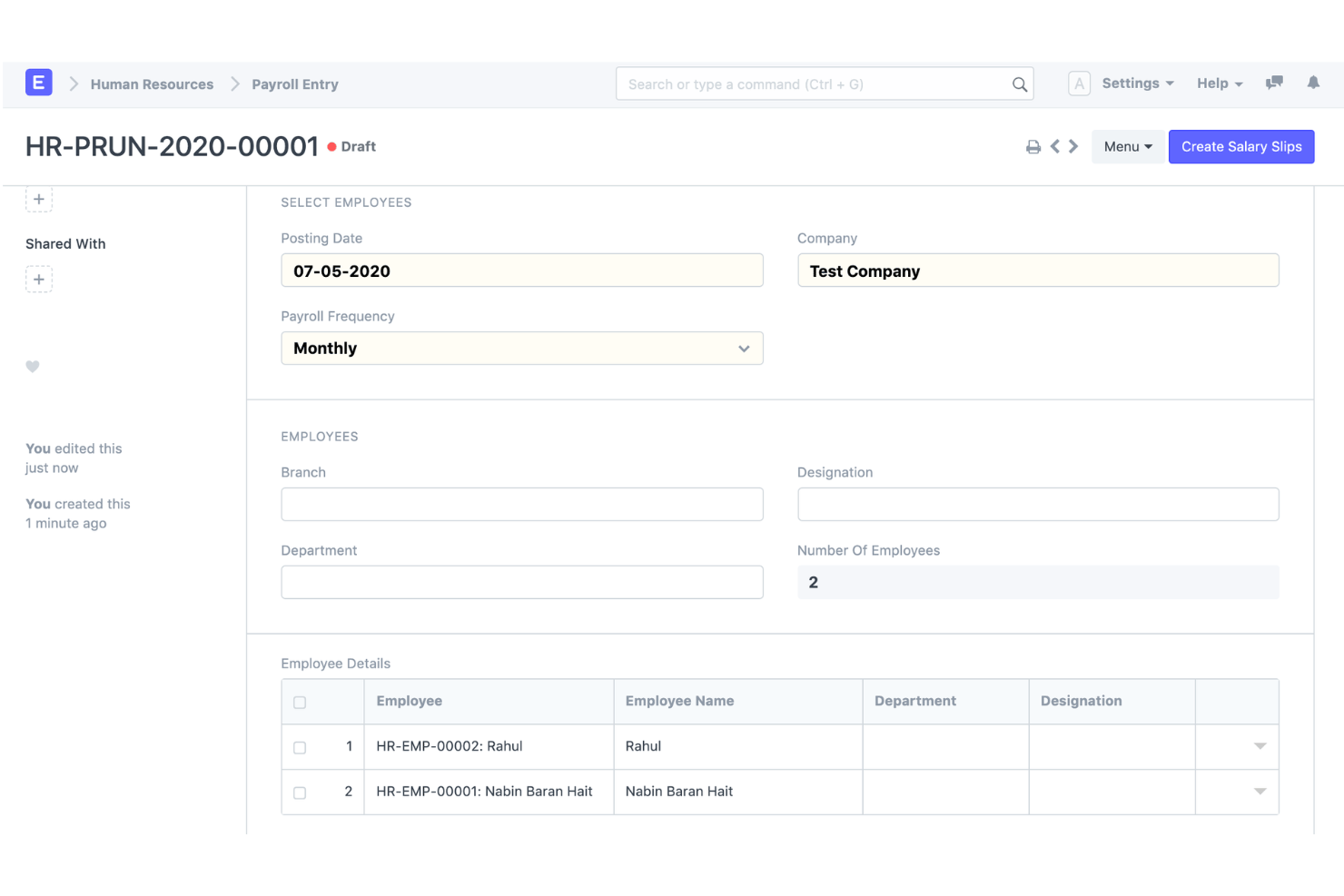
ERPNext is an open-source ERP platform that combines double-entry accounting, native payroll processing, HR management, and inventory tracking in a single self-hosted or cloud-deployed system.
Who Is ERPNext Best For?
ERPNext suits technically resourceful SMBs and growing mid-market companies that need a full-featured ERP without per-user licensing costs.
Why I Picked ERPNext
ERPNext earns its spot on my shortlist because the payroll module posts directly to the general ledger using the same chart of accounts and cost centers you configure for the rest of your books. I like that because you're working from a single codebase, there's no middleware syncing payroll data to a separate accounting system. The open-source license also means I can modify salary components or GL account mappings to match a specific structure, without waiting on a vendor roadmap.
ERPNext Key Features
- Integrated payroll: Salary structures, earnings and deductions, payroll periods, salary slips, and bulk payroll processing.
- Payroll accounting: Payroll expenses/payments can be connected to the accounting system rather than maintained in a completely separate payroll product.
- General ledger: ERPNext provides a full double-entry GL and automatically generates ledger entries from submitted accounting transactions.
- Cost centers and projects: Payroll can be associated with projects, while ERPNext accounting supports cost centers, projects and other accounting dimensions.
- Multi-company/multi-currency accounting: ERPNext supports multiple companies, subsidiaries, branches and currencies with consolidated reporting.
- Customization: ERPNext is open source and built on the Frappe framework, with low-code/no-code customization capabilities.
ERPNext Integrations
ERPNext offers native integrations with PayPal, Razorpay, Amazon S3, Slack, Dropbox, Shopify, and WooCommerce. An API is available for custom integrations.
Pros and Cons
Pros:
- Strong payroll-to-accounting connection
- Open-source accounting and payroll
- Broad ERP functionality beyond finance
Cons:
- Payroll compliance/localization varies by country
- More setup and configuration than turnkey SMB accounting/payroll products

Odoo
Best for modular accounting and payroll apps
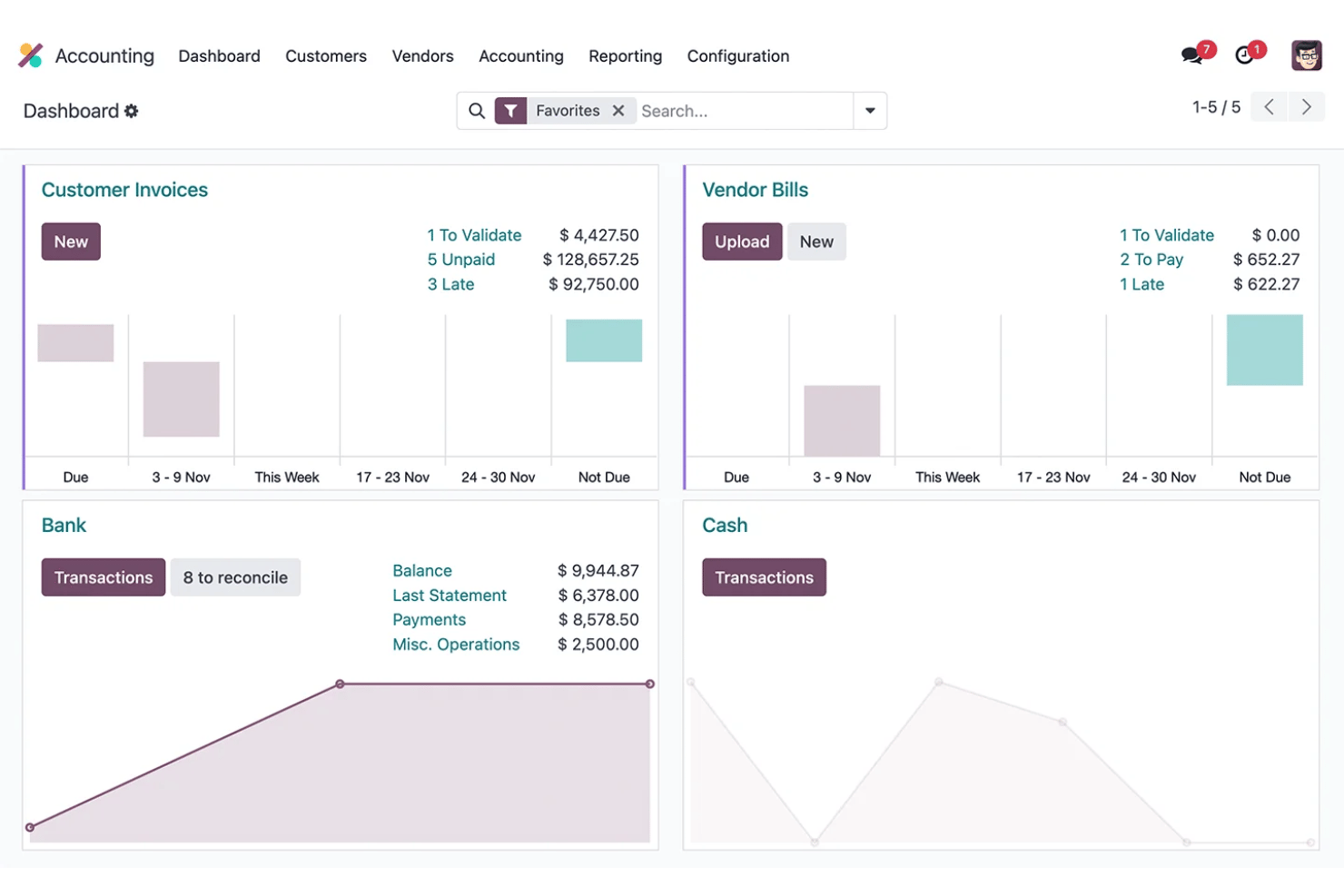
Odoo is an open-source ERP platform that combines modular accounting, payroll, HR, and expense management in a single shared database.
Who Is Odoo Best For?
Odoo is a strong fit for growing SMBs with 6–250 employees that want to consolidate accounting, payroll, and HR into one platform without managing multiple disconnected tools.
Why I Picked Odoo
I picked Odoo because businesses can combine its full accounting application with payroll and other business apps in one modular platform. When Accounting and Payroll are used together, payroll salary rules can be mapped to debit and credit accounts, helping connect employee pay with the general ledger without relying on a completely separate accounting system.
Odoo Key Features
- Accounting: Full double-entry accounting with AP/AR, reconciliation, financial reporting, assets and budgets.
- Payroll accounting: Salary rules can be mapped to debit and credit accounts, connecting payroll calculations with accounting journals.
- Pay runs: Businesses can generate and process multiple payslips together, including grouping payroll by salary structure, department or job position.
- Time-to-payroll: Payroll uses employee work entries to calculate worked time before applying salary structures and rules.
- Payroll localization: Country-specific payroll configurations account for local taxes, fees, allowances and regulatory requirements where supported.
- Multi-company accounting: Odoo supports multiple companies, with different fiscal localizations where appropriate.
Odoo Integrations
Odoo offers native integrations with Stripe, Plaid, PayPal, Authorize.Net, and Shopify, with an API available for custom integrations.
Pros and Cons
Pros:
- Open-source codebase allows deep customization
- Payroll posts automatically to the general ledger
- Modular apps scale with your business needs
Cons:
- Initial setup demands significant technical configuration
- Payroll tax filing requires third-party support
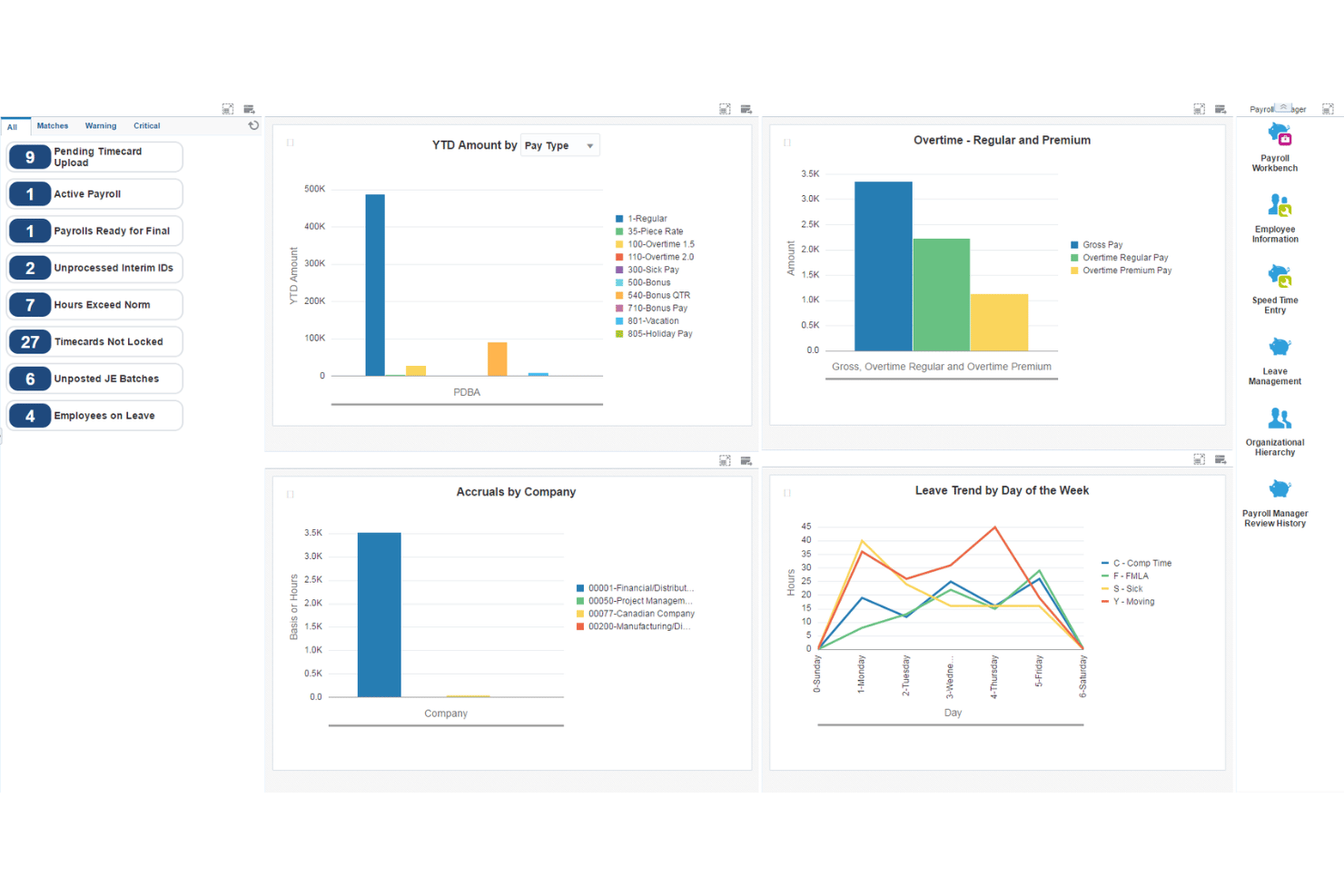
JD Edwards EnterpriseOne is an enterprise ERP suite from Oracle that combines full-cycle payroll, general ledger accounting, AP/AR, fixed assets, and human capital management across on-premises, cloud, and hybrid deployments.
Who Is JD Edwards EnterpriseOne Best For?
JD Edwards EnterpriseOne is built for large enterprises in manufacturing, distribution, and asset-heavy industries that need integrated payroll and financial management at scale.
Why I Picked JD Edwards EnterpriseOne
I picked JD Edwards EnterpriseOne because its payroll system connects deeply with enterprise financial management. Payroll can generate and post journal entries to the general ledger using configurable Automatic Accounting Instructions, while payroll liabilities such as taxes and insurance can flow into Accounts Payable.
JD Edwards EnterpriseOne Key Features
- Payroll-to-GL integration: Payroll can generate journal entries and update the EnterpriseOne general ledger, with automatic or manual posting options.
- Automatic Accounting Instructions: AAIs determine how generated accounting entries are distributed across GL accounts, giving larger organizations considerable control over payroll accounting.
- Payroll liabilities and AP: EnterpriseOne can automatically create vouchers for payroll taxes, insurance premiums, and other third-party payroll liabilities through its Accounts Payable integration.
- Labor costing: Payroll supports labor and labor-burden distributions, including wages, taxes, insurance, hours, and account information. Those transactions can flow into the Account Ledger.
- US payroll: EnterpriseOne supports federal, state, and local withholding/reporting requirements, with Vertex used for tax-withholding calculations.
- Canadian payroll: There's also dedicated Canadian payroll functionality covering earnings, deductions, taxes, gross-to-net/net-to-gross calculations, leave accruals, and government-regulated tax information.
JD Edwards EnterpriseOne Integrations
JD Edwards EnterpriseOne offers native integrations with Oracle Cloud Infrastructure, Oracle Analytics Cloud, Oracle Database, and has an API for custom integrations.
Pros and Cons
Pros:
- Configurable GL account mapping for payroll runs
- Handles multi-entity payroll and accounting natively
- Granular labor cost posting by department
Cons:
- Not suited to small or mid-sized businesses
- Implementation requires significant IT and consulting resources
Wave
Best for automatic payroll journal entries
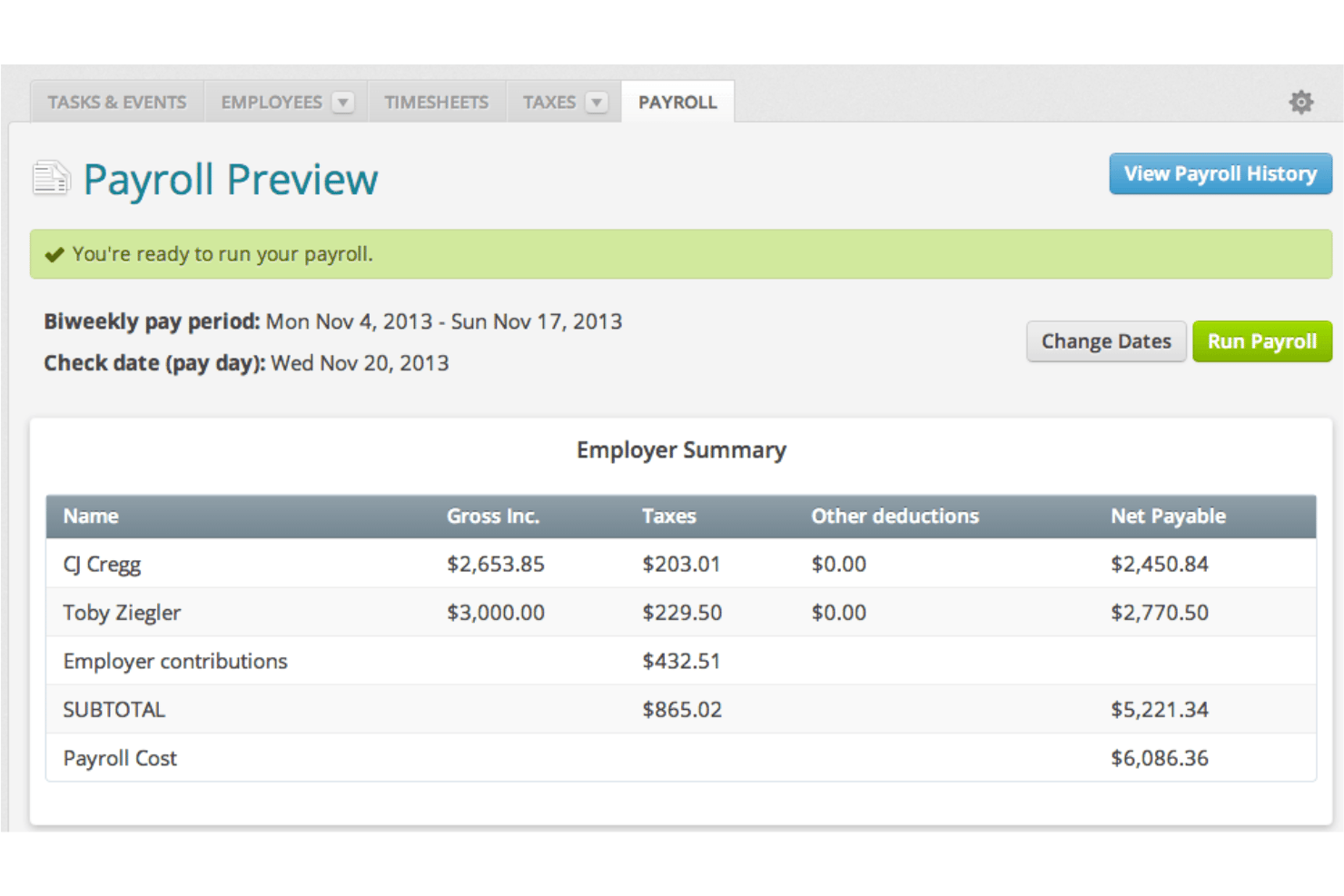
Wave is a small business accounting and payroll platform that combines double-entry bookkeeping, invoicing, and full-cycle payroll processing in a single system.
Who Is Wave Best For?
Wave is built for owner-operators and small businesses that need payroll and accounting in one place without paying for features they won't use.
Why I Picked Wave
I picked Wave as one of the best because each payroll run automatically posts as journal entries into the accounting ledger, with wages, taxes, and deductions mapped to the correct accounts in real time. Because payroll and accounting share one data model, there's no manual export or reconciliation. I also like that W-2s, 1099-NECs, and wage reports are all generated from within that same system.
Wave Key Features
- Direct deposit payments: Send paychecks straight to employee and contractor bank accounts at no additional cost.
- Employee self-service portal: Let team members securely view pay stubs and manage personal information online.
- Automatic payroll tax filing: Calculate, withhold, and file federal and state payroll taxes for US-based businesses.
- Year-end tax form generation: Create and deliver W-2 and 1099-NEC forms for employees and contractors within the system.
Wave Integrations
Native integrations are not clearly documented. An API is available for custom integrations.
Pros and Cons
Pros:
- W-2 and 1099-NEC forms generated in-platform
- Automatic journal entries after every payroll run
- Payroll and accounting share one data model
Cons:
- Limited support for growing teams beyond 10 employees
- Payroll only available in the US and Canada, excluding Quebec

Best for accounting and payroll under one login
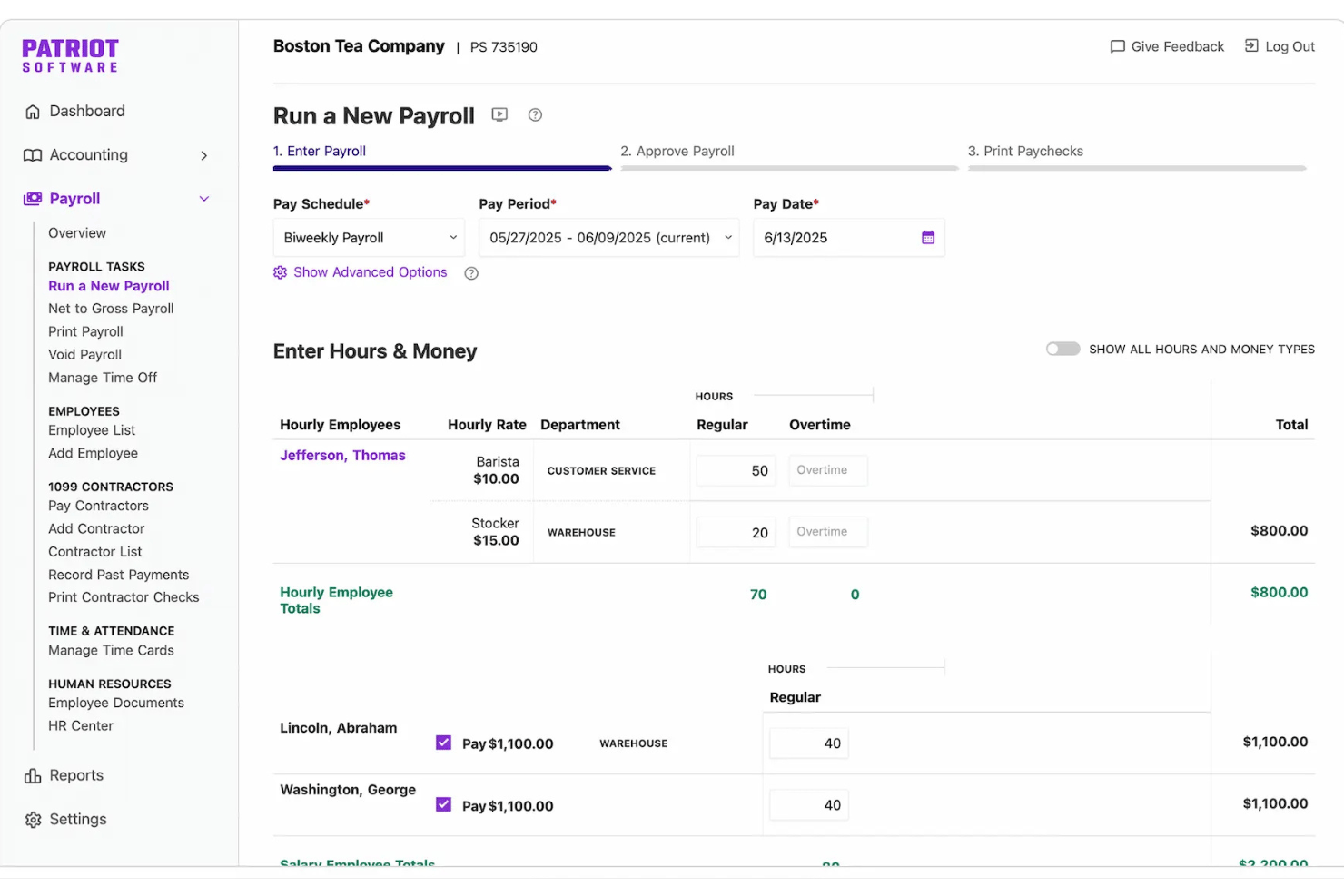
Patriot Software is a small business accounting and payroll platform that combines double-entry bookkeeping, invoicing, direct deposit, and payroll processing in a single login, with payroll tax filing available through its Full Service Payroll plan.
Who Is Patriot Software Best For?
Patriot Software is a strong fit for small business owner-operators and payroll administrators who need to manage books and run payroll without juggling two separate systems.
Why I Picked Patriot Software
I picked Patriot Software as one of the best because both payroll and accounting live under a single login, and the connection between them is automatic. Every time I run payroll, Patriot posts a journal entry directly to the general ledger, mapping wages, tax withholdings, and deductions to the correct accounts without any manual work. I also like the dual-ledger system, which lets me toggle between cash and accrual accounting without switching tools or duplicating records.
Patriot Software Key Features
- Multi-state payroll tax filing: Full Service Payroll calculates, files, and deposits federal, state, and local payroll taxes on your behalf.
- Employee self-service portal: Employees can access pay stubs, tax documents, and update their direct deposit information online.
- Time and attendance add-on: Track employee hours and time-off accruals that sync directly to payroll with a dedicated module.
- Contractor and 1099 processing: Issue payments to contractors and generate 1099 forms within the same platform as employee payroll.
Patriot Software Integrations
Patriot Software offers native integrations with Vestwell for 401(k) plans, SimplyInsured for health insurance, and ERGO NEXT for workers' compensation. An API is available for custom integrations. Native integrations with other accounting or payroll tools are not clearly documented.
Pros and Cons
Pros:
- Full Service Payroll automates payroll tax filing
- Supports both cash and accrual accounting
- Payroll auto-posts to the general ledger
Cons:
- No native HR or benefits administration features
- Reporting tools lack depth for advanced users
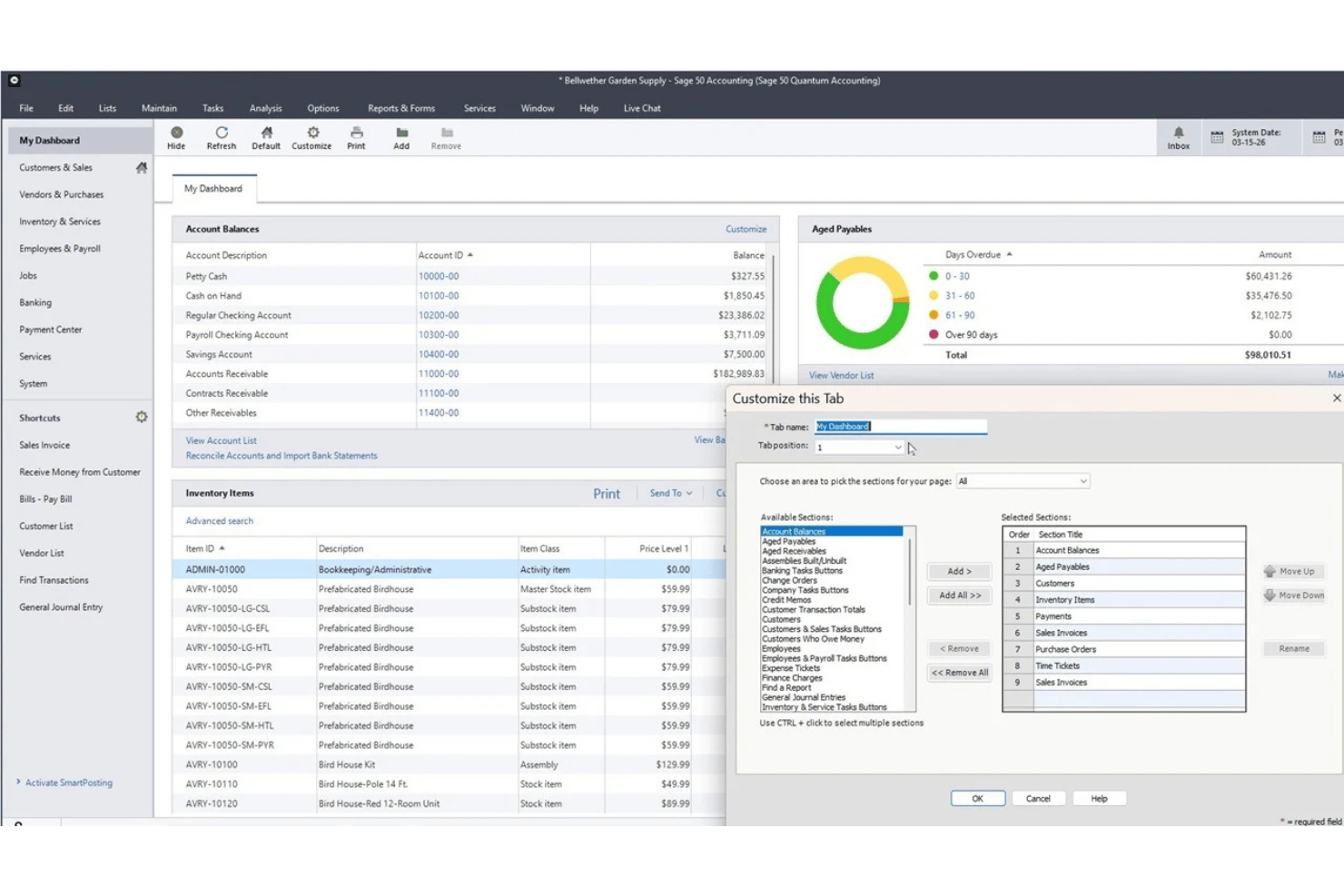
Sage 50 Accounting is a small business accounting platform available in cloud and desktop editions, combining financial management, inventory, job costing, and an integrated payroll module.
Who Is Sage 50 Accounting Best For?
Sage 50 is a strong fit for small businesses and in-house bookkeepers that need detailed accounting, job costing, and payroll functionality in one system.
Why I Picked Sage 50 Accounting
I've included Sage 50 Accounting in my top picks because the payroll module is built directly into the accounting system, not bolted on as a third-party integration. I like that payroll runs automatically post as journal entries to the general ledger, mapping wages, taxes, and deductions without any manual reconciliation. The combination of job costing and payroll in one desktop environment is where Sage 50 really stands apart, letting you see whether a project turned a profit after labor costs are fully accounted for.
Sage 50 Accounting Key Features
- Job costing module: Track labor, materials, and overhead by job or project for full job profitability.
- Multi-company management: Manage transactions and reporting across multiple business entities in a single system.
- Inventory management: Monitor stock levels, serial numbers, vendors, and assemblies directly within the accounting platform.
- Advanced reporting tools: Access over 150 reports covering areas such as payables, receivables, expenses, profits, inventory, payroll, and jobs, with options to customize and drill down into transactions.
Sage 50 Accounting Integrations
Sage 50 Accounting offers native integrations with Microsoft 365, AutoEntry, and Sage Payroll. An API is available for custom integrations.
Pros and Cons
Pros:
- Strong audit trail for payroll transactions
- Deep job costing built into accounting
- Payroll posts directly to the general ledger
Cons:
- Payroll and e-filing require separate subscriptions
- Payroll requires an additional subscription

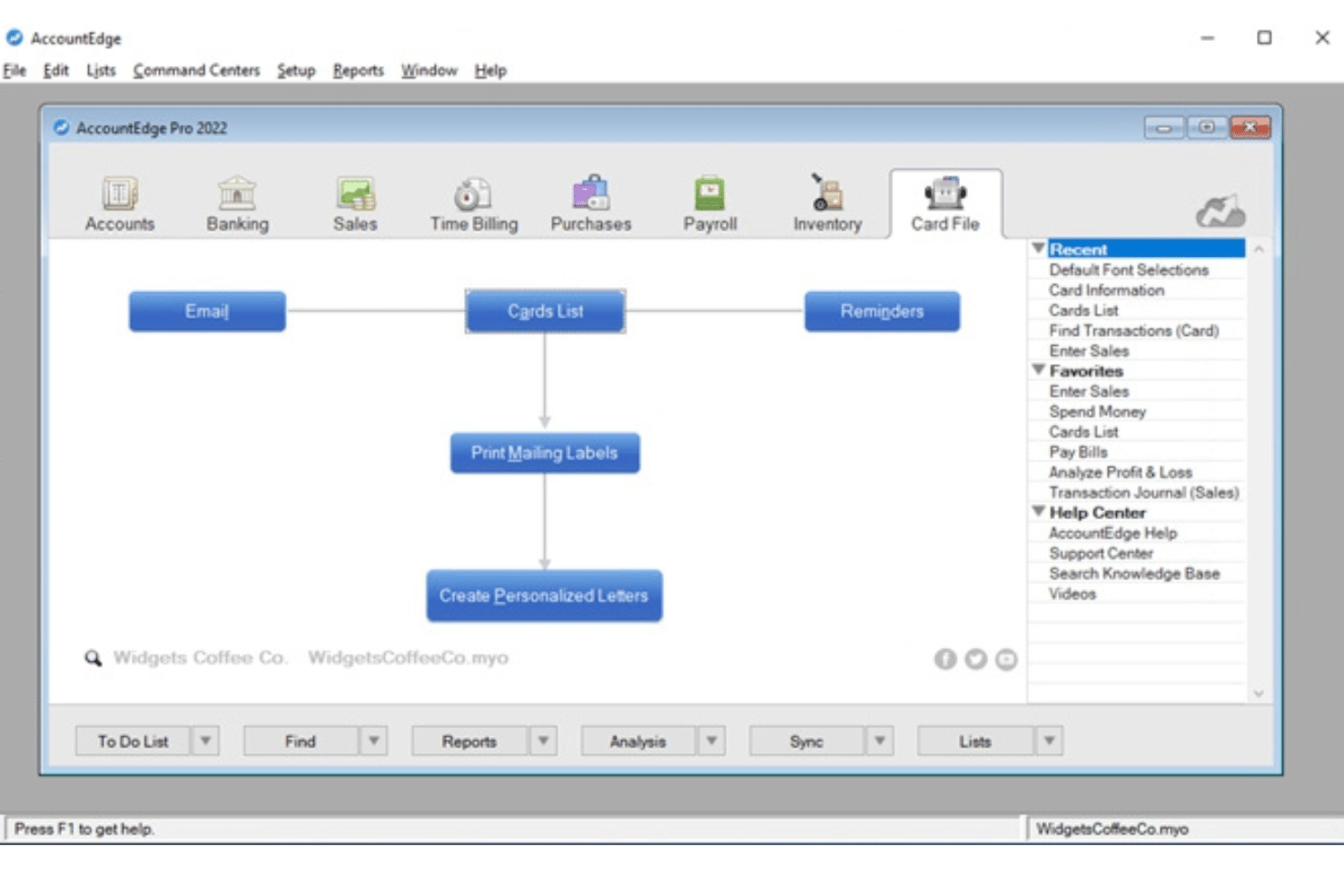
AccountEdge is a desktop-based accounting platform for small businesses that combines double-entry bookkeeping, inventory, and invoicing with an optional payroll add-on for unlimited employees and access to current federal, state/provincial, and local payroll tax rates.
Who Is AccountEdge Best For?
It's a strong fit for owner-operators and small business payroll admins who prefer desktop accounting software and want to process payroll for unlimited employees without per-employee fees.
Why I Picked AccountEdge
AccountEdge earns its spot on my shortlist because of how it handles payroll tax tables. Rather than relying on a cloud service for tax updates, AccountEdge lets you download and apply federal, state, and local tax tables directly in the desktop software. I also like that payroll runs post automatically as journal entries to the GL. Wages, taxes, and deductions map to the correct accounts with no manual re-entry.
AccountEdge Key Features
- Double-entry general ledger: Provides a full accounting suite with chart of accounts, journal entries, AP/AR, and financial reports.
- Inventory and item tracking: Monitors inventoried and non-inventoried items, assemblies, and manages multiple locations and custom variations.
- Customizable reporting: Offers hundreds of standard financial, payroll, and compliance reports, plus advanced analytics via Power BI exports.
- Integrated time billing: Enables entry of timesheets, applies custom billing rates by employee or project, and links hours directly to payroll.
AccountEdge Integrations
AccountEdge offers add-ons for bank feeds, direct deposit, payroll forms and e-filing, AccountEdge Connect, Web Pay, and payment processing. AccountEdge Connect adds browser-based access for sales, purchases, time billing, and employee timesheets that sync back to the desktop software.
Pros and Cons
Pros:
- Handles unlimited employee payroll runs
- Payroll entries post automatically to GL
- Downloadable tax tables update payroll calculations
Cons:
- Tax filing not automated by vendor
- Direct deposit and payroll e-filing cost extra

Striven
Best for payroll in operational workflows
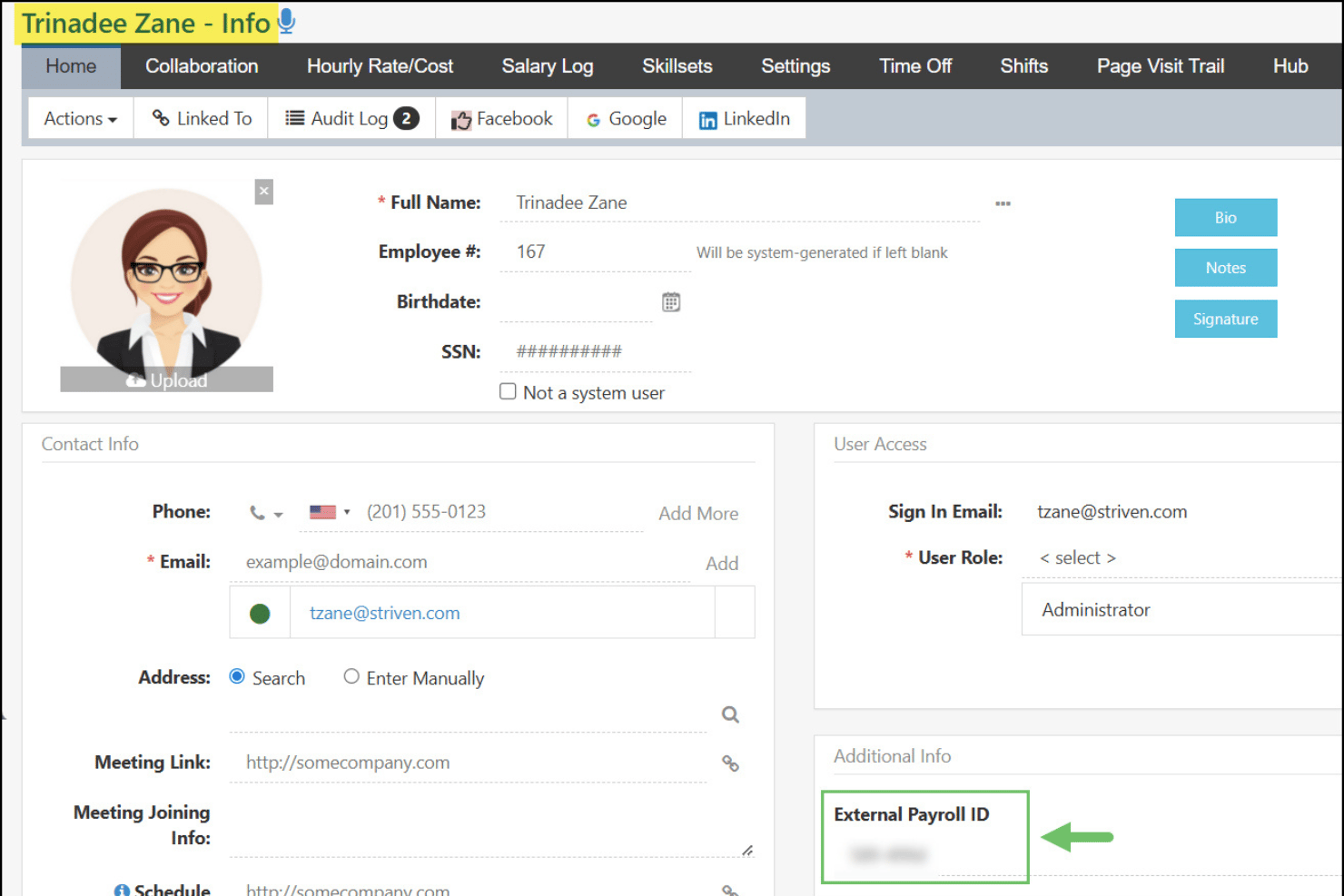
Striven is a cloud-based ERP platform for small and midsize businesses that combines general ledger accounting, payroll expense tracking, project management, CRM, and HR tools in a single system.
Who Is Striven Best For?
Striven is a good fit for owner-operators in field service industries—like HVAC, electrical, or landscaping—who need accounting and operational workflows managed in one place.
Why I Picked Striven
I picked Striven as one of the best because of how it connects payroll data to the rest of a business's operations. When my team logs employee hours against a project, those labor costs automatically map to the corresponding GL accounts, giving an accurate picture of spend by job. The Generate Payroll File tool then exports that payment data in CSV or XML to an external payroll processor, so nothing gets manually re-entered.
Striven Key Features
- Custom chart of accounts: Create and manage a detailed, adaptable chart of accounts for double-entry bookkeeping.
- Role-based access control: Assign granular system user roles and permissions for accounting, HR, and finance functions.
- Bank reconciliation automation: Reconcile transactions from linked bank accounts directly within the accounting module.
- Integrated project accounting: Allocate costs, revenue, and payroll expenses to specific jobs or projects for accurate reporting.
Striven Integrations
Native integrations are not clearly documented. The tool supports integrations via API for custom workflows.
Pros and Cons
Pros:
- Single platform covers HR, accounting, and payroll
- Time tracking integrates natively with payroll runs
- Labor costs auto-post to specific GL accounts
Cons:
- Reporting customization is limited for payroll data
- Payroll tax filing relies on external processors
Muita palkanmaksuominaisuuksilla varustettuja kirjanpito-ohjelmistoja
Tässä on joitakin muita palkanmaksuominaisuuksilla varustettuja kirjanpito-ohjelmistoja, jotka eivät päässeet esivalintalistalleni mutta joihin kannattaa silti tutustua:
- QuickBooks Workforce
For connected payroll, HR, and books
- Microsoft Dynamics GP
For advanced payroll deductions and benefits
- SAP S/4HANA
For global payroll with SAP finance


Miten arvioin palkanlaskentaominaisuuksia sisältäviä kirjanpito-ohjelmistoja
Kun palkkatiedot eivät siirry sujuvasti pääkirjanpitoon, tiedän, että työkalusta puuttuu yksi palkanlaskennan ja kirjanpidon yhdistämisen suurimmista hyödyistä. Siksi erotan välttämättömät ominaisuudet niistä ominaisuuksista, jotka todella erottavat alustat toisistaan.
Perustoiminnot (tämän luettelon vähimmäisvaatimukset)
Kun valitsen työkaluja luettelooni, annan jokaiselle työkalulle arvosanan asteikolla 0:sta (ei tarjoa toimintoa) 5:een (erinomainen tällä osa-alueella) jokaisen alla luetellun perustoiminnon osalta. Sen jälkeen muunnan työkalun kokonaispistemäärän prosenttiosuudeksi ja käytän 65:tä prosenttia vertailuarvona arvioidakseni, kuinka hyvin se sopii kokonaisuutena tähän luetteloon.
- Integroitu palkanlaskenta: Etsin sisäänrakennettuja tai tiiviisti integroituja palkanmaksuja, joissa on suoratalletus ja joustavat aikataulut, jotta yritykset voivat maksaa työntekijöille ja toimeksisaajille ilman, että palkkatietoja tarvitsee siirtää manuaalisesti järjestelmien välillä.
- Pääkirjanpito: Arvioin, tukeeko pääkirjanpito ostovelkoja ja myyntisaamisia, päiväkirjavientejä ja mukautettavia raportteja – esimerkiksi osastoittain eritellyn tuloslaskelman muodostamista.
- Palkkaverotuksen automatisointi: Verovaatimukset muuttuvat usein, joten arvioin, miten työkalu laskee ennakonpidätykset, tukee verojen maksamista ja ilmoittamista sekä muodostaa saatavilla olevat vuoden lopun lomakkeet, kuten W-2-lomakkeet.
- Työntekijätiedot & vähennykset: Jokaisen profiilin tulisi sisältää palkkatasot, ennakonpidätykset, edut ja ulosmittaukset – tiedot, joita joutuisit muuten seuraamaan erillisessä järjestelmässä.
- Palkanlaskennan ja pääkirjanpidon synkronointi: Jokaisen palkanmaksun jälkeen palkat ja verovelat tulisi kirjata automaattisesti oikeille pääkirjanpitotileille, ja mukana tulisi olla kirjausketju vuosineljänneksen lopun tarkastelua varten.
- Työajan & palkallisen vapaan seuranta: Sisäänrakennetut työaikalomakkeet ja suoraan palkanlaskentaan siirtyvät palkallisen vapaan kertymäkäytännöt säästävät sinut tuntien syöttämiseltä uudelleen jokaisella palkanmaksukaudella.
Kun minulla on luettelo kriteerit täyttävistä työkaluista, tarkastelen, mikä erottaa kunkin alustan muista.
Erottavat tekijät (mikä erottaa palveluntarjoajat toisistaan)
Näin vertailen eri palveluntarjoajia:
Erottuvat ominaisuudet
Työntekijöiden itsepalveluportaali vähentää henkilöstöhallinnolle tulevia pyyntöjä – henkilöstö voi hakea itse palkkalaskelmansa, päivittää suoratalletustietonsa ja lähettää poissaolopyyntöjä ilman jatkuvaa viestittelyä. Arvioin myös toimeksisaajien ja 1099-työntekijöiden hallintaa, erityisesti jos tiimissäsi on sekä W-2-työntekijöitä että freelancereita, jotka tarvitsevat vuoden lopussa 1099-NEC-lomakkeet. Usean osavaltion verojen ilmoittaminen on myös tärkeää, etenkin hajautetuissa tiimeissä, joissa jokainen uusi työntekijä voi aiheuttaa uusia lainkäyttöalueisiin liittyviä vaatimuksia.
Ominaisuuksia laajemmin
Hinnoittelun läpinäkyvyys on tärkeä tekijä – tarkistan, sisältyvätkö palkanlaskennan maksut kirjanpitotilaukseen vai veloitetaanko ne työntekijäkohtaisena lisämaksuna, sillä kustannukset kasvavat nopeasti tiimin kasvaessa. Myös siirtymisen tuki on tärkeää, erityisesti jos vaihdat järjestelmää kesken vuoden ja sinun on tuotava vuoden alusta lukien kertyneet palkat ja veronpidätykset oikein. Tarkastelen myös kirjanpitäjän kanssa tehtävään yhteistyöhön liittyviä ominaisuuksia, kuten roolipohjaisia käyttöoikeuksia, joiden avulla kirjanpitäjäsi voi käyttää pääkirjanpitoa koskematta palkanlaskennan hyväksyntöihin.
Näin valitset palkanmaksuominaisuuksilla varustetun kirjanpito-ohjelmiston
Oikean palkanmaksuominaisuuksilla varustetun kirjanpito-ohjelmiston valinta riippuu siitä, miten kukin alusta käsittelee juuri sinun vaatimustenmukaisuuden, automaation ja henkilöstöhallinnon tehtävien yhdistelmää. Ennen alustan valitsemista päätä, kuinka tiiviisti haluat palkanmaksun ja kirjanpidon olevan yhteydessä toisiinsa. Kaikki yhdessä -järjestelmä voi vähentää täsmäytystyötä, kun taas palkanmaksulisäosalla varustettu kirjanpito-ohjelmisto saattaa tarjota enemmän joustavuutta. Jos sinulla on jo palkanmaksupalveluntarjoaja, luotettava integraatio voi riittää – kunhan palkkakulut ja -velat siirtyvät tarkasti pääkirjanpitoon.
| Jos tärkeintä on... | Etsi... |
|---|---|
| Tarkat palkanmaksuveroilmoitukset | Automaattiset verolaskelmat, ilmoitusten lähettämisen tuki ja vaatimustenmukaisuuspäivitykset |
| Saumaton palkanmaksun ja kirjanpidon synkronointi | Alkuperäinen, automaattinen pääkirjanpidon päiväkirjavientien määritys |
| Tunti- ja kuukausipalkkaisten työntekijöiden hallinta | Joustava työajanseuranta ja yhdistetyt palkanmaksuajot |
| Useilla lainkäyttöalueilla tapahtuvan palkanmaksun käsittely | Verotuki kaikissa osavaltioissa ja paikallisalueilla, joissa sinulla on työntekijöitä |
| Helppo siirtyminen vanhasta järjestelmästä | Avustettu palkkatietojen siirto ja YTD-tuonnit |
Näin arvioit esivalintalistaasi
- Varmista verotuen saatavuus vuoden lopussa: Tarkista, mitkä W-2- ja 1099-lomakkeet ohjelmisto luo tai lähettää. Tarkista myös, mitä lainkäyttöalueita se tukee ja aiheutuuko vuoden lopun ilmoituksista lisäkustannuksia.
- Suorita simuloitu palkanmaksujakso: Määritä testipalkanmaksu käyttäen tavanomaisia palkanmaksuaikataulujasi, ansioitasi, vähennyksiäsi ja toimeksisaajiasi. Tarkista sitten, miten syntyneet kulut ja velat kirjautuvat pääkirjaan.
- Lähetä tukipyyntö siirtotilanteesta: Kuvaa tarve tuoda kumulatiiviset palkkatiedot järjestelmään kesken vuoden ja arvioi vastauksen kattavuutta sekä aikatauluja.
- Selvitä veroilmoitusten tekemiseen liittyvä vastuu: Varmista, laskeeko, ilmoittaako ja maksaako toimittaja palkkaverot puolestasi. Tarkista lisäksi, mitkä lainkäyttöalueet toimittaja kattaa ja kuka käsittelee virheet tai myöhästyneet ilmoitukset.
- Punnitse hallintaa ja helppoutta: Päätä, haluatko erittäin mukautettavat kirjanpitotyökalut, joihin palkanmaksu on yhdistetty, vai ensisijaisesti palkanmaksuun keskittyvän järjestelmän, jossa on perustason kirjanpito-ominaisuudet.
Mitä palkanmaksuominaisuuksia sisältävä kirjanpito-ohjelmisto on?
Palkanmaksuominaisuuksia sisältävä kirjanpito-ohjelmisto yhdistää keskeiset taloushallinnon työkalut sisäänrakennettuun tai integroituun palkanmaksuun. Tällaisia työkaluja voivat olla esimerkiksi pääkirjanpito, osto- ja myyntireskontra, laskutus sekä talousraportointi. Näiden alustojen avulla voit laskea työntekijöiden palkat, hallita vähennyksiä ja veroja sekä kirjata palkkakulut ja -velat kirjanpitojärjestelmääsi ilman, että tietoja tarvitsee siirtää manuaalisesti erillisten työkalujen välillä.
Toisin kuin erilliset palkanmaksuohjelmistot, nämä alustat yhdistävät palkanmaksun suoraan taloustietoihisi. Ohjelmistosta riippuen loppuun käsitellyt palkanmaksut voivat automaattisesti muodostaa päiväkirjamerkinnät, päivittää kulu- ja velkatilejä, kohdistaa työvoimakustannuksia osastoille tai projekteille sekä siirtää palkkatiedot talousraportteihin.
Ominaisuudet
Kun valitset palkanmaksuominaisuuksia sisältävää kirjanpito-ohjelmistoa, kiinnitä huomiota seuraaviin keskeisiin ominaisuuksiin:
- Integroitu palkanmaksu: Suorita palkanmaksu, laske bruttopalkasta nettopalkkaan etenevät palkat ja yhdistä työntekijöiden palkat, vähennykset sekä palkkavelat kirjanpitotietoihisi.
- Palkkaveron hallinta: Laske ja pidätä sovellettavat palkkaverot sekä hyödynnä alustasta ja paketista riippuen verojen maksuun, ilmoittamiseen ja vuoden lopun lomakkeisiin, kuten W-2- ja 1099-lomakkeisiin, liittyviä vaihtoehtoja.
- Pääkirjan synkronointi: Kohdista palkkatapahtumat automaattisesti oikeille tilikartan tileille, jotta palkkakulut ja verovelat ovat aina ajan tasalla.
- Työntekijätietojen hallinta: Tallenna palkkatasot, veronpidätykset, etuusvähennykset ja työsuhdetiedot työntekijäkohtaisiin profiileihin.
- Toimeksisaajien ja 1099-maksujen hallinta: Maksa toimeksisaajille työntekijöiden ohella ja sujuvoita vuoden lopun 1099-NEC-ilmoitusten tekemistä samassa järjestelmässä.
- Työajan ja palkallisten vapaiden seuranta: Kerää tehdyt työtunnit ja palkalliset vapaat ja siirrä tiedot suoraan palkanmaksuun tarkkojen palkkalaskelmien laatimiseksi.
- Suoraveloitus ja maksuvaihtoehdot: Tarjoa työntekijöille ja toimeksisaajille joustavia maksuvaihtoehtoja, kuten suoraveloitusta, palkkakortteja tai paperisia sekkejä.
- Työntekijöiden itsepalveluportaalit: Anna työntekijöiden käyttää palkkalaskelmia, tarkastella verolomakkeita, pyytää vapaata ja hallita henkilötietoja ilman henkilöstöhallinnon apua.
- Mukautettavat raportit ja analytiikka: Luo palkka- ja talousraportteja, jotka tuovat esiin työvoimakustannukset, ylityöt ja etuuksien käytön parempien liiketoimintapäätösten tueksi.
- Tietoturva- ja käyttöoikeusvalvonta: Määritä käyttäjien käyttöoikeustasot, edellytä hyväksyntöjä ja luo tarkastusketjuja palkka- ja taloustietojen suojaamiseksi.
Hyödyt
Palkanmaksuominaisuuksia sisältävän kirjanpito-ohjelmiston käyttöönotto tarjoaa useita hyötyjä tiimillesi ja yrityksellesi. Tässä muutamia etuja, joita voit odottaa:
- Vähemmän manuaalista tietojen syöttämistä: Palkanmaksun ja pääkirjan automaattinen synkronointi poistaa päällekkäisen tietojen syöttämisen ja auttaa ehkäisemään kalliita virheitä.
- Parempi palkkaverotuksen noudattaminen: Automaattiset laskelmat ja vaatimustenmukaisuustyökalut voivat auttaa pitämään palkkaverot ja vuoden lopun raportoinnin sovellettavien liittovaltion, osavaltioiden ja paikallisten vaatimusten mukaisina.
- Nopeammat palkanmaksujaksot: Integroidut työajanseuranta- ja suoraveloitusominaisuudet nopeuttavat jokaista palkanmaksua aina palkan laskemisesta palkkalaskelman toimittamiseen.
- Parempi läpinäkyvyys työntekijöille: Itsepalveluportaalien avulla työntekijät voivat tarkastella palkkalaskelmia, verolomakkeita ja vapaapäiväsaldoja ilman henkilöstöhallinnon aiheuttamia viiveitä.
- Tarkempi talousraportointi: Reaaliaikainen palkkatietojen siirto pääkirjanpitoon varmistaa, että palkka-, vero- ja etuustiedot näkyvät aina liiketoimintaraporteissa.
- Helpompi alihankkijoiden ja usean osavaltion palkanlaskenta: Alihankkijoita ja useita verotusalueita tukevat alustat voivat vähentää eri työntekijätyyppien maksamiseen eri sijainneissa liittyvää manuaalista työtä. Kansainvälisesti laajentuvat yritykset voivat tutustua myös oppaaseemme, joka käsittelee kansainvälistä palkanlaskentaa Meksikossa.
- Tehostettu tietoturva ja hallinta: Roolipohjaiset käyttöoikeudet ja tarkastusketjut suojaavat arkaluonteisia palkka- ja taloustietoja luvattomalta käytöltä.
Kustannukset ja hinnoittelu
Palkanlaskentaominaisuuksilla varustetun taloushallinto-ohjelmiston valinta edellyttää saatavilla olevien erilaisten hinnoittelumallien ja suunnitelmien ymmärtämistä. Kustannukset vaihtelevat huomattavasti sen mukaan, sisältyykö palkanlaskenta ohjelmistoon, myydäänkö se lisäosana vai hankitaanko se osana laajempaa ERP-ohjelmistokokonaisuutta. Pienyrityksille suunnatuissa tuotteissa kuukausittainen taloushallinnon tilaus yhdistyy usein palkanlaskennan perusmaksuun ja työntekijäkohtaisiin maksuihin, kun taas yritystason alustat käyttävät tyypillisesti mukautettua hinnoittelua, joka perustuu moduuleihin, käyttäjiin, yrityksen kokoon ja käyttöönottotarpeisiin. Alla olevassa taulukossa esitetään yleisimmät hinnoittelumallit:
Palkanlaskentaominaisuuksia sisältävien taloushallinto-ohjelmistojen yleiset hinnoittelumallit
| Suunnitelmatyyppi | Keskimääräinen hinta | Yleiset ominaisuudet |
|---|---|---|
| Ilmainen taloushallinto | $0 perussuunnitelma; palkanlaskenta maksaa yleensä erikseen | Peruskirjanpito, laskutus, talousraportit ja valinnainen maksullinen palkanlaskenta |
| Taloushallinto + palkanlaskennan lisäosa | Kuukausittainen taloushallinnon maksu + palkanlaskennan perusmaksu ja/tai työntekijäkohtainen maksu | Integroitu taloushallinto, palkanlaskenta, suoratilit ja palkkatietojen siirto pääkirjanpitoon |
| Käyttäjä- tai moduulikohtainen ohjelmisto | Käyttäjien määrään ja valittuihin moduuleihin perustuvat kuukausi- tai vuosimaksut | Taloushallinto- ja palkanlaskentamoduulit sekä muita henkilöstöhallinnon, varastonhallinnan, projektien tai operatiivisen toiminnan työkaluja |
| Yritystason ERP | Henkilökohtainen tarjous | Edistynyt taloushallinto, palkanlaskenta, usean yrityksen tuki, käyttöoikeudet, integraatiot ja käyttöönottopalvelut |