Avis sur ClockShark 2026 : Avantages, Inconvénients, Fonctionnalités et Tarifs



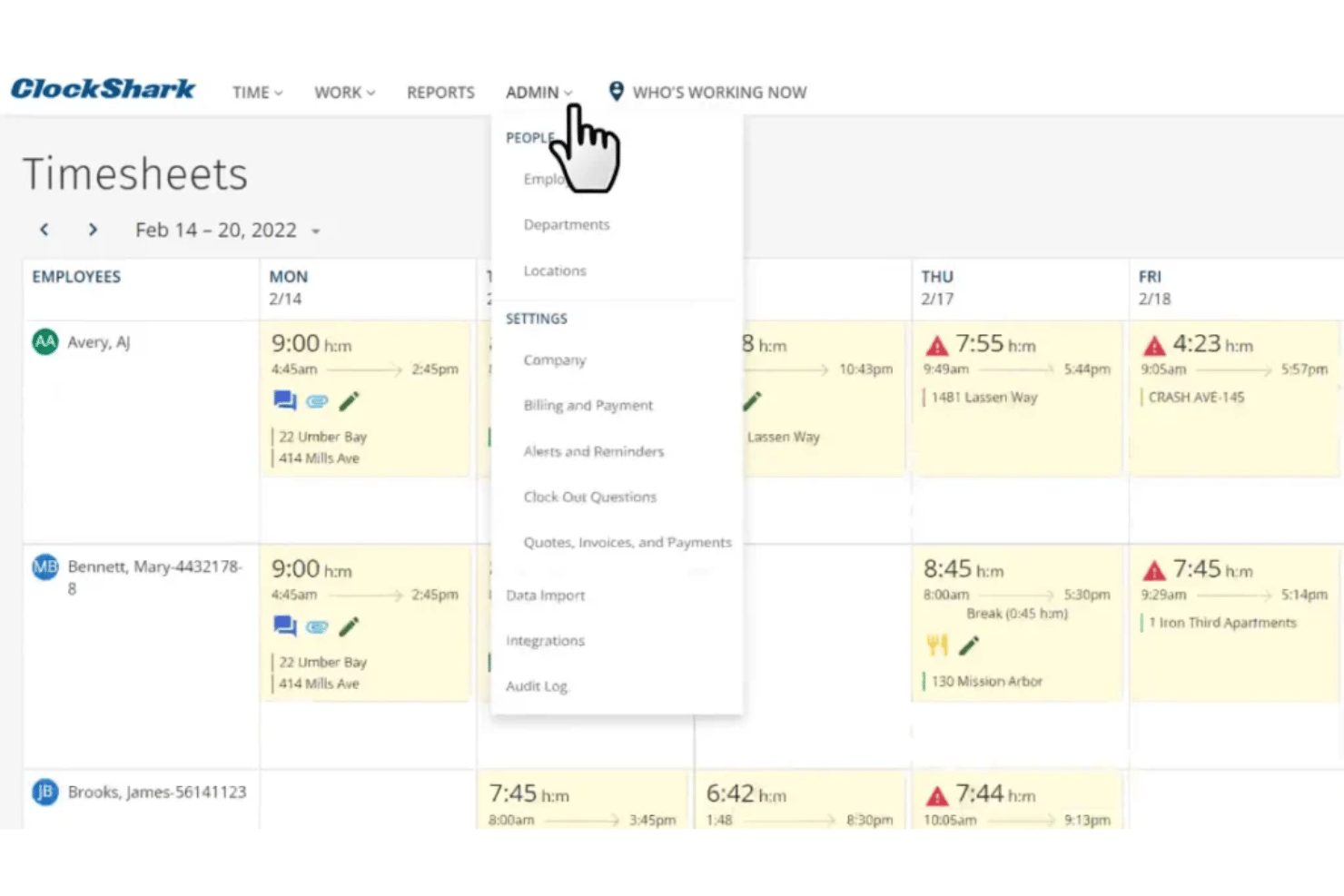
ClockShark is an employee scheduling software built for field-based teams in industries like construction and field service. If your crews work across multiple job sites and you need GPS tracking, job costing, and crew scheduling in one place, it's worth a close look. I'd choose it over a tool like Deputy if your workforce is largely mobile and deskless—Deputy handles shift-based scheduling well, but ClockShark's GPS clock-in and job site management features are a stronger fit for teams that are never at a desk.
ClockShark Evaluation Summary
- From $40/month
- 14-day free trial + free demo available
Pourquoi faire confiance à nos avis sur les logiciels
Notre équipe teste et évalue des logiciels depuis 2012. En tant qu’experts RH nous-mêmes, nous savons à quel point il est difficile — et important — de choisir le bon logiciel.
Pour ce guide, nous avons évalué les outils grâce à des tests pratiques et une recherche indépendante, en notant les outils selon nos critères de sélection. Nous nous appuyons également sur les enseignements de leaders d’opinion du secteur et de professionnels des RH en activité.
Nos avis reflètent notre jugement éditorial humain, et non un argumentaire de vente.
Réviseurs experts:
ClockShark Overview
In my experience, ClockShark stands out for job site scheduling, mobile usability, and responsive support, making it a smart pick if you manage field crews. Its drag-and-drop calendar and GPS tracking outperform others for real-world, shift-based work. The pricing is fair for teams that need more than a basic scheduler.
ClockShark is a bit limited if you want deep integration with payroll or complex reporting, but for trade contractors and service businesses, I think you’ll get the most value from its straightforward approach and easy onboarding.
pros
-
GPS tracking lets you verify clock-ins at job locations
-
Drag-and-drop schedule builder simplifies last-minute shift changes
-
Mobile app works reliably even with spotty cell signal
cons
-
No automatic scheduling based on employee availability
-
Limited reporting options for deeper labor analysis
-
Overtime and compliance tools do not cover all regions
-

Justworks
Visit WebsiteThis rating combines scores from multiple user review sites to reflect overall customer sentiment about the product.4.6 -
Small Improvements
Visit WebsiteThis rating combines scores from multiple user review sites to reflect overall customer sentiment about the product.4.3 -
HiBob
Visit WebsiteThis rating combines scores from multiple user review sites to reflect overall customer sentiment about the product.4.5





Comment nous testons et évaluons nos outils
Nous avons passé des années à construire, affiner et améliorer notre système de test et d’évaluation des logiciels. La grille d’évaluation est conçue pour saisir les nuances de la sélection des logiciels et ce qui rend un outil efficace, en se concentrant sur les aspects critiques du processus décisionnel. Ci-dessous, vous pouvez voir exactement comment fonctionne notre test et notre système d’évaluation à travers sept critères. Cela nous permet de fournir une évaluation impartiale des logiciels basée sur les fonctionnalités principales, les caractéristiques remarquables, la facilité d’utilisation, l’intégration, le support client, les intégrations, les avis clients et le rapport qualité-prix.
Fonctionnalités principales (25 % de la note finale)
Le point de départ de notre évaluation est toujours la fonctionnalité principale de l’outil. Dispose-t-il des fonctionnalités de base qu’un utilisateur s’attend à voir ? Certaines de ces fonctionnalités principales sont-elles réservées à des forfaits plus élevés ? En substance, nous nous attendons à ce qu’un outil soit à la hauteur des capacités de base de ses concurrents.
Fonctionnalités remarquables (25 % de la note finale)
Ensuite, nous évaluons les fonctionnalités remarquables, peu courantes, qui vont au-delà de la fonction principale habituellement présente dans les outils de ce type. Un score élevé reflète des fonctionnalités spéciales ou uniques qui rendent le produit plus rapide, plus efficace, ou offrent une valeur ajoutée à l’utilisateur. Nous évaluons également la facilité d’intégration avec d’autres outils généralement présents dans la pile technologique pour étendre la fonctionnalité et l’utilité du logiciel. Les outils qui proposent de nombreuses intégrations natives, des connexions tierces et un accès API pour développer des intégrations personnalisées obtiennent les meilleurs résultats.
Facilité d’utilisation (10 % de la note finale)
Nous prenons en compte la rapidité et la simplicité d’exécution des tâches définies par la fonctionnalité principale à l’aide de l’outil. Un logiciel bien noté est bien conçu, intuitif à utiliser, offre des applications mobiles, propose des modèles, et permet de simplifier des tâches relativement complexes.
Mise en route (10 % de la note finale)
Nous savons à quel point une adoption rapide par l’équipe est cruciale pour une nouvelle plateforme, c’est pourquoi nous évaluons la facilité d’apprentissage et d’utilisation d’un outil avec un minimum de formation. Nous évaluons la rapidité avec laquelle un membre de l’équipe peut s’installer et commencer à utiliser l’outil sans expérience préalable. Les solutions bien notées impliquent qu’aucune ou très peu d’assistance soit requise.
Support client (10 % de la note finale)
Nous examinons la rapidité et la simplicité d’obtention d’aide par téléphone, chat en direct ou base de connaissances. Les outils et sociétés qui proposent une assistance en temps réel obtiennent les meilleurs scores, tandis que les chatbots sont moins bien notés.
Avis clients (10 % de la note finale)
En plus de nos propres tests et évaluations, nous prenons en compte le score net de recommandation (NPS) des clients actuels et passés. Nous évaluons leur propension, s’ils en avaient l’option, à choisir à nouveau l’outil pour la fonctionnalité principale. Un logiciel obtenant un score élevé reflète un NPS élevé de clients actuels ou passés.
Rapport qualité-prix (10 % de la note finale)
Enfin, en tenant compte de tous les autres critères, nous comparons le prix moyen des forfaits d’entrée de gamme aux principales fonctionnalités et considérons la valeur des autres critères d’évaluation. Un logiciel qui en offre plus, pour moins, sera mieux noté.
Core Features
Drag-and-Drop Scheduling
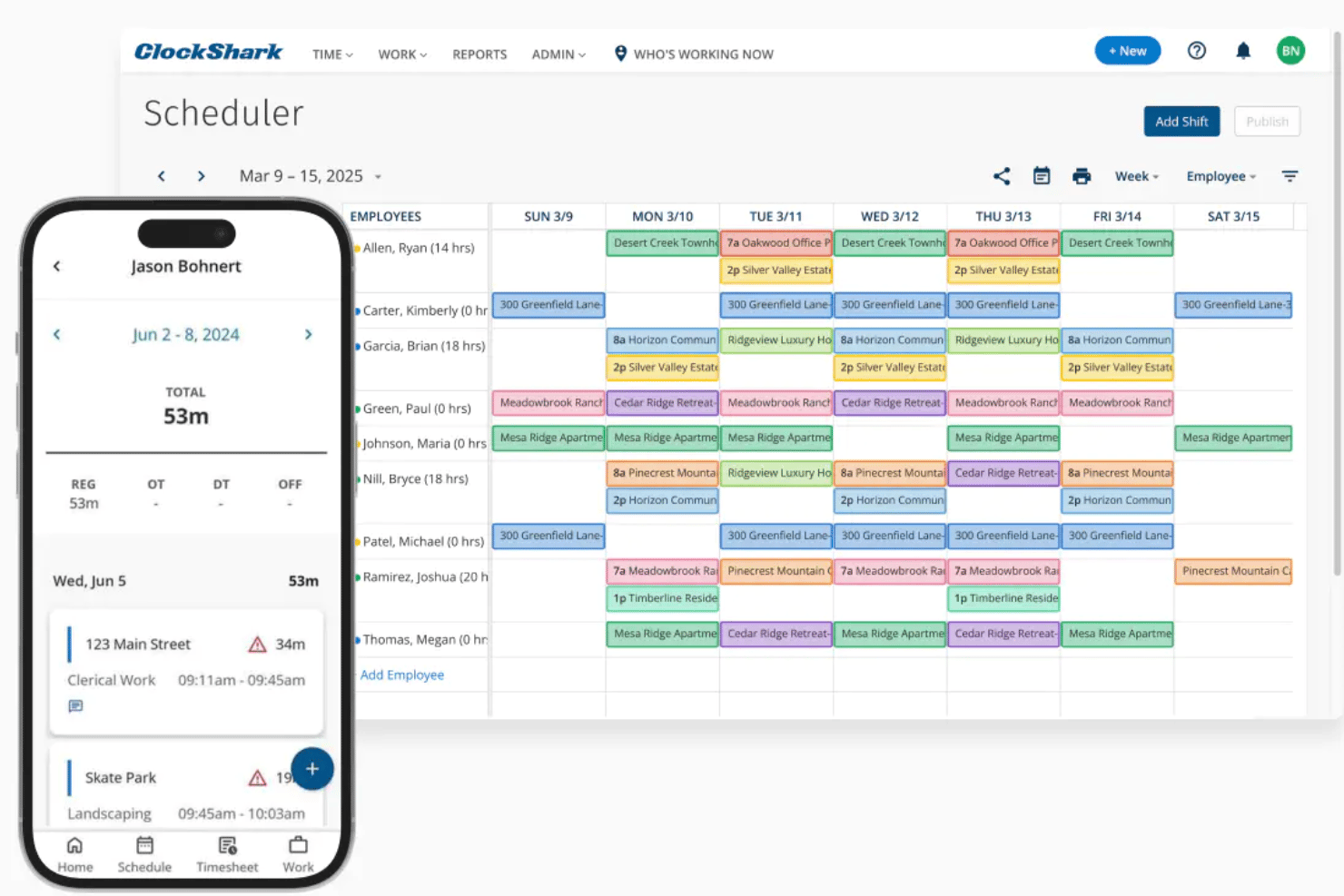
Quickly assign shifts with a visual calendar and move jobs as needed. You can see open slots and make changes on the fly.
GPS Time Tracking
Track where and when employees clock in or out on location. This ensures teams are present at assigned job sites.
Job and Task Assignments
Assign individual jobs or tasks to employees when you create schedules. Teams always see what they should be working on.
Shift Notifications
Send instant alerts to employees when schedules update or swap. This cuts down confusion about last-minute changes.
Mobile Crew Scheduling
Build and adjust schedules on your phone or tablet while out in the field. The mobile app lets field managers handle changes live.
Timesheet Management
Automatically generate timesheets from schedule and clock-in data. Easily review, approve, and export times for payroll.
Ease of Use
ClockShark’s user interface is simple to navigate, with clear scheduling tools and mobile features that don’t overwhelm you with options. Field employees appreciate the quick clock-in/out process paired with GPS, while managers highlight the ease of building and updating schedules on short notice.
I think it’s one of the more approachable options, even for less tech-savvy crews.
Integrations
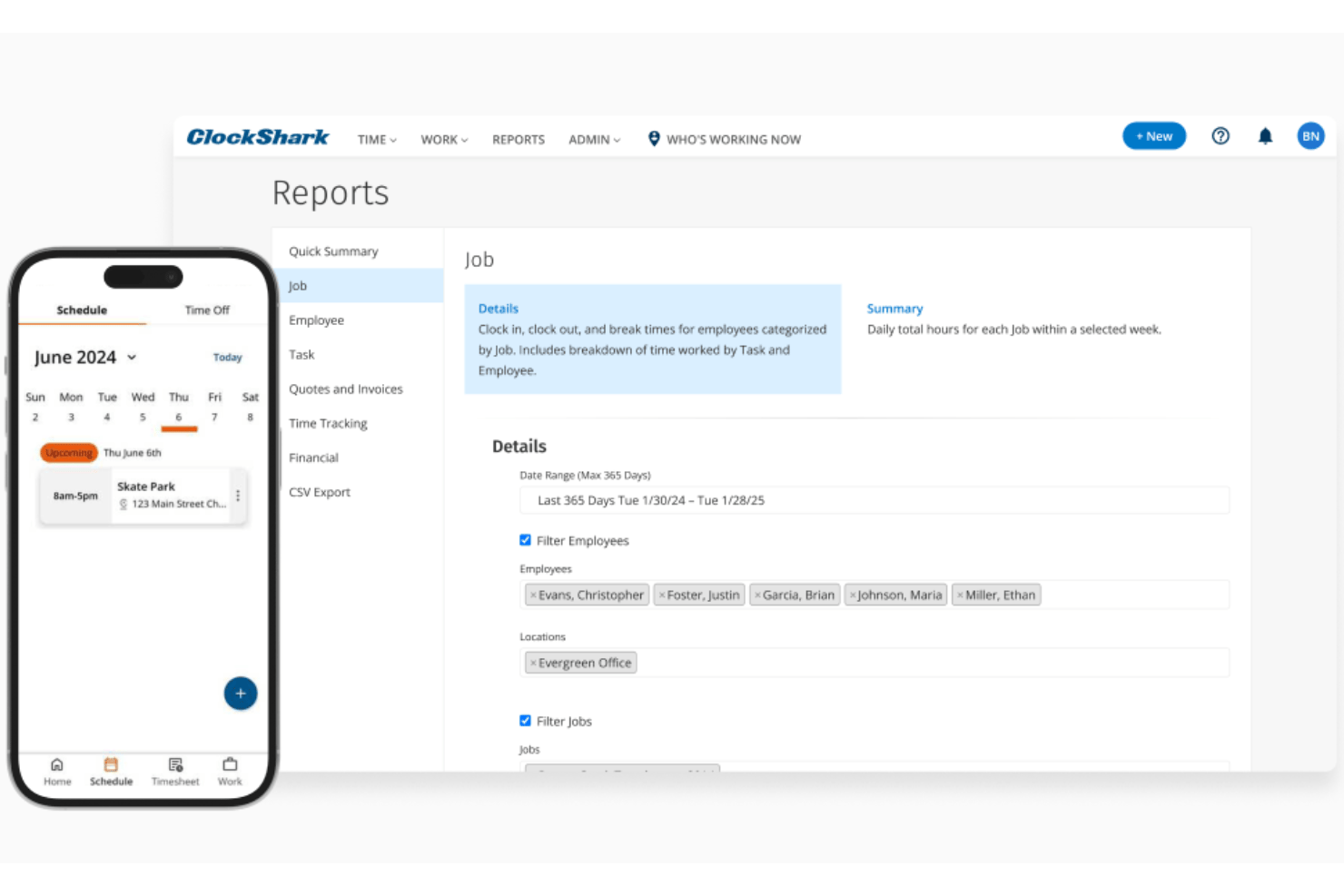
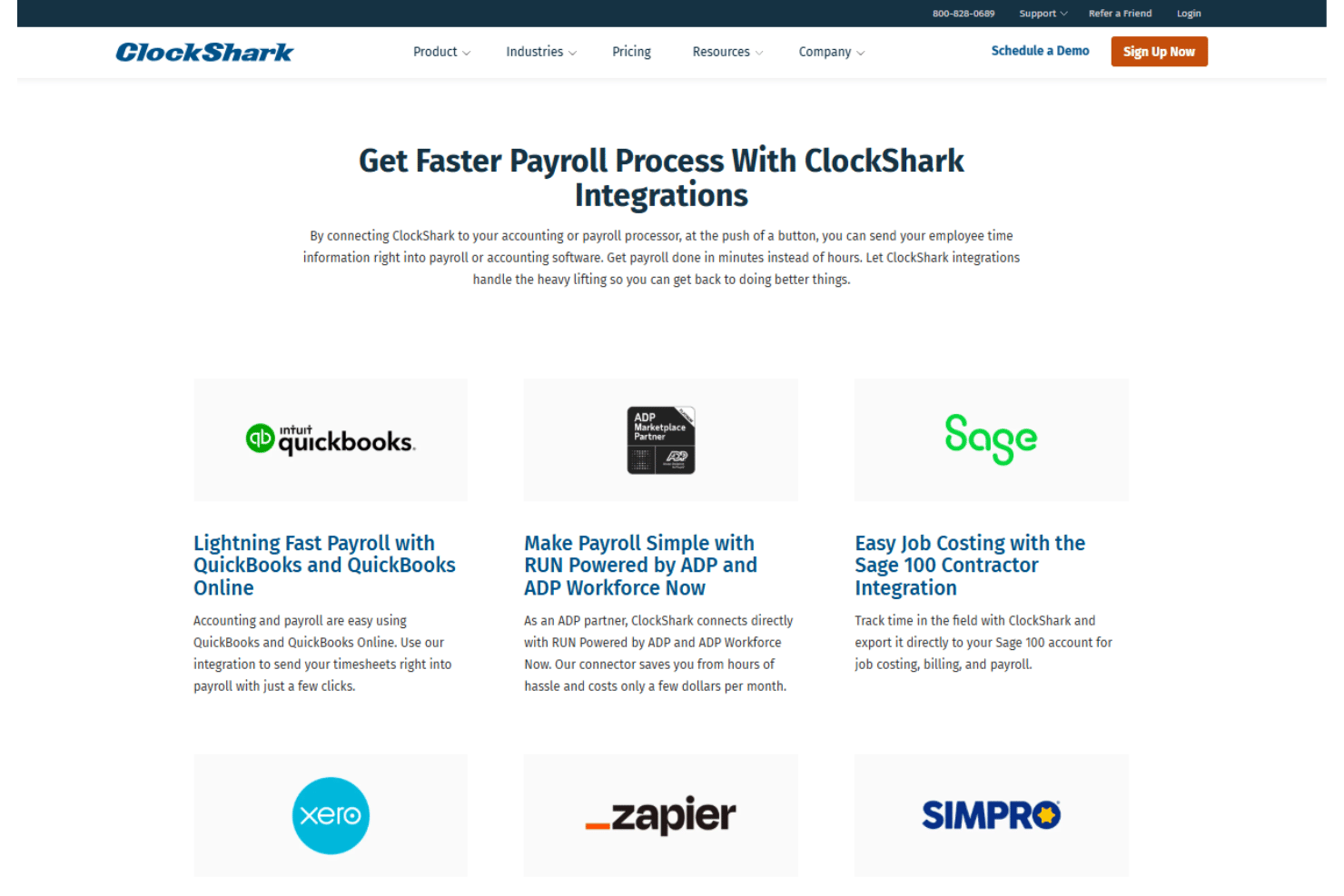
ClockShark integrates with QuickBooks Online, ADP Workforce Now, Gusto, Paychex, Sage 100 Contractor, MYOB, Xero, Zapier, Square Payroll, and Sage 300 CRE, among others.
ClockShark also offers an open API and connects with third-party integration platforms.
ClockShark Specs
- 360 Degree Feedback
- API
- Attendance Tracking
- Batch Permissions & Access
- Budgeting
- Calendar Management
- Dashboard
- Data Export
- Data Import
- Data Visualization
- Employee Database
- Employee Engagement
- Employee Onboarding
- External Integrations
- Feedback Management
- Forecasting
- Multi-User
- Notifications
- Project Management
- Scheduling
- Timesheets
- Travel Management
- Vacation & Absence Calendar