

10 Best Legal Recruiting Software for 2026

Best Legal Recruiting Software Shortlist


With many legal recruiting software solutions available, finding one that offers all the specialized functions you need without unnecessary extras or inflated costs can be challenging. However, the right tool can help you streamline your hiring process and find the best legal talent.
In this post I'll help make your choice easy, sharing my personal expertise using various HR and recruiting tools, with my picks of the best options for legal firms of all sizes. I’ve put together a list of software sidekicks to save you time and improve candidate quality. No more slow hiring processes, poor applicant tracking, and lost candidate emails.
Why Trust Our Software Reviews
Our team has been testing and reviewing software since 2012. As HR experts ourselves, we know how difficult—and important—it is to choose the right software.
For this guide, we evaluated tools using hands-on testing and independent research, scoring tools using our selection criteria. We also draw on insights from industry thought leaders and practicing HR experts.
Our reviews reflect our human editorial judgment, not a sales pitch.
Expert reviewers:
Best Legal Recruiting Software Summary
| Tool | Best For | Trial Info | Price | ||
|---|---|---|---|---|---|
| 1 | Best for hiring legal talent across jurisdictions | Free demo available | From $599/employee/month | Website | |
| 2 | Best with AI-powered candidate matching | 14-day free trial + free demo available | From $15/user/month (billed annually) | Website | |
| 3 | Best for small business recruiting automation | Free demo available | From $350/month | Website | |
| 4 | Best for AI-powered resume analysis | Free trial available | From $4.99/month (billed annually) | Website | |
| 5 | Best for integrated legal workforce solutions | Not available | Pricing upon request | Website | |
| 6 | Best for legal-specific applicant tracking | Not available | Pricing upon request | Website | |
| 7 | Best for hybrid legal recruiting events | Not available | Pricing upon request | Website | |
| 8 | Best for diverse legal talent network | Not available | Pricing upon request | Website | |
| 9 | Best for freelance legal professionals | Not available | Pricing upon request | Website | |
| 10 | Best for data-driven legal recruitment | Not available | Pricing upon request | Website |
Best Legal Recruiting Software Reviews
This section provides an in-depth analysis and overview of each legal recruiting software. We will walk through the pros and cons of each tool, their features, and their best use cases.

Best for hiring legal talent across jurisdictions
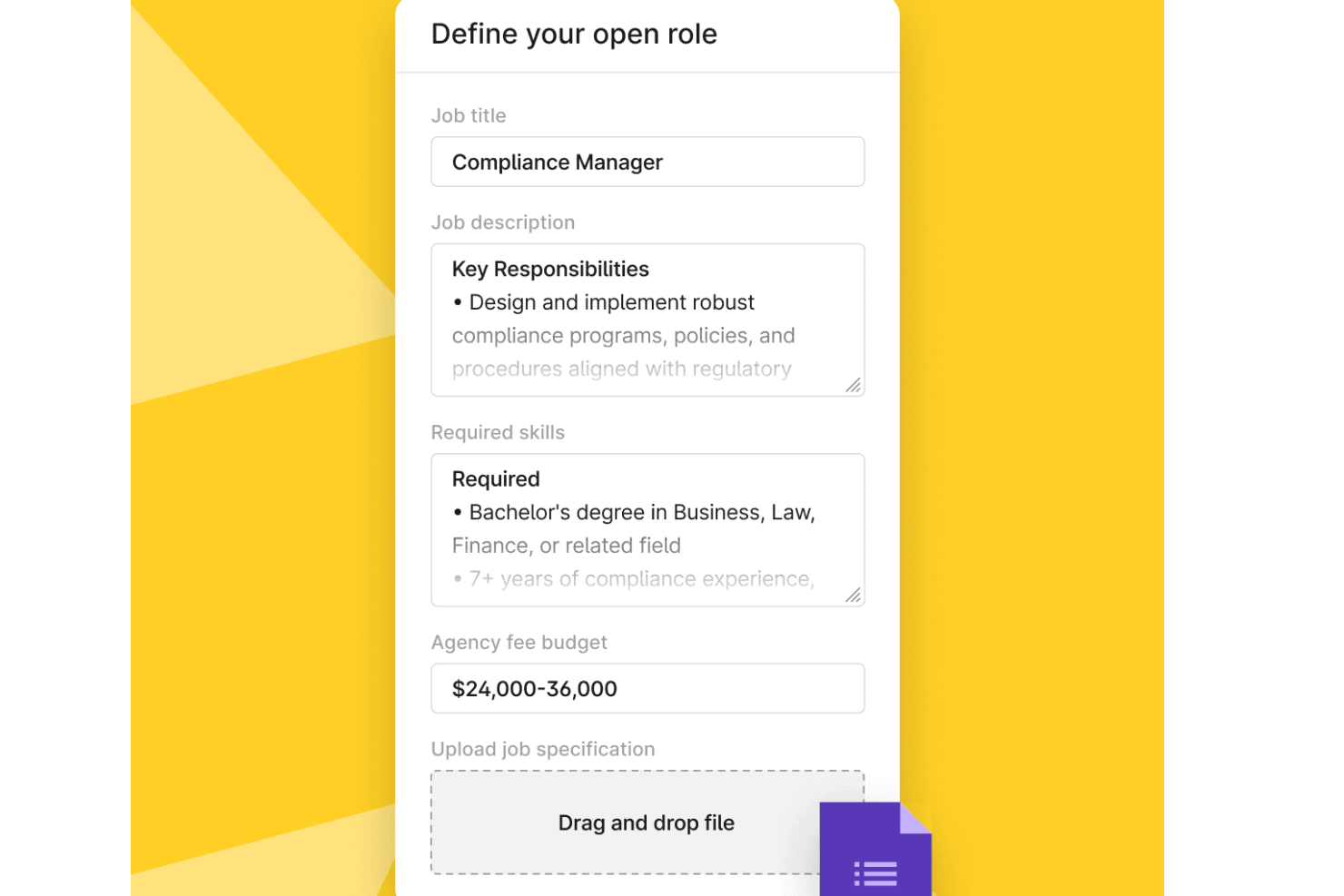
Deel offers a recruiting platform that helps companies source, hire, and onboard talent from around the world. Everything from job posting to compliance is handled in a single, cloud-based workspace.
Why I picked Deel:
I picked Deel because it helps law firms define detailed job roles, including required qualifications and job specs, for more accurate candidate matching. It connects you with vetted staffing agencies worldwide, which is useful if you're hiring across borders. You can track agency performance through metrics like applicant volume and time-to-hire. Everything happens in one place, reducing back-and-forth communication. It’s especially useful for firms hiring legal talent in multiple jurisdictions.
Standout features and integrations:
Features include full compliance support, so you can be confident that each hire meets the legal requirements of their region—whether they’re brought on as contractors or employees. Additionally, once you've chosen a candidate, onboarding happens right inside the platform, saving your HR or operations team from extra paperwork.
Integrations include Hubstaff, QuickBooks, Slack, Google Workspace, JIRA, Brex, Expensify, NetSuite, BambooHR, Skovik, Workday, and Xero.
Pros and Cons
Pros:
- Great visibility into recruiter performance
- Helps hire quickly across multiple countries
- Strong compliance support built in
Cons:
- No internal candidate database feature
- You need to rely entirely on partner agencies

Manatal
Best with AI-powered candidate matching
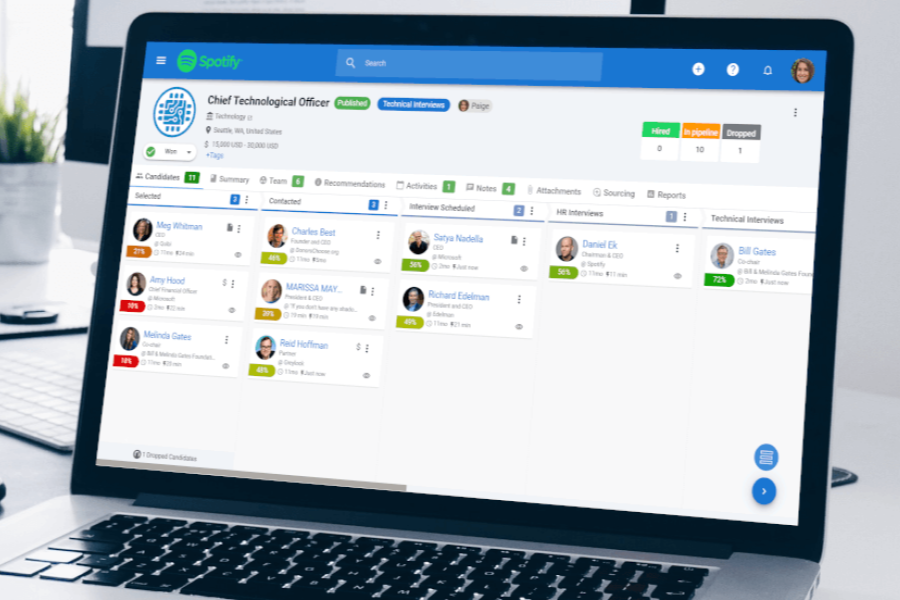
Manatal is a cloud-based recruiting platform designed for legal recruiters and HR teams who need to manage candidate pipelines, automate repetitive tasks, and ensure compliance throughout the hiring process.
Who Is Manatal Best For?
Legal recruiting teams and HR professionals at law firms or agencies who want to centralize and automate their hiring workflows.
Why I Picked Manatal
I picked Manatal as one of the best because its AI-powered candidate matching helps my team quickly surface the most relevant legal talent from our database. The platform automatically ranks candidates based on job requirements and past placements, so we spend less time sorting through resumes. I also like how the AI learns from our hiring patterns, making each search more accurate over time.
Manatal Key Features
- Custom pipeline management: Build and customize hiring pipelines to match your legal recruiting workflow.
- Resume enrichment: Automatically enhance candidate profiles with data from public sources and social media.
- Compliance tracking: Monitor GDPR and CCPA compliance throughout the recruitment process.
- Job board posting: Post open legal positions to multiple job boards directly from the platform.
Manatal Integrations
Integrations include Indeed, Codility, Mailchimp, Google Suite, Microsoft 365 - Office 365, LinkedIn, ZipRecruiter, LinkedIn Organic, Monster, and Talent.com.
Pros and Cons
Pros:
- Bulk candidate import from spreadsheets or LinkedIn
- Custom workflow builder for legal hiring stages
- AI-powered candidate scoring and ranking
Cons:
- No client portal for law firm clients
- Lacks built-in background check integrations
New Product Updates from Manatal

Manatal Adds Candidate Login and Employee Portal to Career Pages
Manatal has added Candidate Login, Internal Employee Portal, and internal job visibility controls for Career Pages. These features help teams simplify applications, support employee mobility, and manage internal hiring workflows. For more information, visit Manatal’s official site.
 .
.
JazzHR
Best for small business recruiting automation

JazzHR automates recruiting tasks for small businesses, streamlining the hiring process from job posting to onboarding.
Why I picked JazzHR:
I chose JazzHR for its focus on automating recruitment for small businesses, making it a standout choice for firms with limited resources. Its easy-to-use interface and comprehensive feature set make it different from other tools designed for larger enterprises.
Standout features and integrations:
Features include customizable workflows, automated job postings, and applicant tracking, which are essential for small businesses. These functionalities simplify the hiring process, saving time and reducing manual effort.
Integrations include LinkedIn, Indeed, Glassdoor, Monster, ZipRecruiter, Google Workspace, Microsoft 365, BambooHR, Namely, and ADP.
Pros and Cons
Pros:
- Customizable workflows
- Automated job postings
- User-friendly interface
Cons:
- Additional costs for add-ons
- Limited advanced features

Best for AI-powered resume analysis
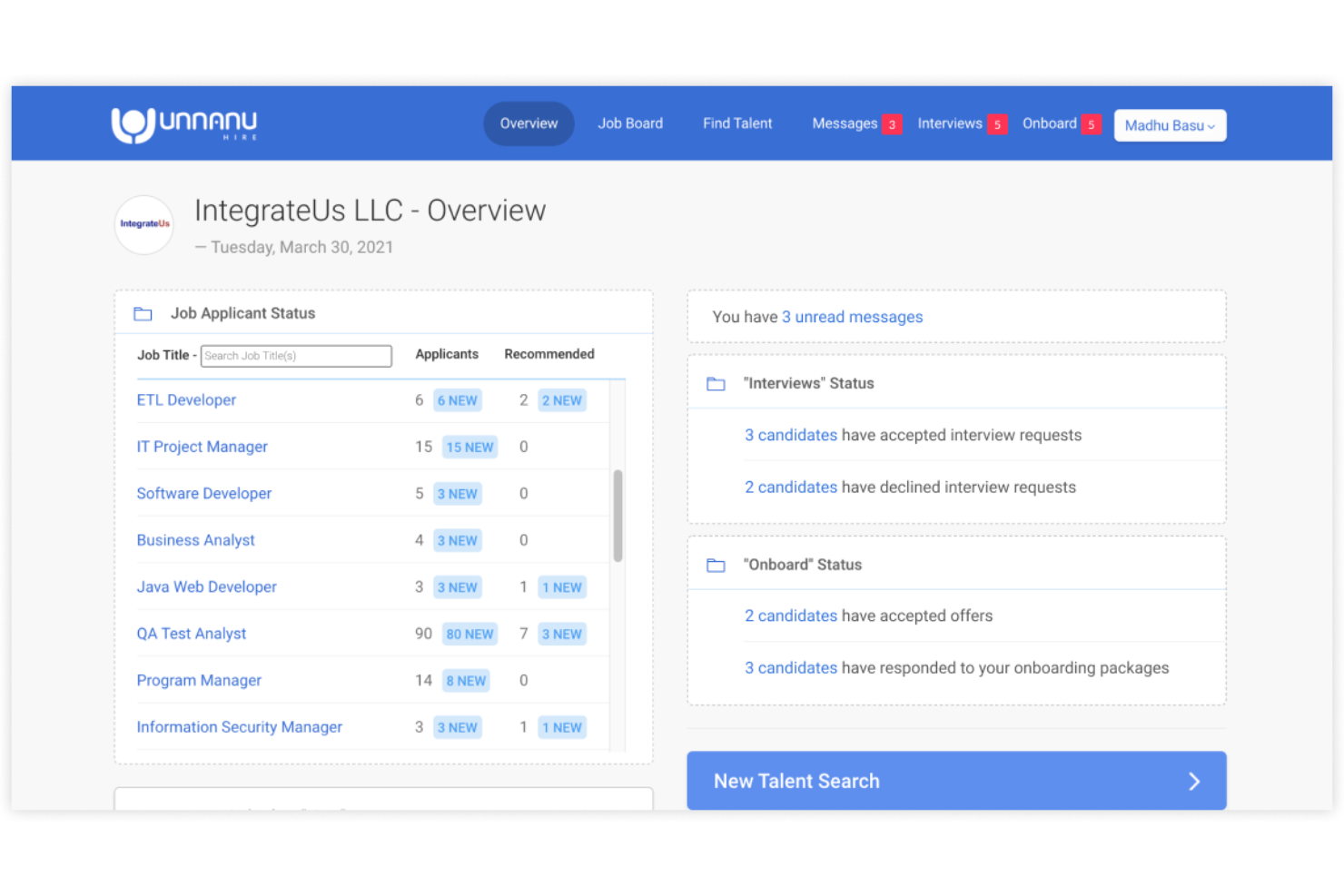
Unnanu Hire leverages AI to analyze resumes, streamlining the candidate selection process.
Why I picked Unnanu Hire:
I chose Unnanu Hire for its advanced AI-powered resume analysis, which sets it apart from other recruitment tools. Its ability to efficiently parse and evaluate resumes using artificial intelligence makes it a unique and powerful solution for hiring managers.
Standout features and integrations:
Features include AI-driven resume parsing, candidate matching, and automated job postings. These features significantly enhance the efficiency and accuracy of the recruitment process.
Integrations include LinkedIn, Indeed, Glassdoor, Monster, ZipRecruiter, Google Workspace, Microsoft Office 365, BambooHR, Namely, and ADP.
Pros and Cons
Pros:
- Automated job postings
- Efficient candidate matching
- AI-powered resume analysis
Cons:
- Additional costs for add-ons
- Limited advanced features


Robert Half provides comprehensive legal workforce solutions, integrating staffing, consulting, and project management services for law firms and legal departments.
Why I picked Robert Half:
I chose Robert Half for its integrated approach to legal workforce solutions, which sets it apart from other recruiting tools. Its combination of staffing, consulting, and project management services provides a holistic solution for legal teams.
Standout features and integrations:
Features include temporary and full-time staffing, legal consulting, and managed legal projects. These services enable law firms to address a wide range of workforce needs efficiently.
Integrations include LinkedIn, Indeed, Glassdoor, Monster, ZipRecruiter, Google Workspace, Microsoft 365, Clio, LexisNexis, and Docusign.
Pros and Cons
Pros:
- Legal consulting services
- Temporary and full-time staffing
- End-to-end legal solutions
Cons:
- Focus on temporary placements
- Limited candidate control


LawCruit is an applicant tracking system tailored specifically for legal recruiting needs.
Why I picked LawCruit:
I chose LawCruit for its specialized focus on the legal industry and advanced applicant tracking features. Its ability to handle legal-specific recruitment workflows and integrate with other legal software makes it an invaluable tool for law firms.
Standout features and integrations:
Features include custom workflows, interview scheduling, and detailed reporting tailored to legal recruiting. It also integrates seamlessly with many popular tools, enhancing its functionality and ease of use.
Integrations include Litera Transact, Docusign, iManage, Microsoft Outlook, Microsoft 365, NetDocuments, Chrome River, Litera Change-Pro, Workshare, and Lawyaw.
Pros and Cons
Pros:
- Integration with legal tools
- Detailed reporting
- Legal-specific workflows
Cons:
- Limited customization options available
- High cost for small firms


Flo Recruit is a platform designed for managing hybrid legal recruiting events, both virtual and in-person.
Why I picked Flo Recruit:
I chose Flo Recruit for its unique capability to handle both virtual and in-person legal recruiting events, which makes it highly versatile. Its specialized features for event management and candidate engagement distinguish it from other recruiting tools in the market.
Standout features and integrations:
Features include comprehensive event management tools, including virtual booths, live chat, and detailed analytics. These features make it particularly effective for engaging candidates and tracking event success.
Integrations include Zoom, Microsoft Teams, Google Meet, Outlook, Gmail, iManage, NetDocuments, Docusign, LinkedIn, and Calendly.
Pros and Cons
Pros:
- Virtual booths
- Detailed analytics
- Hybrid event capabilities
Cons:
- Can be slow during peak times
- Limited customization options


Legal.io connects legal professionals with job opportunities, emphasizing diversity and inclusion in the legal industry.
Why I picked Legal.io:
I chose Legal.io for its strong focus on diversity, which is crucial in today’s legal landscape. Its comprehensive network of diverse legal talent and specialized matching capabilities make it a standout choice among recruiting tools.
Standout features and integrations:
Features include AI-powered matching, an extensive talent network, and diversity-focused recruitment strategies. These features help law firms find the right candidates while promoting inclusivity.
Integrations include LinkedIn, Indeed, Glassdoor, Monster, ZipRecruiter, LawCrossing, iManage, NetDocuments, Docusign, and Google Workspace.
Pros and Cons
Pros:
- Extensive talent network
- AI-powered matching
- Focus on diversity
Cons:
- Limited global reach
- May lack flexibility in adapting to unique hiring processes

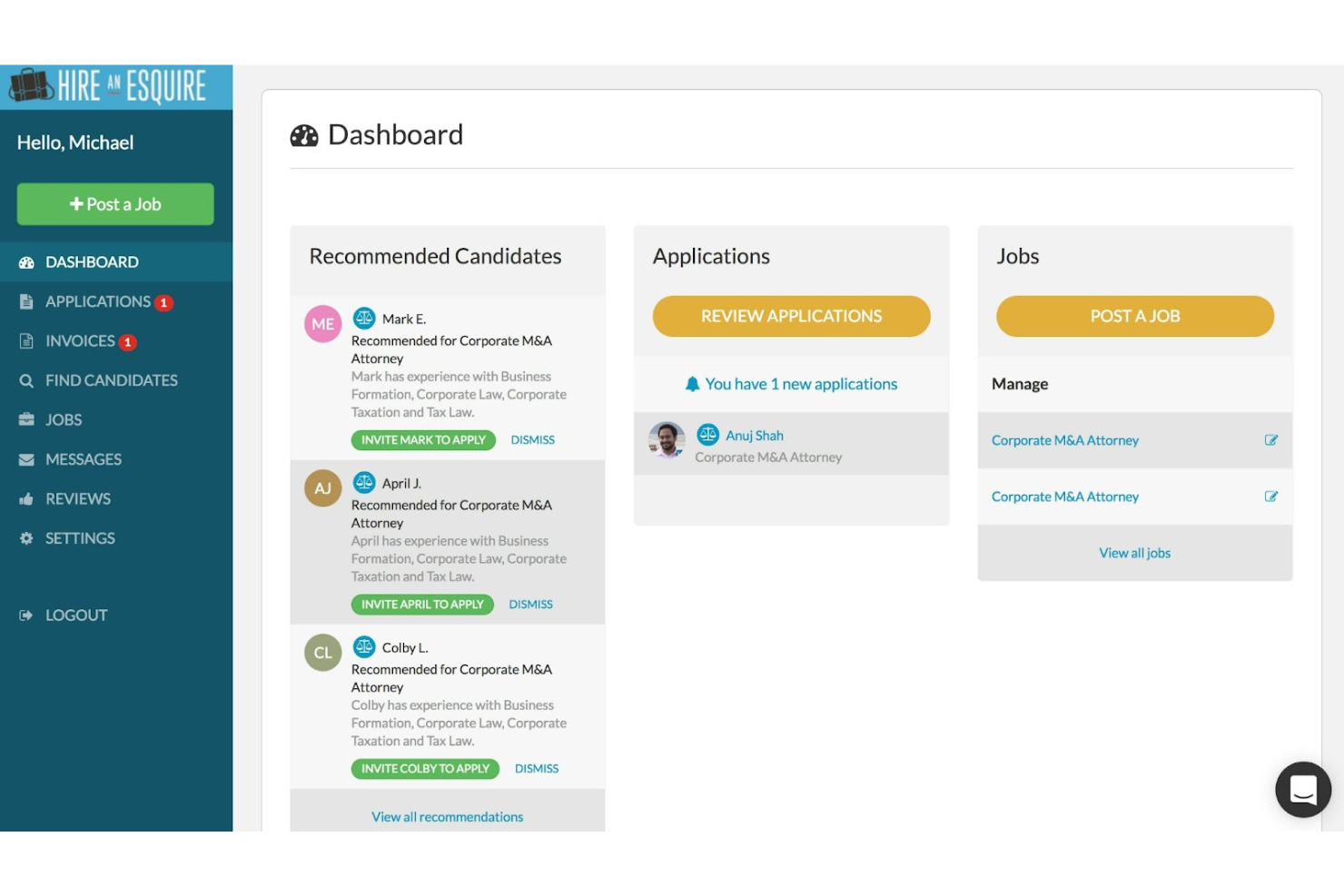
Hire an Esquire connects law firms with freelance legal professionals, offering flexible staffing solutions for various legal projects.
Why I picked Hire an Esquire:
I chose Hire an Esquire for its specialized focus on freelance legal professionals, setting it apart from other recruitment tools. Its ability to match firms with experienced, on-demand legal talent makes it a unique and valuable resource.
Standout features and integrations:
Features include detailed freelancer profiles, automated matching, and comprehensive project management tools. These functionalities help law firms efficiently find and manage freelance legal talent.
Integrations include LinkedIn, Indeed, Glassdoor, Monster, ZipRecruiter, Google Workspace, Microsoft 365, Clio, LexisNexis, and Docusign.
Pros and Cons
Pros:
- Project management tools
- Automated matching
- Specialized for freelancers
Cons:
- Limited candidate pool
- Mainly for freelance attorneys

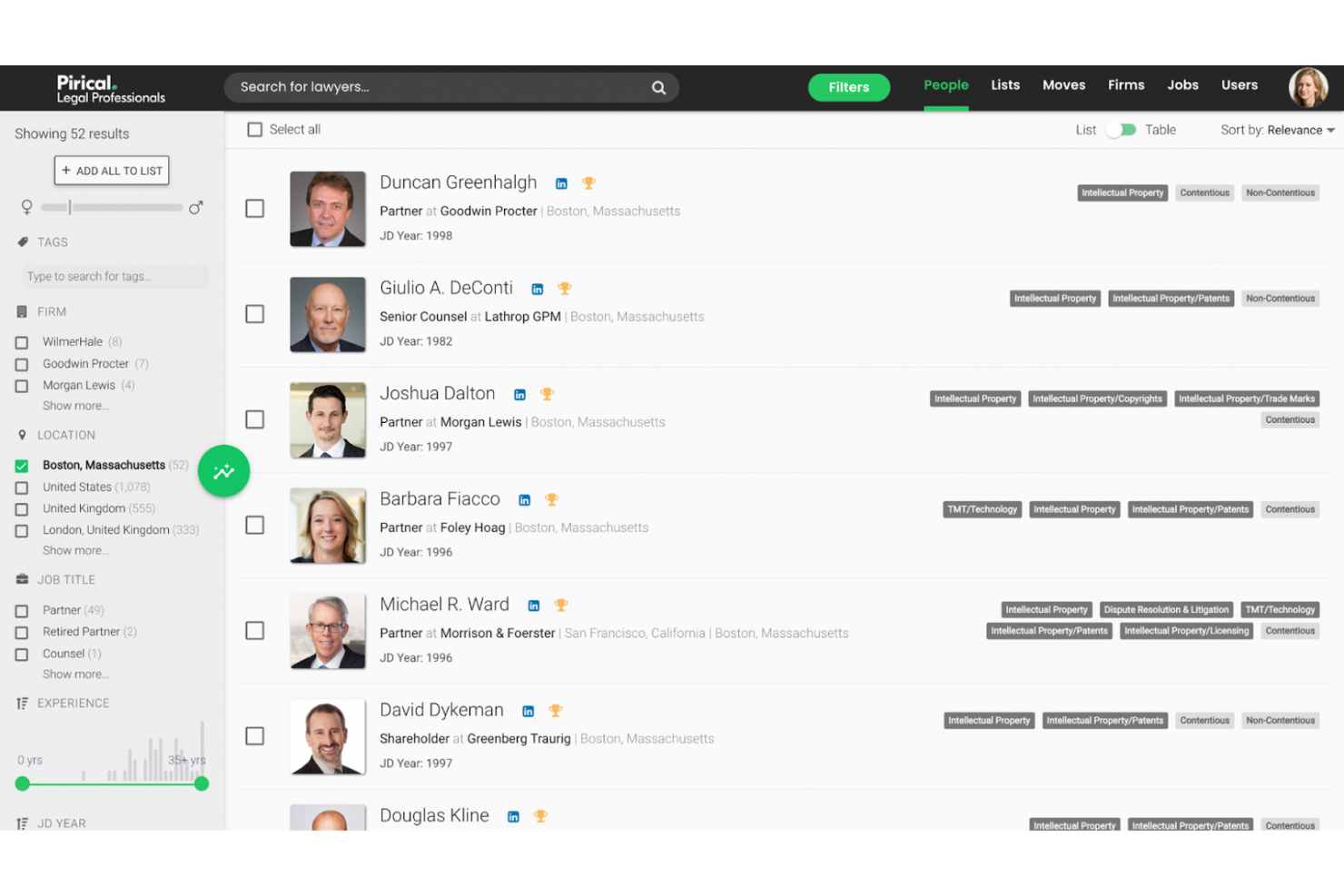
Pirical leverages data analytics to enhance legal recruitment processes, providing insights to make informed hiring decisions.
Why I picked Pirical:
I chose Pirical for its unique data-driven approach. Its focus on leveraging analytics to improve recruitment outcomes is great for firms looking to optimize their hiring strategies.
Standout features and integrations:
Features include advanced analytics, candidate benchmarking, and performance tracking, which are crucial for data-driven recruitment. These features enable firms to make informed decisions based on comprehensive data insights.
Integrations include LinkedIn, Indeed, Glassdoor, Monster, ZipRecruiter, LawCrossing, LexisNexis, Clio, Microsoft 365, and Google Workspace.
Pros and Cons
Pros:
- Candidate benchmarking
- Advanced analytics
- Data-driven insights
Cons:
- Expensive for small practices
- Primarily data-driven, less user-friendly
Other Legal Recruiting Software
Below is a list of additional legal recruiting software that we shortlisted, but did not make it to the top list. Definitely worth checking them out.
- vi by Aderant
For skills-based legal talent management
- VidCruiter
For video-based hiring solutions
- Breezy HR
For user-friendly interface and automation
- Workable
For comprehensive candidate sourcing
- PCRecruiter
For robust CRM and ATS features
- SmartRecruiters
For collaborative hiring processes
- HiringThing
For integration with multiple job boards
- Zoho Recruit
For customizable recruitment workflows
- SimplyHired HRIS
For easy job posting and applicant tracking
- ZipRecruiter
For extensive job distribution


Related HR Software Reviews
If you still haven't found what you're looking for here, check out these other related tools that we've tested and evaluated:
- HR Software
- Payroll Software
- Recruiting Software
- Employer of Record Services
- Applicant Tracking Systems
- Workforce Management Software
How I Evaluate Legal Recruiting Software
I split my evaluation into baseline criteria—like OCI support and summer associate tracking—and differentiators that separate the best tools for law firms from the rest.
Core Functionality (Table Stakes For This List)
When I'm selecting tools for my list, I rank each one on a scale from 0 (does not offer the functionality) to 5 (excels in this area) for each core functionality listed below. Then, I calculate the tool's total score into a percentage. Each tool needs to achieve a minimum total score of 55% to be considered for inclusion.
- OCI Management: I look for tools that handle OCI scheduling, bidding, and law school event coordination so recruiting teams can manage full interview seasons in one place.
- Lateral Attorney Hiring: Each tool should support lateral pipelines with conflict check workflows, not just generic applicant tracking repurposed for law firm hiring.
- Summer Associate Program Tracking: I evaluate how well a platform manages rotations, mentor assignments, evaluations, and offer decisions across an entire summer class.
- NALP-Compliant Reporting: Pre-built NALP report templates and diversity metric tracking are what I check for, since most firms need these reports on a recurring cycle.
- Candidate Evaluation Workflows: Structured feedback forms, callback routing, and interviewer assignment tools matter here—especially when dozens of attorneys weigh in on a single hire.
- Legal System Integrations: The tool should connect with platforms firms already use, such as conflicts databases, HRIS systems, and law school career services portals.
Once I have a list of tools that meet this criteria, I consider what sets each platform apart.
Differentiating Factors (What Sets Vendors Apart)
Here's how I compare and contrast different vendors:
Standout Features
Diversity analytics dashboards are a big differentiator—I look for tools that track Mansfield Rule compliance and visualize pipeline demographics so firms can report on DEI goals without manual data pulls. Mobile interviewer tools also matter, since attorneys billing hours need a fast way to submit candidate evaluations between meetings. I also evaluate how well a platform connects with law school career services portals like Symplicity, which saves recruiting coordinators hours of manual data entry during OCI season.
Beyond Features
I evaluate whether a vendor has real implementation experience with law firms—a team that understands NALP timelines and OCI seasonality will get your summer program running far faster than a generic onboarding crew. Compliance also matters. Law firms face strict client audit requirements, so I check for SOC 2 Type II certification and role-based permissions that protect sensitive candidate data. I also consider firm size fit, since an AmLaw 100 firm needs multi-office coordination that a boutique-focused platform may not support.
How to Choose Legal Recruiting Software
It’s easy to get bogged down in long feature lists and complex pricing structures. To help you stay focused as you work through your unique software selection process, here’s a checklist of factors to keep in mind:
| Factor | What to Consider |
|---|---|
| Scalability | Will the software grow with your firm? Consider future hiring needs and whether the tool can handle increased data and users without extra costs. |
| Integrations | Does it work with your existing tools? Check if it integrates with your HRIS, email, and calendar systems to avoid workflow disruptions. |
| Customizability | Can you tailor it to your processes? Look for options to customize workflows, fields, and reporting to fit your firm’s unique needs. |
| Ease of use | Is it user-friendly for your team? Test the interface and navigation to ensure it won’t require extensive training or slow down your hiring process. |
| Implementation and onboarding | How long will it take to get started? Evaluate the setup time, available support, and resources needed for a smooth transition. |
| Cost | Does it fit your budget? Compare pricing models, consider hidden fees, and check for discounts or trial options. |
| Security safeguards | How does it protect your data? Ensure it complies with legal standards and offers features like encryption and access controls. |
| Compliance requirements | Does it meet your regulatory needs? Verify compliance with industry-specific regulations and data protection laws relevant to your practice. |
Trends for Legal Recruiting Software
Legal recruiting software is evolving to meet the changing needs of law firms and legal departments. Here are the most significant trends shaping this technology.
- AI-Powered Candidate Screening: AI enhances candidate screening by analyzing resumes and matching qualifications with job requirements. This reduces time-to-hire and improves candidate quality. Law firms benefit from more accurate and efficient hiring.
- Virtual Interviewing Platforms: Virtual interviewing tools are becoming standard, offering seamless integration with recruiting software. These platforms save time and resources by reducing the need for in-person interviews. This trend is crucial for remote and hybrid work environments.
- Enhanced Data Security: With increasing cyber threats, legal recruiting software emphasizes robust data security features. Advanced encryption and secure data storage protect sensitive candidate information. This trend addresses the critical need for confidentiality in legal hiring.
- Predictive Analytics: Predictive analytics in recruiting software forecasts hiring trends and candidate success. These insights help firms make data-driven decisions and improve hiring strategies. This trend leverages big data to optimize recruitment processes.
- Integration with DEI Initiatives: Legal recruiting software now integrates with diversity, equity, and inclusion (DEI) initiatives. Tools track and promote diverse hiring practices, ensuring compliance and fostering inclusive workplaces. This trend supports a more equitable hiring landscape.
These areas indicate growing trends in legal recruiting, making the process more efficient, secure, and inclusive. By leveraging these advancements, law firms can stay competitive and ensure they attract the best talent now and in the future.
What Is Legal Recruiting Software?
Legal recruiting software is a tool designed to help law firms and legal departments manage their hiring processes efficiently. Legal professionals use this software to post job openings, track applicants, parse resumes, schedule interviews, and ensure compliance with hiring regulations. By streamlining recruitment tasks, this software enables users to find qualified candidates quickly and manage the entire hiring process from a single platform.
Features
When evaluating legal recruiting software, it's important to understand the key features that make it effective for managing the hiring process in legal environments. Below are ten essential features to look for.
- Job Posting and Distribution: Allows posting job openings across multiple job boards and social media platforms.
- Applicant Tracking: Tracks candidates through each stage of the hiring process.
- Resume Parsing: Automatically extracts and organizes candidate information from resumes.
- Interview Scheduling: Integrates with calendars to streamline interview scheduling.
- Compliance Management: Ensures hiring practices comply with legal standards and regulations.
- AI-Powered Candidate Matching: Matches candidates to job requirements using artificial intelligence.
- Customizable Workflows: Enables the creation of tailored recruitment workflows.
- Integration with HR Systems: Connects seamlessly with existing HR management systems.
- Advanced Analytics and Reporting: Provides insights into recruitment metrics and performance.
- Mobile Access: Allows recruitment tasks to be managed from a mobile device.
Understanding these features helps you choose the right legal recruiting software to meet your hiring needs. Each feature plays a crucial role in enhancing the efficiency and effectiveness of your recruitment process.
Benefits
Implementing legal recruiting software provides several benefits for your team and your business. Here are a few you can look forward to:
- Improved efficiency: Automates tasks like resume parsing and interview scheduling, saving time and reducing administrative workload.
- Enhanced compliance: Monitors hiring practices to ensure they meet legal standards, reducing the risk of legal issues.
- Better candidate matching: Uses AI-driven features to match candidates with job requirements, improving the quality of hires.
- Data-driven insights: Customizable reporting provides valuable analytics to make informed hiring decisions and optimize recruitment strategies.
- Wider reach: Job posting management allows you to publish listings on multiple platforms, attracting a larger pool of candidates.
- Increased mobility: Mobile app access enables recruitment activities from anywhere, providing flexibility for recruiters and managers.
- Data security: Implements security safeguards to protect sensitive candidate information, ensuring compliance with data protection regulations.
Costs & Pricing
Understanding the costs and pricing options for legal recruiting software is crucial for selecting the right solution for your organization. Pricing plans vary based on features and scale, providing options for different business needs and budgets.
Plan Comparison Table for Legal Recruiting Software
| Plan Type | Average Price | Common Features |
| Free | $0 | Basic job posting, resume parsing, and limited applicant tracking |
| Basic | $50/month | Job posting, resume parsing, applicant tracking, and interview scheduling |
| Professional | $150/month | All Basic features, advanced analytics, AI-powered matching, and customizable workflows |
| Enterprise | $500/month | All Professional features, integration with HR systems, compliance management, and dedicated support |
Each plan offers different features to match the needs of various organizations. Consider the size of your firm and the complexity of your hiring processes when choosing the appropriate plan.
Legal Recruiting Software FAQs
Here are some answers to common questions about legal recruiting software:
Who uses legal recruiting software?
Law firms, corporate legal departments, and legal recruiters use this software to find and hire qualified candidates efficiently. It is especially useful for organizations with high-volume hiring needs or specialized legal positions.
How does legal recruiting software improve hiring processes?
It automates and streamlines various hiring tasks, reducing manual effort and time. It also provides data-driven insights, ensuring better decision-making and improving the overall quality of hires.
Is there a free version of legal recruiting software?
Yes, many providers offer a free version with basic features such as job posting, resume parsing, and limited applicant tracking. This is ideal for small firms or those with minimal hiring needs. Additionally, some providers may offer a free trial for a specified amount of time to try the tool before you commit to paying for it.
Can legal recruiting software ensure compliance with hiring regulations?
Yes, many legal recruiting software solutions include compliance management features. These tools help ensure your hiring practices adhere to legal standards and reduce the risk of regulatory issues.
What is the average cost of legal recruiting software?
Costs vary based on the plan and features. Free plans offer basic features, while professional plans average around $150/month and enterprise plans can cost $500/month. Each plan scales with the size and needs of the organization.
What’s Next?
To remain up to date on all the latest in people management, subscribe to our newsletter for leaders and managers. You'll receive insights and offerings tailored to leaders and HR professionals straight to your inbox.