

10 Best Omnipresent Alternatives in 2026

Best Omnipresent Alternatives Shortlist


The best Omnipresent alternatives pair local employment and payroll support with country coverage, service levels, and pricing that fit your hiring plans. This comparison focuses on employer-of-record services and related options, including owned-entity coverage, HRIS, equity support, and EOR transitions.
Compare how each platform handles compliance and employee support to find a fit for your workforce plans.
What Is Omnipresent?
Omnipresent is a global employment platform that became part of Deel in 2025, with customers transitioning to Deel's employer-of-record services.
With an EOR arrangement, a local partner employs workers on your behalf and handles employment administration in their country. This can give your team a way to hire abroad without establishing a local entity.
Comparison Table: Omnipresent Alternatives
Compare pricing and specs, side by side, for the Omnipresent alternatives that made it onto my shortlist.
| Tool | Best For | Trial Info | Price | ||
|---|---|---|---|---|---|
| 1 | Best for direct-entity EOR across 160+ countries | No free trial; demo available | From $599/employee/month | Website | |
| 2 | Best for managed global hiring across 187 countries | Free demo available | Pricing upon request | Website | |
| 3 | Best for flat-rate global hiring in 180+ countries | Free demo available | From $599/employee/month | Website | |
| 4 | Best for transparent pricing and equity support | Free demo available | From $699/employee/month | Website | |
| 5 | Best for switching EORs at flat-rate pricing | Free demo available | From $399/employee/month | Website | |
| 6 | Best for all-in-one global hiring and payroll | Free demo available | From $599/employee/month | Website | |
| 7 | Best for hiring with owned-entity coverage | Free demo available | From $599/employee/month | Website | |
| 8 | Best for hiring globally with built-in HRIS | Free demo available | From $459/employee/month (billed annually) | Website | |
| 9 | Best for global equity and EOR in one platform | Free demo available | From $399/employee/month | Website | |
| 10 | Best for AI-driven global payroll at scale | Free demo available | From $499/employee/month | Website |

Why Trust Our Software Recommendations
Our team has been testing and reviewing software since 2012. As HR experts ourselves, we know how difficult—and important—it is to choose the right software.
For this guide, we evaluated tools using hands-on testing and independent research, scoring tools using our selection criteria. We also draw on insights from industry thought leaders and practicing HR experts.
Our reviews reflect our human editorial judgment, not a sales pitch.
Expert reviewers:
Omnipresent Alternatives Reviews
Below are my summaries of the best Omnipresent alternatives that made it onto my shortlist. My reviews cover country coverage, payroll and compliance support, and pricing for each global employment platform to help you find the right fit.

Best for direct-entity EOR across 160+ countries
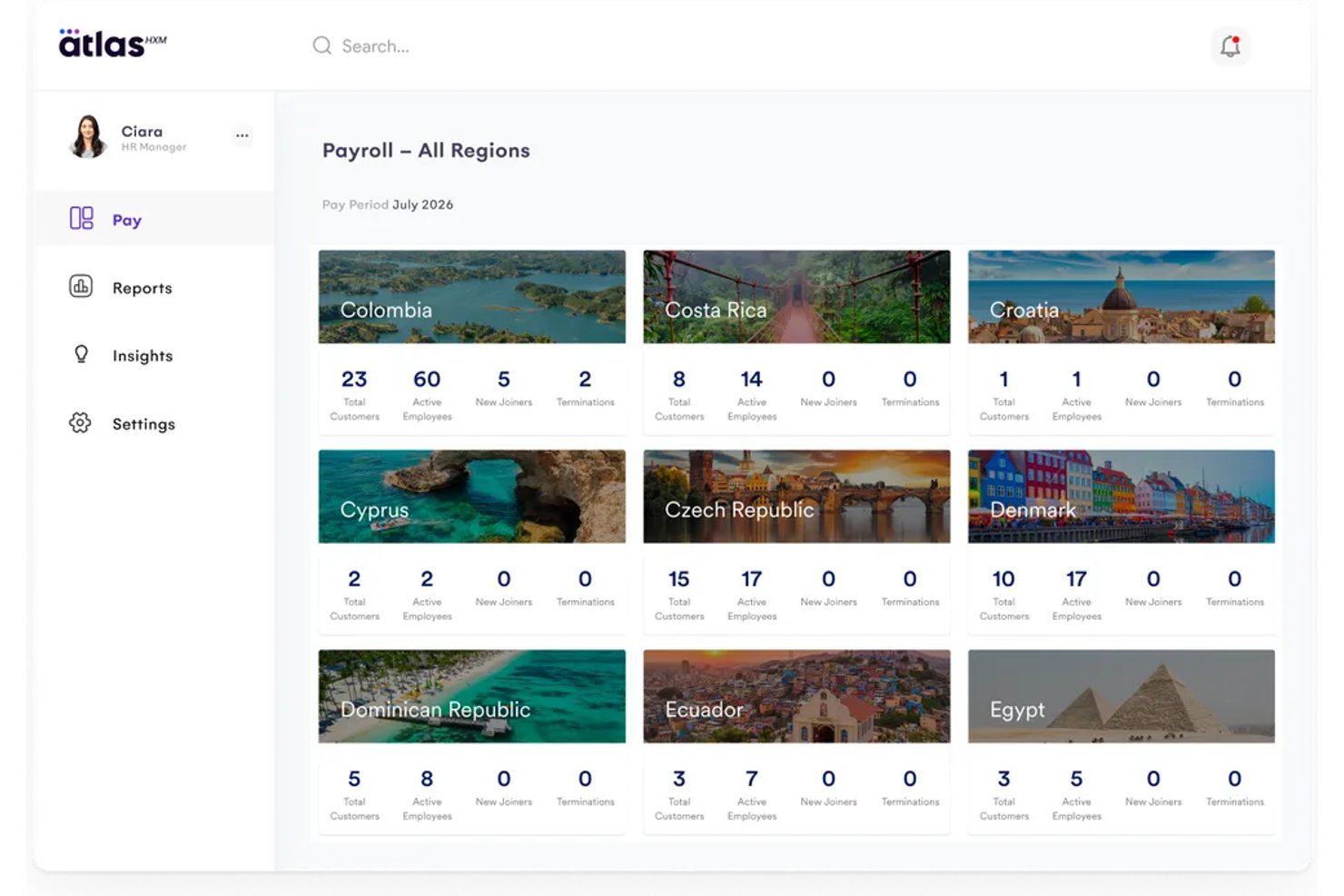
For HR teams expanding internationally without local entities, Atlas HXM’s employer of record service handles hiring administration, payroll, and compliance while you direct employees’ day-to-day work.
Who Is Atlas HXM Best For?
Atlas HXM suits companies that want to hire internationally through local entities rather than rely on third-party EOR partners.
Why I Picked Atlas HXM
I picked Atlas HXM as an Omnipresent alternative for its “Best for direct-entity EOR across 160+ countries” focus. Atlas operates its own entities and uses in-country experts, rather than relying on third-party EOR partners. I like that it handles localized contracts, onboarding, payroll, taxes, and statutory contributions for hires across markets such as Manila, Delhi, and Sydney.
Atlas HXM Key Features
- Benefits administration: Manage health coverage, pensions, and dependent enrollment.
- Employee self-service: Employees can view records and submit leave requests through the dashboard or mobile app.
- Expense submissions: Employees can submit expenses with AI receipt-detail capture.
- Offboarding support: Calculate final pay, accrued vacation, and severance according to local requirements.
Atlas HXM Integrations
Atlas HXM lists integrations with Workday, BambooHR, Ashby, Paycor, UKG, and Dayforce. It also offers REST API access for custom integrations.
Pros and Cons
Pros:
- Users cite responsive account manager support
- Reviewers praise local compliance expertise
- Direct entities across 160+ countries
Cons:
- Some reviewers report payroll delays and errors
- Users report multi-click, unintuitive workflows

Best for managed global hiring across 187 countries
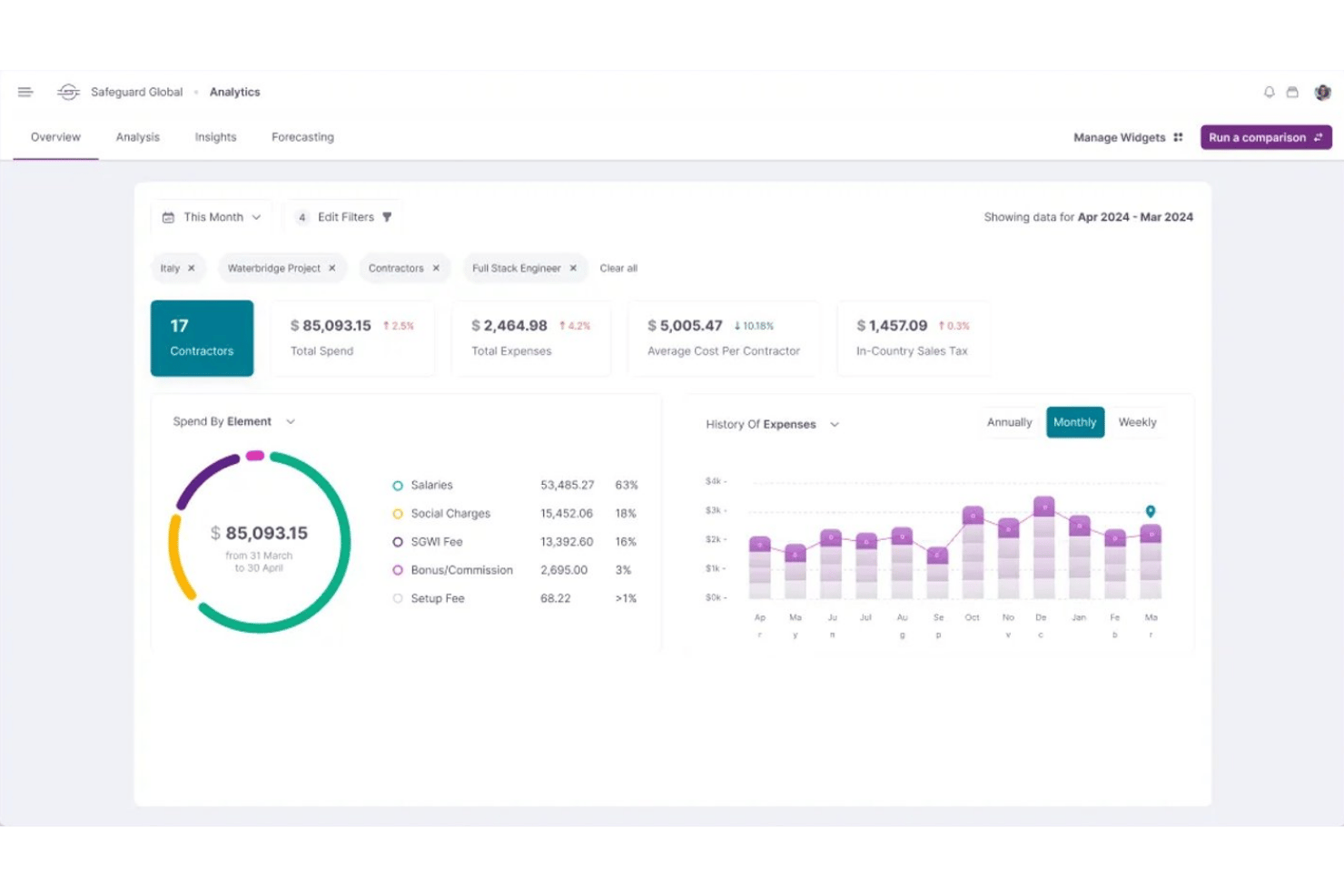
For companies hiring internationally without local entities, Safeguard Global’s employer of record service manages employment administration and payroll while your team directs employees’ work.
Who Is Safeguard Global Best For?
Safeguard Global suits HR teams at growing companies that need managed support as their workforce expands across multiple countries.
Why I Picked Safeguard Global
I picked Safeguard Global as an Omnipresent alternative for its focus: “Best for managed global hiring across 187 countries.” It hires and pays employees where your company lacks a local entity, while your team directs their work. Country-specific onboarding forms, contract previews, and in-country HR support cover key steps from hiring through payroll.
Safeguard Global Key Features
- Employee records: Store employee profiles, compensation, benefits, and job details.
- Time and expenses: Employees can clock in, upload receipts, and submit expenses for manager approval.
- Workforce analytics: View labor costs, turnover, and payroll taxes by country, currency, and contract type.
- Invoice management: Filter invoices by country, date, type, status, or project, and track payment balances.
Safeguard Global Integrations
Safeguard Global offers Workday payroll integrations through its Global Pay solution, along with API-based options for connecting workforce systems. EOR-specific integration availability should be confirmed with Safeguard Global.
Pros and Cons
Pros:
- Users praise responsive support and onboarding
- Local experts provide in-country HR support
- EOR coverage spans 187 countries and territories
Cons:
- HR support may rely on ticket-based requests
- Portal navigation obscures leave and expense details

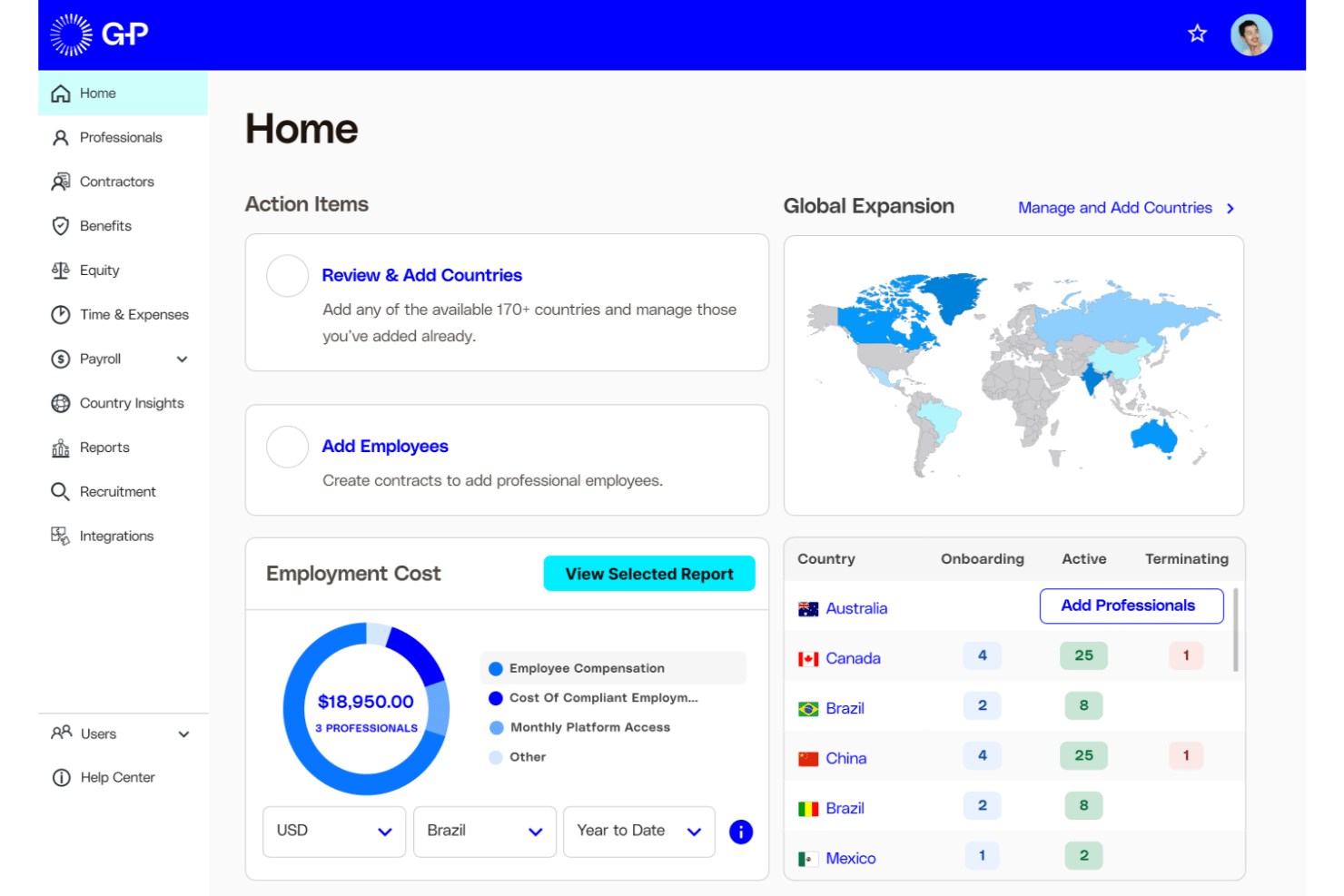
For HR teams expanding internationally, G-P is an employer of record service that handles local contracts, payroll, and labor-law requirements, so companies can hire without setting up legal entities in each market.
Who Is G-P Best For?
G-P suits HR and finance teams that need a predictable cost model for building distributed teams across multiple markets.
Why I Picked G-P
I picked G-P because its flat-rate global hiring model covers 180+ countries, so I can plan hires across markets without opening local entities. G-P handles local contracts, payroll, and labor-law requirements, while its separately priced G-P Gia product provides human-vetted compliance guidance and generates contracts and offer letters. That’s useful when hiring across countries with different employment rules.
G-P Key Features
- AI-guided onboarding: Use onboarding workflows with right-to-work verification.
- Benefits management: Allocate and manage employee benefits through the platform.
- HCM integrations: Connect HR systems through built-in integrations or API access.
- Workforce analytics: View workforce insights and use reporting tools.
G-P Integrations
G-P lists pre-built integrations with ADP TotalSource, ADP Workforce Now, Paylocity, BambooHR, HiBob, Personio, SAP SuccessFactors, UKG Pro, UKG Ready, and Workday. It also offers an API for custom integrations.
Pros and Cons
Pros:
- Account managers praised for hands-on guidance
- Country-specific contracts, payroll, and compliance support
- Flat-rate EOR coverage across 180+ countries
Cons:
- Onboarding can involve repetitive forms and follow-ups
- Ticket-based support can delay complex resolutions

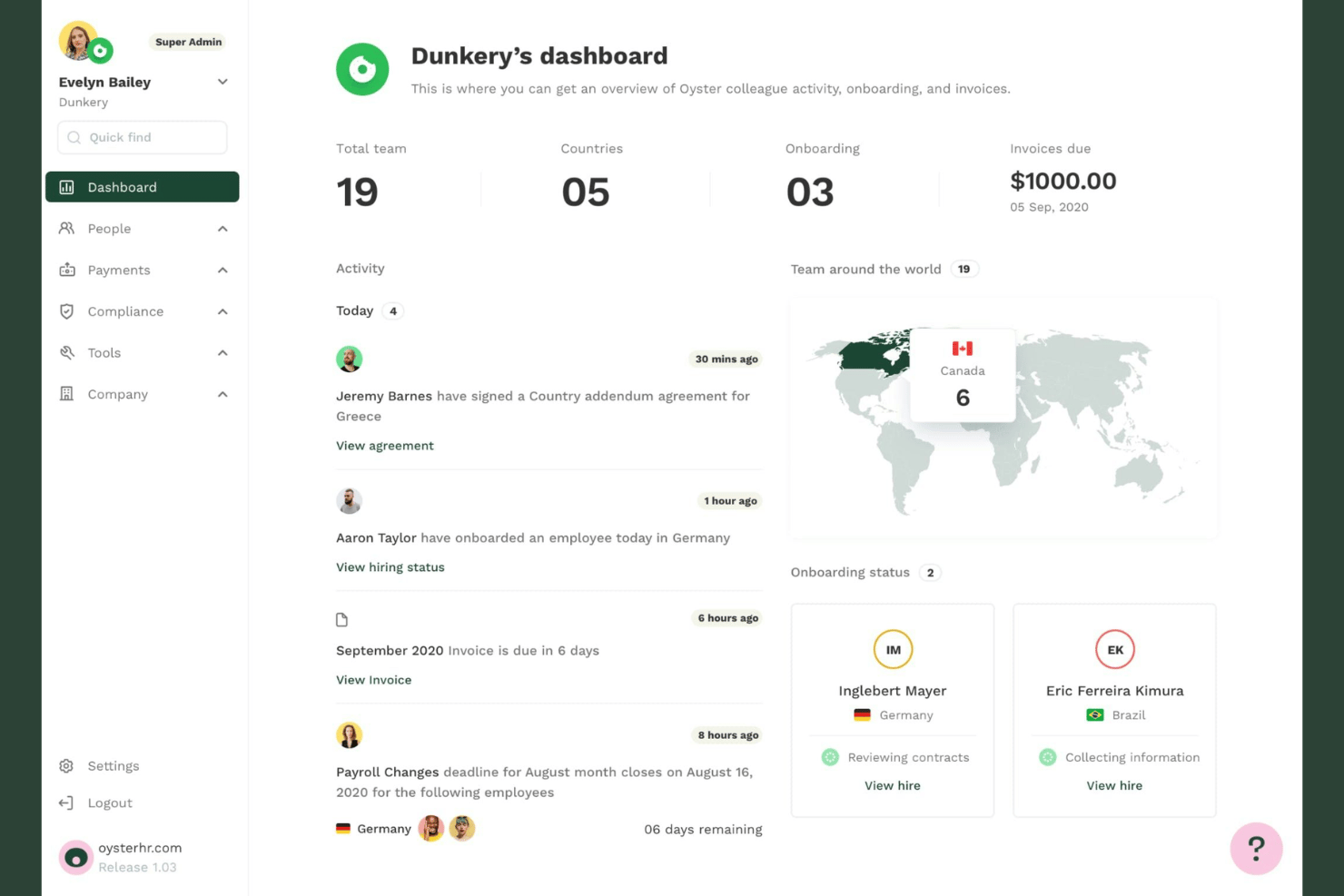
Oyster is a global employment platform for HR teams and growing businesses that need to hire, pay, and manage employees across 120+ countries, or contractors across 180+ countries, without establishing local entities.
Who Is Oyster Best For?
Oyster is a good fit for HR teams hiring internationally that need predictable employment costs and country-specific guidance on employee equity.
Why I Picked Oyster
I picked Oyster as an Omnipresent alternative for transparent pricing and equity support. Its EOR plan is listed at $699 per employee monthly, while contractor services cost $29 per contractor monthly. I also value its Equity Assessment Tool, country-specific guidance across 80+ countries, and tools to track equity awards and coordinate them with payroll.
Oyster Key Features
- Compliant onboarding: Set up international hires with compliant contracts and onboarding workflows.
- Global payroll: Manage employee payroll through Oyster’s platform.
- Employee benefits: Provide benefits to employees through the platform.
- HR integrations: Connect Oyster with tools including BambooHR, Greenhouse, and QuickBooks.
Oyster Integrations
Oyster lists 14 named integrations, including HiBob, BambooHR, Workday, Personio, Lucca, Humaans, Workable, Ashby, Greenhouse, and QuickBooks.
Pros and Cons
Pros:
- Cost calculator clarifies employment costs upfront
- Users praise smooth, compliant international onboarding
- Country-specific equity guidance supports global hires
Cons:
- Payroll reporting offers limited customization
- Support tickets can receive slow responses

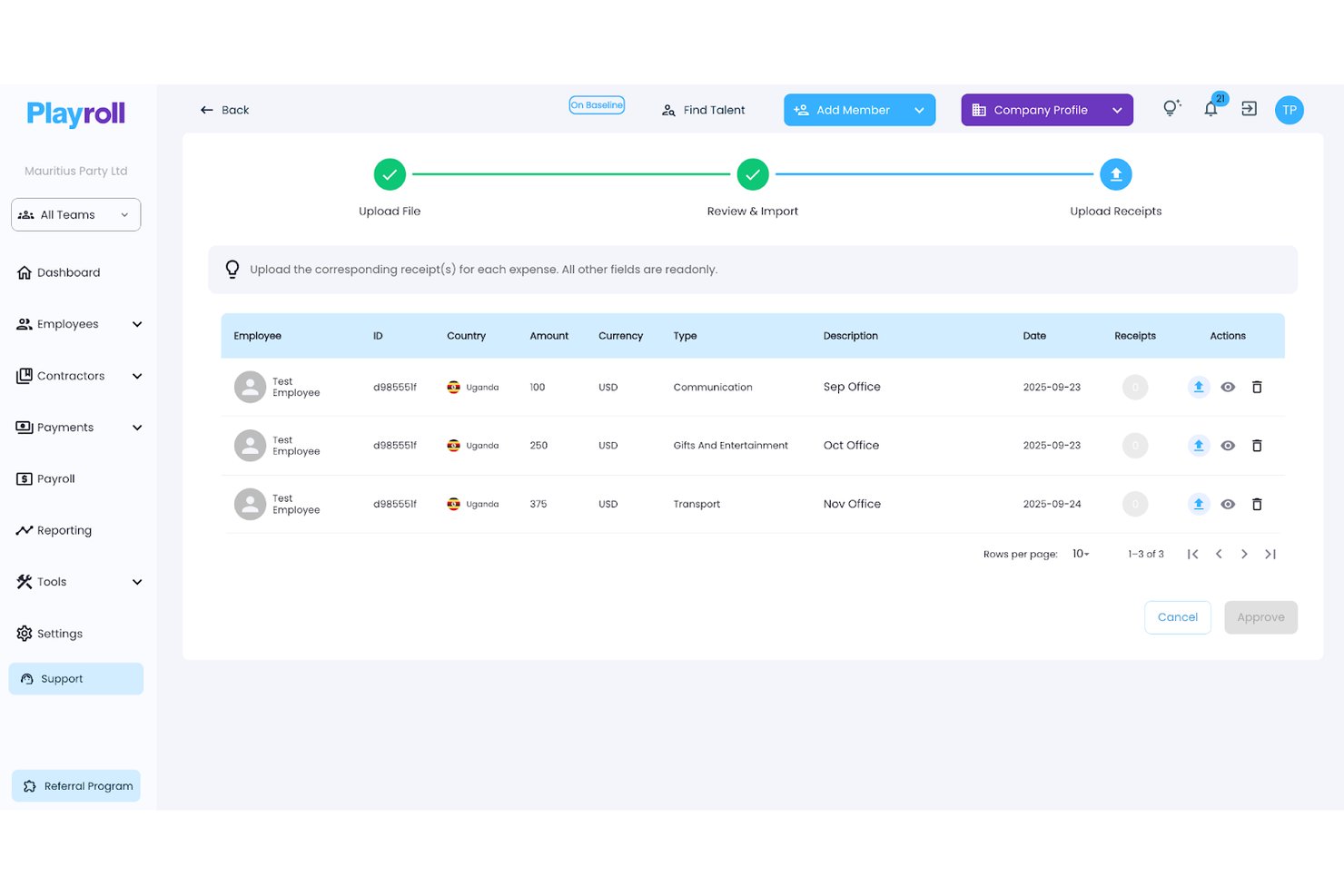
For HR teams hiring internationally, Playroll is an employer of record service that handles local contracts, payroll, taxes, and benefits without requiring your business to set up entities abroad.
Who Is Playroll Best For?
Playroll suits HR and finance teams switching from another EOR and seeking predictable, flat-rate pricing for international employment.
Why I Picked Playroll
I picked Playroll as “Best for switching EORs at flat-rate pricing” because its all-inclusive monthly fee has no onboarding or offboarding charges, and no steep termination fees. I value its guidance on timing provider switches around notice periods to help avoid employment gaps. After the move, Playroll handles locally compliant contracts, payroll, taxes, and benefits across 180+ countries.
Playroll Key Features
- Centralized dashboard: Manage hiring, onboarding, payments, benefits, leave, and expenses in one place.
- HRIS integrations: Sync with HRIS tools, including HiBob and BambooHR.
- Visa sponsorship: Access optional visa sponsorship services in more than 95 countries.
- Leave and expense requests: Employees submit requests through the platform for employer approval.
Playroll Integrations
Playroll supports HRIS integrations with HiBob and BambooHR; its EOR page mentions other HRIS tools but doesn’t name them.
Pros and Cons
Pros:
- Switch guidance accounts for existing notice periods
- Reviewers praise clear payroll breakdowns
- Dedicated employer and employee success contacts
Cons:
- In-browser payslip previews aren’t available
- Reporting depth may limit workforce oversight

Best for all-in-one global hiring and payroll
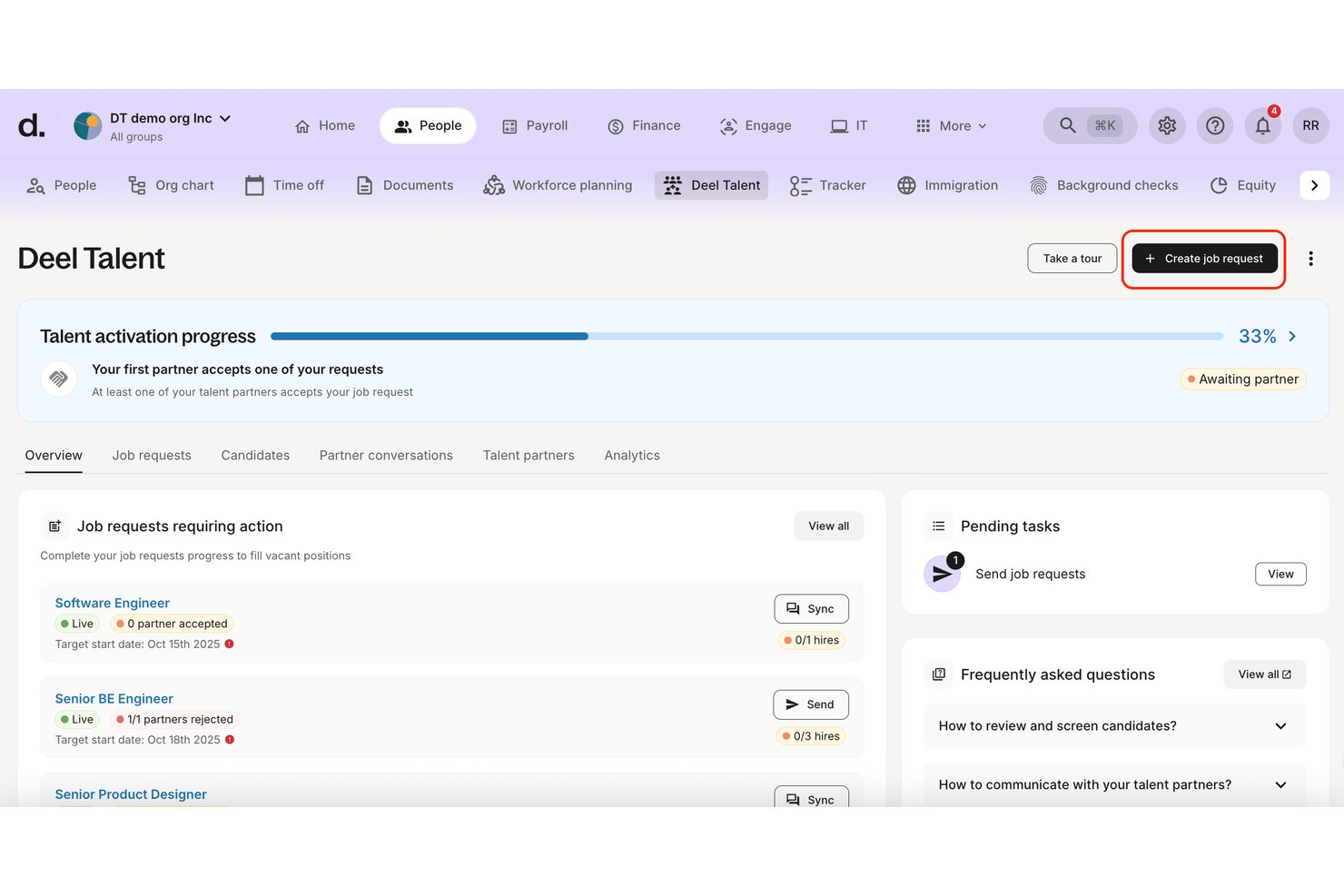
Deel acquired Omnipresent in 2025 and migrated its customers to the Deel platform. Deel also combines employer of record services with contractor management, global payroll, and HR tools for distributed businesses that need to hire internationally, manage local employment requirements, and pay workers across borders.
Who Is Deel Hire Best For?
Deel Hire is a good fit for HR teams at growing companies that need to manage employee and contractor hiring alongside global payroll.
Why I Picked Deel Hire
I picked Deel Hire as an Omnipresent alternative because it’s Best for all-in-one global hiring and payroll. Its EOR service handles legal employment, locally compliant contracts, and payroll tax filings across 130+ countries. I also like that you can manage contractor payments alongside employee payroll.
Deel Hire Key Features
- Mobility support: Deel offers immigration and visa support for international hires.
- Benefits administration: Manage benefits such as healthcare, dental, vision, and mental health coverage.
- Identity verification: Verify remote workers as part of the hiring workflow.
- Onboarding tasks: Collect documents and assign onboarding tasks, with account access and equipment provisioning available through Deel IT.
Deel Hire Integrations
Deel’s marketplace lists 200+ integrations, including BambooHR, Workday, NetSuite, Xero, QuickBooks, Expensify, and Zapier. Deel also offers APIs and webhooks for custom integrations.
Pros and Cons
Pros:
- Handles local contracts, compliance, and benefits
- Combines employee payroll and contractor payments
- Covers EOR hiring across 130+ countries
Cons:
- Support may route questions through AI first
- Fees can add up across services

Remote
Best for hiring with owned-entity coverage
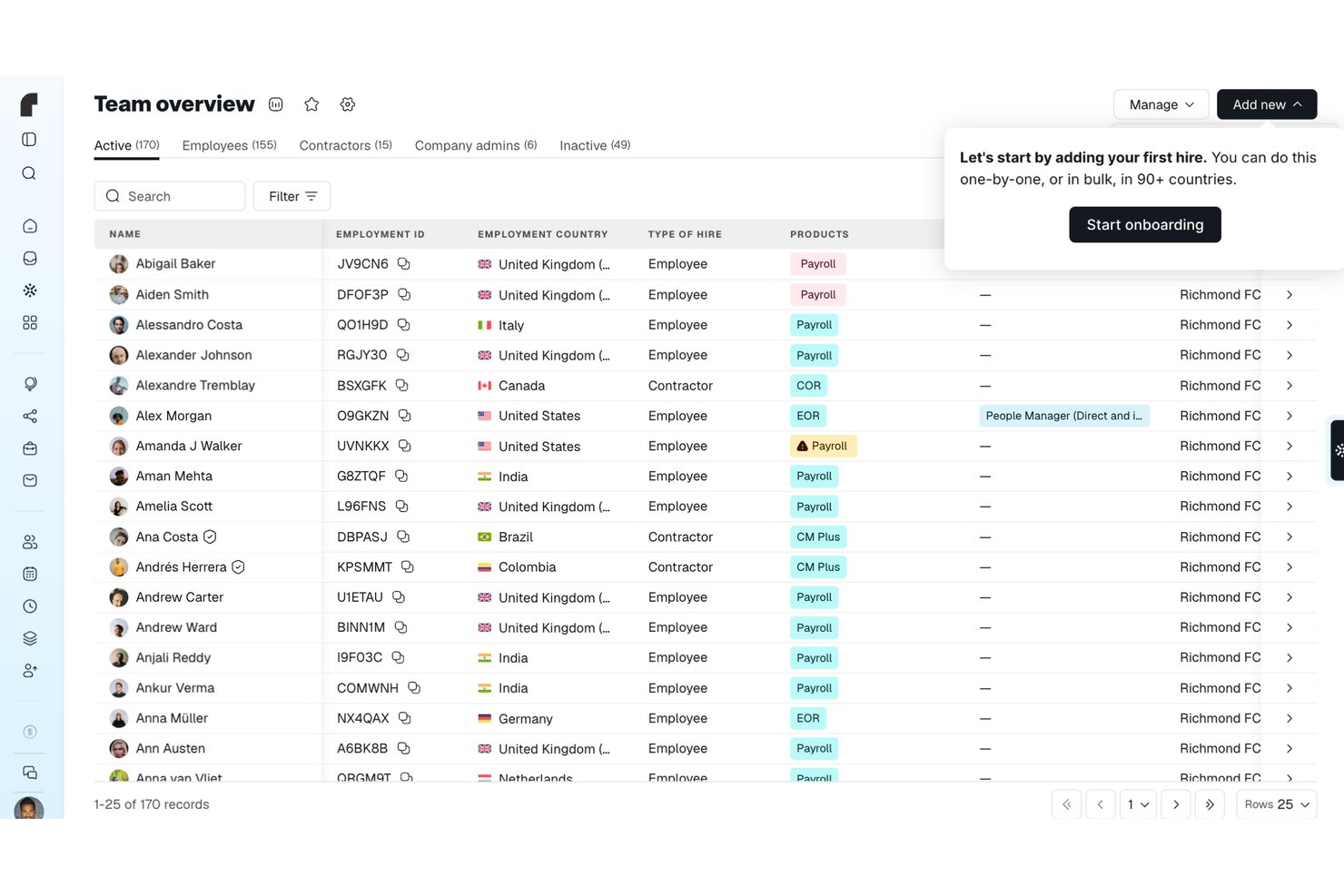
Remote is a payroll and employment provider for HR teams that need to hire employees across borders, manage contractors, and handle local employment requirements without establishing an entity in every market.
Who Is Remote Best For?
Remote is a good fit for HR teams hiring internationally that want local employment support through owned entities.
Why I Picked Remote
I rate Remote for hiring with owned-entity coverage. Its Employer of Record service lets me hire employees in markets where my company lacks an entity, with local employment requirements handled through Remote’s owned entities. That’s useful when I need to hire abroad without first setting up a local subsidiary.
Remote Key Features
- Time tracking: Employees can record their working hours in Remote.
- Expense management: Employees can submit expenses for review and reimbursement.
- Document management: Store and manage employment documents in the platform.
- Approval workflows: Review and approve requests through built-in workflows.
Remote Integrations
Remote offers integrations with BambooHR, Workday, Personio, Greenhouse, Xero, QuickBooks, and NetSuite. It also connects with Zapier and provides an API for custom integrations.
Pros and Cons
Pros:
- Payslips and leave details stay accessible
- Local payroll, benefits, and compliance handled
- Owned entities avoid third-party handoffs
Cons:
- Employment agreements may take days
- Complex support cases can take longer

Best for hiring globally with built-in HRIS
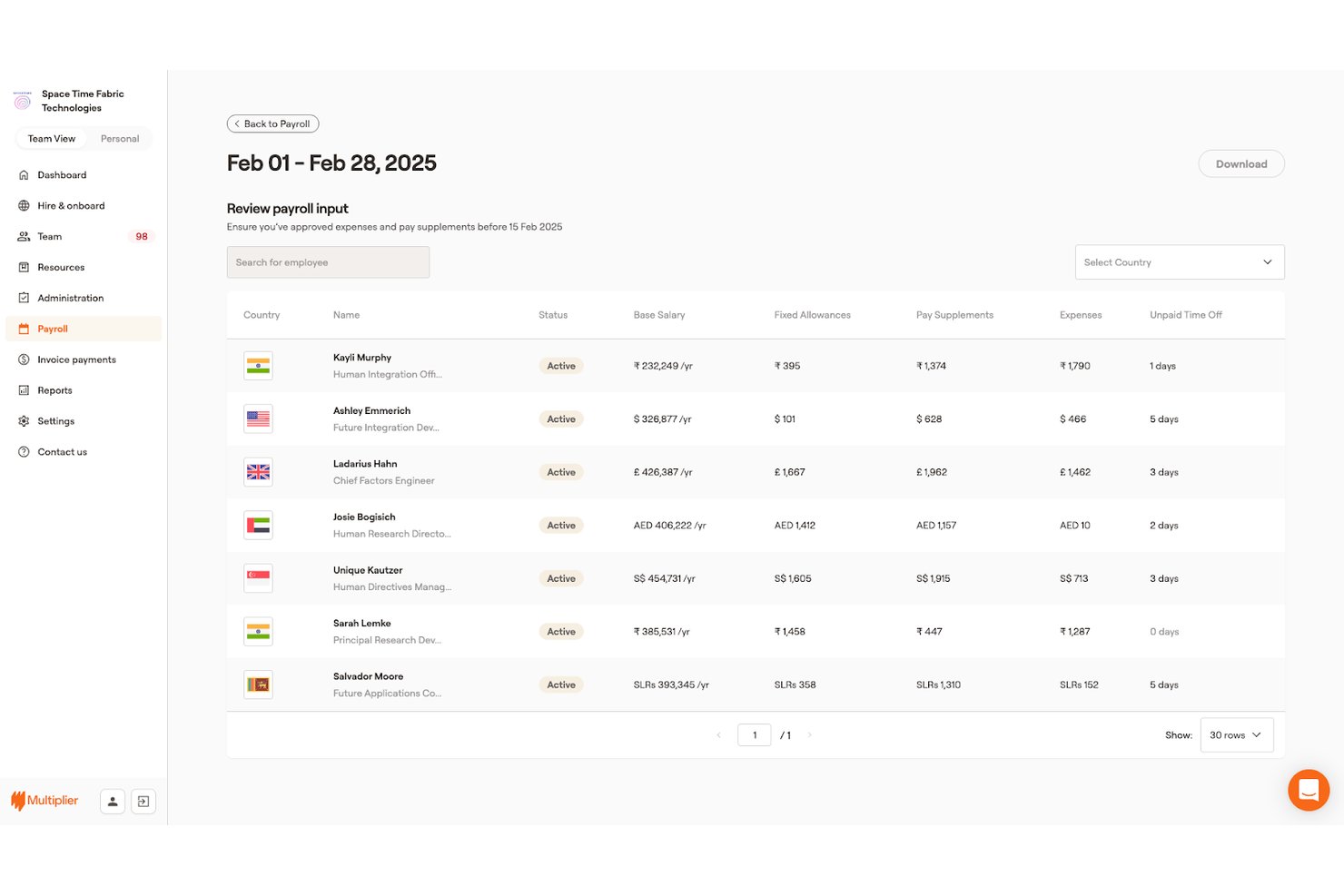
Multiplier is a global employment platform for companies hiring across borders, bringing employer-of-record services, payroll, and HRIS tools together to manage international employees and compliance.
Who Is Multiplier Best For?
Multiplier suits HR teams managing international employees who need hiring, payroll, and employee records in one platform.
Why I Picked Multiplier
When I compare Omnipresent alternatives, I include Multiplier because it combines EOR services with built-in HRIS tools. I can manage international contracts, onboarding, payroll, and benefits alongside employee records. Employees can update personal information, while managers maintain records and performance reviews.
Multiplier Key Features
- Entity-free hiring: Hire employees in 150+ countries without establishing local legal entities.
- Local compliance: Multiplier handles local labor-law requirements, tax withholding, and statutory filings.
- Time off and expenses: Track employee leave and manage work-related expense claims.
- Dedicated account manager: Each account has a manager for support with EOR services.
Multiplier Integrations
Multiplier integrates with Workday, BambooHR, HiBob, Personio, and UKG. HRIS integrations and open APIs are available on the Growth plan, while custom integrations are offered on Enterprise.
Pros and Cons
Pros:
- Local labor compliance and statutory filings
- HRIS, payroll, and EOR in one platform
- Entity-free hiring across 150+ countries
Cons:
- Complex support queries can receive slow responses
- Some users report delayed or incorrect payroll

Pebl
Best for global equity and EOR in one platform
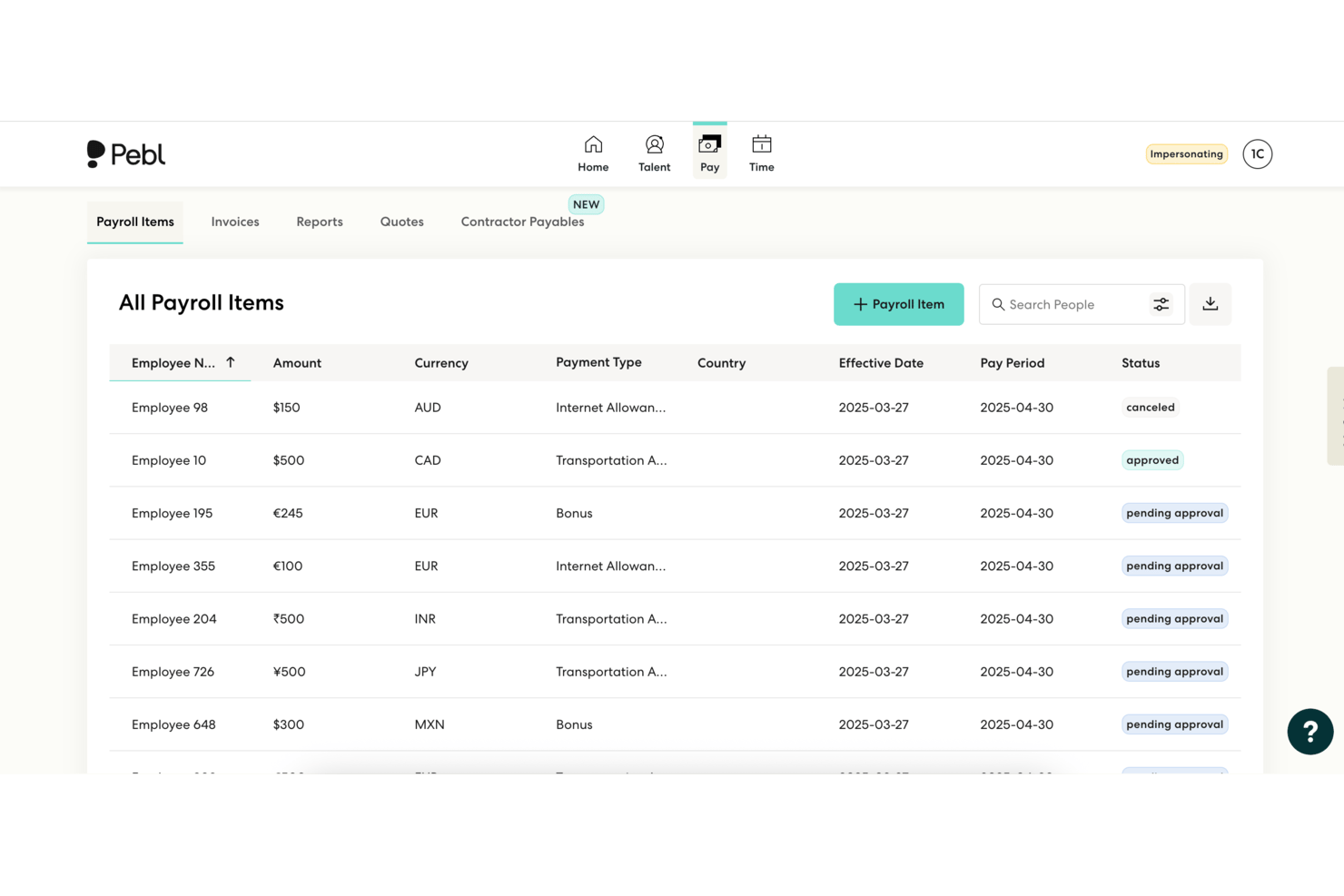
Pebl is an employer of record for companies hiring internationally, handling employee onboarding, payroll, benefits, and local compliance across 185+ markets without requiring a local entity.
Who Is Pebl Best For?
Pebl suits HR and finance teams coordinating international employment and global equity programs, with equity support available as a separate service.
Why I Picked Pebl
I picked Pebl as “Best for global equity and EOR in one platform” because it pairs EOR hiring across 185+ markets with global equity support. I like that it supports stock options and RSUs, along with country-specific tax withholding, equity-related payroll processing, and required plan registration.
Pebl Key Features
- Employee onboarding: Manage onboarding for employees hired through Pebl.
- Benefits administration: Provide employees with locally available benefits.
- Termination support: Handle employee terminations through the EOR service.
- AI workforce guidance: Get answers, reporting, and support for everyday workforce tasks.
Pebl Integrations
Pebl lists 250+ integrations, including ADP Workforce Now, Ashby, BambooHR, HiBob, Greenhouse, NetSuite, QuickBooks, and Slack. Its Partner API supports embedding employment workflows in partner products.
Pros and Cons
Pros:
- Reviewers praise responsive, knowledgeable support
- Global equity support alongside EOR
- EOR coverage spans 185+ markets
Cons:
- Fees can deter smaller or junior hires
- Reviewers report onboarding delays and document errors

Best for AI-driven global payroll at scale
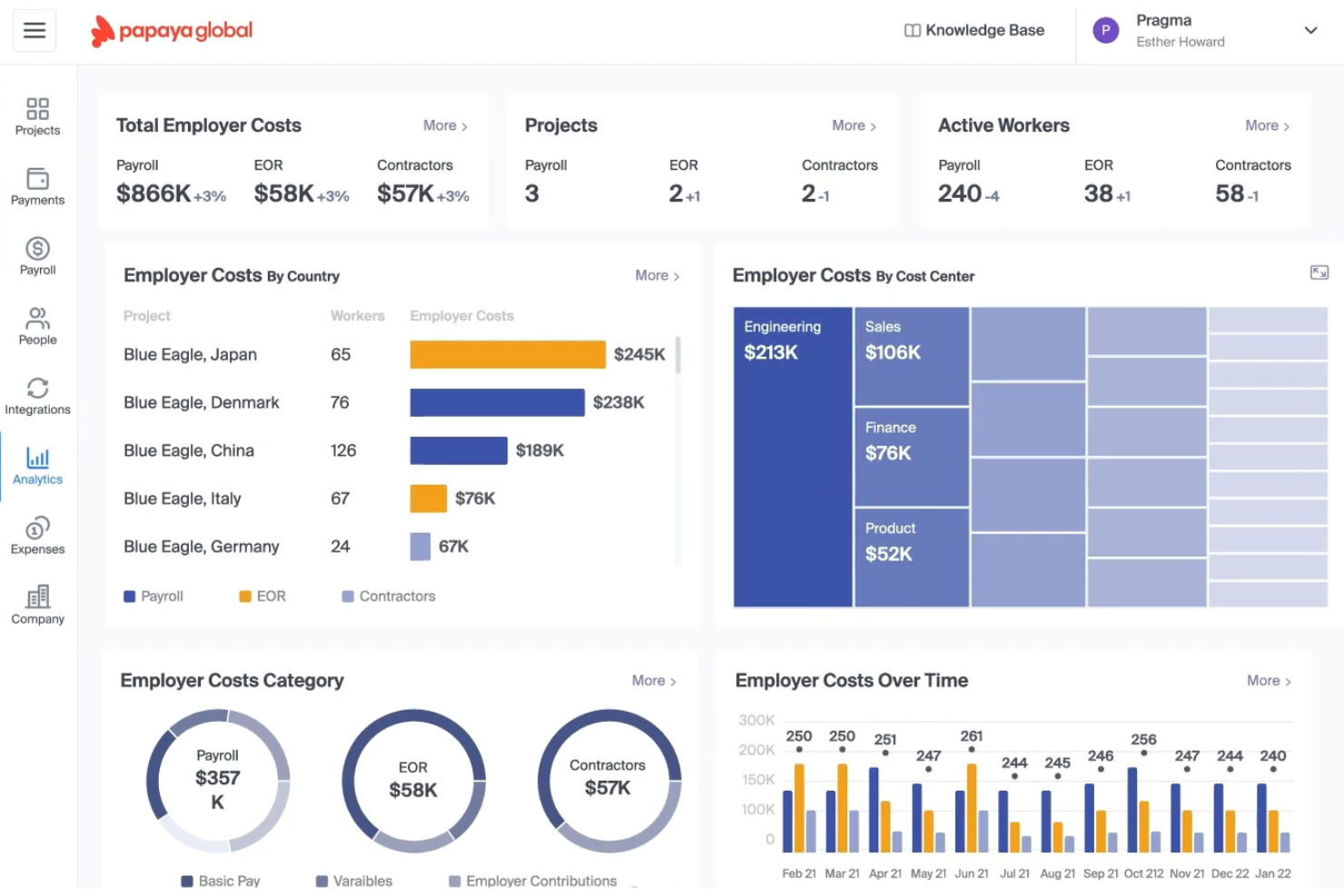
Papaya Global combines employer of record services, global payroll, and worker payments for multinational HR teams managing employees and contractors across countries and local compliance requirements.
Who Is Papaya Global Best For?
Papaya Global suits enterprise HR and payroll teams managing payroll and compliance across multiple countries with AI-supported tools and local experts.
Why I Picked Papaya Global
I picked Papaya Global, Best for AI-driven global payroll at scale, as an Omnipresent alternative. Its AI agents monitor regulation changes and flag payroll anomalies across 180+ countries, while in-country experts review edge cases. I like the combination when a local tax rule changes during a payroll cycle.
Papaya Global Key Features
- EOR employment administration: Papaya manages local contracts, statutory payments, benefits, and terminations as the legal employer.
- Centralized workforce data: View EOR employees and direct-payroll workers in one system.
- Employee mobile app: Employees can access payslips and submit onboarding information.
- Time and attendance: Track employee work time within the platform.
Papaya Global Integrations
Papaya Global offers connectors for Workday HCM, HiBob, SAP SuccessFactors, Oracle HCM, and NetSuite, with data syncing for HR, payroll, PTO, or journal entries depending on the connector. It also provides API-based connections and OneData for bringing pre-payroll data from other HCM, HRIS, ERP, or Excel sources.
Pros and Cons
Pros:
- Users praise responsive, knowledgeable payroll support
- Cross-country cost reporting in one system
- Multi-country payroll and contractor data centralized
Cons:
- Some users cite slow ticket resolution
- Reviews report occasional payroll processing delays
Other Omnipresent Alternatives
Here are a few additional options that didn’t make my top list but are still worth checking out:
- RemoFirst
For hiring globally at a flat monthly rate
- TopSource
For transitioning from EOR to your own entity
- Rivermate
For human-backed EOR with local experts
- Payoneer Workforce Management
For low-cost hiring across 160+ countries
- Gloroots
For flat-rate global hiring on a budget
- Boundless
For in-country expert support across Europe
- Remote People
For global hiring with a built-in switch program
- RemotePass
For hiring across MENA with flat-rate EOR
- CXC
For mixed workforce compliance at scale


How I Evaluate Omnipresent Alternatives
I split my evaluation into three parts. First—and most important—I check that each platform can legally employ workers on a client's behalf across multiple countries and process compliant payroll with local tax handling. Second, I look for standout features like owned-entity transparency or built-in global HRIS. Third, I consider onboarding speed, support model, and pricing clarity.
Core Functionality (Table Stakes For This List)
When I'm selecting tools for my list, I score each one on a scale from 0 (does not offer the functionality) to 5 (excels in this area) for each core functionality listed below. I then convert the total into a percentage to assess overall fit and check whether the essential functions meet the required minimum scores.
- EOR Coverage (Essential): I assess which countries a provider can employ workers in and whether it uses owned entities or partners to support consistent local employment.
- Global Payroll (Essential): I look for accurate payroll processing across supported countries, including local taxes, statutory deductions, currencies, and consolidated reporting.
- Compliance & Contracts: I check how the platform creates and maintains local contracts, handles leave and terminations, and reflects changes in employment requirements.
- Benefits Administration: I evaluate statutory and supplemental benefits, including how employees enroll and how HR manages benefits across countries.
- Country Coverage: I compare supported countries with planned hiring locations, checking that coverage includes the markets where the team expects to employ workers.
- Visa & Immigration: For cross-border hires or relocations, I assess whether the provider offers practical support with work permits and visa applications.
Once I have a list of tools that meet the criteria, I consider what sets each platform apart.
Differentiating Factors (What Sets Vendors Apart)
Here's how I compare and contrast different vendors:
Standout Features
I look for whether a provider discloses which countries use owned entities versus third-party partners, since that directly affects compliance accountability and issue resolution speed. Equity management support also matters—issuing stock options to employees in another country involves local tax and securities rules, and providers like Oyster and Pebl offer tools and services to help manage that process. I also check for fixed, transparent pricing without hidden FX markups, which makes budgeting predictable as your headcount grows across regions.
Beyond Features
I check how fast a provider can onboard a new hire, since a delay from weeks to months can cost you a top candidate. Providers like Deel and Remote publish estimated onboarding timelines by country, which helps when you're racing to fill a role. I also evaluate whether a platform connects to your existing HRIS or accounting tools through pre-built integrations or an open API, because re-keying payroll data into a separate system invites errors. Support model matters too—I look for dedicated account managers and clear SLAs over shared ticket queues, especially for urgent termination or compliance questions.
Why Look for Omnipresent Alternatives?
While Omnipresent is a good choice for employer of record services, some teams look elsewhere when their hiring plans or platform needs differ. You might be looking for an alternative because:
- Your next hire is in a country outside your preferred provider’s coverage
- You want more visibility into which countries use owned entities
- You need global payroll and HRIS features in one platform
- Your budget calls for a different pricing model
- You need EOR support that fits a larger, multi-country workforce
If any of these sound like you, you’ve come to the right place. My list includes several employer of record services options for teams facing these challenges with Omnipresent and looking for alternatives.
Omnipresent Key Features
Here are the key employer of record features associated with Omnipresent, now part of Deel, to help you compare the services available from alternative providers:
- Employer of record hiring: Omnipresent employs international workers on your company’s behalf, so you can hire in supported countries without setting up a local entity. The provider manages the employment relationship and related administration.
- Local contracts and compliance: The service supports employment contracts and local employment-law requirements. Country-specific guidance can help your HR team review obligations such as leave, termination terms, and statutory payments.
- Global payroll: Omnipresent processes employee pay across countries, including local-currency payments and payroll-related taxes. This gives your team a way to manage international payroll through one provider rather than coordinating each country separately.
- Benefits administration: The platform supports employee benefits, including locally relevant provisions such as healthcare, retirement plans, and paid leave. Your team can use this support to coordinate benefits within each country’s employment framework.
- Employee onboarding: Omnipresent helps collect the information needed to enroll new hires in its systems and payroll. This gives HR a process for gathering employee details and preparing employment paperwork before the start date.
- Leave management: The service supports leave administration as part of managing employees. Your team can coordinate time off in line with applicable country requirements and the employee’s terms.
- Expense management: Omnipresent supports employee expense administration alongside payroll and employment services. This helps your team handle expenses as part of the broader employment workflow.
- Visa and mobility support: Omnipresent offers global mobility and work-visa assistance for eligible hires or relocations. This can help HR coordinate immigration-related steps when an employee needs authorization to work in another country.
- HR and employment guidance: Omnipresent provides access to employment specialists and legal or tax guidance. Your team can use this support to address country-specific questions across the employee lifecycle, including onboarding and offboarding.
Costs and Pricing
Pricing varies by provider, country, and employment model. The table below compares published starting service fees for different global workforce services. These are indicative USD amounts, not market averages, and exclude salaries, statutory employment costs, and any additional services.
Plan Comparison Table for Omnipresent Alternatives
These categories are intended to help compare EOR costs and demo availability, not represent standard pricing plans offered by every provider. Published EOR starting fees range from $199 to $699 per employee/month among the providers reviewed, with additional costs depending on the country and services required.
| Plan Type | Average Price | Common Features |
|---|---|---|
| Free Demo | $0 | Product walkthrough, feature demonstrations, pricing consultations, and answers to specific questions. Availability varies by provider. |
| EOR / Business | $199–$699 per employee/month | International hiring, local employment contracts, payroll, compliance, and benefits administration. |
| Enterprise / Custom EOR | Custom quote | Multi-country workforce management, consolidated payroll reporting, customized services, and dedicated support options. |