

10 Best PEOs for Staffing Companies in 2026

Best PEOs for Staffing Companies Shortlist


The best PEO for staffing companies is a co-employment service that manages payroll, benefits, workers’ compensation, tax administration, and human resource compliance for temporary and distributed workforces.
This guide compares 12 providers for staffing firms handling frequent onboarding, variable hours, multistate placements, and pay-bill administration. You’ll find options for different workforce sizes, risk profiles, benefit needs, and back-office models, with attention to employee support and day-to-day account management.
Why Trust Our Software Reviews
Our team has been testing and reviewing software since 2012. As HR experts ourselves, we know how difficult—and important—it is to choose the right software.
For this guide, we evaluated tools using hands-on testing and independent research, scoring tools using our selection criteria. We also draw on insights from industry thought leaders and practicing HR experts.
Our reviews reflect our human editorial judgment, not a sales pitch.
Expert reviewers:
Comparison Table: PEOs for Staffing Companies
Compare pricing and specs, side by side, for the PEOs for staffing companies that made it onto my shortlist.
| Tool | Best For | Trial Info | Price | ||
|---|---|---|---|---|---|
| 1 | Best for multistate workers' compensation | Free demo available | Pricing upon request | Website | |
| 2 | Best for staffing firms with owned carrier coverage | Not available | Pricing upon request | Website | |
| 3 | Best for in-house staffing roots | Not available | Pricing upon request | Website | |
| 4 | Best for high-risk workers' comp classes | Not available | Pricing upon request | Website | |
| 5 | Best for high-turnover workforce onboarding | Free demo available | Pricing upon request | Website | |
| 6 | Best for Bullhorn-connected payroll and invoicing | Free demo available | Pricing upon request | Website | |
| 7 | Best for staffing back-office and pay-bill outsourcing | Free demo available | Pricing upon request | Website | |
| 8 | Best for benefits access across transient workforces | Not available | Pricing upon request | Website | |
| 9 | Best for large-group benefits | Not available | Pricing upon request | Website | |
| 10 | Best for local-service staffing focus | Not available | Pricing upon request | Website |

PEOs for Staffing Companies Reviews
Below are my summaries of the best PEOs that made my shortlist. My reviews examine the features, use cases, and pricing of each to help you find the right fit.

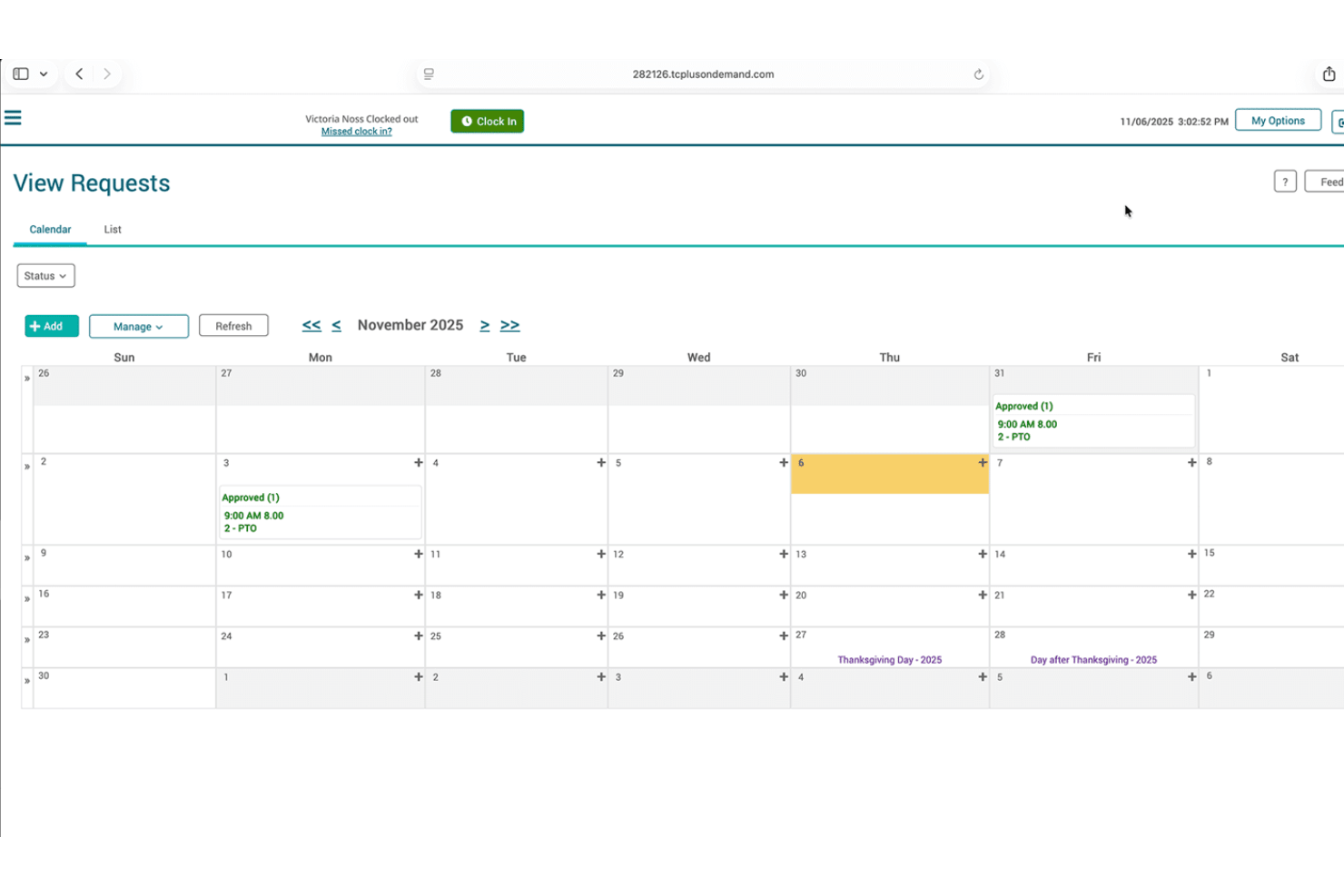
ExtensisHR is a PEO and HR outsourcing platform that covers payroll processing, multistate tax filing, workers' compensation, benefits administration, and unemployment claims management under both co-employment and non-co-employment service models.
Who Is ExtensisHR Best For?
ExtensisHR is a strong fit for small and mid-sized businesses managing workers across multiple states, particularly where workers' compensation and unemployment claims are high-volume concerns.
Why I Picked ExtensisHR
I've included ExtensisHR in my top picks because its workers' compensation setup is genuinely well-suited to businesses managing workers across multiple states. The pay-as-you-go coverage adjusts to actual headcount rather than locking you into upfront premium deposits, which matters when your workforce size shifts frequently. I also like that claims management goes beyond processing: fraud review, return-to-work programs, and full-cycle unemployment claims handling are all built in, covering the two cost centers that hit hardest when worker separations are high.
ExtensisHR Key Features
- Multistate tax filing: Handles federal, state, and local payroll tax calculations, filings, and payments across multiple jurisdictions, monitoring tax law changes as they occur.
- Full-cycle unemployment claims management: Manages separation documentation, claim coding, direct communication with state agencies, eligibility monitoring, and disputing questionable claims.
- Digital onboarding and offboarding: Supports employee onboarding and offboarding through a self-service portal with PTO tracking, compliance training, and secure document storage.
- Employer Protection Program: Includes employment practices liability, legal defense, fiduciary liability, and information protection, with optional cyber liability and payroll diversion add-ons.
ExtensisHR Integrations
ExtensisHR integrations are not publicly documented.
Pros and Cons
Pros:
- Reviewers praise responsive, knowledgeable account support
- Multistate unemployment claims management supports staffing operations
- Pay-as-you-go workers’ compensation supports fluctuating headcount
Cons:
- Reviewers report dated, complicated administrative systems
- No published staffing-specific workflows or credential tracking

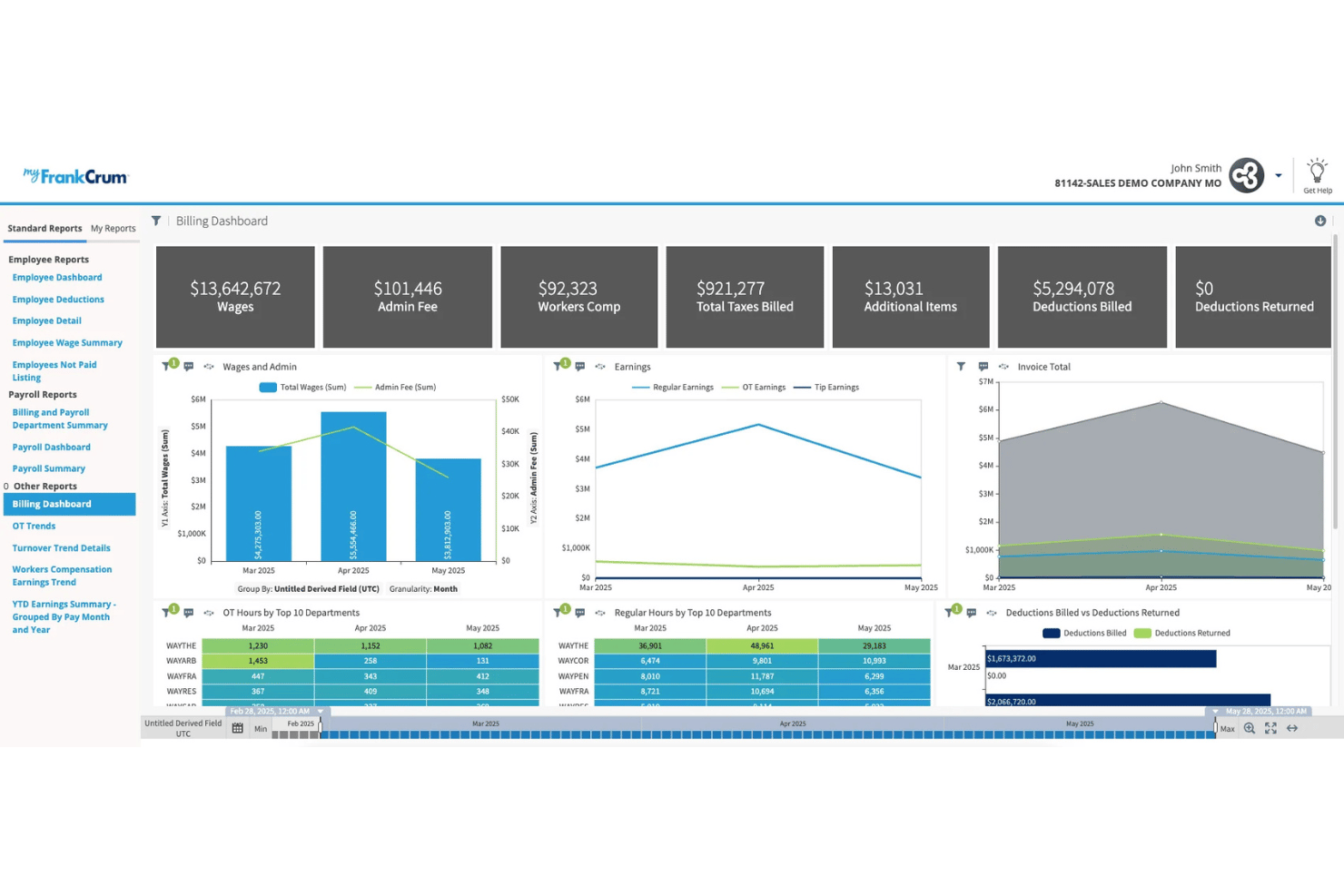
FrankCrum is a PEO that handles payroll processing, tax filing, workers' compensation, and HR administration through a co-employment model, with coverage backed by its own AM Best-rated insurance carrier.
Who Is FrankCrum Best For?
FrankCrum is a strong fit for small-to-midsize staffing firms that need reliable workers' comp coverage and payroll support for high-turnover, multi-worksite workforces.
Why I Picked FrankCrum
FrankCrum earns its spot on my shortlist because it owns its own AM Best-rated workers' comp carrier, Frank Winston Crum Insurance, which is rare among PEOs and matters a lot for staffing firms managing high claim volumes across varied job classes. I like that coverage runs on pay-as-you-go premiums tied to actual payroll each period, with no deposit and no year-end audit, so fluctuating headcount doesn't create billing surprises. Its SIDES certification for unemployment claims is another differentiator, since staffing firms deal with far more UI claims than typical employers.
FrankCrum Key Features
- SIDES-certified unemployment claims management: Exchanges unemployment claims data electronically with state agencies, handling documentation, hearings, and appeals for high-volume claim workforces.
- Multiple pay rates per employee: Payroll supports varied rate structures within a single employee record, covering shift differentials, job classifications, or multi-site assignments common in staffing operations.
- Self-service COI generation: Workers' comp certificates of insurance can be generated instantly through MyFrankCrum, with automatic renewals, so you can meet per-site client requirements without waiting on back-office staff.
- UKG-powered time tracking with geofencing: Field workers clock in and out via mobile with location verification across multiple worksites, and timesheet data flows directly into payroll processing.
FrankCrum Integrations
FrankCrum documents integrations with UKG Time Tracking, bswift, and JazzHR. Its one-way API supports custom connections for workforce and expense data.
Pros and Cons
Pros:
- Multiple pay rates suit varied assignments
- Dedicated specialists support staffing HR operations
- Owns an AM Best-rated workers’ compensation carrier
Cons:
- Temporary-worker benefits eligibility lacks published guidance
- Staffing-specific underwriting remains undocumented

LandrumHR is a CPEO-certified PEO that provides co-employment, payroll and tax filing, workers' compensation administration, employee benefits access, and HR compliance support under its MyLandrum HRIS platform.
Who Is LandrumHR Best For?
LandrumHR is a strong fit for HR and operations managers who want a high-touch PEO partner with genuine staffing-industry experience.
Why I Picked LandrumHR
LandrumHR earns its spot on my shortlist because its parent company actually runs a staffing division, Landrum Workforce Solutions, which means the PEO team understands pay/bill dynamics and temp workforce turnover from the inside. I like its workers' comp setup: a master Liberty Mutual policy with pay-as-you-go premiums per payroll cycle and no annual audit, which is useful for seasonal headcount swings. Its in-house unemployment claims team handles appeals filing and benefit-charge reviews, covering the high UI churn that comes with temp placements.
LandrumHR Key Features
- Digital onboarding and e-signature: Handles new-hire paperwork, e-signature collection, and document tracking in one portal.
- ACA eligibility tracking and IRS reporting: Monitors employee eligibility thresholds and files required ACA reports.
- Unemployment claims administration: In-house team reviews state benefit charges, processes claims, and files appeals on your behalf.
- Claims & safety oversight: Integrates pay-as-you-go workers' compensation coverage to eliminate large upfront deposits, while providing proactive workplace safety programs, injury management, and OSHA compliance.
LandrumHR Integrations
LandrumHR does not have any documented native integrations or an API.
Pros and Cons
Pros:
- In-house teams manage unemployment claims appeals
- Pay-as-you-go workers’ compensation avoids annual audits
- Staffing roots inform contingent workforce needs
Cons:
- Staffing-specific workflows remain largely unproductized
- Coverage excludes some states and risk classes

Infiniti HR is a co-employment PEO built for staffing agencies that handles payroll for large temp pools, multi-state compliance, workers' comp administration, unemployment claims management, and employee benefits across all 50 states.
Who Is INFINITI HR Best For?
Infiniti HR is a good fit for small to mid-sized staffing agencies that need a PEO willing to co-employ workers in higher-risk jobs.
Why I Picked Infiniti HR
I picked Infiniti HR as one of the best because it's one of the few PEOs that actively courts staffing agencies placing workers in higher-risk job classes like light industrial or construction, where securing affordable workers' comp coverage is genuinely hard. Its True-Group master policy pools risk across clients, which means your temp workers can get covered under rates you couldn't negotiate alone. It also handles unemployment claims management.
Infiniti HR Key Features
- Multi-state compliance management: Handles employment law compliance, regulatory reporting, and labor market law updates across multiple states.
- Earned wage access: Lets temporary employees access earned wages before payday, a practical option for short-tenure placements.
- Pay-as-you-go workers' comp: Workers' comp premiums are calculated and paid each payroll cycle based on actual wages, eliminating large upfront deposits.
- Dedicated service team: Each client gets a named HR Director, conversion manager, and recruitment manager rather than a shared support queue.
Infiniti HR Integrations
Infiniti HR integrates with POS, time clock, and scheduling systems, including TimeWorksPlus, plus QuickBooks, Peachtree, Data Pro, and Great Plains through its general-ledger interface. It claims connections with staffing software and applicant tracking systems, but no named ATS integrations or public API are documented.
Pros and Cons
Pros:
- Offers broad benefits for temporary employees
- Manages unemployment claims for temp workers
- Handles higher-risk workers’ compensation classes
Cons:
- Service experience spans multiple platforms
- Staffing-specific customer references remain limited

Rippling
Best for high-turnover workforce onboarding
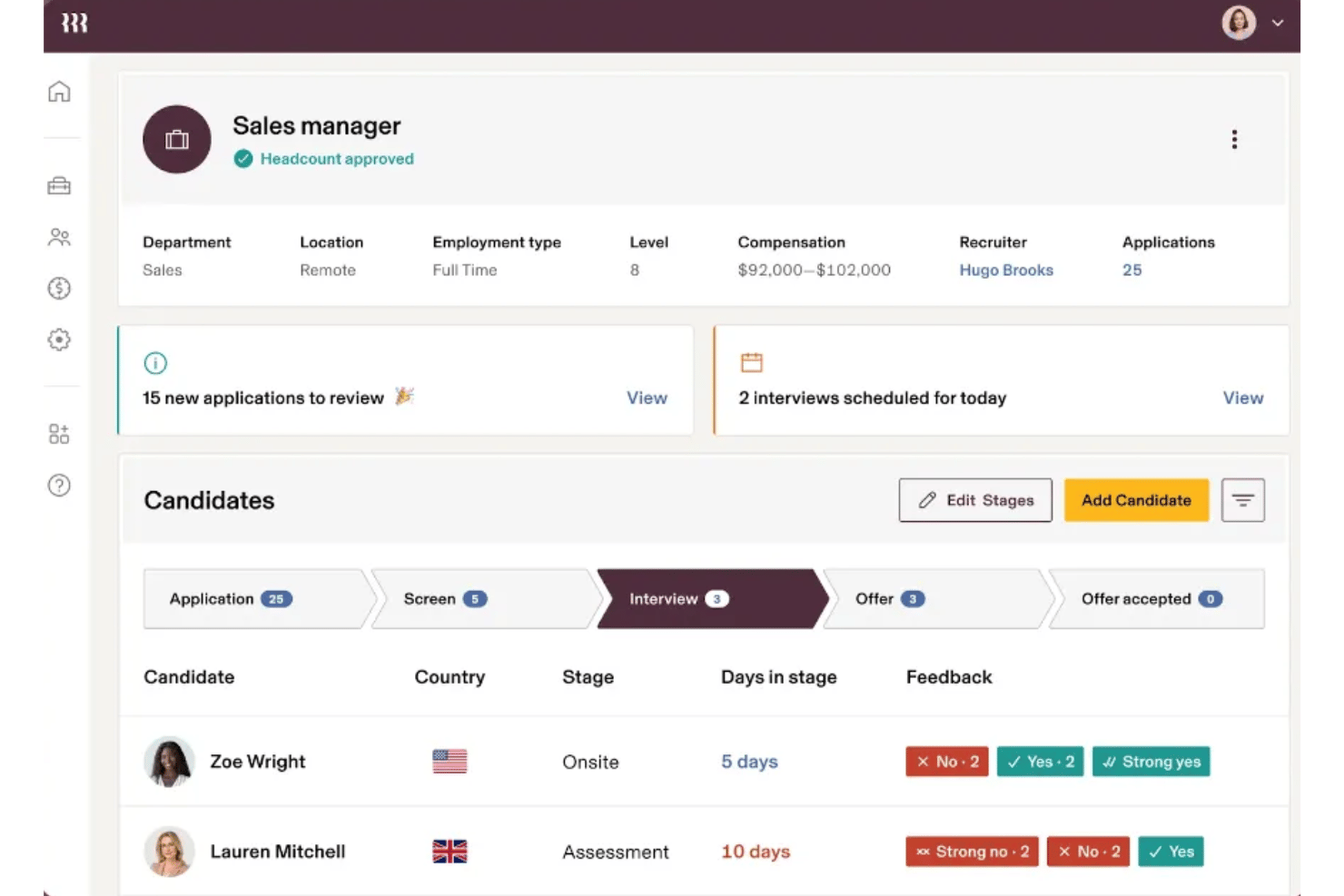
Rippling is an Employer of Record (EOR) that pairs co-employment with automated multistate payroll, benefits administration, and onboarding workflows.
Who Is Rippling Best For?
Rippling is a strong fit for HR and operations teams at staffing firms managing frequent, high-volume worker onboarding across multiple states.
Why I Picked Rippling
I've included Rippling in my top picks because its onboarding automation is built for the kind of constant worker churn staffing firms deal with. Workflow Studio lets you combine offer letters, document signing, and system provisioning into a single automated sequence, so a new hire can be fully set up in under five minutes. I also like that bulk actions let you process dozens of workers at once across 50 states, with automatic local tax registration handled in the background.
Rippling Key Features
- Benefits administration: Access pooled-rate medical, dental, vision, and 401(k) plans, with self-service enrollment and automated payroll deduction.
- Compliance dashboard: Flags minimum-wage violations and jurisdiction-specific infractions in real time, with built-in remediation suggestions and immutable audit logs.
- HR advisory access: PHR- and SHRM-certified HR consultants are included, alongside Mineral-powered handbook tools and law-change alerts.
- Cross-border payments: Pay contractors and employees in their local currencies across over 100 countries without foreign entities or messy wire transfers.
Rippling Integrations
Rippling connects with QuickBooks Online, NetSuite, Xero, Slack, Microsoft 365, and Google Workspace. It also offers an API for custom connections.
Pros and Cons
Pros:
- PEO can switch off without migration
- All-state tax filing handles distributed placements
- Bulk onboarding supports high worker turnover
Cons:
- No staffing-specific markup or credential tracking
- Workers’ comp claims support remains unclear
New Product Updates from Rippling

Rippling AI Adds Plugins, Skills, and Automations
Rippling AI now supports plugins, skills, and automations so employees can connect approved third-party tools, package repeatable work into reusable AI instructions, and run recurring workflows under existing Rippling policies and permissions. For more information, visit Rippling's official site.
Paychex
Best for Bullhorn-connected payroll and invoicing
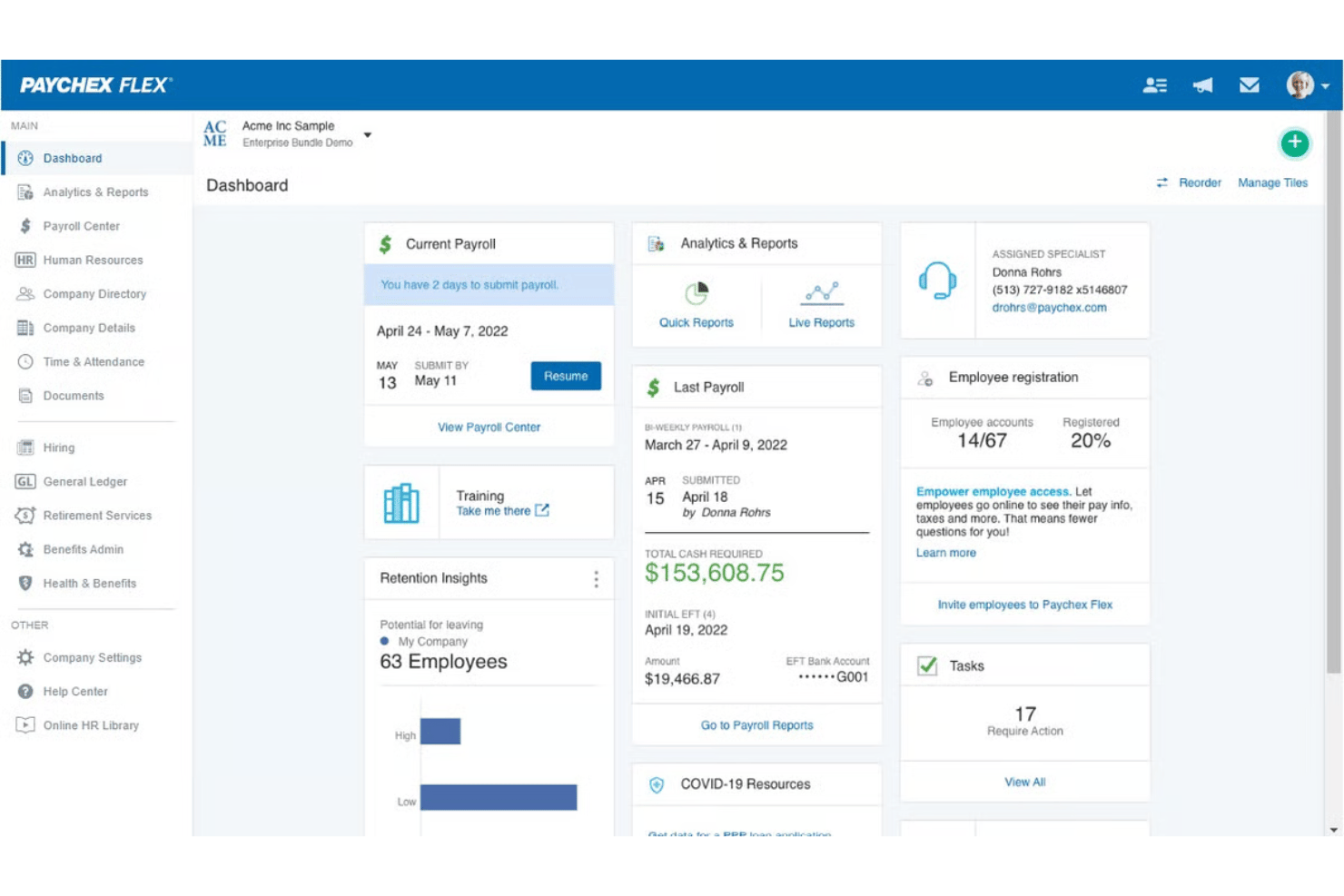
Paychex PEO is a co-employment platform with a native Bullhorn integration and adjacent invoice factoring for staffing-adjacent back-office needs.
Who Is Paychex Best For?
Paychex is a strong fit for staffing firms that use Bullhorn as their front-office platform and need mature multi-state payroll, workers' comp, and benefits infrastructure behind it.
Why I Picked Paychex
I picked Paychex as one of the best because its native Bullhorn connector moves employee data directly into Paychex Flex, cutting out manual re-entry between your front-office and payroll. Behind that sync sits Taxpay, which handles federal, state, and local tax filing across all 50 states under Paychex's own FEIN. The adjacent Advance Partners subsidiary also covers payroll funding and invoicing built specifically for temporary staffing firms.
Paychex Key Features
- Workers' comp master policy: Covers claims administration, reporting, and safety assessments through a dedicated Safety Specialist assigned to your account.
- SUI and unemployment claims management: Handles state unemployment insurance filings and charge reconciliation across all states where your workers are placed.
- Part-time employee benefits tier: A separate benefits package covering virtual primary care and dental/vision discounts gives short-assignment workers access to benefits outside the standard full-time plan.
- Invoice factoring for staffing services: Paychex Funding Solutions advances up to 90% of accounts receivable within 24–48 hours, helping bridge the gap between weekly temp payroll and slow client payment terms.
Paychex Integrations
Paychex integrates with QuickBooks Online, Sage Intacct, Xero, Oracle NetSuite, and Jirav. It also offers an open API for custom integrations.
Pros and Cons
Pros:
- Part-time benefits tier supports short assignments
- Dedicated safety support for claims administration
- Reliable payroll for complex workforce needs
Cons:
- Customer support complaints include payroll errors
- Contract terms target permanent employees

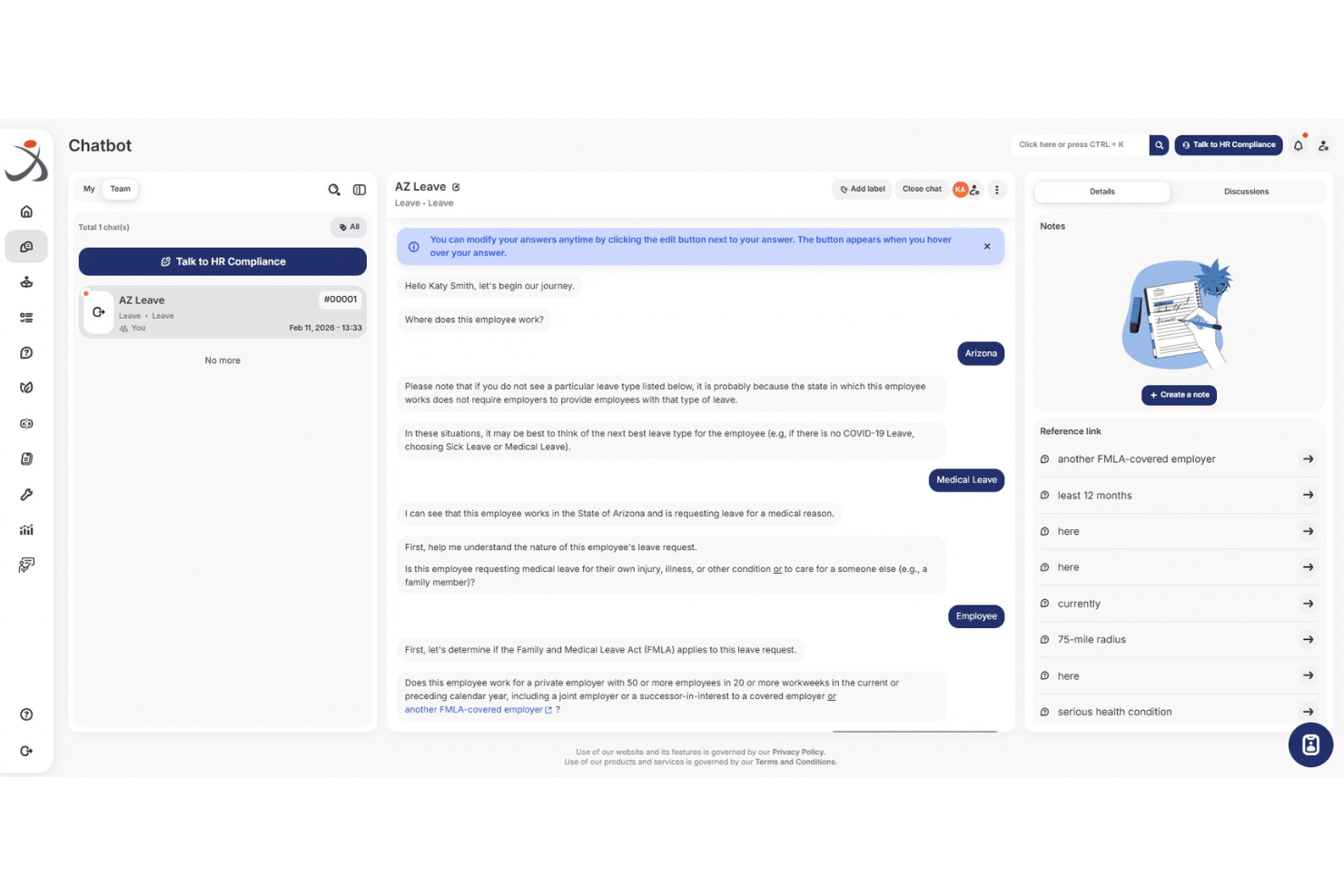
Vensure or VensureHR is a PEO built for staffing companies, offering co-employment services that cover payroll processing, tax filing, workers' compensation, multi-state compliance, and employee benefits through its dedicated staffing division, Vensure Staffing Alliance.
Who Is Vensure Best For?
Vensure is a strong fit for staffing agency owners and operations managers who need a dedicated partner to handle pay-bill functions, back-office accounting, and multi-state workers' compensation.
Why I Picked Vensure
I've included Vensure in my top picks because its dedicated Vensure Staffing Alliance division handles the full pay-bill cycle and back-office accounting that staffing agencies actually need. I particularly like that pay-as-you-go workers' comp billing is built in, which keeps premiums tied to your real headcount as placements fluctuate. The MEC plan options for variable-hour temp workers round out a service set that's genuinely built around how staffing firms operate.
Vensure Key Features
- Multi-state compliance: Tracks federal and state-level HR deadlines—including W-2, ACA filing, OSHA reporting, minimum wage changes, and paid leave updates—across all 50 states.
- Unemployment claims handling: Manages unemployment claims filing and administration as part of the payroll service, which matters for staffing firms with high placement turnover.
- Self-service portal: Gives worksite employees direct access to benefits enrollment, time tracking, payroll information, and withholding adjustments through a cloud-based portal built on PrismHR.
- Recruitment Process Outsourcing (RPO): Offers on-demand, project-based, or full-service RPO so staffing firms can flex recruiting capacity without building internal infrastructure.
Vensure Integrations
Vensure integrates with any Healthee, ClearCO, MetLife, Fortuna, Connecteam, ZayZoon, Guardian, and Solvo. An API for custom integrations is also available.
Pros and Cons
Pros:
- MEC plans address variable-hour staffing populations
- Variable-headcount workers' compensation billing
- Staffing-specific pay-bill and accounting support
Cons:
- No credential tracking for temporary placements
- Support responsiveness and payroll issues drew complaints
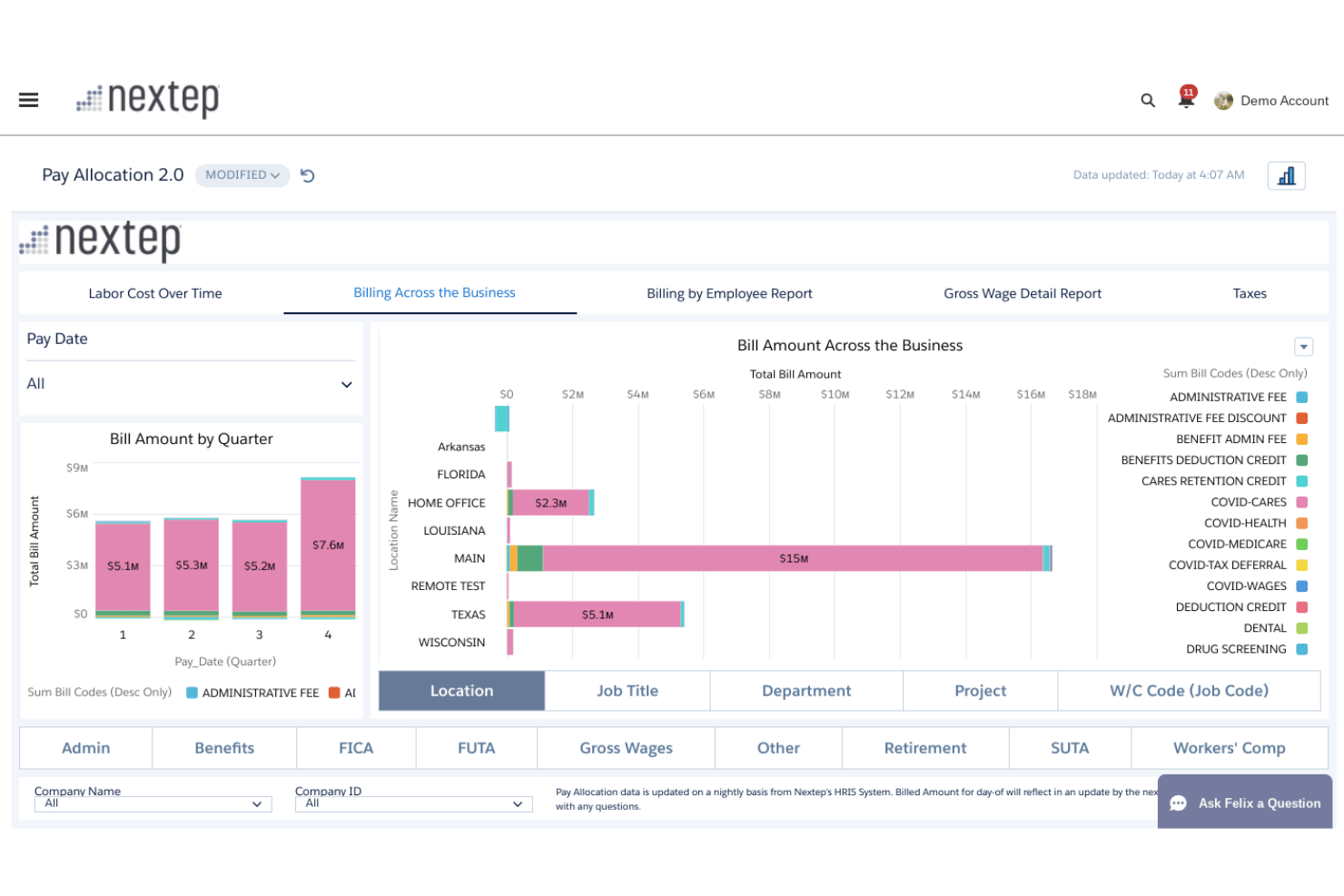
Nextep is a PEO that handles co-employment, payroll processing, multi-state tax filing, and workers' compensation for businesses managing variable or transient workforces.
Who Is Nextep Best For?
Nextep suits staffing agency owners in the Midwest, South, and Mountain West who want a fully credentialed PEO with large-group benefits access.
Why I Picked Nextep
I picked Nextep as one of the best because its sponsored master medical plan gives even variable, high employee turnover access to large-group benefits that most small staffing firms couldn't negotiate independently. I also like that the Elevate by Nextep app keeps former employees' pay stubs and W-2s accessible after termination, which matters when your roster turns over constantly. Pair that with included unemployment claims management and an A-rated workers' comp carrier with on-site safety visits, and you get a benefits and risk package that holds up under transient workforce conditions.
Nextep Key Features
- Multi-state payroll tax filing: Handles federal and state tax withholding, filing, and W-2 processing across all states where your workforce is placed.
- Dedicated HR business partner: Every client gets an assigned, certified HR business partner available by direct phone, email, and chat for compliance questions, investigations, and policy development.
- Pre-employment screening add-ons: Background checks and drug screening let you manage candidate vetting and onboarding inside the same platform.
- Employee self-service portal: Employees can view pay stubs, update direct deposit info, request PTO, track time off balances, and manage their benefits.
Nextep Integrations
Nextep doesn't have any native integrations documented with staffing ATSs such as Bullhorn, Avionté, TempWorks, or JobDiva. It offers general ledger and custom reporting exports, while Nayya is a documented benefits partner; no public API documentation is available.
Pros and Cons
Pros:
- Included unemployment and workers’ compensation support
- Former employees retain pay records
- Benefits access for transient employees
Cons:
- Benefits eligibility can exclude short placements
- No staffing-specific workforce workflows documented

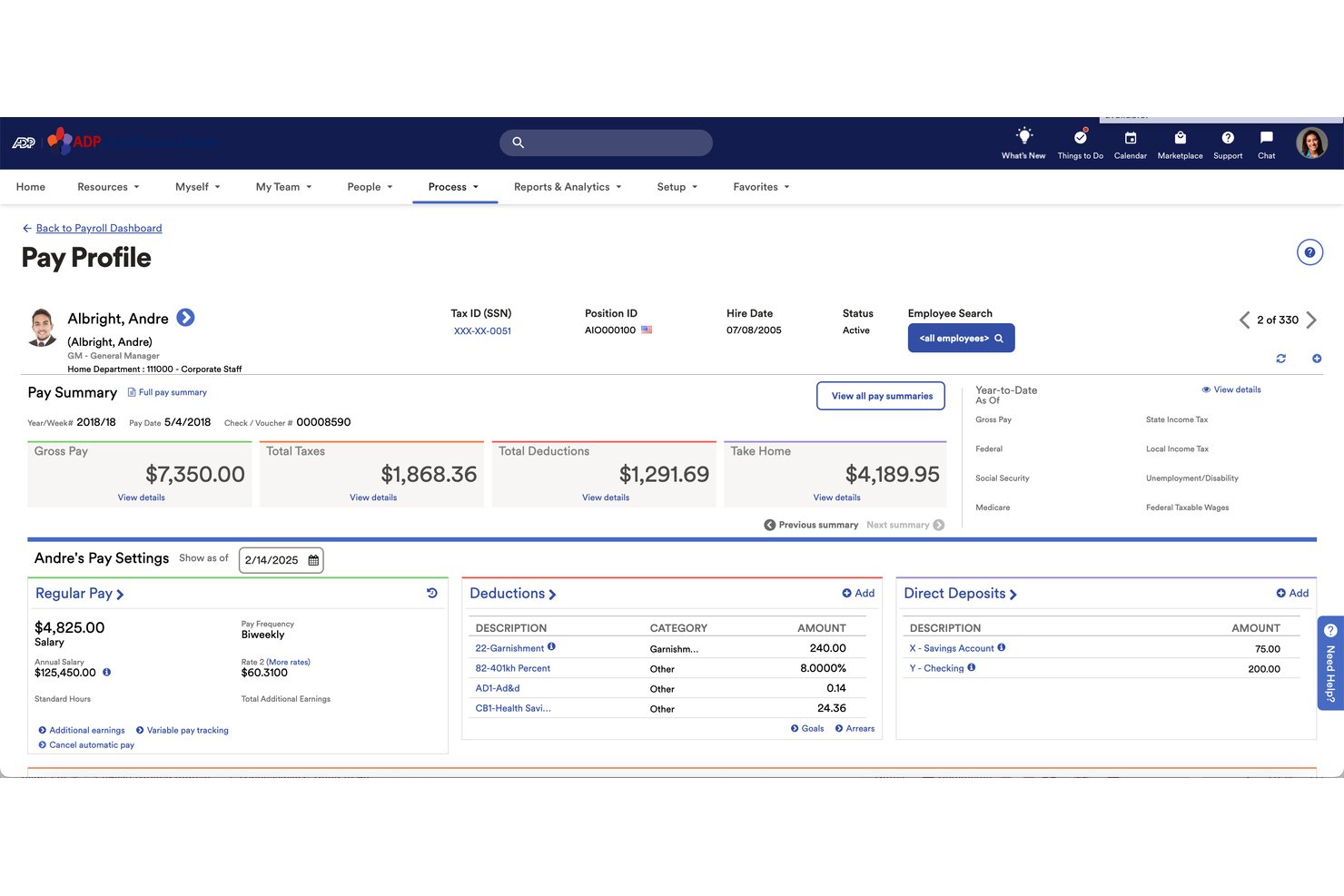
ADP TotalSource is a full-service PEO that covers payroll processing, multi-state tax filing, workers' compensation, health insurance, and HR compliance under a co-employment model.
Who Is ADP TotalSource Best For?
ADP TotalSource is a strong fit for staffing operations managing employees across multiple states who need bundled benefits, payroll, and compliance under one roof.
Why I Picked ADP TotalSource
I picked ADP TotalSource as one of the best because its large-group buying power is genuinely hard to replicate. With 722,000+ worksite employees pooled together, ADP negotiates medical, dental, vision, and 401(k) rates that a staffing firm could never access independently. That matters most when you're trying to offer temps competitive benefits to reduce turnover. On top of that, workers' comp coverage is bundled directly into the service fee, with claims administration and OSHA risk evaluation included.
ADP TotalSource Key Features
- Multi-state payroll and tax filing: ADP handles payroll processing and tax remittance across all 50 states, with a dedicated payroll business partner managing complex setups and wage garnishments.
- Mobile employee self-service: Employees access pay stubs, W-2s, and direct deposit settings through the ADP mobile app, with onboarding available before day one.
- Dedicated HR business partner: A named HR advisor provides ongoing compliance guidance, employee relations support, and proactive regulatory updates.
- CPEO certification: ADP TotalSource holds IRS Certified PEO status, which transfers federal payroll tax liability protection directly to your business.
ADP TotalSource Integrations
ADP TotalSource connects with 300+ apps from ADP Marketplace, including QuickBooks Online, Xero, Sage, ClearCo, and Rightworks. It also provides open APIs for custom integrations.
Pros and Cons
Pros:
- Payroll supports distributed staffing operations
- Bundled workers’ compensation includes claims administration
- Large-group benefits support temporary-worker retention
Cons:
- Support response times can delay urgent fixes
- Renewal increases create workforce-cost uncertainty

GMS is a CPEO-certified professional employer organization, offering co-employment services that cover payroll processing, tax filing, workers' compensation management, unemployment claims handling, and employee benefits access.
Who Is GMS Best For?
GMS is a strong fit for small-to-midsize staffing agencies, particularly those in local markets with light industrial or blue-collar workforces that carry high workers' compensation insurance.
Why I Picked GMS
I've included GMS in my top picks because its workers' comp infrastructure is genuinely built for the messy realities of light industrial and blue-collar staffing. GMS has been self-insured in Ohio since 2014 and assigns nurse case managers to claims, which matters when your temp workforce cycles through physically demanding roles at high volume. Its unemployment claims practice, including hearing representation, directly addresses the separation-heavy nature of contingent staffing.
GMS Key Features
- CPEO federal tax liability protection: As an IRS-certified PEO, GMS assumes sole federal employment tax liability on wages paid to your worksite employees, backed by an annual surety bond.
- Earned wage access via ZayZoon: Employees can access a portion of earned wages before payday at no cost or liability to you, making it easier to attract and retain transient workers.
- Paperless electronic onboarding: Handles digital onboarding, including benefits enrollment, direct deposit setup, and payroll deduction configuration for incoming workers.
- GMS Connect HRIS: A SOC 1-certified, cloud-based platform covering payroll, benefits, onboarding, and performance management, with a mobile app for employee and manager self-service.
GMS Integrations
GMS documents integrations with ZayZoon and Clear Verify, plus access to the Cigna PPO network. It doesn’t publish a total count, API, or staffing ATS integrations.
Pros and Cons
Pros:
- Local service with dedicated HR contact
- Dedicated unemployment hearing representation
- Strong workers’ compensation claims support
Cons:
- National coverage may be less extensive
- Limited fit for very large staffing firms
Other PEOs for Staffing Companies
Some additional options that didn’t make it onto my shortlist, but are still worth checking out:
- Justworks
For CPEO-backed co-employment
- TriNet
For ESAC-backed co-employment at scale
- RemotePeople
For US and global workforce under one roof
- Deel Hire
For end-to-end recruitment
- Amplify HR
For multi-state payroll compliance
- AlphaStaff
For multi-state unemployment claims management
- Insperity HR360
For CPEO-backed SMB compliance support


How I Evaluate PEOs for Staffing Companies
I split my evaluation into three parts. Core functionality carries the most weight: I look for tools that can run payroll and file taxes across multiple states and operate under a true co-employment model. Then I check for standout features like staffing-specific ATS integrations, plus what each provider offers beyond features—support quality, pricing flexibility, and implementation.
Core Functionality (Table Stakes For This List)
When I'm selecting tools for my list, I score each one on a scale from 0 (does not offer the functionality) to 5 (excels in this area) for each core functionality listed below. I then convert the total into a percentage to help assess each tool's overall fit, with extra weight on any functionalities I've deemed essential.
- Payroll and Tax Filing (Essential): I check whether the provider runs payroll and files federal, state, and local taxes across every state where your temps are placed.
- Co-Employment Model (Essential): I evaluate how much employer liability the PEO actually assumes, from workers' comp obligations to unemployment and regulatory exposure.
- Multi-State Compliance Support: Staffing firms place workers in dozens of jurisdictions at once, so I look for proactive alerts and state-specific guidance as laws change.
- Workers' Comp Administration: Beyond just providing coverage, I look at claims handling, safety program support, and how the provider manages high-risk classification codes.
- Employee Benefits Access: I consider whether short-term and contract workers can actually enroll in pooled health, retirement, and ancillary plans without long waiting periods.
- High-Volume Onboarding Management: Rapid hiring cycles mean I evaluate how well the platform handles bulk onboarding, digital document collection, and fast offboarding at scale.
Once I have a list of tools that meet the criteria, I consider what sets each platform apart.
Differentiating Factors (What Sets Vendors Apart)
Here's how I compare and contrast different vendors:
Standout Features
I look for native integrations with staffing-specific ATS platforms like Bullhorn or Avionté, since syncing placements directly into payroll eliminates the double-entry that slows down branch teams during high-volume weeks. Bill rate and pay rate automation matters just as much—I check whether the provider can calculate markups, overtime splits, and client-specific spreads without manual intervention. I also evaluate mobile self-service options, because temp workers who can pull up pay stubs or tax forms on their phone put far less pressure on your HR team between assignments.
Beyond Features
I check whether a provider holds IRS-Certified PEO (CPEO) status or ESAC accreditation, since both reduce your tax liability exposure and signal financial stability during headcount swings. Pricing model matters too—percentage-of-payroll works differently than per-employee-per-month when your workforce doubles for a seasonal contract, so I look for transparency around onboarding surges and termination volume. I also evaluate whether you get a dedicated account manager who understands staffing, because a rep familiar with high workers' comp claim frequency resolves issues faster than a generalist queue.
How to Choose a PEO for a Staffing Company
Choose a PEO by testing how it handles variable headcount, distributed placements, workers’ compensation exposure, and staffing-specific liability.
| If your priority is | Look for |
|---|---|
| Faster temporary-worker onboarding | Bulk enrollment, digital documents, and defined offboarding procedures |
| Lower workers’ compensation exposure | Written claims handling, classification review, and safety support |
| Predictable seasonal costs | A pricing example covering payroll percentage, minimums, and termination fees |
| Clear co-employment responsibilities | A service agreement defining tax, unemployment, benefits, and compliance duties |
| Multistate placement support | State-specific registration, tax filing, and compliance escalation procedures |
How to Vet Your Shortlist
- Test onboarding: Ask the vendor to complete a trial task for five hypothetical workers across two states, including documents and first-payroll timing.
- Request claims materials: Within three business days, obtain a sample workers’ compensation procedure, escalation contacts, and classification-review workflow.
- Audit the agreement: Ask for the service agreement and identify clauses covering tax penalties, unemployment claims, benefit eligibility, and termination obligations.
- File a support ticket: Submit one payroll-correction question and one workers’ compensation question, then record response times and ownership within a five-business-day window.
- Choose your tradeoff: Decide whether you value staffing-specific risk support over broader national resources, or lower administrative burden over more defined account guidance.
What Is a PEO for Staffing Companies?
A PEO is a co-employment service that helps staffing companies with payroll management, tax filing, benefits, workers’ compensation, and HR compliance for temporary workforces. It supports firms with frequent hiring, variable hours, multistate placements, and changing client assignments. The staffing company directs daily work, while the PEO handles agreed administrative and employment responsibilities.
Features
Here are the main features I look for in any great PEO for staffing companies:
- Payroll and tax filing: Runs payroll for hourly, salaried, and temporary workers while calculating wages, deductions, and overtime. The PEO files required federal, state, and local taxes based on each worker’s assignment location.
- Co-employment administration: Defines which employment responsibilities belong to your staffing firm and which belong to the PEO. This arrangement typically covers payroll tax administration, workers’ compensation, unemployment claims, and selected compliance duties.
- Multistate compliance support: Tracks registration, wage, leave, tax, and employment rules across jurisdictions. Your team receives guidance when workers move between assignments or work in different states.
- Workers’ compensation management: Provides coverage administration, employee incident reporting, claims coordination, and classification review. Safety guidance can also help your team address risks linked to different client sites and job categories.
- Employee benefits administration: Gives eligible workers access to health, retirement, and ancillary benefit plans through the PEO. The system manages enrollment, deductions, eligibility dates, and qualifying life events.
- High-volume onboarding: Collects tax forms, identity documents, policy acknowledgments, and direct-deposit details through digital workflows. Bulk invitations and assignment-based checklists help recruiters onboard several workers at once.
- Staffing software integrations: Connects with staffing ATS and employee management platforms to transfer worker, placement, time, and pay data. Integrations reduce duplicate entry between recruiting, scheduling, payroll, and billing systems.
- Pay and bill rate management: Applies pay rates, overtime rules, markups, and client-specific billing terms to each assignment. This gives staffing teams a clearer record of worker compensation and client charges.
- Employee self-service: Lets workers view pay statements, update personal information, complete forms, and access tax documents online. Mobile access is especially useful for temporary employees between assignments.
- Dedicated HR support: Provides access to specialists who can answer payroll, compliance, benefits, and employee-relations questions. A defined escalation process helps your team assign ownership when issues involve multiple jurisdictions or client sites.
Benefits
In my experience, PEOs for staffing companies offer several benefits—a few of the most common are:
- Simpler payroll administration: Payroll processing, tax calculations, and federal, state, and local filings are managed through one system.
- Multistate compliance support: State-specific guidance, registration support, and compliance alerts help your team manage distributed worker placements.
- Lower workers’ compensation exposure: Claims coordination, classification reviews, safety guidance, and coverage administration support risk management across client sites.
- Faster worker onboarding: Bulk invitations, digital forms, assignment checklists, and direct-deposit collection help recruiters onboard workers quickly.
- Broader employee benefits access: Eligible workers can enroll in health, ancillary, and retirement plans through the PEO’s benefits administration process.
- Clearer employment responsibilities: A defined co-employment arrangement assigns payroll, unemployment, benefits, workers’ compensation, and compliance duties between your firm and the PEO.
Costs and Pricing
Costs vary based on workforce size, payroll volume, included services, and add-ons. Here are the pricing ranges you can typically expect from PEOs for staffing companies:
Plan Comparison Table for PEOs for Staffing Companies
These plan categories are general pricing benchmarks because most PEOs provide custom quotes rather than fixed tiers.
| Plan Type | Average Price | Common Features |
|---|---|---|
| Free Plan | $0 | Basic consultation, needs assessment, and introductory pricing review. |
| Personal Plan | $40–$80 per employee per month | Payroll processing, tax filing, employee self-service, and basic HR support. |
| Business Plan | $80–$150 per employee per month | Multistate payroll, workers’ compensation administration, benefits administration, compliance guidance, and onboarding workflows. |
| Enterprise Plan | $150–$300 per employee per month | Dedicated account management, staffing software integrations, advanced reporting, customized compliance support, and tailored benefits administration. |
FAQs
Some answers to common questions about PEOs for staffing companies:
Is a PEO a good fit for a small staffing agency?
Yes, a PEO can fit a small staffing agency with frequent hiring or multistate placements. It can handle payroll, tax filings, workers’ compensation administration, and benefits through one service agreement. Review the minimum employee count before signing. Ask how the provider handles short assignments, inactive workers, and rapid termination volume. You should also confirm whether the PEO supports your staffing specialties, such as healthcare, light industrial, or professional placements.
Does a PEO take responsibility for staffing agency employees?
Yes, a PEO shares employment responsibilities through a co-employment arrangement. Your agency still directs recruiting, client relationships, assignments, and daily work expectations. The PEO typically manages agreed payroll, tax, benefits, workers’ compensation, and unemployment duties. The service agreement defines the exact division of responsibility. Review provisions for tax penalties, injury claims, unemployment disputes, wage corrections, and employee termination before you commit.
Can temporary workers receive benefits through a PEO?
Yes, eligible temporary workers can receive benefits through some PEO plans. Eligibility rules vary by plan, assignment length, hours worked, and employment status. Ask whether workers qualify immediately or after a waiting period. Confirm which health, retirement, and ancillary plans are available. Your team should also understand how deductions work when assignments end. Request written guidance for workers who move between clients or return after a short break.
What should a staffing company ask before choosing a PEO?
Ask for a sample service agreement, pricing example, claims procedure, and onboarding timeline. Test the provider with five hypothetical workers across two states. Include different pay rates, start dates, and assignment locations. Ask who handles tax registration, wage corrections, unemployment claims, and workers’ compensation disputes. You should also submit real support questions before signing. Record response times, escalation steps, and the person responsible for each issue.
How does a PEO handle workers’ compensation for staffing placements?
A PEO typically administers workers’ compensation coverage, incident reporting, claims coordination, and classification review. Your agency must still report injuries promptly and share accurate job details. Ask how the provider classifies assignments at different client sites. Confirm who investigates claims and communicates with the worker, client, and insurer. Request written procedures for disputed claims, return-to-work planning, and assignments with elevated safety risks.