

Afrika'daki küresel bordro hizmetleri, İK ekibinizin nerede bulunduğundan bağımsız olarak Afrika ülkelerindeki çalışanlar ve yükleniciler için bordroyu, giderleri ve uyumluluğu yönetmenizi sağlar. İK profesyonellerinin karmaşıklığı azaltmak, uyumluluk risklerinden kaçınmak ve ekiplerine doğru şekilde ve zamanında ödeme yapmak için bu rehbere ihtiyacı vardır. Aşağıda, günümüzün çeşitli Afrika iş gücü için en iyi seçenekleri karşılaştıran uzman görüşlerini bulacaksınız.
Why Trust Our Software Recommendations
6,700+
Reviews
20
Industry experts
16+
Evaluation factors
14
Years
Our team has been testing and reviewing software since 2012. As HR experts ourselves, we know how difficult—and important—it is to choose the right software.
For this guide, we evaluated tools using hands-on testing and independent research, scoring tools using our selection criteria. We also draw on insights from industry thought leaders and practicing HR experts.
Our reviews reflect our human editorial judgment, not a sales pitch.
Expert reviewers:
- Phil GrayCOO
 Kim BehnkeHR Tech Editor & Analyst
 Josh BarkerPeople Ops Manager

Karşılaştırma Tablosu: Afrika'daki En İyi Küresel Bordro Hizmetleri
Bu karşılaştırma tablosu, Afrika’daki en iyi küresel bordro hizmetleri için fiyatlandırma ayrıntılarını özetlemektedir.
Score legend (out of 5)
- Excellent4.5–5
- Good4–4.4
- Average3–3.9
- Below average2–2.9
- Poor1–1.9
Sorted by: Default
| Tool | Starting Price | Website | |||||||
|---|---|---|---|---|---|---|---|---|---|
Best for owned-entity EOR across African markets | 2.3 out of 5 | 3 | 2 | 2 | 2 | 2 | 3 | $599/per employee/month Free demo available | Website |
Best for Africa-native payroll across 43 countries | 3.0 out of 5 | 4 | 3 | 3 | 2 | 4 | 2 | $29/user/month Free demo available | Website |
Best for payroll without replacing providers | Not rated | 4 | 3 | 4 | 4 | 4 | Not rated | $399/user/month Free demo available | Website |
Best for payroll rule testing before rollout | Not rated | 4 | 3 | 4 | 2 | 3 | Not rated | Pricing upon request Free demo available | Website |
Best for central oversight of managed payroll | 2.3 out of 5 | 3 | 2 | 2 | 2 | 3 | 2 | Pricing upon request Not available | Website |
Best for scheduled payouts with liability cover | 3.2 out of 5 | 3 | 3 | 3 | 4 | 3 | 3 | $499/per employee/month Free demo available | Website |
Best for comparing employer costs by country | 4.2 out of 5 | 5 | 3 | 4 | 3 | 5 | 5 | $599/user/month Free demo available | Book Demo |
Best for payroll setup with payment testing | Not rated | 3 | 2 | 3 | 2 | 3 | Not rated | $599/user/month Free demo available | Book Demo |
Best for payroll backed by capital loans | Not rated | 2 | 3 | 3 | 2 | 3 | Not rated | Pricing upon request Free demo available | Website |
Best for employer-controlled salary release | Not rated | 3 | 3 | 4 | 3 | 4 | Not rated | Pricing upon request Free demo available | Website |
Best for AI-assisted commission pay updates | 2.3 out of 5 | 3 | 3 | 2 | 1 | 2 | 3 | $8/user/month Free trial + free demo available | Book Demo |
Best for African market entry without entities | 3.0 out of 5 | 2 | 3 | 3 | 3 | 3 | 4 | $399/user/month Free demo available | Website |
Best for foreign hires with visa support | 3.2 out of 5 | 2 | 2 | 3 | 4 | 4 | 4 | $349/user/month Free demo available | Website |
Best for South African payroll filings | Not rated | 2 | 3 | 3 | 2 | 3 | Not rated | $299/per employee/month Free demo available | Website |


Afrika'daki En İyi Küresel Bordro Hizmetlerinin İncelemeleri
Aşağıda kısa listeme giren Afrika’daki en iyi küresel bordro hizmetlerinin ayrıntılı özetlerini bulabilirsiniz. İncelemelerim, size en uygun seçeneği bulmanıza yardımcı olmak için her platformun yeteneklerine, uyumluluk desteğine ve entegrasyonlarına ayrıntılı bir bakış sunmaktadır.
 1Best for owned-entity EOR across African markets
G-P
- Free demo available
- From $599/per employee/month
Visit WebsiteCustomer Rating:4.5/5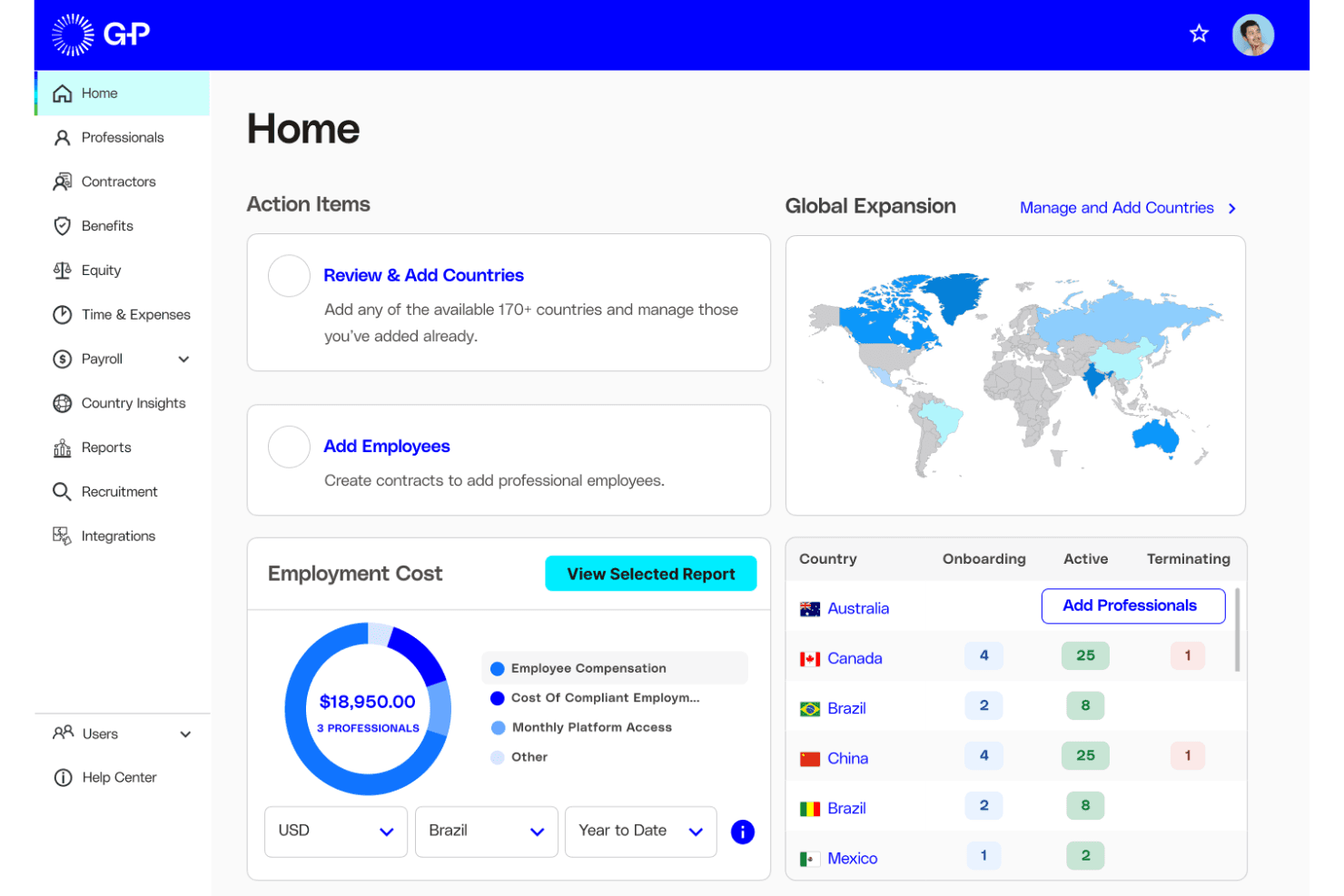
G-P's platform offers a centralized home dashboard for managing global employment costs, employee onboarding, and country-level workforce expansion. G-P is a global employer of record and payroll platform that covers 40+ African countries through wholly owned entities, handling multi-country payroll in local currencies, statutory compliance, and contractor management across Anglophone, Francophone, and Lusophone markets.
Who Is G-P Best For?
G-P is a strong fit for mid-market and enterprise HR teams hiring across multiple African countries who need direct-entity EOR coverage rather than a partner-network aggregator.
Why I Picked G-P
G-P earns its spot on my shortlist because it operates through 100+ wholly owned entities globally, which means EOR coverage across 40+ African countries isn't brokered through a patchwork of local partners. I particularly like its Global Compliance Engine, which handles country-specific obligations like South Africa's UIF and SDL, Kenya's NSSF, and Nigeria's pension contributions automatically. Its 150+ payroll currency support, including NGN, ZAR, KES, and MAD, means disbursements hit in local currency without manual FX workarounds.
G-P Key Features
- G-P Contractor™ misclassification detection: AI scans contractor agreements against local employment laws in 40+ countries and flags classification risks with step-by-step remediation guidance.
- G-P Gia™ compliance monitoring: An AI HR agent that delivers real-time regulatory alerts and source-backed compliance guidance drawn from 1,500+ government sources.
- Wise-powered contractor payouts: Contractors receive instant local-currency payments via a Wise integration, with employers funding in their preferred currency and the platform handling FX conversion.
- Enterprise HCM integrations: Native connectors to Workday, SAP SuccessFactors, and ADP enable GL mapping and cost-center reporting directly from the G-P dashboard.
G-P Integrations
G-P’s integration suite supports 200+ HCM and payroll partners, including Workday, SAP SuccessFactors, ADP, BambooHR, HiBob, and UKG. Its API-first architecture supports custom integrations with HRIS, ERP, and accounting systems.
Pros and Cons
Pros:
- Instant local currency payouts to contractors
- AI compliance engine covers major local laws
- Owned entities in 40+ African countries
Cons:
- Ticket-only support frustrates some payroll managers
- Onboarding can be delayed by local approvals
Learn more about G-P: Best for Africa-native payroll across 43 countries
- Free demo available
- From $29/user/month
Visit WebsiteCustomer Rating:4.9/5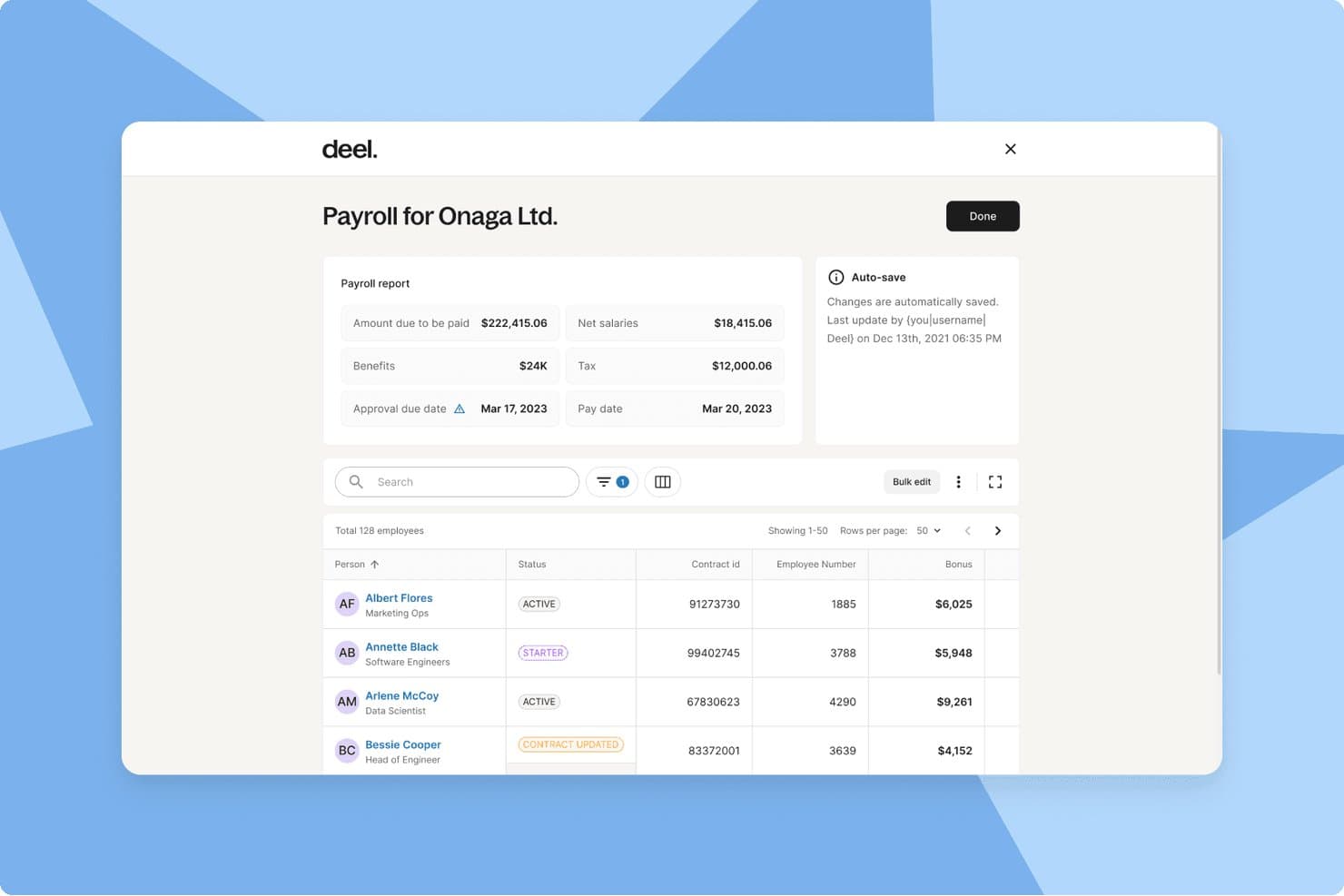
Deel Payroll centralizes payroll reports, employee status, and bonuses in one view. Deel Payroll is a global payroll and workforce management platform that combines native in-country payroll engines across 43 African countries, EOR services, contractor management, and consolidated multi-country reporting in one system.
Who Is Deel Payroll Best For?
Deel Payroll is a strong fit for multinational organizations that need to pay employees and contractors across multiple African countries from a single platform.
Why I Picked Deel Payroll
Deel Payroll earns its spot on my shortlist because its 2024 acquisition of PaySpace gave it something most competitors can't replicate: native, in-country payroll engines built specifically for 43 African countries. I love that statutory calculations like Kenya's WIBA and Affordable Housing Levy or Nigeria's NSITF and ITF contributions are automated and updated in real time through Continuous Compliance™. On top of that, mobile money payouts via M-Pesa, MTN MoMo, and Airtel Money mean employees actually get paid through the rails they use.
Deel Payroll Key Features
- Contractor of Record (AOR): Deel assumes full legal liability for worker misclassification, with localized contracts drafted for each African market.
- WhatsApp employee self-service: Employees can access payslips, tax documents, leave applications, and expense claims directly through WhatsApp.
- Payroll Connect: Consolidates payroll data from third-party local providers into a single Deel dashboard for a unified cross-country view.
- AI-powered misclassification assessment: Analyzes worker classification across your contractor population with approximately 90% accuracy to flag legal risk before it becomes a liability.
Deel Payroll Integrations
Deel Payroll offers integrations with QuickBooks, Xero, BambooHR, Expensify, NetSuite, Sage Intacct, Greenhouse, Workday, SAP, and ADP, among others available through its app store. It also connects with Zapier and provides an API for custom integrations.
Pros and Cons
Pros:
- Supports mobile money payouts and WhatsApp service
- Automated compliance for Africa-specific regulations
- Local payroll engines in 43 African countries
Cons:
- Unexpected fees reported by several users
- Relies on partner entities in many countries
Learn more about Deel Payroll: Best for payroll without replacing providers
- Free demo available
- From $399/user/month
Visit WebsiteCustomer Rating:4.7/5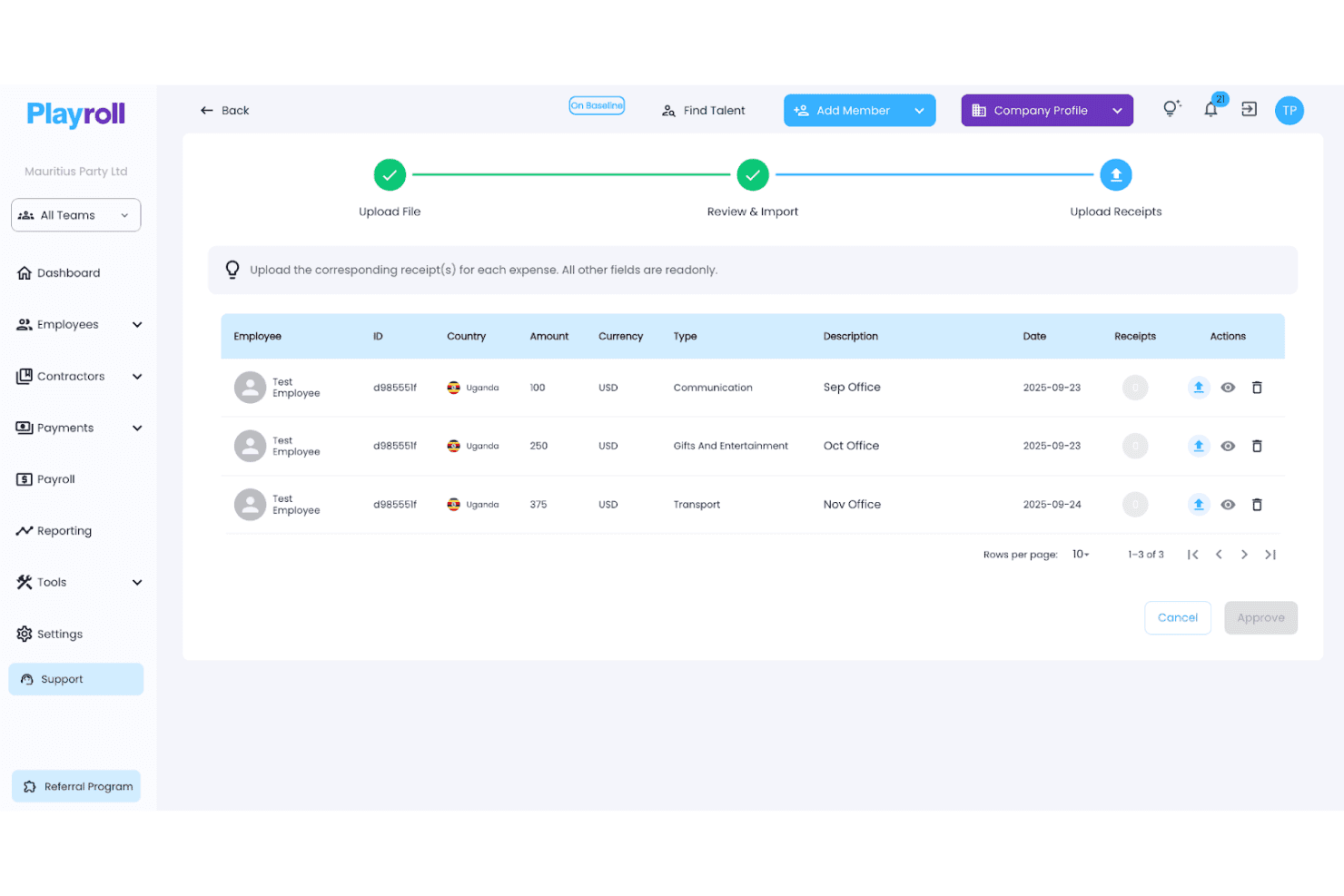
Playroll lets users bulk upload and manage employee expense receipts. Playroll is a global payroll platform that runs multi-country payroll for existing entities, consolidates payroll data from both Playroll-run and third-party local providers, and automates gross-to-net calculations, statutory filings, and local-currency disbursements across 45+ countries.
Who Is Playroll Best For?
Playroll's Global Payroll Services is a strong fit for finance teams and HR directors managing multi-country payroll across existing entities who need one platform to consolidate data from both Playroll-run and third-party local providers.
Why I Picked Playroll
I picked Playroll as one of the best because it's built specifically for teams that already have local payroll providers in place and don't want to rip them out. What I find genuinely useful is the multi-vendor consolidation layer: you can run payroll through Playroll in markets like South Africa, Kenya, and Nigeria while keeping your existing providers in other countries, and everything flows into one reporting view. The variance tracking and GL-ready exports mean finance teams get a clean, consolidated picture across currencies and entities without manual reconciliation.
Playroll Key Features
- Multi-vendor payroll consolidation: Imports and standardizes payroll data from your existing local providers alongside Playroll-run payroll, all in one dashboard.
- Custom approval chains with variance checks: Lets you set up flexible, multi-step approval workflows that flag payroll variances line-by-line before runs are finalized.
- Local-currency salary disbursement: Pays employees directly to local bank accounts in 60+ currencies, with payment tracking and confirmation built in.
- Year-end statutory filings: Handles end-of-year compliance filings with local authorities across all countries where you run payroll through Playroll.
Playroll Integrations
Playroll offers integrations with BambooHR, HiBob, Personio, Expensify, and Mesh for employee, leave, payslip, and expense data. It also provides an API for custom integrations, though the total integration count and connection types aren’t stated.
Pros and Cons
Pros:
- Keeps African payroll providers in one view
- Centralized payslips reduce document chasing
- Clear payroll breakdowns help finance reviews
Cons:
- No entity-free hiring within payroll service
- Reporting depth draws recurring user criticism
Learn more about Playroll: 4Best for payroll rule testing before rollout
HONO
- Free demo available
- Pricing upon request
Visit WebsiteCustomer Rating:4.4/5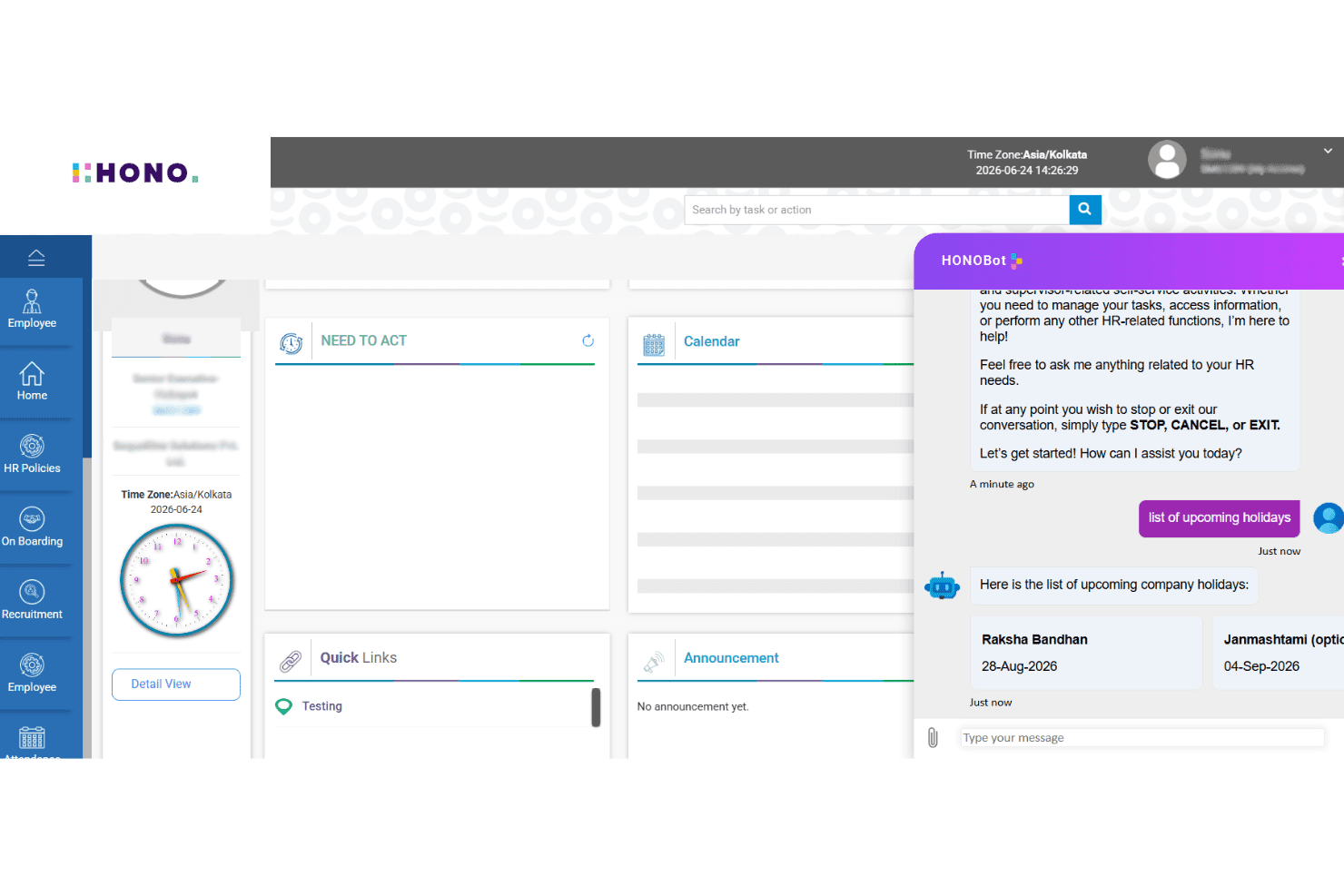
HONO's AI chatbot helps employees instantly check upcoming holidays. HONO is an enterprise HR and payroll platform that covers multi-country payroll processing, statutory compliance, and workforce reporting across six African countries—Kenya, Uganda, Tanzania, Nigeria, Zambia, and Mauritius.
Who Is HONO Best For?
HONO suits HR and payroll teams managing multi-entity workforces across Kenya, Uganda, Tanzania, Nigeria, Zambia, and Mauritius on a single platform.
Why I Picked HONO
I've included HONO in my top picks because its payroll rule testing capability lets you validate country-specific calculations before a cycle goes live, which matters a lot when you're managing statutory contributions across Kenya, Nigeria, Zambia, and three other African countries simultaneously. I particularly like how HONO versions and effective-dates its country rules, so you can parallel-run a new configuration against your existing numbers and reconcile results before anything reaches employees. The compliance dashboard per entity also gives you a live view of each country's statutory status, so errors surface before disbursement rather than after.
HONO Key Features
- Multi-entity workforce dashboard: Rolls up headcount, cost, attrition, and compliance risk across all six supported African countries, with drill-downs by country, business unit, or grade.
- Ready-to-file statutory reports: Generates country-specific filing reports for KRA, URA, TRA, FIRS, ZRA, and MRA across the supported African markets.
- Employee mobile self-service: Lets employees access payslips, manage leave, submit expenses, and retrieve documents directly from their phones.
- ERP and HRIS integrations: Provides pre-built connectors for Oracle NetSuite, Oracle Fusion Cloud, and SAP SuccessFactors, plus REST API access for custom ERP connections.
HONO Integrations
HONO’s directory lists 43 integrations, including native connectors for Oracle NetSuite, Oracle Fusion Cloud, and SAP SuccessFactors. REST, GraphQL, and custom ERP connections are available through its API.
Pros and Cons
Pros:
- Reviewers value mobile payslip access
- Payroll rules can be parallel-tested before rollout
- Covers six African payroll markets
Cons:
- Payment rails and settlement timing are unspecified
- No documented EOR or entity-optional hiring
Learn more about HONO: Best for central oversight of managed payroll
- Not available
- Pricing upon request

TMF Group's Optix dashboard tracks payroll summaries and analytics in real time. TMF Group is a managed global payroll service that handles multi-country payroll processing, compliance, disbursement, and reporting across 150 jurisdictions through its TMF Optix platform and local in-country teams.
Who Is TMF Group Best For?
TMF Group suits multinational organizations that need a single managed payroll partner to centralize oversight across a wide range of countries from one platform.
Why I Picked TMF Group
I picked TMF Group as one of the best because its TMF Optix platform gives you a single, centralized view of payroll activity across all the countries you operate in, which is exactly what a multinational team needs to stay on top of compliance and approvals. I especially like that multi-level client payroll approval is built in, so your finance and HR leads can review gross-to-net reports before anything is finalized. Its local in-country teams, operating across 150 jurisdictions, handle compliance ownership directly so you're not chasing regulatory updates yourself.
TMF Group Key Features
- Employer of record (EOR) services: Covers markets where you don't have a local office, handling onboarding, payroll, benefits administration, and local labor and tax compliance through a partnership with Globalization Partners.
- Workday HCM integration: Transfers payroll data directly from your Workday system to TMF Group's local processing teams, reducing manual data handling across countries.
- Statutory and custom payroll reporting: Generates reports covering pensions, benefits, stock options, gender pay gap, and retirement contributions alongside standard statutory filings.
- Parallel test execution during setup: Runs a parallel payroll test before go-live to validate calculations and configuration before your first live payroll cycle.
TMF Group Integrations
TMF Group has a documented Workday integration for transferring payroll data to its offices. TMF Optix also supports API connections, file transfers, and customizable templates for other HRIS or finance systems.
Pros and Cons
Pros:
- South African PAYE and BCEA processing
- Parallel testing checks setup before launch
- Central payroll approvals support oversight
Cons:
- A reviewer reported tiny, easy-to-misclick controls
- African payroll-country coverage remains unclear
Learn more about TMF Group: Best for scheduled payouts with liability cover
- Free demo available
- From $499/per employee/month
Visit WebsiteCustomer Rating:4.4/5
Papaya Global tracks employer payroll costs over time with interactive charts. Papaya Global is a global payroll platform that automates multi-country payroll processing, local currency disbursements, and statutory compliance across 160+ countries, with dedicated mobile money payout support across six African markets.
Who Is Papaya Global Best For?
Papaya Global suits global payroll managers and finance teams running multi-country payrolls who need scheduled payment delivery with built-in liability coverage across African and other international markets.
Why I Picked Papaya Global
Papaya Global earns its spot on my shortlist because of how it handles scheduled payment delivery with built-in liability coverage, which is a real differentiator when payroll timing across African markets can't slip. I particularly like that it supports mobile wallet payouts across six African markets, including M-Pesa in Kenya and MTN in Ghana, with T+1 settlement on local routes. If you pre-fund your virtual payroll account at least five business days before the payment date, Papaya's liability coverage kicks in, so late bank screening or treasury delays don't land on your team.
Papaya Global Key Features
- AI-powered payroll validation: Automatically scans gross-to-net data before each payroll run to flag anomalies, mismatches, and missing inputs.
- OneData ingestion: Pulls workforce data from HCM, HRIS, ERP, and spreadsheet sources into a single normalized layer ready for payroll processing.
- Employee self-service portal and app: Gives workers access to current and archived payslips, time-off reporting, and bank detail updates via web or mobile.
- Advanced BI analytics: Delivers real-time visibility into payroll costs, liabilities, and trends across countries as each cycle closes.
Papaya Global Integrations
Papaya Global offers native integrations with SAP SuccessFactors, Oracle HCM, Workday HCM, BambooHR, NetSuite, Sage, and its Journal Entry Connector. It also provides OneData for HRIS, ERP, and spreadsheet data ingestion, plus a REST API for custom integrations.
Pros and Cons
Pros:
- Scheduled payouts include conditional liability coverage
- Mobile-wallet payouts span six African markets
- Reviewers report prompt cross-border payments
Cons:
- African payroll coverage varies by country
- Reviewers report slow urgent support responses
Learn more about Papaya Global: Best for comparing employer costs by country
- Free demo available
- From $599/user/month
Visit WebsiteCustomer Rating:4.2/5
Atlas displays payroll data across multiple regions in one dashboard. Atlas HXM is a direct employer of record (EOR) service that manages international payroll, statutory compliance, and local employment across 38+ African countries using Atlas-owned entities.
Who Is Atlas Best For?
Atlas HXM suits global HR and finance teams that need to hire and pay employees across multiple African markets without setting up local entities.
Why I Picked Atlas
Atlas earns its spot on my shortlist because its Payroll Dashboard lets you compare employer costs side by side across countries, including employer taxes and statutory benefit costs like UIF in South Africa or CNSS in Morocco. That visibility is rare and genuinely useful when you're deciding whether to hire in Nairobi versus Lagos. I also like that Atlas operates owned entities across 38+ African countries, so there's no third-party local entity adding delays or compliance gaps between you and your employees.
Atlas Key Features
- Statutory deductions automation: Atlas automatically calculates and withholds country-specific taxes and statutory contributions—like PAYE, UIF, NSSF, and CNSS—on each pay run.
- Multi-currency payroll processing: You can pay employees in 80+ currencies, with local-currency payroll confirmed for markets including South Africa, Kenya, Nigeria, and Morocco.
- Payroll audit trails: All payroll records, approvals, and history are stored centrally, with built-in anomaly checks and layered validation before each payroll is finalized.
- HRIS integrations: Atlas connects with tools like Workday, BambooHR, UKG, and Sage to keep employee data, headcount changes, and payroll records synced across your existing systems.
Atlas Integrations
Atlas lists integrations with Workday, BambooHR, UKG, Dayforce, and Sage, but doesn’t specify whether these are native or marketplace connections. Its REST API supports custom employee onboarding and employee-detail updates.
Pros and Cons
Pros:
- Reviewers praise responsive payroll support
- Country cost comparisons clarify hiring budgets
- Owned entities support direct local hiring
Cons:
- Report loading and mobile app issues
- Early payroll cutoffs limit cash-flow flexibility
Learn more about Atlas: Best for payroll setup with payment testing
- Free demo available
- From $599/user/month (billed annually)
Visit WebsiteCustomer Rating:2.9/5
Remote lets users review and approve detailed payroll breakdowns by employee. Remote is a payroll and employment provider that covers multi-country payroll processing, local gross-to-net calculations, statutory tax filings, and payroll reporting across a range of countries, including Egypt, Kenya, Nigeria, and South Africa.
Who Is Remote Best For?
Remote Global Payroll is a strong fit for finance and HR teams managing employees across Egypt, Kenya, Nigeria, and South Africa who already hold local entities and want a structured, specialist-supported implementation process.
Why I Picked Remote
I picked Remote as one of the best because its implementation process includes a dedicated payment test before go-live, which I think is genuinely useful when you're running payroll across Egypt, Kenya, Nigeria, and South Africa for the first time. The structured 6–8 week setup covers payroll calendar approval, sample payslip review, and gross-to-net validation with a specialist who stays on after launch. I also like that you can choose between self-serve and fully managed operation depending on how much hands-on support your team needs.
Remote Key Features
- Local gross-to-net calculation: Remote calculates gross-to-net payroll locally for employees in Egypt, Kenya, Nigeria, and South Africa.
- Payroll Reporting Library: View monthly gross-to-net summaries and year-to-date payroll costs, with exports to XLSX or CSV by country, entity, and cost center.
- Off-cycle payroll runs: Run off-cycle payroll and manage local cut-off dates, with exception and variance review before approval.
- HR and finance system integrations: Connect payroll data to tools like Workday, NetSuite, Xero, and QuickBooks, with API, webhooks, and SDK support.
Remote Integrations
Remote documents integrations with Workday, NetSuite, Xero, QuickBooks, BambooHR, and HiBob for HR, payroll, and finance data. It also offers an API, webhooks, SDKs, CLI, and MCP for custom connectivity, plus Zapier.
Pros and Cons
Pros:
- Local gross-to-net covers four African markets
- Payment testing checks payroll before go-live
- Reviewers praise straightforward initial setup
Cons:
- Four-day funding lead and manual confirmation required
- Customer-owned entities limit entity-free expansion
 Best for payroll backed by capital loans
- Free demo available
- Pricing upon request
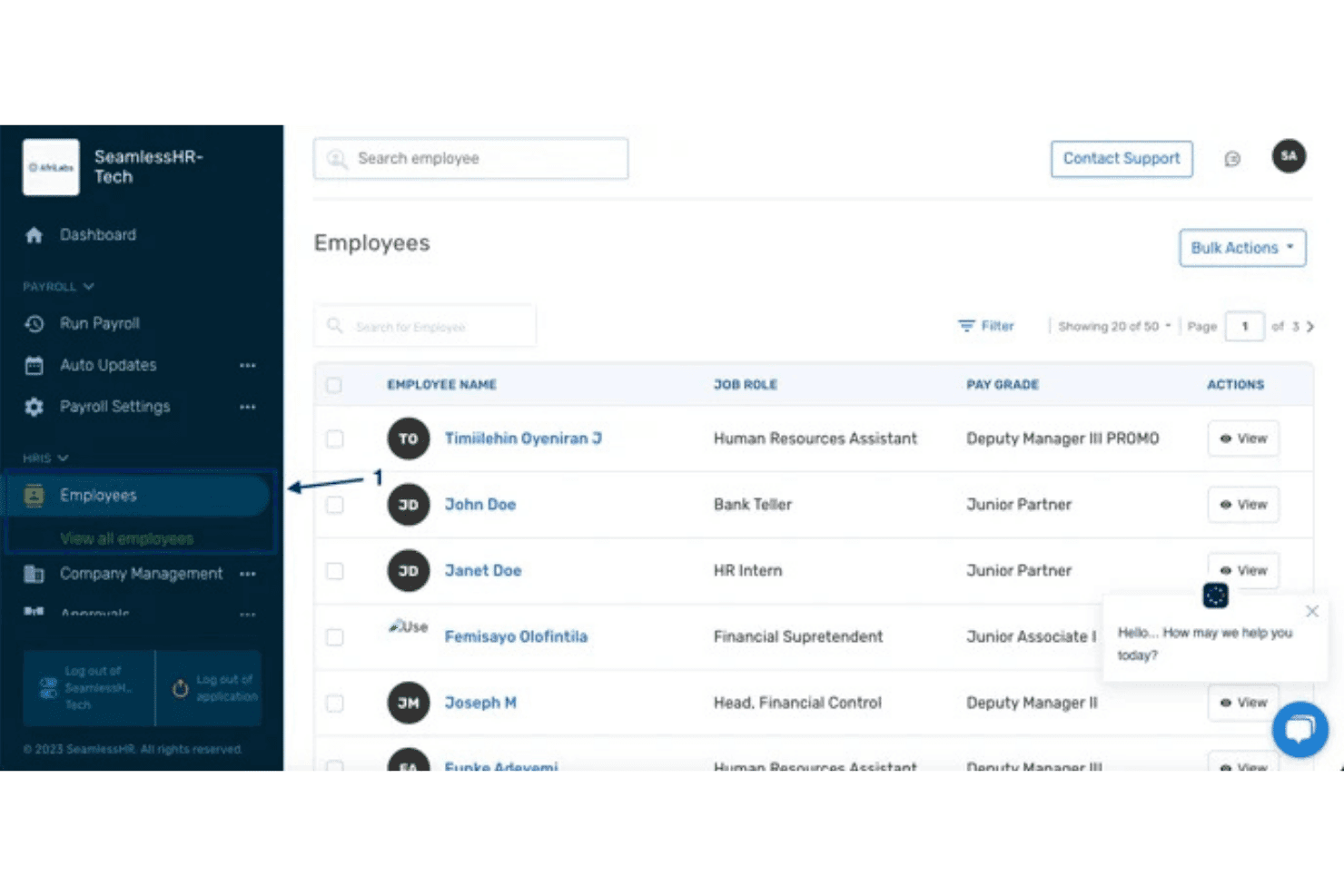
SeamlessHR lets users view and manage all employees in one place. SeamlessHR is an African-built HRMS and payroll platform that handles multi-country payroll processing, statutory compliance, direct salary disbursement, and payroll financing across markets including Nigeria, Kenya, and Ghana.
Who Is SeamlessHR Best For?
SeamlessHR suits businesses operating across Nigeria and Kenya that need payroll automation paired with built-in capital loans to fund salary disbursements.
Why I Picked SeamlessHR
I've included SeamlessHR in my top picks because it's one of the few African-built payroll platforms that pairs salary disbursement with built-in capital loans, so businesses that need to fund payroll before revenue clears don't have to look elsewhere. I particularly like that payroll runs can cover multiple entities and employment statuses across markets like Nigeria and Kenya, with statutory deductions like PAYE, NSSF, and NHIF calculated automatically.
SeamlessHR Key Features
- Audit trail: Every payroll action is logged and searchable by user, action, and date, giving you a clear record for compliance reviews.
- General-ledger integration: Payroll pushes GL entries directly to ERP systems including Dynamics 365 and Sage to keep your finance stack in sync.
- Employee self-service portal: Employees can access and download their payslips through the platform's web and mobile apps without involving HR.
- Pension remittance: Payroll calculates and remits pension contributions separately from salary payments via a Pension Central integration across pension fund administrators.
SeamlessHR Integrations
SeamlessHR integrates with Dynamics 365 and Sage for general-ledger entries, and lists Microsoft, SAP, and Oracle among its ERP integrations. It supports REST APIs and webhooks for custom integrations.
Pros and Cons
Pros:
- Users report less manual payroll work
- Capital loans can cover salary runs
- African payroll localization for regional teams
Cons:
- No entity-free hiring or contractor payroll
- Country-by-country statutory coverage remains uneven
Learn more about SeamlessHR: Best for employer-controlled salary release
- Free demo available
- Pricing upon request
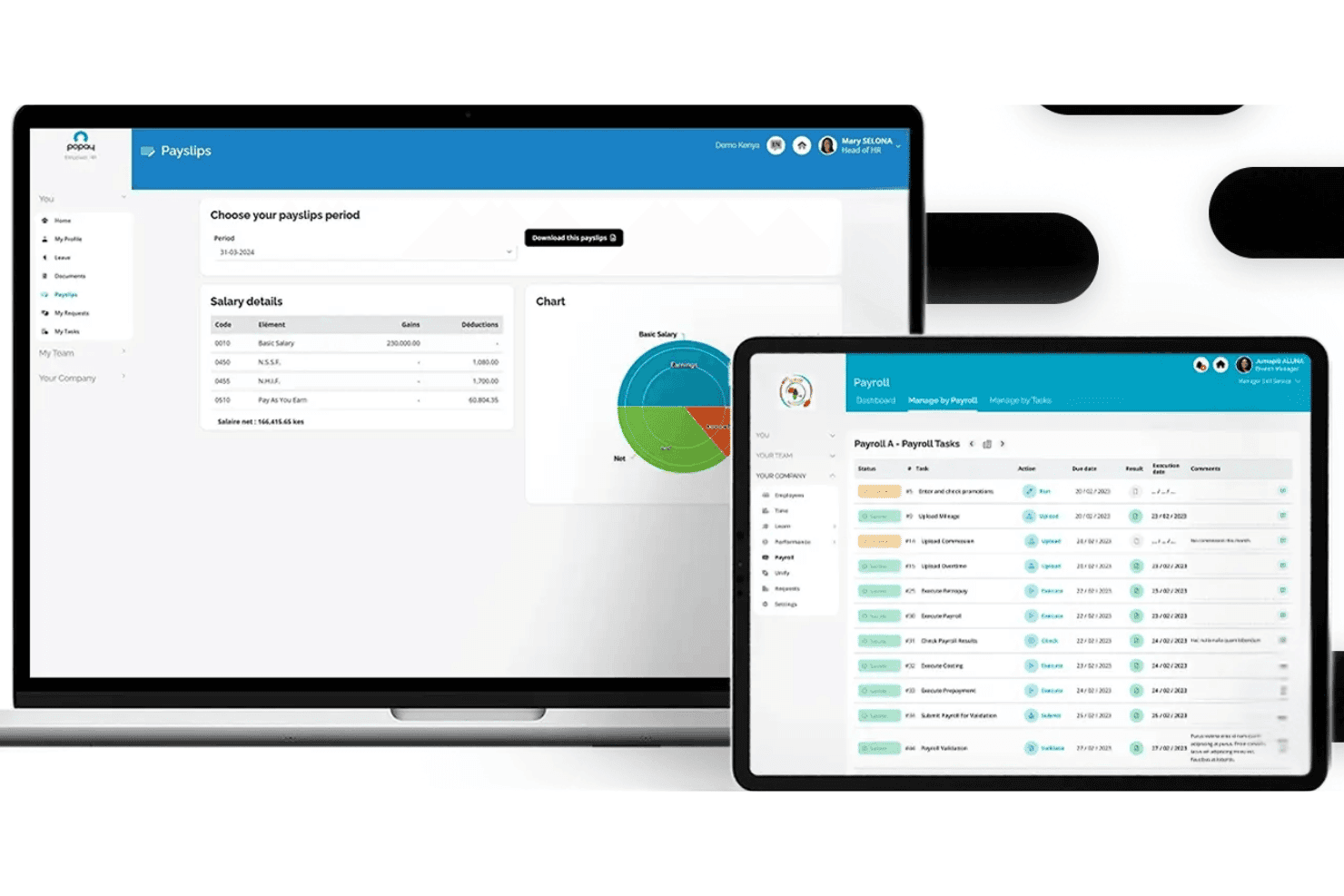
Popay Payroll lets users view payslips and manage payroll tasks in one place. Popay Payroll is a multi-country payroll platform built for African operations, offering native gross-to-net calculations, locally maintained statutory compliance, and consolidated payroll management across 40+ countries.
Who Is Popay Payroll Best For?
Popay Payroll is a strong fit for finance and payroll teams managing existing legal entities across multiple African countries who need locally compliant gross-to-net calculations in one consolidated system.
Why I Picked Popay Payroll
I picked Popay Payroll because it's the only platform I've seen that keeps your finance team in the driver's seat at payment time. Rather than automating disbursement entirely, Popay calculates net pay and produces a local-currency payment file your team approves and releases from your own accounts. I also love that statutory rules for each country are maintained natively in the gross-to-net engine, so you're not relying on third-party data for compliance across 40+ African markets.
Popay Payroll Key Features
- Multi-entity payroll calendar: Runs all your African entities on one shared calendar with built-in flags and checks to validate each payroll run before payment.
- Live gross-to-net simulation: Models a new hire, raise, or scenario so your team can see the full payroll cost before it enters a run.
- Employee self-service payslips: Gives employees direct access to their payslips and yearly statements, with a full gross-to-net breakdown of taxes, contributions, and net pay.
- GL and payment file export: Generates a journal/general-ledger export and a local-currency payment file each cycle, ready for your finance team to reconcile and release.
Popay Payroll Integrations
Native integrations are not clearly documented. Popay Payroll connects with HR, finance, and ERP stacks, offers an API for custom integrations, and exports journal, general-ledger, and local-currency payment files.
Pros and Cons
Pros:
- Local-language, local-currency employee payslips
- Consolidated payroll costs across entities and currencies
- Native statutory rules across 40+ African markets
Cons:
- Employers must release salary payments themselves
- No native EOR for entity-free hiring
Learn more about Popay Payroll: 11Best for AI-assisted commission pay updates
Rippling
- Free trial + free demo available
- From $8/user/month
Visit WebsiteCustomer Rating:4.9/5
Rippling manages multi-currency payroll and taxes across global employees. Rippling is a global payroll and HCM platform that consolidates payroll processing, EOR hiring, workforce reporting, and employee self-service across multiple countries in a single system.
Who Is Rippling Best For?
Rippling suits HR and people operations teams managing globally distributed workforces who need payroll, HR, and benefits consolidated in one platform.
Why I Picked Rippling
I've included Rippling in my top picks because its AI handles commission pay updates in a way I genuinely haven't seen elsewhere: it maps commission data from a file, flags discrepancies, requests approval, and applies changes to a pay run automatically. Paired with cross-country payroll cost reporting and drillable dashboards, it keeps distributed teams visible in one place. It also supports EOR hiring across 115 countries, including South Africa, Kenya, and Nigeria, so you can bring on new hires without setting up a local entity first.
Rippling Key Features
- Pay-run comparison: Review and compare current and previous pay runs side by side, inspecting changes to gross pay, taxes, and deductions before approving.
- EOR hiring in 115 countries: Hire employees in markets like South Africa, Kenya, and Nigeria through Rippling's employer of record service without setting up a local entity.
- Role-based payroll permissions: Control who can view, create, manage, and approve pay runs with granular, configurable access settings.
- Cross-country payroll cost reporting: Build dashboards that compare payroll costs across countries and teams, with drillable charts, filters, pivots, and calculated fields.
Rippling Integrations
Rippling has 600+ documented out-of-the-box integrations, including Xero, QuickBooks, and NetSuite for payroll accounting workflows. It also offers a REST API for custom integrations.
Pros and Cons
Pros:
- EOR guides cover South Africa, Kenya, Nigeria
- Cross-country payroll dashboards support cost comparisons
- Reviewers praise accessible, clearly itemized payslips
Cons:
- African statutory filing coverage remains undocumented
- South Africa native payroll support appears uncertain
 12Best for African market entry without entities
Velocity
- Free demo available
- From $399/user/month
Visit WebsiteCustomer Rating:4.6/5
Velocity tracks payroll item statuses across global employee contracts. Pebl is an employer of record platform that handles multi-country payroll, local statutory compliance, benefits administration, and entity-optional hiring across African markets including Kenya, South Africa, Tanzania, Mozambique, and Angola.
Who Is Velocity Best For?
Velocity is a strong fit for companies expanding into African markets who need to hire compliantly without setting up a local entity.
Why I Picked Velocity
I picked Velocity as one of the best because it lets you hire in African markets like Kenya, Tanzania, South Africa, Mozambique, and Angola without ever setting up a local entity. Its EOR service handles PAYE, NSSF, NHIF, UIF, and SDL calculations and filings in-country, so your team stays compliant without building that statutory knowledge internally. Local-currency payroll and instant payslip generation mean employees get paid correctly in KES, TZS, or ZAR from day one.
Velocity Key Features
- Alfie AI assistant: An AI-powered tool that answers workforce questions, surfaces insights, and helps you take action directly within the platform.
- 250+ HRIS and finance integrations: Connect Velocity to systems like NetSuite, QuickBooks, BambooHR, and ADP to sync payroll, labor costs, and employee data.
- Time and expense centralization: Collect and manage global employee time and expense data in one place for payroll processing and reporting.
- Instant payslip generation: Automatically produce payslips and payroll documentation for employees as part of each payroll run.
Velocity Integrations
Velocity offers 250+ native integrations, including NetSuite, QuickBooks, BambooHR, ADP Workforce Now, and Oracle HCM Cloud. API access is included for custom integrations.
Pros and Cons
Pros:
- Reviewers praise payment visibility and support
- Kenya statutory payroll and filings handled
- Entity-free hiring in several African markets
Cons:
- Reviewers report limited payroll reporting
- Africa-wide country coverage remains unclear
Learn more about Velocity: Best for foreign hires with visa support
- Free demo available
- From $349/user/month
Visit WebsiteCustomer Rating:4.9/5
Rivermate centralizes employee payroll and personal details in one dashboard. Rivermate is an employer of record (EOR) platform that handles international hiring, employment contracts, payroll, statutory compliance, and benefits administration across 180+ countries, with documented coverage across more than 50 African markets.
Who Is Rivermate Best For?
Rivermate suits companies hiring foreign nationals across African markets, especially where visa coordination and local compliance support are needed from day one.
Why I Picked Rivermate
Rivermate earns its spot on my shortlist because of how thoroughly it handles visa coordination alongside employment setup, which matters most when you're bringing foreign nationals into markets like Angola or Zambia where work permit timelines can run 1–4 months. I particularly like that Rivermate manages visa-category selection, document preparation, and direct liaison with local immigration authorities, then transitions the hire straight onto local payroll once the visa clears. Its country-specific compliance handling, including statutory contributions like Angola's INSS and Zambia's NAPSA, runs in parallel with that process.
Rivermate Key Features
- Country-specific employment contracts: Rivermate generates locally compliant employment contracts tailored to the labor law requirements of each country where you're hiring.
- Multi-currency payroll payments: You can pay employees in 120+ currencies, with local currency disbursement documented for markets including South Africa, Angola, Mozambique, and Zambia.
- Statutory contributions management: Rivermate calculates and remits employer and employee statutory contributions—such as INSS, NAPSA, UIF, and SDL—directly to the relevant local authorities.
- Dedicated account manager: Every client gets a named account manager, with 24/7 human support available via Slack, WhatsApp, email, and phone.
Rivermate Integrations
Rivermate doesn't have any native integrations documented for HRIS, finance, or accounting tools. Its public API availability is not stated.
Pros and Cons
Pros:
- Multi-currency payroll earns positive reviewer feedback
- Reviewers praise local compliance and payroll support
- Visa coordination supports harder African hires
Cons:
- Partner delivery claims conflict across key markets
- Cross-country payroll reports need manual exports
Learn more about Rivermate: 14Best for South African payroll filings
Mercans
- Free demo available
- From $299/per employee/month
Visit WebsiteCustomer Rating:4.8/5 Learn more about Mercans:
Afrika'daki Diğer Küresel Bordro Hizmetleri
Kısa listeme giremeyen ancak yine de göz atmaya değer bazı ek Afrika küresel bordro hizmetleri şunlardır:
- 15MultiplierBest for payroll adjusted for leave and expenses
- 16Oyster HRBest for Nigeria payroll cost planning
- 17Safeguard GlobalBest for payroll visibility inside Workday
- 18OmnipresentBest for Omnipresent payroll migration to Deel
- 19ADP Global PayrollBest for one payroll model across regions
- 20WorkpayBest for salary and petty-cash management
- 21Oracle Fusion Cloud PayrollBest for payroll in Oracle HCM and ERP
Related Reviews
How I Evaluate Global Payroll in Africa
I split my evaluation into three parts, with the most weight on core functionality: calculating local payroll and tracking country-specific taxes and social contributions. Next, I consider mobile money payouts and local HR expertise as distinguishing features. Finally, I weigh support, country-aware onboarding, entity ownership, and data security beyond the feature set.
Core Functionality (Table Stakes For This List)
When I'm selecting tools for my list, I score each one on a scale from 0 (does not offer the functionality) to 5 (excels in this area) for each core functionality listed below. I then convert the total into a percentage to help assess each tool's overall fit, with extra weight on any functionalities I’ve deemed essential.
- Multi-Country Payroll (Essential): I look for accurate local calculations across African markets, including country-specific pay rules, currencies, and pay cycles.
- Statutory Compliance (Essential): I assess how each tool handles local tax, social security contributions, labor rules, and required filings across its supported countries.
- Local Currency Payments: I check whether payroll can be disbursed in local currencies through suitable payment rails in the countries served.
- Payslips & Records: I look for country-specific payslips and accessible payroll records employees and HR teams can use to check pay history.
- Payroll Consolidation: I assess whether HR and finance can review payroll costs, headcount, and country-level details in consolidated reports.
- Entity-Optional Hiring: I check whether the provider supports paying workers in African countries where the employer lacks a local entity, such as through an EOR.
Once I have a list of tools that meet the criteria, I consider what sets each platform apart.
Differentiating Factors (What Sets Vendors Apart)
Here's how I compare and contrast different vendors:
Standout Features
Mobile money integration is a big one. In markets where bank account penetration is low, I check whether a platform supports disbursement through M-Pesa, MTN MoMo, or Airtel Money. I also evaluate access to in-country HR and legal experts who can advise on regional labor nuances your internal team may not know. Multi-language payslips matter too—teams operating across West and North Africa need French, Portuguese, or Arabic support built in.
Beyond Features
I check whether a vendor owns its local entities or relies on third-party partners for employer of record delivery, since partner-reliant models can introduce inconsistent response times across countries like Kenya and Nigeria. Data residency matters too—I look for compliance with frameworks such as POPIA in South Africa and NDPR in Nigeria, along with enterprise-grade encryption. I also evaluate how well each platform connects to existing HRIS and ERP systems through APIs or pre-built connectors, which directly affects how much manual work your finance team takes on each pay cycle.
Küresel Bordro Hizmeti Nasıl Seçilir
en iyi küresel bordro hizmeti sağlayıcıları arasında seçim yapmak, özellikle Afrika genelindeki tüm genişleme planlarınızı ve uyumluluk risklerinizi destekleyebilecek bir hizmete ihtiyaç duyduğunuzda bunaltıcı gelebilir. Temel karar noktalarında yolunuzu bulmak için bu rehberi kullanın:
| Önceliğiniz… | Şunları arayın… |
|---|---|
| Önceliğiniz…Birden fazla Afrika para biriminde ödeme yapmak | Şunları arayın…Çoklu para birimiyle ücret ödemesi ve döviz araçları |
| Önceliğiniz…Kusursuz yasal uyumluluk sağlamak | Şunları arayın…Gerçek zamanlı mevzuat güncellemeleri ve ülke içi uzmanlar |
| Önceliğiniz…Tüzel kişilik olmadan işe alım yapmak | Şunları arayın…Entegre EOR ve iş ortağı tüzel kişilik ağı |
| Önceliğiniz…Yüklenici ödeme iş akışları | Şunları arayın…Uyumlu işe alım ve ödeme modülleri |
| Önceliğiniz…Birden fazla ülkeyi kapsayan konsolide raporlama | Şunları arayın…GL ve dışa aktarma seçeneklerine sahip birleşik panolar |
Kısa Listenizi Nasıl Değerlendirmelisiniz?
- Yasal uyumluluk kanıtı isteyin: 1–2 Afrika yargı bölgesi için ülkeye özgü örnek vergi beyannameleri veya ödeme makbuzları talep edin.
- Ödeme iş akışlarını test edin: Belirli bir para birimi için bir sanal alan veya demo bordro döngüsü çalıştırarak ücret ödemelerinin zamanlamasını ve doğruluğunu teyit edin.
- İşe alım süreçlerinin zaman çizelgesini isteyin: Hedef ülkelerinizdeki hem çalışanlar hem de yükleniciler için ilk bordroya kadar geçen süreyi gösteren yazılı bir uygulama takvimi talep edin.
- Döviz işlemlerinde şeffaflığı kontrol edin: Döviz kurlarının nasıl belirlendiğine ve döviz ücretlerinin her ödeme döngüsü için ayrı ayrı gösterilip gösterilmediğine ilişkin belgeleri inceleyin.
- Ödünleşim—kapsam derinliği ve iş ortaklığı modeli: Hızlı genişleme karşılığında daha az yerel uzmanlık sunan toplayıcı iş ortaklıkları kullanan bir sağlayıcı ile doğrudan ülke içi varlığa sahip bir sağlayıcının avantajlarını karşılaştırın.
Afrika'da Bordro Nasıl Hesaplanır?
Afrika genelinde bordroyu hesaplamak için tek bir formül yoktur. Her ülke gelir vergisi, sosyal güvenlik, emeklilik, sağlık sigortası, işveren katkıları ve diğer yasal kesintiler için kendi kurallarını belirler. Bu nedenle Kenya'daki bir çalışan için geçerli olan hesaplama, Güney Afrika, Nijerya veya Gana'daki bir çalışanın hesaplamasından oldukça farklı olabilir.
Süreç genellikle temel maaş, ödenekler, ikramiyeler, komisyonlar ve vergilendirilebilir diğer ücret unsurlarını içerebilen çalışanın brüt ücretiyle başlar. Ardından bordro ekipleri, çalışanın ülkesindeki kurallar kapsamında bu ücretin hangi bölümlerinin vergilendirilebilir olduğunu veya yasal katkılara tabi tutulduğunu belirler.
Temel hesaplamalar genellikle şunları içerir:
- Gelir vergisi: İşverenler genellikle çalışanların gelir vergisini yerel vergi dilimlerine, ödeneklere ve muafiyetlere göre keser. Oranlar ve hesaplama yöntemleri ülkeler arasında önemli ölçüde farklılık gösterir.
- Sosyal güvenlik ve emeklilik: Birçok Afrika ülkesi, çalışanların ve işverenlerin ulusal sosyal güvenlik, emeklilik veya ihtiyat fonlarına katkıda bulunmasını zorunlu kılar. Bu katkılar genellikle uygun kazançların bir yüzdesi olarak hesaplanır ve bazı durumlarda katkı tavanlarına tabi olur.
- Sağlıkla ilgili katkılar: Ülkeye bağlı olarak bordroya, ulusal sağlık sigortasına veya benzer programlara yönelik zorunlu katkılar dahil edilebilir.
- Diğer yasal kesintiler: Konut vergileri, eğitim fonları, işsizlik sigortası, mesleki katkılar veya ülkeye özgü diğer kesintiler de uygulanabilir.
- İşveren katkıları: İşverenler, brüt maaşa ek olarak sosyal güvenlik, emeklilik, sigorta veya yasal fon katkıları gibi bordro maliyetlerine katlanabilir. Bunlar, çalışanın net ücretini azaltmadan toplam istihdam maliyetini artırır.
Çalışanın net ücreti genellikle çalışan tarafındaki vergiler ve yasal kesintiler brüt kazançtan düşüldükten sonra kalan tutardır. İşverenin gerçek bordro maliyeti daha yüksek olabilir; çünkü işveren tarafındaki katkılar ve diğer zorunlu istihdam maliyetleri ayrıca eklenir.
Afrika'daki bordronun temel farkı, hesaplamanın her sınırda değişmesidir. Afrika genelinde geçerli tek bir bordro veya vergi sistemi yoktur. Bu nedenle birden fazla ülkede faaliyet gösteren işletmelerin her yargı bölgesine özgü vergi oranlarını, katkı kurallarını, maaş tanımlarını, bildirim gerekliliklerini ve ödeme son tarihlerini uygulaması gerekir. Küresel bordro hizmetleri özellikle bu noktada faydalı olabilir: Bu hizmetler, her Afrika pazarında gerekli yerel hesaplamaları uygularken merkezi bordro yönetimi sağlar.
Afrika Bordro Vergileri ve Kesintileri
Afrika'daki her bordro dönemi çalışan kesintilerini ve işveren katkılarını içerebilir, ancak kıta genelinde geçerli tek bir vergi sistemi yoktur. Her ülke kendi gelir vergisi oranlarını, sosyal güvenlik programlarını, katkı tavanlarını ve diğer bordro yükümlülüklerini belirler. Örneğin, çok ülkeli bordro süreçlerinde Kenya PAYE'si, Nijerya emeklilik katkıları, Güney Afrika UIF'si ve ülkeye özgü diğer gereklilikler yer alabilir.
| Bileşen | Kim Öder? | Genellikle Nasıl İşler? | Bordroya Etkisi |
|---|---|---|---|
| BileşenGelir Vergisi / PAYE | Kim Öder?Çalışan | Genellikle Nasıl İşler?İşverenler, çalışanın yerel vergi kurallarını ve geçerli dilimleri kullanarak gelir vergisini keser | Bordroya EtkisiÇalışanın net ücretini azaltır |
| BileşenSosyal Güvenlik | Kim Öder?İşveren ve/veya Çalışan | Genellikle Nasıl İşler?Katkılar ülkeye göre değişir ve kazanç eşiklerine veya üst sınırlara tabi olabilir | Bordroya EtkisiYasal sosyal koruma programlarını finanse eder |
| BileşenEmeklilik Katkıları | Kim Öder?İşveren ve/veya Çalışan | Genellikle Nasıl İşler?Zorunlu emeklilik planları birçok pazarda uygulanır ve katkı kuralları yerel olarak belirlenir | Bordroya EtkisiÇalışan kesintileri ve/veya işveren bordro maliyetleri ekler |
| BileşenSağlık Katkıları | Kim Öder?İşveren ve/veya Çalışan | Genellikle Nasıl İşler?Bazı ülkeler, bordro yoluyla finanse edilen ulusal sağlık veya tıbbi sigorta katkılarını zorunlu kılar | Bordroya EtkisiYasal sağlık hizmeti programlarını finanse eder |
| Bileşenİşsizlik Sigortası | Kim Öder?İşveren ve/veya Çalışan | Genellikle Nasıl İşler?Güney Afrika'nın UIF sistemi gibi sistemler de dahil olmak üzere bazı ülkelerde zorunludur | Bordroya EtkisiUygun çalışanlar için gelir koruması sağlar |
| BileşenDiğer Yasal Kesintiler | Kim Öder?Kesintiye ve ülkeye bağlı olarak değişir: yalnızca işveren, yalnızca çalışan veya ortak | Genellikle Nasıl İşler?Yetki alanına bağlı olarak eğitim, konut, beceri geliştirme veya diğer bordro kesintileri uygulanabilir | Bordroya EtkisiToplam istihdam maliyetini artırır |
Birden çok ülkede faaliyet gösteren işverenler için önemli nokta, aynı brüt ücretin çalışanın ülkesine bağlı olarak çok farklı net ücretler ve işveren maliyetleri doğurabilmesidir. Bu nedenle küresel bir bordro sağlayıcısı, tek bir Afrika geneli bordro modeli uygulamak yerine her ülkenin gerekli kesintilerini hesaplamalı ve ilgili kurumlara aktarmalıdır.
Afrika'da İzin Hakları
Ücretli izinlerin, yasal hakların, birikmiş izinlerin ve işten ayrılma anındaki izin bakiyelerinin çalışanın yerel istihdam hukukuna göre hesaplanması gerektiğinden, izin hakları da bordroyu etkiler. Afrika genelinde standart bir izin hakkı yoktur: yıllık izin ve doğum izni dahi ülkeler arasında önemli ölçüde farklılık gösterir. Örneğin, Güney Afrikalı çalışanlar genellikle en az 21 ardışık gün yıllık izin ve en az dört ardışık ay doğum izni alır.
| İzin Türü | Afrika Genelinde Tipik Gereklilik |
|---|---|
| İzin TürüYıllık İzin | Afrika Genelinde Tipik GereklilikYasal asgari süreler ülkeye göre değişir ve hizmet süresine bağlı olabilir |
| İzin TürüHastalık İzni | Afrika Genelinde Tipik GereklilikHak, süre, gerekli belgeler ve ücretlendirme yerel hukuka göre değişir |
| İzin TürüDoğum İzni | Afrika Genelinde Tipik GereklilikYaygın olarak sağlanır; ancak izin süresi, uygunluk koşulları ve yardımın kim tarafından finanse edildiği ülkeye göre farklılık gösterir |
| İzin TürüBabalık / Ebeveyn İzni | Afrika Genelinde Tipik GereklilikBazı yetki alanlarında sunulur ve haklar önemli ölçüde farklılık gösterir |
| İzin TürüAile / Zorunlu Mazeret İzni | Afrika Genelinde Tipik GereklilikYasal olarak zorunlu olabilir veya işveren politikası kapsamında sağlanabilir |
| İzin TürüResmî Tatiller | Afrika Genelinde Tipik GereklilikÇalışanlar, yerel hukuka bağlı olarak ücretli izin veya tatil günlerinde çalışmaları karşılığında ek ücret alma hakkına sahip olabilir |
Farklılıklar önemli olabilir. Büyük pazarlar arasında dahi Kenya, Güney Afrika, Gana ve Nijerya'daki yıllık izin kuralları farklıdır. Bu nedenle küresel bir bordro sağlayıcısı, tek bir şirket geneli asgari standarda güvenmek yerine izin kurallarını her çalışanın istihdam edildiği yere göre uygulamalıdır.
Afrika'daki Resmî Tatiller
Resmî tatiller Afrika genelinde önemli ölçüde farklılık gösterir; bu nedenle farklı Afrika ülkelerinde çalışan bir iş gücü için tek bir tatil takvimi işe yaramaz. İşverenlerin her ülkenin yasal tatillerini ve bu günlerde çalışan personele uygulanan yerel kuralları dikkate alması gerekir. Resmî tatillerin sayısı ve tarihleri bir yetki alanından diğerine önemli ölçüde değişebilir.
| Tatil Konusu | Bordroya Etkisi |
|---|---|
| Tatil KonusuUlusal Resmî Tatiller | Bordroya EtkisiÜlkeye özgü tatiller çalışma programlarını, bordro işlemlerini ve çalışan ücretlerini etkileyebilir |
| Tatil KonusuDini Tatiller | Bordroya EtkisiBazı pazarlar, tarihleri her yıl değişebilen günler de dahil olmak üzere Hristiyan, İslami veya diğer dini tatilleri tanır |
| Tatil KonusuYerine Kullanılan Tatiller | Bordroya EtkisiBir resmî tatil hafta sonuna denk geldiğinde yerel hukuk, yerine kullanılan bir tatili erteleyebilir veya ekleyebilir |
| Tatil KonusuResmî Tatilde Çalışma | Bordroya EtkisiÇalışanlar zamlı ücret, ek izin veya başka bir yasal haktan yararlanmaya hak kazanabilir |
| Tatil KonusuBanka Kapanışları | Bordroya EtkisiResmî tatiller, maaş ödeme zamanlamasını ve yerel bankacılık hizmetlerinin kullanılabilirliğini etkileyebilir |
Bordro uygulaması, takvimin kendisi kadar önemlidir. Örneğin, Güney Afrika'da 12 yasal resmî tatil vardır ve istihdam kuralları, çalışanların resmî tatilde çalışması durumunda ek ücret ödenmesini gerektirebilir.
Birden çok ülkeyi kapsayan bordro süreçlerinde sağlayıcılar, bordro takvimlerinin ve ücretlendirmelerin her çalışanın çalıştığı yetki alanını yansıtması için ülkeye özgü tatil takvimlerini ve ücret kurallarını güncel tutmalıdır.
Afrika Genelinde Fesih Koşulları
Bir çalışan işten ayrıldığında son bordronun hazırlanması daha karmaşık hâle gelir; çünkü fesih gereklilikleri ülke düzeyinde belirlenir. Yargı bölgesine ve fesih nedenine bağlı olarak işverenlerin ihbar sürelerini, ödenmemiş ücretleri, kullanılmamış izinleri, kıdem tazminatını ve diğer yasal hakları hesaba katması gerekebilir.
| Bordro Kalemi | Ne Zaman Uygulanabilir |
|---|---|
| Bordro KalemiSon Maaş | Ne Zaman UygulanabilirÇalışanın son çalışma gününe kadar hak ettiği ödenmemiş ücretler |
| Bordro KalemiKullanılmamış İzin | Ne Zaman UygulanabilirYerel yasaların gerektirdiği durumlarda birikmiş izinlerin ücretinin ödenmesi gerekebilir |
| Bordro Kalemiİhbar Ücreti | Ne Zaman UygulanabilirGerekli ihbar süresi çalışılmadığında uygulanabilir |
| Bordro KalemiKıdem / İşten Çıkarma Tazminatı | Ne Zaman UygulanabilirUygun fesihlerde ödenmesi gerekebilir; hak kazanma koşulları ve hesaplamalar ülkeye göre değişir |
| Bordro KalemiÖdenmemiş Yan Haklar | Ne Zaman UygulanabilirPrimler, komisyonlar, ödenekler veya kazanılmış diğer hakların dahil edilmesi gerekebilir |
| Bordro KalemiSon Yasal Kesintiler | Ne Zaman UygulanabilirVergiler, sosyal güvenlik, emeklilik ve geçerli diğer kesintiler son bordro üzerinden hesaplanmalıdır |
Afrika genelinde geçerli tek bir kıdem tazminatı veya ihbar formülü yoktur. Örneğin Güney Afrika yasaları, kısmen hizmet süresine dayalı asgari ihbar süreleri belirlerken Gana'nın fesih, birikmiş yıllık izin ve ihbar süresi yerine ödeme konularında kendine özgü kuralları vardır.
Birden fazla Afrika ülkesinde faaliyet gösteren şirketlerde hizmet sağlayıcı, standartlaştırılmış bir işten ayrılış hesaplaması uygulamak yerine son ödemeyi çalışanın yargı bölgesine, hizmet süresine, sözleşme koşullarına ve fesih nedenine göre hesaplamalıdır.
Afrika Genelinde Bordro Uyumluluğu Nasıl Düzenlenir?
Afrika'da bordro uyumluluğu, kıta genelinde tek bir otorite tarafından değil, ülke bazında düzenlenir. Birden fazla Afrika pazarında çalışanlara ödeme yapıyorsanız bordro süreçlerinizin her yargı bölgesinin vergi, sosyal güvenlik, emeklilik, istihdam ve bildirim gerekliliklerini dikkate alması gerekir.
İlgili makamlar genellikle şunları içerir:
- Ulusal vergi makamları: Çalışan gelir vergisi stopajını, işveren kaydını, bordroyla ilgili bildirimleri ve vergi ödemelerini denetler.
- Sosyal güvenlik makamları: Ulusal sosyal güvenlik programlarına yönelik zorunlu çalışan ve işveren katkılarını yönetir.
- Emeklilik düzenleyicileri ve fonları: Ayrı emeklilik gerekliliklerinin uygulandığı ülkelerde zorunlu emeklilik katkılarını denetler.
- Sağlık ve sigorta makamları: Gerektiğinde yasal sağlık sigortasını veya bordro tarafından finanse edilen diğer programları yönetir.
- Çalışma ve istihdam makamları: Asgari ücretler, çalışma saatleri, fazla mesai, ücretli izin, fesih ve son ödeme dahil olmak üzere bordroyu etkileyebilecek gereklilikleri belirler.
Bu sorumluluklar her pazarda farklı kurumlar tarafından yürütülür. Örneğin Güney Afrika'da bordro işlemleri, PAYE ve diğer bordro vergileri için Güney Afrika Gelir İdaresini (SARS) içerirken Kenya, diğer yasal katkılar için ayrı kurum ve fonların yanı sıra PAYE kapsamında Kenya Gelir İdaresini (KRA) kullanır.
Bunun bordro açısından anlamı: Afrika genelinde faaliyet gösteren bir şirket tek bir uyumluluk çerçevesine güvenemez. Ülkeye özgü hesaplamaları ve bildirim gerekliliklerini sürdüren, mevzuat değişikliklerini takip eden ve çalışan istihdam ettiğiniz tüm Afrika pazarlarında ekibinize merkezi denetim sağlayan küresel bir bordro hizmeti aramalısınız.
Küresel Bordronun Özellikleri
Afrika için küresel bordro hizmeti seçerken aşağıdaki temel özelliklere dikkat edin:
- Birden fazla ülkede bordro işleme: Çalışanlar ve yükleniciler için Afrika'daki çeşitli ülkelerin yerel bordrolarını tek bir bordro sisteminden yönetmenizi sağlayarak küresel ekibinizin bordro yönetimini kolaylaştırır.
- Yerel yasal uyumluluk: Yerel düzenlemelerin gerektirdiği gelir vergisini, sosyal güvenlik katkılarını ve diğer yasal ödemeleri otomatik olarak hesaplar, keser ve bildirerek mevzuata uyumluluğu destekler.
- Yerel para biriminde ücret ödemeleri: Maaşları ve yüklenici ödemelerini yerel Afrika para birimleriyle gerçekleştirir; birden fazla para birimini desteklerken dönüşüm zorluklarını ve ek ücretleri en aza indirir.
- Kayıtlı İşveren (EOR) desteği: Bir PEO'ya benzer şekilde yasal istihdam altyapısı sağlayarak yerel bir tüzel kişiliğinizin bulunmadığı Afrika ülkelerinde çalışan işe almanıza olanak tanır.
- Yüklenici yönetimi: Afrika genelindeki bağımsız yükleniciler için işe alım, sınıflandırma, uyumluluk kontrolleri ve küresel ödemeleri destekler.
- Mevzuat güncellemelerinin otomasyonu: Vergi mevzuatı ve iş gücü düzenlemelerindeki değişiklikleri izleyip uygular ve kurallar değiştikçe sürekli uyumluluğun sağlanmasına yardımcı olur.
- Entegre FX yönetimi: Birden fazla para birimiyle yapılan ödemelerde para birimi dönüşümünün şeffaf ve çoğu zaman otomatik şekilde gerçekleştirilmesini sağlar; FX kurları ve ücretleri hakkında görünürlük sunar.
- Mobil para entegrasyonu: Ödemelerin mobil cüzdanlara (M-Pesa veya MTN MoMo gibi) yapılmasını sağlar; yerel ödeme tercihlerini yansıtır ve banka hesaplarının ötesinde erişimi genişletir.
- Birleşik bordro raporlaması: Ülkeler genelinde birleştirilmiş panolar ve raporlar sunarak dağınık ekipler için denetimleri, maliyet analizini ve karar almayı destekler.
- Veri güvenliği ve gizlilik kontrolleri: Hassas bordro ve kişisel verileri yerel veri koruma yasalarına (NDPR veya POPIA gibi) ve uluslararası standartlara uygun şekilde korur.
Küresel Bordronun Faydaları
Afrika'da küresel bordro çözümlerini uygulamak, ekibiniz ve işletmeniz için çeşitli faydalar sağlar. Yararlanabileceğiniz birkaç avantaj şunlardır:
- Pan-Afrikan iş gücü kapsamı: Yerel tüzel kişilikler kurmadan birden fazla Afrika ülkesinde çalışanları ve yüklenicileri işe alın ve ücretlerini ödeyin.
- Mevzuata uyum konusunda gönül rahatlığı: Yerel vergiler, sosyal güvenlik ve yasal katkılarla ilgili otomatik uyumluluk, hata ve ceza riskini azaltır.
- Daha hızlı işe alım ve ödemeler: Yerleşik EOR ve yüklenici yönetimi, uzak bölgelerde bile personeli veya serbest çalışanları hızlıca işe almanıza ve ücretlerini ödemenize olanak tanır.
- Tutarlı yerel para birimiyle bordro: Ekiplerinize kendi ülkelerinin para birimlerinde veya mobil para cüzdanlarında ödeme yaparak beklenmedik FX değişimlerini en aza indirir ve iş gücünüz için ödemeleri kolaylaştırır.
- Birleşik çok ülkeli raporlama: Tüm Afrika operasyonlarının bordro verilerine tek bir panodan erişerek analizleri, denetimleri ve stratejik karar almayı kolaylaştırın.
- Ölçeklenebilir bordro altyapısı: Varlığınız büyüdükçe her seferinde bordro süreçlerinizi yeniden oluşturmadan yeni ülkeler veya çalışan türleri ekleyin.
- Gelişmiş veri güvenliği ve gizlilik: Yerleşik kontroller, çalışan verilerini Afrika veri koruma yasalarına ve uluslararası uyumluluk standartlarına uygun şekilde korur.
Fiyatlandırma
Afrika'da küresel bordro çözümü seçmek, mevcut çeşitli fiyatlandırma modellerinin ve planların anlaşılmasını gerektirir. Maliyetler özelliklere, ekip büyüklüğüne, eklentilere ve diğer unsurlara göre değişir. Aşağıdaki tablo, Afrika'daki küresel bordro çözümlerinde yaygın planları, ortalama fiyatlarını ve genellikle sunulan özellikleri özetlemektedir:
Afrika'da Küresel Bordro İçin Plan Karşılaştırma Tablosu
| Plan Türü | Ortalama Fiyat | Yaygın Özellikler |
|---|---|---|
| Plan TürüÜcretsiz Plan | Ortalama Fiyat$0 | Yaygın ÖzelliklerTemel ülke araması yapılmasına olanak tanır, bordro uyumluluğu kaynakları sunar ve sınırlı raporlama sağlar. |
| Plan TürüKişisel Plan | Ortalama Fiyat$10–$30/kullanıcı/ay | Yaygın Özellikler1–2 ülkede bordroyu kapsar, yerel para birimiyle ödemeleri destekler ve standart uyumluluk araçları ekler. |
| Plan Türüİşletme Planı | Ortalama Fiyat$30–$80/kullanıcı/ay | Yaygın ÖzelliklerÇok ülkeli bordro sunar, EOR desteği sağlar ve entegre FX ile birleştirilmiş raporları içerir. |
| Plan TürüKurumsal Plan | Ortalama Fiyat$80–$150+/kullanıcı/ay | Yaygın ÖzelliklerGelişmiş otomasyon sunar, özel iş akışlarını destekler, özel destek içerir ve İKYS platformlarıyla entegre olur. |
SSS
\u003cspan data-slate-fragment=\u0022JTVCJTdCJTIyY2hpbGRyZW4lMjIlM0ElNUIlN0IlMjJ0ZXh0JTIyJTNBJTIySGVyZSUyMGFyZSUyMHNvbWUlMjBhbnN3ZXJzJTIwdG8lMjBjb21tb24lMjBxdWVzdGlvbnMlMjBhYm91dCUyMGdsb2JhbCUyMHBheXJvbGwlMjBBZnJpY2ElM0ElMjIlN0QlNUQlMkMlMjJ0eXBlJTIyJTNBJTIycCUyMiUyQyUyMmlkJTIyJTNBJTIyenJCVjJROXBULSUyMiU3RCU1RA==\u0022\u003eİşte küresel Afrika bordrosu hakkında sık sorulan bazı soruların yanıtları:\u003c/span\u003e
Küresel Afrika bordrosu çözümleri genellikle hangi Afrika ülkelerini destekler?
\u003cspan data-slate-fragment=\u0022JTVCJTdCJTIyY2hpbGRyZW4lMjIlM0ElNUIlN0IlMjJ0ZXh0JTIyJTNBJTIyTW9zdCUyMGdsb2JhbCUyMHBheXJvbGwlMjBBZnJpY2ElMjBzb2x1dGlvbnMlMjBzdXBwb3J0JTIwcG9wdWxhciUyMG1hcmtldHMlMjBsaWtlJTIwTmlnZXJpYSUyQyUyMEtlbnlhJTJDJTIwU291dGglMjBBZnJpY2ElMkMlMjBHaGFuYSUyQyUyMEVneXB0JTJDJTIwYW5kJTIwTW9yb2Njby4lMjBTb21lJTIwcGxhdGZvcm1zJTIwYWxzbyUyMHJlYWNoJTIwRnJhbmNvcGhvbmUlMjBhbmQlMjBMdXNvcGhvbmUlMjBjb3VudHJpZXMlMjBzdWNoJTIwYXMlMjBDJUMzJUI0dGUlMjBkJ0l2b2lyZSUyQyUyMFNlbmVnYWwlMkMlMjBhbmQlMjBNb3phbWJpcXVlJTJDJTIwYnV0JTIwY292ZXJhZ2UlMjBvZiUyMHNtYWxsZXIlMjBvciUyMGxlc3MlMjBjb21tb24lMjBtYXJrZXRzJTIwY2FuJTIwdmFyeS4lMjIlN0QlNUQlMkMlMjJ0eXBlJTIyJTNBJTIycCUyMiUyQyUyMmlkJTIyJTNBJTIyQkJ0Q19GbU9wRiUyMiU3RCU1RA==\u0022\u003eKüresel Afrika bordrosu çözümlerinin çoğu Nijerya, Kenya, Güney Afrika, Gana, Mısır ve Fas gibi popüler pazarları destekler. Bazı platformlar Fildişi Sahili, Senegal ve Mozambik gibi Frankofon ve Lusofon ülkelere de ulaşır; ancak daha küçük veya daha az yaygın pazarların kapsamı değişebilir.\u003c/span\u003e
Bu çözümler her ülke için vergi bildirimlerini ve katkı paylarını işleyebilir mi?
\u003cspan data-slate-fragment=\u0022JTVCJTdCJTIyY2hpbGRyZW4lMjIlM0ElNUIlN0IlMjJ0ZXh0JTIyJTNBJTIyWWVzJTJDJTIwbWFueSUyMHNvbHV0aW9ucyUyMGNhbGN1bGF0ZSUyMGFuZCUyMGZpbGUlMjByZXF1aXJlZCUyMHRheGVzJTIwYW5kJTIwc3RhdHV0b3J5JTIwY29udHJpYnV0aW9ucyUyMGxpa2UlMjBQQVlFJTJDJTIwTlNTRiUyQyUyME5ISUYlMkMlMjBvciUyME5TSVRGJTIwYmFzZWQlMjBvbiUyMGVhY2glMjBjb3VudHJ5JUUyJTgwJTk5cyUyMHVuaXF1ZSUyMGxhYm9yJTIwYW5kJTIwcGF5cm9sbCUyMHJlZ3VsYXRpb25zJTJDJTIwaGVscGluZyUyMGVuc3VyZSUyMG9uZ29pbmclMjBjb21wbGlhbmNlLiUyMiU3RCU1RCUyQyUyMnR5cGUlMjIlM0ElMjJwJTIyJTJDJTIyaWQlMjIlM0ElMjJOUjYtaFMwak5EJTIyJTdEJTVE\u0022\u003eEvet, birçok çözüm, her ülkenin kendine özgü iş gücü ve bordro düzenlemelerine göre PAYE, NSSF, NHIF veya NSITF gibi gerekli vergileri ve yasal katkı paylarını hesaplayıp bildirir ve sürekli uyumluluğun sağlanmasına yardımcı olur.\u003c/span\u003e
Çalışanlara mobil para veya yerel para birimi kullanılarak ödeme yapılabilir mi?
\u003cspan data-slate-fragment=\u0022JTVCJTdCJTIyY2hpbGRyZW4lMjIlM0ElNUIlN0IlMjJ0ZXh0JTIyJTNBJTIyWWVzJTJDJTIwbGVhZGluZyUyMGdsb2JhbCUyMHBheXJvbGwlMjBBZnJpY2ElMjBwbGF0Zm9ybXMlMjBzdXBwb3J0JTIwcGF5bWVudHMlMjBpbiUyMEFmcmljYW4lMjBjdXJyZW5jaWVzJTIwYW5kJTIwb2Z0ZW4lMjBpbnRlZ3JhdGUlMjB3aXRoJTIwbW9iaWxlJTIwbW9uZXklMjBzeXN0ZW1zJTIwbGlrZSUyME0tUGVzYSUyQyUyME1UTiUyME1vTW8lMkMlMjBvciUyMEFpcnRlbCUyME1vbmV5LiUyMFRoaXMlMjBpcyUyMGVzcGVjaWFsbHklMjBpbXBvcnRhbnQlMjB3aGVyZSUyMGJhbmslMjBhY2NvdW50JTIwYWNjZXNzJTIwbWF5JTIwYmUlMjBsaW1pdGVkLiUyMiU3RCU1RCUyQyUyMnR5cGUlMjIlM0ElMjJwJTIyJTJDJTIyaWQlMjIlM0ElMjJXRzRtLVBOQ1NiJTIyJTdEJTVE\u0022\u003eEvet, önde gelen küresel Afrika bordrosu platformları Afrika para birimleriyle ödemeleri destekler ve genellikle M-Pesa, MTN MoMo veya Airtel Money gibi mobil para sistemleriyle entegre olur. Bu, özellikle banka hesabına erişimin sınırlı olabileceği yerlerde önemlidir.\u003c/span\u003e
Tüm sağlayıcılar Kayıtlı İşveren (EOR) hizmetleri sunar mı?
\u003cspan data-slate-fragment=\u0022JTVCJTdCJTIyY2hpbGRyZW4lMjIlM0ElNUIlN0IlMjJ0ZXh0JTIyJTNBJTIyTm8lMkMlMjBub3QlMjBhbGwlMjBwbGF0Zm9ybXMlMjBvZmZlciUyMEVPUiUyMGNhcGFiaWxpdGllcy4lMjBJZiUyMHlvdSUyMG5lZWQlMjB0byUyMGhpcmUlMjB3aXRob3V0JTIwYSUyMGxvY2FsJTIwbGVnYWwlMjBlbnRpdHklMkMlMjBtYWtlJTIwc3VyZSUyMHlvdXIlMjBjaG9zZW4lMjBwcm92aWRlciUyMHNwZWNpZmljYWxseSUyMGluY2x1ZGVzJTIwRU9SJTIwc3VwcG9ydCUyMGluJTIweW91ciUyMHRhcmdldCUyMGNvdW50cmllcy4lMjIlN0QlNUQlMkMlMjJ0eXBlJTIyJTNBJTIycCUyMiUyQyUyMmlkJTIyJTNBJTIyS1o2WS1UVWh0LSUyMiU3RCU1RA==\u0022\u003eHayır, tüm platformlar EOR yetenekleri sunmaz. Yerel bir tüzel kişilik olmadan işe alım yapmanız gerekiyorsa seçtiğiniz sağlayıcının hedef ülkelerinizde özellikle EOR desteği sunduğundan emin olun.\u003c/span\u003e
Bir sağlayıcının uyumluluk uygulamalarının güncel olup olmadığını nasıl anlarım?
\u003cspan data-slate-fragment=\u0022JTVCJTdCJTIyY2hpbGRyZW4lMjIlM0ElNUIlN0IlMjJ0ZXh0JTIyJTNBJTIyWW91JTIwc2hvdWxkJTIwcmVxdWVzdCUyMHNhbXBsZSUyMGNvbXBsaWFuY2UlMjBkb2N1bWVudHMlMkMlMjByZXZpZXclMjByZWFsJTIwZXhhbXBsZXMlMjBvZiUyMGxvY2FsJTIwZmlsaW5ncyUyQyUyMGFuZCUyMGFzayUyMHZlbmRvcnMlMjBob3clMjB0aGV5JTIwdXBkYXRlJTIwdGhlaXIlMjBzeXN0ZW1zJTIwdG8lMjByZWZsZWN0JTIwbmV3JTIwbGF3cyUyMGluJTIwQWZyaWNhJUUyJTgwJTk5cyUyMGZhc3QtY2hhbmdpbmclMjByZWd1bGF0b3J5JTIwZW52aXJvbm1lbnQuJTIyJTdEJTVEJTJDJTIydHlwZSUyMiUzQSUyMnAlMjIlMkMlMjJpZCUyMiUzQSUyMmxRU3RXbnMxdzMlMjIlN0QlNUQ=\u0022\u003eÖrnek uyumluluk belgeleri istemeli, yerel bildirimlerin gerçek örneklerini incelemeli ve sağlayıcılara Afrika’nın hızla değişen düzenleyici ortamındaki yeni yasaları yansıtmak üzere sistemlerini nasıl güncellediklerini sormalısınız.\u003c/span\u003e
\u003ch2\u003e\u003cspan class=\u0022s1\u0022\u003e\u003cb\u003eAfrika’daki İzin Hakları\u003c/b\u003e\u003c/span\u003e\u003c/h2\u003e
\u003cp class=\u0022p2\u0022\u003eİzin hakları da bordroyu etkiler; çünkü ücretli izin, yasal yan haklar, birikimler ve nihai izin bakiyeleri çalışanın yerel iş yasalarına göre hesaplanmalıdır. Afrika genelinde geçerli standart bir hak yoktur: yıllık izin ve doğum izni bile ülkeler arasında önemli ölçüde farklılık gösterir. Örneğin Güney Afrika’daki çalışanlar genellikle en az 21 ardışık gün yıllık izin ve dört aya kadar doğum izni alır.\u003c/p\u003e
\u003ch2\u003e\u003cspan class=\u0022s1\u0022\u003e\u003cb\u003eAfrika Genelinde Fesih Koşulları\u003c/b\u003e\u003c/span\u003e\u003c/h2\u003e
\u003cp class=\u0022p2\u0022\u003eÇalışan işten ayrıldığında nihai bordro daha karmaşık hale gelir; çünkü fesih gereklilikleri ülke düzeyinde düzenlenir. Yargı bölgesine ve fesih nedenine bağlı olarak işverenlerin ihbar sürelerini, ödenmemiş ücretleri, kullanılmamış izinleri, kıdem tazminatını ve diğer yasal hakları hesaba katması gerekebilir.\u003c/p\u003e