

I 10 migliori software di contabilità con funzionalità per le paghe nel 2026

Miglior software di contabilità con funzionalità per le buste paga: selezione


Il software di contabilità con funzionalità per le buste paga combina gli strumenti fondamentali per la gestione finanziaria con l’elaborazione integrata delle retribuzioni dei dipendenti. Di conseguenza, puoi gestire la contabilità, elaborare le buste paga e registrare le spese e le passività relative alle retribuzioni in un unico sistema. Se stai cercando un modo per mantenere accurati i dati contabili, risparmiare tempo e garantire la conformità normativa, trovare la soluzione giusta è essenziale. In questa guida confronto i software di contabilità con funzionalità per le buste paga per aziende che vanno dai piccoli team alle imprese complesse. Vedrai quali opzioni sono più adatte per l’elaborazione integrata di paghe e contabilità, l’automazione dal sistema paghe al libro mastro, il supporto fiscale e le diverse dimensioni aziendali.
Perché fidarsi delle nostre recensioni sui software
Il nostro team testa e recensisce software dal 2012. In quanto esperti HR noi stessi, sappiamo quanto sia difficile — e importante — scegliere il software giusto.
Per questa guida, abbiamo valutato gli strumenti attraverso test pratici e ricerche indipendenti, assegnando un punteggio agli strumenti in base ai nostri criteri di selezione. Ci basiamo inoltre sulle competenze di leader di pensiero del settore e di professionisti HR attivi.
Le nostre recensioni riflettono il nostro giudizio editoriale umano, non un discorso di vendita.
Revisori esperti:
| Tool | Best For | Trial Info | Price | ||
|---|---|---|---|---|---|
| 1 | Best for project-based payroll cost tracking | Free demo available | Pricing upon request | Website | |
| 2 | Best for enterprise finance and global payroll | Free demo available | Pricing upon request | Website | |
| 3 | Best for open-source accounting and payroll | 14-day free trial | From $5/month | Website | |
| 4 | Best for modular accounting and payroll apps | Free plan available | From $8.95/user/month (billed annually) | Website | |
| 5 | Best for payroll postings to enterprise ledgers | Free demo available | Pricing upon request | Website | |
| 6 | Best for payroll data in real-time financials | Free demo available | Pricing upon request | Website | |
| 7 | Best for automatic payroll journal entries | 30-day free trial | From $40/month | Website | |
| 8 | Best for accounting and payroll under one login | 30-day free trial | From $17/month | Website | |
| 9 | Best for desktop accounting with payroll | 30-day free trial | From $124.42/month | Website | |
| 10 | Best for desktop payroll with tax tables | 30-day free trial | From $40/month with payroll | Website |
Recensioni dei software di contabilità con funzionalità per le buste paga
Di seguito trovi i miei riepiloghi dettagliati dei migliori software di contabilità con funzionalità per le buste paga inclusi nella mia selezione. Le mie recensioni offrono uno sguardo approfondito alle funzionalità, ai prezzi e ai casi d’uso più adatti di ogni software, per aiutarti a trovare quello migliore per te.
Best for project-based payroll cost tracking
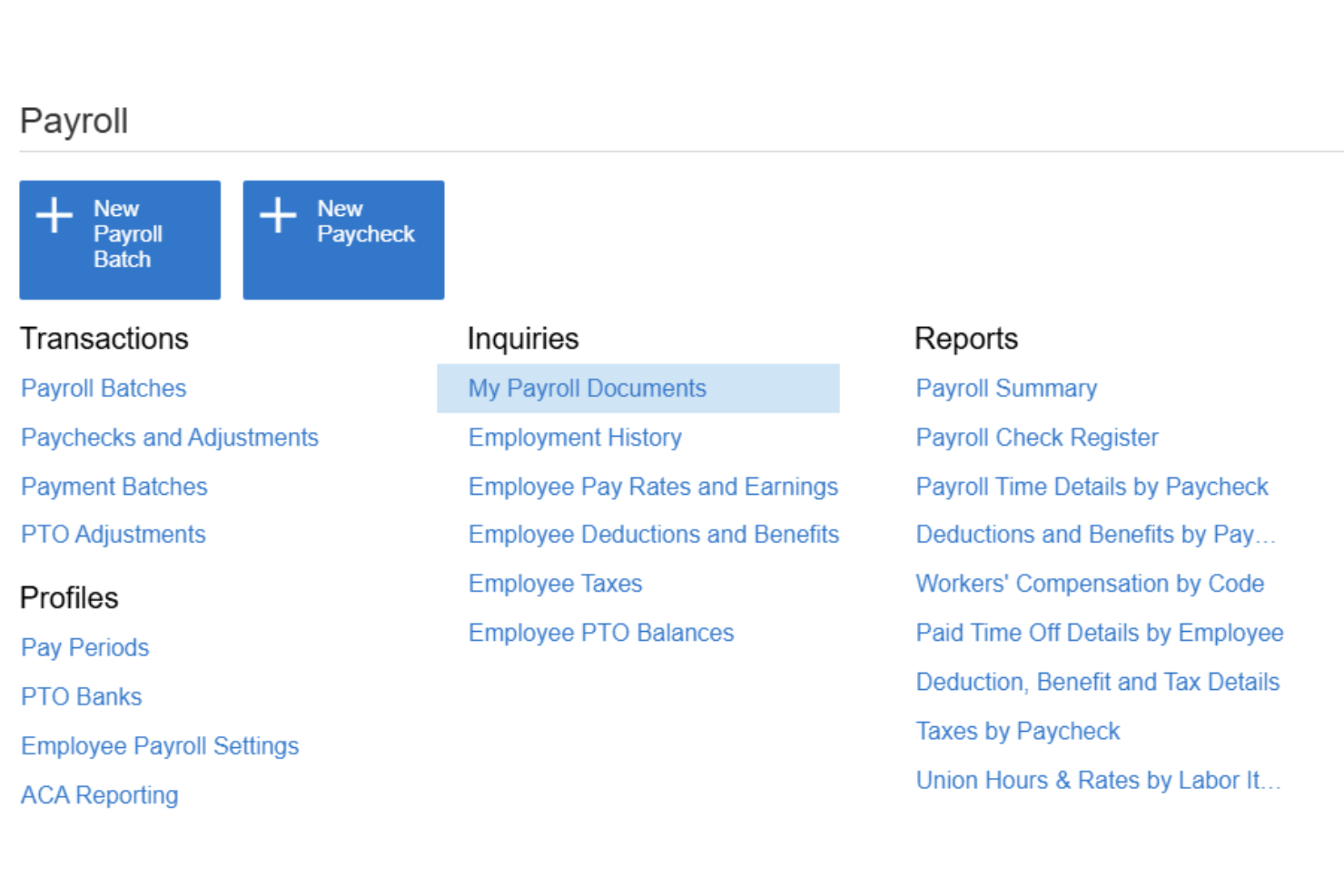
Acumatica is a cloud ERP platform for mid-market businesses that integrates full-cycle payroll processing, general ledger accounting, project cost tracking, and time management in a single system.
Who Is Acumatica Best For?
Acumatica is a strong fit for mid-market construction, manufacturing, and professional services companies that need payroll costs tied directly to projects and job codes.
Why I Picked Acumatica
I picked Acumatica as one of the best because no other accounting platform I've used lets you slice payroll costs by project, task, cost code, union, and shift simultaneously. When my team runs payroll, those costs post automatically to the GL with mapping that mirrors how the project is structured, not just a generic wage account. I also rely on the certified payroll reporting, which is a must-have for construction jobs with prevailing wage requirements.
Acumatica Key Features
- Employee self-service portal: Employees can access pay stubs, tax forms, direct deposit details, and PTO requests online or from a mobile device.
- Payroll tax and compliance: Supports current federal, FICA, state, and local tax information, electronic payroll filings, compliance dashboards, and payroll audit trails.
- Multi-entity accounting: Manage payroll and accounting across multiple companies or locations from one central platform.
- Native time entry integration: Time data imports directly into payroll runs with approval workflows and missing-time reminders.
Acumatica Integrations
Acumatica offers native integrations with Microsoft 365, DocuSign, Avalara, ADP, and Tableau. An API is available for custom integrations.
Pros and Cons
Pros:
- Certified payroll reporting for prevailing wage jobs
- Supports payroll across multiple entities simultaneously
- Project-level payroll cost allocation built in
Cons:
- No self-serve implementation without a partner
- Complex configuration for smaller payroll teams
Workday
Best for enterprise finance and global payroll
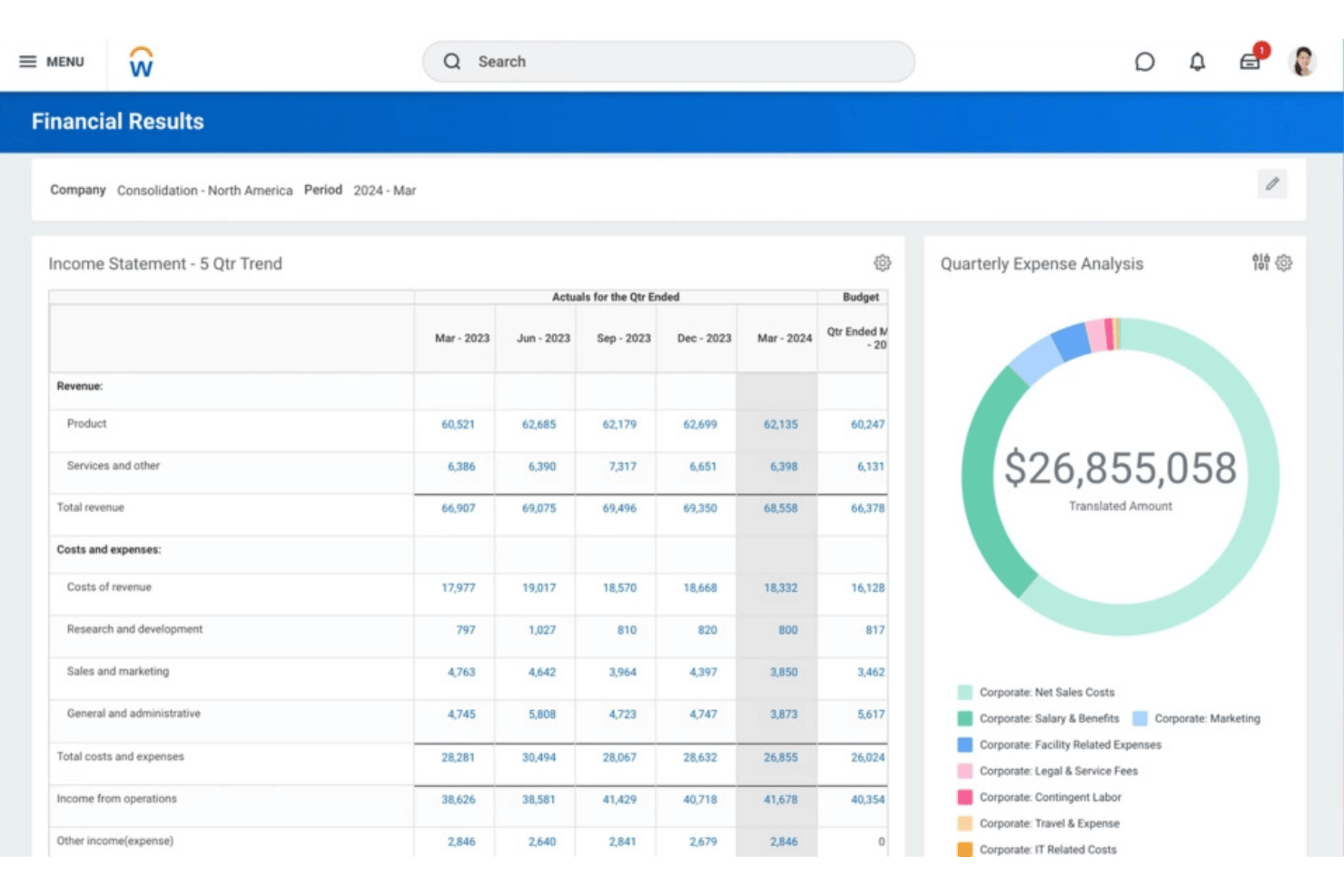
Workday is an enterprise-grade platform that unifies payroll processing, financial management, and HCM in a single system, with a native general ledger, continuous payroll calculation, and global payroll capabilities supported by Workday and its partner ecosystem.
Who Is Workday Best For?
Workday is built for large and enterprise organizations that need to manage complex, multi-entity finance and payroll operations across multiple countries from one platform.
Why I Picked Workday
I picked Workday because it connects enterprise payroll directly with financial management. Payroll results can generate accounting entries and feed labor costs into the general ledger, while Workday Financial Management handles core accounting functions such as the general ledger, accounts payable and receivable, fixed assets, and consolidation.
Workday Key Features
- Payroll accounting: Workday automatically generates accounting entries based on payroll results and supports labor-cost allocation.
- General ledger integration: Payroll results can flow into Workday Financial Management using account posting rules, fiscal schedules, ledger types, and other accounting configurations.
- Continuous payroll: Workday supports continuous payroll processing rather than treating payroll solely as a discrete end-of-period process.
- Global payroll: Native/direct payroll coverage is supplemented by Workday's global partner ecosystem and bidirectional integrations.
- Employee self-service: Employees can access payroll information through Workday's mobile-first experience; Workday documentation specifically supports employee access to payslips on mobile.
- Time-to-payroll: Approved time can feed payroll calculations by associating time calculation tags with earnings or deductions.
Workday Integrations
Workday offers native integrations with ADP, Kronos, Salesforce, Microsoft 365, SAP, ServiceNow, and Oracle, and provides an API for custom integrations.
Pros and Cons
Pros:
- Employee self-service reduces HR admin workload
- Native payroll coverage across 180+ countries
- Payroll and finance live in one system
Cons:
- Requires significant IT involvement during setup
- Overkill for businesses under 500 employees

ERPNext
Best for open-source accounting and payroll
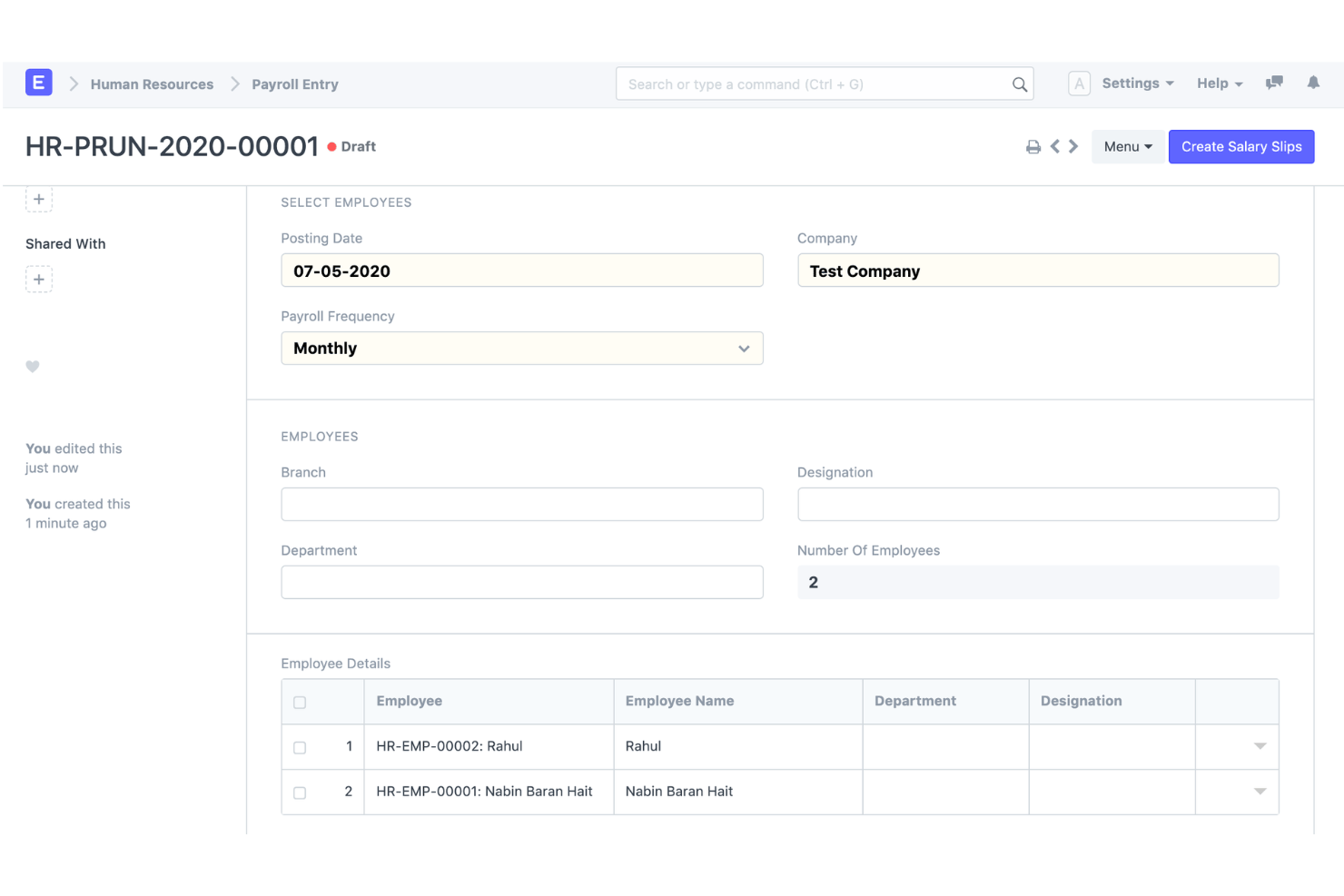
ERPNext is an open-source ERP platform that combines double-entry accounting, native payroll processing, HR management, and inventory tracking in a single self-hosted or cloud-deployed system.
Who Is ERPNext Best For?
ERPNext suits technically resourceful SMBs and growing mid-market companies that need a full-featured ERP without per-user licensing costs.
Why I Picked ERPNext
ERPNext earns its spot on my shortlist because the payroll module posts directly to the general ledger using the same chart of accounts and cost centers you configure for the rest of your books. I like that because you're working from a single codebase, there's no middleware syncing payroll data to a separate accounting system. The open-source license also means I can modify salary components or GL account mappings to match a specific structure, without waiting on a vendor roadmap.
ERPNext Key Features
- Integrated payroll: Salary structures, earnings and deductions, payroll periods, salary slips, and bulk payroll processing.
- Payroll accounting: Payroll expenses/payments can be connected to the accounting system rather than maintained in a completely separate payroll product.
- General ledger: ERPNext provides a full double-entry GL and automatically generates ledger entries from submitted accounting transactions.
- Cost centers and projects: Payroll can be associated with projects, while ERPNext accounting supports cost centers, projects and other accounting dimensions.
- Multi-company/multi-currency accounting: ERPNext supports multiple companies, subsidiaries, branches and currencies with consolidated reporting.
- Customization: ERPNext is open source and built on the Frappe framework, with low-code/no-code customization capabilities.
ERPNext Integrations
ERPNext offers native integrations with PayPal, Razorpay, Amazon S3, Slack, Dropbox, Shopify, and WooCommerce. An API is available for custom integrations.
Pros and Cons
Pros:
- Strong payroll-to-accounting connection
- Open-source accounting and payroll
- Broad ERP functionality beyond finance
Cons:
- Payroll compliance/localization varies by country
- More setup and configuration than turnkey SMB accounting/payroll products

Odoo
Best for modular accounting and payroll apps
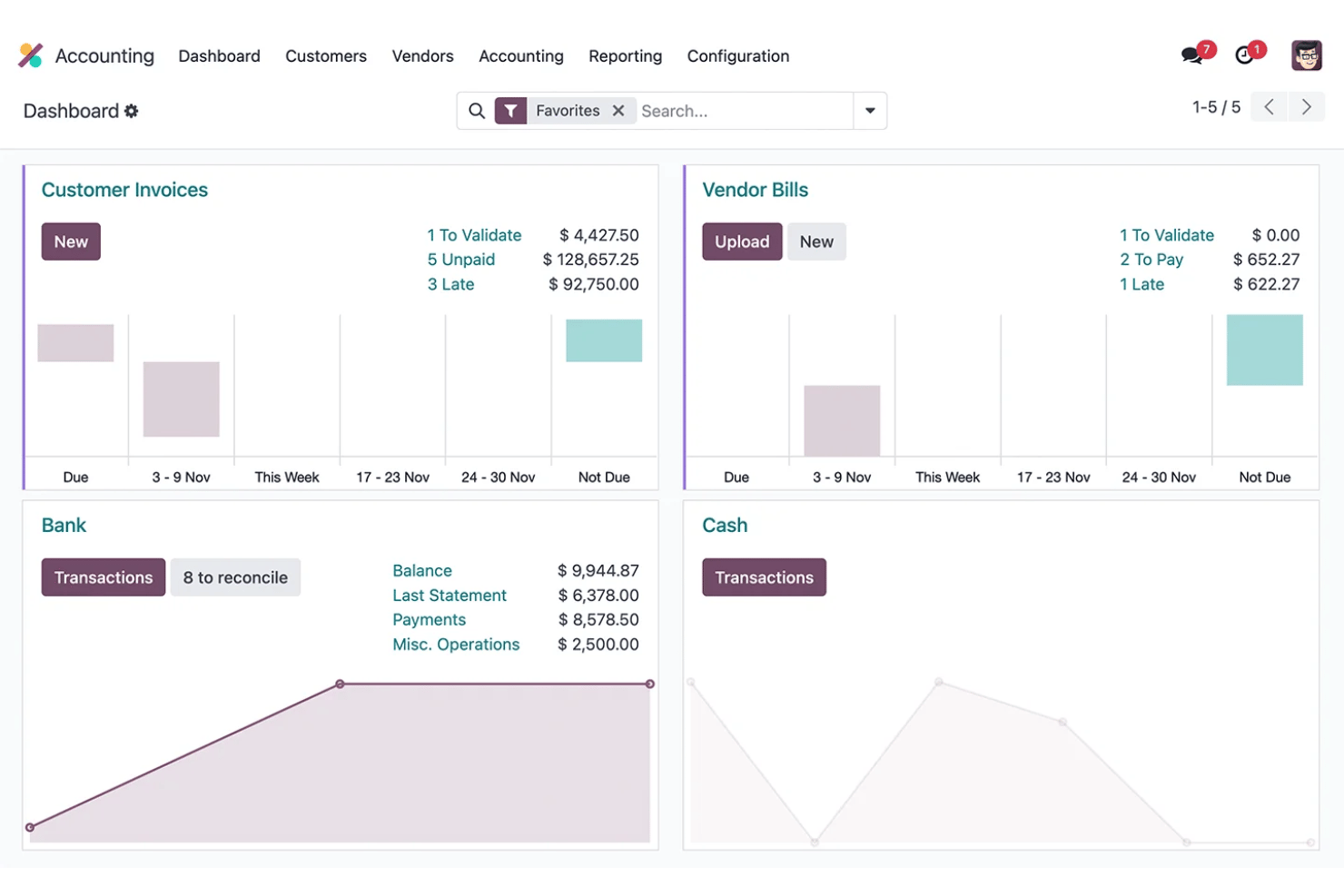
Odoo is an open-source ERP platform that combines modular accounting, payroll, HR, and expense management in a single shared database.
Who Is Odoo Best For?
Odoo is a strong fit for growing SMBs with 6–250 employees that want to consolidate accounting, payroll, and HR into one platform without managing multiple disconnected tools.
Why I Picked Odoo
I picked Odoo because businesses can combine its full accounting application with payroll and other business apps in one modular platform. When Accounting and Payroll are used together, payroll salary rules can be mapped to debit and credit accounts, helping connect employee pay with the general ledger without relying on a completely separate accounting system.
Odoo Key Features
- Accounting: Full double-entry accounting with AP/AR, reconciliation, financial reporting, assets and budgets.
- Payroll accounting: Salary rules can be mapped to debit and credit accounts, connecting payroll calculations with accounting journals.
- Pay runs: Businesses can generate and process multiple payslips together, including grouping payroll by salary structure, department or job position.
- Time-to-payroll: Payroll uses employee work entries to calculate worked time before applying salary structures and rules.
- Payroll localization: Country-specific payroll configurations account for local taxes, fees, allowances and regulatory requirements where supported.
- Multi-company accounting: Odoo supports multiple companies, with different fiscal localizations where appropriate.
Odoo Integrations
Odoo offers native integrations with Stripe, Plaid, PayPal, Authorize.Net, and Shopify, with an API available for custom integrations.
Pros and Cons
Pros:
- Open-source codebase allows deep customization
- Payroll posts automatically to the general ledger
- Modular apps scale with your business needs
Cons:
- Initial setup demands significant technical configuration
- Payroll tax filing requires third-party support
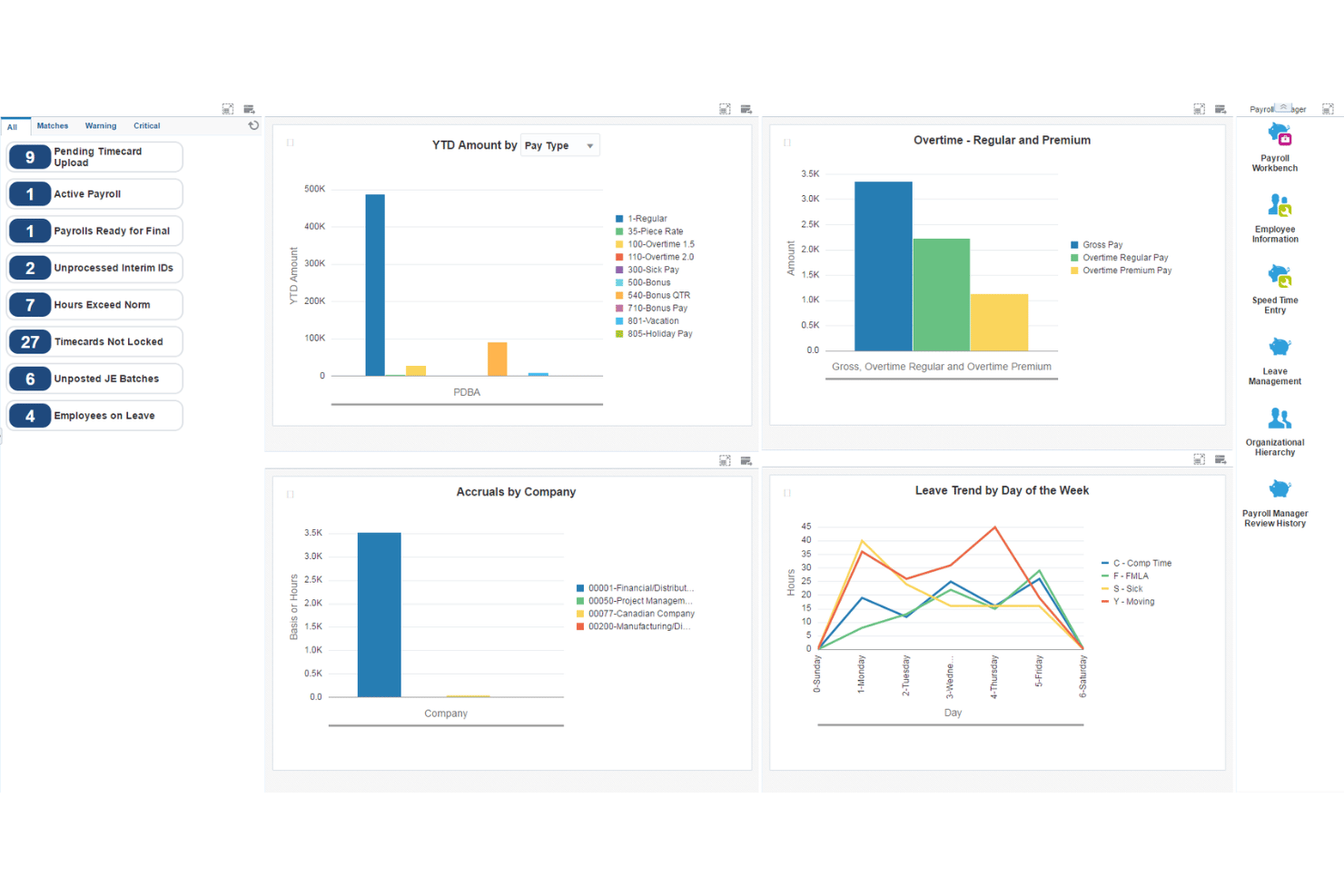
JD Edwards EnterpriseOne is an enterprise ERP suite from Oracle that combines full-cycle payroll, general ledger accounting, AP/AR, fixed assets, and human capital management across on-premises, cloud, and hybrid deployments.
Who Is JD Edwards EnterpriseOne Best For?
JD Edwards EnterpriseOne is built for large enterprises in manufacturing, distribution, and asset-heavy industries that need integrated payroll and financial management at scale.
Why I Picked JD Edwards EnterpriseOne
I picked JD Edwards EnterpriseOne because its payroll system connects deeply with enterprise financial management. Payroll can generate and post journal entries to the general ledger using configurable Automatic Accounting Instructions, while payroll liabilities such as taxes and insurance can flow into Accounts Payable.
JD Edwards EnterpriseOne Key Features
- Payroll-to-GL integration: Payroll can generate journal entries and update the EnterpriseOne general ledger, with automatic or manual posting options.
- Automatic Accounting Instructions: AAIs determine how generated accounting entries are distributed across GL accounts, giving larger organizations considerable control over payroll accounting.
- Payroll liabilities and AP: EnterpriseOne can automatically create vouchers for payroll taxes, insurance premiums, and other third-party payroll liabilities through its Accounts Payable integration.
- Labor costing: Payroll supports labor and labor-burden distributions, including wages, taxes, insurance, hours, and account information. Those transactions can flow into the Account Ledger.
- US payroll: EnterpriseOne supports federal, state, and local withholding/reporting requirements, with Vertex used for tax-withholding calculations.
- Canadian payroll: There's also dedicated Canadian payroll functionality covering earnings, deductions, taxes, gross-to-net/net-to-gross calculations, leave accruals, and government-regulated tax information.
JD Edwards EnterpriseOne Integrations
JD Edwards EnterpriseOne offers native integrations with Oracle Cloud Infrastructure, Oracle Analytics Cloud, Oracle Database, and has an API for custom integrations.
Pros and Cons
Pros:
- Configurable GL account mapping for payroll runs
- Handles multi-entity payroll and accounting natively
- Granular labor cost posting by department
Cons:
- Not suited to small or mid-sized businesses
- Implementation requires significant IT and consulting resources
NetSuite
Best for payroll data in real-time financials
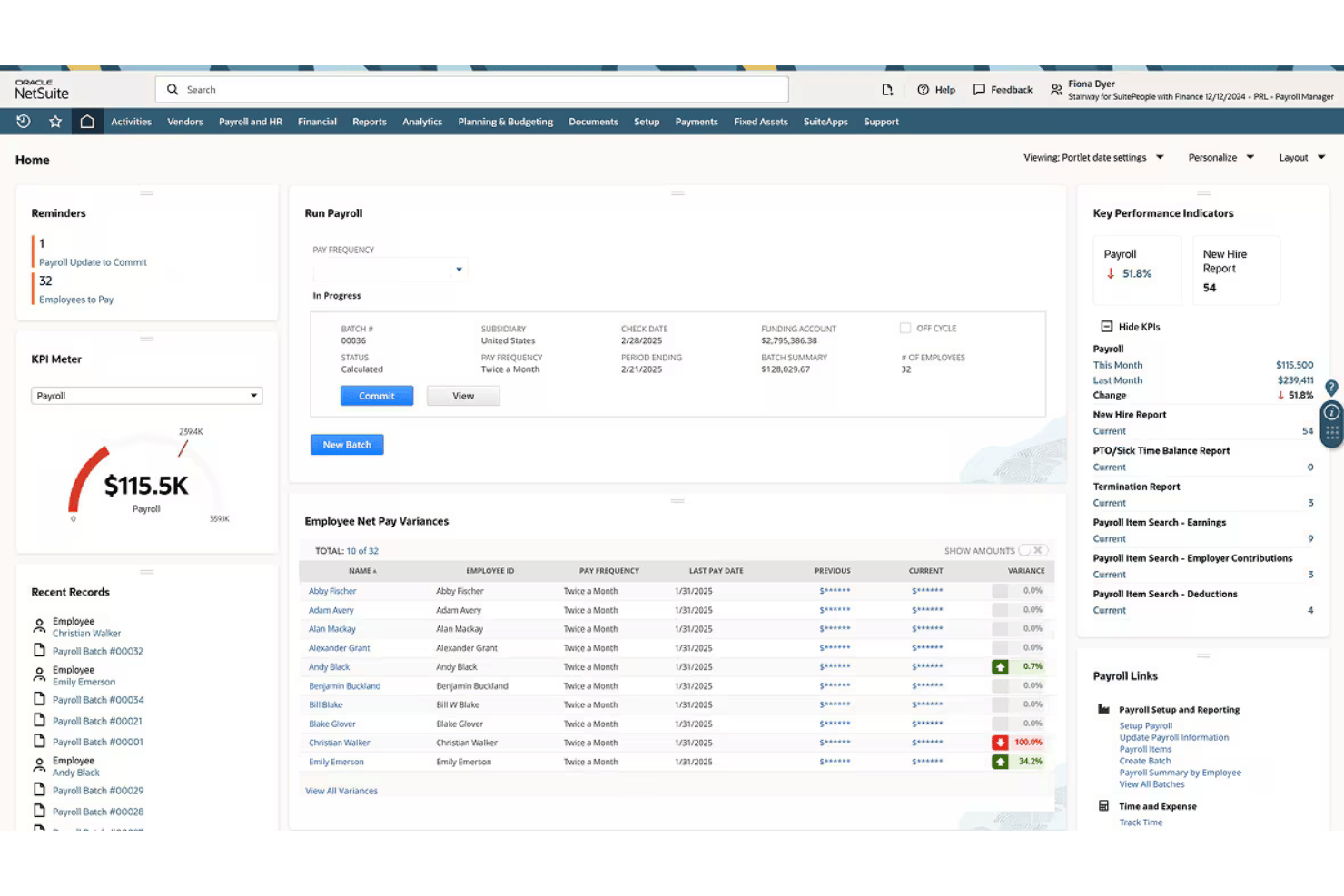
NetSuite is a cloud-based ERP platform that combines full-cycle US payroll processing with a complete general ledger, where every payroll run posts directly to financial accounts in real time.
Who Is NetSuite Best For?
NetSuite is a strong fit for mid-market companies that need payroll, accounting, and HR managed within a single ERP rather than across disconnected tools.
Why I Picked NetSuite
I picked NetSuite as one of the best because the moment a payroll run completes, every wage, tax, and deduction posts to the general ledger automatically. I love that I can drill down from a trial balance directly to an individual paycheck, which makes payroll audits far less painful. The dashboards also break down payroll expenses by department, location, or subsidiary, giving finance and HR a shared view of labor costs without manual reconciliation.
NetSuite Key Features
- Multi-subsidiary payroll: Run payroll across multiple business entities with consolidated or subsidiary-specific reporting.
- Employee self-service portal: Let employees view pay stubs, tax forms, and update their own personal and banking details.
- Automated ACA compliance: Prepare, file, and manage Affordable Care Act (1095-C/1094-C) forms within the platform.
- Custom payroll dashboards: Access over 100 standard payroll reports and interactive dashboards for payroll analytics.
NetSuite Integrations
NetSuite offers native integrations with SuitePeople HR, SuiteTime, and other NetSuite business management modules. An API is available for custom integrations.
Pros and Cons
Pros:
- Built-in HR, time tracking, and payroll
- Supports multi-entity and multi-subsidiary payroll
- Payroll posts directly to the GL
Cons:
- US-only payroll limits global workforce management
- Implementation takes months for most businesses

Wave
Best for automatic payroll journal entries
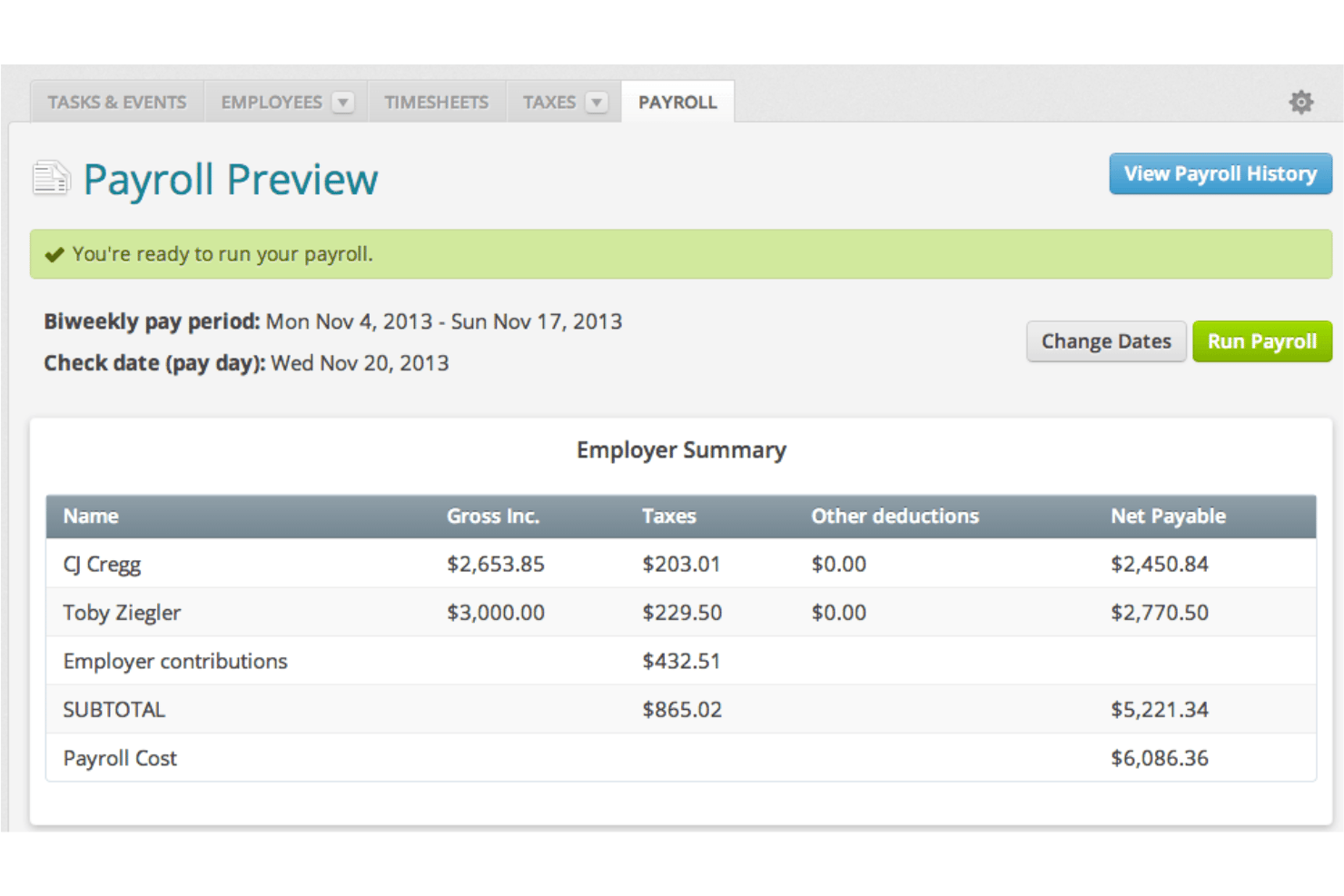
Wave is a small business accounting and payroll platform that combines double-entry bookkeeping, invoicing, and full-cycle payroll processing in a single system.
Who Is Wave Best For?
Wave is built for owner-operators and small businesses that need payroll and accounting in one place without paying for features they won't use.
Why I Picked Wave
I picked Wave as one of the best because each payroll run automatically posts as journal entries into the accounting ledger, with wages, taxes, and deductions mapped to the correct accounts in real time. Because payroll and accounting share one data model, there's no manual export or reconciliation. I also like that W-2s, 1099-NECs, and wage reports are all generated from within that same system.
Wave Key Features
- Direct deposit payments: Send paychecks straight to employee and contractor bank accounts at no additional cost.
- Employee self-service portal: Let team members securely view pay stubs and manage personal information online.
- Automatic payroll tax filing: Calculate, withhold, and file federal and state payroll taxes for US-based businesses.
- Year-end tax form generation: Create and deliver W-2 and 1099-NEC forms for employees and contractors within the system.
Wave Integrations
Native integrations are not clearly documented. An API is available for custom integrations.
Pros and Cons
Pros:
- W-2 and 1099-NEC forms generated in-platform
- Automatic journal entries after every payroll run
- Payroll and accounting share one data model
Cons:
- Limited support for growing teams beyond 10 employees
- Payroll only available in the US and Canada, excluding Quebec

Best for accounting and payroll under one login
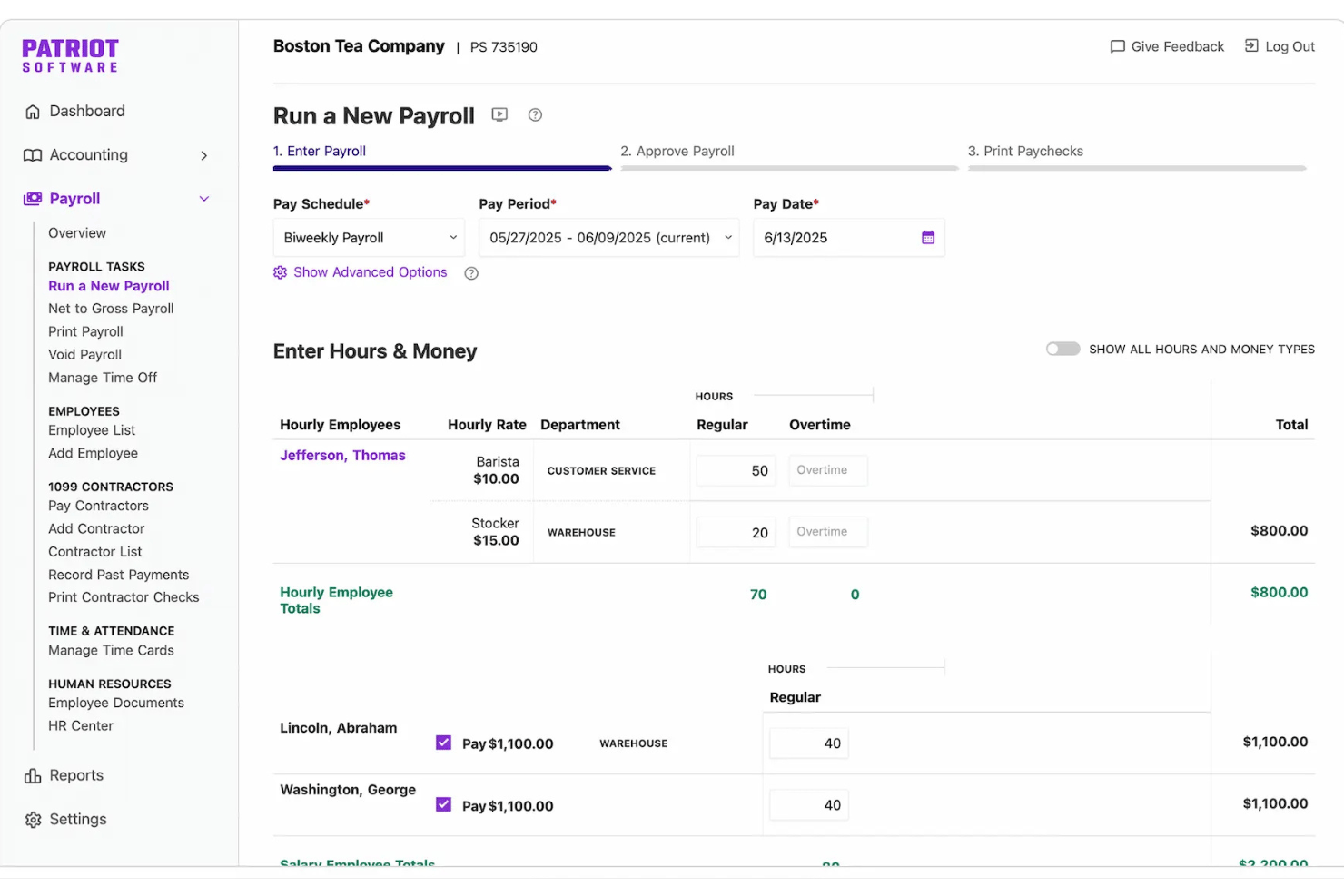
Patriot Software is a small business accounting and payroll platform that combines double-entry bookkeeping, invoicing, direct deposit, and payroll processing in a single login, with payroll tax filing available through its Full Service Payroll plan.
Who Is Patriot Software Best For?
Patriot Software is a strong fit for small business owner-operators and payroll administrators who need to manage books and run payroll without juggling two separate systems.
Why I Picked Patriot Software
I picked Patriot Software as one of the best because both payroll and accounting live under a single login, and the connection between them is automatic. Every time I run payroll, Patriot posts a journal entry directly to the general ledger, mapping wages, tax withholdings, and deductions to the correct accounts without any manual work. I also like the dual-ledger system, which lets me toggle between cash and accrual accounting without switching tools or duplicating records.
Patriot Software Key Features
- Multi-state payroll tax filing: Full Service Payroll calculates, files, and deposits federal, state, and local payroll taxes on your behalf.
- Employee self-service portal: Employees can access pay stubs, tax documents, and update their direct deposit information online.
- Time and attendance add-on: Track employee hours and time-off accruals that sync directly to payroll with a dedicated module.
- Contractor and 1099 processing: Issue payments to contractors and generate 1099 forms within the same platform as employee payroll.
Patriot Software Integrations
Patriot Software offers native integrations with Vestwell for 401(k) plans, SimplyInsured for health insurance, and ERGO NEXT for workers' compensation. An API is available for custom integrations. Native integrations with other accounting or payroll tools are not clearly documented.
Pros and Cons
Pros:
- Full Service Payroll automates payroll tax filing
- Supports both cash and accrual accounting
- Payroll auto-posts to the general ledger
Cons:
- No native HR or benefits administration features
- Reporting tools lack depth for advanced users
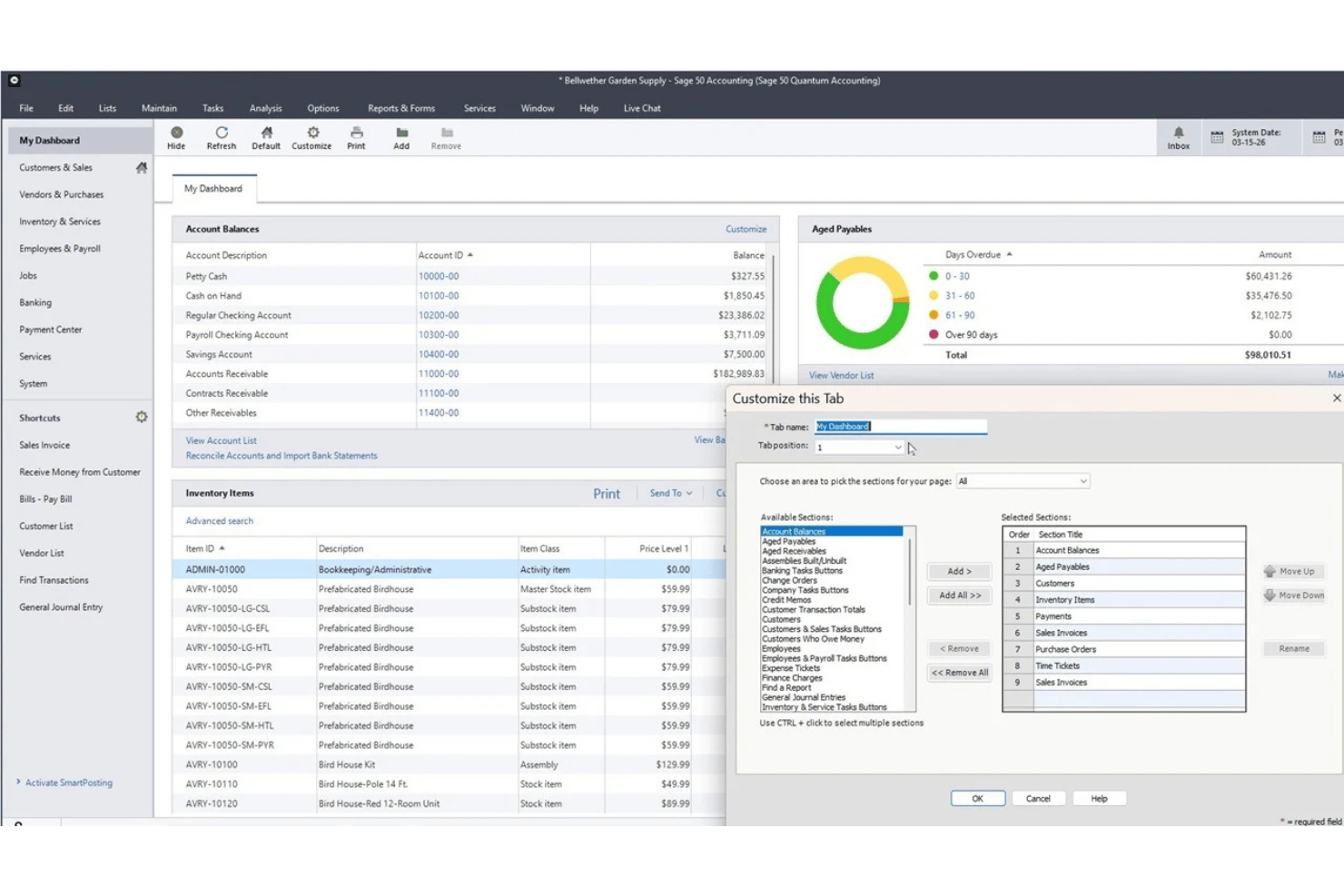
Sage 50 Accounting is a small business accounting platform available in cloud and desktop editions, combining financial management, inventory, job costing, and an integrated payroll module.
Who Is Sage 50 Accounting Best For?
Sage 50 is a strong fit for small businesses and in-house bookkeepers that need detailed accounting, job costing, and payroll functionality in one system.
Why I Picked Sage 50 Accounting
I've included Sage 50 Accounting in my top picks because the payroll module is built directly into the accounting system, not bolted on as a third-party integration. I like that payroll runs automatically post as journal entries to the general ledger, mapping wages, taxes, and deductions without any manual reconciliation. The combination of job costing and payroll in one desktop environment is where Sage 50 really stands apart, letting you see whether a project turned a profit after labor costs are fully accounted for.
Sage 50 Accounting Key Features
- Job costing module: Track labor, materials, and overhead by job or project for full job profitability.
- Multi-company management: Manage transactions and reporting across multiple business entities in a single system.
- Inventory management: Monitor stock levels, serial numbers, vendors, and assemblies directly within the accounting platform.
- Advanced reporting tools: Access over 150 reports covering areas such as payables, receivables, expenses, profits, inventory, payroll, and jobs, with options to customize and drill down into transactions.
Sage 50 Accounting Integrations
Sage 50 Accounting offers native integrations with Microsoft 365, AutoEntry, and Sage Payroll. An API is available for custom integrations.
Pros and Cons
Pros:
- Strong audit trail for payroll transactions
- Deep job costing built into accounting
- Payroll posts directly to the general ledger
Cons:
- Payroll and e-filing require separate subscriptions
- Payroll requires an additional subscription

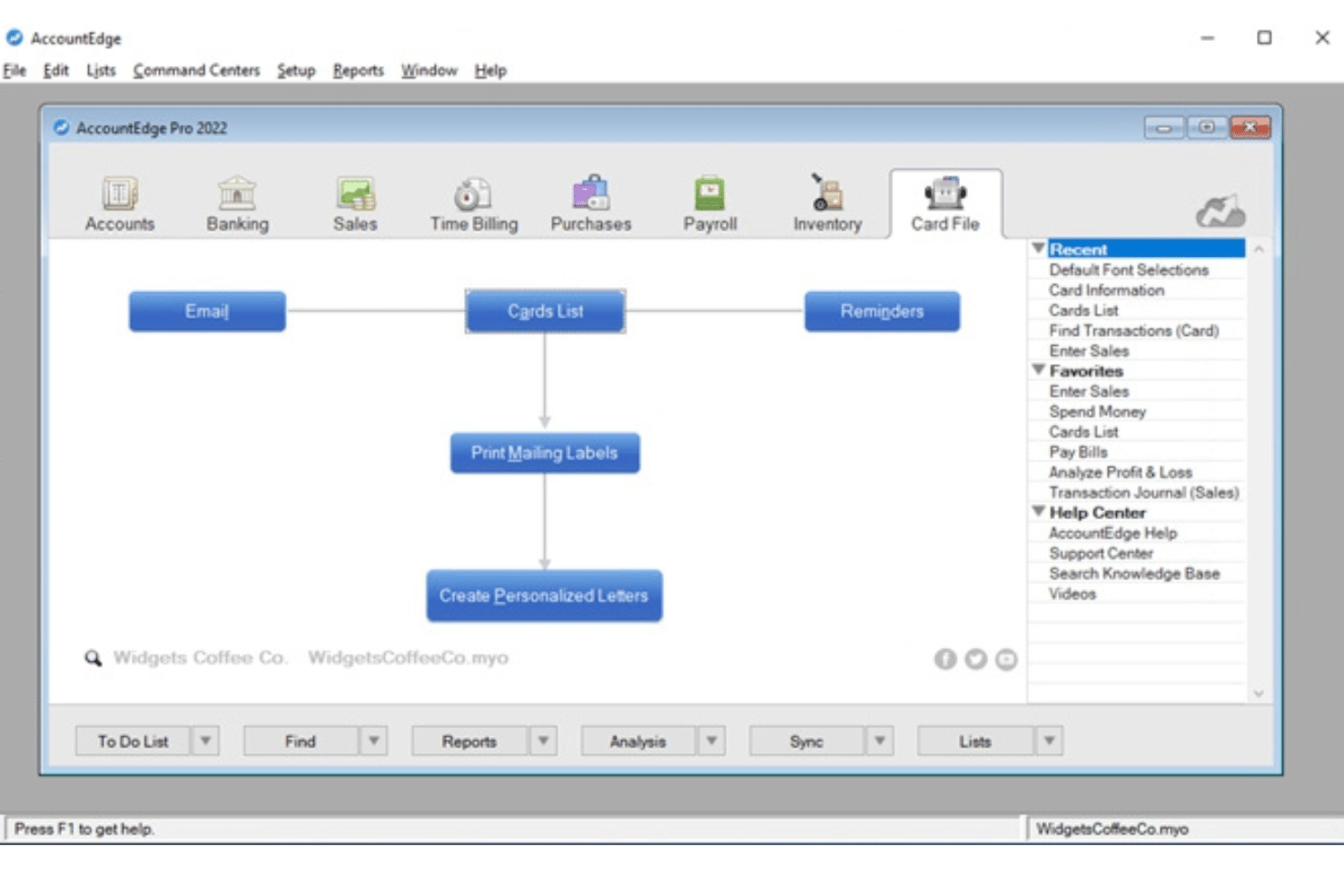
AccountEdge is a desktop-based accounting platform for small businesses that combines double-entry bookkeeping, inventory, and invoicing with an optional payroll add-on for unlimited employees and access to current federal, state/provincial, and local payroll tax rates.
Who Is AccountEdge Best For?
It's a strong fit for owner-operators and small business payroll admins who prefer desktop accounting software and want to process payroll for unlimited employees without per-employee fees.
Why I Picked AccountEdge
AccountEdge earns its spot on my shortlist because of how it handles payroll tax tables. Rather than relying on a cloud service for tax updates, AccountEdge lets you download and apply federal, state, and local tax tables directly in the desktop software. I also like that payroll runs post automatically as journal entries to the GL. Wages, taxes, and deductions map to the correct accounts with no manual re-entry.
AccountEdge Key Features
- Double-entry general ledger: Provides a full accounting suite with chart of accounts, journal entries, AP/AR, and financial reports.
- Inventory and item tracking: Monitors inventoried and non-inventoried items, assemblies, and manages multiple locations and custom variations.
- Customizable reporting: Offers hundreds of standard financial, payroll, and compliance reports, plus advanced analytics via Power BI exports.
- Integrated time billing: Enables entry of timesheets, applies custom billing rates by employee or project, and links hours directly to payroll.
AccountEdge Integrations
AccountEdge offers add-ons for bank feeds, direct deposit, payroll forms and e-filing, AccountEdge Connect, Web Pay, and payment processing. AccountEdge Connect adds browser-based access for sales, purchases, time billing, and employee timesheets that sync back to the desktop software.
Pros and Cons
Pros:
- Handles unlimited employee payroll runs
- Payroll entries post automatically to GL
- Downloadable tax tables update payroll calculations
Cons:
- Tax filing not automated by vendor
- Direct deposit and payroll e-filing cost extra
Altri software di contabilità con funzionalità per le buste paga
Ecco alcune ulteriori opzioni di software di contabilità con funzionalità per le buste paga che non sono entrate nella mia selezione, ma che vale comunque la pena esaminare:
- Striven
For payroll in operational workflows
- QuickBooks Workforce
For connected payroll, HR, and books
- Microsoft Dynamics GP
For advanced payroll deductions and benefits
- SAP S/4HANA
For global payroll with SAP finance


Come valuto i software di contabilità con funzionalità per le buste paga
Quando i dati delle buste paga non confluiscono correttamente nel libro mastro, so che lo strumento non offre uno dei maggiori vantaggi dell'integrazione tra paghe e contabilità. Per questo, distinguo i requisiti indispensabili dalle funzionalità che differenziano realmente le piattaforme.
Funzionalità di base (requisiti essenziali per questo elenco)
Quando seleziono gli strumenti per il mio elenco, assegno a ciascuno un punteggio su una scala da 0 (non offre la funzionalità) a 5 (eccelle in questo ambito) per ogni funzionalità di base indicata di seguito. Calcolo quindi il punteggio totale dello strumento in percentuale, utilizzando il 65% come parametro di riferimento per valutarne l'idoneità complessiva per l'elenco.
- Elaborazione integrata delle buste paga: cerco elaborazioni delle paghe integrate o strettamente collegate, con accredito diretto e calendari flessibili, in modo che le aziende possano elaborare i pagamenti di dipendenti e collaboratori senza trasferire manualmente i dati delle buste paga tra i sistemi.
- Contabilità del libro mastro: valuto se il libro mastro supporta debiti e crediti, registrazioni contabili e rapporti personalizzabili, come l'estrazione di un conto economico suddiviso per reparto.
- Automazione delle imposte sulle buste paga: i requisiti fiscali cambiano spesso, quindi valuto come lo strumento calcola le ritenute, supporta i pagamenti e gli adempimenti fiscali e genera, quando disponibili, i moduli di fine anno come i W-2.
- Anagrafiche dei dipendenti e detrazioni: ogni profilo dovrebbe conservare le informazioni su tariffe salariali, ritenute, benefit e pignoramenti, dettagli che altrimenti dovresti gestire in un sistema separato.
- Sincronizzazione tra buste paga e libro mastro: dopo ogni elaborazione delle paghe, gli stipendi e le passività fiscali dovrebbero essere registrati automaticamente nei conti corretti del libro mastro, con una traccia di controllo per la revisione di fine trimestre.
- Rilevazione delle ore e delle ferie: i fogli presenze integrati e le politiche di maturazione delle ferie che confluiscono direttamente nelle buste paga evitano di reinserire le ore a ogni periodo di paga.
Una volta ottenuto un elenco di strumenti che soddisfano i criteri, valuto ciò che differenzia ciascuna piattaforma.
Fattori distintivi (ciò che differenzia i fornitori)
Ecco come confronto e metto a paragone i diversi fornitori:
Funzionalità di rilievo
Un portale autonomo per i dipendenti riduce le richieste all'ufficio risorse umane: il personale può scaricare autonomamente i propri cedolini, aggiornare i dati dell'accredito diretto e inviare richieste di ferie o permessi senza continui scambi di messaggi. Valuto anche la gestione dei collaboratori e dei moduli 1099, soprattutto se la squadra combina dipendenti W-2 e liberi professionisti che necessitano dei moduli 1099-NEC a fine anno. Anche la presentazione delle dichiarazioni fiscali in più Stati è importante, in particolare per le squadre distribuite, in cui ogni nuova assunzione può comportare ulteriori adempimenti nelle diverse giurisdizioni.
Oltre le funzionalità
La trasparenza dei prezzi è un aspetto importante: verifico se i costi delle buste paga sono inclusi nell'abbonamento alla contabilità o addebitati come supplemento per dipendente, poiché queste spese aumentano rapidamente con la crescita della squadra. Anche il supporto alla migrazione è importante, soprattutto se cambi sistema a metà anno e devi importare con precisione gli stipendi e le ritenute fiscali da inizio anno. Valuto inoltre le funzionalità di collaborazione con il commercialista, come le autorizzazioni basate sui ruoli che consentono al responsabile della contabilità di accedere al libro mastro senza intervenire sulle approvazioni delle buste paga.
Come scegliere un software di contabilità con funzionalità per le buste paga
La scelta del software di contabilità con funzionalità per le buste paga più adatto dipende dal modo in cui ogni piattaforma gestisce la combinazione specifica di attività legate alla conformità, all’automazione e alle risorse umane. Prima di scegliere una piattaforma, stabilisci quanto strettamente vuoi collegare le buste paga e la contabilità. Un sistema tutto-in-uno può ridurre il lavoro di riconciliazione, mentre un software di contabilità con un componente aggiuntivo per le buste paga può offrire maggiore flessibilità. Se hai già un fornitore di servizi paghe, può essere sufficiente un’integrazione affidabile, purché le spese e le passività relative alle retribuzioni confluiscano correttamente nel libro mastro.
| Se la tua priorità è... | Cerca... |
|---|---|
| Presentare dichiarazioni fiscali sulle buste paga accurate | Calcoli fiscali automatizzati, supporto per la presentazione e aggiornamenti sulla conformità |
| Sincronizzare senza problemi buste paga e contabilità | Mappatura nativa e automatizzata delle registrazioni contabili nel libro mastro |
| Gestire il personale pagato a ore e a stipendio | Rilevazione flessibile delle ore e cicli paghe misti |
| Gestire le buste paga in più giurisdizioni | Supporto fiscale per ogni stato e località in cui hai dipendenti |
| Passare facilmente dal vecchio sistema | Migrazione assistita dei dati delle buste paga e importazioni dei dati da inizio anno |
Come valutare la tua selezione
- Verifica il supporto fiscale di fine anno: conferma quali moduli W-2 e 1099 il software genera o presenta. Controlla inoltre quali giurisdizioni supporta e se la presentazione di fine anno comporta costi aggiuntivi.
- Esegui una prova simulata del ciclo paghe: Configura un'elaborazione di prova delle paghe con i tuoi consueti calendari di pagamento, compensi, detrazioni e collaboratori. Quindi, verifica come le spese e le passività risultanti vengono registrate nel libro mastro.
- Invia un ticket all'assistenza per uno scenario di migrazione: Descrivi la necessità di importare i dati delle paghe dall'inizio dell'anno a metà anno e valuta la completezza e le tempistiche della risposta.
- Chiarisci la responsabilità della presentazione delle dichiarazioni fiscali: Conferma se il fornitore calcola, presenta e paga le imposte sulle paghe per tuo conto. Inoltre, verifica quali giurisdizioni sono coperte dal fornitore e chi gestisce gli errori o le presentazioni tardive.
- Valuta controllo e praticità: Decidi se desideri strumenti contabili altamente personalizzabili con paghe integrate oppure un sistema incentrato sulle paghe con funzionalità di contabilità di base.
Che cos'è il software di contabilità con funzionalità per le paghe?
Il software di contabilità con funzionalità per le paghe combina gli strumenti finanziari fondamentali con l'elaborazione delle paghe integrata o incorporata. Ad esempio, questi strumenti possono includere la contabilità del libro mastro, la gestione dei debiti e dei crediti, la fatturazione e la reportistica finanziaria. Queste piattaforme consentono di calcolare la retribuzione dei dipendenti, gestire detrazioni e imposte e registrare le spese e le passività relative alle paghe nel sistema contabile, senza trasferire manualmente i dati tra strumenti separati.
A differenza dei software autonomi per le paghe, queste piattaforme collegano direttamente l'attività relativa alle paghe ai tuoi registri finanziari. A seconda del software, le elaborazioni delle paghe completate possono generare automaticamente registrazioni contabili, aggiornare i conti delle spese e delle passività, allocare i costi del lavoro a reparti o progetti e trasferire i dati delle paghe nei report finanziari.
Funzionalità
Quando selezioni un software di contabilità con funzionalità per le paghe, presta attenzione alle seguenti funzionalità chiave:
- Elaborazione integrata delle paghe: Elabora le paghe, calcola la retribuzione dal lordo al netto e collega salari, detrazioni e passività relative alle paghe dei dipendenti ai tuoi registri contabili.
- Gestione delle imposte sulle paghe: Calcola e trattieni le imposte applicabili sulle paghe, con opzioni per il pagamento delle imposte, la presentazione delle dichiarazioni e i moduli di fine anno come i moduli W-2 e 1099, a seconda della piattaforma e del piano.
- Sincronizzazione del libro mastro: Mappa automaticamente le transazioni delle paghe al corretto piano dei conti, così le spese per i salari e le passività fiscali sono sempre aggiornate.
- Gestione dei dati dei dipendenti: Memorizza le tariffe retributive, le ritenute fiscali, le detrazioni per i benefit e i dati del rapporto di lavoro nei profili dei singoli dipendenti.
- Pagamenti a collaboratori e 1099: Paga i collaboratori insieme ai dipendenti e semplifica la presentazione del modulo 1099-NEC di fine anno all'interno dello stesso sistema.
- Monitoraggio delle ore e dei permessi retribuiti: Registra le ore lavorate e i permessi retribuiti, trasferendo questi dati direttamente nelle elaborazioni delle paghe per ottenere buste paga accurate.
- Accredito diretto e opzioni di pagamento: Offri a dipendenti e collaboratori opzioni di pagamento flessibili, come l'accredito diretto, le carte di pagamento o gli assegni stampati.
- Portali autonomi per i dipendenti: Consenti ai dipendenti di accedere ai cedolini, visualizzare i moduli fiscali, richiedere permessi e gestire le informazioni personali senza l'intervento delle risorse umane.
- Report e analisi personalizzati: Crea report sulle paghe e finanziari che evidenzino i costi del lavoro, gli straordinari e l'utilizzo dei benefit per prendere decisioni aziendali migliori.
- Sicurezza e controlli delle autorizzazioni: Imposta i livelli di accesso degli utenti, applica le approvazioni e crea tracce di verifica per proteggere i dati delle paghe e quelli finanziari.
Vantaggi
L'implementazione di un software di contabilità con funzionalità per le paghe offre diversi vantaggi alla tua squadra e alla tua azienda. Eccone alcuni:
- Riduzione dell'inserimento manuale dei dati: La sincronizzazione automatica tra le paghe e il libro mastro elimina i duplicati e aiuta a prevenire errori costosi.
- Migliore conformità alle imposte sulle paghe: I calcoli automatici e gli strumenti di conformità possono contribuire a mantenere le imposte sulle paghe e la reportistica di fine anno in linea con i requisiti federali, statali e locali applicabili.
- Cicli paghe più rapidi: Le funzionalità integrate di rilevazione del tempo e accredito diretto accelerano ogni elaborazione delle paghe, dal calcolo della retribuzione alla consegna della busta paga.
- Maggiore trasparenza per i dipendenti: I portali self-service consentono ai dipendenti di visualizzare i cedolini, i moduli fiscali e i saldi delle ferie e dei permessi senza creare colli di bottiglia per le risorse umane.
- Report finanziari più accurati: La registrazione in tempo reale delle paghe nella contabilità generale garantisce che i dati relativi a stipendi, imposte e benefit siano sempre riflessi nei report aziendali.
- Gestione più semplice delle paghe dei collaboratori e in più Stati: Le piattaforme che supportano collaboratori e più giurisdizioni fiscali possono ridurre il lavoro manuale necessario per pagare diversi tipi di lavoratori in varie sedi. Le aziende che si espandono a livello internazionale possono consultare anche la nostra guida alle paghe internazionali in Messico.
- Maggiore sicurezza e controllo: Le autorizzazioni basate sui ruoli e i registri di controllo proteggono i dati sensibili relativi alle paghe e alle finanze dagli accessi non autorizzati.
Costi e prezzi
La scelta di un software di contabilità con funzionalità per le paghe richiede la comprensione dei vari modelli e piani tariffari disponibili. I costi variano notevolmente a seconda che le paghe siano incluse, vendute come componente aggiuntivo o acquistate nell'ambito di una suite ERP più ampia. I prodotti per le piccole imprese spesso combinano un abbonamento mensile alla contabilità con un costo base per le paghe e addebiti per lavoratore, mentre le piattaforme aziendali utilizzano generalmente prezzi personalizzati basati su moduli, utenti, dimensioni dell'azienda e requisiti di implementazione. La tabella seguente riassume i modelli di prezzo più comuni:
Modelli di prezzo comuni per software di contabilità con funzionalità per le paghe
| Tipo di piano | Prezzo medio | Funzionalità comuni |
|---|---|---|
| Contabilità gratuita | Piano base da $0; le paghe di solito hanno un costo aggiuntivo | Contabilità di base, fatturazione, report finanziari e gestione paghe opzionale a pagamento |
| Contabilità + componente aggiuntivo per le paghe | Costo mensile della contabilità + costo base per le paghe e/o costo per lavoratore | Contabilità integrata, elaborazione delle paghe, deposito diretto e registrazione delle paghe nella contabilità generale |
| Software per utente o modulare | Costi mensili o annuali basati sul numero di utenti e sui moduli selezionati | Moduli di contabilità e paghe con strumenti aggiuntivi per risorse umane, inventario, progetti o attività operative |
| ERP aziendale | Preventivo personalizzato | Gestione finanziaria avanzata, paghe, supporto multi-entità, autorizzazioni, integrazioni e servizi di implementazione |
Domande frequenti sui software di contabilità con funzionalità per le buste paga
Ecco alcune risposte alle domande comuni sui software di contabilità con funzionalità per le buste paga:
Posso pagare sia i dipendenti sia i collaboratori con un software di contabilità che include le buste paga?
Molte piattaforme di contabilità con funzionalità per le buste paga supportano sia i dipendenti W-2 sia i collaboratori 1099, ma le funzionalità per i pagamenti ai collaboratori e per i moduli fiscali variano a seconda del prodotto e del piano. Se utilizzi entrambi i tipi di lavoratori, verifica che il software supporti i pagamenti ai collaboratori e generi o invii i moduli W-2 e 1099-NEC richiesti.
Come funziona la presentazione delle imposte sulle buste paga in questi sistemi?
Il supporto per le imposte sulle buste paga varia a seconda della piattaforma e del piano. Alcuni sistemi calcolano le ritenute, ma lasciano a te la presentazione e i pagamenti, mentre i prodotti per la gestione completa delle buste paga possono calcolare, presentare e pagare per tuo conto le imposte federali, statali e locali sulle buste paga. Prima di scegliere un sistema, verifica quali giurisdizioni e moduli di fine anno sono supportati.
Quale tipo di supporto è disponibile per la migrazione dei dati delle buste paga da un provider precedente?
La maggior parte dei fornitori offre assistenza per la configurazione iniziale; alcuni mettono a disposizione specialisti dedicati alla migrazione per aiutare a importare le informazioni sulle buste paga dall’inizio dell’anno e garantire una transizione senza problemi.
I dipendenti possono accedere autonomamente ai cedolini e ai moduli fiscali?
Sì, i portali self-service per i dipendenti sono comuni e consentono al personale di recuperare i cedolini, visualizzare i documenti fiscali e aggiornare i dati personali senza coinvolgere le risorse umane.
Il monitoraggio avanzato delle ore è incluso oppure sono necessari strumenti di terze parti?
Alcune soluzioni includono il monitoraggio delle ore, mentre altre offrono integrazioni fluide con applicazioni per la rilevazione delle presenze: in entrambi i casi, consentono di mantenere precise le ore per l’elaborazione delle buste paga.