

I 10 migliori software e strumenti per la gestione delle performance del 2026

10 Selezione dei migliori software per la gestione delle prestazioni


Il miglior software per la gestione delle prestazioni aiuta i professionisti delle risorse umane a semplificare le valutazioni, definire obiettivi chiari e utilizzare il feedback in tempo reale per aumentare il coinvolgimento e la fidelizzazione dei dipendenti.
Se sei stanco di inseguire i feedback nei fogli di calcolo, hai difficoltà a gestire valutazioni incoerenti o sei frustrato da sistemi che non forniscono informazioni utili, lo strumento giusto può trasformare il tuo processo.
Con la piattaforma giusta, puoi automatizzare i cicli di valutazione delle prestazioni, allineare gli obiettivi individuali e di team, raccogliere feedback a 360° e ottenere i dati necessari per prendere decisioni eque e informate, senza il carico amministrativo. Questo significa dedicare più tempo allo sviluppo delle persone e meno tempo alla gestione dei processi.
In qualità di ex amministratore delle risorse umane che ha gestito oltre 1.000 valutazioni delle prestazioni, so cosa rende davvero utile un software per la gestione delle prestazioni e cosa invece ne ostacola l'efficacia. In questa guida condividerò gli strumenti più apprezzati disponibili oggi, così potrai trovare una soluzione adatta alle tue persone, ai tuoi processi e alla tua cultura aziendale.
Il software per la gestione delle prestazioni non è solo una comodità: è uno strumento fondamentale per migliorare il coinvolgimento, aumentare la fidelizzazione e creare un ambiente di lavoro equo e trasparente. Ora troviamo la soluzione perfetta per te!
Perché fidarsi delle nostre recensioni sui software
Il nostro team testa e recensisce software dal 2012. In quanto esperti HR noi stessi, sappiamo quanto sia difficile — e importante — scegliere il software giusto.
Per questa guida, abbiamo valutato gli strumenti attraverso test pratici e ricerche indipendenti, assegnando un punteggio agli strumenti in base ai nostri criteri di selezione. Ci basiamo inoltre sulle competenze di leader di pensiero del settore e di professionisti HR attivi.
Le nostre recensioni riflettono il nostro giudizio editoriale umano, non un discorso di vendita.
Revisori esperti:
Miglior software per la gestione delle prestazioni: tabella comparativa
Questa tabella comparativa riassume i dettagli relativi a prezzi, prove gratuite e demo delle mie migliori selezioni di software per la gestione delle prestazioni, per aiutarti a trovare il software più adatto al tuo budget e alle esigenze della tua azienda.
| Tool | Best For | Trial Info | Price | ||
|---|---|---|---|---|---|
| 1 | Ideale per feedback di performance continui 1:1 | Demo gratuita disponibile | Da $5/dipendente/mese | Website | |
| 2 | Ideale per la calibrazione delle prestazioni collegata alla retribuzione | Demo gratuita disponibile | Prezzi su richiesta | Website | |
| 3 | Ideale per la valutazione delle competenze individuali | Demo gratuita disponibile | Da $2 a $7/dipendente/mese | Website | |
| 4 | Ideale per processi di valutazione delle prestazioni personalizzati | Demo gratuita disponibile | Da $5-$10 /dipendente/mese | Website | |
| 5 | Ideale per organizzazioni di tutte le dimensioni | Demo live gratuita su richiesta | Da $4370/anno in base al numero di dipendenti della tua organizzazione | Website | |
| 6 | Ideale per piani di sviluppo dei dipendenti personalizzabili | Demo gratuita disponibile | Prezzi disponibili su richiesta | Website | |
| 7 | Ideale per processi di valutazione scalabili | 30 giorni di prova gratuita | A partire da $159/mese per un massimo di 25 utenti | Website | |
| 8 | Ideale per il performance management e la definizione degli obiettivi aziendali su larga scala | Demo gratuita disponibile | Da $8/utente/mese | Website | |
| 9 | Ideale per l'automazione dei processi HR nelle PMI | Demo gratuita disponibile | A partire da $8/utente/mese | Website | |
| 10 | Ideale per la gestione delle performance in Teams | Prova gratuita + piano gratuito disponibili | A partire da $7/utente/mese (fatturazione annuale) | Website |


Recensioni dei migliori software per la gestione delle prestazioni
Trovare lo strumento giusto per la gestione delle prestazioni può trasformare il modo in cui monitori, valuti e sostieni la crescita del tuo team. In questa sezione ho esaminato attentamente i 10 strumenti migliori che si sono distinti dagli altri.
Di seguito troverai un’analisi approfondita delle loro funzionalità principali, dei punti di forza e dei potenziali svantaggi, insieme ad approfondimenti sui motivi per cui ogni strumento è stato selezionato. Inoltre, evidenzierò le integrazioni principali e i casi d’uso ideali per aiutarti a individuare la soluzione più adatta alla tua organizzazione. Ora entriamo nel vivo!
Deel HR
Ideale per feedback di performance continui 1:1
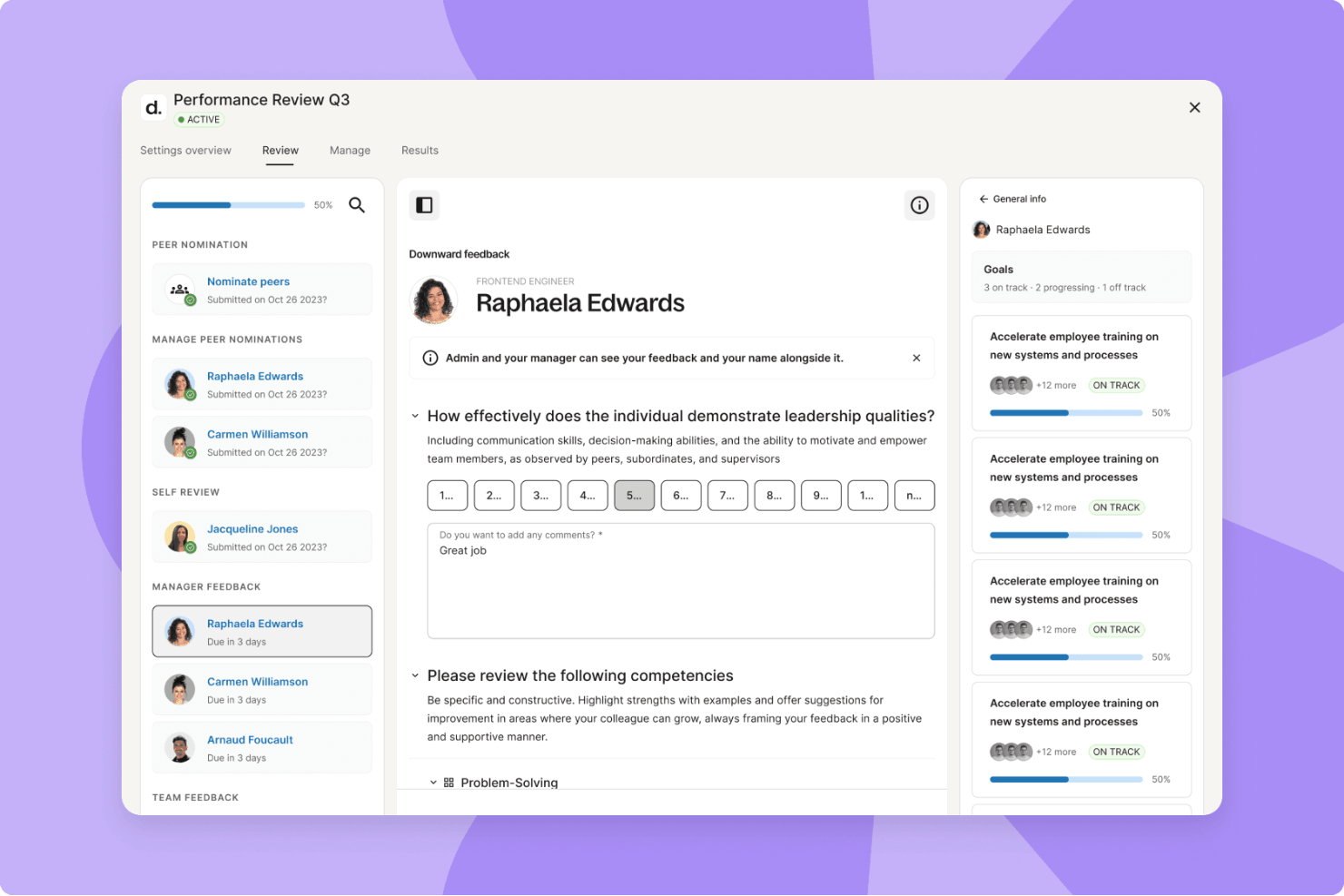
Deel HR offre ai team HR e ai leader aziendali un modo per gestire le prestazioni, il feedback e la crescita dei dipendenti in un'unica piattaforma, facilitando l'allineamento e il coinvolgimento di team distribuiti e globali.
Per chi è meglio Deel HR?
Deel HR è particolarmente adatto ai team HR che gestiscono una forza lavoro globale o remota e che necessitano di una piattaforma unica per occuparsi di performance e operations di personale in diversi paesi.
Le funzionalità di gestione delle performance di Deel HR includono feedback continuo, valutazioni a 360°, monitoraggio OKR e redazione di feedback assistita dall'AI tramite Deel Engage.
Perché ho scelto Deel HR
Ho incluso Deel HR tra le mie migliori scelte perché apprezzo molto come il feedback continuo sia parte integrante del ciclo di performance invece di essere solo una funzione aggiuntiva. Tramite Deel Engage, il mio team può organizzare cicli di valutazione a 360° raccogliendo feedback sia anonimi che aperti attraverso metodi qualitativi e quantitativi. Ciò che trovo particolarmente utile è la redazione di feedback assistita dall'AI, che aiuta manager e dipendenti a scrivere riscontri significativi e specifici invece di trovarsi di fronte a un modulo vuoto. In abbinamento al monitoraggio OKR, che trasferisce gli obiettivi aziendali ai singoli collaboratori, si ottiene un sistema in cui i colloqui individuali sono basati su dati concreti.
Funzionalità principali di Deel HR
- Framework di avanzamento di carriera: Definisci le aspettative di ruolo e i percorsi di crescita così che i dipendenti possano vedere chiaramente cosa serve per progredire nell'organizzazione.
- Sondaggi ricorrenti ai dipendenti: Crea e invia sondaggi periodici per misurare coinvolgimento, soddisfazione e bisogni di sviluppo, con risultati che confluiscono in dashboard analitiche centralizzate.
- Learning Management System (LMS): Crea e assegna contenuti formativi per supportare lo sviluppo dei dipendenti e colmare i gap di competenze nei team.
- Calibrazione delle valutazioni: Standardizza il modo in cui i manager valutano i dipendenti nei team, riducendo i bias e mantenendo le valutazioni coerenti.
Integrazioni Deel HR
Le integrazioni includono FaceUp, Snowflake, DefensX, Microsoft Finance, Kintsugi, ReFresh OS, Revo.ai, Keeper, Human Interest e Everyminute.
Pros and Cons
Pros:
- Il monitoraggio in tempo reale degli obiettivi riduce la dipendenza dalle valutazioni annuali statiche
- Le strutture di competenze e crescita sono integrate, non elementi a sé stanti
- Permette di assegnare impostazioni di visibilità e anonimato nei cicli di valutazione, offrendo flessibilità culturale
Cons:
- Gli strumenti di performance fanno parte del componente aggiuntivo Engage, quindi i costi potrebbero aumentare
- Potrebbe richiedere gestione del cambiamento per i team abituati solo alle valutazioni annuali
New Product Updates from Deel HR

Deel Expands Stablecoin Wallet to 80+ Countries
Deel expands its Stablecoin Wallet to 80+ countries with dollar-backed balances and optional rewards. This gives eligible contractors more ways to hold and manage earnings inside Deel. For more information, visit Deel’s official site.
 .
.
Rippling
Ideale per la calibrazione delle prestazioni collegata alla retribuzione
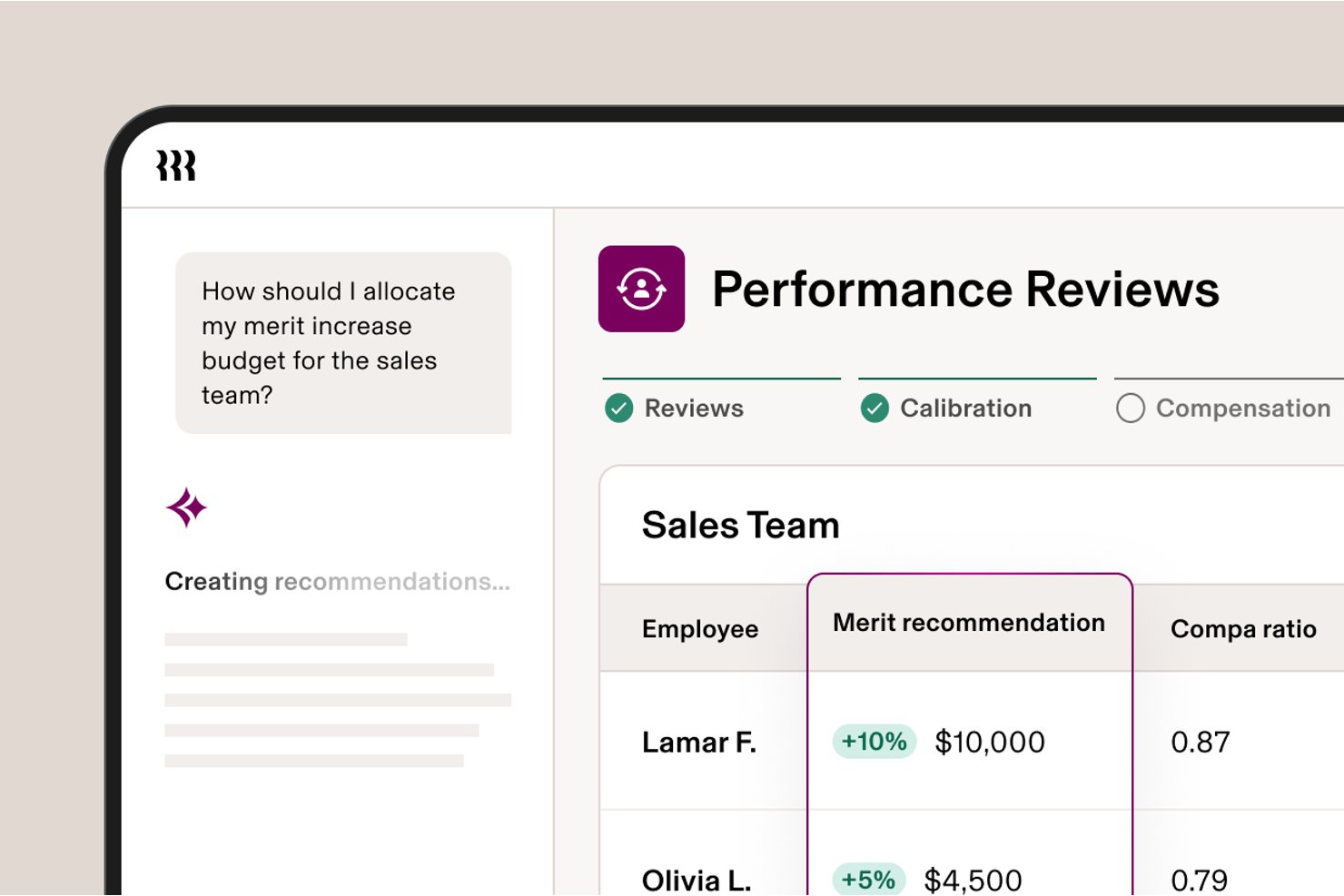
Rippling è una piattaforma HR completa che combina valutazioni delle prestazioni, monitoraggio degli obiettivi, feedback continuo, calibrazione e gestione delle retribuzioni all'interno di un sistema HRIS e paghe unificato.
Per chi è più adatto Rippling?
Rippling è una soluzione particolarmente adatta alle aziende di medie e grandi dimensioni che già utilizzano, o intendono utilizzare, Rippling come HRIS principale e desiderano che le valutazioni delle prestazioni, la calibrazione e le modifiche retributive confluiscano in un unico sistema.
Perché ho scelto Rippling
Rippling è entrato nella mia lista ristretta grazie alla stretta connessione tra la calibrazione delle prestazioni e le modifiche retributive. Apprezzo particolarmente il fatto che, una volta completata la calibrazione utilizzando la griglia a 9 caselle, le raccomandazioni retributive vengano compilate automaticamente in base al rapporto retributivo, all'anzianità e alle politiche aziendali, mentre le modifiche approvate vengono sincronizzate direttamente con il sistema paghe senza alcun passaggio manuale. Questo collegamento diretto tra valutazioni e retribuzione è qualcosa che la maggior parte degli strumenti indipendenti per la gestione delle prestazioni non riesce semplicemente a replicare.
Funzionalità principali di Rippling
- Feedback a 360 gradi: Dipendenti, colleghi e responsabili possono inviare feedback all'interno dello stesso ciclo di valutazione, mantenendo tutti i contributi in un unico luogo.
- Analisi basate sull'IA: Rippling mette in evidenza informazioni sulle differenze retributive, sui rapporti retributivi, sulle prestazioni dei responsabili e sulle tendenze della mobilità interna attraverso dashboard automatizzate.
- Richieste di feedback integrate con Slack: I dipendenti possono fornire o richiedere feedback ai colleghi direttamente da Slack senza passare a un altro strumento.
- Check-in attivati da traguardi: I cicli di valutazione e i check-in possono essere impostati per avviarsi automaticamente in base a traguardi dei dipendenti, come l'anzianità o i cambiamenti di ruolo.
Integrazioni di Rippling
Rippling offre oltre 600 integrazioni già pronte per la gestione delle identità, degli accessi e dei flussi di lavoro della forza lavoro. Supporta inoltre integrazioni personalizzate tramite connettori, SDK e strumenti per sviluppatori.
Pros and Cons
Pros:
- Collega le valutazioni calibrate alle raccomandazioni retributive
- Automatizza i cicli di valutazione utilizzando i dati aggiornati dei dipendenti
- Combina l'equità retributiva e l'analisi delle prestazioni
Cons:
- Richiede l'acquisto della piattaforma HR più ampia di Rippling
- Offre prove limitate della profondità della pianificazione della successione
New Product Updates from Rippling

Rippling AI Adds Plugins, Skills, and Automations
Rippling AI now supports plugins, skills, and automations so employees can connect approved third-party tools, package repeatable work into reusable AI instructions, and run recurring workflows under existing Rippling policies and permissions. For more information, visit Rippling's official site.
Ideale per la valutazione delle competenze individuali
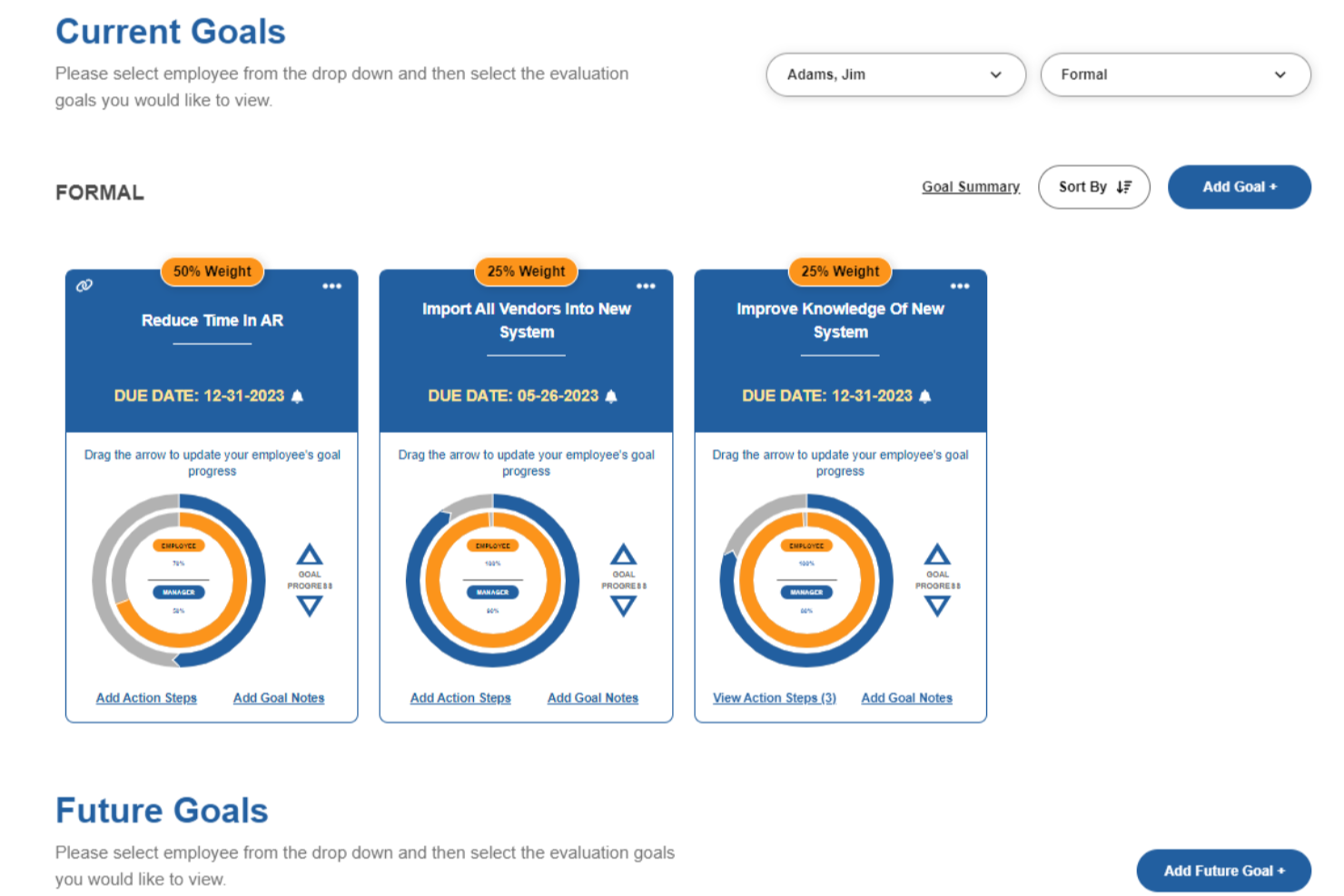
Performance Pro è una piattaforma di gestione delle prestazioni progettata per i team HR e i manager che desiderano semplificare le valutazioni dei dipendenti, stabilire obiettivi chiari e supportare lo sviluppo continuo attraverso diversi settori.
Per chi è ideale Performance Pro?
Performance Pro è una soluzione adatta per organizzazioni di piccole e medie dimensioni dove i team HR necessitano di un approccio strutturato e personalizzabile alle revisioni e allo sviluppo dei dipendenti.
Perché ho scelto Performance Pro
Performance Pro si guadagna un posto nella mia selezione per l’efficacia nella gestione delle valutazioni basate sulle competenze. Mi piace la possibilità di costruire librerie di competenze con pesature e valutazioni personalizzate, cosicché la revisione di ciascun dipendente rifletta le competenze specifiche importanti per il suo ruolo. Il collegamento tra valutazioni delle competenze e attività formative è particolarmente utile: quando emerge una lacuna in una valutazione, Performance Pro assegna automaticamente i corsi di sviluppo pertinenti tramite il suo sistema di gestione dell’apprendimento integrato. Uso anche gli strumenti di revisione multipla e a 360 gradi per avere un quadro più completo della posizione di una persona su una determinata competenza, evitando di fare affidamento solo sulla prospettiva di un singolo manager.
Caratteristiche principali di Performance Pro
- Gestione degli obiettivi: Definisci, monitora e allinea gli obiettivi dei singoli dipendenti agli obiettivi più ampi dell'organizzazione durante l’intero ciclo di valutazione.
- Promemoria automatici per le revisioni: Pianifica e invia notifiche automatiche a manager e dipendenti per mantenere in linea il flusso di lavoro delle valutazioni.
- Dashboard delle prestazioni: Visualizza snapshot in tempo reale dei tassi di completamento delle revisioni e dei dati sulle prestazioni dei dipendenti in tutta l'organizzazione.
- Moduli di valutazione configurabili: Crea e personalizza moduli di revisione con scale di valutazione, sezioni e tipologie di domande flessibili per adattarli al tuo processo.
Integrazioni di Performance Pro
Le integrazioni includono Microsoft Teams e i principali sistemi paghe o HRIS tramite API o SFTP.
Pros and Cons
Pros:
- Moduli di revisione personalizzabili adattano la valutazione a ciascun ruolo
- Il monitoraggio visivo degli obiettivi mantiene i dipendenti allineati agli obiettivi chiave
- Le integrazioni con formazione e retribuzione incentivano sviluppo e premi
Cons:
- Le funzionalità analitiche avanzate potrebbero essere meno estese rispetto alle piattaforme enterprise
- Alcune integrazioni possono richiedere intervento amministrativo
Ideale per processi di valutazione delle prestazioni personalizzati

PerformYard offre ai team HR e ai leader aziendali una piattaforma flessibile per gestire le valutazioni delle prestazioni, impostare obiettivi e raccogliere feedback, aiutando ad allineare lo sviluppo dei dipendenti con gli obiettivi organizzativi.
Per chi è migliore PerformYard?
PerformYard è ideale per organizzazioni di medie dimensioni dove i team HR devono personalizzare i cicli di valutazione delle prestazioni per adattarli ai processi e alla cultura esistenti.
Perché ho scelto PerformYard
Ho scelto PerformYard perché offre ai team HR un vero controllo su come strutturare e gestire le valutazioni delle prestazioni. Mi piace il fatto che si possa creare cicli di valutazione da zero, scegliendo le scale di valutazione, i formati delle domande e la frequenza delle valutazioni che si adattano al funzionamento dell'organizzazione, invece di dover adattare il proprio processo a un modello rigido. Il feedback multidirezionale consente di combinare auto-valutazioni, recensioni dei manager e feedback dei colleghi all'interno di un unico ciclo configurabile.
Caratteristiche principali di PerformYard
- Cascata degli obiettivi: Collega gli obiettivi dei singoli dipendenti agli obiettivi del team e dell'azienda, con una visibilità in tempo reale sui progressi a ogni livello.
- Dashboard di reportistica e analisi: Genera grafici visivi e griglie 9-box che monitorano l'andamento delle prestazioni per individuo, team e dipartimento.
- Strumenti di feedback continuo: Permette a manager e dipendenti di inviare feedback, riconoscimenti e note sulle prestazioni anche al di fuori dei cicli di valutazione formali.
- Scrittura assistita dall'IA: Aiuta i manager a redigere e riformulare i commenti delle valutazioni, con elevazione del tono e riepiloghi in più formati integrati nel flusso di lavoro delle valutazioni.
Integrazioni di PerformYard
Le integrazioni includono Microsoft Teams, Slack, sistemi HRIS e provider SSO; è disponibile anche un'API per integrazioni personalizzate.
Pros and Cons
Pros:
- Consente di gestire più cicli di valutazione
- Il collegamento in tempo reale tra obiettivi e valutazioni permette un monitoraggio delle prestazioni più chiaro
- Forte sincronizzazione dei dati dei dipendenti con gli strumenti HRIS
Cons:
- Alcuni workflow personalizzati possono richiedere tempo per essere configurati
- Poche integrazioni native oltre ai principali strumenti HRIS/SSO
Ideale per organizzazioni di tutte le dimensioni
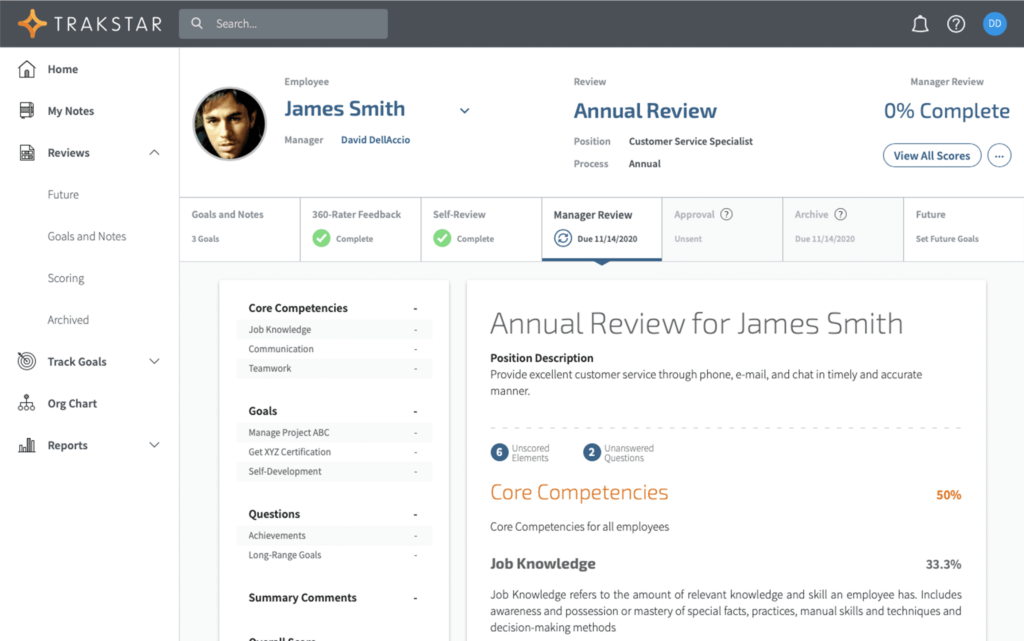
Mitratech Perform aiuta i team HR e i manager a promuovere la crescita dei dipendenti grazie a revisioni delle prestazioni personalizzabili, monitoraggio degli obiettivi e strumenti di feedback in tempo reale progettati per supportare il miglioramento continuo e allineare i team agli obiettivi aziendali.
Per chi è più indicato Mitratech Perform?
Mitratech Perform è adatto ai team HR di aziende di qualsiasi dimensione che necessitano di un approccio strutturato e scalabile alla gestione delle prestazioni.
Perché ho scelto Mitratech Perform
Ho scelto Mitratech Perform tra i migliori perché la sua configurabilità leader di settore lo rende adattabile in organizzazioni di varie dimensioni e strutture. La funzione di valutazione a 360 gradi è particolarmente flessibile: puoi impostare visibilità, anonimato e criteri di inclusione in combinazioni che la maggior parte degli altri strumenti non supporta; questo è importante quando si gestiscono revisioni con più turni o team distribuiti su larga scala. Apprezzo anche che la programmazione automatizzata delle revisioni elimini il carico amministrativo della pianificazione dei cicli di valutazione, così il team HR non deve inseguire manualmente i completamenti. Il calcolo integrato della curva di distribuzione è un forte elemento distintivo: esegue i calcoli delle valutazioni, risparmiando tempo durante i periodi di revisione ad alto volume.
Caratteristiche principali di Mitratech Perform
- Sondaggi sul coinvolgimento: Invia sondaggi rapidi alla tua forza lavoro e analizza i risultati per reparto, domanda o periodo per monitorare la percezione dei dipendenti.
- Autovalutazioni dei dipendenti: Consenti ai dipendenti di riflettere sulle proprie prestazioni e inviare autovalutazioni come parte del ciclo formale di revisione.
- Valutazione delle competenze: Assegna competenze specifiche per il ruolo per allineare le aspettative e valutare i dipendenti rispetto a standard definiti per la loro posizione.
- Benchmarking: Confronta in tempo reale le metriche di gestione dei talenti con quelle di gruppi simili per identificare tendenze di retention e gap nella forza lavoro.
Integrazioni di Mitratech Perform
Le integrazioni native non sono attualmente elencate.
Pros and Cons
Pros:
- Permette l'allineamento degli obiettivi dei dipendenti con la strategia aziendale
- Template di revisione personalizzabili adatti a diversi cicli di valutazione
- Supporta feedback tra pari e verso l'alto per aumentare l'equità
Cons:
- Alcuni utenti segnalano che la configurazione di workflow avanzati richiede tempo
- La libreria di domande per sondaggi ai dipendenti sembra limitata rispetto agli strumenti dedicati

Ideale per piani di sviluppo dei dipendenti personalizzabili
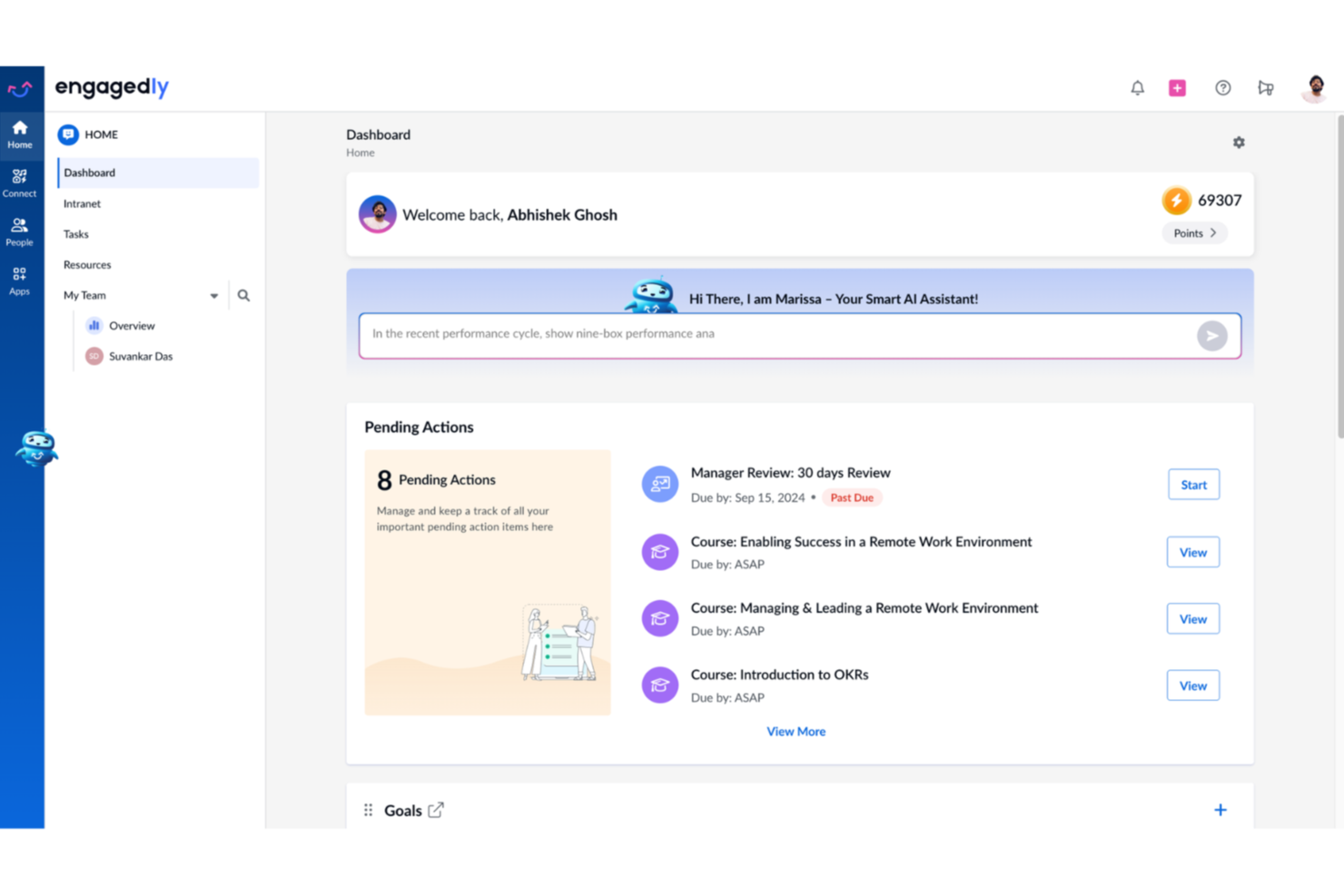
Engagedly è una piattaforma di gestione delle performance potenziata dall'IA che combina OKR, feedback a 360 gradi, valutazioni delle prestazioni, piani di sviluppo individuale e pianificazione della successione in un unico sistema.
Per chi è ideale Engagedly?
Engagedly è particolarmente indicato per i team HR di medie e grandi aziende che necessitano di una piattaforma unificata per gestire performance, sviluppo dei talenti e successioni in un unico luogo.
Perché ho scelto Engagedly
Ho inserito Engagedly tra le mie scelte migliori perché il Growth Hub è uno degli strumenti di pianificazione dello sviluppo più pensati che abbia visto. L'assistente IA, Marissa, genera raccomandazioni IDP specifiche per il ruolo, basandosi su un questionario guidato di autoanalisi; in questo modo i piani risultano personalizzati e non standardizzati. Apprezzo anche che gli IDP siano collegati direttamente alle valutazioni delle prestazioni e al monitoraggio delle tappe, consentendo al manager di vedere esattamente a che punto si trova un dipendente rispetto agli obiettivi di sviluppo durante un colloquio, senza dover passare da un sistema all'altro.
Caratteristiche principali di Engagedly
- Feedback a 360 gradi: Raccogli feedback strutturati da colleghi, riporti diretti e manager in un unico ciclo di valutazione.
- Template di valutazione personalizzabili: Crea moduli di valutazione delle performance con scale di valutazione, tipi di domande e pesi configurabili secondo le tue esigenze.
- Monitoraggio OKR: Imposta, allinea e monitora obiettivi e risultati chiave a livello individuale, di team e organizzativo.
- Feedback e check-in in tempo reale: Abilita scambi di feedback continui e check-in programmati uno-a-uno tra manager e dipendenti.
Integrazioni di Engagedly
Engagedly offre integrazioni con strumenti HRIS, SSO, comunicazione, learning e monitoraggio degli obiettivi, tra cui BambooHR, ADP Workforce Now, Gusto, Paylocity, Personio, Slack, Microsoft Teams, Okta, Salesforce e Jira. È disponibile un'API per integrazioni personalizzate.
Pros and Cons
Pros:
- LMS integrato insieme alle valutazioni delle performance
- Funzionalità di gamification per coinvolgimento e motivazione
- Supporta 16 lingue per team internazionali
Cons:
- I report non sono sufficientemente approfonditi per analisi avanzate
- L'app mobile ha funzionalità e velocità limitate
Ideale per processi di valutazione scalabili

Primalogik è una piattaforma di gestione delle prestazioni per team HR e leader aziendali che desiderano semplificare le valutazioni dei dipendenti, raccogliere feedback a 360 gradi e monitorare gli obiettivi in un unico posto.
Per chi è Primalogik?
Primalogik è particolarmente adatto per organizzazioni di medie dimensioni che necessitano di un approccio strutturato e ripetibile alla gestione delle valutazioni delle prestazioni tra più team o dipartimenti.
Perché ho scelto Primalogik
Primalogik si è guadagnato un posto tra i migliori nella mia shortlist grazie alla sua efficacia nel gestire l'aspetto operativo delle valutazioni su larga scala. Apprezzo in particolare il creatore di flussi di lavoro per le valutazioni, che consente di definire l'esatta sequenza di auto-valutazioni e valutazioni dei responsabili prima di avviare un ciclo—così ogni team segue lo stesso processo strutturato senza che le risorse umane debbano coordinare manualmente ogni passaggio. Utilizzo anche la funzione di questionari personalizzati per costruire moduli di valutazione specifici per ruolo, così un team di vendita e un team di ingegneri possono ricevere ciascuno una valutazione che rifletta il loro lavoro. Il report sui bias nelle valutazioni segnala le differenze nel modo in cui i manager attribuiscono i punteggi ai loro team, contribuendo a mantenere le valutazioni coerenti tra i dipartimenti.
Funzionalità principali di Primalogik
- Feedback a 360 gradi: Raccogli feedback strutturati da colleghi, collaboratori diretti e responsabili in un unico ciclo di valutazione.
- Monitoraggio degli obiettivi: Definisci, monitora e aggiorna obiettivi individuali o di team e allineali agli obiettivi generali dell’organizzazione.
- Sondaggi sul coinvolgimento dei dipendenti: Esegui sondaggi rapidi con domande predefinite o personalizzate per misurare il sentiment del team nel tempo.
- Feedback istantaneo: Consenti a dipendenti e responsabili di condividere feedback in tempo reale, in modo continuativo e al di fuori dei cicli di valutazione formali.
Integrazioni di Primalogik
Le integrazioni includono Slack, Google Workspace, Microsoft 365, Okta, OneLogin e Azure Active Directory.
Pros and Cons
Pros:
- Permette di confrontare auto-valutazioni con feedback di colleghi/responsabili per approfondimenti migliori
- Supporta una varietà di tipi di valutazione
- Consente cicli e modelli di valutazione configurabili in base ai propri processi
Cons:
- Le opzioni di integrazione oltre ai principali sistemi HR/SSO sono piuttosto limitate
- Alcune richieste di personalizzazione possono richiedere soluzioni alternative

Ideale per il performance management e la definizione degli obiettivi aziendali su larga scala
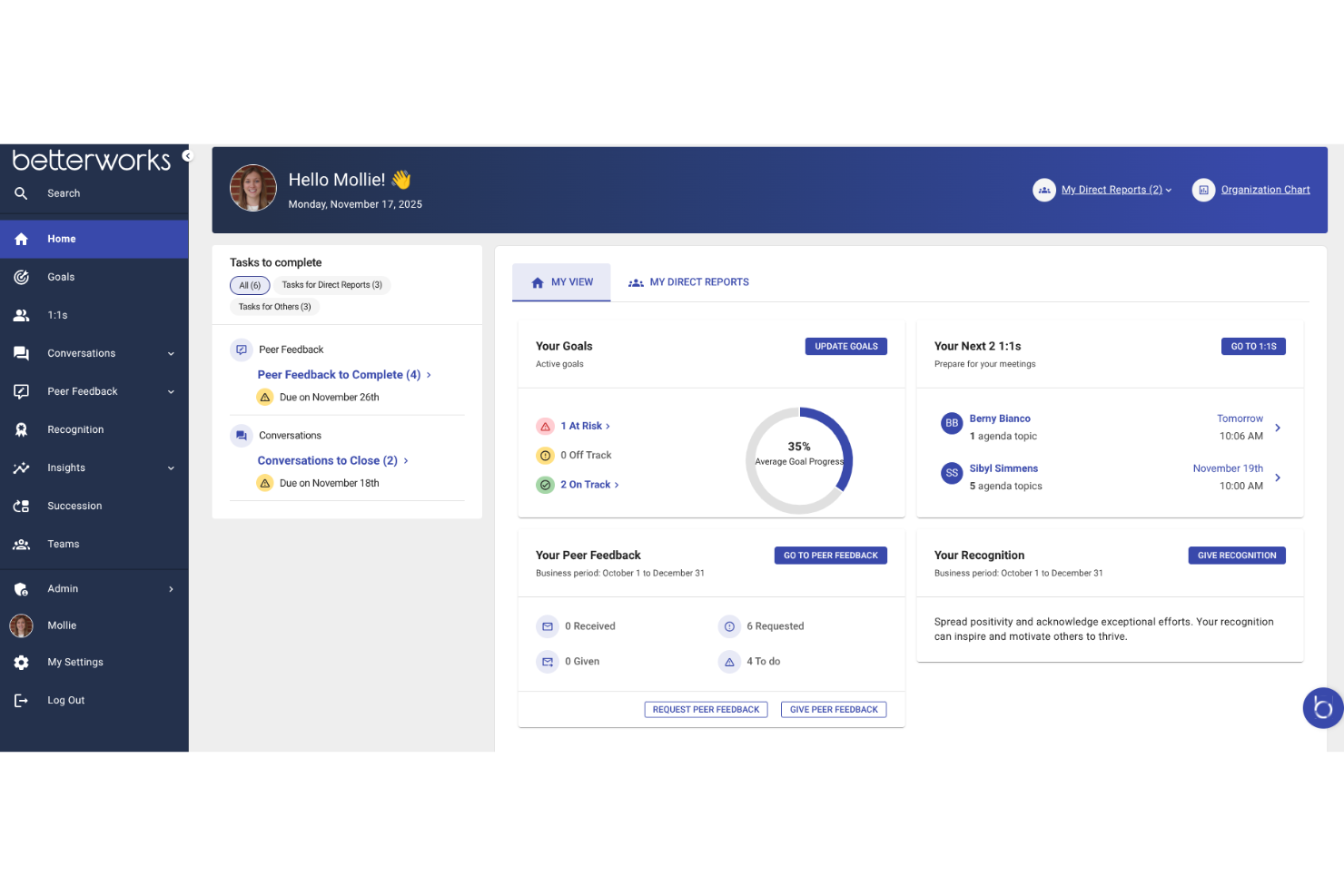
Betterworks è una piattaforma di gestione delle prestazioni progettata per le grandi organizzazioni che desiderano allineare i team, monitorare gli obiettivi e favorire un feedback continuo per generare risultati aziendali.
Per Chi è Meglio Betterworks?
Betterworks è particolarmente adatto a medie e grandi imprese che necessitano di un approccio strutturato e scalabile per collegare la performance individuale agli obiettivi aziendali generali.
Perché Ho Scelto Betterworks
Betterworks si è guadagnato un posto nella mia lista grazie alla sua capacità di collegare la definizione degli obiettivi all’intero ciclo di performance su scala aziendale. Mi piace in particolare la funzione Goal Assist basata su intelligenza artificiale, che analizza il titolo professionale del dipendente, gli obiettivi passati e le priorità del team per suggerire obiettivi specifici e strategicamente allineati—una caratteristica particolarmente utile quando viene implementata su migliaia di dipendenti. Utilizzo anche la funzione di obiettivi a cascata per trasmettere gli OKR aziendali ai livelli di team e individuale con pochi clic, così quando cambiano le priorità, gli aggiornamenti si riflettono su tutti gli obiettivi collegati senza modifiche manuali. Il fatto che i dati sugli obiettivi completati siano direttamente visibili nelle revisioni delle performance permette ai manager di arrivare con un vero contesto, non solo basandosi sulla memoria.
Funzionalità Chiave di Betterworks
- Calibrazione delle prestazioni: Conduci sessioni di calibrazione strutturate per confrontare le valutazioni dei dipendenti tra team diversi e ridurre i bias nei risultati di valutazione.
- Conversazioni continue: Avvia check-in istantanei e personalizza i modelli di revisione per ruolo, dipartimento o area geografica per mantenere feedback rilevanti e tempestivi.
- Feedback a 360 gradi: Raccogli feedback tra pari, verso l’alto e da fonti esterne come clienti o partner, che vengono inclusi nelle revisioni delle prestazioni senza consolidamento manuale.
- Sondaggi sul coinvolgimento dei dipendenti: Crea sondaggi pulse con controlli di anonimato e monitora l’andamento del sentiment come l’eNPS all’interno di team e dipartimenti nel tempo.
Integrazioni Betterworks
Le integrazioni includono Workday, ADP, BambooHR, SuccessFactors, UKG Pro, Jira, Asana, Slack, Microsoft Teams e Salesforce.
Ideale per l'automazione dei processi HR nelle PMI
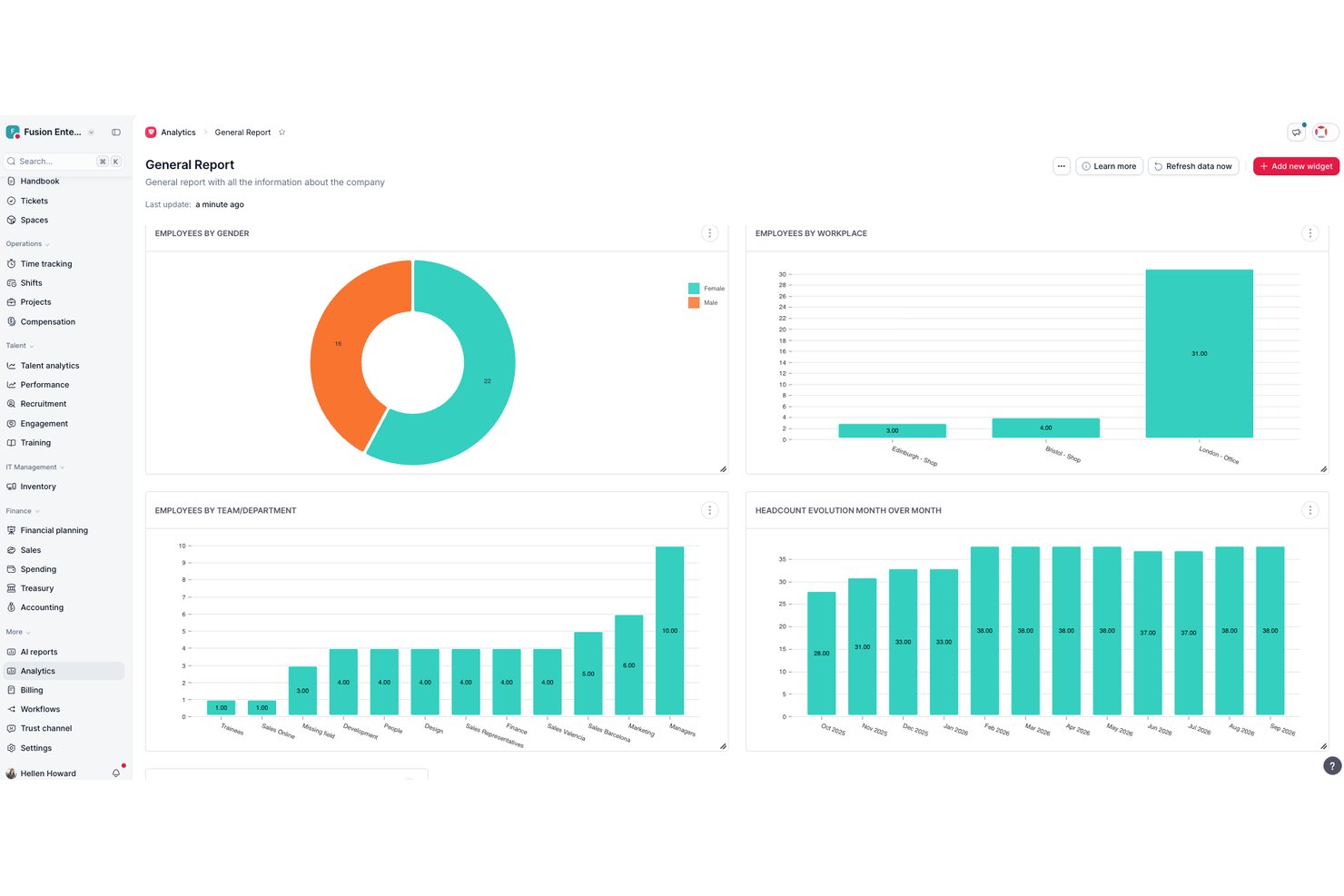
Factorial è progettato per le piccole e medie imprese che desiderano automatizzare i processi delle risorse umane e centralizzare la gestione dei dipendenti. Se cerchi un modo per gestire assenze, documenti e valutazioni delle prestazioni in un unico luogo, questa piattaforma riunisce questi flussi di lavoro. Factorial si distingue per le PMI che necessitano di automazione e struttura senza la complessità dei sistemi HR aziendali.
Per chi è più adatto Factorial?
Factorial è adatto ai responsabili delle risorse umane di piccole e medie imprese che automatizzano i processi fondamentali delle risorse umane e della gestione delle prestazioni. Supporta le organizzazioni che necessitano di un'amministrazione semplificata durante l'intero ciclo di vita dei dipendenti.
Perché ho scelto Factorial
Per le piccole e medie imprese, automatizzare i processi delle risorse umane può fare una grande differenza nella gestione delle prestazioni. Factorial riunisce valutazioni delle prestazioni, monitoraggio degli obiettivi e gestione delle assenze in un'unica piattaforma, contribuendo a ridurre il lavoro manuale e a mantenere tutto organizzato. Ho scelto Factorial perché le sue funzionalità di automazione, come i cicli di valutazione programmati e i promemoria automatici, permettono ai team HR di concentrarsi maggiormente sulle persone e meno sulla burocrazia. Se la tua azienda ha bisogno di un modo semplice per collegare la gestione delle prestazioni alle altre attività HR, Factorial offre una soluzione pratica.
Funzionalità principali di Factorial
Ho trovato anche diverse altre funzionalità che supportano la gestione delle prestazioni in Factorial:
Modelli personalizzabili per le valutazioni delle prestazioni: Crea e adatta i moduli di valutazione per allinearli ai processi della tua organizzazione.
Gestione dei documenti dei dipendenti: Archivia, organizza e accedi ai file dei dipendenti in uno spazio digitale sicuro.
Visualizzazione dell'organigramma: Visualizza e aggiorna la struttura della tua azienda con uno strumento per organigrammi basato sul trascinamento.
Integrazione del monitoraggio del tempo: Collega direttamente il monitoraggio del tempo dei dipendenti ai registri delle prestazioni e delle presenze.
Integrazioni di Factorial
Le integrazioni includono a3innuva Nómina, DATEV LODAS, Sage 200, Payflow, TravelPerk, Google Workspace, Microsoft Outlook, Figures, Microsoft Power BI e Teamtailor.
Teamflect
Ideale per la gestione delle performance in Teams
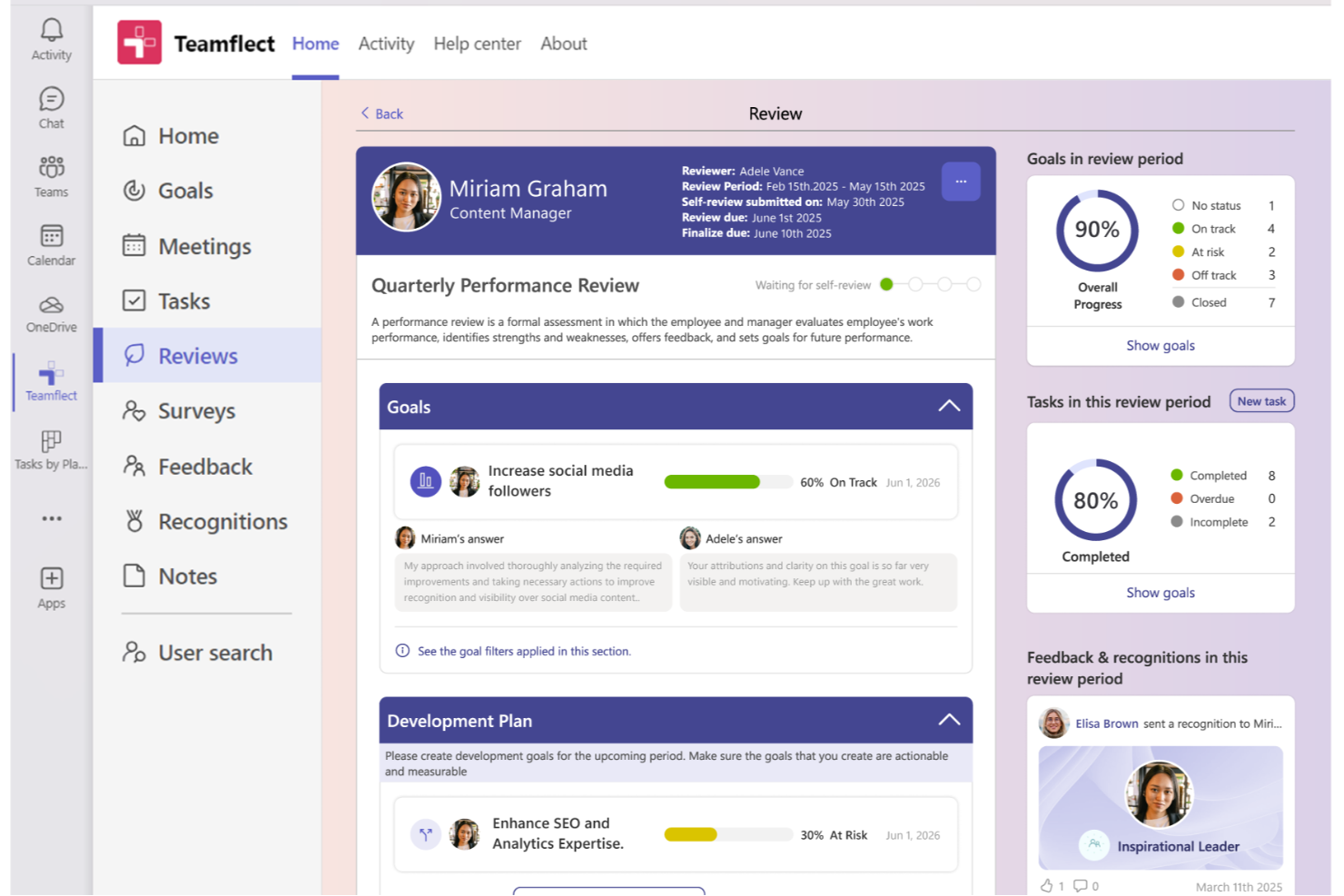
Teamflect è una piattaforma di gestione delle performance progettata per le organizzazioni che utilizzano Microsoft Teams, aiutando i team HR e i manager a semplificare le revisioni, il feedback e il monitoraggio degli obiettivi direttamente all'interno del loro flusso di lavoro esistente.
Per chi è più adatto Teamflect?
Teamflect è perfetto per aziende di medie dimensioni che già utilizzano Microsoft 365 e vogliono gestire le performance senza dover cambiare continuamente strumento.
Perché ho scelto Teamflect
Ho scelto Teamflect tra i migliori perché è l'unico strumento di gestione delle performance progettato per integrarsi nativamente in Microsoft Teams—non solo collegato. Mi piace che i manager possano gestire interi cicli di valutazione, monitorare i progressi sugli obiettivi e scambiare feedback a 360 gradi senza mai uscire dall'interfaccia di Teams. Questo impedisce al mio team di passare da una piattaforma all'altra durante i cicli di valutazione, favorendo l'adozione. L'assistente AI integrato aiuta i manager a scrivere commenti di valutazione più efficaci, segnala in tempo reale il linguaggio potenzialmente discriminatorio e suggerisce obiettivi di sviluppo personalizzati dopo una valutazione.
Funzionalità principali di Teamflect
- Modelli per meeting 1:1: Conduci riunioni individuali strutturate con agende predefinite, punti di discussione e monitoraggio delle azioni direttamente all'interno di Teams.
- Riconoscimenti e premi: Invia riconoscimenti e premi peer-to-peer tramite badge all'interno di Teams per valorizzare in tempo reale il contributo dei dipendenti.
- Gestione dei task: Assegna, monitora e aggiorna task individuali legati agli obiettivi di performance senza dover uscire da Teams.
- Modelli di valutazione personalizzati: Crea e distribuisci moduli di valutazione delle performance su misura per i criteri e i cicli di valutazione specifici della tua organizzazione.
Integrazioni di Teamflect
Le integrazioni includono Microsoft Teams, Outlook, Power BI, BambooHR, Workday, UKG Pro, ADP, Gusto, Paylocity e QuickBooks Payroll.
Pros and Cons
Pros:
- Profonda integrazione con Microsoft 365
- La definizione degli obiettivi è integrata direttamente nei flussi di lavoro del team nelle chat e nei task di Teams
- I modelli di revisione sono altamente personalizzabili in base alle tue esigenze
Cons:
- Funziona solo se la tua organizzazione utilizza Microsoft 365
- Alcune analisi/funzionalità avanzate richiedono piani superiori
Altri software per la gestione delle prestazioni
Non hai ancora trovato lo strumento giusto per la gestione delle prestazioni per il tuo team? Ecco alcune altre valide opzioni di software per la gestione delle prestazioni che non sono rientrate nella top 10, ma che meritano comunque una menzione speciale. Scoprile!
- Small Improvements
Ideale per processi di valutazione leggeri
- Express Evaluations
Ideale per piccole imprese, enti pubblici e non profit
- Leapsome
Ideale per la gestione delle prestazioni orientata allo sviluppo
- Workable HR
Ideale per feedback sulle prestazioni a più livelli
- Effy AI
Ideale per la gestione delle prestazioni AI-first nelle PMI
- Spidergap 360˚ Feedback
Ideale per insight concreti sullo sviluppo
- Sloneek
Ideale per l'integrazione del feedback a 360 gradi
- iSpring LMS
Ideale per valutazioni delle performance basate sulla formazione
- Profit.co
Ideale per il monitoraggio delle prestazioni in tempo reale
- Lattice
Ideale per integrare molteplici fonti di feedback
- ClickUp
Ideale per l'allineamento tra progetti e prestazioni
- 15Five
Ideale per flussi di check-in settimanali
- GoCo
Ideale per l'automazione delle valutazioni integrata con l'HR
- HiBob
Ideale per team moderni e globali
- Mirro
Ideale per le funzionalità di riconoscimento in tempo reale
- Workleap
Miglior redazione di valutazioni tramite IA
- Kallidus Perform
Ideale per l'integrazione tra formazione e performance
- Workday
Ideale per grandi ecosistemi HR aziendali
- eloomi
Ideale per formazione e feedback in un'unica soluzione
- Workleap
Ideale per cicli di valutazione flessibili
- Synergita
Ideale per conversazioni continue sulle prestazioni
- WorkDove
Ideale per modelli di competenza personalizzabili
- PeopleFluent
Ideale per l'integrazione nella gestione dei talenti
- SAP SuccessFactors
Ideale per il supporto della conformità nelle multinazionali
- Insperity
Ideale per soluzioni HR esternalizzate
- Kazoo
Ideale per programmi di coinvolgimento e premi
- Huckleberry
Ideale per feedback vocali con intelligenza artificiale
- Ascender HCM
Ideale per l'integrazione delle paghe in APAC
- Insightful
Ideale per il monitoraggio dei dipendenti in tempo reale
- Motivosity
Ideale per il riconoscimento tra colleghi


Recensioni correlate sui software per le risorse umane
Se non hai ancora trovato quello che cerchi, dai un'occhiata a questi altri strumenti correlati che abbiamo testato e valutato:
- Software per le risorse umane
- Software per la gestione delle buste paga
- Software per il recruiting
- Servizi di datore di lavoro ufficiale
- Sistemi di tracciamento dei candidati
- Software per la gestione della forza lavoro
Come Valuto gli Strumenti di Gestione delle Performance
Divido la mia valutazione in due livelli: i requisiti minimi che uno strumento deve soddisfare—revisioni strutturate, monitoraggio degli OKR e feedback continuo—e i fattori distintivi che rendono uno strumento la scelta giusta.
Funzionalità di Base (Requisiti Fondamentali per Questa Lista)
Quando seleziono gli strumenti per la mia lista, valuto ognuno su una scala da 0 (non offre la funzionalità) a 5 (eccelle in quest’area) per ciascuna delle funzionalità di base elencate qui sotto. Poi calcolo il punteggio totale dello strumento in percentuale. Ogni strumento deve raggiungere un punteggio totale minimo del 75% per essere considerato per l’inclusione.
- Cicli di Revisione delle Performance: Verifico se è possibile configurare cicli multi-fase—autovalutazioni, valutazioni del manager e revisioni a 360 gradi tra pari—senza dover ricorrere all’aiuto di un amministratore ogni trimestre.
- Gestione degli Obiettivi & OKR: I team devono poter trasferire gli obiettivi dalla leadership ai singoli collaboratori, quindi controllo la presenza di viste di allineamento e il monitoraggio del progresso in tempo reale.
- Feedback Continuo: Valuto se manager e colleghi possono scambiarsi feedback nel flusso di lavoro, come riconoscimenti rapidi o richieste di feedback mirato sulle competenze.
- Gestione Meeting 1:1: Agende condivise, punti da discutere e azioni che si trasferiscono tra le sessioni mi indicano che uno strumento tratta i 1:1 come veri motori di performance.
- Analisi & Reportistica delle Performance: Dashboard che evidenziano i tassi di completamento delle revisioni, il progresso degli obiettivi tra i dipartimenti e la distribuzione dei rating aiutano i responsabili HR a individuare rapidamente delle tendenze.
- Revisione dei Talenti & Calibrazione: Cerco griglie "9 box" e flussi di calibrazione che permettono ai team di leadership di confrontare performance e potenziale tra le varie unità di business.
Una volta che ho una lista degli strumenti che soddisfano i criteri, considero ciò che distingue ciascuna piattaforma.
Fattori Distintivi (Cosa Rende Diversi i Fornitori)
Ecco come confronto e metto a confronto i diversi fornitori:
Funzionalità Eccezionali
Le funzionalità basate su intelligenza artificiale rappresentano un vero elemento di differenziazione—cerco strumenti che rilevano bias nel linguaggio delle revisioni o che riassumono automaticamente i temi ricorrenti del feedback nei grandi team. Anche la gestione della retribuzione è importante, soprattutto quando gli aumenti di merito e i bonus sono collegati direttamente ai risultati delle revisioni invece di essere gestiti su un foglio separato. Valuto inoltre le capacità di pianificazione della carriera e dello sviluppo, come i framework di competenze e i piani di sviluppo individuale che offrono ai dipendenti un percorso di crescita chiaro in base ai dati sulle loro performance.
Oltre le Funzionalità
Le integrazioni con gli HRIS sono molto rilevanti—controllo se una piattaforma si sincronizza nativamente con sistemi come Workday, BambooHR o ADP così che i dati dei dipendenti restino aggiornati senza necessità di aggiornamenti manuali. L’adeguatezza rispetto alla dimensione aziendale è un altro fattore che considero, poiché una startup da 50 persone e un’azienda da 5.000 richiedono diversi livelli di configurabilità. Valuto anche il supporto all’implementazione, in particolare se i fornitori offrono guida all’onboarding e template di cicli di revisione basati sulle migliori pratiche per aiutare i team HR a lanciare con fiducia il loro primo ciclo.
Come scegliere uno strumento per la gestione delle prestazioni
Quando scegli un software per la gestione delle prestazioni, inizia dalle parti del tuo processo di gestione delle prestazioni che devi migliorare, che si tratti di gestire le valutazioni, monitorare gli obiettivi, supportare lo sviluppo dei dipendenti o collegare i dati sulle prestazioni ai tuoi sistemi HR.
| Se la tua priorità è… | Cerca… |
| Gestire valutazioni delle prestazioni coerenti | Cicli e modelli di valutazione personalizzati |
| Definire e monitorare gli obiettivi dei dipendenti | Monitoraggio degli obiettivi e degli OKR |
| Supportare il feedback continuo | Riunioni individuali e strumenti per il feedback in tempo reale |
| Sviluppare i dipendenti | Pianificazione della carriera e dello sviluppo |
| Prendere decisioni eque sulle prestazioni | Calibrazione e analisi delle prestazioni |
| Collegare le prestazioni ai dati HR | Integrazioni native con i sistemi HRIS |
- Quali problemi relativi alle prestazioni stai cercando di risolvere? Identificare le tue difficoltà attuali ti guiderà nella scelta di un software con le funzionalità necessarie per superarle. Queste difficoltà possono includere:
- Difficoltà nel monitorare gli obiettivi e i progressi dello sviluppo,
- Feedback poco frequenti, incoerenti o poco chiari,
- Difficoltà nell'allineare gli obiettivi del team con quelli aziendali, oppure
- Valutazioni delle prestazioni non trasparenti o non coerenti tra i team.
- Chi sono i tuoi utenti principali? Considera chi utilizzerà lo strumento, quali sono i tuoi diversi gruppi di utenti e di quante licenze avrai bisogno. Una volta chiarito questo aspetto, è inoltre utile elencare le esigenze dei diversi gruppi di utenti (utenti esperti, responsabili, dipendenti, ecc.) per assicurarti che siano tutte soddisfatte.
- Per il software di gestione delle prestazioni, avrai bisogno di un accesso a livello di dipendente per tutta la tua forza lavoro e di ruoli di accesso separati per i responsabili e gli amministratori delle risorse umane.
- Qual è il tuo budget? Per valutare i costi, conta i dipendenti attuali e aggiungi le tue previsioni per i prossimi 5-10 anni. Poiché la maggior parte degli strumenti per la gestione delle prestazioni applica un canone mensile per dipendente, questo ti aiuterà a stimare in anticipo i costi mensili.
- Stabilire in anticipo un budget realistico per il nuovo software di gestione delle prestazioni è fondamentale, così non perderai tempo a valutare software troppo costosi.
- Quali risultati sono importanti? Esamina le funzionalità che vuoi ottenere o migliorare e come misurerai il successo. Chiarire in anticipo i risultati desiderati è fondamentale per evitare di sprecare tempo prezioso. Tra i risultati principali che potresti voler misurare ci sono:
- Ottenere un ciclo di gestione delle prestazioni completamente automatizzato,
- Acquisire la possibilità di confrontare facilmente le valutazioni attuali e precedenti dei dipendenti,
- Strumenti integrati per il monitoraggio degli obiettivi e dei progressi, oppure
- Maggiore soddisfazione di responsabili e dipendenti riguardo al ciclo di valutazione delle prestazioni.
- Hai bisogno di integrazioni software specifiche? Chiarisci se il nuovo strumento di gestione delle prestazioni sostituirà gli strumenti esistenti o dovrà integrarsi con essi. Tra i sistemi principali da integrare ci sono i sistemi di gestione dell'apprendimento, i software per la gestione della formazione o gli strumenti per la raccolta dei feedback.
- Puoi ridurre i costi mensili SaaS sostituendo più strumenti con uno strumento completo per la gestione delle prestazioni?
- Tutte le integrazioni di cui hai bisogno sono disponibili oppure possono essere configurate su misura utilizzando un'API?
- Lo strumento di valutazione delle prestazioni soddisfa i tuoi requisiti tecnici? Valuta la scelta dello strumento insieme ai flussi di lavoro e ai sistemi esistenti. Analizza ciò che funziona bene e le eventuali aree problematiche che devono essere affrontate.
- Il nuovo sistema si integra con il tuo ambiente di lavoro aziendale (Microsoft SharePoint, Google Workspace, ecc.)?
- Il nuovo sistema offre funzionalità di sicurezza adeguate alle tue esigenze (ad esempio, l'autenticazione a due fattori (2FA), ecc.)?
Ricorda: ogni azienda è diversa — non dare per scontato che uno strumento di gestione delle prestazioni funzioni per la tua organizzazione solo perché è popolare. Concentrati invece sulle tue esigenze e difficoltà specifiche e cerca un software che risponda in modo mirato a queste lacune, così otterrai il massimo dal tuo nuovo acquisto.
Come implementare gli strumenti di gestione delle prestazioni
Una volta scelto il sistema di gestione delle prestazioni più adatto alle tue esigenze, dovrai sviluppare un piano di implementazione per integrare il software nel processo di valutazione dei dipendenti.
Per farlo nel modo giusto, ti consiglio di adottare il seguente approccio:
- Sviluppa una strategia di implementazione e una tempistica che definiscano chi, cosa, quando, dove e perché relativamente all'implementazione del nuovo software.
- Raccogli il feedback dei manager sulle loro attuali difficoltà con il processo di valutazione delle prestazioni dei dipendenti e su come potrebbe essere migliorato.
- Raccogli il feedback dei dipendenti sulla loro esperienza con l'attuale processo di valutazione e su come potrebbe essere migliorato.
- Costituisci un team interno per l'implementazione che includa i principali stakeholder di tutti i tuoi gruppi di utenti (ovvero il tuo team delle risorse umane, i manager, i dipendenti, il reparto IT, ecc.)
- Esamina i dati esistenti sulla gestione delle prestazioni e decidi se sia necessario migrare queste informazioni nel nuovo sistema.
- Se decidi di migrare una grande quantità di dati, contatta il tuo fornitore di software per ricevere assistenza in questa fase. Spesso può caricare in blocco i dati storici nell'ambito del processo di onboarding del cliente.
- Esegui alcune valutazioni di prova per capire come funzionano tutte le funzionalità. Ciò include la creazione di automazioni dei flussi di lavoro e la configurazione di integrazioni software per estrarre dati da altre fonti.
- Questo passaggio è molto importante e non dovrebbe essere affrettato. Esegui tutti gli scenari di prova che riesci a immaginare utilizzando diverse strutture di dipendenti (ovvero a tempo pieno, a tempo parziale, dopo un congedo, dipendenti in periodo di prova, ecc.) e strutture gerarchiche (ovvero dipendenti con due manager, dipendenti che supportano più team, ecc.). Questo ti aiuterà a garantire che il software soddisfi tutte le tue esigenze una volta lanciato completamente.
- Forma i tuoi utenti sull'utilizzo del software. Ciò dovrebbe includere una formazione specifica per ruolo per manager e responsabili di team che devono condurre le valutazioni delle prestazioni, nonché una formazione separata per i dipendenti. Potresti anche voler offrire documentazione di supporto o creare una wiki interna o un archivio per le domande frequenti. In questo modo ridurrai proattivamente il volume di richieste amministrative che il tuo personale delle risorse umane riceverà in futuro.
- Lancia il software e festeggia! Potrebbe sembrare un po' scontato, ma in realtà è davvero importante. Celebrare i vantaggi del nuovo software può influire positivamente sui tassi di adozione da parte degli utenti. Se le persone sono entusiaste del nuovo software, saranno più propense a utilizzarlo e ad associarlo a un'esperienza positiva.
Tendenze negli strumenti di gestione delle prestazioni
Oggi la gestione delle prestazioni è molto diversa rispetto a qualche anno fa. Sempre più organizzazioni scelgono di implementare discussioni continue sulle prestazioni al posto delle valutazioni annuali e moduli di feedback 360 completi al posto delle valutazioni dall'alto verso il basso. E il software che gestisce queste attività di gestione delle prestazioni si sta adeguando!
Il software odierno per la gestione delle prestazioni non solo semplifica le valutazioni delle prestazioni, ma influisce direttamente anche sul coinvolgimento, sulla fidelizzazione e sullo sviluppo dei dipendenti.
Ecco una panoramica delle principali tendenze e di come stanno plasmando il futuro degli strumenti di gestione delle prestazioni:
- Integrazione con l'intelligenza artificiale e l'apprendimento automatico: molti strumenti di gestione delle prestazioni basati sull'intelligenza artificiale integrano l'intelligenza artificiale per supportare le valutazioni delle prestazioni, fornendo informazioni personalizzate sulle prestazioni, suggerimenti automatizzati per il feedback e analisi predittive. Questa tendenza sottolinea la crescente necessità di prendere decisioni basate sui dati e di elaborare piani di sviluppo personalizzati nella gestione delle prestazioni.
- Feedback continuo e riconoscimento in tempo reale: è evidente il passaggio dalle valutazioni annuali ai meccanismi di feedback continui e in tempo reale. Gli strumenti si stanno evolvendo per facilitare interazioni più frequenti, con funzionalità per il riconoscimento e il feedback istantanei che stanno diventando standard. Ciò riflette il passaggio verso un dialogo sulle prestazioni più dinamico e continuo tra dipendenti e manager.
- Feedback tra colleghi: negli ambienti di lavoro collaborativi, dove il lavoro di squadra e i progetti interfunzionali sono comuni, raccogliere informazioni dai colleghi è fondamentale per valutare efficacemente le prestazioni dei dipendenti, oltre a contribuire a eliminare i pregiudizi. Gli strumenti di feedback 360 offrono una visione più completa delle prestazioni e dei contributi di un dipendente.
- Definizione e monitoraggio avanzati degli obiettivi: si registra un notevole miglioramento nella sofisticazione delle funzionalità di definizione degli obiettivi, inclusa l'integrazione degli OKR (Obiettivi e risultati chiave) e di modelli di obiettivi personalizzabili. Questa tendenza evidenzia l'importanza di obiettivi chiari e misurabili per allineare le prestazioni individuali agli obiettivi organizzativi.
Queste tendenze indicano un passaggio verso pratiche di gestione delle prestazioni più personalizzate, continue e orientate allo sviluppo. Per vedere queste funzionalità di tendenza in azione, ti consiglio di leggere la nostra recensione di Betterworks o la nostra recensione di Leapsome.
In sostanza, le aspettative e le esigenze degli specialisti delle risorse umane e delle organizzazioni stanno cambiando, favorendo lo sviluppo di strumenti non solo più efficaci nella gestione delle prestazioni, ma anche nel miglioramento del coinvolgimento e dello sviluppo dei dipendenti.
Alcune parti della valutazione delle prestazioni basate sui dati possono essere analizzate dall’IA, ma le competenze interpersonali e trasversali richiedono un tocco umano. La gestione delle prestazioni è molto più della semplice valutazione: riguarda incontri individuali continui, la gestione delle relazioni e la motivazione dei dipendenti.
Che cos'è un software per la gestione delle prestazioni?
Il software per la gestione delle prestazioni, chiamato anche sistema di gestione delle prestazioni, è uno strumento digitale che aiuta i team delle risorse umane a valutare le prestazioni dei dipendenti, fissare obiettivi e facilitare il feedback continuo. Il software per la valutazione delle prestazioni si concentra in genere sulle valutazioni formali dei dipendenti, mentre i sistemi più ampi di gestione delle prestazioni supportano anche il feedback continuo, il monitoraggio degli obiettivi, lo sviluppo dei dipendenti e l'analisi delle prestazioni.
Viene utilizzato dai professionisti delle risorse umane, dai responsabili e dai team leader per semplificare i cicli di valutazione dei dipendenti, monitorare lo sviluppo e allineare le prestazioni individuali agli obiettivi aziendali.
Questi strumenti riducono il lavoro manuale, evitano le valutazioni mancate e offrono informazioni utili per valutazioni eque e una pianificazione strategica della forza lavoro.
Funzionalità del software per la gestione delle prestazioni
Quando scegli un software per la gestione delle prestazioni, presta attenzione alle seguenti funzionalità principali:
- Definizione e monitoraggio degli obiettivi: questa funzionalità consente di stabilire obiettivi chiari e misurabili per ogni dipendente o team. Puoi monitorare i progressi in tempo reale, mantenere tutti allineati e individuare facilmente quando gli obiettivi devono essere modificati, rendendo al contempo i risultati motivanti e visibili a tutte le persone coinvolte.
- Feedback continuo: puoi fornire e ricevere feedback in modo tempestivo e informale, non solo durante le valutazioni annuali. Incoraggia conversazioni regolari che aiutano i dipendenti a crescere, correggere più rapidamente la rotta e sentirsi maggiormente supportati sul lavoro.
- Flussi di lavoro per la valutazione delle prestazioni: questi flussi di lavoro automatizzati aiutano a svolgere le valutazioni delle prestazioni in modo coerente ed equo, rendendo il processo meno noioso e più trasparente. Puoi personalizzare chi valuta chi, programmare promemoria e assicurarti che nulla venga trascurato.
- Analisi e dashboard in tempo reale: ottieni una panoramica rapida e visiva delle tendenze relative alle prestazioni dei dipendenti e delle metriche principali. Queste analisi aiutano a individuare schemi ricorrenti, prendere decisioni basate sui dati e affrontare con sicurezza i problemi di prestazione prima che diventino più grandi.
- Piani di sviluppo e formazione: crea, assegna e monitora facilmente piani di sviluppo personalizzati basati sui punti di forza e sulle aree di miglioramento di ciascun dipendente. Questo aiuta a mettere la crescita al centro delle conversazioni sulle prestazioni, dimostrando al team che investi nel suo futuro.
- Modelli di valutazione personalizzabili: utilizza modelli flessibili per adattarti al processo di valutazione specifico della tua organizzazione. Puoi configurare domande e scale di valutazione più rilevanti per il tuo team, aiutando tutti a concentrarsi su ciò che conta davvero.
- Integrazione con i sistemi delle risorse umane: collega perfettamente il software per la gestione delle prestazioni al sistema paghe, all'HRIS e ad altri strumenti essenziali. Questo riduce al minimo l'inserimento manuale, garantisce la precisione e rende più fluidi i processi interfunzionali, come le promozioni o le modifiche retributive.
- Sicurezza dei dati e conformità: proteggi i dati dei dipendenti con solide misure di sicurezza e la conformità alle normative pertinenti. In questo modo rassicuri tutti sul fatto che le loro informazioni sono private e vengono gestite responsabilmente.
Funzionalità comuni dell'IA nei software per la gestione delle prestazioni
Oltre alle funzionalità standard dei software per la gestione delle prestazioni elencate sopra, molte di queste soluzioni stanno integrando l'IA con funzionalità come:
- Rilevamento dei pregiudizi nelle valutazioni: l'IA segnala potenziali pregiudizi nelle valutazioni delle prestazioni, incoraggiando valutazioni più eque e aiutandoti a promuovere una cultura inclusiva.
- Analisi automatizzata delle prestazioni: l'IA analizza feedback, valutazioni e obiettivi per evidenziare tendenze o potenziali problemi prima che tu possa individuarli autonomamente. Questo aiuta ad affrontare tempestivamente le esigenze e ad agire in modo proattivo.
- Suggerimenti intelligenti per il feedback: l'IA suggerisce feedback costruttivi o momenti di riconoscimento basati sui dati in tempo reale, aiutandoti a guidare e sostenere i dipendenti anche quando sei impegnato.
- Analisi del sentiment: l'IA elabora i feedback scritti per rilevare il sentiment dei dipendenti, offrendo una visione più approfondita del morale e delle dinamiche del team, senza dover leggere personalmente ogni commento.
- Raccomandazioni intelligenti sugli obiettivi: l'IA consiglia nuovi obiettivi o percorsi di sviluppo basati sui progressi individuali e sugli obiettivi aziendali, assicurandosi che tutti procedano nella direzione giusta.
La gestione delle prestazioni può motivare i dipendenti mostrando come i loro obiettivi siano collegati a quelli dell’azienda. Senza obiettivi e allineamento chiari, è difficile promuovere una cultura delle prestazioni e della crescita.
Vantaggi del software per la gestione delle prestazioni
Gli strumenti per la gestione delle prestazioni offrono un approccio strutturato alla valutazione e al miglioramento delle prestazioni dei dipendenti, allineando gli obiettivi individuali a quelli organizzativi. Più nello specifico, ecco alcuni dei vantaggi che puoi aspettarti implementando uno strumento per la gestione delle prestazioni nella tua organizzazione:
- Maggiore allineamento degli obiettivi: garantisce che gli obiettivi individuali siano in linea con quelli aziendali. Allineando gli obiettivi dei dipendenti ai traguardi dell'organizzazione, gli strumenti per la gestione delle prestazioni contribuiscono a garantire che ogni membro del team lavori verso gli stessi obiettivi generali, migliorando così la produttività e la concentrazione complessive.
- Ciclo di feedback continuo: facilita il feedback e la comunicazione in tempo reale. Questa funzione consente di fornire riconoscimenti immediati e critiche costruttive, permettendo ai dipendenti di adeguare proattivamente le proprie prestazioni e ai manager di affrontare i problemi man mano che si presentano, promuovendo una cultura del miglioramento continuo.
- Maggiore coinvolgimento dei dipendenti: promuove una forza lavoro più coinvolta. Gli strumenti per la gestione delle prestazioni aiutano a riconoscere e premiare gli sforzi dei dipendenti, aumentando significativamente il morale e il coinvolgimento e portando a una maggiore soddisfazione lavorativa e a tassi di fidelizzazione più elevati.
- Decisioni basate sui dati: fornisce informazioni utili attraverso l'analisi. Grazie all'accesso a dati completi sulle prestazioni dei dipendenti, le organizzazioni possono prendere decisioni informate riguardo a promozioni, esigenze formative e pianificazione della successione, assicurando che i talenti giusti vengano sviluppati e mantenuti.
- Processo di valutazione semplificato: automatizza e organizza le valutazioni delle prestazioni. Standardizzando il processo di valutazione e rendendolo più efficiente, questi strumenti fanno risparmiare tempo e riducono il carico amministrativo sui dipartimenti HR, consentendo loro di concentrarsi sulle iniziative strategiche.
Gli strumenti per la gestione delle prestazioni non solo semplificano i processi amministrativi, ma promuovono anche una cultura del miglioramento continuo e del coinvolgimento in tutta l'organizzazione. Investire negli strumenti giusti per la gestione delle prestazioni è una scelta strategica che può portare a miglioramenti significativi nell'efficacia organizzativa e nella realizzazione professionale dei dipendenti.
Costi e prezzi del software per la gestione delle prestazioni
I prezzi e le opzioni dei piani per gli strumenti di gestione delle prestazioni possono variare notevolmente in base alle funzionalità, alla scalabilità e ai livelli di supporto, adattandosi alle diverse esigenze delle aziende di ogni dimensione. Comprendere le opzioni di piano più comuni e i relativi prezzi ti aiuta a prendere una decisione informata, in linea con i requisiti e il budget della tua organizzazione.
Tabella comparativa dei piani per il software di gestione delle prestazioni
Ecco una panoramica dei tipi di piani tariffari disponibili per questi strumenti e dei relativi costi medi:
| Tipo di piano | Prezzo medio | Funzionalità comuni |
|---|---|---|
| Gratuito | $0 | Valutazioni di base delle prestazioni, definizione degli obiettivi, numero limitato di utenti, supporto self-service |
| Base | $5-10 per utente/mese | Valutazioni avanzate delle prestazioni, monitoraggio degli obiettivi, feedback in tempo reale, supporto via email |
| Professionale | $10-30 per utente/mese | Cicli di valutazione personalizzati, feedback a 360 gradi, analisi e report, supporto prioritario via email |
| Aziendale | $30-60 per utente/mese | Analisi avanzate, pianificazione della successione, integrazione con formazione e sviluppo, supporto dedicato |
| Personalizzato | Prezzo personalizzato | Tutte le funzionalità aziendali, oltre a integrazioni personalizzate, opzioni di scalabilità e account manager personale |
Quando valuti quale piano scegliere, considera le tue esigenze specifiche e il valore che ciascun piano apporterebbe al tuo processo di gestione delle prestazioni. È importante bilanciare la necessità di funzionalità avanzate con i vincoli di budget, assicurandosi che la soluzione scelta fornisca gli strumenti necessari per supportare e migliorare efficacemente le prestazioni dei dipendenti.
Anche se è comprensibile che tu voglia iniziare con strumenti gratuiti per la gestione delle prestazioni o con un piano base, ci sono diversi motivi per cui potresti optare per un piano più avanzato, tra cui:
Anche se è comprensibile che tu voglia iniziare con un piano base, ci sono diversi motivi per cui potresti optare per un piano più avanzato, tra cui:
- Necessità di una reportistica avanzata: I piani di base spesso non dispongono di analisi approfondite. L'upgrade offre funzionalità di reportistica complete che aiutano a prendere decisioni migliori basate sui dati.
- Allineamento e monitoraggio degli obiettivi: Se hai bisogno di funzionalità più solide per la definizione e il monitoraggio degli obiettivi, probabilmente dovrai effettuare l'upgrade per accedere a tali funzioni. Tuttavia, ne vale la pena per garantire che gli obiettivi dei dipendenti siano allineati a quelli aziendali e per ottenere strumenti che consentano di monitorare i progressi.
- Sistemi di feedback personalizzabili: Con la maturazione dell'organizzazione, potresti aver bisogno di meccanismi di feedback più personalizzati. I piani avanzati offrono modelli personalizzabili per il feedback e le valutazioni, adatti alle tue esigenze specifiche.
- Aumento del numero di utenti: La maggior parte dei piani di base limita il numero di utenti che puoi avere, inclusi gli utenti amministratori e i responsabili. Con l'espansione dell'azienda, dovrai aumentare il piano per ottenere più posti per gli utenti e funzionalità più estese.
In definitiva, è importante scegliere un piano che offra le funzionalità necessarie per soddisfare le esigenze attuali e risolvere le tue difficoltà senza superare il budget.
Ciò che ho osservato recentemente è un grande consolidamento degli strumenti HR… le aziende cercano piattaforme in grado di gestire tutto, dall’assunzione alla gestione delle prestazioni, in un unico posto.

Domande frequenti sulla gestione delle prestazioni
Ecco alcune risposte alle domande frequenti relative ai processi di gestione delle prestazioni e ai software di valutazione.
Con quale frequenza devono essere effettuate le revisioni o valutazioni delle prestazioni?
Idealmente, dovresti effettuare revisioni formali delle prestazioni una o due volte all’anno, supportando però queste conversazioni annuali o semestrali con frequenti colloqui informali o sessioni di feedback. Molte organizzazioni utilizzano revisioni trimestrali o incontri individuali mensili strutturati per aiutare i dipendenti a rimanere sulla buona strada e risolvere tempestivamente i problemi.
Utilizza il tuo strumento di gestione delle prestazioni per automatizzare la pianificazione, inviare promemoria a manager e dipendenti e monitorare il completamento delle revisioni. Ciò contribuisce a garantire coerenza, trasparenza e risultati di sviluppo più significativi.
Revisioni o colloqui più frequenti aiutano a mantenere una cultura del feedback continuo tra manager e dipendenti, favorendo una maggiore crescita e agilità. Si tratta di trovare il giusto equilibrio, adatto alla cultura e agli obiettivi della tua organizzazione.
In che modo gli strumenti di gestione delle prestazioni si sono adattati ai team da remoto e ibridi?
Oggi i software di gestione delle prestazioni danno priorità alle funzionalità che supportano i team distribuiti, come l’accesso mobile, i pannelli di controllo basati sul cloud e gli strumenti di feedback asincrono. Molte piattaforme consentono di gestire digitalmente il monitoraggio degli obiettivi, i sondaggi rapidi e i riconoscimenti, così che ogni dipendente—indipendentemente dalla posizione—rimanga coinvolto e visibile. Le integrazioni per le videochiamate, le funzioni di chat e le notifiche aiutano inoltre i manager a includere i membri dei team da remoto nei cicli di feedback e nelle conversazioni continue.
Cerca soluzioni che rendano accessibile ovunque la documentazione sulle prestazioni e consentano di personalizzare i processi per il personale in sede e da remoto.
Come possono i manager affrontare efficacemente le prestazioni insufficienti?
Per affrontare prestazioni insufficienti, inizia utilizzando gli strumenti di analisi e i dati storici sulle prestazioni del software per individuare schemi o lacune. Incontra il dipendente per comprendere eventuali problemi sottostanti e stabilite insieme obiettivi chiari e concreti di miglioramento.
Molte piattaforme offrono modelli per i piani di miglioramento delle prestazioni (PIP), oltre a promemoria automatici e spazi per documentare il feedback. Esaminate regolarmente i progressi e adegua il supporto secondo necessità. Sfruttare il software crea un registro trasparente e contribuisce a garantire la responsabilità di tutte le persone coinvolte.
Che cos’è il feedback continuo e come può supportarlo il software?
Il feedback continuo è un processo costante di condivisione di osservazioni, elogi e suggerimenti costruttivi, anziché limitare il feedback ai periodi di revisione formale. Il software di gestione delle prestazioni lo supporta con funzioni come pulsanti per il feedback in tempo reale, riconoscimenti tra colleghi, micro-sondaggi e promemoria automatici che ricordano ai manager di fornire feedback con frequenza.
Il feedback continuo favorisce una comunicazione aperta, aiuta a identificare tempestivamente le difficoltà e crea una cultura lavorativa più reattiva. Le funzionalità che supportano il feedback anonimo o i contributi tra team possono inoltre migliorare la fiducia e l’adozione.
Le ricerche hanno dimostrato che le organizzazioni che utilizzano un modello di feedback continuo hanno superato la concorrenza del 24%. Analogamente, le aziende che utilizzano modelli di feedback continuo sono 39% più efficaci nell’attrarre i migliori talenti e 44% più efficaci nel trattenerli.
In che modo le piattaforme di gestione delle prestazioni gestiscono la privacy e la sicurezza dei dati?
La maggior parte dei fornitori cripta i dati, sia durante il trasferimento sia quando sono inattivi, e li archivia in centri dati sicuri e sottoposti ad audit. Le autorizzazioni basate sui ruoli consentono di controllare chi può visualizzare i diversi tipi di informazioni sui dipendenti e la maggior parte dei sistemi permette di generare registri di audit per finalità di conformità.
Quando selezioni uno strumento, cerca standard come GDPR, SOC 2 o certificazioni ISO e informati su funzionalità quali l’autenticazione a più fattori e gli aggiornamenti periodici della sicurezza. Esamina la documentazione sulla privacy del fornitore ed esegui una valutazione dei rischi in linea con le esigenze della tua organizzazione.
Quali integrazioni dovrei privilegiare nella scelta di un software per la gestione delle prestazioni?
Dovresti privilegiare le integrazioni con il tuo HRIS o con la piattaforma HR principale, il sistema paghe e gli strumenti di comunicazione come Slack o Microsoft Teams, per semplificare il flusso dei dati e delle notifiche. Se la tua organizzazione offre programmi di formazione o sviluppo, cerca integrazioni con sistemi di gestione dell’apprendimento (LMS). Anche l’accesso singolo (SSO) può semplificare l’accesso.
In generale, cerca integrazioni che riducano il lavoro amministrativo e garantiscano che le informazioni sulle prestazioni siano facilmente collegate a metriche e report HR più ampi.
Come posso misurare il ROI di una piattaforma di gestione delle prestazioni?
Per misurare il ROI, confronta le metriche relative al coinvolgimento dei dipendenti, al turnover e alla produttività, includendo i dati precedenti e successivi all’implementazione. Monitora il miglioramento dei tassi di completamento delle revisioni e del raggiungimento degli obiettivi grazie all’automazione. Rileva la soddisfazione dei dipendenti rispetto al processo di revisione stesso e verifica eventuali riduzioni del tempo amministrativo dedicato alle attività HR. Utilizza gli strumenti di analisi nativi della piattaforma per generare report sull’utilizzo e riepilogare i risultati per la dirigenza. Il ROI può manifestarsi anche in risultati meno tangibili, come un morale migliore o una maggiore capacità manageriale.
Gli strumenti di gestione delle prestazioni possono aiutare nella pianificazione della successione?
Sì, molte piattaforme di gestione delle prestazioni offrono oggi strumenti per la pianificazione della successione e la mappatura dei talenti. Puoi utilizzare i dati delle valutazioni, le matrici delle competenze e le funzionalità di monitoraggio dei bacini di talenti per identificare i futuri leader e pianificare lo sviluppo professionale. Questi strumenti consentono di monitorare la preparazione e le lacune relative ai ruoli essenziali, facilitando la definizione di obiettivi di sviluppo mirati per i dipendenti ad alto potenziale e la costruzione di un solido bacino interno per l’avanzamento.
Quali funzionalità di reporting e analisi sono più importanti in uno strumento di gestione delle prestazioni?
Gli strumenti più utili offrono pannelli di controllo personalizzabili che permettono di visualizzare le tendenze relative al raggiungimento degli obiettivi, alle valutazioni delle competenze, al coinvolgimento e al completamento delle revisioni. Cerca opzioni per filtrare o suddividere i dati per team, reparto, ruolo o anzianità.
Le funzionalità avanzate di reporting consentono di esportare i dati, pianificare report periodici e utilizzare analisi predittive per segnalare le aree che richiedono interventi. L’integrazione con gli strumenti di analisi HR può approfondire le analisi e supportare una pianificazione strategica della forza lavoro.
Come posso garantire l’adozione da parte dei dipendenti di un nuovo sistema di gestione delle prestazioni?
Inizia coinvolgendo fin dalle prime fasi dipendenti e manager nel processo di selezione e implementazione, così da favorire il consenso. Scegli una piattaforma con un’interfaccia intuitiva e facile da usare e offri formazione pratica, oltre ad accesso continuo alle risorse di supporto. Comunica chiaramente “cosa ci guadagno”, concentrandoti su come il nuovo sistema renderà più semplici il feedback, la crescita e i riconoscimenti. Incoraggia i primi utilizzatori a condividere la loro esperienza, raccogli feedback per perfezionare l’implementazione e celebra i primi successi per stimolare un coinvolgimento più ampio.
Altre recensioni di software per la gestione delle prestazioni
Se stai cercando un altro tipo di software per le prestazioni, non cercare oltre. Per farti risparmiare tempo, ecco alcuni link alle mie altre recensioni di strumenti per la gestione delle prestazioni:
- Software per la gestione dei talenti
- Software per l'esperienza dei dipendenti, il coinvolgimento e le prestazioni
- Software per la pianificazione della successione e lo sviluppo dei futuri leader
- Software di mentoring per mentor e mentee
- Software per il coinvolgimento dei dipendenti
- Software per la definizione degli obiettivi e il mantenimento della direzione dei team
- Software per il monitoraggio della produttività dei team ibridi
- Software OKR (obiettivi e risultati chiave)
Considerazioni finali
Spero che questo articolo ti abbia avvicinato di un passo alla ricerca dello strumento di gestione delle prestazioni più adatto alla tua organizzazione.
Questi sistemi sono uno strumento importante per il kit operativo di ogni team delle risorse umane, poiché automatizzano gran parte del processo, eliminando definitivamente dalle tue spalle lo stress legato alla gestione del ciclo di valutazione delle prestazioni.
Inoltre, aiuteranno il tuo personale a raggiungere il proprio pieno potenziale, documentando al contempo i progressi di carriera verso i rispettivi obiettivi di sviluppo professionale.
Resta in contatto
Trovare il software di gestione delle prestazioni giusto può trasformare il modo in cui supporti, sviluppi e fidelizzi i migliori talenti.
Ora che hai esplorato le soluzioni migliori, il passo successivo è scegliere quella più adatta alle tue esigenze. Considera le dimensioni della tua azienda, gli obiettivi di gestione delle prestazioni e le funzionalità indispensabili mentre restringi le opzioni. Molte piattaforme offrono prove gratuite, quindi approfittane per verificare come il software si integra nel tuo flusso di lavoro.
Qualunque strumento tu scelga, investire in un software per la gestione delle prestazioni è un passo verso una forza lavoro più coinvolta e altamente performante.
Ti consiglio inoltre di iscriverti alla newsletter di People Managing People. Riceverai aggiornamenti sui nostri ultimi articoli e podcast realizzati da esperti delle risorse umane di tutto il mondo.