10 Best AI Performance Management Tools Reviewed in 2026

10 Best AI Performance Management Tools Shortlist


The best AI performance management tools help you track goals, deliver feedback, and unlock actionable insights—so you can support your team’s growth without adding extra admin to your plate.
Traditional performance management often feels clunky, relying on manual reviews or static reports that don’t reflect real-time progress.
AI-powered tools change the game by automating feedback loops, spotting performance trends, and even predicting skill gaps—giving managers the data they need to coach more effectively.
Drawing on years of HR experience and independent software reviews, I’ve curated a list of AI performance management platforms that are intuitive, scalable, and built to improve both productivity and employee engagement.
In this guide, you’ll find solutions that streamline performance tracking while helping your team reach its full potential.
Why Trust Our Software Recommendations
Our team has been testing and reviewing software since 2012. As HR experts ourselves, we know how difficult—and important—it is to choose the right software.
For this guide, we evaluated tools using hands-on testing and independent research, scoring tools using our selection criteria. We also draw on insights from industry thought leaders and practicing HR experts.
Our reviews reflect our human editorial judgment, not a sales pitch.
Expert reviewers:
AI Performance Management Tools Comparison Table
This comparison table summarizes pricing details for my top AI performance management tool selections:
| Tool | Best For | Trial Info | Price | ||
|---|---|---|---|---|---|
| 1 | Best for HR integration | Free demo available | Pricing upon request | Website | |
| 2 | Best for AI-driven global performance reviews | Free demo available | From $5/employee/month | Website | |
| 3 | Best for automated performance workflows | Free demo available | From $8/user/month | Website | |
| 4 | Best for customizable reviews | Free demo available | From $5/user/month (billed annually) | Website | |
| 5 | Best for AI-driven question templates | Free plan + free demo available | From $3/user/month (billed annually) | Website | |
| 6 | Best for AI-enabled goals and coaching | Free demo available | From $8/user/month | Website | |
| 7 | Best for government, small business, & non-profits | 30-day free trial + free demo available | From $2.50/user/month (billed annually) | Website | |
| 8 | Best for goal setting | Free demo available | From $4/user/month (billed annually) | Website | |
| 9 | Best for continuous feedback | Free demo available | From $4/user/month (billed annually) | Website | |
| 10 | Best for actionable AI-powered peer feedback | Free demo available | From $4,999/year | Website |


Best AI Performance Management Tool Reviews
Below are my detailed summaries of the best AI performance management tools that made it onto my shortlist. My reviews offer a detailed look at the key features, pros & cons, integrations, and ideal use cases of each tool to help you find the best one for you.

Rippling
Best for HR integration
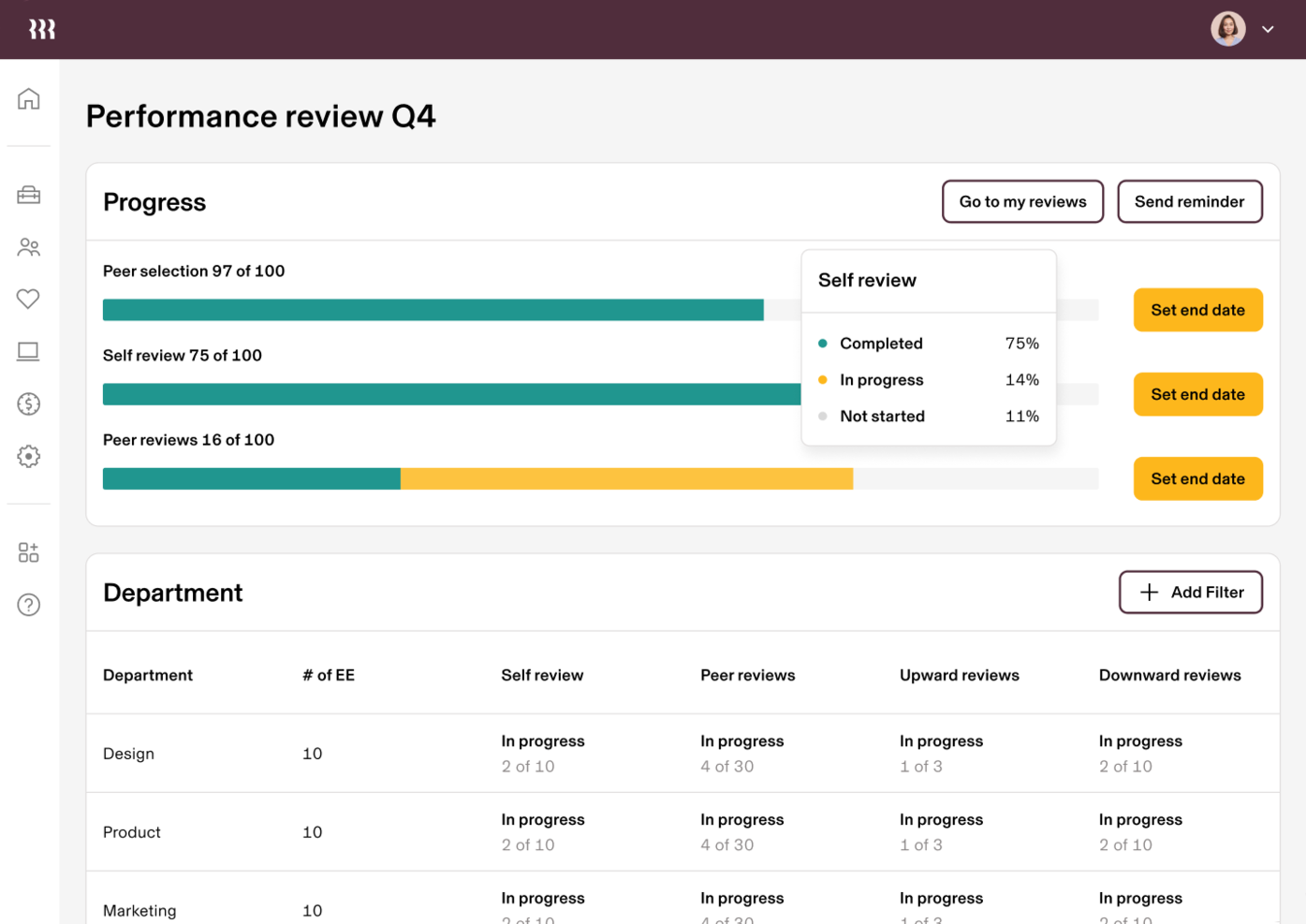
Rippling is an AI-enabled HR platform that combines performance management, employee data, payroll, and IT management in a single system for businesses looking to unify their people operations.
Who Is Rippling Best For?
Rippling is a strong fit for mid-sized to large companies that want performance management built into the same platform handling their HR, payroll, and IT.
Why I Picked Rippling
I picked Rippling as one of the best because its performance management lives inside the same system that runs payroll, benefits, and HR data—and that connection is genuinely useful. When a review cycle wraps up, approved compensation changes sync directly to payroll without any manual exports or re-entry. I also like how calibration pulls in live employee data like tenure and compa-ratio, so rating decisions are grounded in context rather than gut feel. The ability to auto-assign employees to review cycles using attributes like location or department saves my team a lot of setup time at the start of each cycle.
Rippling Key Features
- Customizable review question sets: Build targeted question sets for different reviewer types and add department-specific questions using employee attributes.
- Performance improvement plans: Create structured development plans for low performers and set a recurring cadence for progress check-ins.
- 1:1 meeting templates: Run structured 1:1s using Rippling's built-in template library or custom templates, with action items tracked for accountability.
- Automated review triggers: Set performance check-ins to fire automatically based on employee events, like 30-60-90 day milestones for new hires.
Rippling Integrations
Rippling offers native integrations with Slack, Zoom, Zendesk, and GitHub, and provides an API for custom integrations.
Pros and Cons
Pros:
- Simplifies onboarding processes
- Automated compliance tracking
- Reduces manual tasks
Cons:
- Requires technical setup
- Limited advanced analytics
New Product Updates from Rippling

Rippling AI Adds Plugins, Skills, and Automations
Rippling AI now supports plugins, skills, and automations so employees can connect approved third-party tools, package repeatable work into reusable AI instructions, and run recurring workflows under existing Rippling policies and permissions. For more information, visit Rippling's official site.
Deel HR
Best for AI-driven global performance reviews

Deel HR is an AI-powered performance management platform that combines global HR tools, automated review workflows, and compliance features for distributed teams.
Who Is Deel HR Best For?
Deel HR is a strong fit for HR teams managing performance across international workforces and time zones.
Why I Picked Deel HR
I picked Deel HR as one of the best because of how it handles AI-driven performance reviews for teams spread across multiple countries. Deel Engage uses built-in AI to draft competency libraries, generate feedback, and build out review cycles in minutes—so instead of starting from scratch each cycle, my team can refine content to better reflect our org's needs. The 360° review functionality is built for global teams, with support for anonymous and open feedback using both quantitative and qualitative methods. Deel AI is embedded directly into the platform and pulls from your live people data to surface contextual insights during review periods—so you're not just running reviews in a vacuum, you're connecting them to real workforce signals.
Deel HR Key Features
- Goal and OKR tracking: Set company, team, and individual OKRs with customizable cycles and real-time progress tracking across your entire workforce.
- Employee engagement surveys: Build pulse surveys and eNPS questionnaires with centralized analytics dashboards for action planning.
- Career progression frameworks: Define role expectations and career paths to give employees visibility into growth opportunities within the organization.
- Performance review calibration: Run calibration sessions to ensure fair and consistent performance evaluations across global teams.
Deel HR Integrations
Deel HR offers native integrations with BambooHR, Workday, HiBob, Greenhouse, Lever, Ashby, Okta, Slack, QuickBooks, Xero, and NetSuite. An API is available for custom integrations.
Pros and Cons
Pros:
- Offers wide country coverage
- Ensures local compliance
- Automates tax calculations
Cons:
- Requires understanding of compliance
- Complex setup for some users
New Product Updates from Deel HR

Deel Expands Stablecoin Wallet to 80+ Countries
Deel expands its Stablecoin Wallet to 80+ countries with dollar-backed balances and optional rewards. This gives eligible contractors more ways to hold and manage earnings inside Deel. For more information, visit Deel’s official site.
 .
.
Best for automated performance workflows
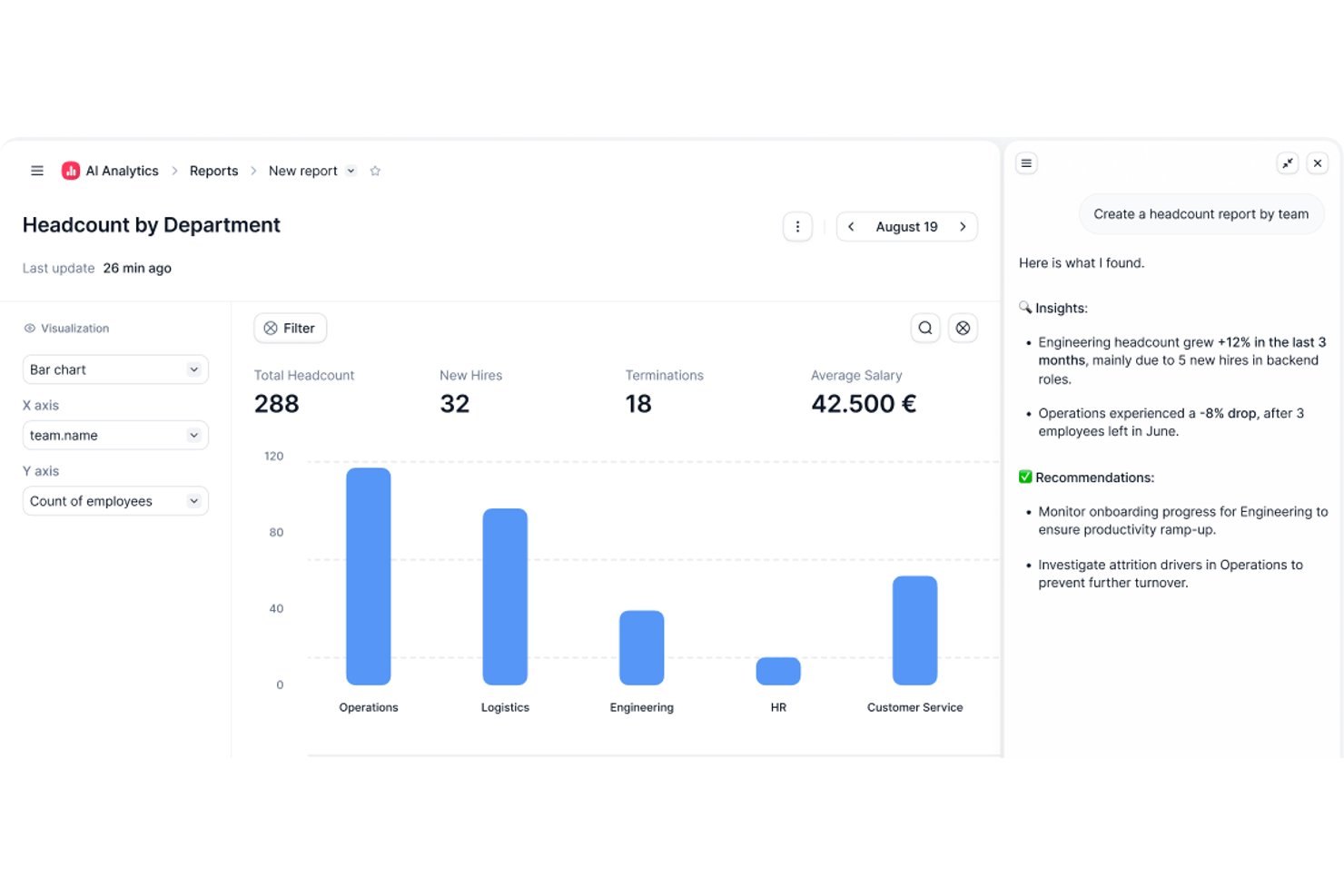
Built for HR teams, Factorial is an all-in-one HR platform with an AI layer that covers performance reviews, OKR tracking, competency mapping, and people analytics across the full employee lifecycle.
Who Is Factorial Best For?
Factorial is a strong fit for mid-sized businesses that need a single platform to manage HR, performance, and compliance without stitching together multiple tools.
Why I Picked Factorial
I've included Factorial in my top picks because of how thoroughly it automates the end-to-end performance review cycle. You can define review periods, set a timeline, and let Factorial handle participation reminders automatically—so no one on your team has to manually chase down responses. I also like that the AI agent, One, steps in during review writing to suggest improvements for tone and clarity, and generates goal alignment summaries based on past review data. That combination of automated scheduling and AI-assisted content generation makes running consistent, structured review cycles genuinely less labour-intensive.
Factorial Key Features
- 360-degree feedback cycles: Collect structured feedback from peers, direct reports, and managers within a single review process.
- 9-box grid: Visually map employees by performance and potential to support talent development conversations.
- Competency tracking: Assign and monitor role-specific competencies alongside review scores to track skill progression over time.
- 1:1 meeting management: Schedule recurring 1:1s, log discussion points, and track follow-up actions directly within the platform.
Factorial Integrations
Integrations include SAP Business One, Cloud9 Insight, ReThinkHR, Microsoft Dynamics 365, PayCaptain, Slack, SilverCloud, Zapier, Google Workspace, and PetaurumHR.
Pros and Cons
Pros:
- Overtime rules auto-assign correct categories
- AI assistant generates reports and surveys
- Built-in review templates and peer feedback
Cons:
- Lacks detailed workflow configuration
- Limited customizable reporting for deeper analysis

Best for customizable reviews

PerformYard is a performance management platform for HR teams that offers customizable review cycles, goal tracking, continuous feedback, and analytics for managing employee performance.
Who Is PerformYard Best For?
PerformYard suits HR teams at mid-sized companies that need flexible, configurable performance review processes without a one-size-fits-all approach.
Why I Picked PerformYard
PerformYard is on my shortlist because it extends review customization. I can build review cycles from scratch—defining my own questions, timelines, and touchpoints—or import existing appraisal forms directly into the platform. That flexibility means I'm not retrofitting my process to fit the tool. I also like that PerformYard supports project-based reviews alongside annual and quarterly cycles, so teams with non-traditional review cadences aren't forced into a one-size-fits-all structure.
PerformYard Key Features
- Goal management: Set, track, and cascade goals across individuals, teams, and departments, with alignment to broader company objectives.
- 9-box grid reporting: Visualize employee performance and potential in a 9-box grid to support talent calibration and succession planning.
- Continuous feedback tools: Enable managers and employees to share real-time feedback, recognition, and performance notes outside of formal review cycles.
- AI review summaries: Automatically condense multi-form review responses into a single summary with suggested action items for each employee.
PerformYard Integrations
PerformYard offers native integrations with ADP, BambooHR, Gusto, Rippling, UKG, Workday, Paylocity, Slack, Microsoft Teams, G Suite, Office 365, Okta, and OneLogin, and supports SFTP for compatibility with other HRIS platforms.
Pros and Cons
Pros:
- Goal management functionality
- Detailed reporting capabilities
- Supports various review types
Cons:
- Limited mobile app functionality
- Steeper learning curve for new users

Effy AI
Best for AI-driven question templates
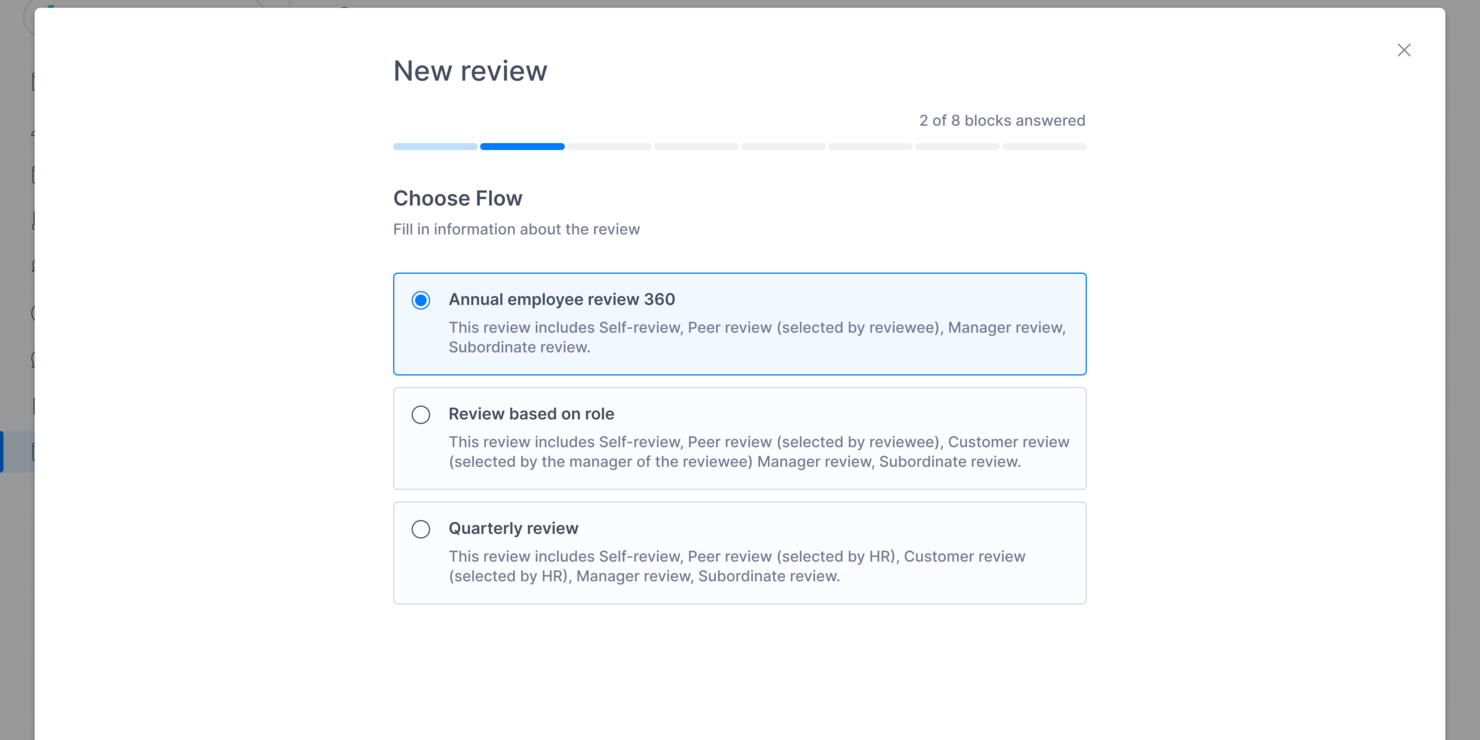
Effy AI is an AI-native performance management platform that covers 360-degree reviews, self-assessments, goal and OKR tracking, AI-generated feedback summaries, and people analytics across the full review cycle.
Who Is Effy AI Best For?
Effy AI is a good fit for HR teams at small to mid-sized companies that want to run structured performance reviews without a heavy administrative lift.
Why I Picked Effy AI
I've included Effy AI in my top picks because its AI form builder genuinely removes one of the most time-consuming parts of running a review cycle: writing the questions. Instead of starting from scratch, the AI generates role-specific review questions automatically, so a form for an engineering manager looks different from one for a sales rep. I also like that you can use those AI-generated templates as-is or customize them, which means you're not locked into a rigid structure. The AI follow-up questions that trigger based on rating context add another layer of depth that most tools at this price point just don't have.
Effy AI Key Features
- AI-generated review summaries: Effy AI automatically produces written narrative summaries from collected feedback, including development recommendations for each reviewee.
- 9-box grid: Plot employees by performance and potential on a visual 9-box matrix directly within the analytics dashboard.
- OKR tracking: Set and track goals at the company, team, and individual level, with the option to pull active goals directly into review forms.
- AI quality nudges: The platform scores open-ended responses and prompts reviewers to add more detail when answers are too brief or vague.
Effy AI Integrations
Effy AI offers native integrations with Slack, Microsoft Teams, and HRIS platforms. The Business plan includes HRIS integration and an API for custom integrations. The Slack integration lets your team sync workspace members, receive review reminders, and capture feedback directly in Slack.
Pros and Cons
Pros:
- Completes reviews directly inside Slack
- Free plan available for small teams
- Sentiment analysis on open-ended feedback
- AI-generated review summaries save hours
Cons:
- No built-in compensation management tools
- Limited native third-party integrations
Best for AI-enabled goals and coaching
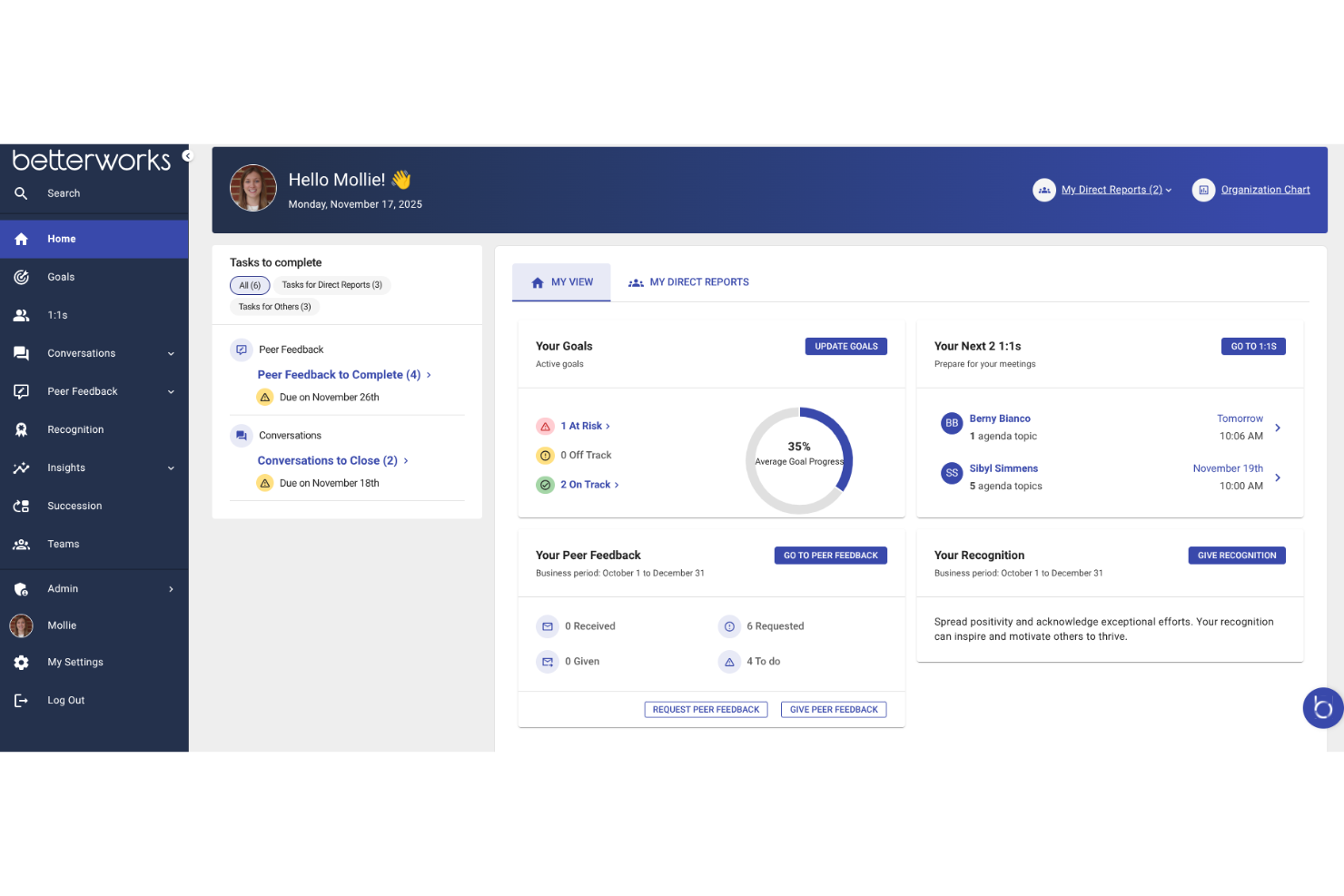
Betterworks is an AI-powered performance management platform that brings together goal setting, continuous feedback, coaching, and analytics for HR teams looking to manage employee performance at scale.
Who Is Betterworks Best For?
Betterworks is a good fit for mid-size to enterprise HR teams that need a structured, AI-supported approach to performance management across large or distributed workforces.
Why I Picked Betterworks
Betterworks earns its spot on my shortlist because of how deeply AI is woven into the goal-setting and coaching experience—not just as a bolt-on feature. I particularly like the Goal Intelligence feature, which uses an employee's role, team context, and company priorities to suggest specific, measurable goals, cutting down the back-and-forth between managers and direct reports. The Curated Manager Context feature also stands out: it synthesizes themes, blockers, and follow-ups across every 1:1 throughout the year, so managers aren't walking into coaching conversations cold. I also find the AI-synthesized performance summary genuinely useful—it pulls together goals, feedback, and 1:1 insights into a coherent narrative that makes review writing faster and more evidence-based.
Betterworks Key Features
- Performance calibration: Run structured calibration sessions that compare employee performance across teams using a consistent, data-backed framework to reduce bias in evaluation decisions.
- Pulse survey builder: Create and schedule recurring engagement surveys using research-backed templates, with anonymity thresholds and eNPS trend tracking built in.
- External feedback collection: Gather structured input from clients, partners, or suppliers directly into the platform without requiring them to have an account.
- 360-degree feedback: Collect peer, upward, and manager feedback across formal and informal cycles, with all responses automatically rolling into performance reviews and calibration tools.
Betterworks Integrations
Betterworks offers native integrations with ADP, Asana, Azure DevOps, BambooHR, GitHub, Google Sheets, Jira, LinkedIn Learning, Microsoft Teams, Okta, Oracle, Salesforce, Slack, SuccessFactors, Udemy, UKG Pro, Workday, and Zenefits. An API is available for custom integrations.
Pros and Cons
Pros:
- Strong customer support
- User-friendly interface
- Supports continuous performance management
Cons:
- Learning curve for integrating AI features
- Limited offline access


Express Evaluations is a web-based performance management platform designed for structured employee evaluations, customizable review forms, and automated documentation workflows.
Who Is Express Evaluations Best For?
Express Evaluations suits HR teams in government agencies, small businesses, and non-profits that need a straightforward, affordable way to run structured employee reviews.
Why I Picked Express Evaluations
Express Evaluations is one of my top picks because it fits the budget and operational realities of government agencies, small businesses, and non-profits. I've found the custom evaluation templates and automated reminder notifications especially useful—these features matter for small HR teams that can't afford to chase down incomplete reviews manually. I also like that the platform includes pulse surveys and manager check-ins, which let lean HR teams track employee sentiment between review cycles.
Express Evaluations Key Features
- Digital signatures: Sign and finalize evaluation forms directly within the platform, without printing, scanning, or external tools.
- 360-degree evaluation tool: Collect structured feedback on employees from multiple reviewers across different roles and levels.
- Performance improvement plans: Create, present, and track formal improvement plans for employees who need additional support.
- Employee goals: Set and monitor individual employee goals within the platform, keeping development tied directly to the review process.
Express Evaluations Integrations
Native integrations are not clearly documented. An API is available for custom integrations.
Pros and Cons
Pros:
- Automated reminders ensure timely evaluations
- Comprehensive reporting identifies performance trends
- Customizable evaluation templates and schedules
Cons:
- Feature availability varies by plan
- Limited scalability for large organizations
Lattice
Best for goal setting
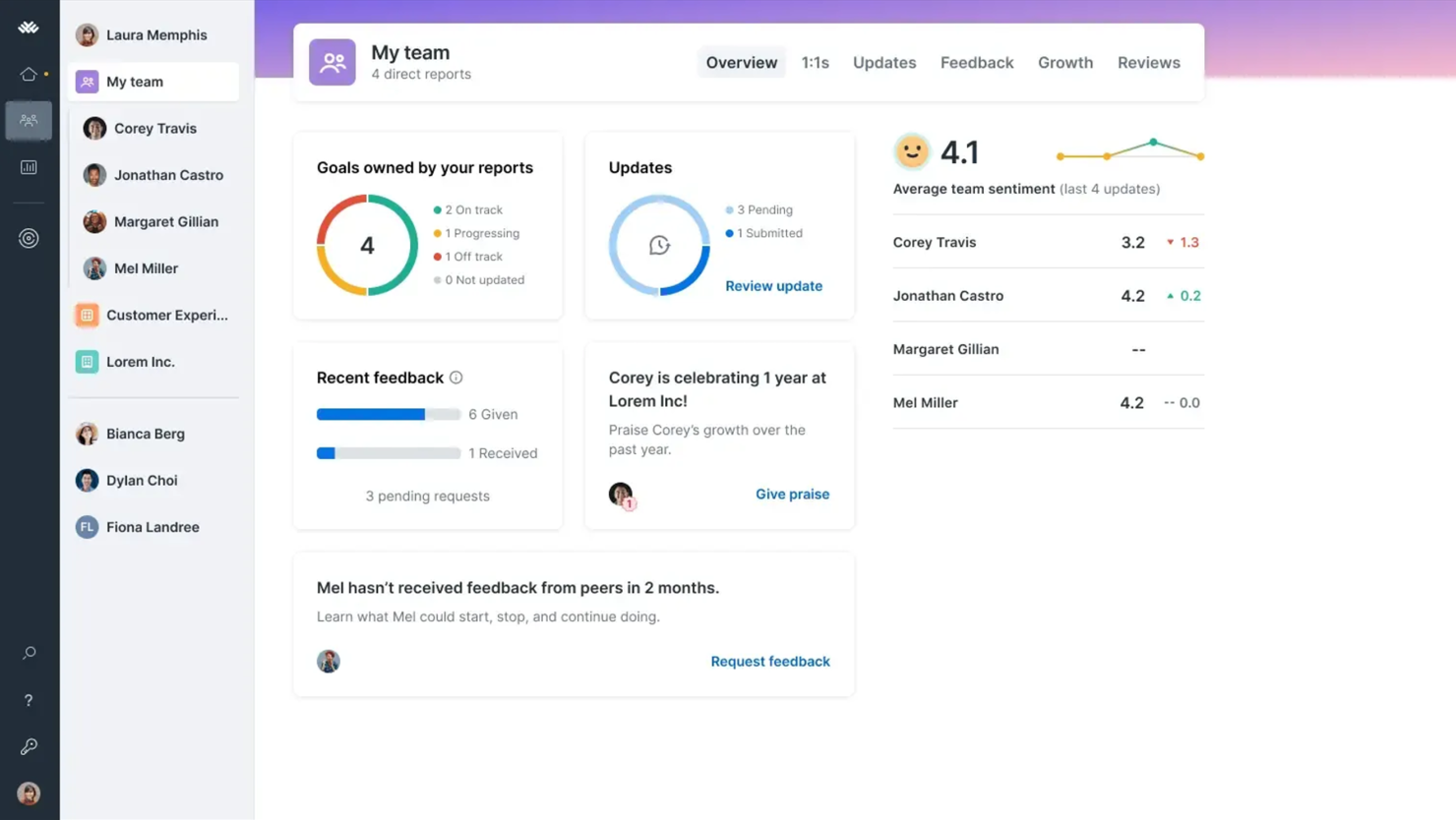
Lattice is an AI-powered performance management platform that brings together performance reviews, goal tracking, feedback, engagement surveys, and analytics for HR teams and managers.
Who Is Lattice Best For?
Lattice is a good fit for mid-size to enterprise HR teams that need a structured, people-first approach to performance management across the full employee lifecycle.
Why I Picked Lattice
Lattice earns its spot as one of the best on my shortlist because of how tightly it connects goal setting to every other part of performance management. I love that OKRs in Lattice link directly to 1:1s, performance reviews, and company-wide dashboards, so goals don't get buried in a separate system mid-quarter. I also use the cascading goals feature to align individual work to department and company objectives, which gives managers real visibility into how each person's contributions ladder up. The "Needs Update" view is a small but genuinely useful touch that keeps goal progress from going stale between check-ins.
Lattice Key Features
- AI writing assistance: Get real-time grammar, clarity, and bias checks while writing performance reviews and feedback.
- Pulse surveys: Run continuous, real-time pulse surveys to track employee sentiment between formal engagement cycles.
- Individual development plans (IDPs): Build personalized development plans with AI-powered growth area recommendations tied to career tracks and performance data.
- Succession planning: Identify and track internal talent pipelines using performance and potential data to guide promotion and succession decisions.
Lattice Integrations
Lattice offers native integrations with ADP, BambooHR, Greenhouse, Gusto, HiBob, Jira, Lever, Microsoft Teams, Okta, Salesforce, Slack, and Workday. An API is available for custom integrations.
Pros and Cons
Pros:
- Provides engagement insights
- Supports OKR frameworks
- Encourages structured goal setting
Cons:
- Basic reporting capabilities
- Requires setup time
New Product Updates from Lattice

Lattice Introduces MCP Connector for AI Chat Tools
Lattice introduced Lattice MCP, a new connector that brings talent data into Claude, ChatGPT, and other LLM tools. The connector helps teams access performance context from reviews, 1:1 notes, feedback, goals, and updates within AI chat workflows. For more information, visit Lattice’s official site.
 .
.
15Five
Best for continuous feedback

15Five is an AI-powered performance management platform for HR teams that combines continuous feedback, goal tracking, engagement surveys, and manager coaching tools.
Who Is 15Five Best For?
15Five is a strong fit for mid-sized companies where HR teams and managers need structured, ongoing performance conversations rather than annual review cycles.
Why I Picked 15Five
15Five earns its spot on my shortlist because continuous feedback is built into the platform rather than bolted on as an afterthought. Weekly check-ins give employees a structured space to share progress, flag blockers, and request feedback from their manager regularly. I also like the Kona Meeting Assistant, which automatically takes notes during 1:1s—allowing managers to avoid scrambling to document conversations and focus on the discussion. That note-taking feeds directly into performance reviews, which means review cycles draw on a real record of ongoing feedback rather than whatever a manager can recall from the past six months.
15Five Key Features
- OKR and goal tracking: Set, align, and monitor individual and team goals across the organization with progress updates tied directly to performance cycles.
- AI-assisted performance reviews: Generate review summaries and suggested ratings based on check-in data, feedback, and goal progress collected throughout the review period.
- Employee engagement surveys: Run pulse surveys and deeper engagement assessments with built-in benchmarking to track workforce sentiment over time.
- Manager effectiveness scores: Measure manager performance using aggregated data from direct reports to identify coaching opportunities.
15Five Integrations
15Five offers native integrations with Slack, Microsoft Teams, Google Workspace, BambooHR, Namely, Workday, and ADP. An API is available for custom integrations.
Pros and Cons
Pros:
- Facilitates open communication
- Supports goal alignment
- Encourages regular feedback
Cons:
- May need additional training
- Initial setup takes time

Workleap
Best for actionable AI-powered peer feedback
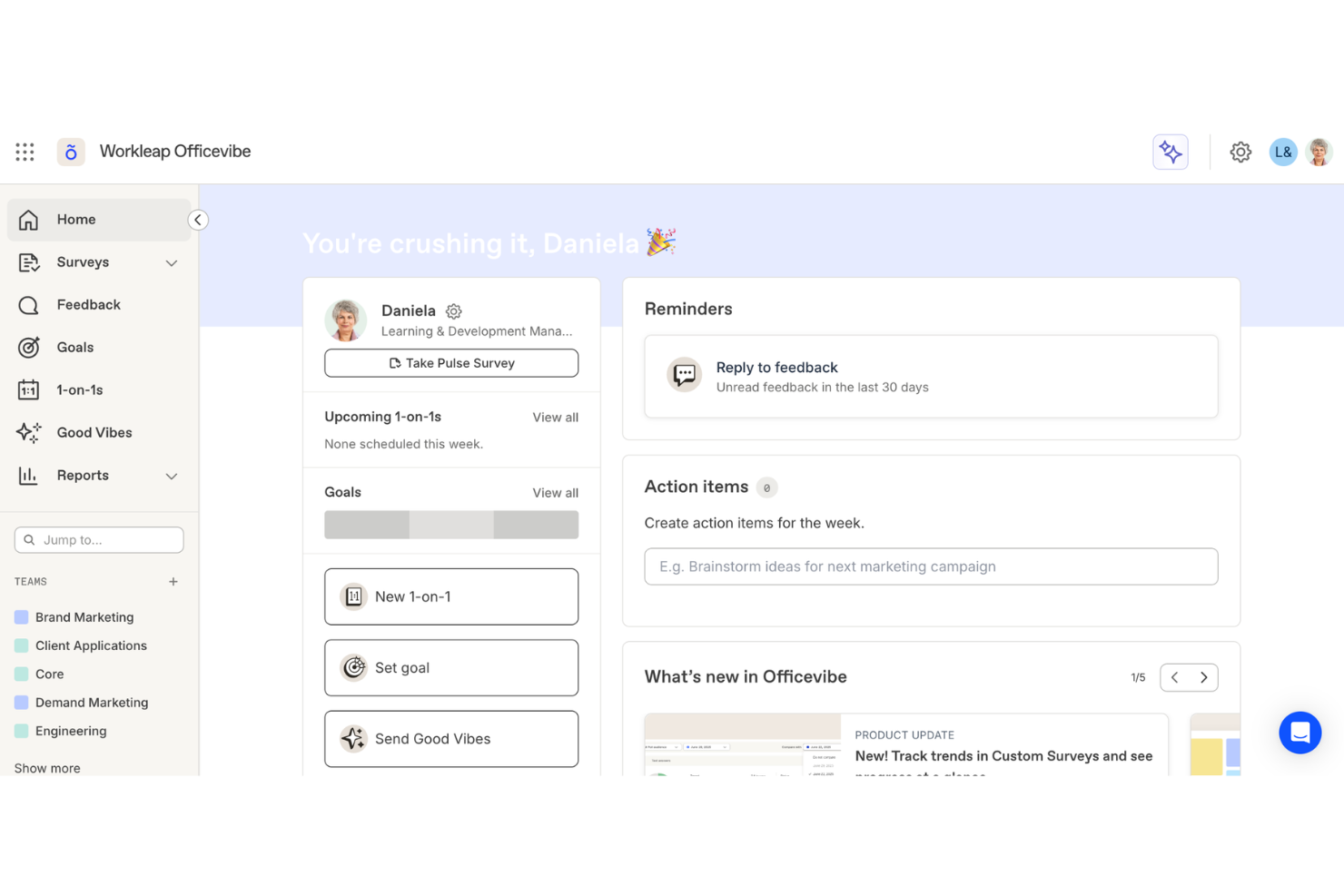
Workleap is an AI-powered employee engagement and performance platform that combines pulse surveys, 360-degree feedback, goal tracking, and manager-facing insights in one connected system.
Who Is Workleap Best For?
Workleap Officevibe is a strong fit for mid-sized organizations where managers need structured tools to run performance conversations while continuously monitoring team engagement.
Why I Picked Workleap
I picked Workleap because its AI doesn’t just collect feedback; it turns it into action. Peer recognition through Good Vibes feeds into performance insights, and AI-generated summaries surface patterns managers might otherwise miss. The AI reply assistant also helps managers respond to survey feedback quickly, reducing the risk of unresolved engagement issues.
Workleap Key Features
- Pulse surveys: Automated recurring surveys track engagement across key metrics and trends over time.
- AI smart reports: AI-generated summaries highlight engagement shifts and surface areas that require manager attention.
- 360-degree feedback: Structured review cycles with AI-assisted summaries to identify strengths and development areas.
- Goal tracking: Managers and employees can set, monitor, and align goals with performance discussions.
Workleap Integrations
Workleap integrates with Slack and Microsoft Teams and connects with major HRIS platforms including BambooHR, HiBob, ADP Workforce Now, Workday, SAP SuccessFactors, UKG Pro, Dayforce, and Deel. An API is available for custom integrations.
Pros and Cons
Pros:
- Peer recognition integrates into performance discussions
- Continuous pulse surveys reduce blind spots between review cycles
- AI-generated summaries surface actionable performance insights
Cons:
- Reporting customization options are limited for complex orgs
- Advanced performance modules require add-on pricing
Other AI Performance Management Tools
Here are some additional AI performance management tools options that didn’t make it onto my shortlist, but are still worth checking out:
- ChartHop
For AI-powered performance dashboards
- Mesh AI
For remote teams
- Engagedly
For employee recognition
- CultureAmp
For engagement insights
- Confirm
For small teams
- Keka HR
With AI-powered HR helpdesk
- Intelogos
For AI productivity monitoring and analysis
- ClearCo
For talent management
- eloomi
For employee learning
- Peoplebox.ai
For team alignment


How I Evaluate AI Performance Management Tools
I only include tools that use AI to deliver real, measurable value—like drafting reviews from actual employee data or flagging bias patterns managers would miss. I split my evaluation into core functionality every tool needs to qualify and the differentiating factors that separate a good option from the best fit.
Core Functionality (Table Stakes For This List)
When I'm selecting tools for my list, I rank each one on a scale from 0 (does not offer the functionality) to 5 (excels in this area) for each core functionality listed below. Then, I calculate the tool's total score into a percentage. Each tool needs to achieve a minimum total score of 65% to be considered for inclusion.
- AI-Assisted Review Generation: I evaluate whether the tool can draft meaningful review content from real inputs—like goal progress, peer feedback, and 1:1 notes—rather than just offering fill-in-the-blank templates.
- Predictive People Analytics: Tools should surface forward-looking insights like attrition risk or engagement dips, not just historical dashboards that require HR to connect the dots manually.
- Goal & OKR Tracking: I look for structured goal-setting with AI that helps cascade objectives across teams, nudges managers on stalled progress, and connects goals to review outcomes.
- Continuous Feedback & 360° Reviews: The platform should support ongoing check-ins and multi-rater feedback with AI that synthesizes themes—so managers see patterns, not just a pile of comments.
- Bias Detection & Fairness Tools: I check whether AI flags biased language in written reviews or highlights rating inconsistencies during calibration, helping HR teams promote equitable evaluations.
- Skill & Development Insights: The tool should map employee skills and recommend relevant growth paths, whether that's surfacing a learning course or identifying an internal mobility opportunity.
Once I have a list of tools that meet the criteria, I consider what sets each platform apart.
Differentiating Factors (What Sets Vendors Apart)
Here's how I compare and contrast different vendors:
Standout Features
An AI coaching assistant makes a real difference for managers who need in-the-moment guidance during 1:1s or tough feedback conversations. I also look for natural language querying, where HR leaders can ask questions like "which teams have the lowest engagement scores this quarter?" and get instant answers without building custom reports. Career pathing AI is another feature I value—tools that recommend internal moves or succession candidates based on skills and performance give HR teams a proactive retention lever.
Beyond Features
AI governance matters a lot here—I check whether a vendor explains how its models generate recommendations and whether HR can review or override AI outputs before they reach employees. Integration depth is equally important. A tool that syncs with your HRIS, Slack or Teams, and your LMS keeps performance data flowing without manual exports. I also evaluate data security posture, especially SOC 2 Type II certification and role-based access controls, since these platforms handle some of the most sensitive employee information in your stack.
How to Choose an AI Performance Management Tool
It’s easy to get bogged down in long feature lists and complex pricing structures. To help you stay focused as you work through your unique software selection process, here’s a checklist of factors to keep in mind:
| Factor | What to Consider |
|---|---|
| Scalability | Can the tool grow with your team? Check if it supports your current size and future growth. Look for features like user limits and additional costs for scaling. Consider if it can handle more users or locations without performance issues. |
| Integrations | Does it work with your existing tools? Ensure the software integrates with your current HR systems, communication tools, and other platforms. Consider the ease of integration and any potential disruptions. |
| Customizability | Can you tailor it to fit your processes? Look for customization options like templates, workflows, and dashboards. Avoid tools that require extensive technical skills for simple changes. |
| Ease of use | Is it intuitive for your team? Consider the learning curve and user interface design. Tools should be easy to navigate without extensive training. Look for user reviews mentioning ease of use. |
| Implementation and onboarding | How quickly can you get started? Evaluate the setup process and available resources like training videos and support. Consider the time and effort needed to fully implement the tool in your organization. |
| Cost | Does the pricing fit your budget? Compare costs across vendors, considering both initial and ongoing expenses. Watch for hidden fees and ensure the pricing structure aligns with your financial plans. |
| Security safeguards | Are your data protected? Check for encryption, data backup, and compliance with data protection regulations. Ensure the vendor provides transparency about their security measures and incident response. |
| Support availability | What help is available when you need it? Consider the support channels offered, such as phone, email, and chat. Check if support is available 24/7 and if there are additional costs for premium support services. |
What Are AI Performance Management Tools?
AI performance management tools are software solutions that help organizations track and improve employee performance through data-driven insights and automation. HR professionals, managers, and team leaders generally use these tools to enhance productivity and engagement.
Features such as goal setting, feedback collection, and performance tracking help align team objectives, provide continuous feedback, and monitor progress. Overall, these tools provide a means to manage and enhance workforce performance efficiently.
Features of AI Performance Management Tools
When selecting AI performance management tools, keep an eye out for the following key features:
- Goal setting: Helps align team and individual objectives with business goals, ensuring everyone works towards the same targets.
- Feedback collection: Allows for continuous feedback between team members and managers, fostering a culture of open communication and improvement.
- Performance tracking: Monitors employee progress and performance over time, providing insights into areas for development and achievements.
- Engagement surveys: Collect employee sentiment data to understand workplace morale and identify areas for improvement.
- Customizable dashboards: Offers personalized views of performance data, allowing users to focus on the most relevant information for their roles.
- Integration capabilities: Connects with existing HR systems and tools to provide a seamless workflow and data consistency.
- Real-time analytics: Provides up-to-date insights into performance metrics, enabling quick decision-making and adjustments.
- Automated reminders: Send alerts and notifications to ensure timely completion of tasks and reviews, improving accountability.
Benefits of AI Performance Management Tools
Implementing AI performance management tools provides several benefits for your team and your business. Here are a few you can look forward to:
- Improved alignment: Aligns team goals with business objectives through effective goal setting, ensuring everyone works towards the same targets.
- Enhanced feedback culture: Encourages open communication and continuous improvement with feedback collection features.
- Increased productivity: Tracks performance metrics and progress, helping identify areas for development and recognizing achievements.
- Better engagement: Uses engagement surveys to gather insights into employee sentiment, improving workplace morale.
- Time savings: Automates reminders and notifications, ensuring tasks and reviews are completed on time without manual follow-ups.
- Informed decision-making: Provides real-time analytics and insights, enabling quick adjustments and strategic planning.
- Seamless integration: Connects with existing HR tools and systems, ensuring consistent data flow and reducing administrative burdens.
Costs and Pricing of AI Performance Management Tools
Selecting AI performance management tools requires an understanding of the various pricing models and plans available. Costs vary based on features, team size, add-ons, and more. The table below summarizes common plans, their average prices, and typical features included in AI performance management tools solutions:
Plan Comparison Table for AI Performance Management Tools
| Plan Type | Average Price | Common Features |
|---|---|---|
| Free Plan | $0 | Basic goal setting, limited feedback collection, and minimal performance tracking. |
| Personal Plan | $5-$25/user/month | Enhanced goal setting, basic engagement surveys, feedback tools, and performance tracking. |
| Business Plan | $25-$50/user/month | Advanced analytics, customizable dashboards, comprehensive feedback systems, and integrations. |
| Enterprise Plan | $50-$100/user/month | Full customization, real-time analytics, priority support, and extensive integrations. |
AI Performance Management Tools FAQs
Here are some answers to common questions about AI performance management tools:
How can AI improve performance reviews?
AI makes performance reviews more objective by analyzing data rather than relying solely on personal impressions. It surfaces evidence-based insights from metrics like goal progress, feedback, and collaboration patterns. By spotting trends over time, it highlights both strengths and areas for development that managers may miss. This helps ensure reviews are fairer, more consistent, and focused on growth.
How can AI support employee development?
Yes, AI tools often suggest personalized learning paths and growth opportunities based on performance data. They can recommend training, stretch assignments, or mentorship programs aligned with an employee’s goals. This proactive approach helps employees see clear pathways for advancement. In turn, it can boost engagement and retention by showing that the company invests in their growth.
What are the limitations of AI performance management tools?
AI depends on the quality of data it’s given, so incomplete or biased inputs can lead to flawed outcomes. It often emphasizes measurable results but may struggle to capture soft skills like creativity or leadership. Employees may also distrust algorithm-driven evaluations if transparency is lacking. Finally, AI lacks human judgment and context, so it should always complement—not replace—manager oversight.