

10 Best Employers of Record in Ethiopia in 2026

Best Ethiopia Employer of Records Shortlist


An Ethiopia Employer of Record (EOR) hires and employs workers locally on your behalf, handling employment contracts, payroll, and related compliance. Providers vary: some offer full EOR employment, while others focus on work-permit sponsorship, payroll, or compliant contracts. Compare their local coverage, support, and service models to find the right fit for your team’s hiring plans.
Why Trust Our Software Recommendations
Our team has been testing and reviewing software since 2012. As HR experts ourselves, we know how difficult—and important—it is to choose the right software.
For this guide, we evaluated tools using hands-on testing and independent research, scoring tools using our selection criteria. We also draw on insights from industry thought leaders and practicing HR experts.
Our reviews reflect our human editorial judgment, not a sales pitch.
Expert reviewers:
Comparison Table: Ethiopia EOR Providers
Compare pricing and specs side by side for the Ethiopia EOR providers that made it onto my shortlist.
| Tool | Best For | Trial Info | Price | ||
|---|---|---|---|---|---|
| 1 | Best for startup teams | Free demo available | From $99/employee/month | Website | |
| 2 | Best for multi-currency payroll with compliance | Free demo available | From $319/user/month | Website | |
| 3 | Best for direct EOR in labor law | Free demo available | From $599/user//month | Website | |
| 4 | Best for transitioning from EOR to owned entity | Not available | From $599/user/month | Website | |
| 5 | Best for pan-African payroll with an entity | Not available | From $299/employee/month | Website | |
| 6 | Best for flat-rate hiring at launch | Free demo available | From $399/user/month | Website | |
| 7 | Best for Africa-focused NGO and multinational hiring | Not available | Pricing upon request | Website | |
| 8 | Best for entering via work permit sponsorship | Free demo available | From $499/user/month | Website | |
| 9 | Best for HRIS-integrated payroll | Free demo available | From €499/user/month | Website | |
| 10 | Best for enterprise-scale hiring across 180+ countries | Free demo available | From $599/user/month | Website |

Ethiopia Employers of Record Reviews
Below are my detailed summaries of the best Ethiopia Employer of Record providers that made it onto my shortlist. My reviews cover local compliance, work-permit support, and payroll administration to help you find the right provider for your needs.

Asanify
Best for startup teams
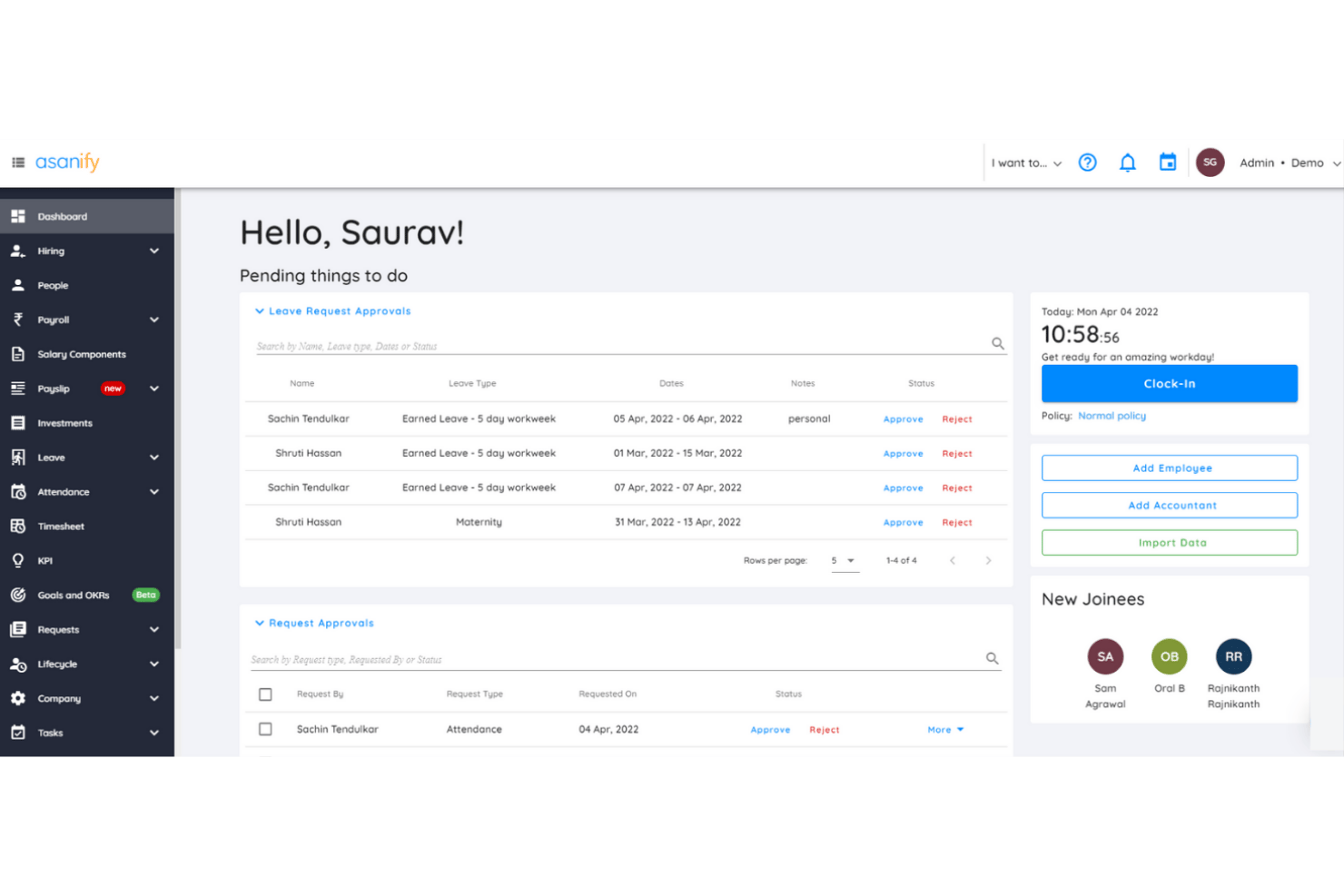
Asanify is an Employer of Record platform that handles Ethiopian payroll in birr, statutory benefits, tax filing, and employment contracts—bundled with a full HRMS covering leave tracking, performance management, and employee self-service.
Who Is Asanify Best For?
Asanify is a strong fit for early-stage and growth-stage startups that need bundled HR software alongside Ethiopian payroll and compliance, without the overhead of enterprise-scale contracts.
Why I Picked Asanify
I've included Asanify in my top picks because it's one of the few Ethiopia EOR options that bundles a full HRMS directly into the EOR plan, which matters when your startup doesn't have a dedicated HR team yet. Leave tracking, performance management, and employee self-service come included alongside birr payroll and pension administration (11% employer, 7% employee contributions to POESSA). I also like that Asanify has no minimum headcount requirement, allowing businesses to hire a single Ethiopian employee without committing to a larger workforce.
Asanify Key Features
- Background check management: Asanify coordinates candidate consent and local verification for national ID, address, employment history, education, and police clearance checks specific to Ethiopia.
- Multi-currency invoicing with no FX markup: Clients are billed in USD while employees are paid in Ethiopian birr, with currency conversion applied at the interbank rate and shown as a separate invoice line.
- Digital contract signing: Employment contracts drafted to Ethiopian legal standards are executed through Asanify's built-in digital signature workflow, with offer letters and HR letters included.
- OKR and performance management tools: Goal tracking, performance reviews, and OKR management come bundled directly into the EOR plan, giving lean teams a single platform for people operations.
Asanify Integrations
Asanify documents integrations with Slack, Microsoft Teams, WhatsApp, Google Calendar, and Outlook for leave and holiday sync. It also connects to biometric attendance devices on the VIP plan and advertises API access for custom integrations.
Pros and Cons
Pros:
- No minimum headcount suits single hires
- Bundled HRMS covers leave and performance
- Monthly birr payroll includes itemized payslips
Cons:
- Onboarding fees and timelines conflict across pages
- Ethiopian employing-entity ownership remains undisclosed

Best for multi-currency payroll with compliance
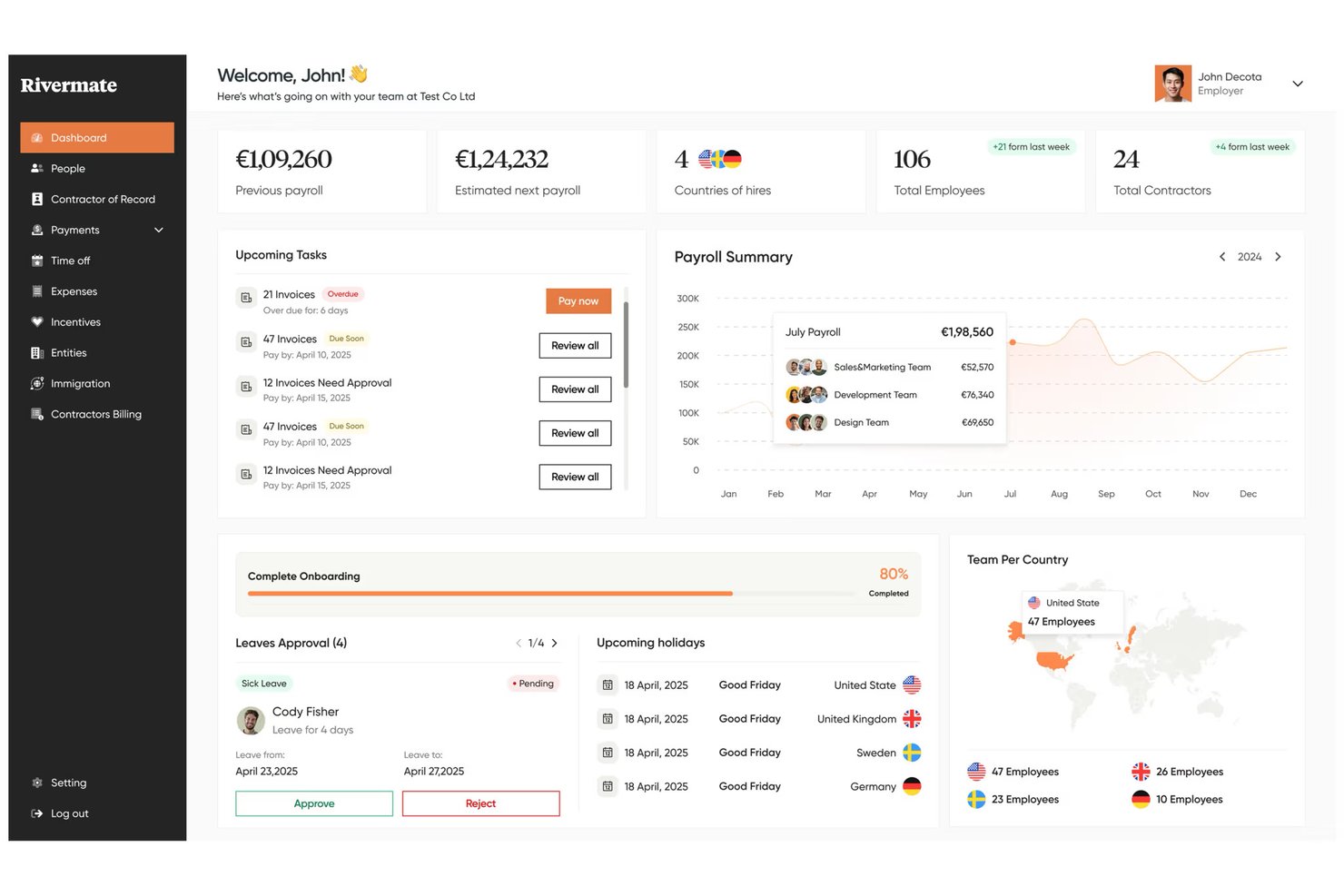
Rivermate is an Employer of Record platform that manages Ethiopian employment contracts, monthly payroll, statutory benefits, tax filing, and visa and work permit processing across 180+ countries.
Who Is Rivermate Best For?
Rivermate suits global expansion teams and HR managers who need detailed Ethiopian labor law compliance and multi-currency payroll without navigating local regulations on their own.
Why I Picked Rivermate
I've included Rivermate in my top picks because its multi-currency payroll is genuinely built for the complexity of paying Ethiopian employees. Invoices go out in USD, GBP, or EUR while workers receive pay in their local currency across 120+ supported currencies. What I also like is that Rivermate applies Ethiopia's progressive income tax brackets automatically and remits the employer's 11% pension contribution, handling both filing and payment on your behalf.
Rivermate Key Features
- Visa and work permit processing: Rivermate manages the full Ethiopian visa process, from document preparation to submission with the Ministry of Labour and Social Affairs.
- Dedicated account manager: Every client gets a named account manager plus 24/7 human support via Slack, WhatsApp, email, and phone.
- Contractor-to-employee conversion: The platform lets you convert existing contractors in Ethiopia to full-time employees directly within your account.
- Employee and employer self-service portals: Both you and your Ethiopian employees can access payslips, time off, expenses, and timesheets through separate self-service dashboards.
Rivermate Integrations
Rivermate doesn't have any native integrations.
Pros and Cons
Pros:
- Detailed Ethiopia guidance covers tax and benefits
- Clear dashboards surface payslips and leave
- 24/7 human support via Slack, WhatsApp, email, and phone
Cons:
- No published guidance on birr currency controls
- Ethiopia employment relies on an unnamed partner

Best for direct EOR in labor law
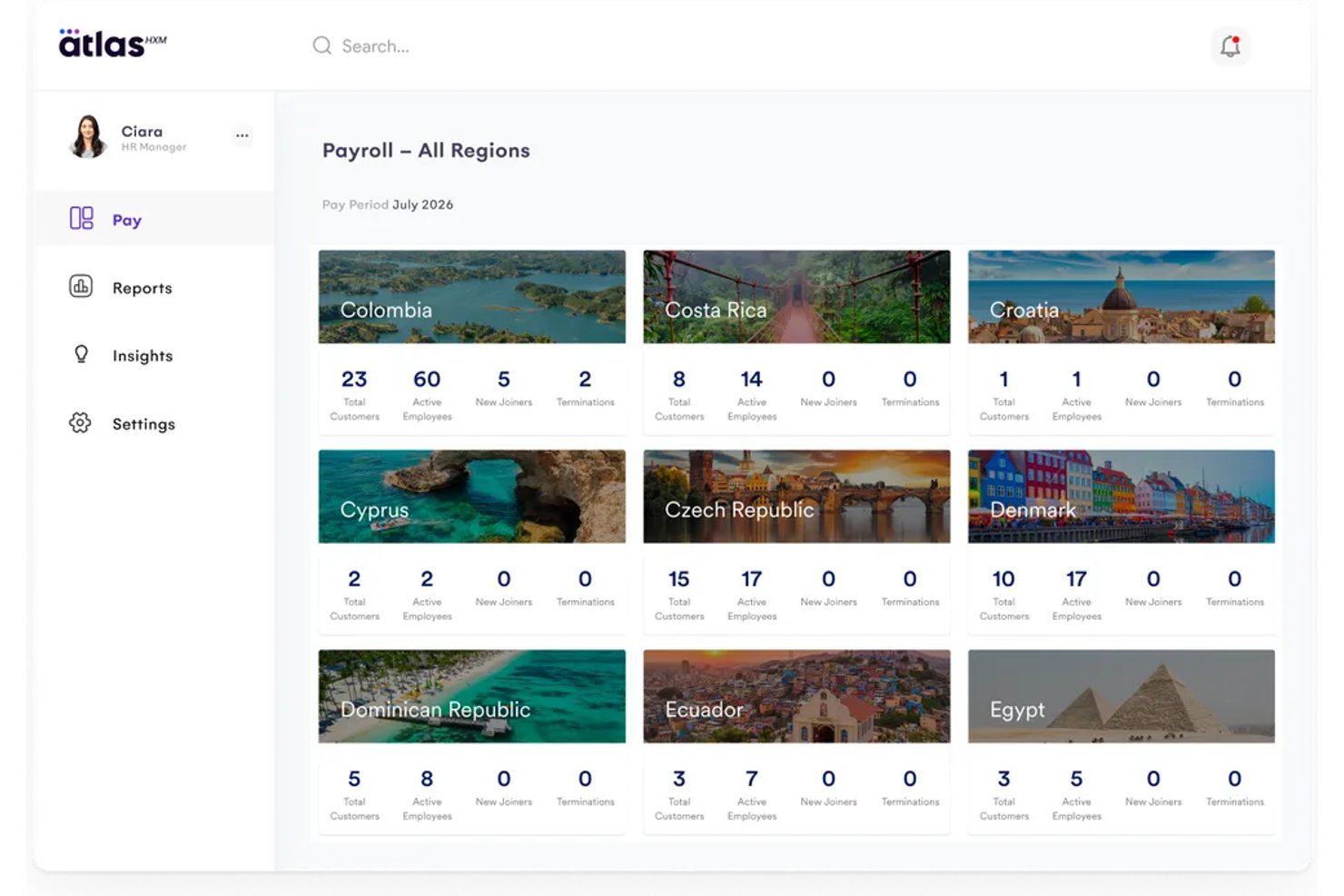
Atlas HXM is a direct Employer of Record platform that lets you hire employees in Ethiopia without a local entity, handling payroll in Ethiopian birr, statutory benefits, labor law compliance, and employment contracts under the 2019 Labour Proclamation.
Who Is Atlas HXM Best For?
Atlas HXM is a strong fit for global expansion teams and HR leaders who need a single contract holder managing Ethiopian employment, compliance, and payroll without a local entity.
Why I Picked Atlas HXM
Atlas HXM earns its spot on my shortlist because it operates as a direct Employer of Record, meaning it owns the employing entity in Ethiopia rather than routing your hire through a third-party partner. I find this approach particularly valuable when navigating Ethiopia's employment regulations, including overtime requirements, paid maternity leave, and severance obligations under the 2019 Labour Proclamation. Atlas also provides centralized payroll administration and access to local employment expertise, helping businesses manage statutory requirements while expanding their workforce.
Atlas HXM Key Features
- Self-service employee onboarding portal: Atlas HXM supports digital employee onboarding, document processing, and employment contract administration.
- Visa and work permit support: Atlas HXM provides immigration assistance, work permit support, and visa sponsorship services for international hires, subject to country-specific availability.
- Multi-currency payroll funding: Atlas HXM centralizes international payroll processing and supports employee salary payments in local currencies.
- HRIS integrations: Atlas HXM provides REST APIs for connecting external HR systems, synchronizing employee information, and initiating onboarding workflows.
Atlas HXM Integrations
Atlas HXM does not publicly document a comprehensive list of supported third-party software integrations. An API is available for custom integrations.
Pros and Cons
Pros:
- Direct EOR model avoids third-party contracting
- Dedicated account manager for HR and compliance
- Detailed Ethiopian labor-law guidance
Cons:
- Employment and visa costs billed separately
- Ethiopian entity registration remains unverified
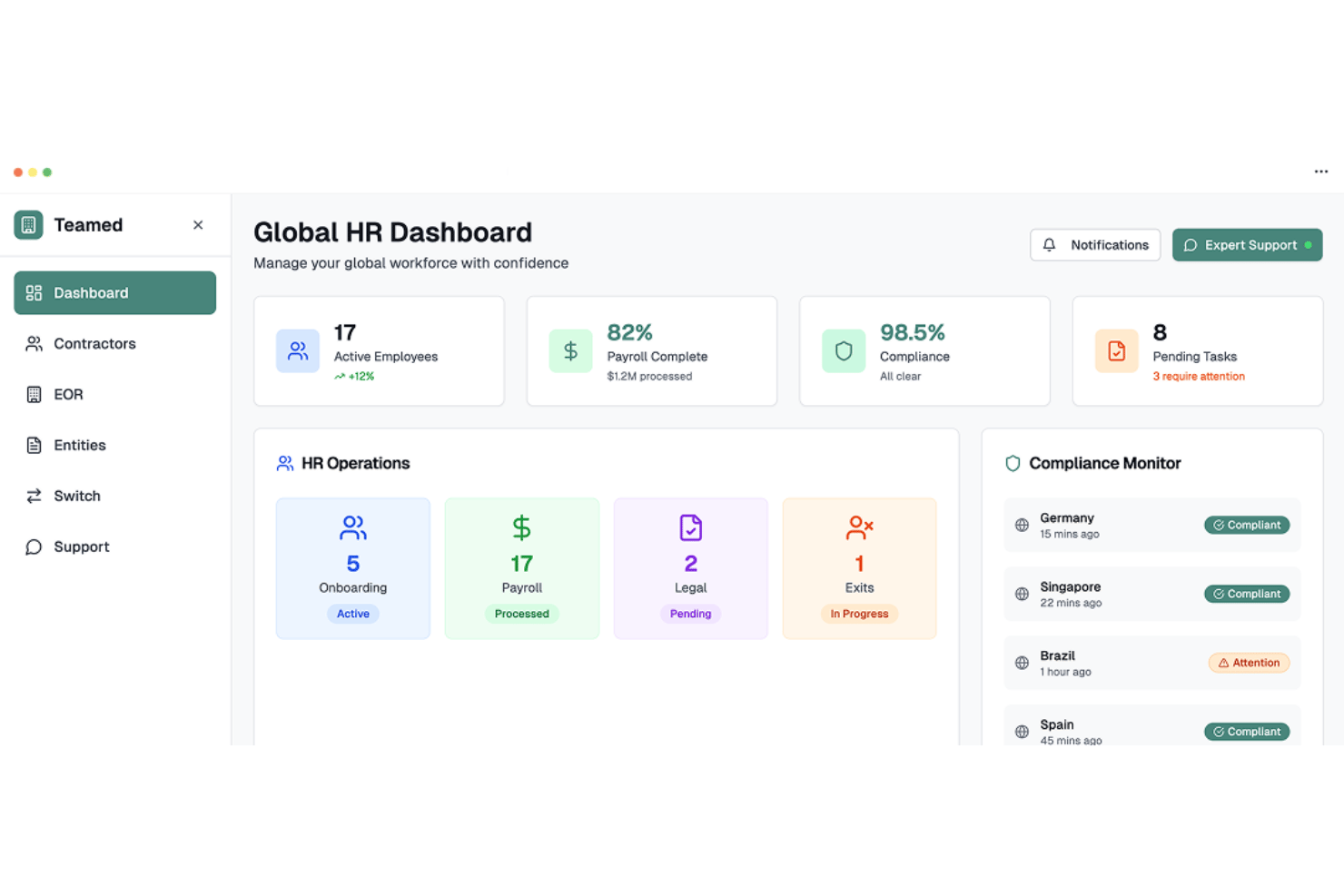
Teamed is an Employer of Record platform with a wholly-owned Ethiopian legal entity that handles local payroll in ETB, employment contracts drafted by in-country lawyers, statutory benefits administration, and a built-in path to transitioning employees to your own Ethiopian entity.
Who Is Teamed Best For?
Teamed suits companies hiring their first Ethiopian employees who plan to eventually own a local entity rather than stay on EOR indefinitely.
Why I Picked Teamed
I've included Teamed in my top picks because it's one of the few EOR providers that publicly confirms a wholly-owned Ethiopian legal entity, which means your employment contracts, ETB payroll, and statutory filings run through Teamed's own in-country structure rather than a third-party partner. What I find most useful is its GEMO service, which lets you migrate employees from Teamed's entity to your own Ethiopian subsidiary without re-onboarding staff, a path most EOR platforms simply don't offer.
Teamed Key Features
- ETB payroll with itemised invoicing: Teamed processes payroll in Ethiopian birr with automatic gross-to-net calculation, local-language payslips, and a separate invoice line for every cost component.
- Named country specialist: Each account is assigned a dedicated in-country HR specialist, with human support available 24/5 and an average response time of around 15 minutes.
- FX transparency tools: Teamed applies no FX markup on ETB payments and provides a free calculator to check competitor invoices for hidden foreign exchange charges.
- Contractor management: Teamed supports Ethiopian contractor engagements from $49/month, with optional misclassification cover available through its Teamed Guard and Teamed Protect plans.
Teamed Integrations
Teamed has one fully documented native integration, Personio. It also lists BambooHR, HiBob, Workday, Xero, QuickBooks, and Zapier as integrations confirmed during setup; no public self-serve API is available.
Pros and Cons
Pros:
- GEMO supports transfers without employee re-onboarding
- Zero FX markup on Ethiopian birr payroll
- Owned Ethiopian entity supports direct local hiring
Cons:
- Ethiopia immigration support remains unconfirmed
- Ethiopian statutory rates remain unpublished
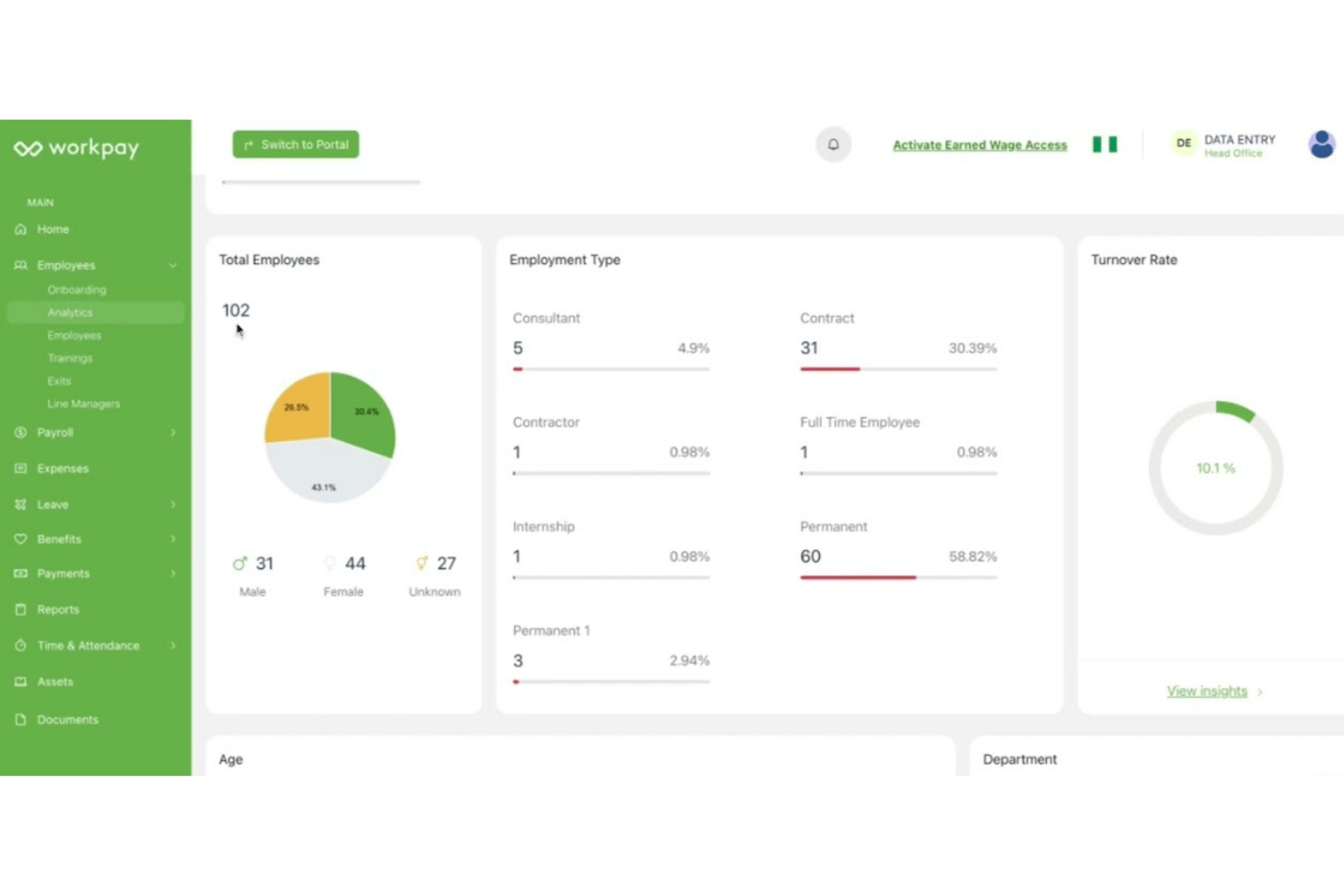
Workpay is a pan-African Employer of Record platform that handles local payroll processing, statutory compliance, benefits administration, and employment contracts for businesses hiring in Ethiopia and across the continent.
Who Is Workpay Best For?
Workpay is a strong fit for businesses expanding into Ethiopia and other African markets who need a single platform to manage payroll, statutory compliance, and local employment without opening their own entities.
Why I Picked Workpay
I picked Workpay because its Africa-focused EOR service combines local employment support with payroll and statutory compliance management in Ethiopia. Its platform supports monthly payroll in Ethiopian birr, automated payroll calculations, and tax administration, while its published guidance covers Ethiopia's updated 2025 income tax brackets, including the ETB 2,000 tax-free threshold. Pair that with statutory pension contributions (11% employer, 7% employee) managed directly through the same dashboard, and you've got a genuinely Africa-native setup for Ethiopian hiring.
Workpay Key Features
- Multi-country African coverage: Workpay supports Employer of Record and payroll services across 35+ African countries from a single platform, letting you manage Ethiopia alongside other African markets without switching tools.
- Employee self-service app: Employees can access payslips, manage leave, and view payroll information through Workpay's iOS and Android apps.
- Visa and work permit arrangement: The Remote Teams plan includes work permit and visa support for international hires, managed through Workpay's legal and global mobility team.
- Accounting and HR integrations: Workpay connects to tools like QuickBooks, Xero, BambooHR, and SAP SuccessFactors, so your Ethiopian payroll data flows into the systems your finance and HR teams already use.
Workpay Integrations
Workpay offers 25+ documented integrations, including BambooHR, Workday, HiBob, QuickBooks, Xero, NetSuite, and SAP SuccessFactors. It also supports REST API, webhooks, OAuth 2.0, sandbox access, and custom integrations.
Pros and Cons
Pros:
- Published updates track Ethiopian tax changes
- Local payroll includes statutory contributions
- Direct Ethiopian employer entity
Cons:
- EOR inclusion of attendance and performance tools is unspecified
- Ethiopia-specific EOR pricing requires a quote

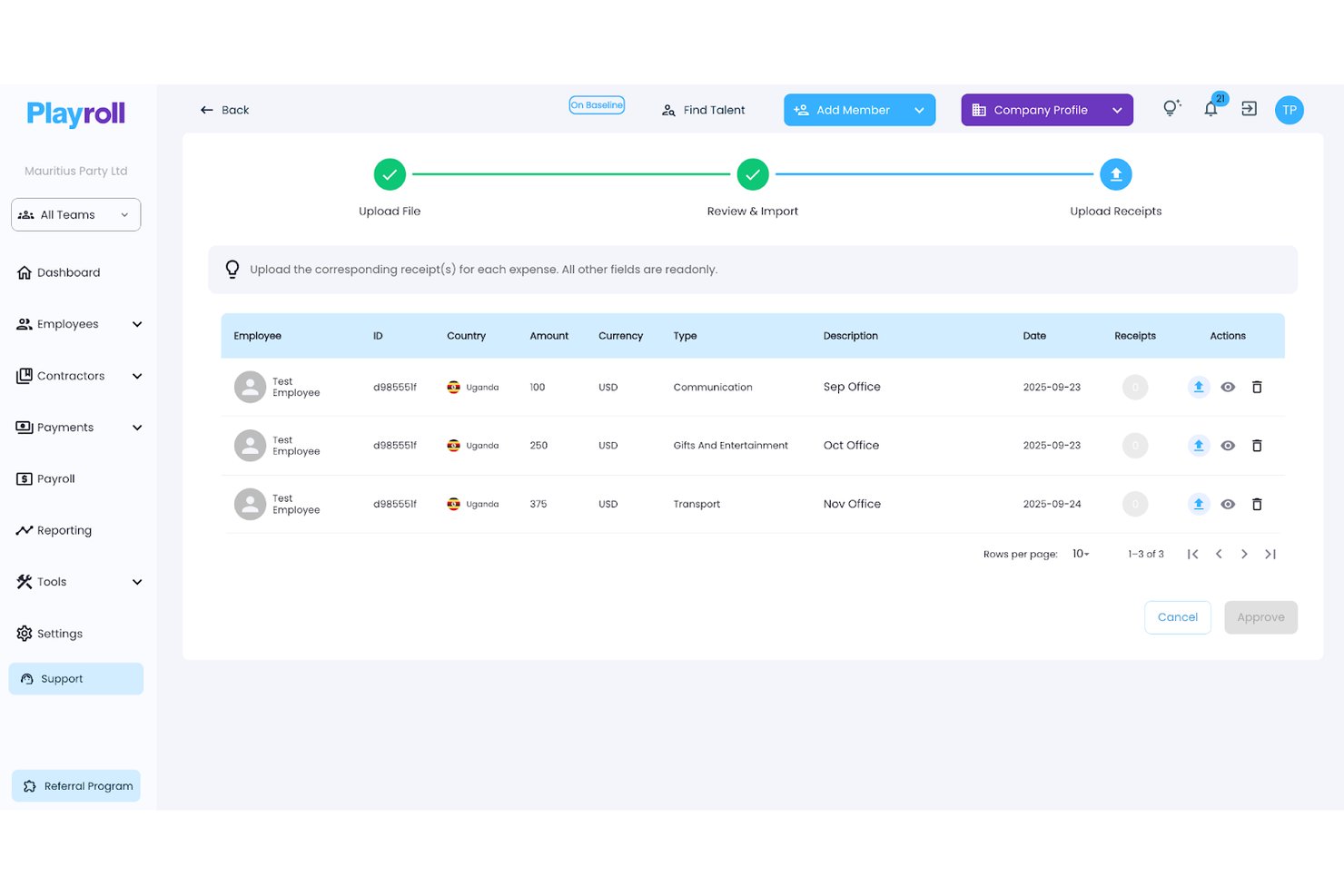
Playroll is an Employer of Record platform that handles employment contracts, payroll processing in birr, statutory filings, and compliance with Ethiopian labour law across the full employee lifecycle.
Who Is Playroll Best For?
Playroll suits founders and expansion teams that need to hire in Ethiopia quickly without entity setup and want predictable, flat-rate monthly fees from day one.
Why I Picked Playroll
I picked Playroll as one of the best because its flat $399 per employee per month fee applies from day one, with no onboarding costs and no minimum headcount, which matters when you're testing the Ethiopian market with a single hire. I especially like that contracts are drafted in Amharic, lawyer-reviewed, and registered with the Ministry of Labour and Skills within 15 days, covering probation limits, severance, and Labour Relations Board disputes out of the box.
Playroll Key Features
- Dedicated success managers: Every client gets a named Customer Success Manager, and every employee gets a named Employee Success Manager included in the base fee.
- Multi-channel employee support: Ethiopian employees can contact Playroll through email, WhatsApp, phone, Microsoft Teams, and video calls, with Slack support available to enterprise customers.
- Work permit management: Playroll handles work permit applications for foreign hires in Ethiopia, with Ministry of Labour processing typically taking 15–30 business days.
- Centralized payroll management: Playroll lets employers manage international payroll, employee payments, and benefits through a unified dashboard.
Playroll Integrations
Playroll offers native integrations with BambooHR and HiBob, plus an Expensify integration for expenses. It also supports custom integrations through an API and connects with Lattice, Carta, Veremark, and Jobbatical through its partner network.
Pros and Cons
Pros:
- Localized contracts cover disputes and severance
- Itemized invoices by employee, team, and territory
- Ethiopia-specific labor rules are clearly documented
Cons:
- Published payroll and pension rates conflict
- Background checks and visa services are add-ons

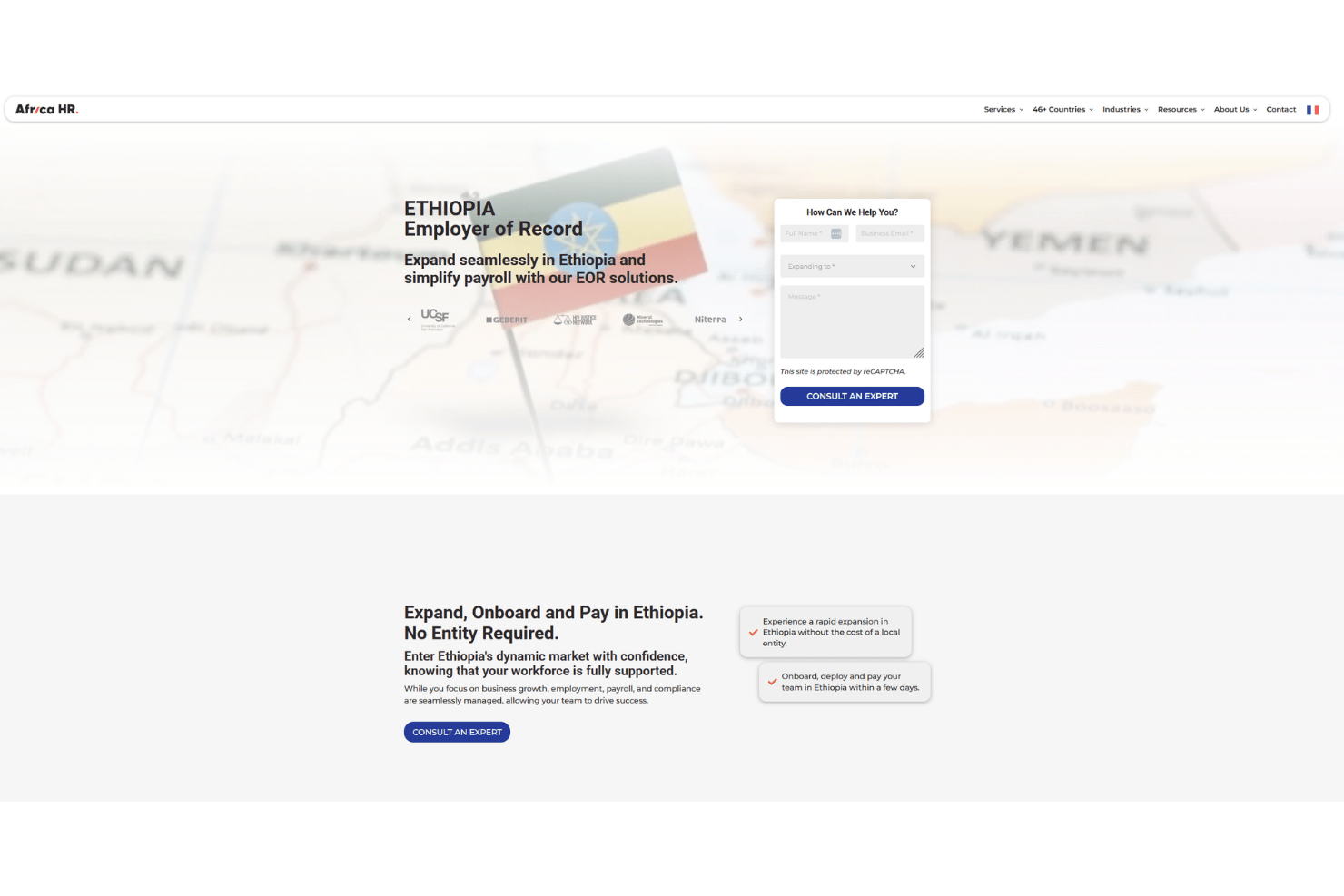
Africa HR Solutions is an Africa-only Employer of Record covering 46+ countries, including Ethiopia, with services spanning locally compliant employment contracts, statutory benefits administration, payroll processing, and work permit and immigration support.
Who Is Africa HR Solutions Best For?
Africa HR Solutions is a strong fit for NGOs and multinationals that need to hire across multiple African countries, including Ethiopia, under a single provider.
Why I Picked Africa HR Solutions
Africa HR Solutions earns its spot on my shortlist because it's the only Africa-only EOR on this list, covering 46+ countries including Ethiopia under one provider. I particularly value its built-in immigration support: end-to-end work permit processing is included with EOR, which matters when you're onboarding expatriate staff through the Ethiopian Investment Commission. Its NGO client roster, including VillageReach and Abt Global, gives it real credibility for international development organizations hiring across the continent.
Africa HR Solutions Key Features
- Statutory benefits administration: Africa HR manages Ethiopian pension contributions (11% employer, 7% employee), occupational injury insurance, maternity leave, and sick leave on your behalf.
- Employee life insurance: All EOR employees receive free life insurance coverage from day one, with no medical questionnaire required.
- Multi-currency payroll processing: Africa HR processes payroll across multiple currencies, which is useful when managing both local and expatriate staff in Ethiopia.
- Employee self-service portal: Staff hired through Africa HR's payroll service can access their own portal to view pay and employment information directly.
Africa HR Solutions Integrations
Africa HR Solutions has no publicly documented native integrations.
Pros and Cons
Pros:
- Optional pan-African health insurance with worldwide coverage
- Work permit processing included with EOR
- Ethiopia-specific statutory benefits administration
Cons:
- Conflicting leave and onboarding claims
- Ethiopian employing entity structure undisclosed

Best for entering via work permit sponsorship
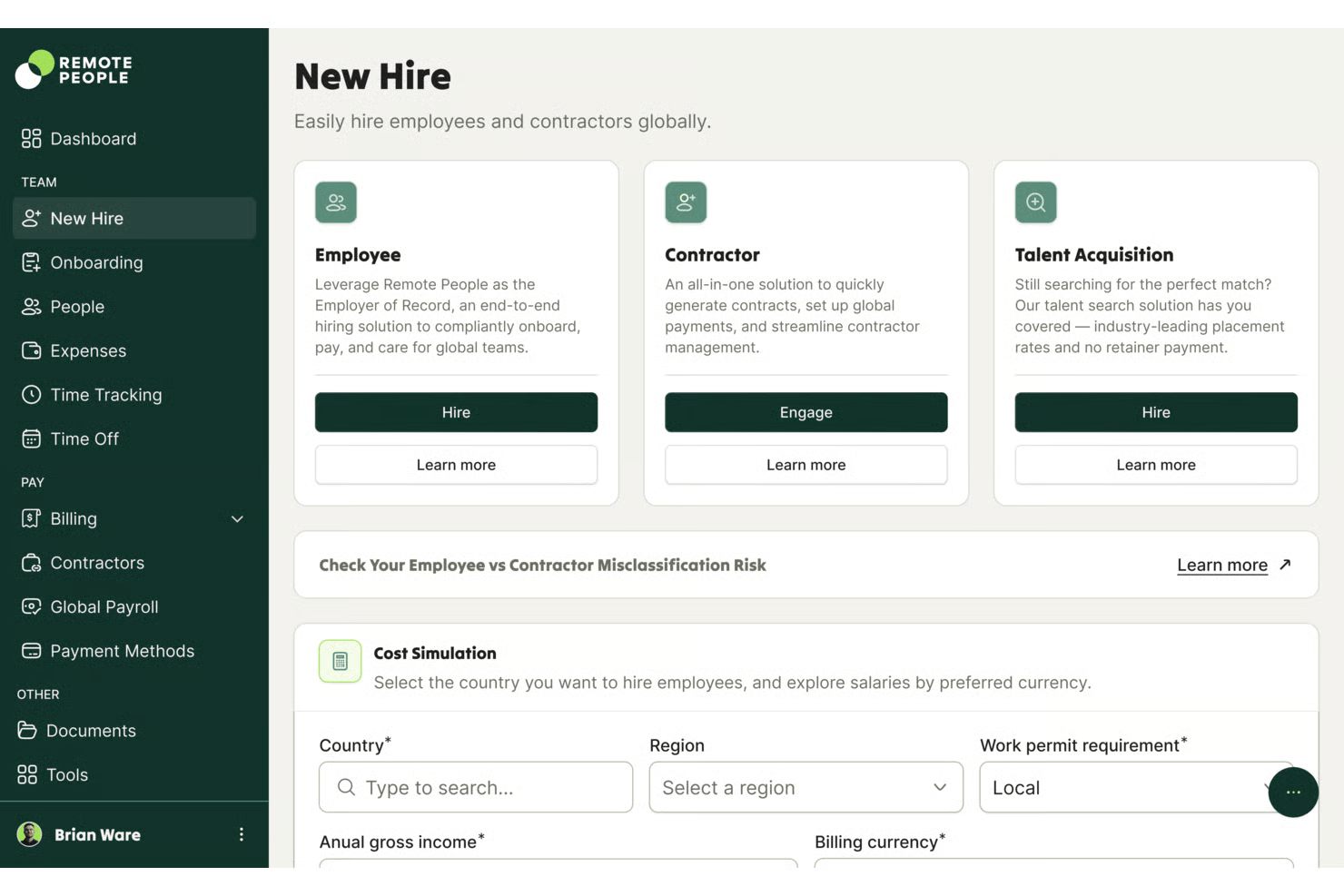
RemotePeople is a global Employer of Record platform that covers Ethiopian labor law compliance, payroll processing in birr, statutory benefits administration, employment contract generation, and work permit sponsorship for foreign hires.
Who Is RemotePeople Best For?
RemotePeople is a strong fit for companies hiring foreign nationals in Ethiopia, given its end-to-end work permit sponsorship and immigration support.
Why I Picked RemotePeople
I've included RemotePeople in my top picks because its end-to-end work permit sponsorship is genuinely rare in the Ethiopia EOR space. It handles both the Ministry of Labour and Skills work permit and the INVEA residence permit, including renewals, which matters when you're bringing a foreign national into a country with tight immigration controls. I also like that it generates bilingual contracts in Amharic and English and manages POESSA pension registration directly, so there's no gap between hiring and statutory compliance.
RemotePeople Key Features
- AI-assisted Command Center: Submit plain-English requests for payroll, leave, onboarding, and termination actions, with human expert review on high-impact changes and a full audit log.
- Progressive tax withholding and filing: RemotePeople withholds and remits Ethiopian income tax using progressive tax brackets, including the 2,000 ETB monthly exemption introduced in 2025.
- Monthly birr payroll with detailed payslips: Processes payroll in Ethiopian birr via bank transfer each month, providing itemized payslips that reflect deductions, pension contributions, and net pay.
- EOR-to-entity transfer support: RemotePeople offers assistance transitioning EOR employees to a company's own local entity, including contract updates and payroll migration, subject to country-specific requirements.
RemotePeople Integrations
RemotePeople integrates with ADP Workforce Now, BambooHR, Dayforce, and SAP SuccessFactors.
Pros and Cons
Pros:
- Local employment contracts and compliance support
- Manages POESSA registration and pension contributions
- Sponsors Ethiopian work and residence permits
Cons:
- Work permits may extend onboarding by 1–3 weeks
- Salaries and statutory contributions billed separately

Best for HRIS-integrated payroll
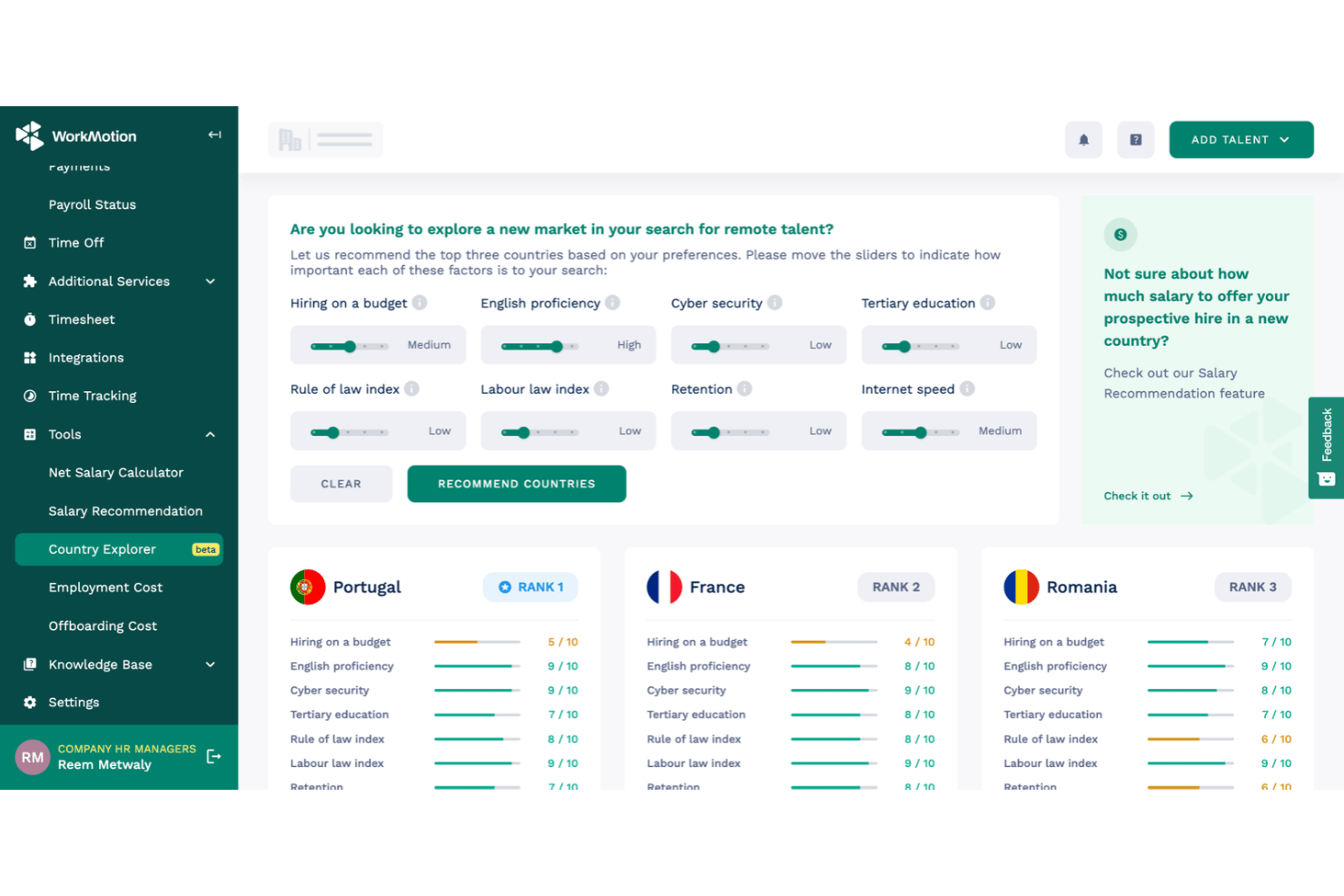
WorkMotion is an Employer of Record platform that handles Ethiopian payroll processing, statutory benefits administration, employment contract generation, and labor law compliance through a local partner network.
Who Is WorkMotion Best For?
WorkMotion is a strong fit for HR managers and startup founders who need to connect Ethiopian payroll directly into an existing HRIS like BambooHR, Personio, or Workday.
Why I Picked WorkMotion
I've included WorkMotion in my top picks because of how cleanly it connects Ethiopian payroll data to the HRIS tools HR teams already run, including BambooHR, Personio, and Workday. When you're processing monthly ETB payroll with PAYE withholding and POESSA contributions, having that data flow directly into your existing people system removes a lot of manual reconciliation. I also like that WorkMotion handles ERCA registration and tax remittance through its local partner network, so your compliance obligations in Ethiopia don't require a separate vendor or entity setup.
WorkMotion Key Features
- POESSA contribution management: WorkMotion handles Ethiopian pension registration and monthly contributions, including the 11% employer and 7% employee contributions.
- Offboarding workflow automation: The platform provides structured offboarding tools for both resignations and terminations, including cost calculators for estimating offboarding expenses.
- Work permit coordination: WorkMotion's local partner manages work permit applications with Ethiopia's Ministry of Labour and Social Affairs for foreign national employees.
- Wanda AI assistant: An AI tool built into the platform that you can use to navigate country-specific compliance questions and employment cost guidance.
WorkMotion Integrations
WorkMotion lists 25 integrations, including BambooHR, Personio, Workday, ADP Workforce Now, HiBob, and UKG Pro. These connections support linking Ethiopian payroll and employee data with existing HR systems.
Pros and Cons
Pros:
- Handles Ethiopian payroll, PAYE, and POESSA
- Ethiopian employment contracts ready in 3 days
- Payroll dashboard supports adjustments and approval tracking
Cons:
- Minimum three monthly EOR service fees per employee
- Relies on third-party employment partners in Ethiopia

G-P
Best for enterprise-scale hiring across 180+ countries
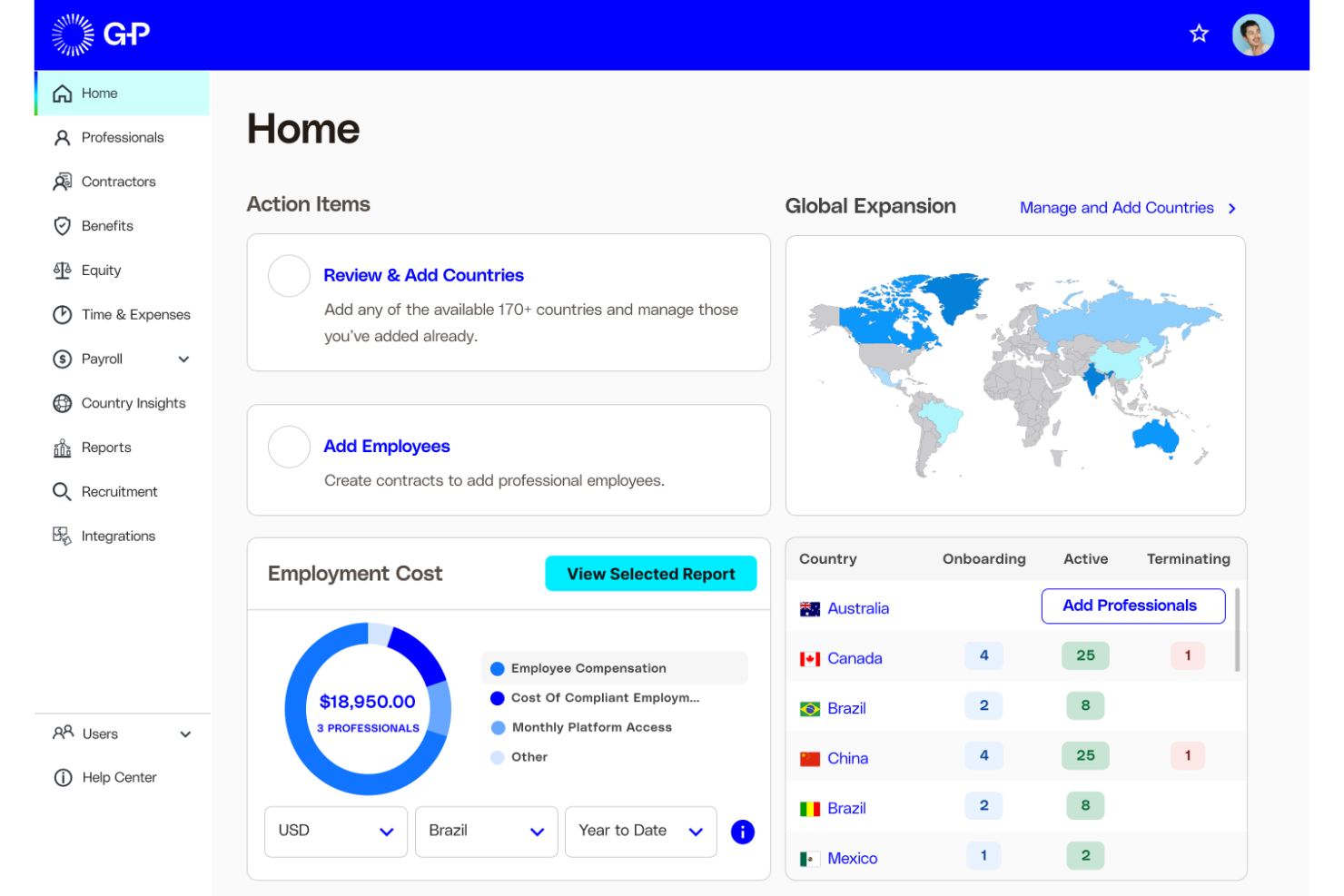
G-P is an Employer of Record platform that handles entity-based employment, payroll in Ethiopian birr, statutory benefits administration, and locally compliant contract generation across 180+ countries.
Who Is G-P Best For?
G-P is a strong fit for enterprise HR teams managing multi-country hiring at scale who need a single platform to handle payroll, benefits, and compliance across a large number of markets simultaneously.
Why I Picked G-P
I picked G-P as one of the best because its scale across 180+ countries is genuinely hard to replicate, and Ethiopia is a fully documented market within that network. I especially like that G-P generates locally compliant Ethiopian employment contracts at the platform level, covering statutory clauses around probation, leave, and severance without requiring your team to build those from scratch. The platform also handles pension contributions (11% employer, 7% employee). I also like G-P's flat-rate platform pricing, which provides predictable service fees and a breakdown of additional statutory employment costs, helping businesses plan their international hiring budgets.
G-P Key Features
- Multi-currency payroll processing: G-P pays employees in their local currency while clients fund payroll in one of 50+ supported currencies, with a single consolidated invoice each cycle.
- HR system integrations: G-P connects directly with platforms like Workday, SAP SuccessFactors, BambooHR, and UKG Pro, syncing employee data across your existing HR stack.
- AI-powered compliance monitoring: G-P Gia tracks regulatory changes across 50+ countries and sends alerts when local labor laws are updated, helping your team stay ahead of statutory shifts.
- Background check add-on: G-P offers background screening as a paid add-on within the platform, so you can run checks on candidates without coordinating a separate third-party service.
G-P Integrations
G-P integrates with BambooHR, HiBob, Personio, SAP SuccessFactors, UKG Pro, Workday, ADP Workforce Now, Paylocity, Google Workspace, Microsoft Entra ID, and Okta/Auth0. Its API supports custom integrations.
Pros and Cons
Pros:
- Ethiopia hiring sits within 180+ countries
- Handles ETB payroll and statutory benefits
- AI-powered employment contract generation
Cons:
- No Ethiopia visa or work-permit processing
- Published Ethiopia tax brackets appear outdated
Other Ethiopia Employers of Record
Here are a few additional options that didn’t make my shortlist but are still worth checking out:
- Papaya Global
For multi-currency payroll funding
- Payoneer Workforce Management
For contract generation with compliance
- Multiplier
For onboarding hires via owned entities
- RemoFirst
For low-cost EOR with no long-term contracts
- Pebl
For Baker McKenzie-reviewed compliance
- MaxisHR
For Africa-only EOR across hiring
- Africa Deployments
For Africa-only EOR with expat visa support
- Workforce Africa
For African HR expertise in hiring
- Gracemark
For human-led EOR with East Africa support


How I Evaluate Employers of Record in Ethiopia
I split my evaluation into three parts. First, core functionality: the provider must maintain a legal entity in Ethiopia and handle local labor law compliance—this carries the most weight. Then I look at standout features like multi-currency payroll funding. Beyond features, I evaluate pricing transparency and termination support.
Core Functionality (Table Stakes for This List)
When I'm selecting tools for my list, I score each one on a scale from 0 (does not offer the functionality) to 5 (excels in this area) for each core functionality listed below. I then convert the total into a percentage to help assess each tool's overall fit, with extra weight on any functionalities I've deemed essential.
- Local Legal Entity (Essential): I check whether the provider owns or partners with a registered entity in Ethiopia, since that's what allows them to legally employ workers on your behalf.
- Ethiopian Labor Law Compliance (Essential): I evaluate how well each provider handles leave entitlements, termination rules, and working-hour limits under Ethiopian labor proclamations.
- Local Payroll Processing: Accurate, on-time pay in Ethiopian birr matters, so I look for automated calculations, clear payslips, and transparent withholding breakdowns.
- Statutory Benefits Administration: Providers should manage pension and social security contributions without gaps, and I check whether employees can see their benefit details directly.
- Tax Filing and Remittance: I look for providers that calculate, file, and remit both employer and employee taxes to Ethiopian authorities on schedule with audit-ready records.
- Employment Contract Generation: Contracts need to reflect Ethiopian statutory terms, so I evaluate whether templates are fully localized and updated as local regulations change.
Once I have a list of tools that meet the criteria, I consider what sets each platform apart.
Differentiating Factors (What Sets Vendors Apart)
Here's how I compare and contrast different vendors:
Standout Features
I look for visa and work-permit support because hiring foreign talent into Ethiopia means navigating residency IDs and sponsorship requirements. Providers like RemotePeople and Africa Deployments handle this end to end, which matters when your hire isn't a local national. Multi-currency payroll funding is equally important—I check whether you can fund in USD while employees receive Ethiopian birr, and how transparent the FX fees are. Rapid onboarding timelines also set providers apart; some can get a new hire started in days rather than the weeks an entity setup typically requires.
Beyond Features
I evaluate how each provider handles Ethiopia's foreign exchange controls, since birr volatility and National Bank of Ethiopia regulations can inflate payroll costs without warning. Transparent FX fee structures matter—I check whether conversion markups are fixed or variable. Termination support is equally important because Ethiopian labor law favors employee protections, and providers that offer legal guidance during disputes or labor board proceedings reduce your risk exposure significantly.
How to Choose an Employer of Record in Ethiopia
Choose an Ethiopia EOR by matching the evidence you need on local employment, payroll, and support to your hiring plans.
| If your priority is… | Look for… |
|---|---|
| Confirming local employment | The legal employer’s name and Ethiopian registration evidence |
| Accurate payroll | A sample birr payslip with itemized tax and pension calculations |
| Hiring foreign nationals | Written scope for work-permit sponsorship and residency documentation |
| Predictable funding costs | A written USD-to-birr conversion method, FX fees, and funding deadlines |
How to Vet Your Shortlist
- Verify the employing entity: Request registration evidence and the legal employer’s name in writing before signing.
- Review localized documents: Ask for a sample employment contract and payslip, then confirm how each reflects current Ethiopian requirements.
- Test a payroll scenario: Send a sample salary and employee details, and request an itemized birr payroll calculation with tax and pension amounts.
- Clarify termination support: Request a contract clause explaining who handles termination steps, related fees, and any labor dispute support.
- Choose the service model: Decide between an EOR with its own Ethiopian entity and a partner-led local model; require the agreement to identify who carries employment responsibilities.
What Is an Employer of Record in Ethiopia?
An Ethiopia Employer of Record (EOR) is a third-party organization that legally employs a worker in Ethiopia on behalf of a client company. It typically manages the employment contract, payroll, and local compliance, while the client directs the worker’s day-to-day responsibilities. The exact services and employment arrangements vary, so confirm which entity employs the worker and who handles each obligation.
Features
Here are the core features I look for in an Ethiopia Employer of Record:
- Local employment: The provider or its named local partner employs your worker through a registered Ethiopian entity. Confirm the legal employer and registration before signing.
- Localized contracts: The provider prepares employment agreements that reflect Ethiopian requirements, including applicable terms for pay, leave, working hours, and termination. Ask how it updates templates when rules change.
- Payroll processing: The provider calculates salaries in Ethiopian birr, prepares payslips, and coordinates payment on an agreed schedule. Itemized calculations help you review deductions and resolve payroll questions.
- Tax administration: The provider calculates, files, and remits applicable employment taxes to Ethiopian authorities. Confirm which filings it handles and what records you’ll receive.
- Statutory benefits administration: The provider calculates and manages required pension or social security contributions. Clear records help you check that contributions are accounted for correctly.
- Labor law compliance: The provider advises on local employment requirements, such as leave, working hours, and termination procedures. This helps your team handle routine decisions and employee changes with local rules in mind.
- Work-permit support: For foreign hires, the provider clarifies whether it sponsors permits and assists with residency documentation. Confirm the scope, required documents, and who is responsible for each step.
- Payroll funding and currency conversion: The provider explains how you fund payroll and how funds convert to birr. Request the exchange-rate method, fees, and funding deadlines to estimate costs.
Benefits
Here are a few common benefits you can expect from an Ethiopia EOR:
- Local employment: A provider with a registered Ethiopian entity can employ your hire locally and clarify which organization carries the employment responsibilities.
- Labor law guidance: Localized contracts and advice on leave, working hours, and termination help your team follow Ethiopian employment requirements.
- Birr payroll: Payroll calculations and itemized payslips make it easier to review salary payments and deductions in Ethiopian birr.
- Statutory administration: Support with tax filings, remittances, and pension contributions helps your team track required employment obligations.
- Work-permit support: Some providers assist with permit sponsorship and residency documents for foreign hires, so you can confirm the steps and responsibilities upfront.
- Funding clarity: Written exchange-rate methods, FX fees, and funding deadlines help you estimate the cost of converting payroll funds into birr.
- Termination support: Guidance on termination procedures, fees, and labor disputes helps your team prepare for employee exits under local rules.
Costs and Pricing
Ethiopia EOR fees vary by provider and service scope. Typical service fees are about $300–$800 per employee per month, separate from salary and employer costs.
Plan Comparison Table for Ethiopia Employer of Record Services
EOR services are generally priced per employee, rather than through standard free, personal, business, and enterprise plans. The table maps common pricing expectations to the requested plan types.
| Plan Type | Average Price | Common Features |
|---|---|---|
| Free Plan | Not typically offered | No EOR employment, no payroll administration, and no local compliance support. |
| Personal Plan | Not typically offered | No standard personal tier, no employee payroll service, and no employer representation. |
| Business Plan | $300–$800 per employee/month | Local employment administration, payroll processing, and compliance support. |
| Enterprise Plan | Custom quote; often within or above the typical range | Multi-employee administration, tailored service scope, and dedicated support. |
FAQs
Here are answers to common questions about Ethiopia Employer of Record services.
Can an Ethiopia EOR employ foreign nationals?
Yes, an Ethiopia EOR may support hiring foreign nationals, but confirm its permit and sponsorship services before you proceed. Ask whether it sponsors work permits, assists with residency documentation, or only advises your team. Request a written list of required documents, fees, and expected steps. Also confirm who handles each application and whether the worker can start before approvals are complete. These details can affect your hiring timeline and the responsibilities your HR team must manage.
How long does it take to hire through an EOR in Ethiopia?
There isn’t one standard timeline; it depends on the provider’s employment model, document checks, and whether the hire needs a work permit. Ask the provider for a written timeline covering contract preparation, registration, payroll setup, and any permit steps. Confirm what information your team must submit and when payroll funding is due. If the provider uses a local partner, ask whether that affects the start date. Get the anticipated start date in writing before making commitments to the employee.
What should I confirm before ending an employee’s contract through an EOR?
Ask the EOR to explain the required termination steps, notice requirements, final pay calculations, and any applicable fees before you communicate a decision. Confirm who prepares employee notices, manages records, and provides guidance if the employee disputes the termination. Request the relevant contract terms and a written outline of responsibilities. Don’t assume your company can end the arrangement without the EOR’s involvement: the named legal employer may need to handle formal employment actions under local requirements.
Can an Ethiopia EOR support a long-term hire?
Yes, an EOR can be an option for a long-term hire, but check that its service scope fits your plans. Ask whether the provider can continue payroll, tax administration, statutory contributions, and employee support for the expected employment period. Confirm how it handles changes to salary, role, or work location, and whether its fees or terms change over time. If you may later establish a local entity, ask what transferring the employee would involve and who would manage the transition.