

10 best employers of record south africa in 2026

Best Employers of Record in South Africa Shortlist


An employer of record in South Africa allows businesses to hire employees without establishing a local legal entity. These providers manage employment contracts, payroll processing, statutory tax contributions, and local compliance requirements.
This guide compares South African EOR providers based on their HR support, hiring and contractor conversion services, termination assistance, and pricing to help you find a provider that meets your workforce needs.
Why Trust Our Software Recommendations
Our team has been testing and reviewing software since 2012. As HR experts ourselves, we know how difficult—and important—it is to choose the right software.
For this guide, we evaluated tools using hands-on testing and independent research, scoring tools using our selection criteria. We also draw on insights from industry thought leaders and practicing HR experts.
Our reviews reflect our human editorial judgment, not a sales pitch.
Expert reviewers:
Comparison Table: Employers of Record in South Africa
Compare pricing and specs side by side for the employers of record in South Africa that made it onto my shortlist.
| Tool | Best For | Trial Info | Price | ||
|---|---|---|---|---|---|
| 1 | Best for South Africa hiring cost estimates | Free demo available | From $319/user/month | Website | |
| 2 | Best for South African contractor conversion | Free demo available | From $599/user//month | Website | |
| 3 | Best for contractor-to-employee conversions | Free demo available | From $199/user/month | Website | |
| 4 | Best for South African payroll and SARS filings | Free demo available | From $299/user/month | Website | |
| 5 | Best for recruitment-led South Africa hiring | Free demo available | From $199/user/month | Website | |
| 6 | Best for upfront EOR pricing | Free demo available | From $599/user/month | Website | |
| 7 | Best for hands-on South African HR support | Free demo available | Pricing upon request | Website | |
| 8 | Best for South African termination and severance | Free demo available | From $599/employee/month | Website | |
| 9 | Best for owned-entity hiring with indemnity | Free demo available | From $699/user/month | Website | |
| 10 | Best for consistent EOR fees across markets | Free demo available | From $599/user/month | Website |


Employers of Record South Africa Reviews
Below are my summaries of the best employers of record in South Africa from my shortlist. These reviews cover local HR support, payroll, and pricing to help you choose an employer of record service that fits your team.

Best for South Africa hiring cost estimates
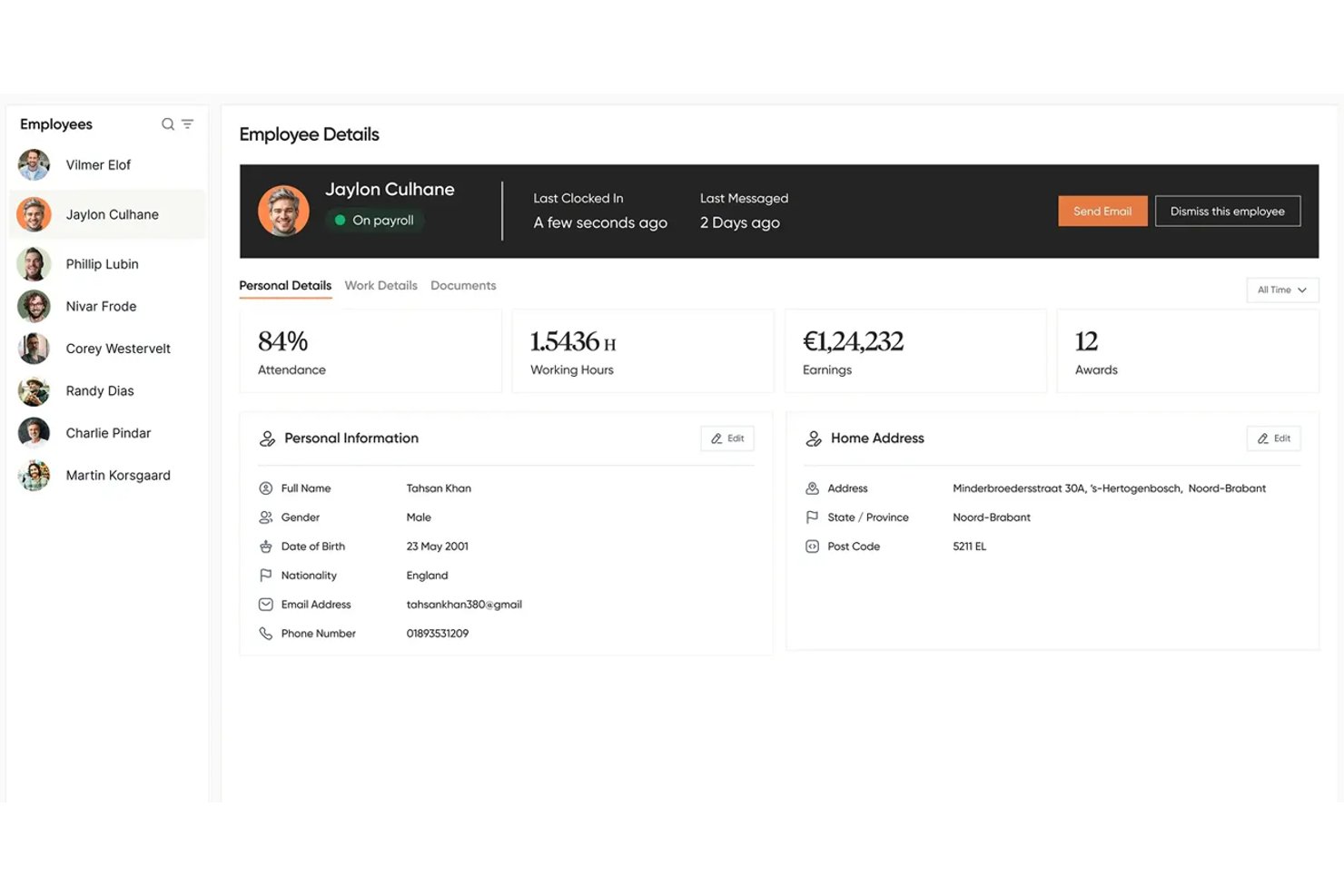
Rivermate is a global employer of record platform that manages employment contracts, local payroll, statutory deductions, and benefits administration in South Africa. It also offers contractor management and immigration support, allowing companies to hire workers without establishing a local legal entity.
Who Is Rivermate Best For?
Rivermate is suited to startup founders and HR managers who need employment cost estimates and local compliance support when planning to hire employees in South Africa.
Why I Picked Rivermate
I picked Rivermate for its employment cost estimation process and transparent EOR pricing structure. Before onboarding employees, businesses receive a breakdown of expected employment expenses, including salaries, applicable statutory contributions, and Rivermate's management fee. This allows HR and finance teams to review projected hiring costs before approving employment contracts. Rivermate also provides country-specific guidance on South African employment requirements, including payroll obligations, employee benefits, and termination procedures.
Rivermate Key Features
- Contractor-to-employee conversion: Supports transitioning existing contractors into formal employment arrangements through its employer of record services, with worker classification support available through its separate Contractor of Record offering.
- ZAR payroll with statutory deductions: Manages monthly payroll in South African rand (ZAR), including applicable PAYE withholding, Unemployment Insurance Fund (UIF) contributions, Skills Development Levy (SDL), and statutory reporting requirements.
- Work permit and visa management: Supports employment-related visa applications, documentation collection, and immigration processes, with employees added to local payroll after the necessary authorization is obtained.
- Dedicated account manager: Assigns clients an account manager who provides assistance with employment contracts, payroll administration, onboarding, and local compliance questions.
Rivermate Integrations
Integrations are not listed by Rivermate.
Pros and Cons
Pros:
- Supports contractor classification risk management
- Dedicated human account management
- Provides detailed pre-hire cost estimates
Cons:
- Immigration services require separate quotes
- Global health insurance not standard

Best for South African contractor conversion
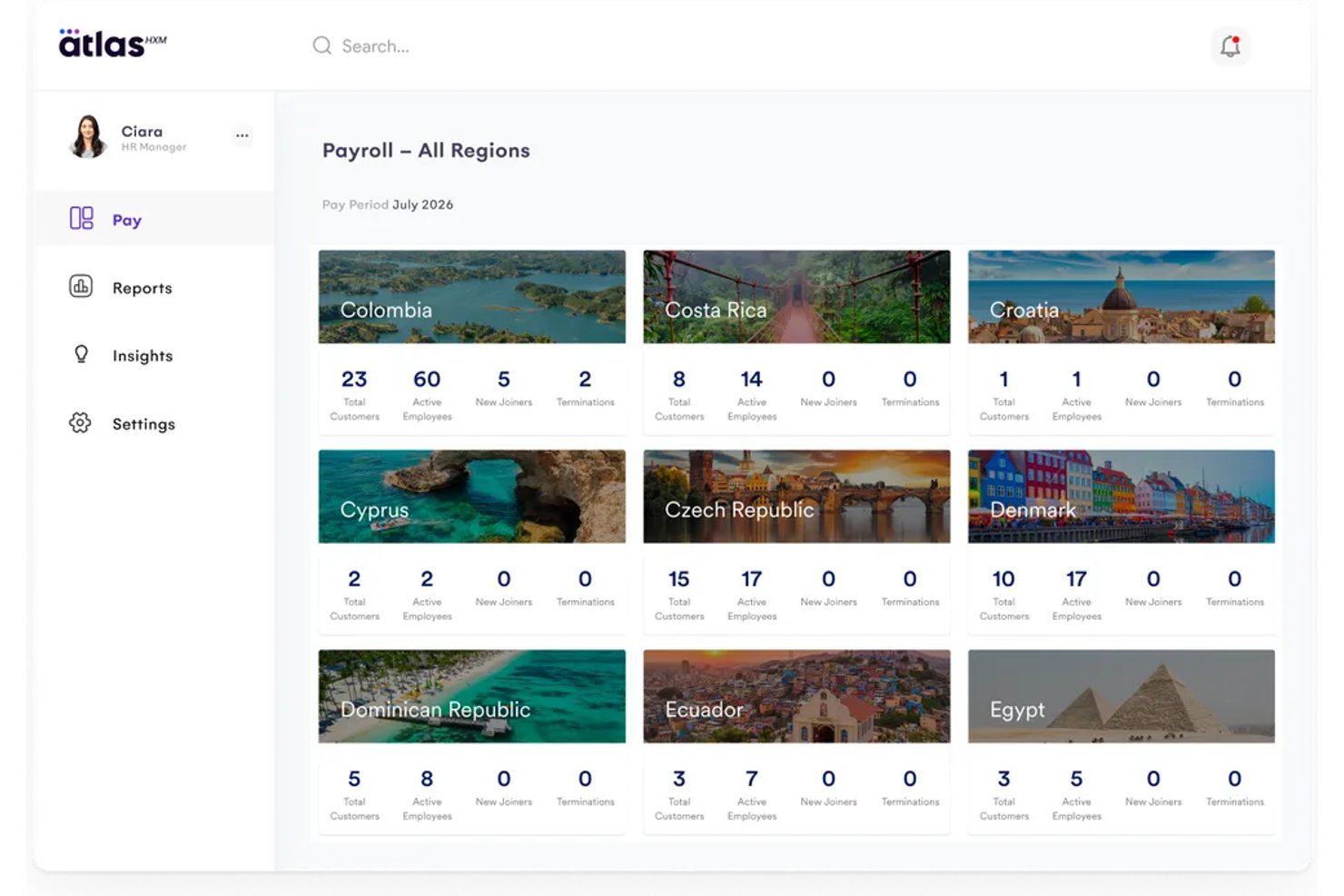
Atlas HXM is a direct employer of record platform that manages employment contracts, local payroll, benefits administration, and contractor-to-employee transitions in South Africa. Its services extend to more than 160 countries, allowing businesses to manage international employees without establishing local legal entities.
Who Is Atlas HXM Best For?
Atlas HXM is suited to HR and talent acquisition teams that need to transition South African contractors into formal employment arrangements while managing worker classification, payroll, and local compliance requirements.
Why I Picked Atlas HXM
I picked Atlas HXM for its combination of contractor classification assessments and direct employer of record services. Its Agent of Record (AOR) service helps businesses assess worker classification risks before transitioning contractors into employee roles. The service includes Classification Protection of up to $100,000 per contractor, subject to eligibility requirements and contractual terms. Atlas also operates its own legal entities in supported markets, allowing companies to manage employment contracts, payroll, and local compliance through its direct EOR model.
Atlas HXM Key Features
- Direct EOR entity: Employs workers through its locally operated legal entity in South Africa, providing a single provider for employment contracts, payroll, and compliance administration.
- BCEA-compliant contract generation: Prepares employment contracts that address South Africa's Basic Conditions of Employment Act requirements, including compensation, leave entitlements, and notice periods.
- Employee self-service portal: Allows employees to access employment documents, manage time-off requests, and review benefits through the web platform and mobile app.
- Multi-country Africa coverage: Supports employer of record services in South Africa, Nigeria, Ghana, and Kenya through its global employment platform.
Atlas HXM Integrations
Atlas HXM supports single sign-on (SSO) with Okta, Microsoft, and Google Workspace.
Pros and Cons
Pros:
- Offers employee self-service mobile access
- Includes contractor classification protection
- Directly operates South African entities
Cons:
- Visa sponsorship requires separate add-on
- Does not provide candidate recruitment

Gloroots
Best for contractor-to-employee conversions
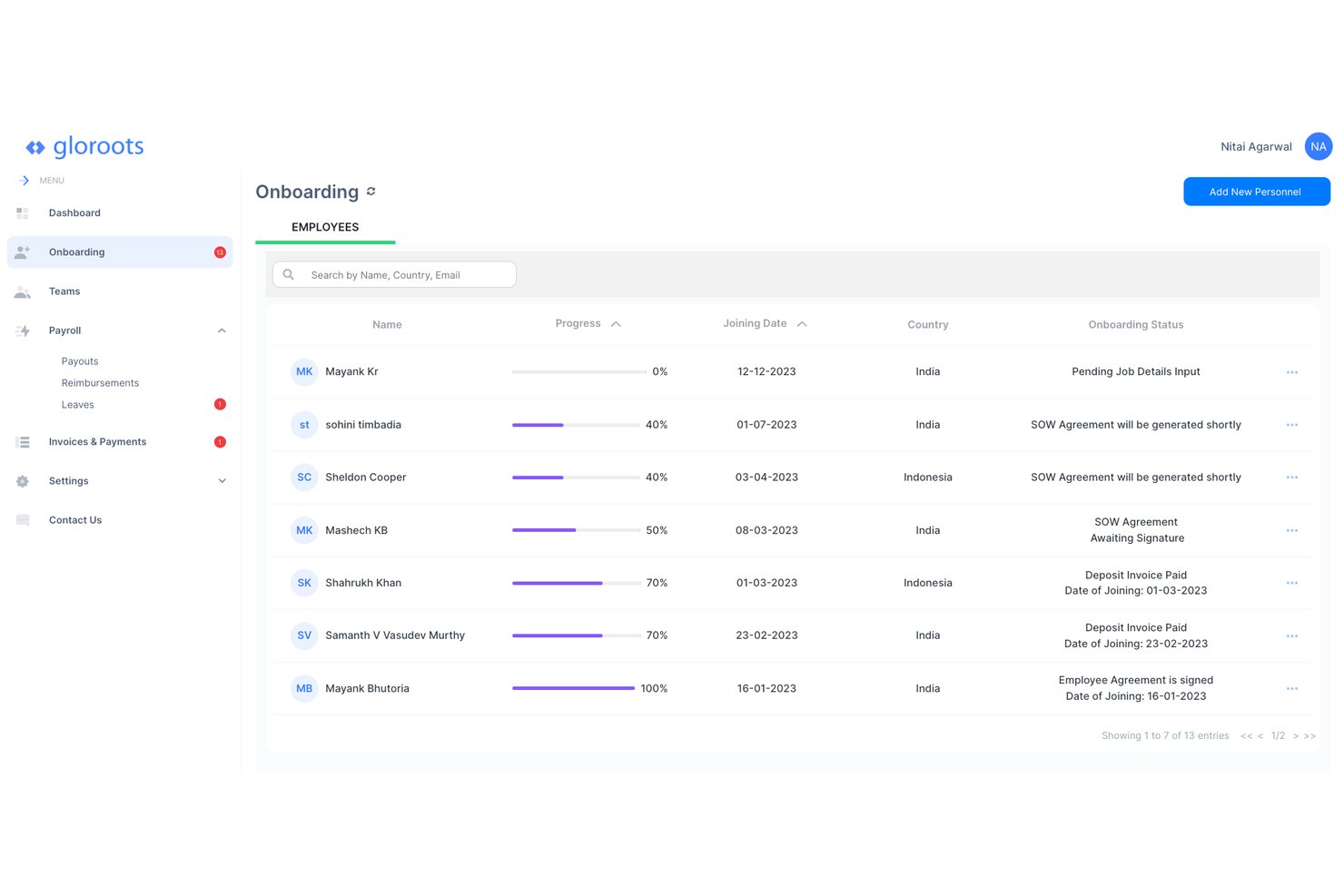
Gloroots is an employer of record platform that manages employment contracts, payroll processing, statutory tax filings, and contractor-to-employee conversions in South Africa. It allows companies to hire local employees without establishing their own South African legal entity.
Who Is Gloroots Best For?
Gloroots is suited to talent acquisition and HR teams looking to convert independent contractors into full-time employees under South African employment regulations without establishing a local entity.
Why I Picked Gloroots
I picked Gloroots for its contractor-to-employee conversion services and worker classification support. Its free Misclassification Risk Calculator helps businesses assess whether existing contractor arrangements may present employment classification risks. Gloroots also offers a Contractor of Record service that assumes responsibility for contractor classification and related compliance obligations. When transitioning contractors into full-time roles, its employer of record service manages employment contracts, payroll registration, and statutory contributions under South African employment requirements.
Gloroots Key Features
- PAYE and UIF payroll processing: Manages monthly payroll in South African rand (ZAR), including PAYE withholding, UIF contributions, applicable statutory levies, and SARS reporting requirements.
- CCMA dispute support: Provides assistance with employment disputes referred to the Commission for Conciliation, Mediation and Arbitration (CCMA), including representation and compliance documentation.
- Misclassification Risk Calculator: Offers a free assessment tool that evaluates contractor arrangements based on employment classification factors and identifies potential risks.
- Section 189 offboarding support: Supports retrenchment consultations, severance calculations, statutory notice requirements, and employment termination documentation under South African labor law.
Gloroots Integrations
Gloroots offers API-based integration options for connecting its workforce management services with external systems.
Pros and Cons
Pros:
- Supports Section 189 retrenchment procedures
- Assumes contractor classification compliance responsibility
- Free contractor misclassification risk calculator
Cons:
- Specialized compliance support costs extra
- Custom benefits require additional services
Mercans
Best for South African payroll and SARS filings
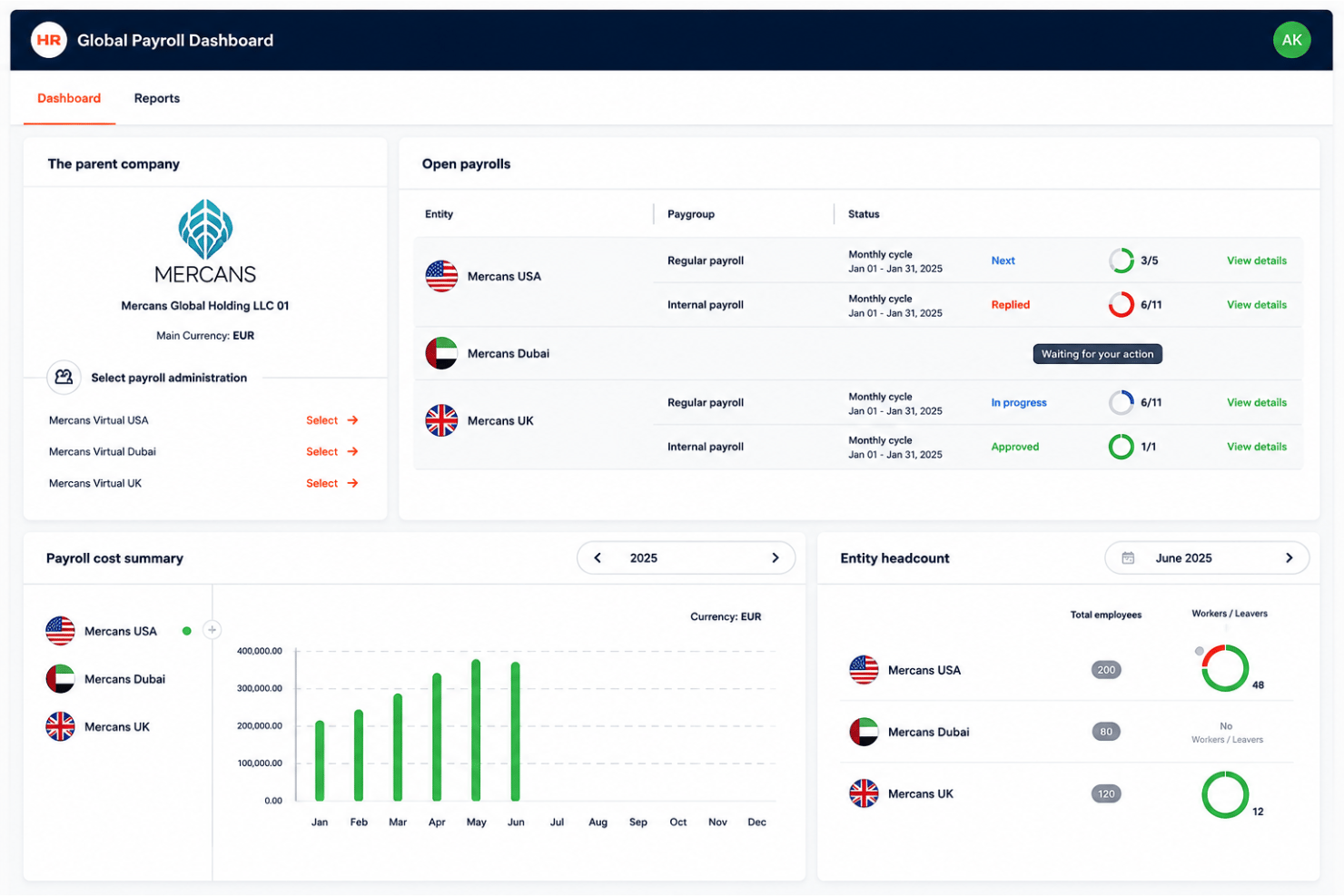
Mercans is an employer of record and payroll provider that manages employment contracts, payroll processing, SARS tax filings, and statutory contributions in South Africa. Its services also cover employee onboarding, benefits administration, and contractor-to-employee conversions.
Who Is Mercans Best For?
Mercans is suited to HR directors and payroll teams that need support with South African employment regulations, SARS filings, and statutory contributions, including PAYE, UIF, and SDL.
Why I Picked Mercans
I picked Mercans for its South African payroll capabilities and support for statutory tax reporting. Its payroll services cover monthly EMP201 declarations and twice-yearly EMP501 reconciliations, with integration support for SARS eFiling and e@syFile. The provider also monitors regulatory changes, including updates to minimum wage requirements and payroll reporting rules. Additionally, Mercans combines local payroll administration with employer of record services, allowing businesses to manage employment contracts, statutory contributions, and employee records through a single provider.
Mercans Key Features
- Contractor-to-employee conversion: Supports transitioning independent contractors into formal employment arrangements, including worker classification, employment documentation, and local compliance requirements.
- Employee self-service portal: Allows employees to access payslips, update personal information, manage leave requests, and submit expense claims through the HR Blizz platform.
- Multi-currency payments: Supports payroll payments in 103 currencies, allowing businesses to manage employee compensation across multiple countries.
- Workday integration: Provides bi-directional data exchange between Workday and HR Blizz, allowing HR records and payroll results to be synchronized across systems.
Mercans Integrations
Integrations includes Workday, HiBob, and XperienceHR, along with API-based connections for additional HR and payroll systems.
Pros and Cons
Pros:
- Supports contractor-to-employee conversions
- Provides EMP501 payroll reconciliation support
- Supports automated EMP201 tax declarations
Cons:
- SSO requires separate technical scoping
- Payroll Admin Console English-only

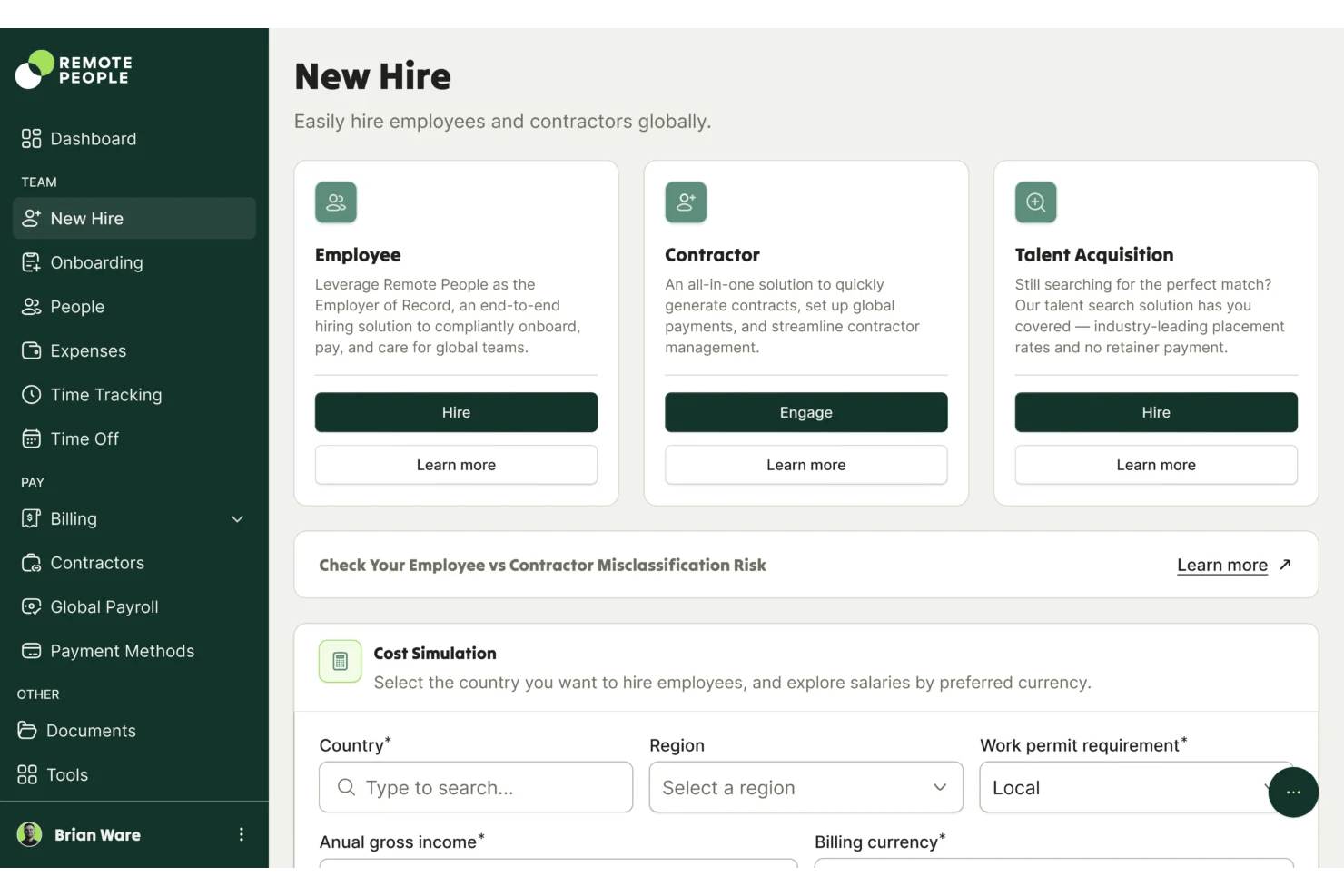
Remote People is an employer of record service that manages South African employment contracts, local payroll, statutory contributions, and benefits administration. It also offers recruitment services, allowing companies to source candidates and employ them through a single provider without establishing a local entity.
Who Is Remote People Best For?
Remote People is suited to startups and growing companies looking to hire employees in South Africa without establishing a local entity, particularly those requiring recruitment assistance alongside employment administration.
Why I Picked Remote People
I picked Remote People for its combination of recruitment and employer of record services in South Africa. Its Recruit + EOR offering connects businesses with pre-screened candidates before transitioning selected hires into formal employment arrangements. Remote People then manages employment contracts, payroll registration, statutory contributions, and onboarding requirements under South African employment regulations. The provider also offers dedicated account management throughout recruitment and employment administration, allowing businesses to coordinate both processes through one service.
Remote People Key Features
- BCEA-compliant contract drafting: Prepares employment contracts covering job responsibilities, compensation, leave entitlements, notice periods, and statutory deductions in accordance with South African employment requirements.
- Statutory contributions management: Handles PAYE withholding, Unemployment Insurance Fund (UIF) contributions, Skills Development Levy (SDL) payments, and applicable statutory reporting requirements.
- Contractor misclassification assessment: Reviews existing contractor arrangements against South African worker classification requirements and supports transitions into formal employment contracts when appropriate.
- Employee self-service dashboard: Allows employees to access payslips, manage personal information, submit leave requests, and review employment-related documents through the platform.
Remote People Integrations
Remote People supports HRIS integrations with Workday, BambooHR, HiBob, Personio, and Dayforce.
Pros and Cons
Pros:
- Supports contractor-to-employee transitions
- Provides dedicated recruitment account management
- Combines recruitment and EOR services
Cons:
- Non-compete clauses face EOR restrictions
- Regulated professions cannot be onboarded

Best for upfront EOR pricing
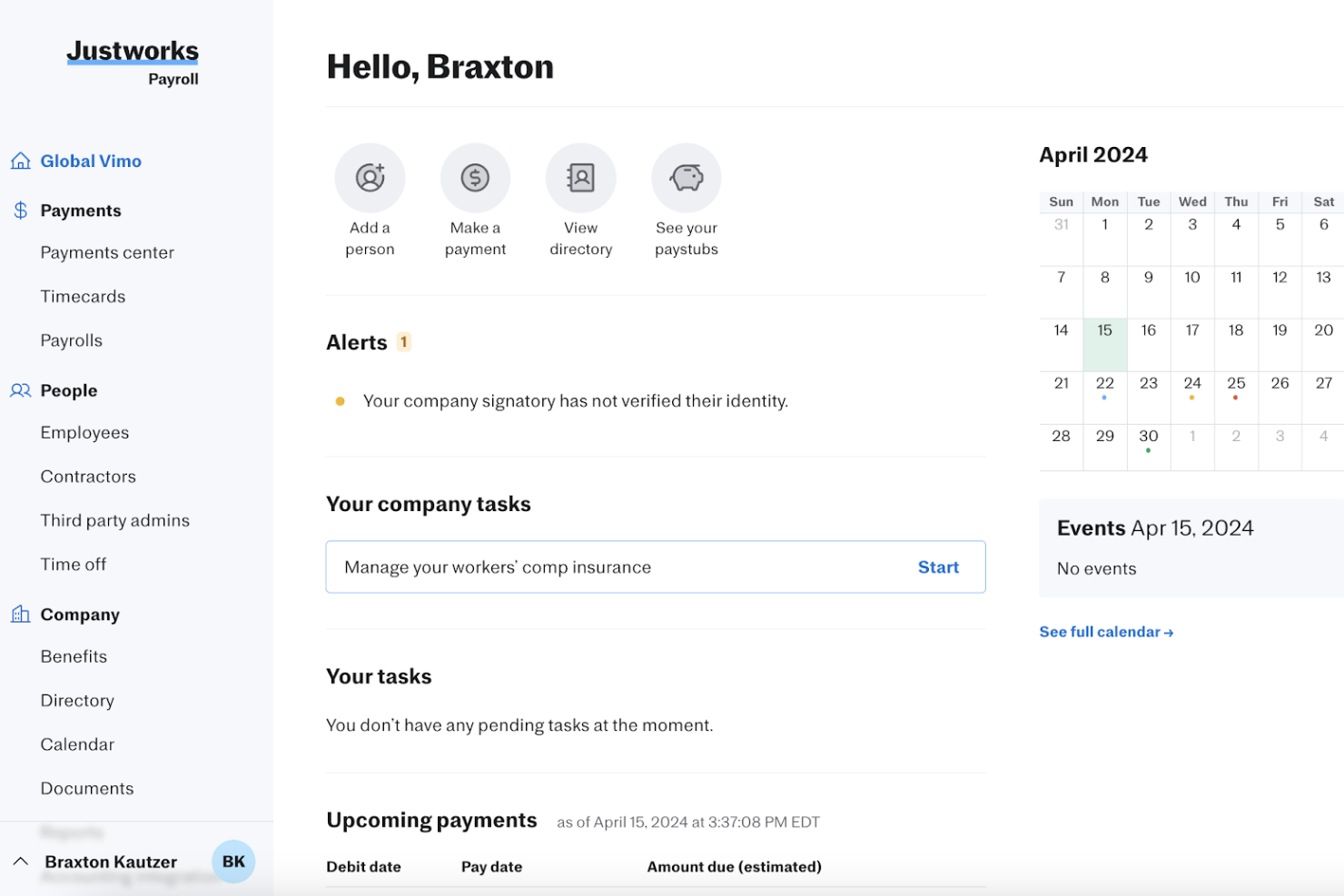
Justworks is an employer of record platform that allows companies to hire and pay employees in South Africa without establishing a local entity. Its services include employment contracts, local payroll processing, statutory benefits administration, and termination support. The platform also supports international hiring across more than 35 countries.
Who Is Justworks Best For?
Justworks is suited to small businesses hiring their first international employees in South Africa, particularly those looking for published EOR pricing, employment cost estimates, and guided onboarding.
Why I Picked Justworks
I picked Justworks for its published EOR pricing and employment cost estimation tools. Its standard fee of $599 per employee per month provides a clear starting point for budgeting, while the built-in International Cost Calculator estimates country-specific employment expenses before hiring. These estimates help businesses account for local statutory contributions and other employment costs beyond the EOR service fee. Justworks also provides itemized monthly invoices and local compliance support for businesses managing employees in South Africa.
Justworks Key Features
- Statutory benefits administration: Manages South African statutory employment requirements, including Unemployment Insurance Fund (UIF) contributions and applicable workers' compensation coverage.
- International cost calculator: Estimates country-specific employment expenses, including salary, statutory contributions, and other applicable employer costs before hiring.
- Employee self-service portal: Allows employees to complete onboarding tasks, access employment documents, and manage time-off requests through the Justworks platform.
- Guided termination workflow: Provides a Request Separation workflow for employee offboarding, with Justworks reviewing termination requests and coordinating applicable notice periods and final employment requirements.
Justworks Integrations
Justworks supports integrations with QuickBooks Online, Xero, NetSuite, Brex, Ramp, Carta, and Culture Amp.
Pros and Cons
Pros:
- Guided employee onboarding and offboarding
- Built-in international employment cost calculator
- Published flat-rate EOR service fees
Cons:
- Immigration assistance requires additional services
- Terminations can require multiple weeks

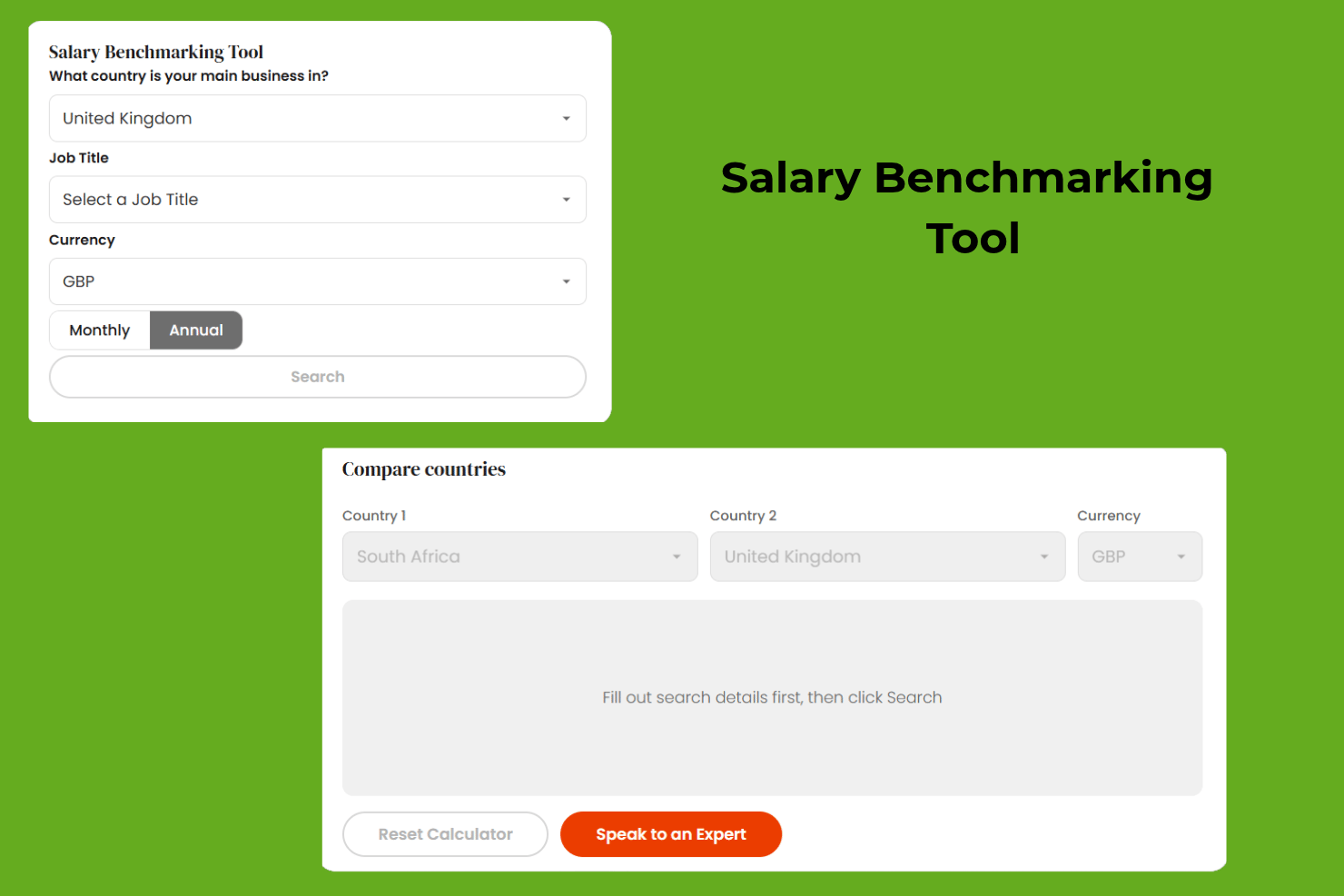
Legends EOR is a South Africa-focused employer of record service that manages local payroll, employment contracts, employee onboarding, terminations, and compliance with the Basic Conditions of Employment Act (BCEA) and Labour Relations Act (LRA). The company operates through a registered South African legal entity and provides support for disputes referred to the Commission for Conciliation, Mediation and Arbitration (CCMA).
Who Is Legends EOR Best For?
Legends EOR is suited to HR directors and startup founders who need local support for hiring, employment compliance, and dispute management in South Africa.
Why I Picked Legends EOR
I picked Legends EOR for its hands-on approach to South African HR administration and employment compliance. The provider offers local HR support for managing employment contracts, payroll, and requirements under the BCEA and LRA. Its team also handles CCMA disputes as the legal employer, providing representation when employment disagreements escalate. Additionally, its contractor-to-employee conversion service helps businesses assess worker classification and transition contractors into formal employment arrangements.
Legends EOR Key Features
- Contractor-to-employee conversion: Assesses worker classification and manages the transition from contractor arrangements to formal employment contracts.
- Multi-currency invoicing: Provides a consolidated monthly invoice in the client's preferred currency while processing employee payments in South African rand (ZAR).
- Employee benefits administration: Manages enrollment, payroll deductions, and provider payments for medical aid, retirement plans, and group risk cover.
- Salary benchmarking tool: Allows businesses to compare salary ranges for different roles across more than 100 countries, including South Africa.
Legends EOR Integrations
Integrations are not listed by Legends EOR.
Pros and Cons
Pros:
- Offers local IT equipment support
- Supports contractor-to-employee conversions
- Dedicated local HR compliance specialists
Cons:
- No self-service management platform
- EOR coverage limited to South Africa

Best for South African termination and severance
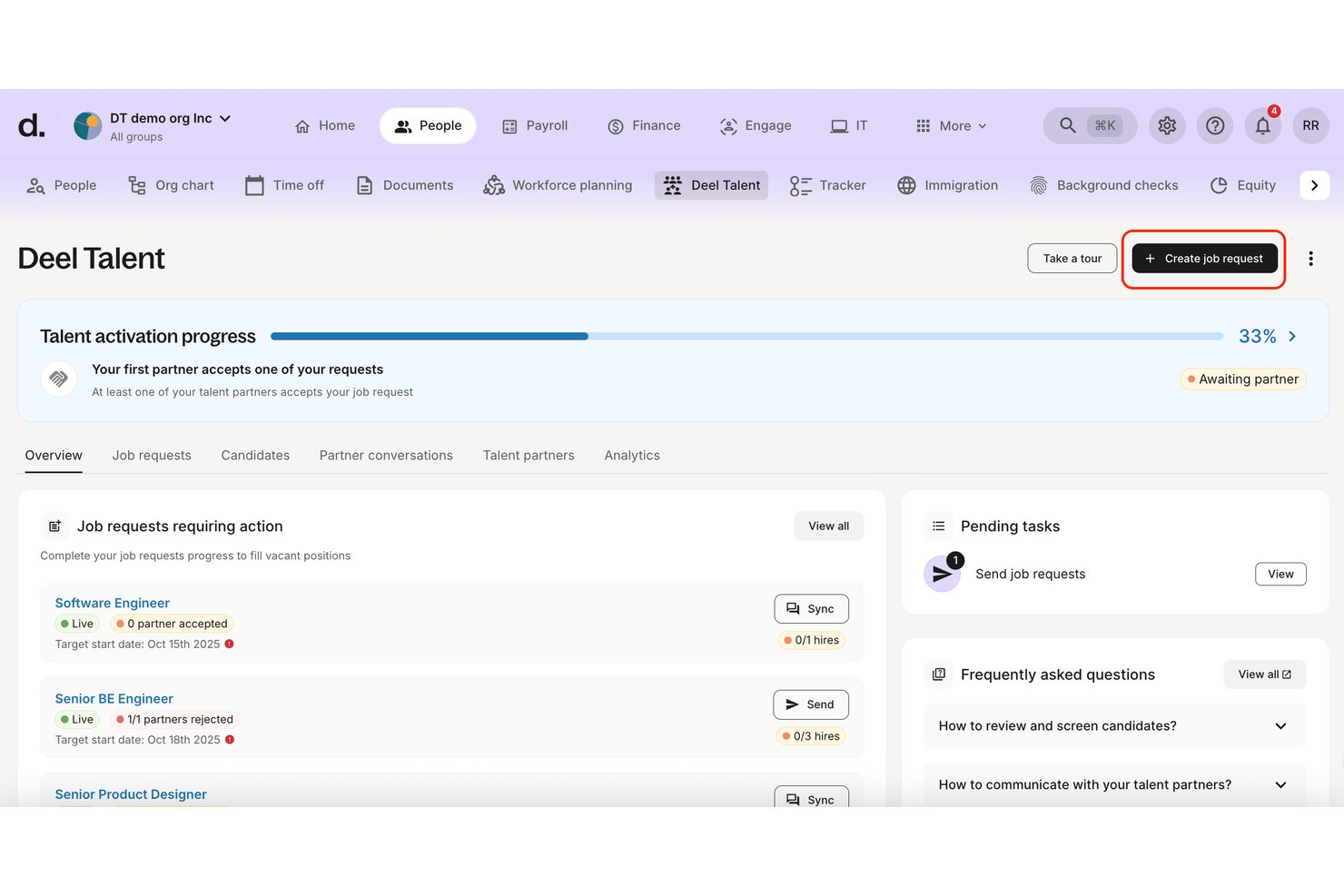
Deel Hire is a global employer of record platform that enables companies to hire full-time employees in South Africa without establishing a local entity. Its services include payroll processing in South African rand (ZAR), statutory benefits administration, tax filings, and employment termination support.
Who Is Deel Hire Best For?
Deel Hire is suited to global mobility managers and HR directors who need support with hiring and offboarding employees in South Africa, particularly those managing local termination procedures, notice periods, and severance obligations.
Why I Picked Deel Hire
I picked Deel Hire for its structured approach to employee termination and offboarding in South Africa. When employers initiate a termination request, Deel reviews the circumstances and proposed end date against applicable employment regulations. Its local HR specialists provide guidance on notice periods, severance entitlements, and required documentation, while its legal team can assist with more complex cases. Deel also offers an Offboarding Assistant that provides country-specific requirements, termination cost estimates, and employee offboarding information within the platform.
Deel Hire Key Features
- ZAR payroll processing: Manages monthly payroll in South African rand (ZAR), including applicable PAYE withholding, statutory deductions, and payroll tax documentation.
- Statutory benefits administration: Administers statutory contributions such as the Unemployment Insurance Fund (UIF), Skills Development Levy (SDL), and workers' compensation, with additional health insurance options available.
- South African cost calculator: Estimates employment expenses in South Africa, including salary, employer contributions, benefits, and applicable service fees.
- Multi-country African EOR coverage: Supports employee hiring and employment administration across South Africa, Nigeria, Kenya, Egypt, and other supported African markets.
Deel Hire Integrations
Deel offers marketplace integrations with BambooHR, HiBob, Personio, Workday, NetSuite, QuickBooks, Xero, Greenhouse, and Ashby.
Pros and Cons
Pros:
- Calculates estimated employment costs
- Provides country-specific offboarding guidance
- Reviews employee termination dates
Cons:
- EOR leave policies restrict customization
- Terminations require Deel's approval

Remote
Best for owned-entity hiring with indemnity
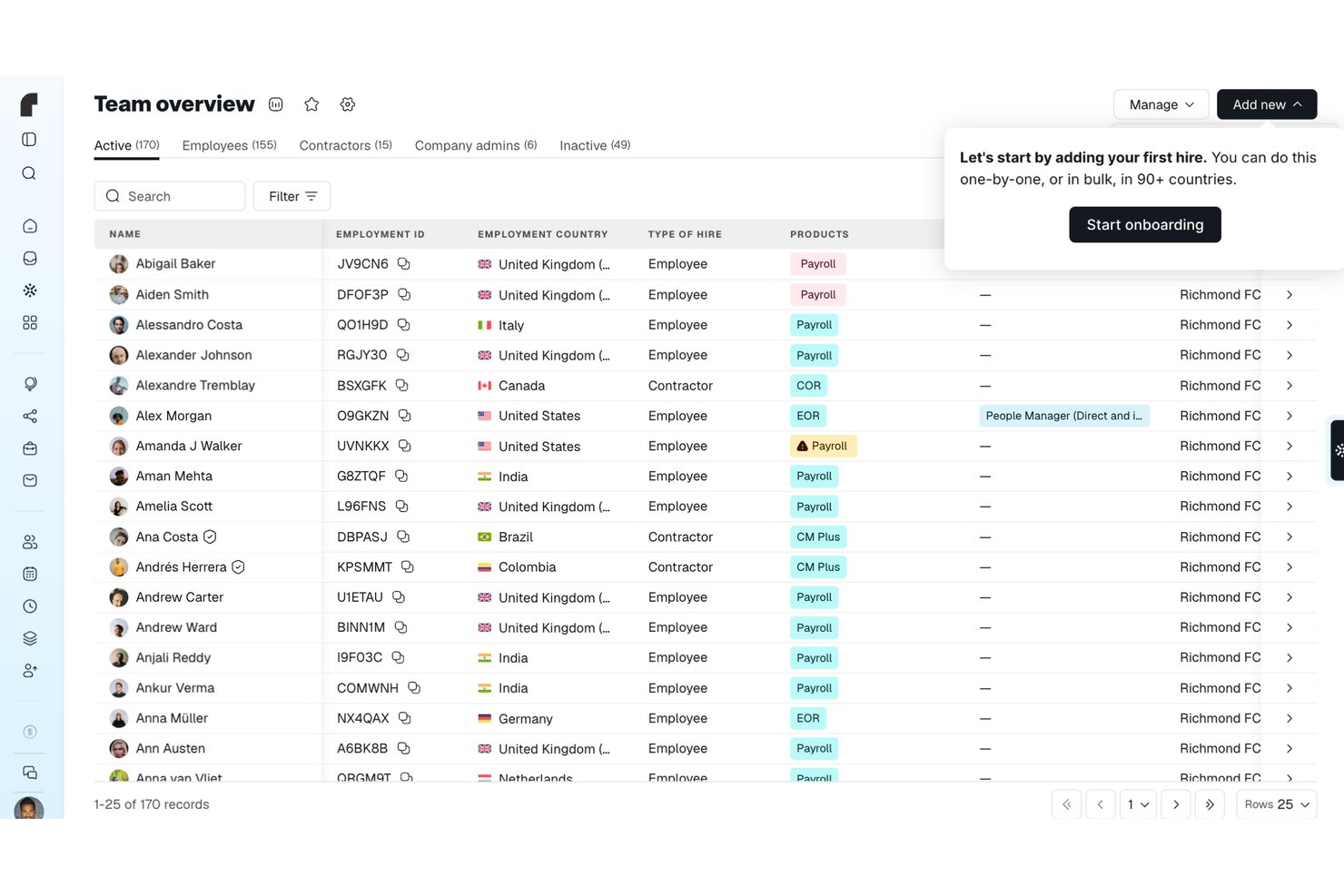
Remote is an employer of record and payroll provider that enables companies to hire full-time employees in South Africa through its locally owned legal entity. Its services include employment contracts, payroll processing, tax contributions, and benefits administration.
Who Is Remote Best For?
Remote is suited to companies looking to hire full-time employees in South Africa without establishing a local legal entity, particularly those prioritizing direct entity ownership and uncapped compliance indemnification.
Why I Picked Remote
I picked Remote for its directly owned South African legal entity and in-house employment services. Unlike providers that rely on local third-party partners, Remote manages employment contracts, payroll, and compliance through its own infrastructure. Its unlimited indemnification covers obligations associated with its employer of record services, providing contractual protection against certain compliance-related liabilities. Remote also offers local employment expertise to support payroll inquiries, contract changes, and employee terminations.
Remote Key Features
- Compliance Watchtower: Monitors employment law changes across supported countries and provides updates and recommended actions within the platform.
- Contractor-to-employee conversion: Supports transitioning contractors to employees through eligibility checks, employment contract preparation, payroll setup, and benefits enrollment.
- Multi-currency billing: Supports invoicing in 12 currencies while paying South African employees in ZAR, with applicable exchange rates displayed in invoice details.
- Total cost calculator: Estimates employment costs, including salary and employer contributions, to help companies assess hiring expenses in South Africa.
Remote Integrations
Remote integrates with Workday, BambooHR, Greenhouse, QuickBooks, Xero, NetSuite, Okta, Slack, and Zapier.
Pros and Cons
Pros:
- Built-in employment law monitoring
- Unlimited EOR compliance indemnification
- Directly owned South African entity
Cons:
- Additional legal advice may cost
- Initial termination advice takes time

G-P
Best for consistent EOR fees across markets
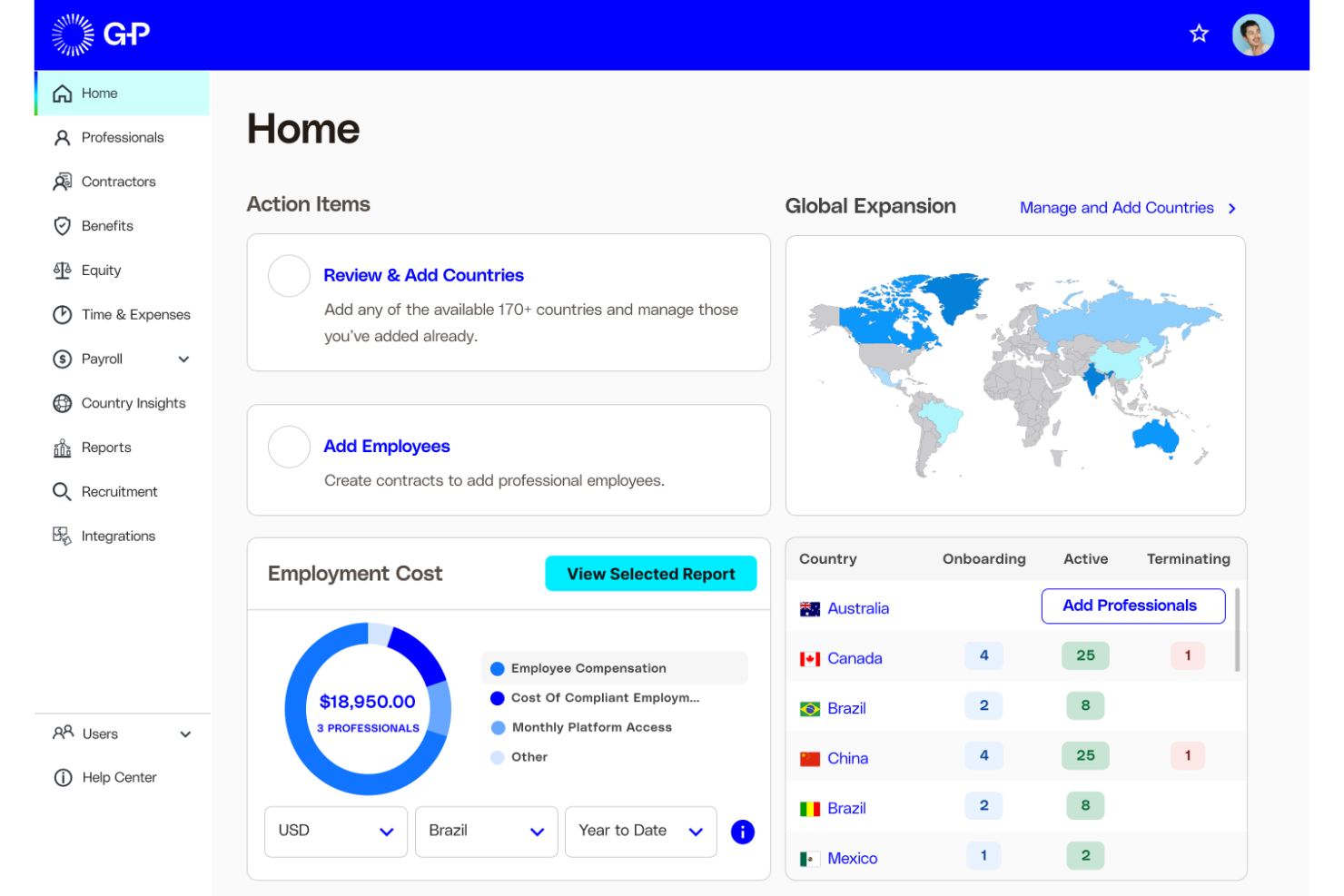
G-P is an employer of record platform that enables companies to hire employees in South Africa and more than 180 countries without establishing local legal entities. Its services cover employment contracts, payroll processing, statutory tax contributions, benefits administration, and ongoing employment compliance.
Who Is G-P Best For?
G-P is suited to HR teams and talent acquisition leaders at midsize and enterprise companies hiring across multiple countries that need a consistent EOR platform fee and centralized workforce management.
Why I Picked G-P
I picked G-P for its consistent EOR platform pricing across more than 180 countries. Its starting fee of $599 per employee per month applies across supported markets, although country-specific taxes, statutory contributions, and other employment expenses affect the total cost. G-P also uses its Global Compliance Engine to support locally compliant contracts and employment processes, including payroll and statutory obligations in South Africa. Additionally, its platform combines employment administration, benefits management, and compliance support for businesses managing international teams.
G-P Key Features
- AI-guided onboarding: Guides new employees through onboarding tasks, including right-to-work verification, employment documentation, and required information collection.
- Local employment offboarding: Supports employee terminations in accordance with South African employment regulations, including applicable notice periods, severance requirements, and dismissal documentation.
- HCM integrations and API access: Connects with Workday, SAP SuccessFactors, BambooHR, HiBob, UKG, and ADP, with API access for custom HR system connections.
- G-P Assist reporting: Allows HR teams to request workforce reports and insights using natural-language queries within the G-P platform.
G-P Integrations
G-P offers native integrations with Workday, SAP SuccessFactors, UKG Pro, ADP Workforce Now, BambooHR, HiBob, Personio, and Paylocity.
Pros and Cons
Pros:
- Natural-language workforce reporting capabilities
- AI-guided onboarding and compliance support
- Consistent EOR platform fees globally
Cons:
- Visa support requires separate add-on
- Background checks require additional services
Other Employers of Record in South Africa
Here are a few additional options that didn’t make my shortlist but are still worth checking out:
- Papaya Global
For capped CCMA dismissal costs
- Payoneer Workforce Management
For contractor-to-employee transitions
- Rippling
For South Africa hires across HR and IT
- Multiplier
For upfront South Africa hiring costs
- RemoFirst
For no-commitment South Africa hiring
- Native Teams
For planning South African hiring costs
- WorkMotion
For South African compliance cost planning
- TopSource
For South African compliance and HR advice
- Playroll
For converting South African contractors
- DNA EOR
For South African contractor conversions


How I Evaluate Employer of Record South Africa
I split my evaluation into three parts. First—and most heavily weighted—I check that a provider can legally employ workers through a local entity and actively manages South African compliance. Then I look at standout features like transparent cost calculators. Finally, I consider pricing clarity and local HR support quality.
Core Functionality (Table Stakes for This List)
When I'm selecting tools for my list, I score each one on a scale from 0 (does not offer the functionality) to 5 (excels in this area) for each core functionality listed below. I then convert the total into a percentage to help assess each tool's overall fit, with extra weight on any functionalities I've deemed essential.
- Local Legal Entity (Essential): I check whether the provider operates its own entity in South Africa or relies on a third-party partner, and how much visibility you get into that arrangement.
- SA Compliance Management (Essential): I look for active management of the Basic Conditions of Employment Act, UIF obligations, and leave entitlements rather than just general compliance guidance.
- Local Payroll Processing: Accurate PAYE withholding and statutory deductions in South African Rand matter here, along with clear reporting you can audit against SARS requirements.
- Benefits Administration: I evaluate whether the provider handles statutory contributions like UIF and also offers supplementary options such as medical aid or retirement fund access.
- Contract Generation: South African employment contracts need role-specific terms that reflect local labor requirements, so I look for customizable templates over generic ones.
- Onboarding and Termination Support: I consider how each provider handles notice periods, severance, and CCMA-related processes, since termination missteps in South Africa carry real financial and legal risk.
Once I have a list of tools that meet the criteria, I consider what sets each platform apart.
Differentiating Factors (What Sets Vendors Apart)
Here's how I compare and contrast different vendors:
Standout Features
I look for total cost calculators that break down UIF, SDL, and other statutory contributions before you commit—providers like Rivermate and Justworks vary in how much detail they surface upfront. Rapid onboarding timelines also matter; when a South African hire needs to start within days, I check whether the provider can deliver compliant contracts that fast. I also evaluate employee self-service portals, since giving workers direct access to payslips and leave balances cuts down on routine HR requests.
Beyond Features
I check whether a provider can convert existing South African contractors to full employees without misclassification risk, since South African labor law treats this differently than most markets. Pricing structure matters too—I compare flat-fee and percentage-based models and look for transparency around termination, benefits, and currency conversion costs that can quietly inflate budgets. I also evaluate whether a vendor's South African support team operates in a compatible time zone, which is essential during CCMA-related events where response delays create real liability.
How to Choose an Employer of Record in South Africa
Choose an EOR by matching its legal and payroll responsibilities to your hiring plans, then verify those responsibilities in documents before signing.
| If your priority is… | Look for… |
|---|---|
| Confirming who employs your workers | The South African contracting entity named in the employment agreement |
| Auditable payroll and tax handling | Payroll records showing PAYE, UIF, and SDL treatment and SARS filing responsibilities |
| Managing a difficult termination | Written terms for notice, severance, and support with CCMA-related processes |
| Converting contractors to employees | A documented classification review and conversion process |
How to Vet Your Shortlist
- Verify the employing entity: Request the proposed employment agreement and registration details before signing, then confirm which entity will employ and pay the worker.
- Test payroll documentation: Ask for a redacted sample payslip and payroll reconciliation showing how PAYE, UIF, and SDL are handled for a South African employee.
- Review termination terms: Request the termination clause and written explanation of who handles notice, severance calculations, and CCMA-related support.
- Assess contractor conversion: Ask for a written classification review and conversion checklist for one representative contractor role before moving anyone onto payroll.
- Choose your operating model: If direct local-entity oversight matters most, require that entity to be named in the agreement; if you accept partner delivery, require the agreement to identify the responsible employer and escalation route.
What Are Employers of Record in South Africa?
An employer of record in South Africa is a third-party organization that legally employs workers on your behalf and manages local payroll, tax filings, and employment administration. Your business directs the worker’s day-to-day responsibilities, while the EOR handles employment obligations such as contracts, statutory deductions, and leave administration.
Features
Here are the main features I look for in an employer of record in South Africa:
- Local employing entity: Employs workers through a registered South African legal entity and assumes local employer responsibilities. Confirm which entity signs employment contracts and manages statutory obligations.
- South African compliance management: Supports compliance with the Basic Conditions of Employment Act (BCEA), Labour Relations Act (LRA), and applicable statutory requirements. Check how the provider monitors regulatory changes and updates employment practices.
- Local payroll processing: Processes salaries in South African rand (ZAR), calculates Pay As You Earn (PAYE) withholding, and manages applicable statutory deductions. Look for accurate payslips, payroll reports, and tax filing support.
- Benefits administration: Manages statutory contributions, including the Unemployment Insurance Fund (UIF), and supports supplementary benefits such as medical aid and retirement funds. Confirm which benefits are included and whether additional fees apply.
- Locally compliant contracts: Prepares employment agreements covering compensation, working hours, leave entitlements, and notice periods in accordance with South African employment laws. Check how contract amendments are handled.
- Onboarding and offboarding support: Coordinates employment documentation, payroll registration, and termination procedures. Confirm how the provider handles notice periods, severance calculations, final payments, and applicable CCMA proceedings.
- Employee self-service: Provides employees with access to payslips, employment documents, leave balances, and personal information through a centralized portal. Check whether employees can update their details and submit leave requests.
- Contractor conversion support: Assesses worker classification risks and supports transitions from independent contractor arrangements to formal employment. Look for documented classification reviews and compliant employment contracts.
Benefits
Here are a few common benefits you can expect from South African employer of record services:
- Local employment setup: Enables businesses to hire employees through a registered South African legal entity without establishing their own local entity, reducing the need for direct employment administration.
- Compliance support: Provides guidance on South African employment regulations, including the Basic Conditions of Employment Act (BCEA), Labour Relations Act (LRA), and statutory obligations, helping businesses manage local compliance requirements.
- South African payroll: Processes employee salaries in South African rand (ZAR), manages Pay As You Earn (PAYE) withholding, and calculates statutory deductions, providing payroll records for financial review and tax reporting.
- Employment lifecycle support: Manages employment contracts, onboarding documentation, and offboarding procedures, including applicable notice periods, severance calculations, and termination requirements.
- Benefits administration: Coordinates statutory contributions, including the Unemployment Insurance Fund (UIF), and supports optional employee benefits such as medical aid and retirement plans, depending on the provider.
- Employee self-service: Allows employees to access payslips, employment documents, and leave balances through a centralized portal, reducing the need for routine HR information requests.
- Contractor conversion support: Helps businesses assess worker classification risks and transition eligible independent contractors into formal employment arrangements under South African employment requirements.
Pricing
Employer of record pricing in South Africa varies by provider, employee count, billing terms, and included services. Most providers charge a monthly service fee per employee, excluding salaries, statutory contributions, benefits, and optional services. The figures below represent advertised starting rates rather than guaranteed South Africa-specific quotes.
Plan Comparison Table for Employer of Record South Africa
These pricing ranges reflect the advertised starting fees of selected providers reviewed in this article. They are comparison bands, not standardized subscription plans.
| Plan Type | Average Price | Common Features |
|---|---|---|
| Lower-Cost EOR Services | $199–$349/employee/month | Employment contracts, local payroll administration, statutory deductions, and onboarding support. |
| Midrange EOR Services | $399–$499/employee/month | Employment administration, statutory benefits support, payroll processing, and workforce management tools. |
| Higher-Cost EOR Services | $599–$699/employee/month | EOR employment services, payroll administration, benefits support, compliance guidance, and employee management tools. |
| Custom-Quoted Services | Pricing upon request | Country-specific employment services, tailored workforce arrangements, and additional HR support depending on the provider. |
FAQs
Here are answers to common questions about employers of record in South Africa:
Can an EOR hire in South Africa if my company has no local entity?
Yes, an employer of record (EOR) can hire employees in South Africa on behalf of companies without a local legal entity. The EOR or its local employment partner typically serves as the legal employer, managing employment contracts, payroll, and statutory obligations. Before hiring, confirm which entity signs the employment agreement, processes salaries, submits payroll taxes, and maintains employee records. If the EOR works with a local partner, request the partner’s legal name and contact details. Your company generally retains responsibility for directing the employee’s day-to-day work under the service agreement.
What happens if an employee raises a workplace dispute?
The EOR should provide guidance on handling workplace complaints and clarify each party’s responsibilities under the service agreement. Confirm who receives and investigates complaints, maintains documentation, and communicates with the employee. Some disputes may be referred to the Commission for Conciliation, Mediation and Arbitration (CCMA), depending on their nature. Ask whether the EOR provides assistance with CCMA proceedings, including representation where permitted, and whether additional fees apply. Document these responsibilities before entering into an agreement.
Does using an EOR remove my company’s legal responsibilities in South Africa?
No. While an EOR assumes certain legal employer responsibilities, your company may retain obligations depending on the employment arrangement and applicable South African laws. The division of responsibilities depends on the service agreement and how the employment relationship operates in practice. Review contractual indemnities, insurance coverage, workplace complaint procedures, and recordkeeping requirements before hiring. Consulting a South African employment law professional can help clarify potential liabilities and ensure your company understands its responsibilities.